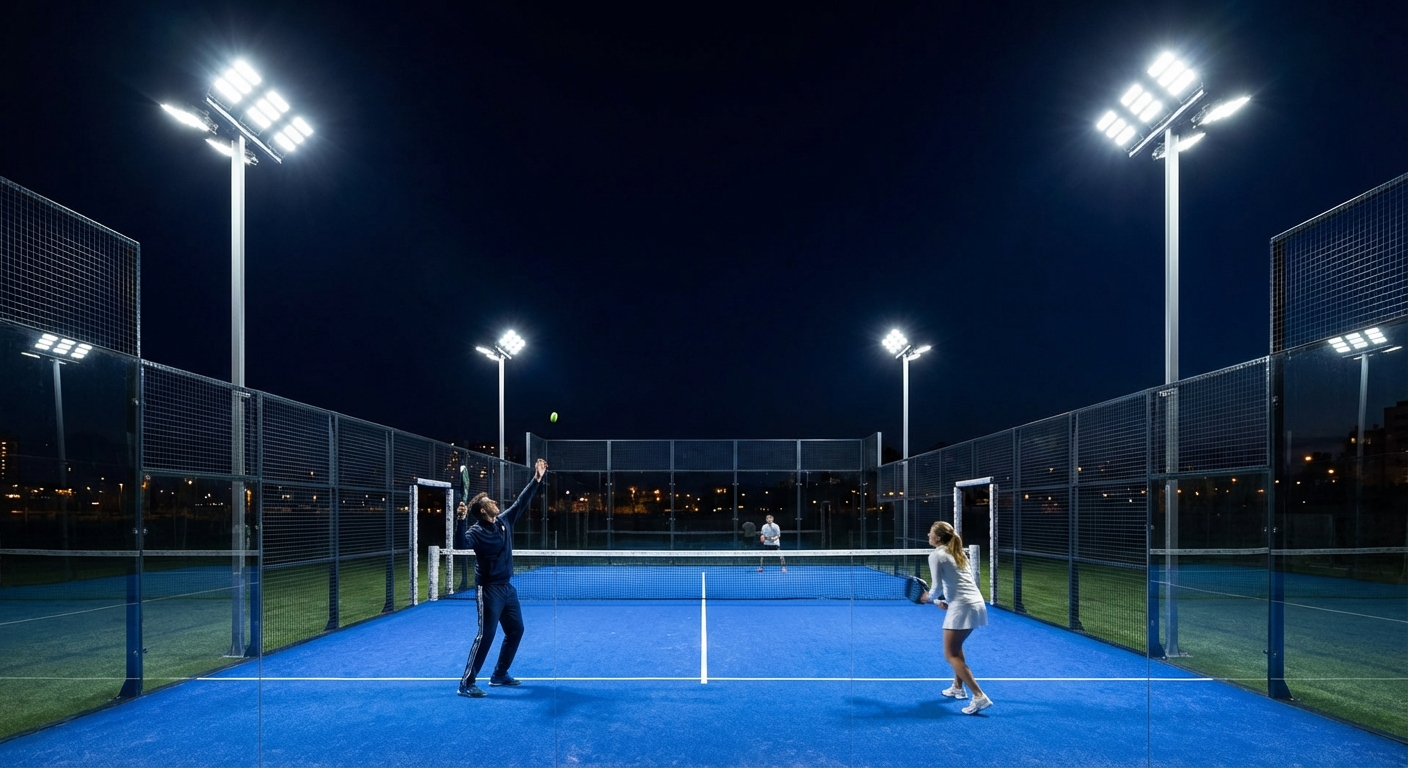
padel court bauen refers to the professional construction of specialized 20×10 meter sports facilities that combine the strategic elements of tennis and the intensity of squash into a high-growth social game. Many sports clubs are currently struggling with declining member engagement and underutilized outdoor spaces that drain resources without providing a modern return. If you continue to ignore the global shift toward compact, social sports, you risk your facility becoming obsolete while competitors capitalize on the fastest-growing racquet sport in the world. By choosing to padel court bauen, you transform idle land into a high-revenue centerpiece that appeals to all ages and skill levels instantly.
Why is it a trend to padel court bauen now?
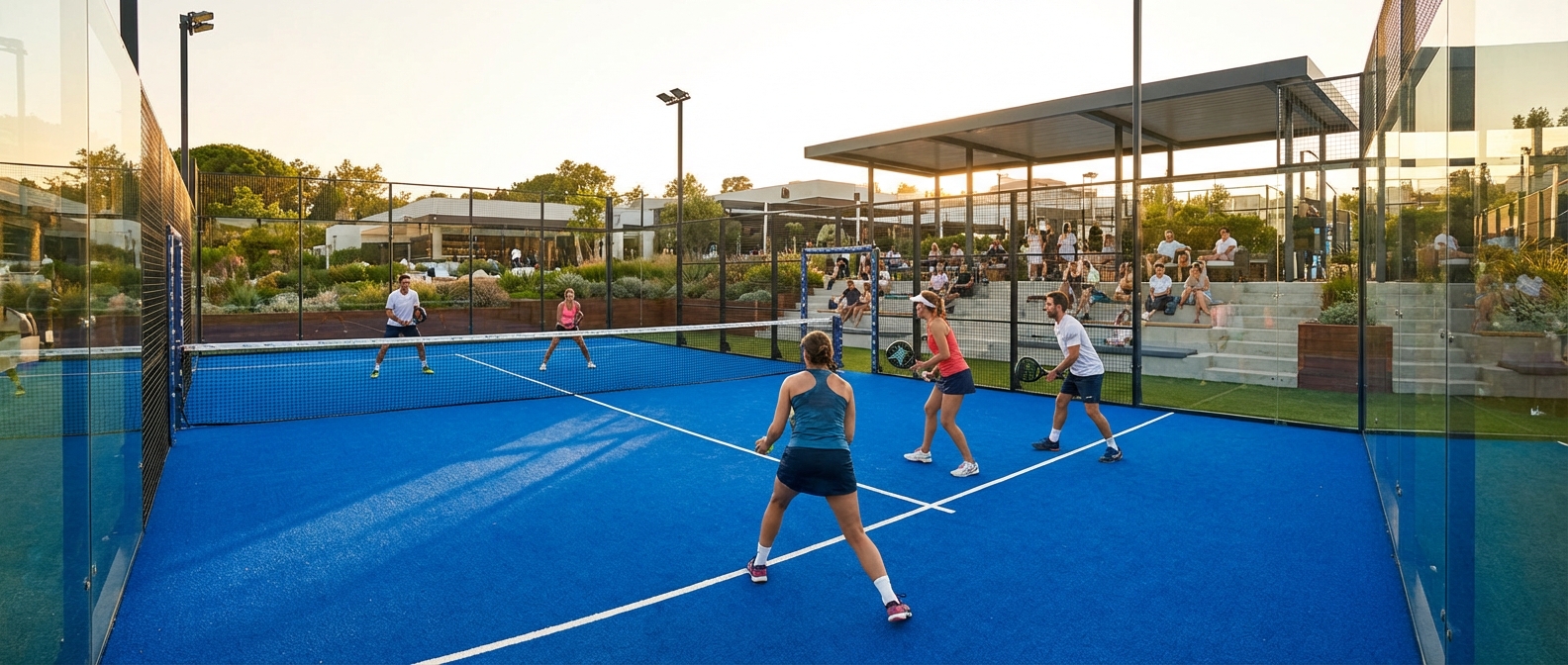
Padel is a global phenomenon because it offers high social engagement and an incredibly easy learning curve for players of all experience levels. When you decide to padel court bauen, you are investing in a sport that is currently seeing massive growth across Europe and North America. You can find more details about professional setups at our Standard Padel Court page to see why these structures are taking over.
The synergy of tennis and squash elements
Padel combines the best aspects of traditional racquet sports while removing the high entry barrier often found in tennis. The use of glass walls allows for dynamic rallies where the ball remains in play longer, creating a more intense experience.
Think about it:
- Rallies last much longer than in tennis.
- The learning curve is virtually non-existent for beginners.
- Four players on a small court ensure a high social factor.
Attracting new target groups to traditional clubs
Traditional tennis clubs often struggle to attract younger demographics who prefer fast-paced and social activities. Implementing a project to padel court bauen allows these facilities to offer a modern alternative that complements existing tennis programs perfectly.
Look:
- Youth players find the game more “instagrammable” and exciting.
- Beginners feel less intimidated by the smaller court size.
- Corporate groups prefer the doubles-only format for team building.
Key Takeaway: Padel serves as a bridge between classic club traditions and the demand for modern, high-intensity social sports.
| Trend Factor | Impact on Club |
|---|---|
| Social Play | Increases member retention rates |
| Ease of Entry | Attracts non-athletes and beginners |
| Fast Paced | Higher court turnover and booking frequency |
The integration of padel is not just a trend but a strategic evolution for any modern sports facility.
How much space is required to padel court bauen?
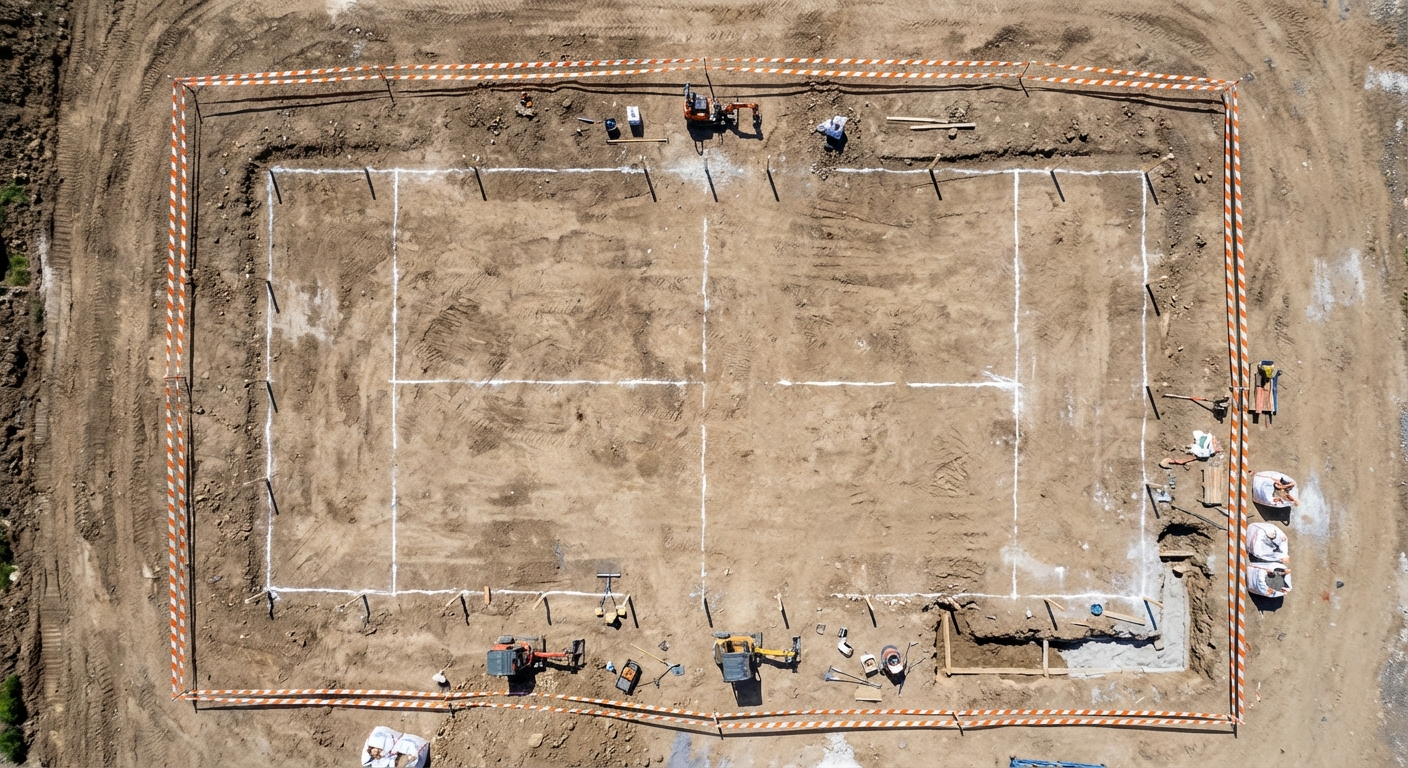
You need a minimum footprint of 200 square meters for the playing field itself, though additional safety margins are recommended for the best experience. The process to padel court bauen requires precise measurements to ensure that the glass walls and steel modules fit perfectly within your designated plot. You must also consider the subsoil stabilization to prevent shifting over years of heavy use.
Standard 10x20m dimensions and safety zones
The actual playing area is always a rectangle measuring 10 meters in width and 20 meters in length, divided by a center net. While the court is compact, you should ideally plan for a 1-meter clearance around the perimeter for maintenance access and structural supports.
The best part?
- You can fit three padel courts in the space of one tennis court.
- Standard dimensions ensure tournament-ready playability.
- Modular designs allow for flexible positioning on uneven terrain.
Indoor requirements: Ceiling height and clearance
If you plan to padel court bauen inside an existing building or hall, the vertical clearance becomes the most critical factor for game quality. A minimum ceiling height of 8 meters is standard, though 10 to 12 meters is preferred for professional lobbing and high-level competitive play.
But that’s not all:
- Clearance must be consistent across the entire 200sqm area.
- Lighting fixtures must be recessed or protected from high balls.
- Airflow and climate control are vital for indoor player comfort.
Key Takeaway: Space efficiency is the greatest strength of padel, allowing for maximum player density on a relatively small land footprint.
| Space Requirement | Specification |
|---|---|
| Playing Area | 10m x 20m (200 sqm) |
| Total Footprint | 11m x 21m (recommended) |
| Minimum Height | 8.0 meters for indoor facilities |
Efficient land use directly translates to higher revenue potential per square meter of your facility.
What are the costs to padel court bauen today?
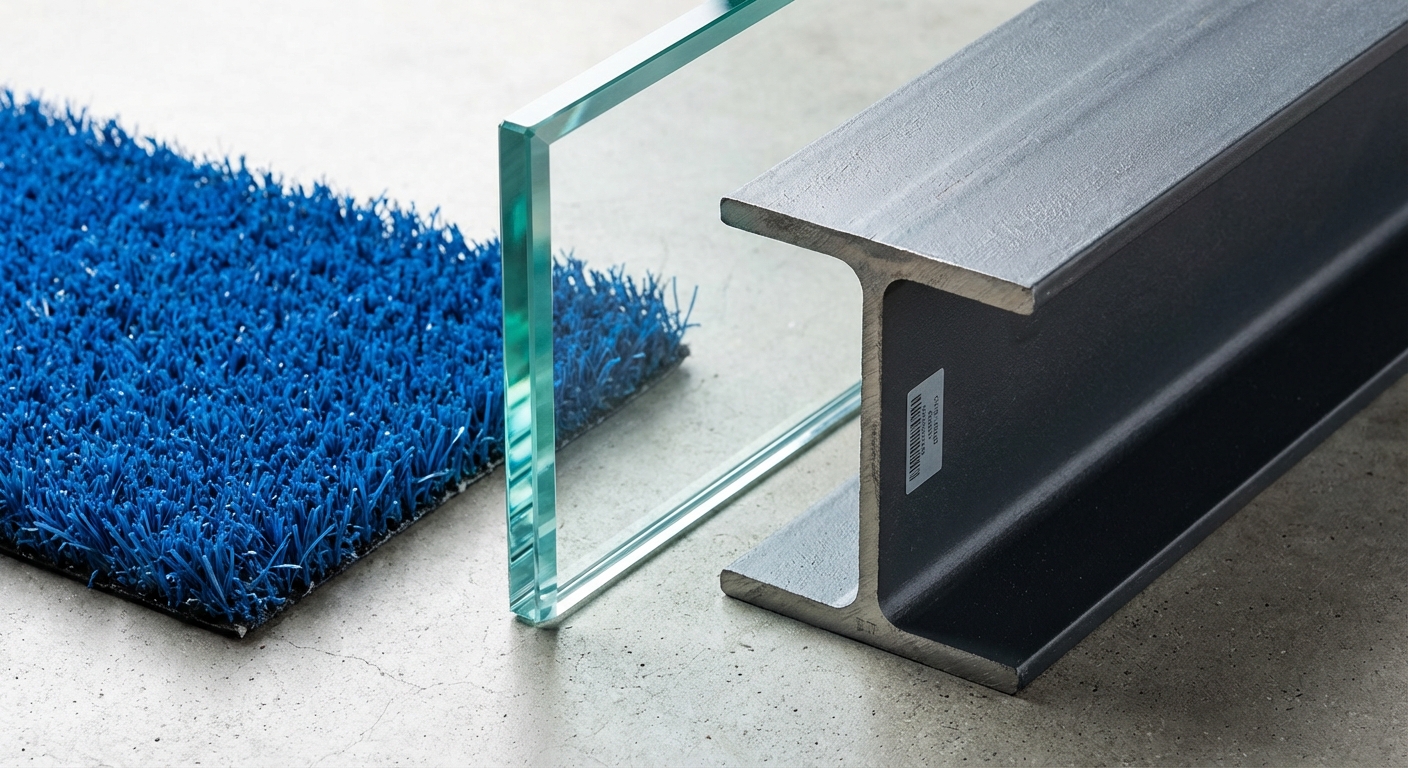
The investment typically ranges from €20,000 to €40,000 per court depending on your site requirements and the specific quality of materials selected. When you aim to padel court bauen, your budget must account for the structural Padel Structure, glass panels, and the specialized turf surface. High-end panoramic models will naturally sit at the top of this price range due to their complex glass engineering.
Breaking down the €20,000 to €40,000 investment
Initial costs cover the metallic structure, the tempered safety glass, and the professional-grade artificial turf. You must also set aside funds for the lighting system and the installation labor, which requires specialized technicians for glass alignment.
Look at the breakdown:
- Structural steel and glass: 50-60% of total cost.
- Artificial turf and sand: 15-20% of total cost.
- Lighting and accessories: 10-15% of total cost.
Factors influencing price: Glass, turf, and steel
The quality of the raw materials you choose will dictate the longevity of your facility and the frequency of future repairs. Choosing premium, anti-explosion safety glass and high-density fibrillated turf might cost more upfront, but it drastically reduces your long-term operational expenses.
Here is the deal:
- 12mm glass is more expensive but significantly safer than 10mm.
- Galvanized steel prevents rust in humid or coastal environments.
- LED lighting saves up to 70% on monthly electricity bills.
Key Takeaway: Investing in higher-quality materials during the initial construction phase prevents expensive structural failures and maintenance headaches later.
| Cost Component | Budget Range |
|---|---|
| Core Structure | €12,000 – €25,000 |
| Surface & Turf | €4,000 – €8,000 |
| LED Lighting | €2,000 – €4,500 |
A well-planned budget ensures that your facility remains a durable and profitable asset for decades.
Which model to choose when you padel court bauen?
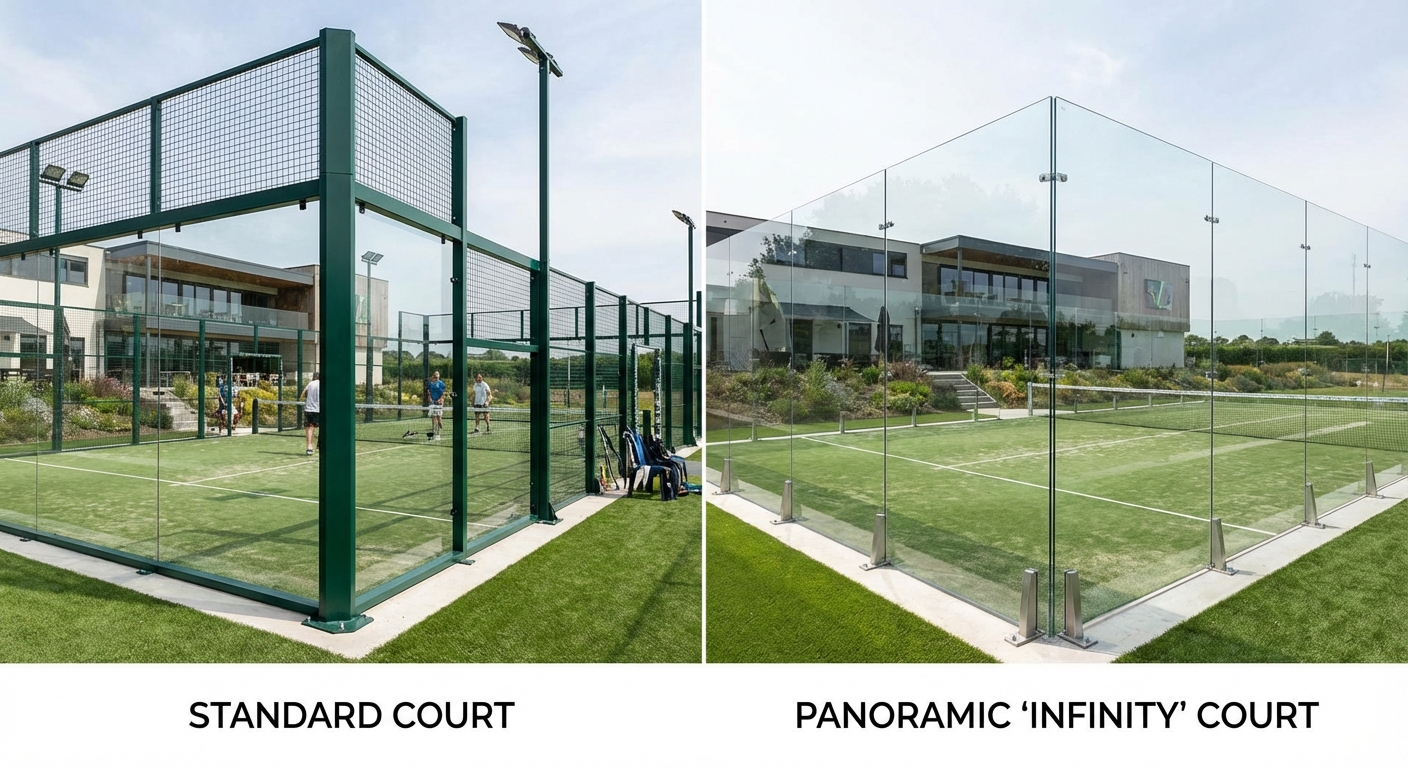
Choosing between the EDGE and INFINITY models depends entirely on your facility’s aesthetic goals and your spectator requirements. If you intend to padel court bauen for a high-traffic club, you need to decide if a standard modular frame or a premium panoramic view better serves your brand. You can explore the differences in detail on our Panoramic Padel Court showcase page.
The EDGE Model: Robust and cost-effective construction
The EDGE model is the workhorse of the industry, offering a perfect balance between durability and price-performance ratio. It features visible steel posts that provide exceptional support for the glass elements, making it ideal for standard club use.
Think about this:
- Standardized parts mean faster installation times.
- High stability for regions with heavy wind loads.
- Easier to replace individual glass panels if needed.
The INFINITY Model: Premium panoramic spectator experience
The INFINITY model is designed for professional clubs and tournament venues where the spectator experience is a top priority. By eliminating rear structural posts, this design offers a seamless view of the action, making it the centerpiece of any high-end facility.
But wait, there is more:
- Provides an unobstructed 360-degree viewing angle for fans.
- Creates a luxury aesthetic that justifies higher rental fees.
- Utilizes specialized thick-tempered glass for structural support.
Key Takeaway: Your choice of model should align with whether you are building a functional training site or a premium tournament destination.
| Model Feature | EDGE Court | INFINITY Court |
|---|---|---|
| Visual Style | Standard / Robust | Panoramic / Luxury |
| Visibility | Good | Exceptional |
| Best For | Recreational Clubs | Professional Centers |
Selecting the right model ensures your court appeals to your specific target demographic and maximizes member satisfaction.
What materials are used to padel court bauen?
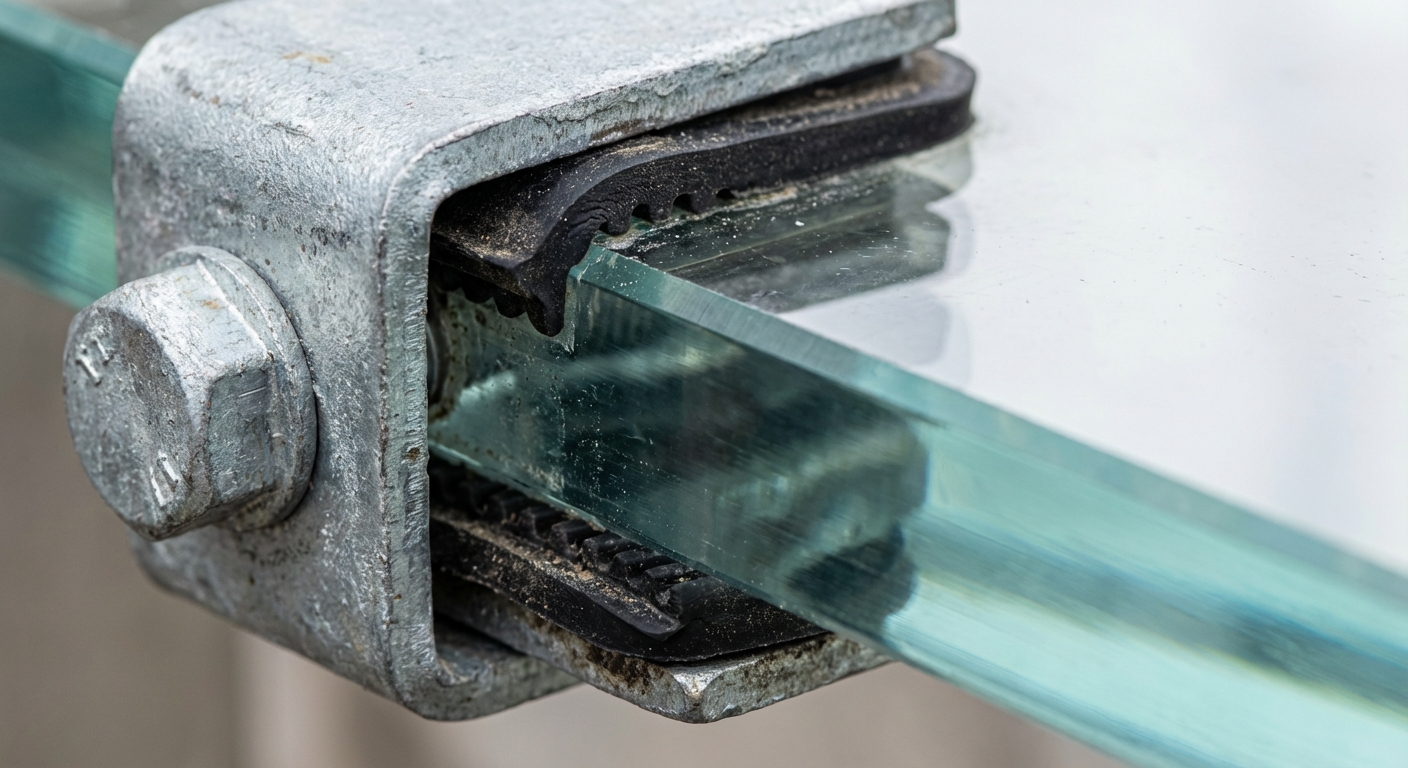
Professional construction uses galvanized steel frames and thermally tempered safety glass to ensure long-term structural integrity and player safety. When you padel court bauen, the quality of the metallic modules is what prevents the structure from swaying during high-impact ball contact. These materials must be treated with specialized coatings to withstand weather fluctuations and the abrasive nature of quartz sand.
Galvanized steel modules and anti-injury reinforcements
The core frame consists of electro-welded steel modules that are hot-dip galvanized to provide superior corrosion resistance. Every joint and corner is designed with player safety in mind, featuring rounded edges and protective caps to prevent injuries during fast-paced play.
Here is the reality:
- Galvanization ensures the steel won’t rust for over 20 years.
- Powder coating allows for custom branding and colors.
- Reinforced modules prevent glass vibrations and noise.
Thermally tempered safety glass standards
The glass walls are the most iconic feature of the sport and must meet strict European EN 12150 standards for impact resistance. Using 12mm thermally tempered glass ensures that even if a player crashes into the wall, the panel will remain structurally sound or crumble into harmless granules.
Look:
- Glass panels are embedded with protective EPDM seals.
- Specialized gaskets prevent direct metal-to-glass contact.
- Thermal tempering increases strength by five times over regular glass.
Key Takeaway: Structural safety depends on the invisible details like gaskets, seals, and the chemical treatment of the steel.
| Material Type | Standard Requirement | Benefit |
|---|---|---|
| Steel Frame | Hot-dip Galvanized | Corrosion resistance |
| Safety Glass | 12mm Tempered (EN 12150) | Player safety & durability |
| Fasteners | Stainless Steel | Longevity in outdoor conditions |
Using certified materials protects your investment and ensures the safety of every player on your court.
Which turf is best to padel court bauen?
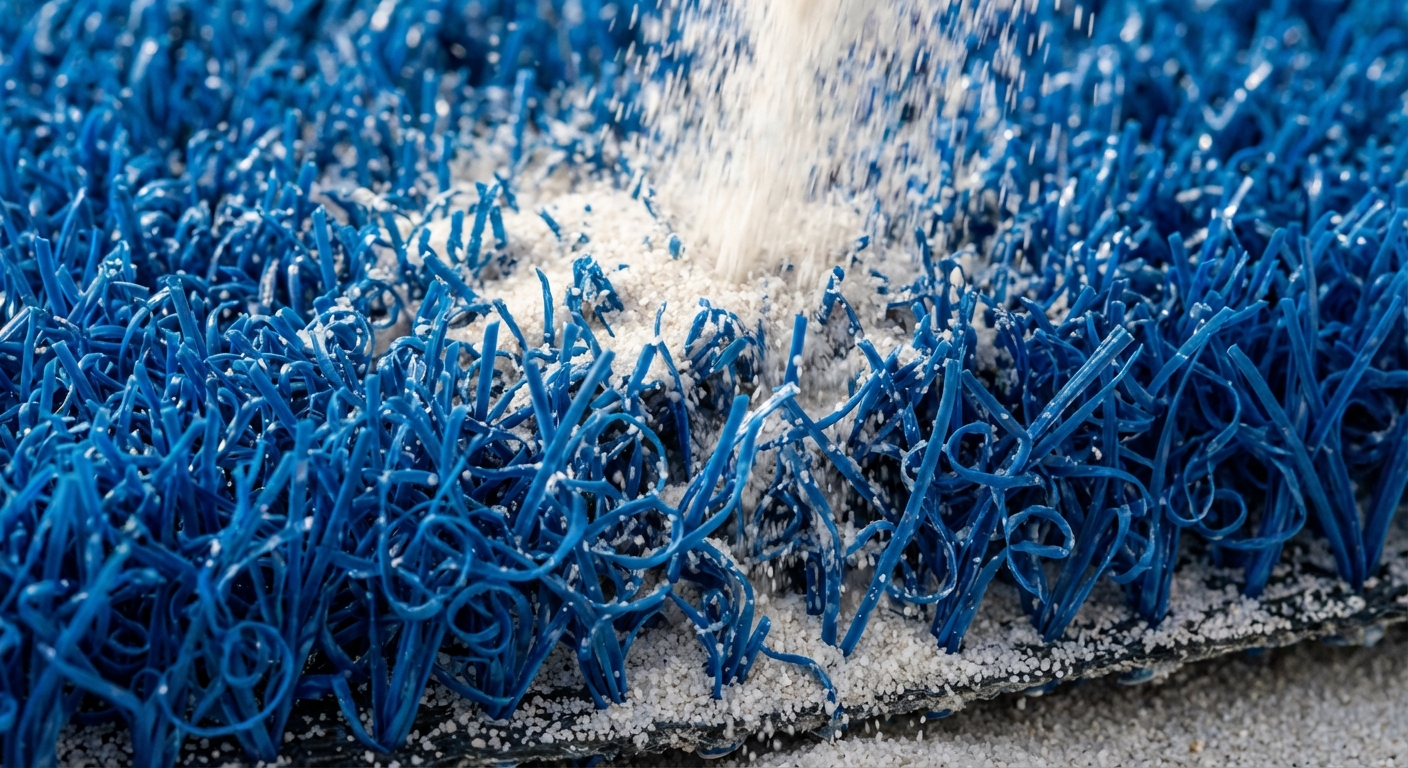
High-density fibrillated turf is the industry standard because it provides the most consistent ball bounce and allows for controlled player sliding. The choice of grass is a critical step when you padel court bauen as it directly affects the speed of the game and the risk of joint injuries. You can view our high-performance turf options on the Padel Grass technical page.
Blue vs. Green: Choosing high-traction artificial turf
While green is the traditional color, blue has become the professional standard because it offers the highest visual contrast for players and cameras. The turf must have a high stitch density to ensure the sand remains evenly distributed even after hours of intense play.
The best part?
- Blue turf makes the yellow ball pop for better visibility.
- High-traction fibers prevent slips and falls.
- UV-resistant materials prevent fading in direct sunlight.
The role of quartz sand for consistent ball bounce
The artificial turf is not played “dry” but is instead filled with specialized kiln-dried quartz sand. This sand keeps the synthetic fibers upright and provides the necessary friction for the ball to bounce naturally off the surface rather than skidding.
Believe it or not:
- Sand protects the turf fibers from premature wear.
- Even distribution prevents “dead spots” on the court.
- Correct sand levels are vital for player joint health.
Key Takeaway: The playing surface is a complex system where the turf and sand must work in perfect harmony for elite playability.
| Turf Quality | Specification | Result |
|---|---|---|
| Fiber Type | Fibrillated or Monofilament | Wear resistance |
| Sand Type | 0.3mm – 0.8mm Quartz | Consistent bounce |
| Color | Blue (WPT Standard) | High visibility |
A premium turf installation ensures that your members enjoy a professional-level playing experience every time they step on the court.
How to plan lighting for a padel court bauen?
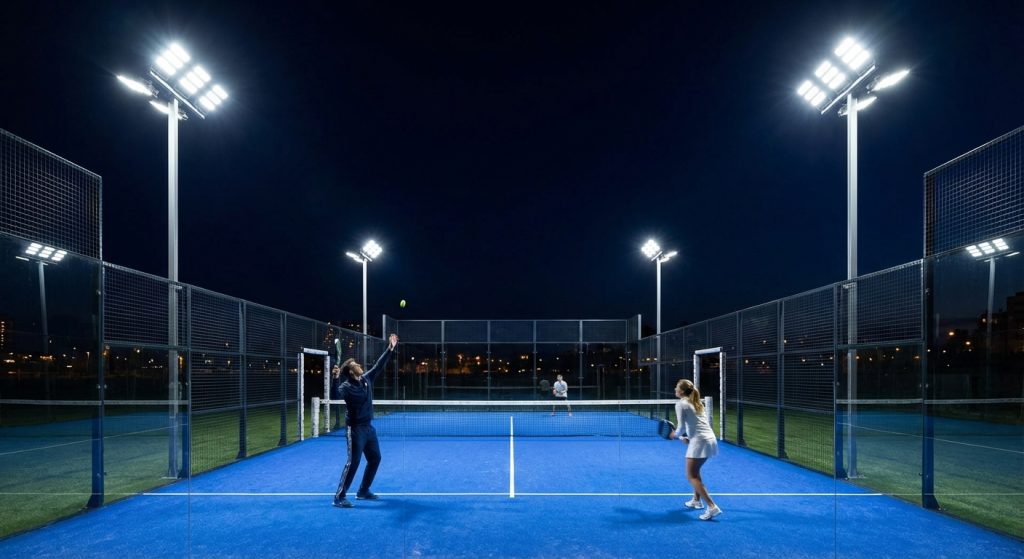
Effective illumination requires four high-efficiency LED panels specifically positioned to minimize glare on the glass walls and maximize visibility. When you padel court bauen, the lighting design must ensure that players can track high lobs without being blinded by overhead floodlights. Modern LED systems provide uniform light distribution across the entire 200 square meter playing area while keeping energy costs manageable.
High-efficiency LED panels for uniform illumination
Modern padel courts utilize 200W or 300W LED floodlights that offer instant-on capabilities and flicker-free performance. These panels are mounted on 6-meter masts to provide a downward light angle that covers the corners of the court without casting deep shadows.
Consider this:
- LEDs use 60% less energy than old metal halide bulbs.
- No warm-up time means courts are ready instantly.
- Uniform light prevents visual fatigue during night matches.
Corrosion-resistant housing for outdoor durability
For outdoor facilities, the lighting fixtures must be rated IP66 or higher to withstand rain, dust, and humidity. The housing is usually made of die-cast aluminum with a powder-coated finish to ensure it doesn’t corrode over years of exposure to the elements.
But that’s not all:
- Sealed housings prevent insects from entering the fixtures.
- Tempered glass lenses protect the LEDs from ball impacts.
- Modular drivers allow for easy repairs without replacing the whole unit.
Key Takeaway: Superior lighting extends your court’s billable hours into the night while providing a professional atmosphere.
| Lighting Spec | Recommendation | Benefit |
|---|---|---|
| Lumens | 25,000+ per fixture | Professional brightness |
| IP Rating | IP66 Waterproof | Outdoor durability |
| Lifespan | 50,000+ hours | Low maintenance |
Professional lighting planning is the difference between a recreational court and a high-revenue evening destination.
Is it profitable to padel court bauen for a club?
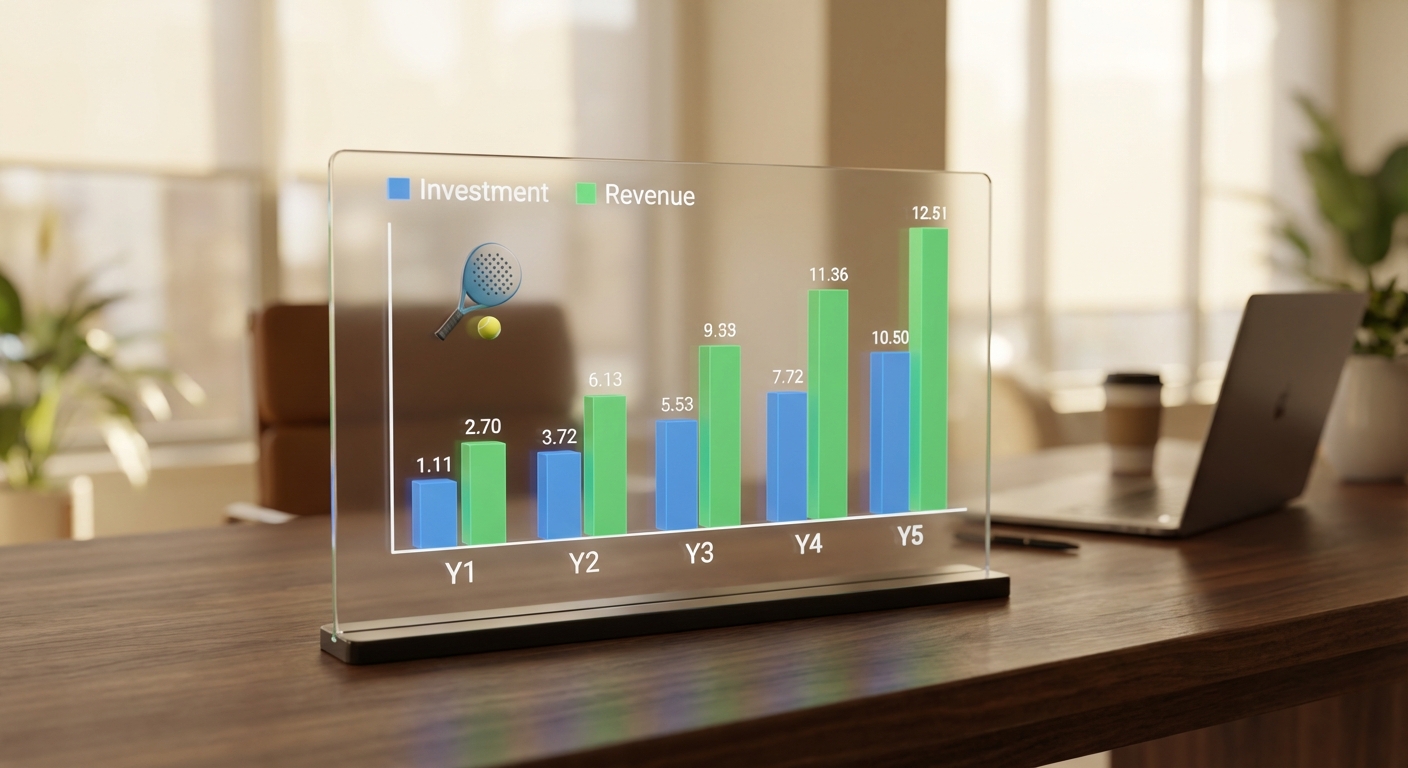
Padel facilities are exceptionally profitable due to high court occupancy rates and the ability to charge per player rather than just per court. If you decide to padel court bauen, your return on investment is often much faster than with tennis courts because you are fitting more paying customers into a smaller space. On average, a well-managed padel court can generate significant hourly revenue that covers the initial investment within a few years.
Calculating ROI based on hourly rental rates
Average hourly rates for padel courts typically range from €25 to €40 depending on your location and the time of day. Since padel is almost always played in a doubles format, the cost per player remains very affordable, leading to high booking frequency and member satisfaction.