The padel court construction cost typically ranges from $70,000 to $90,000 for a turn-key professional facility, though factory-direct components can reduce this figure significantly. Navigating the logistics of a sports facility investment often leads to unexpected budget overruns and construction delays that threaten your project’s viability. By identifying high-quality materials and efficient site preparation strategies now, you can avoid the “hidden traps” that typically drain capital from new club operators. This comprehensive guide provides the blueprint you need to optimize your budget and build a world-class court without compromising on safety or playability.
What is the average padel court construction cost today?
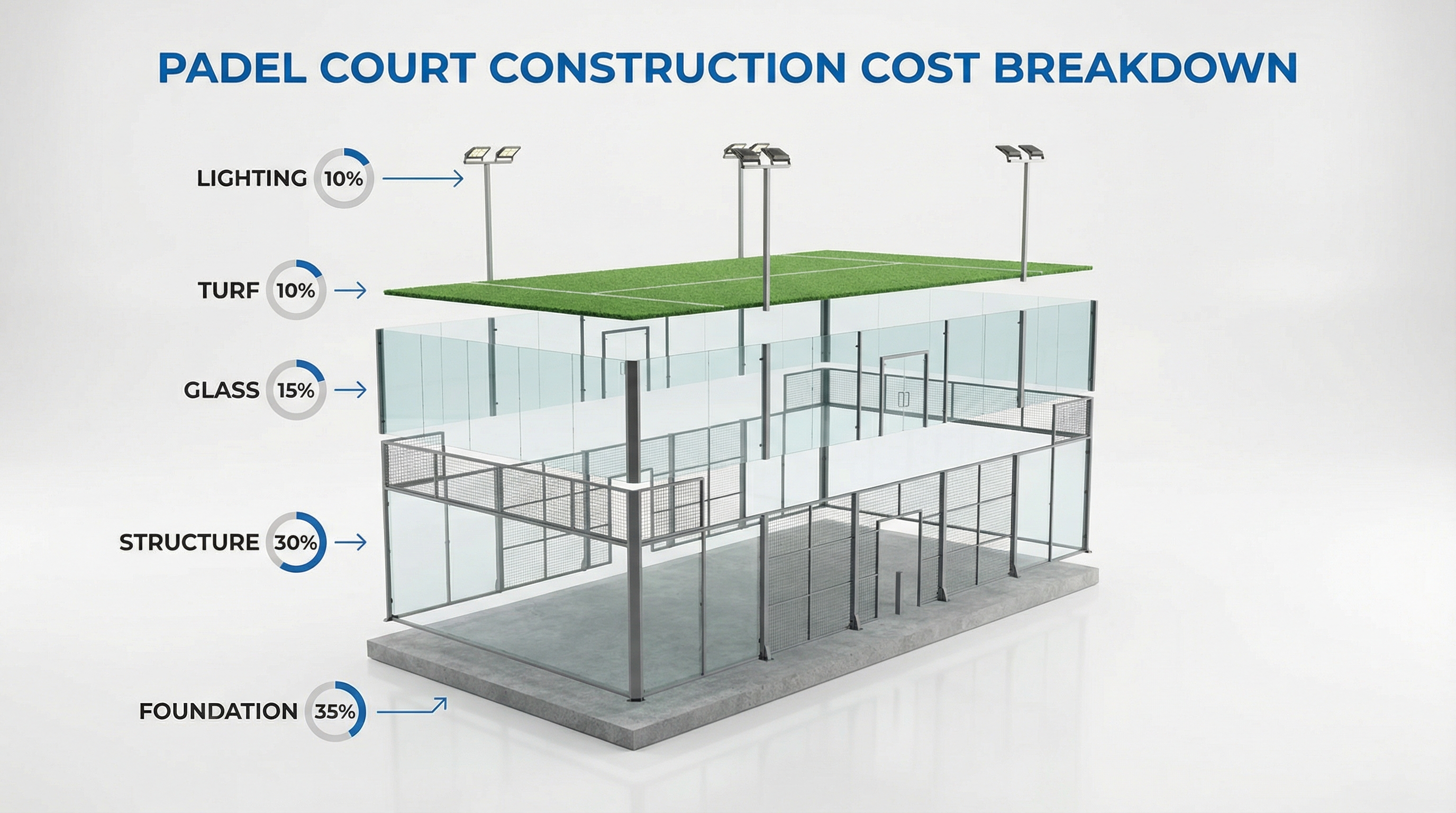
Calculating the total investment requires looking at both the component kit and the civil engineering work required on-site. While a high-quality court kit from a manufacturer might cost between $20,000 and $27,000, the addition of foundations, lighting, and labor brings the total project closer to $80,000.
Understanding the Price Range for Different Models
Think about this:
- Standard models offer the best balance of durability and cost-efficiency for high-traffic clubs.
- Premium panoramic designs increase the budget but offer superior spectator visibility and premium rental rates.
- Factory-direct sourcing allows you to secure professional-grade equipment for up to 30% less than local distributors.
Regional Variability and Labor Rates
Here is the deal:
- Local labor rates for excavation and concrete pouring vary significantly by geographic region and city permits.
- Engaging local contractors for civil work while importing the court structure is often the most cost-effective path.
| Expense Category | Estimated Cost (USD) | Percentage of Budget |
|---|---|---|
| Court Structure & Glass | $22,000 – $28,000 | 35% |
| Foundation & Civil Work | $25,000 – $30,000 | 38% |
| Lighting & Electrical | $3,000 – $5,000 | 7% |
| Shipping & Installation | $10,000 – $15,000 | 20% |
Key Takeaways:
- Total project costs are split almost equally between the physical court and local site preparation.
- Buying direct from the source is the single most effective way to lower the structural portion of the budget.
How much does the concrete slab foundation cost?
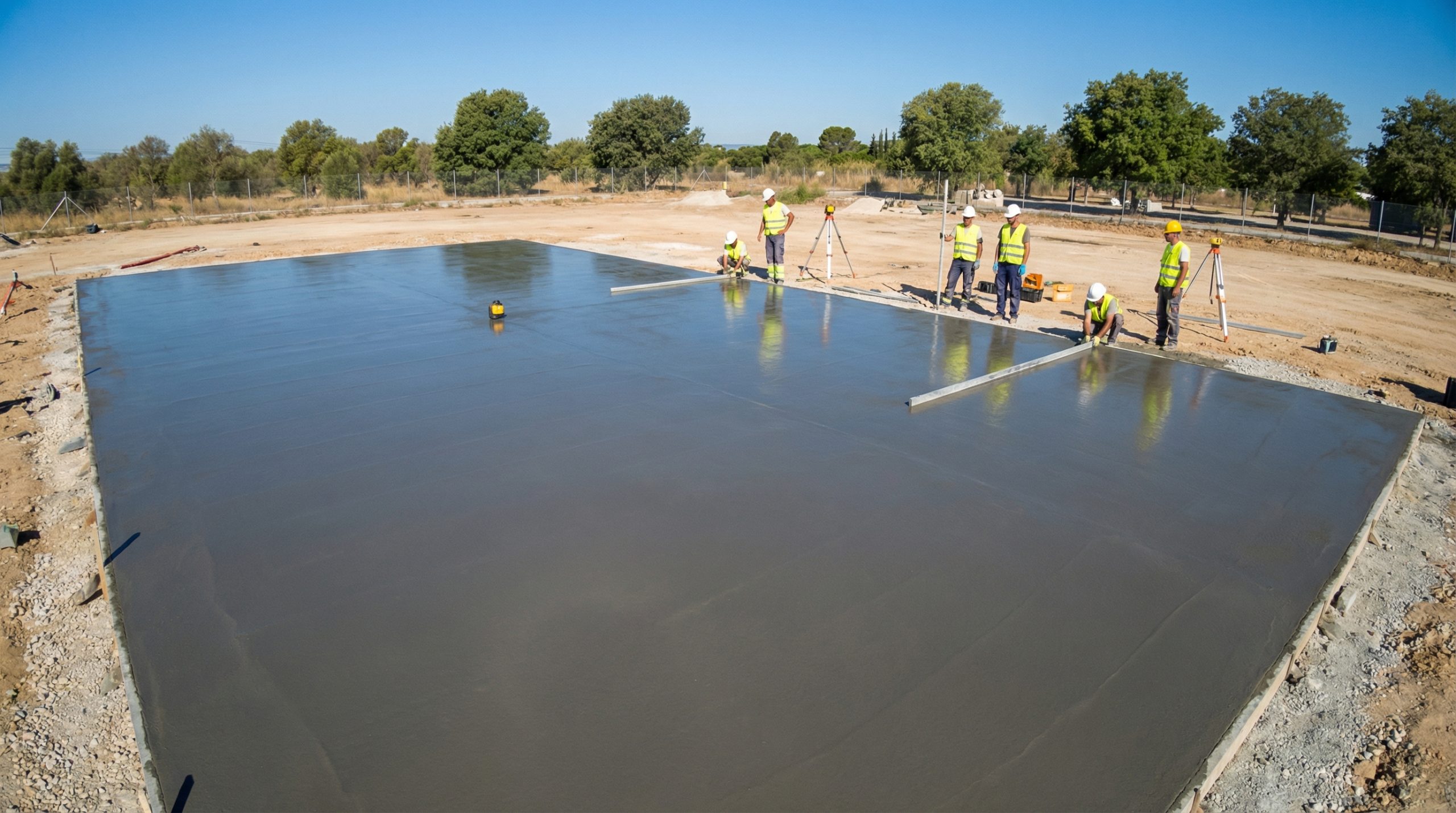
The foundation is the most significant variable in your padel court construction cost because it depends entirely on your specific site conditions. If you are starting from a raw plot of land, you should budget approximately $25,000 for a 20×10 meter reinforced concrete slab. You can often reduce these expenses by installing a classic padel court on an existing, level tennis or basketball surface.
Soil Studies and Geotechnical Reports
Why does this matter?
- A professional soil study prevents future slab cracking and structural shifting that could shatter the glass walls.
- Budgeting $1,500 for a geotechnical report ensures your foundation can handle the heavy glass and steel loads.
Drainage Systems for Outdoor Courts
But wait, there’s more:
- Proper sub-base drainage is essential for outdoor courts to prevent “puddling” and turf degradation.
- Integrated drainage layers allow you to resume play immediately after rainfall, maximizing your booking revenue.
| Foundation Component | Estimated Cost (USD) | Purpose |
|---|---|---|
| Site Clearing | $2,000 – $4,000 | Leveling and debris removal |
| Reinforced Concrete | $15,000 – $20,000 | Structural base for the court |
| Drainage Installation | $3,000 – $5,000 | Water management and turf longevity |
| Soil Testing | $1,000 – $2,000 | Risk mitigation for shifting ground |
Key Takeaways:
- Never skip the soil study; the cost of repairing a cracked slab far exceeds the price of the report.
- Outdoor facilities require advanced drainage to ensure year-round operation.
What are the costs for panoramic vs standard structures?
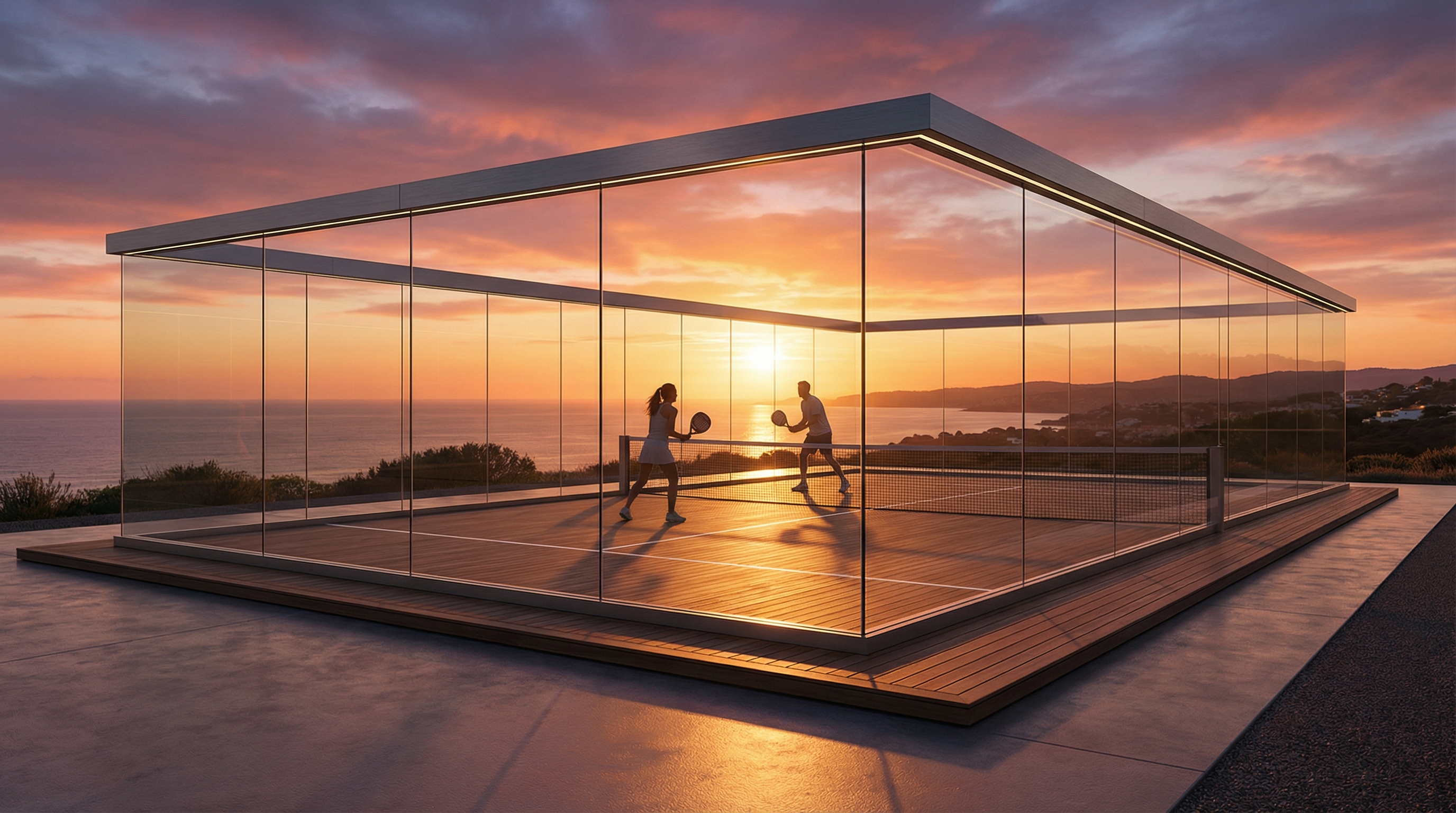
Choosing between structure types is a pivotal decision for your padel court construction cost and your long-term branding. A panoramic model removes rear corner pillars to provide an unobstructed view, which typically adds $3,000 to $5,000 to the kit price due to the heavier steel required. Standard models remain the industry workhorse, providing exceptional durability for club environments where visibility is less critical.
The Engineering Behind Panoramic Views
It gets better:
- Panoramic courts use 4mm thick steel frames to compensate for the lack of vertical supports.
- This design creates a “stadium feel” that attracts high-level tournaments and elite club members.
Zinc Primers and Weatherproofing
You might be wondering:
- Hot-dip galvanized steel with a secondary zinc primer is essential for courts located in humid or coastal areas.
- Investing in high-grade anti-corrosion treatments adds roughly $1,800 but protects your 20-year structural investment.
| Structural Feature | Standard Court | Panoramic Court |
|---|---|---|
| Corner Pillars | Yes (80x80mm or 100x100mm) | No (Full glass view) |
| Steel Thickness | 2mm – 3mm | 3mm – 4mm |
| Visual Appeal | Functional / Industrial | Modern / Luxury |
| Cost Difference | Base Price | +$4,000 – $6,000 |
Key Takeaways:
- Panoramic courts justify higher hourly rates and membership fees through their aesthetic appeal.
- Proper steel treatment is non-negotiable for outdoor projects to prevent rust and structural failure.
How much do glass and safety materials cost?
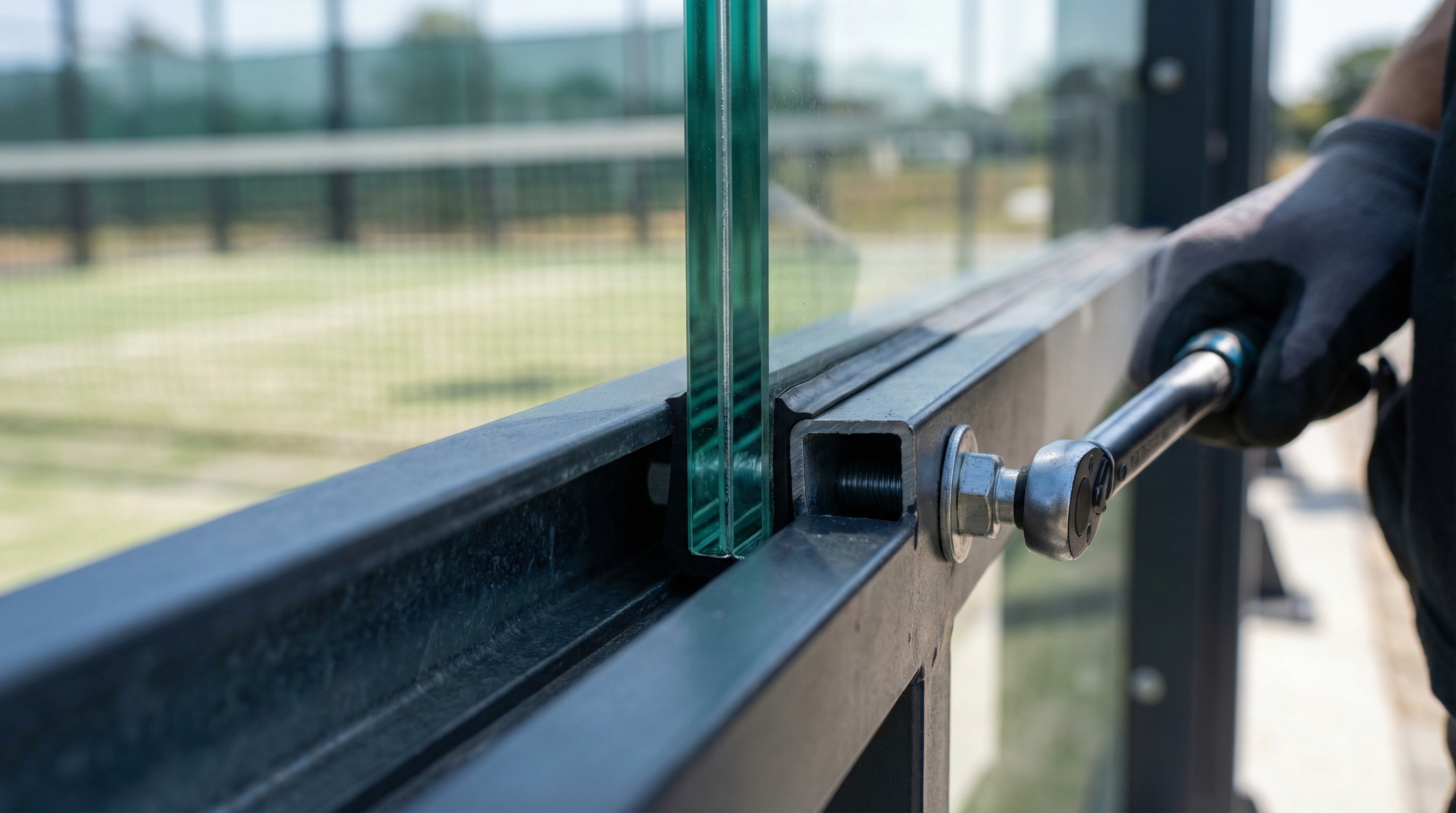
Safety is a primary driver of your padel court construction cost, as professional clubs must use 12mm tempered safety glass. While 10mm glass is available for private or indoor use, most commercial padel court projects require the thicker option to handle high-velocity ball impacts and player collisions. Quality glass ensures a consistent ball rebound, which is critical for the “playability” of your facility.
10mm vs 12mm Tempered Glass
Let’s get specific:
- 12mm glass provides superior structural stability and a much quieter playing environment than thinner alternatives.
- The price difference is usually minimal compared to the safety benefits and the reduced risk of accidental breakage.
Wind Load Considerations and Frame Support
Look:
- For outdoor courts, the glass must be engineered to withstand local wind speeds, requiring precise frame tolerances.
- Industrial suction equipment and specialized labor are needed to safely install panels that weigh over 160kg each.
| Glass Specification | Benefit | Recommended Use |
|---|---|---|
| 10mm Tempered | Lower initial cost | Private indoor use only |
| 12mm Tempered | Maximum safety/Better bounce | Professional & Commercial clubs |
| Anti-Explosion Film | Prevents shattering hazards | High-traffic public facilities |
Key Takeaways:
- 12mm glass is the gold standard for commercial durability and player safety.
- Professional installation is required to ensure the glass is seated correctly within the steel frame.
What is the cost of professional padel turf?
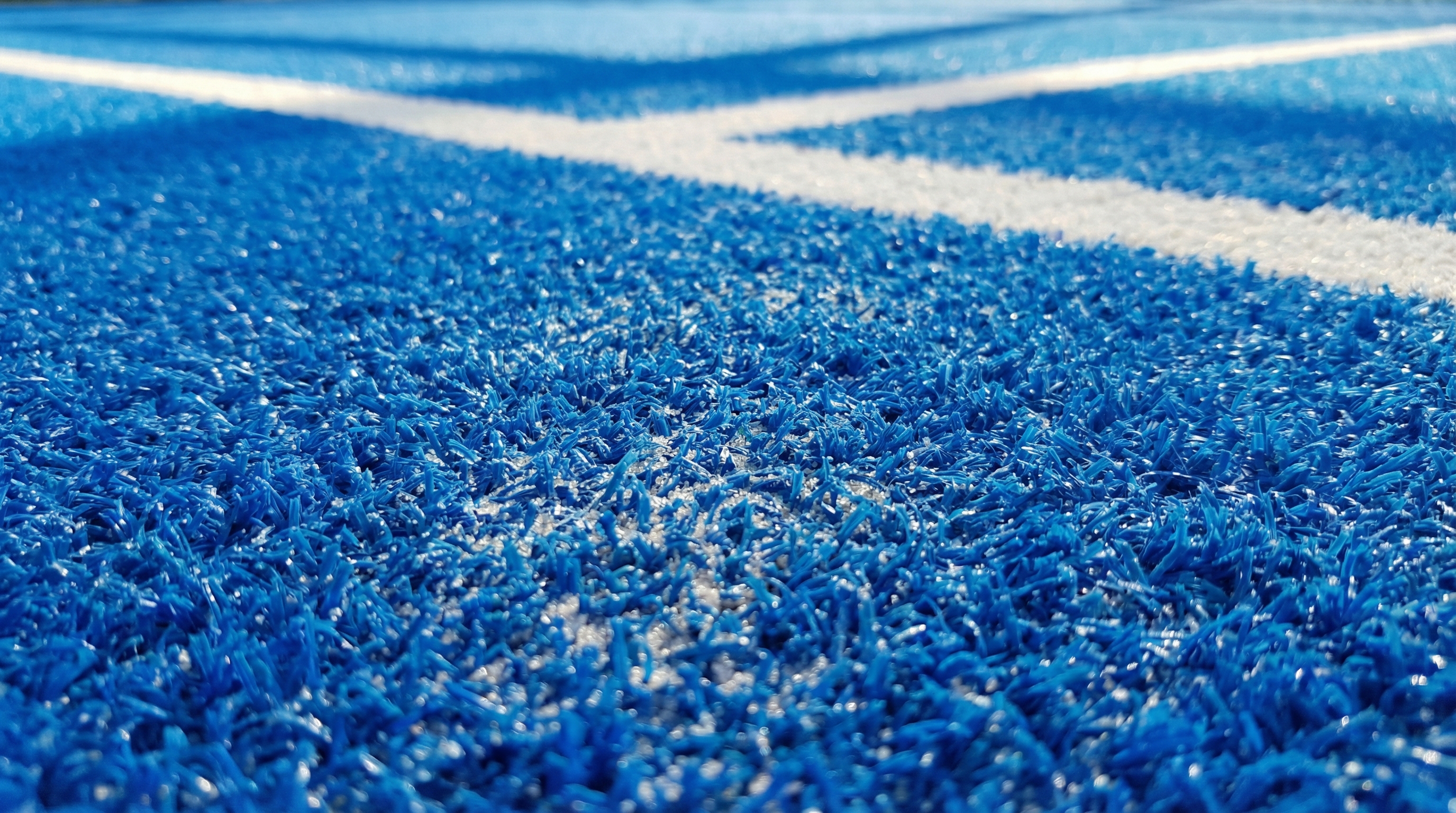
The playing surface accounts for about 10% of your total padel court construction cost, but it has the largest impact on player satisfaction. High-density, monofilament turf is preferred for its longevity and comfort, typically costing between $3,000 and $4,500 depending on the fiber quality. Using sub-par grass results in uneven bounces and increased injury risk, leading to lower member retention for your club.
Fibrillated vs Monofilament Turf
The best part?
- Monofilament turf requires less sand infill and maintains its vertical structure longer under heavy use.
- Choosing EU-standard compliant fibers ensures your surface won’t fade or degrade under intense UV exposure.
Professional Installation and Glue Costs
Keep in mind:
- Precise seam joining and line marking require specialized adhesive that can withstand temperature fluctuations.
- Professional turf installers ensure the surface is perfectly flat, which is essential for a high-performance game.
| Turf Type | Lifespan | Maintenance Level |
|---|---|---|
| Fibrillated | 3 – 5 Years | High (Frequent sand brushing) |
| Monofilament | 5 – 8 Years | Medium (Consistent performance) |
| Textured (STX) | 7 – 10 Years | Low (Superior sand integration) |
Key Takeaways:
- Higher-quality turf reduces long-term maintenance costs and improves the player experience.
- Monofilament fibers are the preferred choice for professional clubs due to their resilience.
How much should you budget for court lighting systems?
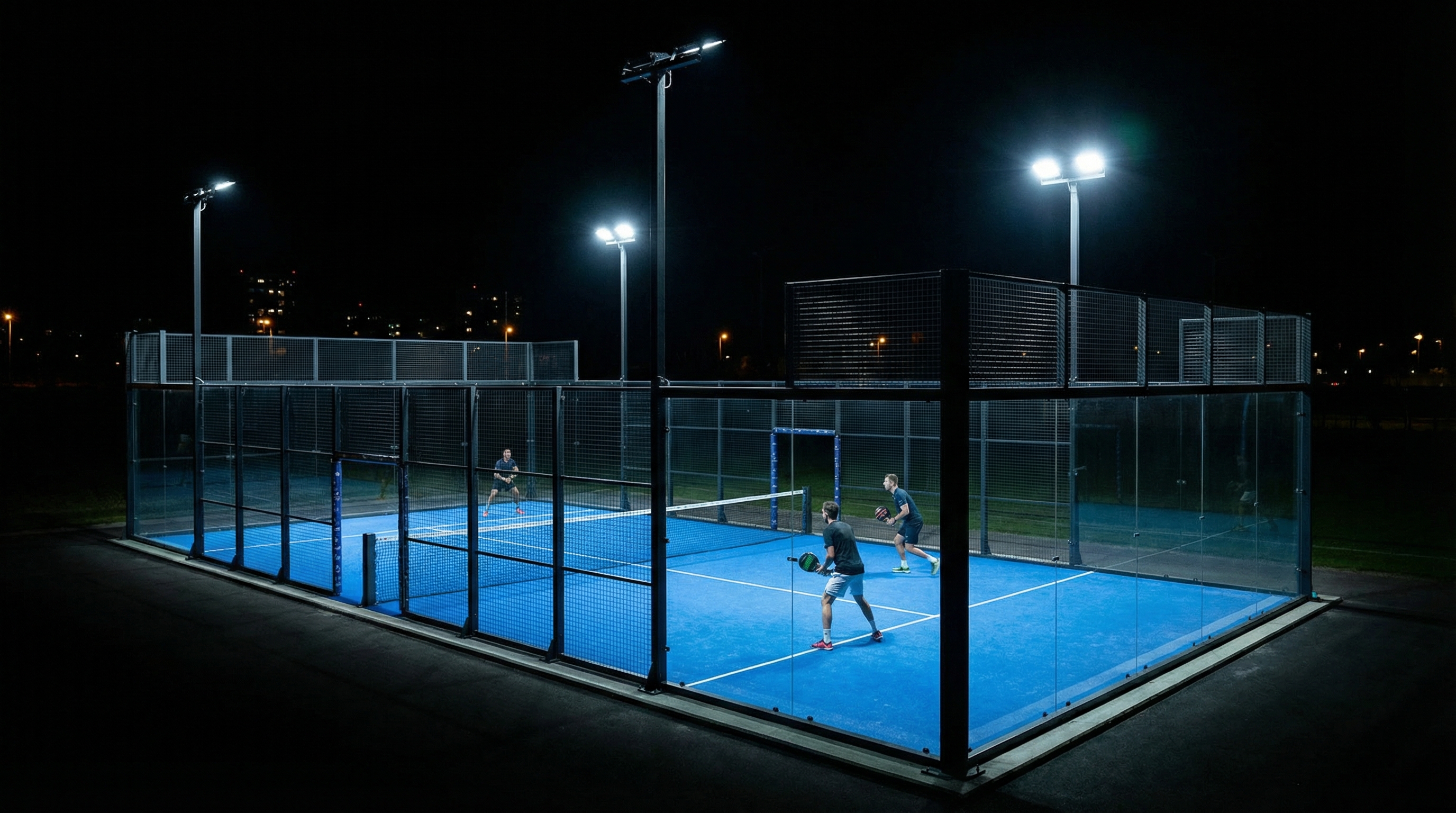
To maximize your revenue, your padel court construction cost must include high-efficiency lighting for evening play. You should expect to invest between $2,500 and $4,000 for a set of eight 200W LED floodlights mounted on four structural posts. Integrating these into a panoramic padel court allows you to operate until late at night, significantly increasing your return on investment.
Energy Efficiency and Operational ROI
That’s not all:
- Modern LED systems use 50% less energy than older halide bulbs, drastically lowering your monthly utility bills.
- Lights with an IP66 waterproof rating are essential for outdoor courts to prevent failure during rain or high humidity.
Electrical Wiring and Control Panels
Here’s the kicker:
- You must account for the cost of trenching cables from your main power source to each court.
- Automated lighting controllers allow players to activate lights via booking apps, reducing your staffing requirements.
| Lighting Feature | LED System | Traditional Halide |
|---|---|---|
| Energy Consumption | Low (1.6 kW total) | High (3.2 kW total) |
| Warm-up Time | Instant | 10 – 15 Minutes |
| Lifespan | 50,000 Hours | 10,000 Hours |
| Maintenance | Minimal | Frequent bulb changes |
Key Takeaways:
- LED lighting is an essential investment for 24/7 revenue generation.
- Proper IP ratings protect your electrical components from environmental damage.
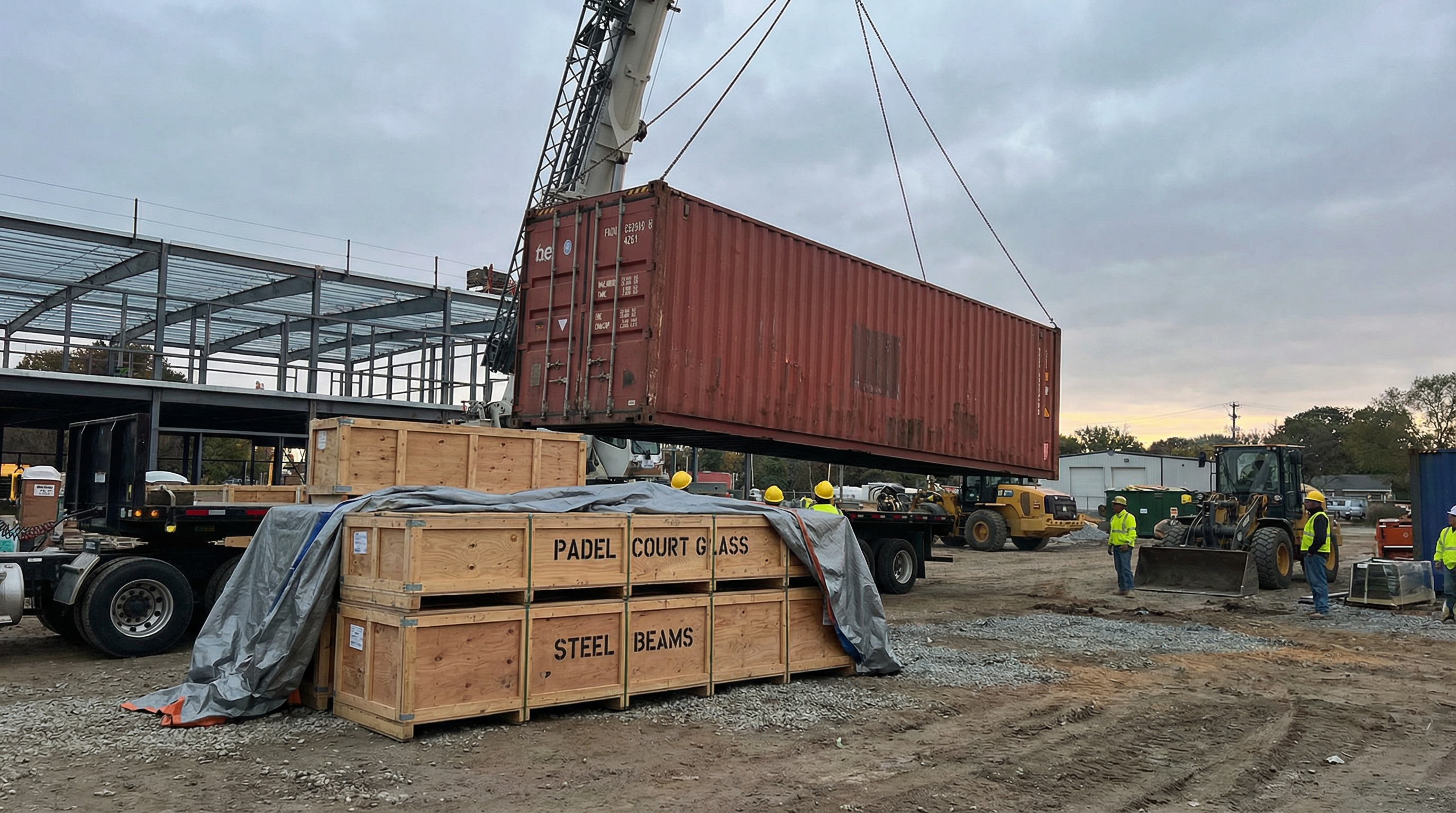
Many investors underestimate the logistical portion of their padel court construction cost, which can range from $5,000 to $10,000 per court. Since professional courts are typically shipped in 40-foot containers, you must account for ocean freight, local port fees, and inland trucking. Failing to calculate these “hidden” costs early in the planning phase can lead to significant budget shortfalls just as the equipment arrives.
Customs Duties and Import Taxes
Imagine this:
- Depending on your country, import tariffs and VAT can add 10% to 25% to the declared value of your court kit.
- Working with an experienced customs broker ensures your paperwork is correct, preventing expensive storage fees at the port.
On-Site Unloading and Equipment Rental
To make it even better:
- You will need a forklift or small crane to unload the heavy glass crates and steel beams from the container.
- Budgeting for a 2-day equipment rental ensures your installation team can work efficiently without manual handling delays.
| Logistics Step | Estimated Cost (USD) | Note |
|---|---|---|
| Ocean Freight | $3,000 – $6,000 | Varies by global route |
| Port & Customs Fees | $1,500 – $3,000 | Includes brokerage and duties |
| Inland Delivery | $1,000 – $2,500 | From port to your site |
| Equipment Hire | $500 – $1,000 | Forklifts and glass lifters |
Key Takeaways:
- Always request a “Door-to-Port” or “Door-to-Door” quote to clarify all shipping responsibilities.
- Budget for local taxes and duties based on your specific region’s trade agreements.
How to reduce your padel court construction cost?
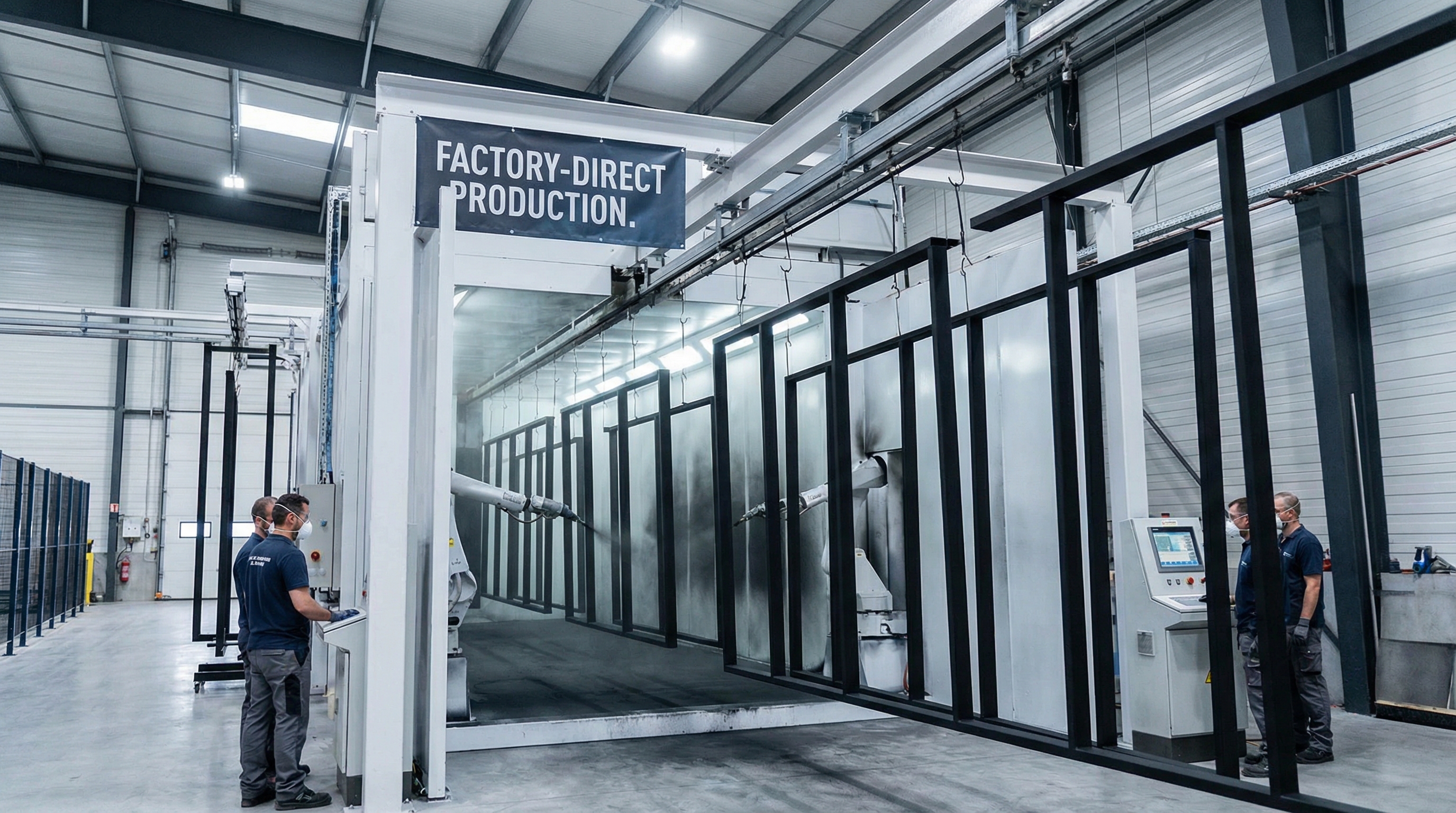
The most effective strategy to lower your padel court construction cost is to bypass middlemen and buy directly from a reputable manufacturer. By leveraging our service, you can secure factory pricing that is often 30% lower than buying through a local sports equipment distributor. This allows you to reallocate those savings into better amenities or additional courts, accelerating your path to profitability.
The Factory-Direct Advantage
It’s simpler than you think:
- Buying direct gives you access to full OEM customization, including your club’s logo and specific RAL colors.
- Eliminating distributor markups means you can afford higher-quality 12mm glass and textured turf for the same price as a basic court.
DIY Site Prep vs Turn-Key Services
What’s the bottom line?
- Hiring a local civil engineering firm for the concrete work is usually cheaper than paying for a specialized padel company to travel.
- You can save thousands by managing the foundation and electrical permits yourself while using the manufacturer’s installation guides.
| Saving Strategy | Impact | Estimated Saving |
|---|---|---|
| Factory Direct | High | $5,000 – $10,000 per court |
| Local Civil Work | Medium | $3,000 – $5,000 per court |
| Bulk Ordering (3+ courts) | Medium | 10% discount on shipping |
Key Takeaways:
- Sourcing components directly from the factory is the most impactful way to control your budget.
- Managing local contractors yourself can reduce the overhead fees charged by “all-in-one” construction firms.
What is the timeline for building a padel court?
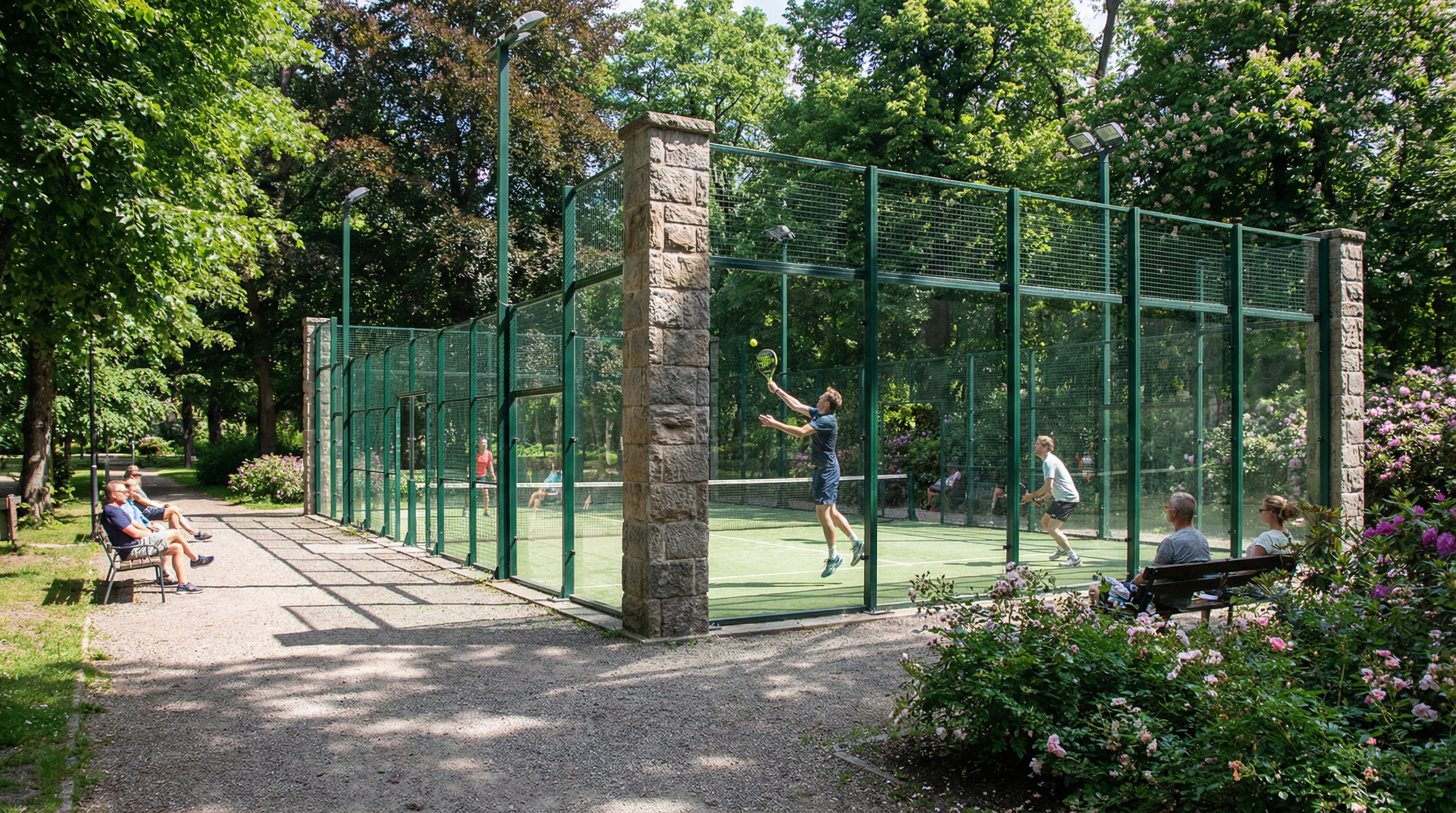
Time management is a critical factor in controlling your padel court construction cost because construction delays lead to lost booking revenue. While the physical assembly of a court only takes 3 to 4 days for a professional crew, the entire project timeline usually spans 8 to 12 weeks. This includes the manufacturing lead time, international shipping duration, and the necessary curing time for the concrete foundation.
Permitting and Legal Approval Windows
Before you start:
- Zoning and construction permits can take anywhere from 4 to 12 weeks depending on your local municipality.
- Securing these approvals before your container arrives prevents expensive storage fees and keeps your project on schedule.
Curing Time for Concrete Foundations
Don’t miss this:
- A new concrete slab must cure for at least 7 to 10 days before you can bolt the heavy steel structure onto it.
- Installing the structure too early can cause the anchor bolts to loosen, compromising the safety of the entire court.
| Phase | Duration | Critical Action |
|---|---|---|
| Permitting | 4 – 12 Weeks | Submit site plans early |
| Manufacturing | 2 – 3 Weeks | Finalize color and turf specs |
| Shipping | 4 – 6 Weeks | Monitor port arrivals |
| Construction | 1 – 2 Weeks | Slab curing and assembly |
Key Takeaways:
- Start the permit process at least three months before your desired opening date.
- Do not rush the concrete curing process; structural integrity depends on a fully hardened base.
What is the long-term ROI of padel court construction?
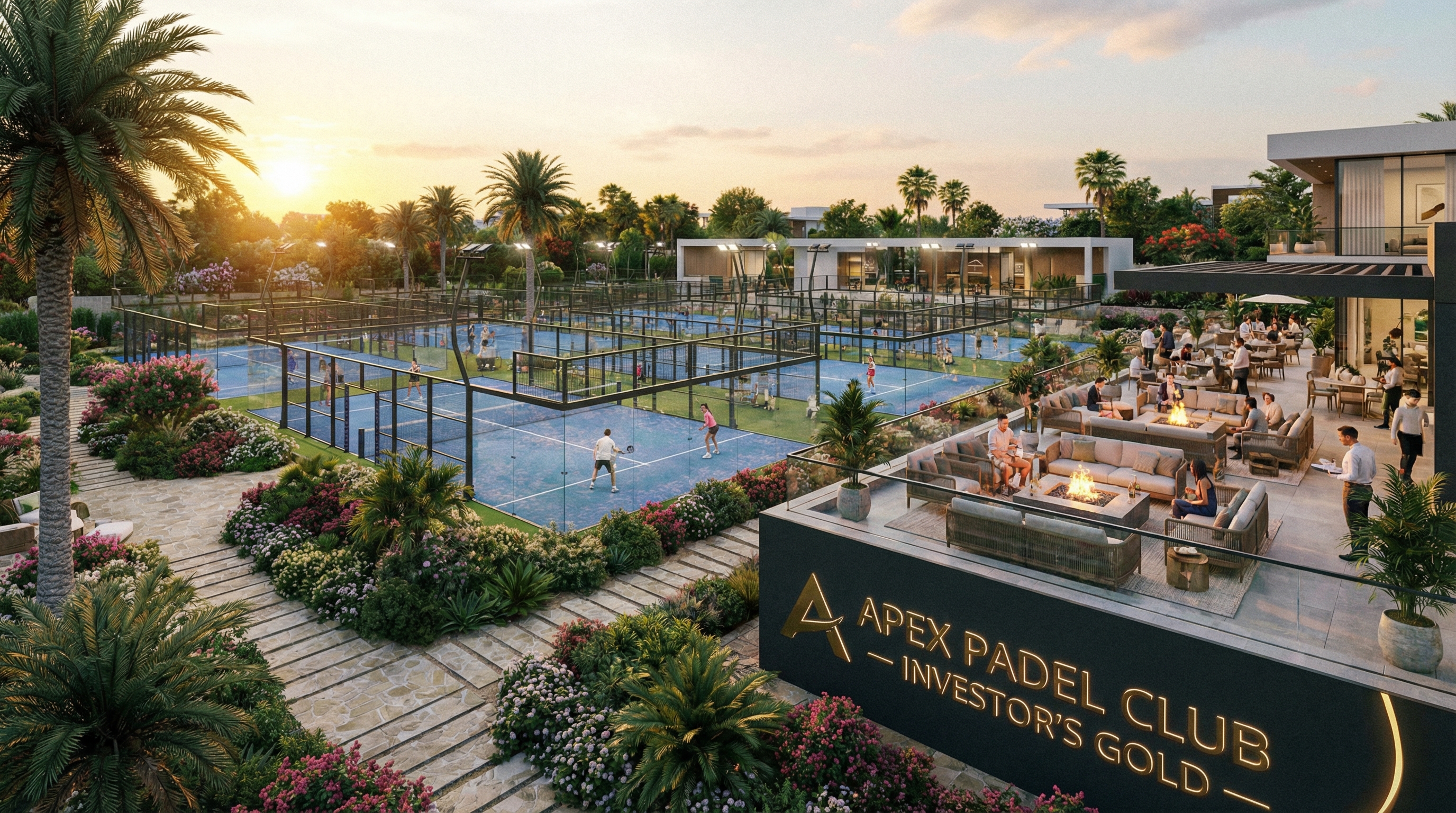
Evaluating your padel court construction cost requires a clear understanding of the revenue potential of a modern facility. A well-managed panoramic padel court can generate between $4,000 and $8,000 in monthly booking fees, meaning the initial investment is often recouped within 18 to 24 months. Beyond court rentals, a successful facility creates additional income streams through coaching, pro-shop sales, and food and beverage services.
Revenue Models and Booking Efficiency
What’s the bottom line?
- Automated booking systems and lighting control reduce your operational overhead, directly increasing your net profit.
- High-quality courts attract tournament play, which brings in sponsorship revenue and high-volume foot traffic to your club.
Lifetime Value and Maintenance
Think about this:
- A court built with hot-dip galvanized steel and 12mm glass has a functional lifespan of over 20 years with minimal maintenance.
- Your initial investment creates a long-term asset that significantly increases the market value of your sports property.
| Revenue Stream | Monthly Potential | Management Effort |
|---|---|---|
| Court Bookings | $4,500 – $7,000 | Low (Automated) |
| Coaching/Clubs | $1,500 – $3,000 | Medium (Contracted) |
| Pro-Shop/Gear | $500 – $1,500 | Medium (Retail) |
| Sponsorships | $200 – $500 | High (B2B Sales) |
Key Takeaways:
- Padel offers one of the highest “revenue per square meter” ratios in the sports industry.
- Durability in construction directly leads to a higher long-term ROI by minimizing repair costs.
Frequently Asked Questions about Padel Court Construction Cost
- What is the single biggest expense in padel construction?
The concrete slab foundation typically accounts for the largest local expense, often matching the cost of the court kit itself. - Can I install a padel court on an existing tennis court?
Yes, converting a tennis court can significantly reduce your padel court construction cost by utilizing the existing foundation. - What’s the best way to lower shipping costs?
Ordering two or more courts simultaneously allows you to maximize container space and reduce the per-unit cost of international freight. - Is 12mm glass mandatory for all commercial courts?
While not always a legal requirement, 12mm glass is highly recommended for commercial use to ensure safety and superior ball rebound. - Can I build a padel court myself to save money?
While you can manage the civil work, we recommend using professional installers for the glass and turf to ensure safety and warranty compliance.
Building a world-class padel facility is a strategic investment that balances high-quality materials with efficient construction management. By focusing on factory-direct sourcing and meticulous site preparation, you can ensure your project delivers a premium experience while maintaining a healthy return on investment.
Ready to start your project?
Contact us today for a custom quote and save 30% by buying directly from the manufacturer.