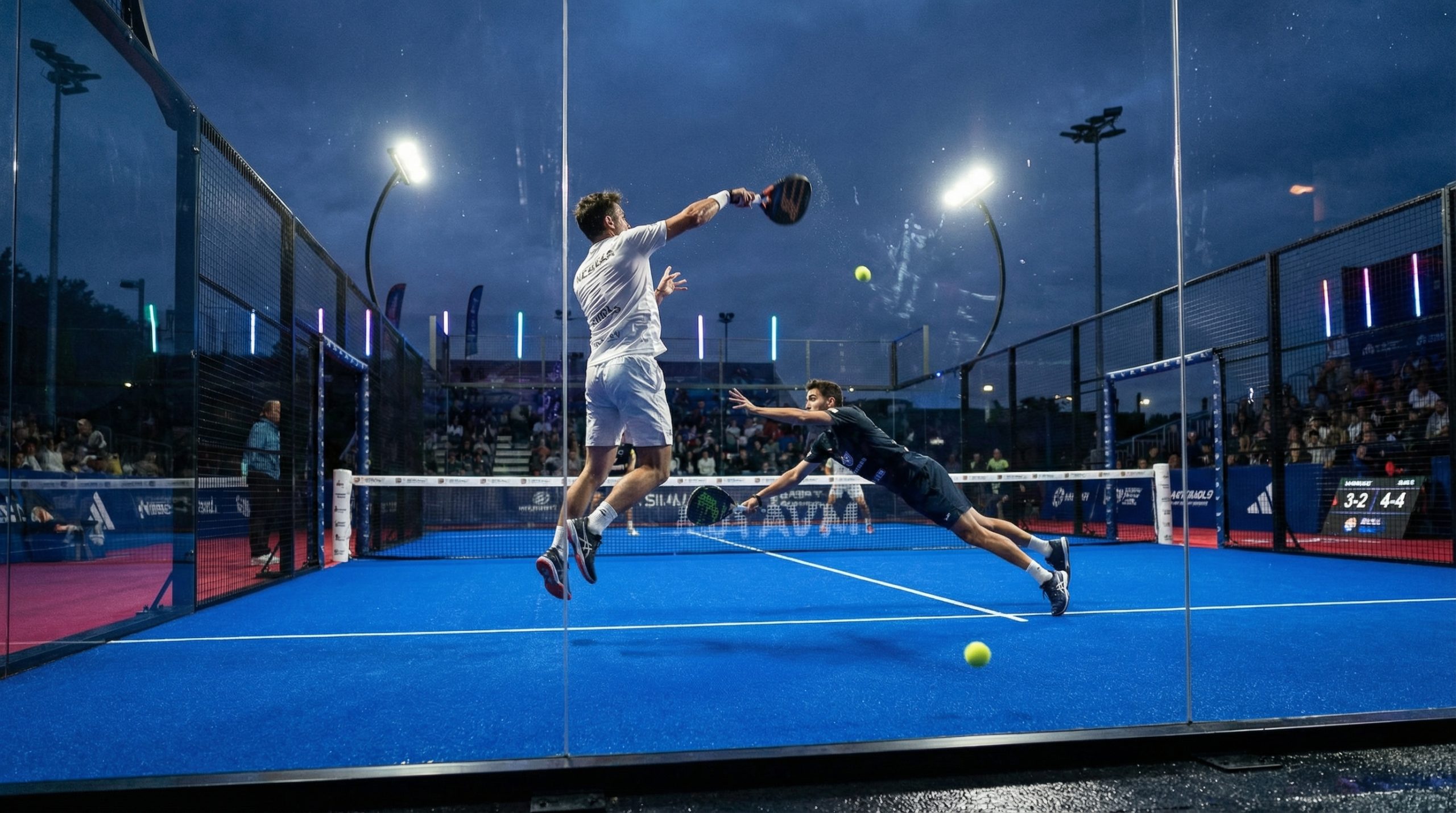
padel tenis is a social racket sport played on an enclosed court, built using a combination of specialized glass, steel frames, and synthetic turf. Finding a high-growth sport that maximizes facility space is a constant challenge for club owners. Traditional tennis courts require massive areas and often see declining engagement from younger demographics who prefer faster, more social games. By choosing to build a court, you solve the space efficiency problem while tapping into the world’s fastest-growing athletic trend.
What is the definition of padel tenis?
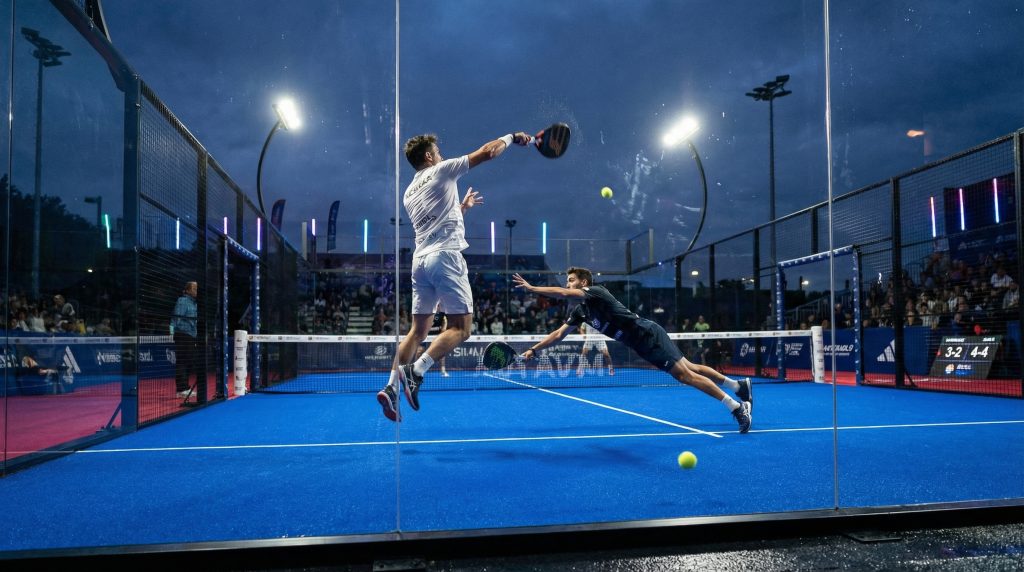
padel tenis is a racket sport played in doubles on an enclosed court that is approximately 25% smaller than a standard tennis court. The game utilizes the surrounding glass walls, allowing the ball to be played off them to keep rallies going longer. This unique dynamic creates a low-entry barrier for beginners while offering deep strategic complexity for advanced players.
Is it different from tennis?
Think about it: while the scoring is identical to tennis, the equipment and court boundaries change the game entirely. Players use solid, perforated paddles instead of stringed rackets to hit a slightly depressurized ball.
- Played exclusively in doubles format.
- Underhand serves are mandatory.
- Walls are part of the active field of play.
- The court is fully enclosed by glass and mesh.
Key Takeaway: Understanding the fundamental mechanics of the sport is the first step toward building a successful and engaging facility.
| Feature | Padel Specification |
|---|---|
| Players | 4 (Doubles) |
| Scoring | 15, 30, 40, Game |
| Walls | 3m Glass / 4m Back |
The technical foundation of the game dictates the architectural requirements for any new construction project.
How much space is needed for padel tenis?
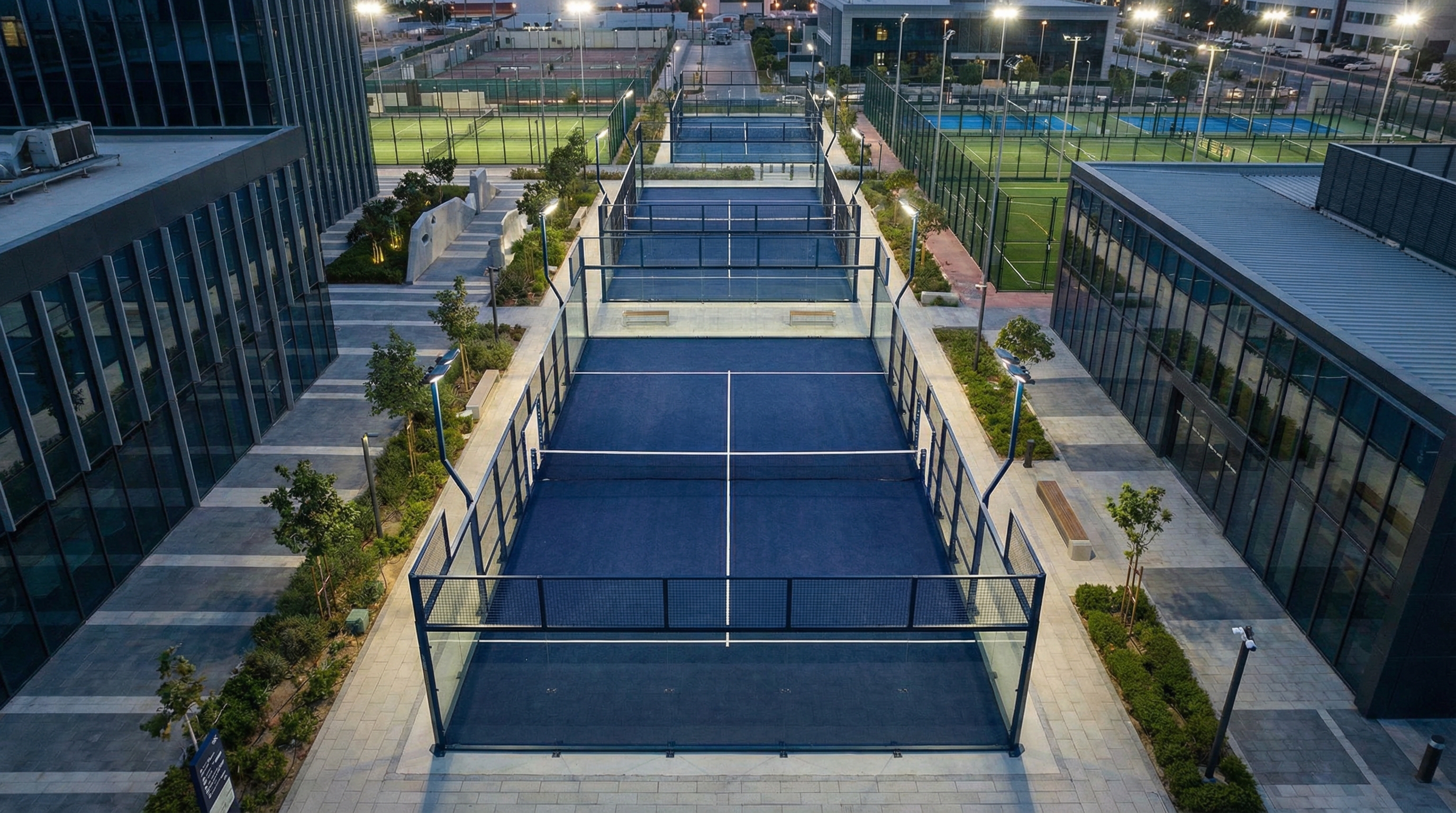
A standard court for padel tenis requires a footprint of 10 meters in width and 20 meters in length. When planning your facility, you must also account for a small “safety zone” or clearance area around the structure for maintenance and player movement. Because of this compact size, you can typically fit three courts in the space of one traditional tennis court.
Can you build a Standard Padel Court?
The best part? A Standard Padel Court fits easily into existing sports clubs or even converted industrial warehouses. Proper spacing ensures that players can move freely without interfering with adjacent matches.
- Internal court dimensions: 10m x 20m.
- Total area required: 200 square meters per court.
- Minimum ceiling height: 6 meters (8 meters preferred).
- Recommended perimeter clearance: 0.5 to 1 meter.
Key Takeaway: Maximizing your square footage with multiple courts is the most effective way to increase player turnover and club revenue.
| Component | Minimum Dimension |
|---|---|
| Court Width | 10 Meters |
| Court Length | 20 Meters |
| Clearance | 0.5 Meters |
Efficient land use is a primary driver behind the rapid adoption of this sport in urban environments.
Which materials are best for padel tenis?
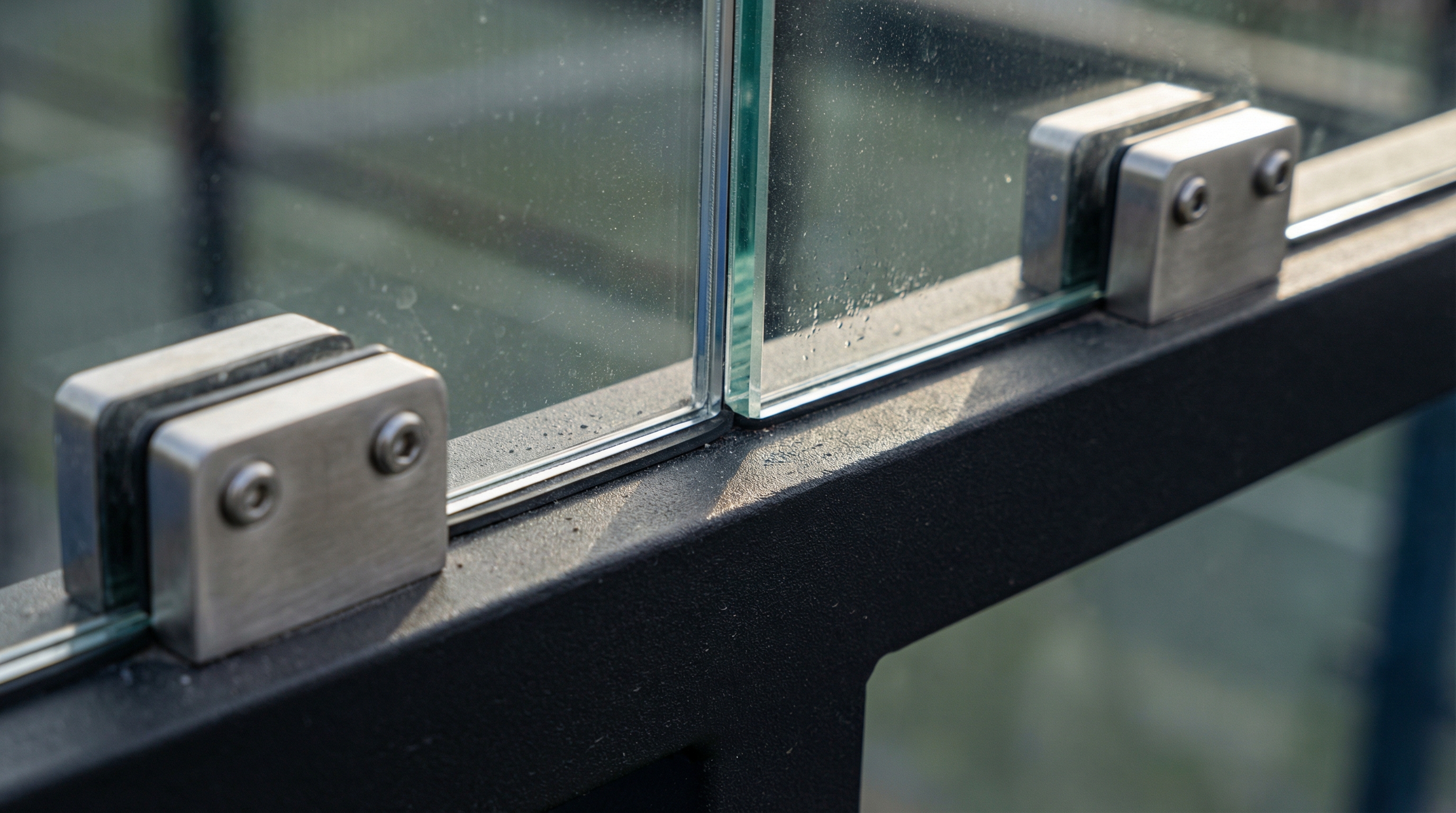
Selecting high-quality materials for padel tenis ensures structural longevity and provides a consistent bounce for competitive play. The most critical elements are the tempered glass panels and the galvanized steel frame that withstands high-impact use. Investing in premium materials reduces long-term maintenance costs and improves the overall player experience.
Should you use a Panoramic Padel Court?
Here is the deal: a Panoramic Padel Court offers an unobstructed view for spectators by removing the vertical steel pillars in the back glass section. This creates a high-end aesthetic that is perfect for televised tournaments or luxury clubs.
- 10mm or 12mm tempered safety glass.
- Galvanized steel with electrostatic powder coating.
- Electro-welded mesh for side fences.
- Stainless steel hardware to prevent corrosion.
Key Takeaway: Material quality directly impacts the safety and durability of the installation, especially in outdoor or humid climates.
| Material | Industry Standard |
|---|---|
| Glass Type | Tempered Safety Glass |
| Frame | Galvanized Steel |
| Coating | Powder Coated |
Choosing the right structural components ensures that your investment remains a valuable asset for decades.
How do you start a padel tenis project?
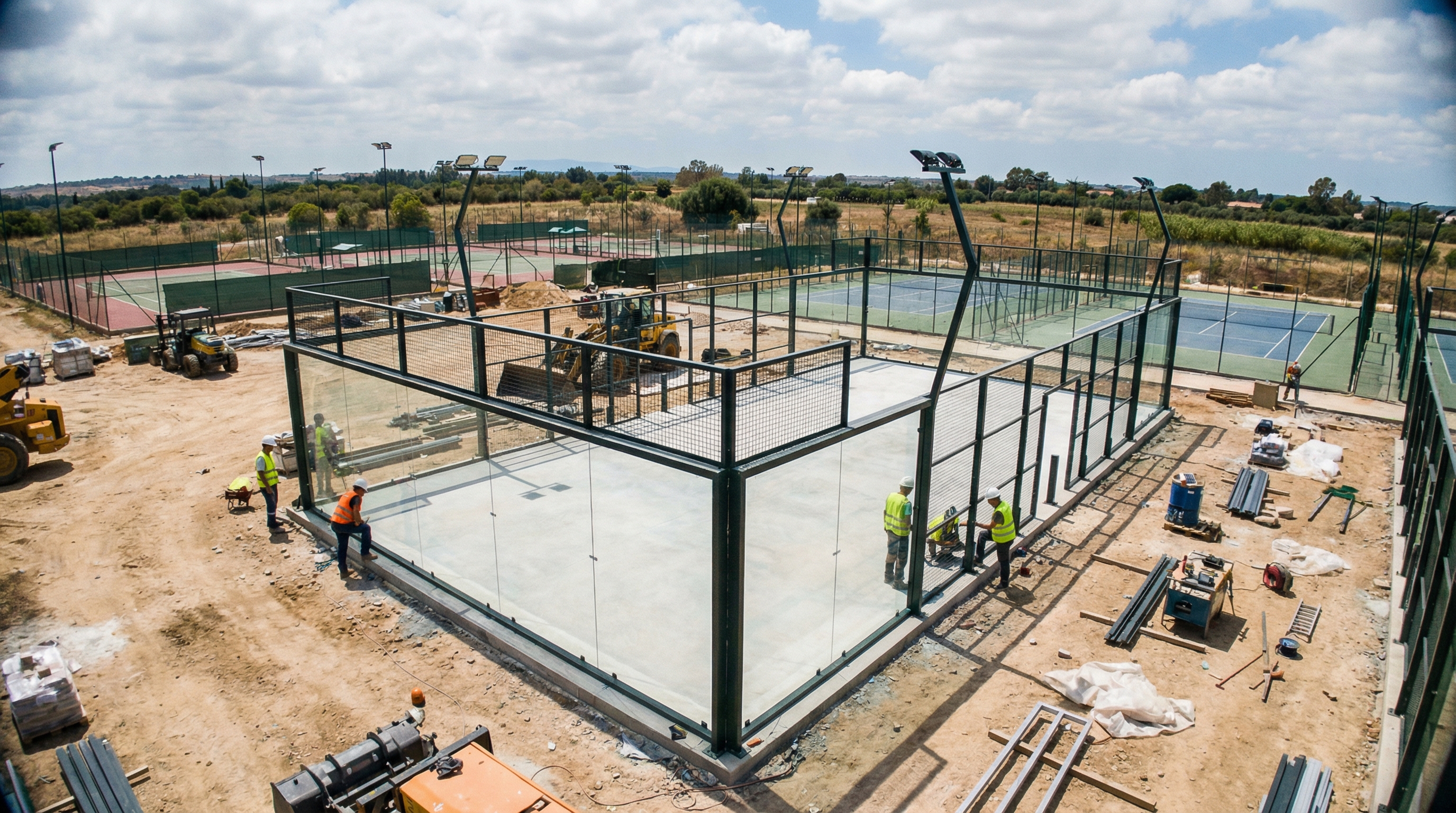
Starting a project for padel tenis begins with a comprehensive site assessment and a solid concrete foundation. The ground must be perfectly level and porous to allow for proper drainage, especially for outdoor installations. Once the base is cured, the metal structure is anchored securely to the perimeter of the concrete slab.
Is the Padel Structure important?
You might be wondering: why is the Padel Structure so vital to the construction phase? It serves as the skeleton of the court, holding the heavy glass panels in place and supporting the lighting masts.
- Soil analysis and excavation.
- Reinforced concrete perimeter beam.
- Porous concrete or asphalt sub-base.
- Precision anchoring of the metal pillars.
Key Takeaway: A flawless foundation is the most important part of construction, as any leveling error will affect the ball’s bounce.
| Phase | Core Task |
|---|---|
| Planning | Site Survey |
| Foundation | Concrete Leveling |
| Assembly | Structural Anchoring |
Proper project management during the initial phases prevents costly adjustments during the final assembly of the court.
What are the technical specs of padel tenis?
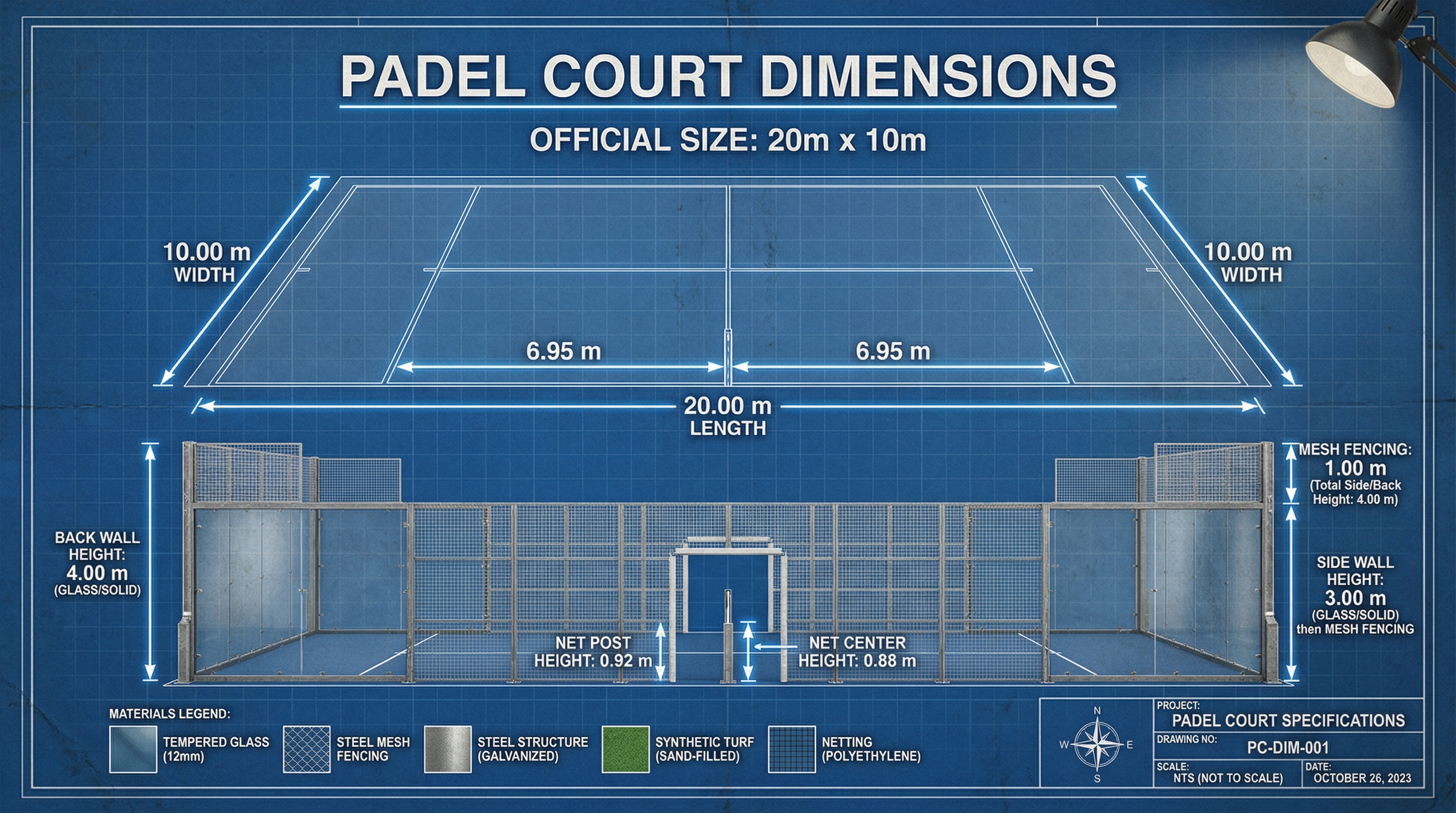
Technical specifications for padel tenis are strictly governed to ensure that every court provides a professional-grade experience. These specs cover everything from the friction coefficient of the turf to the tension of the center net. Builders must adhere to these standards to host official tournaments and attract serious competitive players.
What about the Padel Grass?
Believe it or not, the Padel Grass is engineered specifically to handle the frequent pivots and lateral movements of the players. This synthetic turf is usually filled with kiln-dried silica sand to stabilize the fibers and control the ball speed.
- Fibrillated or monofilament turf fibers.
- Sand infill density: 8-10kg per square meter.
- Net height: 88cm at center, 92cm at posts.
- Glass tolerance: ± 2.0 mm flat.
Key Takeaway: Adhering to technical standards ensures that your facility is recognized as a professional venue by local federations.
| Specification | Standard Value |
|---|---|
| Net Height | 88cm (Center) |
| Sand Type | Silica Sand |
| Turf Height | 10mm – 12mm |
Precision in technical details separates a standard backyard setup from a world-class sporting facility.
Why is lighting vital for padel tenis?
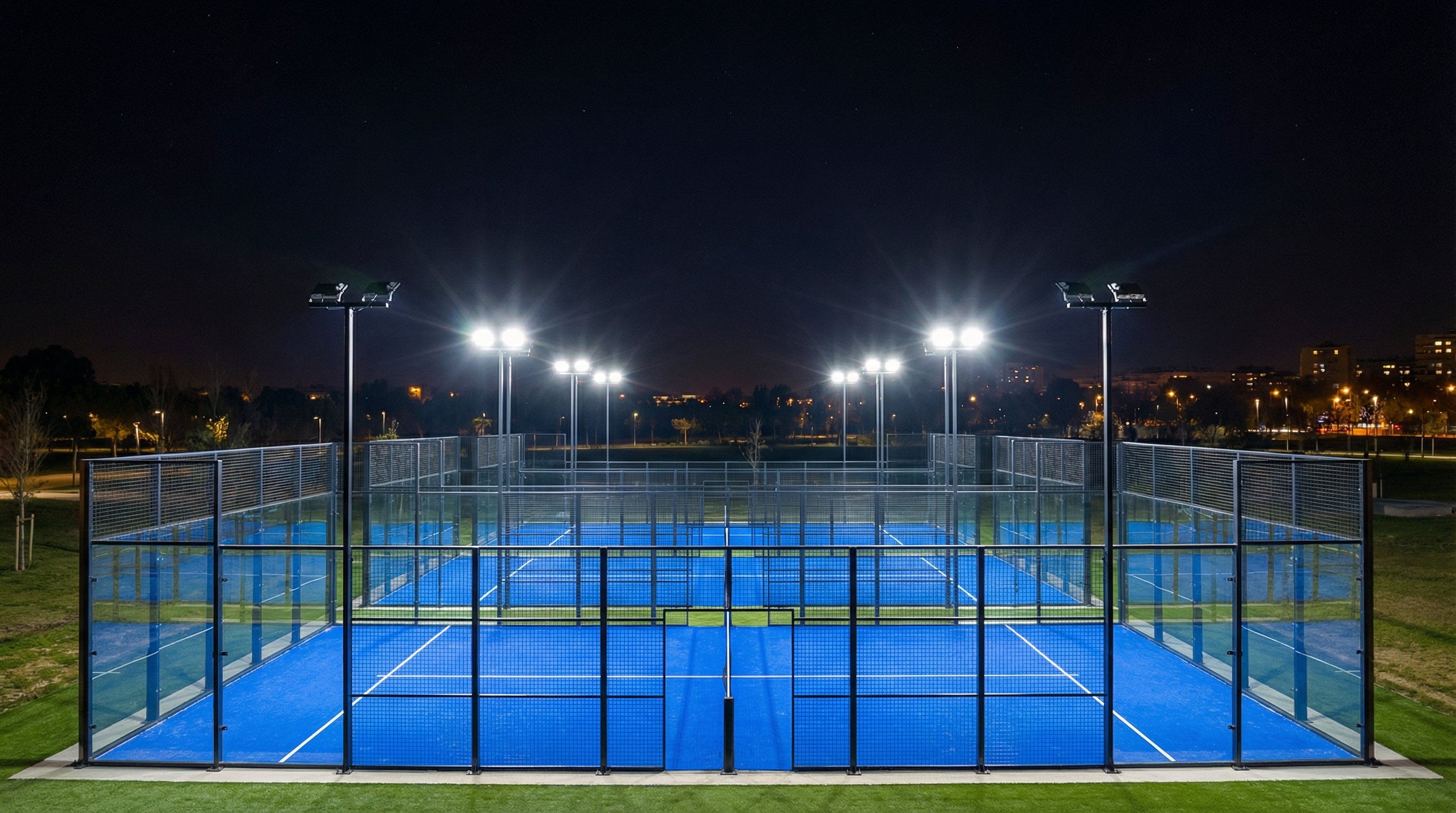
Lighting is essential for padel tenis because the game is frequently played in the evenings or inside indoor halls. High-quality LED floodlights provide uniform illumination without creating shadows or glare that could distract the players. Proper lighting also allows for 24/7 court utilization, which is a major factor in the profitability of a sports club.
How many lights are needed?
The truth is: most professional setups use eight LED projectors mounted on four corner masts to ensure total coverage. This configuration eliminates dark spots and allows players to track high lobs across the entire court.
- Minimum 300-500 lux for amateur play.
- Over 750 lux for professional tournaments.
- Anti-glare technology for player comfort.
- Energy-efficient LED bulbs for low overhead.
Key Takeaway: Professional lighting extends your operating hours and enhances the visual appeal of the facility during night matches.
| Light Metric | Requirement |
|---|---|
| Amateur Lux | 300 Lux |
| Pro Lux | 750+ Lux |
| Bulb Type | LED |
Investing in high-end lighting systems ensures that the facility remains functional and safe at all times of the day.
How do you maintain a padel tenis court?
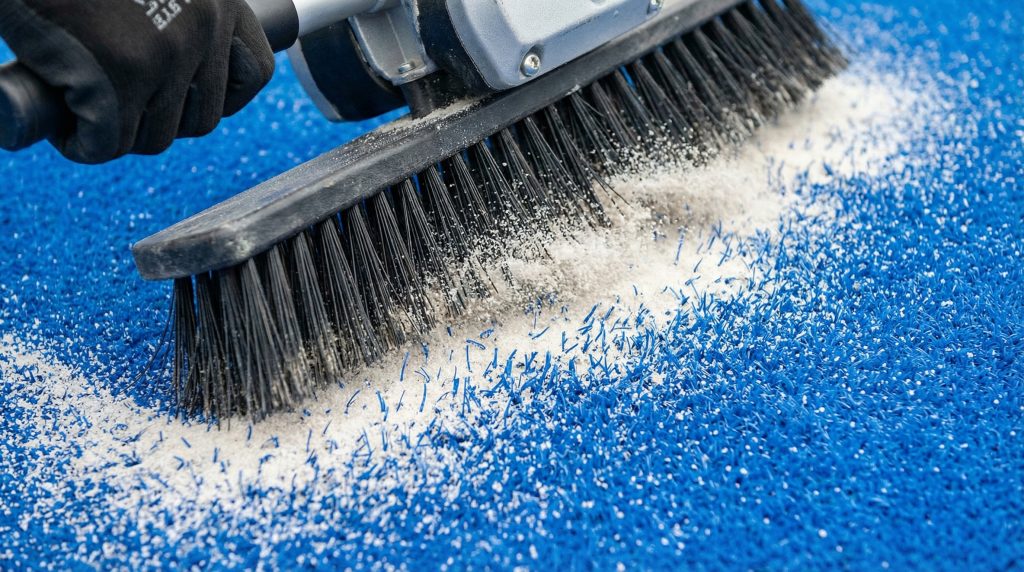
Maintaining a padel tenis court is relatively simple but requires consistency to preserve the quality of the playing surface. Regular brushing of the synthetic grass redistributes the sand infill, preventing the fibers from flattening and becoming slippery. Additionally, the glass panels should be cleaned regularly to maintain visibility and aesthetic appeal.
What is the cleaning routine?
It is simpler than you think: daily walk-throughs to remove debris and weekly brushing are usually enough to keep the court in top shape. Periodically, you should also check the tension of the bolts in the steel frame.
- Weekly turf brushing to redistribute sand.
- Glass cleaning with non-abrasive materials.
- Monthly bolt and anchor inspections.
- Annual sand replenishment as needed.
Key Takeaway: A well-maintained court lasts longer and prevents common player injuries caused by slippery or uneven surfaces.
| Maintenance Task | Frequency |
|---|---|
| Brushing | Weekly |
| Glass Cleaning | Bi-Weekly |
| Safety Check | Monthly |
Consistency in upkeep protects your capital investment and ensures high player satisfaction rates year after year.
What is the ROI of padel tenis courts?
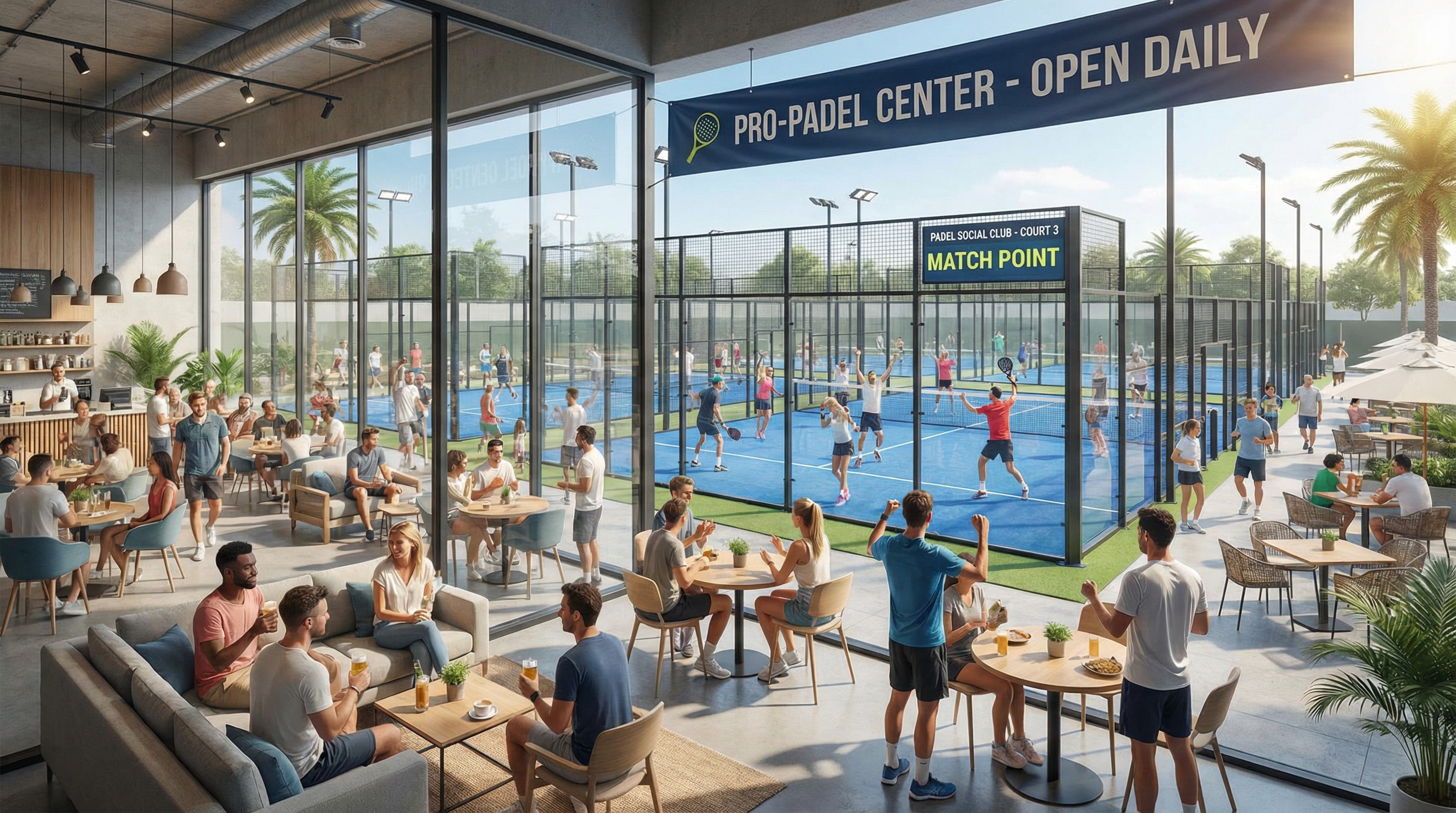
The return on investment for padel tenis is significantly higher than that of most other sports facilities. Because a single court occupies less space, you can generate more revenue per square meter through hourly rentals and coaching fees. Furthermore, the social nature of the game often leads to increased secondary spending on food and beverages at clubhouses.
How fast is the payback?
The bottom line: many clubs report a full return on their investment within the first 18 to 24 months of operation. This rapid payback period is driven by high occupancy rates and the ability to host four players per session.
- High density of players per square meter.
- Lower maintenance costs compared to clay tennis.
- High demand for corporate league play.
- Recurring revenue from racket rentals and shop sales.
Key Takeaway: The combination of low operating costs and high demand makes this one of the most profitable sports investments available.
| Revenue Stream | Growth Potential |
|---|---|
| Hourly Rental | High |
| Coaching | Medium |
| Equipment Sales | Medium |
Financial success in this industry is tied directly to court occupancy and the social atmosphere of the venue.
What is the global growth of padel tenis?

The growth of padel tenis is currently explosive, with thousands of new courts being built across Europe, the Middle East, and the Americas every year. It has transitioned from a niche hobby to a mainstream sport that attracts celebrity investment and major corporate sponsorships. This global momentum ensures a steady stream of new players and a robust secondary market for equipment.
Why is it growing so fast?
Make no mistake: the social aspect is the primary driver of the sport’s popularity across different cultures. It is a game that is easy to learn but difficult to master, making it addictive for casual and competitive athletes alike.
- Over 25 million active players worldwide.
- Second most popular sport in Spain.
- Rapidly expanding in the United States and UK.
- Professional tours increasing global media exposure.
Key Takeaway: Entering the market now allows you to capitalize on a global trend that shows no signs of slowing down.
| Region | Growth Rate |
|---|---|
| Europe | High |
| Middle East | Very High |
| North America | Emerging |
The international popularity of the sport provides a stable environment for long-term business planning and expansion.
FAQ: Common questions about padel tenis?
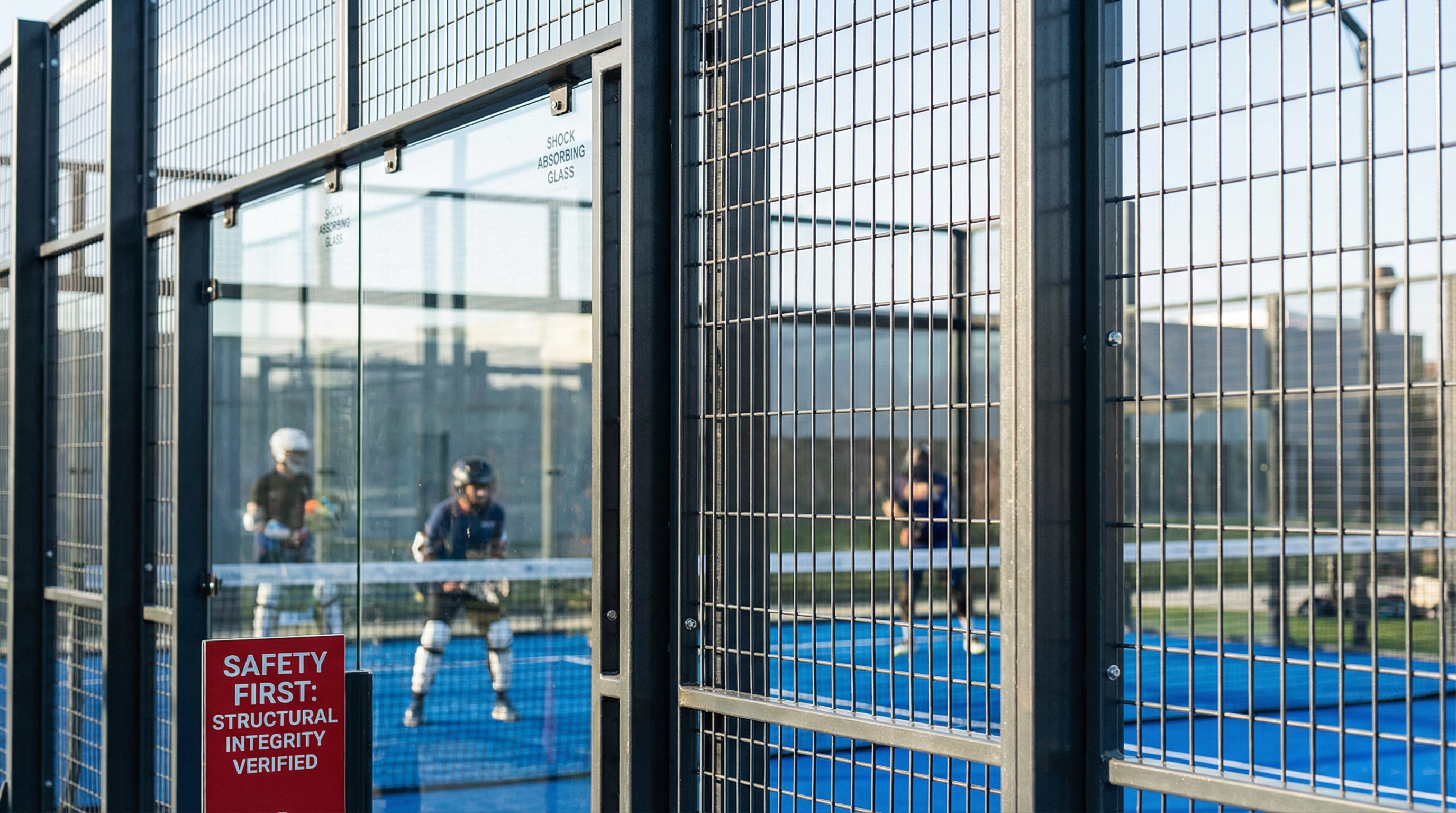
Padel is a dynamic sport that generates many questions from prospective builders and facility managers regarding padel tenis. Providing clear answers helps streamline the planning process and ensures everyone involved understands the requirements for a professional-grade installation.
How to get started
You might be wondering: what is the very first step to take? The best way to begin is by consulting with an expert builder who can provide technical drawings and a customized quote for your specific site.
- Evaluate available land area.
- Check local zoning and height permits.
- Define the budget for materials and lighting.
- Select a certified court manufacturer.
Key Takeaway: Professional consultation during the planning phase prevents structural errors and ensures the longevity of your court.
| Step | Priority |
|---|---|
| Site Survey | Critical |
| Permit Approval | High |
| Manufacturer Choice | Essential |
A structured approach to the initial planning phase is the foundation of a successful sports business venture.
Conclusion
In summary, padel is more than just a sport; it is a high-growth business opportunity that combines social engagement with space efficiency. By investing in quality materials, professional lighting, and a solid foundation, you can create a world-class facility that offers a rapid return on investment. If you are ready to transform your facility or start a new venture in the world of professional sports, we are here to help. Our team of experts specializes in premium court design and construction to ensure your project is a resounding success. To get started with your custom plan, contact us today and let us bring your vision to life.
FAQ
- Can I build a court on my own property? Yes, as long as you have a level surface of 200 square meters and meet local zoning laws for sports structures.
- What’s the best way to choose a court manufacturer? Look for suppliers that provide galvanized steel, high-impact tempered glass, and professional-grade synthetic turf certifications.
- How do I know if my ceiling is high enough? A minimum of 6 meters is required, but 8 to 10 meters is recommended to allow for competitive lobs during matches.
- Can I convert a tennis court into padel courts? Absolutely, and this is highly recommended because you can fit up to three padel courts within the footprint of one tennis court.
- How do I start the building process? The best first step is to consult with an expert builder who can provide technical drawings and a customized quote for your site.