
Padel rankings are a numerical representation of a player’s performance level over a specific period, serving as the definitive yardstick for progress in the sport. Have you ever stepped onto a court feeling confident, only to realize within minutes that your opponents are operating on a completely different level? This mismatch is one of the most frustrating experiences for any enthusiast, leading to wasted hours and stunted development. It is incredibly difficult to find fair matches or enter appropriate tournaments when you have no objective way to measure your skills against the wider community. Fortunately, the implementation of structured padel rankings solves this dilemma by providing a transparent, merit-based system that ensures you are always competing against players of a similar caliber.
How official padel rankings track your progress?
Official padel rankings track your progress by recording every result from sanctioned tournaments and converting those victories into a cumulative points total. This system ensures that every match you play in a competitive environment contributes to your standing within the local, national, or even international hierarchy. Instead of relying on subjective opinions about your “form,” the ranking system offers a cold, hard data set that reflects your consistency. As you win more matches and progress deeper into tournament draws, your point tally increases, allowing you to climb the ladder.

The significance of consistency
Believe it or not, showing up is half the battle in the world of competitive padel. The system rewards those who play regularly and maintain a steady level of performance across various events.
- Regular participation prevents point stagnation.
- Consistency helps in maintaining a “seed” for future draws.
- Frequent play provides more opportunities to replace poor results with better ones.
Understanding the win-loss ratio
Think about it: does a single loss ruin your ranking? The short answer is no, because most systems focus on your best performances rather than penalizing every single misstep.
- Points are generally awarded based on how far you progress in a bracket.
- A high win-loss ratio usually indicates you are ready for a higher tournament grade.
- Defeating higher-ranked opponents often yields a greater psychological and mathematical boost.
Data visualization of progress
But wait, there is more to your ranking than just a single number on a screen. Modern systems provide detailed breakdowns of where your points come from and how you compare to your peers in the same region.
| Progress Metric | Description | Impact on Rank |
|---|---|---|
| Points Earned | Total points from top-tier results. | Primary factor in movement. |
| Ranking Position | Your numerical standing against all players. | Determines tournament entry. |
| Performance Trend | Upward or downward movement over 3 months. | Indicates current form. |
The data shows that tracking points earned over time is the most reliable way to measure a player’s actual competitive growth.
Key Takeaway: Your ranking is a living document of your dedication and success on the court.
What is the calculation logic behind your score?
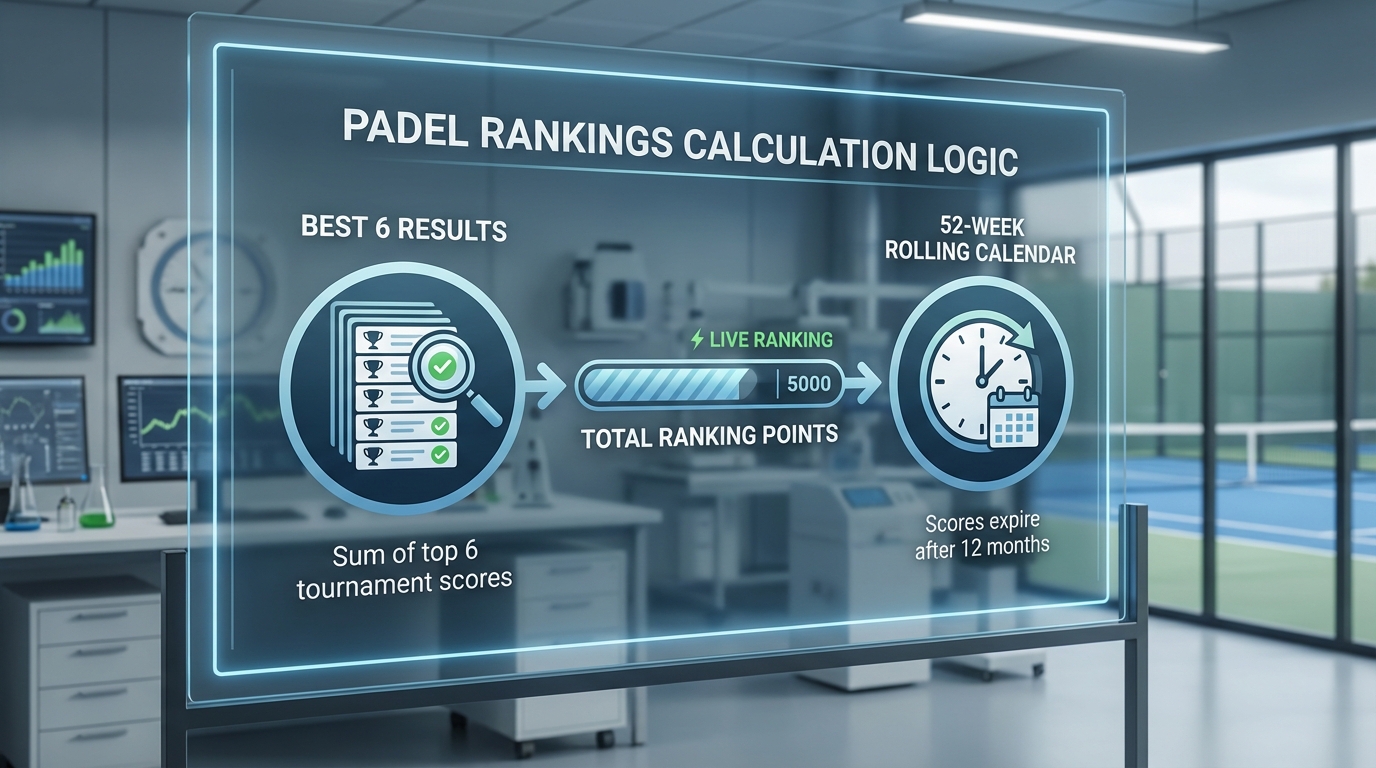
The calculation logic behind your score is typically based on a “rolling” points system that evaluates your best performances over the last 12 months. This means your current total is not a lifetime achievement award, but rather a reflection of your recent competitive output. Most governing bodies use a specific formula where only a set number of your highest-scoring tournaments (often the best six or eight) are counted toward your total. This prevents players who play every single weekend from unfairly outranking superior players who play less frequently but win more often.
The “Best Results” rule
You might be wondering why not all your tournaments count toward your total score. The logic is simple: it encourages quality over quantity and protects players from being punished for trying higher-level events.
- Only the highest point totals from a specific number of events are used.
- Lower scores are automatically dropped from the calculation.
- This allows players to experiment with tougher competitions without fear of ruining their average.
Point weighting by round
Here is the kicker: the further you go in a tournament, the points don’t just increase—they often double or triple in the final stages. A semi-final appearance is significantly more valuable than two first-round wins in different events.
- Points are assigned to each round (R16, Quarter-finals, etc.).
- Winners receive the maximum allocation for the tournament grade.
- Byes do not typically award points unless a match is subsequently won.
The math of competitive equilibrium
Does the system ever feel unfair? In reality, the mathematical logic is designed to create a “bell curve” where the majority of players sit in the middle, and only the elite reach the top.
| Result Tier | Calculation Method | Player Outcome |
|---|---|---|
| Winner | 100% of available points. | Maximum rank jump. |
| Finalist | ~70% of winner’s points. | Significant upward movement. |
| Semi-Finalist | ~50% of winner’s points. | Stable rank maintenance. |
Analyzing the distribution shows that reaching the final stages of a tournament is the only way to achieve exponential ranking growth.
Key Takeaway: The “best results” logic ensures that your peak performance defines your standing, not your worst days.
How does tournament performance impact your position?
Tournament performance impacts your position by determining the volume of points you inject into your padel rankings profile after every event. In the world of competitive padel, not all wins are created equal. Winning a small club match is a great achievement, but winning a match in a high-grade national tournament carries far more weight. Your position on the leaderboard is essentially a reflection of your ability to perform under pressure against varying levels of opposition. When you perform well in “high-stakes” environments, the system responds by boosting your position significantly.

The multiplier effect of tournament grades
Look, if you want to climb the ranks, you need to understand that different tournaments have different point multipliers. A Grade 1 tournament might offer five times the points of a Grade 5 event.
- High-grade events attract the best players.
- Deep runs in high-grade events lead to rapid ascension.
- Even losing in a late round of a top-tier event can be worth more than winning a low-tier one.
Seedings and their benefits
The best part? Once your performance earns you a high rank, you get “seeded” in future tournaments. This means you are protected from playing other top-ranked players in the very first round.
- Seeded players have a smoother path to the later stages.
- Higher seeds are often placed in brackets with qualifiers.
- Protecting your seed is essential for maintaining a high ranking.
Performance under pressure
How do you handle the big moments? The ranking system doesn’t see your nerves, but it definitely sees the results of those high-pressure tiebreaks.
| Performance Type | Points Impact | Long-term Result |
|---|---|---|
| Over-performance | Huge point gain. | Faster entry to Elite grades. |
| Expected Result | Moderate point gain. | Ranking stability. |
| Under-performance | No point gain. | Potential rank drop as points expire. |
The relationship between tournament difficulty and point rewards ensures that the ranking accurately reflects a player’s ability to compete at the highest possible level.
Key Takeaway: Choosing the right tournaments is just as important as winning the matches themselves.
Why are age categories vital for fair competition?
Age categories are vital for fair competition because they ensure that players are measured against peers with similar physical capabilities and experience levels. Padel is a sport for life, but it would be inherently unfair to rank a 14-year-old prodigy directly against a 45-year-old veteran in the same general pool without sub-classifications. By segmenting the rankings into age-specific brackets, the system allows for multiple leaderboards to coexist. This structure ensures that every player has a “home” where their achievements are recognized within a relevant context.

Development pathways for youth
Think about it: a junior player needs a clear ladder to climb as they grow. Age categories provide a roadmap from under-12s all the way to under-18s, allowing for healthy development.
- Juniors compete against those of the same developmental stage.
- Points earned in junior ranks often help with adult tournament entry.
- It prevents burnout by keeping the competition level appropriate.
Longevity in the senior circuit
The best part is that padel doesn’t stop at 40. Senior categories (often called Veterans) allow experienced players to maintain a competitive ranking long after their “pro” years.
- Categories usually start at 35+ or 40+ and go up in 5-year increments.
- These rankings respect the strategic mastery of older players.
- It fosters a community of lifelong athletes who still want to compete.
Comparing age-based structures
Are you in the right bracket? Most regional associations offer a variety of categories to ensure nobody is left without a fair game.
| Category | Typical Age Range | Focus |
|---|---|---|
| Junior | 10 – 18 years | Skill acquisition and growth. |
| Open/Adult | 18 – 35 years | Peak physical performance. |
| Senior/Vet | 40+ years | Strategy, experience, and longevity. |
Categorizing players by age ensures that the ranking system remains a tool for motivation rather than a source of discouragement.
Key Takeaway: Age-based rankings create a fair playing field for every stage of a player’s life.
How does the calendar affect point movement?
The calendar affects point movement through a 52-week rolling cycle where points earned exactly one year ago are removed and replaced by your most recent results. This dynamic padel rankings system means that you must constantly “defend” your points to stay in the same position. If you won a major tournament in July of last year, those points will disappear from your total this July. This creates a “live” leaderboard that rewards current activity rather than past glory.

The “defending points” phenomenon
Wait, why did my rank drop if I didn’t lose? This is the most common question in padel. If you don’t play a tournament to replace the points that are expiring, your total will naturally decrease.
- Points have an “expiration date” of 12 months.
- Players must play similar grade tournaments annually to maintain their score.
- Missing a “big” tournament you won previously can cause a massive ranking slide.
Seasonal peaks and valleys
Believe it or not, the time of year you play matters. Most regions have a “peak season” with more high-grade tournaments, making it the best time to accumulate points.
- Summer often sees a higher density of outdoor tournaments.
- Planning your calendar is essential for maximizing point gain.
- “Off-season” training is used to prepare for these high-yield periods.
The mechanics of point decay
Understanding the timeline of your points is crucial for any competitive player. You should always be aware of which points are “dropping off” next month.
| Time Elapsed | Point Status | Action Required |
|---|---|---|
| 0 – 10 Months | Active and secure. | None; points are full value. |
| 11 Months | Nearing expiration. | Plan a replacement tournament. |
| 12 Months+ | Expired/Removed. | Must have new points to fill the gap. |
The 52-week rolling system is the industry standard because it ensures the rankings always reflect a player’s current ability level.
Key Takeaway: Consistency across the entire calendar year is the secret to a stable and high ranking.
What special rules apply to junior rankings?
Special rules apply to junior rankings to prioritize player development and safety over pure “win-at-all-costs” competition. Unlike adult rankings, which are often strictly performance-based, junior systems frequently incorporate participation incentives and limitations on the number of events a child can play. This prevents over-training and physical strain while ensuring the environment remains educational. Furthermore, junior rankings often use a different weighting system for international versus domestic events to encourage young players to travel and experience different styles of play.

Participation vs. Performance
In many junior systems, simply entering and completing a tournament earns you “participation points.” This encourages kids to get on the court regardless of the outcome.
- Early-stage rankings focus on getting kids to play more matches.
- It builds a habit of competition without the crushing pressure of losing rank.
- Participation points help fill the bottom of the ranking ladder.
Moving between age groups
Here is an interesting rule: what happens when a junior turns 15 and moves from the U14s to the U16s? Most systems allow for a “transition period” where points are carried over at a reduced rate.
- It prevents a player from starting at zero in a new age group.
- Carrying over points ensures they still get appropriate seeds.
- This creates a seamless bridge between developmental stages.
Junior ranking limitations
To protect the health of young athletes, there are often caps on how many tournaments can count toward a junior rank. This prevents “point chasing” that could lead to injury.
| Feature | Junior Rule | Adult Rule |
|---|---|---|
| Tournament Cap | Often limited (e.g., best 5). | Usually higher (e.g., best 8). |
| Point Decay | Often slower or adjusted by age. | Strict 52-week rolling. |
| Entry Requirements | Age-restricted. | Skill/Rank restricted. |
Junior ranking rules are specifically designed to foster a love for the game while identifying and supporting the stars of the future.
Key Takeaway: Junior systems value development and participation as much as they value the final score.
How can you search for your official rank?
You can search for your official padel rankings through the digital portals or mobile applications provided by your national padel association. Most modern systems are fully transparent, allowing any registered player to log in and see their current position, point breakdown, and match history. This transparency is vital for the integrity of the sport, as it allows players to verify their seeds and check the progress of their rivals. In the digital age, your ranking is no longer a mystery—it is a live data point updated shortly after every sanctioned event.

Using the national database
Look, the first place you should always check is the official website of the governing body in your country. They hold the “master list” that all tournament directors use for seeding.
- Search by your name or unique player ID.
- Filters allow you to see where you stand in your specific county or region.
- You can often see a “live” rank versus a “confirmed” rank.
Third-party apps and club rankings
Believe it or not, many clubs have their own internal ranking systems for “ladder” matches. While these don’t count toward your national rank, they are great for daily practice.
- Club apps often provide a more social ranking experience.
- They allow for quick “challenges” between members of similar levels.
- These apps are often the gateway to entering official tournaments.
Troubleshooting your ranking
Is your score wrong? Sometimes a tournament director might forget to upload a result, or a name might be misspelled. Knowing how to search helps you spot these errors quickly.
| Tool | Best Use | Access Level |
|---|---|---|
| Official Web Portal | Checking national standing. | Public/Registered. |
| Mobile App | Tracking live match results. | Registered users. |
| Email Notifications | Monthly ranking updates. | Subscription-based. |
Easy access to ranking data empowers players to take control of their competitive journey and set realistic goals for the season.
Key Takeaway: Your ranking is publicly verifiable, ensuring a fair and transparent competitive environment for everyone.
What influence do senior categories have on the system?
Senior categories influence the system by providing a high-level competitive outlet for players who have transitioned out of the professional “Open” circuit. These categories are often the most populated in many clubs, as the “veteran” demographic makes up a significant portion of the padel-playing public. The senior ranking system often mirrors the professional one but focuses on age brackets like +40, +45, +50, and beyond. This influence ensures that the sport remains commercially viable and socially active, as seniors often invest more in coaching and equipment to maintain their rankings.

The depth of the senior talent pool
Think about it: many senior players were top-tier athletes in their youth. The quality of play in the +40 and +50 categories is often surprisingly high.
- Senior rankings are highly prestigious in many local communities.
- They prove that padel is a game of strategy over pure power.
- Veteran tournaments often have the largest draws in regional events.
Inter-generational play
Here is the kicker: many senior players also maintain an “Open” ranking. This means they compete in both their age group and the general category, bridging the gap between generations.
- Seniors can test themselves against younger, faster players.
- It brings “old school” tactical wisdom to the modern power game.
- Points earned in Open events can sometimes supplement senior ranks.
Senior ranking breakdown
How do the age groups work? Usually, you can “play down” into a younger age group, but you cannot “play up” into an older one until you reach that age.
| Age Bracket | Competitive Focus | Ranking Difficulty |
|---|---|---|
| +40 Veterans | High intensity, hybrid tactics. | Extremely high. |
| +50 Masters | Strategy, placement, and lobs. | Very competitive. |
| +60 Legends | Endurance and court positioning. | Socially competitive. |
The senior influence ensures that padel is not just a young person’s game, but a lifelong pursuit with recognized achievements at every age.
Key Takeaway: Senior rankings celebrate experience and keep the competitive spirit alive for decades.
How do tournament grades dictate point distribution?
Tournament grades dictate point distribution by assigning a “difficulty level” to every event, which then determines how many points are available to the winners and runners-up. A Grade 1 tournament is the highest level of amateur competition, offering a massive cache of padel rankings points. Conversely, a Grade 7 event might be a local “intro to competition” day with a very small point reward. This hierarchy ensures that players cannot “game the system” by only playing easy, low-level tournaments to reach the top of the leaderboard.

The pyramid of tournament grades
Look at it like a pyramid. There are thousands of low-grade local events at the bottom and only a few high-grade national events at the peak.
- Grade 1 & 2: National championships and elite opens.
- Grade 3 & 4: Regional tournaments for advanced club players.
- Grade 5, 6, & 7: Local club events and starter competitions.
Why play higher grades?
Believe it or not, losing in the first round of a Grade 1 tournament might give you more points than winning a Grade 5 event. This encourages players to push their boundaries.
- It tests your skills against the best players in the region.
- Higher grades offer better facilities and official refereeing.
- The prestige of a “Grade 1” result is a major motivator.
Grade-to-Point mapping
How many points do you actually get? While the exact numbers vary by country, the ratio remains relatively consistent across most systems.
| Tournament Grade | Winner’s Points (Example) | Level of Play |
|---|---|---|
| Grade 1 | 1000 Points | Elite/Semi-Pro. |
| Grade 3 | 400 Points | Advanced Club. |
| Grade 5 | 100 Points | Intermediate/Social. |
The grading system creates a clear ladder of progression, allowing players to see exactly what they need to do to reach the next level of the sport.
Key Takeaway: Understanding the grading system is the first step in strategically building your ranking.
Can rankings help guide your training improvement?
Rankings can guide your training improvement by providing objective feedback on which areas of your game are holding you back from moving to the next level. When you analyze your ranking history, you might notice that you consistently lose to players in a specific point bracket. This data acts as a diagnostic tool. For example, if your rank has plateaued, it may indicate that your current physical or tactical level has reached its limit, and a change in your training regimen is required to break through.

Using rank as a benchmark
Think about it: your ranking is the “final exam” for all those hours spent on the practice court. If your rank is rising, your training is working.
- It provides a tangible goal for your coaching sessions.
- You can tell your coach: “I want to be in the Top 500 by December.”
- It makes training more purposeful and less repetitive.
Identifying “The Ranking Ceiling”
Here is the kicker: every player eventually hits a “ceiling” where their current skills aren’t enough to beat the players ranked above them.
- This is the moment to shift focus from “playing” to “training.”
- Analyzing the top players’ games shows you what skills you lack.
- Use your ranking position to find training partners of a slightly higher level.
Training metrics and ranking
How do you measure improvement outside of matches? You can correlate your physical stats with your tournament results to see what actually matters.
| Training Focus | Expected Ranking Impact | Time to Result |
|---|---|---|
| Tactical/Shot Selection | High (fewer unforced errors). | 1 – 3 Months. |
| Physical Fitness | Medium (better 3rd set performance). | 3 – 6 Months. |
| Technical (New shots) | High (more weapons in match). | 6+ Months. |
By treating your ranking as a piece of performance data rather than a status symbol, you can use it to build a more effective and scientific training plan.
Key Takeaway: A ranking is not just a reward; it is a diagnostic tool for your future development as an athlete.
*
The value of padel rankings extends far beyond a simple list of names; it is the heartbeat of a fair, competitive, and growing community. By providing a clear roadmap for progress, objective logic for success, and a structured environment for all ages, rankings transform padel from a casual pastime into a measurable journey of self-improvement. Whether you are a junior starting your first tournament or a senior perfecting your bandeja, the ranking system ensures your efforts are recognized and your matches are meaningful.
If you are ready to start your journey on the leaderboard or want to refine your skills to climb higher, contact us today to learn more about our training programs and tournament schedules.
Our vision is to empower every padel enthusiast with the data, training, and community they need to reach their highest potential on and off the court.
*
FAQ
Can I lose ranking points if I don’t play?
Yes, because the system uses a 52-week rolling calendar, points earned more than a year ago will expire and be removed from your total if they are not replaced by new results.
What’s the best way to jump ranks quickly?
The fastest way to climb is to perform well in high-grade (Grade 1 or 2) tournaments, as these offer significantly more points than local club events.
Can I play in senior ranks if I’m only 30?
No, senior categories have strict age requirements (usually starting at +35 or +40), but senior players are almost always allowed to play “down” in the Open adult categories.
What is the difference between a rating and a ranking?
A ranking is based strictly on tournament results and points earned, while a rating is an estimate of your skill level used primarily for casual match-making.
Can I keep my ranking if I change my doubles partner?
Yes, padel rankings are individual. While you play as a team, the points you earn are yours alone, allowing you to switch partners without losing your standing.