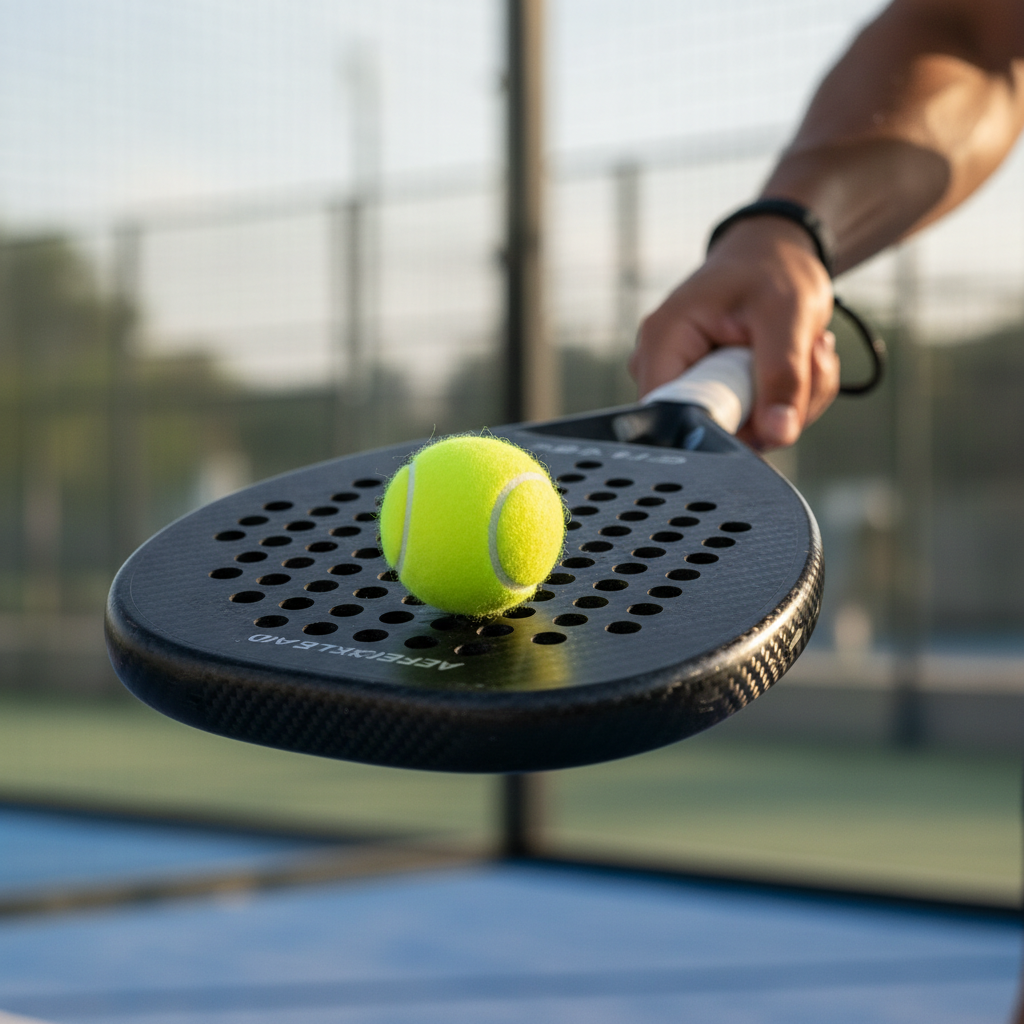
Padel represents a high-speed racket sport played within an enclosed glass arena where official padel rules dictate that participants must allow a single ground bounce before striking perimeter walls. Managing a profitable sports facility requires deep technical knowledge because improper court dimensions often lead to costly regulatory failures. When your investment faces potential delays from poor construction choices, every passing day ruins potential revenue streams. We provide a definitive roadmap for professional procurement through manufacturing insights. This guide ensures your facility meets international standards while maximizing player satisfaction through superior engineering.
What are the essential padel rules and gameplay?
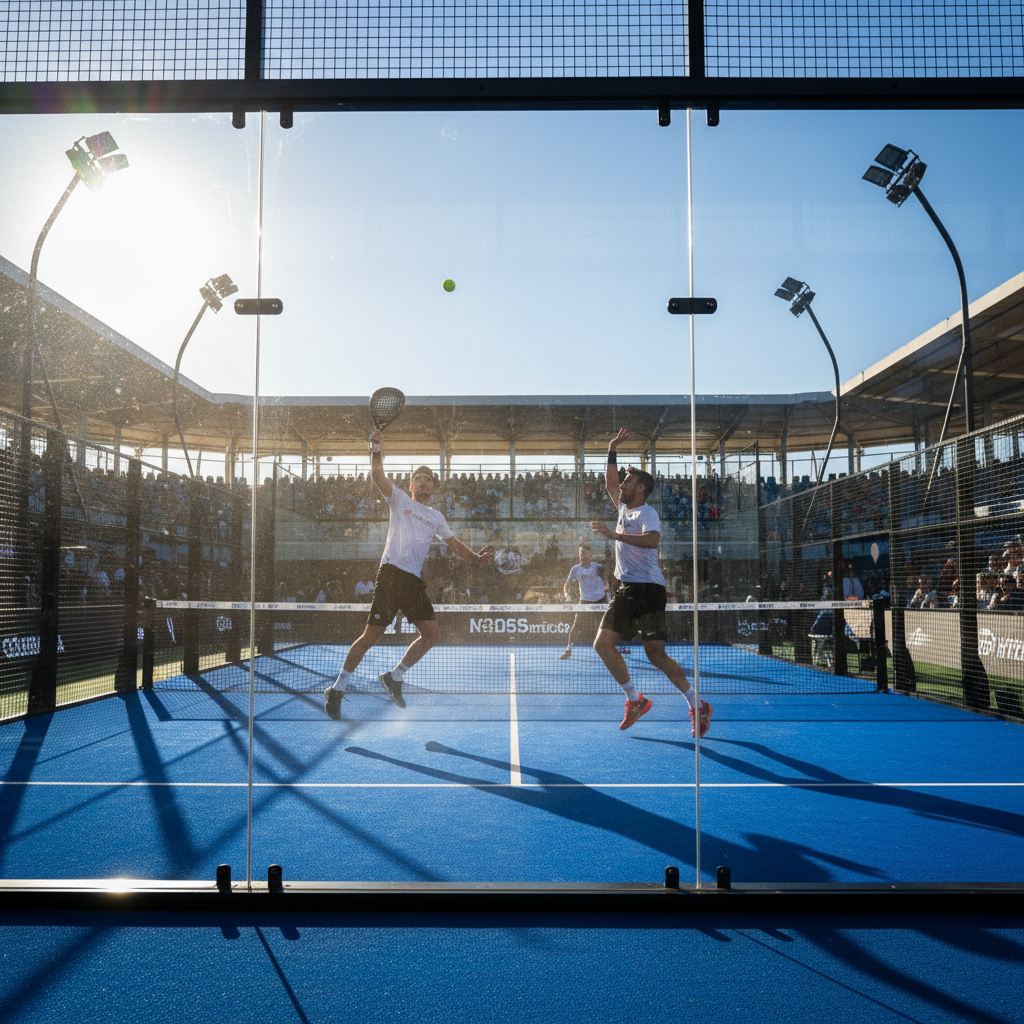
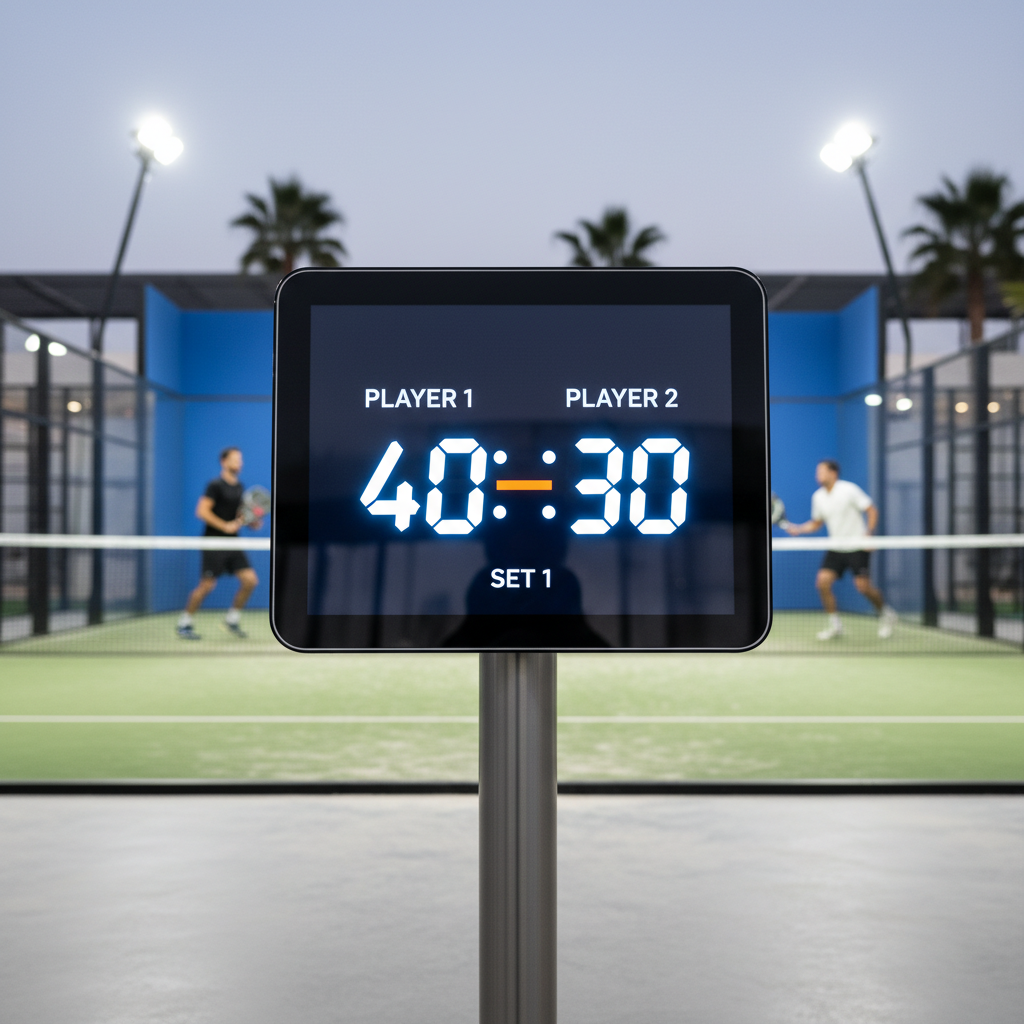
The fundamental padel rules utilize a scoring system identical to tennis featuring 15, 30, and 40 increments. Matches generally consist of three sets where six games secure a victory. If scores reach a six-six deadlock, a seven-point tiebreak determines the winner immediately. You should note that points terminate if a ball strikes the mesh directly or bounces twice on one side.
Understanding Scoring Logic
Ready for the good part? You must master the “Golden Point” variation often used in professional circuits to accelerate match duration. When games reach a forty-forty deuce, a single decisive point decides the outcome.
- Standard games follow traditional deuce-advantage cycles.
- Professional tournaments favor “Punto de Oro” for broadcasting efficiency.
- Your club members will appreciate clear signage explaining these variations.
- Fast-paced games lead to higher court turnover and increased booking revenue.
Serving Protocols and Positioning
This is where it gets interesting… You must stand behind the service line while maintaining at least one foot on the ground during the strike. The ball must cross the net without touching it or hitting the side fence after the bounce.
- Servers get two attempts just like in tennis matches.
- Receivers cannot strike volleys directly from a service return.
- You should mark service lines with high-visibility white paint for accuracy.
- Underhand serves at waist level minimize player injury risks in your facility.
Ball Interaction With Walls
But here’s the kicker… You can use your own glass walls to return a difficult shot towards the opponent’s side of the court. This strategic maneuver requires precise angles, but players cannot use the metallic mesh for such returns.
- Back walls provide a secondary chance to save powerful smashes.
- Mesh bounces remain unpredictable and demand quick reaction times.
- You must educate new players on wall safety to prevent injuries.
- Consistent wall elasticity ensures fair competitive play for all skill levels.
Key Takeaway: Mastering the fundamental mechanics of padel ensures fair competition and long-term player retention for your commercial sports center.
| Rule Category | Description | Competitive Impact |
|---|---|---|
| Scoring | 15, 30, 40, Deuce | Traditional but fast-paced |
| Serving | Underhand below waist | Favors strategy over power |
| Wall Play | Glass return allowed | Enhances defensive capabilities |
Analysis: Mastering the fundamental mechanics of padel ensures fair competition and long-term player retention for your commercial sports center.
Which court dimensions are required by padel rules?
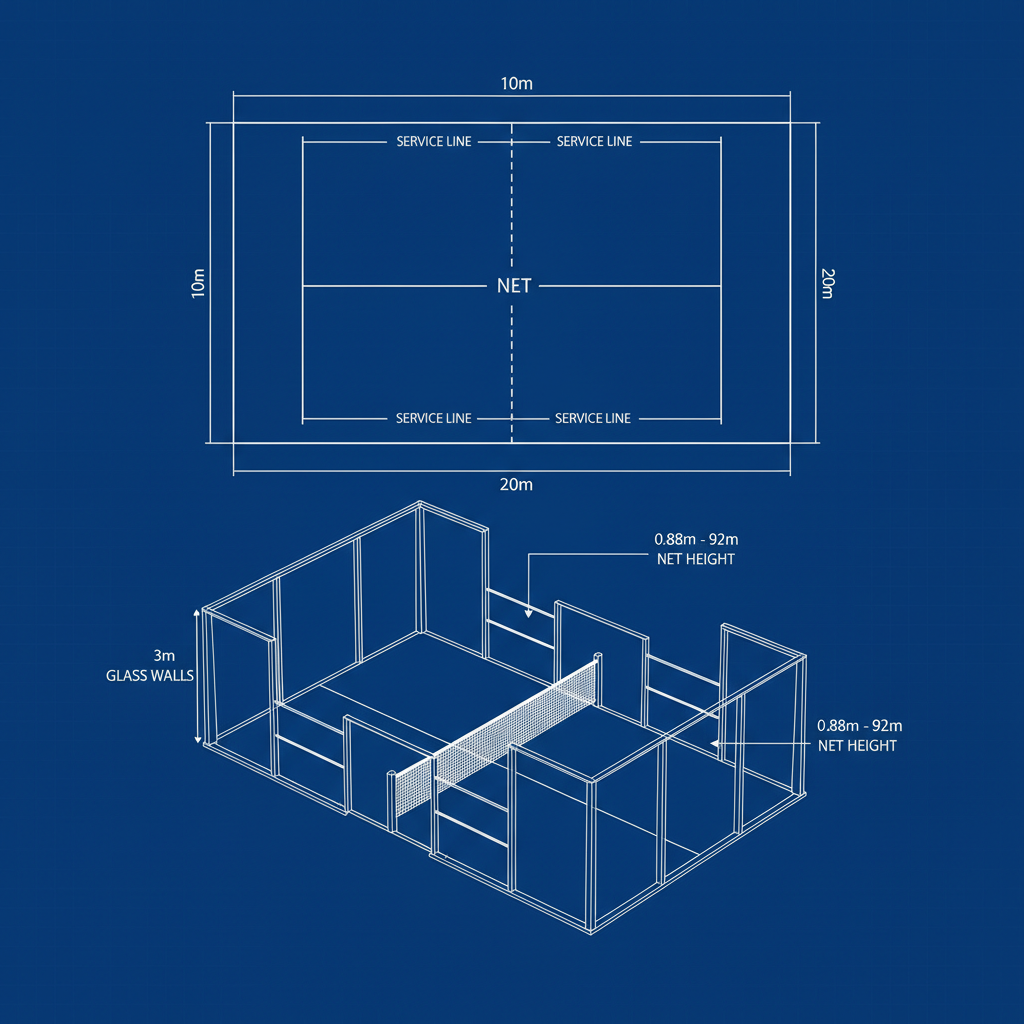
Standard padel rules mandate a rectangular playing area measuring exactly ten meters wide by twenty meters long. These dimensions remain non-negotiable for official certifications and professional tournament eligibility. You must maintain a central net height of eighty-eight centimeters while the ends stand at ninety-two centimeters. Using precise laser-guided measurements during installation prevents technical disputes during high-stakes league play.
Lateral Wall Configurations
What’s the real story? You must decide between stepped or uniform wall heights for your facility’s lateral segments. Most modern courts utilize a four-meter back wall that transitions into a three-meter side fence.
- Uniform heights offer better ball containment during erratic play.
- Stepped designs provide a classic aesthetic preferred by traditionalists.
- You should verify local zoning laws before finalizing wall heights.
- Correct wall height alignment is essential for high-level defensive maneuvers.
Net Tension and Hardware
Here’s the deal… You need heavy-duty steel posts capable of withstanding constant tension without warping the structural frame. High-quality nets must feature a top band that resists fraying from repeated ball strikes.
- Central straps keep net height consistent across the entire width.
- Stainless steel internal mechanisms prevent rust in outdoor environments.
- You must check net tension weekly to ensure regulation play.
- Durable hardware reduces the frequency of replacement parts in your budget.
Service Box Accuracy
You might be wondering… How much does a five-centimeter deviation impact professional play? Even minor errors in line placement can invalidate tournament results or cause player frustration.
- Lines must be exactly five centimeters wide for visibility.
- Color contrast between turf and lines must be sharp.
- You should use specialized paints that resist UV fading over time.
- Accurate markings are a hallmark of a premium, professionally managed club.
Key Takeaway: Absolute precision in court dimensions guarantees that your facility meets international regulatory requirements for sanctioned professional tournaments.
| Dimension | Standard Metric | Tolerance |
|---|---|---|
| Court Length | 20.00 Meters | +/- 0.05m |
| Court Width | 10.00 Meters | +/- 0.02m |
| Net Center | 0.88 Meters | Fixed |
Analysis: Absolute precision in court dimensions guarantees that your facility meets international regulatory requirements for sanctioned professional tournaments.
How do panoramic designs align with padel rules?
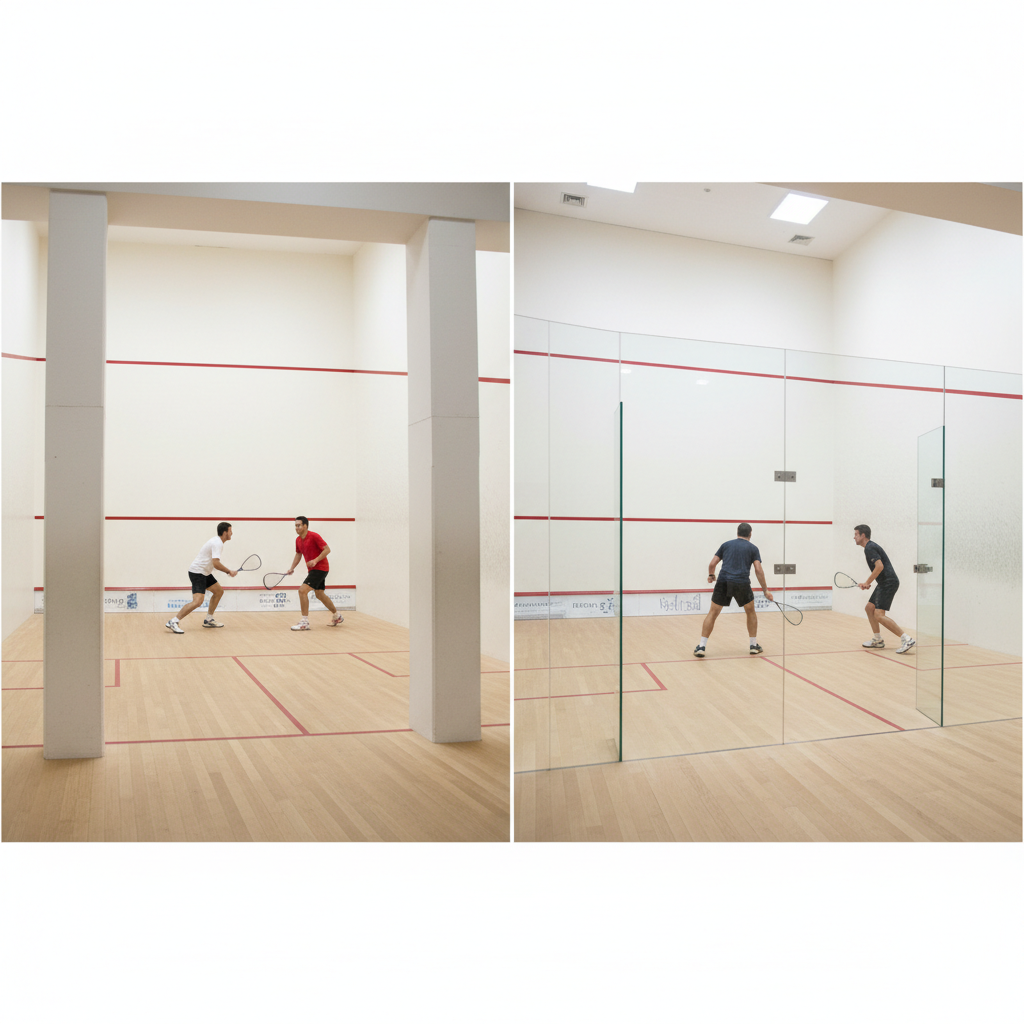
Modern padel rules increasingly accommodate panoramic courts which eliminate vertical structural pillars at the back of the arena. This design provides spectators with an unobstructed view while maintaining the same internal playing dimensions. You gain a significant marketing advantage by hosting televised events or high-profile exhibitions in these premium structures. High-end clubs often charge premium booking rates for these visually stunning architectural masterpieces.
Visual Clarity for Spectators
Ready for the good part? You can attract larger crowds and sponsorship deals by offering a 360-degree viewing experience for your audience. Traditional courts often obscure views with thick steel corners, but panoramic designs solve this problem.
- Enhanced visibility allows for better photography and video recording.
- Sponsors value the clean lines for branding their logos.
- You will notice higher attendance at your local club tournaments.
- Spectator engagement directly correlates with secondary revenue from concessions.
Glass Thickness Requirements
This is where it gets interesting… You must upgrade from ten-millimeter to twelve-millimeter tempered glass for panoramic installations. Removing the steel supports increases the load-bearing responsibility of the glass panels themselves.
- Safety glass must meet global safety certifications for public use.
- Polished edges prevent injuries during the installation process.
- You should source glass from manufacturers with proven impact testing.
- Increased thickness provides a truer ball bounce for elite competitive play.
Structural Reinforcement Strategies
But here’s the kicker… You need a reinforced top-beam system to compensate for the lack of vertical rear supports. This engineering feat ensures the court remains stable even during extreme weather conditions or heavy player collisions.
- Galvanized steel frames prevent oxidation in humid climates.
- Concealed fastening systems provide a sleek and modern appearance.
- You must ensure the foundation can support the extra weight.
- Modular reinforcement allows for faster on-site assembly and lower labor costs.
Key Takeaway: Panoramic court designs elevate the spectator experience and provide a professional atmosphere that justifies higher membership fees for your business.
| Feature | Panoramic Court | Standard Court |
|---|---|---|
| Rear Support | None (Full Glass) | Steel Pillars |
| Glass Thickness | 12mm Minimum | 10mm or 12mm |
| View Quality | Unobstructed | Segmented |
Analysis: Compare the cost-to-revenue ratio of panoramic courts against standard models to determine your optimal facility mix.
Why does the playing surface matter for padel rules?
Official padel rules require a flat and horizontal surface that allows for a consistent ball bounce across the entire area. The interaction between the ball and the surface determines the speed of the game and the effectiveness of spin shots. Poorly maintained or uneven surfaces lead to “dead spots” where the ball fails to bounce correctly. Investing in high-quality sub-base preparation remains the most critical step in long-term court durability.
Turf Density and Material
What’s the real story? You should select monofilament or fibrillated polyethylene fibers for your court’s synthetic grass layer. High-density turf resists flattening and maintains its aesthetic appeal even under heavy daily booking schedules.
- UV-stabilized fibers prevent color fading from intense sunlight.
- Proper pile height ensures the correct amount of sand infill.
- You must choose a turf color that provides high contrast.
- Engineered turf backing prevents root intrusion and improves drainage speed.
Sand Infill Distribution
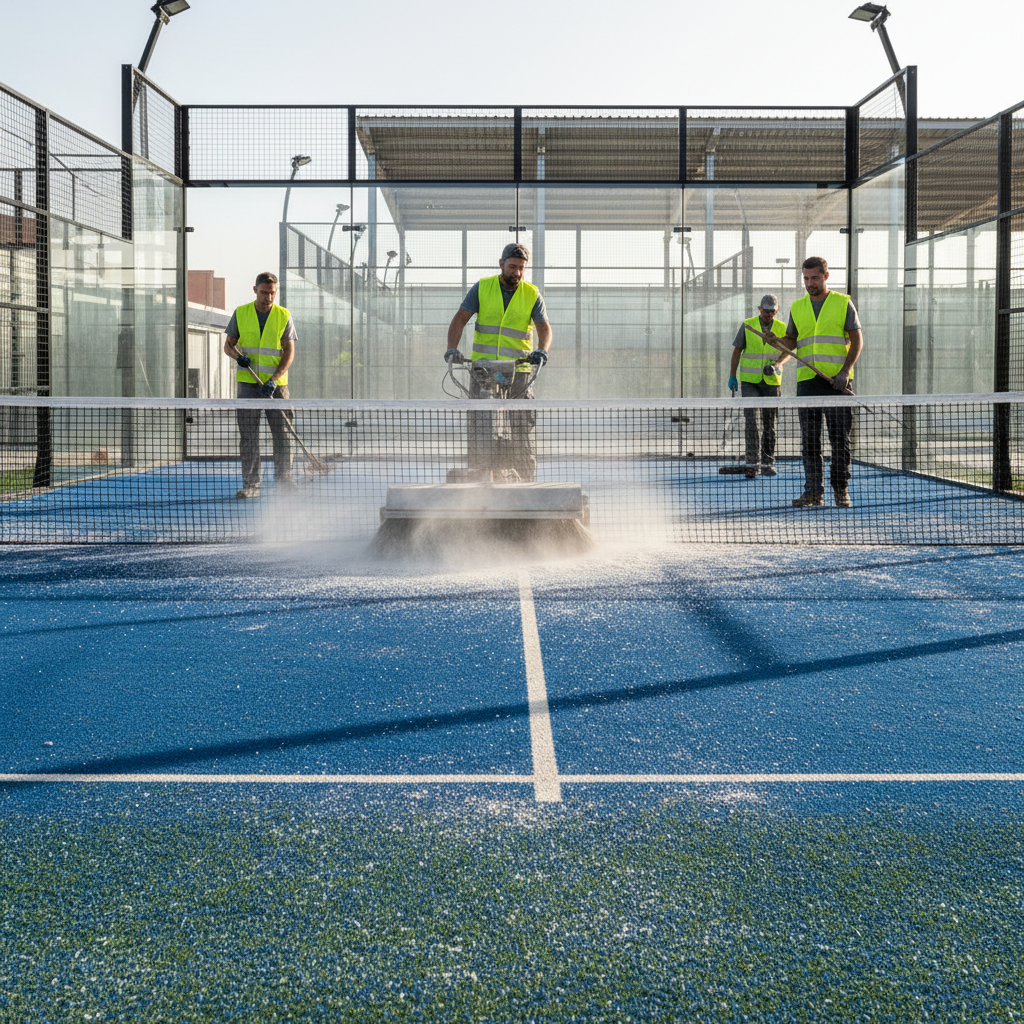
Here’s the deal… You must distribute kiln-dried silica sand evenly across the turf to facilitate smooth player movement and consistent ball behavior. Inadequate sand levels cause the turf to wear out prematurely and increase the risk of slips.
- Standard courts require approximately three kilograms per square meter.
- Regular brushing prevents sand clumps from forming in corners.
- You should use high-purity sand to avoid staining the fibers.
- Correct infill protects the turf base from mechanical wear and tear.
Concrete Sub-base Requirements
You might be wondering… Why do some courts crack after only two years of operation? The answer usually lies in an insufficient concrete slab thickness or poor drainage planning during the initial build.
- Reinforced concrete should be at least fifteen centimeters thick.
- Laser-leveling creates the perfect horizontal plane for the turf.
- You must allow the concrete to cure fully before installation.
- A stable foundation prevents structural shifting and glass panel misalignment.
Key Takeaway: A high-performance playing surface increases player safety and ensures that ball behavior remains predictable for competitive league play.
| Surface Type | Durability | Bounce Quality | Maintenance Need |
|---|---|---|---|
| Synthetic Turf | High | Excellent | Moderate |
| Porous Concrete | Very High | Fast | Low |
| Acrylic Resin | Medium | Consistent | High |
Analysis: Evaluate your local weather patterns to decide if porous or non-porous sub-base designs better suit your facility.
How do glass walls interact with official padel rules?
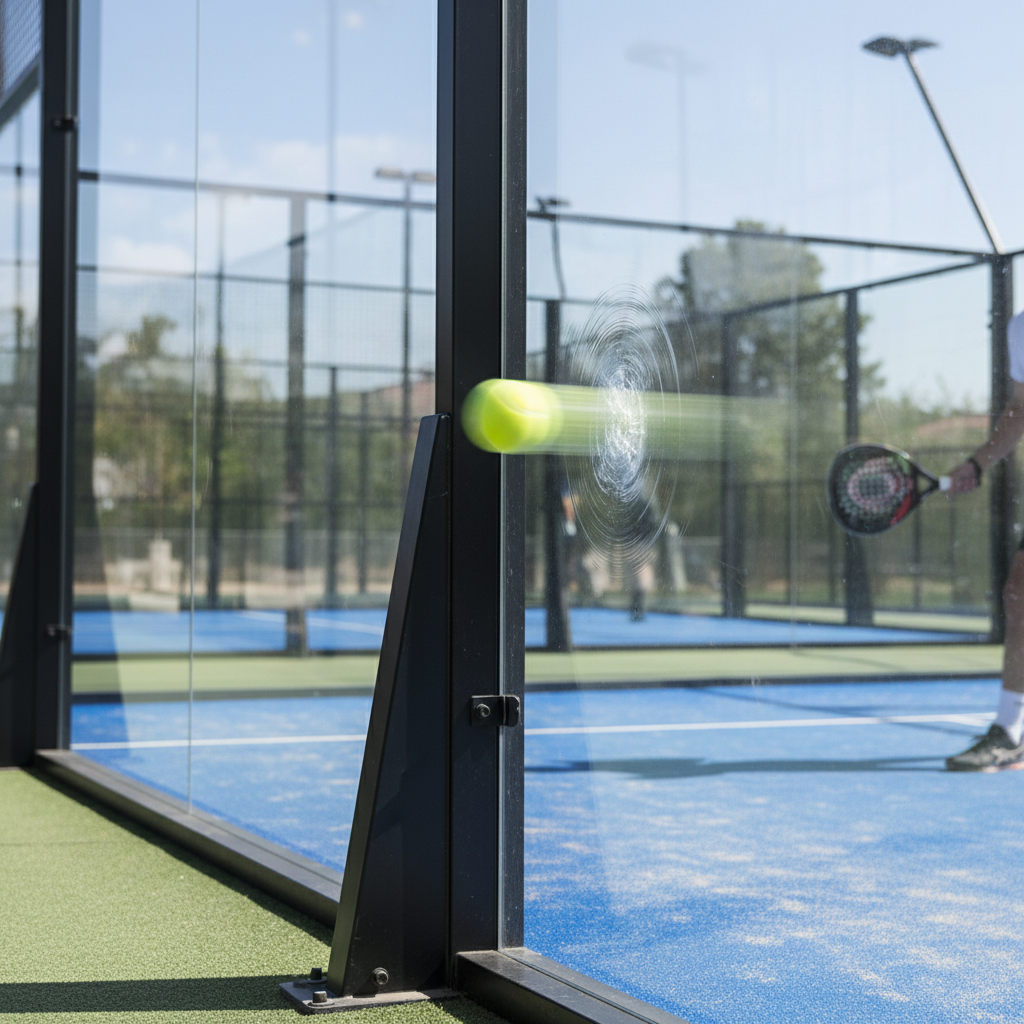
The glass walls serve as an active part of the court according to padel rules since they allow for strategic defensive maneuvers. You must install tempered safety glass that can withstand high-velocity ball impacts and player collisions without shattering. High-quality glass offers consistent bounce properties across its entire surface area regardless of temperature fluctuations. Proper alignment of glass panels prevents “false bounces” that occur when a ball strikes a protruding edge between segments.
Anti-Explosion Safety Features
Ready for the good part? You can protect your business from liability by choosing glass that breaks into small harmless granules instead of large sharp shards. Modern manufacturing techniques have significantly improved the safety profile of sports glass.
- Heat-soak testing reduces the risk of spontaneous glass breakage.
- Laminated options provide even higher security for indoor facilities.
- You should inspect all panel edges for chips before mounting.
- Certified safety glass is a mandatory requirement for facility insurance.
Rebound Consistency Checks
This is where it gets interesting… You must verify that every panel offers the same elasticity to ensure the game remains fair for all participants. Variations in glass density can lead to unpredictable ball behavior during fast rallies.
- Thicker glass generally provides a more stable and “true” bounce.
- Mounting hardware must distribute pressure evenly across the panel.
- You should use rubber gaskets to dampen vibrations from impacts.
- Uniform rebound properties are essential for high-stakes professional matches.
Optical Transparency Standards
But here’s the kicker… You need low-iron glass if you want maximum clarity for television broadcasts or high-end spectator environments. Standard glass often has a green tint that can distort colors or reduce light transmission.
- Ultra-clear glass improves the aesthetic value of your club.
- Anti-reflective coatings can help in extremely bright outdoor settings.
- You must clean glass surfaces daily to maintain visual standards.
- High transparency allows for better player-to-coach communication during training.
Key Takeaway: High-quality glass walls are essential for player safety and provide the consistent rebound performance required for professional gameplay.
| Glass Property | Standard Requirement | B2B Benefit |
|---|---|---|
| Impact Resistance | High (Tempered) | Lower Liability Risk |
| Clarity | > 85% Transmission | Better Spectator View |
| Edge Alignment | < 1mm Deviation | Professional Playability |
Analysis: Review your insurance policy to see if specific glass safety certifications are required for coverage.
Can LED lighting systems affect official padel rules?
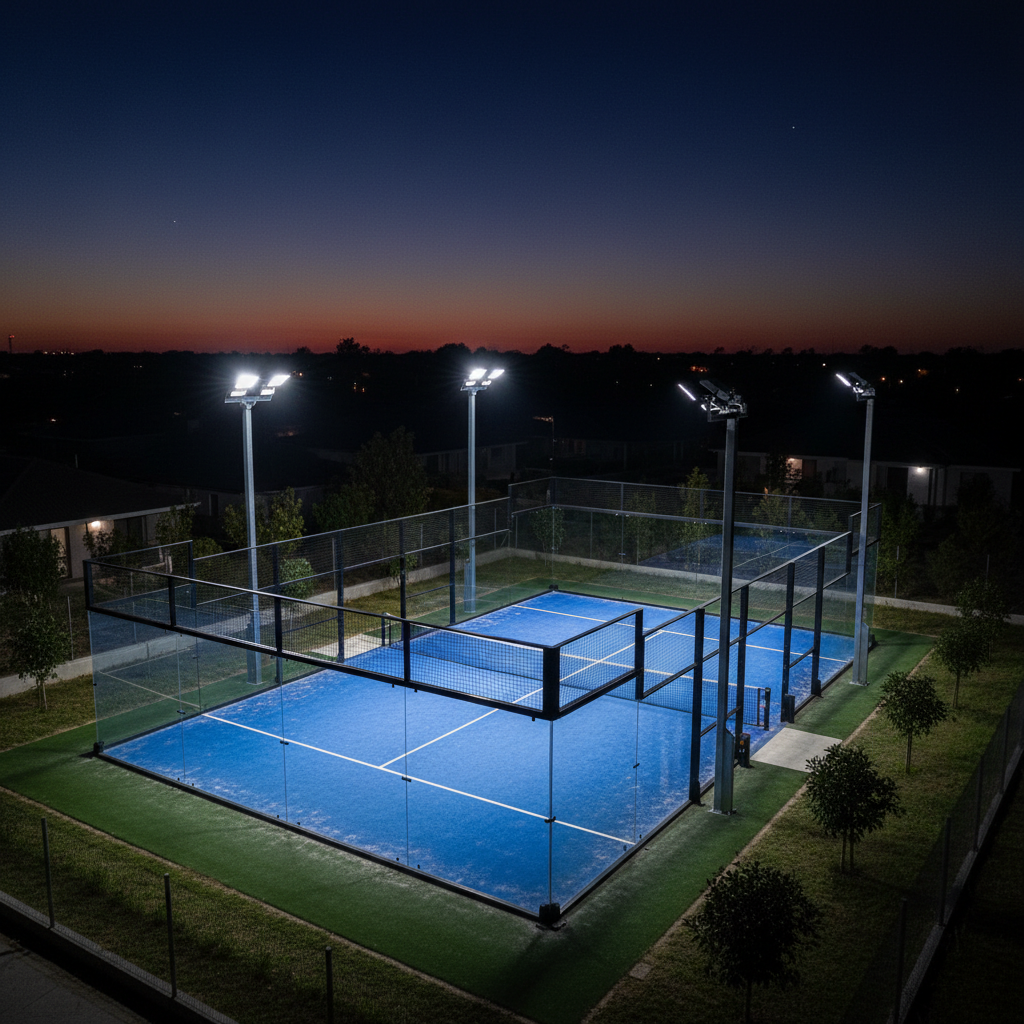
Lighting is vital because padel rules allow matches to take place at any time provided the visibility remains adequate for safe play. You should install LED floodlights that provide at least 300 to 500 lux across the entire court surface for standard club play. Proper light distribution eliminates shadows that can confuse players or lead to incorrect officiating decisions during fast rallies. Energy-efficient LED systems reduce your operational costs significantly compared to older metal halide alternatives.
Uniformity and Lux Levels
What’s the real story? You must avoid “hot spots” where some areas of the court are significantly brighter than others. A uniformity ratio of 0.7 or higher ensures that players do not lose track of the ball in flight.
- Standard club lighting usually employs eight 200W LED fixtures.
- Professional setups might use more powerful 400W light sources.
- You should measure lux levels at ground and eye heights.
- Consistent illumination levels reduce eye strain during prolonged play.
Glare Reduction Techniques
Here’s the deal… You need asymmetrical optics to direct light downwards onto the court while minimizing glare for the players looking up. Nothing ruins a smash attempt faster than being blinded by a poorly positioned floodlight.
- Adjustable mounting brackets allow for precise light aiming.
- Anti-glare shields can be added to existing lighting fixtures.
- You must ensure lights do not spill into neighboring properties.
- Advanced optics improve the quality of high-definition video recording.
Waterproofing and Durability
You might be wondering… How long will outdoor LED lights last in rainy or coastal environments? High-quality fixtures feature IP66 ratings which protect the internal electronics from dust and high-pressure water jets.
- Aluminum housings dissipate heat more effectively than plastic ones.
- Shatterproof lenses prevent debris from falling onto the court.
- You should look for a five-year warranty on lighting systems.
- Robust sealing prevents humidity from corroding sensitive LED chipsets.
Key Takeaway: Advanced LED lighting systems extend your court’s usable hours and ensure a safe professional environment for nighttime competition.
| Lighting Grade | Average Lux | Uniformity Ratio | Best Use Case |
|---|---|---|---|
| Recreational | 200-300 | 0.5 | Private/Home Courts |
| Club | 400-500 | 0.7 | Commercial Centers |
| Tournament | 750-1000 | 0.8 | Televised Events |
Analysis: Calculate your monthly energy savings when switching from traditional bulbs to modern LED floodlights.
How is turf installed to comply with padel rules?
Adhering to padel rules involves a specialized installation process for the synthetic turf to prevent wrinkles or loose seams. You must ensure the rolls are laid out and allowed to acclimate to the local temperature before being permanently joined together. Once the turf is secured, you must precisely cut the white lines into the green surface rather than simply painting them on top. Professional installers use specialized tools to ensure the sand infill is distributed at a perfectly even depth.
Seaming Tape and Adhesives
Ready for the good part? You can prevent costly repairs by using weather-resistant glue that maintains its bond even in extreme heat or freezing cold. The seams are the weakest point of any turf installation, so quality matters here.
- Double-sided tape provides extra stability for high-stress areas.
- Glue must be applied evenly to avoid bumps under the turf.
- You should perform a “pull test” on all seams after curing.
- High-strength adhesives prevent trip hazards and liability claims.
Inlaid Line Cutting Techniques
This is where it gets interesting… You must use a specialized line cutter to remove a five-centimeter strip of green turf before inserting the white line material. This technique creates a flush surface that doesn’t interfere with ball physics.
- Precision cutting prevents gaps where the ball might bounce oddly.
- White turf fibers should be the same density as the green ones.
- You must double-check all dimensions before making the first cut.
- Flush lines ensure consistent footing for players during lateral movements.
Mechanical Sand Brushing
But here’s the kicker… You need a motorized brush to drive the silica sand deep into the turf fibers while keeping the blades upright. Manual brushing rarely achieves the level of uniformity needed for professional-grade facilities.
- Brushing should be done in multiple directions for best results.
- Sand must be perfectly dry during the initial application process.
- You should re-brush the court every month for maintenance.
- Uniform sand depth prevents premature fiber degradation from heavy usage.
Key Takeaway: Professional turf installation techniques prevent surface defects and ensure your court remains within regulatory specifications for many years.
| Installation Step | Critical Tool | Failure Risk |
|---|---|---|
| Acclimatization | Temperature Gauge | Turf Shrinkage |
| Seaming | Polyurethane Glue | Trip Hazards |
| Sand Infill | Motorized Brush | Uneven Bounce |
Analysis: Audit your installation team’s equipment list to ensure they have the specialized tools required for padel turf.
Which framing standards support official padel rules?
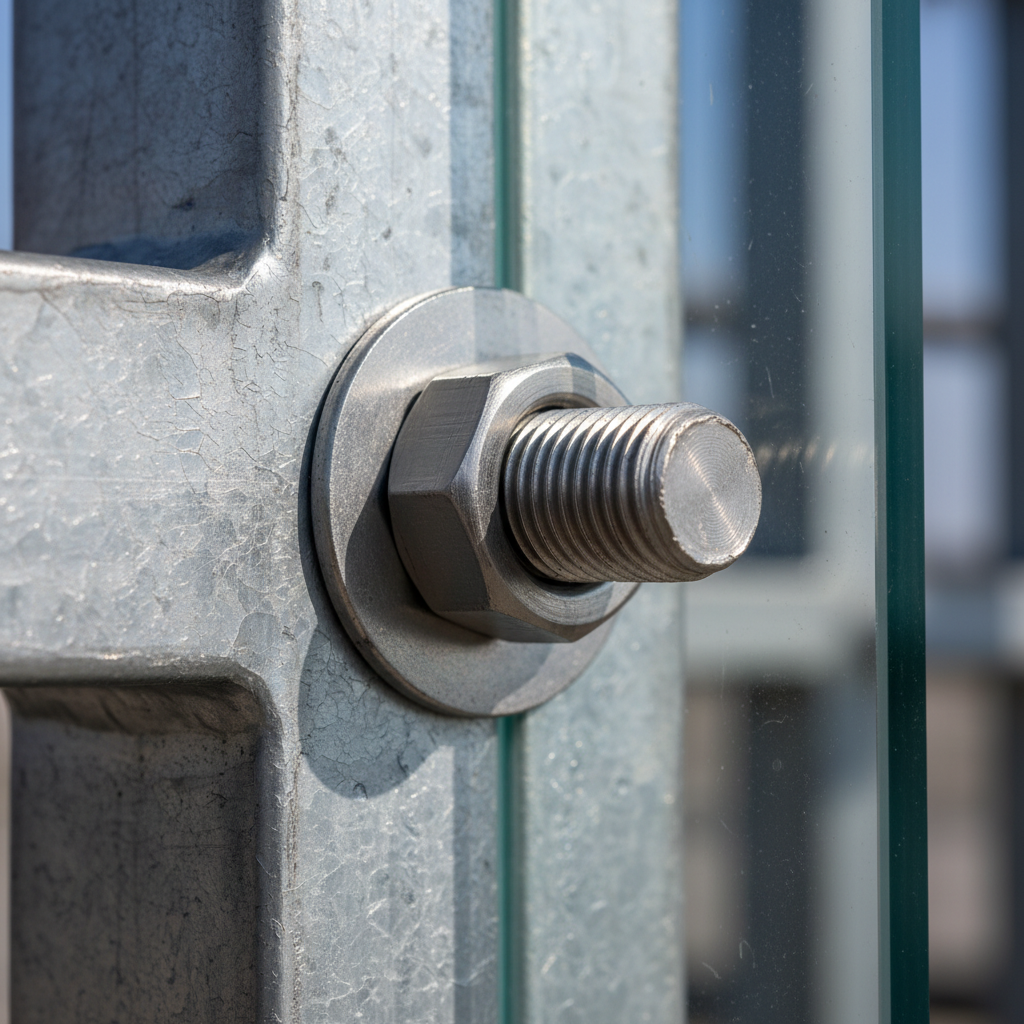
The steel structure must meet strict padel rules regarding stability and corrosion resistance to protect players from structural failure. You should specify hot-dip galvanized steel which provides a thick protective coating that lasts significantly longer than standard paint or powder coatings. The frame must be engineered to resist wind loads, especially in outdoor settings where high-velocity gusts can put immense pressure on the glass panels. Modular designs allow for faster installation and easier replacement of individual components if damage occurs over time.
Galvanization and Coating Quality
What’s the real story? You can distinguish high-quality frames by their smooth finish and the absence of rust at the welding points. Zinc coatings should be at least 80 microns thick to survive coastal salt air.
- Powder coating adds a final layer of UV protection and color.
- Welds must be treated with zinc-rich primer before painting.
- You should request a salt-spray test report from your supplier.
- Thick protective layers guarantee a twenty-year structural design life.
Wind Load Engineering
Here’s the deal… You must ensure your court structure is rated for the specific wind zone of your geographical location. Glass panels act like giant sails, so the steel pillars must be anchored deeply into the concrete.
- Triangulated corner supports provide extra rigidity for exposed sites.
- Reinforced base plates prevent the pillars from swaying in the wind.
- You should consult a structural engineer for coastal installations.
- Aerodynamic frame designs reduce mechanical stress during intense storms.
Modular vs. Welded Structures
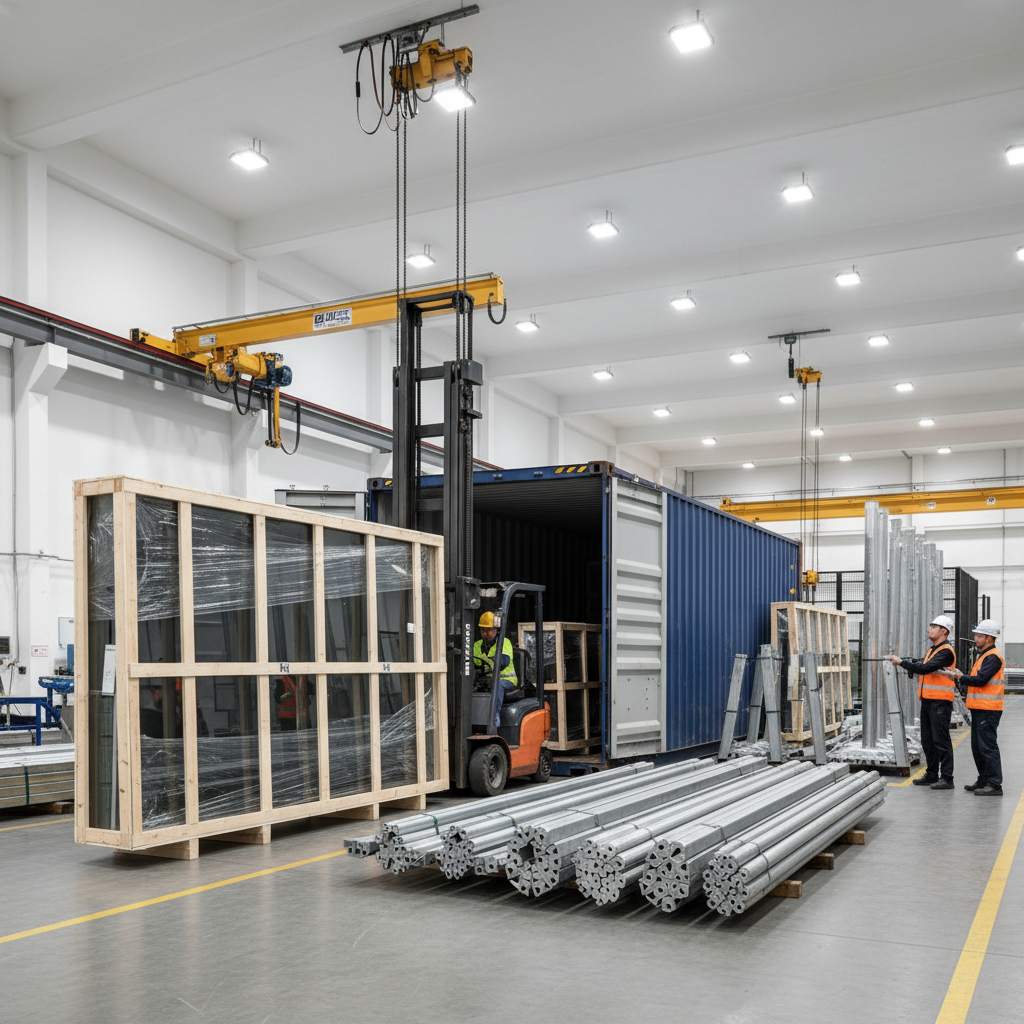
You might be wondering… Why is modular construction preferred for international shipping and local assembly? Bolted systems are easier to transport and allow for minor adjustments during the installation process on-site.
- Modular parts can be easily replaced if hit by a vehicle or storm.
- Precision-drilled holes ensure the frame is perfectly square.
- You must check bolt tightness annually to maintain integrity.
- Bolted frames eliminate the risk of welding-related rust spots.
Key Takeaway: Robust steel framing is the backbone of a safe padel facility and protects your long-term investment from environmental degradation.
| Frame Metric | Specification | Benefit |
|---|---|---|
| Steel Grade | Q235 or Higher | Structural Strength |
| Zinc Coating | > 500 g/m² | Rust Prevention |
| Bolt Type | Stainless Steel | Longevity |
Analysis: Verify that your structure meets local building codes for wind resistance and seismic activity.
Do drainage requirements modify official padel rules?
Effective drainage is a prerequisite for following padel rules because water accumulation on the court surface makes play impossible and dangerous. You must design the sub-base with a slight slope of approximately 0.5% to 1% to allow rainwater to run off toward the perimeter. Alternatively, a porous concrete base allows water to drain vertically through the slab into the soil below, which is ideal for areas with heavy rainfall. Keeping the court dry ensures that ball bounce and player traction remain consistent in all weather conditions.
Vertical vs. Lateral Drainage
Ready for the good part? You can eliminate downtime after rainstorms by investing in a porous sub-base that allows the court to dry in minutes rather than hours. This feature is a major selling point for outdoor commercial clubs.
- Porous concrete requires specialized mix designs for strength.
- Lateral drainage is more cost-effective for dry climates.
- You must ensure the sub-soil has adequate percolation rates.
- Quick-drying surfaces maximize your daily booking potential and revenue.
Perimeter Channel Integration
This is where it gets interesting… You should surround the court with hidden drainage grates that can handle high-volume downpours without overflowing. This protects the surrounding landscaping and prevents water from entering indoor areas.
- Grates must be flush with the surrounding ground to avoid trips.
- Clean-out ports allow you to remove debris from the pipes easily.
- You should check for clogs before the rainy season begins.
- Proper runoff management prevents soil erosion around the foundation.
Impact of Humidity on Play
But here’s the kicker… You might need a dehumidification system for indoor courts to prevent condensation from forming on the glass walls. Wet glass makes the ball “skid” instead of bouncing, which completely changes the dynamics of the game.
- High humidity levels can also make the synthetic turf slippery.
- Ventilation fans help maintain a consistent playing environment.
- You must monitor indoor air quality for player comfort.
- Condensation control preserves the lifespan of electronic scoring systems.
Key Takeaway: A well-designed drainage system maximizes court uptime and protects your infrastructure from water-related damage.
| Drainage Method | Efficiency | Initial Cost | Best Environment |
|---|---|---|---|
| Porous Concrete | Excellent | High | High Rainfall Areas |
| Sloped Asphalt | Good | Medium | Moderate Climates |
| Surface Channels | Fair | Low | Arid Regions |
Analysis: Assess your local annual rainfall data to determine if a premium porous base is a necessary investment.
How do maintenance steps help uphold padel rules?
Regular maintenance is mandatory to ensure your facility continues to meet official padel rules over its entire lifespan. You must establish a weekly routine for brushing the turf and checking the glass for any signs of cracks or loose mounting hardware. Debris like leaves and dirt should be removed immediately to prevent organic matter from clogging the drainage pores or staining the turf fibers. Replacing worn-out sand and tightening structural bolts prevents minor issues from turning into expensive major repairs.
Turf Brushing and Grooming
What’s the real story? You can double the lifespan of your synthetic grass by simply brushing it once a week to keep the fibers upright and the sand evenly distributed. Neglect leads to matted turf that feels hard and slippery.
- Use a soft-bristled brush to avoid damaging the polyethylene fibers.
- Heavy-use areas around the service lines need extra attention.
- You should remove any weeds or moss immediately.
- Consistent grooming prevents “dead spots” and preserves ball speed.
Glass and Metal Cleaning
Here’s the deal… You should use non-abrasive cleaners to keep the glass walls crystal clear for spectators and players alike. Salt buildup on steel frames in coastal areas must be washed off with fresh water to prevent corrosion.
- Check rubber gaskets for signs of dry rot or cracking.
- Avoid using harsh chemicals that could damage the turf.
- You must ensure all lighting lenses are free of dust.
- Pristine glass walls enhance the high-end appeal of your facility.
Structural Integrity Audits
You might be wondering… How often should a professional inspector visit your facility to verify safety standards? An annual structural audit is recommended for commercial clubs to identify potential weaknesses before they cause an accident.
- Inspect all welding points for hairline fractures or rust.
- Verify that the foundation hasn’t settled or shifted.
- You should keep a detailed maintenance log for insurance purposes.
- Regular audits mitigate liability risks for facility owners and managers.
Key Takeaway: Proactive maintenance preserves the professional playability of your court and ensures long-term safety for all club members.
| Maintenance Task | Frequency | Estimated Time | Tool Needed |
|---|---|---|---|
| Surface Brushing | Weekly | 30 Minutes | Turf Brush |
| Glass Cleaning | Daily/Weekly | 1 Hour | Squeegee/Cloth |
| Bolt Inspection | Quarterly | 2 Hours | Torque Wrench |
Analysis: Create a digital maintenance schedule for your staff to ensure no critical inspections are missed.
Adhering to professional padel rules requires a holistic approach that balances high-quality manufacturing with precise installation and consistent maintenance. From the strategic integration of panoramic glass walls to the technical nuances of LED lighting and drainage systems, every component contributes to a world-class playing experience. By prioritizing these engineering standards, you protect your investment and build a reputation for excellence in the rapidly growing global sports market. We invite you to reach out for a personalized consultation regarding your next project. Contact us today to receive a detailed quotation and start building a facility that players will love for decades.
Frequently Asked Questions
Q1: Can I install a padel court on an existing tennis court?
Yes, you can definitely repurpose tennis court space, but you must ensure the existing slab is thick enough to support the heavy glass and steel structure. You will typically need to pour new concrete footings for the pillars to ensure they meet wind load requirements.
Q2: How do I choose between monofilament and fibrillated turf?
Monofilament turf is generally more durable and offers a more natural look, while fibrillated turf is better at holding the sand infill in place. Most high-end commercial clubs now favor monofilament for its superior long-term performance and aesthetic appeal.
Q3: What if my local wind speeds exceed standard court ratings?
If you are in a high-wind zone like a coastal area, you should request a reinforced frame with thicker steel and extra support braces. We can customize the structural engineering to meet specific local building codes and safety requirements.
Q4: Are there different rules for indoor and outdoor padel courts?
The gameplay rules remain the same, but construction requirements differ significantly regarding lighting, ventilation, and drainage. Indoor courts don’t need rain drainage, but they require sophisticated air handling to prevent condensation on the glass.
Q5: Why should I buy direct from the manufacturer?
Buying direct eliminates middleman markups and gives you a direct line of communication with the engineers who designed the court. This ensures better quality control, more customization options, and significantly lower procurement costs for your business.