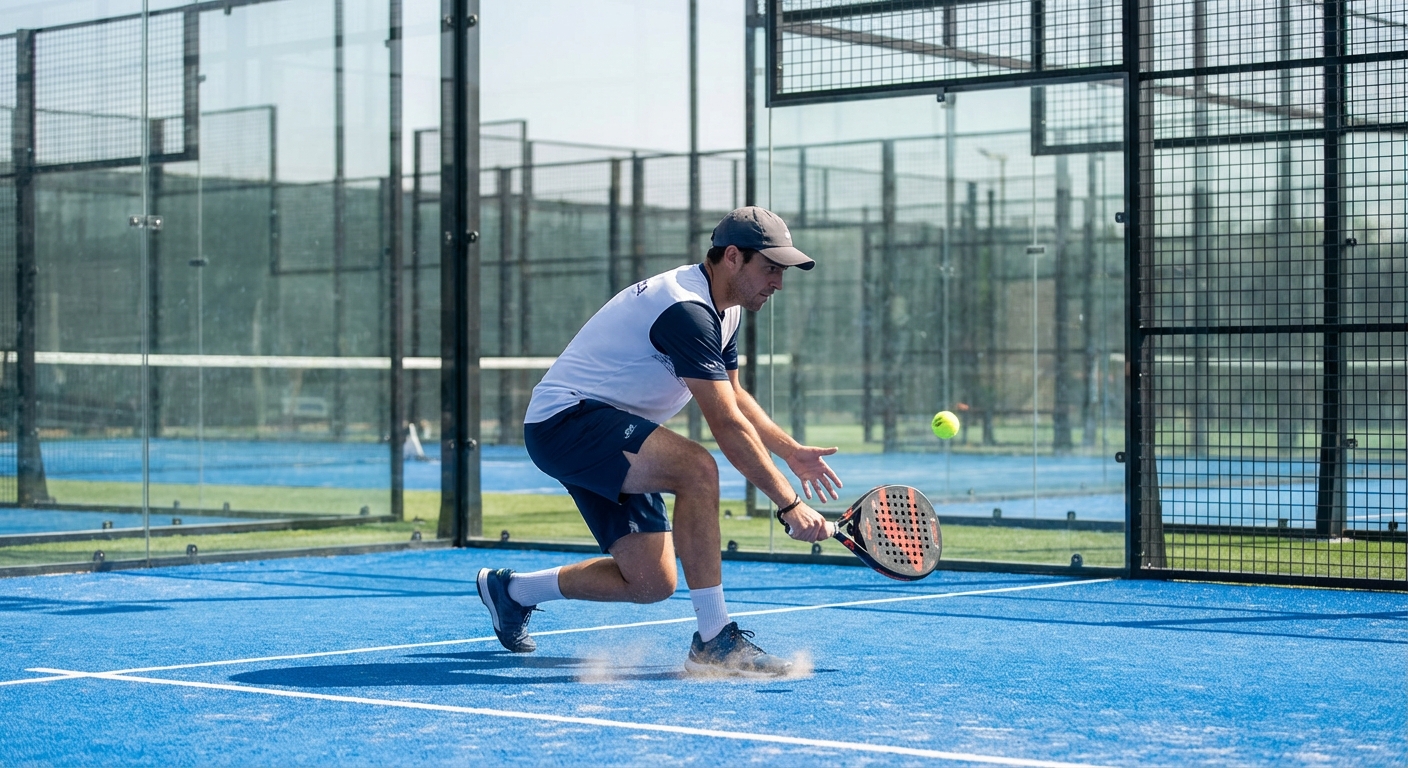
The primary diferencia entre padel y tenis lies in the court architecture, specifically the use of glass walls and a smaller playing area in padel versus the open, larger dimensions of a tennis court. You might find that your current sports facility is underperforming because you are stuck in traditional models that require massive footprints. This lack of space efficiency often leads to lower member density and stagnant revenue streams per square meter. By integrating modern padel facilities, you can maximize your land use and offer a social, high-engagement sport that fits where a tennis court simply cannot.
What is the primary diferencia entre padel y tenis in court design?
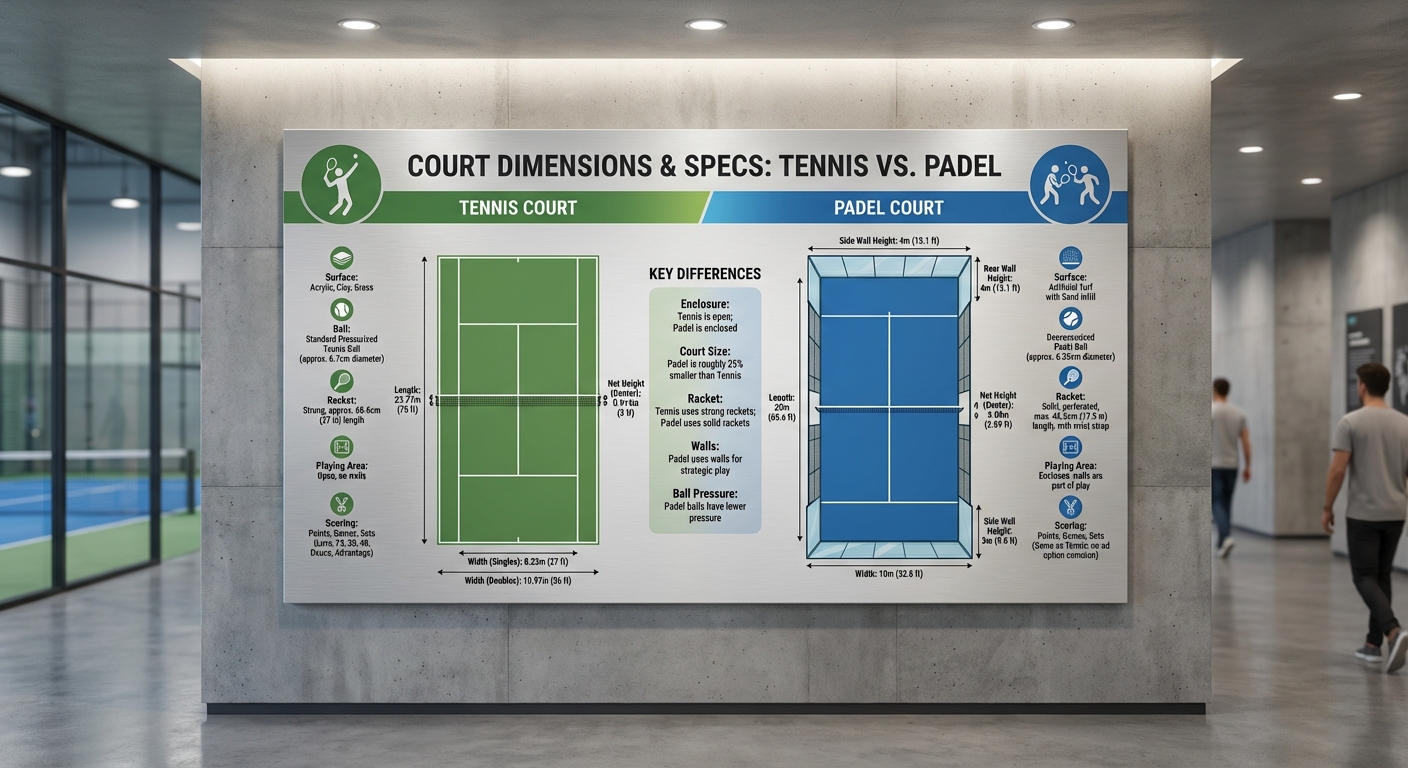
The core diferencia entre padel y tenis in design is that padel courts are fully enclosed by glass and mesh walls, whereas tennis courts are open-air perimeters. This enclosure transforms the game from a linear back-and-forth into a dynamic, multi-dimensional experience. You must understand that this structural shift requires specific engineering for wind loads and safety glass standards.
Managing the transition between these designs requires a strategic look at your available infrastructure. While tennis relies on vast horizontal space, padel utilizes vertical boundaries to keep the ball in play longer. This makes the facility feel more intimate and focused for your players.
Understanding the structural layout
The structural layout of a padel court is fundamentally more complex due to the integration of 12mm tempered glass. Here is the deal: you cannot simply overlay a padel court onto a tennis foundation without considering the anchoring requirements for the metallic structure.
- Standard dimensions are 20m x 10m.
- Enclosures consist of tempered glass and electro-welded mesh.
- The net height is slightly lower at the center (88cm).
But wait: the modular nature of modern padel structures allows for faster installation than traditional clay or grass tennis courts.
Materials and durability standards
Choosing the right materials determines the longevity of your investment. You need hot-dip galvanized steel to prevent corrosion, especially in coastal or humid environments.
- Galvanized steel frames for 20+ years of life.
- EU-standard tempered safety glass.
- High-density fibrillated turf for consistent bounce.
The truth is: low-quality materials will lead to glass breakage and turf degradation within two seasons.
Key Takeaway: Padel courts offer a more compact, enclosed design that requires higher-precision engineering but yields a more durable, low-maintenance facility compared to traditional tennis courts.
| Feature | Tennis Court | Padel Court |
|---|---|---|
| Dimensions | 23.77m x 10.97m (Doubles) | 20m x 10m |
| Enclosure | Open (Fenced perimeter) | Fully enclosed (Glass/Mesh) |
| Playing Surface | Clay, Hard, Grass | Artificial turf with sand infill |
This table illustrates that padel courts are more resource-efficient regarding land usage while requiring sophisticated vertical structures.
How does the court size affect the diferencia entre padel y tenis?
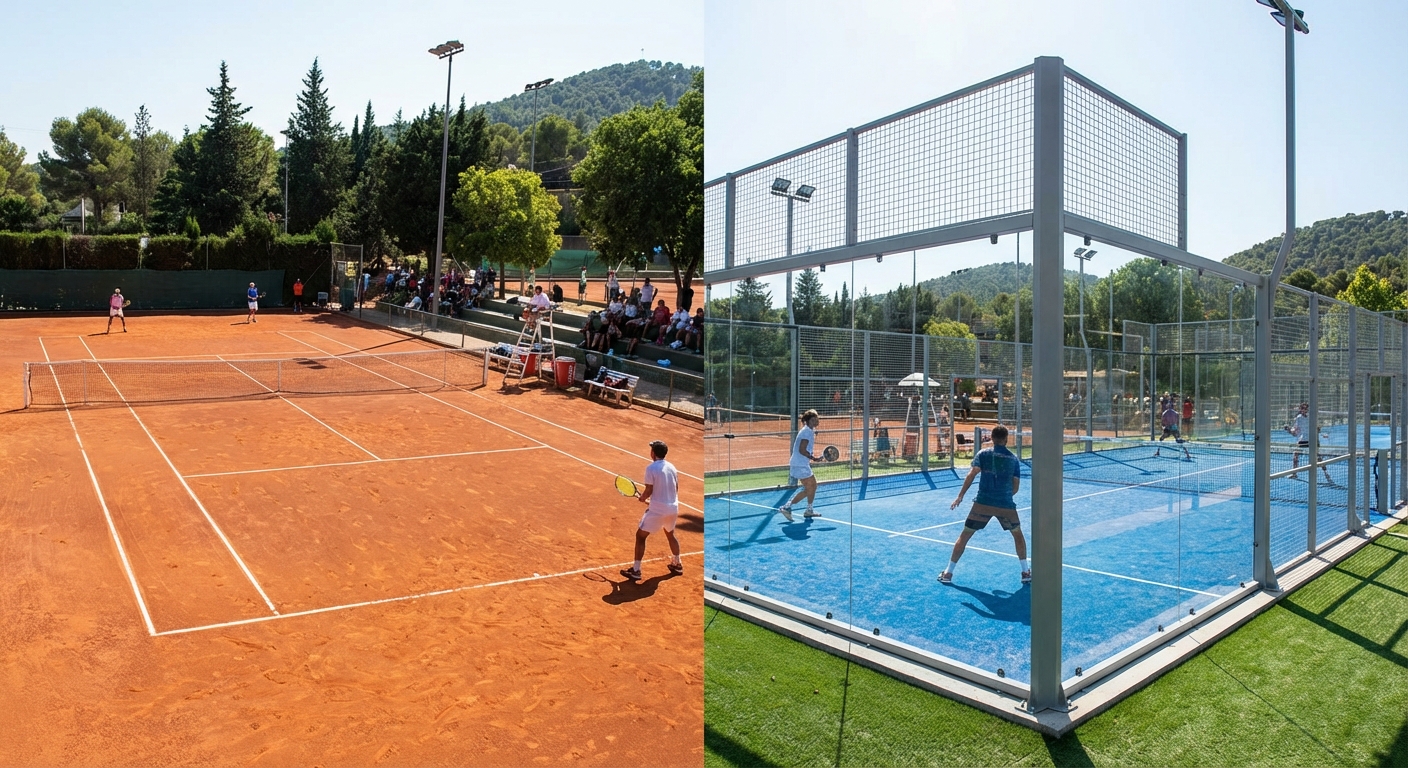
Court size represents a massive diferencia entre padel y tenis because a padel court occupies roughly one-third of the total footprint required for a standard tennis court. You can comfortably fit three padel courts into the space of a single tennis court, which triples your potential player capacity. This density is a game-changer for commercial clubs looking to maximize hourly bookings.
For facility owners, the smaller footprint means lower costs for lighting and surface maintenance over time. Because the players are closer together, the social atmosphere is naturally heightened. This proximity reduces the amount of running required, making the sport accessible to a wider demographic.
Land optimization for facility owners
Maximizing your land value is essential in the competitive sports market. Here is the kicker: by switching from tennis to padel, you increase your revenue density per square foot significantly.
- Three padel courts accommodate 12 players simultaneously.
- One tennis court typically accommodates only 2 to 4 players.
- Reduced lighting energy consumption per player.
Look: if you have limited space, padel is the only viable option to maintain a high-end sports offering.
Impact on player movement and pace
The smaller court size dictates a faster, more reactive style of play. You will find that players engage in more volleys and rapid transitions because the distances are shorter.
- Shorter sprints but higher frequency of movement.
- Enhanced focus on positioning rather than raw power.
- Faster ball return cycles due to the enclosing walls.
Believe it or not: the reduced distance makes padel significantly easier for beginners to pick up quickly.
Key Takeaway: The smaller court size of padel allows for higher player density and better land utilization, making it a more profitable choice for commercial sports ventures.
| Metric | Tennis Court | Padel Court |
|---|---|---|
| Total Area | ~600 – 800 sq meters | 200 sq meters |
| Players per Area | 0.005 players/sqm | 0.02 players/sqm |
| Lighting requirement | High (4-6 poles) | Moderate (4 poles) |
This comparison highlights how padel courts provide a 400% increase in player density compared to tennis facilities.
What role do walls play in the diferencia entre padel y tenis?
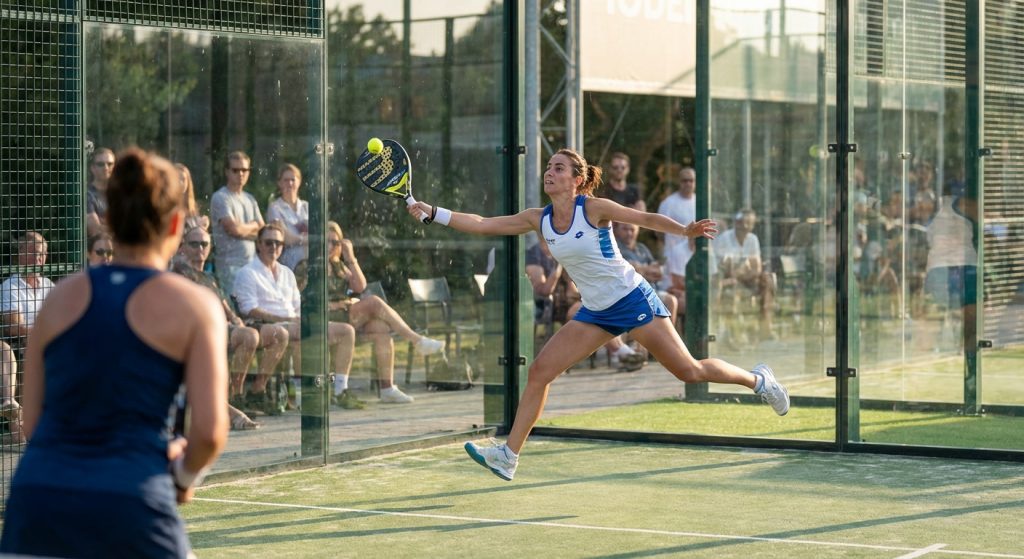
The walls are the most defining diferencia entre padel y tenis because they are an active part of the game in padel, whereas in tennis, any ball hitting a perimeter is out. You can play the ball off the glass walls on your side of the court to return it to the opponent. This mechanic rewards strategic placement and patience over brute force.
In tennis, once the ball passes you, the point is over. In padel, you can wait for the ball to hit the back glass and rebound into your hitting zone. This “second chance” dynamic is what makes the sport so addictive and keeps rallies alive for much longer than in traditional tennis.
Strategic use of the glass rebound
Utilizing the glass requires a shift in your spatial awareness. You have to learn the angles of incidence and reflection to predict where the ball will land after hitting the wall.
- Back glass allows for defensive “lobs” from a rebound.
- Side glass can be used to create difficult angles for opponents.
- Walls minimize the need for retrieving balls from far away.
The bottom line is: the walls turn a 2D game into a 3D tactical battle.
Safety and visibility requirements
Because the walls are structural, you must prioritize high-quality tempered glass. You need to ensure your facility uses anti-explosion glass that meets international safety certifications to protect your players.
- 12mm tempered safety glass is the industry standard.
- Panoramic designs remove pillars for better spectator views.
- Modular mounting systems reduce stress on the glass panels.
Think about it: a panoramic court offers the best viewing experience while maintaining the necessary rebound characteristics.
Key Takeaway: The integration of glass walls as active playing surfaces creates a more tactical, longer-rally game that is unique to padel and highly engaging for spectators.
| Wall Type | Padel Function | Tennis Function |
|---|---|---|
| Glass | Active playing surface/rebound | Non-existent |
| Mesh/Fence | Rebound/Unpredictable bounce | Out of bounds |
| Strategic Value | High (Tactical positioning) | None (Perimeter only) |
The use of glass transforms the court into a strategic environment where the walls are as important as the floor.
Is the scoring system a major diferencia entre padel y tenis?
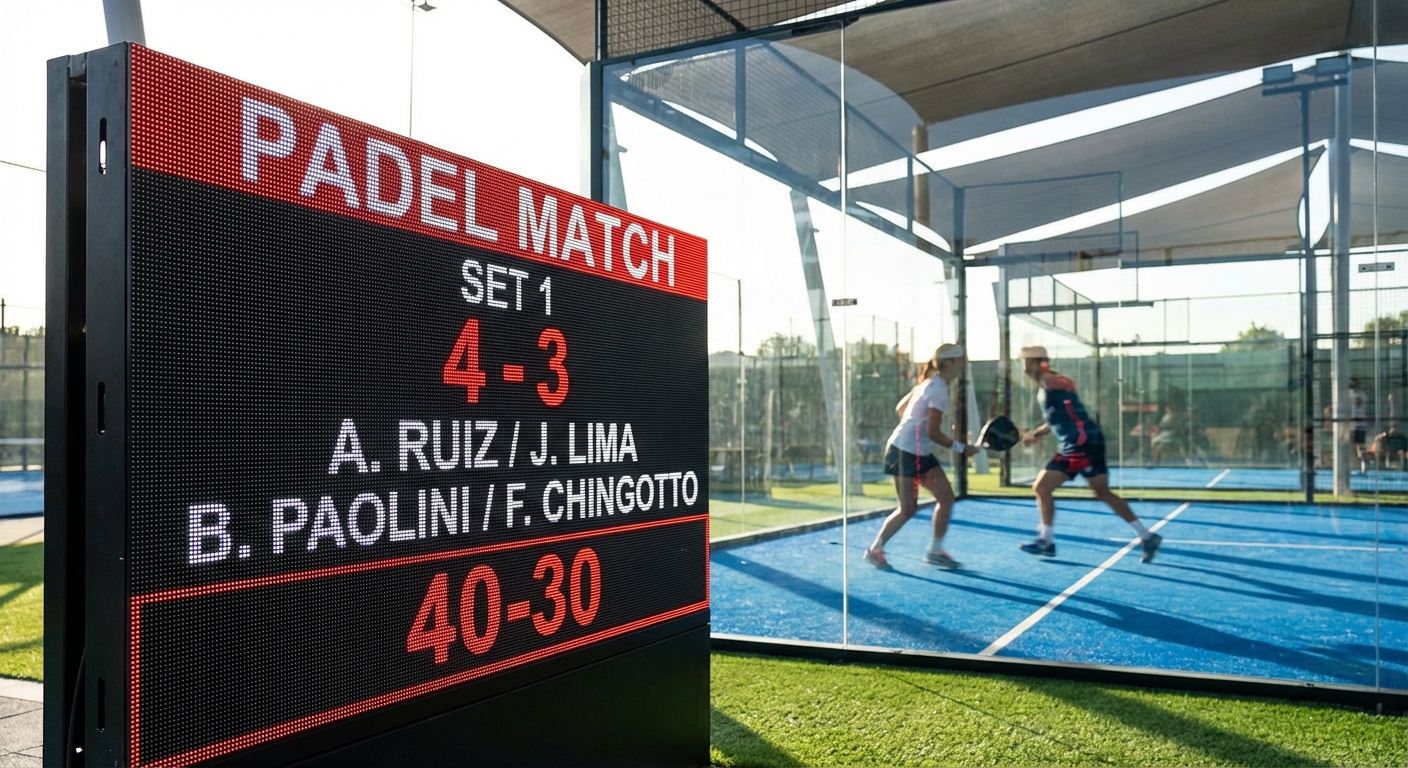
The scoring system is actually the least significant diferencia entre padel y tenis, as both sports typically use the 15, 30, 40, and game structure. You will feel right at home with the terminology, including sets and tie-breaks. However, professional padel often incorporates the “Golden Point” (Punto de Oro) to accelerate match times and increase drama.
The Golden Point occurs at a 40-40 deuce, where the receiving team chooses the side for a single, deciding point. This differs from the traditional tennis “advantage” system, which can lead to lengthy, exhausting games. For your club, this means more predictable match durations and better court scheduling.
The Golden Point rule impact
The Golden Point is designed for television and spectator engagement. It ensures that critical moments happen more frequently, keeping the audience on the edge of their seats.
- Eliminates long deuce cycles.
- Adds high-pressure decision-making for players.
- Standardizes match length for better scheduling.
Here is the deal: shorter games lead to more matches played per day in your facility.
Set structure and tie-breaks
Padel matches are almost exclusively played as best-of-three sets. You will find that this structure is ideal for the high-intensity, social nature of the sport.
- Six games per set with a two-game lead.
- Tie-breaks at 6-6 to decide the set.
- Fast-paced transitions between points.
But wait: the intensity of padel points often makes a two-set match feel as physically taxing as a three-set tennis match.
Key Takeaway: While the basic scoring is identical, padel’s use of the Golden Point makes the game faster and more commercially viable for facility scheduling.
| Scoring Element | Tennis | Padel |
|---|---|---|
| Basic Sequence | 15, 30, 40, Game | 15, 30, 40, Game |
| Deuce Handling | Advantage (Standard) | Golden Point (Professional) |
| Match Length | Variable (Can be long) | More Predictable |
Predictability in match length allows you to manage your facility bookings with much higher precision.
How does racket tech define the diferencia entre padel y tenis?
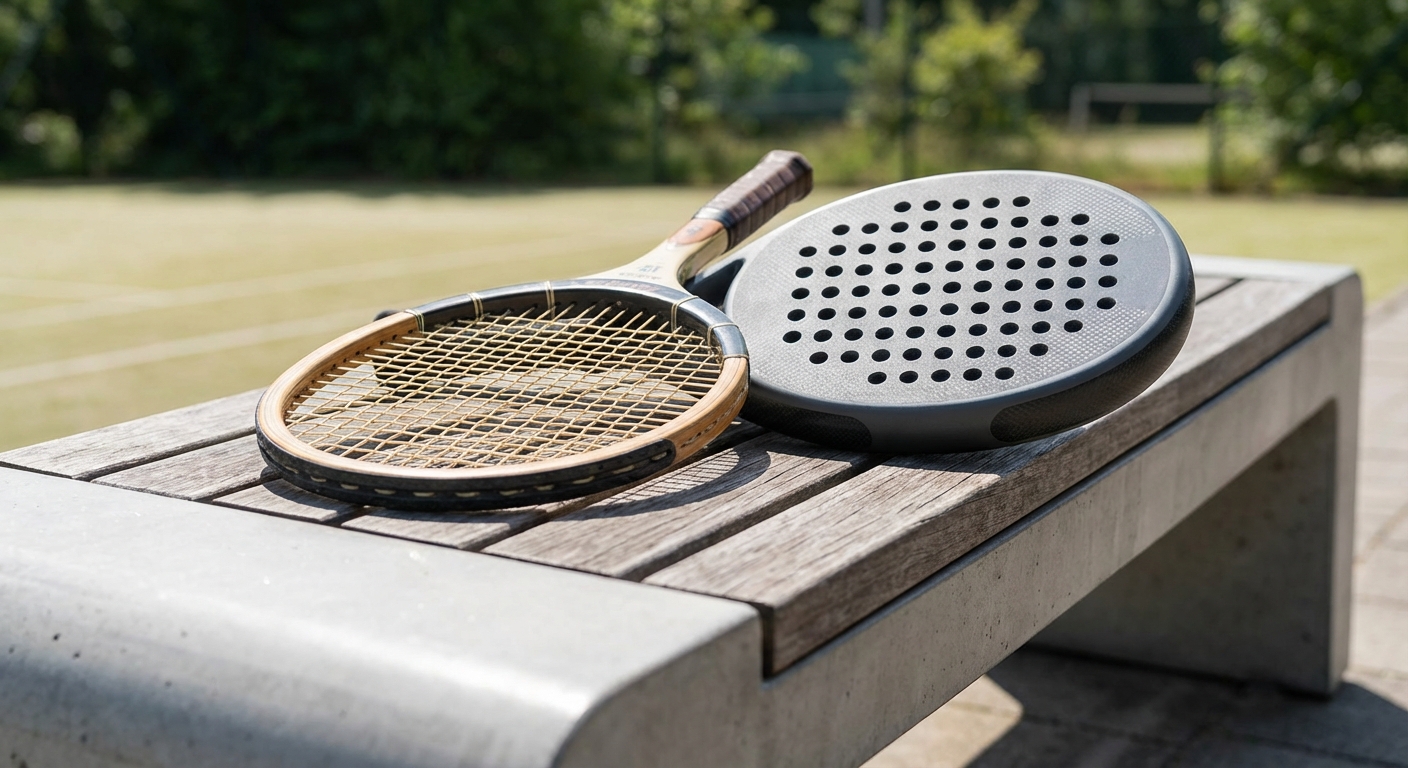
Racket technology is a massive diferencia entre padel y tenis because padel uses solid, perforated paddles made of composite materials instead of strung rackets. You won’t find any strings to break or tension to manage in a padel racket. These “palas” are shorter, making them much easier to handle for players who lack technical tennis training.
The solid core, usually made of EVA foam, provides a “trampoline effect” that helps with ball propulsion. This allows you to generate power with much shorter swings. Because the racket is an extension of the arm with a shorter lever, the risk of “tennis elbow” is often reduced for recreational players.
Composite materials and core density
Modern padel rackets use carbon fiber and fiberglass to balance weight and durability. You can choose different core densities to match your playing style, from soft foam for control to hard foam for power.
- Carbon fiber frames for structural rigidity.
- EVA or FOAM cores for vibration absorption.
- Holes are strategically drilled to reduce air resistance.
The point is: padel rackets are far more durable and lower-maintenance than strung tennis rackets.
Maneuverability and swing weight
The shorter length of a padel racket (maximum 45.5cm) allows for incredible maneuverability at the net. You will find that reacting to fast volleys is much easier than with a long-levered tennis racket.
- Better control for close-range exchanges.
- Integrated wrist straps for safety.
- Lower swing weight reduces fatigue.
In short: the ease of use of a padel racket is the primary reason beginners find the sport so accessible.
Key Takeaway: Padel rackets are solid, durable, and easier to use, lowering the entry barrier for new players and reducing maintenance costs for facility rentals.
| Property | Tennis Racket | Padel Racket |
|---|---|---|
| Surface | Stringed (Nylon/Gut) | Solid (Carbon/Glass fiber) |
| Length | ~68 – 70 cm | Max 45.5 cm |
| Maintenance | High (Restringing required) | Low (No strings) |
The lack of strings in padel rackets means you spend less time on maintenance and more time on the court.
Why is the ball pressure a key diferencia entre padel y tenis?
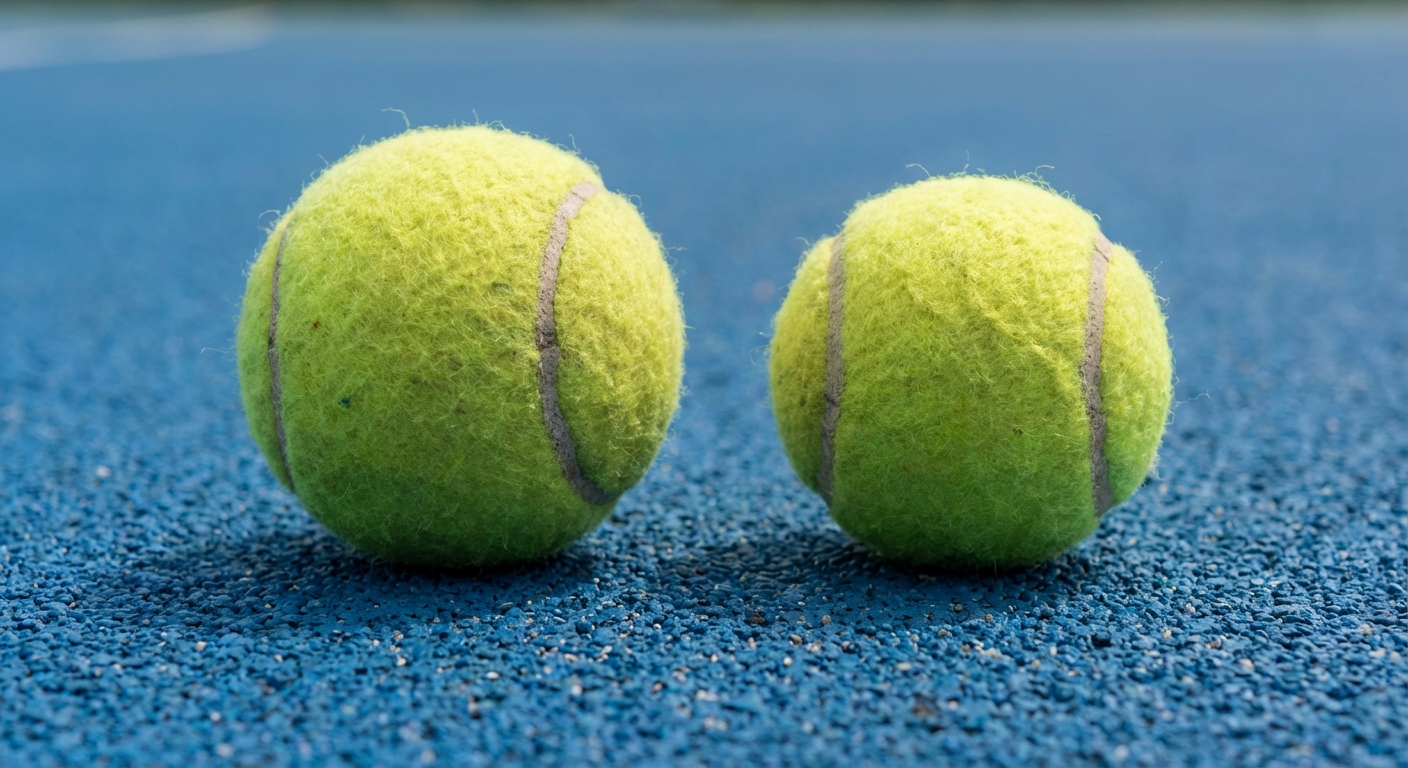
At first glance, the balls look identical, but the real diferencia entre padel y tenis is the internal pressure and bounce height. Padel balls are pressurized slightly lower than tennis balls to slow the game down and keep it within the smaller court dimensions. You will notice that a padel ball feels a bit “heavier” or “deader” when hit compared to the explosive pop of a tennis ball.
If you use a tennis ball on a padel court, the game becomes too fast to control, and the ball will bounce too high off the glass. This would make defensive play nearly impossible. Using the correct ball is essential for maintaining the tactical integrity of the padel rally.
Internal pressure and bounce specifications
Padel balls must have an internal pressure of between 10psi and 11psi. This ensures that when dropped from a height of 2.54m onto a hard surface, the bounce is between 135cm and 145cm.
- Lower pressure for better control in small spaces.
- Slightly smaller diameter than some tennis balls.
- Optimized felt for artificial turf surfaces.
Make no mistake: using the wrong ball will significantly degrade the player experience in your facility.
Durability and felt construction
Because padel is played on artificial turf with sand, the felt on the ball is designed to be more abrasion-resistant. You need balls that can withstand the friction of the turf without losing their aerodynamic properties too quickly.
- High-visibility yellow is standard.
- Long-lasting felt for commercial use.
- Consistent flight patterns for competitive play.
The reality is: you should replace padel balls every 2-3 matches to maintain optimal playability.
Key Takeaway: The lower pressure of padel balls is a deliberate design choice that enables the long, tactical rallies that define the sport’s unique appeal.
| Specification | Tennis Ball | Padel Ball |
|---|---|---|
| Internal Pressure | ~14 – 15 psi | 10 – 11 psi |
| Bounce Height | 135 – 147 cm | 135 – 145 cm |
| Game Speed | High | Moderate/Controlled |
Controlled bounce heights ensure that the glass walls remain a fair and playable part of every point.
What is the physical diferencia entre padel y tenis for players?
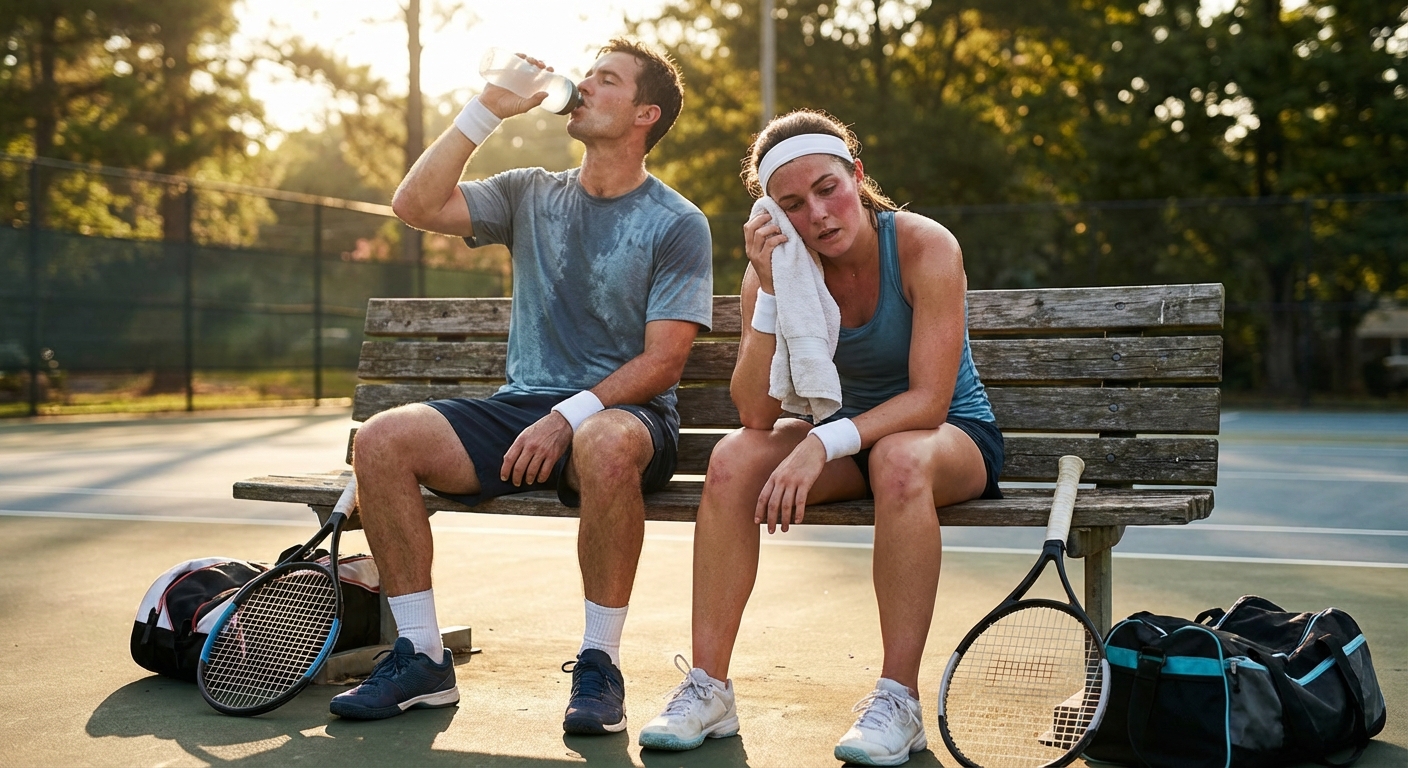
The physical diferencia entre padel y tenis centers on the type of movement; tennis requires long-distance sprinting and lateral coverage, while padel demands short, explosive bursts and rapid directional changes. You will find that padel is generally less taxing on the cardiovascular system for beginners, but much more demanding on the joints due to the frequent stopping and starting.
Because padel is almost always played in doubles, you cover less total ground than a singles tennis player. However, the volume of points and the lack of “dead time” (since balls don’t fly 20 meters away) means you are active for a higher percentage of the match. This makes it a highly efficient workout for busy professionals.
Movement patterns and joint impact
In padel, you are constantly adjusting your feet to deal with rebounds off the glass. This requires high agility and core stability to maintain balance during awkward hitting angles.
- More “micro-movements” and adjustments.
- Lower total distance traveled per match.
- High demand on knees and ankles for pivots.
It gets better: the artificial turf surface is generally softer and more forgiving on the joints than hard tennis courts.
Social interaction and fatigue
The proximity of the four players on a small court makes padel a highly social experience. You can easily talk to your partner and your opponents throughout the match, which reduces the perceived effort of the workout.
- High engagement leads to longer playing sessions.
- Social bonding increases member retention.
- Lower “entry fatigue” for non-athletes.
Look: people play padel for 90 minutes and feel energized, whereas 90 minutes of singles tennis can be exhausting.
Key Takeaway: Padel offers a high-intensity but low-impact social workout that is more accessible to a broader age range than traditional tennis.
| Physical Factor | Tennis (Singles) | Padel (Doubles) |
|---|---|---|
| Cardio Intensity | High (Continuous) | Moderate (Interval-based) |
| Agility Requirement | Moderate | Very High |
| Social Level | Low | Very High |
The social nature of padel reduces the psychological barrier to exercise, making it a “sticky” sport for your club.
Does the serve method highlight the diferencia entre padel y tenis?
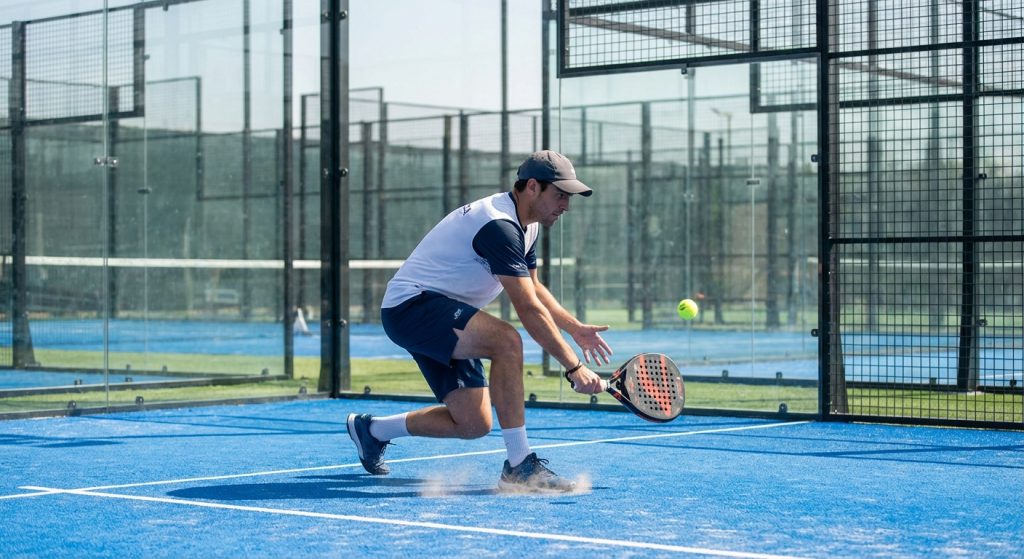
The serve is the most obvious technical diferencia entre padel y tenis because padel requires an underhand serve struck at or below waist level. In tennis, the overhand serve is a weapon used to win points instantly (aces). In padel, the serve is merely a way to start the point and transition into a strong net position.
You must bounce the ball once before hitting it during a padel serve. This removes the complexity of the tennis toss and the high-impact shoulder motion, making the game much easier for beginners to start. You will find that rallies start immediately, rather than being interrupted by frequent double faults or unreturnable serves.
Technical execution of the underhand serve
The goal of the padel serve is to put the ball deep into the opponent’s box, preferably hitting the side glass after the bounce. This forces the receiver into an uncomfortable return position.
- Struck at waist level or below.
- Must bounce once behind the service line.
- Direction is usually toward the side wall.
Here is the kicker: a good padel serve is about placement and spin, not raw speed.
Tactical transition to the net
Immediately after serving, you and your partner should move forward to take control of the net. This “serve and volley” approach is standard in padel, whereas it has become a rarity in modern baseline tennis.
- Net control is the primary objective.
- Teamwork is essential for closing gaps.
- Pressure is applied to the receiver immediately.
The truth is: if you don’t move to the net after your serve, you are giving the advantage to the opponents.
Key Takeaway: The underhand serve simplifies the game’s start, ensuring longer rallies and making padel more inclusive for players of all skill levels.
| Serve Element | Tennis | Padel |
|---|---|---|
| Motion | Overhand (High impact) | Underhand (Low impact) |
| Primary Goal | Ace / Win the point | Start point / Take the net |
| Ease of Learning | Difficult (Requires years) | Easy (Requires minutes) |
By removing the difficult overhand serve, padel allows new players to enjoy competitive games from day one.
How does build cost factor into the diferencia entre padel y tenis?
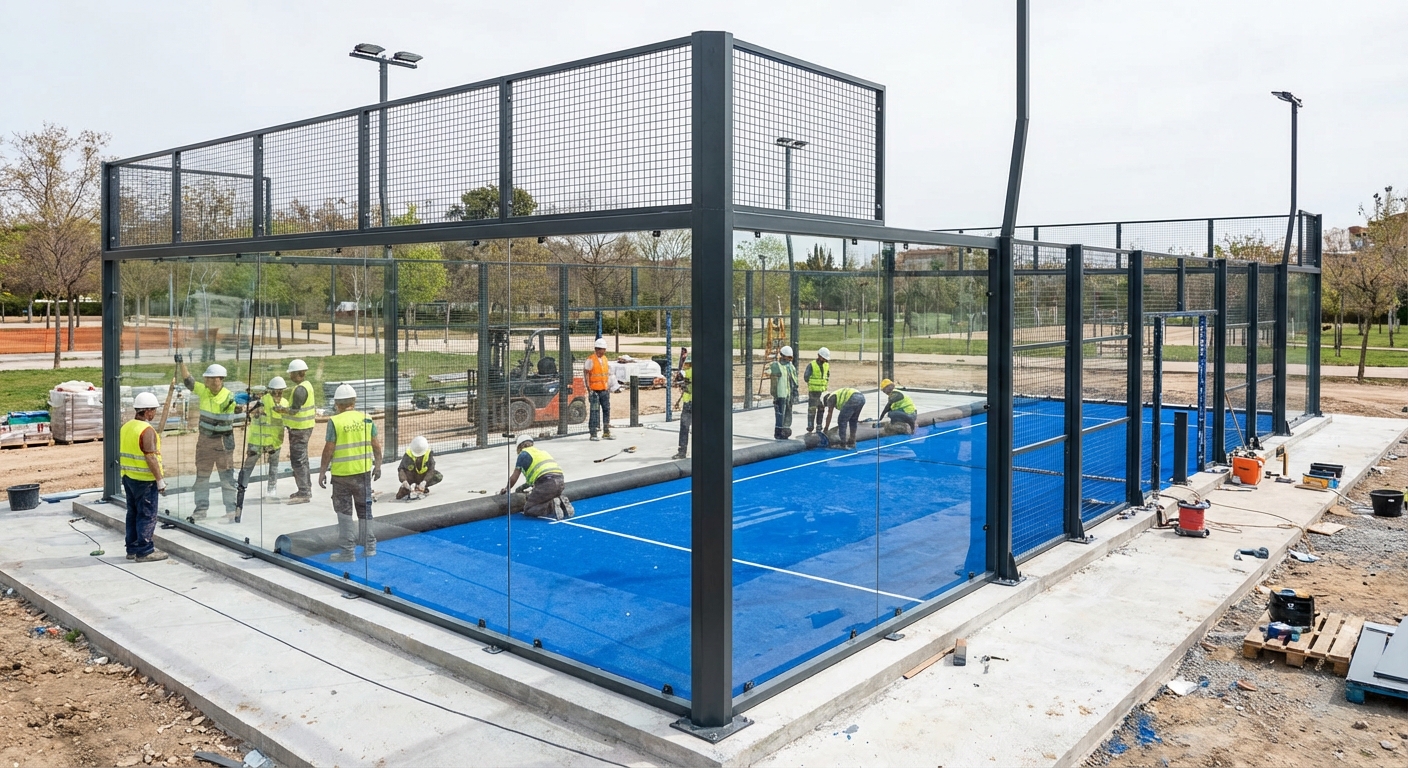
While a single padel court is more expensive than a basic asphalt tennis court, the real diferencia entre padel y tenis in cost is the Return on Investment (ROI) per square meter. You are investing in high-grade steel, tempered glass, and specialized turf. However, because you can fit more courts in the same area, your revenue potential is significantly higher.
Building a padel court requires a precision-engineered concrete slab to ensure the glass panels are perfectly vertical. If the base is off by even a few millimeters, the glass can shatter or the rebound will be inconsistent. This initial investment in quality pays off in lower long-term maintenance and a premium user experience.
Foundations and structural engineering
You cannot cut corners on the foundation. A reinforced concrete ring or a full slab is necessary to support the 4-ton weight of the glass and steel structure.
- Precision leveling for consistent ball bounce.
- Drainage systems to allow for all-weather play.
- Anchoring bolts designed for high wind resistance.
But wait: a well-built court can last over 20 years with minimal structural intervention.
Lighting and turf maintenance
The ongoing costs for padel are manageable. LED lighting systems specifically designed for padel courts provide uniform illumination without shadows, and the artificial turf only requires periodic brushing and sand redistribution.
- IP66-rated LED floodlights for energy efficiency.
- Monofilament turf for high-frequency use.
- Minimal water requirement compared to clay or grass.
The bottom line is: padel is a “plug and play” revenue stream once the initial construction is completed.
Key Takeaway: Higher initial construction costs for padel are offset by superior land efficiency and significantly higher hourly rental revenue.
| Cost Category | Tennis (Hard Court) | Padel (Panoramic) |
|---|---|---|
| Initial Capex | Moderate | High (Glass/Steel) |
| Land Required | ~600+ sqm | 200 sqm |
| Revenue Potential | $ / hour | $$$ / hour |
Investing in a premium padel court ensures you attract high-end clients and minimize operational downtime.
Which sport offers a better ROI in the diferencia entre padel y tenis?
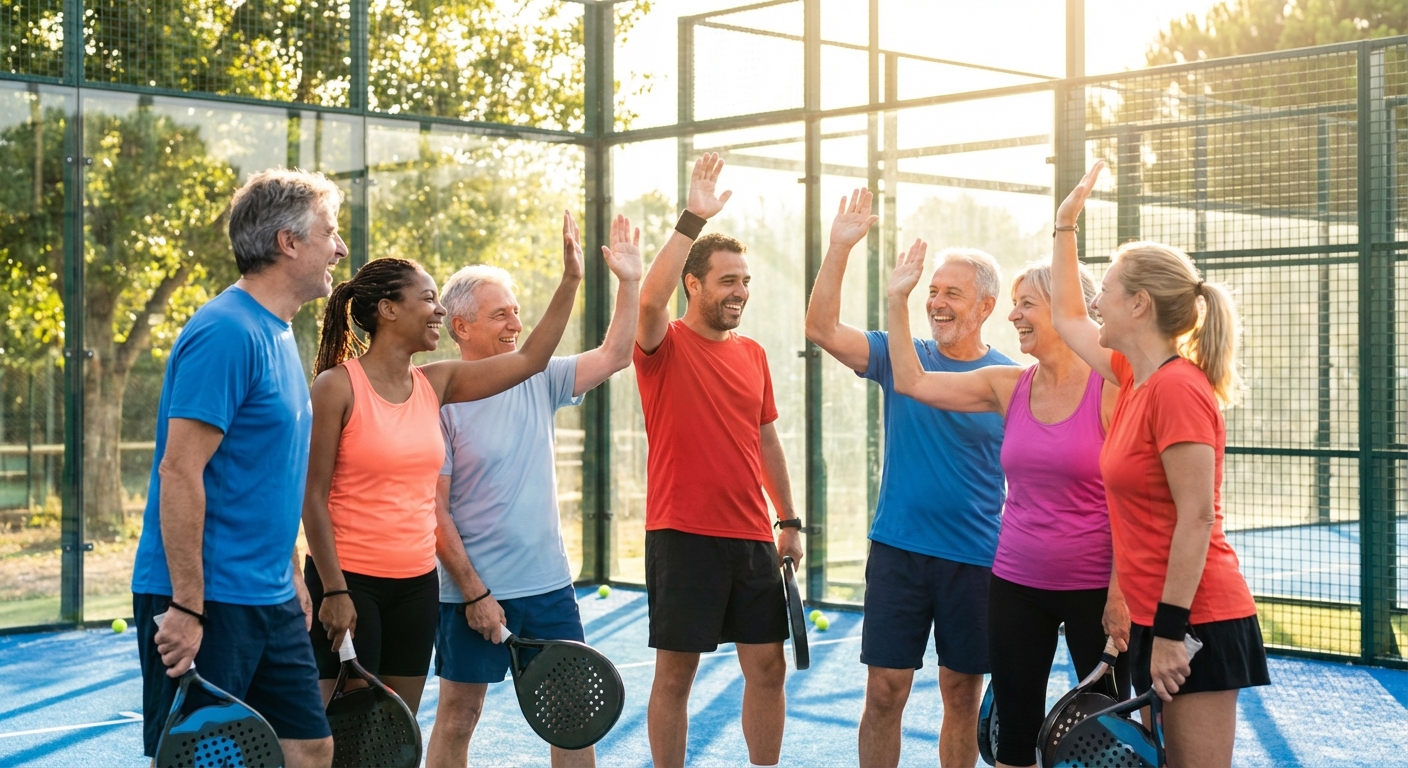
For a commercial operator, the diferencia entre padel y tenis in ROI is undeniable; padel consistently generates more revenue per hour because it is easier to fill 4-player slots. You will find that tennis courts often sit empty or are used by only two players, whereas padel’s social nature keeps courts booked from morning until night.
The social aspect of padel creates a community around your facility. Players are more likely to stay for a drink or a meal after a match, increasing your secondary revenue streams. In the modern B2B sports market, padel is the most reliable growth engine for clubs, resorts, and real estate developments.
Booking frequency and player retention
Padel players tend to play more frequently—often 2 to 3 times per week. This is because the game is less physically draining and more socially rewarding than singles tennis.
- High repeat-customer rate.
- Easier to organize “round-robin” tournaments.
- Appeals to corporate groups for team building.
Believe it or not: the social “stickiness” of padel is its greatest commercial advantage.
Secondary revenue streams
A padel facility is more than just courts; it’s a hub. You can capitalize on racket rentals, ball sales, and pro-shop gear much more effectively than with tennis.
- Higher turnover of consumables (balls/grips).
- Rental rackets are a high-margin service.
- Bar and cafe revenue increases with 4-player groups.
In short: you aren’t just selling court time; you are selling a social lifestyle that keeps members coming back.
Key Takeaway: Padel’s ability to maximize player density and foster a social community makes it the superior choice for long-term commercial profitability.
| ROI Metric | Tennis | Padel |
|---|---|---|
| Players per Hour | 2 – 4 | 4 |
| Social Engagement | Moderate | High |
| Overall Profitability | Moderate | High |
This data confirms that switching to or adding padel is a strategic move for any modern sports facility.
Conclusion
Understanding the structural and technical differences between these sports is the first step toward optimizing your facility. While tennis remains a classic, padel offers a modern, space-efficient, and highly social alternative that aligns perfectly with current market demands. By investing in high-quality materials—from galvanized steel structures to 12mm safety glass—you ensure that your facility is built to last and provides the best possible player experience.
If you are ready to transform your underutilized space into a high-revenue padel hub, we are here to help. Our team provides factory-direct solutions, including custom branding and international installation support, to ensure your project is a success from day one. To get started with a personalized quote or to learn more about our modular court designs, please contact us today. Let’s build the future of sports together.
FAQ
Can I play padel on a tennis court?
No, it is not possible to play a proper game of padel on a tennis court because the fundamental mechanics of the sport require glass walls for rebounds. Without the enclosure, you lose the tactical depth that makes padel unique.
What is the best surface for a padel court?
Artificial turf with sand infill is the gold standard for padel courts. It provides the perfect balance of grip, slide, and consistent ball bounce while being much easier to maintain than clay or natural grass.
How do I know if I have enough space for a padel court?
You need a minimum footprint of 20m x 10m for the court itself, plus a small perimeter for safety and access. If you have enough space for a large backyard or a small parking lot, you can likely fit at least one padel court.
Can I customize the colors of my padel court?
Yes, modern manufacturing allows for full OEM customization. You can choose specific RAL colors for the steel structure and even integrate your facility’s logo into the glass or turf to strengthen your brand identity.
How do I know if the glass is safe for my players?
Always ensure your supplier uses 12mm tempered safety glass that complies with European EN 12150 standards. This glass is designed to withstand high impacts and, in the unlikely event of a break, it shatters into small, non-sharp pieces.