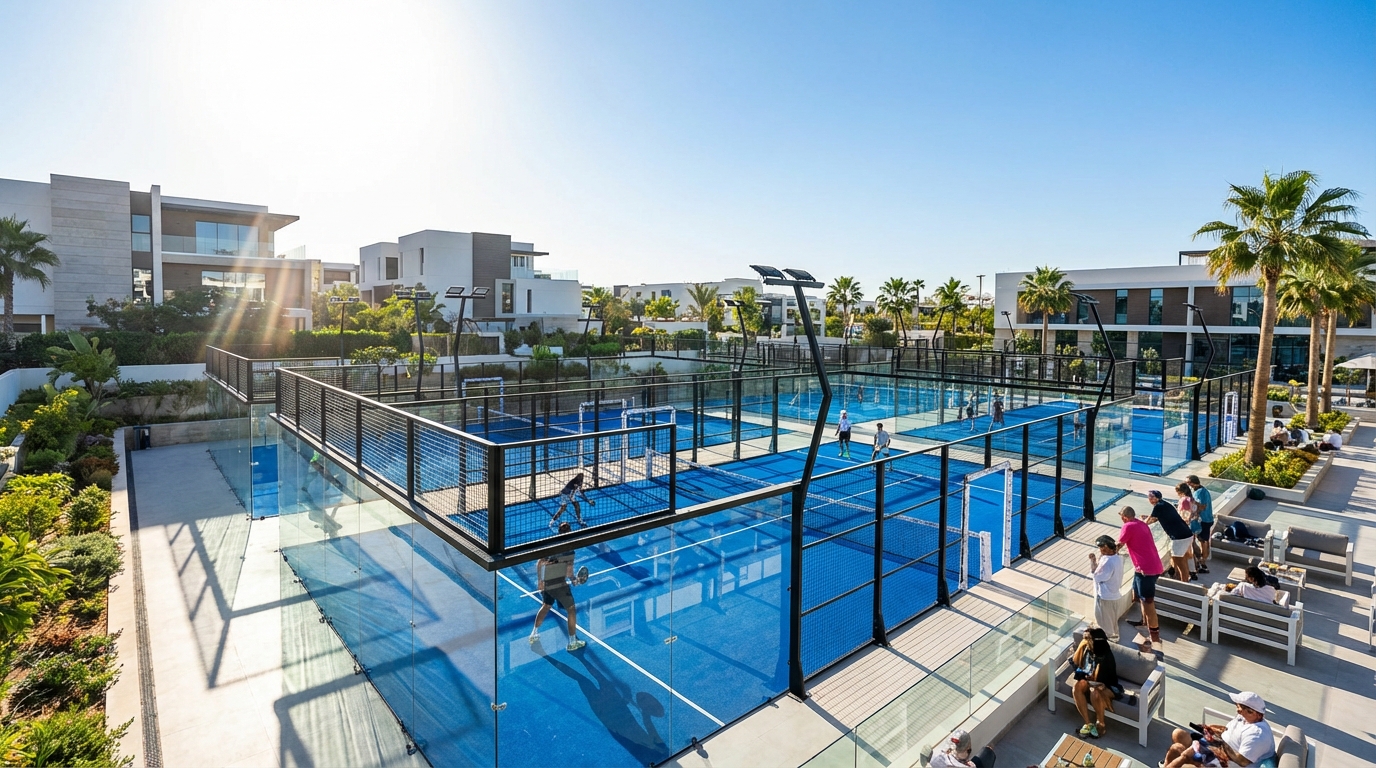
The standard area of play for a professional game requires dimensions of a padel court that measure exactly 20 meters in length and 10 meters in width. You might find yourself frustrated by the lack of clear specifications when trying to plan your own sports facility or home installation. We provide the precise blueprints and construction guidance you need to turn your empty lot into a world-class sporting arena.
What are the standard dimensions of a padel court?
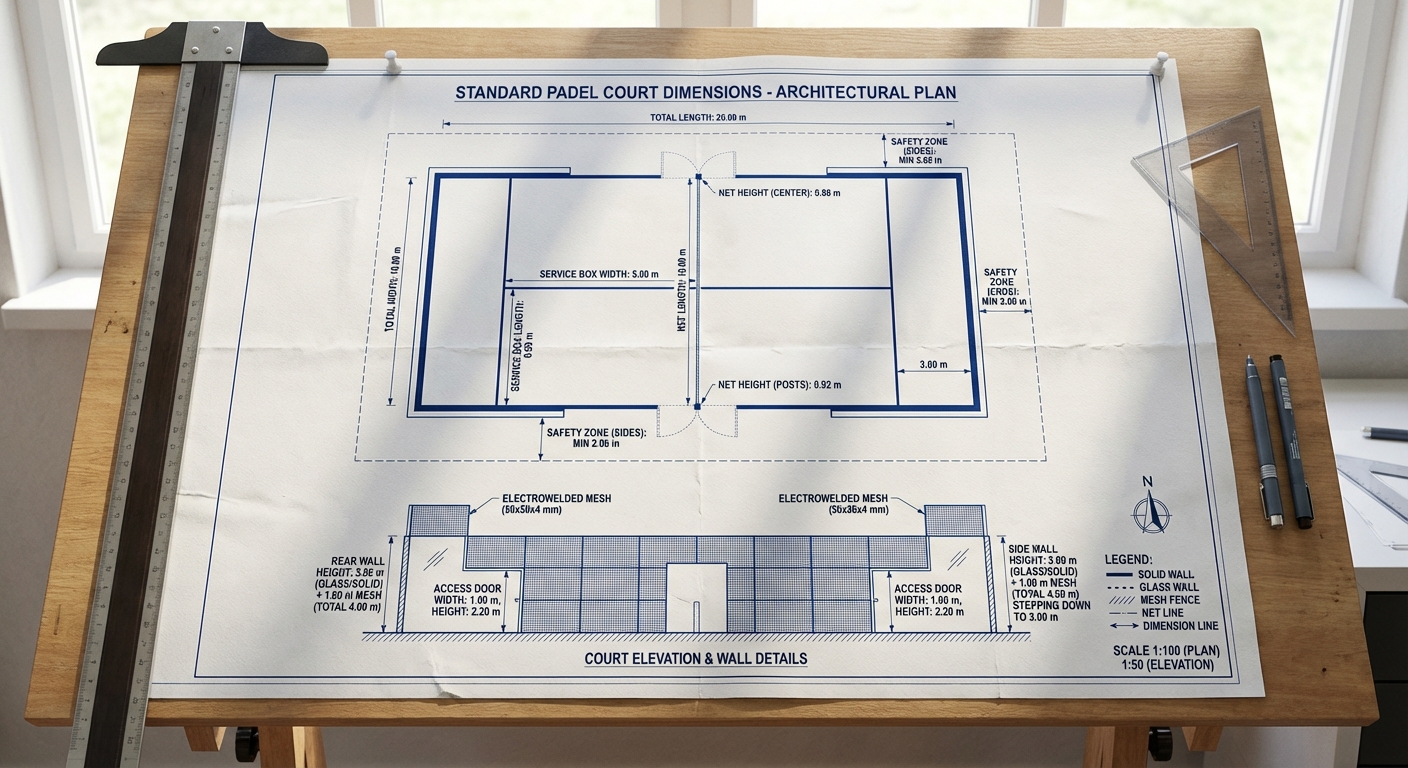
A regulation court for padel must be a rectangle measuring 20 meters long by 10 meters wide within its inner boundaries. These dimensions of a padel court are strictly mandated by the International Padel Federation to ensure consistent gameplay globally.
The playing area is enclosed by walls, making the internal space the primary focus for players. While casual courts might vary slightly, professional certification requires an accuracy tolerance of 0.5% during the build phase.
How is the inner area divided?
The court is split into two halves by a central net that runs across the 10-meter width. Here is the deal: each side is then further defined by service lines located 7 meters from the net.
- The central service line divides the area between the net and the back service line.
- Each service box must be equal in size for fair play.
- All markings should be 5cm wide for maximum visibility.
Are there variations for single courts?
While most facilities focus on the standard doubles format, smaller courts do exist for practice or individual play. But wait, there is more: these are significantly narrower, typically measuring only 6 meters in width.
- Length remains 20 meters.
- Width is reduced by 40%.
- These are ideal for residential spaces with limited footprints.
Key Takeaway: Understanding the 20×10 meter standard is essential for anyone looking to build a facility that meets international competitive standards.
| Component | Metric Measurement | Imperial Measurement |
|---|---|---|
| Total Length | 20 Meters | 65′ 7″ |
| Total Width | 10 Meters | 32′ 10″ |
| Service Line Distance | 7 Meters | 23′ 0″ |
The following data illustrates the precise physical footprint required for a standard installation.
Where are service lines located within the dimensions of a padel court?
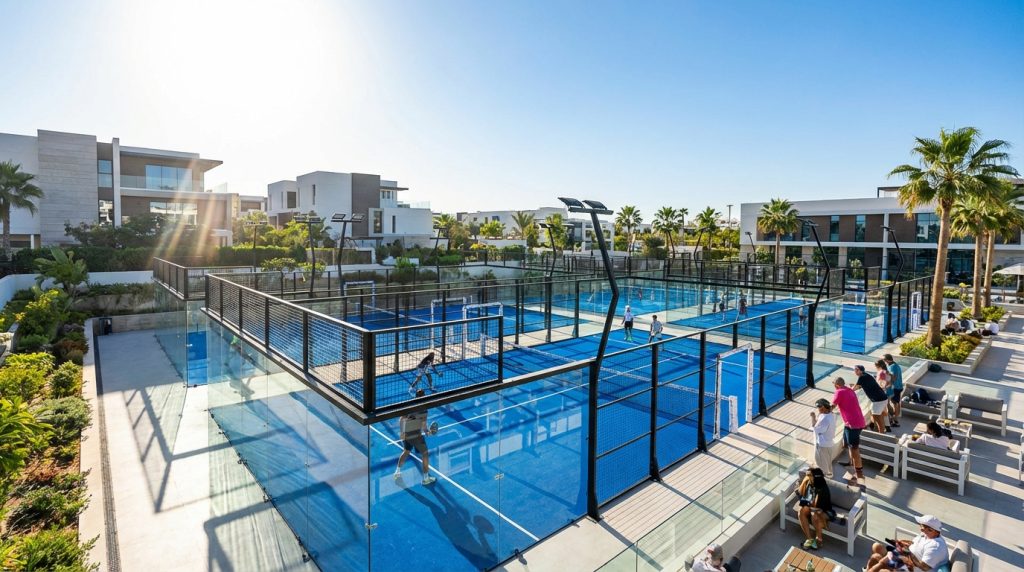
Service lines are positioned exactly 7 meters away from the central net on both sides of the playing area. When calculating the dimensions of a padel court, these lines define the valid landing zone for every serve initiated by the players.
The lines must be painted in a contrasting color, usually white, to ensure they are clearly visible against the turf. Proper marking is non-negotiable for competitive integrity and player orientation.
How wide should the lines be?
Every line on the court surface must have a width of 5 centimeters to meet official regulations. Check this out: the thickness of the line is actually included in the measurement of the service boxes.
- Boundary lines define the out-of-bounds area.
- Service lines must be perfectly parallel to the net.
- Paint must be slip-resistant for player safety.
What is the purpose of the center service line?
The center service line runs from the net to the service line, dividing each side into two equal boxes. The bottom line is that this creates a diagonal target system for the underhand serve.
- It extends 10cm beyond the service line.
- It ensures the server stays in their designated quadrant.
- It must be perfectly centered at the 5-meter mark.
Key Takeaway: Precise line marking ensures that the game remains fair and follows the specific rules regarding service and ball bounce.
| Marking Detail | Standard Width | Distance from Net |
|---|---|---|
| Boundary Lines | 5 cm | N/A |
| Service Line | 5 cm | 7.0 Meters |
| Center Line | 5 cm | 0 to 7.1 Meters |
These measurements define the specific geometric requirements for any professional-grade court layout.
What is the official net height for dimensions of a padel court?
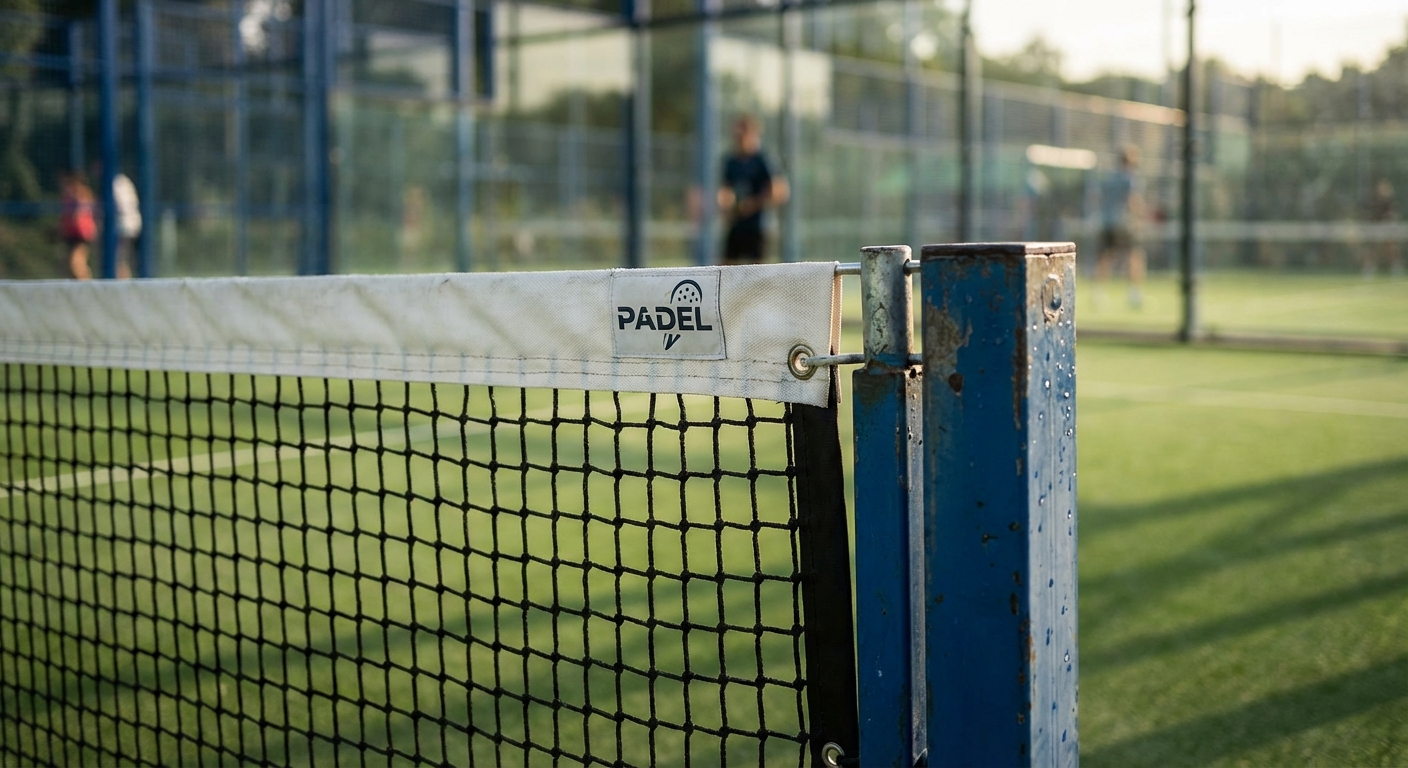
The official net must be 10 meters long and stand 0.88 meters high at the center of the dimensions of a padel court. At the supporting posts, the height increases slightly to 0.92 meters to account for the natural tension of the cable.
Maintaining this exact height is crucial for the trajectory of the ball and the speed of the game. Professional installers use tensioning devices to ensure the net does not sag over time.
How is the net suspended?
A metallic cable with a maximum diameter of 0.01 meters holds the net across the width of the court. Here is the deal: the cable is encased in a white protective band for visibility and safety.
- The band must be between 5cm and 6.3cm wide.
- It must be securely fastened to prevent sliding.
- No gaps are allowed between the net and the posts.
What materials are used for the mesh?
Most professional nets are made from high-strength synthetic fibers like polyethylene or polypropylene. But wait, there is more: the mesh must be small enough to prevent a ball from passing through.
- UV resistance is required for outdoor courts.
- Reinforced edges prevent fraying during heavy use.
- The net must hang vertically without touching the floor.
Key Takeaway: The net height is the primary barrier in the game, and even a few centimeters of deviation can significantly alter play dynamics.
| Net Component | Required Measurement | Material Specification |
|---|---|---|
| Center Height | 0.88 Meters | Synthetic Mesh |
| Post Height | 0.92 Meters | Metallic Support |
| Top Band Width | 5.0 – 6.3 cm | White Vinyl/PVC |
Technical specifications for the net system ensure consistent ball behavior during rallies.
How do enclosure walls affect the dimensions of a padel court?
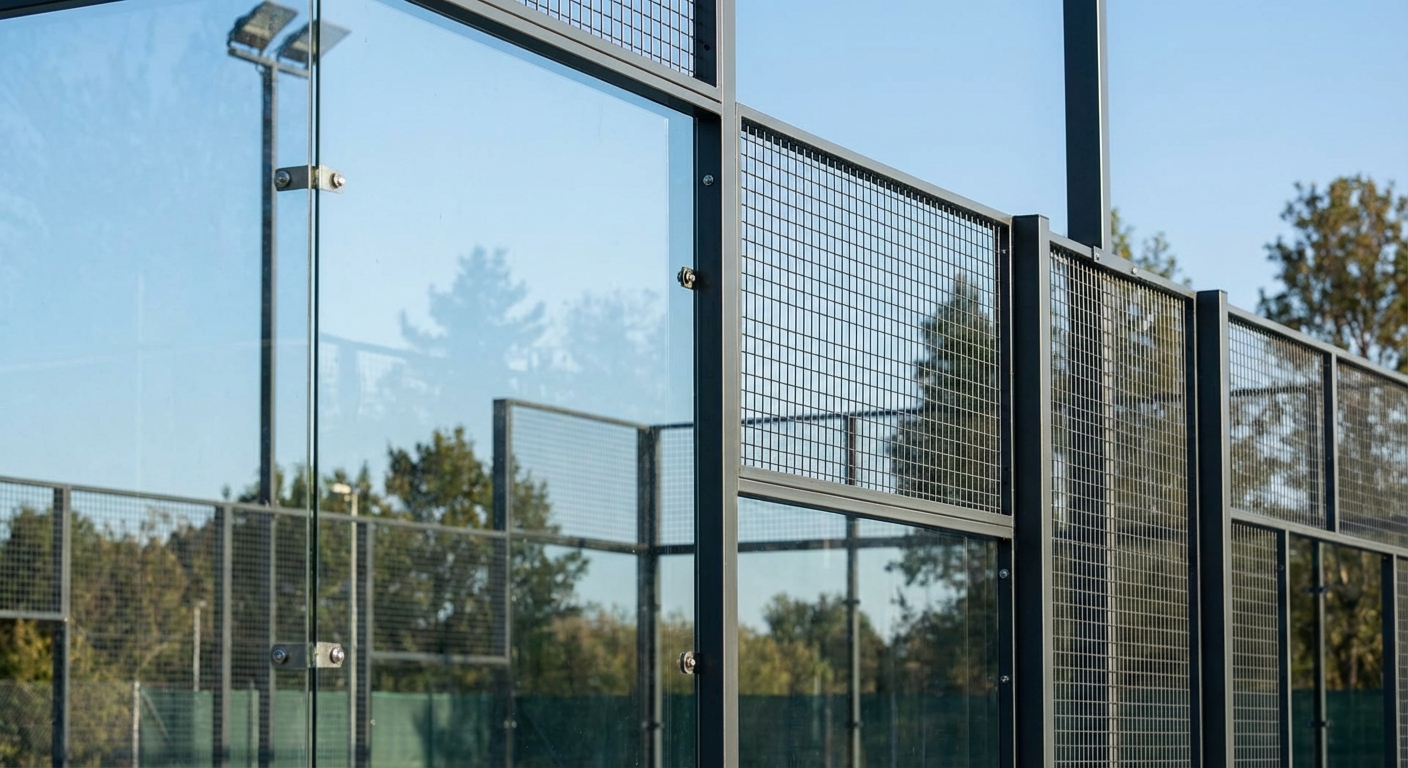
The enclosure walls define the physical perimeter and must align perfectly with the 20×10 meter dimensions of a padel court. These walls are typically 3 meters high on the sides and 4 meters high on the back walls.
Unlike tennis, the walls are an active part of the game, allowing players to hit the ball after it bounces. The combination of glass and metallic mesh creates varied rebound conditions.
Why use tempered glass?
Tempered glass panels are the industry standard because they provide a predictable and consistent bounce for the ball. Check this out: these panels must be at least 10mm to 12mm thick to withstand impact.
- Glass provides transparency for spectators.
- It is resistant to weather and temperature changes.
- It must be mounted with specialized shock-absorbing gaskets.
What is the role of the metallic mesh?
The mesh fencing is located above the glass sections and along the middle of the side walls. Here is the deal: the mesh creates an “unpredictable” bounce that is a signature part of padel strategy.
- Mesh height is usually 1 meter above the back glass.
- It must be rigid enough to maintain its shape.
- Galvanized steel is preferred to prevent rust.
Key Takeaway: The wall structure is what truly separates padel from other racket sports, requiring both structural integrity and specific rebound properties.
| Wall Section | Material | Height |
|---|---|---|
| Back Wall Base | Tempered Glass | 3.0 Meters |
| Back Wall Top | Metallic Mesh | 1.0 Meter |
| Side Middle | Metallic Mesh | 3.0 Meters |
Wall height and material distribution are vital for creating the unique strategic environment of the sport.
What total area is required beyond the dimensions of a padel court?
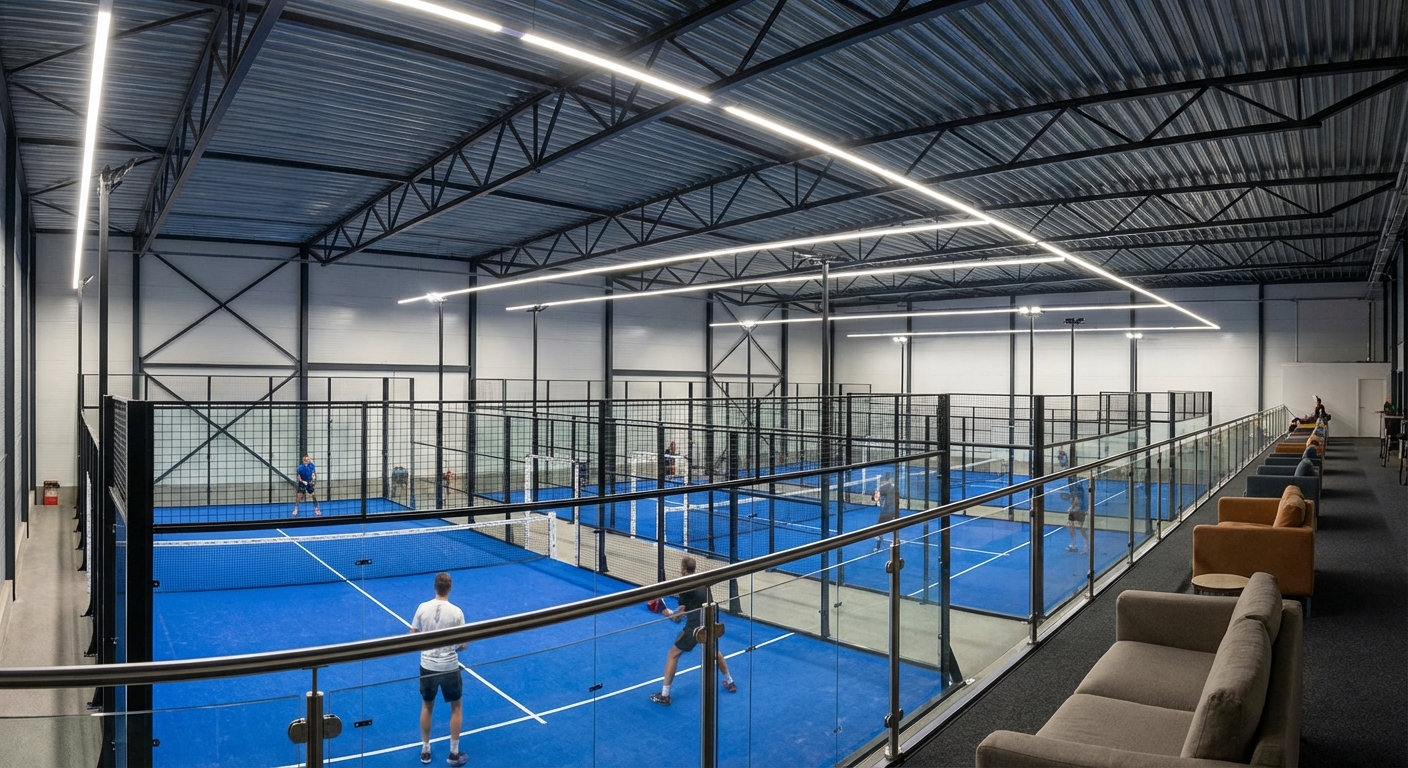
Building a facility requires a total footprint of roughly 25 meters by 15 meters to accommodate the dimensions of a padel court plus safety zones. This extra space allows for structural supports, player movement outside the door, and spectator walkways.
Without this buffer, the court can feel cramped and may not meet safety regulations for professional tournaments. Adequate spacing also facilitates easier maintenance and cleaning of the glass panels.
Are safety zones mandatory?
For any court hosting official competitions, an “out-of-court” play area is required near the access doors. But wait, there is more: this allows players to run outside the enclosure to return a ball that has been smashed over the wall.
- Side safety zones should be 2 meters wide.
- Back safety zones are recommended at 1 meter.
- The surface in these zones must be level with the court.
How much space do spectators need?
If you are planning a commercial club, you must account for seating and social areas. The bottom line is that the community aspect of the sport is a major driver for facility success.
- Walkways should be at least 1.5 meters wide.
- Elevated viewing areas provide the best perspective.
- Seating should be positioned to avoid sun glare.
Key Takeaway: Planning for a larger footprint than the court itself is necessary for safety, spectator comfort, and professional certification.
| Zone Type | Recommended Width | Purpose |
|---|---|---|
| Inner Play Area | 10 Meters | Core Gameplay |
| Side Safety Zone | 2 Meters | Out-of-court Returns |
| Spectator Walkway | 1.5 Meters | Traffic Flow |
Calculating the total footprint is the first step in successful land acquisition and site planning.
How is the foundation built for the dimensions of a padel court?
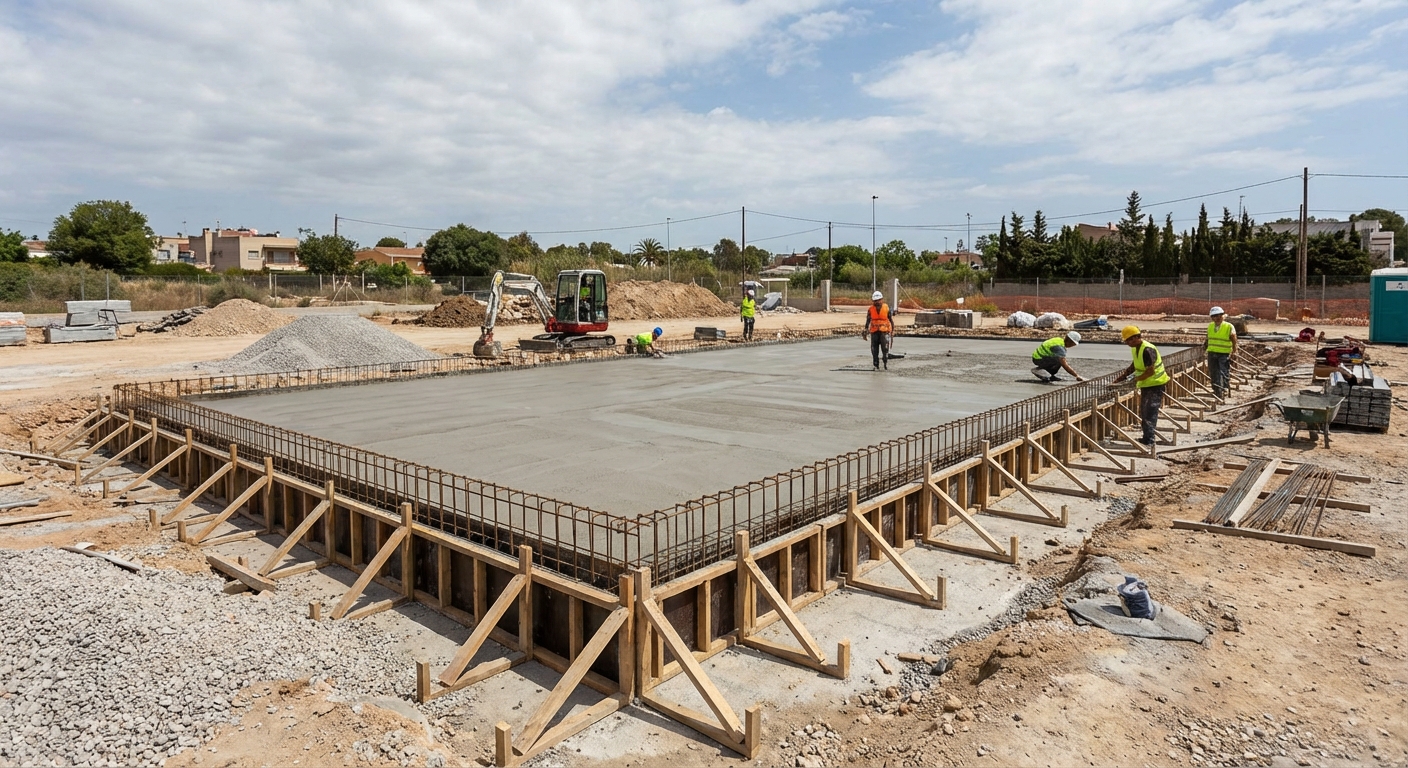
A reinforced concrete slab is the most common foundation used to support the total dimensions of a padel court. This base must be perfectly level, with a maximum slope of 1% toward the exterior to allow for water drainage.
The foundation must be strong enough to anchor the heavy glass panels and metallic pillars. Without a solid base, the court can shift, leading to cracked glass or uneven turf surfaces.
What type of concrete is used?
Engineers typically recommend a 15cm to 25cm thick slab of reinforced concrete. Check this out: the concrete must be finished with a porous texture if you plan to install certain types of artificial grass.
- Steel mesh reinforcement prevents cracking.
- Peripheral beams are often added for wall support.
- Curing time must be fully respected before turf installation.
Is drainage a major concern?
For outdoor courts, moisture management is the biggest threat to longevity. But wait, there is more: a poor drainage system will lead to puddles and the growth of algae on the playing surface.
- Slopes must be precisely calculated.
- Perimeter drains catch runoff from the slab.
- Porous concrete allows water to pass through the base.
Key Takeaway: The foundation is the most expensive and permanent part of the build, so cutting corners here can lead to catastrophic structural failure later.
| Foundation Layer | Thickness | Material |
|---|---|---|
| Sub-base | 20-30 cm | Compacted Gravel |
| Main Slab | 15-20 cm | Reinforced Concrete |
| Surface Finish | N/A | Smooth or Porous |
A robust foundation ensures that your court remains perfectly level and safe for decades of play.
Which surface materials best fit the dimensions of a padel court?
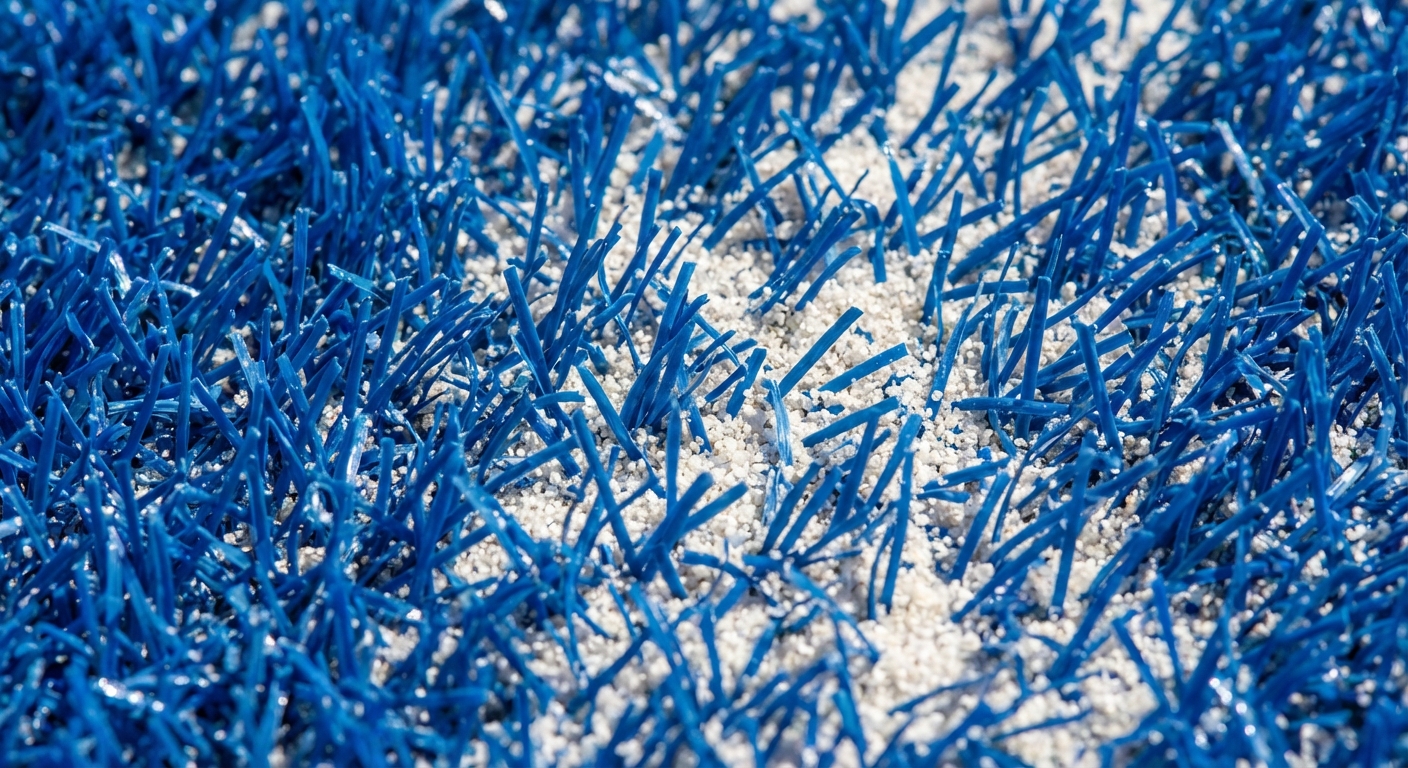
Artificial turf filled with silica sand is the premier choice for the interior dimensions of a padel court. This surface provides the ideal balance of grip for the players and a consistent bounce for the ball.
While other options like porous concrete exist, they are much harder on the players’ joints. Modern clubs almost exclusively use monofilament or fibrillated synthetic grass for a professional feel.
Why is sand added to the turf?
The silica sand acts as a stabilizer for the grass fibers and allows for “sliding” movements. Here is the deal: without the sand, the ball would bounce too low and the players would risk ankle injuries from excessive grip.
- Sand should be kiln-dried and rounded.
- It must be distributed evenly across the court.
- Regular brushing is needed to maintain consistency.
Does color affect performance?
Blue is the most popular color because it provides the best contrast with the yellow ball, especially for television. But wait, there is more: you can choose other colors to match your club’s branding.
- Green is traditional and hides dust well.
- Terracotta offers a classic “clay court” look.
- Black is approved for high-end indoor facilities.
Key Takeaway: Choosing high-quality turf and maintaining the correct sand levels is the best way to ensure player satisfaction and safety.
| Turf Property | Specification | Benefit |
|---|---|---|
| Pile Height | 10mm – 12mm | Optimal Ball Bounce |
| Sand Infill | 15kg – 20kg per m2 | Surface Stability |
| Fiber Type | Monofilament | Long-term Durability |
Selecting the right surface material directly impacts the speed and enjoyment of the game.
What are the height requirements for indoor dimensions of a padel court?
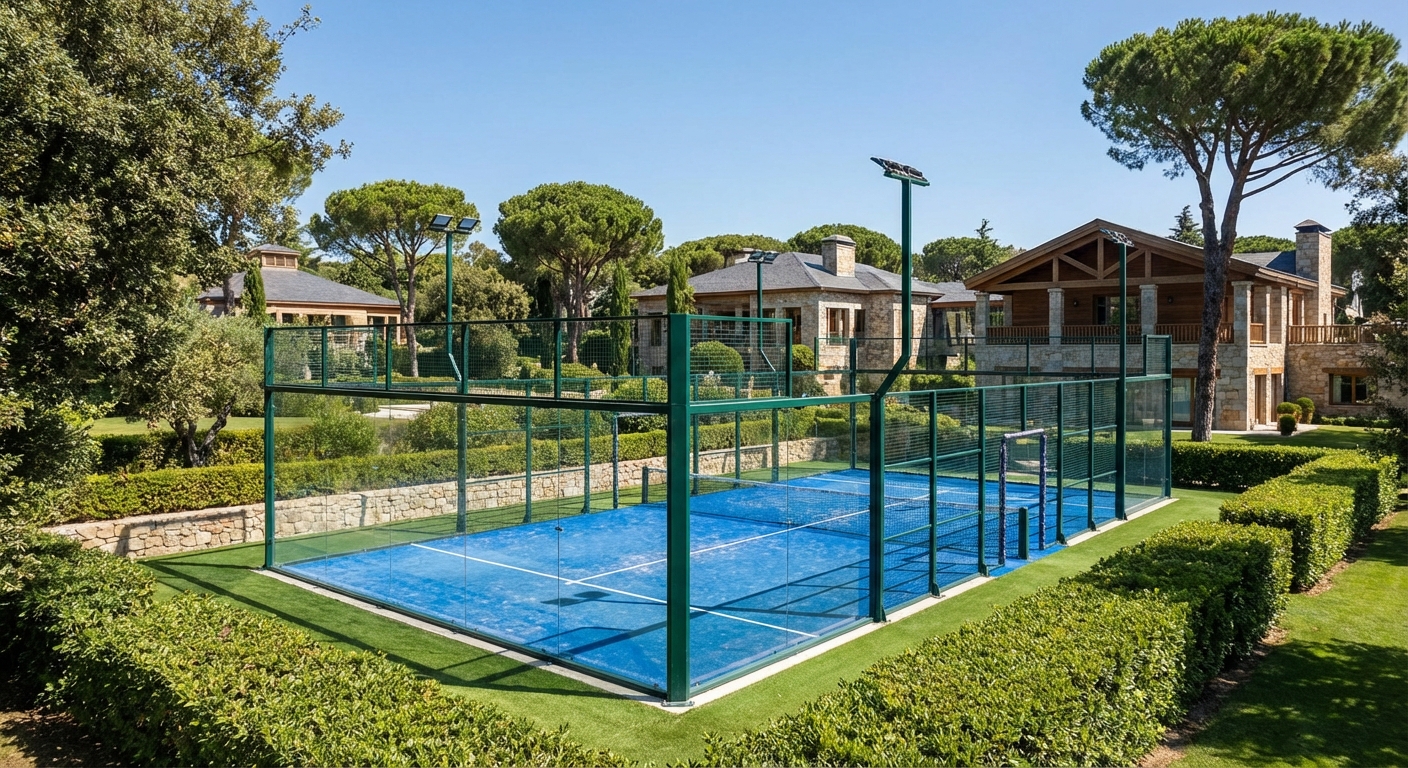
Indoor facilities must have a minimum clear ceiling height of 6 meters over the entire dimensions of a padel court. However, modern professional standards recommend a height of 8 meters to accommodate the high “lob” shots common in expert play.
Any obstructions like beams, lights, or ventilation ducts must be accounted for during the design phase. If the ceiling is too low, the lob—a fundamental strategic shot—becomes impossible to execute.
How does lighting fit in?
Lighting masts are usually 6 meters high and positioned at the corners or sides of the court. Check this out: the lights must be angled to illuminate the entire playing area without blinding the players.
- LED fixtures are preferred for energy efficiency.
- Lights must be flicker-free for high-speed play.
- Support poles must be outside the playing area.
Can luxury homes accommodate these heights?
Building a private indoor court requires a significant architectural commitment. The bottom line is that the vertical clearance is often the most challenging part of a residential installation.
- Basement builds require deep excavation.
- Standalone barns are a popular solution.
- Retractable roofs can solve height issues in warm climates.
Key Takeaway: Vertical clearance is just as important as the horizontal 20×10 meter footprint for maintaining the strategic depth of the game.
| Clearance Area | Minimum Height | Recommended Height |
|---|---|---|
| Center of Court | 6.0 Meters | 8.0 Meters |
| Corners/Perimeter | 4.0 Meters | 6.0 Meters |
| Light Fixtures | 6.0 Meters | 7.0 Meters |
Sufficient vertical space ensures that all tactical elements of the sport can be fully utilized.
What is the total cost to build standard dimensions of a padel court?
The cost to build professional dimensions of a padel court generally ranges from $24,000 to $65,000. This price varies based on the quality of the glass, the type of lighting system, and the complexity of the ground preparation.
Indoor courts tend to be on the higher end of the spectrum due to building permits and climate control requirements. Private residential builds also carry higher costs due to specialized logistics and custom finishes.
Where does the money go?
The glass panels and metallic structure usually represent about 40% of the total investment. But wait, there is more: the foundation and surface turf make up the majority of the remaining budget.
- Foundation: $8,000 – $15,000.
- Structure/Glass: $12,000 – $25,000.
- Lighting/Turf: $5,000 – $10,000.
Are there hidden maintenance costs?
Operating a court is relatively inexpensive, but you must plan for long-term upkeep. The bottom line is that a well-maintained court will last much longer and attract more players.
- Monthly brushing of the sand.
- Quarterly cleaning of the glass.
- Yearly professional inspection of the structure.
Key Takeaway: While the initial investment is significant, the high demand for court time often allows commercial clubs to reach profitability within 2-3 years.
| Budget Item | Estimated Cost (USD) | Percentage of Total |
|---|---|---|
| Foundation & Base | $12,000 | 30% |
| Structure & Glass | $18,000 | 45% |
| Turf & Installation | $6,000 | 15% |
| Lighting & Net | $4,000 | 10% |
A clear understanding of the budget helps in securing financing and managing project timelines.
Why is site selection critical for dimensions of a padel court?
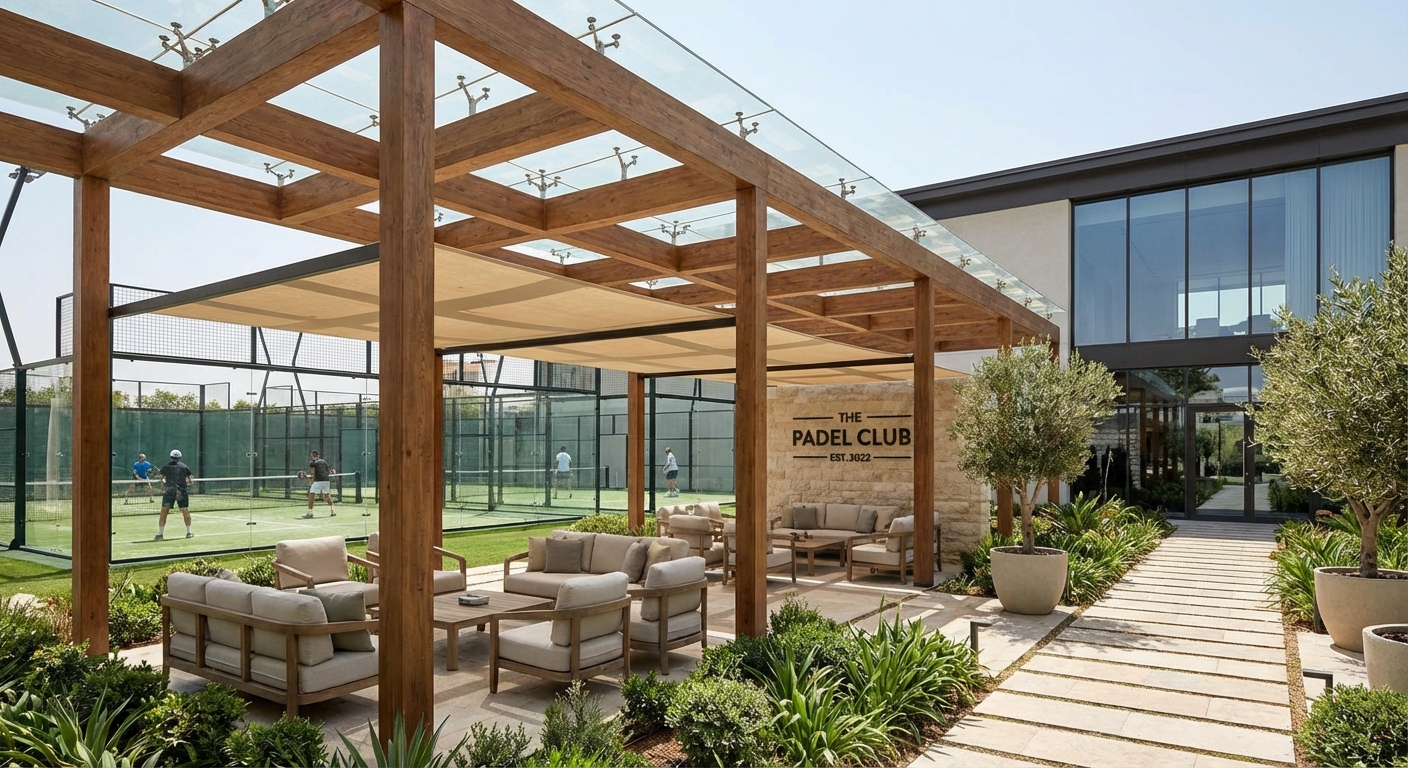
The location must be large enough to host the dimensions of a padel court while offering easy access for players and equipment. Factors like sun orientation, wind protection, and noise levels can make or break the player experience.
For outdoor courts, the long axis should ideally run North-South. This prevents players from having the sun directly in their eyes during the morning and late afternoon, which are peak playing hours.
How does noise affect the neighborhood?
The sound of a padel ball hitting the racket and the glass is distinct and repetitive. Check this out: you may need to install acoustic barriers if your court is close to residential properties.
- Sound travels easily over open spaces.
- Glass panels can reflect sound toward neighbors.
- Padel is often louder than traditional tennis.
What about accessibility and permits?
Before you dig, you must ensure that your land is zoned for sports facilities. The bottom line is that permits can often take longer to secure than the actual construction of the court.
- Check local building codes for height limits.
- Ensure heavy machinery can reach the site.
- Plan for adequate parking and drainage runoff.
Key Takeaway: Site selection is about more than just having enough space; it is about creating a harmonious environment that players and neighbors will enjoy.
| Site Factor | Requirement | Impact |
|---|---|---|
| Orientation | North-South | Visual Comfort |
| Noise Control | Buffer Zones | Community Relations |
| Accessibility | Road Access | Construction Logic |
Thoughtful site planning prevents future disputes and ensures the long-term viability of your sporting investment.
Building a world-class sports facility starts with a deep understanding of the technical requirements. We have explored the exact spatial needs, material choices, and budgetary considerations required to bring your vision to life. By adhering to international standards, you ensure a safe and competitive environment that will stand the test of time.
The future of racket sports is here, and your facility can be at the forefront of this global movement. Take the first step toward your new installation and contact us today to discuss your specific site needs and architectural requirements.
Frequently Asked Questions
Can I build a padel court in my backyard?
Yes, you can, provided you have a minimum space of about 25m x 15m to account for the court and safety margins. You must also check local zoning laws to ensure that a structure of this height is permitted on your property.
What is the best surface color for visibility?
The best option is blue, as it provides the highest contrast against the yellow ball. This is why almost all professional tournaments and television broadcasts use blue turf, although green and terracotta remain popular for aesthetic reasons.
How do I know if my ceiling is high enough for an indoor court?
A minimum height of 6 meters is required, but you should aim for 8 meters if you want to accommodate high-level play. If your ceiling is lower than 6 meters, the lob shot will be restricted, which fundamentally changes the game’s strategy.
What is the best way to maintain the glass walls?
The most effective method is regular cleaning with non-abrasive soap and water to prevent the buildup of sweat and dust. You should also check the rubber gaskets and screws twice a year to ensure the panels remain securely fastened to the pillars.
Can I use a tennis court to build a padel court?
Yes, you can, and in fact, one standard tennis court provides enough space to build two or even three padel courts. This is a common way for sports clubs to modernize their facilities and increase revenue per square meter.