The Birthplace of a Global Phenomenon
Understanding the roots of the sport requires looking back to 1969 to see donde se invento el padel, specifically in the coastal city of Acapulco, Mexico. It was here that Enrique Corcuera, a businessman with limited space for a full tennis court, modified his property by adding walls and using wooden paddles. This ingenious adaptation transformed a spatial constraint into a brand-new sporting discipline that prioritized the use of surroundings.

The Corcuera Legacy
- The Concept: Utilizing walls to keep the ball in play, similar to squash but on a larger scale.
- The Expansion: The sport moved from Mexico to Spain in 1974 via Prince Alfonso de Hohenlohe.
- The Standardization: Rules were refined to allow for professional competition and international growth.
Defining the Sport: More Than Just Mini-Tennis
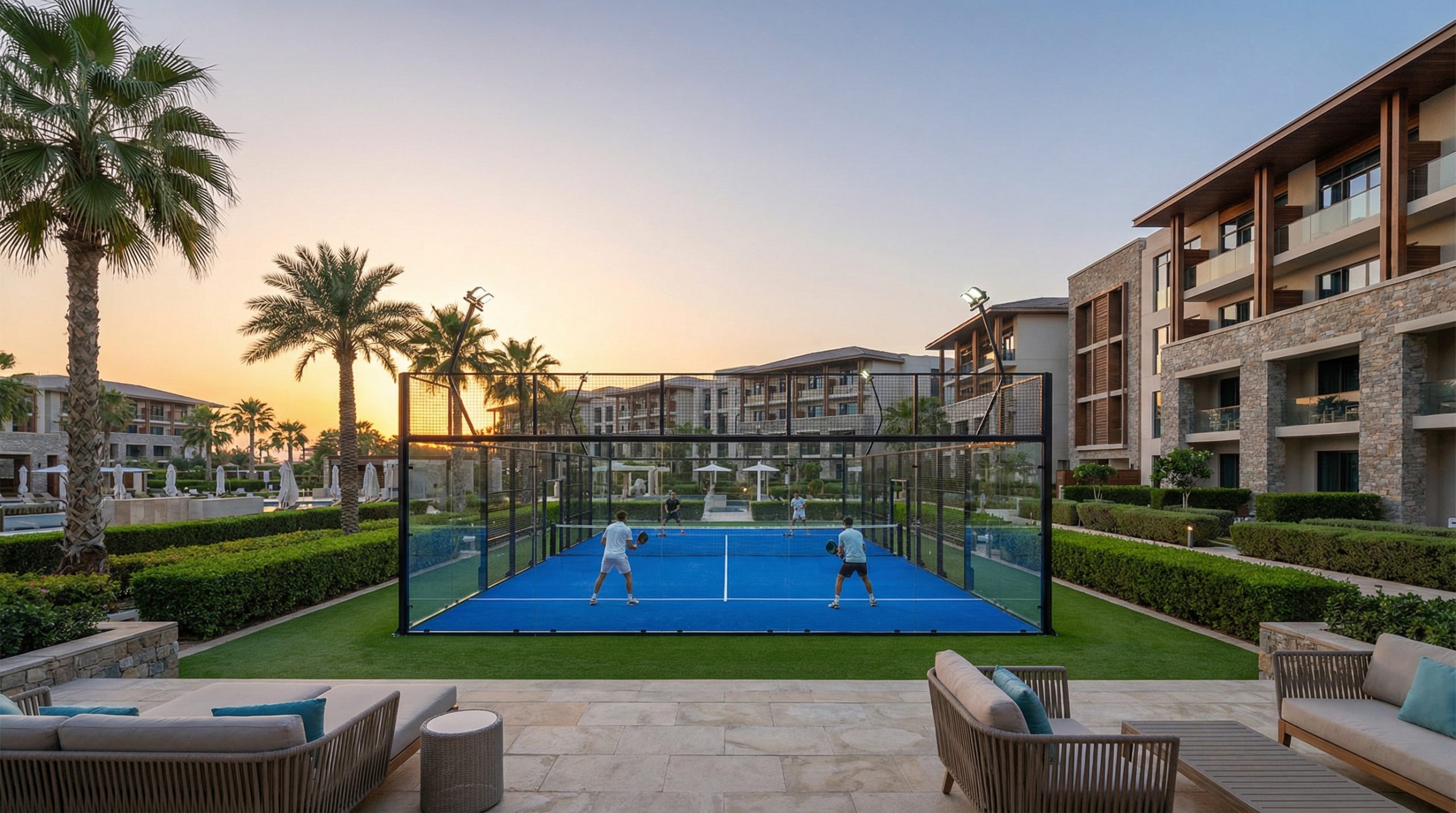
To appreciate the technical nuances, one must consider donde se invento el padel and how those original Mexican walls defined the modern game’s mechanics. Unlike tennis, padel is played almost exclusively in doubles, emphasizing teamwork and positioning over individual power. The court is smaller, measuring 20 meters by 10 meters, and is enclosed by a combination of tempered glass and metallic mesh.

Core Gameplay Elements
- The Serve: Always underhand and must be struck below waist level.
- The Walls: Players can hit the ball against their own glass walls to return it over the net.
- The Scoring: Follows the traditional tennis system (15, 30, 40, Game) but often uses the “Golden Point” rule.
Engineering Excellence: How to Build a Padel Court
When planning a facility, developers often study the history of donde se invento el padel to ensure the structural integrity of the enclosure remains paramount. Building a court requires a precise combination of civil engineering and specialized sports surfacing. The foundation must be a perfectly level concrete slab to prevent irregular ball bounces that could ruin the gameplay experience.

Construction Requirements
The glass panels are typically 10mm to 12mm tempered safety glass, designed to withstand high-impact collisions from players and balls. The “lighting” is equally critical, usually consisting of four to eight LED spotlights mounted on poles approximately 6 meters high to ensure zero shadows. Finally, the “turf” is a monofilament or textured polyethylene grass filled with specialized silica sand to allow for controlled sliding.
Strategic Implementation: Costs and Requirements
Assessing the financial feasibility of a project involves recognizing that since the time donde se invento el padel, the materials have evolved into high-tech components. A standard court installation can range significantly in price based on the quality of the panoramic glass and the type of lighting system selected. Investing in premium materials reduces long-term maintenance costs and improves the player’s safety and satisfaction.
| Component | Specification | Estimated Cost (USD) |
|---|---|---|
| Structure | Galvanized Steel Frame | $12,000 – $18,000 |
| Glass | 12mm Tempered Safety Glass | $5,000 – $8,000 |
| Surface | Fibrillated or Monofilament Turf | $4,000 – $7,000 |
| Lighting | 8x 200W LED Projectors | $2,000 – $4,000 |
| Installation | Professional Labor & Leveling | $5,000 – $10,000 |
Why Padel is the Future of Social Sports
The global surge in popularity reflects the inclusive spirit found in the history of donde se invento el padel, where the game was meant for family and friends. Today, it is the fastest-growing racquet sport in the world, with thousands of new courts being built annually across Europe, the Middle East, and North America. Its success lies in its accessibility, as players of different ages and skill levels can share a court and enjoy a competitive match.

Key Drivers of Growth
- Low Physical Barrier: Less running than tennis makes it easier on the joints for older players.
- Social Interaction: The proximity of players on a smaller court fosters constant communication.
- Profitability: Two padel courts can fit into the space of one tennis court, doubling the revenue potential for club owners.
“Padel is not just a sport; it is a social phenomenon that bridges the gap between high-level athletics and recreational community building.”