
Introduction
Sourcing high-quality padel courts often feels like a logistical nightmare, plagued by opaque distributor pricing and unpredictable lead times that threaten to derail your entire project timeline. Here is the deal: selecting the wrong supplier often results in a staggering 30% markup on costs and communication delays that can push your facility’s grand opening back by months or even years. By partnering directly with a factory-owned manufacturer like Superbpadel, you eliminate the expensive middlemen to secure completely customizable designs and guaranteed quality at factory-direct prices. This strategic approach ensures that you maintain full control over the technical specifications while keeping your capital expenditure significantly lower than industry averages.
Table of Contents
- 1. What Are the Different Types of Padel Court Suppliers?
- 2. Which Court Models Best Suit Your Facility’s Needs?
- 3. How Do Steel Structure Specifications Affect Longevity?
- 4. What Safety Standards Must Padel Glass Meet?
- 5. Why Is High-Density Artificial Grass Crucial for Playability?
- 6. How Does LED Lighting Impact Operational Costs?
- 7. Can You Fully Customize Your Court Design and Branding?
- 8. What Should You Expect During the Shipping and Logistics Process?
- 9. What Installation Support and Warranties Are Essential?
- 10. How Do You Calculate the ROI of a Padel Court Project?
- Conclusion
- Frequently Asked Questions
1. What Are the Different Types of Padel Court Suppliers?
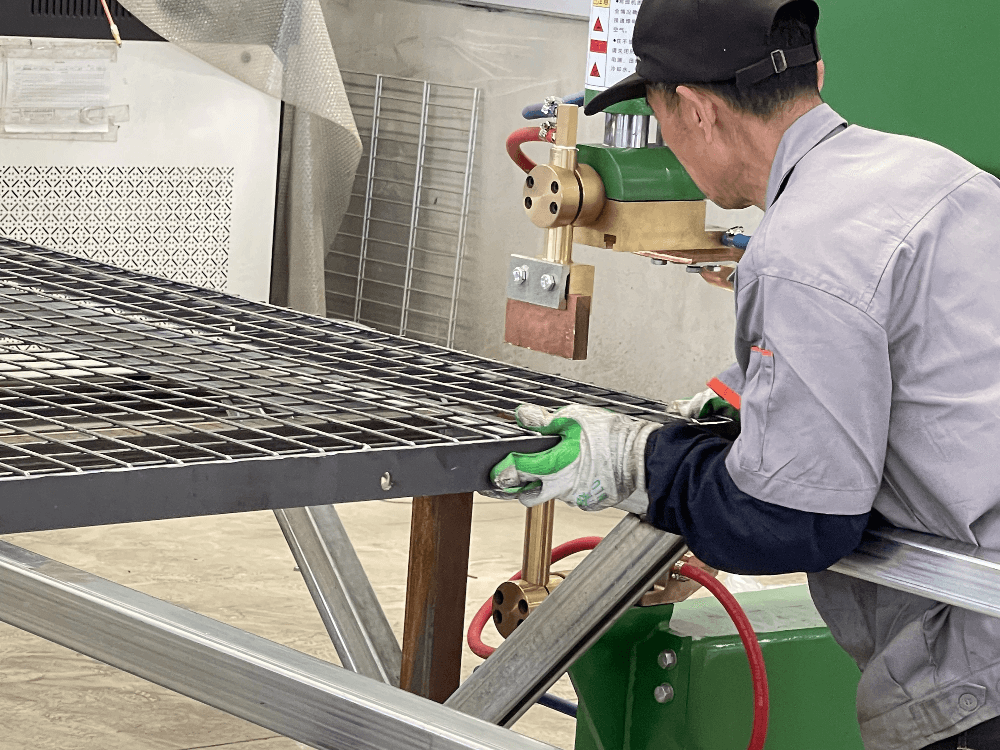
Factory-direct manufacturers own the entire production process, whereas distributors simply resell products with an added margin that eats into your budget. When searching for reliable partners, distinguishing between these two entities is the absolute first step to controlling your financial layout and ensuring technical accuracy. You might be wondering where the extra cost comes from when working with local “full-service” companies that promise the world but deliver slowly. These entities often buy from the exact same factories you could contact yourself, adding a massive premium for their proximity and perceived convenience. Factory-direct suppliers offer direct access to production lines, resulting in approximately 30% cost savings and transparent communication regarding engineering adjustments. Conversely, distributors introduce layers of communication that can lead to errors, while installers typically focus solely on assembly and purchase kits from third parties, limiting your ability to customize the product to your specific site needs.
Here is the bottom line: buying direct saves you a significant amount of capital by removing distributor margins. A proper structure should offer a long design life, but you pay for the brand name rather than the steel quality when you go through a reseller. The distinction is critical because factory owners have skin in the game regarding quality control, whereas traders are often just moving boxes. By identifying the source, you ensure that your warranty is backed by the actual entity making the product, not a shell company that might vanish in a year.
| Supplier Type | Average Markup | Customization Level | Communication Speed |
|---|---|---|---|
| Factory Direct | 0% | High (OEM/ODM) | Fast (Direct) |
| Distributor | 20-30% | Low to Medium | Slow (Relayed) |
| Local Installer | 15-25% | Low | Variable |
2. Which Court Models Best Suit Your Facility’s Needs?
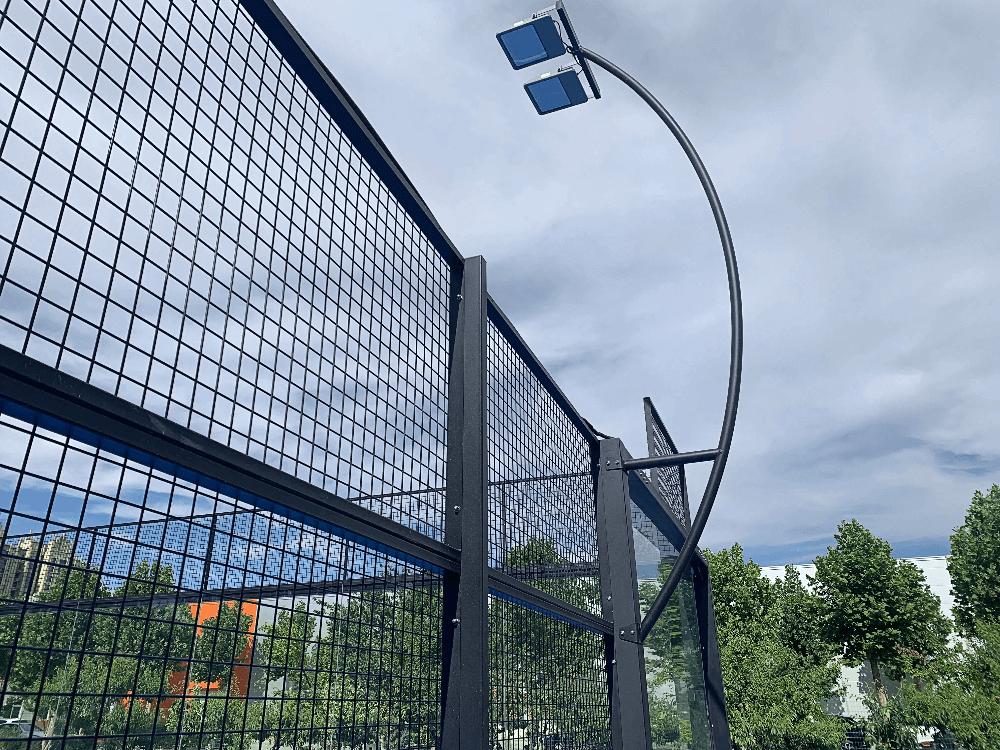
The ideal court model depends entirely on your facility’s target audience, local weather conditions, and specific budget constraints. Selecting the right model ensures player satisfaction and long-term durability for your investment, preventing the need for early upgrades. But there is more to choosing a court than just aesthetics; visibility plays a huge role in club pricing and tournament capability. The Standard Padel Court features corner pillars and is the robust, cost-effective choice for general club use where durability is the priority. In contrast, the Panoramic Padel Court removes rear pillars for better spectator viewing, making it ideal for center courts. For elite venues, the Super Panoramic option offers maximum visibility with reinforced glass connections, serving as a premium choice that justifies higher court rental fees.
It turns out that weather interruptions are the biggest revenue killer for outdoor clubs in variable climates. Installing a Roofed Padel Court safeguards your booking schedule against rain and intense sun, ensuring that your revenue stream remains consistent regardless of the forecast. Many club owners overlook this aspect, focusing only on the initial court cost, but the lost revenue from rainy days can far exceed the cost of a cover within just a few years.
| Model | Best Use Case | Visibility | Wind Resistance |
|---|---|---|---|
| Standard | High-traffic clubs | Good | High |
| Panoramic | Tournament/Center | Excellent | Medium-High |
| Roofed | All-weather areas | Good | High |
3. How Do Steel Structure Specifications Affect Longevity?
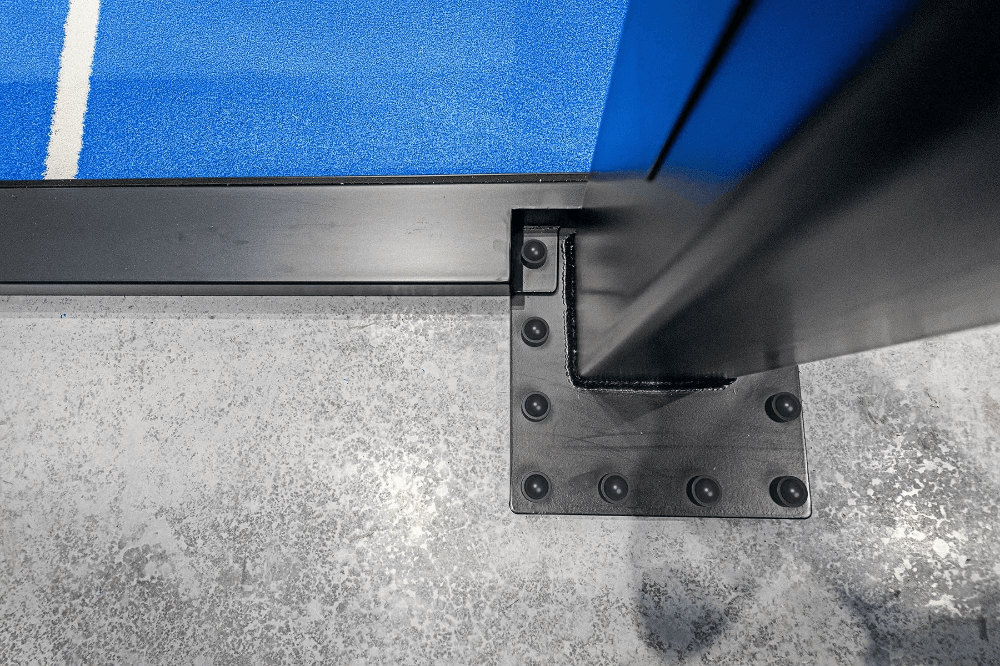
How the steel structure is treated directly dictates whether your court will last for twenty years or rust within two. As you evaluate different manufacturers, you must prioritize those who offer certified structural integrity to avoid costly repairs that could shut down your operations. You might not know that outdoor courts are constantly attacked by moisture, salt, and oxidation. High-quality padel structure components use hot-dip galvanization to resist rust, creating a protective barrier that is far superior to simple painting or electro-plating. This process ensures the structure remains safe for over two decades, even in coastal areas where salt air accelerates corrosion.
Here is a secret: a well-engineered modular design drastically reduces installation time and labor costs. A proper structure should offer a 20-year design life, but if you skimp on the steel specification now, you will pay for it double when you have to replace the entire frame in five years. The thickness of the steel profiles, typically 3mm for structural columns, provides the necessary rigidity to withstand the impact of players crashing into the mesh and the wind loads on the glass.
| Feature | Benefit | Standard Spec | Lifespan Impact |
|---|---|---|---|
| Galvanization | Rust prevention | Hot-dip | Critical |
| Tube Thickness | Structural safety | 3mm+ | High |
| Connection | Easy assembly | Modular Bolts | Medium |
4. What Safety Standards Must Padel Glass Meet?
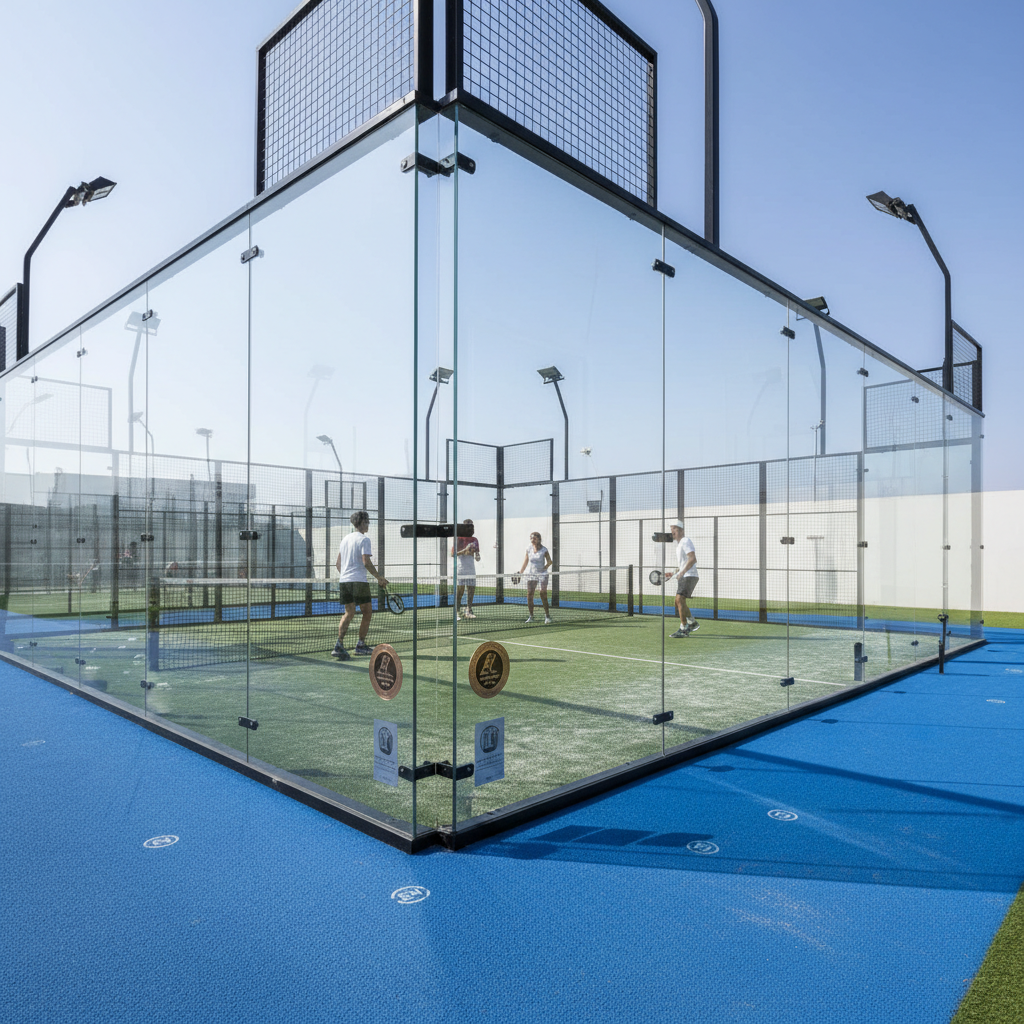
Padel court glass must be 12mm tempered safety glass compliant with EN 12150 standards to withstand high-impact play and prevent severe injury. Leading manufacturers will always provide this specification as non-negotiable for player safety and facility liability. What is the catch? Thinner glass might save money upfront but poses a shattering risk during intense matches, which could lead to catastrophic injuries and lawsuits. 12mm is the industry standard for durability, providing the necessary resistance against players crashing into the walls. Using certified glass ensures you meet European safety codes, protecting your business from liability risks and ensuring players feel secure smashing the ball against the walls with full force.
Better yet, proper countersunk holes and polished edges prevent stress cracks that can lead to spontaneous breakage. When you prioritize safety standards, you are not just buying glass; you are buying peace of mind and protecting your business reputation from the fallout of a safety incident. Laminated glass options are also available for areas with strict building codes, ensuring that if a break occurs, the glass stays bonded rather than falling.
| Spec | Requirement | Reason | Safety Impact |
|---|---|---|---|
| Thickness | 12mm | Impact resistance | High |
| Type | Tempered | Safety (crumbles) | Critical |
| Standard | EN 12150 | Legal compliance | Critical |
5. Why Is High-Density Artificial Grass Crucial for Playability?
High-density artificial turf provides the consistent ball bounce and player comfort required for a professional playing experience. Top manufacturers supply fibrillated or monofilament grass that resists wear from heavy foot traffic and keeps the sand infill properly distributed. Think about it: the floor is the most used part of the court and the only surface the players are in constant contact with. High-quality Padel Grass with high stitch density ensures the sand infill stays in place, providing optimal grip for rapid movements and preventing injuries. Whether you choose fibrillated or monofilament, the density is the key factor that determines how the ball interacts with the surface and how comfortable the court feels underfoot.
Here is the kicker: low-quality grass flattens quickly, leading to slippery patches and erratic bounces that frustrate players. Investing in premium turf extends the replacement cycle significantly, meaning you won’t have to disrupt your club’s operations to reinstall new grass every two years. The texture and color of the grass also play a role in the visual appeal of the court, with blue being the standard for maximum contrast with the ball.
| Turf Type | Durability | Grip Level | Sand Retention |
|---|---|---|---|
| Fibrillated | High | Excellent | High |
| Monofilament | Medium-High | Good | Medium |
| Low Density | Low | Poor | Low |
6. How Does LED Lighting Impact Operational Costs?
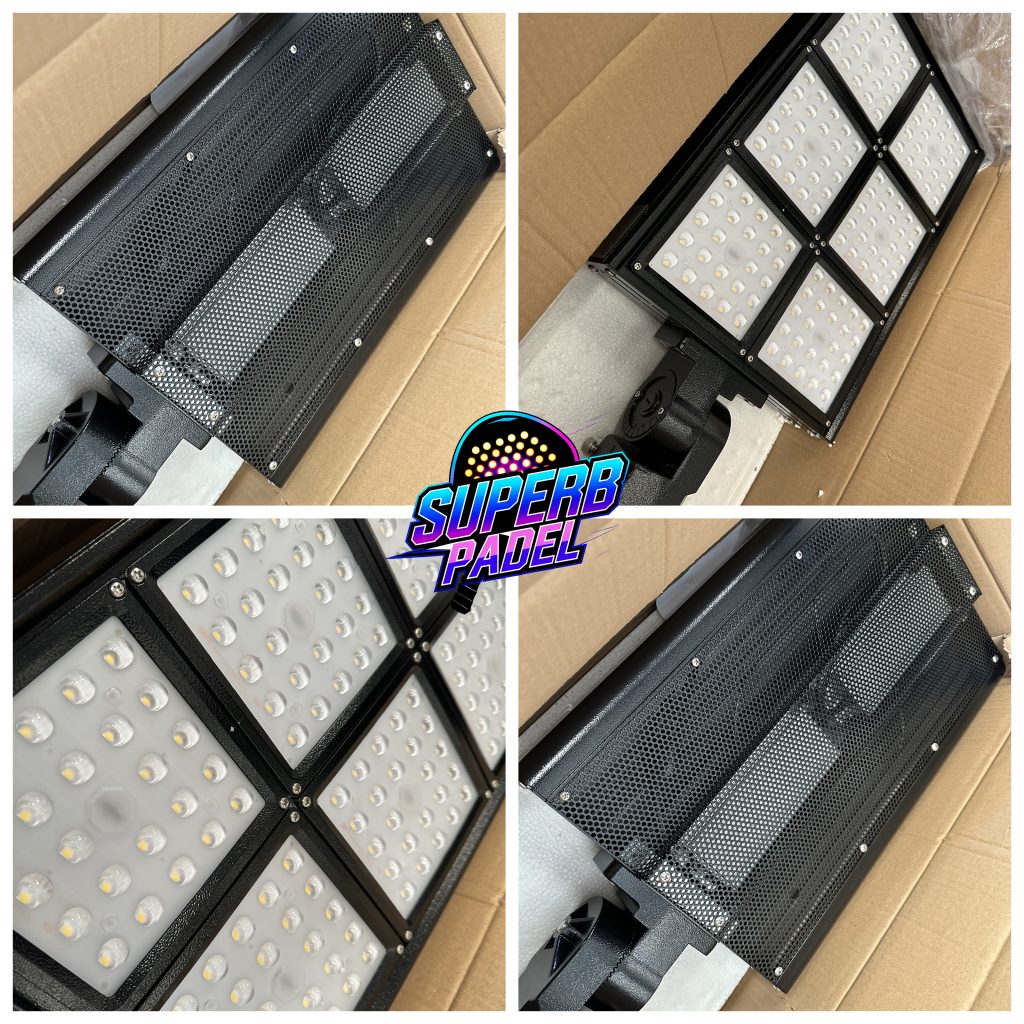
Efficient LED lighting systems with IP66 ratings reduce electricity consumption while ensuring shadow-free visibility for night games. Experienced manufacturers understand that proper illumination extends operating hours, directly increasing your revenue potential. You can bet that lighting will be a major line item in your monthly operating expenses if you are not careful. High-efficiency LEDs cut these costs without sacrificing brightness, providing uniform lux levels required for competition. The IP66 rating is essential, as it guarantees the lights are waterproof and dustproof, ensuring they survive outdoor elements without dimming or failing prematurely.
It gets better: modern LEDs provide instant on/off capabilities, unlike older halide systems that required warm-up time. This allows for flexible booking management and superior broadcast quality for tournaments, as the lights do not flicker and provide a daylight-equivalent color temperature that is easy on the eyes. Glare reduction technology is also vital to prevent blinding players during overhead smashes, a common complaint in poorly lit facilities.
| Feature | Value | Impact | Maintenance |
|---|---|---|---|
| IP66 Rating | Weatherproof | Low Maintenance | Minimal |
| LED Tech | Low Energy | Lower Bills | None |
| Uniformity | No Shadows | Better Play | N/A |
7. Can You Fully Customize Your Court Design and Branding?
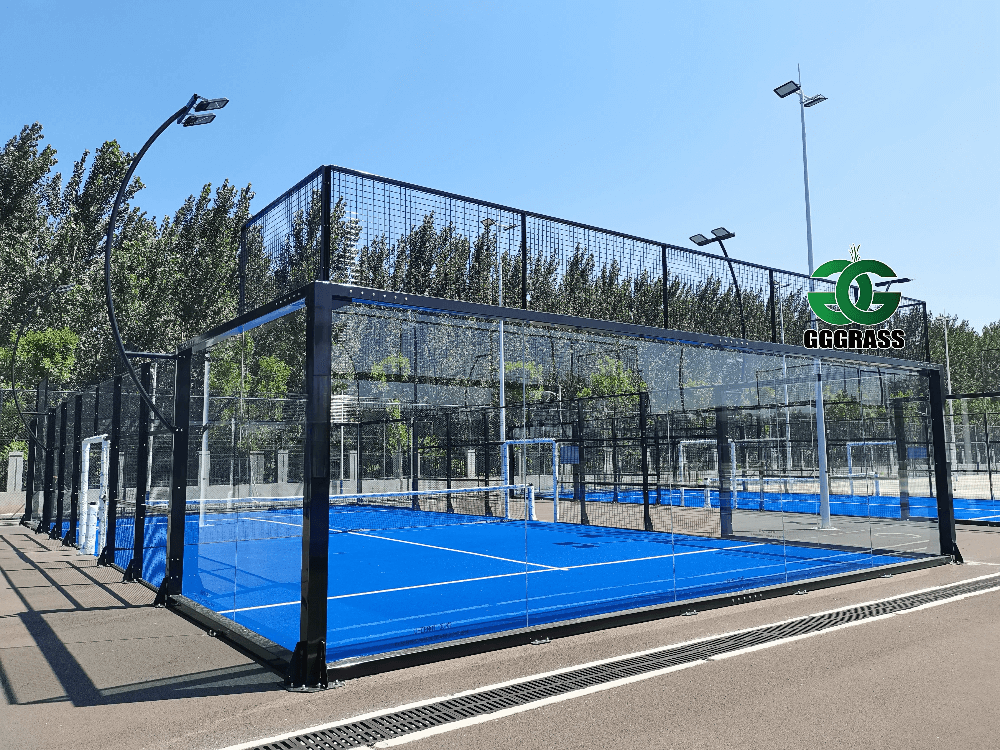
Yes, factory-direct suppliers offer extensive OEM/ODM services, allowing you to customize structure colors and integrate logos for a unique brand identity. Working with flexible manufacturers enables you to align the facility’s look with your business branding, creating a cohesive visual experience. Imagine this: walking into a club where every court matches the corporate color palette perfectly, creating an immediate sense of professionalism. Custom RAL colors for steel posts and branded turf create a premium atmosphere that justifies higher membership fees. You can even have your club logo laser-cut into the corner posts or light columns, turning the infrastructure itself into a marketing tool.
On top of that, not all sites are perfectly flat or standard squares, especially in urban environments. Direct factories can often adjust dimensions for non-standard sites, engineering specifications to fit unique plot dimensions or ceiling heights that off-the-shelf distributors simply cannot accommodate. This level of adaptability is crucial for retrofitting Panoramic Padel Courts into existing warehouses or oddly shaped land parcels.
| Option | Availability | Benefit | Cost Impact |
|---|---|---|---|
| RAL Colors | Yes | Brand Cohesion | Low |
| Laser Logos | Yes | Premium Look | Medium |
| Custom Size | Yes | Site Adaptability | Medium |
8. What Should You Expect During the Shipping and Logistics Process?
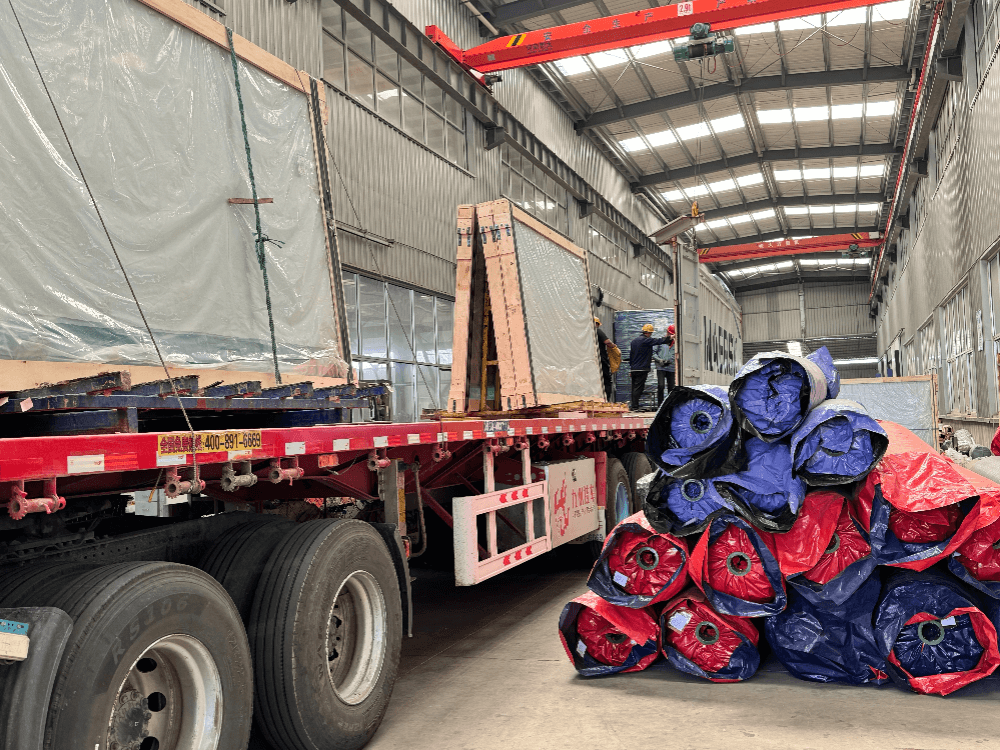
Shipping involves securing the heavy steel and fragile glass in containers using specialized packing methods to prevent damage during global transit. Direct manufacturers maximize container space to lower your shipping cost per unit, handling the logistics with expertise. You might be worried about glass breaking during a month-long ocean voyage, which is a valid concern for any importer. Experienced factories use A-frame wooden crates and secure steel strapping to ensure zero breakage, wrapping steel components in felt to prevent scratching. This attention to detail during the loading process is the difference between a smooth installation and a project delayed by weeks while waiting for replacement parts.
Here is the deal: managing customs and freight can be daunting if you have never done it before. Suppliers often handle the logistics to your nearest port, providing all necessary documentation like Bills of Lading and packing lists, ensuring that components arrive ready for immediate assembly. Efficient loading can sometimes fit 3-4 courts in a single 40ft container, significantly reducing the freight cost per court compared to inefficient packing.
| Item | Packing Method | Safety Level | Risk |
|---|---|---|---|
| Glass | Wooden A-Frame | High | Low |
| Steel | Felt + Straps | High | Low |
| Turf | Rolled + Wrapped | High | Low |
9. What Installation Support and Warranties Are Essential?
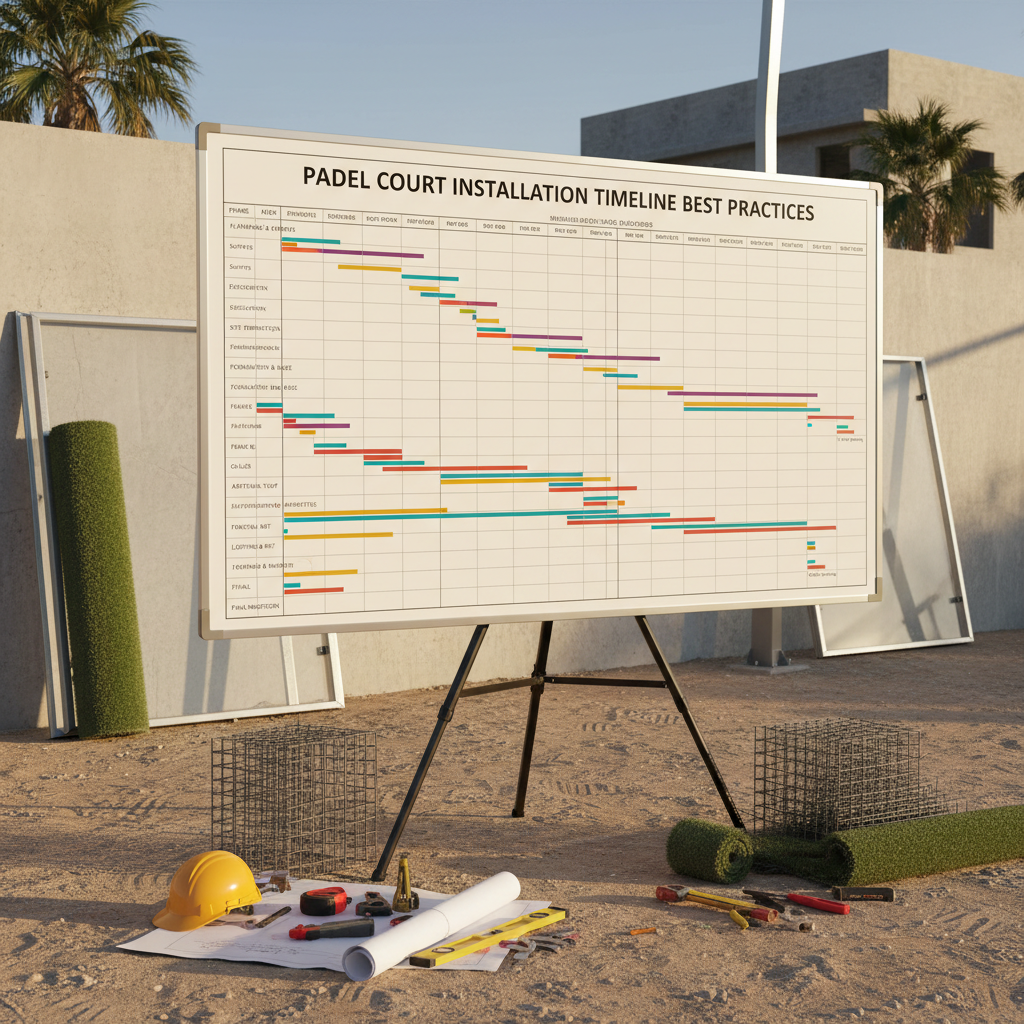
You need comprehensive installation manuals, video tutorials, and remote technical guidance to ensure your local team assembles the court correctly. Reliable manufacturers provide these resources to guarantee a smooth build process, along with robust warranties that protect your investment. Don’t forget: a pile of steel and glass is useless without clear instructions on how to put it together. Look for suppliers who provide detailed CAD drawings and step-by-step video guides that visually demonstrate every bolt and connection. This allows any competent local construction team to assemble the courts without needing expensive specialized laborers flown in from overseas.
Best of all, some factories offer video call support during your build to answer questions in real-time. You should also demand long-term maintenance services and warranties on steel, often 10-20 years, and around 5 years on turf, to ensure you are covered against material defects. These warranties should be explicit about what is covered, including rust perforation and glass tempering faults.
| Support Type | Purpose | Necessity | Availability |
|---|---|---|---|
| Install Manual | Step-by-step guide | Mandatory | High |
| Video Call | Real-time fix | Recommended | Medium |
| Warranty | Asset protection | Mandatory | High |
10. How Do You Calculate the ROI of a Padel Court Project?
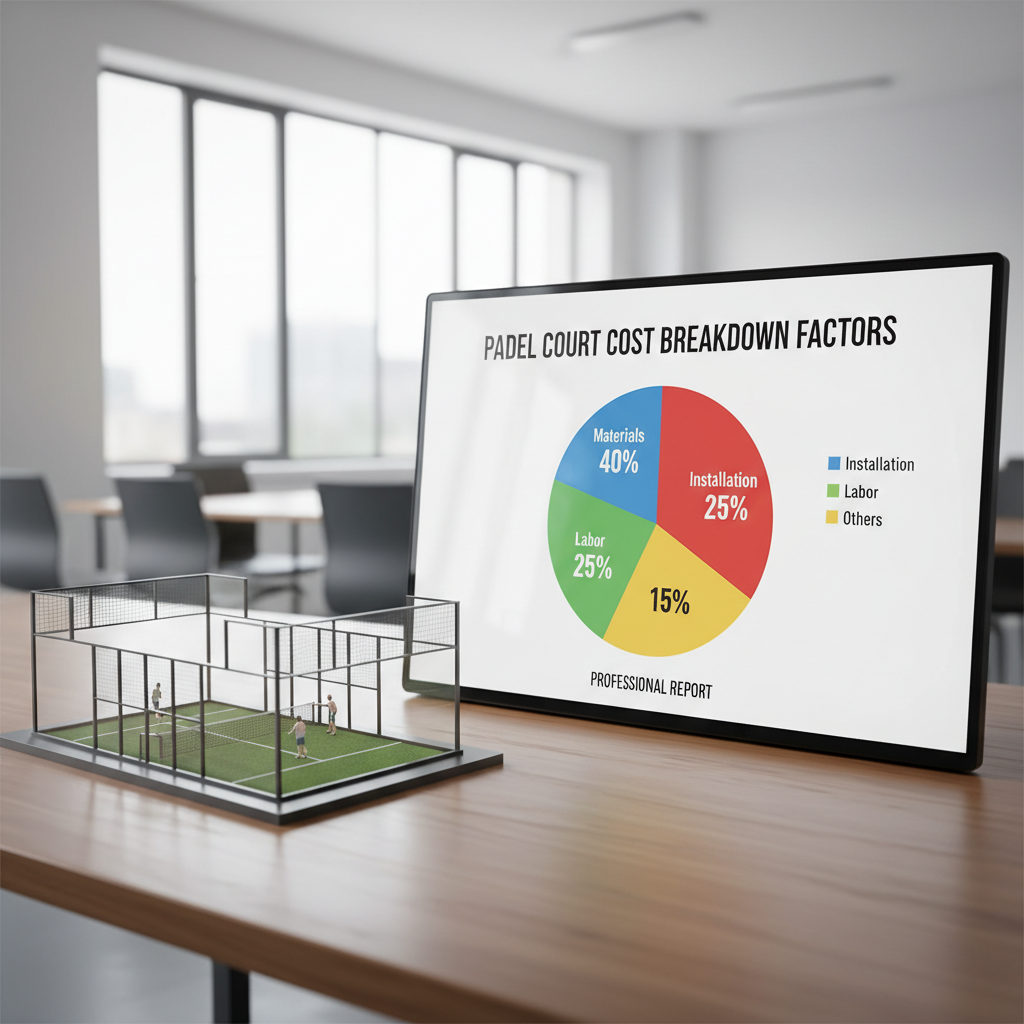
Calculating ROI involves estimating revenue from court bookings and memberships against your initial setup and ongoing operational costs. A well-planned project typically sees a return on investment within 12 to 18 months. Let’s face it: you are in this to build a profitable business, and Padel offers exceptional density with four players per court. Revenue comes from hourly court rentals, individual and group coaching sessions, and hosting tournaments or leagues that drive food and beverage sales. The high turnover rate and small footprint allow you to maximize revenue per square meter compared to tennis or soccer.
Here is the truth: while the initial outlay is significant, the low maintenance of quality courts ensures high margins over time. By contacting factory-direct experts for a quote, you can accurately forecast your startup costs and see that the break-even point is incredibly attractive for sports clubs, real estate developments, and schools alike. Factoring in ancillary revenue like pro-shop sales and events can accelerate this timeline even further.
| Metric | Estimate | Timeframe | Trend |
|---|---|---|---|
| Avg. Hourly Rate | $20 – $40 | Per Hour | Rising |
| Maintenance | Low | Annual | Stable |
| Breakeven | 12-18 Months | Project Lifecycle | Fast |
Conclusion
Choosing the right manufacturing partner is the difference between a profitable, on-time launch and a costly, delayed project. By going factory-direct, you secure premium quality, customizable designs, and significant cost savings without the distributor markup. Don’t let logistics slow you down. Contact Superbpadel today to solve your sourcing pains and bring your vision to life with a partner who understands your business needs.
Frequently Asked Questions
Q1: Can I order just one padel court?
Yes, factory-direct suppliers often allow a Minimum Order Quantity (MOQ) of just one court. This is perfect for private residences or pilot projects where you want to test the market before expanding.
Q2: What is the best way to ship the courts?
The most efficient method is via ocean freight in 20ft or 40ft containers. The manufacturer usually handles the logistics to your nearest major port, ensuring the heavy components are transported safely and cost-effectively.
Q3: How much money can I save by buying directly from the manufacturer?
Buying directly from the factory typically saves you around 30% compared to purchasing through local distributors. This is because you are avoiding the markup that middlemen add to cover their overheads and profit margins.
Q4: Do you provide the necessary drawings for planning permission?
Yes, full technical documentation is included with your order. You will receive detailed foundation plans and structural drawings that are essential for obtaining local planning permits and guiding your construction team.
Q5: Is it possible to customize the court colors?
Yes, full OEM customization is available for the steel structure and turf. You can choose from a wide range of RAL colors to match your club’s branding or personal aesthetic preferences.