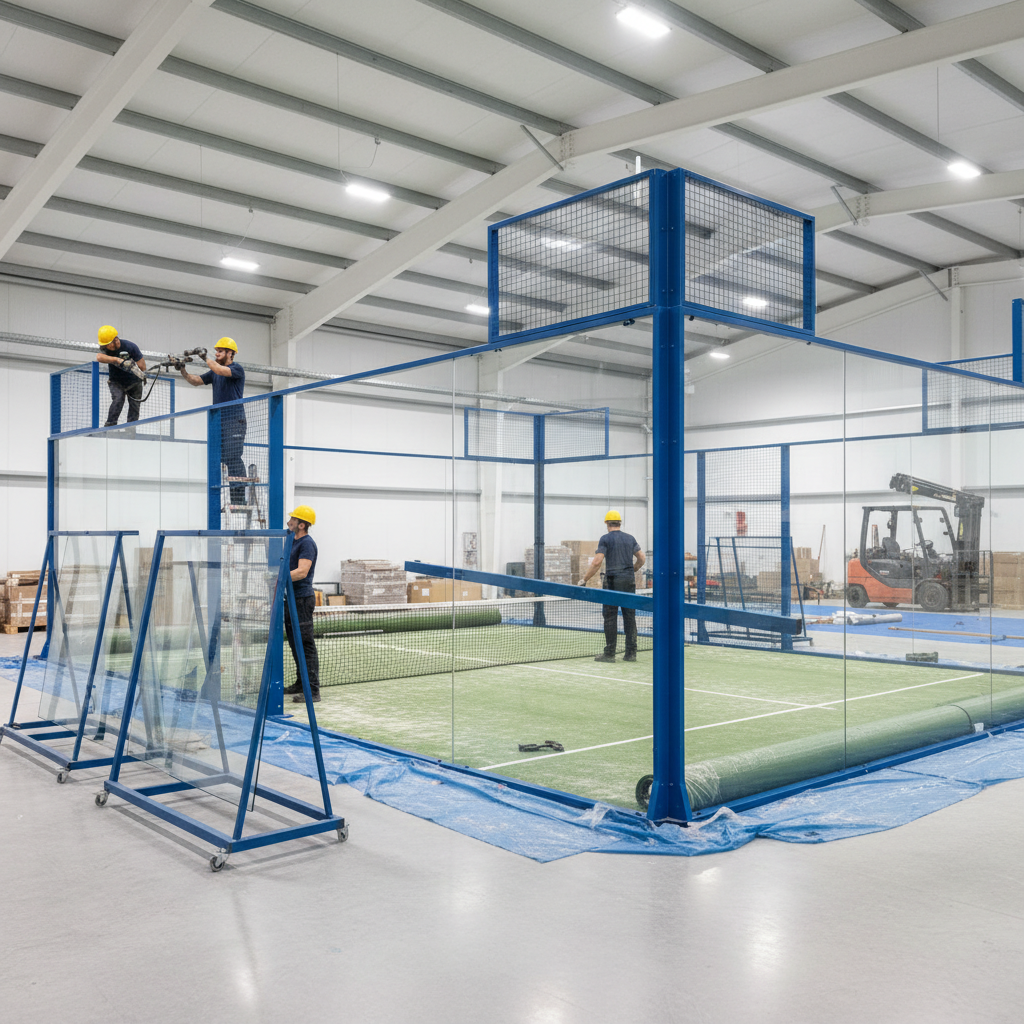
Investors frequently struggle with unpredictable weather patterns that cause significant revenue fluctuations in outdoor sports facilities. Canceled bookings due to rain or extreme heat frustrate club members and damage the long-term viability of your business model. Implementing a climate-controlled indoor padel court provides a reliable, year-round solution that guarantees consistent playtime and player comfort. As a leading professional padel court manufacturer, we provide the technical expertise required to transform any warehouse or commercial space into a world-class sporting venue.
What exactly defines a modern indoor padel court?
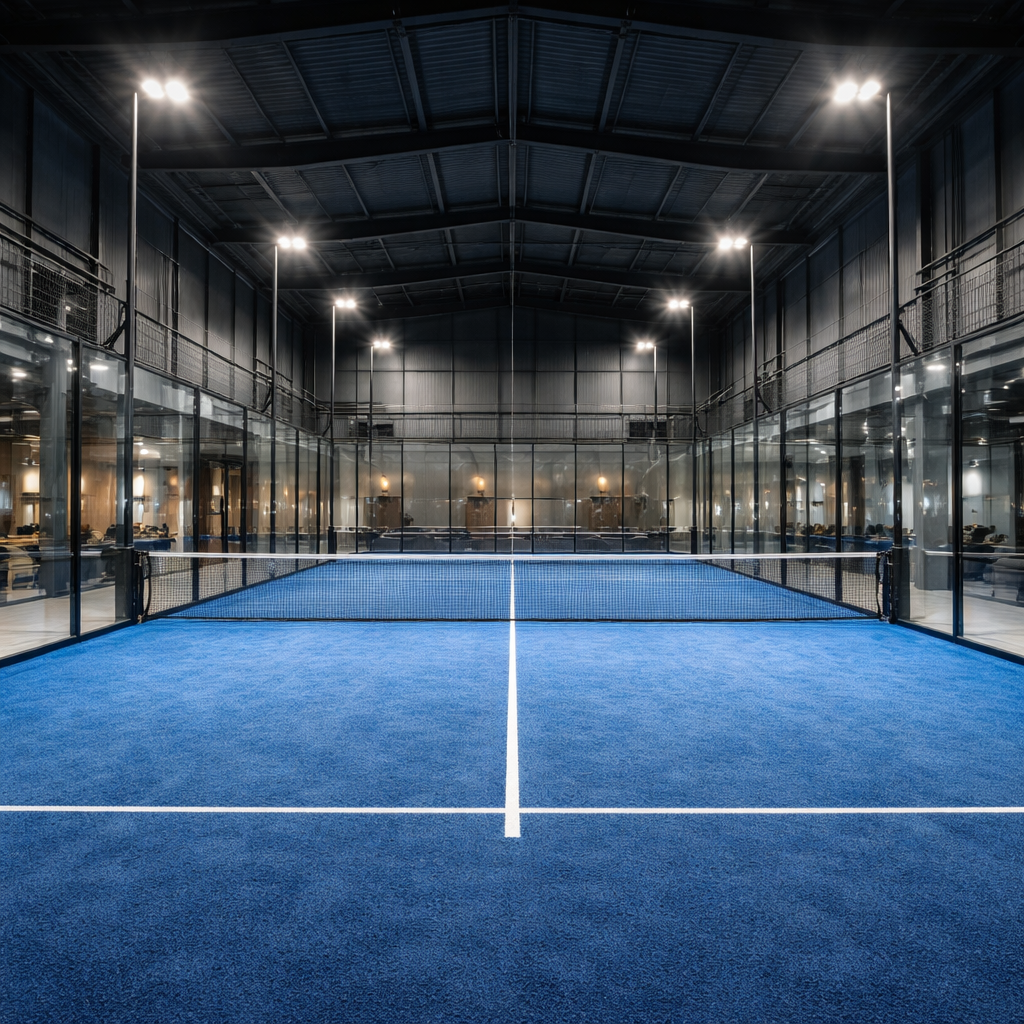
A modern indoor padel court consists of a specialized 10×20 meter playing area enclosed by tempered glass and metallic mesh within a sheltered building. These structures eliminate external environmental factors like wind or humidity, allowing for a perfectly consistent ball bounce and predictable player movement. Here’s the deal. While outdoor versions remain popular, the indoor variant utilizes high-performance engineering to ensure structural integrity without the need for heavy-duty wind reinforcement required in open-air settings. Utilizing a factory-direct premium padel court ensures your facility meets every international competition standard while remaining cost-effective for B2B operations.
How does the structure differ from outdoor models?
Indoor structural frames often feature slimmer profiles since they do not face the massive wind loads typical of coastal or open-field installations. Think about it. By reducing the structural bulk, you create a more aesthetic, open-feeling environment that appeals to high-end club members seeking a luxury experience. Every pillar and beam undergoes precision welding and powder coating to resist the indoor humidity generated by active players.
Which enclosure types offer the best visibility?
Full panoramic glass walls provide the most immersive experience for spectators and players by removing vertical steel pillars from the back and side sections. Believe it or not. These transparent barriers utilize 12mm tempered safety glass which provides superior impact resistance and crystal-clear viewing angles for televised matches or local tournaments. Choosing a panoramic padel court configuration maximizes the “wow factor” of your indoor facility, making it a centerpiece for any sports complex.
| Component | Indoor Specification | Material Standard |
|---|---|---|
| Framework | Lightweight Galvanized Steel | Q235B High Grade |
| Glass Walls | 10mm or 12mm Tempered | CE / EN 12150-1 |
| Playing Surface | Texturized Monofilament Turf | 12mm Pile Height |
| Fasteners | Stainless Steel A2 | Anti-Corrosion Grade |
Key Takeaway: An indoor padel court represents a specialized, high-durability sports installation designed for maximum uptime and superior player visibility in controlled environments.
Why should you invest in an indoor padel court?
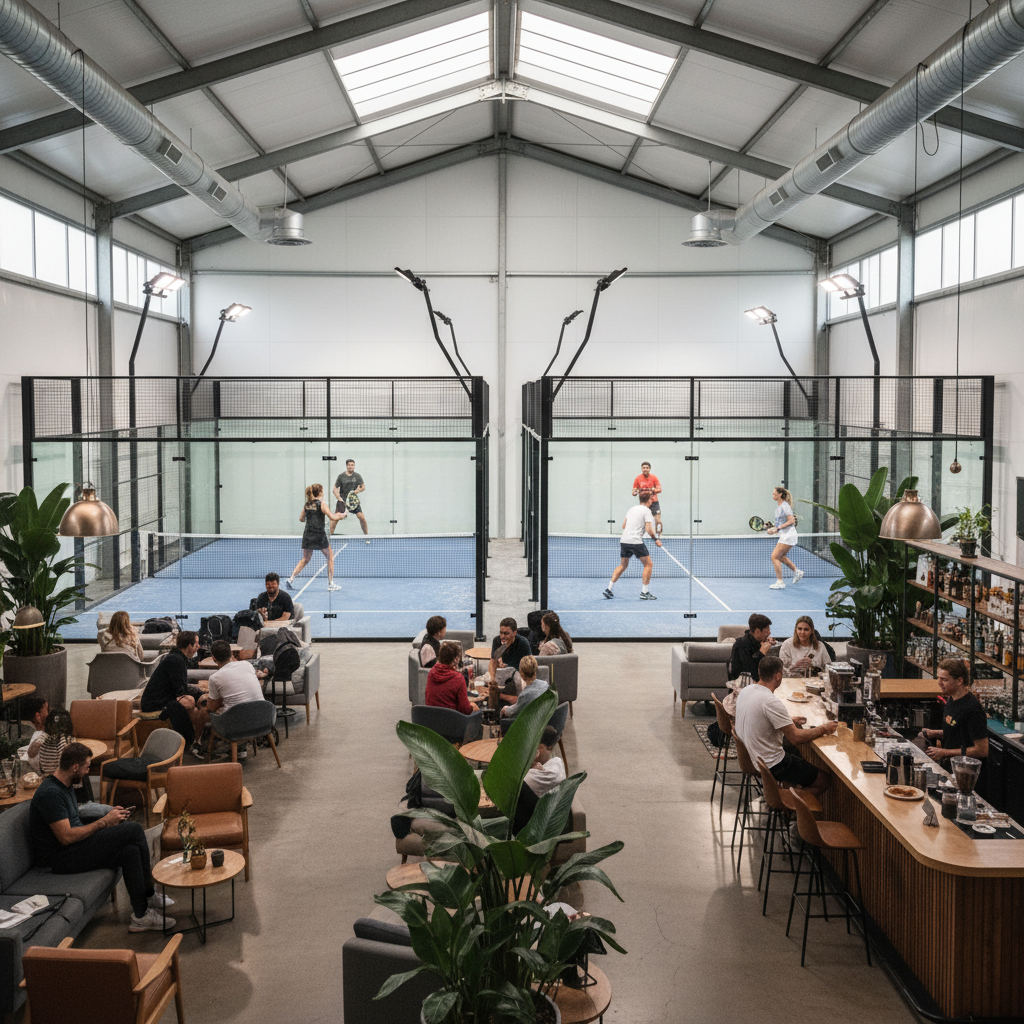
Investing in an indoor padel court secures your business against the financial volatility of seasonal weather changes and outdoor environmental degradation. Facilities that operate indoors report significantly higher occupancy rates because players can book matches weeks in advance without fearing rain or wind interference. But here’s the kicker. Beyond simple protection, the indoor environment allows for the integration of luxury amenities like pro-shops, cafes, and lounges that increase the average spend per player. Owning a facility that functions perfectly during winter months gives you a massive competitive advantage over local clubs restricted by the elements.
How does weather protection impact ROI?
Eliminating weather-related cancellations directly correlates to a 30% to 50% increase in annual revenue compared to standard outdoor installations. Ready for the good part? Consistent play schedules allow for better staff management and more predictable utility costs, streamlining your entire business operation. By removing the risk of moisture damage, your padel grass and netting last significantly longer, reducing the frequency of expensive replacement cycles.
Why is player retention higher indoors?
Players prefer the controlled acoustics and stable lighting of an indoor environment because it allows them to focus entirely on their technique and strategy. You might be wondering. Does the lack of sun affect the mood? On the contrary, high-quality padel LED lighting systems and climate control create a “perfect day” atmosphere every single time someone enters your building. Happy players who never experience a canceled game become loyal members who drive your recurring membership revenue upward.
| Metric | Business Benefit | ROI Coefficient |
|---|---|---|
| Playable Days | 365 Days/Year | 1.45x |
| Maintenance | 40% Lower Than Outdoor | 1.25x |
| Aesthetics | Highly Customizable Colors | 1.30x |
Key Takeaway: Indoor courts provide financial stability and enhanced player experiences, leading to faster capital recovery and long-term business growth.
What is the ideal height for an indoor padel court?
The ideal height for a professional indoor padel court is a minimum of 7 meters of clear internal space across the entire playing area. High-level padel relies heavily on the “lob” shot, which requires significant vertical clearance to avoid hitting the ceiling or structural beams. This is where it gets interesting. While 7 meters is the regulatory minimum for international play, many elite clubs aim for 8 or 9 meters to accommodate professional-grade defensive plays. Ensuring this clearance from the beginning prevents your facility from being disqualified for official tournament hosting.
What happens if the ceiling is too low?
Ceilings lower than 6 meters fundamentally change the mechanics of the game by punishing players who use traditional lobbing strategies. Wait, there’s more. A restricted vertical space leads to player frustration and ultimately drives competitive athletes toward rival clubs that offer appropriate clearances. If your building has low points, you must strategically place the courts to maximize the available height over the center of the playing surfaces.
How do structural beams affect play?
Exposed structural beams or HVAC ducting that hangs into the playing airspace can cause “dead balls” and player safety hazards during intense rallies. Let’s be honest. Nothing ruins a championship point like the ball hitting a ventilation pipe 6 meters above the net. Our technical design team provides CAD drawings to help you map out your building’s interior, ensuring that every square inch of the court meets vertical requirements.

| Height Level | Suitability | Market Segment |
|---|---|---|
| 6 Meters | Amateur/Casual | Low-budget clubs |
| 7 Meters | Standard/Pro | Professional clubs |
| 8+ Meters | Elite/Tournament | World-class venues |
Key Takeaway: Height is a non-negotiable factor; securing at least 7 meters of clear vertical space is vital for player satisfaction and tournament eligibility.
How much space do you need for an indoor padel court?
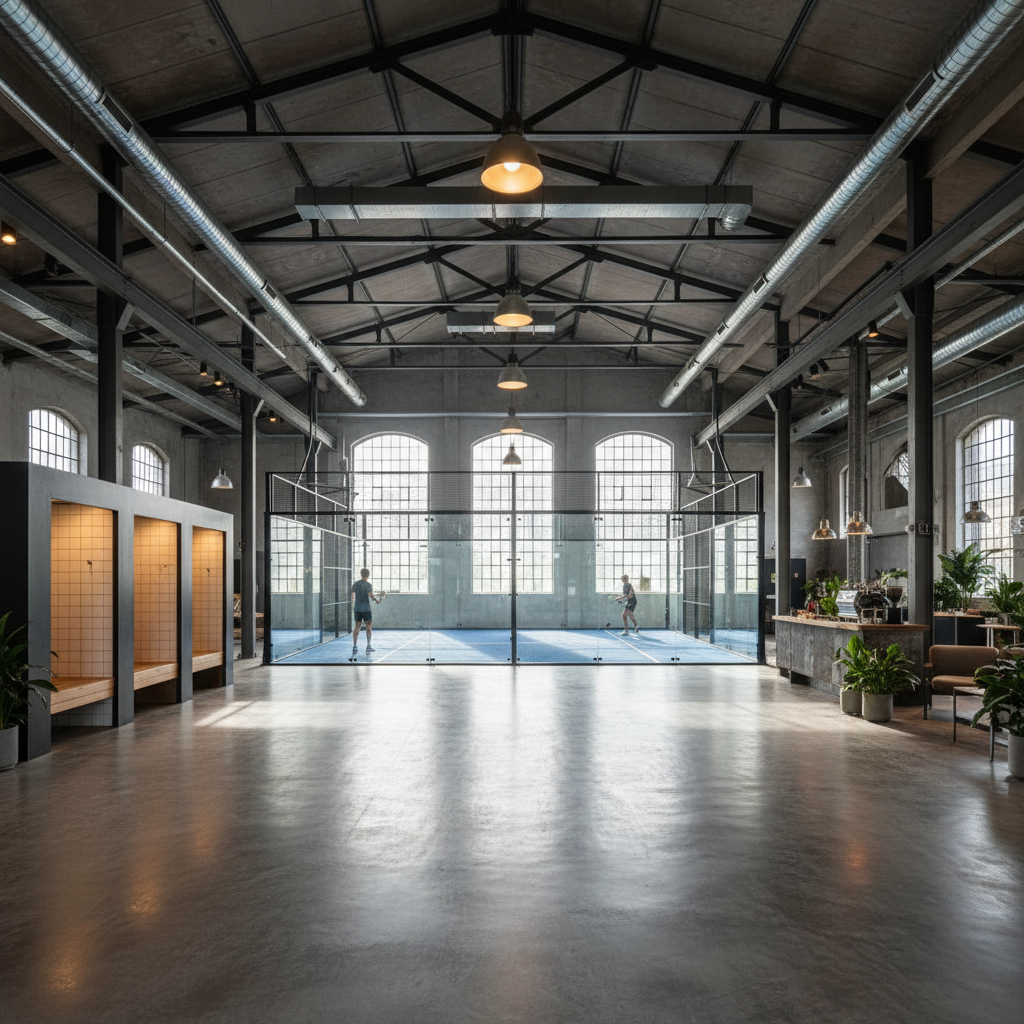
A single indoor padel court requires a minimum footprint of 11×21 meters, though 12×22 meters is recommended to allow for safety runoff and spectator movement. The court itself measures exactly 10×20 meters, but the surrounding space is essential for structural support pillars and player safety. Here’s the deal. If you plan to allow “out-of-court” play, where players can run through the side doors to retrieve balls, you will need an additional 2 to 4 meters of lateral clearance. Properly calculating this space prevents cramped layouts that make the facility feel unprofessional.
Is extra space needed for multiple courts?
When installing multiple courts, you should maintain a minimum of 1 to 2 meters of walkways between the glass walls to ensure easy player transitions and viewing areas. The real story is… Maximizing court density is important for revenue, but overcrowding your floor plan creates a chaotic environment that diminishes the premium feel of the club. Using a modular layout allows you to fit more courts while keeping clearly defined safety zones for both players and staff.
Can you fit courts in odd-shaped buildings?
Irregular building shapes often require creative court placement or the use of custom-sized viewing platforms to utilize every available square meter. Believe it or not. Our engineering team can adapt the sub-structure of the court to fit tight corners, provided the core playing dimensions remain a strict 10×20 meters. Planning your layout with CAD software ensures that you don’t discover spatial conflicts halfway through the installation process.
| Layout Type | Minimum Area | Total SQM | Purpose |
|---|---|---|---|
| Single Court (Basic) | 11m x 21m | 231 sqm | Minimalist setup |
| Single Court (Pro) | 12m x 23m | 276 sqm | Tournament standard |
| Double Court Row | 23m x 21m | 483 sqm | Multi-court club |
Key Takeaway: Effective space planning must account for the 10x20m playing zone plus at least 1 meter of perimeter clearance for safety and structure.
What materials are best for an indoor padel court?
The best materials for an indoor padel court include galvanized steel frames, 12mm tempered glass, and texturized monofilament synthetic turf. Because indoor environments are controlled, you can opt for high-performance turf that provides a slower, more tactical game without worrying about rain drainage. Think about it. The lack of UV exposure means your colors stay vibrant for years, and the steel structure remains free from the pitting corrosion often found in humid outdoor coastal regions. Selecting factory-direct materials ensures every component meets rigorous ISO 9001 and CE certifications.
Why choose texturized turf for indoor use?
Texturized turf, often called “curly” grass, holds the sand infill better and provides a more consistent bounce because the fibers do not flatten as easily as fibrillated options. Ready for the good part? This material reduces the “sandy” look on camera and during play, which enhances the professional appearance of your club while providing superior grip. It also requires less frequent brushing, saving your maintenance team valuable hours every week.
What is the role of the glass thickness?
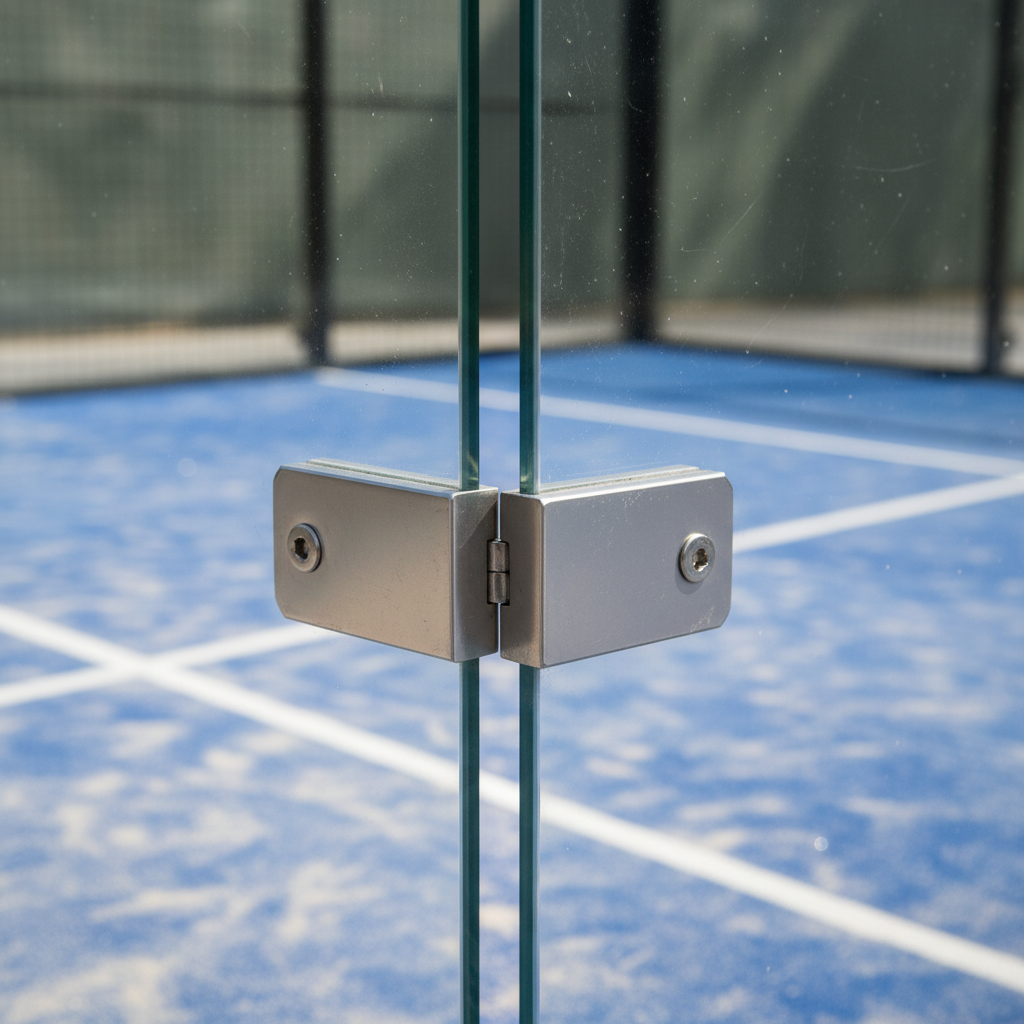
Using 12mm glass instead of 10mm adds significant weight and stability to the court, resulting in a more solid feel when players hit the walls. But here’s the kicker. Thicker glass also provides better acoustic insulation, dampening the sound of ball impacts which can become deafening in a large, hollow indoor warehouse. Investing in premium glass reduces vibration and increases the overall safety factor for high-impact professional games.
| Material | Type | Key Feature | Standard |
|---|---|---|---|
| Turf | Texturized Polyethylene | High Grip / Low Maintenance | 50,000+ stitches/sqm |
| Glass | 12mm Tempered | Impact Safety / Acoustic Dampening | CE / SGS Certified |
| Frame | Hot-Dip Galvanized Steel | Structural Rigidity | Q235B Grade |
Key Takeaway: High-grade texturized turf and 12mm tempered glass are the gold standards for creating a durable, professional-grade indoor experience.
How do you manage lighting for an indoor padel court?
Managing lighting for an indoor padel court requires a specialized LED system that provides at least 500 to 750 lux of uniform illumination. Indoor facilities lack natural sunlight, meaning your artificial lighting must be perfectly positioned to avoid casting shadows or creating glare on the glass walls. You might be wondering. How do you prevent players from being blinded during overhead smashes? The solution lies in using asymmetric optics that direct light downward and inward, ensuring the bulbs are not directly in the player’s line of sight.
What are the benefits of LED over halide?
LED modules consume 60% less energy than traditional metal halide lamps and offer an instantaneous “on” feature that is essential for club operations. Bottom line? You save thousands in utility bills while providing a much higher quality of light that mimics natural daylight, reducing eye strain for long-duration play. Modern LEDs also have a lifespan of over 50,000 hours, significantly reducing maintenance overhead.
How many light masts are needed?
Most professional indoor setups utilize 8 separate LED modules mounted on 4 to 8 masts, depending on the ceiling height and structural constraints of the building. The real story is… Mounting lights directly to the ceiling is often more efficient than using masts if the roof is high enough, as it clears the playing area of vertical obstructions. Our technical team calculates the optimal “photometric” plan to ensure there are no dark spots in the corners or near the net.

| Lighting Parameter | Amateur Level | Professional Level | Advantage |
|---|---|---|---|
| Average Lux | 300 – 500 Lux | 750 – 1000 Lux | Visual Clarity |
| Uniformity (Uo) | 0.5 | 0.7 | No Shadows |
| Tech Type | Halide | LED | Energy Savings |
Key Takeaway: Precision padel LED lighting placement with asymmetric lenses is critical for achieving professional visibility without blinding players.
What are the ventilation needs for an indoor padel court?
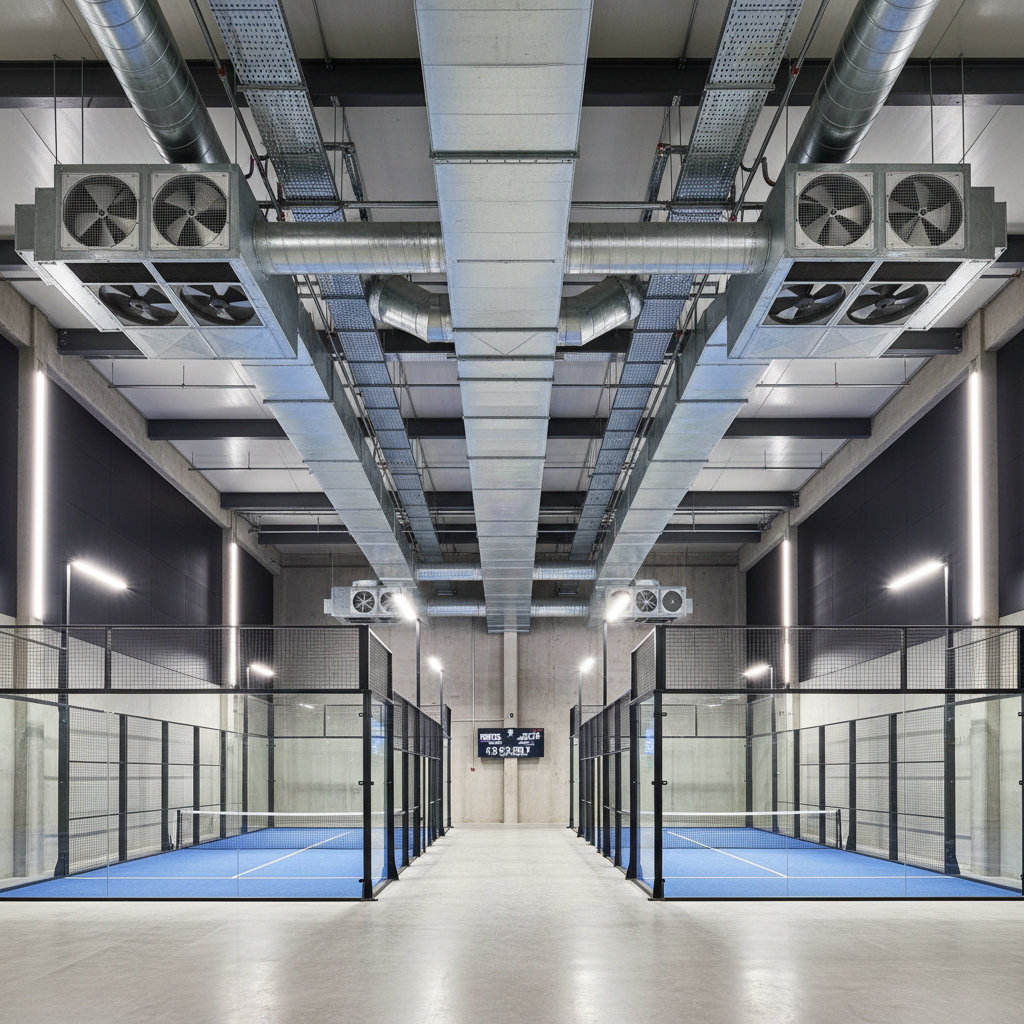
Proper ventilation for an indoor padel court involves maintaining a continuous exchange of air to prevent the buildup of CO2 and humidity generated by intense physical activity. Without adequate airflow, players will tire more quickly, and the glass walls will fog up due to condensation, making the game unplayable. Wait, there’s more. High humidity also affects the bounce of the ball and the grip of the turf. Installing a high-efficiency HVAC system or large industrial fans ensures the temperature remains a constant 18-22 degrees Celsius.
How do you prevent glass condensation?
Airflow must be directed across the surface of the glass panels to keep them at the same temperature as the surrounding air, preventing the “dew point” from being reached. This is where it gets interesting. Using strategically placed air de-stratification fans can push warm air down from the ceiling in winter and pull cool air up in summer, keeping the glass clear year-round. If players cannot see through the glass, they cannot play, leading to lost revenue.
Is air filtration necessary?
In converted industrial spaces, filtration is vital to remove dust and particulate matter that can settle on the turf and make it slippery. Believe it or not. A clean environment significantly reduces the wear on player shoes and the court itself, while providing a healthier atmosphere for members with allergies. Maintaining a “hospital-clean” air quality standard is a major selling point for premium B2B sports clubs targeting corporate clients.
| Ventilation Factor | Requirement | Impact if Missing | Solution |
|---|---|---|---|
| Air Exchange Rate | 4-6 times per hour | Stale air / Fatigue | Industrial Fans |
| Target Humidity | 40% – 60% | Fogged glass | Dehumidifiers |
| Temp Control | 18°C – 24°C | Overheating | Full HVAC |
Key Takeaway: Active climate control and air circulation are essential for preventing glass condensation and maintaining player endurance.
How do you begin building your indoor padel court?
Building your indoor padel court begins with a detailed site assessment to ensure the floor is perfectly level and capable of supporting structural weight. Most indoor installations require a reinforced concrete slab or high-quality industrial floor that can be drilled for anchor bolts. Here’s the deal. You must check for underground utilities or post-tension cables before drilling, as damaging the building’s structural integrity is a catastrophic mistake. Once the floor is cleared, the process moves to assembly of the metallic cage.
What is the first step of assembly?
The installation team starts by marking the perimeter and securing the structural pillars to the floor using heavy-duty expansion bolts. Think about it. If the pillars are even one centimeter out of alignment, the glass panels will not fit into their tracks, causing massive delays and potential breakage. Precision at this stage is the difference between a court that lasts twenty years and one that rattles every time the ball hits it.
How is the turf installed indoors?
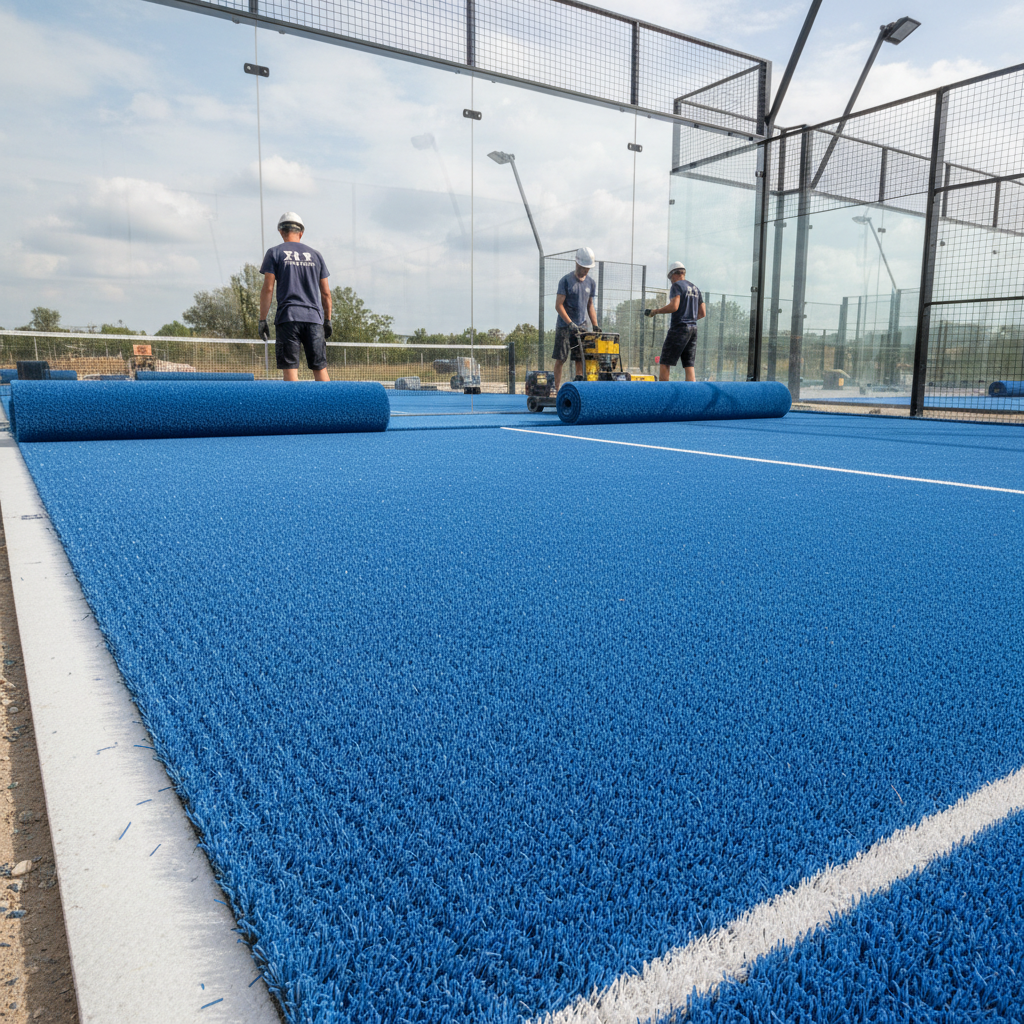
Unlike outdoor courts where glue is applied to the perimeter, indoor turf is often laid out as a “floating” system with seams heat-taped together for maximum durability. You might be wondering. How does it stay in place? The weight of the silica sand infill (approximately 2-3 tons per court) provides more than enough downward pressure to keep the turf perfectly flat and immobile during play.
| Construction Phase | Primary Activity | Duration (Typical) | Key Tool |
|---|---|---|---|
| Site Prep | Floor leveling/cleaning | 2 – 3 Days | Laser Level |
| Framework | Steel pillar anchoring | 2 – 4 Days | Impact Drill |
| Glass Fitting | 12mm panel installation | 1 – 2 Days | Suction Cups |
| Turf & Infill | Carpet laying/Sanding | 2 Days | Power Brush |
Key Takeaway: Professional installation requires a perfectly level sub-floor and precise pillar alignment to ensure the structural integrity of the glass walls.
What is the cost of building an indoor padel court?
The cost of building an indoor padel court typically ranges from $18,000 to $35,000 per court for hardware, plus installation and building modification expenses. Since you are not building a roof from scratch, your primary costs are focused on the high-quality premium padel court materials and interior lighting systems. Ready for the good part? By sourcing directly from a manufacturer, you can save up to 30% on middleman markups, allowing you to reinvest that capital into better amenities or marketing.
Building modifications like upgrading electrical panels for LED lighting or installing industrial-grade ventilation are often overlooked in initial budget estimates. The real story is… You should also budget for high-quality protective padding for pillars and net posts to meet insurance requirements and protect players. These small additions represent a minor percentage of the budget but significantly impact the professional “finished” look of your facility.
How do operational costs compare?
Indoor courts have higher electricity bills due to lighting and HVAC, but they have near-zero costs related to weather damage or moss growth. But here’s the kicker. Because you don’t have to deal with wind-blown debris or rain-induced mold, your cleaning staff spends 70% less time maintaining the playing surface. Over a five-year period, the indoor model is frequently more profitable than its outdoor counterpart due to these reduced maintenance overheads.
| Expense Category | Estimated Cost (USD) | Percentage of Budget | ROI Impact |
|---|---|---|---|
| Court Hardware | $18,000 – $28,000 | 60% | Asset Value |
| Shipping/Logistics | $2,000 – $5,000 | 15% | Lead Time |
| Lighting/Electrical | $1,500 – $3,000 | 10% | Utility Cost |
| Installation Labor | $3,000 – $6,000 | 15% | Build Quality |
Key Takeaway: While initial utility costs are higher, the lack of environmental wear and higher booking consistency make indoor courts a superior financial investment.
How do you maintain a professional indoor padel court?
Maintaining a professional indoor padel court requires a weekly routine of glass cleaning and turf brushing to ensure the facility looks pristine. Unlike outdoor courts, you don’t have to deal with leaves or dirt, but player sweat and fingerprints on the glass can quickly make the court look dingy. Believe it or not. Using a simple squeegee and ammonia-free cleaner on the glass once a week is enough to maintain tournament-level clarity. For the turf, a power brush should be used every two weeks to redistribute sand infill.
Is sand redistribution really necessary?
As players move, the sand infill tends to migrate toward the corners and the net, leaving “bald” spots at the baseline where most of the action happens. Wait, there’s more. If these areas lose their sand, the turf fibers will flatten and break under the friction of player movement, leading to expensive premature replacement. A quick ten-minute brush once a week ensures that the impact is distributed evenly across the surface, extending the life of your turf by years.
What should you check in the structure?
Every six months, you should inspect the tension of the net and the tightness of the bolts securing the glass panels to the steel frame. Think about it. The constant vibration from ball impacts can slowly loosen fasteners over time, leading to annoying rattles or glass misalignment. A proactive maintenance schedule prevents small issues from turning into major repairs that could force a temporary closure of your facility.

| Maintenance Task | Frequency | Time Required | Primary Benefit |
|---|---|---|---|
| Glass Squeegee | Weekly | 20 Minutes | Visual Clarity |
| Turf Brushing | Bi-Weekly | 15 Minutes | Fiber Longevity |
| Bolt Inspection | Semi-Annually | 60 Minutes | Structural Safety |
| Sand Top-up | Annually | 2 Hours | Performance |
Key Takeaway: Consistent, low-effort weekly cleaning and monthly structural checks are all that’s needed to keep an indoor court in peak condition for decades.
Developing a successful indoor padel court facility requires a strategic focus on height clearance, high-quality material sourcing, and precise climate control. By transitioning from outdoor to indoor operations, you eliminate weather risks and build a stable, recurring revenue stream. Utilizing factory-direct solutions from a professional padel court manufacturer ensures you receive the best pricing without sacrificing quality. If you are ready to transform your space into a high-ROI sports venue, please contact us to receive a customized quote within 24 hours.
Frequently Asked Questions
Q1: What is an indoor padel court?
An indoor padel court is a 10×20 meter playing area enclosed in glass and steel, located inside a building to provide protection from weather and allow for year-round, climate-controlled play.
Q2: How does the lighting work?
Indoor courts use specialized padel LED lighting systems, typically 200W modules, mounted on masts or the ceiling to provide high-intensity, flicker-free light distributed to avoid shadows.
Q3: Is the turf different for indoor courts?
Indoor courts often use texturized (curly) padel grass which holds sand better and provides a more consistent, professional appearance with less maintenance than outdoor versions.
Q4: How much height is required for the ceiling?
A minimum clear height of 7 meters is required for standard play, though 8 to 9 meters is preferred for professional tournaments to allow for high defensive lob shots.
Q5: How long does it take to build?
Once the materials arrive on-site, the physical assembly of a single indoor padel court typically takes between 7 to 10 days, depending on the readiness of the sub-floor.