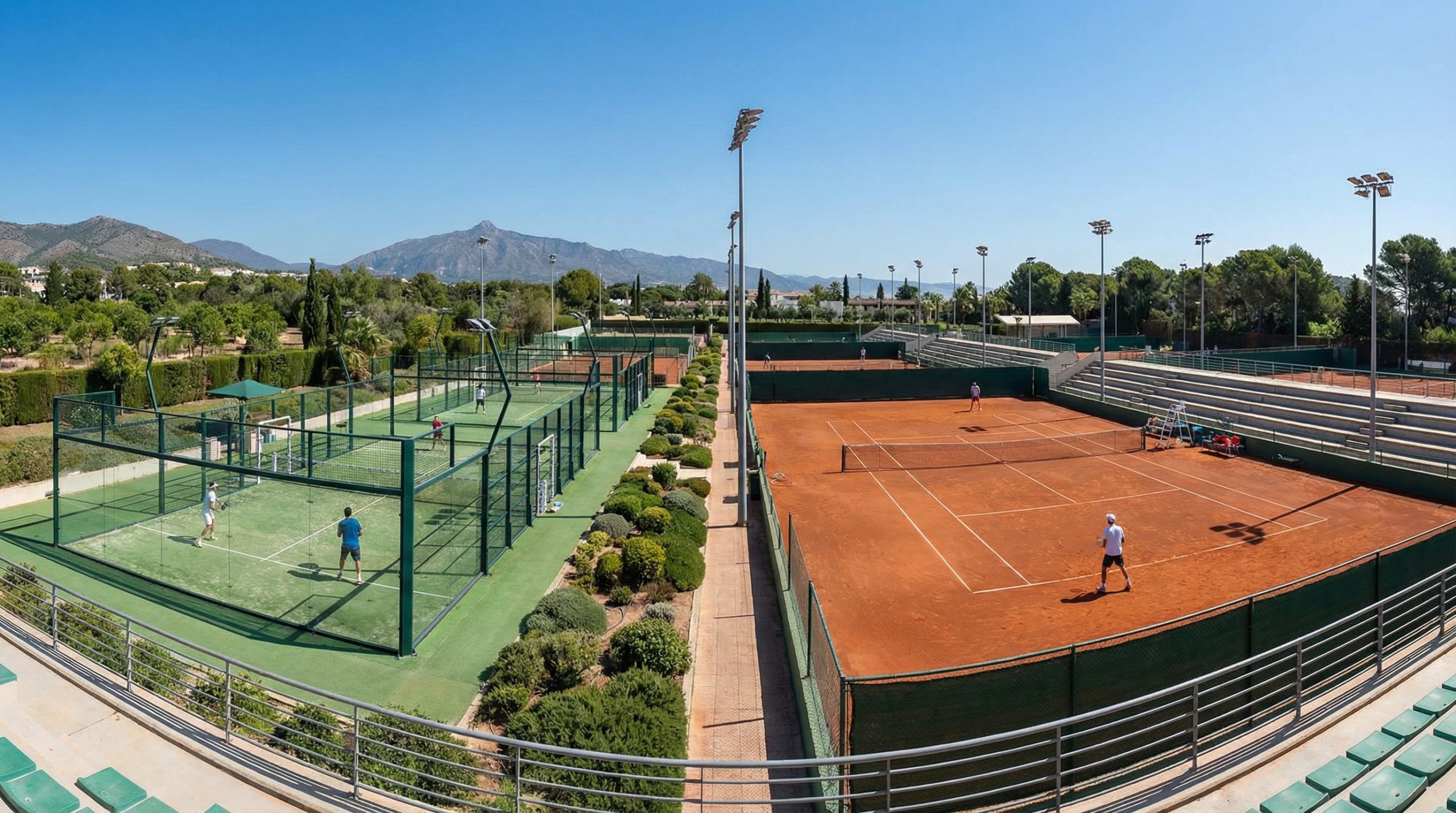
The medidas cancha de padel refer to the precise regulatory dimensions of 10 meters in width by 20 meters in length required to construct an official court. Building a sports facility without these exact specifications is a significant financial risk. You might invest substantial capital only to realize the court is ineligible for professional tournaments or provides an inconsistent playing experience. This guide outlines the exact technical requirements and construction steps to ensure your project meets international standards for a high-performance installation.
What are the standard medidas cancha de padel for doubles?
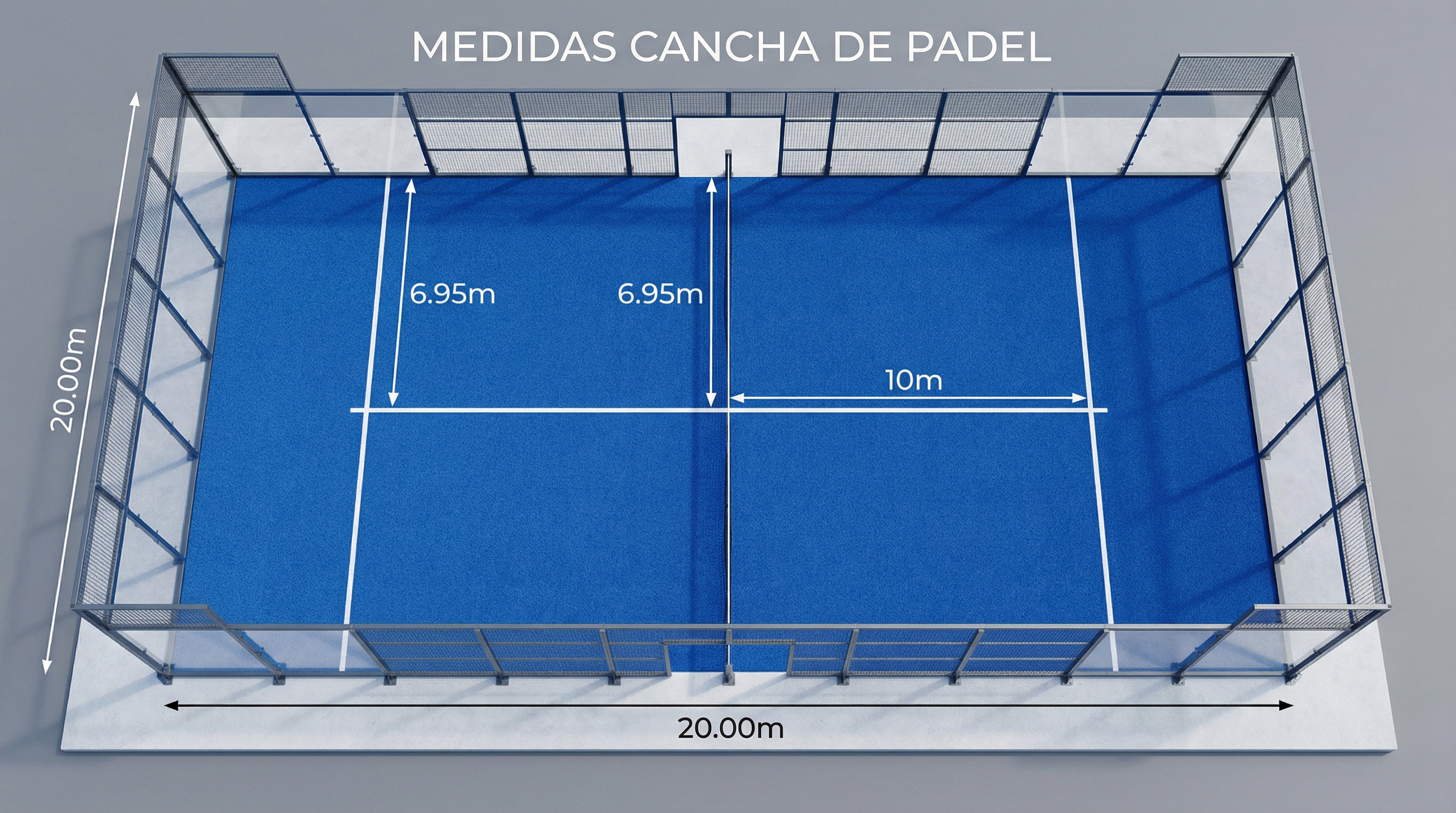
The medidas cancha de padel for a standard doubles game consist of a rectangular area measuring exactly 20 meters long and 10 meters wide.
Official Length and Width Specifications
International regulations dictate that the internal playing area must be a 200-square-meter rectangle divided by a central net. You must ensure that the tolerance for these measurements does not exceed 0.5% to maintain professional certification.
But here is the kicker.
- Total Area: 200 m².
- Internal Length: 20 meters.
- Internal Width: 10 meters.
- Symmetry: The court must be divided into two identical 10×10 meter squares.
Service Line and Net Placement
The service lines are positioned parallel to the net at a specific distance to define the legal landing zone for serves. You will find that a center service line divides the area between the net and the service lines into two equal halves.
Think about this:
- Service Line Distance: 6.95 meters from the net.
- Line Width: Standard 5 centimeters.
- Center Line: Perpendicularly bisects the service area.
- Net Height: 0.88 meters at the center and 0.92 meters at the posts.
The following data summarizes the core geometric requirements for a standard competitive enclosure.
Key Takeaway: A regulatory doubles court requires a 20m x 10m footprint with service lines precisely set at 6.95m from the central net.
| Component | Official Dimension |
|---|---|
| Court Width | 10.00 Meters |
| Court Length | 20.00 Meters |
| Service Line Distance | 6.95 Meters |
Why do medidas cancha de padel matter for professional play?
The medidas cancha de padel are critical because they dictate the unique physics of ball rebounds and player movement during high-stakes rallies.
Consistency in Ball Rebounds
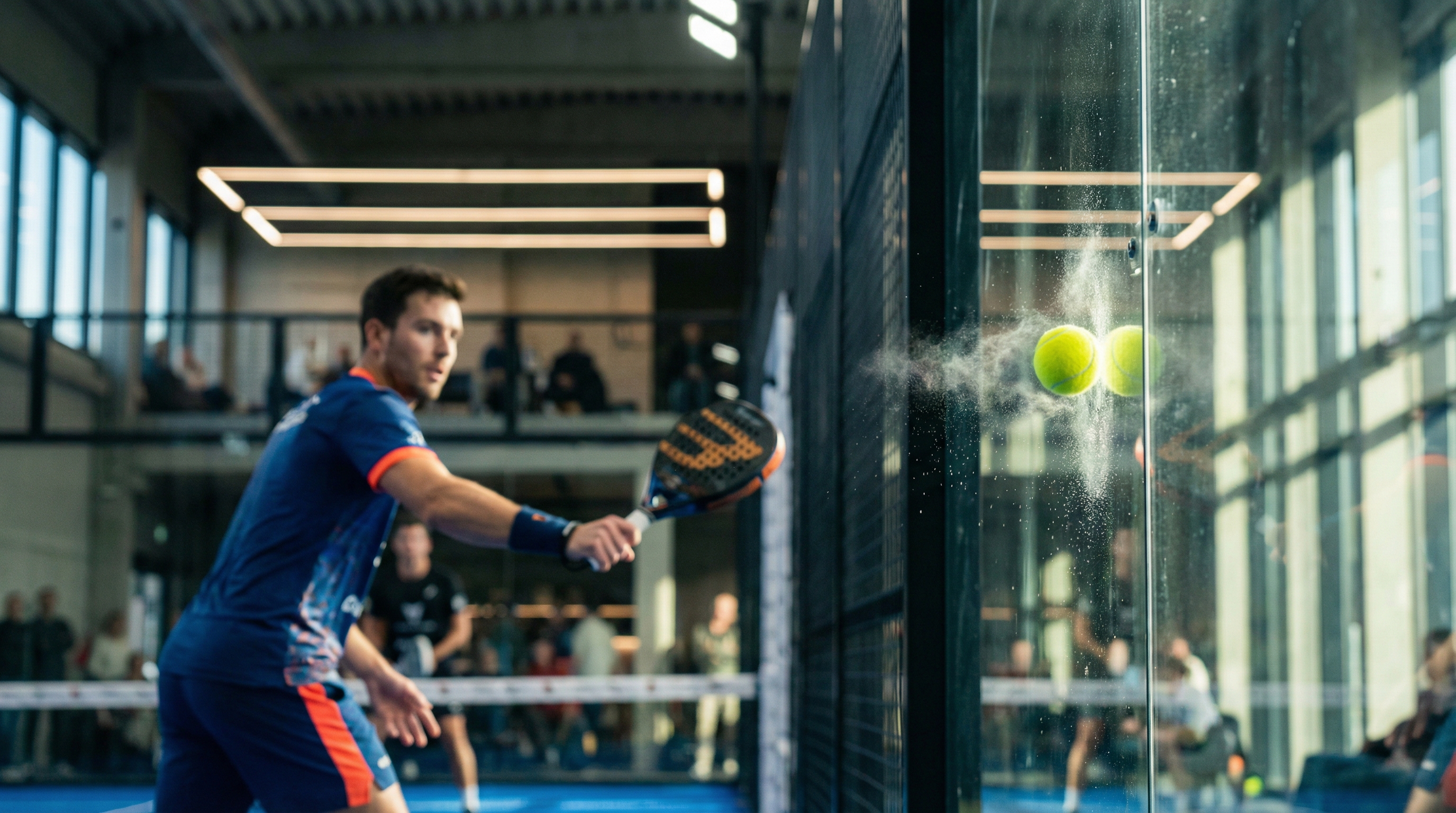
Professional players rely on the predictability of the ball’s bounce off the glass and metallic mesh. If your dimensions are off by even a few centimeters, the angles of the “rebound game” will change, frustrating skilled competitors.
Believe it or not.
- Predictability: Uniform dimensions ensure the ball behaves the same in every club.
- Glass Alignment: Precise spacing prevents dead spots in the corners.
- Mesh Integrity: Correct sizing maintains the tension needed for a true bounce.
- Tournament Standards: Sanctioned events only accept courts with zero dimensional errors.
Safety and External Play Zones
In professional matches, players frequently exit the court through the side doors to save a ball that has been smashed out. You must provide a dedicated safety zone to prevent injuries during these high-speed maneuvers.
Here is the deal:
- Safety Area: 2 meters by 4 meters outside each door.
- Door Height: Minimum of 2.10 meters.
- No Obstacles: The perimeter must be clear of lighting posts or benches.
- Post Padding: Structural elements near exits require high-impact foam protection.
Ensuring these dimensions are met is the only way to facilitate the “out-of-court” play style seen in elite circuits.
Key Takeaway: Precision in court measurements is the foundation for predictable ball physics and the safety required for professional-level exterior play.
| Professional Factor | Requirement |
|---|---|
| External Safety Zone | 2m x 4m |
| Door Clearance | 2.10m Height |
| Tolerance Margin | < 0.5% |
Are there smaller medidas cancha de padel for singles?
The medidas cancha de padel for singles matches utilize the same 20-meter length but reduce the width to only 6 meters.
Compact Width for Individual Play
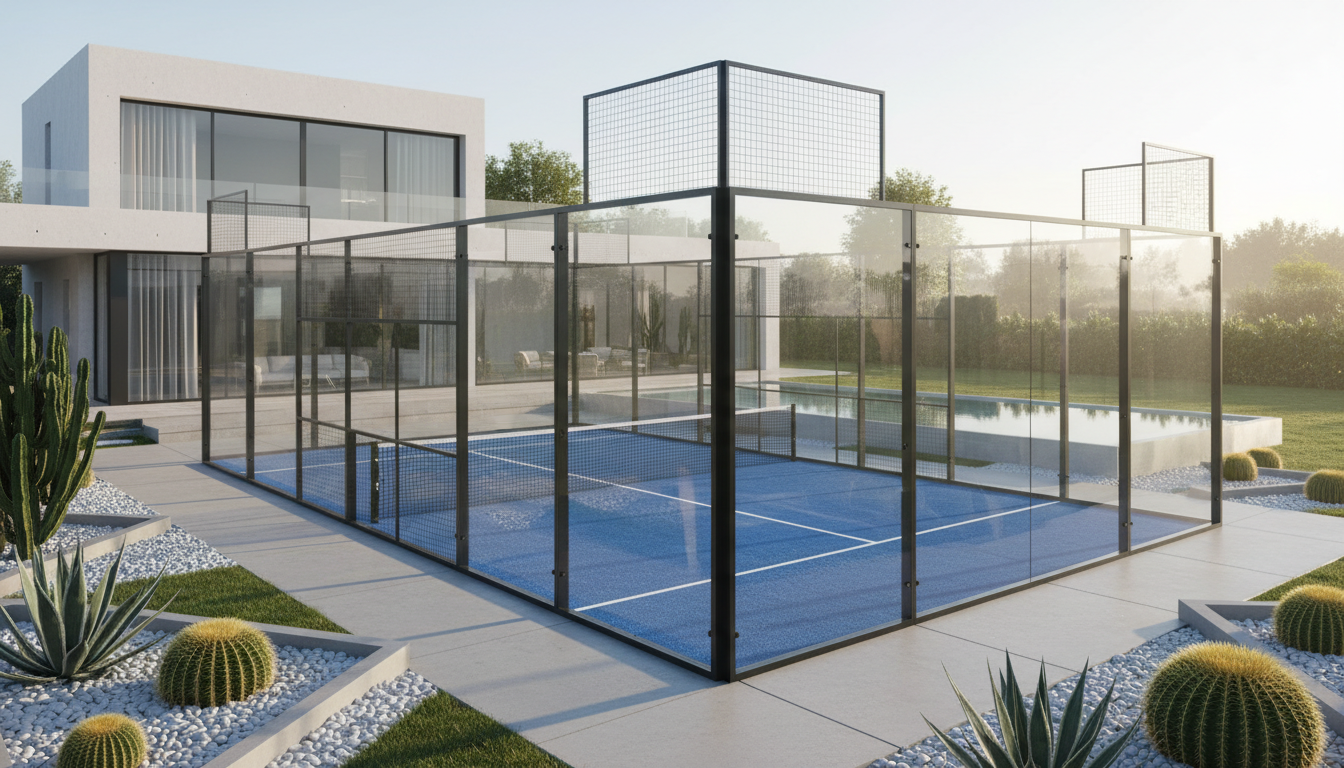
Singles courts are an excellent solution for private residences or clubs with limited lateral space. You will find that the 6-meter width makes the game more intense and focuses heavily on vertical accuracy.
It gets even better.
- Total Width: 6.00 meters.
- Total Length: 20.00 meters.
- Service Boxes: Scaled to fit the narrower profile.
- Space Efficiency: Requires roughly 40% less land than a doubles court.
Training and Residential Advantages
Installing a singles court allows you to offer technical training sessions for individual players. For a homeowner, this configuration provides a luxury sporting amenity without overwhelming the backyard landscape.
You might be wondering.
- Lower Maintenance: Less turf and glass to clean.
- Technical Focus: Forces players to master straight-line shots and lobs.
- Urban Fit: Easily integrates into narrow city lots or hotel terraces.
- Social Use: Ideal for one-on-one cardio sessions.
Smaller footprints offer a strategic alternative for developers looking to maximize the number of playing units on a specific plot.
Key Takeaway: Singles courts maintain the 20m length but use a 6m width, making them ideal for technical drills and space-constrained residential areas.
| Model | Width | Total Area |
|---|---|---|
| Singles Court | 6 Meters | 120 m² |
| Doubles Court | 10 Meters | 200 m² |
| Comparison | 40% Smaller | High Density |
How do the medidas cancha de padel compare to tennis?
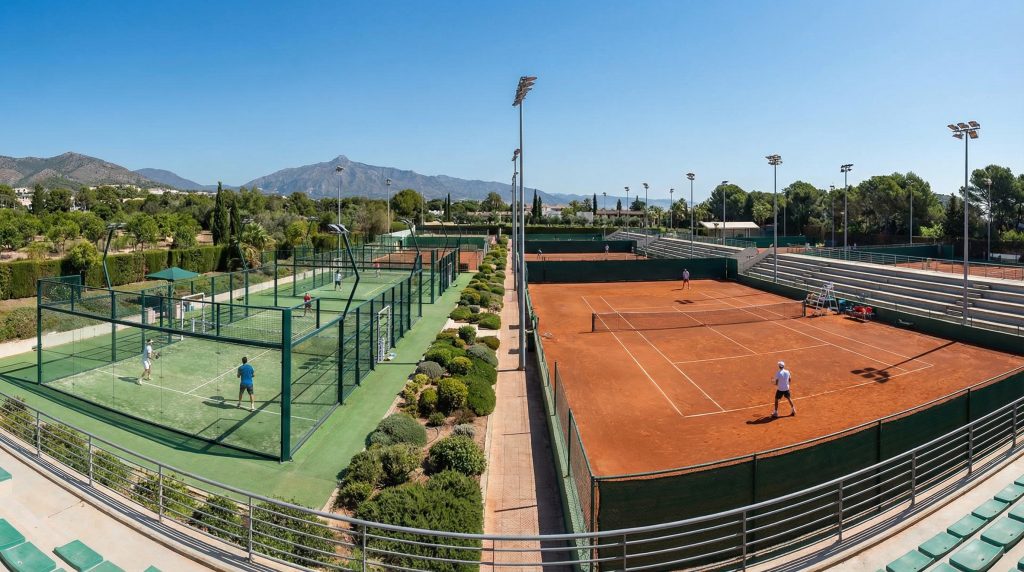
The medidas cancha de padel are significantly more compact than those of a traditional tennis court, which impacts land use and revenue.
Land Efficiency and Revenue Density
A standard tennis court takes up nearly 260 square meters for the playing lines alone, plus massive run-off areas. You can often fit two or even three padel courts in the space occupied by a single tennis court.
The results are in.
- Tennis Footprint: 23.77m x 10.97m (internal).
- Padel Footprint: 20.00m x 10.00m (internal).
- Player Capacity: 12 players can play padel in the space used by 4 tennis players.
- Monetization: Higher hourly rental income due to increased court density.
Transitioning from Tennis to Padel
Many club owners are choosing to convert underutilized tennis courts into padel hubs to increase member engagement. You can often reuse the existing concrete base, making the conversion both fast and cost-effective.
But wait, there is more.
- Base Compatibility: Tennis slabs can often support padel structures after leveling.
- Social Atmosphere: The smaller court size fosters a more communicative environment.
- Shorter Games: Padel matches are typically faster, increasing daily turnover.
- Equipment: Smaller rackets and slower balls make the transition easy for beginners.
Comparing these dimensions reveals why padel is becoming the preferred choice for modern sports club business models.
Key Takeaway: Padel courts are 25% shorter than tennis courts, allowing clubs to triple their player capacity and revenue per square meter.
| Sport | Total Internal Area | Players per 600m² |
|---|---|---|
| Padel | 200 m² | 12 Players |
| Tennis | 260+ m² | 4 Players |
| Space Savings | High | 3:1 Ratio |
What is the height required for medidas cancha de padel?
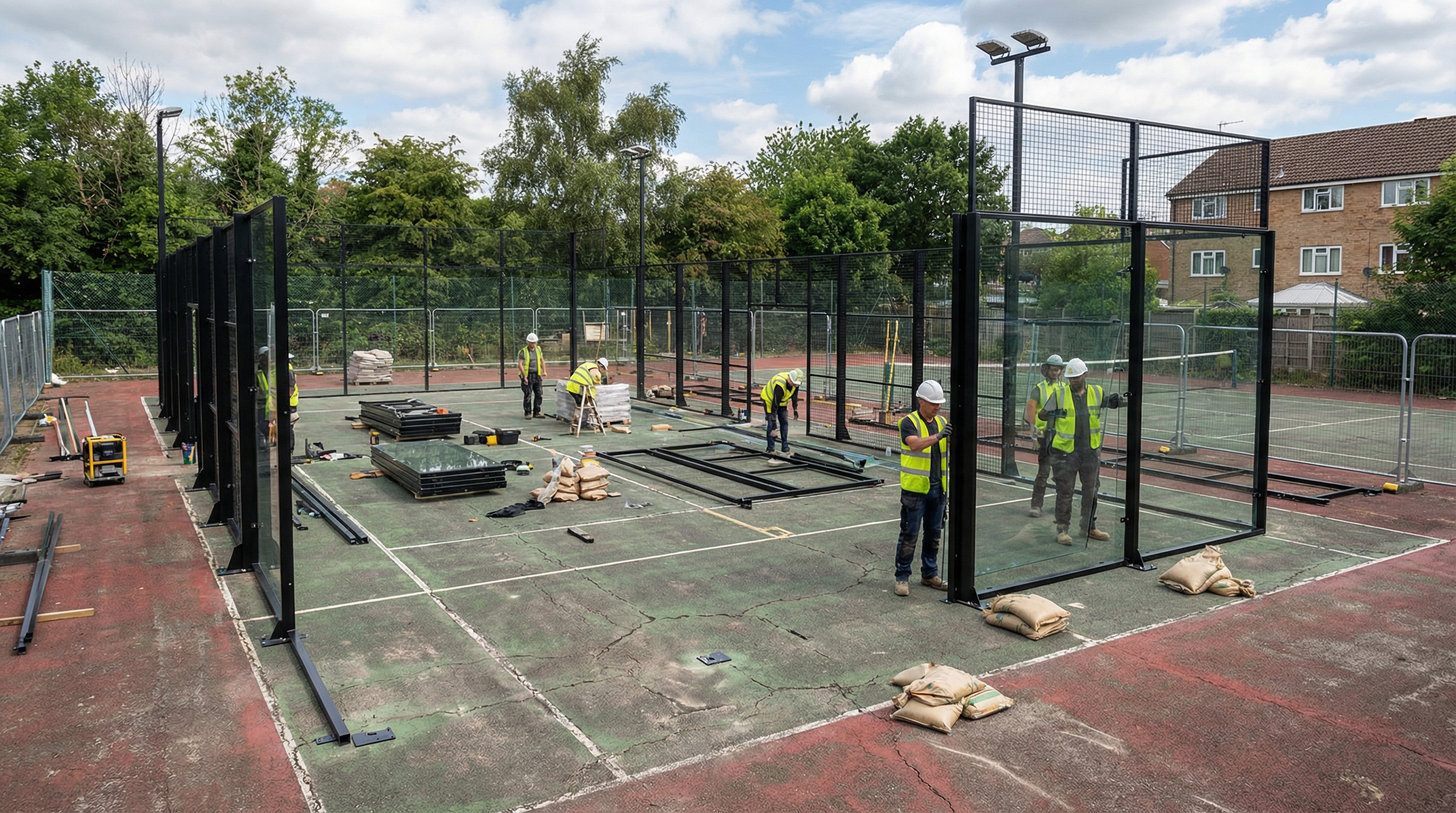
The medidas cancha de padel include vertical clearance requirements, especially for indoor facilities where ceiling height affects the game.
Indoor Ceiling and Obstruction Limits
If you are building an indoor facility, the ceiling must be high enough to accommodate the “lob,” a fundamental defensive shot. A low ceiling will interrupt the flow of the game and render the court unusable for high-level players.
Let that sink in.
- Minimum Height: 6 meters throughout the court.
- Recommended Height: 8 to 9 meters for competitive play.
- Lighting Clearance: Fixtures must be outside the main ball trajectory.
- Beam Placement: Structural supports cannot hang over the playing surface.
Perimeter Wall and Fence Heights
The walls surrounding the court serve as active playing surfaces and must reach specific heights to keep the ball in play. You will see a combination of glass and metallic mesh that varies in height along the sides.
Can you imagine?
- Back Walls: 3 meters high (usually all glass).
- Side Walls: A “stepped” design from 3 meters to 2 meters.
- Metallic Mesh: Adds 1 additional meter of height on top of the glass.
- Total Structure: Usually reaches 4 meters at the back and corners.
Vertical dimensions are just as standardized as horizontal ones to ensure a consistent experience across all global venues.
Key Takeaway: Indoor courts require at least 6m of clear height, while the perimeter enclosure typically reaches 4m to contain the action.
| Component | Standard Height |
|---|---|
| Back Wall Glass | 3.00 Meters |
| Side Wall Mesh | 4.00 Meters (Total) |
| Indoor Ceiling | 6.00 Meters (Min) |
Which materials fit the official medidas cancha de padel?
Selecting the right materials is essential to maintaining the medidas cancha de padel over time, as low-quality components can warp or shift.
Glass Thickness and Structural Integrity
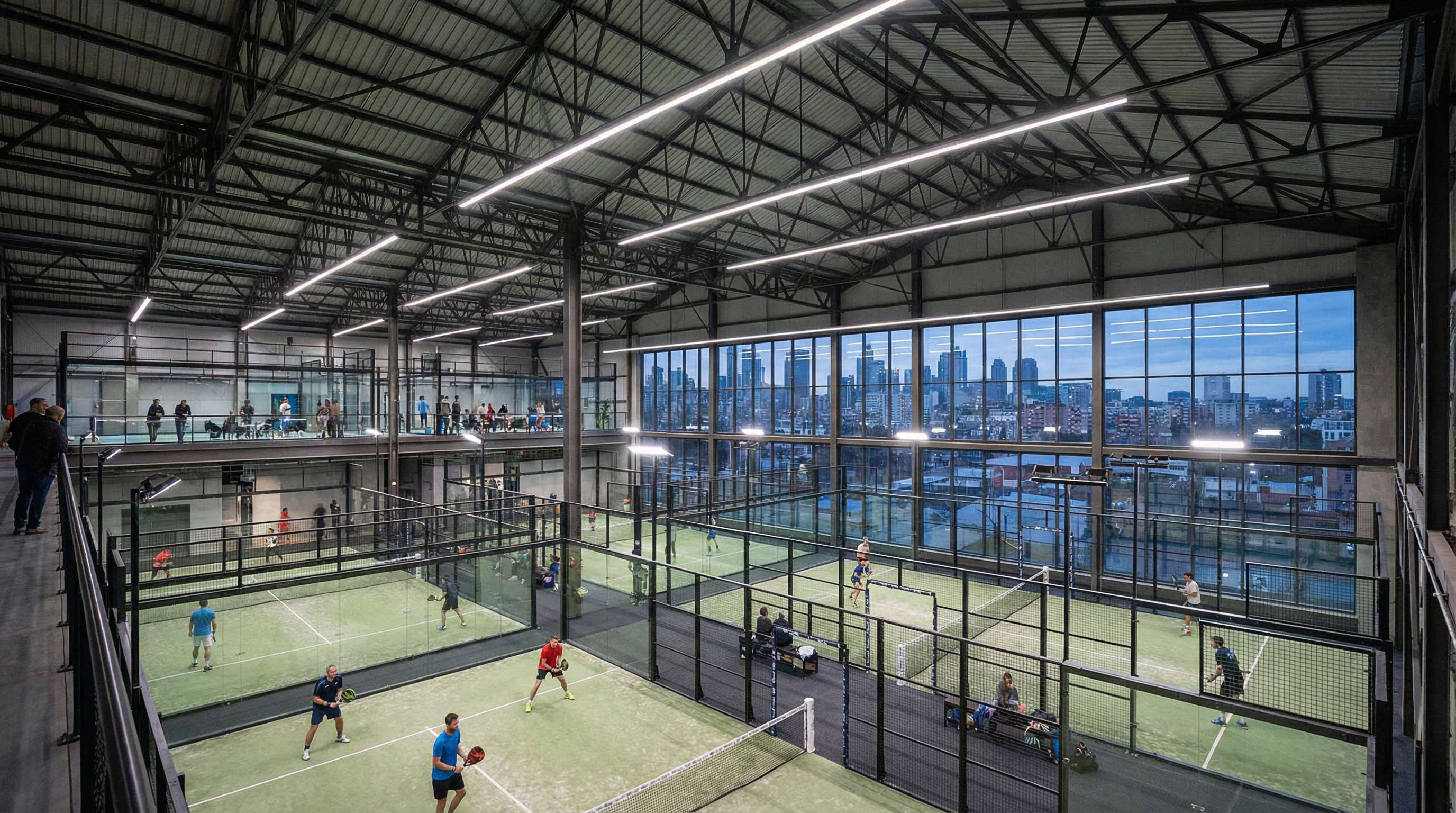
The “walls” must be made of tempered glass that can withstand high-velocity impacts from players and balls. You should opt for Padel Glass that is at least 10mm or 12mm thick to ensure safety and a consistent rebound.
Make no mistake.
- 10mm Glass: Standard for indoor and residential use.
- 12mm Glass: Recommended for outdoor and professional courts.
- Flush Mounting: Screws must be countersunk to keep the wall surface flat.
- Transparency: High-clarity glass improves the spectator experience.
Turf Quality and Sand Infill
The playing surface consists of artificial grass that requires a specific amount of silica sand for grip and ball slide. You need to choose Padel Grass with high fiber density to prevent premature wear.
Does it work? You bet.
- Monofilament Fiber: Offers the most professional and durable feel.
- Silica Sand: 12-15kg per square meter for optimal drainage.
- Color Choice: Blue is the official tournament standard, but green is common.
- Shock Absorption: High-quality turf reduces the risk of joint injuries.
Using the correct materials ensures the court remains within the 20×10 meter regulatory box despite environmental stress.
Key Takeaway: High-grade tempered glass (12mm) and monofilament artificial turf are the industry standards for durable, regulatory courts.
| Material | Official Spec | Benefit |
|---|---|---|
| Wall Glass | 12mm Tempered | Safety & Bounce |
| Flooring | Monofilament Turf | Durability |
| Frame | Galvanized Steel | Rust Protection |
How to prepare the ground for medidas cancha de padel?
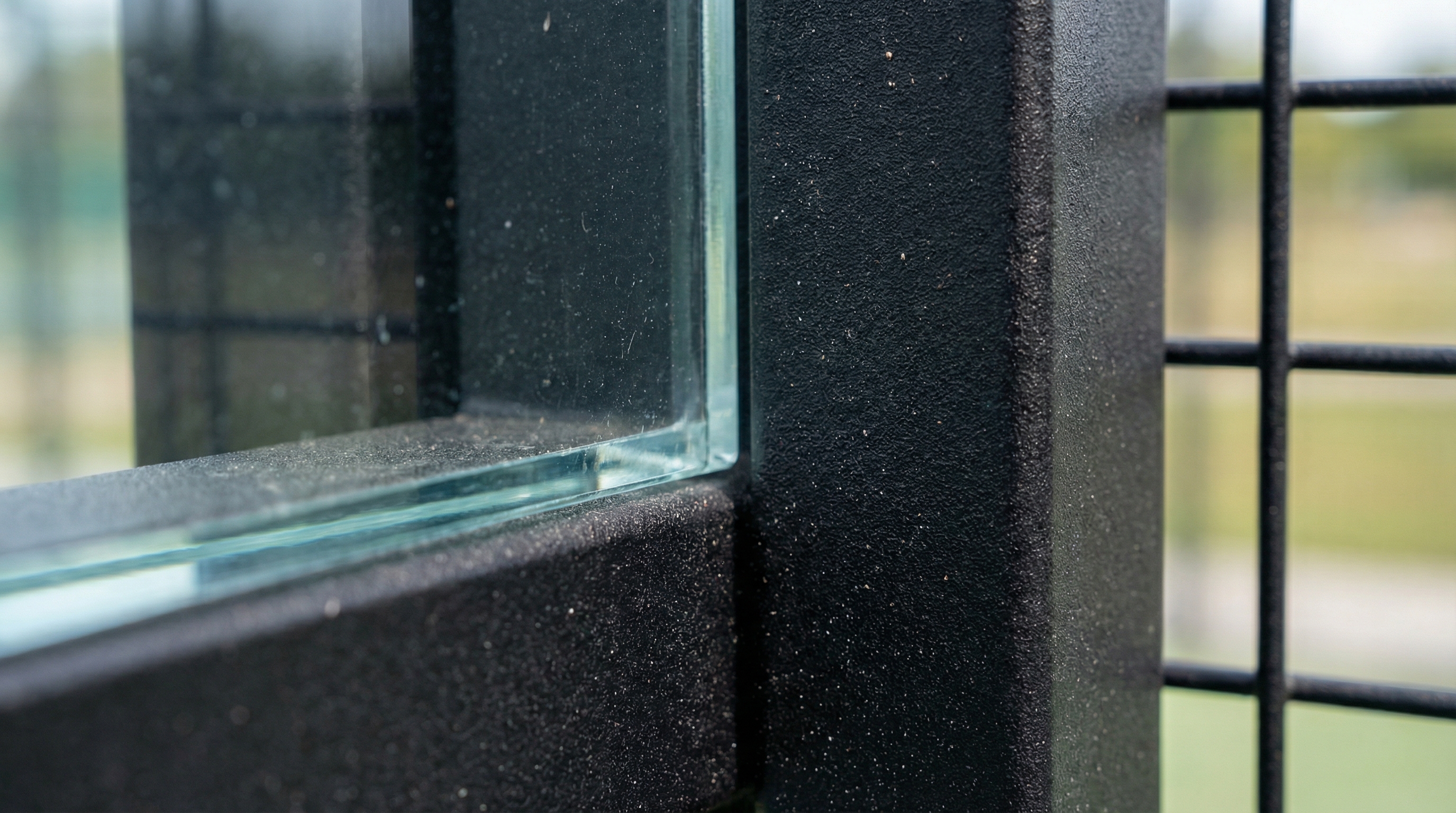
The foundation must be perfectly level to respect the medidas cancha de padel, as even a slight tilt will ruin the glass installation.
Concrete Slab and Leveling Requirements
The court requires a reinforced concrete slab that can support the heavy weight of the steel and glass frame. You must ensure the surface is flat within a tolerance of 3mm over any 3-meter section.
It’s time to face the facts.
- Slab Thickness: Minimum of 15cm to 25cm.
- Curing Time: Concrete should set for at least 28 days before turfing.
- Steel Reinforcement: Prevents the slab from cracking under structural load.
- Surface Finish: A light brush finish provides better adhesion for the turf.
Drainage Solutions for Outdoor Courts
Water accumulation on the court can damage the turf and create slip hazards for players. You will need to implement a subtle slope or use porous concrete to facilitate quick drainage after rainfall.
You might be wondering how.
- Slope: A 0.5% gradient toward the outer perimeter.
- Porous Base: Allows water to pass through the slab into the sub-base.
- Perimeter Channels: Directs runoff away from the court’s foundation.
- Gravel Layer: Provides a stable, draining sub-base beneath the concrete.
A solid foundation is the most important investment you can make to ensure the longevity of your sports facility.
Key Takeaway: A 15-25cm reinforced concrete slab with a 0.5% drainage slope is mandatory for a stable, long-lasting padel court.
| Ground Phase | Specification | Goal |
|---|---|---|
| Slab Depth | 15-25 cm | Load Bearing |
| Leveling | <3mm Variance | Glass Alignment |
| Drainage | 0.5% Slope | Water Removal |
What are the best medidas cancha de padel for kids?
For the youngest players, the standard medidas cancha de padel can be scaled down to help them develop skills without being overwhelmed by the court size.
Scaled Courts for Junior Development
Junior courts are designed for children under 6 years old, featuring smaller dimensions that promote success and fun. You will find that these scaled environments are perfect for academies focusing on early childhood sports.
It gets even better.
- Junior Width: 5.00 meters.
- Junior Length: 10.00 meters.
- Net Height: Reduced to 0.70 or 0.80 meters.
- Usage: Ideal for schools, daycare centers, and specialized clubs.
Lighting and Visibility for Evening Lessons
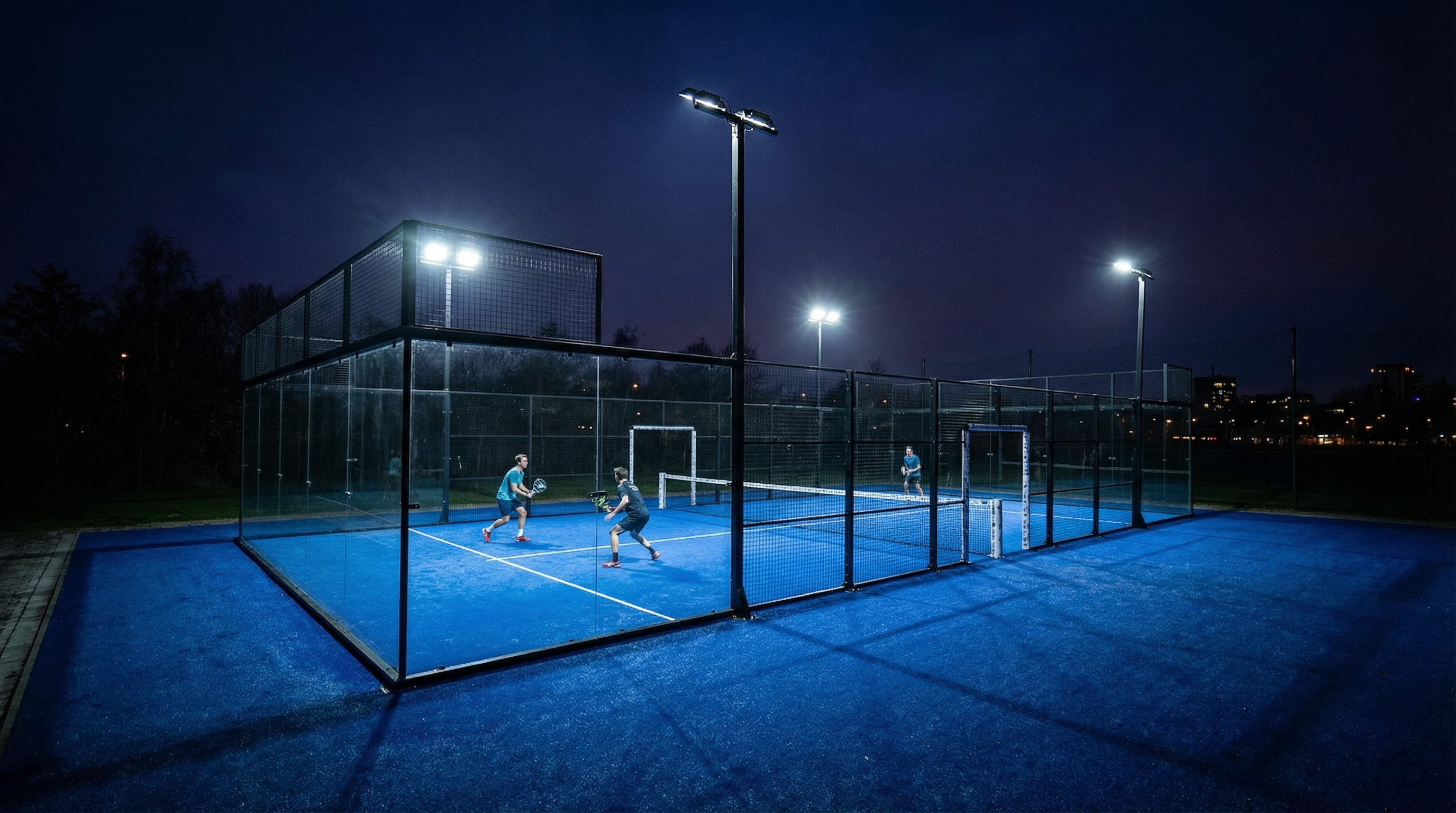
Young players need high visibility to react to the ball, making professional Padel LED Lighting a necessity for evening classes. You must ensure the light distribution is uniform across the entire 10m x 5m area.
Wait, there’s more.
- LUX Level: Minimum of 300 LUX for training.
- Anti-Glare: Essential for preventing eye strain in young children.
- Post Height: Can be shorter (approx. 4-6 meters) for junior courts.
- Safety: Instant-on LEDs eliminate the dangerous “cool down” periods of old lamps.
Creating a dedicated space for children is a proven way to build long-term membership loyalty for your club.
Key Takeaway: Junior-sized courts (10m x 5m) with proper LED lighting are the best way to introduce children under 6 to the sport safely.
| Court Type | Length | Width | Target Age |
|---|---|---|---|
| Junior | 10m | 5m | Under 6 |
| Pro | 20m | 10m | Adults / Teens |
| Training | 20m | 6m | Advanced 1-on-1 |
Can you build a court with custom medidas cancha de padel?
If your space is irregular, you might consider the medidas cancha de padel in a customized format, though this has professional limitations.
Bespoke Sizes for Luxury Rooftops
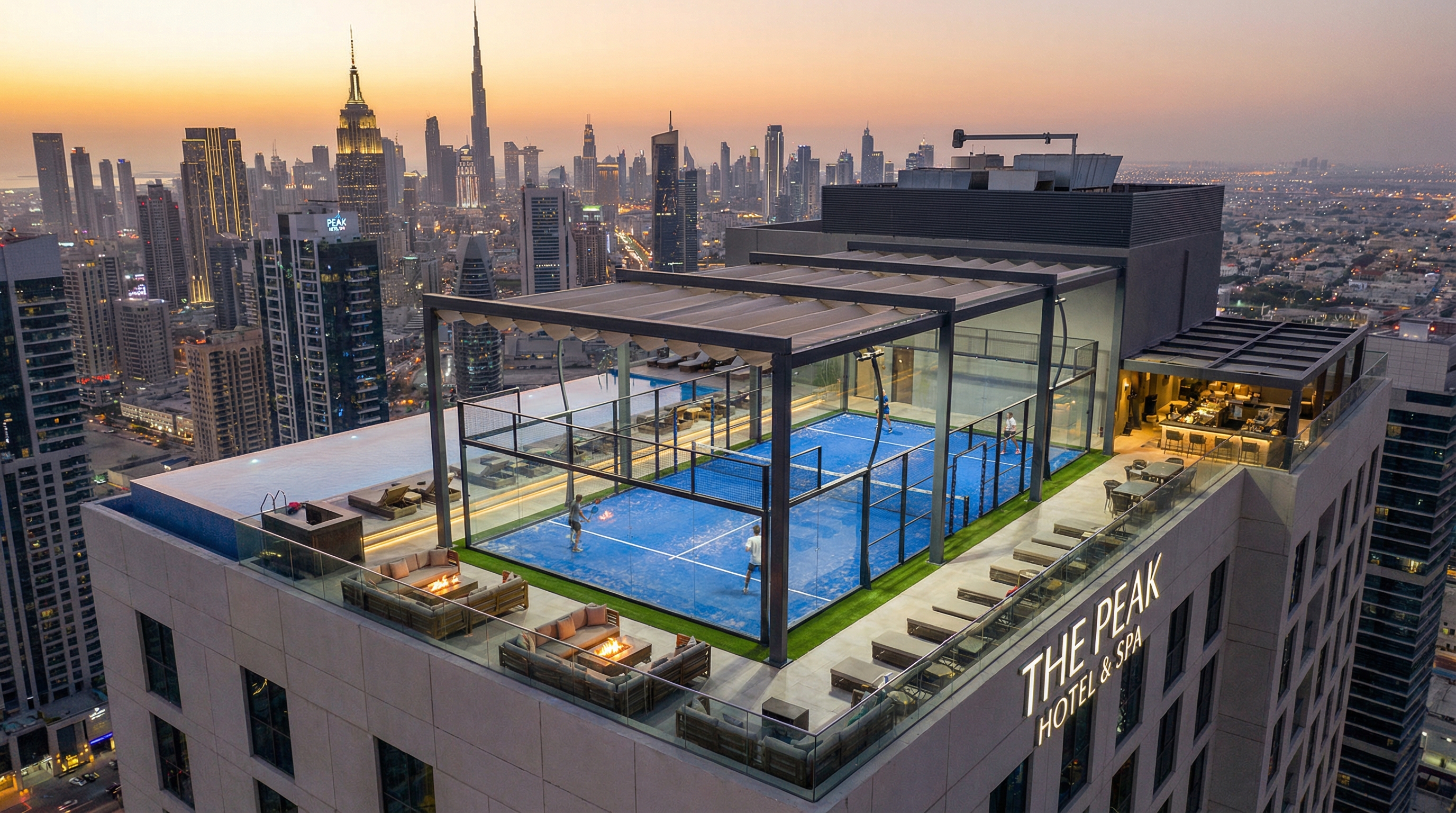
Custom courts are often necessary for luxury hotels or rooftop installations where the architecture restricts a standard footprint. You can work with engineers to create a shortened or widened version that maximizes your available square footage.
And the best part?
- Rooftop Integration: Lightweight frames designed for structural slabs.
- Corner Adjustments: Notched designs to fit around existing pillars.
- Shortened Length: Courts as short as 16-18 meters for recreational fun.
- Glass Options: Custom-cut panoramic panels for unobstructed city views.
Limitations of Non-Standard Courts
You must be aware that any deviation from the 20×10 meter standard will disqualify the court from hosting official tournaments. For a commercial club, this might lower the resale value or limit the attraction for serious players.
Think about it.
- No Certification: FIP will not sanction matches on custom sizes.
- Maintenance Cost: Custom glass replacements are more expensive.
- Player Feel: Competitive players will find the ball timing and angles “off.”
- Wastage: Standard turf rolls are made for 10m/20m widths.
Customization is a powerful tool for leisure settings, but it should be avoided if your goal is professional club management.
Key Takeaway: Custom court sizes are excellent for luxury rooftops and hotels but cannot host sanctioned professional tournaments.
| Decision Factor | Standard | Custom |
|---|---|---|
| Certification | FIP Approved | None |
| Space Needed | 200 m² | Variable |
| Market Value | High | Niche |
How much space is needed beyond medidas cancha de padel?
The medidas cancha de padel define the playing lines, but the actual plot required is larger to accommodate spectators and safety.
Total Footprint and Setback Requirements
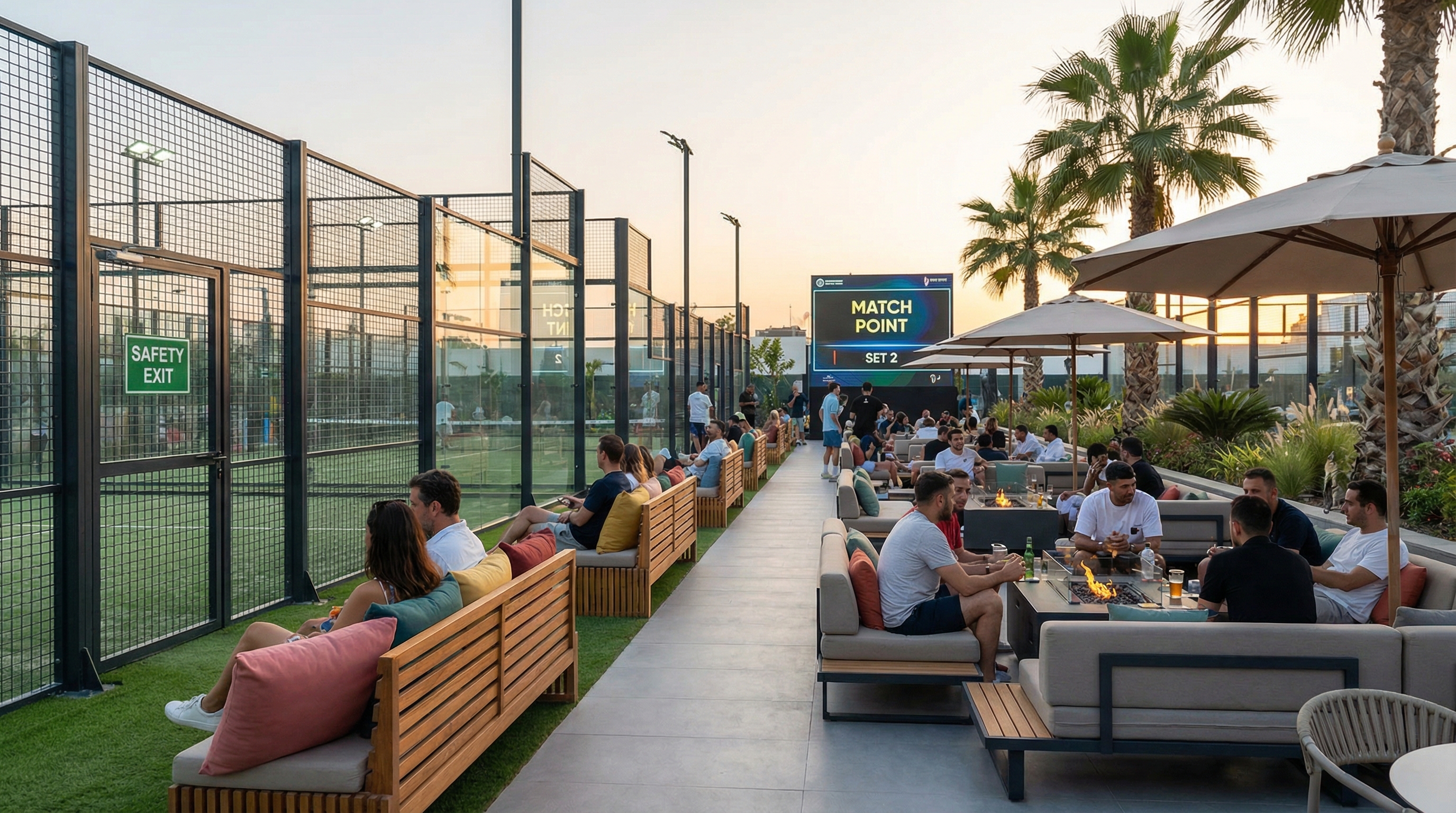
When planning your project, you must account for the “setback” distances required by local building codes and the space needed for external play. You should aim for a total plot area of at least 23 meters by 15 meters for a single court.
Think about it.
- Lateral Clearance: 2 meters on each side for door exits.
- End Clearance: 1.5 meters behind the glass for maintenance.
- Total Plot Size: Ideally 345 m² per court.
- Social Zones: Extra space for benches or a small viewing lounge.
Designing the Spectator Experience
Padel is a social sport, and your facility will be more successful if you design it as a community hub. You can integrate viewing decks or lounge areas adjacent to the court to keep fans engaged.
Wait, there’s more.
- Elevated Viewing: Allows fans to see the ball over the back glass.
- Acoustic Barriers: Helps mitigate the sound of ball strikes in residential zones.
- Pathways: Wide enough for players to pass with bags and rackets.
- Accessibility: Ensure the surrounding area meets ADA or local accessibility standards.
Planning for the space outside the court is just as vital as the dimensions inside the court for a successful business.
Key Takeaway: A total footprint of 23m x 15m is recommended to provide the necessary safety run-offs and a premium spectator experience.
| Zone | Dimensions | Purpose |
|---|---|---|
| Playing Area | 20m x 10m | The Game |
| Safety Buffer | 2m Lateral | Exterior Play |
| Plot Total | ~345 m² | Full Facility |
Conclusion
Building a padel court is a high-yield investment, but success hinges on absolute precision. From the initial 20m x 10m layout to the concrete leveling and material selection, every millimeter counts toward creating a professional atmosphere. Failure to adhere to these standards results in poor playability, safety risks, and lost revenue. At SuperbPadel, we are dedicated to manufacturing world-class courts that exceed international regulations, ensuring your facility is the premier choice for players. If you are ready to bring a high-performance court to your project, contact us today to start your build.
FAQ
Can I build a padel court in my backyard if I only have 150 square meters?
A standard doubles court requires 200m² plus safety run-offs, so a singles court (120m²) would be the only viable professional option for that space.
How do I know if my concrete slab is level enough for the glass?
You must use a 3-meter straight edge; if there is a gap of more than 3mm anywhere along the surface, the glass panels will not align correctly.
What happens if I don’t use the recommended 12mm glass?
Using thinner glass increases the risk of breakage during high-intensity collisions and can result in an inconsistent vertical bounce that affects gameplay.
Where can I find the official FIP rulebook for technical specifications?
You can access the current International Padel Federation standards through our technical support team to ensure your design is 100% compliant.
Will the color of the turf affect the official dimensions or tournament eligibility?
While blue is the standard for televised professional events, the color itself does not change the regulatory status as long as the 20x10m lines are accurate.