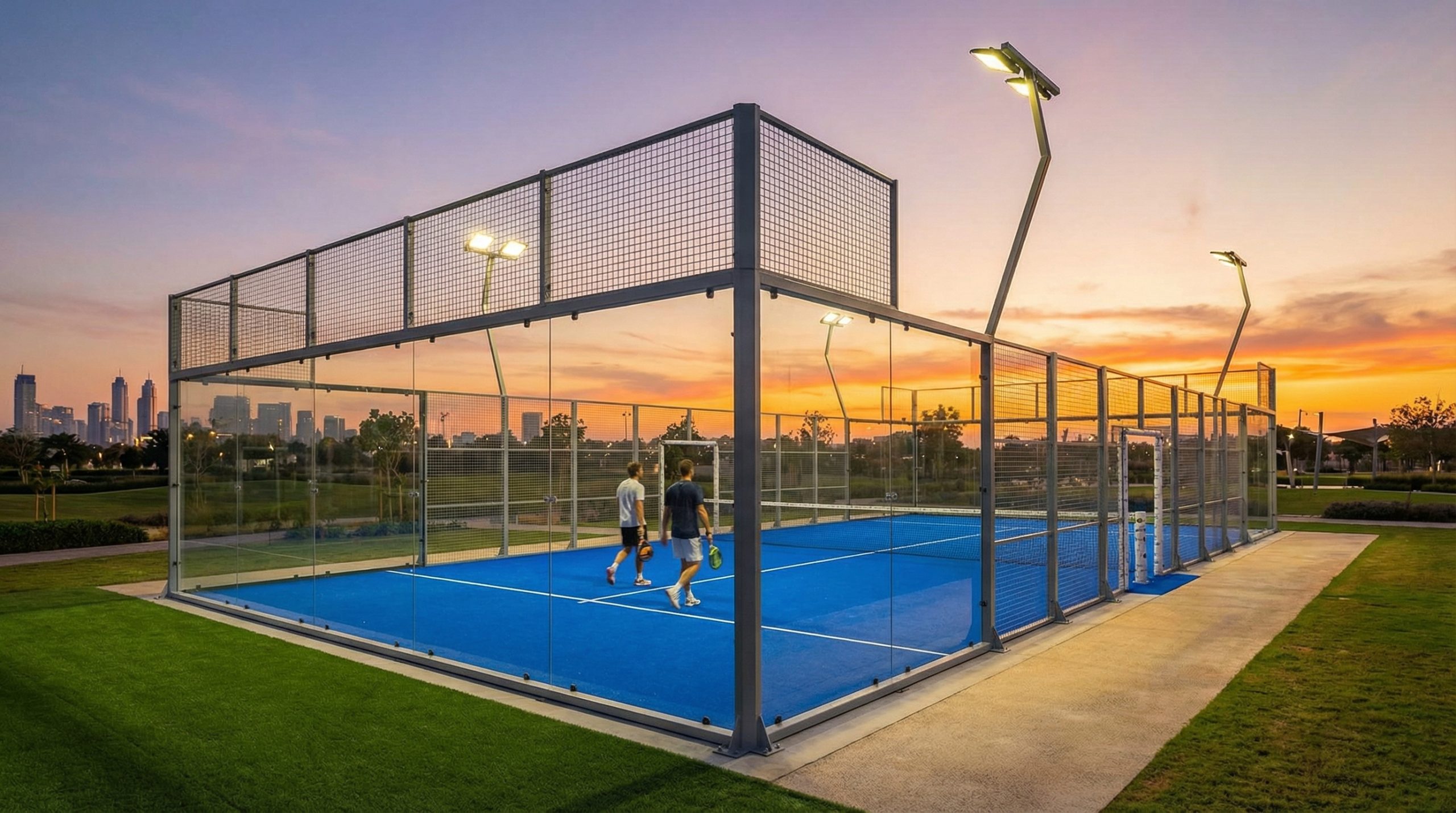
A padel cancha is a specialized sports enclosure measuring 20 meters long by 10 meters wide, designed specifically for the fast-growing racket sport of padel. Imagine you are standing at a premium sports club, watching athletes move with high-speed agility in a transparent arena. Standard tennis courts can feel too vast for beginners, while squash courts often lack the fresh air and social visibility you desire for your facility. By installing a professional court, you provide the perfect solution: a compact, glass-walled environment that keeps the ball in play longer and fosters high-intensity engagement.
What exactly is a padel cancha and its purpose?
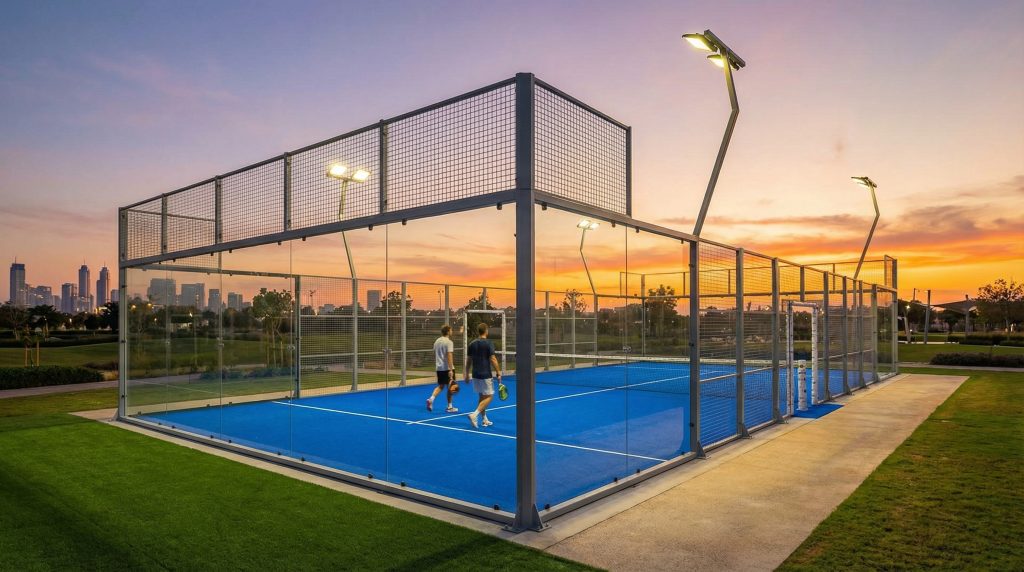
A padel cancha is a hybrid sports facility that serves as the dedicated field of play for padel, combining structural elements of tennis and squash. This unique environment encourages a tactical game where you utilize the surrounding walls to return difficult shots.
Why do walls matter in this sport?
Think about it: the walls are not just boundaries but active participants in the match. Unlike traditional racket sports, the ball remains in play after hitting the glass, provided it bounces once on the ground first.
- Strategic rebounds keep the ball moving longer.
- Glass walls provide high visibility for spectators.
- Metallic mesh sections create unpredictable “irregular” bounces.
- Players must master spatial awareness to win.
Key Takeaway: Understanding that the walls are active tools rather than obstacles is the first step in mastering the tactical depth of the game.
| Feature | Description |
|---|---|
| Playing Style | Doubles-focused (2 vs 2) |
| Wall Interaction | Permitted after floor bounce |
| Total Area | 200 square meters |
The court’s design focuses on maximizing the time the ball stays in motion during a point.
What are the official padel cancha dimensions?
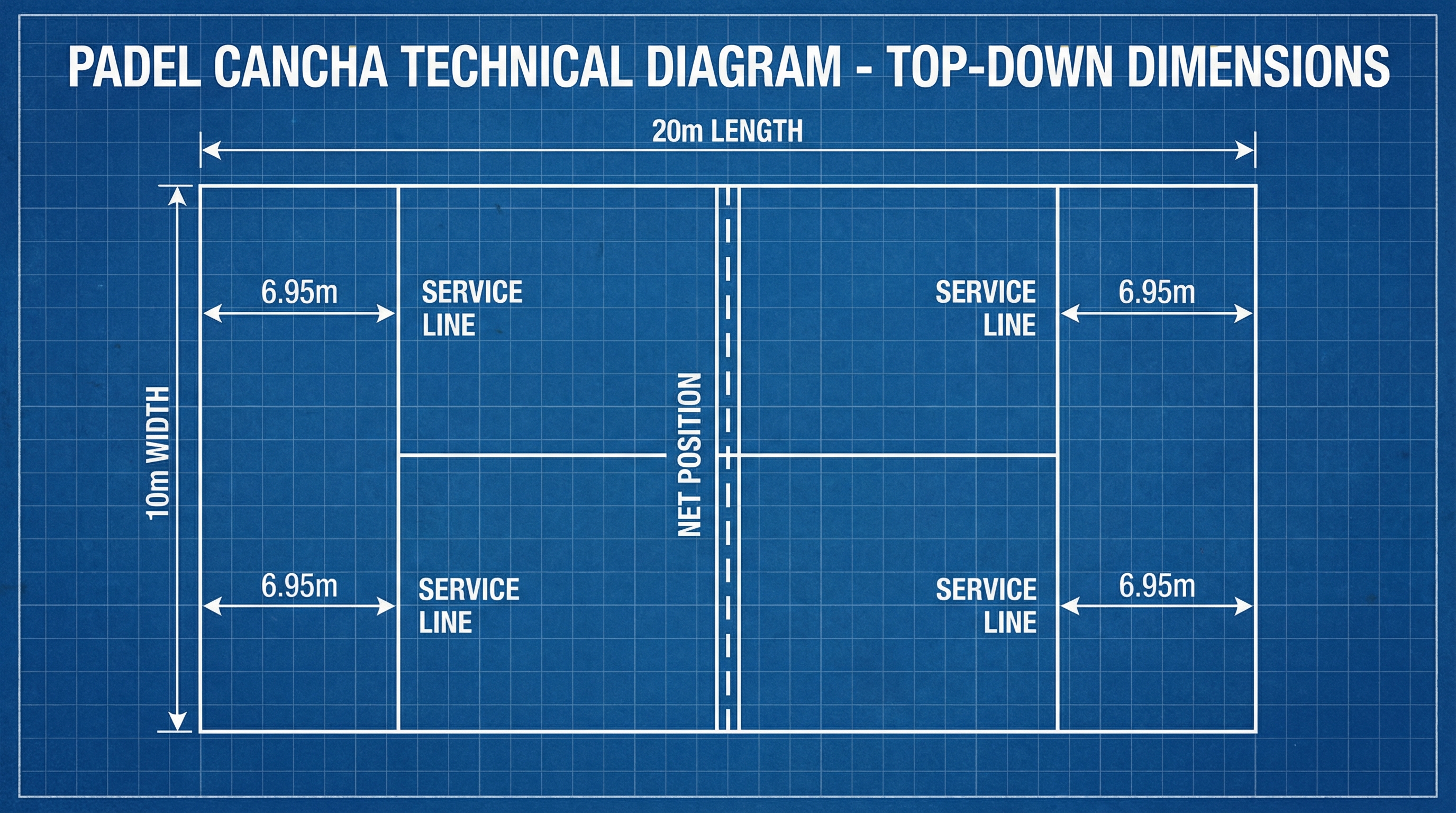
The regulatory dimensions for a padel cancha consist of a rectangular area of 10 meters in width by 20 meters in length. These measurements are taken from the interior faces of the walls to ensure a precise 200-square-meter footprint.
How is the service line laid out?
Here is the kicker: the service lines are positioned exactly 6.95 meters from the net on both sides. These lines must be 5 cm wide and clearly visible against the color of the playing surface.
- The central service line divides the area between the net and service lines.
- A 20 cm extension of the central line must pass the service line.
- All lines must be either white or black for maximum contrast.
- The tolerance for these measurements is a strict 0.5%.
Key Takeaway: Building a Standard Padel Court according to FIP standards ensures your facility is eligible for official tournaments.
| Dimension | Metric |
|---|---|
| Length | 20.00 Meters |
| Width | 10.00 Meters |
| Line Width | 5.00 Centimeters |
Precision in the layout phase prevents spatial confusion for players transitioning from other clubs.
How tall should the walls of a padel cancha be?
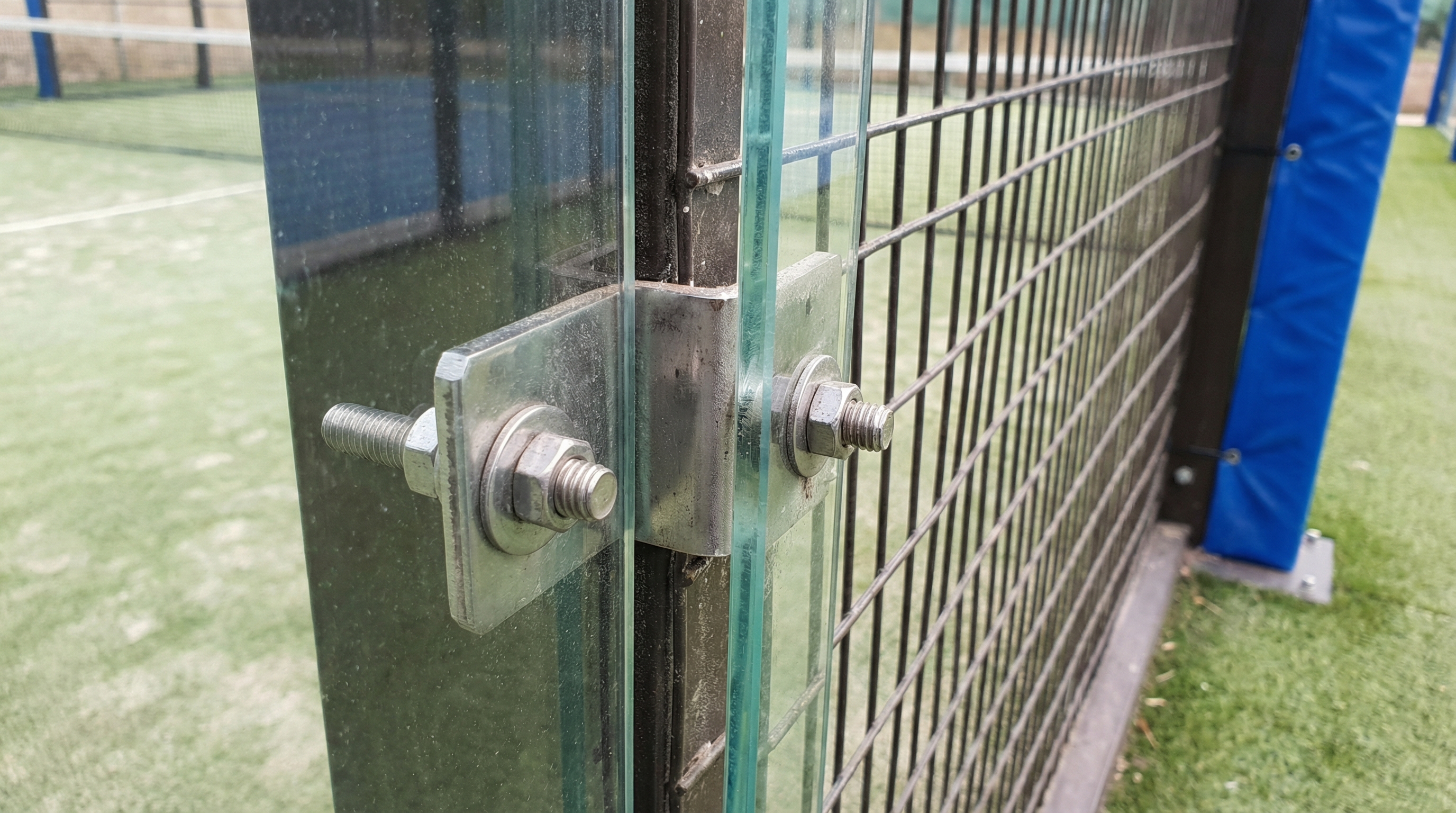
A professional padel cancha features a total height of 4 meters at the back walls to keep the ball within the enclosure during high-trajectory shots. This height is split between 3 meters of solid material like tempered glass and 1 meter of metallic mesh.
What are the lateral wall variations?
The best part? You can choose between two regulated variants for your side walls depending on your design preference. These variations affect how much the ball can be played off the side mesh versus the glass.
- Variant 1: Uses a stepped design (3m to 2m height transitions).
- Variant 2: Maintains a uniform 4m height across the entire length.
- Mesh must be flush with the interior face of the walls.
- Tempered glass must be 10mm to 12mm thick for safety.
Key Takeaway: Choosing a 4-meter total wall height ensures high lobs stay in play while providing a safe environment for players.
| Wall Section | Height | Material |
|---|---|---|
| Lower Back Wall | 3 Meters | Glass or Brick |
| Upper Back Wall | 1 Meter | Metallic Mesh |
| Side Walls | 3 – 4 Meters | Mixed Materials |
Structural height consistency is vital for players to predict ball movement during intense rallies.
Which floor material works best for a padel cancha?
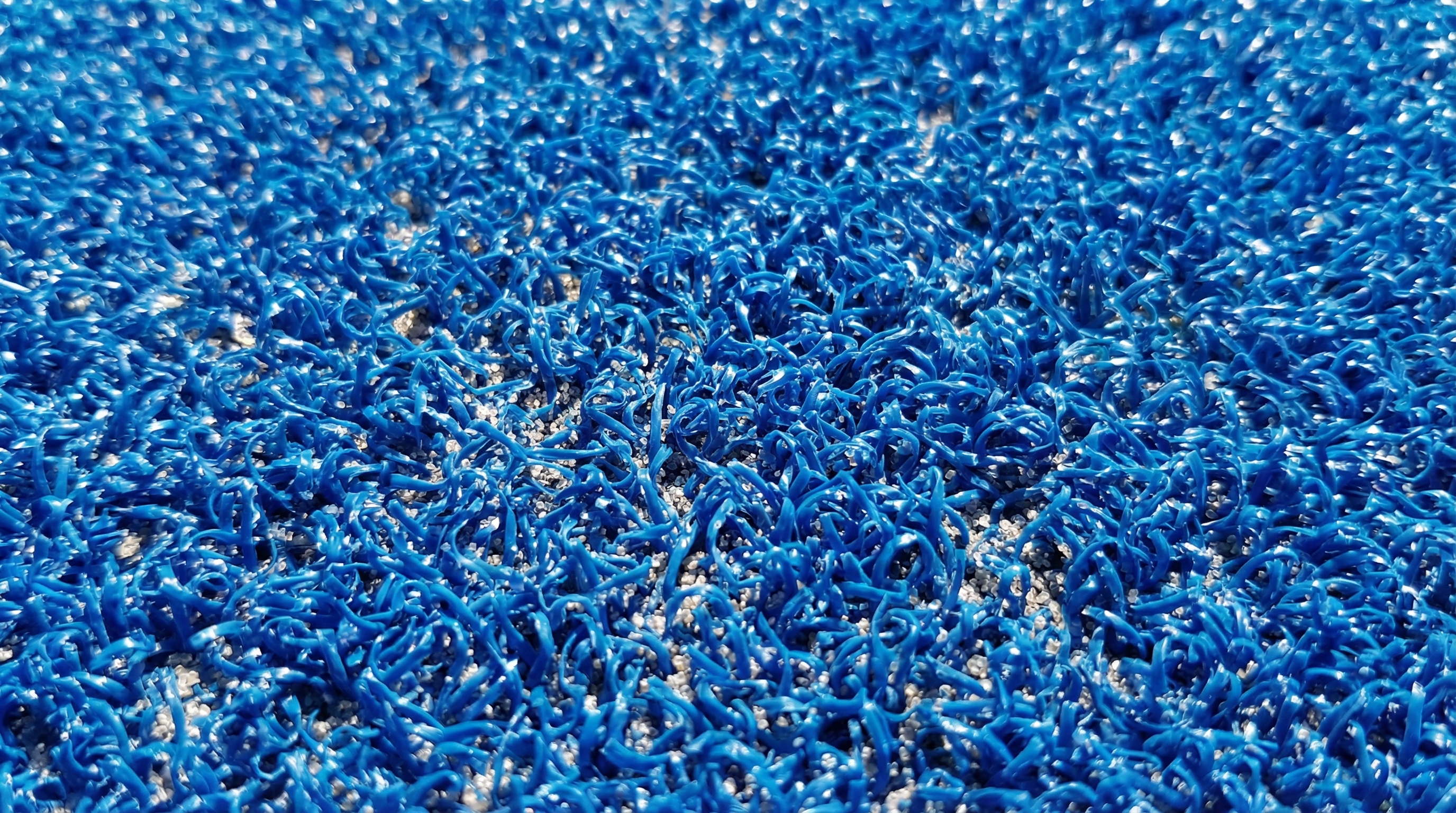
The most common and highly recommended floor for a padel cancha is artificial turf (synthetic grass) because it balances player comfort with ball performance. While porous concrete or wood are permitted, they offer a significantly faster and harsher playing experience.
Why is synthetic turf the industry favorite?
Make no mistake: the combination of synthetic fibers and silica sand is what makes the game accessible and safe for your joints. This surface allows players to slide and pivot without the high impact associated with harder courts.
- Silica sand ensures the grass blades stay upright and durable.
- Blue and green are the most popular colors for visibility.
- Shock absorption reduces the risk of knee and ankle injuries.
- Excellent drainage properties allow for play shortly after rain.
Key Takeaway: Investing in high-quality artificial turf improves player retention by offering a more comfortable and visually appealing surface.
| Surface Type | Speed | Maintenance |
|---|---|---|
| Artificial Turf | Medium | Moderate (Sand Leveling) |
| Porous Concrete | Fast | Low (Cleaning) |
| Cement | Very Fast | Low (Resurfacing) |
A well-maintained turf surface provides the ideal friction levels for both movement and ball spin.
What is the ideal net height for a padel cancha?
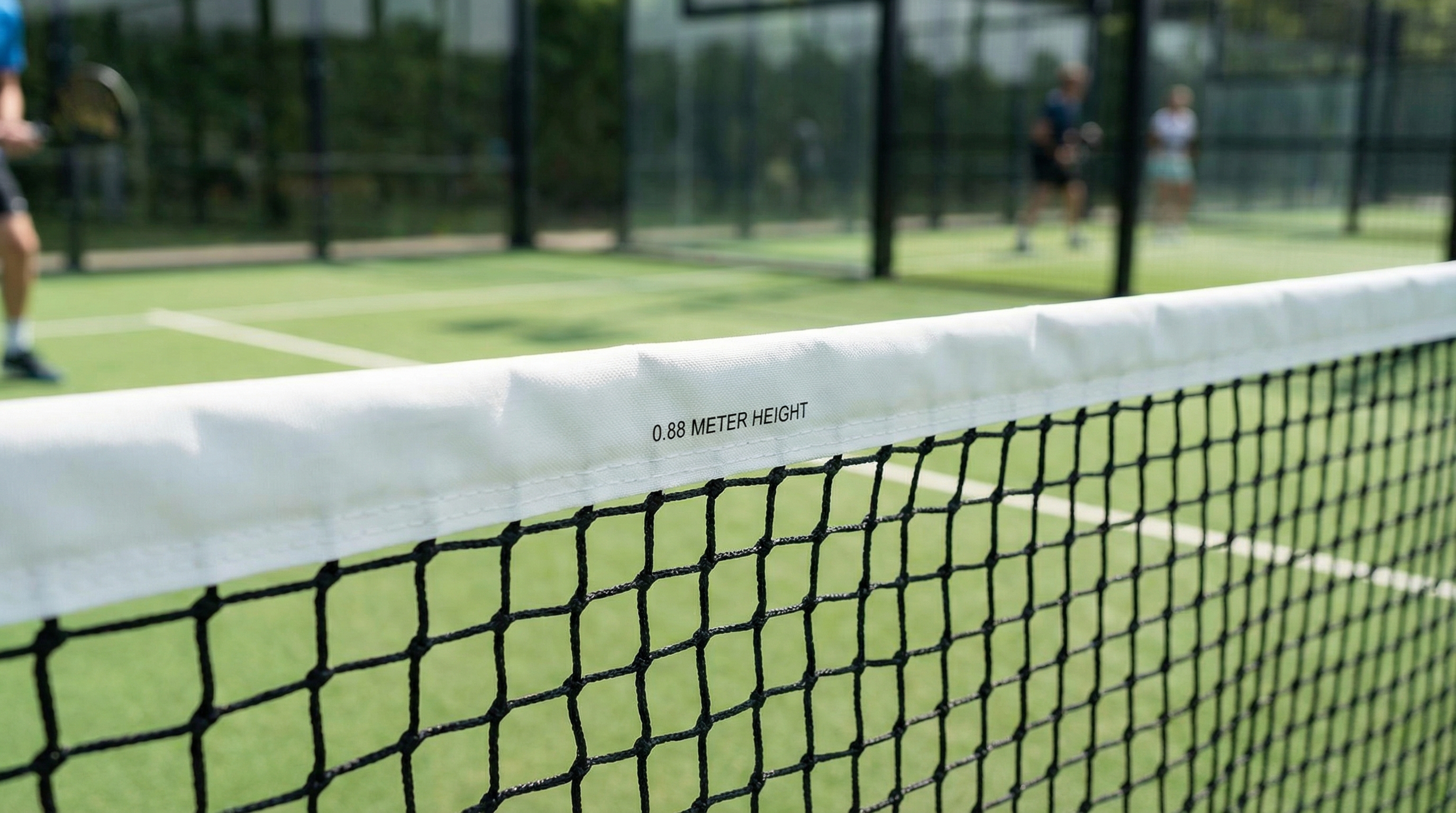
The net of a padel cancha must be 10 meters long and stand at a height of 0.88 meters at the center of the court. At the posts, the height can rise slightly to a maximum of 0.92 meters to allow for natural tension.
How do net bands and posts work?
Think about it: the net is the most contacted part of the court other than the floor, so it must be built to last. The top band must be white and house a hidden cable that allows you to adjust the tension perfectly.
- The top band must be between 5.0 and 6.3 cm wide.
- Net posts must not exceed 1.05 meters in total height.
- The mesh of the net should be small enough to stop the ball.
- Posts must be aligned with the lateral limits of the enclosure.
Key Takeaway: Ensuring the center of the net stays exactly at 88 cm is critical for maintaining the competitive integrity of the sport.
| Part | Specification |
|---|---|
| Center Height | 0.88 Meters |
| Post Height | 0.92 Meters |
| Top Band Color | White |
A properly tensioned net prevents unfair advantages and ensures a consistent challenge for all players.
How do you design the lighting for a padel cancha?
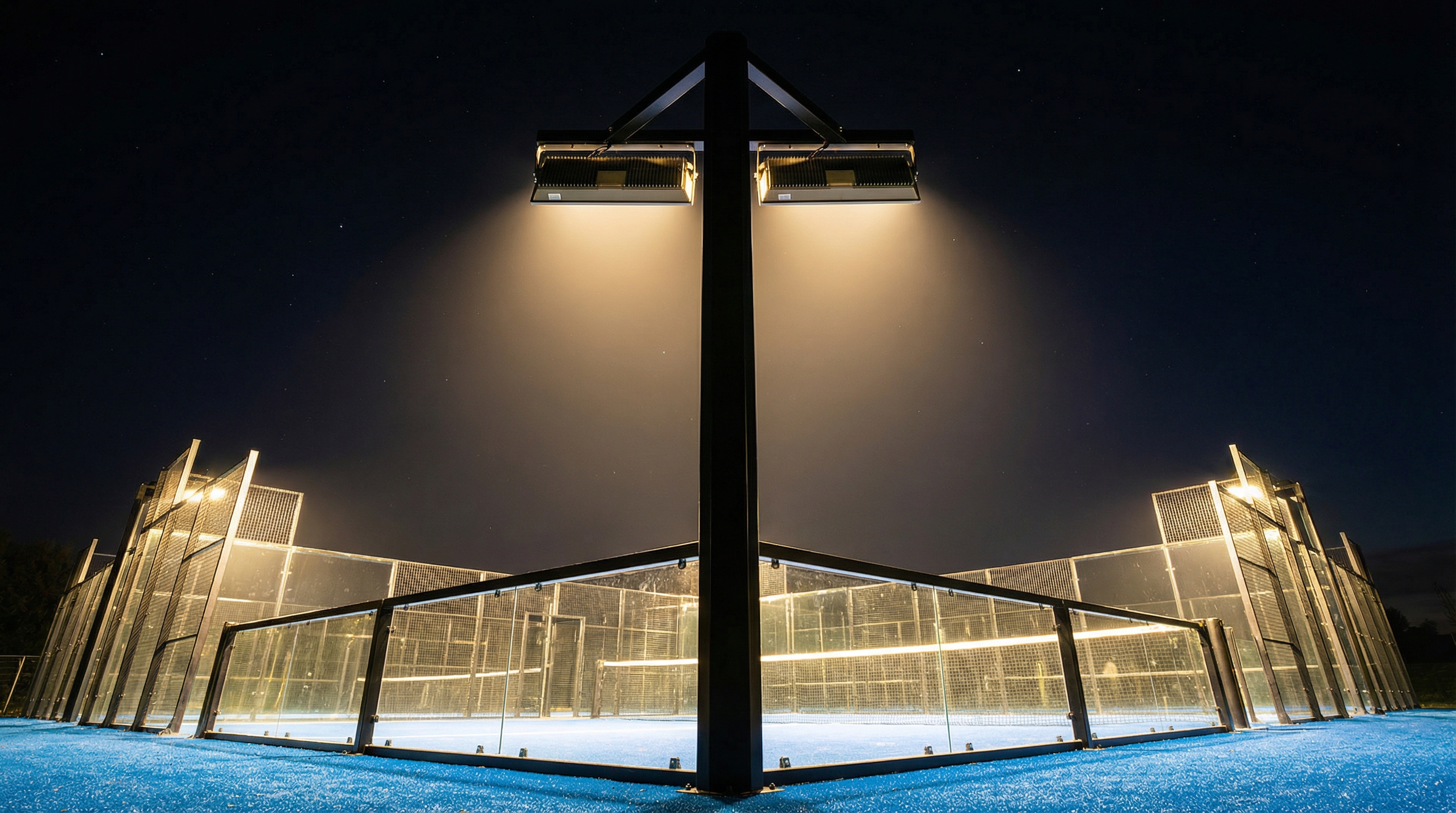
Proper lighting for a padel cancha requires at least four floodlight poles mounted at a minimum height of 6 meters above the playing surface. High-quality LED systems are now the standard because they offer uniform brightness without blinding the players during overhead shots.
What are the lux requirements for competition?
Check this out: the amount of light you need depends entirely on whether you are hosting casual games or professional televised tournaments. Providing 300 to 500 lux ensures that even the fastest shots are visible to players and fans alike.
- Recreational play: 200 Lux minimum.
- Local competition: 300 Lux recommended.
- National/International: 500 Lux mandatory.
- Poles must be placed outside the court’s safety zone.
Key Takeaway: Utilizing LED technology reduces energy costs while providing the flicker-free light necessary for high-speed tracking.
| Setting | Minimum Lux | Height |
|---|---|---|
| Training | 200 | 6m |
| Professional | 500 | 8m+ |
| Indoor | 500 | Ceiling Mount |
Uniform lighting eliminates dangerous shadows that can cause players to lose track of the ball.
What materials are used for the padel cancha structure?
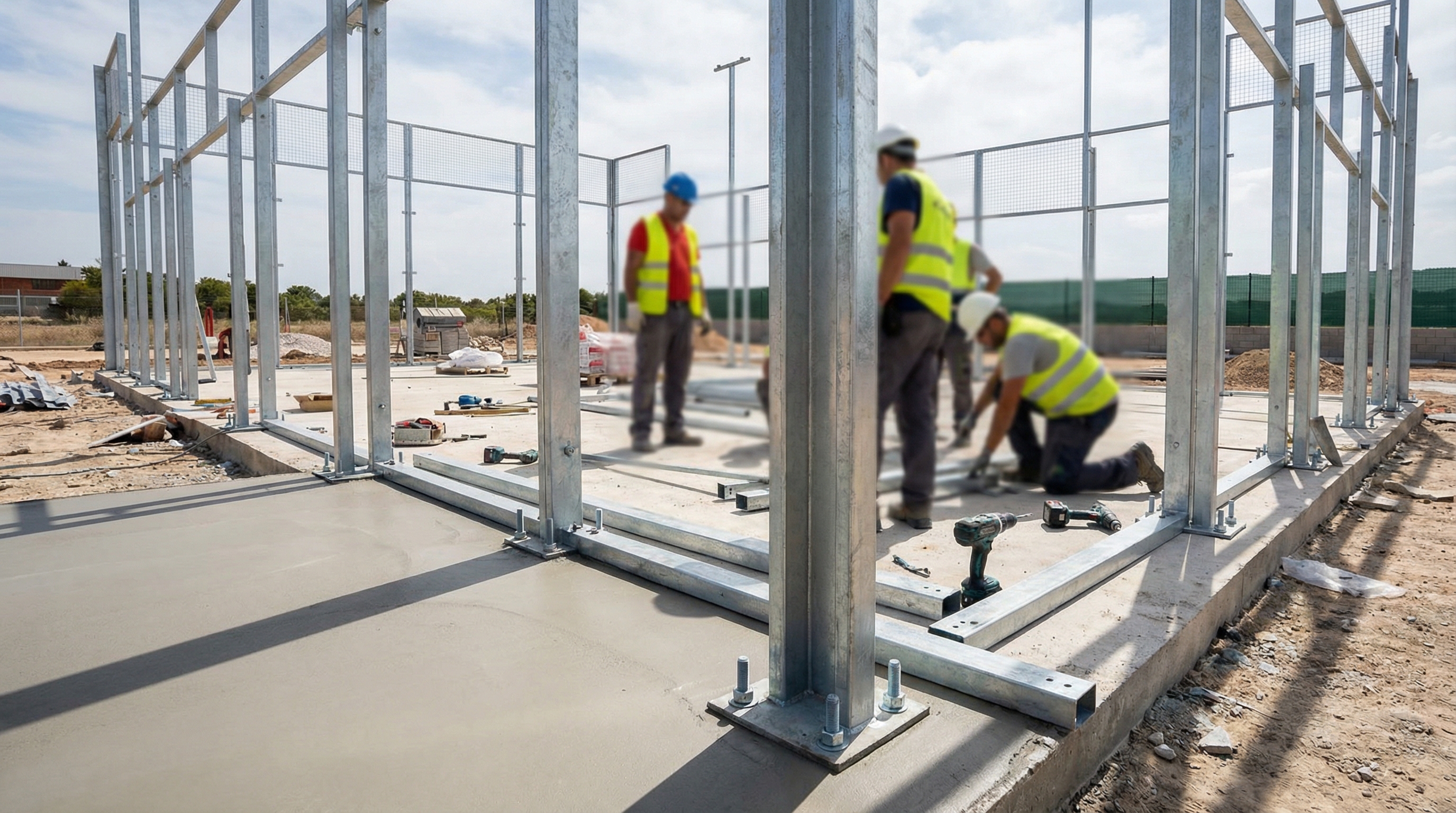
The core structure of a padel cancha consists of a heavy-duty galvanized steel frame, thick tempered glass panels, and electro-welded metallic mesh. These materials must be treated with anti-corrosion coatings to withstand various weather conditions, especially in coastal areas.
Why is tempered glass the standard?
Here is the deal: glass is used instead of solid walls because it provides a “modern” aesthetic and allows for 360-degree spectator viewing. It also offers the most consistent and predictable bounce for the ball during play.
- 10mm to 12mm thickness is required for structural safety.
- Glass panels must meet EN 12150-1 safety standards.
- The steel frame provides the necessary rigidity for the glass.
- Metallic mesh must have openings between 5cm and 7cm.
Key Takeaway: A high-quality Padel Structure ensures longevity and minimizes the risk of structural failure or glass breakage.
| Material | Component | Standard |
|---|---|---|
| Galvanized Steel | Frame/Pillars | Powder Coated |
| Tempered Glass | Back/Side Walls | 10-12mm thick |
| Steel Mesh | Lateral Sections | Electro-welded |
Using certified materials protects your investment and provides a professional feel to your sports club.
Can you build a panoramic padel cancha for events?
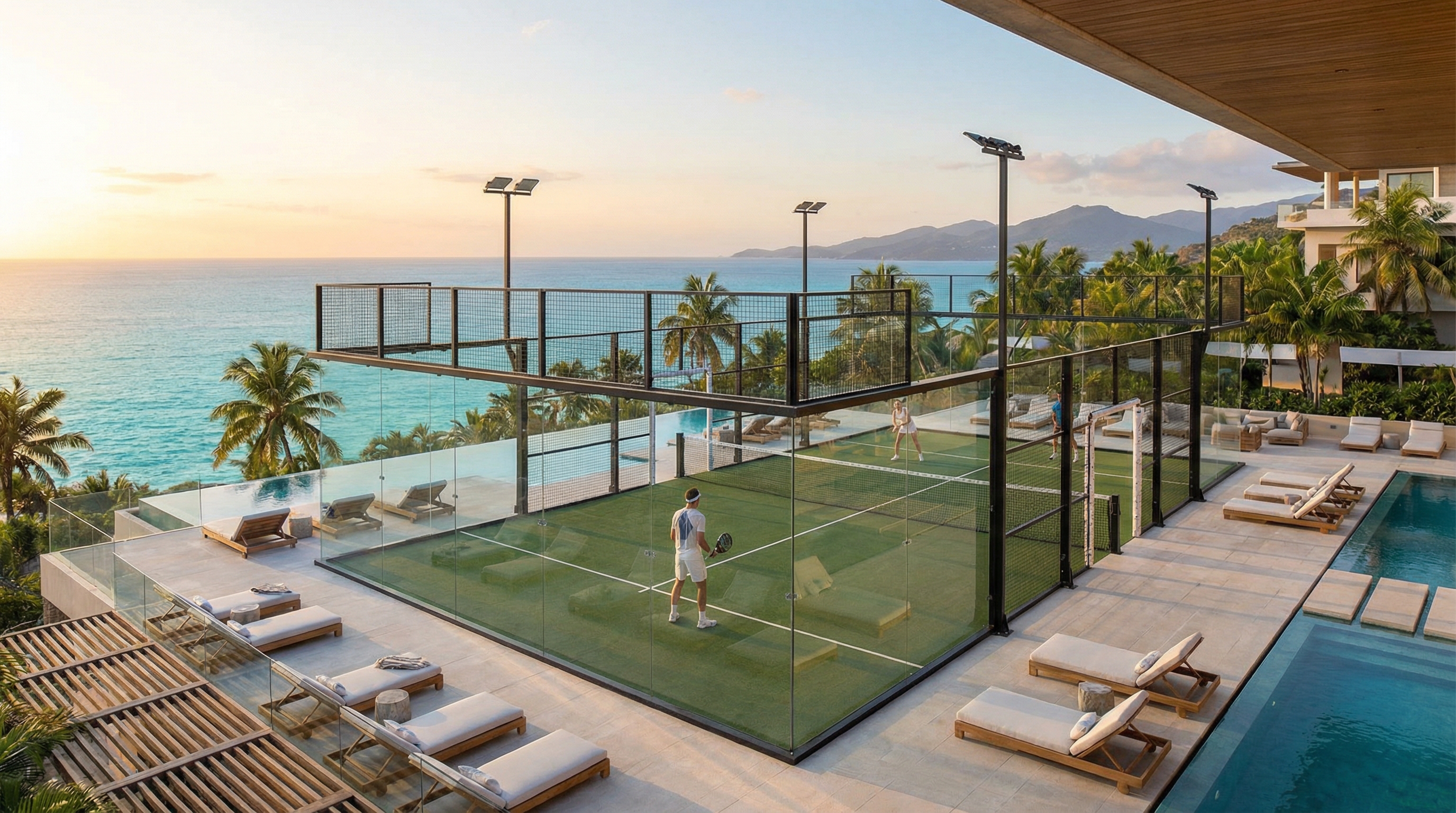
A panoramic padel cancha is a premium version of the court that removes the vertical steel pillars from the back and corners. This design uses thicker, reinforced glass to provide an unobstructed view for spectators and television cameras.
What makes panoramic courts special?
The best part? You get a 360-degree view of the action, which significantly increases the commercial and entertainment value of your facility. These courts are often the centerpiece of luxury clubs and major tournament venues.
- Corner pillars are replaced by specialized glass connectors.
- Enhanced aesthetics appeal to high-end memberships.
- Unobstructed views are perfect for social media filming.
- Reinforced 12mm glass provides superior durability.
Key Takeaway: A Panoramic Padel Court is the gold standard for clubs wanting to host professional events or luxury experiences.
| Feature | Standard Court | Panoramic Court |
|---|---|---|
| View | Partially Blocked | 100% Clear |
| Structure | Steel Corner Pillars | Glass-to-Glass |
| Appeal | Functional | Luxury/Event Focus |
While standard courts are efficient for training, panoramic designs offer the best spectator experience.
How to prepare the ground for a padel cancha?
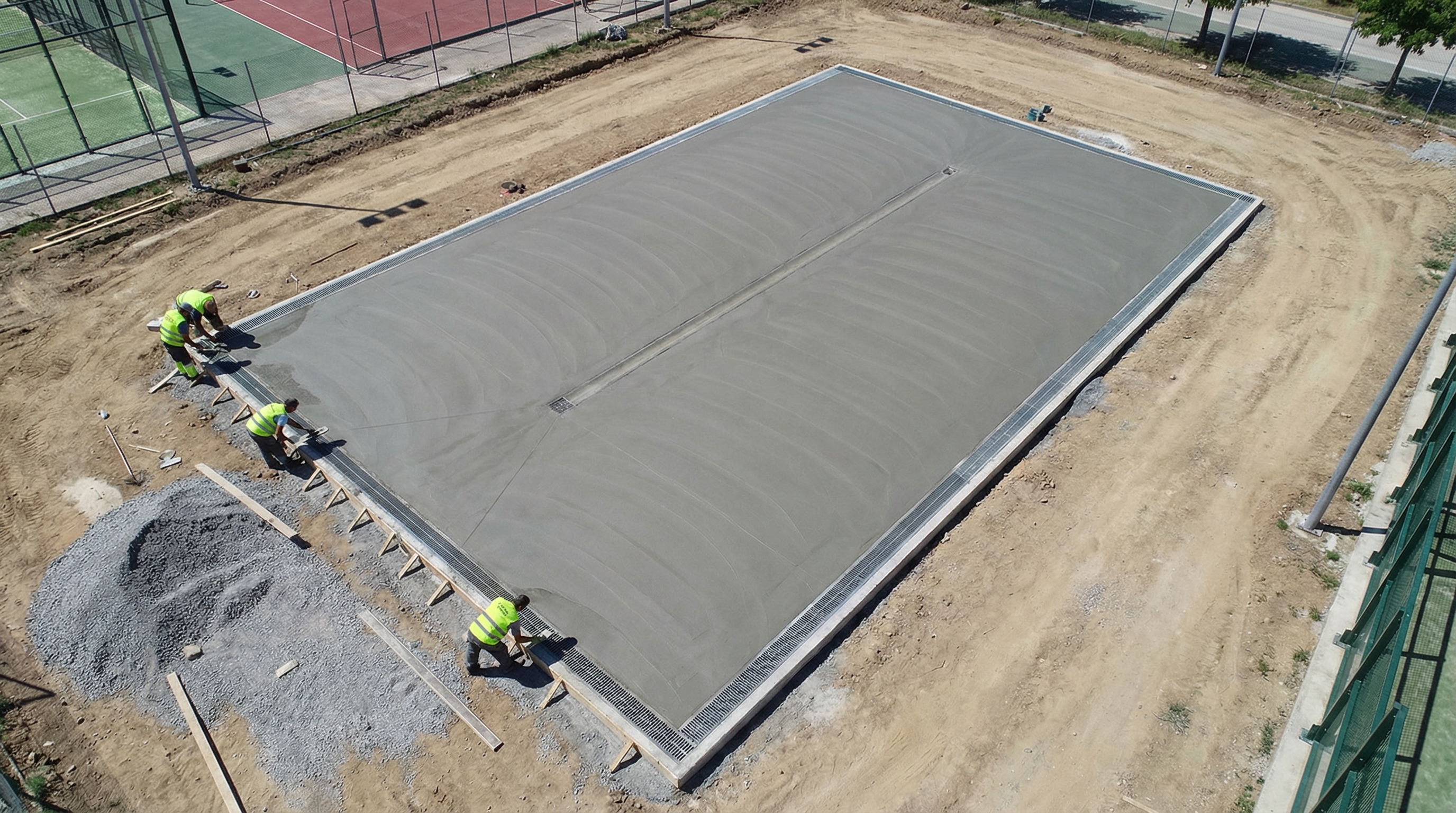
Preparing the ground for a padel cancha requires the construction of a perfectly level concrete or asphalt slab that serves as the foundation. This base must include an integrated drainage system to prevent water from pooling under the artificial turf.
Why is orientation important for the slab?
Think about it: if you build your court facing the wrong direction, the sun will blind players during the most popular morning and evening hours. A North-South longitudinal axis is the recommended orientation for all outdoor installations.
- The slab must have less than 3mm of deviation over 3 meters.
- Porous concrete is excellent for natural water drainage.
- A 1% slope is necessary for non-draining surfaces.
- The sub-base must be compacted to prevent future cracks.
Key Takeaway: Proper foundation work in the industry prevents the turf from wrinkling and the glass panels from shifting over time.
| Base Requirement | Specification |
|---|---|
| Planarity | <3mm deviation |
| Orientation | North-South |
| Drainage | Porous or 1% slope |
A stable foundation is the most critical step in ensuring the long-term safety of your court structure.
Where can I see successful padel cancha project cases?
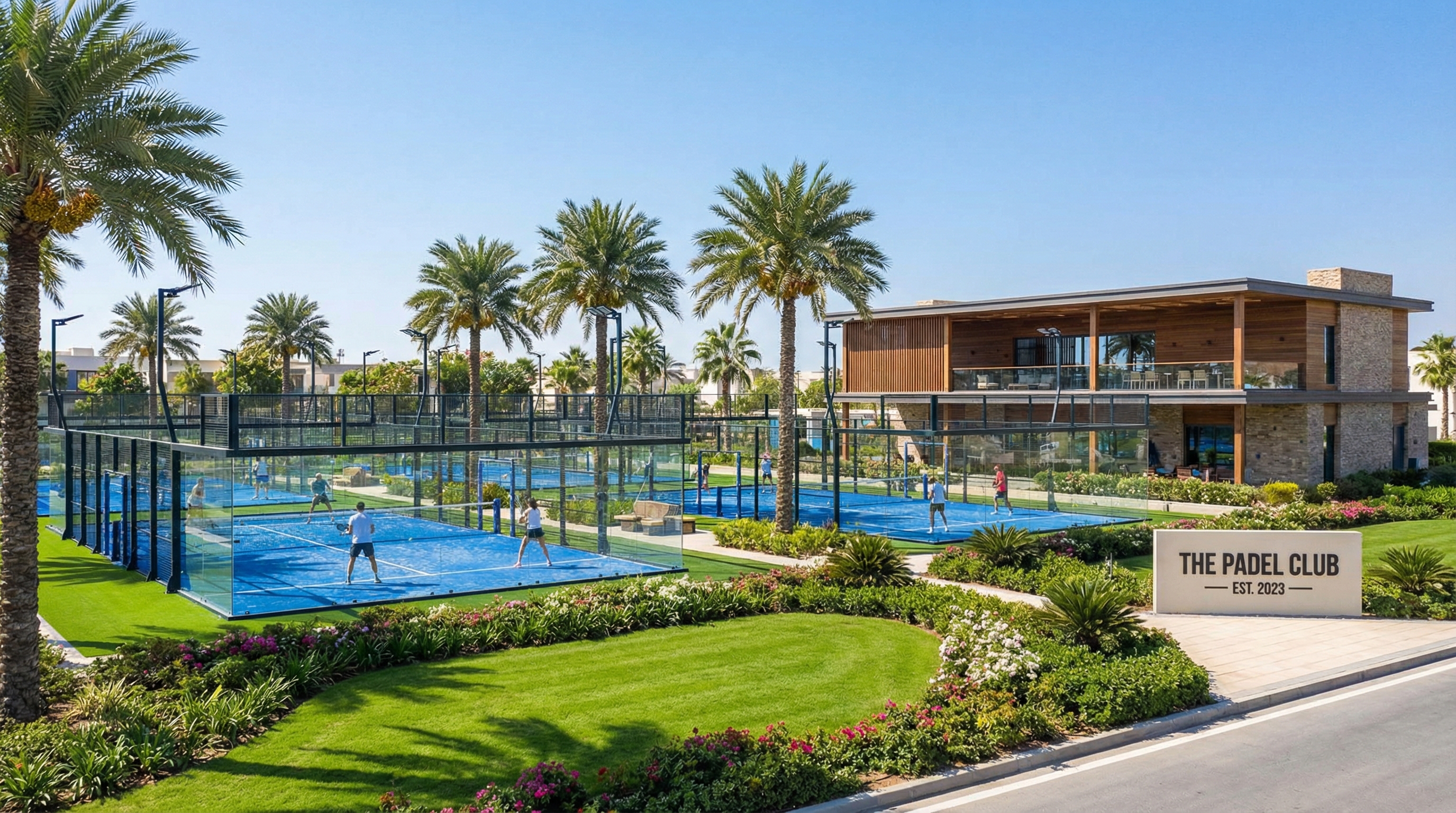
Reviewing real-world padel cancha project cases allows you to see how different clubs have customized their courts to fit unique environments. From rooftop installations to luxury beach resorts, these cases provide inspiration for your own project.
How do case studies help your planning?
Check this out: by looking at previous successes, you can identify which color schemes and structural options best suit your brand and target audience. It also helps you understand the return on investment for premium features like panoramic glass.
- Visualizing color combinations (e.g., black frame with blue turf).
- Learning how to maximize space in small urban areas.
- Understanding the maintenance needs of different climates.
- Seeing how safety zones are integrated into the club layout.
Key Takeaway: Analyzing a Case study helps you avoid common pitfalls and ensures your court matches your specific business goals.
| Project Type | Key Benefit |
|---|---|
| Urban Club | High density/Revenue per sqm |
| Resort Court | Luxury appeal/Guest attraction |
| Private Home | Privacy/Convenience |
Real-world examples prove that a well-designed court becomes a high-traffic hub for any facility.
Conclusion
Building a professional court is a strategic investment that requires a deep understanding of dimensions, materials, and official regulations. Whether you choose a standard design or a panoramic show-court, focusing on quality components ensures a safe and engaging experience for all players. If you are ready to transform your space with a world-class sports facility, contact us today to start your journey.
FAQ
Can I build a padel cancha in my backyard if I have enough space?
Yes, provided you have at least 200 square meters for the court plus an additional 2-meter safety zone around the perimeter. You should also check local zoning laws for structural permits regarding glass walls and lighting poles.
What’s the best way to maintain the artificial turf of a padel cancha?
The best method is regular brushing and sand redistribution to prevent the fibers from flattening. You should brush the court at least once every two to four weeks depending on the frequency of play to ensure a consistent bounce.
Can I use a regular tennis net for my padel cancha?
No, a tennis net is both too wide and too high for a regulation padel court. Padel nets are specifically 10 meters long and must be set to 0.88 meters at the center, which is lower than a standard tennis net.
What’s the best orientation for an outdoor padel cancha to avoid sun glare?
A North-South longitudinal orientation is the industry standard to prevent direct sunlight from blinding players during sunrise and sunset. This ensures that the sun’s path is perpendicular to the players’ field of vision.
Can I customize the color of the padel cancha structure and turf?
Yes, you can customize the steel frame using various RAL powder-coating colors and choose turf colors like blue, green, or terracotta. This allows you to align the court’s aesthetic with your club’s branding or the surrounding environment.