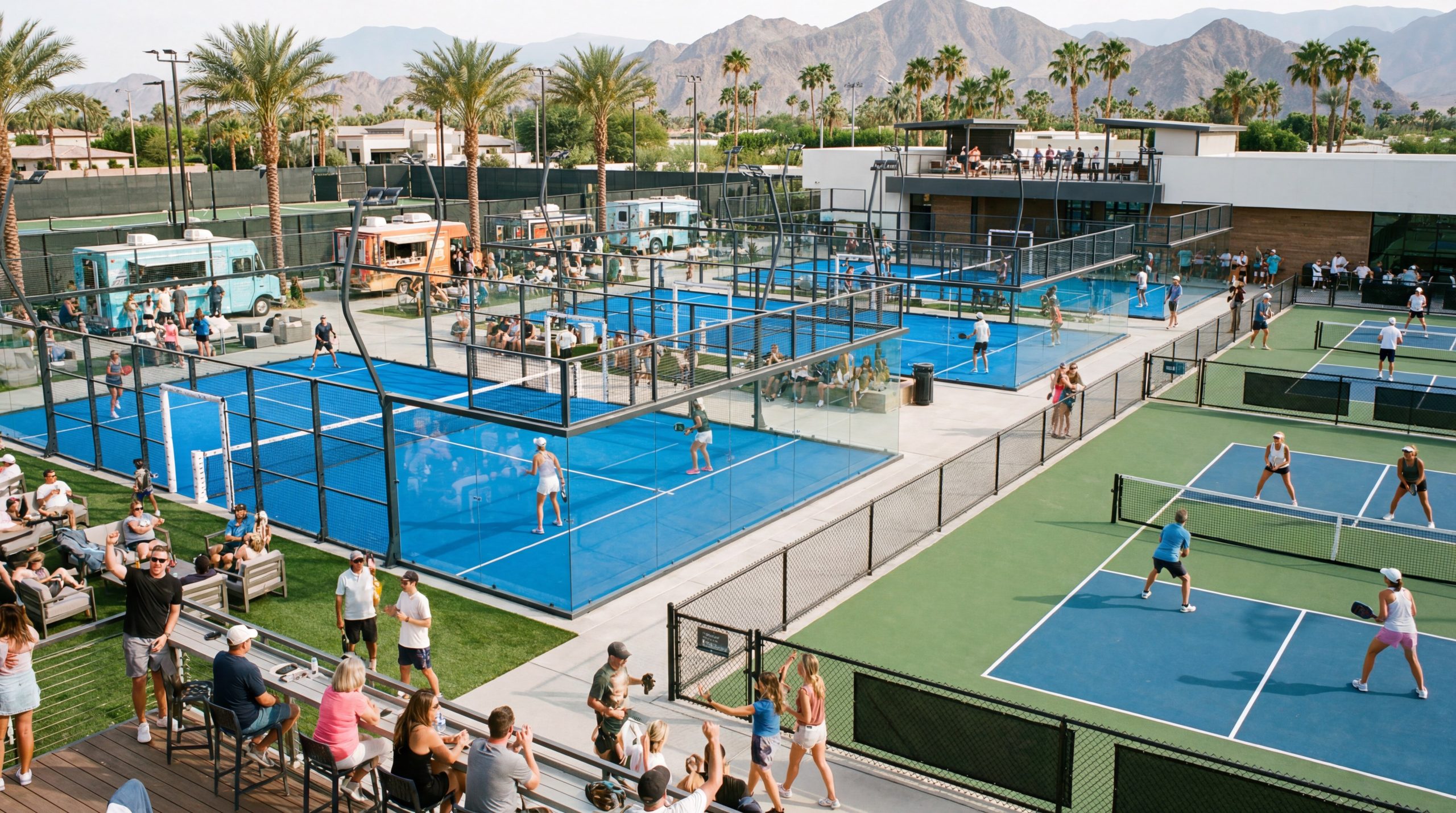
Pickleball and padel are specialized racket sports that use compact courts and solid paddles to deliver a highly social and accessible athletic experience. You may notice that traditional tennis courts often sit empty, representing wasted space and stagnant revenue for your facility. This lack of engagement agitates your bottom line as maintenance costs persist while player interest shifts toward more dynamic, “mini-tennis” formats. The solution is to integrate professional pickleball and padel courts into your project to maximize player density and community participation.
What defines pickleball and padel in the modern era?
Modern pickleball and padel are fast-growing racket sports that emphasize doubles play and strategic positioning over the raw power of traditional tennis. While they share similarities in court size, they offer distinct physical experiences that appeal to different demographics. You will find that these sports are transforming underutilized spaces into high-traffic social hubs globally.
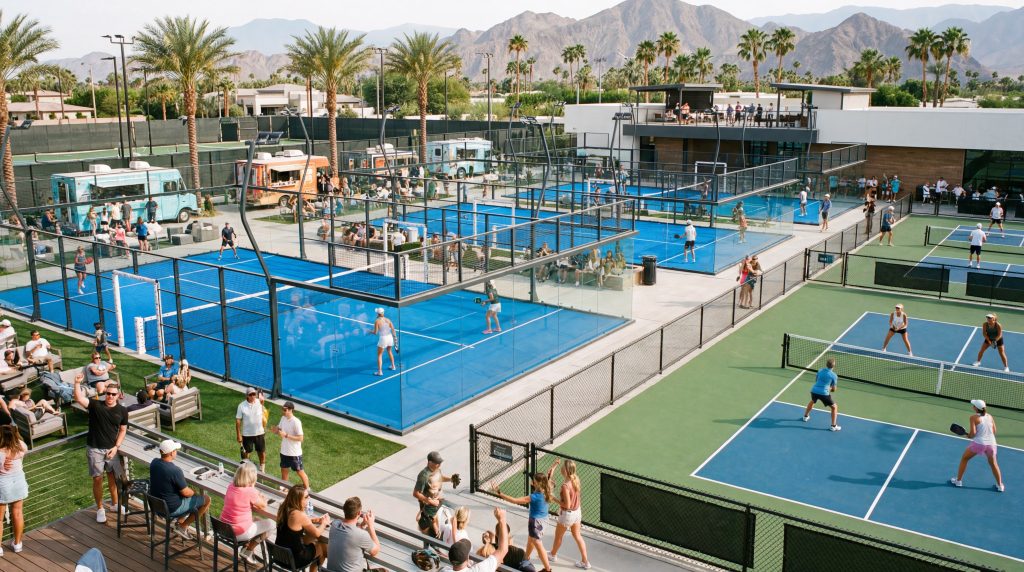
Why are these sports trending globally?
These sports are gaining traction because they lower the barrier to entry for beginners while remaining challenging for elite athletes. Look: the compact nature of the game makes it easier to learn, leading to immediate player satisfaction.
- Higher Density: You can fit more players in a smaller footprint.
- Social Focus: Doubles play is the standard, fostering strong community bonds.
- Ease of Play: Solid paddles make ball contact much simpler than stringed rackets.
Building these courts allows you to cater to a broader range of ages and skill levels. This diversity ensures your facility remains busy throughout the day, not just during peak hours.
| Feature | Pickleball | Padel |
|---|---|---|
| Players | Singles or Doubles | Primarily Doubles |
| Paddle Type | Thin, honeycomb core | Thick, EVA foam core |
| Global Core | North America | Europe and Middle East |
The data confirms that smaller courts lead to higher social engagement and better facility utilization rates.
Key Takeaway: Pickleball and padel are the future of social sports, offering a superior space-to-revenue ratio for any modern athletic facility.
How do pickleball and padel vary in gameplay style?
Pickleball relies on a “non-volley zone” to control pace and strategy, whereas padel utilizes active glass walls to allow for dramatic rebounds during a point. You must understand that while both use solid paddles, the tactical approach to the two games is fundamentally different.
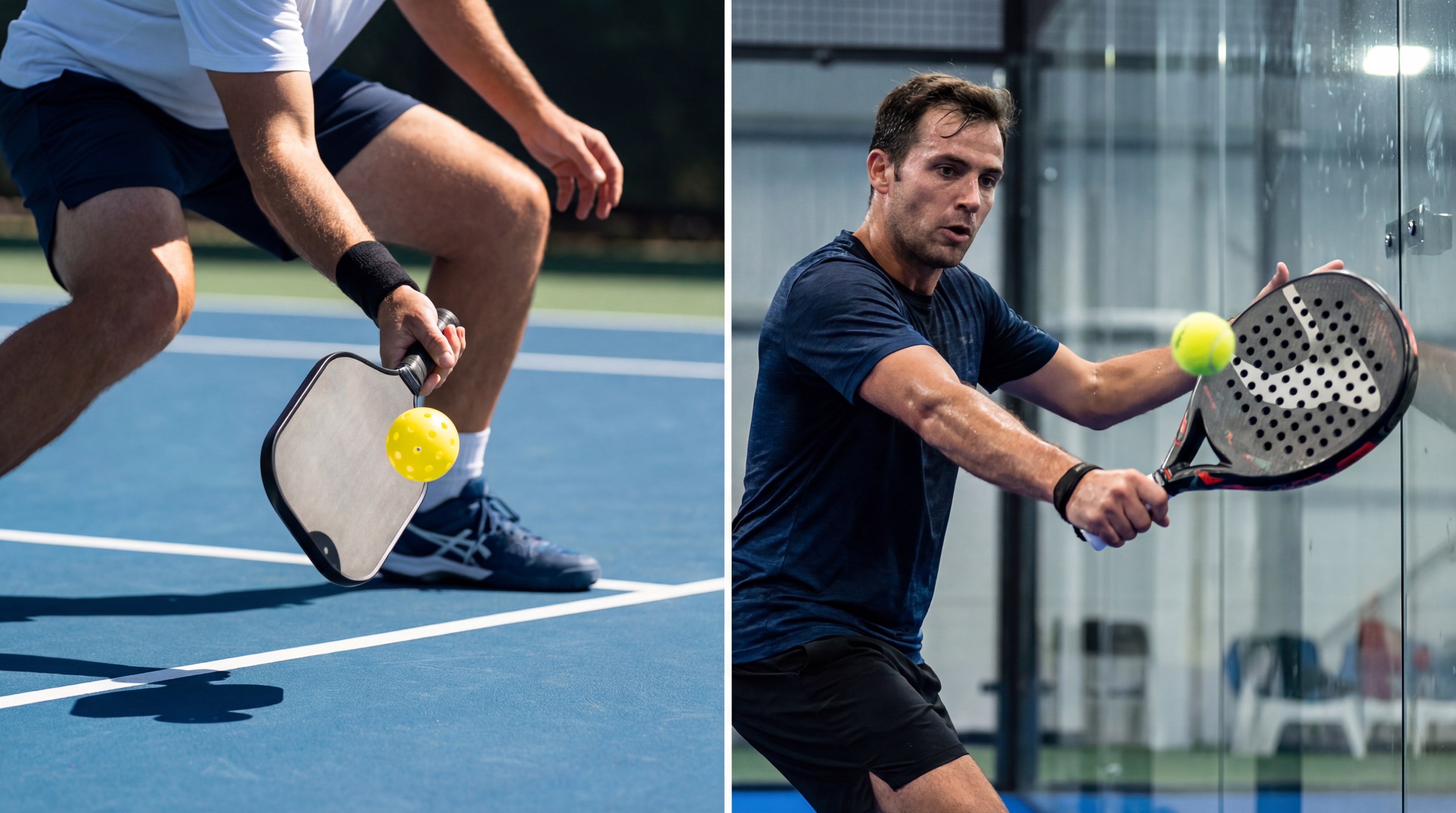
What makes the “Kitchen” and “Walls” unique?
The tactical boundaries define the soul of each sport and how players interact with the environment. The best part? These unique rules prevent the “power game” from dominating, making points longer and more exciting.
- The Kitchen: This 7-foot zone in pickleball prevents players from smashing at the net.
- The Glass: Padel walls act as a second chance, keeping the ball in play after it passes the player.
- The Bounce: Pickleball uses a slower, plastic ball, while padel uses a pressurized felt ball.
You will notice that padel requires more 360-degree awareness due to the wall play. Conversely, pickleball demands incredible hand-eye coordination and patience during “dink” rallies at the net.
| Game Element | Pickleball Strategy | Padel Strategy |
|---|---|---|
| Primary Goal | Controlling the Kitchen line | Controlling the net and rebounds |
| Ball Physics | Low bounce, air-resistant | High bounce, wall-active |
| Movement | Lateral and forward-back | Multidirectional and wall-anticipatory |
Understanding these mechanics is essential for designing courts that meet the specific tactical needs of each athlete.
Key Takeaway: While pickleball focuses on precision and patience near the net, padel incorporates the entire enclosure to create a 3D playing experience.
What are the size needs for pickleball and padel?
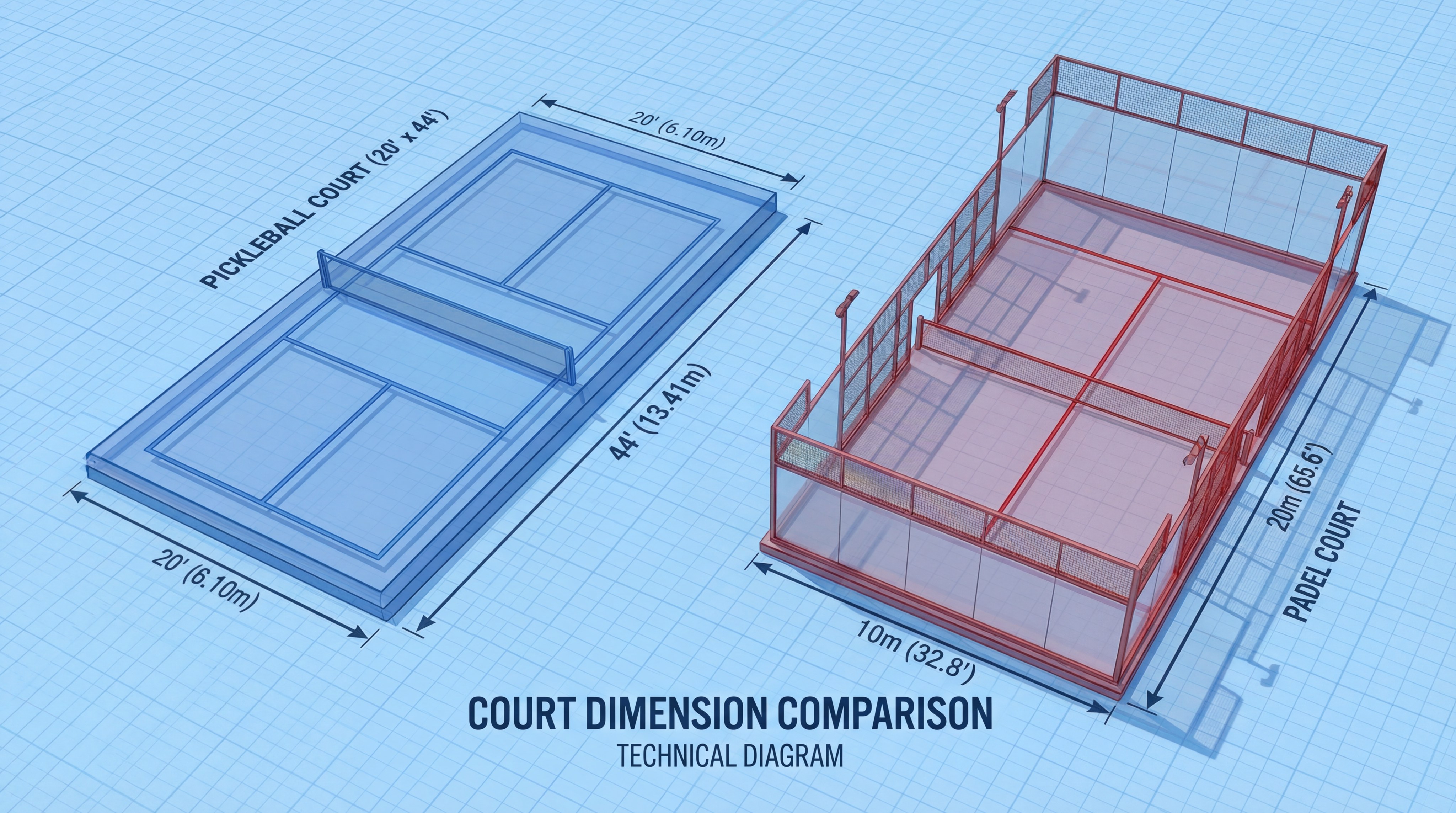
Standard dimensions for pickleball and padel vary significantly, with pickleball requiring a 20’x44′ area and padel needing a larger 10m x 20m footprint. You need to plan your site layout carefully to ensure there is enough clearance for safe play and spectator viewing.
Can you fit multiple courts in one space?
One of the biggest advantages of these sports is the ability to multiply your player capacity within a single tennis court’s footprint. Here is why: a standard tennis court can be converted into four pickleball courts or two padel courts.
- Pickleball Footprint: 30′ x 60′ total area recommended per court.
- Padel Footprint: 10m x 20m internal dimensions with additional structural clearance.
- Vertical Space: Padel requires at least 6 meters of height for lobs.
Maximizing your square footage allows for higher revenue through court rentals. You can host 16 players on pickleball courts in the same space that previously only held 4 tennis players.
| Dimension | Pickleball Court | Padel Court |
|---|---|---|
| Internal Area | 6.1m x 13.4m | 10m x 20m |
| Net Height | 34 inches (center) | 88 centimeters (center) |
| Total Slab | ~1,800 sq ft | ~2,300 sq ft |
The efficiency of these layouts makes them the perfect choice for urban environments where land is at a premium.
Key Takeaway: Padel courts require nearly double the surface area of pickleball, but both offer much higher player density than traditional tennis.
Which surfaces work for pickleball and padel courts?
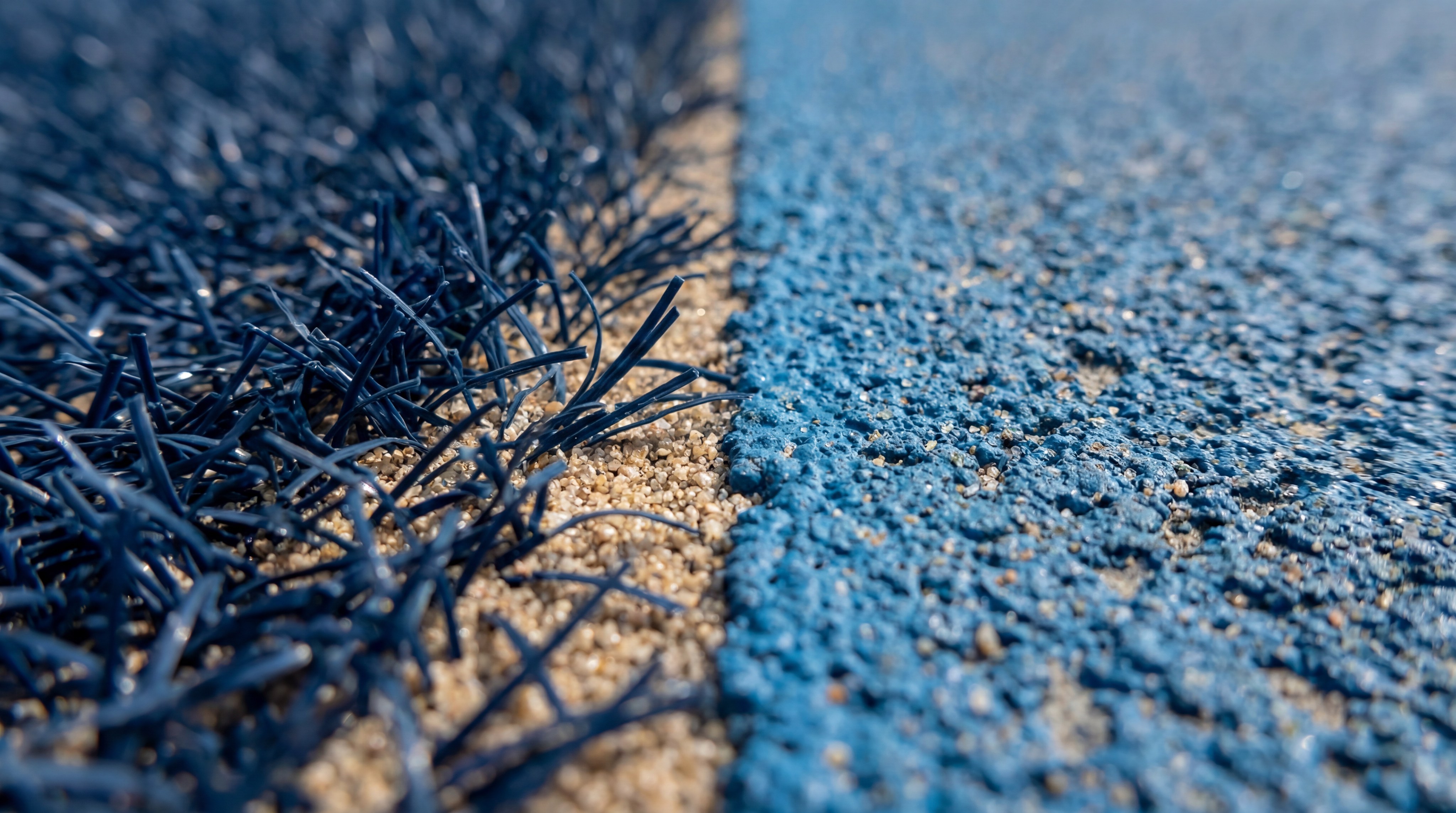
Pickleball requires a hard acrylic surface for a consistent plastic ball bounce, while padel utilizes specialized artificial turf with sand infill for player movement. You cannot swap these surfaces, as the ball physics and player footwork are completely incompatible between the two.
Why is turf critical for player safety?
The artificial turf used in padel is designed specifically to allow players to slide safely while maintaining a consistent ball rebound. Look: using a hard court for padel would lead to joint injuries and unpredictable ball behavior off the glass.
- Monofilament Fibers: Provides durability and a natural feel underfoot.
- Silica Sand Infill: Stabilizes the turf and ensures the ball bounces correctly.
- Acrylic Coatings: Used for pickleball to provide a “true” bounce for the plastic ball.
Proper surface selection reduces maintenance costs and improves the longevity of your investment. You must ensure the sub-base is perfectly level to prevent “dead spots” in either sport.
| Material | Best For | Maintenance |
|---|---|---|
| Padel Grass | Padel | Brushing and sand top-ups |
| Hard Acrylic | Pickleball | Periodic cleaning and resurfacing |
| Modular Tiles | Home Pickleball | Very low maintenance |
Choosing the right surface ensures a professional-grade experience that keeps players coming back to your facility.
Key Takeaway: Surface compatibility is non-negotiable; always use textured turf for padel and a hard, multi-layered acrylic for pickleball.
How is the pickleball and padel structure engineered?
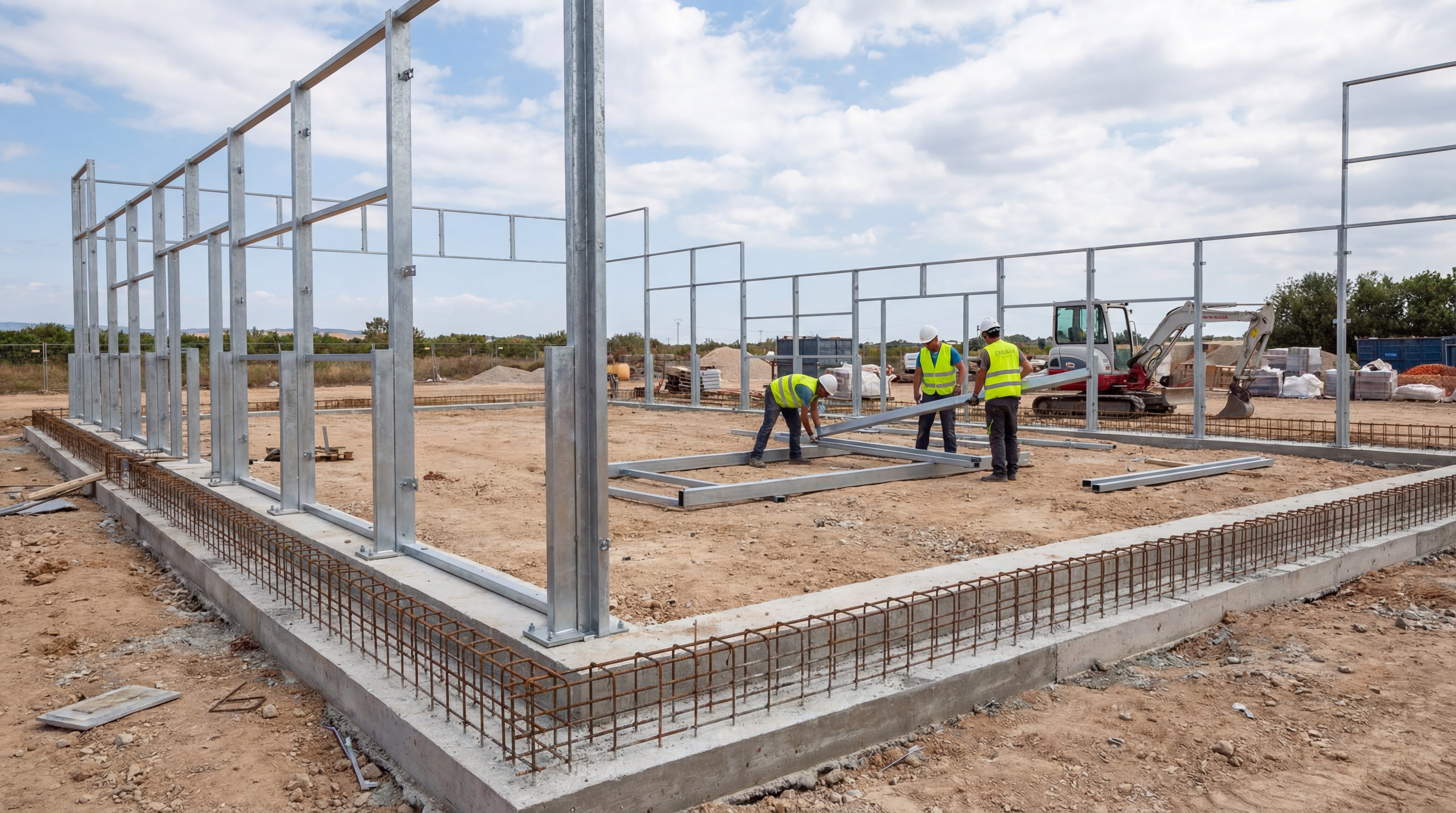
Building a pickleball and padel facility involves different structural demands, ranging from simple net posts to complex galvanized steel cages for padel. You must account for the significant weight of glass panels and wind loads when engineering a padel structure.
What foundation is best for heavy glass?
A reinforced concrete ring beam is essential for padel courts to prevent the structure from shifting or the glass from cracking. The best part? A properly engineered foundation ensures the court remains safe and playable for over 20 years.
- Galvanized Steel: Protects the frame from rust and environmental wear.
- Modular Design: Allows for faster assembly and lower labor costs on-site.
- Mesh Panels: Must be electro-welded to maintain tension over time.
Pickleball structures are much simpler, usually requiring only high-quality net posts and perimeter fencing. However, you should consider acoustic fencing for pickleball to manage the distinct “pop” sound of the ball.
| Component | Pickleball Needs | Padel Needs |
|---|---|---|
| Foundation | 4″ Concrete Slab | Reinforced Ring Beam |
| Framework | Perimeter Fence | Load-bearing Steel Cage |
| Durability | High | Extreme (Glass Support) |
Investing in a robust structure from the start prevents costly structural failures and safety liabilities down the road.
Key Takeaway: Padel construction is a civil engineering project requiring a heavy-duty steel cage, while pickleball is primarily focused on surfacing and fencing.
Why do pickleball and padel use different wall types?
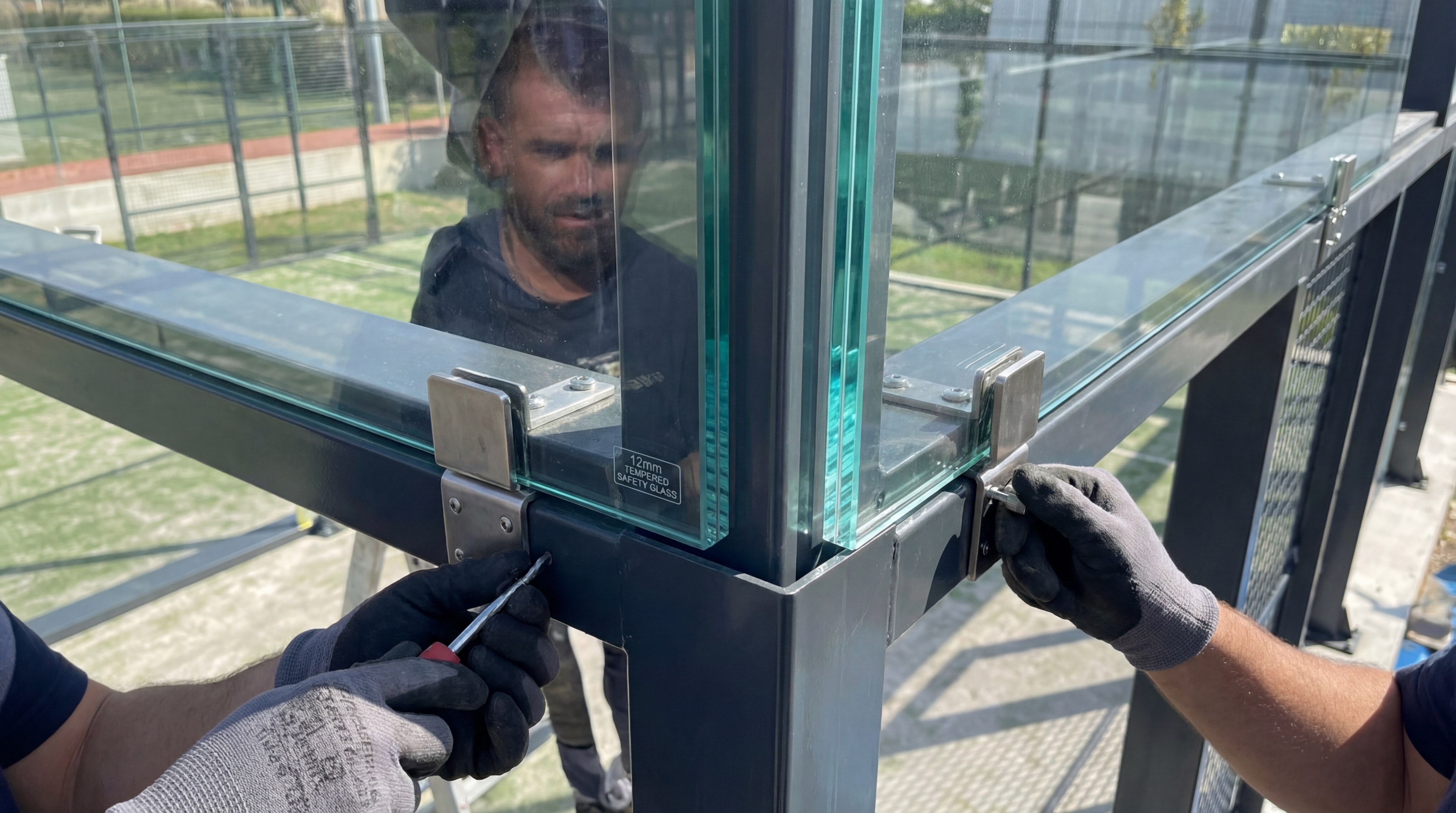
Padel requires high-impact tempered glass for active ball play, whereas pickleball boundaries are typically mesh fencing used only for ball containment. You will find that the quality of the walls directly impacts the professional feel and safety of your sports facility.
How does glass impact the viewing experience?
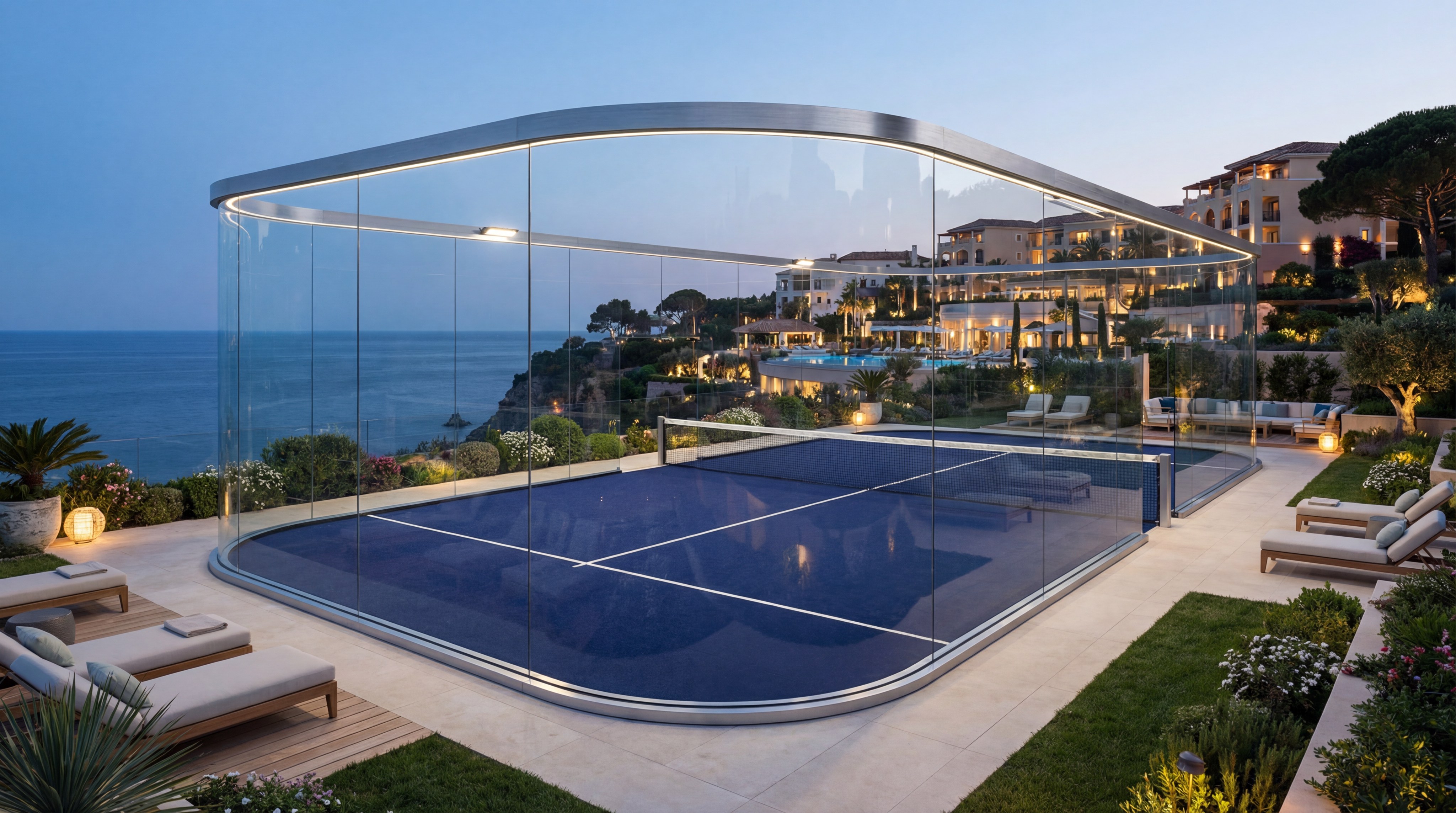
Using panoramic glass walls in padel provides an unobstructed view for spectators, which is ideal for competitive clubs and tournaments. Here is why: it creates a “stadium” feel that attracts more visitors and allows for better video broadcasting.
- 12mm Tempered Glass: The industry standard for safety and consistent rebound.
- Anti-Explosion Tech: Ensures the glass crumbles safely if it ever breaks.
- Acrylic vs. Glass: Glass is preferred for its clarity and superior ball physics.
In pickleball, you might use solid walls for noise reduction, but mesh is the standard for ventilation and cost-efficiency. If you build in a residential area, acoustic walls are a wise investment to maintain neighbor relations.
| Wall Type | Primary Purpose | Material |
|---|---|---|
| Padel Walls | Active Game Rebounds | Tempered Safety Glass |
| Pickleball Walls | Ball Containment | Mesh or Sound Barriers |
| Visuals | High Transparency | High Airflow |
The wall system is the most visible part of a padel court and must be installed with precision to avoid uneven seams.
Key Takeaway: Padel walls are an integral part of the game’s physics, necessitating high-grade tempered glass that is not required for pickleball.
What lighting is needed for pickleball and padel?
Professional pickleball and padel installations require uniform LED floodlighting that achieves between 300 and 750 lux depending on the competition level. You need flicker-free lighting to ensure players can track fast-moving balls and to allow for high-quality video recording of matches.
How do you eliminate shadows on the court?
Proper pole positioning and light distribution are the only ways to prevent dangerous shadows that can interfere with a player’s reaction time. Look: poor lighting is one of the most common complaints in amateur sports facilities.
- LED Efficiency: Reduces operational costs while providing instant-on capability.
- Pole Height: 6-meter poles for padel are typically integrated into the structure.
- Uniformity: A score of >0.7 ensures there are no dark spots on the turf.
High-intensity LEDs allow your courts to operate well into the evening, significantly increasing your total booking hours. This is the simplest way to boost the ROI of your sports project.
| Metric | Recreational | Professional |
|---|---|---|
| Lux Level | 300 Lux | 750 Lux |
| Uniformity | 0.5 | 0.7 |
| Color Temp | 5000K | 5000K |
Advanced lighting systems can be controlled via smartphone apps, allowing you to automate your facility’s energy usage.
Key Takeaway: Professional LED lighting extends your operating hours and is critical for player safety and high-end facility branding.
Which gear is required for pickleball and padel users?
Equipment for these sports consists of solid paddles and specific balls, with padel using pressurized felt balls and pickleball using perforated plastic balls. You should provide a pro-shop or rental station because players often want to test different weights and materials before purchasing.
What is the difference in racket tech?
Padel rackets are significantly thicker and feature holes to reduce air resistance, while pickleball paddles are thin and flat. The best part? Modern carbon fiber materials make both types of equipment incredibly lightweight and durable.
- EVA Foam Core: Used in padel rackets to absorb impact and provide “pop.”
- Honeycomb Core: Used in pickleball paddles for control and a soft touch.
- Ball Holes: Pickleball balls have 26-40 holes to stabilize flight in the wind.
Offering high-quality rental gear is an easy way to generate additional revenue. It also lowers the barrier for new players who aren’t ready to invest in their own equipment yet.
| Equipment | Pickleball Specs | Padel Specs |
|---|---|---|
| Racket Thickness | 10mm – 16mm | 38mm Standard |
| Ball Weight | 22 – 26 grams | 56 – 59 grams |
| Grip Length | 4.5″ – 5.5″ | ~4.7″ |
Using the correct ball is vital for the surface; a padel ball on an acrylic court will bounce too high for standard pickleball play.
Key Takeaway: Although both sports use solid paddles, the technology is tailored to the specific court dimensions and ball physics of each game.
How do you manage pickleball and padel construction?
Effective management of pickleball and padel construction requires a five-step process: site prep, foundation, surfacing, structural assembly, and final testing. You must work with experienced contractors to avoid the common pitfalls that lead to drainage issues or structural instability.
What are the common installation errors?
The most frequent mistakes involve poor sub-base preparation which leads to surface cracking within the first year of operation. Here is why: the weight of the padel glass requires a much more stable foundation than a standard backyard patio.
- Poor Drainage: Standing water will ruin your artificial turf and acrylic layers.
- Glass Misalignment: Even a few millimeters of error can cause the ball to bounce incorrectly.
- Inadequate Concrete: Using the wrong grade of concrete leads to premature wear.
Following a strict construction roadmap ensures that your facility opens on time and stays within budget. Always request technical drawings and material certifications from your supplier before starting the pour.
| Phase | Duration | Critical Check |
|---|---|---|
| Site Prep | 7-10 Days | Leveling and Drainage |
| Foundation | 10-14 Days | Concrete PSI Rating |
| Assembly | 3-5 Days | Glass and Net Tension |
Professional project management reduces your stress and ensures the final product meets international tournament standards.
Key Takeaway: Success in construction depends on a solid foundation and precise structural alignment to ensure long-term court durability.
Is investing in pickleball and padel profitable now?
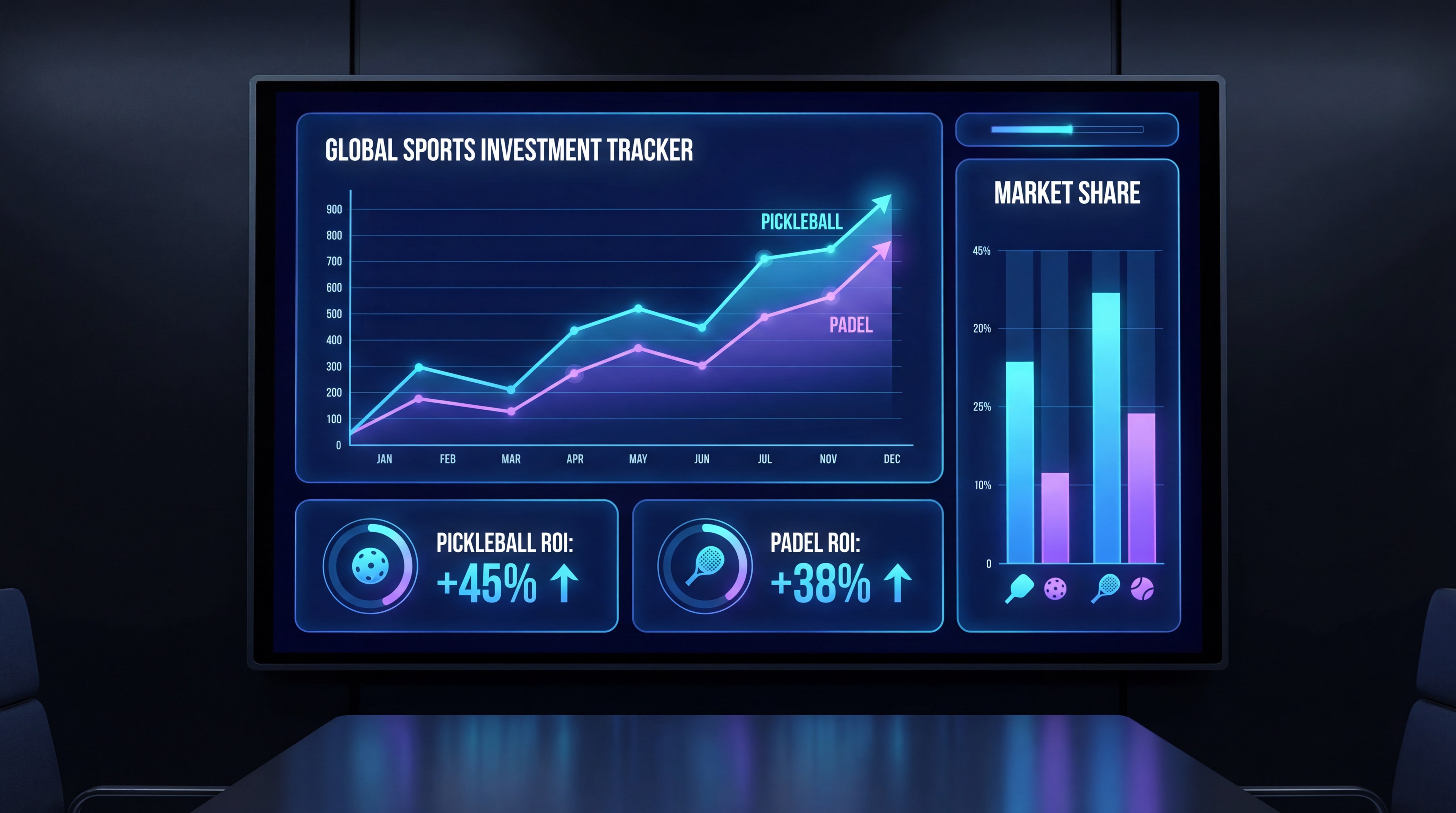
Investing in these sports is highly profitable because they offer a faster return on investment through high player throughput and social club memberships. You will find that the high demand for court time allows you to charge premium rates, especially in urban areas with few existing facilities.
How fast is the typical payback period?
Most well-managed facilities see a full return on their initial investment within 18 to 36 months. Look: the combination of low maintenance costs and high hourly rental fees makes this one of the safest bets in sports real estate.
- Court Rentals: Generate consistent hourly revenue from 4 players at once.
- Membership Fees: Create a predictable monthly cash flow for your club.
- Ancillary Income: Profit from coaching, tournaments, and pro-shop sales.
While the upfront cost for padel is higher than pickleball, the premium rental rates often lead to a similar ROI timeline. Diversifying your facility with both sports protects you against market shifts and appeals to a wider audience.
| Metric | Pickleball Investment | Padel Investment |
|---|---|---|
| Initial Cost | $25k – $45k | $45k – $75k |
| Maintenance | Very Low | Low |
| Payback Time | 18 – 24 Months | 24 – 36 Months |
Strategic planning and local market analysis are the keys to maximizing your facility’s profit potential from day one.
Key Takeaway: The high social engagement and player density of these sports ensure a rapid and sustainable return on investment for developers.
*
Building a world-class sports facility requires precision engineering and the highest quality materials. At SuperbPadel, we eliminate the middleman by providing factory-direct padel courts that save you 30% on procurement costs without sacrificing international standards. Our commitment to OEM customization and global installation support makes us the trusted partner for over 500 successful projects worldwide. Don’t leave your project to chance—contact us today to receive a custom quote and technical consultation from our expert engineering team.
*
Frequently Asked Questions
Can I build a padel court on an existing tennis court?
Yes, you can typically fit two standard padel courts or four pickleball courts on the footprint of one traditional tennis court, making it an excellent renovation option.
What’s the best way to handle noise for pickleball?
The best way is to install acoustic fencing and encourage the use of noise-reducing paddles, which can lower decibel levels by up to 50% for residential areas.
Can I install these courts myself?
While pickleball surfacing can be a DIY project for some, padel courts require professional installation due to the extreme weight and safety requirements of the glass panels.
What’s the best height for an indoor facility?
For both sports, a minimum ceiling height of 6 meters (20 feet) is recommended to allow for lobs and high-clearance shots during competitive play.
Can I customize the court colors?
Yes, we offer full OEM support, allowing you to choose custom structure colors and integrate your club’s logo directly into the court design.