
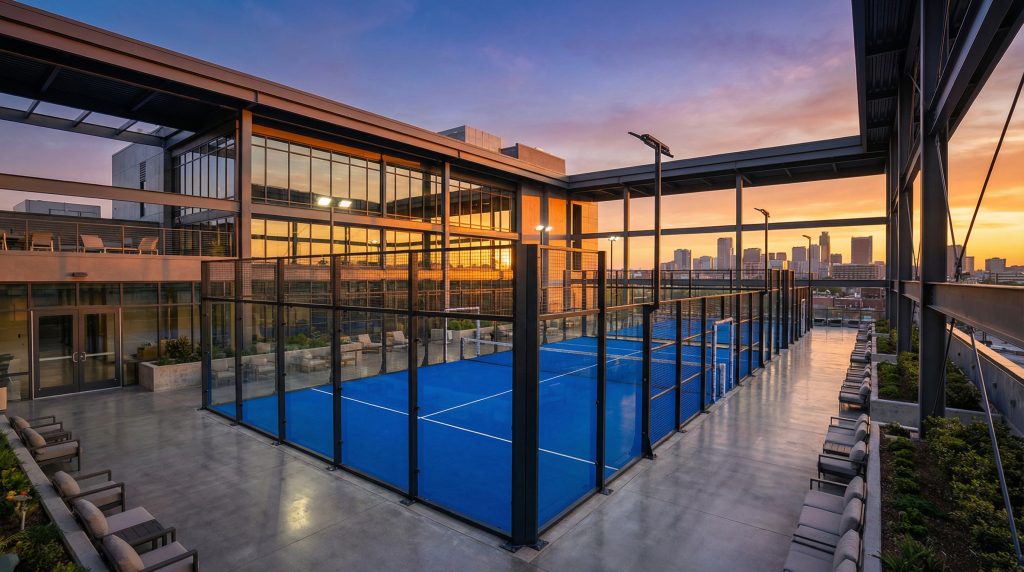
Padel is a fast-paced racquet sport played on an enclosed court roughly one-third the size of a tennis court, utilizing glass walls and metallic mesh as part of the field of play. Many sports enthusiasts find tennis too demanding or squash too isolating, leading to a “participation plateau” where they stop seeing progress or having fun. Traditional racquet sports often have a steep learning curve; you spend more time retrieving balls from the fence than actually playing. This frustration prevents people from staying active and social. Fortunately, whats padel offers the perfect middle ground—a social game that is easy to learn but hard to master. This guide explains the core mechanics and provides a roadmap for building your own professional-grade court.
1. Whats padel and why is it global now?
Padel is the world’s fastest-growing sport because it prioritizes social interaction and long rallies over raw power, making it accessible to players of all ages and skill levels. Unlike tennis, where power serves can end a point instantly, padel’s enclosed environment keeps the ball in play longer.
Where did the game actually start?
The game originated in Mexico but found its spiritual home in Spain and Argentina during the late 20th century. It was designed to fit in smaller residential spaces where a full-sized tennis court was impractical.
Why are celebrities obsessed with it?
High-profile athletes like David Beckham and Serena Williams have championed the sport for its fitness benefits and “addictive” nature. It provides an intense cardiovascular workout without the joint strain associated with larger court sports.
The best part?
You don’t need years of lessons to enjoy your first match.
- Social Focus: Usually played in doubles.
- Accessibility: Short racquets offer better control.
- Engagement: Constant movement and strategy.
Takeaway: Padel’s global explosion is driven by its unique ability to combine high-intensity exercise with a low technical barrier to entry.
2. Whats padel history and its Mexican roots?
The history of padel began in 1969 in Acapulco, Mexico, when Enrique Corcuera created the first “walled” court to prevent balls from escaping into his neighbor’s yard. This necessity-driven invention transformed a simple backyard game into a formalized international sport. If you are looking to build a professional-grade facility, starting with a Standard Padel Court is the most common entry point for club owners.
Who was Enrique Corcuera?
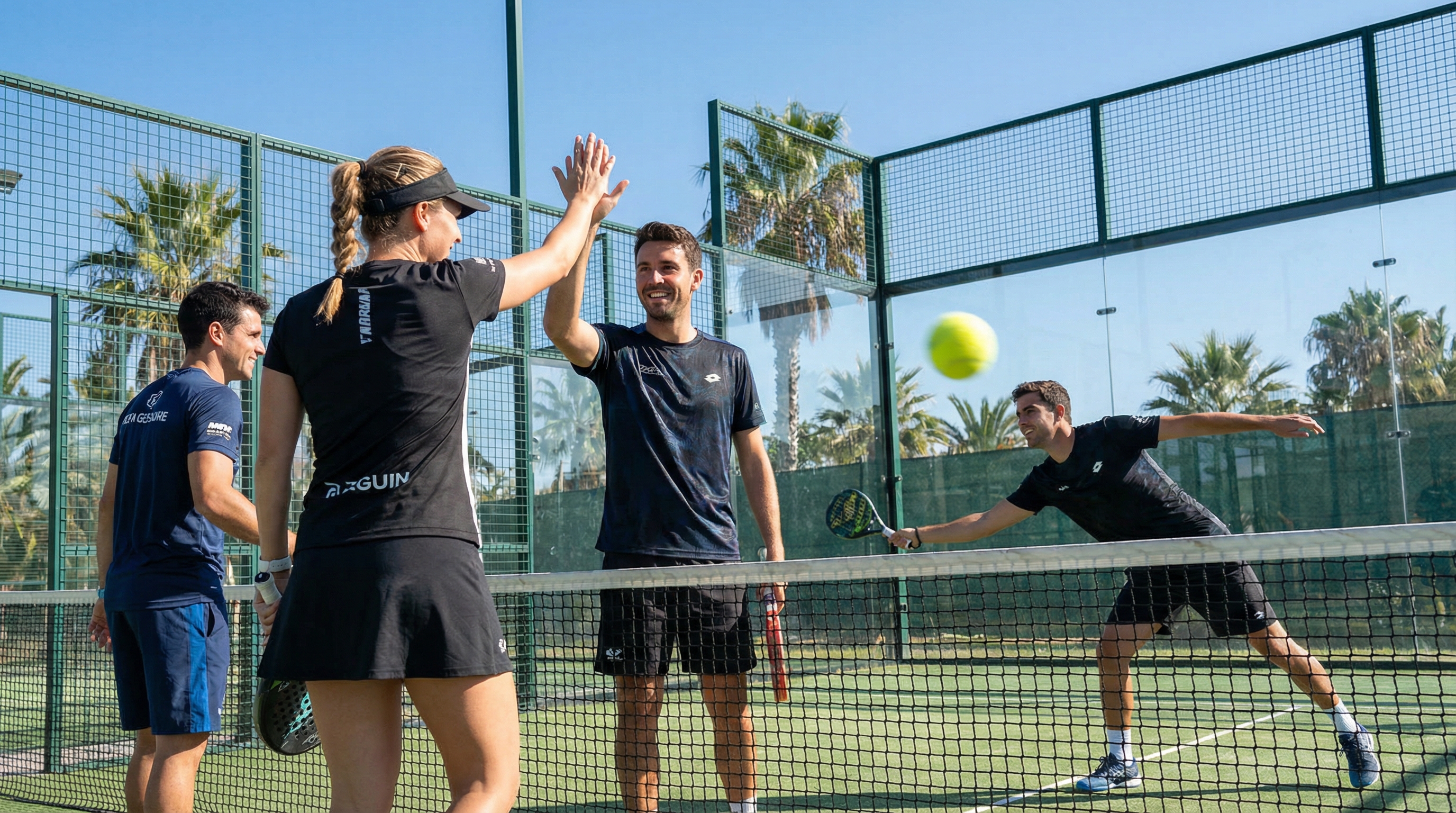
Enrique was a businessman who wanted to play a racquet sport at home but lacked the space for a full tennis court. He built walls around a 20×10 meter area and used wooden paddles to keep the game fast.
How did the first court look?
The original court featured concrete walls and a metallic mesh fence. While modern courts use tempered glass for visibility, the fundamental dimensions established by Corcuera remain the global standard today.
Here is the kicker:
The sport almost remained a local Mexican secret if not for a Spanish Prince visiting the Corcueras.
| Era | Major Development | Impact |
|---|---|---|
| 1969 | Invention in Acapulco | Birth of the “walled” court concept. |
| 1974 | Arrival in Spain | Formalized rules and European expansion. |
| 1991 | First World Cup | Recognition as a competitive global sport. |
Takeaway: The sport was born from a need for space-efficient play, proving that constraints often lead to the best innovations.
3. Whats padel gameplay and core rules?
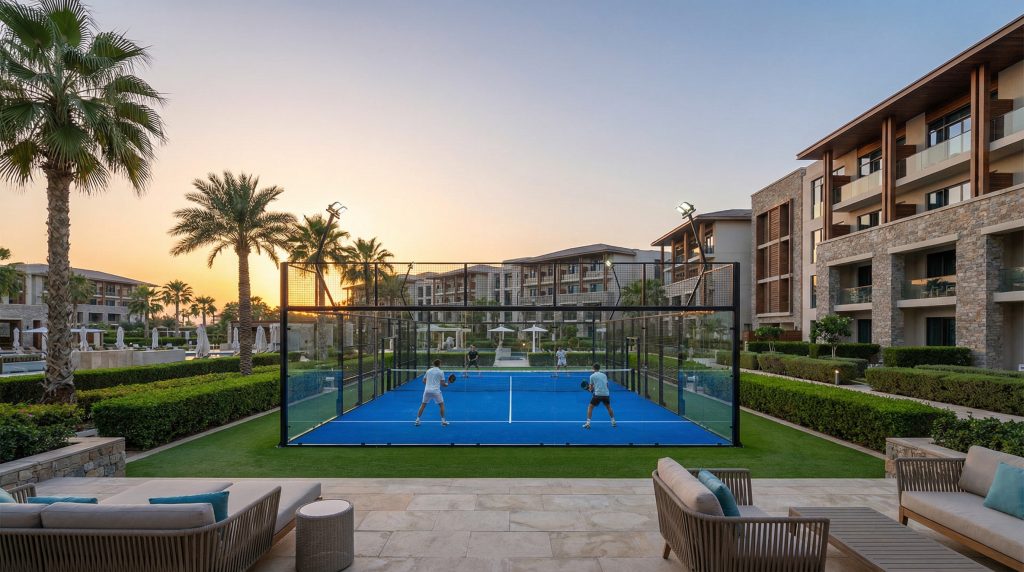
Padel gameplay is defined by its use of the surrounding walls, which allow players to return the ball after it bounces once on the ground and hits the glass. This mechanic turns defensive retreats into offensive counter-attacks, creating a chess-like strategic depth.
How does the scoring system work?
The scoring system is identical to tennis, using 15, 30, 40, and game. Most professional matches are played as the best of three sets, with a tie-break used at six games all.
What makes the service unique?
All serves in padel must be performed underhand and struck at or below waist level. The ball must bounce in the opponent’s service box diagonally across the net to be considered valid.
Can you play off the walls?
Yes, after the ball bounces on the turf, it can hit any number of walls and still be in play. However, if the ball hits the wall before hitting the ground, it is considered out.
Think about it:
The walls aren’t obstacles; they are your teammates.
| Rule Category | Padel Standard |
|---|---|
| Service | Underarm only, below waist level. |
| Scoring | Same as Tennis (15, 30, 40, Deuce). |
| Walls | Ball can be played off glass after one bounce. |
Takeaway: Using the walls isn’t just a rule; it’s a strategic layer that turns defensive positions into offensive opportunities.
4. Whats padel equipment and gear needs?
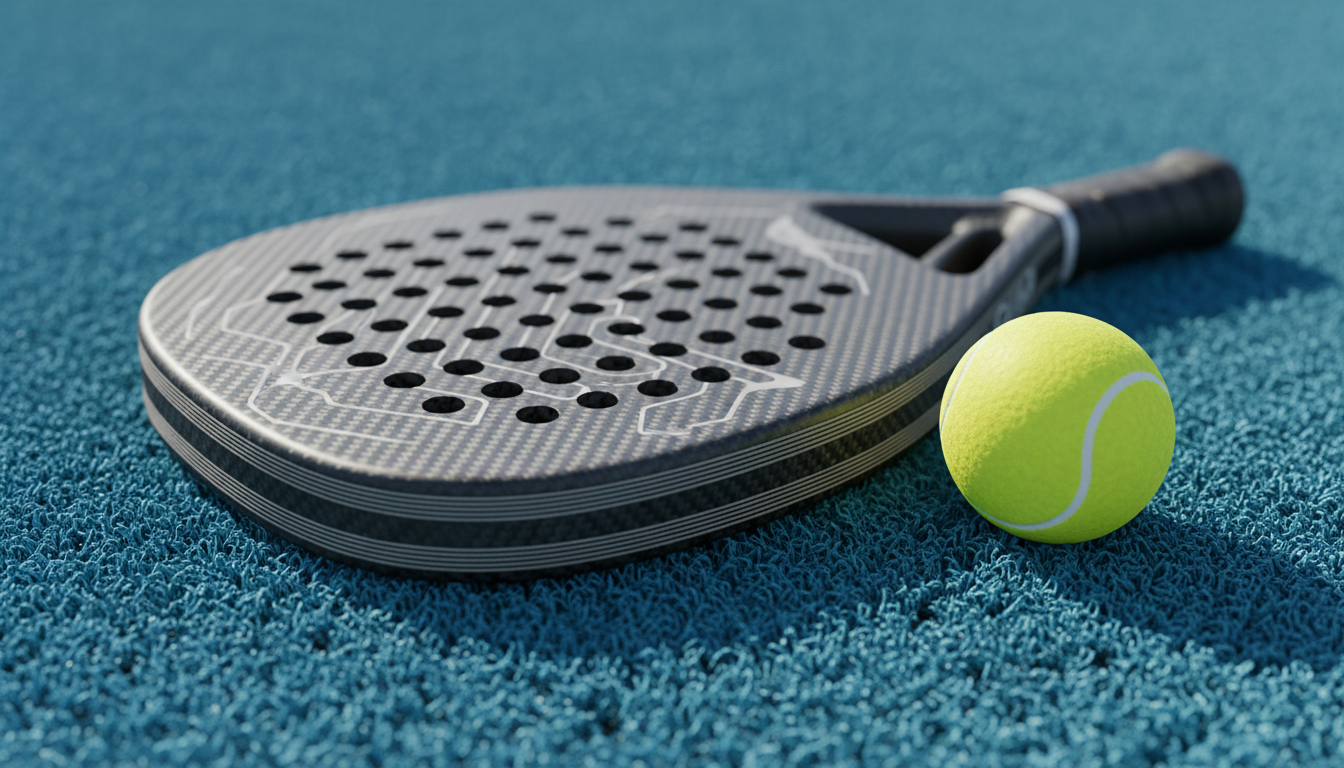
Padel equipment consists primarily of a stringless racquet made of composite materials and balls that have slightly less pressure than standard tennis balls. The core of the court itself relies on a robust Padel Structure to support the impact of players and the weight of the glass panels.
Why use a stringless racquet?
Unlike tennis racquets, padel racquets are solid with holes drilled through the face. This design, usually featuring an EVA foam core, absorbs vibration and provides the necessary pop for the short-court game.
Are padel balls different from tennis?
While they look similar, padel balls are smaller and have lower internal pressure. This ensures the ball doesn’t bounce too high, which would make it too easy to smash out of the court.
What shoes offer the best grip?
Players need shoes with a specific herringbone or “omni” sole. These patterns are designed to provide traction on the synthetic turf and sand infill used in modern courts.
But wait, there is more:
The racquet shape (round, teardrop, or diamond) determines your balance between control and power.
| Gear Item | Essential Feature |
|---|---|
| Racquet | Carbon fiber frame with EVA foam core. |
| Balls | Lower pressure for controlled bounce. |
| Shoes | Herringbone (clay) sole for turf grip. |
Takeaway: Investing in a high-quality carbon fiber racquet is the single best way to prevent “padel elbow” and improve control.
5. Whats padel court design and layout?
A standard padel court measures 10 meters wide by 20 meters long and is divided by a net in the center. Modern design emphasizes visibility, often utilizing “panoramic” back walls that remove vertical pillars to provide an unobstructed view for spectators.
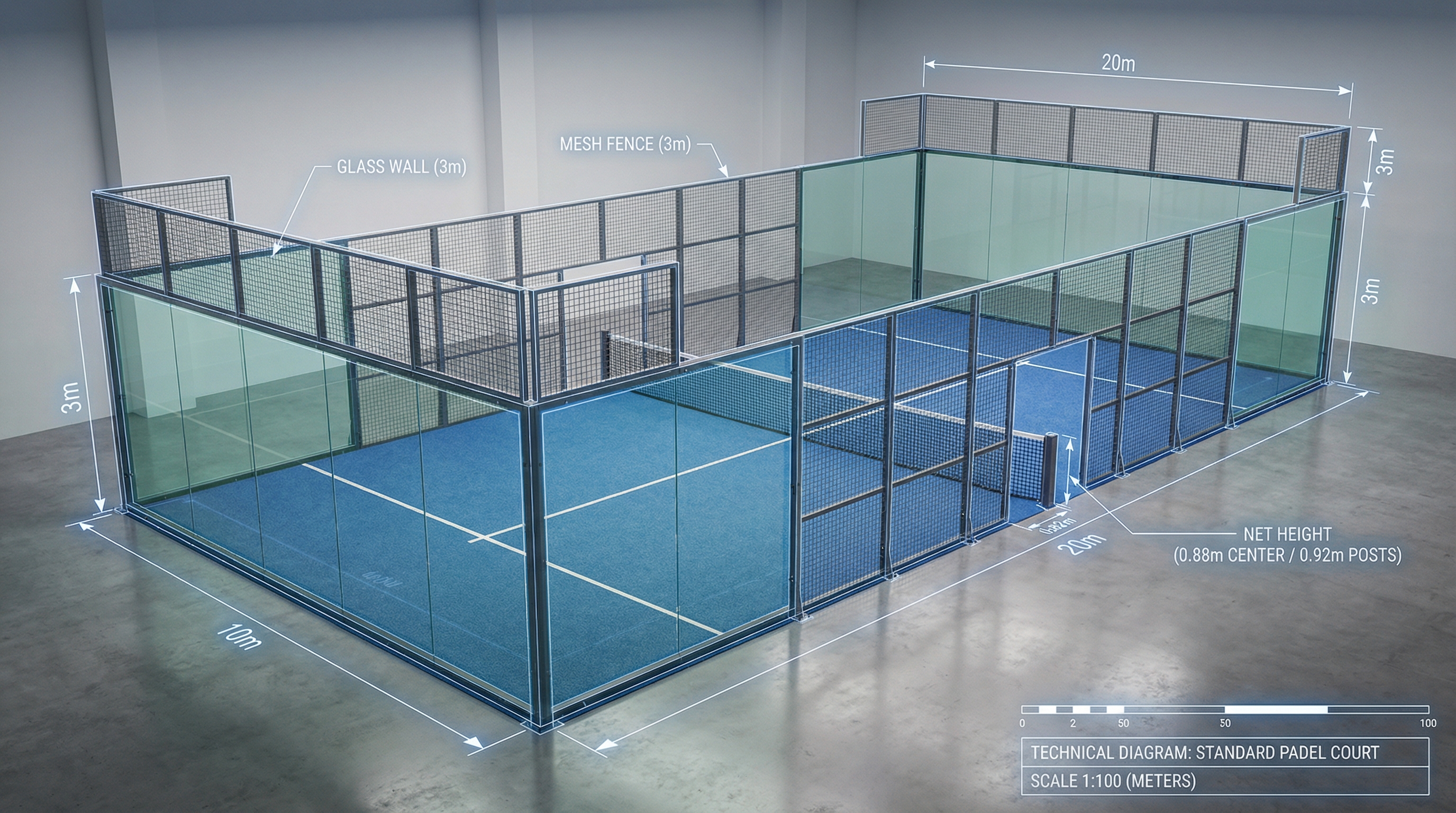
What are the standard dimensions?
The court is a rectangle 20m long and 10m wide. The service lines are located 6.95 meters from the net, and the center service line divides the area between the net and the service lines into two equal zones.
Should you choose a Panoramic Padel Court?
Panoramic designs are highly recommended for commercial clubs. They replace the rear steel pillars with thicker glass and hidden fixings, creating a premium aesthetic that justifies higher booking fees.
Why is court lighting essential?
Since padel is frequently played in the evening, LED lighting systems must provide at least 300 to 500 lux. Proper lighting ensures that the fast-moving ball is visible against the glass and turf.
The best part?
The compact size allows you to fit three padel courts in the space of one single tennis court.
| Specification | Standard Measurement |
|---|---|
| Dimensions | 10 meters wide x 20 meters long. |
| Net Height | 88cm at the center, 92cm at posts. |
| Clearance | 6 meters minimum vertical height. |
Takeaway: Panoramic designs offer better spectator views and a premium aesthetic that increases club membership value.
6. Whats padel glass and its safety?
Padel glass is the most critical safety component of the court, typically consisting of 10mm or 12mm tempered safety glass designed to withstand heavy player impact and ball rebounds. Selecting the right Padel Glass ensures the court remains clear and safe for years of high-intensity play.

How thick is professional glass?
Standard club courts use 10mm tempered glass, but high-end or panoramic courts require 12mm thickness. This extra 2mm provides significantly better “rebound consistency,” meaning the ball bounces predictably off the wall.
Why use tempered safety glass?
Tempered glass is processed by controlled thermal or chemical treatments to increase its strength. If it does break, it crumbles into small granular chunks instead of splintering into jagged shards, preventing serious injury.
How to maintain court transparency?
Regular cleaning with non-abrasive materials is vital. Over time, sweat and handprints can smear the glass, while environmental dust can create a film that reduces the premium look of the facility.
Here is the kicker:
The way the glass is mounted to the steel frame determines how much vibration players feel when they crash into the walls.
| Glass Type | Thickness | Use Case |
|---|---|---|
| Tempered | 10mm – 12mm | Standard for most club courts. |
| Laminated | 6+6mm | High-impact areas or luxury installs. |
Takeaway: Always opt for 12mm tempered glass for high-traffic courts to ensure maximum safety and ball rebound consistency.
7. Whats padel grass and turf choice?
Padel grass is a specialized synthetic turf with a short pile height that requires a silica sand infill to allow players to slide safely while maintaining consistent ball bounce. The quality of the turf is the primary factor in determining the speed of the game.

Monofilament vs fibrillated grass?
Monofilament fibers are individual strands that look more like natural grass and offer higher durability. Fibrillated turf has a “honeycomb” structure that holds sand in place better, making it easier to maintain in the short term.
Why is sand infill necessary?
Silica sand acts as a weight to keep the carpet flat and provides the “slide” necessary for padel footwork. Without sand, the friction between shoes and turf would be too high, leading to knee and ankle injuries.
How to ensure optimal ball bounce?
An even distribution of sand is crucial. If sand accumulates in corners, the ball will “die” or bounce unpredictably, frustrating players and slowing down the pace of the match.
Think about it:
The turf isn’t just a floor; it’s a performance surface that protects your joints.
| Turf Type | Pros | Cons |
|---|---|---|
| Monofilament | Better aesthetics, durable. | Higher initial cost. |
| Fibrillated | Excellent sand retention. | Fibers can flatten over time. |
Takeaway: The quality of the turf installation directly affects the speed of the game and player joint health.
8. Whats padel structure and frame build?
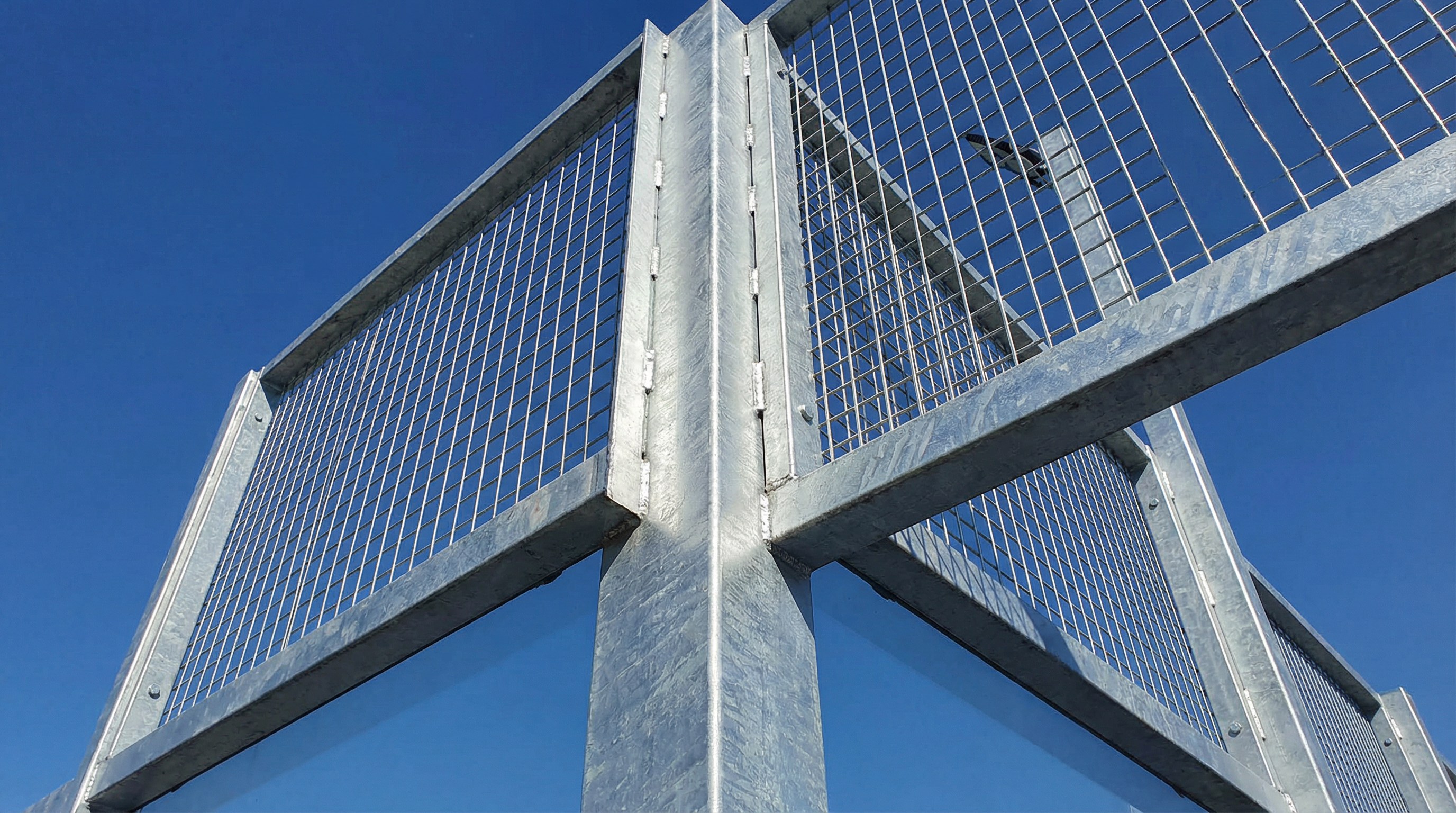
The padel structure serves as the skeleton of the court, typically manufactured from galvanized steel tubes and electro-welded mesh to resist environmental corrosion and mechanical stress. A robust frame is the only thing standing between a safe court and a structural failure during high winds.
How do steel frames resist wind?
Engineered frames use reinforced pillars and specialized anchoring systems to handle wind loads, especially for outdoor installations. The thickness of the steel (usually 3mm or higher) determines the court’s stability.
What is the best anti-corrosion?
Hot-dip galvanization is the gold standard. This process involves submerging the steel in molten zinc, creating a protective layer that prevents rust, even in humid or coastal environments.
Why is professional installation key?
A court that is even 1% out of alignment will cause the glass panels to stress and eventually shatter. Expert installers use laser levels to ensure the frame is perfectly square and plumb.
But wait, there is more:
The mesh panels must be “anti-injury,” meaning the wire ends are folded inward to prevent scratches during intense play.
| Component | Material | Treatment |
|---|---|---|
| Frame | Galvanized Steel | Powder Coated. |
| Mesh | Electro-welded Steel | Anti-injury folding. |
Takeaway: Hot-dip galvanization is non-negotiable for outdoor courts to prevent rust in humid environments.
9. Whats padel construction cost and ROI?
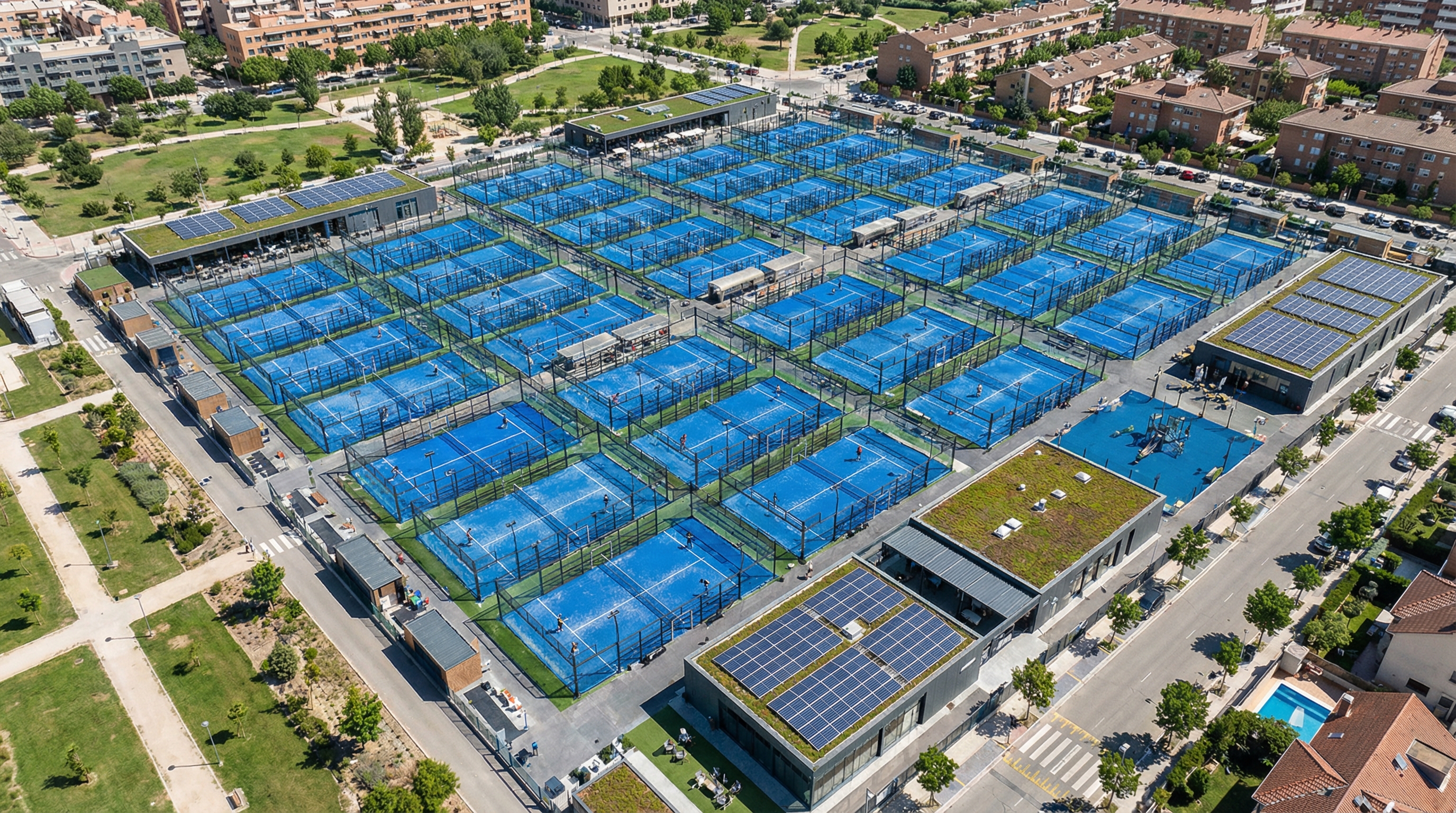
Padel court construction is a high-yield investment for sports clubs because a single court can generate significantly more revenue per square meter than a traditional tennis court. By fitting four players into a small footprint, clubs can maximize their hourly booking potential.
How much does a basic court cost?
A high-quality court kit usually starts around $15,000 to $25,000, but total project costs including foundation, shipping, and installation can range from $40,000 to $70,000 depending on location and soil quality.
What is the ROI for sports clubs?
Most clubs see a full return on investment within 12 to 24 months. Because padel is almost exclusively played as doubles, you have four paying customers per hour instead of two, doubling the revenue of singles tennis.
How to plan your project budget?
Start with the foundation. Soil testing and concrete pouring often represent the biggest “hidden” costs, especially if the site requires advanced drainage systems to handle heavy rain.
Think about it:
Low maintenance costs and high occupancy rates make padel the most profitable racquet sport in the world.
| Budget Item | % of Total Cost | Note |
|---|---|---|
| Foundation | 30-40% | Depends on soil and drainage. |
| Court Kit | 50% | Includes structure, glass, and turf. |
| Installation | 10-20% | Requires specialized crew. |
Takeaway: Padel courts have 4x the revenue potential of tennis courts because they require less space and accommodate more players.
10. Whats padel maintenance and longevity?
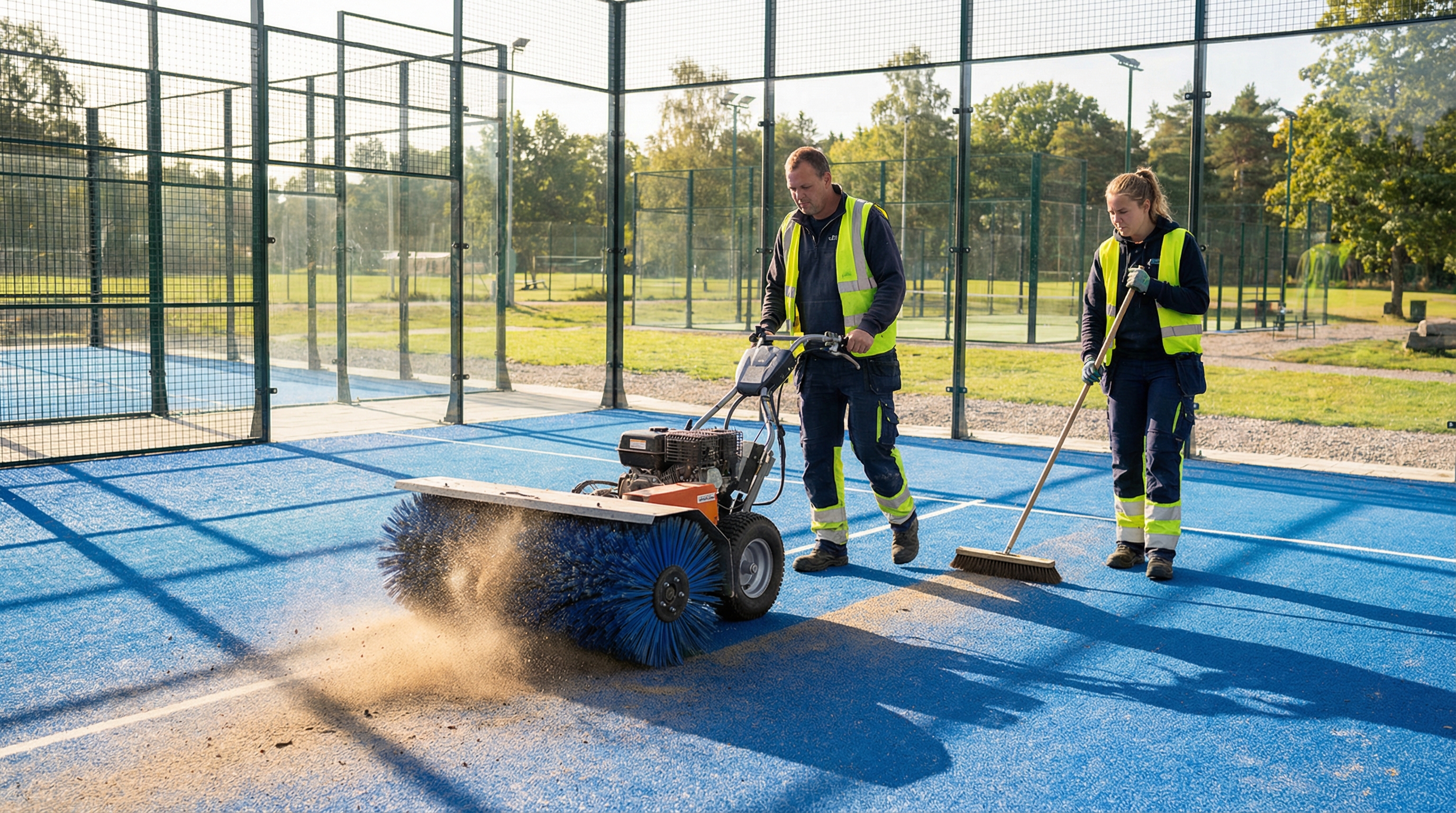
Padel maintenance involves regular turf brushing and glass cleaning to ensure the court remains in peak condition for a lifespan of 10 to 15 years. Neglecting small tasks like tightening bolts or redistributing sand can lead to expensive structural repairs down the road.
How often should you brush turf?
High-traffic courts should be brushed once a week to redistribute the silica sand. This prevents the fibers from matting down and keeps the surface permeable for drainage.
What are the yearly checkup tasks?
Once a year, a professional should inspect the glass fixings, net tension, and the integrity of the steel frame. Re-tightening the anchors ensures the court remains silent and stable during play.
How to get expert help?
Building a court is a complex engineering task that requires specialized knowledge of glass physics and steel tension. If you are ready to start your project, you should reach out to experts who can guide you through the permitting and construction phases.
The best part?
Properly maintained courts retain their value, making them a safe long-term asset for any sports facility.
- Weekly: Brush turf and clean glass.
- Monthly: Check net tension and remove debris.
- Yearly: Structural inspection and sand top-up.
Takeaway: Regular maintenance extends the life of your court by up to 5 years, protecting your capital investment.
Conclusion
Padel is more than just a trend; it is a structural shift in the way the world engages with racquet sports through its social, accessible, and high-energy gameplay. From its humble Mexican roots to its current status as a global phenomenon, the sport offers a unique combination of strategic depth and pure fun. Whether you are an athlete looking for a new challenge or an investor seeking a high-ROI sports facility, understanding the technical nuances of court construction is the first step toward success. If you have any questions or are ready to begin your court construction journey, please contact us for a personalized consultation.
FAQ
What is the difference between padel and pickleball?
Padel is played on a larger court with glass walls and uses a foam-core racquet, whereas pickleball is played on a smaller court without walls using a plastic perforated ball.
How much space do I need to build a padel court?
You need a minimum area of 21 x 11 meters to accommodate the 20 x 10 meter court and the necessary external structural clearances.
Can padel be played in the rain?
While it can be played in light rain, the glass becomes slippery and the ball becomes heavy, which significantly changes the gameplay and can be a safety hazard.
Is padel easier than tennis?
Yes, the underhand serve and shorter racquet make it much easier for beginners to start a rally, though the strategic use of walls adds a high skill ceiling for advanced players.
How long does it take to install a padel court?
Once the concrete foundation is ready, the physical installation of the steel frame, glass, and turf typically takes a professional crew 3 to 5 days.