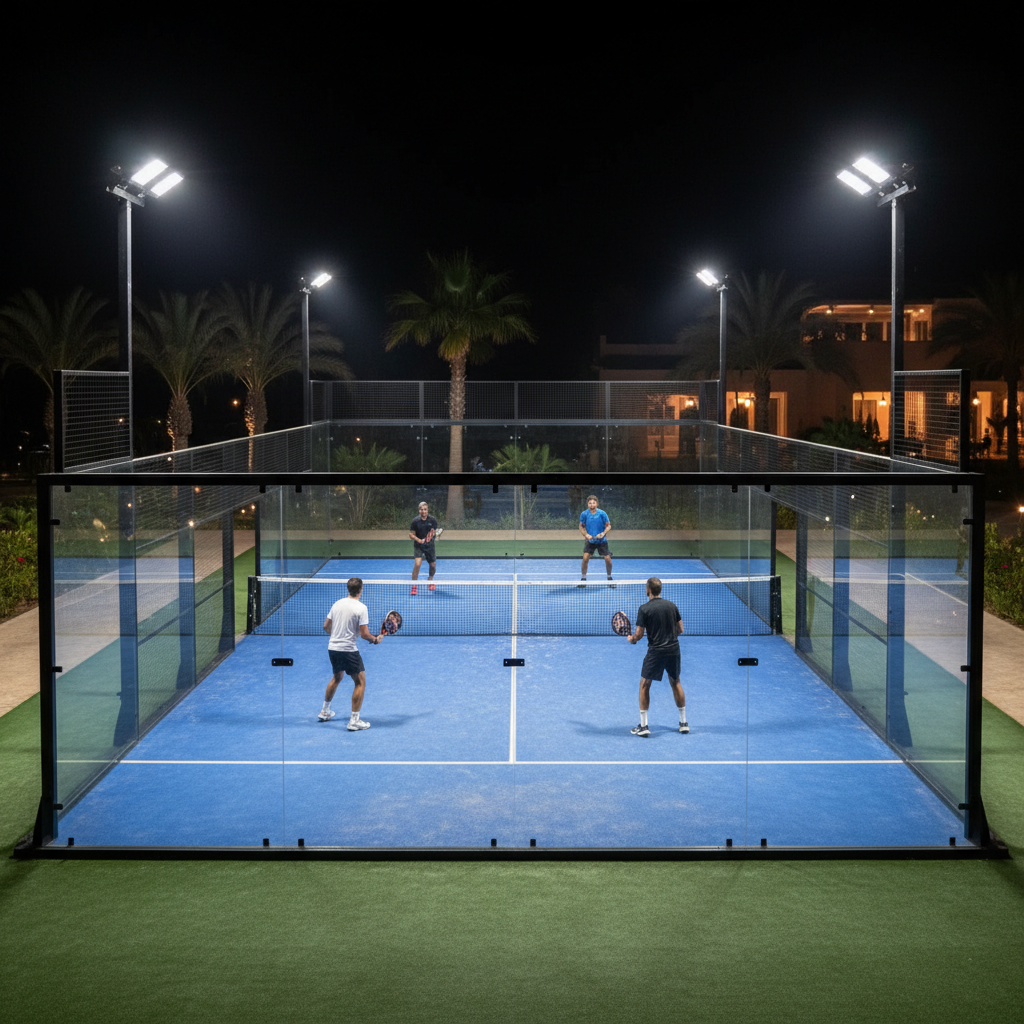
Imagine you have secured the perfect location for a sports club, and the local demand for racket sports is exploding. You see the potential for high returns, but the technical reality of construction—navigating zoning laws, selecting steel grades, and ensuring glass safety—feels like a minefield of potential expensive mistakes. You need a clear, risk-free roadmap to navigate these complexities and launch a facility that attracts players instantly. This guide provides the blueprint you need to understand the padel tennis court and execute a flawless, profitable build.
What defines a standard padel tennis court?
A standard padel tennis court is defined by strict FIP dimensions of 20 meters by 10 meters for doubles play, enclosed by a combination of glass and metallic mesh walls. This specific footprint ensures the game’s unique dynamics, where the ball remains in play after bouncing off the enclosure, creating long and exciting rallies.
Understanding the Dimensions
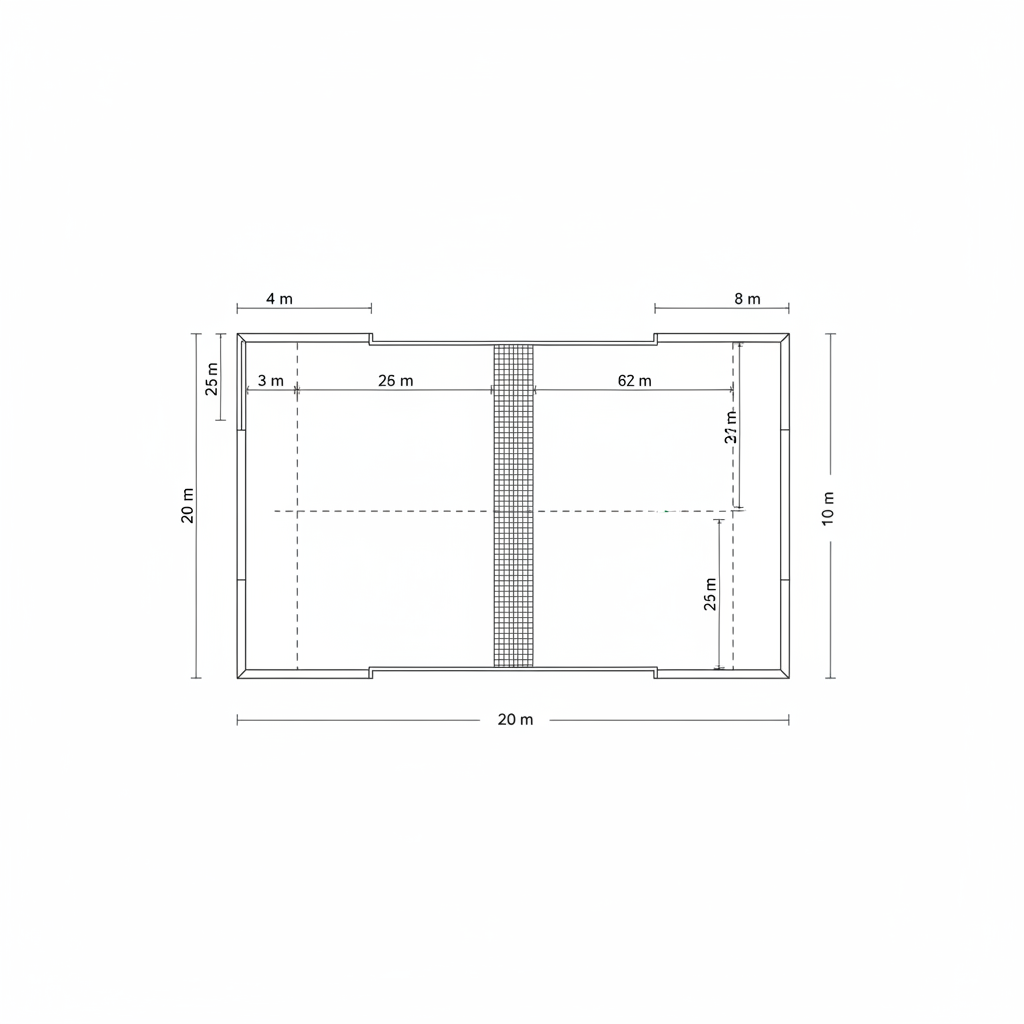
To get the foundation right, you must adhere to the 0.5% tolerance rule for the 20-meter length and 10-meter width.
- Length: 20 meters (65.6 feet)
- Width: 10 meters (32.8 feet)
- Net Height: 0.88m at center, 0.92m at posts
But here is the catch:
The internal playing area is just one part of the equation; you also need to account for external run-off zones to allow players to exit the court safely.
The Role of Enclosures
The enclosure is what separates this sport from regular tennis, utilizing 10-12mm tempered glass and rigid steel mesh. You must ensure the mesh sections allow for a true rebound while maintaining safety for players crashing into the fence.
Key Takeaway
Precision in dimensions is non-negotiable for a compliant court that ensures player safety and tournament certification.
| Feature | Dimension | Requirement |
|---|---|---|
| Total Area | 200 sq meters | +0.5% Tolerance |
| Wall Height | 4m (Back), 3m (Side) | Tempered Glass/Mesh |
| Net Height | 0.88m – 0.92m | Center vs. Post |
| Run-off Zone | 2m x 4m (Optional) | For out-of-court play |
Strict adherence to these dimensions prevents future certification issues and ensures player safety.
Which padel tennis court model suits your needs?
The best padel tennis court model for your facility depends on your target audience, with Panoramic options offering superior visibility for tournaments and Standard models providing durability for daily club use. While the playability remains similar, the structural aesthetics can significantly impact your club’s prestige and pricing power.
Standard vs. Panoramic
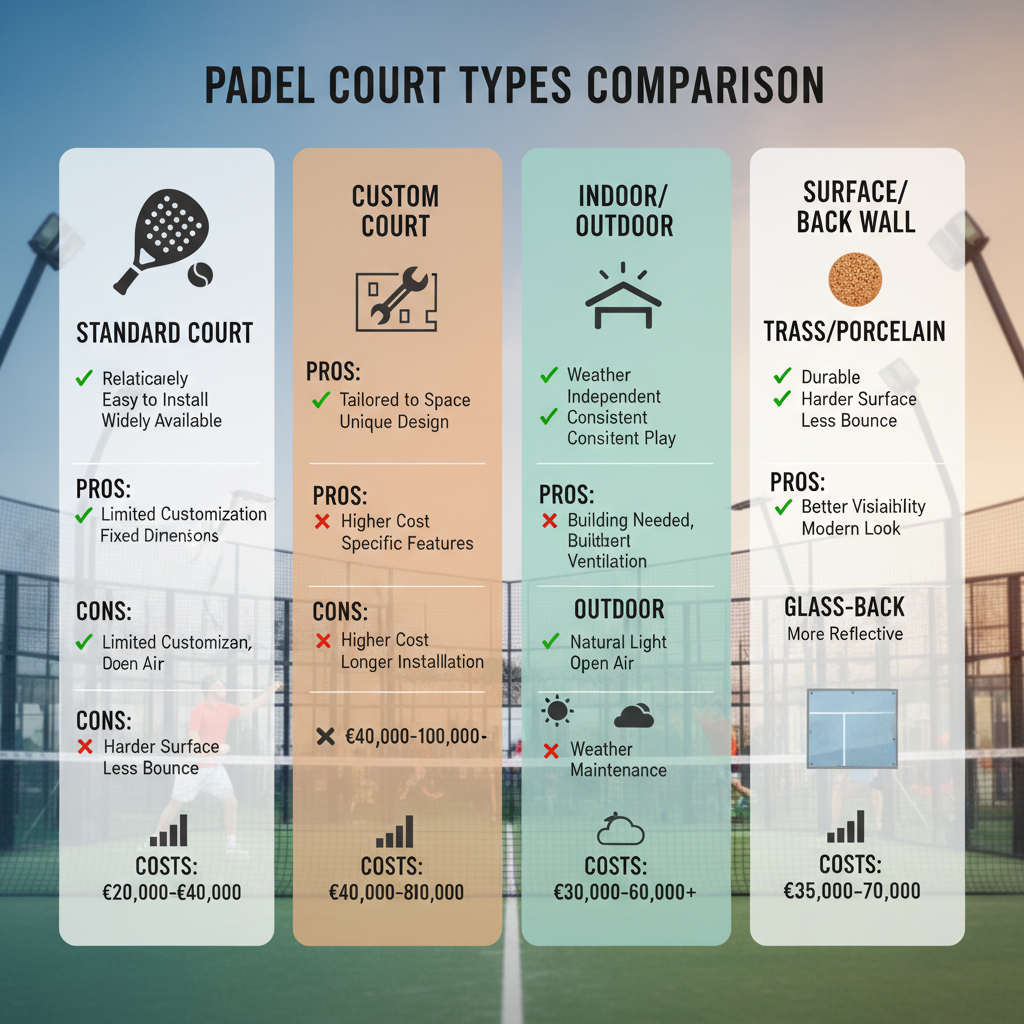
Standard courts use vertical pillars between glass panels, making them incredibly robust and cost-effective for high-traffic public venues.
- Standard: Vertical posts every 2 meters.
- Panoramic: No rear posts, seamless glass view.
- Super Panoramic: Minimal corner columns for TV-ready aesthetics.
You might be wondering:
Is the extra cost for a panoramic view worth it for my members?
Making the Right Choice
If you are building a center court for competitions, the panoramic model is the industry standard for spectator experience. However, for general training courts, the standard model offers higher resistance to wear and tear.
Key Takeaway
Select your court model based on visibility requirements and budget allocation to maximize ROI.
| Model Type | Best Use Case | Visibility | Durability |
|---|---|---|---|
| Standard | Clubs, Schools, Daily Use | Good (Posts visible) | High |
| Panoramic | Tournaments, Center Court | Excellent (No rear posts) | Medium-High |
| Super Panoramic | Pro Events, Luxury Clubs | Superior (Full vision) | Medium |
Choosing the right model mix can optimize both your initial budget and long-term user satisfaction.
How do you choose the best padel tennis court surface?
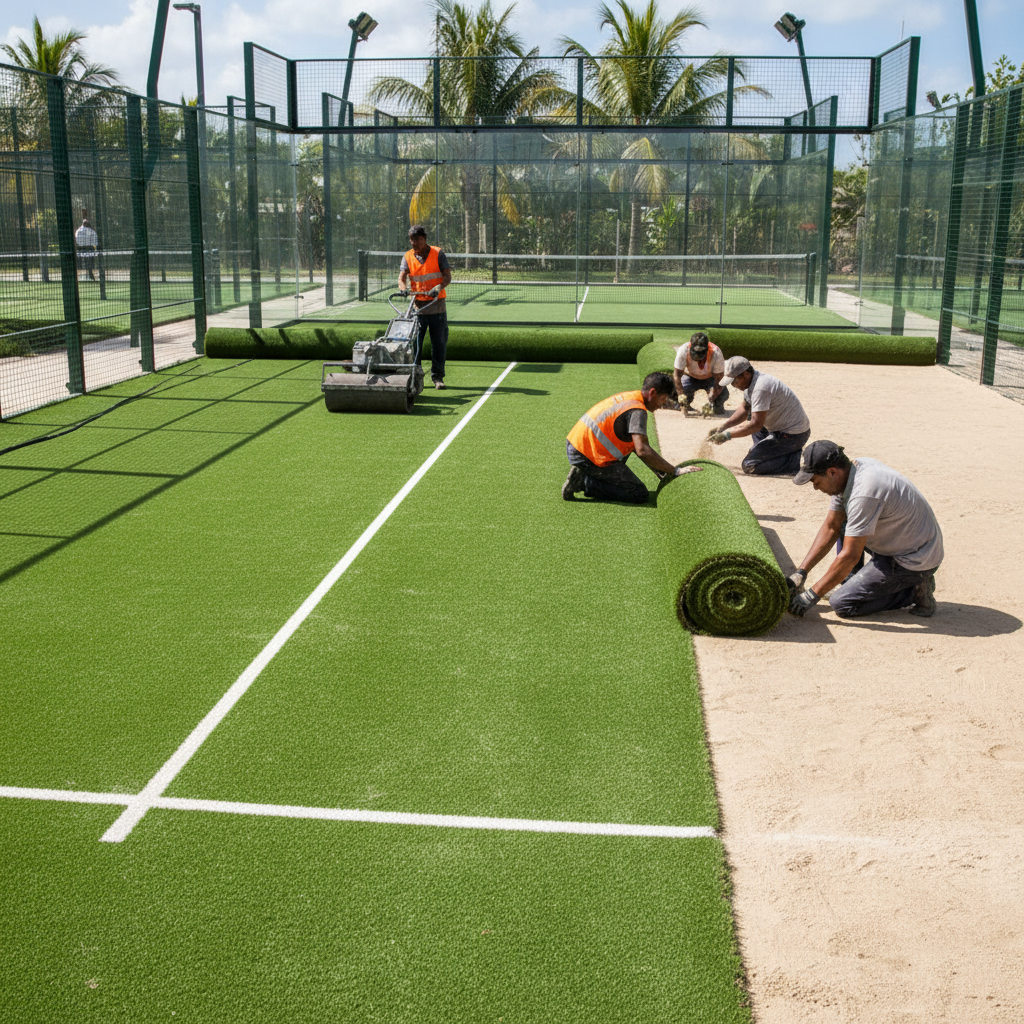
The ideal padel tennis court surface is a specialized artificial turf filled with silica sand, designed to provide consistent ball bounce and player comfort. Selecting the right fiber height and density is critical to preventing player injury and ensuring the longevity of the pitch.
Monofilament vs. Fibrillated
Monofilament turf is preferred for modern courts due to its durability and slower game pace, while fibrillated tape holds sand better.
- Monofilament: Durable, aesthetic, slower ball speed.
- Fibrillated: Fast installation, holds sand well, faster wear.
But wait, there’s more:
The amount of sand infill you use will directly dictate the grip and slide capabilities for the players.
The Importance of Sand Infill
You need to apply the correct amount of silica sand (usually 10-15kg/m2) to protect the fibers and allow for the characteristic sliding movement. Without this, your turf will flatten quickly and become slippery.
Key Takeaway
Invest in high-density monofilament turf for the best balance of performance and lifespan.
| Turf Type | Texture | Maintenance | Durability |
|---|---|---|---|
| Monofilament | Individual fibers | Medium | High |
| Fibrillated | Web-like structure | Low | Medium |
| Textured | Curled fibers | Low | Very High |
High-quality turf reduces long-term replacement costs and improves the player experience immediately.
Why is the padel tennis court structure crucial?
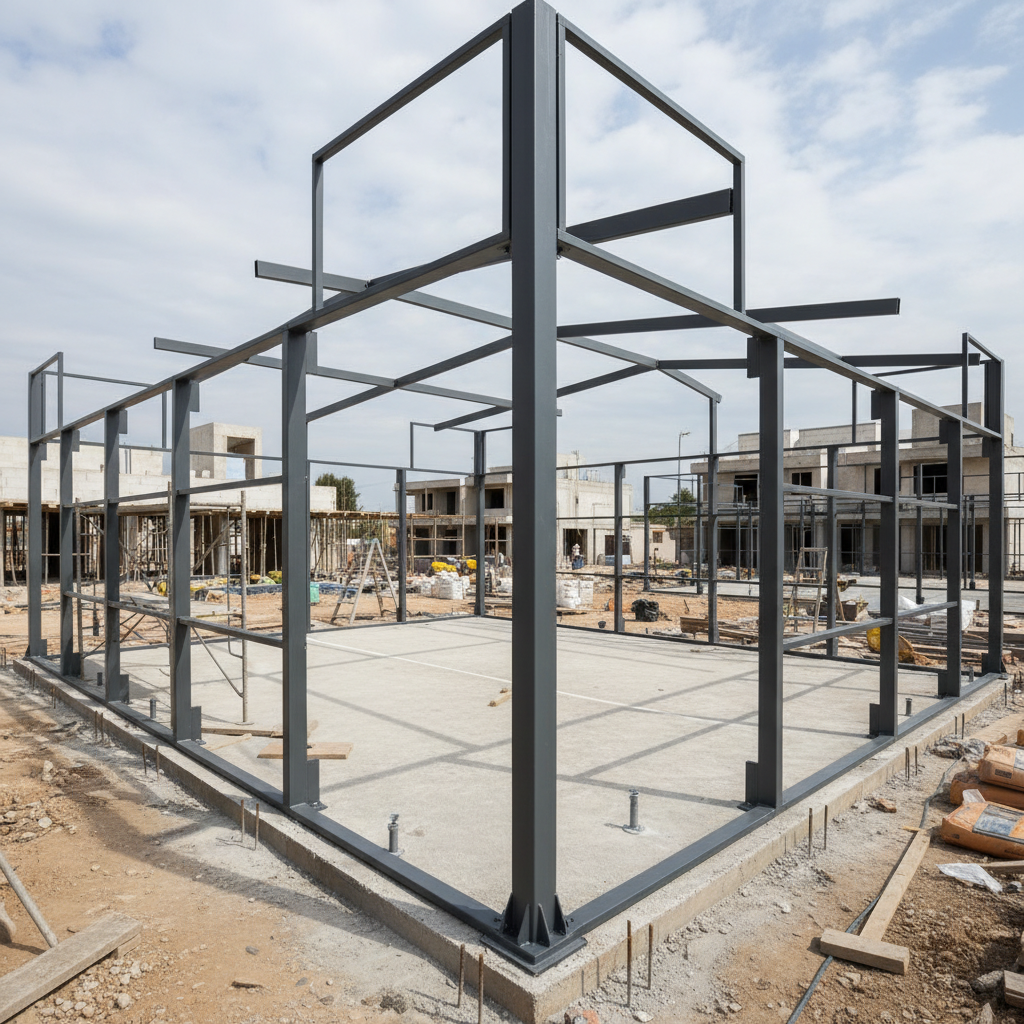
A robust padel tennis court structure, typically crafted from galvanized steel, ensures the entire facility can withstand wind loads and player impact for decades. This skeleton supports the heavy glass panels and lighting, making its engineering quality vital for safety.
Galvanization and Coating
Your court must undergo hot-dip galvanization to prevent rust, especially if you are installing it outdoors.
- Hot-dip Galvanizing: Essential for rust protection.
- Electrostatic Painting: Provides color and extra finish.
- Thickness: minimum 2mm-3mm steel profiles.
Here is the deal:
Skimping on the steel thickness or coating quality will lead to corrosion within months, compromising the safety of the glass walls.
Stability and Safety
The structure acts as the cage that contains the energy of the match, so it must be anchored firmly to the perimeter beam. You cannot afford any movement in the frame, as this stresses the glass panels.
Key Takeaway
Prioritize hot-dip galvanized steel to guarantee a 20-year structural lifespan.
| Component | Specification | Function |
|---|---|---|
| Steel Profile | 100x50mm or 80x40mm | Main support pillars |
| Treatment | Hot-Dip Galvanized | Rust prevention |
| Screws | Stainless Steel (A4) | Corrosion resistance |
| Anchoring | Chemical/Mechanical | Foundation bond |
A stable, rust-proof structure is the only way to ensure the safety of your glass enclosure.
What glass type is safe for a padel tennis court?
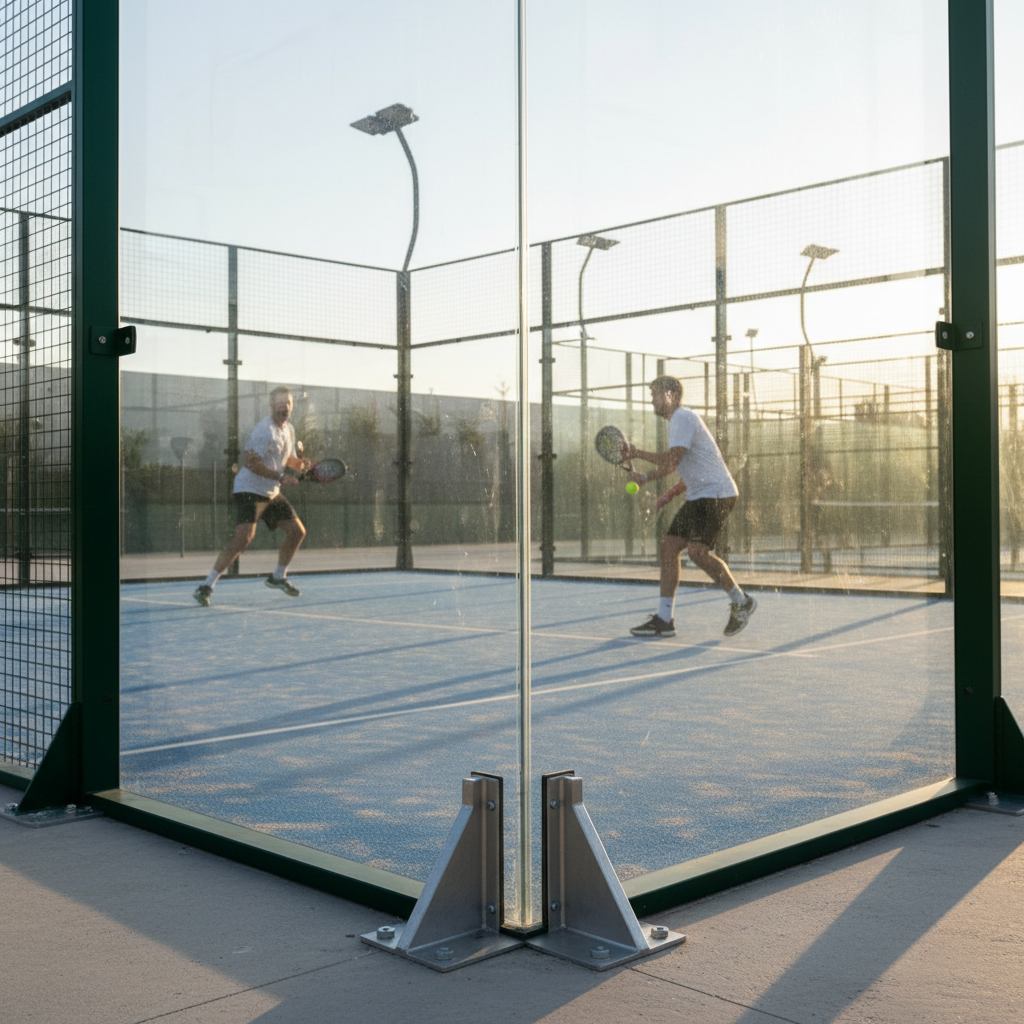
Tempered safety glass of 10mm or 12mm thickness is the only safe option for a padel tennis court, designed to crumble into harmless granular chunks if broken. This material allows for the rebound game while providing total transparency for spectators and broadcast.
Thickness Matters
For standard courts, 10mm glass is often sufficient, but 12mm is highly recommended for panoramic courts and windy locations.
- 10mm Glass: Standard for classic courts with pillars.
- 12mm Glass: Mandatory for Panoramic and windy areas.
You should know this:
FIP regulations strictly require tempered glass complying with EN 12150 standards to minimize injury risks.
Installation Precision
The glass must rest on neoprene pads and be fastened with countersunk screws to prevent metal-to-glass contact. Any direct friction between the steel frame and the glass can cause spontaneous breakage.
Key Takeaway
Never compromise on glass thickness or tempering quality for cost savings.
| Glass Thickness | Application | Wind Resistance | Impact Resistance |
|---|---|---|---|
| 10mm | Standard Courts | Moderate | High |
| 12mm | Panoramic Courts | High | Very High |
| Standard | EN 12150 | Mandatory | Safety Crumble |
Using 12mm glass significantly reduces the risk of breakage and enhances the premium feel of the court.
How does lighting affect a padel tennis court?
Proper LED lighting on a padel tennis court ensures uniform visibility for high-speed play without blinding the players during lobs and smashes. The standard requires at least 4 floodlights per court, mounted at a height of 6 meters or more.
Lux Levels and Uniformity
You need to achieve specific lux levels depending on whether the court is for training or televised competition.
- Recreational: >200 Lux
- Competition: >500 Lux
- TV Broadcast: >1000 Lux
But consider this:
The angle of the LED lighting is just as important as the brightness; it must be aimed to minimize glare when looking up for a smash.
Energy Efficiency
Modern LED linear lights or floodlights reduce energy consumption by up to 60% compared to older metal halide systems. You get instant on/off functionality, which is crucial for managing booking slots efficiently.
Key Takeaway
Install 8x 200W LEDs for an optimal balance of brightness and visual comfort.
| Lighting Type | Wattage | Lux Level | Purpose |
|---|---|---|---|
| 4x Floodlights | 200W each | ~300 Lux | Training |
| 8x Floodlights | 150W-200W each | ~500-750 Lux | Matches |
| Linear LED | Continuous | Uniform | Aesthetic |
Proper lighting extends playable hours and directly increases your revenue potential.
Where should you build your padel tennis court?
You should build your padel tennis court on a perfectly level, well-drained site, ideally oriented North-South to prevent the sun from blinding players. Site selection is the hidden factor that determines maintenance costs and player enjoyment.
Orientation and Sun Glare
The North-South orientation is critical for outdoor courts to ensure the sun passes overhead rather than shining directly into players’ eyes.
- Morning/Evening: Sun is behind sides, not back walls.
- Roofing: Can mitigate poor orientation.
Here is the deal:
If you cannot orient North-South, you must consider installing a roof or taller side meshes to block low-angle sunlight.
Foundation Stability
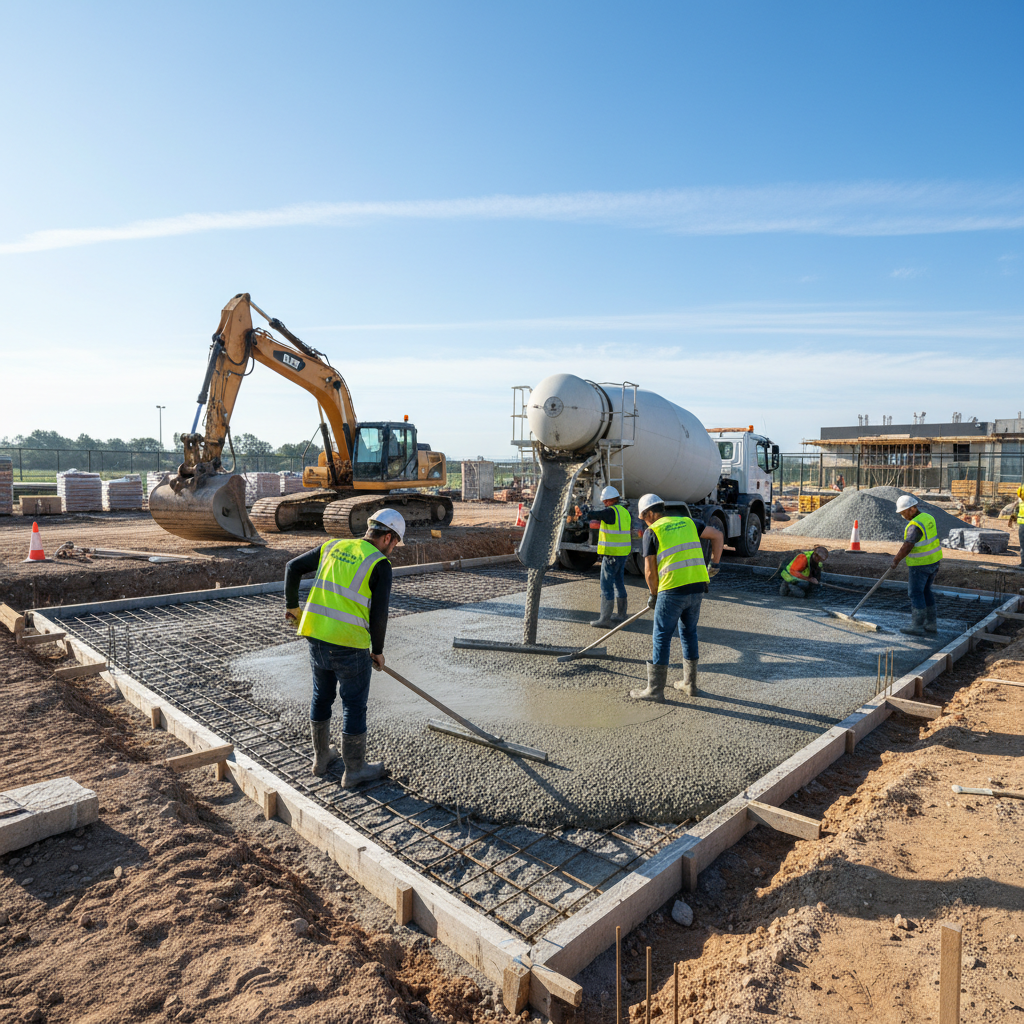
The ground must be excavated and replaced with a stable sub-base before pouring concrete. A perimeter ring beam is essential to anchor the steel posts, even if you use porous asphalt for the playing area drainage.
Key Takeaway
Correct orientation and a reinforced perimeter beam are vital for outdoor courts.
| Factor | Requirement | Reason |
|---|---|---|
| Orientation | North-South | Avoid sun glare |
| Sub-base | Compacted Gravel | Drainage & Stability |
| Ring Beam | Reinforced Concrete | Anchor Structure |
| Slope | 0.5% – 1% | Water Runoff |
A well-planned site prevents blinding sun issues and structural settling problems.
What is the construction process for a padel tennis court?
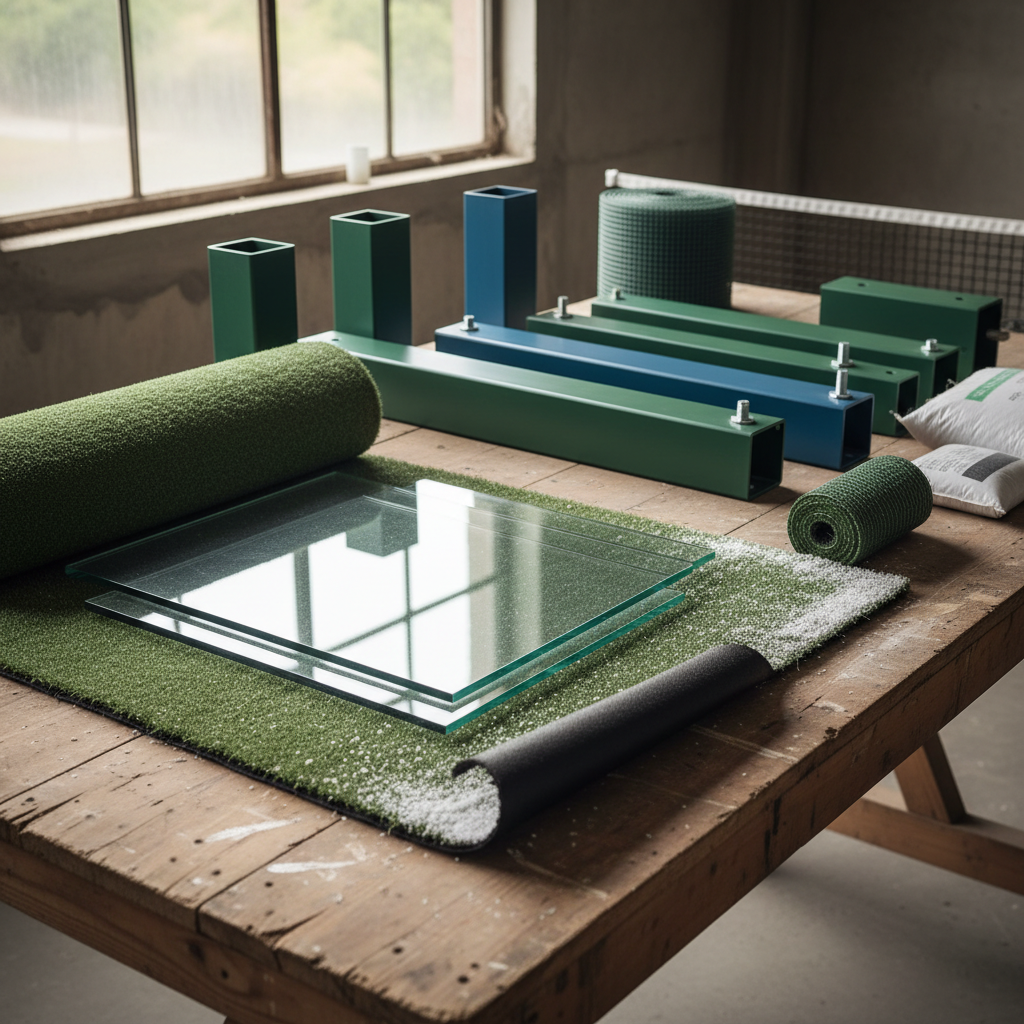
The construction process of a padel tennis court follows a strict sequence: ground leveling, concrete perimeter pouring, structure assembly, glass installation, and finally, turf laying. Deviating from this order can lead to alignment issues where the glass panels do not fit the steel frame.
Step-by-Step Execution
- Excavation: Clear and level the land.
- Concrete Ring Beam: Pour the 30x30cm perimeter foundation.
- Structure Assembly: Erect the steel posts and mesh.
- Glass Fitting: Carefully install panels with neoprene.
- Turf & Sand: Roll out grass and brush in sand.
You must be careful:
The concrete must cure fully before you drill anchors for the structure, or the foundation will crack under the tension bolts.
Final Touches
Once the main frame is built, you finish with net installation and line painting. The silica sand needs a few weeks of play and brushing to settle perfectly into the turf fibers.
Key Takeaway
Follow the sequence strictly to ensure the glass fits perfectly within the steel modules.
| Phase | Duration | Critical Action |
|---|---|---|
| Groundworks | 1-2 Weeks | Leveling & Drainage |
| Foundation | 1 Week | Curing Concrete |
| Installation | 3-5 Days | Structure & Glass |
| Finishing | 1-2 Days | Turf & Sand |
Efficient project management can complete the installation phase in under a week per court.
Does a roofed padel tennis court offer better value?
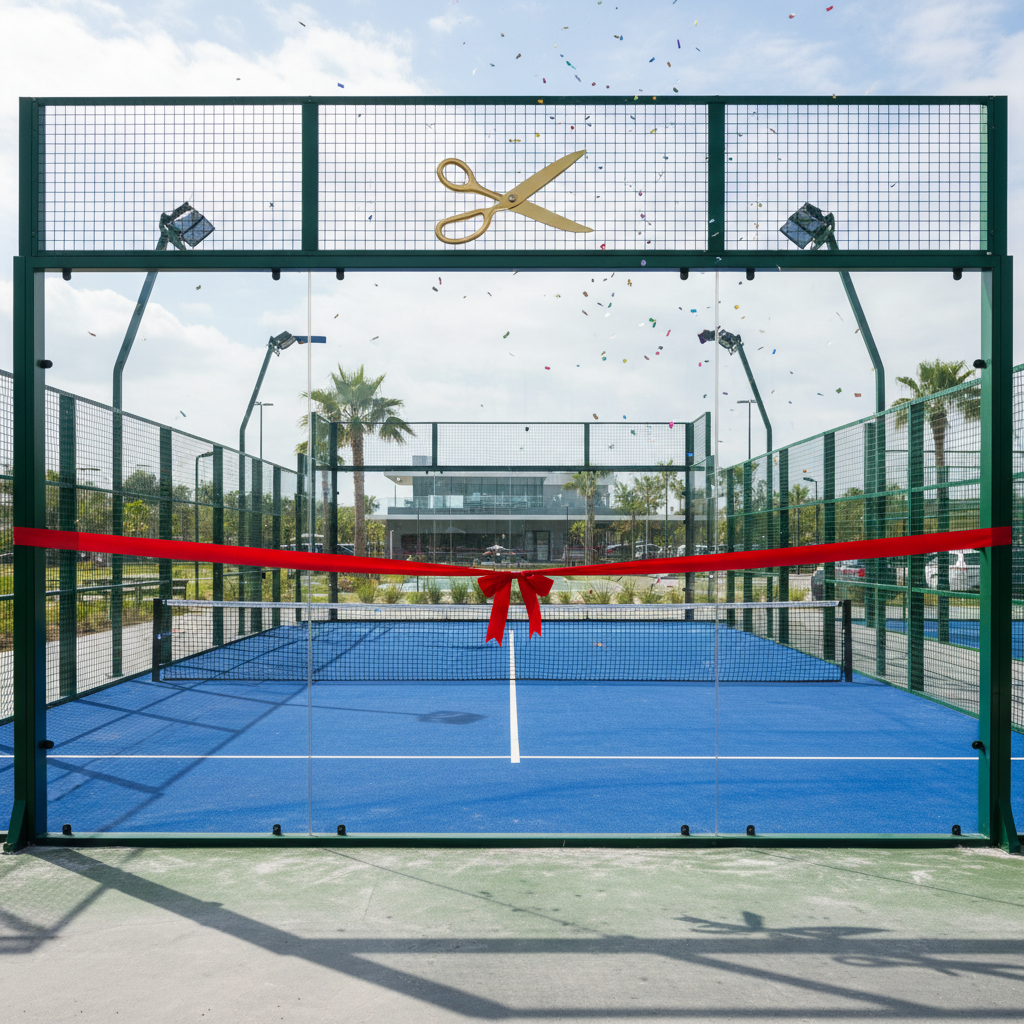
A roofed padel tennis court offers significantly better long-term value by guaranteeing playability during rain, intense sun, or snow, maximizing your revenue hours. While the initial investment is higher, the ability to operate 365 days a year often yields a faster ROI.
Weather Protection
Outdoor courts sit empty during rain and peak heat, while roofed courts remain fully booked.
- Rain: Zero revenue loss.
- Sun: UV protection for players and turf.
- Wind: Reduced impact on the game.
But here is the good news:
You don’t need a full indoor building; a lightweight canopy structure is cost-effective and provides ample airflow while keeping the court dry.
Indoor vs. Canopy
A roofed canopy strikes a balance between an expensive indoor hall and an exposed outdoor court. It allows for natural ventilation, preventing the “oven effect” of enclosed indoor spaces in summer.
Key Takeaway
Roofed courts secure your revenue stream against weather disruptions.
| Feature | Outdoor Open | Roofed Canopy | Full Indoor |
|---|---|---|---|
| Cost | Low | Medium | High |
| Usability | Weather Dependent | All-Weather | All-Weather |
| Ventilation | Excellent | Good | Needs HVAC |
| Revenue | Volatile | Stable | Stable |
Investing in a cover transforms your court from a seasonal facility into a year-round business.
How much does a padel tennis court investment cost?
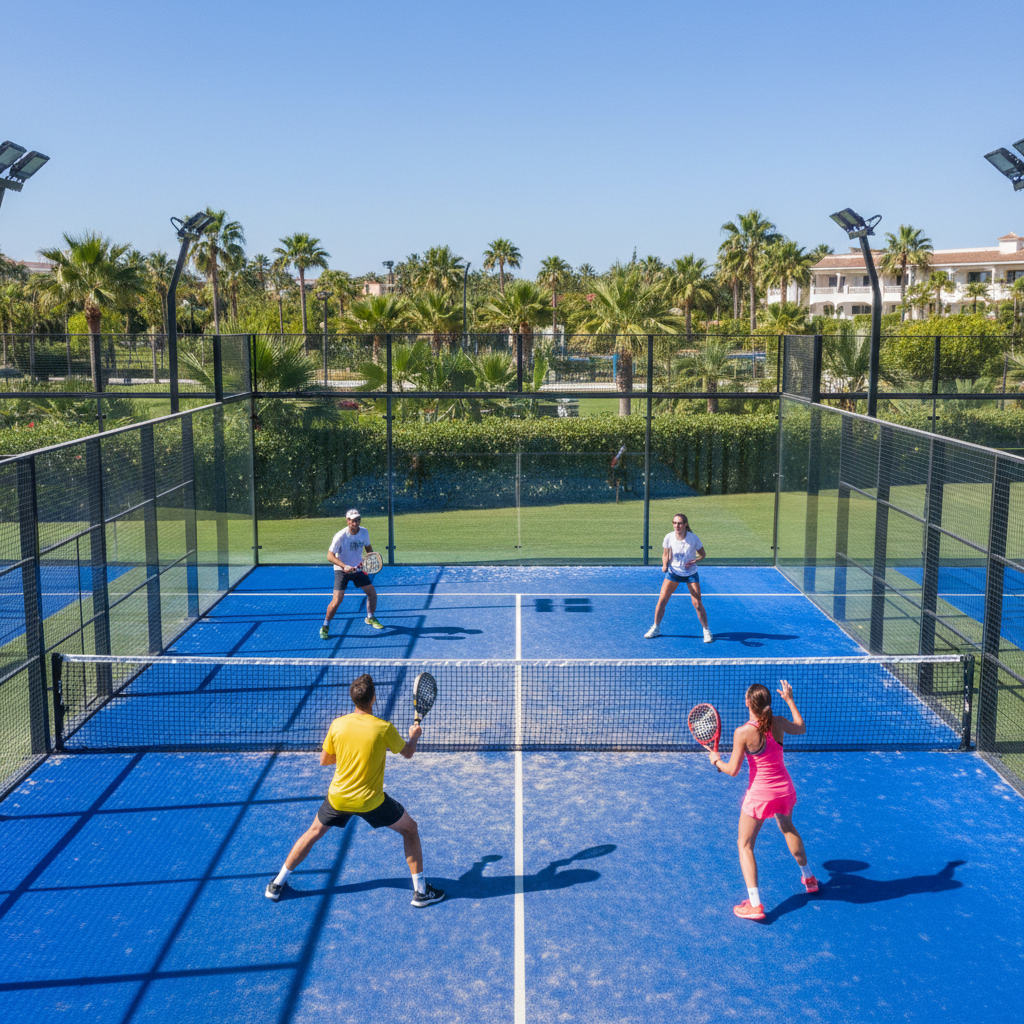
The investment for a padel tennis court typically ranges from $18,000 to $35,000 for the court itself, excluding civil works and shipping, depending on the model and customization. When you factor in groundworks and installation, the total project cost requires careful budgeting to ensure profitability.
Cost Breakdown
Understanding where your money goes helps you allocate funds wisely.
- Court Kit: Steel, Glass, Turf, Lights (~$18k-$25k).
- Foundation: Concrete and labor (highly variable).
- Installation: Specialized team costs.
- Shipping: Logistics from factory to site.
You need to ask yourself:
Are you buying direct from a manufacturer to save on distributor margins? Buying direct can save up to 30%.
Return on Investment (ROI)
Padel courts have a high revenue density per square meter. With 4 players paying per hour, a well-managed court can pay for itself in 12-18 months.
Key Takeaway
Buying directly from the factory maximizes your budget and accelerates ROI.
| Cost Element | Estimated Range | Notes |
|---|---|---|
| Court Kit | $18,000 – $28,000 | Varies by Model |
| Foundation | $10,000 – $20,000 | Site Dependent |
| Installation | $3,000 – $5,000 | Labor Costs |
| Total | $31,000 – $53,000 | Turnkey Estimate |
A transparent cost structure allows you to calculate precise payback periods for your business plan.
Conclusion
Building a padel tennis court is a strategic investment that combines precise engineering with high-quality materials like galvanized steel and tempered glass. By understanding the dimensions, selecting the right model, and ensuring a solid foundation, you eliminate the risks associated with construction. You now have the knowledge to transform an empty plot into a thriving hub of activity.
We provide turnkey solutions that take you from the initial design to the final match point, ensuring your facility is built to international standards. Whether you need a panoramic showcase or a durable club court, our direct-from-factory approach saves you costs without compromising quality.
Building the future of padel together starts with a single step. Contact us today to get a personalized quote and expert guidance for your project.
FAQ
Can I install a padel tennis court in my backyard?
Yes, you can, provided you have a space of at least 11×21 meters. You will need to check local zoning laws regarding structure height and noise, but many private owners successfully install courts for personal use.
What is the best orientation for an outdoor court?
The best orientation is North-South. This positioning prevents the sun from shining directly into players’ eyes during the morning and late afternoon, which is crucial for playability and safety.
How do I know if my foundation is strong enough?
You should hire a local structural engineer to assess your soil conditions. Generally, a reinforced concrete ring beam of 30x30cm is the minimum requirement to anchor the steel posts securely against wind loads.
Can I customize the court colors to match my brand?
Yes, you can fully customize the steel structure color (RAL) and the turf color. This allows clubs and private owners to align the court’s aesthetic with their branding or landscape design seamlessly.
Is it better to build an indoor or outdoor court?
It depends on your climate and budget. An indoor or roofed court is better for business stability as it guarantees revenue regardless of rain or snow, whereas an outdoor court is cheaper to build but weather-dependent.