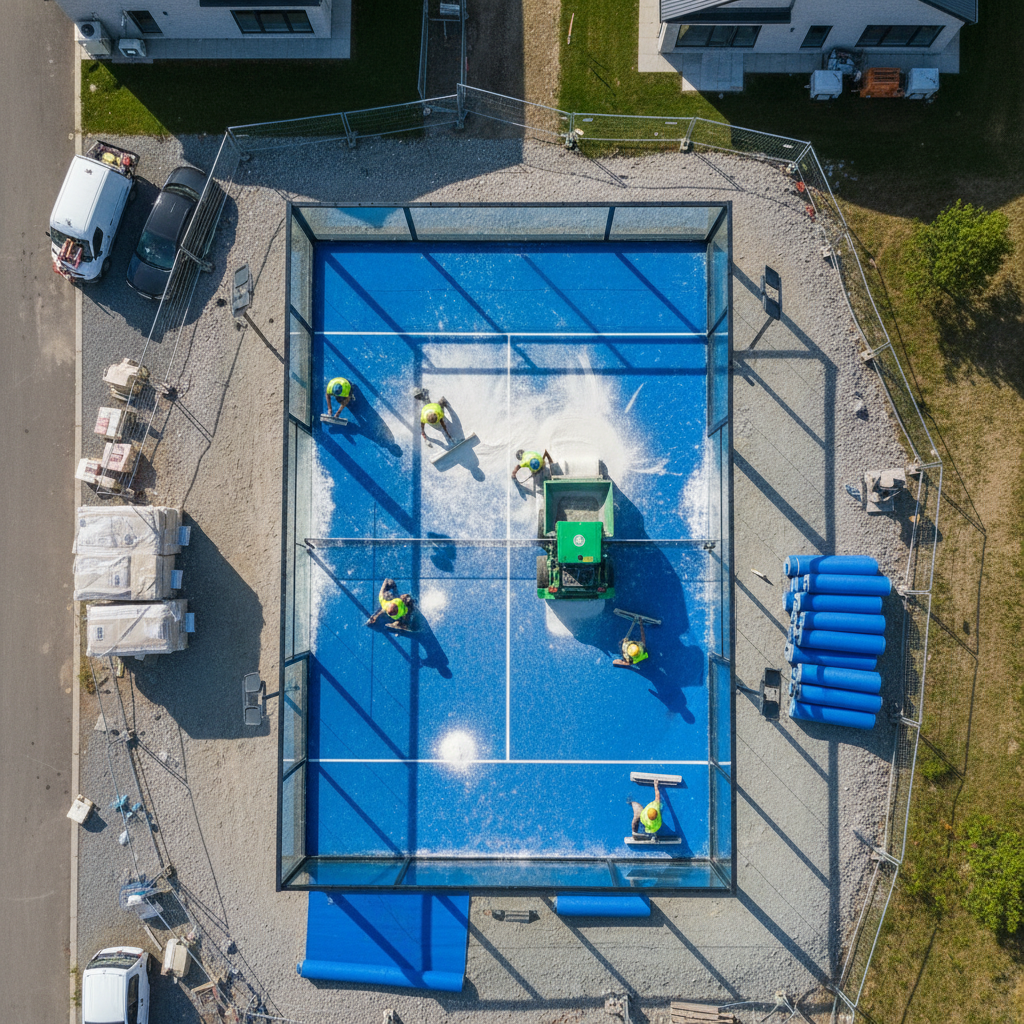
Traditional sports facility owners often struggle with underutilized spaces and declining member engagement, leading to stagnant revenue streams. This lack of innovation frustrates investors who see land maintenance costs rising while the physical footprint fails to generate modern social or athletic appeal. By integrating the padel racket sport, developers can transform outdated real estate into high-density, social hubs that maximize player turnover and long-term profitability.
What is the padel racket sport and why is it popular?
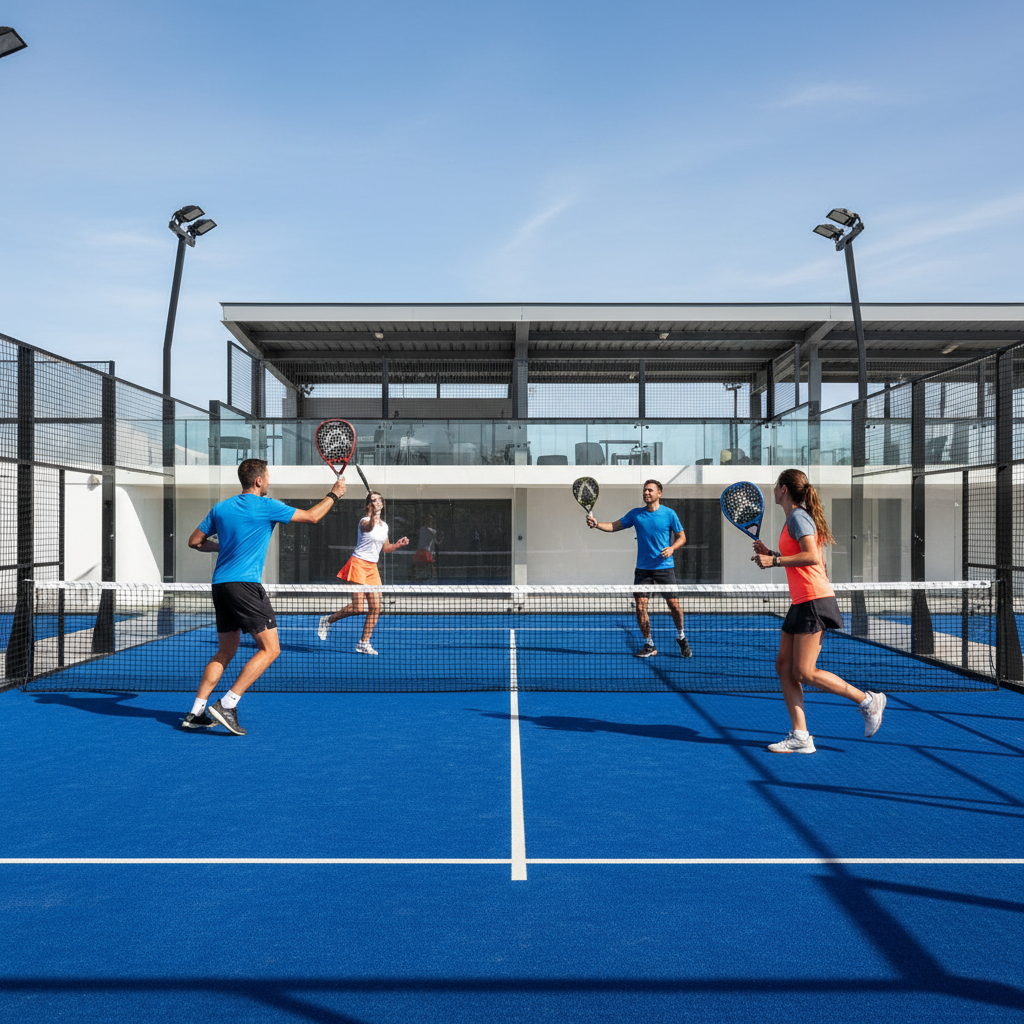
Padel racket sport is a fast-paced doubles game played on an enclosed court that combines the strategic elements of tennis with the rebounding mechanics of squash. Its popularity stems from a lower barrier to entry compared to other racquet sports, as the shorter rackets and smaller playing area allow beginners to engage in long rallies almost immediately. This accessibility, paired with the mandatory four-player format, creates a vibrant social environment that fosters community and repeat visits.
Why do investors favor this specific sport?
Here is the deal. The financial return on investment for padel facilities is significantly higher than traditional tennis because more players occupy a smaller footprint, increasing hourly rental yields.
- Four players utilize only 200 square meters, allowing for up to three courts in the space of one tennis court.
- High player turnover leads to increased ancillary revenue in clubhouses, such as equipment rentals and beverage sales.
- The social nature of the game results in higher membership retention rates compared to solo fitness activities.
You might be wondering. Because the game is exclusively played in pairs, every booking naturally brings together a group of four, multiplying social interactions and networking opportunities within the club.
- Players often spend more time at the facility post-match, driving demand for pro-shop services and social amenities.
- The enclosed court creates an intimate atmosphere that is less intimidating for newcomers while remaining exciting for spectators.
- League and tournament formats are easy to organize, encouraging consistent weekly engagement from the local community.
Key Takeaway: Padel’s growth is driven by its high player density and social accessibility, making it a premier choice for commercial sports facility expansion.
| Factor | Impact on Popularity | Commercial Benefit |
|---|---|---|
| Learning Curve | Low / Very Accessible | High beginner retention |
| Player Density | 4 players per 200m² | Optimized revenue per square meter |
| Social Structure | Doubles-only format | Constant community engagement |
The combination of low physical entry requirements and high social interaction ensures that padel remains a sustainable and profitable athletic discipline for modern investors.
What court specifications define the padel racket sport?
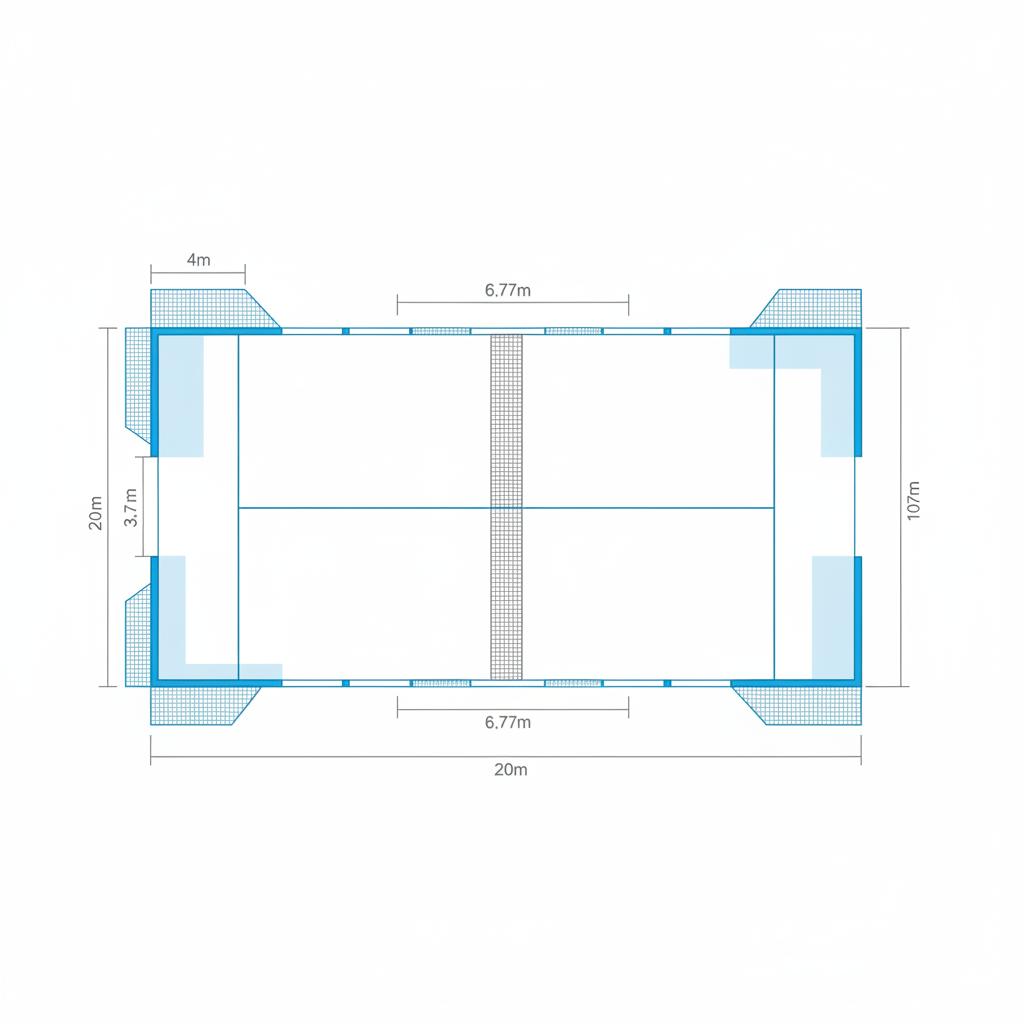
The technical definition of the padel racket sport requires a rectangular playing area measuring exactly 10 meters wide and 20 meters long, enclosed by a combination of glass and metallic mesh. Standard court specifications dictate that the service lines must be placed 6.95 meters from the net, with a central line dividing the service boxes into equal halves. These precise dimensions ensure that the ball reacts consistently during the unique wall-rebound phases of the game.
What are the height requirements for the enclosure?
Ready for the good part? The back walls must stand at a height of 3 meters using transparent glass, while the side walls feature a stepped design transitioning into metallic mesh.
- Glass panels provide a consistent 3-meter high rebound surface for defensive baseline play.
- Metallic mesh sections allow for unpredictable bounces, adding a tactical layer to net exchanges.
- Total structure height often reaches 4 meters at the back to ensure the ball stays within the playing environment.
Why is overhead clearance critical for indoor builds?
Think about this. Since the lob is a fundamental defensive stroke in this game, a minimum ceiling height of 6 meters is required, though 8 meters is preferred for professional standards.
- Low ceilings restrict strategic play, preventing players from executing high lobs to reset their position.
- Lighting fixtures must be positioned outside the vertical path of the ball to avoid interference and glare.
- Adequate clearance ensures that competitive play remains fair and matches the physics of outdoor court environments.
Key Takeaway: Adhering to the 10x20m footprint and specific glass heights is essential for certifying a court for official tournament play and ensuring a quality player experience.
| Component | Standard Dimension | Material Requirement |
|---|---|---|
| Length/Width | 20m x 10m | Level concrete or ring beam base |
| Net Height | 88cm (center) | High-tenacity polypropylene |
| Back Wall | 3m Height | 12mm tempered safety glass |
Strict adherence to these dimensions ensures that every match played on your facility meets the international standards expected by competitive athletes.
What equipment is required for the padel racket sport?
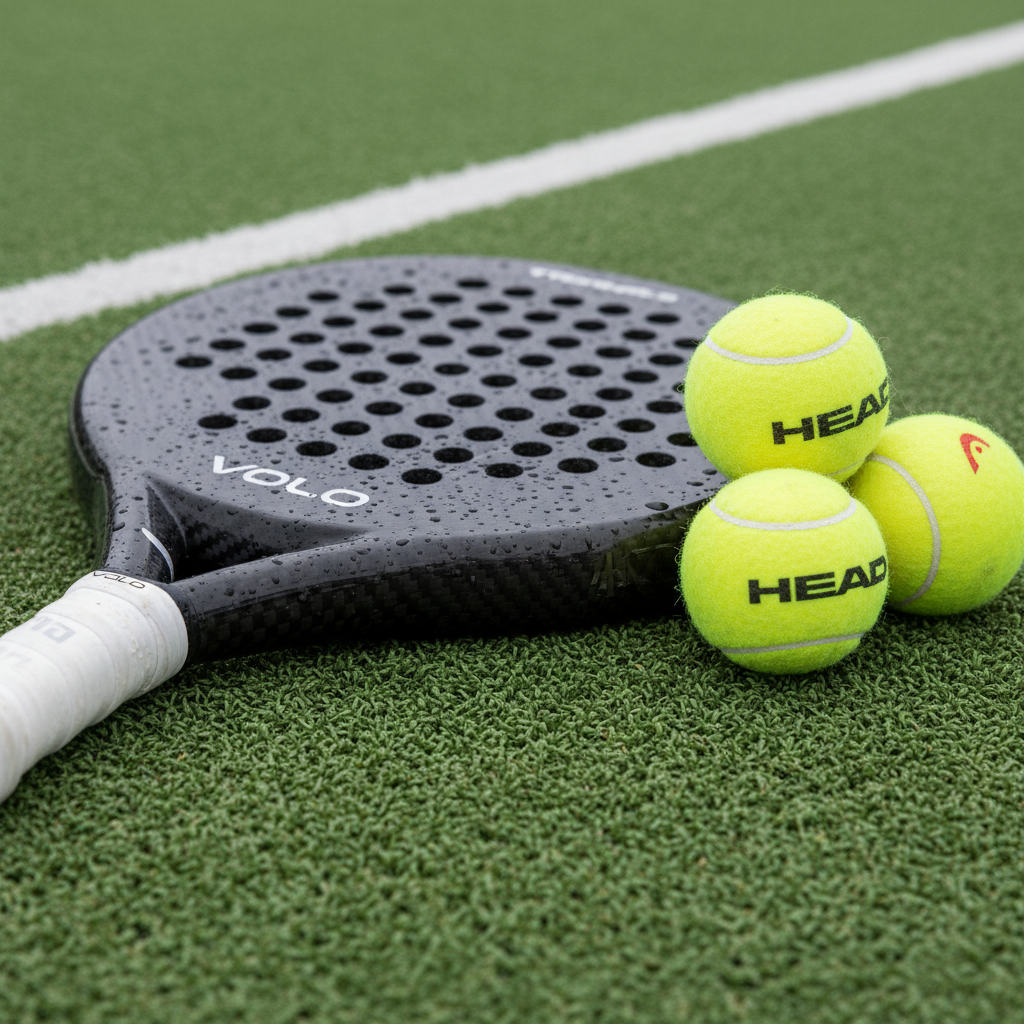
Equipment for the padel racket sport centers on a specialized solid racquet that features a perforated surface rather than traditional strings. These rackets are typically constructed from carbon fiber or fiberglass with an EVA foam core, providing a balance of power and vibration absorption for the player. Because the game involves heavy use of the glass walls, specialized footwear with herringbone patterns is also required to provide grip on the sand-filled synthetic turf.
How does the padel racquet affect gameplay?
Here is the kicker. The absence of strings means the ball’s exit velocity is controlled by the density of the racquet’s foam core, rewarding placement over raw force.
- Perforated holes reduce air resistance, allowing for faster racquet head speeds during net volleys.
- Safety straps are mandatory on all handles to prevent the racquet from slipping during intense, sweaty rallies.
- Different head shapes (round, teardrop, or diamond) allow players to choose between control and power.
Why are specific balls used for this sport?
But wait, there is more. While they look like tennis balls, padel balls have a lower internal pressure to ensure they don’t bounce too aggressively off the glass.
- Lower pressure keeps the ball in play longer, emphasizing strategy and patient point construction.
- The felt quality is designed to interact specifically with the sand on the turf to generate spin.
- Official balls must meet strict diameter and weight regulations to ensure consistent flight paths.
Key Takeaway: High-quality solid composite rackets and low-pressure balls are the technical requirements that define the unique physics of the game.
| Equipment | Key Feature | Function |
|---|---|---|
| Padel Racquet | Stringless / Foam Core | Impact absorption and control |
| Padel Ball | 10-11 psi pressure | Manageable rebounds off glass |
| Court Shoes | Herringbone sole | Traction on sand-filled synthetic turf |
Selecting the correct gear is vital for preventing common injuries and allowing players to fully utilize the tactical possibilities of the court walls.
What are the basic rules of the padel racket sport?
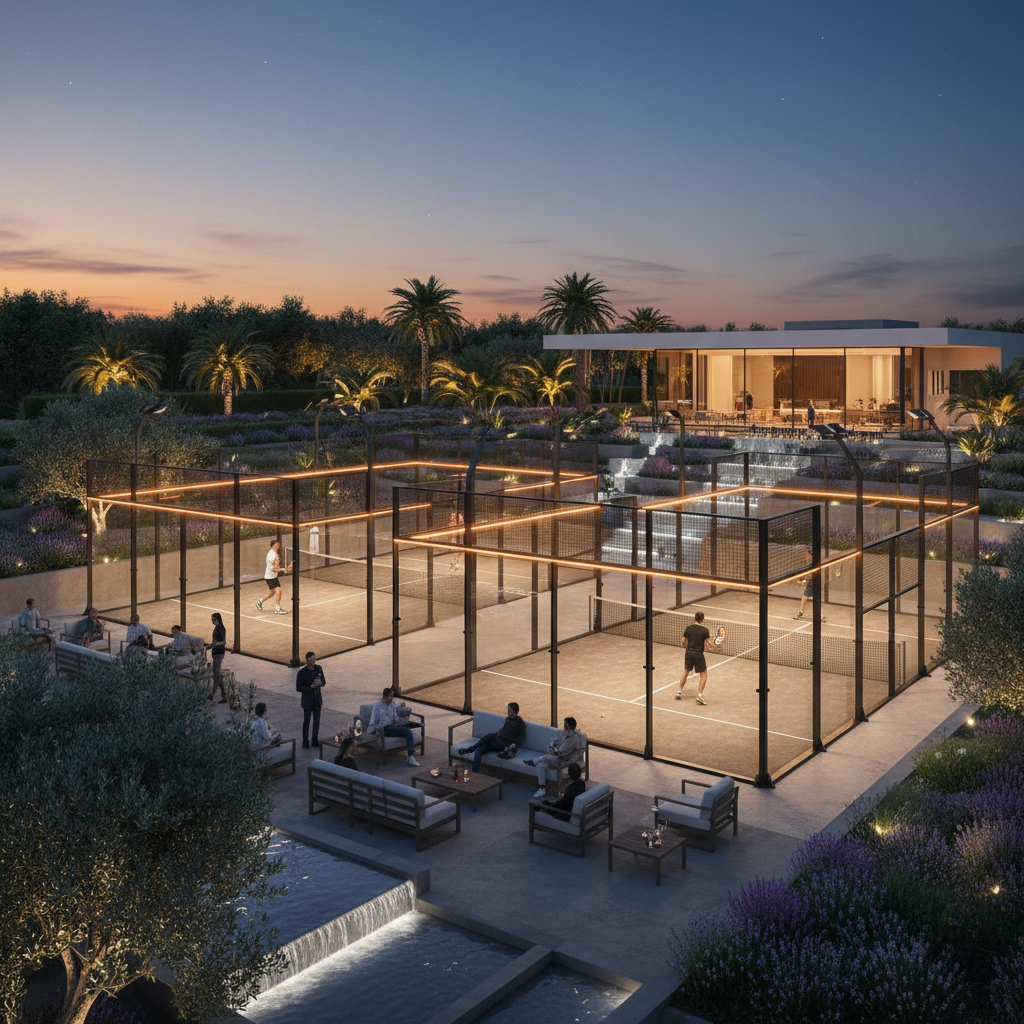
The basic rules of the padel racket sport dictate that all matches are played in a doubles format using an underhand serve. Points are scored using the traditional tennis system (15, 30, 40, game), and the ball remains in play after striking the walls, provided it has first bounced on the opponent’s ground. This interaction with the enclosure creates a dynamic environment where points are rarely ended by a single powerful shot.
How does the service procedure work?
Now for the good part. Unlike tennis, the server must bounce the ball once behind the service line and strike it at or below waist level.
- All serves must travel diagonally across the net and land in the opponent’s service box.
- A serve that hits the metallic mesh after bouncing is considered a fault, unlike a standard rally.
- Players are allowed a second serve if the first attempt fails to land correctly in the designated box.
When is the ball considered out of bounds?
The real story is this. A ball is considered “out” if it strikes the metallic mesh or the glass walls directly without hitting the ground on the opponent’s side first.
- After the first bounce on the ground, the ball may hit any number of walls and still be returned.
- Players can hit the ball against their own glass wall to pass it over the net to the other side.
- If the ball bounces twice on the ground on one side, the point is awarded to the opposing team.
Key Takeaway: Mastery of the underhand serve and the “ground-first” wall rule is essential for maintaining the flow of a legal and competitive match.
| Rule Category | Description | Point Consequence |
|---|---|---|
| Serve | Underhand, diagonal | Fault if it hits mesh after first bounce |
| Walls | Must hit ground first | Out if it hits wall directly |
| Scoring | 15-30-40-Game | Follows standard tennis structure |
Understanding these regulations is the first step for any player to transition from a novice level to competitive club-organized leagues.
How is a padel racket sport court foundation constructed?
A professional foundation for the padel racket sport requires a perfectly level reinforced concrete slab or a perimeter ring beam to support the significant weight of the glass walls. Because the court involves high-intensity lateral movements and heavy structural components, the base must be engineered to prevent cracking or shifting over time. For outdoor installations, a porous concrete or a slight slope for drainage is mandatory to ensure the playing surface remains dry and safe.
What are the steps for site preparation?
What’s the real story? The process begins with excavation and soil compaction to create a stable substrate that can handle the 10×20 meter structural load.
- Crushed stone layers are used to facilitate water drainage and provide a frost-resistant base.
- Steel reinforcement (rebar) is laid to increase the tensile strength of the concrete slab.
- Vapor barriers are often installed to prevent moisture from rising through the foundation and affecting the turf adhesive.
Why is leveling the most critical phase?
It gets even better. A deviation of even a few millimeters can cause the ball to bounce inconsistently or lead to gaps in the glass panel alignment during the installation phase.
- Power troweling is used to achieve a “mirror-smooth” finish on the concrete surface.
- Laser-guided leveling tools verify the surface accuracy across the entire 200-square-meter footprint.
- Proper leveling ensures the structural steel pillars are perfectly vertical for glass mounting.
Key Takeaway: A reinforced, perfectly level concrete foundation is the most important structural investment for ensuring long-term court durability and ball bounce consistency.
| Foundation Layer | Material | Primary Purpose |
|---|---|---|
| Sub-base | Compacted Gravel | Drainage and load distribution |
| Main Slab | Reinforced Concrete | Level playing surface and support |
| Finish | Power Troweled | Consistent ball rebound characteristics |
The integrity of the foundation directly correlates with the safety of the players and the lifespan of the glass and steel enclosure.
What materials are used for the padel racket sport court?
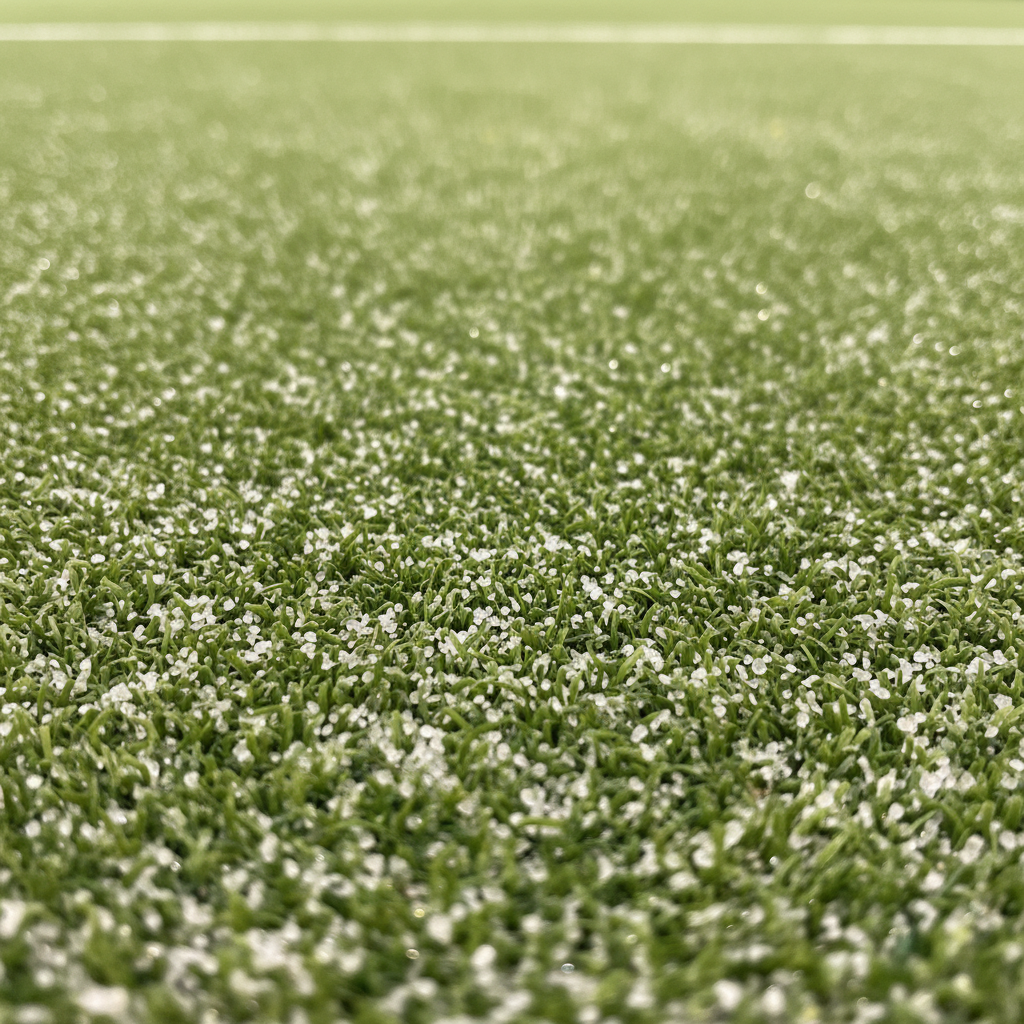
The durability of a padel racket sport court depends on the use of hot-dip galvanized steel for the frame and 12mm tempered safety glass for the walls. These materials are selected for their ability to withstand constant ball impacts and environmental stress while maintaining structural rigidity. The playing surface itself is composed of high-density polyethylene synthetic turf, which is infilled with kiln-dried silica sand to regulate player traction and ball bounce.
Why is tempered glass the industry standard?
You might be wondering. Tempered glass is heat-treated to be five times stronger than regular glass, ensuring it can absorb the impact of a player’s body without breaking.
- In the rare event of a failure, tempered glass shatters into small, blunt pieces to prevent serious injury.
- 12mm thickness is preferred over 10mm for commercial facilities to provide better rebound consistency and structural longevity.
- UV-resistant gaskets protect the glass edges from direct contact with the steel frame.
What makes the synthetic turf special?
Check this out. Unlike standard landscaping grass, padel turf features curled fibers designed to hold sand in place, creating a consistent “carpet” for the ball.
- Monofilament fibers offer the best durability and resistance to flattening under heavy use.
- The turf is available in various colors, with blue being the international standard for professional television broadcasting.
- UV stabilization prevents the fibers from becoming brittle or fading under direct sunlight.
Key Takeaway: High-grade galvanized steel and 12mm tempered glass are non-negotiable materials for a safe and profitable commercial sports installation.
| Material | Specification | Key Benefit |
|---|---|---|
| Frame | Galvanized Steel | 20+ years of rust protection |
| Walls | 12mm Tempered Glass | Maximum safety and rebound quality |
| Turf | PE Monofilament | Long-term wear resistance |
Investing in premium raw materials reduces the long-term maintenance burden and ensures the facility retains its aesthetic appeal for years of operation.
Which playing techniques master the padel racket sport?
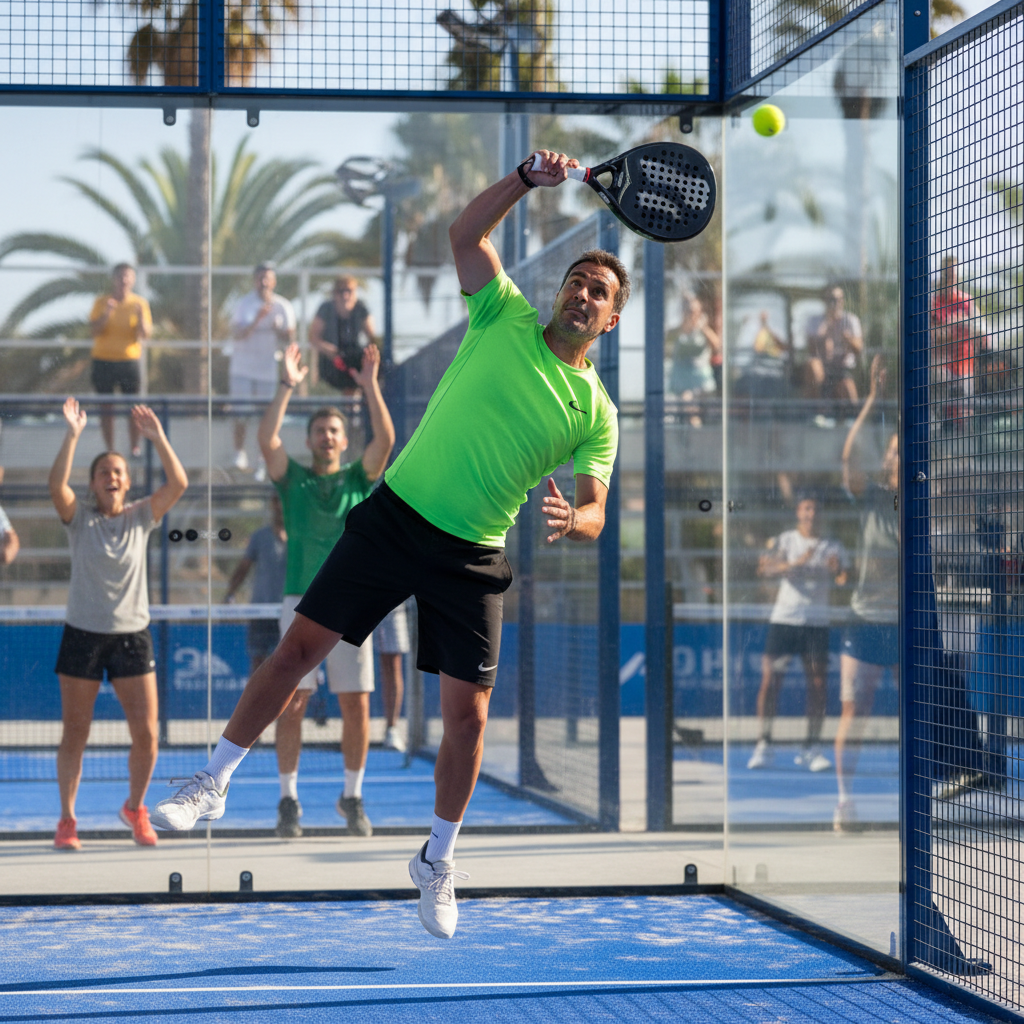
Mastery of the padel racket sport involves learning to use the glass walls to your advantage and developing specialized overhead strokes like the “Bandeja.” Unlike tennis, where power is often the primary goal, padel rewards patience and the ability to reset the point using high lobs and tactical placement. Success at a high level requires a deep understanding of court positioning and the geometry of the ball’s rebound off the side and back walls.
What is the purpose of the Bandeja?
Here is the kicker. This unique overhead slice is designed to keep the ball low after it hits the back glass, preventing the opponent from attacking the return.
- It is hit with a descending motion to create backspin, making the ball “die” near the floor.
- The shot allows the attacking team to maintain their position at the net rather than retreating.
- Proper footwork is required to hit the ball at the side of the body for maximum control.
How do you defend using the back glass?
Think about this. Defensive mastery involves letting the ball pass you, hitting the wall, and then striking it as it moves back toward the net.
- This technique buys the player more time to choose a target and set their feet for a return.
- “Contrapared” involves hitting the ball directly into your own glass to lob it over the net in emergencies.
- Understanding angles is vital for anticipating how spin will affect the ball after it leaves the glass surface.
Key Takeaway: Mastering the Bandeja and learning to play “after the wall” are the two most critical skills for advancing from a beginner to an intermediate player.
| Technique | Goal | Difficulty |
|---|---|---|
| Bandeja | Keep the net position | Intermediate |
| Lob (Globo) | Push opponents back | Beginner |
| Vibora | Aggressive point ender | Advanced |
Developing these technical skills allows players to engage in the deep strategic complexity that makes the sport so addictive for competitive athletes.
How to install padel racket sport glass and mesh walls?
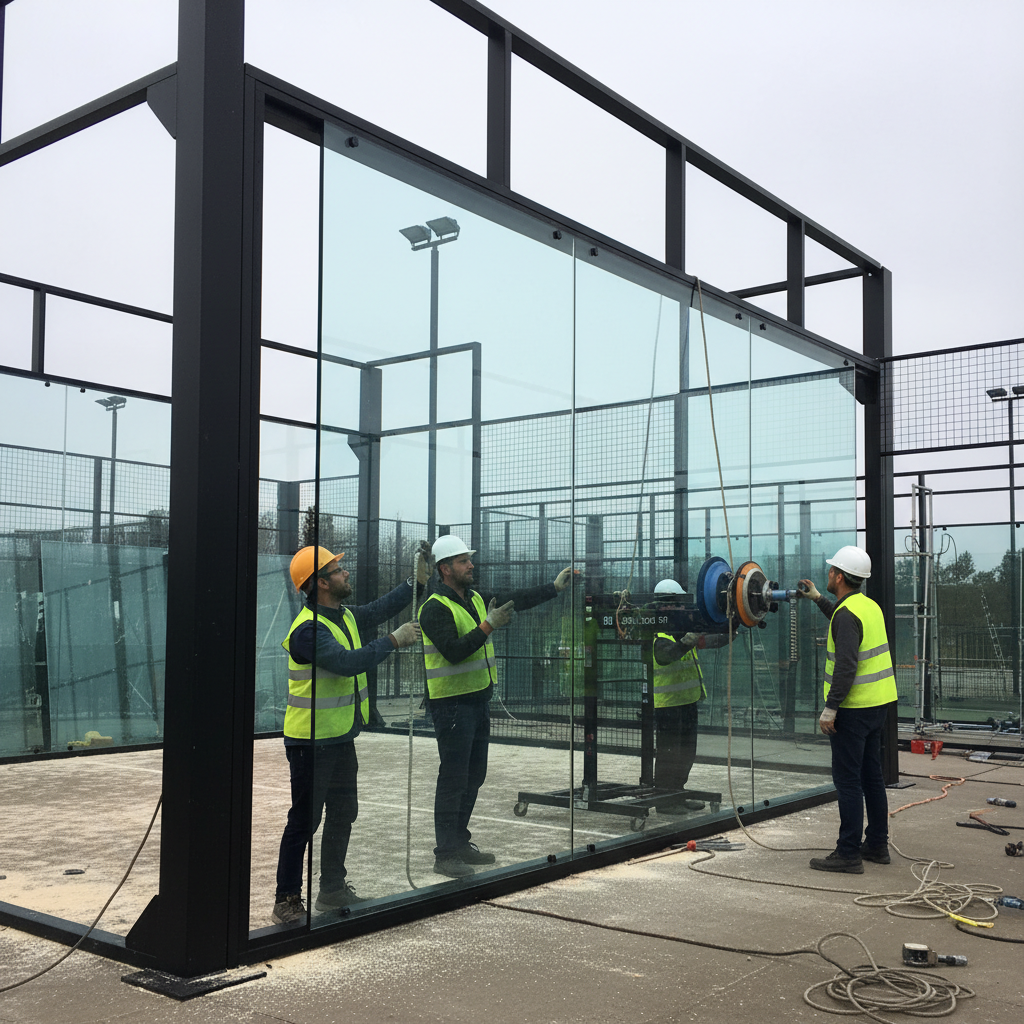
The installation of padel racket sport walls is a modular process that begins with anchoring the steel pillars into the foundation using chemical or mechanical expansion bolts. Once the frame is plumb and level, the 12mm glass panels are carefully lifted into place using specialized suction equipment and secured with stainless steel fasteners. This phase requires extreme precision to ensure that the gaps between panels are uniform and that the entire structure is rigid enough to handle player collisions.
How is the steel frame assembled?
You might be wondering. The modular design of modern courts allows for rapid assembly, with the entire skeleton often completed in just two days.
- Pillars are bolted to the foundation with precision spacing to accommodate the glass panel dimensions.
- Horizontal beams are added to provide lateral stability and support for the upper mesh sections.
- Every joint is treated with anti-corrosive sealant to prevent rust from developing in the bolt holes.
What is the safest way to handle the glass?
Ready for the good part? Because each glass panel weighs over 150kg, mechanical lifters or teams of four professionals are required to prevent accidents during the placement phase.
- Neoprene or rubber gaskets must be used between the glass and steel to prevent direct contact.
- Fasteners should be tightened to a specific torque setting to allow for minor thermal expansion.
- Silicon sealing is applied between panels to prevent vibration and improve the overall structural integrity.
Key Takeaway: Professional installation using mechanical lifters and precision leveling is vital for ensuring the structural safety and official certification of the court.
| Installation Step | Critical Tool | Safety Focus |
|---|---|---|
| Anchoring | Chemical expansion bolts | Foundation depth and alignment |
| Glass Handling | Suction cup lifter | Weight distribution and edge protection |
| Fastening | Torque wrench | Preventing stress cracks in glass |
A correctly installed wall system provides the consistent rebound quality and safety necessary for high-traffic commercial sports facilities.
What lighting standards benefit the padel racket sport?
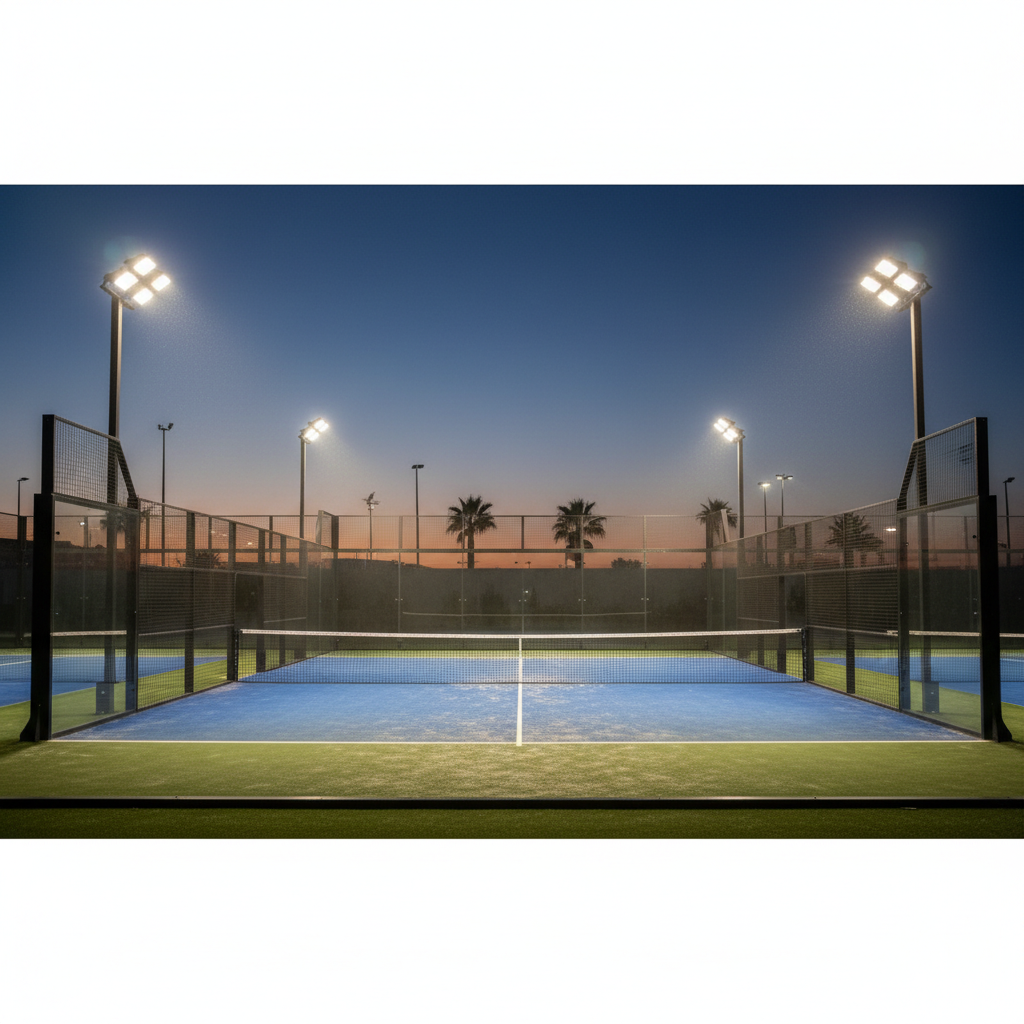
Proper lighting for the padel racket sport requires a minimum of 300 to 500 lux across the entire playing surface to ensure ball visibility during fast-paced rallies. High-performance LED floodlights are the industry standard, offering significant energy savings and instant-on capabilities compared to old metal halide systems. To prevent glare, the lights must be mounted at a height of at least 6 meters and angled specifically to illuminate the floor without blinding players during lobs or overhead shots.
How do LEDs improve the player experience?
Check this out. Modern LED fixtures provide a high Color Rendering Index (CRI), which makes the yellow ball stand out sharply against blue or green turf.
- Uniform light distribution eliminates dark spots in the corners where the glass and mesh meet.
- Flicker-free technology is essential for players who wish to record their matches on high-speed cameras.
- LEDs reach full brightness immediately, allowing clubs to manage booking schedules with zero warm-up time.
Why is IP66 rating important for outdoor courts?
Think about this. For outdoor installations, lighting fixtures must be completely sealed against dust and high-pressure water jets to ensure long-term reliability.
- Waterproof housing prevents electrical shorts during heavy rain or humid conditions.
- Integrated heat sinks extend the lifespan of the LED chips by preventing thermal degradation.
- Durable mounting brackets resist vibration from high winds, keeping the light beams accurately aimed.
Key Takeaway: Installing IP66-rated LED lighting with a minimum 300 lux output ensures a professional playing environment and minimizes long-term operational costs.
| Metric | Target Value | Benefit |
|---|---|---|
| Illuminance | 300-500 Lux | Optimal ball tracking speed |
| Mounting Height | 6 Meters | Reduced glare for overhead shots |
| Protection | IP66 Rating | All-weather reliability and safety |
High-quality illumination extends the usable hours of your facility, directly increasing the daily revenue potential of each court.
How to select a padel racket sport court manufacturer?
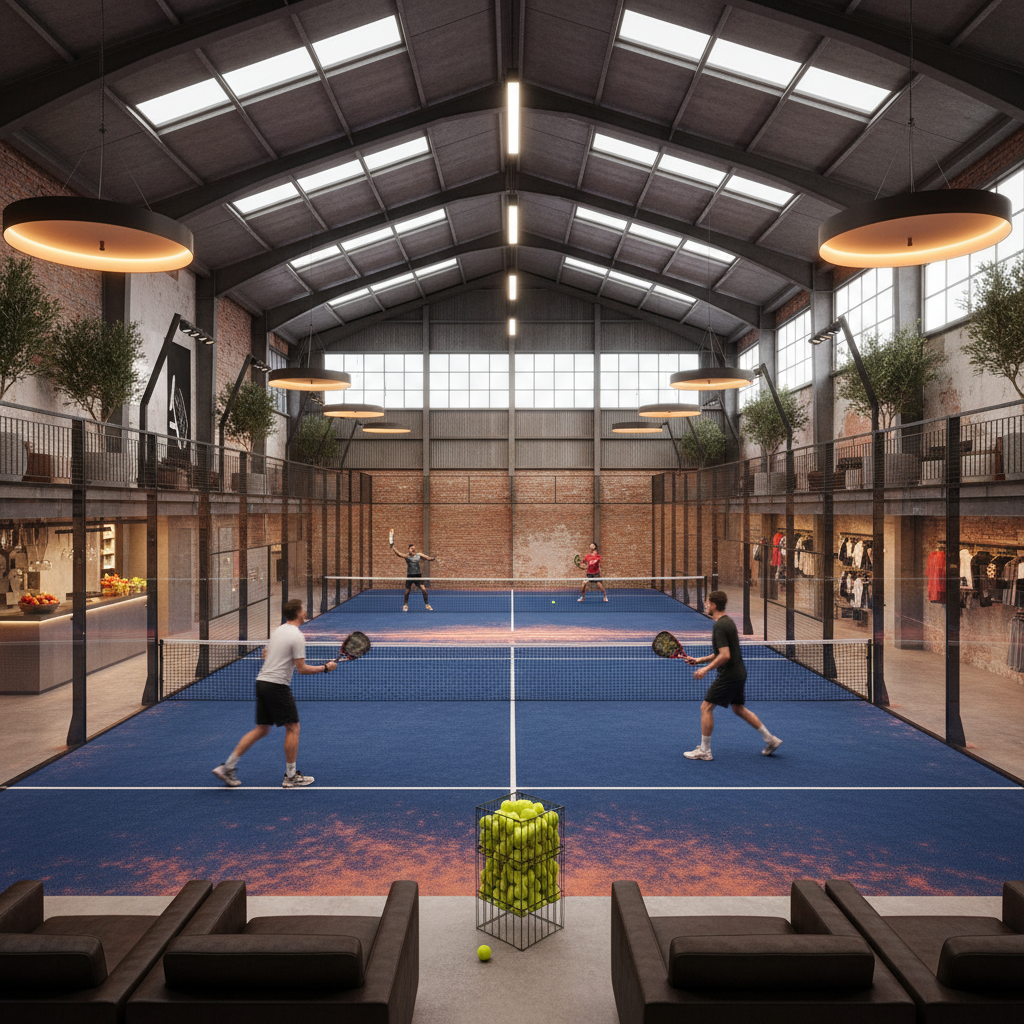
Selecting a producer for your padel racket sport project should involve verifying their factory certifications and international logistics experience. A direct-from-factory manufacturer can offer significant cost savings by eliminating middleman markups while providing customized colors and branding options. You should look for companies with a minimum of 15 years in the sports equipment industry to ensure the engineering of their court structures has been proven in diverse climates around the world.
What certifications should you verify?
The bottom line is this. International safety standards like CE and ISO are non-negotiable for commercial builds to protect your facility from legal liability and structural failure.
- Glass must meet EN 12150-1 standards for thermally toughened soda lime silicate safety glass.
- Steel frames should have certified hot-dip galvanization reports to prove corrosion resistance.
- Turf should be tested for drainage rates and UV stability to ensure it lasts a decade of heavy use.
Why is OEM/ODM support a major advantage?
Ready for the good part? Choosing a manufacturer with full customization capabilities allows you to integrate your club’s logo and specific color palette directly into the court structure.
- Custom-colored steel frames and turf help build a unique brand identity for your sports club.
- Professional technical drawings and installation videos simplify the construction process for local teams.
- Direct communication with the factory floor ensures that any technical questions are answered by the actual engineers.
Key Takeaway: Partnering with a factory-direct manufacturer with over 15 years of experience can save you up to 30% on procurement while ensuring high-end safety standards.
| Selection Criteria | What to Look For | Value Added |
|---|---|---|
| Experience | 15+ Years in Industry | Proven structural reliability |
| Pricing | Factory Direct | 30% reduction in total project cost |
| Customization | OEM / Branding Support | Enhanced club prestige and identity |
Choosing the right partner ensures that your investment results in a high-quality, durable facility that attracts the best players and generates consistent returns.
Building a successful athletic facility requires a combination of high-quality materials, precise engineering, and a deep understanding of player needs. We have explored how the padel racket sport combines social engagement with high-density revenue to create a powerful opportunity for investors and club owners. By focusing on international standards for glass, turf, and lighting, you can ensure your project stands out in a competitive market. If you are ready to begin your journey into this high-growth athletic discipline, contact us today for a professional consultation. At SuperbPadel, we are committed to providing factory-direct excellence to help you build the future of sports in your community.
Q1: Can I build a padel racket sport court on an existing tennis court space?
Yes, you can typically fit two to three padel courts into the footprint of a single standard tennis court, significantly increasing your facility’s player capacity and revenue.
Q2: How often does the synthetic turf need to be replaced?
With proper maintenance and regular brushing of the silica sand, high-quality monofilament turf should last between 8 and 12 years in a high-traffic commercial club.
Q3: Is the glass safe for high-impact professional play?
The 12mm tempered safety glass used in professional courts is specifically engineered to absorb significant physical impacts and is virtually impossible to break through regular gameplay.
Q4: Do I need special permission to install outdoor lighting?
Most jurisdictions require a permit for permanent sports lighting; however, modern LEDs are designed with asymmetrical lenses to minimize “light spill” into neighboring properties, making approvals easier.
Q5: What is the main maintenance requirement for these courts?
The primary tasks include regular brushing of the sand to keep it level, cleaning the glass walls once a week, and checking the tension of the net and metallic mesh components.