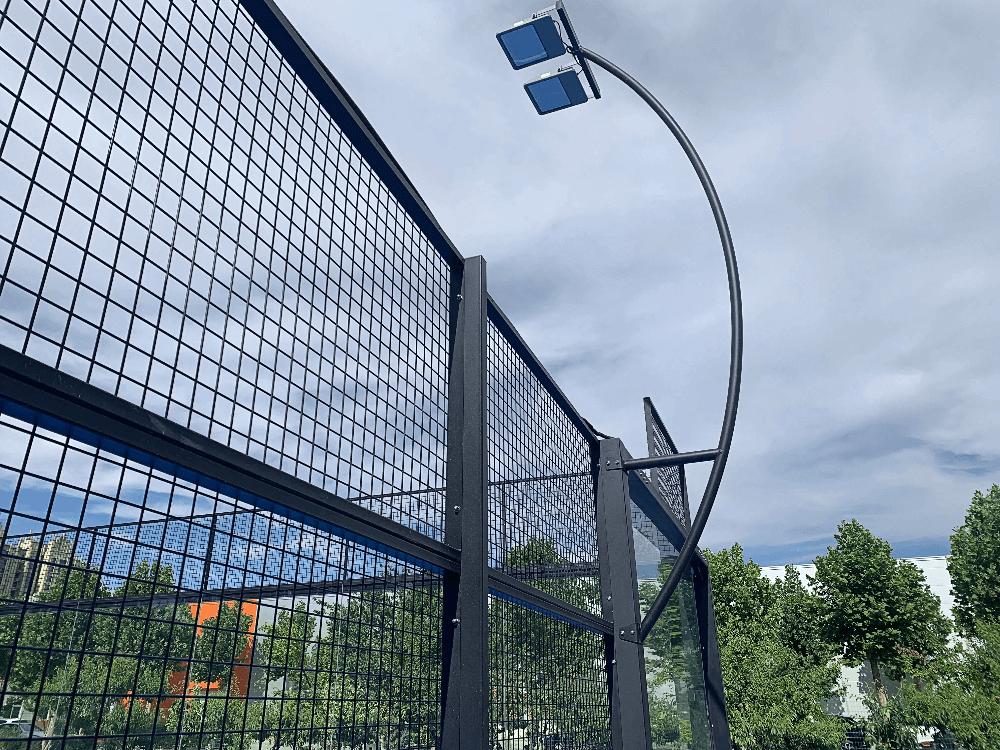
Many commercial property owners and sports facility investors face a mounting dilemma as traditional fitness models stagnate and land costs skyrocket. You might notice your tennis courts sitting empty or your warehouse space failing to generate the high-yield returns required in today’s competitive real estate market. This underutilization represents thousands of dollars in lost booking fees and member engagement every month. padel usa provides the definitive solution by introducing a high-density, social racquet sport that maximizes revenue per square foot. By following professional construction standards and sourcing industrial-grade materials, you can transform any space into a premier athletic destination.
1. Why is padel usa growing so fast?
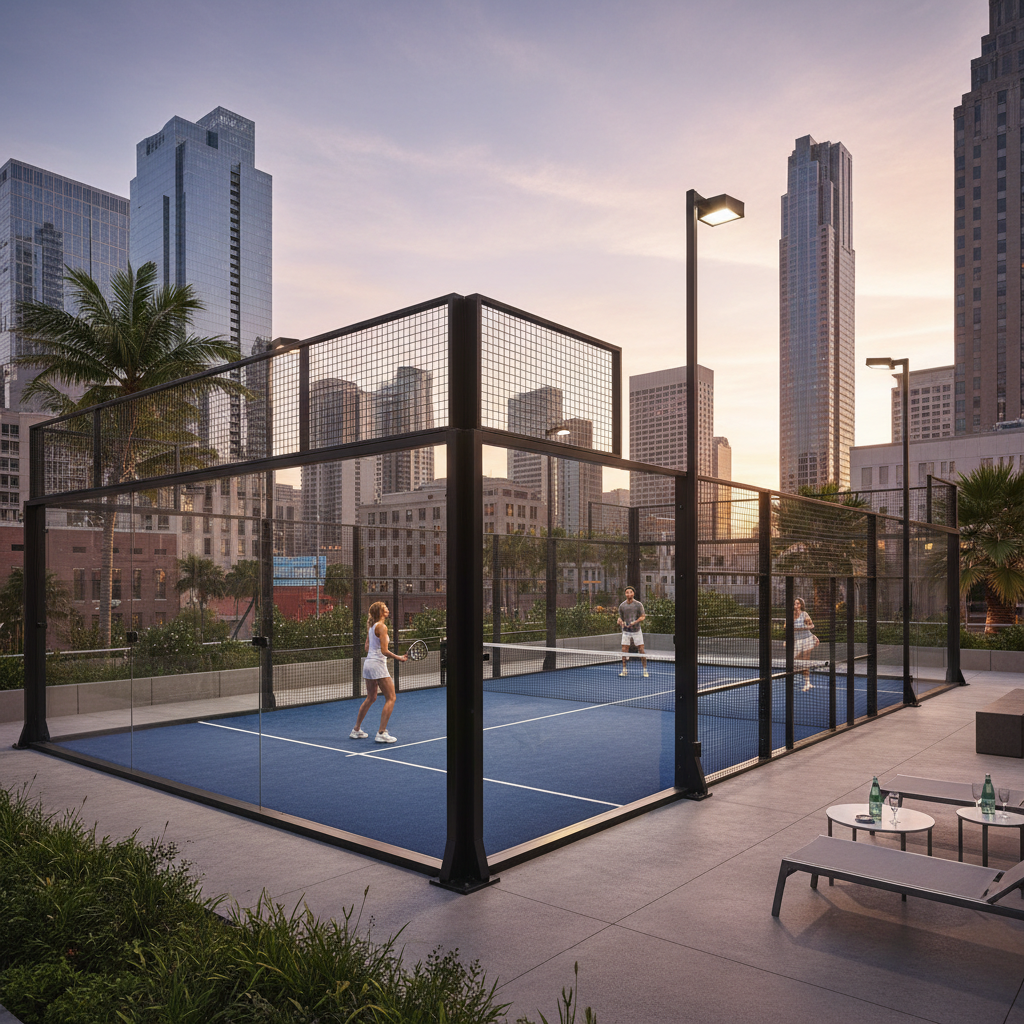
The explosive expansion of padel usa is driven by its unique combination of social accessibility and high land-use efficiency for facility developers. You are seeing a shift where athletes prioritize community-driven sports that are easier to learn than tennis but offer more strategic depth than pickleball. This momentum is supported by significant venture capital entering the American sports market to capture the millennial and Gen Z demographic.
The game is played exclusively in a doubles format, which naturally fosters a social atmosphere that keeps players returning to your club. Because the court is smaller than a traditional tennis court, players remain in close proximity, allowing for constant communication and camaraderie during matches. This social “stickiness” translates directly into higher membership retention rates and increased secondary spending at your facility’s cafe or pro shop.
Market gap in North America
While Europe and South America have already embraced the sport, the United States represents the next major frontier for professional-grade court installations. Think about it. Investors who secure prime locations now are positioning themselves as market leaders before the sector reaches full saturation. You can capitalize on this early-mover advantage by offering a premium experience that sets your brand apart from generic fitness centers.
- Three courts can fit into the space of a single traditional tennis court.
- Doubles-only play increases the number of active users per hour.
- Low learning curves attract beginners and families immediately.
- Strategic wall rebounds create a fast-paced, engaging spectator experience.
Ready for the good part?
The high player density means your revenue potential triples without requiring you to acquire additional real estate.
Key Takeaway
| Metric | Impact | Business Result |
|---|---|---|
| Player Density | 300% Increase | Higher hourly rental yield |
| Learning Curve | Low | Broadest possible target market |
| Social Factor | High | Increased long-term retention |
The rapid adoption of the sport in the American market is a direct result of its superior social engagement and the massive ROI potential for commercial property developers.
2. What are the dimensions for padel usa courts?
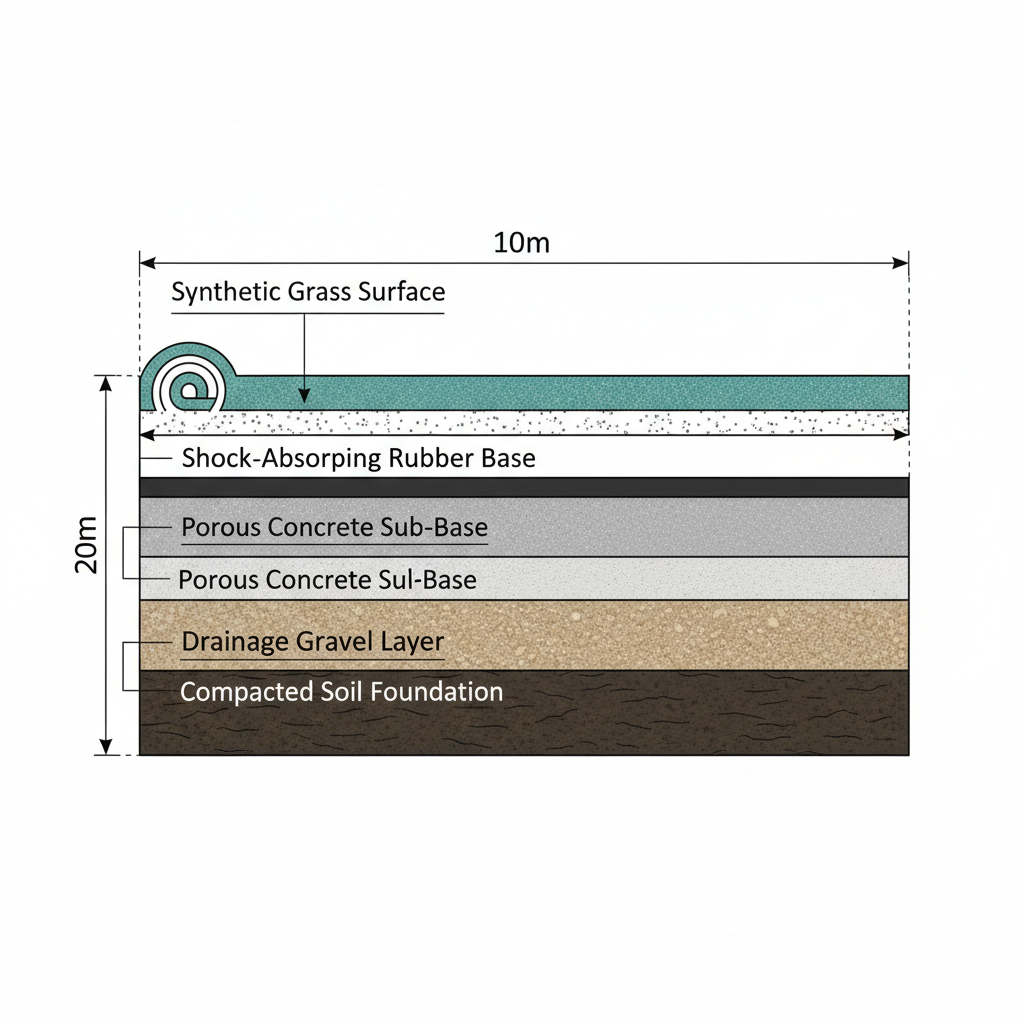
To build a professional padel usa facility, you must adhere to the international standard footprint of 20 meters in length by 10 meters in width. This precise geometry is critical because it ensures the ball rebounds predictably off the glass walls, which is the hallmark of the game’s strategy. Any deviation from these metrics can disqualify your facility from hosting sanctioned tournaments and frustrate experienced players.
International size standards
The internal playing area covers exactly 200 square meters, providing a compact yet intense arena for doubles matches. You should ensure that the service lines are marked exactly 6.95 meters from the net to maintain the integrity of the game’s rules. The net itself must stand at 88 centimeters in the center, tapering slightly to 92 centimeters at the supporting posts.
Safety and clearance zones
Beyond the playing lines, you must account for an out-of-court play zone and adequate ceiling height for lobs. Professional standards recommend a minimum vertical clearance of 6 to 8 meters across the entire court surface to allow for high-arcing defensive shots. Believe it or not. If your ceiling is too low, you effectively remove a major strategic element of the game, making your facility less attractive to high-level competitors.
- Standard playing area: 20m x 10m.
- Recommended safety perimeter: 2 meters wide.
- Net height at center: 88cm.
- Minimum ceiling height: 6m (8m preferred).
Here is the deal.
Precision in the foundation stage prevents the glass panels from shifting, which can cause structural failure or inconsistent ball bounces.
Key Takeaway
| Component | Dimension | Requirement |
|---|---|---|
| Length | 20 Meters | Absolute standard |
| Width | 10 Meters | Absolute standard |
| Height | 6+ Meters | Critical for lobs |
Maintaining strict adherence to international dimensions is non-negotiable for anyone looking to build a facility that attracts both casual players and professional tournament organizers.
3. How does the glass wall system work for padel usa?
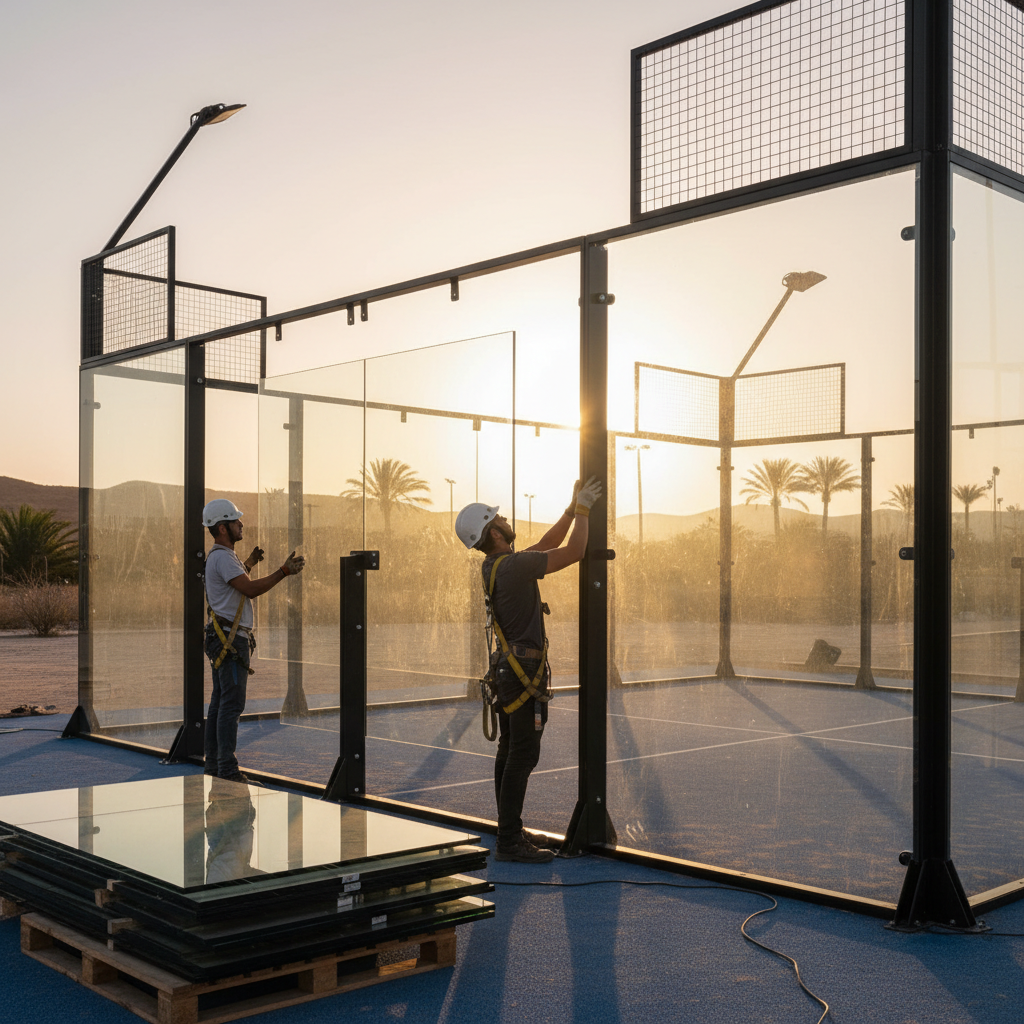
The glass walls of a padel usa court function as an active part of the playing surface, requiring high-impact resistance and perfect transparency. You must utilize 12mm tempered safety glass that is engineered to withstand the force of players crashing into the walls during intense points. This system allows for the strategic “off-the-wall” play that differentiates the sport from traditional racquet games.
Tempered safety glass specs
Standard safety glass used in construction is often not sufficient for the unique stresses of a sports environment. You require glass that meets the EN 12150-1 certification, ensuring it crumbles into small, blunt pieces rather than sharp shards if a catastrophic break occurs. Each panel must be perfectly polished on the edges and secured with UV-resistant gaskets to prevent vibration fatigue over years of heavy use.
Structural impact resistance
The connection between the glass and the steel frame is where the engineering truly matters for your project. You should look for countersunk bolt holes that allow the hardware to sit flush with the glass surface, preventing the ball from taking erratic bounces. You might be wondering. How does the glass stay stable? High-quality systems use a reinforced concrete ring beam to anchor the frame, ensuring the glass remains perfectly vertical even under high wind loads or player impact.
- Thickness: 10mm or 12mm (12mm preferred for durability).
- Certification: EN 12150-1 safety standard.
- Mounting: Flush countersunk bolts.
- Edging: Machine-polished for safety.
Think about it.
Low-quality glass not only ruins the game’s playability but also exposes your business to significant liability and insurance risks.
Key Takeaway
| Glass Attribute | Specification | Benefit |
|---|---|---|
| Thickness | 12mm | Maximum safety/bounce |
| Certification | EN 12150-1 | Liability protection |
| Mounting | Countersunk | Predictable rebounds |
Investing in certified 12mm tempered glass is the single most important decision you can make to ensure the safety and professional quality of your court.
4. What materials define a quality padel usa installation?
A premium padel usa court is defined by its structural longevity and the quality of the playing surface underfoot. You should prioritize hot-dip galvanized steel for the frame to prevent the internal and external corrosion that plagues cheaper, painted structures. This material choice is especially vital for outdoor facilities in coastal or humid American climates where salt air and moisture can quickly degrade inferior metals.
High-density synthetic turf
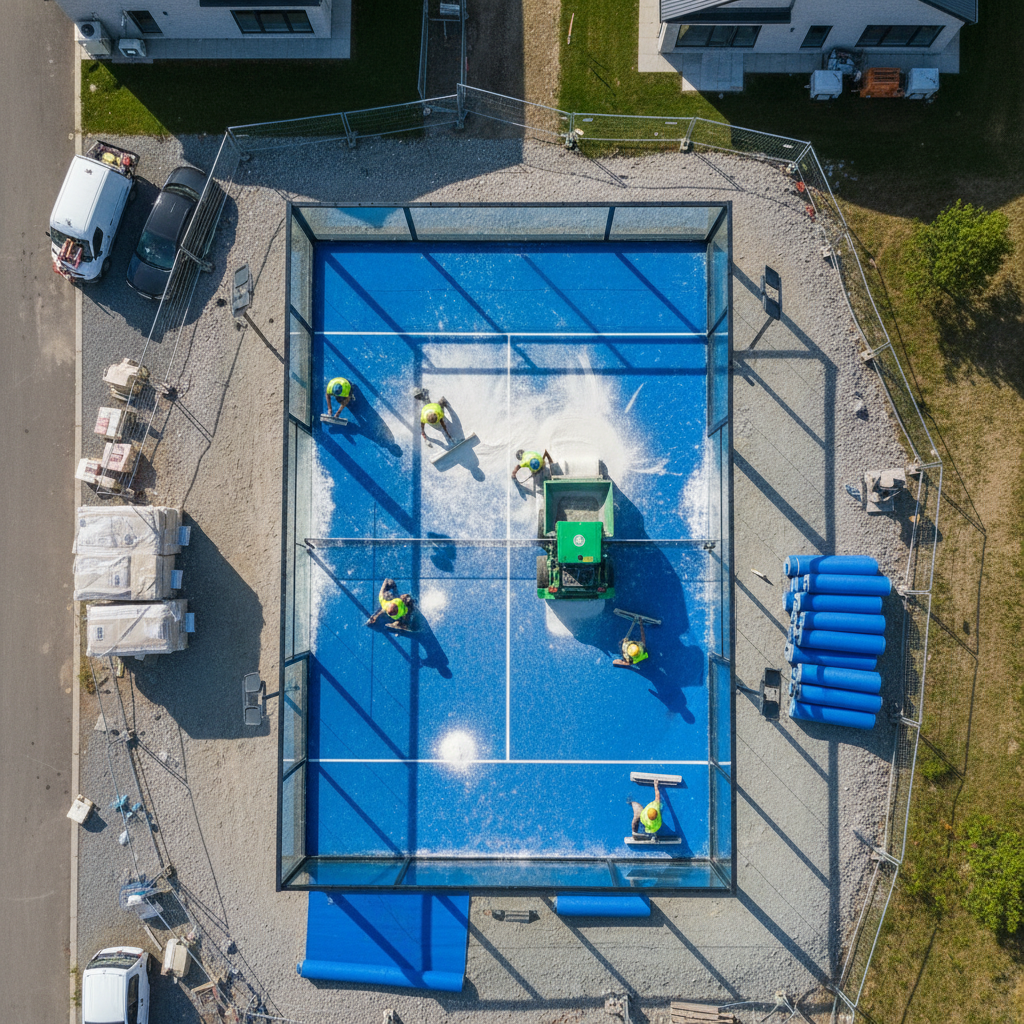
The turf is the most used component of your court and determines the comfort and speed of the game for your members. You should select high-density monofilament or fibrillated turf that is specifically designed to hold silica sand infill without clumping. High-quality turf reduces the strain on players’ joints and ensures that the ball bounce remains consistent across the entire 200-square-meter surface.
Hot-dip galvanized steel
The frame acts as the skeleton of your investment, and its durability determines if your court will last five years or twenty. You want a structure that utilizes 100mm x 100mm steel profiles with a secondary powder coating for UV protection and aesthetic appeal. Here’s the deal. Cheap steel frames will often start showing rust at the weld points within the first eighteen months, leading to expensive repairs and downtime.
- Galvanization: Hot-dip for total rust prevention.
- Turf Type: Texturized monofilament for sand retention.
- Infill: Rounded silica sand to prevent fiber abrasion.
- Fasteners: Stainless steel hardware for all exposed joints.
But wait, there’s more.
The use of UV-stabilized turf prevents the vibrant blue or green colors from fading, keeping your club looking brand new for years.
Key Takeaway
| Material | Selection | Long-term Value |
|---|---|---|
| Frame | Hot-dip Galvanized | 20+ year lifespan |
| Surface | Monofilament Turf | Consistent playability |
| Hardware | Stainless Steel | Low maintenance costs |
Choosing industrial-grade galvanized steel and high-density turf ensures that your facility remains a premium asset with minimal ongoing maintenance requirements.
5. Can you integrate padel usa into business models?
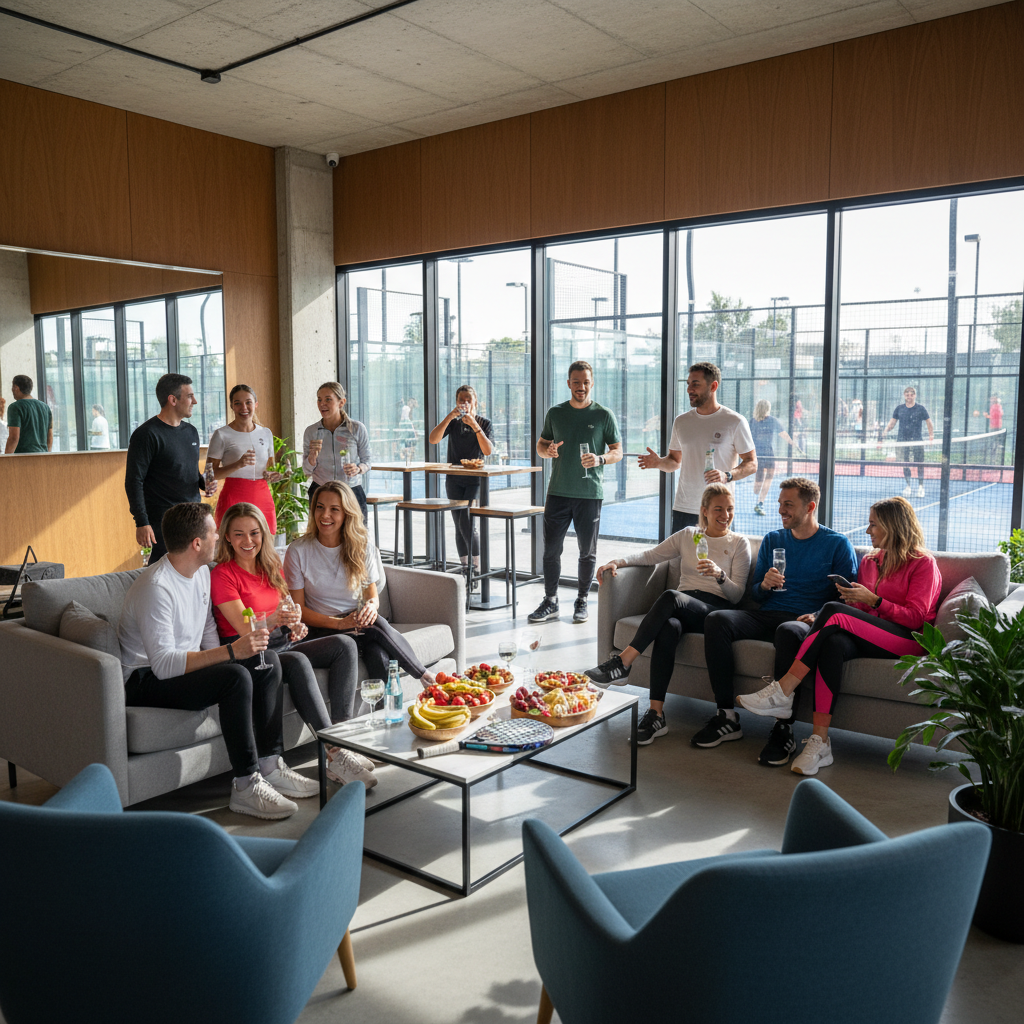
Integrating padel usa into existing business models like gyms, hotels, or real estate developments creates a “social anchor” that drives foot traffic. You are not just building a court; you are creating a lifestyle destination where people stay to eat, drink, and socialize after their match. This synergy allows you to monetize the space far beyond simple hourly court rental fees.
Revenue streams for gyms
For fitness center owners, adding these courts provides a high-margin ancillary income that doesn’t require the constant equipment updates of a weight room. You can charge premium hourly rates, often ranging from $60 to $100 per hour, which players split among four people. This makes the sport affordable for the user but highly profitable for the operator, especially during peak evening and weekend hours.
Hospitality and real estate perks
Luxury resorts and residential complexes use high-end sports amenities to differentiate their properties and attract high-spending tenants. It gets better. A well-designed court with a panoramic glass view serves as a visual centerpiece that enhances the marketing value of the entire development. You can even host corporate tournaments and networking events that bring new, high-net-worth individuals to your property.
- Hourly court rentals for consistent cash flow.
- Membership tiers with priority booking.
- Pro-shop sales for racquets, balls, and apparel.
- Food and beverage revenue from the social lounge.
The best part?
The social nature of the game encourages “dwell time,” meaning customers stay at your facility longer than they would for a standard workout.
Key Takeaway
| Integration Type | Primary Benefit | Secondary Revenue |
|---|---|---|
| Gym / Fitness | Member retention | Coaching/Lessons |
| Real Estate | Property value | Amenity fees |
| Hospitality | Guest experience | Bar / Restaurant |
Incorporating a racquet club into your existing business diversifies your income and creates a community-centric atmosphere that increases your brand’s overall market value.
6. What is the cost for a padel usa project?
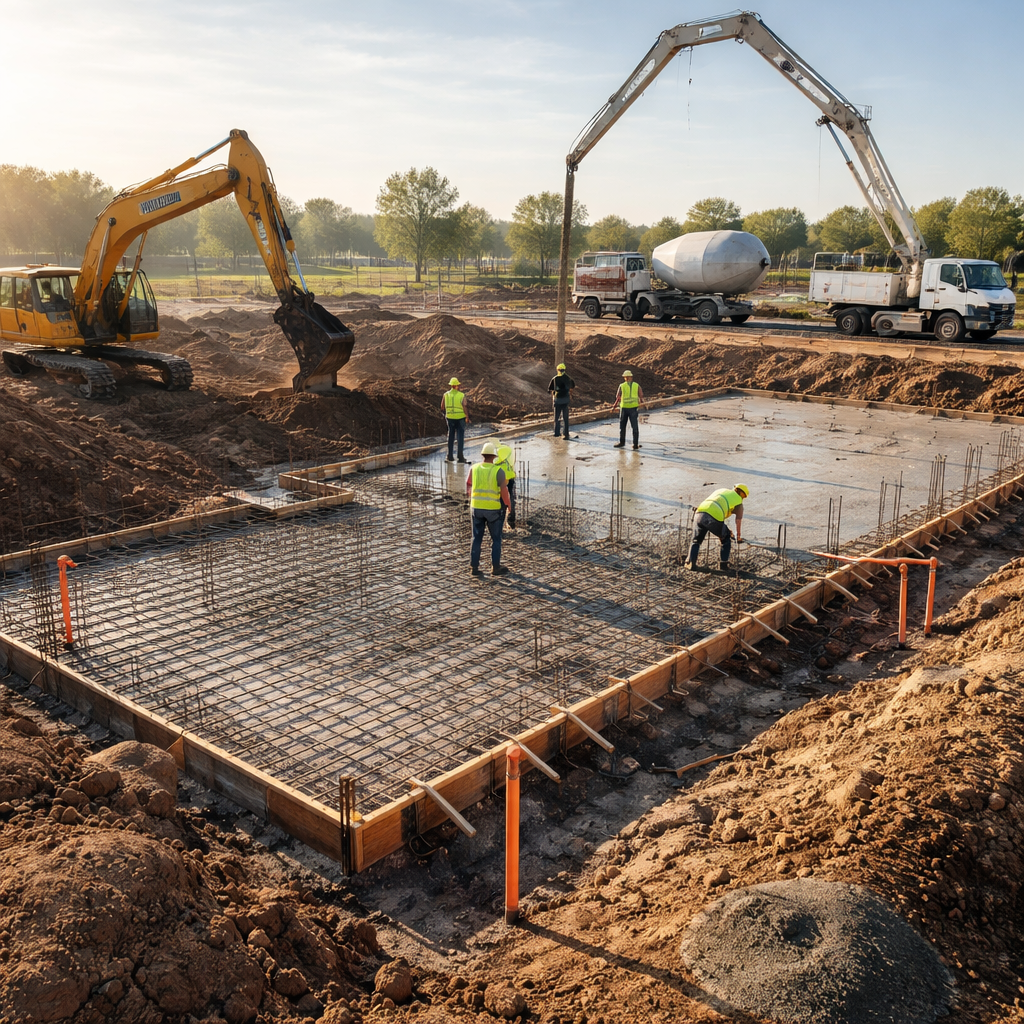
Budgeting for a padel usa project requires you to look at both the initial capital expenditure for the hardware and the localized costs of site preparation. You should expect the court kit itself to be a predictable cost, but your foundation and electrical work will vary based on your specific location and soil conditions. Understanding these variables early prevents the “budget creep” that can stall commercial developments.
Initial capital expenditures
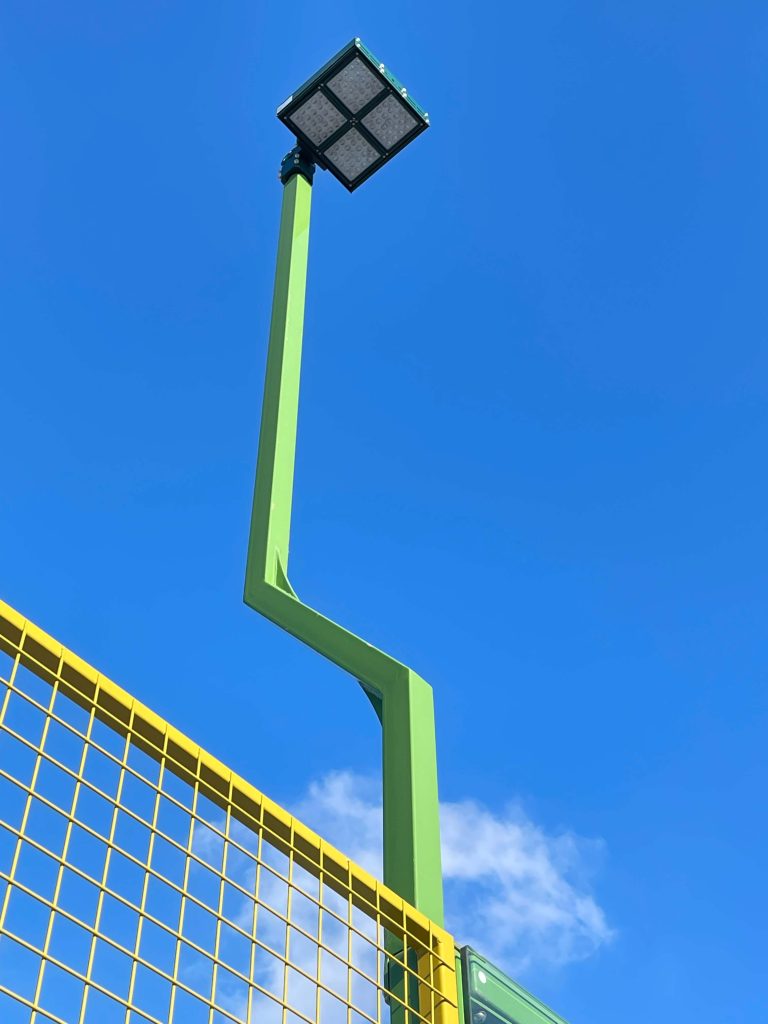
The primary costs include the procurement of the galvanized steel frame, the 12mm tempered glass, and the high-performance turf. You will also need to budget for professional-grade LED lighting systems, which are essential for extending your playable hours into the evening. What’s the catch? Buying through a distributor can add 30% to your costs, so sourcing directly from the manufacturer is the smartest way to maximize your budget.
Long-term ROI projections
Despite the initial investment, the payback period for a well-managed court is remarkably short, often between 18 and 24 months. You have very low ongoing operational costs because the synthetic turf requires no watering and the LED lights are highly energy-efficient. Most facility owners find that their biggest expense is simply the initial land or lease cost, while the court itself generates profit daily.
- Court Kit: Frame, glass, and turf.
- Foundation: Reinforced concrete slab.
- Installation: Professional assembly labor.
- Logistics: Shipping and import duties.
Believe it or not.
A single court operating at 60% capacity can generate over $100,000 in annual revenue from rental fees alone.
Key Takeaway
| Expense Category | Estimated Share | ROI Impact |
|---|---|---|
| Equipment | 40% | Quality = Longevity |
| Civil Works | 40% | Foundation = Safety |
| Installation/Misc | 20% | Efficiency = Speed |
While the upfront costs are significant, the high hourly rental rates and low overhead make these courts one of the most profitable investments in the recreational sector.
7. How to choose a site for padel usa development?
Selecting the right location for your [padel usa](https://superbpadel.com/super- panoramic-padel-court/) facility involves balancing demographic accessibility with technical site requirements like vertical clearance and drainage. You want to place your courts in high-density urban or suburban areas where young professionals live and work. The site must also have the structural capacity to support a reinforced concrete slab that can handle the weight of the glass and steel.
Indoor vs outdoor selection
Indoor courts provide the advantage of year-round playability and protection from wind, which can significantly affect the flight of the ball. If you choose an outdoor site, you must ensure your engineering accounts for local wind loads and utilizes superior drainage to prevent standing water. Think about it. A rainy climate without proper drainage can cost you thousands in lost booking revenue every month.
Foundation and drainage needs
The foundation is the most critical technical part of your site preparation and should never be rushed or cheapened. You require a level, reinforced concrete slab with a 1% slope to ensure water runs off efficiently into a perimeter drainage system. Here is the secret. A perfectly level sub-base prevents the “dead spots” in ball bounce that can ruin the playing experience for competitive athletes.
- Demographics: Focus on high-income, active professional zones.
- Ceiling Height: Minimum 6 meters for indoor sites.
- Foundation: 15cm to 20cm reinforced concrete.
- Utilities: Access to high-voltage power for court lighting.
Ready for the good part?
Converting an old warehouse into an indoor club is often the fastest way to get to market because the structure and parking are already in place.
Key Takeaway
| Site Factor | Indoor Advantage | Outdoor Advantage |
|---|---|---|
| Playability | 365 Days/Year | Fresh air / Social vibe |
| Cost | Higher rent/utilities | Lower build cost |
| Visibility | Controlled environment | High public awareness |
Your site choice determines your operational window; indoor facilities offer consistency, while outdoor courts capitalize on the social appeal of summer sports.
8. Why buy direct from a padel usa manufacturer?
Sourcing your padel usa equipment directly from the factory allows you to eliminate middleman markups and maintain strict quality control over the materials. You gain direct access to the engineers who designed the structure, which is invaluable during the permitting and installation phases. This approach also gives you the flexibility to customize the courts to match your specific brand identity.
Factory pricing advantages
By cutting out distributors, you can typically save 30% or more on your total equipment costs, allowing you to reinvest that capital into marketing or facility amenities. You also receive a more transparent warranty process, as you are dealing directly with the source of the product. Here is the deal. Direct manufacturers can provide you with a full documentation package, including structural drawings and material certifications, which are often required for local building permits.
Customization and branding
A factory-direct relationship enables you to choose custom RAL colors for your steel frames and even integrate your logo directly into the synthetic turf. This level of customization creates a unique brand experience that differentiates your club from competitors using generic, off-the-shelf kits. You can also specify non-standard glass thicknesses or lighting configurations to meet the specific needs of your high-end clientele.
- Save 30% by eliminating distributor commissions.
- Custom colors for the steel frame and turf.
- Integrated branding and logos on the net or glass.
- Direct technical support for local installation teams.
Think about it.
Why pay a premium for a distributor’s logo when you can build your own brand equity with a custom-designed facility?
Key Takeaway
| Procurement Path | Cost Saving | Customization | Technical Support |
|---|---|---|---|
| Direct Factory | High | Unlimited | Direct Engineer |
| Local Distributor | Low | Limited | Third-party |
Buying direct from the manufacturer is the most cost-effective and flexible way to build a high-performance sports facility tailored to your business goals.
9. What permits are needed for padel usa facilities?
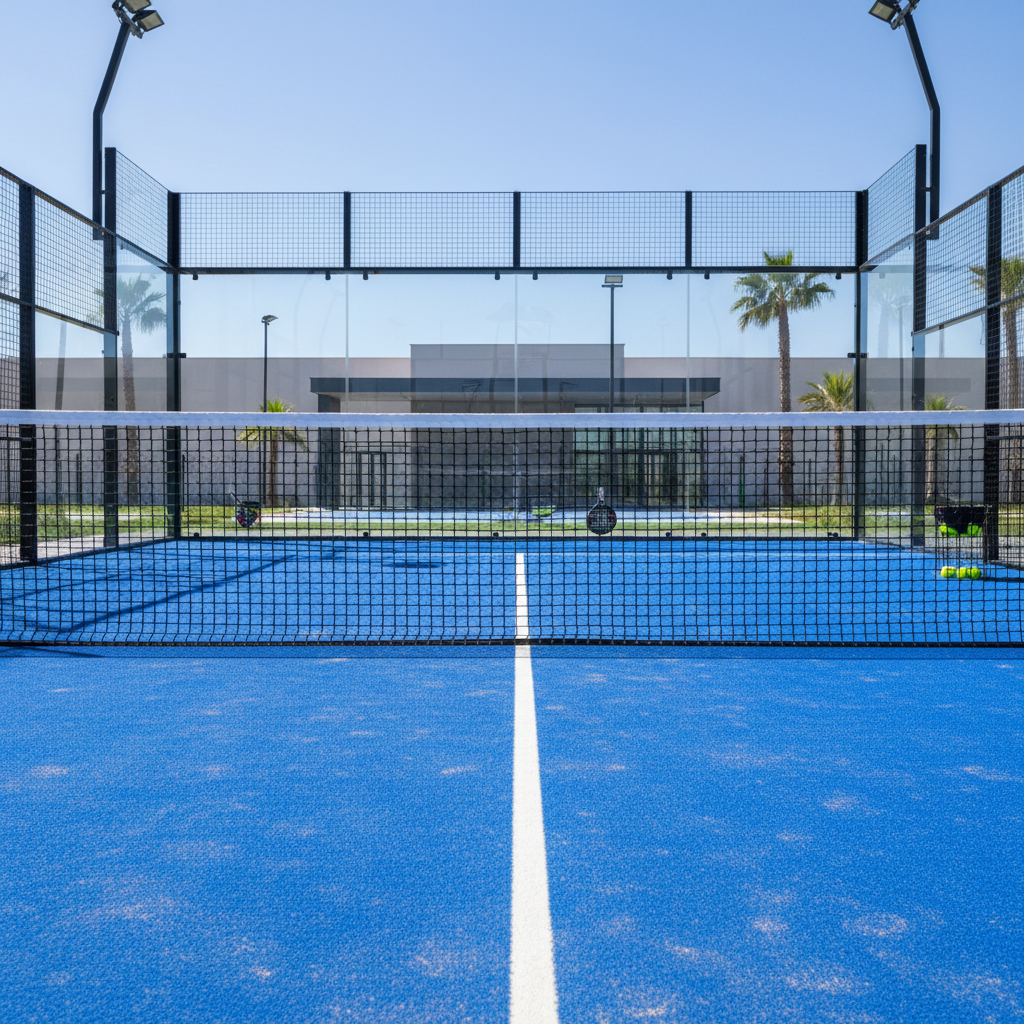
Navigating the legal requirements for a padel usa project involves coordinating with local zoning boards and building departments to ensure structural and environmental compliance. You must verify that your land is zoned for recreational or commercial use before you break ground. Some jurisdictions view these courts as temporary athletic equipment, while others classify them as permanent structures requiring full building permits.
Zoning and compliance
You should consult with a local land-use attorney or consultant to check for setback requirements and parking regulations that might limit your court count. Zoning boards often focus on the height of the glass walls and the total footprint of the facility compared to the lot size. What’s the catch? Failing to secure the correct zoning variances early can lead to “stop-work orders” that can delay your project by months.
Lighting and noise regulations
For outdoor courts in residential areas, you will need to provide a photometric plan that proves your LED floodlights won’t cause light pollution for your neighbors. You also need to consider noise ordinances, as the sound of the ball hitting the glass and racquets can be significant during peak hours. Believe it or not. Using specific acoustic glass or strategic landscaping can help you meet noise requirements and maintain good relationships with the local community.
- Zoning verification: Commercial/Recreational usage.
- Building Permits: Structural safety and foundation.
- Electrical Permits: Lighting and gate access.
- Environmental: Noise and light pollution plans.
Here is the secret.
Having your manufacturer’s structural drawings and material certifications ready will speed up the permit approval process significantly.
Key Takeaway
| Permit Type | Critical Factor | Proactive Step |
|---|---|---|
| Zoning | Setbacks/Usage | Hire a local consultant |
| Structural | Wind/Soil load | Provide mfg. drawings |
| Environmental | Noise/Light | Get a photometric plan |
Securing the proper permits early is essential to protecting your investment and ensuring your facility can operate legally and safely for the long term.
10. How do you maintain padel usa court longevity?
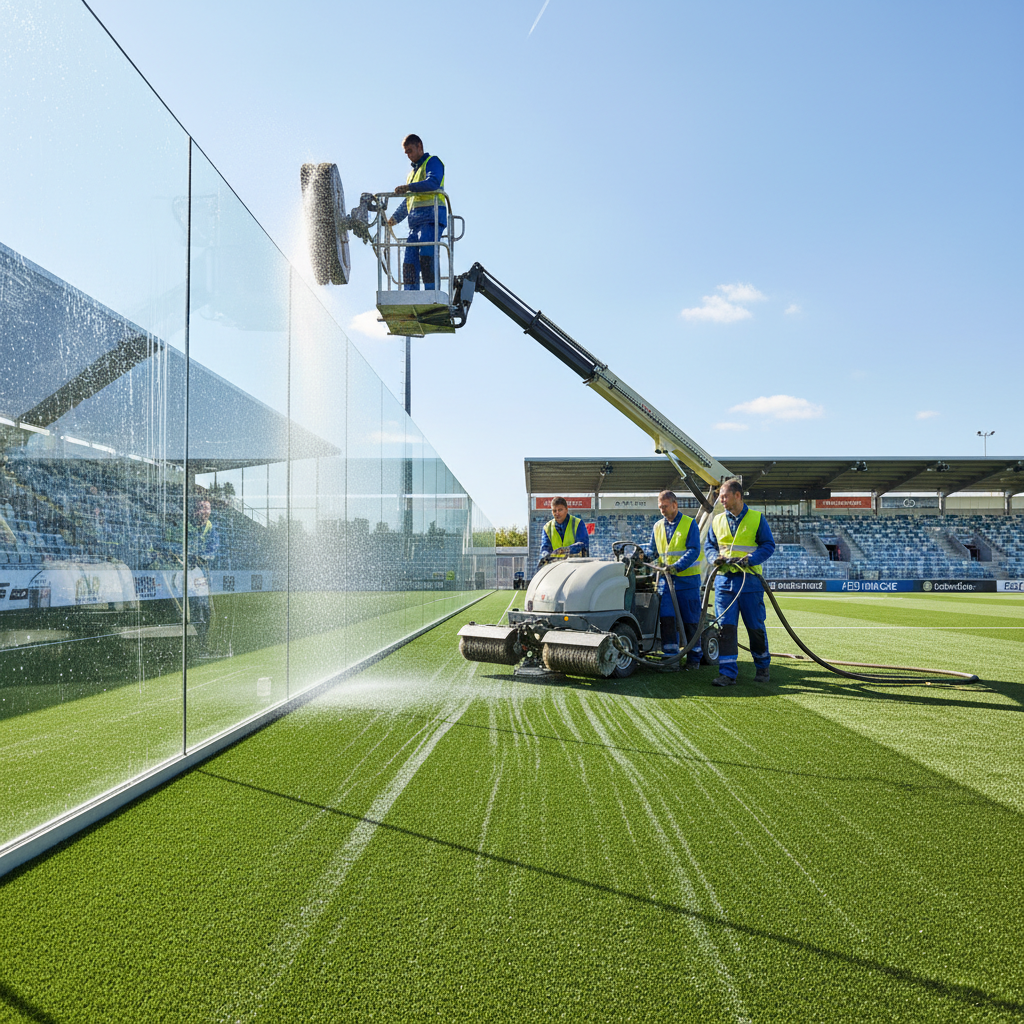
Maintaining your padel usa facility is remarkably simple but requires a consistent schedule to prevent premature wear of the turf and structural components. You should prioritize the redistribution of the silica sand infill to ensure the grass fibers stay upright and the ball bounce remains uniform. Neglecting basic maintenance can lead to slippery spots and uneven wear that reduces the lifespan of your synthetic surface.
Turf grooming schedules
You should use a specialized power brush once every two weeks to redistribute the sand that naturally moves toward the corners during play. This simple task prevents the center of the court from becoming “bald” and ensures that players have the necessary grip for quick pivots. But wait, there’s more. Removing leaves and debris daily prevents the growth of moss or algae, which can damage the turf’s backing and hinder drainage.
Glass and structure inspection
Every month, you should inspect the glass panels for any chips and check that the mounting bolts remain tight. The vibrations from thousands of ball impacts can occasionally loosen the hardware, so a quick tightening session is vital for structural safety. You might be wondering. How do I keep the glass clear? Regular cleaning with non-abrasive agents maintains the premium aesthetic of your club and ensures spectators have an unobstructed view of the action.
- Weekly: Clean glass panels and remove surface debris.
- Bi-Weekly: Brush the turf to redistribute silica sand.
- Monthly: Inspect and tighten structural bolts.
- Yearly: Deep clean the turf and top up sand levels.
Think about it.
A well-maintained court not only looks better but also retains its value and attracts the high-end members who expect a pristine environment.
Key Takeaway
| Task | Frequency | Purpose |
|---|---|---|
| Turf Brushing | Bi-Weekly | Uniform ball bounce |
| Bolt Tightening | Monthly | Structural safety |
| Glass Cleaning | Weekly | Aesthetic appeal |
A consistent maintenance routine is the most effective way to protect your capital investment and provide a professional-grade experience for your members.
Building a successful sports facility requires a partnership with experts who understand the technical nuances of international standards and industrial-grade construction. You have the opportunity to capitalize on the fastest-growing racquet sport in the world by offering a premium, social destination for your community. By focusing on high-quality galvanized steel, certified tempered glass, and professional site engineering, you ensure that your facility remains a profitable asset for decades. contact us today to receive a custom quotation and start your journey toward owning a world-class athletic venue.
FAQ
Can I build these courts in a high-wind area?
Yes, but you must ensure the engineering includes reinforced steel profiles and deeper concrete footings to handle the lateral force of the glass walls during a storm.
How do I handle drainage for an outdoor facility?
We recommend using a porous concrete base or a 1% slope on a standard slab with a specialized perimeter drainage channel to ensure play can resume quickly after rain.
Can I customize the court colors for my brand?
Absolutely. We offer custom powder coating in any RAL color for the steel frame and can integrate your logo directly into the turf or net.
What is the typical lifespan of a professional court?
With hot-dip galvanized steel and 12mm tempered glass, the structure is designed to last over 20 years with minimal maintenance.
Do I need a specialized crew for the installation?
While the modular design allows local contractors to handle the assembly, we provide detailed manuals and remote video support to ensure everything is perfectly aligned.