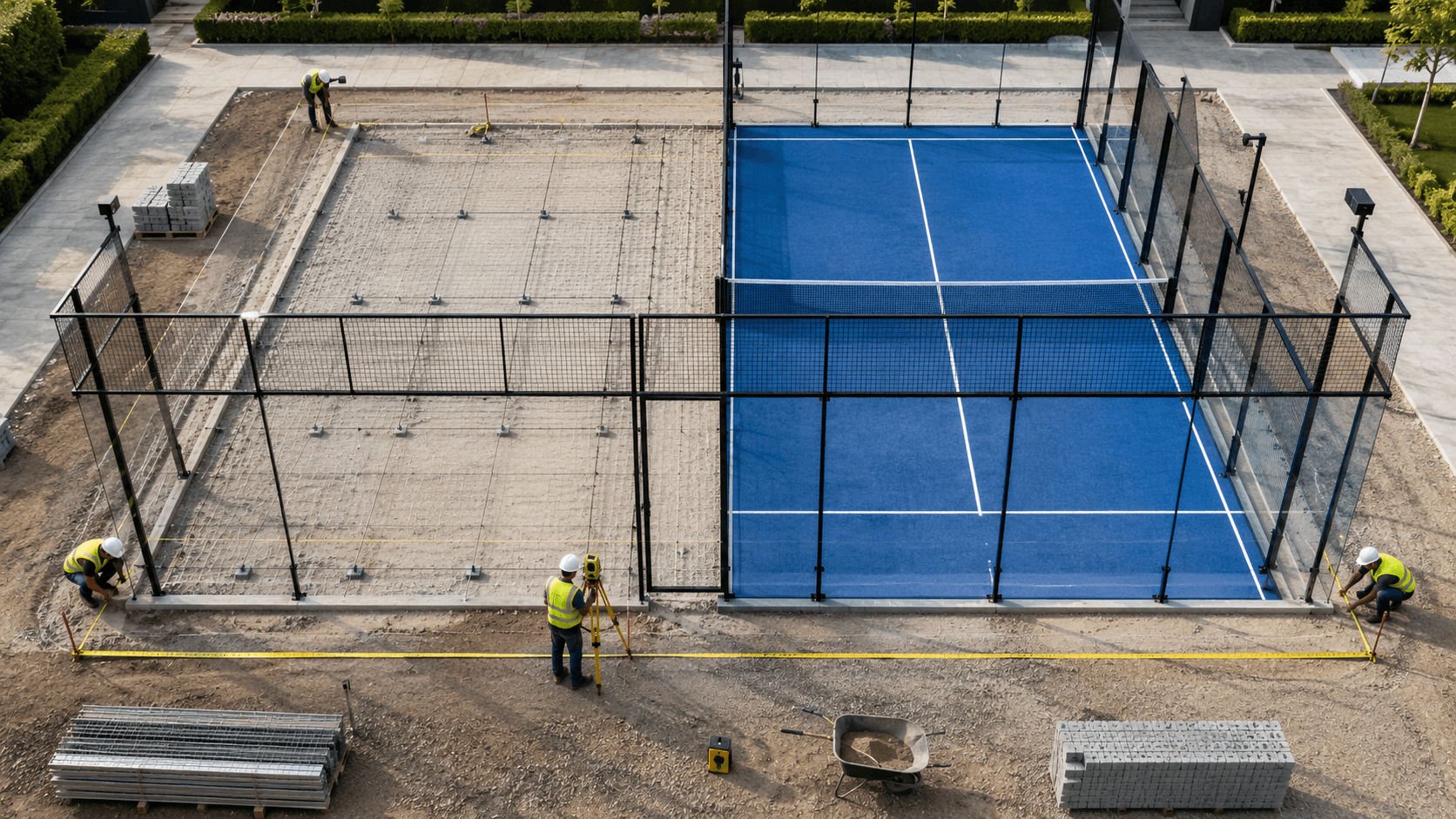
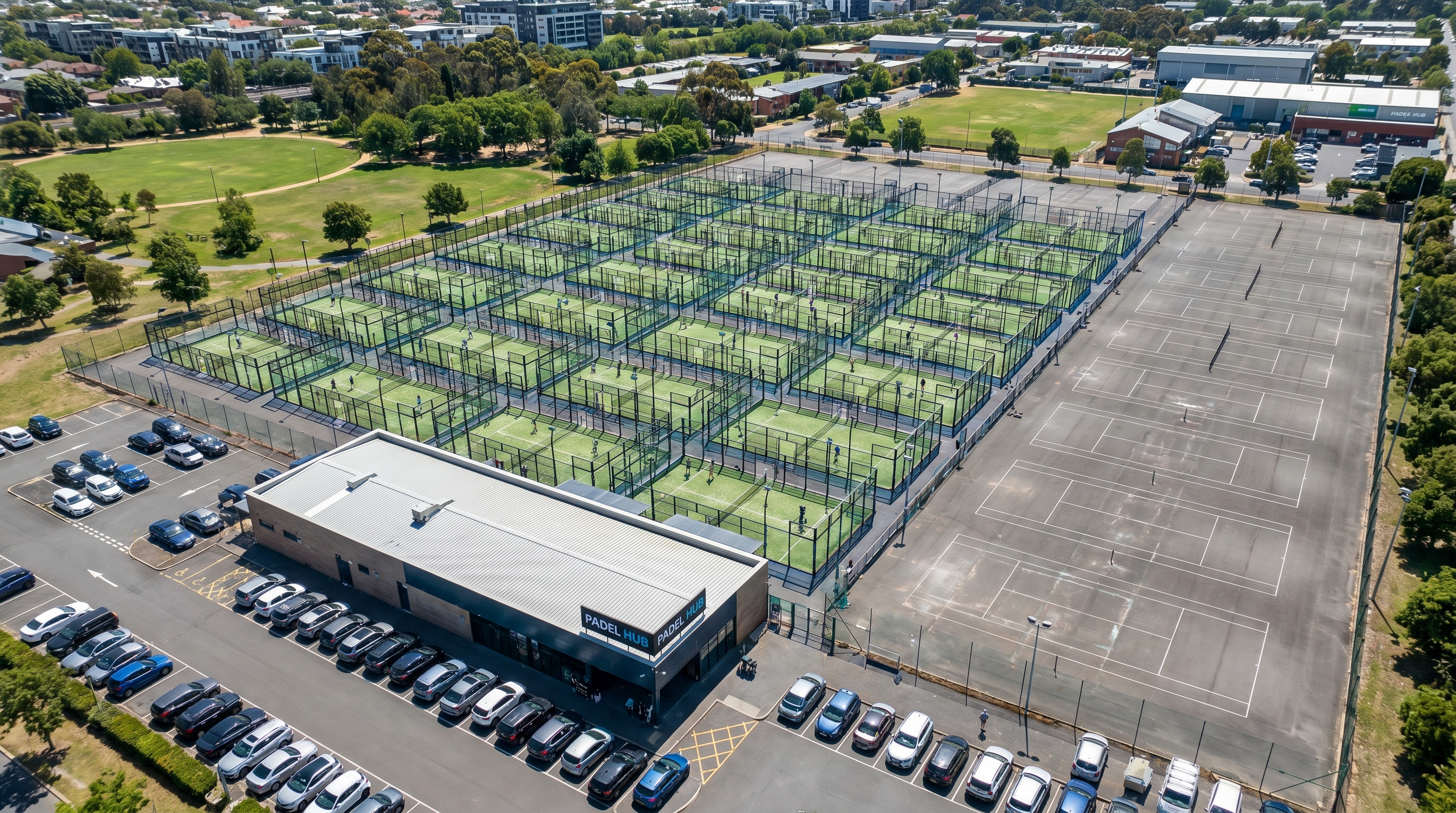
A standard padel court size is exactly 20 meters long by 10 meters wide, creating a total playing surface of 200 square meters. Many sports facility owners struggle with underutilized land and low revenue per square foot when hosting traditional racquet sports. Think about it: a tennis court takes up nearly 700 square meters but only serves four players at a time, leading to slow returns on investment and high maintenance costs. The solution is adopting the professional padel court size which allows you to triple your player capacity and revenue potential within the same footprint.
What is the standard padel court size?
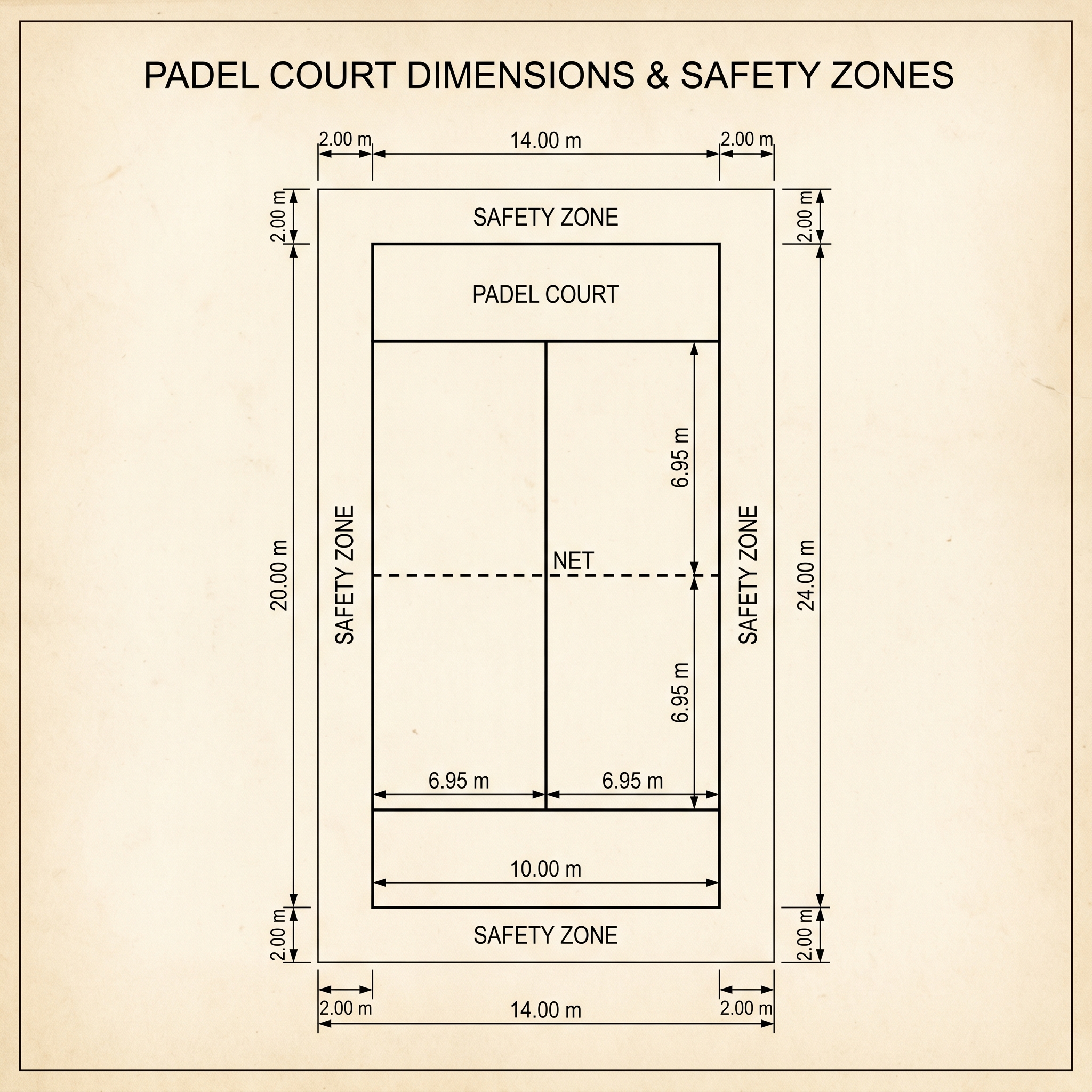
The standard dimensions for a professional court are a 10m x 20m rectangle enclosed by glass and mesh. Adhering to this specific padel court size is vital for ensuring that gameplay meets international standards and provides the intended social experience. Most commercial clubs use this doubles format to maximize their court occupancy and social stickiness.
How wide is a doubles court?
A doubles court must be exactly 10 meters wide between the inner faces of the walls. Look:
- Net Width: 10 meters across the center.
- Side Walls: 10 meters long at each end.
- Service Boxes: Two boxes per side, each 5 meters wide.
This width allows for the dynamic, fast-paced exchanges that make the sport famous.
What is the service line distance?
The service lines are positioned 6.95 meters from the net on each side of the court. Wait, there’s more.
- Length of Box: 6.95 meters from net to service line.
- Central Line: Extends 20cm beyond the service line for visibility.
- Box Area: Approximately 34.75 square meters per service quadrant.
These lines define the legal serving area and are critical for competitive fairness.
Is the net height specific?
The net must be 88cm high at the center and 92cm high at the supporting posts. The bottom line?
- Center height: 0.88 meters precisely.
- End height: 0.92 meters at the tension posts.
- Net length: Covers the full 10-meter width of the court.
Key Takeaway: Using the exact 10x20m layout ensures your facility is ready for professional tournaments and standard league play.
| Dimension | Metric Measurement | Purpose | |
|---|---|---|---|
| Length | 20.00 m | Standard playing area length | |
| Width | 10.00 m | Standard playing area width | |
| Net Height | 0.88 m | Center point regulation height |
The architectural blueprint confirms that every centimeter of the court is designed for high-intensity movement and fair play.
Is the 10x20m padel court size profitable?
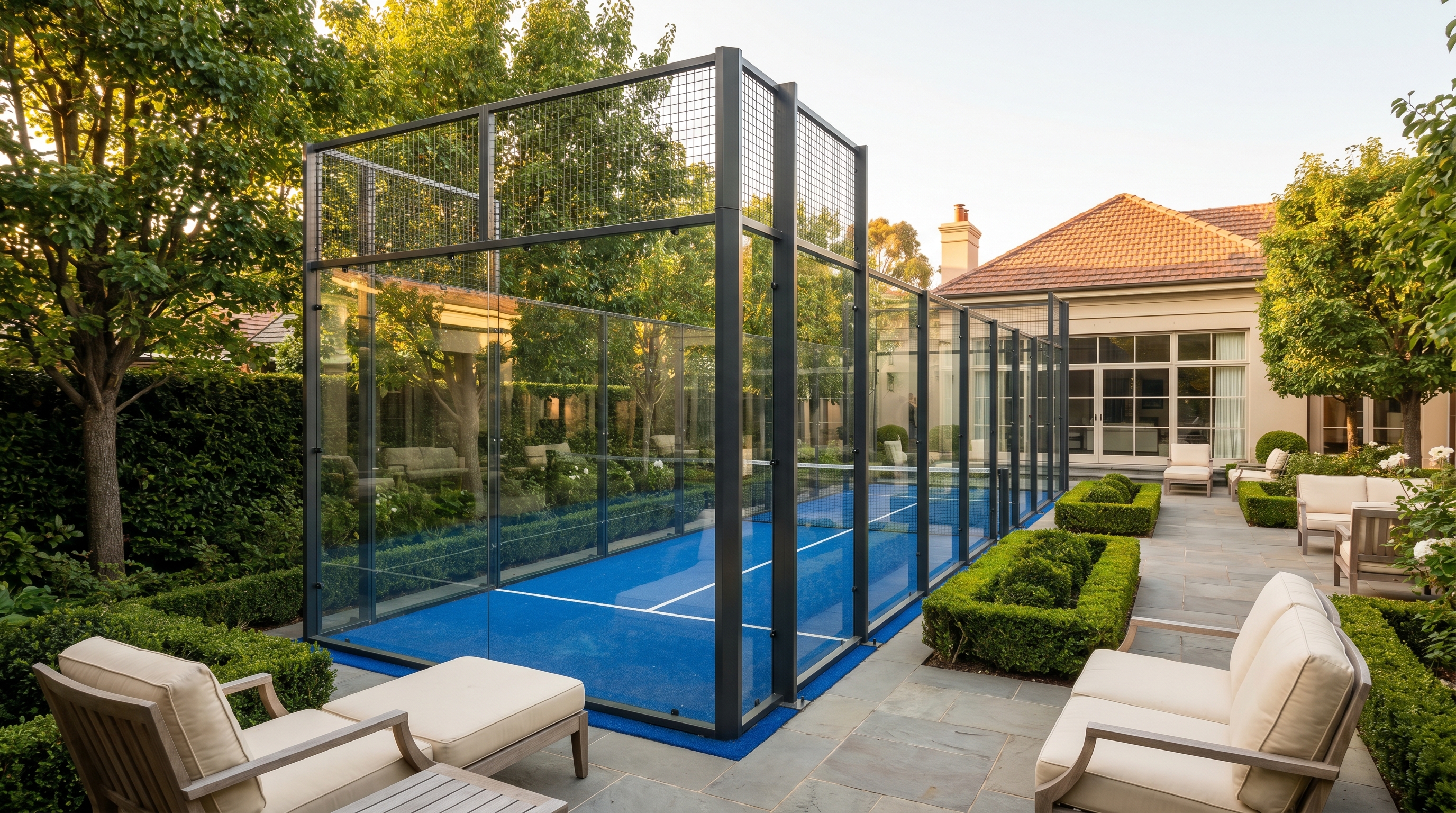
Yes, this dimension is exceptionally profitable because it maximizes player density in a relatively small footprint. Investors often choose this padel court size because it allows for a much higher revenue per square meter compared to nearly any other racquet sport. By packing more players into less space, you significantly shorten your timeline for achieving a full return on investment.
Why is ROI higher than tennis?
Padel’s ROI is superior because you can fit three courts into the space of a single tennis court. Think about it:
- Total Players: 12 players vs. 4 players in the same total area.
- Booking Income: Three simultaneous rentals instead of one.
- Maintenance: Artificial turf and glass are more durable than clay or grass.
This efficiency makes it the smartest sports business investment available today.
Can I increase revenue per sqm?
You can boost revenue by integrating social zones around the court perimeter. Best of all:
- F&B Sales: Higher player turnover drives more café and bar traffic.
- Pro Shop: Smaller footprints leave room for retail spaces selling gear.
- Events: The social nature of the court size supports corporate networking days.
Key Takeaway: Spatial efficiency directly translates to tripled income potential, making the 10x20m layout a masterclass in sports real estate.
| Metric | Padel Court | Tennis Court | Efficiency Gain | |
|---|---|---|---|---|
| Area Needed | ~200 sqm | ~670 sqm | 70% Less Space | |
| Player Capacity | 4 People | 4 People | 3.3x Density | |
| Revenue Units | 3 Courts | 1 Court | 300% Potential |
The data proves that transitioning from traditional racquet sports to padel can dramatically increase the yield of any sports facility.
Can I fit a court in a small padel court size?
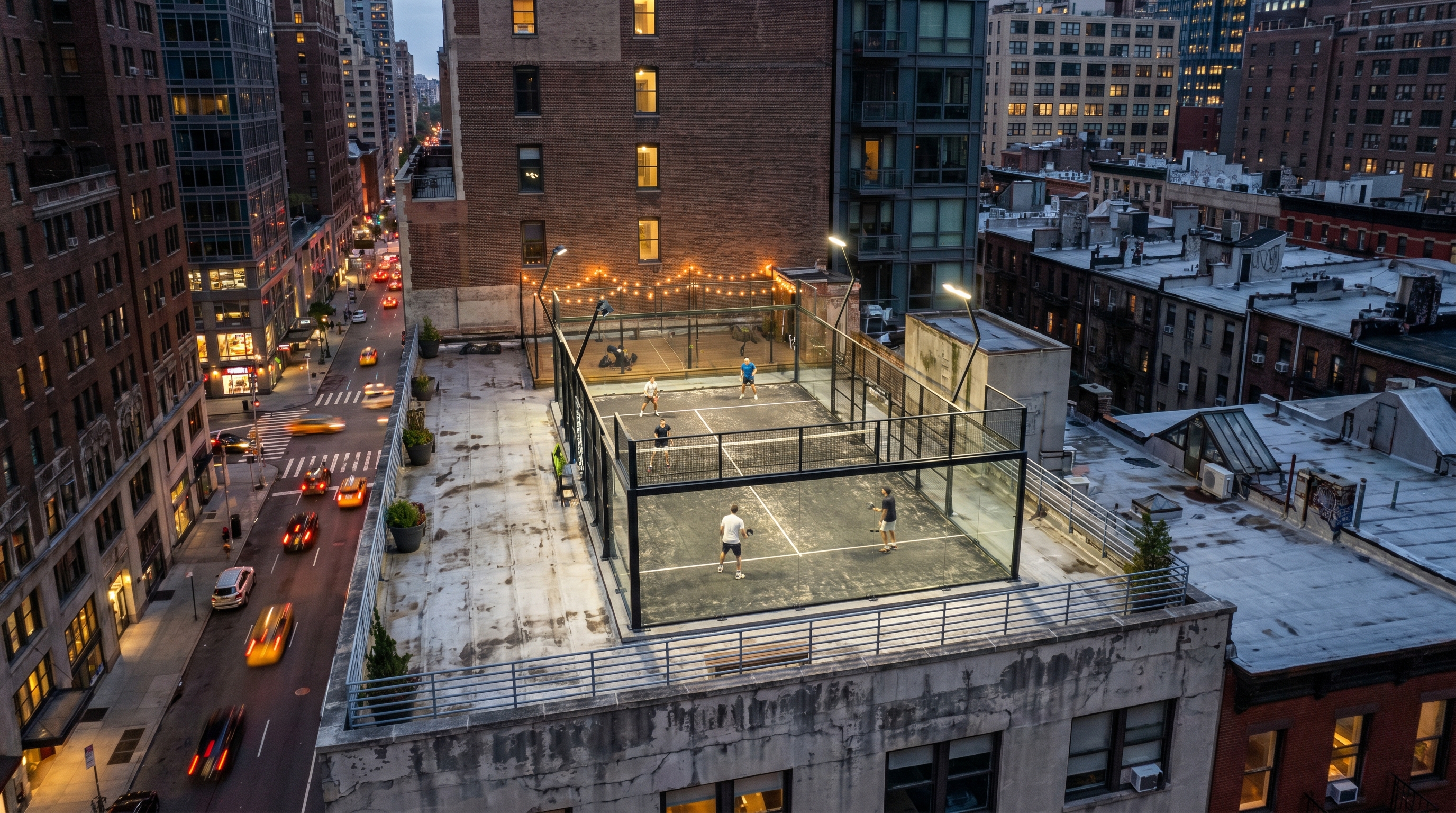
You can install a court in restricted spaces by opting for a singles layout, which reduces the width significantly. Even if you don’t have the full 10-meter width, a modified padel court size allows you to utilize narrow rooftop strips or garden corners effectively. These smaller installations are perfect for luxury residential projects or niche training facilities.
Is a singles court viable?
A singles court measures 6 meters wide by 20 meters long, saving 40% of the width. It gets better:
- Footprint: Only 120 square meters of playing space.
- Target Market: Coaching clinics and solo practice sessions.
- Fit: Ideal for narrow urban warehouse corridors.
While less common for tournaments, they are a great way to fill “dead” space in your club.
How much buffer space is needed?
You should allow at least 0.5 to 1 meter of clearance around the structure for installation and maintenance. Look:
- Structural Width: Pillar bases often extend 20-30cm beyond the glass.
- Walkways: Players need room to move between the court and walls.
- Safety: Clearances prevent players from running into existing building supports.
Key Takeaway: If a 10m width isn’t possible, the 6m singles court offers a high-performance alternative for tight urban environments.
| Feature | Singles Court | Doubles Court | Difference | |
|---|---|---|---|---|
| Width | 6.00 m | 10.00 m | 40% Narrower | |
| Area | 120 sqm | 200 sqm | 80 sqm Saved | |
| Max Players | 2 People | 4 People | 50% Capacity |
Adapting the width allows for creative installations on rooftops and in private gardens where space is at a premium.
How does an indoor padel court size compare?
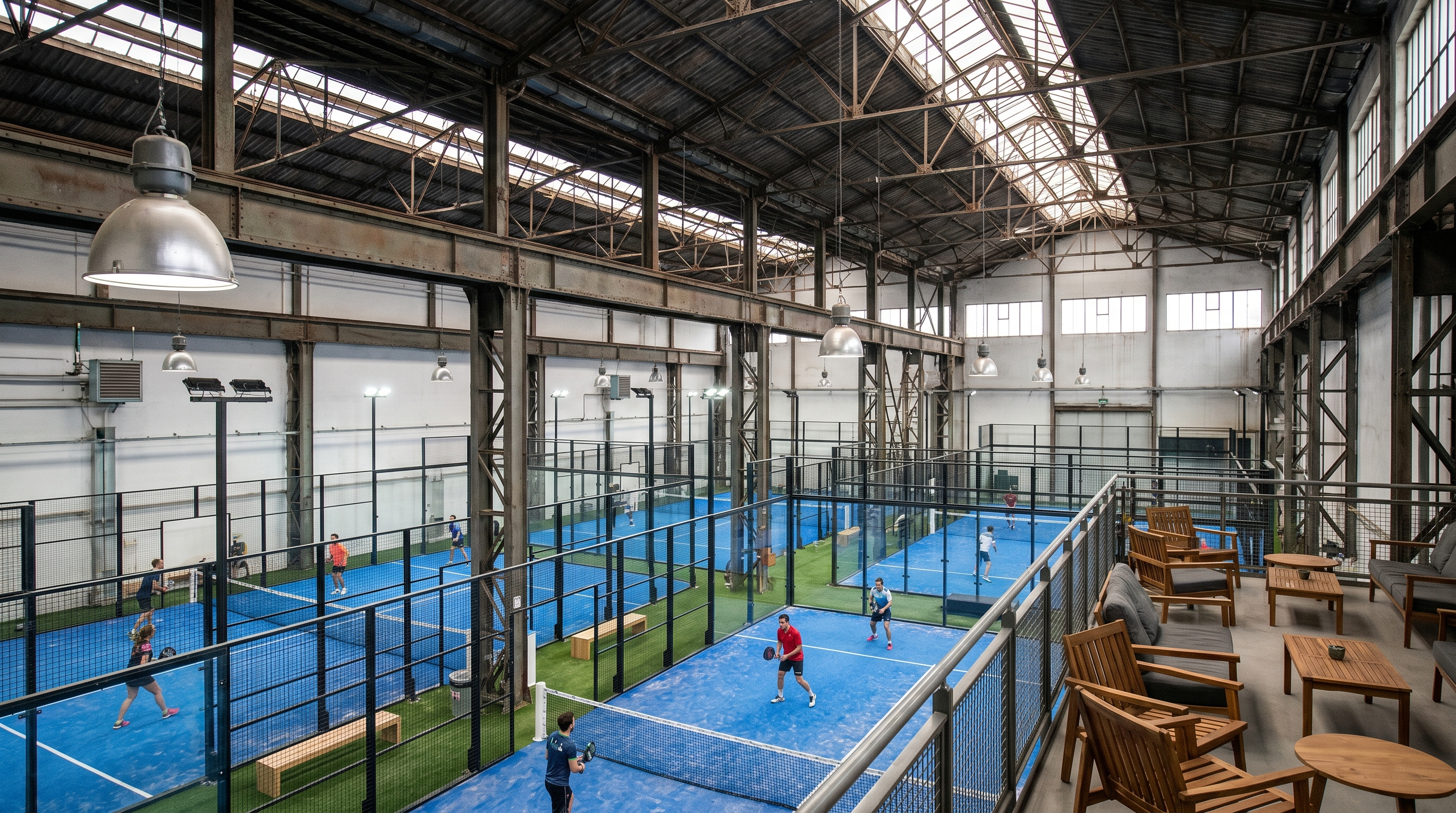
Indoor facilities use the same 10x20m footprint but require significant vertical clearance to be functional. When planning an indoor padel court size , you must prioritize ceiling height just as much as the horizontal floor area. Without sufficient overhead space, high lobs become impossible, which frustrates experienced players and lowers your club’s reputation.
Is ceiling height critical?
Professional indoor play requires a minimum clear height of 6 meters, though 8 to 10 meters is preferred. Think about it:
- Minimum: 6 meters for recreational play.
- Standard: 8 meters for most commercial clubs.
- Elite: 10+ meters for professional World Padel Tour standards.
Always measure to the lowest obstruction, such as lighting fixtures or HVAC ducts.
Does roofing affect play area?
Installing a roof adds structural support pillars that must remain outside the playing perimeter. Here is the deal:
- External Supports: Roof pillars should not intrude on the 10x20m zone.
- Lighting Height: LEDs must be placed high enough to avoid ball impact.
- Ventilation: Airflow systems need to be routed around the primary lobbing zones.
Key Takeaway: Indoor courts offer year-round revenue, but only if you provide enough vertical space for the ball’s natural flight.
| Height Level | Meters | Player Level | |
|---|---|---|---|
| Minimum | 6.0 m | Beginner/Casual | |
| Professional | 8.0 m | Club Leagues | |
| Championship | 10.0+ m | Elite/Tournament |
The vertical dimension is just as important as the horizontal one when designing a top-tier indoor experience.
What’s the best warehouse for padel court size?
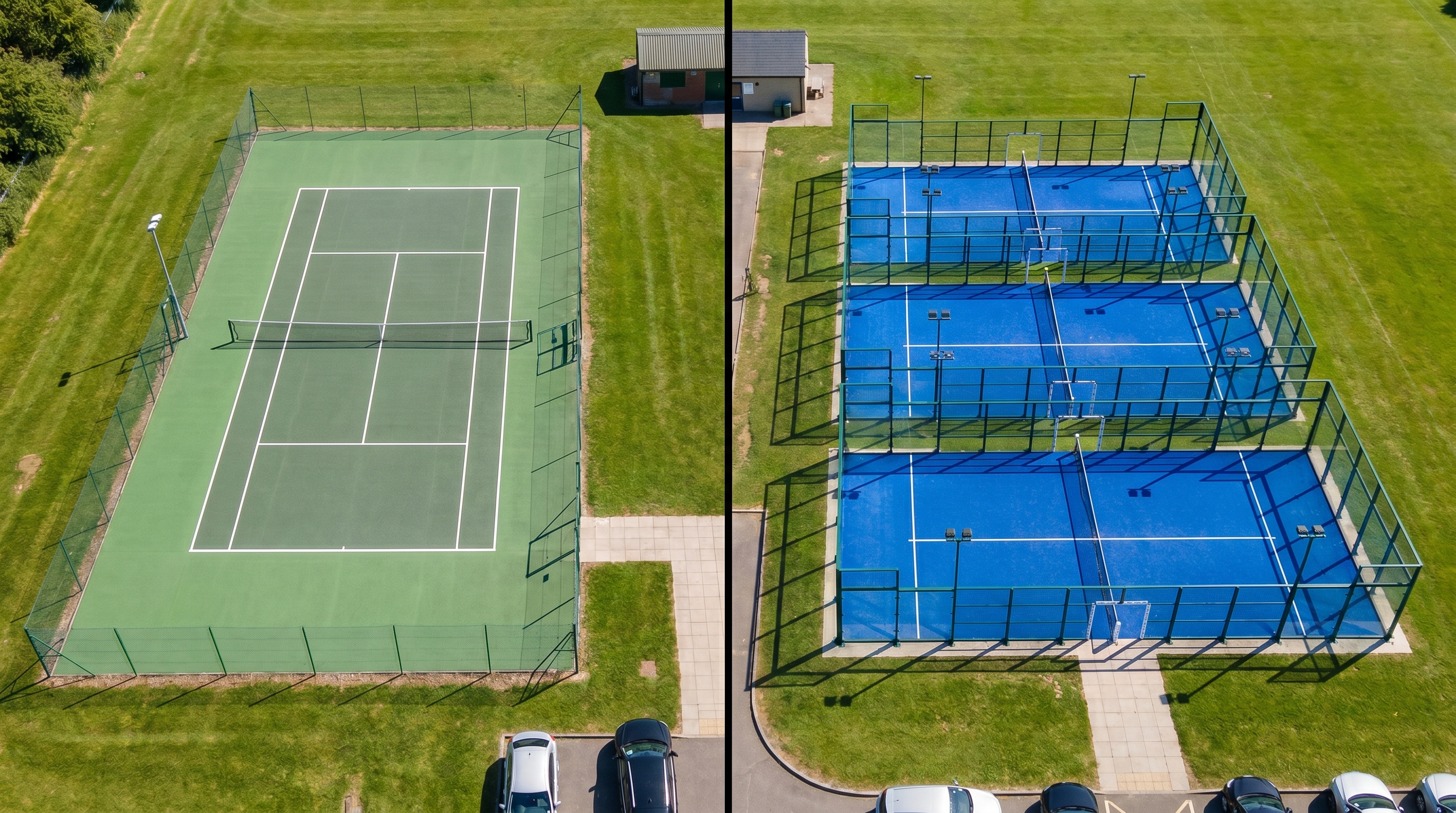
The best warehouse is one that offers an open span of at least 11 meters in width and 21 meters in length for every court. This ensures the padel court size fits comfortably while leaving room for perimeter walkways and structural anchoring. Converting old industrial sites is currently a massive trend in the sports world because these buildings often already meet the high ceiling requirements.
Can I convert old industrial sites?
Warehouses are perfect because they often have the 7 to 12-meter clear spans needed for the sport. Best of all:
- Open Layouts: Minimal columns mean you can fit multiple courts side-by-side.
- Loading Docks: Easy access for delivering heavy glass panels and steel beams.
- Insulation: Older warehouses can be climate-controlled for all-weather play.
These sites are often cheaper to lease than new retail spaces.
Are there floor loading requirements?
The floor must be a level concrete slab capable of supporting the weight of 12mm tempered glass. Look:
- Glass Weight: Each court uses tons of glass that exerts localized pressure.
- Structural Anchors: You need at least 15-20cm of concrete depth for chemical anchors.
- Leveling: The floor must be perfectly flat to ensure consistent ball bounce.
Key Takeaway: Warehouses with high ceilings and thick concrete floors are the “gold mine” for rapid club expansion.
| Requirement | Specification | Importance | |
|---|---|---|---|
| Clear Span | 11m Width | Allows for court + pillars | |
| Ceiling Height | 8m+ | Necessary for game strategy | |
| Floor Type | Reinforced Concrete | Supports structure weight |
Choosing the right warehouse can save you thousands in structural modification costs during the build phase.
Is a tennis court bigger than padel court size?
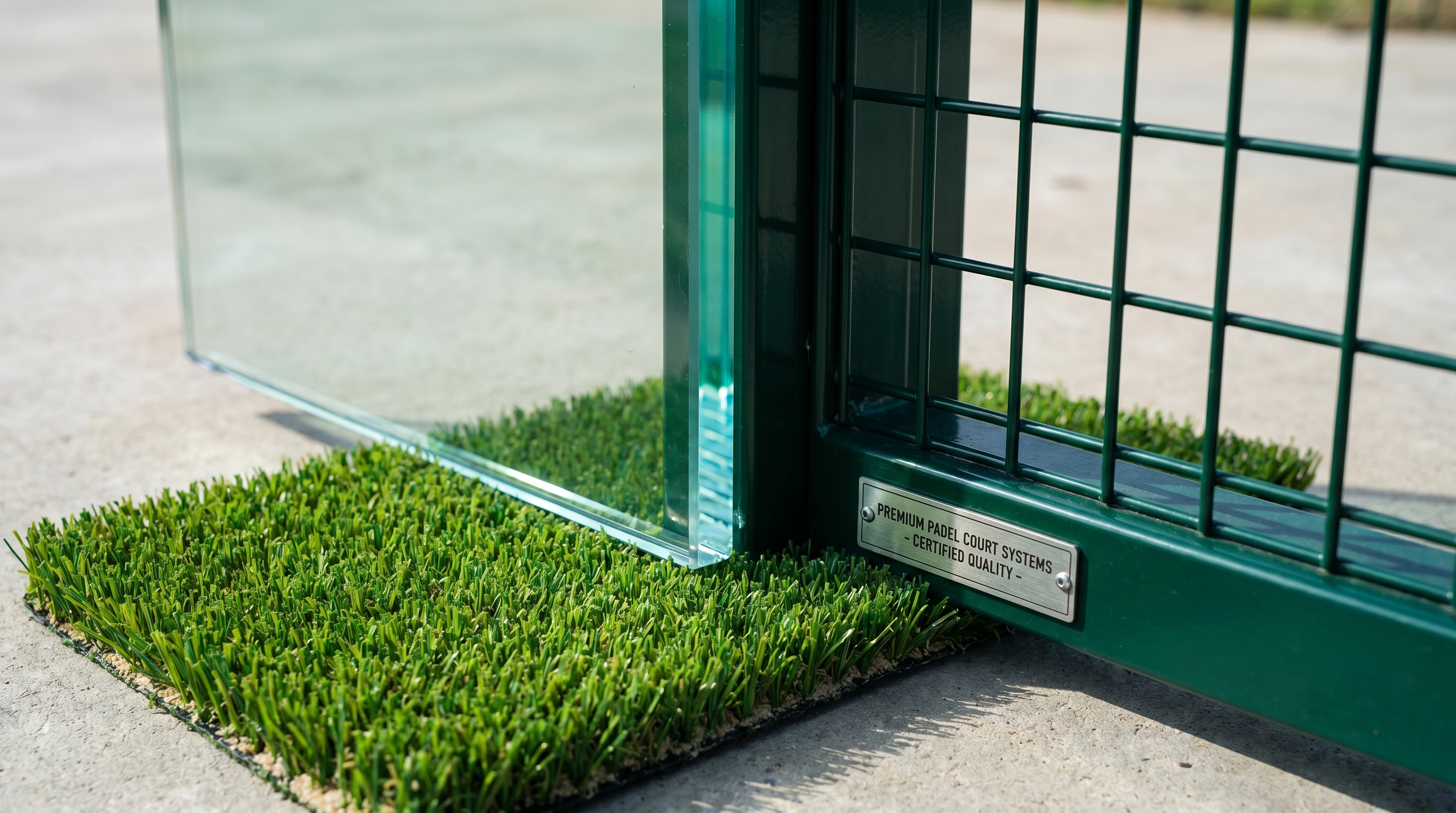
Yes, a tennis court is nearly three times larger than a standard padel court size . While a full tennis facility requires about 670 square meters including the runoff areas, a padel court only needs 200 square meters. This massive difference in footprint is the primary reason why club owners are converting their underperforming tennis courts into multiple high-yield courts.
How many courts fit in one tennis court?
You can comfortably fit three courts within the same area as one standard tennis court. Wait, there’s more.
- Space Saving: 200 sqm vs. 670 sqm.
- Revenue Multiplier: 12 players paying hourly vs. only 2 or 4.
- Community: More players in one area creates a vibrant, social atmosphere.
This conversion is one of the most effective ways to modernize a sports club.
Why is padel more efficient?
The game is played in a smaller area because the walls are part of the active play zone. The bottom line?
- No Run-offs: You don’t need large empty spaces behind the baseline.
- Wall Interaction: The ball bounces back, keeping it in play longer.
- Compact Action: Players are closer together, facilitating better social interaction.
Key Takeaway: Replacing one tennis court with three padel courts triples your potential revenue without needing a larger land lease.
| Feature | Padel Court | Tennis Court | |
|---|---|---|---|
| Playing Area | 200 sqm | ~260 sqm | |
| Total Footprint | ~230 sqm | ~670 sqm | |
| Space Utilization | Very High | Low |
The visual comparison highlights why modern sports facility planning favors the compact, high-efficiency padel model.
What parts fit a standard padel court size?
Every court requires a modular kit of steel frames, tempered glass, and specialized turf to meet the 10x20m padel court size. The structure consists of hot-dip galvanized steel pillars that anchor into the ground and hold the heavy glass panels in place. Using certified components is essential for the safety of players and the long-term durability of the facility.
How many glass panels are used?
A standard court typically uses 14 to 18 panels of 10mm or 12mm tempered glass. Think about it:
- Rear Walls: Six panels at each end create the main bounce area.
- Side Walls: Four panels (two per side) extend from the corners.
- Safety: Glass must be heat-soaked and certified to resist impact.
The precision fit of these panels is what ensures a “true” bounce during play.
What lighting is recommended?
Professional clubs use 8 LED floodlights, usually 200W each, mounted on 6-meter posts. Here is the deal:
- Lumen Count: Aim for 300 to 500 lux for recreational play.
- Positioning: Lights must be placed to minimize shadows on the court.
- Energy Efficiency: Modern LEDs reduce operational costs by up to 60%.
Key Takeaway: High-quality components like 12mm glass and LED lighting are non-negotiable for a premium, professional-feeling court.
| Component | Standard Spec | Function | |
|---|---|---|---|
| Glass Thickness | 12 mm | Durability and safety | |
| Steel Finish | Galvanized | Rust prevention | |
| Lighting | 8x LED (200W) | All-weather visibility |
Investing in top-tier components ensures that your court remains safe and attractive for players over a 20-year lifespan.
How to build a base for padel court size?
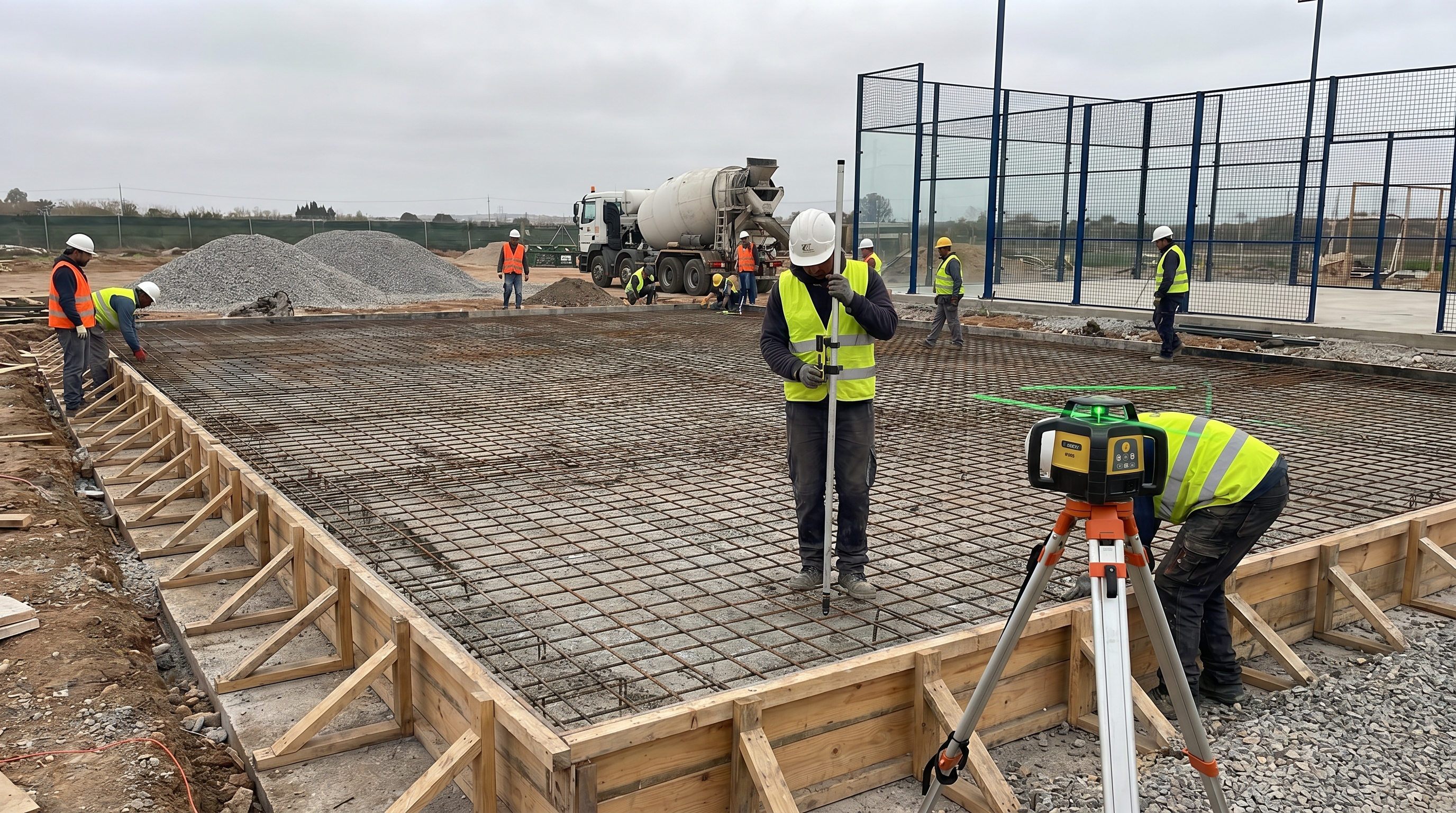
Building a base requires pouring a reinforced concrete slab that is slightly larger than the 10x20m padel court size . The slab must be perfectly level and at least 15cm to 20cm thick to provide a stable foundation for the heavy steel and glass structure. If the base isn’t constructed correctly, the glass panels can shift or crack over time, leading to expensive repairs.
What concrete grade is best?
You should use at least H25/C30 grade concrete with steel mesh reinforcement. Best of all:
- Strength: Prevents cracking under the weight of the glass walls.
- Durability: Withstands weather cycles in outdoor installations.
- Finish: A power-floated finish ensures the turf lies perfectly flat.
A strong base is the most important “hidden” part of your court.
How thick should the slab be?
A thickness of 200mm is recommended, with a reinforced perimeter “ring beam” under the walls. Look:
- Core Thickness: 150mm to 200mm across the center.
- Edge Reinforcement: Thicker concrete under the pillars for anchoring.
- Drainage: A 0.5% to 1% slope is needed for outdoor courts to shed water.
Key Takeaway: Never skip on foundation quality; a level, reinforced slab is the only way to guarantee a professional ball bounce.
| Spec | Recommendation | Purpose | |
|---|---|---|---|
| Thickness | 200 mm | Structural stability | |
| Concrete Grade | C30 | Load bearing capacity | |
| Tolerance | < 3mm over 3m | Flat playing surface |
The preparation of the ground is a technical process that determines the ultimate lifespan and quality of your sports facility.
What are the official rules for padel court size?
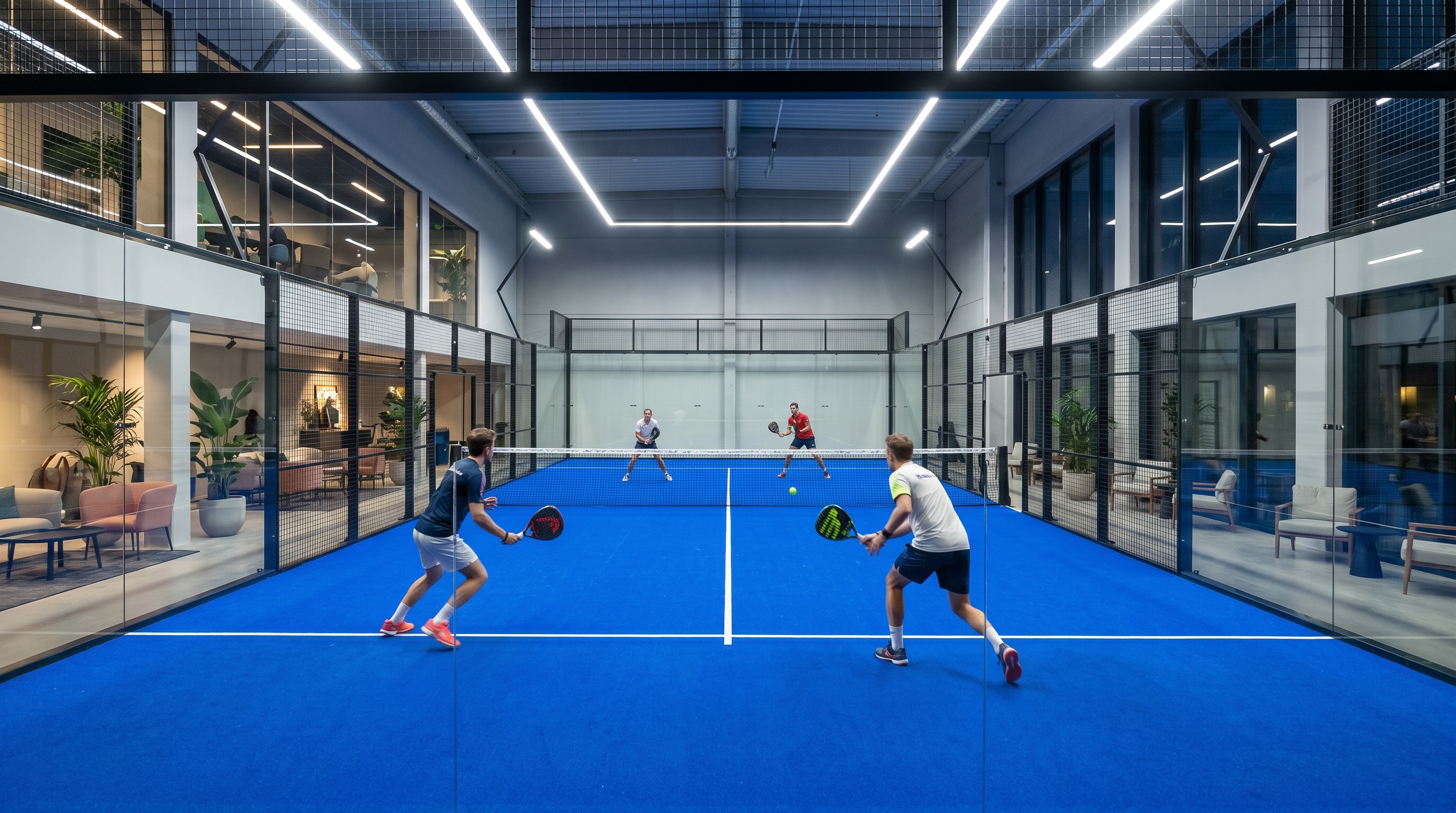
The International Padel Federation (FIP) mandates that the internal padel court size must be 10 meters wide by 20 meters long. These rules also specify the placement of service lines, net height, and the height of the surrounding walls. Following these regulations is mandatory if you plan to host official tournaments or want to be part of professional league networks.
Does FIP mandate safety zones?
Yes, for tournament play, you must provide a 2-meter safety zone outside the side doors. It gets better:
- Out-of-court play: Pro players can run out the door to hit a ball.
- Buffer space: Prevents players from hitting spectators or benches.
- Sizing: The total footprint for a pro court is roughly 14m x 24m.
These zones are what separate a recreational court from a professional championship facility.
Is out-of-court play allowed?
It is allowed in pro matches, provided there is enough space and the doors are designed for it. Wait, there’s more.
- Door Sizing: Openings must be at least 0.82m wide and 2.0m high.
- Ground Continuity: The turf should ideally extend into the safety zone.
- Obstructions: No pillars or posts can be in the 2-meter exit area.
Key Takeaway: If you want to host elite competitions, you must budget for the extra 4 meters of width required for safety zones.
| Rule Type | Regulation | Context | |
|---|---|---|---|
| Internal Size | 10×20 m | Mandatory for all play | |
| Safety Zone | 2m Lateral | Only for pro tournaments | |
| Net Height | 88cm (center) | Mandatory for all play |
Compliance with FIP rules ensures that your club is recognized as a legitimate venue for high-level competitive sport.
Why do people love the social padel court size?
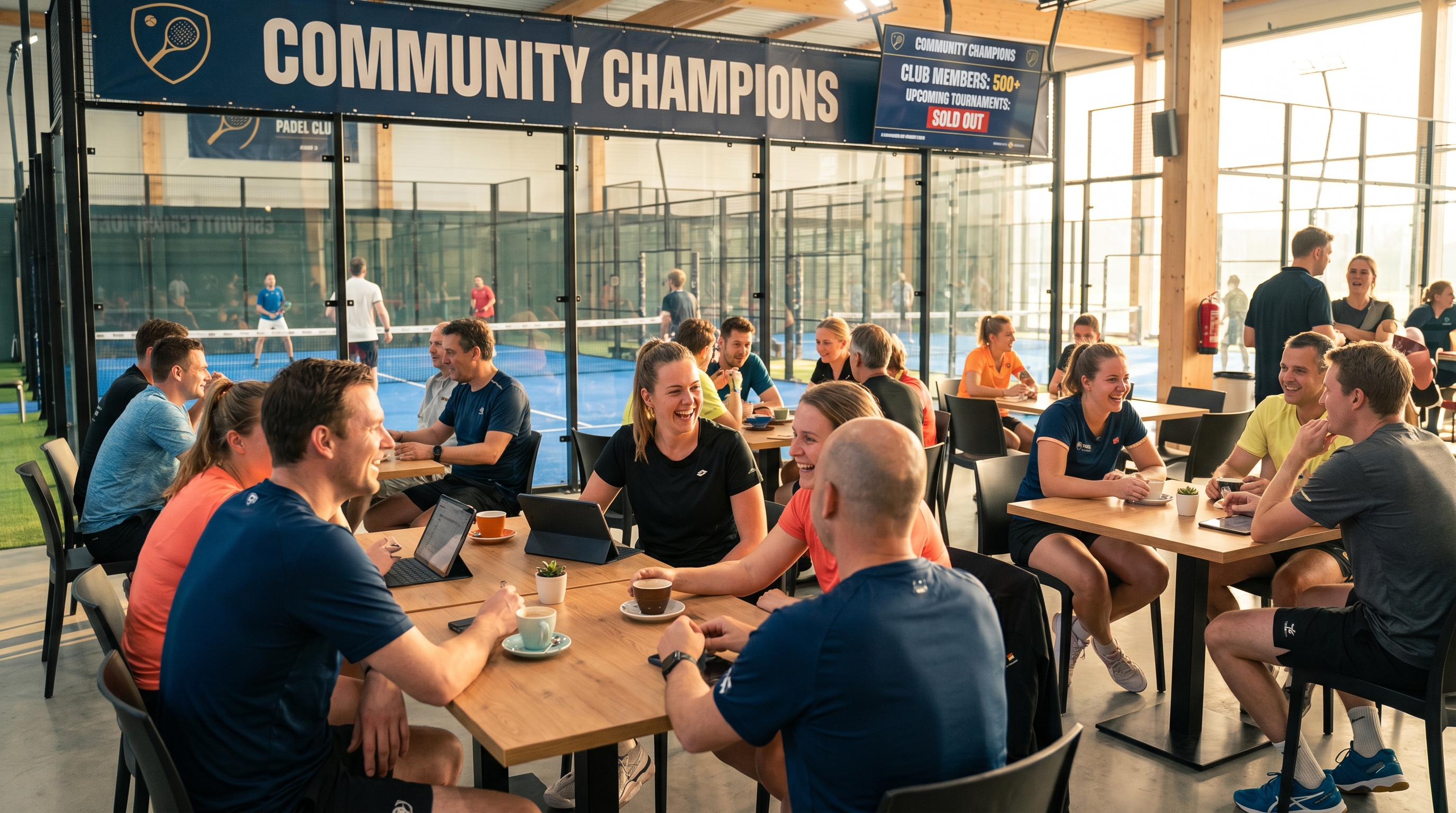
The compact padel court size brings players closer together, fostering a social environment that larger sports cannot match. Because the court is only 10 meters wide, communication between partners and opponents is constant, making the sport incredibly addictive and community-focused. This social “stickiness” is why player retention rates in this sport are among the highest in the fitness industry.
Does size foster community?
The small court size allows for constant conversation and “banter” during the game. Think about it:
- Proximity: You are never more than a few meters from your partner.
- Engagement: High ball turnover keeps everyone active and laughing.
- Accessibility: It’s easy for beginners to start playing and meet people.
The court acts as a social hub rather than just a place to sweat.
Is the court density a plus?
Having multiple courts side-by-side creates a “buzzing” atmosphere that players love. Look:
- Noise Level: The sound of the ball on the walls is energetic and rhythmic.
- Spectator View: People can watch three or four matches at once from a lounge.
- Networking: Between matches, the small spacing makes it easy to switch partners.
Key Takeaway: The 10x20m layout is perfectly sized for human interaction, which is the secret ingredient behind the sport’s global boom.
| Factor | Benefit | Result | |
|---|---|---|---|
| Proximity | Partner Communication | Better teamwork/socializing | |
| Small Footprint | High Density | Higher “energy” in the club | |
| Wall Play | Longer Rallies | More fun for all skill levels |
The social dynamics created by the court’s proportions are what turn a casual player into a lifelong club member.
Frequently Asked Questions
Can I build a court if I only have 200 sqm of total land?Yes, but it will be tight. While the playing area is 200 sqm, the structural pillars and a small maintenance walkaround usually require about 220-230 sqm for a comfortable installation.
What’s the best way to save money on construction?Buying direct from a manufacturer is the best way to cut costs. You can save approximately 30% by skipping the distributor markups and getting factory-direct pricing on the steel and glass.
Can I fit a padel court inside a standard tennis court?Absolutely. In fact, you can fit three of them in the space of one tennis court. This is the most popular way for established tennis clubs to modernize their facilities and increase revenue.
What is the minimum ceiling height for an indoor club?The absolute minimum is 6 meters, but you should aim for 8 to 10 meters. Anything lower will prevent players from using lobs, which is a fundamental part of the game’s strategy.
Do I need a building permit for a padel court?Yes, in most regions you will need a permit for the concrete slab and the structure. We provide all the necessary technical documentation and structural drawings to help you with the application process.
Strategic Conclusions
Building a successful facility starts with understanding that the padel court size is your most valuable asset. By adhering to the professional 10x20m dimensions, you ensure your club is ready for high-level play, maximum occupancy, and the vibrant social atmosphere that drives player loyalty. Whether you are converting a warehouse, a rooftop, or a tennis court, the spatial efficiency of this sport provides a unique opportunity for high-yield sports investment.
Our vision is to empower facility owners worldwide with premium, factory-direct courts that combine safety, performance, and aesthetic appeal. We believe that by providing the right infrastructure, we can help you build more than just a sports club—we can help you build a thriving community. If you are ready to transform your space into a high-performance sports hub, contact us today to receive a personalized quote and expert guidance on your project. Let’s build the future of sports together.