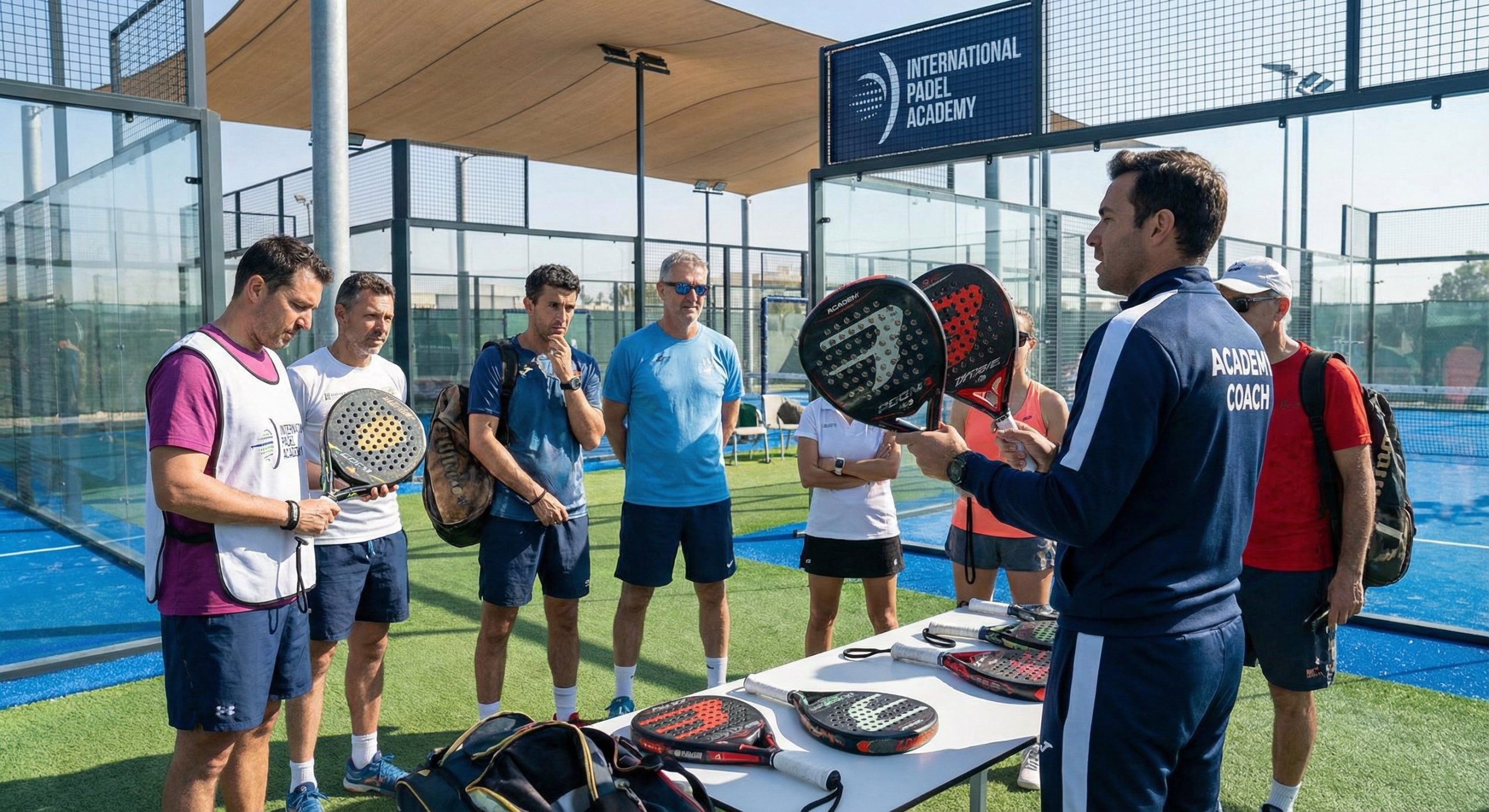
There are three primary padel racket types classified by their geometric shape: round, teardrop, and diamond. Many players struggle with extreme inconsistency, hitting the ball into the net or out of bounds without understanding why their timing feels off. This lack of precision often leads to arm fatigue and frustration as your gear actively works against your natural movement. Choosing the right padel racket types allows you to align your equipment with your physical technique to dominate the court.
What are the primary padel racket shapes?
The primary shapes of padel equipment include round, teardrop, and diamond designs, each offering distinct performance advantages. Your choice dictates how the ball reacts upon impact and how much effort you must exert during a swing.
The Defensive Advantage of Round Shapes
Round rackets prioritize control and precision, making them ideal for defensive players. They feature a centralized sweet spot that provides high forgiveness on off-center hits.
Think about this:
- Large sweet spot for maximum consistency.
- Low balance point near the handle for maneuverability.
- Ideal for beginners and defensive tacticians.
The Power Potential of Diamond Shapes
Diamond-shaped models are engineered for aggressive players who want to maximize their overhead power. These rackets shift the weight toward the head to create a massive lever effect during smashes.
Here is why it works:
- Weight concentrated at the top of the frame.
- High balance point for explosive shot speed.
- Smaller sweet spot located near the tip.
| Shape | Sweet Spot Location | Primary Benefit | Skill Level |
|---|---|---|---|
| Round | Center | Control | Beginner |
| Teardrop | Mid-High | Versatility | Intermediate |
| Diamond | Top | Power | Advanced |
Key Takeaway
Shape is the most visible factor in performance, determining whether a racket assists with defense or amplifies offensive power.
How do padel racket types impact player development?
Different padel racket types dictate how quickly a player can master technical shots and avoid injury. Selecting a model that matches your current physical ability ensures you don’t develop bad habits or strain your joints.
Transitioning Through Skill Levels
Beginners typically thrive with round, lightweight rackets that offer a soft touch. As you progress, moving toward a hybrid shape allows you to explore offensive play without sacrificing too much stability.
Check this out:
- Beginners need forgiveness to build confidence.
- Intermediates require a balance of power and control.
- Experts use specific weights to fine-tune their game.
Preventing Common Court Injuries
Heavier or poorly balanced rackets can lead to elbow and shoulder issues if you aren’t prepared for the impact. Choosing more ergonomic designs helps absorb the vibrations that cause long-term damage.
Think about it:
- Lightweight frames reduce the strain on the wrist.
- Soft cores dampen vibrations from hard hits.
- Correct grip size prevents over-gripping and tension.
| Player Level | Recommended Type | Focal Point | Goal |
|---|---|---|---|
| Newcomer | Round / Soft Core | Consistency | Learning Basics |
| Club Player | Teardrop / Medium Core | Versatility | Improving Strategy |
| Tournament Pro | Diamond / Hard Core | Power / Precision | Winning Points |
Key Takeaway
Choosing the right gear prevents the physical frustration of injury and the technical plateau of using ill-suited equipment.
Why is balance the most critical factor?
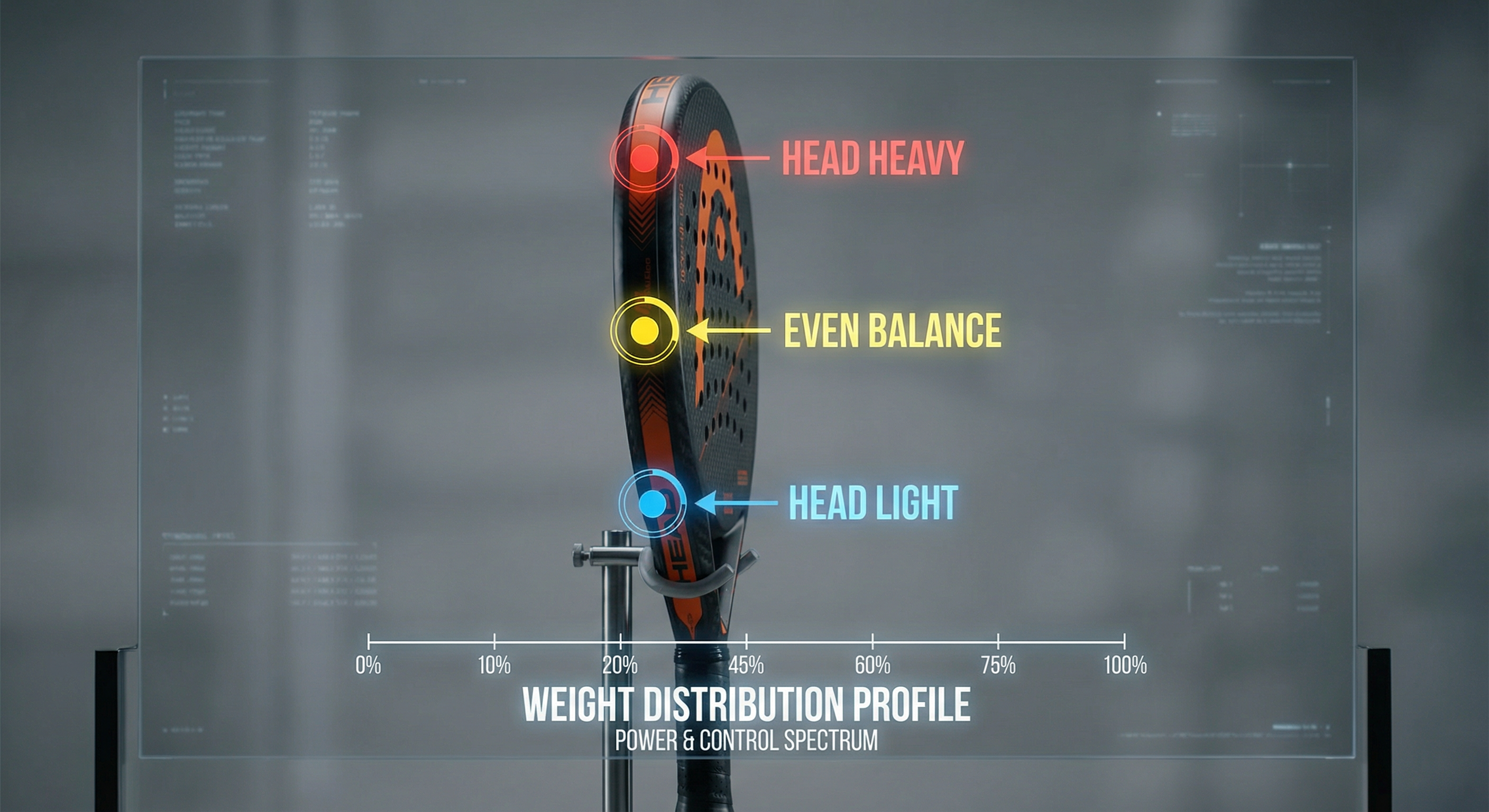
Balance refers to where the center of gravity sits on the racket, which fundamentally changes how heavy the frame feels in your hand. This internal weight distribution is often more important than the actual weight of the racket itself.
The Speed of Low Balance
Low balance rackets feel light and are exceptionally easy to move quickly at the net. Because the weight is concentrated near the grip, you can react faster to incoming volleys and adjust your shots mid-swing.
Here is why it works:
- Enhances reaction time during fast net exchanges.
- Reduces the risk of “tennis elbow” through easier handling.
- Provides a sense of total control over the racket head.
The Momentum of High Balance
High balance rackets provide the inertia needed to hit the ball with significant force. When you swing a head-heavy racket, the momentum does most of the work for you during the point of contact.
Consider this:
- Increased leverage for smashes and aggressive drives.
- Feels “heavier” even if the total weight is low.
- Requires stronger forearm muscles to maintain control.
| Balance Category | Weight Distribution | Feel | Best For |
|---|---|---|---|
| Head Light | Toward Handle | Fast / Light | Defending |
| Even | Middle | Stable / Neutral | All-Round |
| Head Heavy | Toward Tip | Powerful / Heavy | Attacking |
Key Takeaway
Balance determines the “swing weight” and maneuverability, serving as the bridge between your physical effort and the ball’s exit speed.
What materials define high-performance padel racket types?
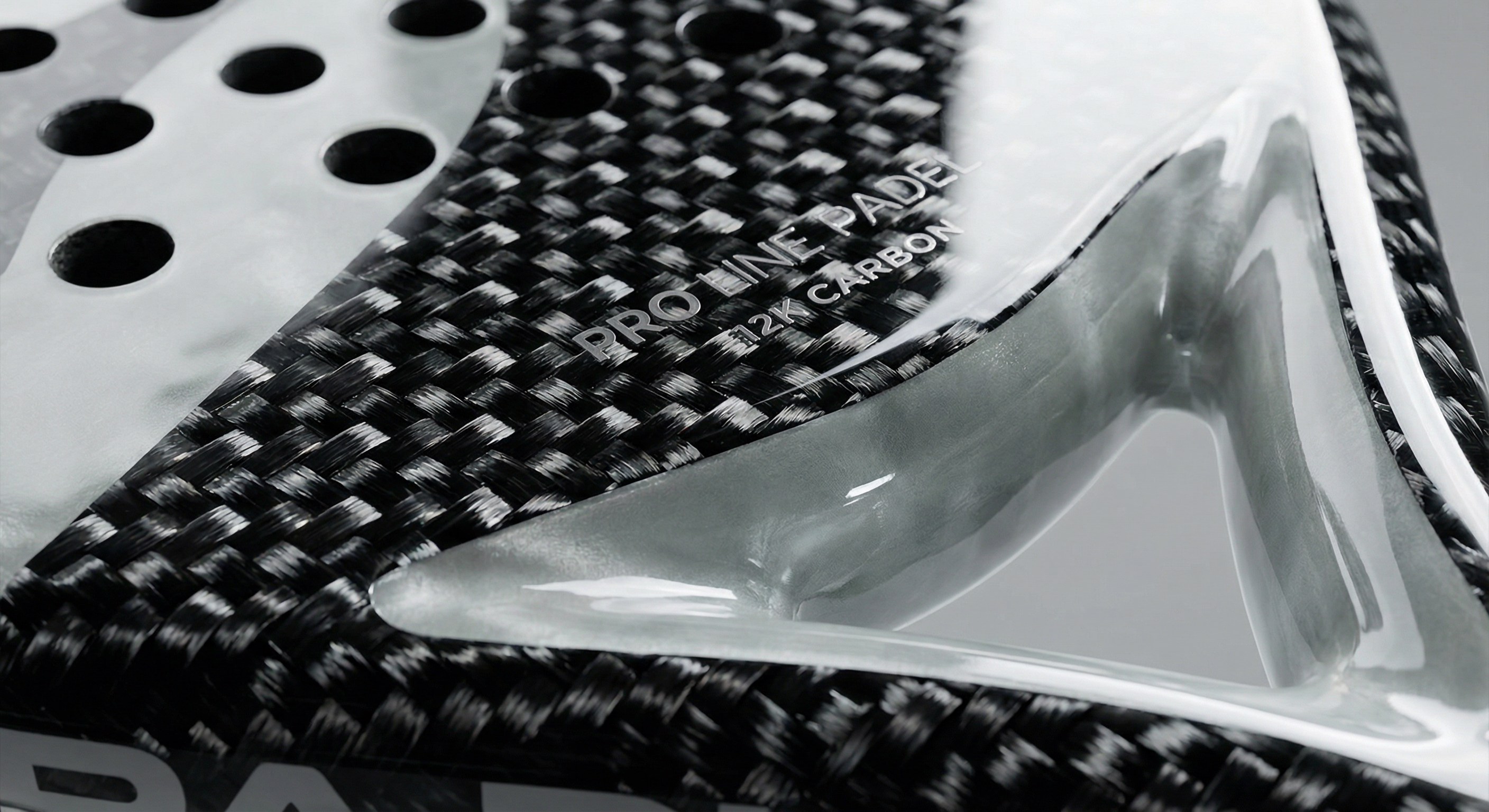
The internal and external materials of various padel racket types determine the durability and “touch” of the frame. Manufacturers use a combination of carbon fiber, fiberglass, and specialized foams to tune the racket’s response.
The Flexibility of Fiberglass
Fiberglass is a softer, more elastic material often used on the surface of entry-level rackets. It provides a “trampoline effect,” helping the ball bounce off the face with less effort from the player.
Here is the deal:
- High elasticity for a comfortable hitting sensation.
- Greater ball output at lower swing speeds.
- More affordable and durable for casual play.
The Precision of Carbon Fiber
Carbon fiber is the gold standard for professional equipment due to its rigidity and lightweight properties. It offers a much crisper feel and allows for extreme precision when placing the ball in tight corners.
Check this out:
- Available in different weaves like 3K, 12K, or 18K.
- Higher weaves generally indicate a stiffer hitting surface.
- Offers maximum energy transfer for powerful hitters.
| Material | Stiffness | Durability | Power Output |
|---|---|---|---|
| Fiberglass | Low | High | High (Passive) |
| Carbon 3K | Medium | Very High | Medium-High |
| Carbon 12K+ | High | Elite | High (Active) |
Key Takeaway
The choice between fiberglass and carbon fiber represents a trade-off between easy comfort and technical, high-performance rigidity.
How do manufacturers build a professional racket?
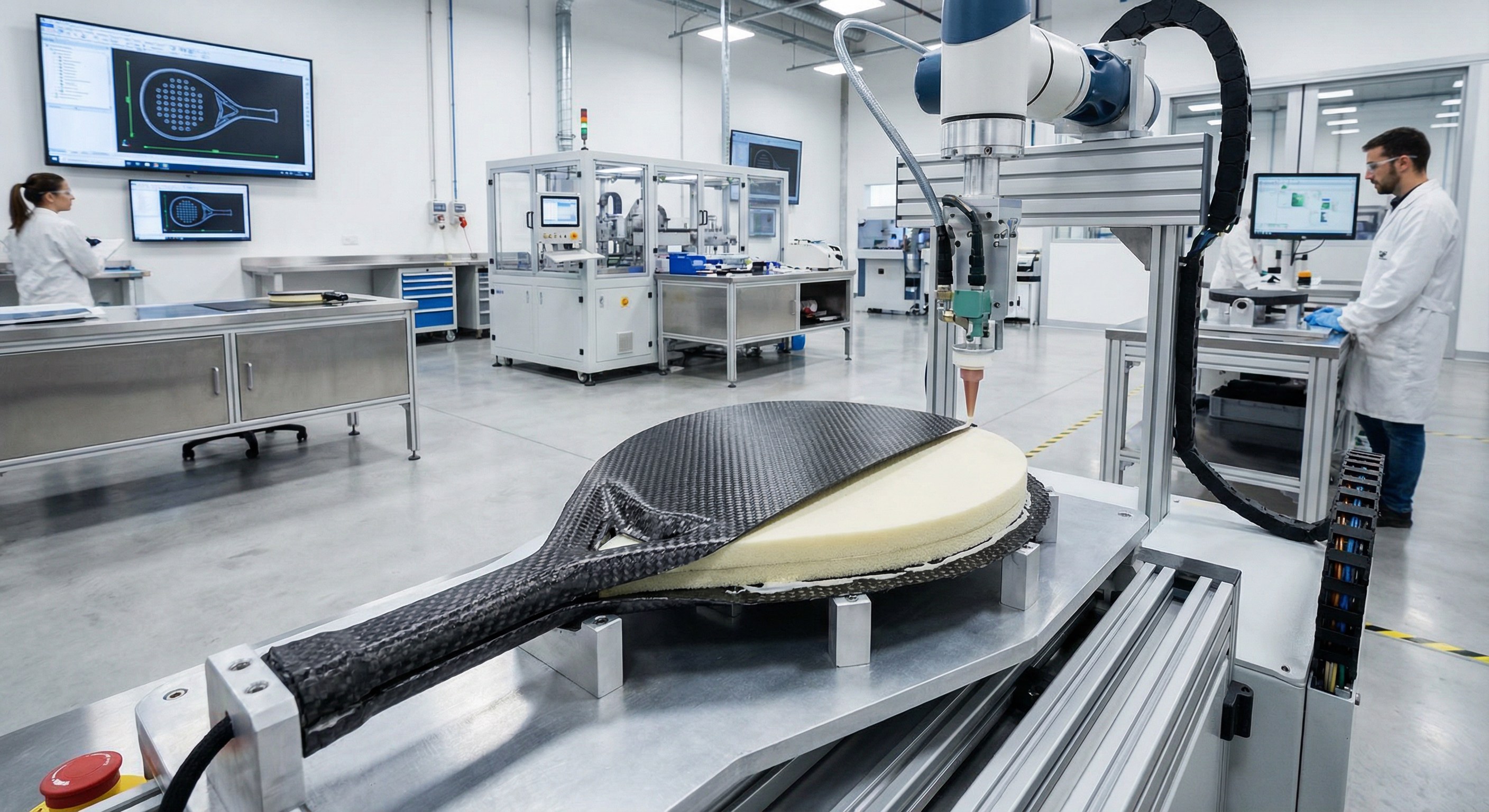
Building a high-quality racket involves a complex layering process that bonds the core foam to the external protective shell. Each layer is meticulously placed to ensure the structural integrity of the frame under high-impact conditions.
The Layering Process
Manufacturers start by shaping the foam core and then wrapping it in multiple layers of resin-impregnated fabric. This sandwich construction is then placed in a heated mold to cure and harden into its final shape.
Here is why it works:
- Resin bonds the different materials into a single unit.
- Heat treatment ensures the carbon fiber reaches maximum strength.
- Multiple layers prevent the frame from cracking during play.
Precision Drilling and Finishing
Once the frame is cured, holes are drilled in a specific pattern to reduce wind resistance and define the sweet spot. A final protective coating and grip are then applied to prepare the racket for the court.
The best part?
- Hole patterns are engineered to optimize aerodynamics.
- Rough textures can be added to the surface for spin.
- Protective tapes are applied to the frame edge for longevity.
| Build Stage | Action | Purpose | Quality Marker |
|---|---|---|---|
| Molding | Layering materials | Structural Foundation | Uniformity |
| Drilling | Perforating face | Airflow / Weight | Smooth Edges |
| Coating | Applying finish | Grip / Protection | Texture Grain |
Key Takeaway
Professional rackets are the result of advanced material science, utilizing heat, pressure, and layering to create a durable hitting surface.
Where is the sweet spot on different padel racket types?
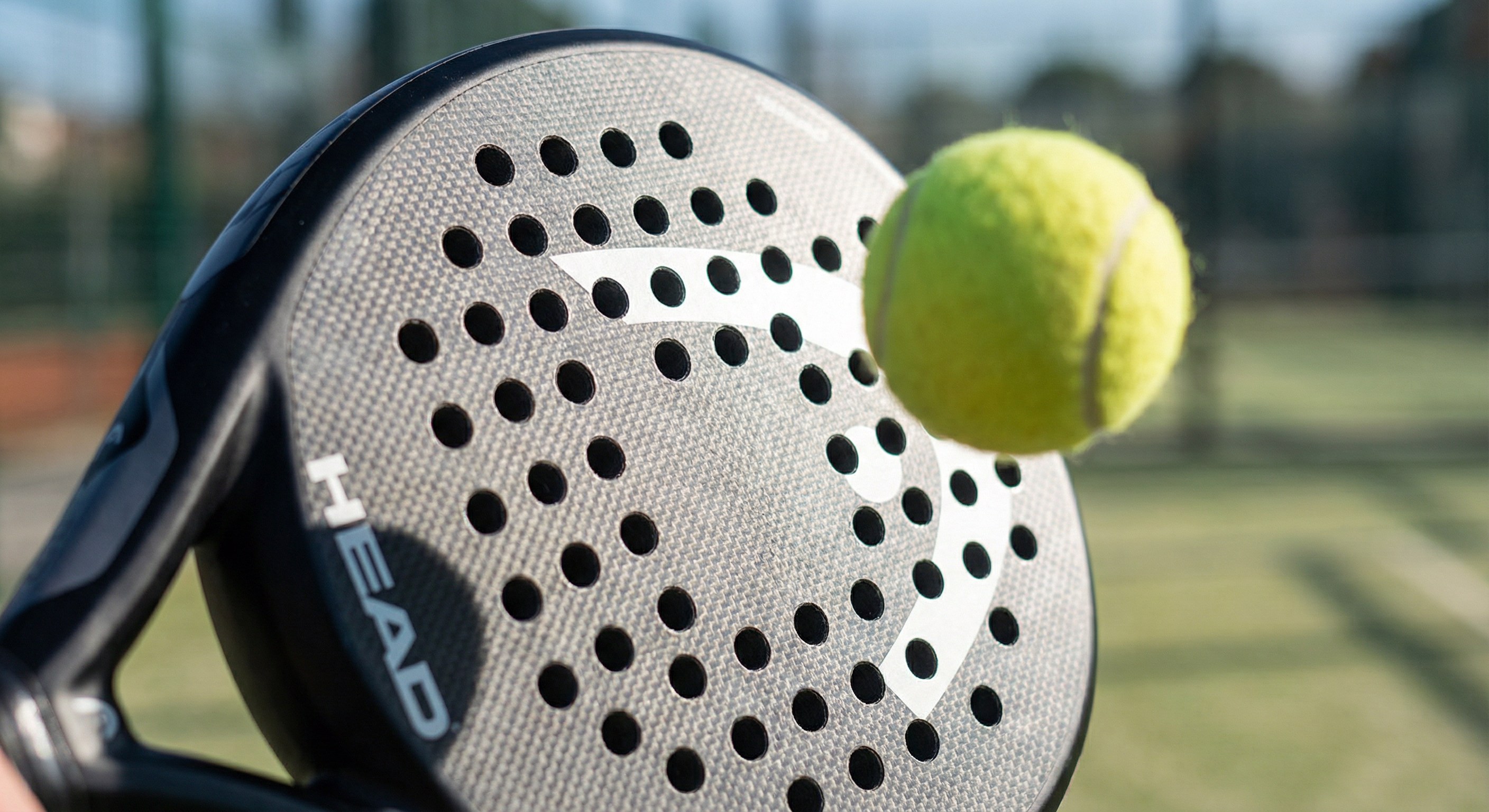
The sweet spot is the area on the racket face that provides the most efficient energy transfer and the least vibration. Understanding where it is located on different padel racket types helps you improve your accuracy and shot quality.
Centralized Spots for Stability
Round rackets feature a sweet spot located directly in the center of the face, making it very easy to find. This central location ensures that even if you hit the ball slightly off-center, the racket remains stable.
Think about this:
- Most forgiving layout for new players.
- Provides consistent feedback on every defensive shot.
- Minimizes the “wobble” felt in the hand during impact.
Elevated Spots for Leverage
On diamond-shaped frames, the sweet spot is moved higher toward the top edge. This requires a more precise swing but allows you to hit the ball at the point of maximum racket speed.
Check this out:
- Rewards perfect timing with extreme ball speed.
- Small area makes it harder to hit consistently.
- Located at the widest part of the diamond head.
| Racket Shape | Spot Size | Location | Ease of Use |
|---|---|---|---|
| Round | Large | Dead Center | High |
| Teardrop | Medium | Mid-Upper | Medium |
| Diamond | Small | Upper Edge | Low |
Key Takeaway
The sweet spot location dictates your margin for error; centralized spots offer safety, while elevated spots offer high-risk power.
What is the role of foam density in core construction?
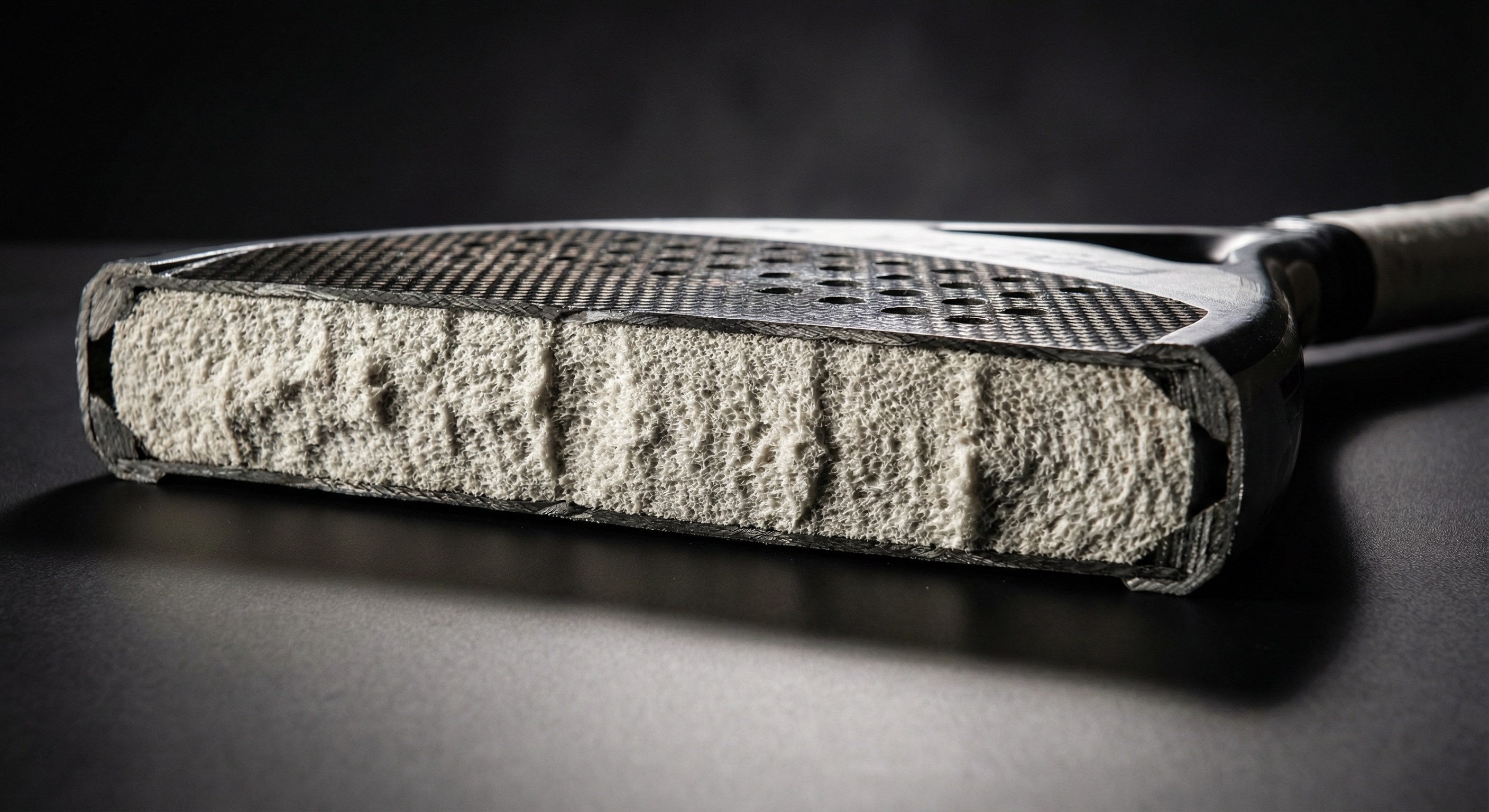
The core of a padel racket is usually made of EVA foam or Polyethylene, which acts as the “engine” of the frame. Foam density determines how much the racket absorbs the ball’s energy versus reflecting it back.
Soft Foam for Comfort
Soft foam, often called “Soft EVA” or “Polyethylene,” compresses easily when the ball hits it. This creates a longer contact time, which helps with ball control and reduces the impact felt by your arm.
Here is why it works:
- Excellent vibration absorption for sensitive joints.
- High “ball output” meaning the ball flies off with little effort.
- Forgiving feel during slow-paced defensive rallies.
High-Density EVA for Power
Harder foams are much denser and do not compress as much during impact. This means the energy from your swing is directly transferred to the ball, making it the preferred choice for powerful players.
Consider this:
- Maximum precision for technical attacking shots.
- Requires high physical strength to generate ball speed.
- Provides a crisp, “dry” sound upon impact.
| Foam Type | Density | Impact Feel | Best Usage |
|---|---|---|---|
| Polyethylene | Low | Soft / Bouncy | Injury Prevention |
| Soft EVA | Medium | Balanced | All-Round Play |
| Hard EVA | High | Stiff / Crisp | Aggressive Attack |
Key Takeaway
Core density creates the personality of the racket, offering either a bouncy, comfortable ride or a stiff, professional level of control.
How does weight distribution change padel racket types?
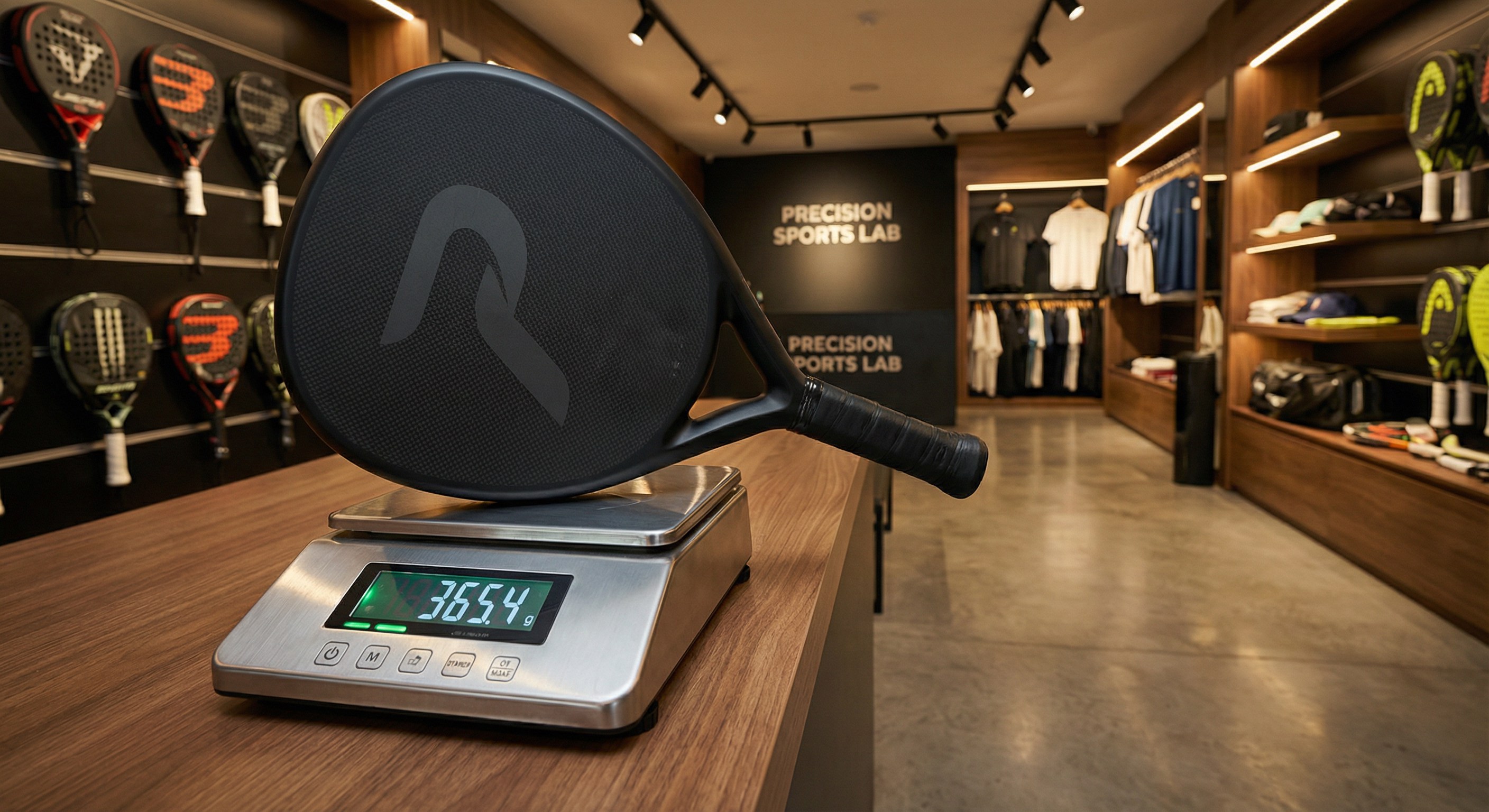
The total weight of padel racket types usually ranges between 350 and 390 grams. While 40 grams might seem small, the way that weight is distributed makes a massive difference in how the racket behaves during a match.
Lightweight Advantages for Maneuverability
Lighter rackets (350-365g) are highly recommended for juniors, women, or players who prioritize speed at the net. They allow for rapid changes in racket position without tiring the shoulder or wrist.
Here is the deal:
- Easier to handle during quick reflex volleys.
- Reduces the overall physical load during a long match.
- High maneuverability for unconventional defensive shots.
Heavier Weights for Structural Stability
Heavier rackets (375-390g) offer more stability when blocking fast shots from opponents. The extra mass prevents the racket from twisting in your hand, providing a more solid foundation for power.
Check this out:
- More mass equals more potential energy for smashes.
- Better at absorbing the force of high-speed incoming balls.
- Preferred by advanced players with strong physical conditioning.
| Weight Range | Classification | Handling | Impact Stability |
|---|---|---|---|
| 350g – 360g | Lightweight | Exceptional | Low |
| 365g – 375g | Standard | Balanced | Medium |
| 380g – 390g | Heavyweight | Challenging | High |
Key Takeaway
Weight provides the physical substance of the racket, balancing the need for quick movement against the need for solid impact stability.
Why does surface texture improve spin potential?
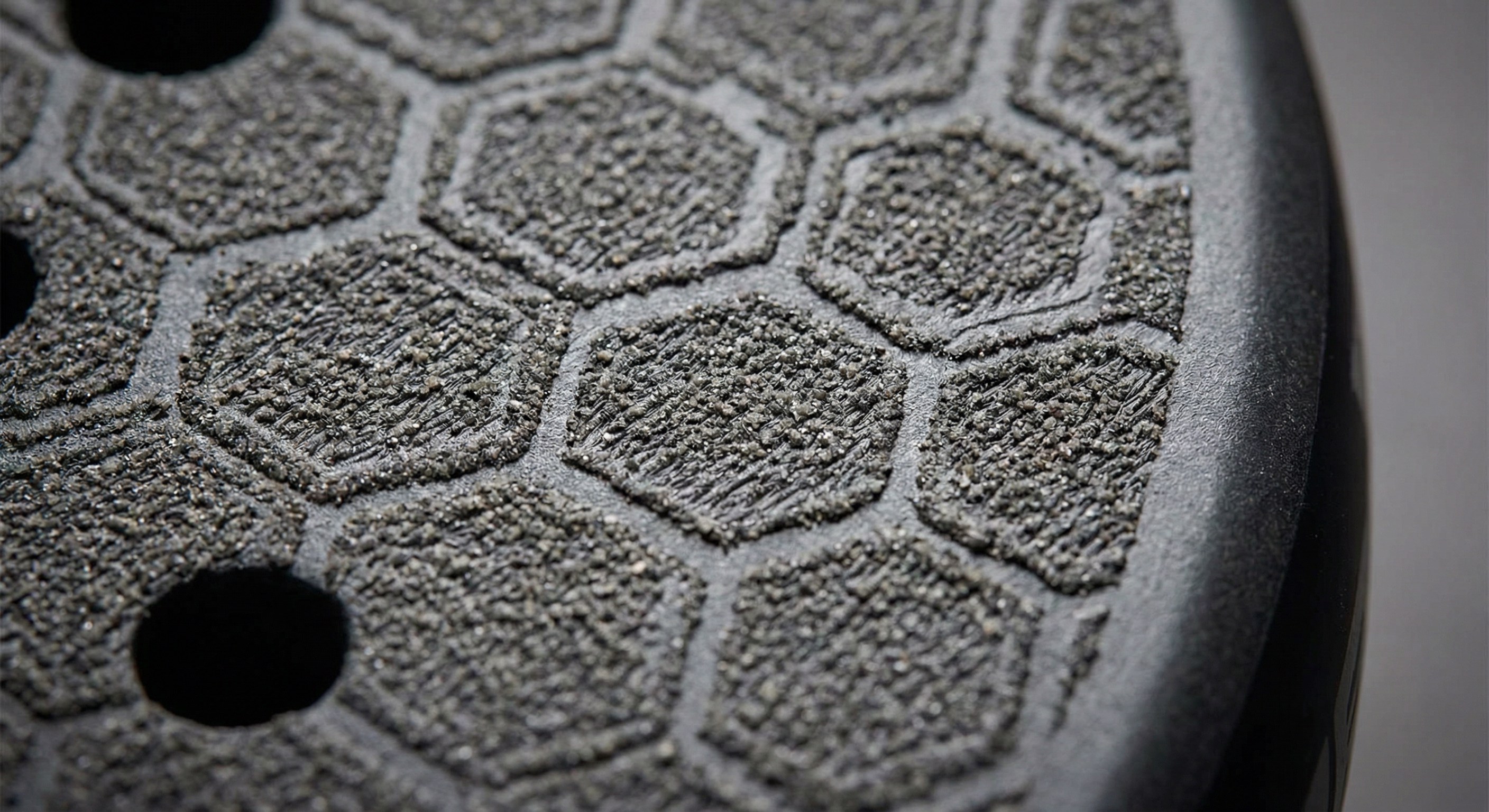
Modern rackets often feature a “rough” or textured surface to help the player grip the ball during impact. This texture is essential for executing slices and “viboras” that stay low after hitting the glass.
Sandy and 3D Patterns
Manufacturers apply texture through either a “sandpaper” finish or a molded 3D pattern in the carbon itself. These small ridges bite into the felt of the ball, allowing you to impart significant rotation.
Here is why it works:
- Increases the friction between the ball and the racket face.
- Helps the ball “grip” the surface during a brushing motion.
- Makes defensive slices much more difficult for opponents to return.
Durability of Surface Textures
While textures are great for performance, they can wear down over time depending on how they were built. Sand-style finishes tend to fade faster, while 3D molded patterns last for the entire life of the racket.
Think about it:
- Molded patterns are part of the structural mold.
- Applied finishes can peel or smooth out with heavy use.
- Texture is most effective on “slow” technical shots.
| Texture Type | Application | Spin Level | Durability |
|---|---|---|---|
| Smooth | None | Low | N/A |
| Sandpaper | Applied Layer | High | Medium |
| 3D Molded | Internal Frame | Medium-High | Very High |
Key Takeaway
Surface texture is the primary mechanism for generating spin, giving you the ability to control the ball’s bounce and behavior.
How can you maintain specific padel racket types?
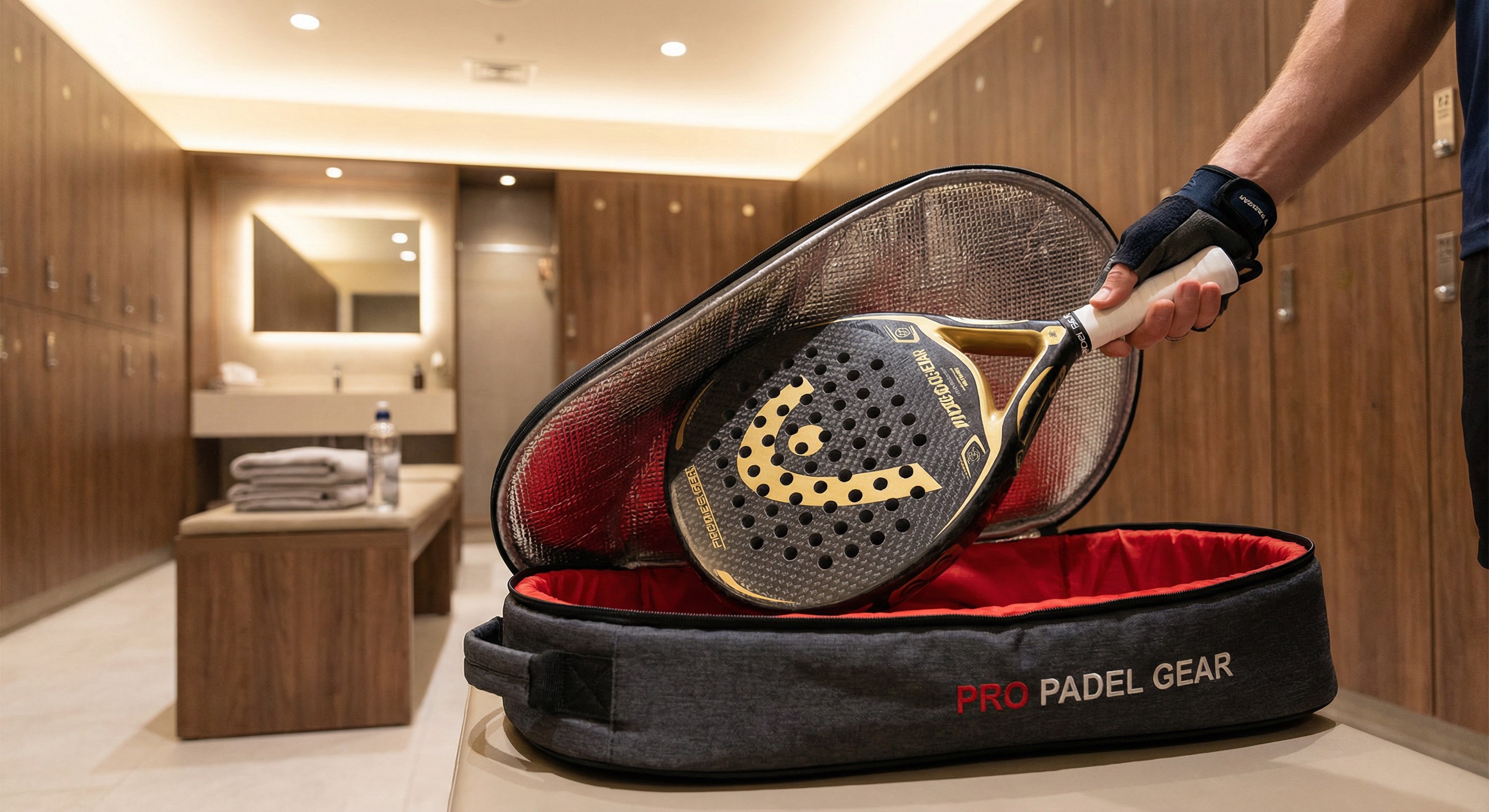
Proper maintenance of various padel racket types extends their lifespan and keeps the core from losing its elasticity. Simple habits can prevent the materials from degrading due to heat, moisture, or impact.
Temperature and Moisture Control
Extreme heat or cold can cause the foam core to expand or contract, eventually leading to internal cracks. Storing your equipment in a thermal-lined bag protects it from the damaging effects of the weather.
Check this out:
- Never leave your racket in a hot car during summer.
- Wipe away moisture or sweat after every match.
- Use a padded cover to prevent scratches in your bag.
Replacing Grips and Protectors
The grip is your only point of contact with the racket, so it should be changed frequently to maintain a secure hold. Adding a frame protector to the top of the racket prevents structural damage from accidental hits against the wall.
Here is the deal:
- Overgrips should be replaced every 3-5 matches for maximum grip.
- Frame protectors act as a shield against glass and fences.
- Inspect the frame regularly for small cracks or “spidering.”
| Maintenance Item | Frequency | Benefit | Risk of Neglect |
|---|---|---|---|
| Overgrip | Weekly | Better Handle Control | Blisters / Slip |
| Thermal Bag | Constant | Core Protection | Loss of Power |
| Frame Protector | Once | Impact Defense | Cracked Frame |
Key Takeaway
Maintenance is about protecting the internal foam and the external structure to ensure long-term performance and safety.
Conclusion
Understanding the various elements of padel equipment allows you to make an informed decision that elevates your performance. From the initial shape and balance to the density of the foam and the quality of the carbon weave, every detail serves a specific purpose on the court. By aligning these features with your skill level and playing style, you transform your racket from a simple tool into a precision instrument.
Our brand stance is rooted in technical excellence and the belief that every player deserves professional-grade equipment tailored to their unique needs. We are dedicated to providing the insights and gear necessary for you to master the sport. If you are ready to find the perfect match for your game or need expert guidance on your next purchase, contact us today.
FAQ
Can I use a tennis racket for padel?
No, padel rackets are solid, shorter, and have no strings, whereas tennis rackets use a stringed frame that would not survive the impact or the rules of a padel match.
What’s the best racket for a beginner?
A round-shaped racket with a soft foam core is the best choice because it offers a large sweet spot and high forgiveness while you learn the basic strokes.
Can I repair a crack in my racket frame?
While small surface scratches are normal, a structural crack in the carbon or foam usually means the racket’s performance is permanently compromised and it should be replaced for safety.
What’s the best way to increase my racket’s power?
You can add weighted lead tape to the top of the frame to shift the balance toward the head, though this will make the racket harder to maneuver.
Can I play padel with a wet racket?
You should avoid playing in the rain as moisture can seep into the foam core and significantly increase the racket’s weight, eventually causing the internal materials to rot or lose their bounce.