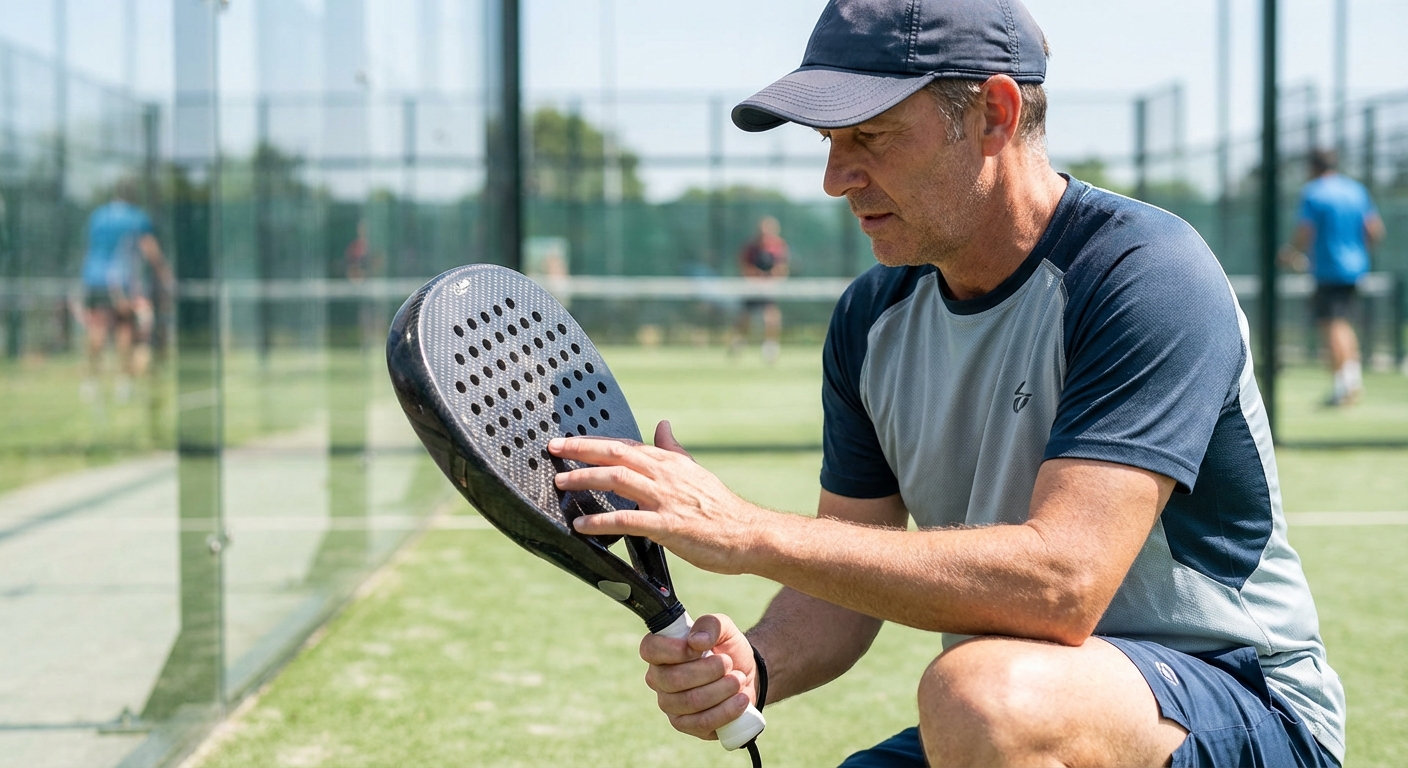
Why is handling key in a padel racket test?
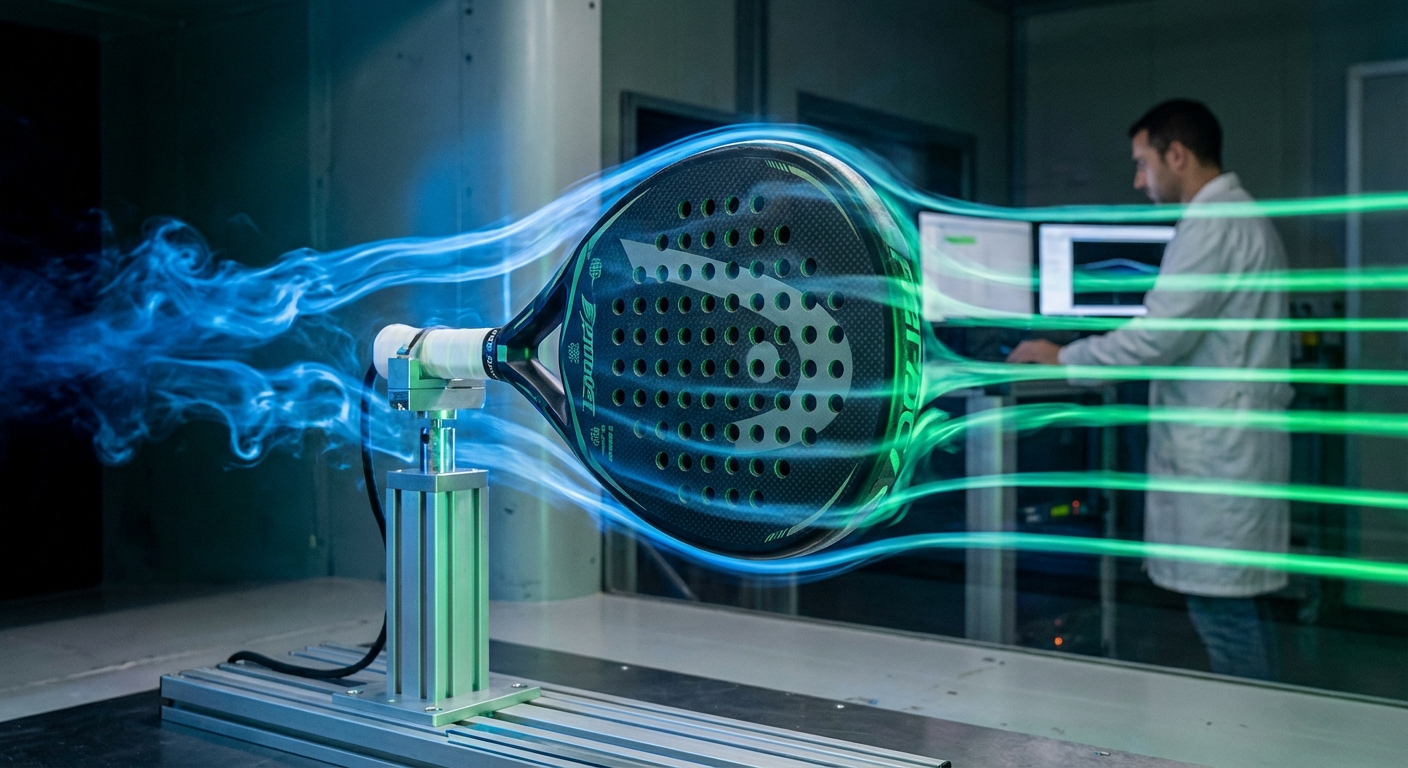
Handling determines how quickly you can react to fast-paced shots and move the frame through the air during intense rallies. A professional padel racket test measures this manageability by using advanced mechanical arms that simulate real-world pendulum swings.
Is manageability vital for beginners?
Manageability is the most critical factor for new players because it allows them to develop proper form without struggling against the physical weight of the equipment. If the frame is difficult to move, a beginner will likely develop poor habits or experience muscle fatigue within the first thirty minutes of play. Simply put, ease of use is the foundation of skill acquisition.
- Lighter swing weights allow for faster adjustments.
- Reduced drag leads to more consistent ball contact.
- Manageable gear prevents early-onset shoulder strain.
Look: choosing a racket that scores high in manageability ensures your learning curve remains steep and enjoyable rather than a physical chore.
Does weight distribution affect your swing speed?
Weight distribution, commonly referred to as balance, dictates where the mass is concentrated and how that mass interacts with your swing mechanics. A frame with a high balance point might feel heavy and sluggish, while a low balance point facilitates rapid defensive resets near the glass. But wait: there is more to it than just the total grams on the scale.
- Head-heavy designs increase the kinetic energy for smashes.
- Handle-heavy designs prioritize precision and control.
- Evenly balanced designs provide a versatile “all-around” feel.
| Balance Category | Performance Focus | Swing Speed Impact |
|---|---|---|
| High Balance | Power and Lever | Slower maneuverability |
| Mid Balance | Versatility | Moderate response |
| Low Balance | Control and Defense | Maximum reaction speed |
Key Takeaway: Understanding handling metrics through laboratory testing helps you choose a racket that matches your physical strength and reaction time, preventing fatigue and improving overall playability.
How does touch impact a padel racket test?
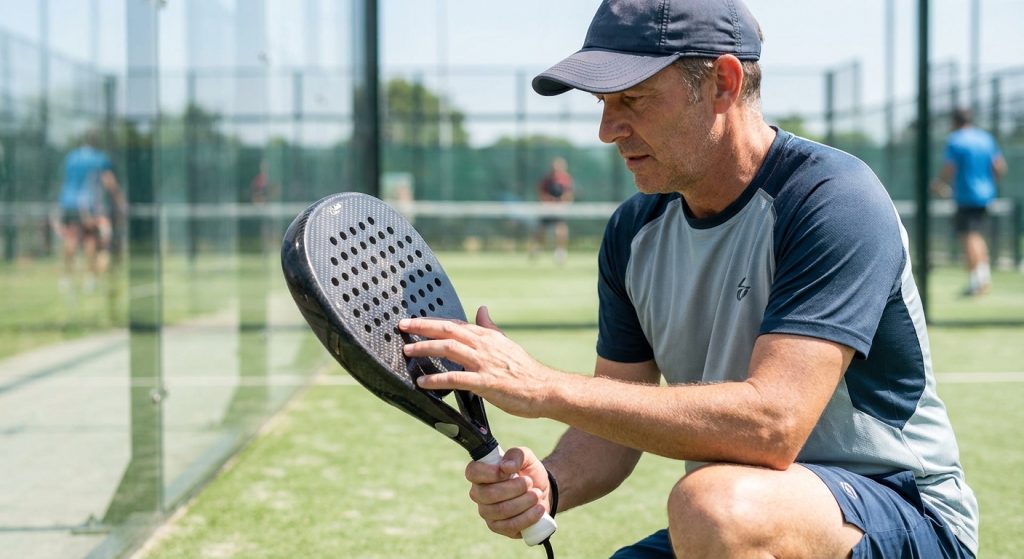
Touch defines the sensory feedback and immediate vibration response you receive the moment the ball makes contact with the striking surface. During a standard padel racket test, this feel is evaluated to ensure players can accurately judge the force and direction of their shots based on tactile input.
Does a harder surface provide better feedback?
A harder surface typically provides a more direct and immediate transfer of energy, which advanced players use to gauge the exact power of their strokes. When the surface is rigid, there is less “dwell time” on the face, meaning the ball exits the frame almost instantly. In fact, this is why competitive players often gravitate toward carbon fiber finishes.
- Harder surfaces offer higher precision for placing shots.
- Vibrations are more distinct, signaling hit quality.
- Direct energy transfer maximizes the effect of a full swing.
Here is the deal: if you want to feel every nuance of the ball’s spin and speed, a high-density surface is your best bet for elite performance.
Why should beginners look for a softer feel?
Softer surfaces are more forgiving because they absorb a portion of the ball’s energy, which helps in maintaining control during off-center hits. For those still mastering their timing, a softer touch provides a “cushion” that prevents the ball from flying out of control. Simply put, it makes the game easier to manage.
- Soft surfaces dampen harsh vibrations during impact.
- Increased ball dwell time allows for better directional control.
- A “springy” feel helps generate depth with less physical effort.
| Surface Density | Feel Type | Ideal Player Level |
|---|---|---|
| High Density | Firm / Hard | Professional / Advanced |
| Medium Density | Balanced | Intermediate |
| Low Density | Soft / Plush | Beginner / Recreational |
Key Takeaway: Selecting the right touch ensures that the feedback from the racket matches your skill level, allowing for either greater forgiveness or more technical control.
Can a padel racket test identify elbow strain risks?
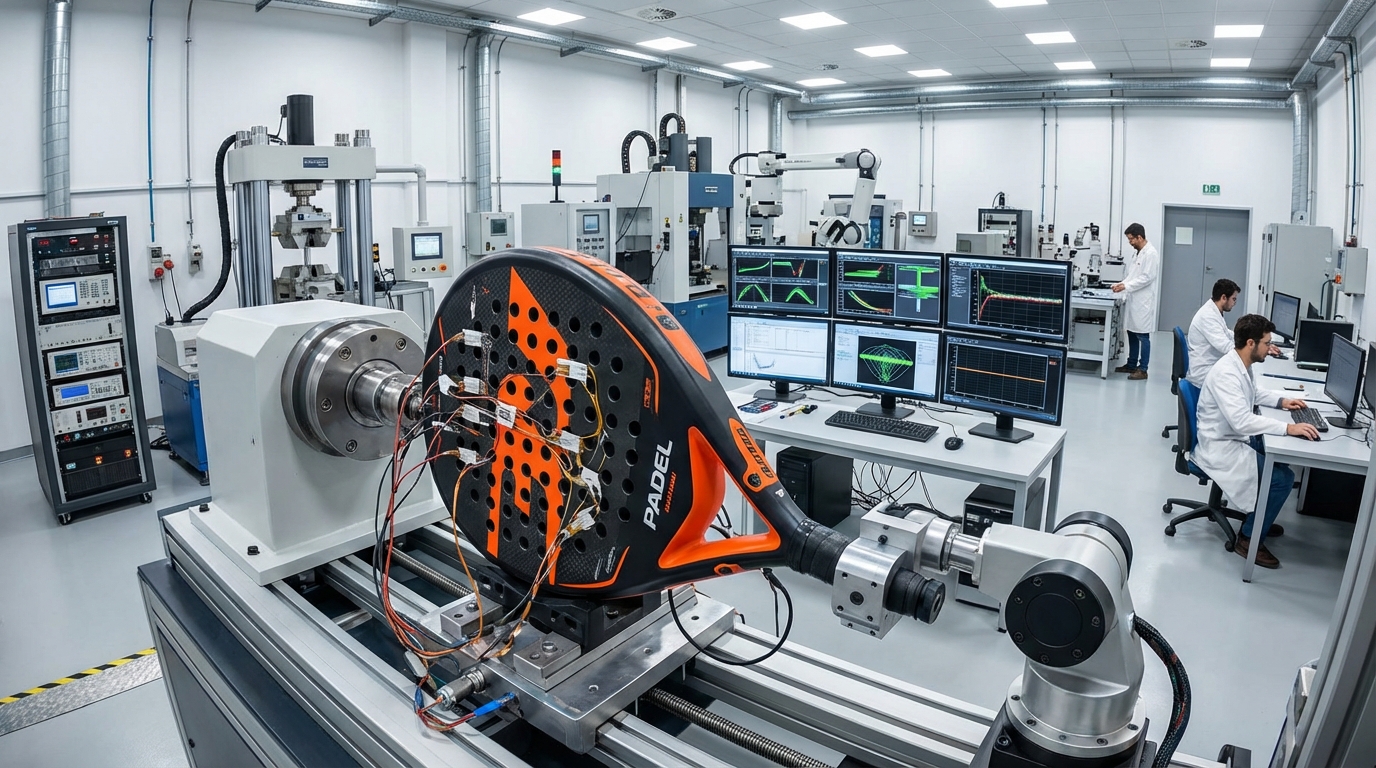
Identifying elbow strain risks is a primary safety function of modern laboratory diagnostics designed to protect players from chronic injuries. A professional padel racket test includes vibration analysis to ensure that harmful shocks are dampened before they reach the player’s joints.
How do sensors measure grip vibrations?
To accurately measure vibration, technicians mount the equipment in a robotic rig that strikes the face at dozens of different points. Sensors embedded in the handle record the frequency and amplitude of the energy that travels down the frame. Think about it: every hit sends a wave of energy through your arm, and the lab quantifies exactly how much.
- Sensors track the duration of the vibration after impact.
- Frequency analysis identifies harmful “peaks” in energy.
- Multi-point testing covers the entire face of the racket.
The goal is to ensure that the design dissipates energy laterally across the face rather than channeling it directly into the handle and the player’s wrist.
Are some materials better at absorbing shock?
The choice of core material, such as specific types of foam, plays a massive role in how much shock is neutralized upon impact. High-quality designs often incorporate layers of varying density or specialized anti-vibration inserts to break up the energy waves. But wait: not all materials are created equal when it comes to player health.
- Ethylene Vinyl Acetate (EVA) provides different levels of shock absorption based on density.
- Polyethylene (FOAM) is generally softer and better for joint protection.
- Carbon frames require specific engineering to avoid excessive stiffness.
| Material Feature | Shock Absorption | Impact on Elbow |
|---|---|---|
| Soft Foam Core | Excellent | Low Risk |
| Hard EVA Core | Moderate | Higher Risk |
| Anti-Vibe Inserts | Enhanced | Minimal Risk |
Key Takeaway: By reviewing vibration data from a technical test, you can proactively choose equipment that minimizes the risk of sports-related injuries like tennis elbow.
Why measure the sweet spot in a padel racket test?
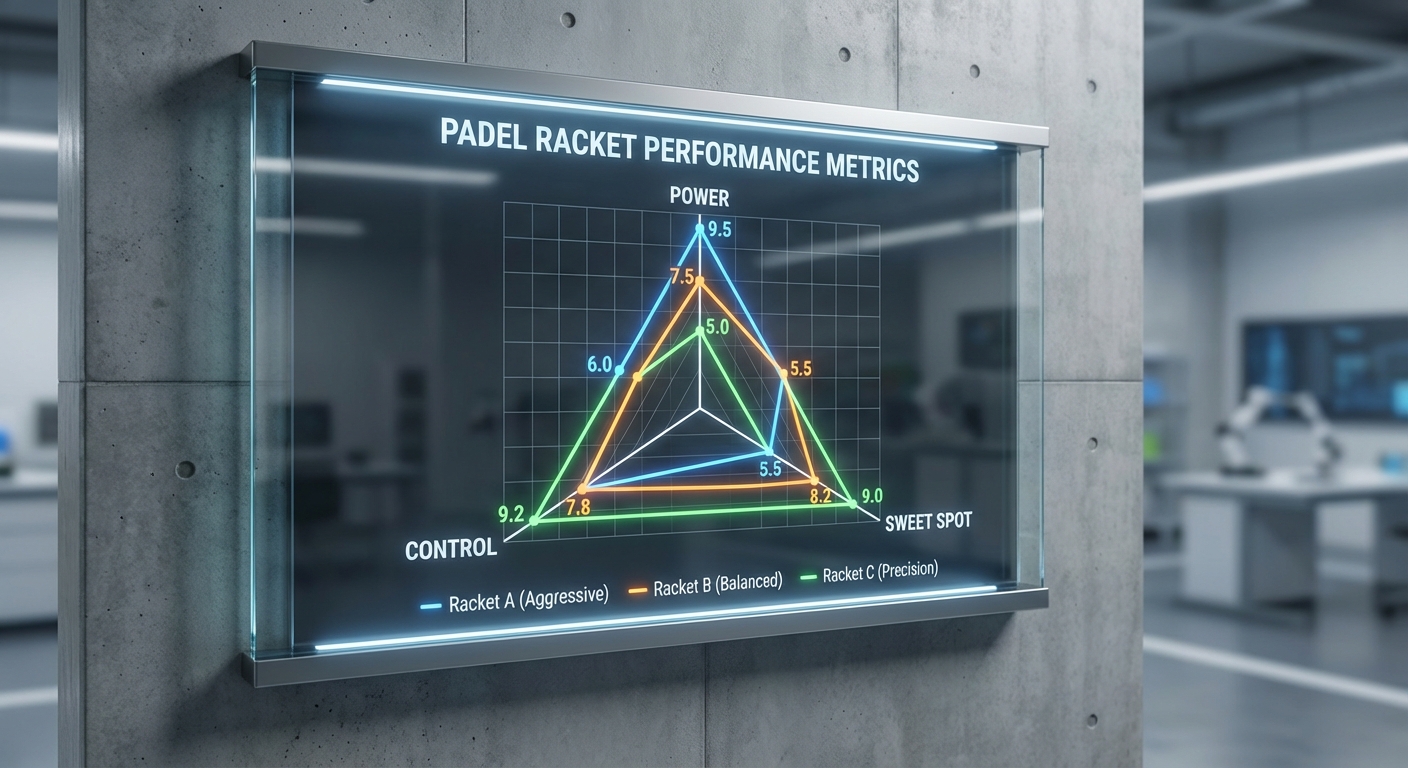
Measuring the sweet spot is essential for understanding how forgiving the equipment will be when you fail to hit the ball perfectly in the center. A comprehensive padel racket test maps out the zone of maximum efficiency to show players where they can expect the most consistent results.
Does a larger area make the gear more forgiving?
A larger sweet spot ensures that the ball behaves predictably even if the impact occurs near the edges of the frame. When the sweet spot is generous, you suffer less of a penalty in terms of power loss or direction errors. The truth is, most amateur players hit the center less than 50% of the time.
- Large sweet spots reduce “dead zones” on the face.
- Consistency is maintained across a wider range of strokes.
- Forgiveness helps players stay in the point during fast exchanges.
Look: if you want to increase your consistency, finding a model with a laboratory-verified expansive sweet spot is the most effective shortcut.
How is the homogeneity of the surface verified?
Technicians verify homogeneity by dropping calibrated weights or firing balls at a grid of points across the entire surface. They measure the return speed and vibration at each point to ensure the material performs uniformly. More importantly, this data reveals if there are structural flaws in the manufacturing process.
- Mapping impact points creates a visual “heat map” of performance.
- Consistency testing identifies weak spots in the carbon weave.
- Uniformity ensures that every shot feels the same to the player.
| Test Parameter | Goal | Result of Failure |
|---|---|---|
| Impact Grid | Map Sweet Spot | Erratic ball exit |
| Uniformity Check | Surface Stability | Unpredictable vibration |
| Center-to-Edge Ratio | Efficiency Drop-off | High power loss on edges |
Key Takeaway: A well-defined and large sweet spot provides the margin of error needed to maintain high-level play even when your footwork or timing is slightly off.
Does ball rebound matter in a padel racket test?
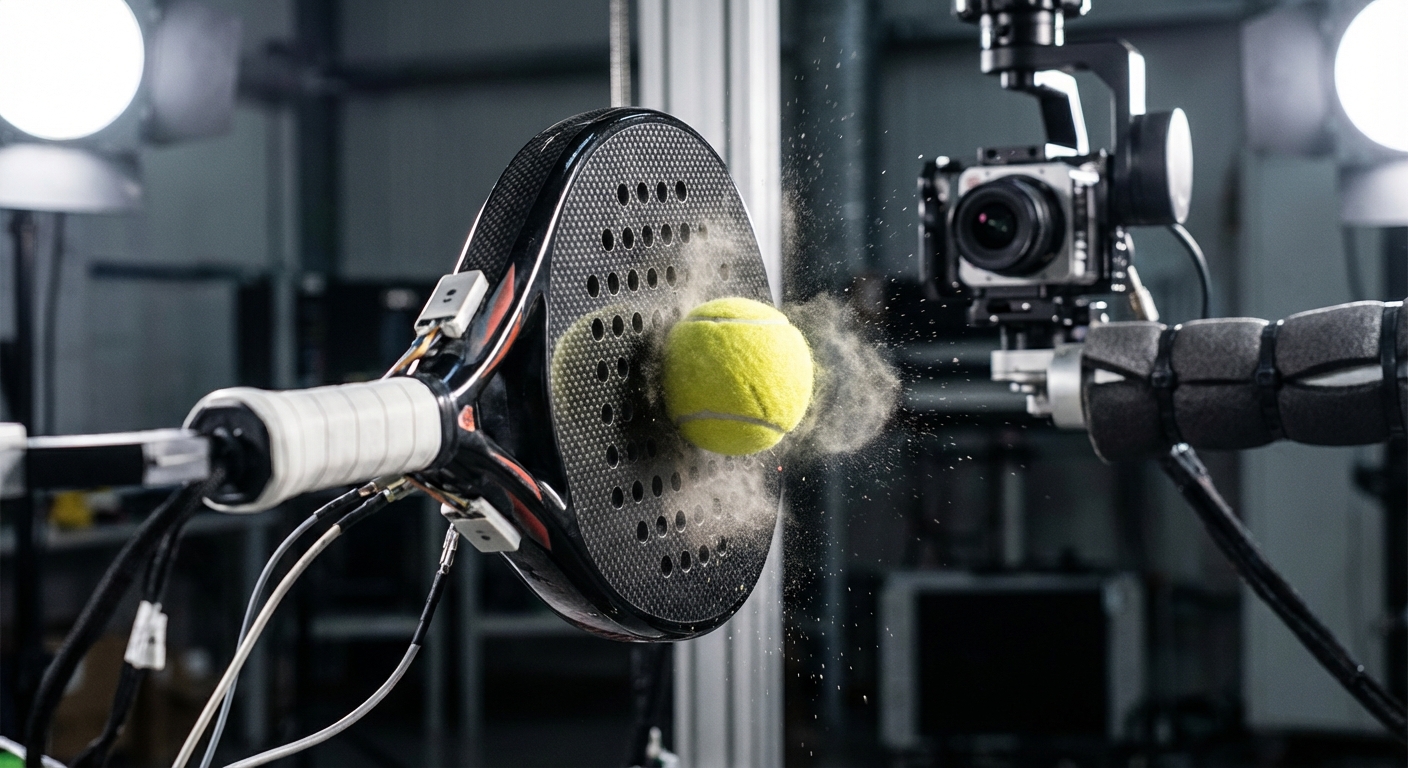
Ball rebound is a critical metric because it determines the “trampoline effect” and how much effort you need to exert to clear the net. In a professional padel racket test, this rebound is quantified to help players understand the natural power and depth of their shots.
Is a bouncier surface harder to control?
While a high rebound rate makes it easier to hit the ball deep into the opponent’s court, it can lead to over-hitting if the player has a naturally fast swing. A bouncier surface requires a delicate touch at the net, as the ball may fly further than intended during volleys. Simply put, high rebound is a double-edged sword.
- High rebound assists players with slower swing speeds.
- Low rebound offers maximum control for aggressive hitters.
- Medium rebound provides a balanced feel for most amateurs.
The bottom line: you must match the rebound characteristics of your gear to the natural tempo of your game to avoid unforced errors.
How do lab tiltable rigs simulate ball exit speed?
Tiltable rigs allow technicians to set the equipment at specific angles and drop balls from a consistent height to measure the exit velocity. By changing the tilt, they can simulate different types of shots, from flat drives to defensive lobs. In fact, this is the most accurate way to measure energy return without human error.
- Precision rigs eliminate the variability of human swings.
- Exit velocity is measured in meters per second for accuracy.
- Energy return percentages reveal the efficiency of the core.
| Rebound Level | Energy Return | Benefit |
|---|---|---|
| High | 80% – 90% | Easy depth and speed |
| Medium | 60% – 79% | Versatile playstyle |
| Low | Below 60% | Precision and placement |
Key Takeaway: Selecting a racket with the appropriate rebound ensures that you don’t have to fight your equipment to get the ball over the net or keep it inside the lines.
How is power measured during a padel racket test?
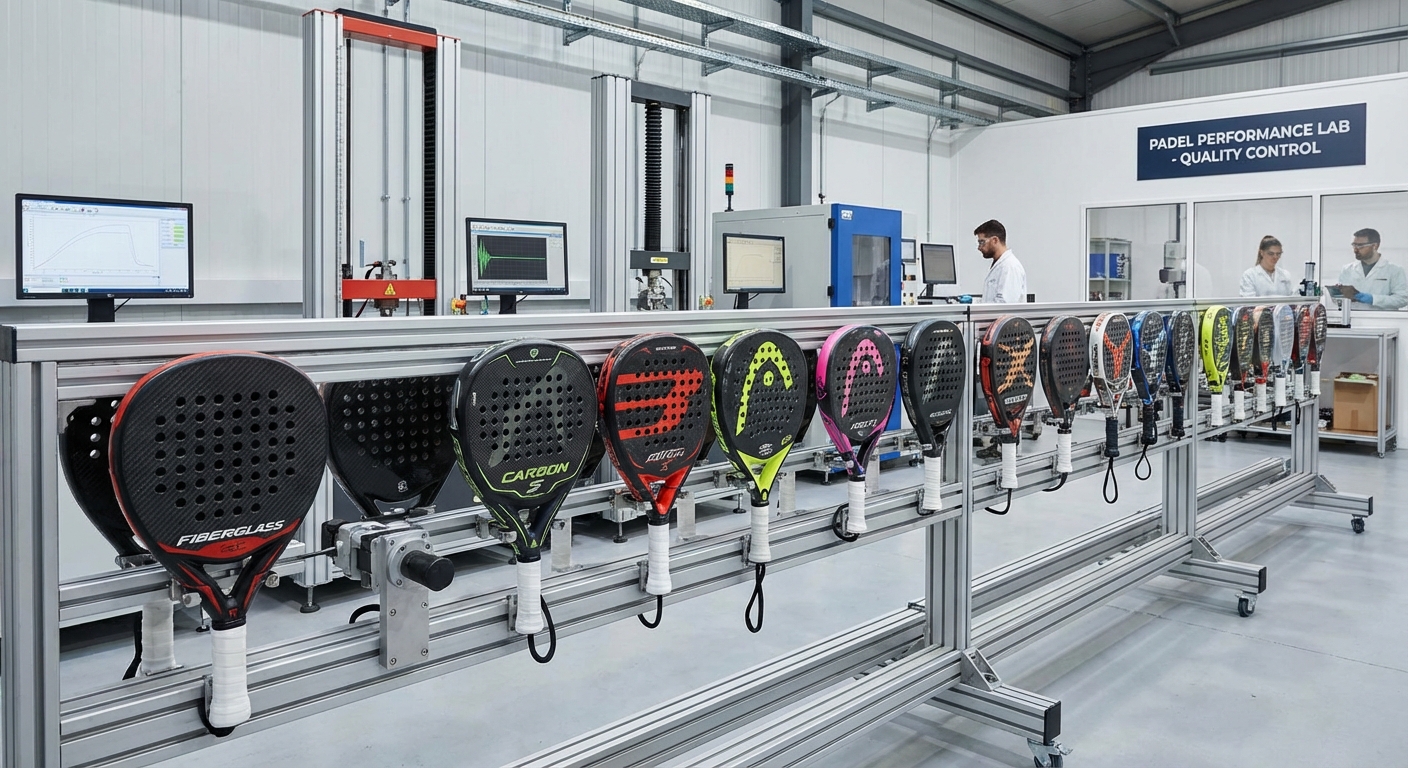
Power is measured by calculating the maximum speed the ball reaches during high-intensity impacts that simulate aggressive strokes like smashes. A padel racket test uses high-speed cameras and velocity sensors to determine how much of the player’s energy is actually converted into ball speed.
Can aggressive strokes benefit from specific materials?
Aggressive players benefit from materials that do not deform excessively under high pressure, as this ensures all the energy goes back into the ball. High-modulus carbon and denser EVA cores are specifically engineered to withstand the force of a smash without losing their shape. Look: power is not just about weight; it is about the stiffness of the materials.
- Denser cores offer more “pop” on high-speed impacts.
- Rigid frames prevent energy loss through structural bending.
- Surface textures can influence the perceived power through spin.
More importantly, the interaction between the core and the face determines if the power is “explosive” or “controllable” during a full swing.
Does downward trajectory impact speed readings?
Testing protocols often include measurements taken at a downward angle to replicate the trajectory of a smash finishing the point. Technicians analyze how the equipment handles the compression of the core when struck at maximum force. But wait: the trajectory also affects how the ball interacts with the air after leaving the face.
- Downward strikes test the structural limits of the frame.
- Air resistance is calculated to determine final impact speed.
- Recovery time of the core is measured after the high-speed hit.
| Strike Type | Goal of Test | Key Metric |
|---|---|---|
| Flat Drive | Speed retention | Linear velocity |
| Smash | Maximum power | Exit speed at 45 degrees |
| Volley | Efficient transfer | Short-stroke rebound |
Key Takeaway: Power metrics provided by a lab test give you a clear indication of how much extra “firepower” you can expect when closing out a point with a smash.
Why is fatigue vital in a padel racket test?
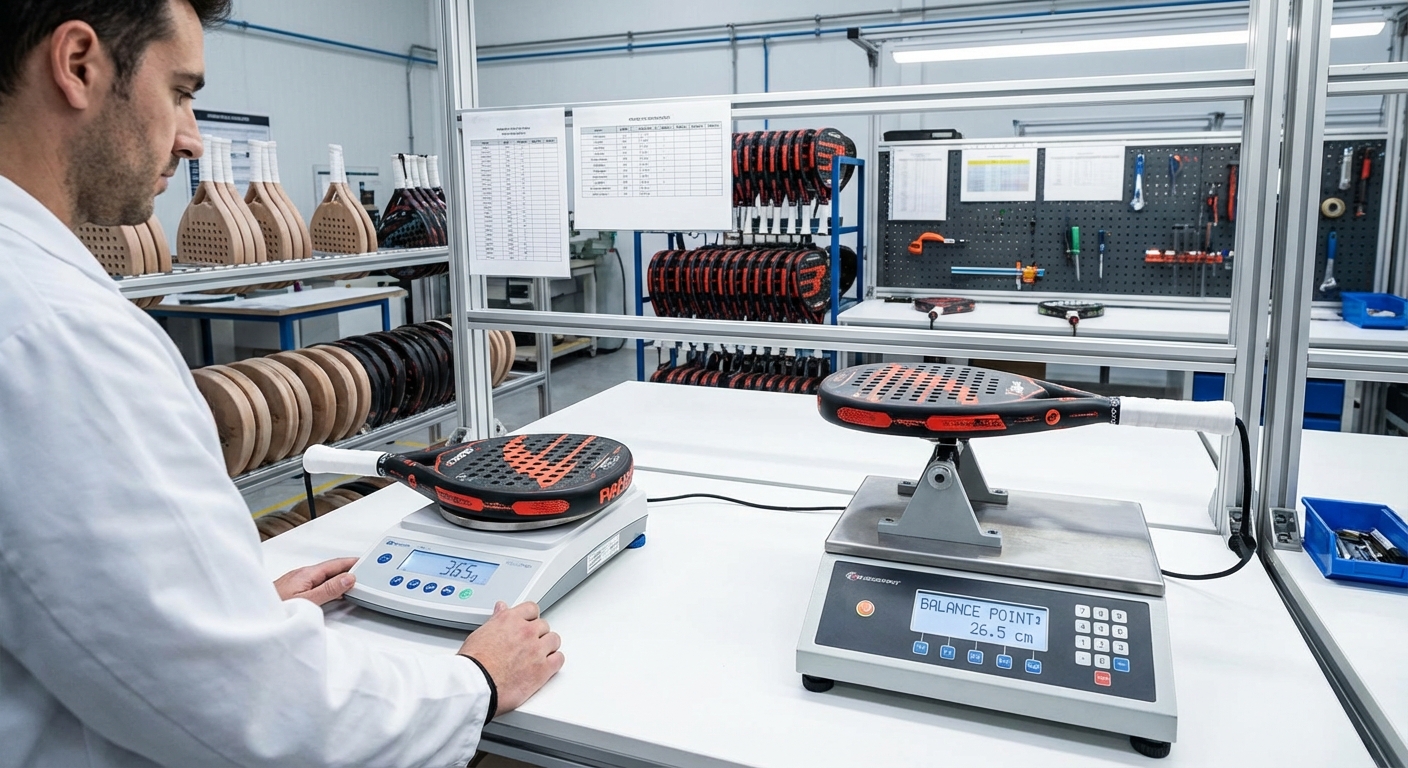
Fatigue testing is vital because it reveals how the equipment will perform after months of heavy use rather than just on the day of purchase. A padel racket test simulates the wear and tear of a full season to ensure the materials do not degrade or lose their original performance characteristics.
Can 500 impacts reveal hidden structural weaknesses?
Subjecting the face to 500 high-pressure impacts reveals if the internal fibers will crack or if the foam will lose its elasticity. Many lower-quality products perform well in the first few matches but quickly become “dead” as the internal structure breaks down. Here is the deal: consistency over time is the mark of true quality.
- Repetitive stress tests identify potential delamination issues.
- Impact cycles simulate hundreds of games in a matter of hours.
- Structural integrity is checked after every 100 hits.
If a frame can withstand this cycle without a significant drop in performance, it is considered a durable investment for the consumer.
Does the core material change properties over time?
The core material is susceptible to “setting,” where it becomes permanently compressed and loses its ability to return energy to the ball. Laboratory testing measures the core’s thickness and rebound both before and after the fatigue cycle to quantify this degradation. Simply put, you don’t want your gear to feel different every week.
- EVA cores can become harder and more brittle with age.
- FOAM cores may lose their “spring” faster than denser materials.
- Resin quality determines how well the fibers stay bonded.
| Fatigue Stage | Metric Monitored | Failure Sign |
|---|---|---|
| Initial | Base Performance | N/A |
| 250 Impacts | Mid-life Stability | Soft spots on face |
| 500 Impacts | Final Durability | Significant power loss |
Key Takeaway: Investing in gear that has passed a fatigue test ensures that you won’t have to replace your racket frequently due to structural softening.
How do labs check breakage in a padel racket test?
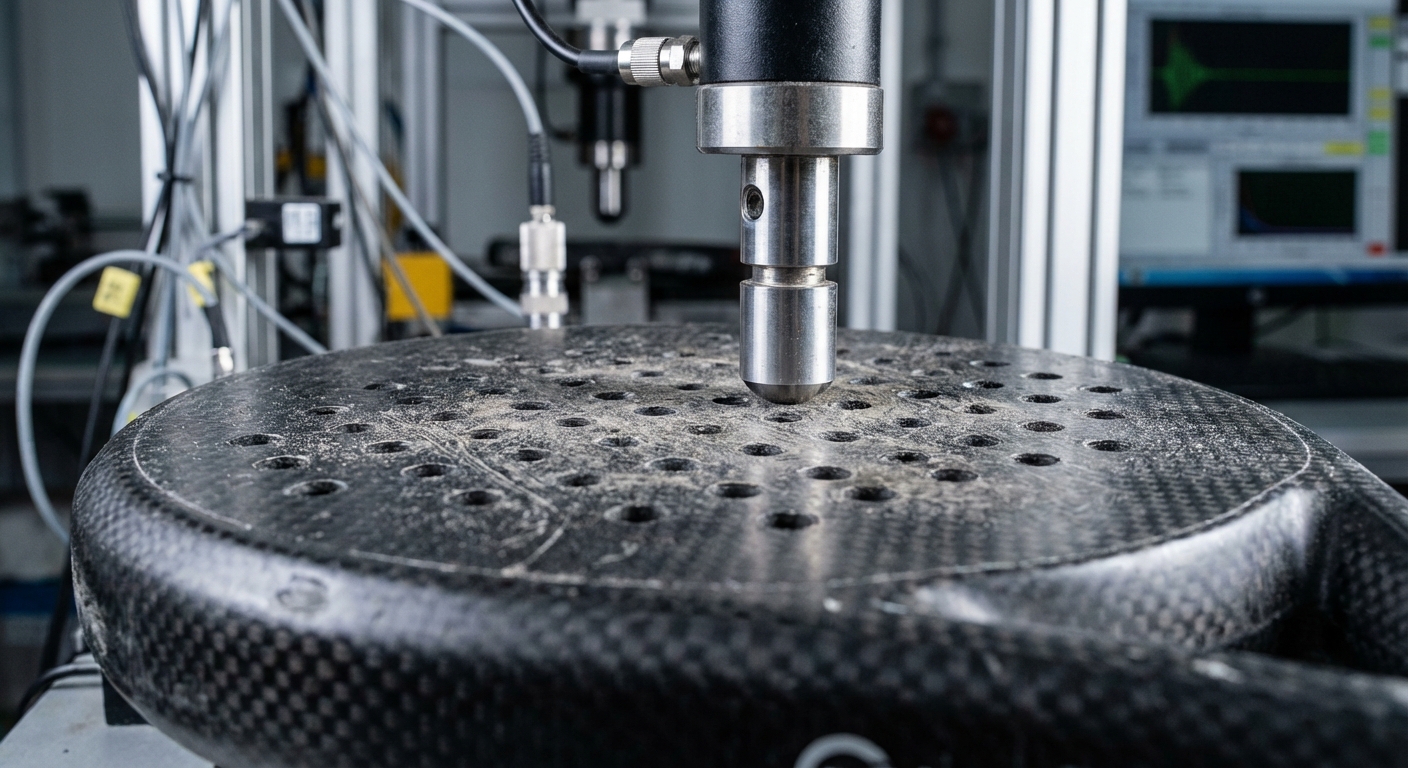
Breakage tests are conducted to ensure that the equipment can survive accidental collisions with the glass walls, the floor, or even the steel mesh. A padel racket test uses stress-to-failure protocols to determine the absolute breaking point of the frame and the striking surface.
Can the frame withstand hits against a glass wall?
To simulate a collision with a court wall, the frame is struck with a heavy object or swung into a solid surface under controlled conditions. This ensures that the reinforcement in the “hoop” of the design is sufficient to prevent the carbon from shattering upon impact. Look: accidents happen, and your equipment should be built to handle them.
- Reinforced edges provide a shield against peripheral damage.
- Carbon-Kevlar blends are often used for high-impact zones.
- Frame integrity is measured at multiple angles of collision.
Choosing equipment with a high breakage resistance rating gives you the confidence to chase down difficult balls near the boundaries of the court.
Will the surface crack under heavy steel impact?
Technicians drop a 2.4 kg steel weight from increasing heights onto the face of the racket until it fails. This test measures the maximum energy the surface can absorb before the fibers snap or the resin fails. But wait: this isn’t just about durability; it is a critical safety measurement for the player.
- Impact height determines the “joules” of energy absorbed.
- Fiber orientation is analyzed to see how the crack propagates.
- Resin-to-fiber ratios are checked for structural health.
| Impact Source | Simulation | Test Outcome |
|---|---|---|
| Steel Weight | Severe Ball Impact | Surface Resistance |
| Lateral Force | Wall Collision | Frame Integrity |
| Torsional Stress | Off-center Hit | Structural Stability |
Key Takeaway: Breakage data ensures that the product you buy is not just high-performing, but also robust enough to survive the physical demands of an intense match.
How does a padel racket test differ from pickleball?
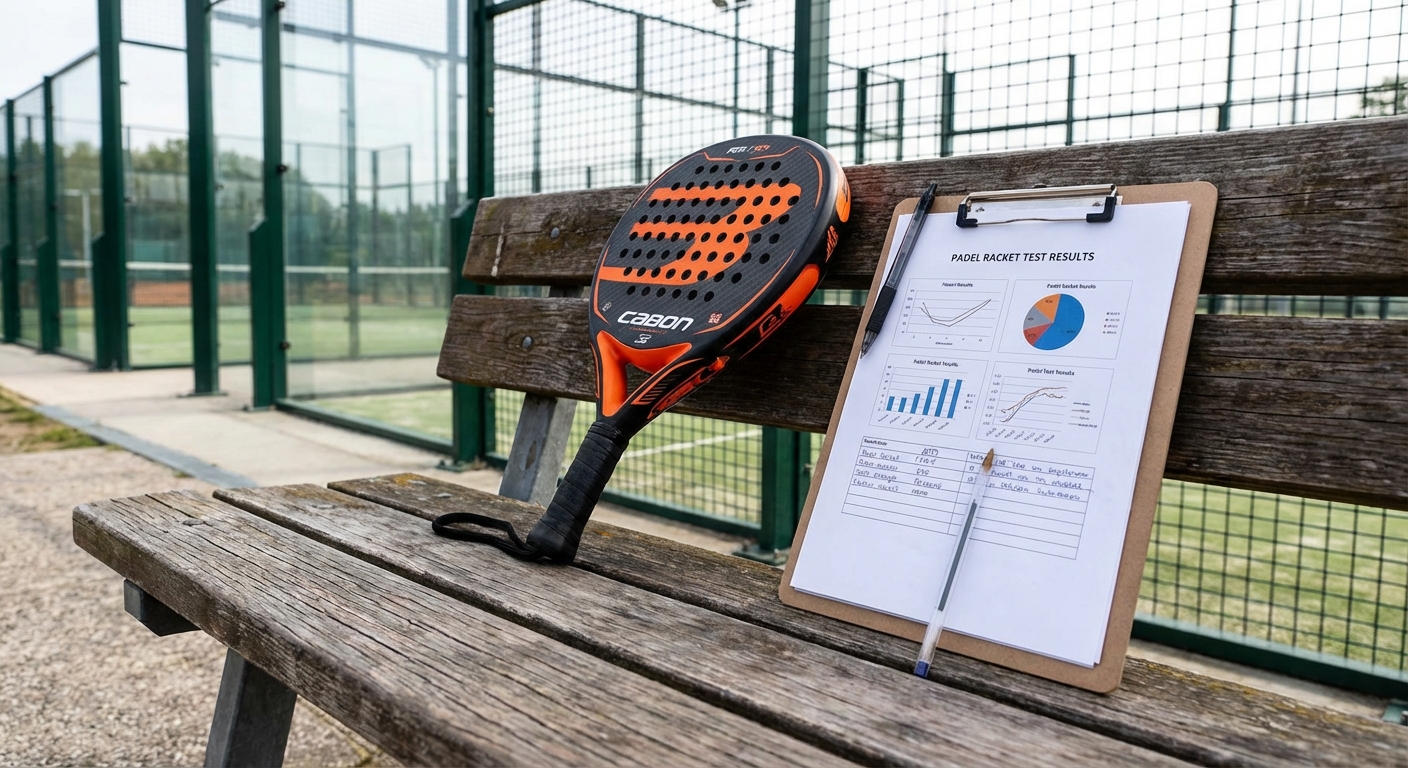
A padel racket test differs from pickleball evaluations primarily due to the internal core materials and the impact forces the equipment must withstand. You can learn more about how to evaluate market demand in pickleball vs padel to see how engineering preferences shift between these two growing sports.
Are foam cores unique to these specific designs?
Padel equipment relies on thick, elastic foam cores to manage the high-pressure impact of a pressurized ball, whereas pickleball paddles often use thinner honeycomb structures. These foam cores require specialized testing for compression and recovery that is not as critical in other paddle sports. Here is the deal: the physics of the impact are entirely different.
- Foam cores allow for significant deformation and energy return.
- Honeycomb cores are designed for lightweight rigidity.
- Testing equipment must be calibrated for different energy levels.
Simply put, the lab protocols for padel are focused on energy management within the core, whereas other sports focus more on surface friction and weight.
Does weight absorption vary between court sports?
Because the ball used in padel is heavier and more pressurized, the equipment must absorb significantly more weight and kinetic energy during every stroke. Padel testing rigs are built to handle these higher forces, ensuring that the frame doesn’t deform permanently under the stress. Think about it: the equipment is essentially a shock absorber for your arm.
- Padel frames are thicker (38mm) to accommodate larger cores.
- Vibration frequencies are lower and more powerful in padel.
- Material density is higher to prevent structural collapse.
| Feature | Padel Racket Test | Pickleball Paddle Test |
|---|---|---|
| Core Type | High-Elastic Foam | Polymer Honeycomb |
| Impact Force | High (Pressurized Ball) | Low (Perforated Ball) |
| Core Thickness | 38mm Standard | 13mm to 16mm |
Key Takeaway: The unique foam-core construction of padel equipment necessitates a specialized testing process to manage the high energy and vibration levels inherent to the sport.
What determines the winner of a padel racket test?
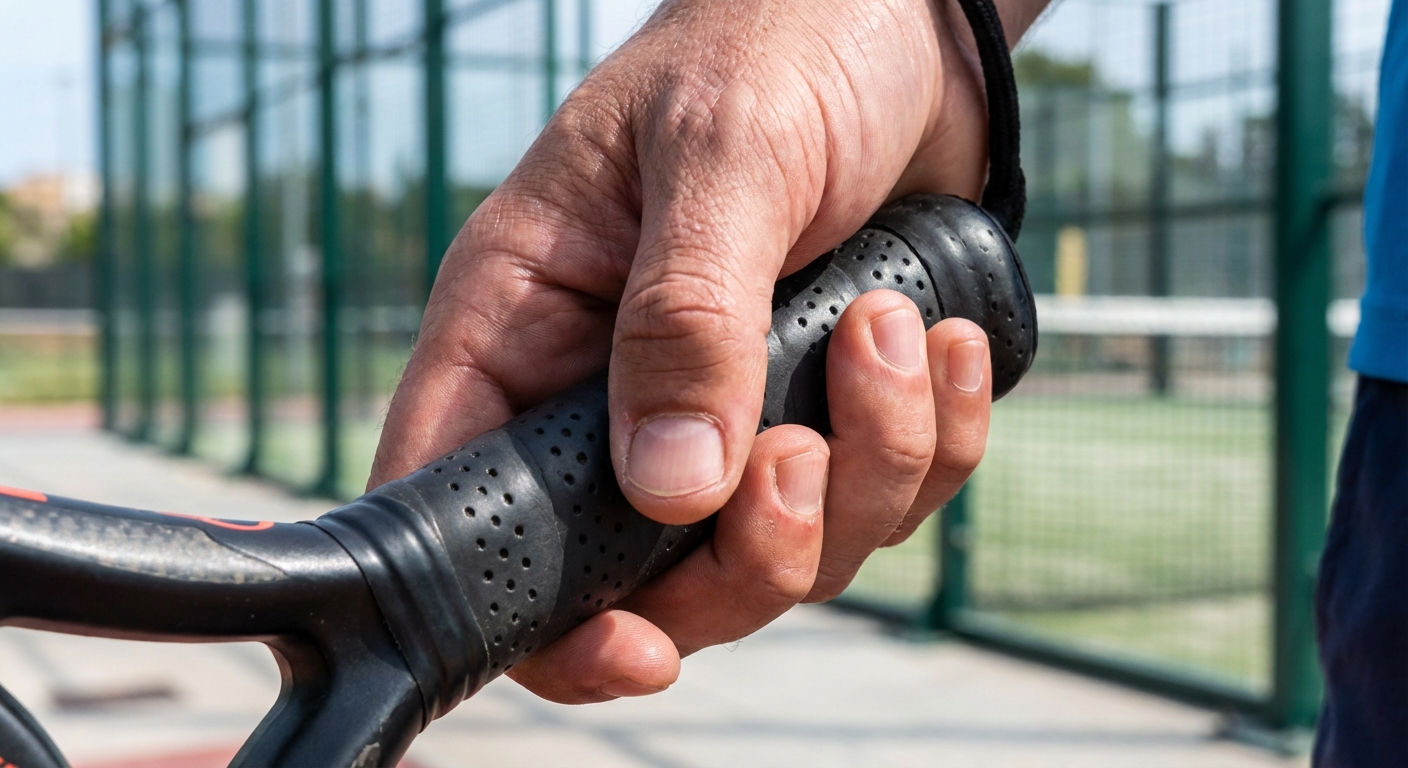
The winner of a padel racket test is determined by a balanced score that accounts for performance, durability, safety, and overall playability across all laboratory categories. Rather than focusing on a single metric, the best-rated equipment excels in providing a harmonious experience for the intended player profile.
How are control and comfort weighted in final scores?
Final scores often weigh control and comfort at 50% of the total, as these factors directly impact the player’s enjoyment and health. Power and durability make up the remaining 50%, ensuring that the equipment is both an offensive weapon and a long-term investment. In fact, a “winner” must be the best all-around performer.
- Control scores are derived from sweet spot and rebound tests.
- Comfort scores are based on vibration and weight metrics.
- Durability scores come from fatigue and breakage protocols.
Look: the highest-ranked products are those that manage to provide power without sacrificing the health of the player’s elbow.
Should you trust laboratory-verified quality labels?
Laboratory-verified labels are the only way to avoid the bias of professional sponsorships and subjective player reviews. These tests provide an objective baseline that allows you to compare different brands and models based on cold, hard data. More importantly, it forces manufacturers to maintain high standards.
- Independent labs offer unbiased technical insights.
- Quality labels guarantee the materials match the marketing.
- Data-driven choices lead to higher satisfaction on the court.
| Score Component | Weighting | Player Value |
|---|---|---|
| Playability | 40% | Immediate Performance |
| Safety | 30% | Injury Prevention |
| Durability | 30% | Product Longevity |
Ultimately, a padel racket test provides the scientific foundation you need to make an informed decision about your gear. Whether you are a beginner looking for comfort or a pro seeking maximum power, these laboratory metrics strip away the marketing fluff and reveal the true quality of a design. If you need assistance building your own facility or selecting the right equipment for your project, feel free to contact us for expert guidance. Our vision is to empower every player with the best possible environment and equipment, ensuring that the sport continues to grow through quality and innovation.
FAQ
Can I perform a padel racket test at home?
No, you cannot. A true laboratory evaluation requires specialized mechanical arms, precision sensors, and impact rigs that are not available to the general consumer.
What is the best score in a padel racket test?
The best score depends on your style. While high scores in all categories are ideal, an aggressive player should prioritize power and breakage resistance over a soft touch.
Can I trust every padel racket test I find online?
Yes, if they are certified. Look for independent laboratory seals rather than simple player reviews, as professional labs use objective data instead of personal preference.
What is the best material for a padel racket test success?
Carbon fiber is usually the winner. This material provides the best balance between weight, durability, and energy return compared to fiberglass alternatives.
Can I use padel racket test data to avoid injuries?
Yes, you definitely can. By selecting equipment with high vibration-damping scores, you significantly reduce the repetitive stress on your elbow and wrist joints.