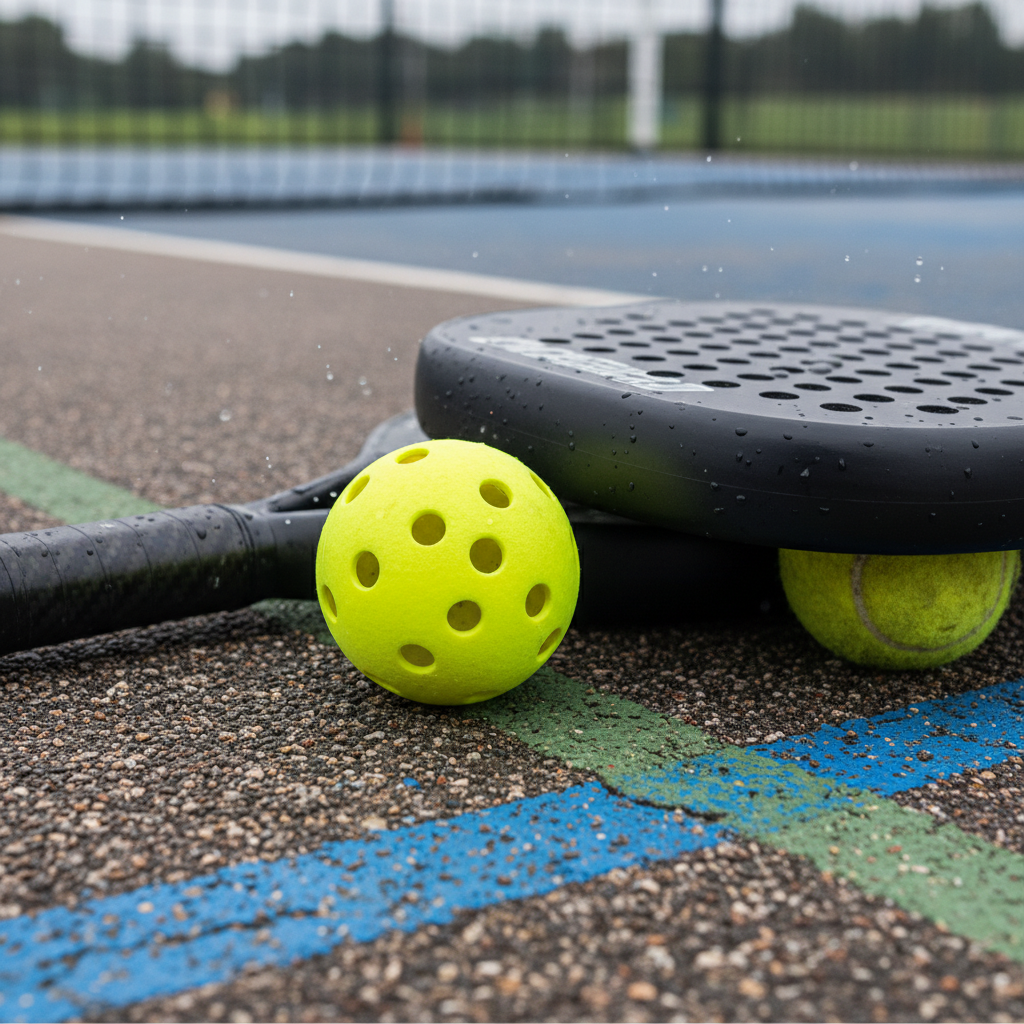
Pickleball represents a fast-paced racket sport played on a 44-by-20-foot court with a perforated plastic ball whereas padel exists as a dynamic wall-based game inside a 20-by-10-meter glass enclosure using slightly depressurized tennis-style balls. Selecting between pickleball vs padel poses a significant financial challenge for your sports facility planning. You might worry about wasted space or low member engagement if you install the wrong infrastructure. Our guide provides technical blueprints along with strategic insights helping you build a world-class facility that ensures maximum return on your investment.
What are the main differences between pickleball vs padel?
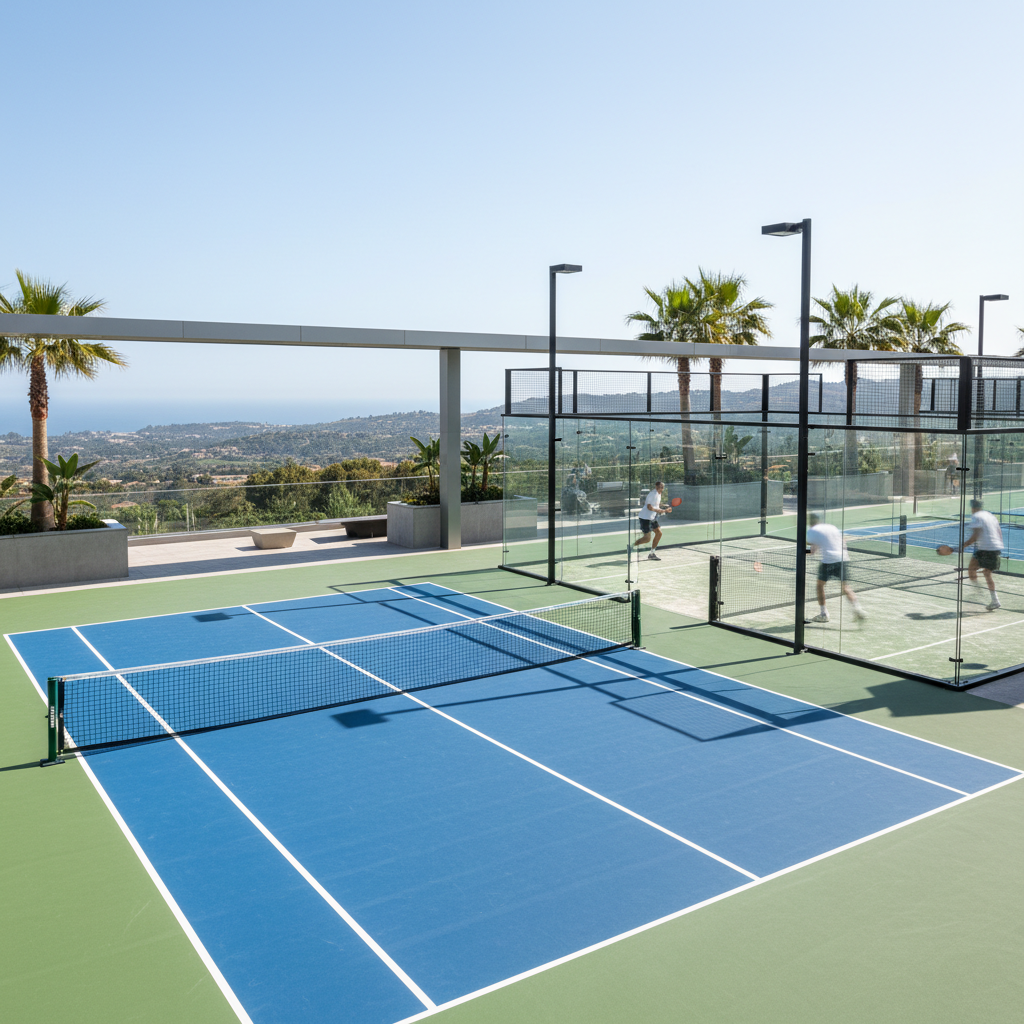
The main differences lie in the court environment where padel uses glass walls as active playing surfaces while pickleball relies on an open-court layout. Evaluating pickleball vs padel requires understanding how these spatial dynamics influence player movement and overall facility atmosphere. While both sports emphasize doubles play and social interaction, the inclusion of an enclosure fundamentally shifts the tactical depth available for your members.
How does the playing environment change?
But here’s the kicker, the enclosure in padel changes everything about the game’s geometry compared to the open-air pickleball experience.
- Padel: 10m x 20m with glass walls.
- Pickleball: 20ft x 44ft with open fencing.
- Padel: High lobs allowed as strategy.
- Pickleball: Strategic net play prioritized.
Players must adjust to the ball rebounding off the glass in one sport but dying at the fence in the other. This structural difference dictates how much vertical clearance your building requires for a successful indoor installation.
Are the physical demands similar?
What’s the real story? Pickleball offers a more accessible entry point for seniors while padel attracts younger athletes seeking high-intensity rallies.
- Padel: High cardiovascular demand.
- Pickleball: Low-impact joint movement.
- Padel: 3D spatial awareness required.
- Pickleball: Fast-twitch reaction focus.
| Feature | Pickleball Detail | Padel Detail |
|---|---|---|
| Playing Area | Open Flat Surface | Glass-Enclosed Box |
| Skill Curve | Immediate Playability | Moderate Learning Curve |
| Social Factor | Extremely High | High / Competitive |
| Court Surroundings | Fencing or Netting | Tempered Glass Walls |
The comparison shows that padel offers a more complex athletic experience while pickleball maximizes accessibility for diverse age groups.
Key Takeaway: Choosing the right sport depends on your target demographic as pickleball favors accessibility whereas padel offers a premium high-action experience.
How do court dimensions vary for pickleball vs padel?
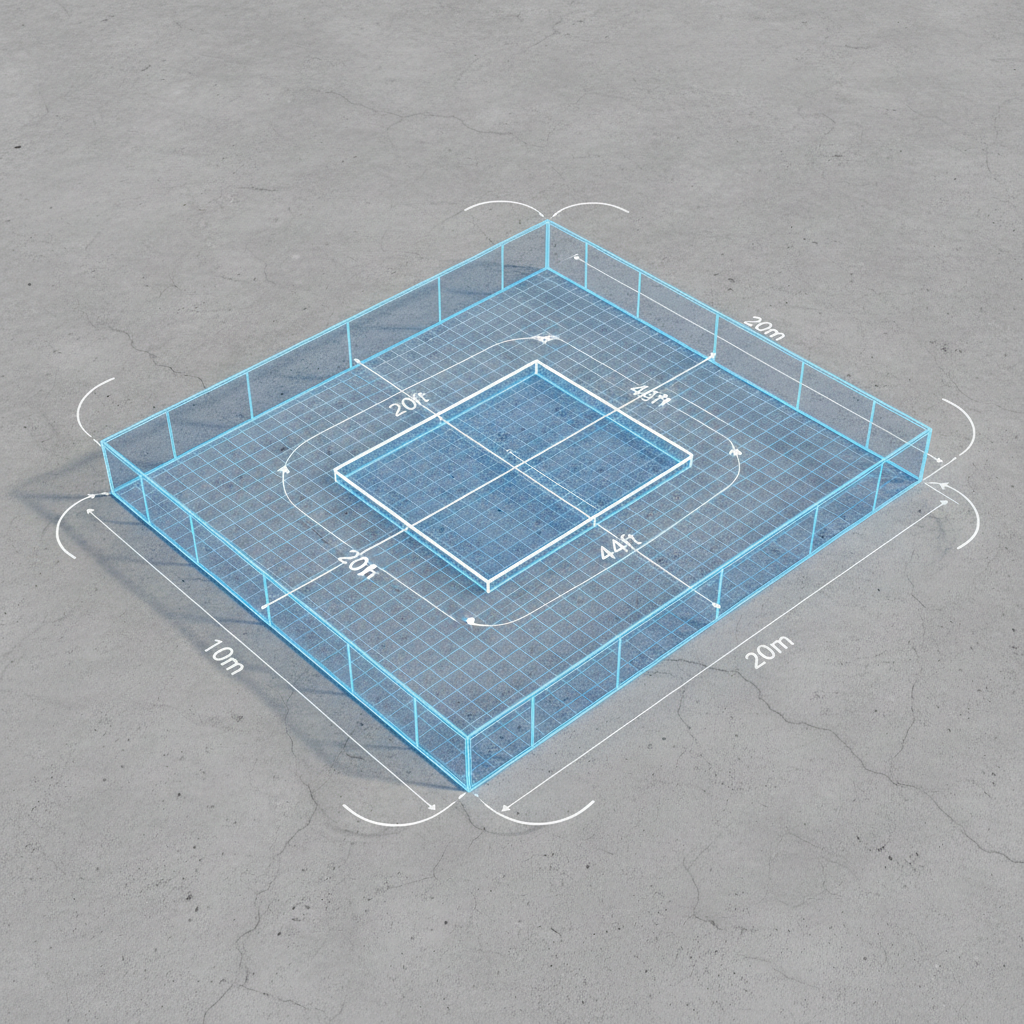
A standard pickleball court measures exactly 44 by 20 feet whereas a Standard Padel Court requires a larger 20 by 10 meter footprint. Understanding pickleball vs padel dimensions remains vital for maximizing the player capacity of your available real estate. A single tennis court footprint can accommodate four pickleball setups but only two padel courts due to the wider buffer zones needed.
What is the exact footprint of a pickleball court?
You might be wondering, how much extra room you need beyond the white lines for a safe playing environment.
- Length: 44 Feet.
- Width: 20 Feet.
- Total Area: 880 Square Feet.
- Non-Volley Zone: 7 Feet.
You must allow for at least ten feet of additional space on all sides to prevent players from crashing into surrounding barriers. This brings the total recommended footprint for a single unit to approximately 30 by 60 feet.
Is the padel court significantly larger?
Here is the deal, padel structures require nearly triple the square footage of pickleball courts when you account for the glass wall supports.
- Length: 65.6 Feet (20m).
- Width: 32.8 Feet (10m).
- Total Area: 2,152 Square Feet.
- Height: Minimum 20 Feet.
| Metric | Pickleball Standard | Padel Standard |
|---|---|---|
| Play Area Width | 20 Feet | 32.8 Feet |
| Play Area Length | 44 Feet | 65.6 Feet |
| Ceiling Height | 18 Feet Minimum | 26 Feet Recommended |
| Net Height (Center) | 34 Inches | 34.6 Inches |
The data confirms that padel requires a much more substantial investment in vertical and horizontal space compared to its smaller racket sport counterpart.
Key Takeaway: Facility managers must prioritize pickleball for high-density player volume or padel for a more expansive luxury spectator experience.
Which equipment is essential for pickleball vs padel?
Essential gear includes solid-surface paddles along with perforated plastic balls for pickleball while padel utilizes thicker perforated rackets and depressurized tennis-style balls. Comparing pickleball vs padel gear reveals distinct differences in material science and durability requirements. Pickleball paddles focus on lightweight carbon fiber for precision while padel rackets use EVA foam cores to absorb high-impact shots from heavier balls.
Do the paddles utilize different core materials?
Ready for the good part? The internal construction of these rackets determines the sound level and vibration felt by your club members during play.
- Pickleball: Honeycomb polymer cores.
- Padel: High-density EVA foam.
- Pickleball: Solid hitting surface.
- Padel: Drilled holes for aerodynamics.
Pickleball gear remains significantly lighter which reduces the risk of elbow strain for your recreational players. Conversely the heavier padel racket provides the power needed to drive the ball off the back glass walls effectively.
Why is the ball pressure critical for gameplay?
This is where it gets interesting, because using a standard tennis ball on a padel court would make the game uncontrollably fast.
- Pickleball: Rigid plastic wiffle ball.
- Padel: Soft depressurized felt ball.
- Pickleball: Wind-resistant outdoor models.
- Padel: Yellow high-visibility felt.
| Equipment Type | Pickleball Specs | Padel Specs |
|---|---|---|
| Hitting Tool | Solid Paddle | Perforated Racket |
| Core Material | Polymer Honeycomb | EVA / Carbon Foam |
| Ball Material | Perforated Plastic | Pressurized Rubber/Felt |
| Grip Requirement | Standard Wrap | Mandatory Safety Strap |
The equipment contrast highlights that padel gear is built for power and absorption while pickleball tools emphasize light touch and rapid fire exchanges.
Key Takeaway: Stocking your pro shop requires two entirely different inventory sets as the rackets and balls share almost no technical overlap.
How do rules and scoring differ in pickleball vs padel?
Pickleball utilizes a unique scoring system to 11 points where only the server scores while padel follows traditional tennis-style scoring sets and games. Mastering pickleball vs padel rules is the first step toward organizing successful club tournaments for your community. While both sports require underhand serves the inclusion of walls in padel introduces a three-dimensional layer of strategy that tennis players find very familiar.
Is the traditional tennis scoring system used?
Believe it or not, padel players use the 15-30-40 system which makes the transition from tennis almost seamless for most athletes.
- Padel: Sets and games.
- Pickleball: Point-by-point to 11.
- Padel: Deuce and advantage.
- Pickleball: Side-out scoring only.
The pickleball system can be confusing for newcomers as the score consists of three numbers representing the server and partner status. Padel feels more intuitive for anyone who has stepped onto a traditional tennis court before.
How do the serve requirements change between sports?
Now for the best part, both sports mandate underhand serves to keep the game social and prevent the serve-and-volley dominance seen in tennis.
- Pickleball: Hit below the waist.
- Padel: Bounce before hitting.
- Pickleball: Cross-court landing.
- Padel: Must clear the service line.
| Rule Category | Pickleball Method | Padel Method |
|---|---|---|
| Scoring Format | Points to 11 or 15 | Games and Sets (Tennis) |
| Scoring Team | Server Only Scores | Either Team Can Score |
| Serve Motion | Upward Arc Underhand | Underhand After Bounce |
| Game Length | 15-20 Minutes | 60-90 Minutes |
The analysis shows that padel matches typically last longer and follow more traditional athletic structures while pickleball offers quick high-turnover games.
Key Takeaway: Padel is the natural choice for tennis-adjacent markets while pickleball’s unique rules create a distinct fast-paced social atmosphere.
What is the technical process for building a padel court?
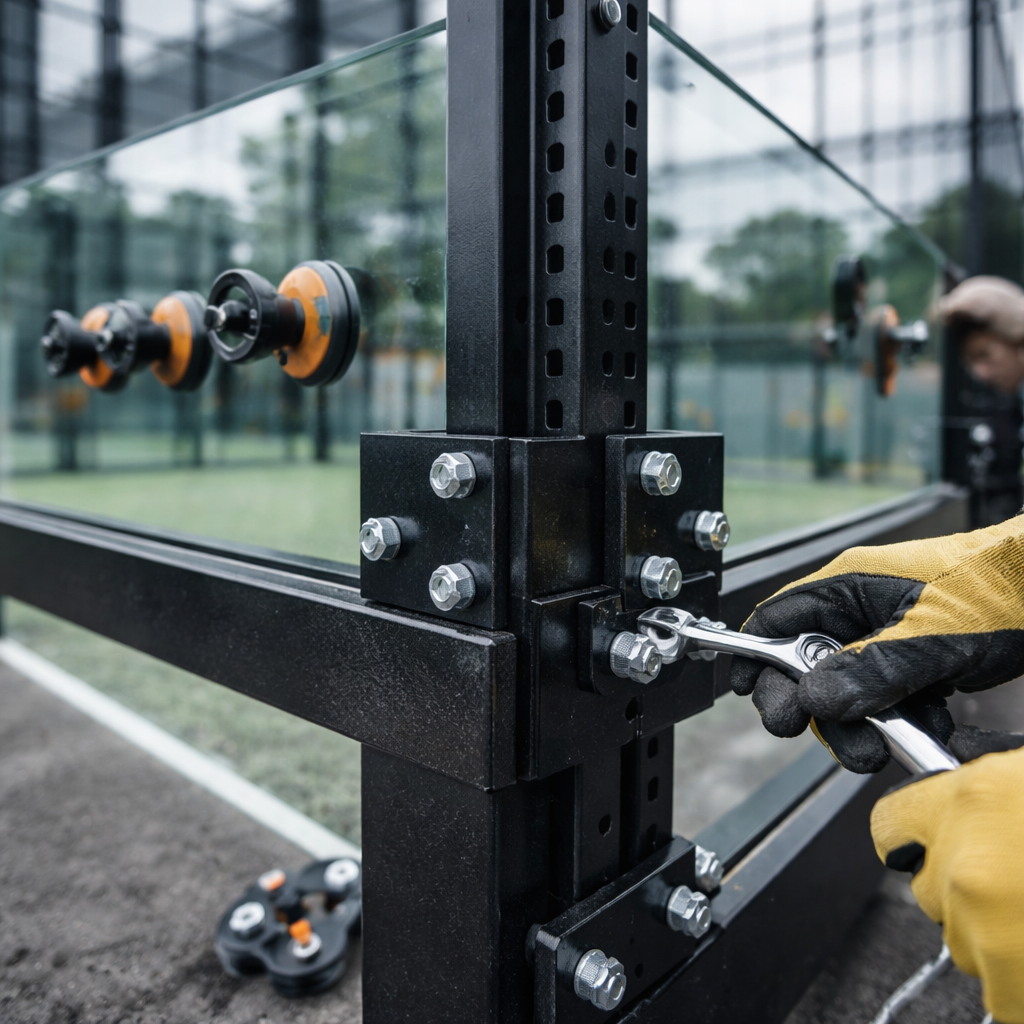
Constructing a professional court involves preparing a reinforced concrete slab followed by the installation of a hot-dip galvanized steel frame and 12mm tempered safety glass. When comparing pickleball vs padel construction the padel setup is significantly more engineering-intensive due to the heavy structural components involved. You must ensure the foundation is perfectly level to prevent the glass panels from cracking during the modular assembly phase.
Why is the steel structure critical for safety?
But here’s the kicker, the steel posts must withstand the constant impact of players running into the walls during high-speed rallies.
- Finish: Hot-dip galvanized.
- Coating: Anti-corrosion powder.
- Design: Modular bolt-together.
- Lifespan: Over 20 years.
Using low-quality steel leads to rust and structural failure especially in coastal areas where salt air accelerates the degradation of metal components. We recommend utilizing a reinforced frame that complies with international safety standards to protect your long-term investment.
How is the tempered glass safely installed?
What’s the real story? The 12mm glass panels weigh hundreds of pounds and require specialized suction tools for precise positioning during the build.
- Thickness: 12mm tempered.
- Standard: EN 12150 certified.
- Hardware: Stainless steel bolts.
- Safety: Anti-explosion film option.
| Component | Material Standard | Maintenance Level |
|---|---|---|
| Framework | Galvanized Steel | Low (Annual Check) |
| Wall Panels | 12mm Tempered Glass | Moderate (Cleaning) |
| Fasteners | Stainless Steel | Low (Tightening) |
| Mesh Panels | Electroweld Wire | Low (Tensioning) |
Professional installation ensures that the ball bounces consistently off every surface while maintaining a safe environment for your club members.
Key Takeaway: Building a padel court is a specialized engineering project that requires high-grade materials and professional installers to ensure structural integrity.
How much space is required for pickleball vs padel setups?
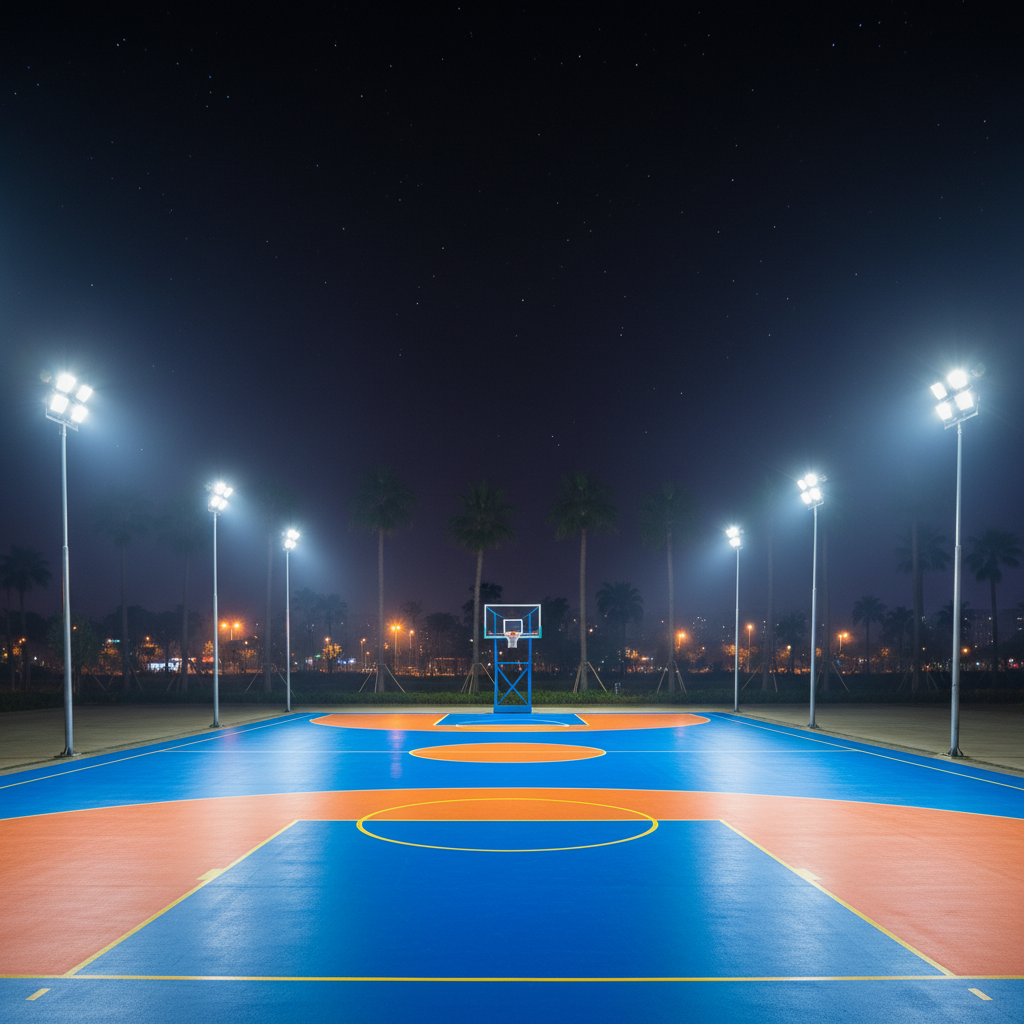
You generally need about 1,800 square feet for a single pickleball court including run-offs while a padel court requires over 2,500 square feet for the structure. Planning pickleball vs padel layouts requires a pivot in how you view your land usage and player density. While pickleball allows you to pack more people into a smaller area padel provides a premium feel that often justifies the larger footprint.
Can you fit multiple courts in a small area?
You might be wondering, if it is possible to convert your old tennis courts into a more profitable multi-sport destination for your members.
- Tennis: 1 Court.
- Padel: 2-3 Courts.
- Pickleball: 4-6 Courts.
- Layout: Side-by-side or back-to-back.
Maximizing your court density increases the hourly revenue potential per square foot of your facility. Most developers find that a mix of both sports attracts the widest possible range of paying customers to the venue.
What are the ceiling height requirements for indoors?
Here is the deal, lobs are a fundamental part of padel which means you cannot build a court in a low-ceiling warehouse.
- Minimum Height: 20 Feet.
- Recommended: 26-30 Feet.
- Lighting: Side-mounted LEDs.
- Obstructions: No hanging beams.
| Requirement | Pickleball Needs | Padel Needs |
|---|---|---|
| Horizontal Area | 30′ x 60′ Total | 36′ x 72′ Total |
| Vertical Clearance | 18 Feet | 26 Feet |
| Buffer Zone | 10 Feet Perimeter | 3 Feet External |
| Foundation | 4″ Reinforced Concrete | 6″ Reinforced Slab |
The measurements highlight that padel is more demanding on indoor volume while pickleball remains flexible for existing building conversions.
Key Takeaway: Pickleball offers superior player density while padel demands significant vertical volume and a larger horizontal footprint per unit.
Which surfacing materials work best for pickleball vs padel?
The best surfacing for pickleball is a hard acrylic resin whereas padel specifically requires sand-filled artificial Padel Grass for consistent ball bounce and slide. Selecting the wrong surface during your pickleball vs padel build leads to premature wear and expensive resurfacing costs. Pickleball surfaces must be slip-resistant for rapid lateral movement while padel turf allows players to safely slide into shots without injuring their joints.
Is artificial turf the industry standard?
Ready for the good part? Using high-density monofilament turf ensures that your padel courts look vibrant and maintain their playability for over five years.
- Material: Polyethylene fibers.
- Infill: Fine silica sand.
- Drainage: Perforated backing.
- Color: Blue or Green standard.
The sand infill is pivotal because it keeps the grass blades upright and provides the necessary friction for the ball. Without proper sand levels the ball bounce becomes erratic and the turf fibers will wear down much faster than expected.
What about acrylic versus modular surfaces?
This is where it gets interesting, as pickleball players often prefer the predictable bounce and speed of a professional acrylic court coating system.
- Layers: 3-5 coats.
- Texture: Silica sand mix.
- Comfort: Optional cushion layers.
- Life: 5-8 years lifespan.
| Surface Type | Pickleball Usage | Padel Usage |
|---|---|---|
| Acrylic Resin | Primary Standard | Not Recommended |
| Artificial Turf | Rare (Residential) | Industry Mandatory |
| Concrete / Asphalt | Base Layer Only | Base Layer Only |
| Modular Tiles | Budget / Portable | Not Applicable |
Acrylic remains the gold standard for pickleball speed while specialized artificial grass is the only viable option for a commercial padel facility.
Key Takeaway: Never swap these surfaces as the physics of the ball bounce and player safety requirements are completely different for each sport.
How do glass walls enhance the pickleball vs padel experience?
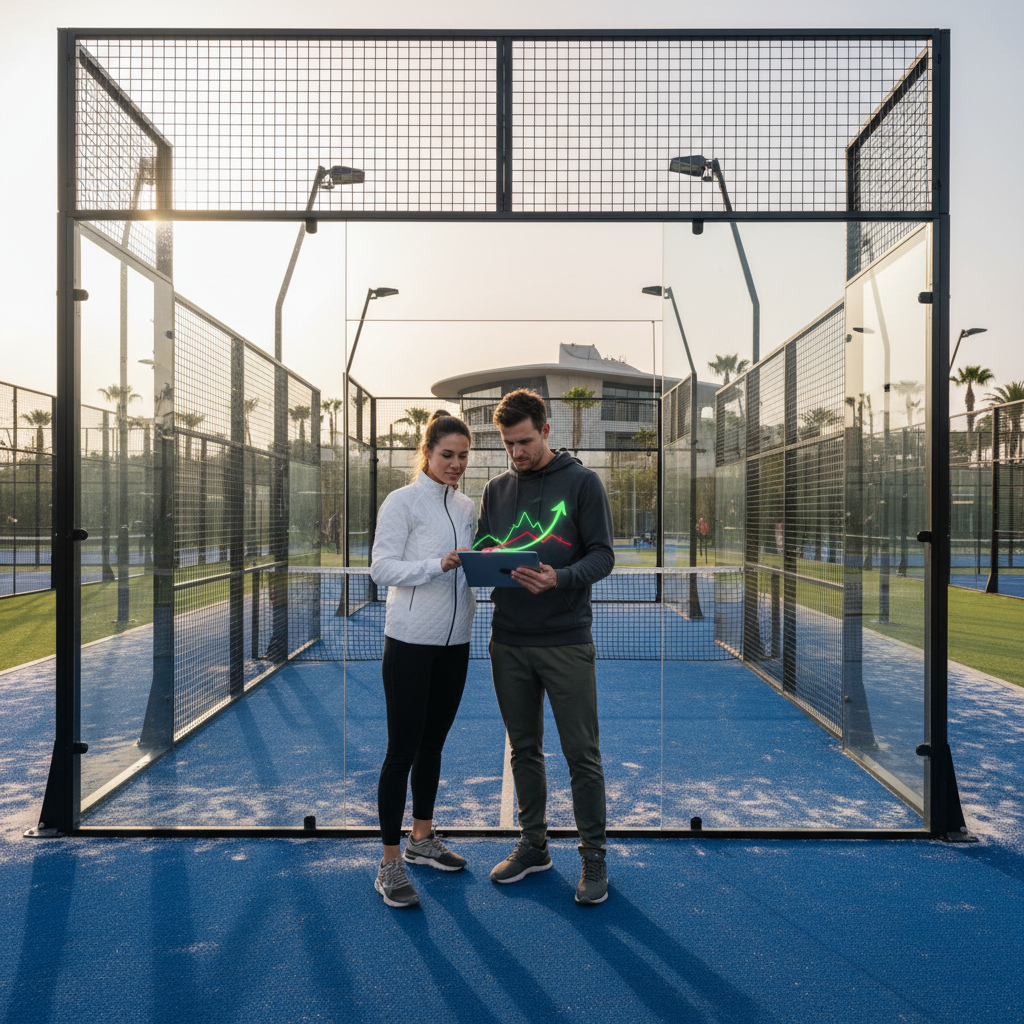
Glass walls provide the 3D strategic element in padel by keeping the ball in play after a wall bounce an element entirely absent in standard pickleball. Comparing pickleball vs padel reveals that the enclosure turns a simple racket game into a complex tactical chess match. Spectators also benefit from the panoramic glass which allows them to watch the action from inches away without any visual obstructions.
Do pickleball courts ever use glass walls?
What’s the real story? While some high-end indoor pickleball facilities use glass for noise reduction it never serves as an active part of the gameplay.
- Padel: Active playing wall.
- Pickleball: Noise barrier only.
- Padel: Tempered safety glass.
- Pickleball: Acrylic or fencing.
In padel the ball must hit the ground before touching the glass but once it bounces it can be played off the wall indefinitely. This mechanic creates incredibly long rallies that keep your members engaged and entertained for longer sessions.
Why is anti-explosion safety glass mandatory?
But here’s the kicker, the glass panels must be able to withstand the full weight of an athlete falling against them at high speed during a match.
- Type: Tempered Heat-Soaked.
- Thickness: 10mm or 12mm.
- Edge: Polished safety edges.
- Mounting: EPDM rubber gaskets.
| Feature | Standard Wall | Panoramic Wall |
|---|---|---|
| Rear Support | Steel Vertical Pillars | Seamless Glass Joints |
| Visibility | Obstructed by Steel | 100% Unobstructed |
| Aesthetics | Industrial / Sturdy | Luxury / Modern |
| Price Point | Entry Level | Premium Tier |
Glass walls transform your court from a simple sports surface into a high-end architectural feature that attracts premium members to your facility.
Key Takeaway: The glass enclosure is the soul of the padel experience providing tactical depth and a superior viewing experience for your club members.
What are the ROI prospects for pickleball vs padel facilities?
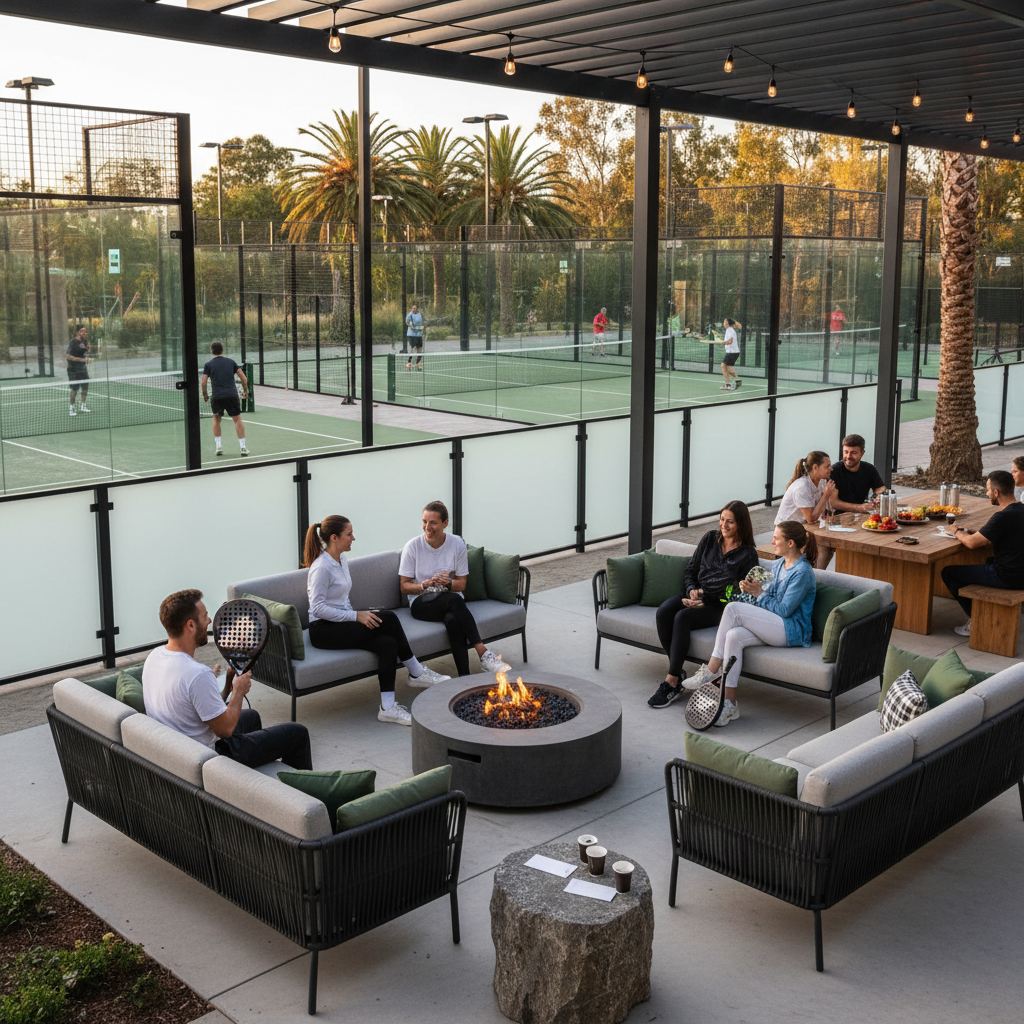
While padel courts have higher initial construction costs they often generate higher hourly rental fees and attract a premium demographic compared to pickleball. Analyzing pickleball vs padel profitability requires you to look beyond the build cost and focus on the lifetime value of your players. Padel is currently seen as a luxury lifestyle sport in many markets allowing facility owners to charge significantly more for court time.
What are the average hourly rental fees?
Believe it or not, some urban padel clubs charge over $100 per hour for a single court during peak evening and weekend times.
- Padel: $40 – $120 / Hr.
- Pickleball: $20 – $45 / Hr.
- Padel: Corporate memberships.
- Pickleball: High player turnover.
The social nature of both sports also drives secondary revenue through beverage sales and pro-shop equipment rentals. You will find that players who invest in padel are often willing to spend more on premium rackets and club apparel.
Is the maintenance cost high for these courts?
You might be wondering, if the glass and turf require a dedicated team of technicians to keep them in playing condition every day.
- Padel: Daily glass cleaning.
- Padel: Monthly turf brushing.
- Pickleball: Periodic surface wash.
- Both: Annual net inspection.
| Metric | Pickleball ROI | Padel ROI |
|---|---|---|
| Initial Investment | Low to Moderate | Moderate to High |
| Player Capacity | 4 Players per 800 sqft | 4 Players per 2100 sqft |
| Rental Premium | Standard Rates | High / Luxury Rates |
| Market Saturation | High in many areas | Emerging / Low |
Padel offers a faster break-even point in affluent markets despite the higher setup costs because of the lack of competition and higher price points.
Key Takeaway: Choose padel if you want to capture the luxury market or pickleball if you want to maximize volume in a community-focused facility.
How can you start your project for pickleball vs padel?
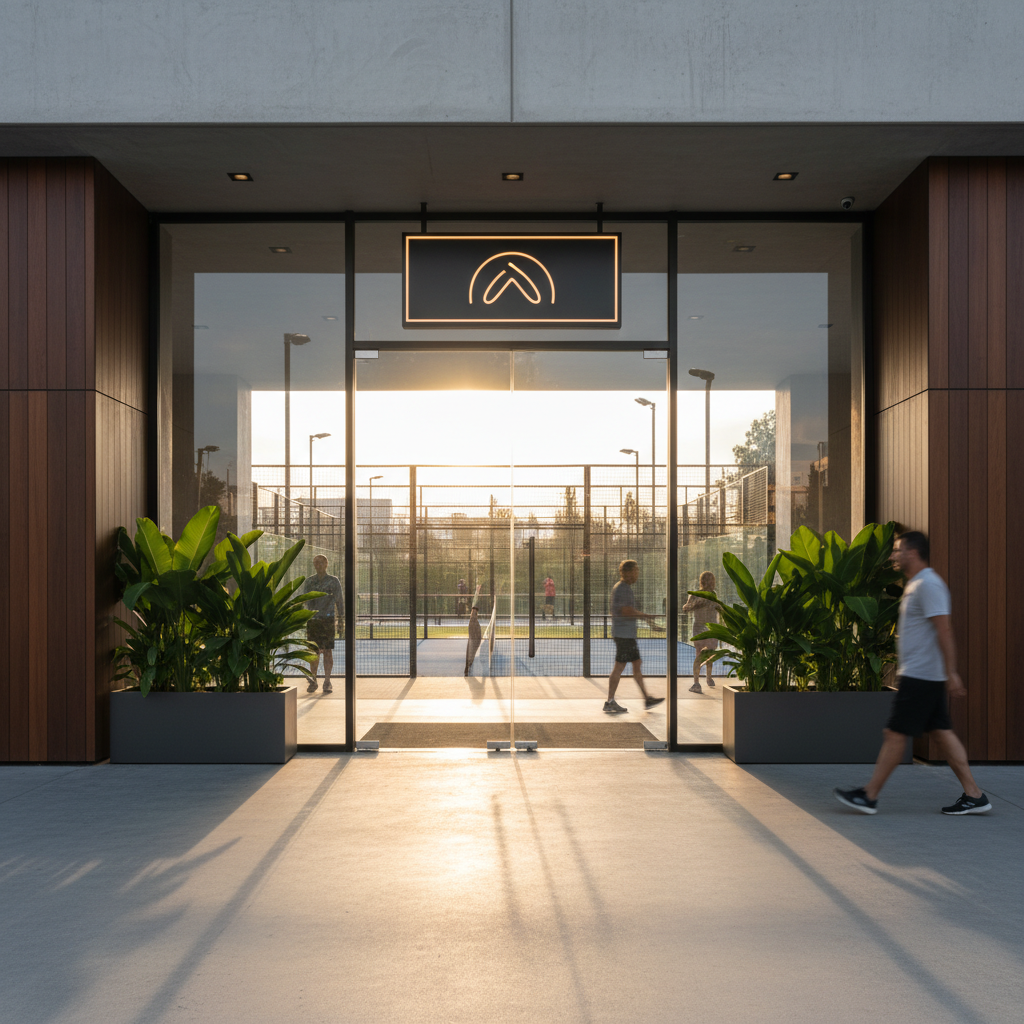
Starting your facility build requires a detailed site feasibility study followed by selecting a reputable manufacturer for the structural components. Your pickleball vs padel journey begins with a clear understanding of your local zoning laws and soil stability for the concrete foundation. You need a partner who can provide 3D renderings and technical drawings to help you visualize the final layout before the first shovel hits the ground.
How do you find a reputable manufacturer?
Ready for the good part? Buying factory-direct allows you to save up to 30% on procurement costs while ensuring your courts meet international quality standards.
- Certifications: CE / ISO.
- Warranty: 5-10 years.
- Support: Remote installation guide.
- Customization: RAL color matching.
We recommend looking for a supplier with a proven track record of shipping to your specific country to avoid any logistical or customs surprises. A good manufacturer will provide you with a dedicated project manager who speaks your language and understands your local market requirements.
What are the immediate next steps?
Now for the best part, we offer a free consultation service to help you determine which sport will yield the best results for your specific location.
- Site measurement.
- Budget finalization.
- Court model selection.
- Logistics planning.
| Planning Step | Action Item | Goal |
|---|---|---|
| Site Survey | Check dimensions/levels | Confirm court count |
| Permitting | Apply for local permits | Ensure legal compliance |
| Procurement | Place factory-direct order | Lock in material pricing |
| Installation | Hire professional crew | Ensure safety and quality |
Taking these steps in the correct order prevents costly mistakes and ensures that your facility opens on schedule and within your budget.
Key Takeaway: Success in the racket sports industry depends on thorough pre-construction planning and selecting a manufacturing partner who offers long-term support.
Building Your Future with SuperbPadel
Choosing between pickleball vs padel doesn’t have to be a gamble for your business. We have solved the dilemma of court selection by providing you with the exact technical specs and ROI data needed for a successful launch. Our team specializes in manufacturing high-performance padel structures that stand the test of time and player intensity. We are committed to helping you transform your underutilized space into a thriving sports hub that dominates your local market. Our brand stands for engineering excellence and direct-to-consumer value that cuts out the middleman entirely. To get a personalized project plan and quote for your facility, contact us today.
Frequently Asked Questions
Q1: Can I convert an existing tennis court into pickleball vs padel courts?
Yes, you can. A single tennis court typically accommodates four pickleball courts or two padel courts depending on the available run-off space and structural constraints.
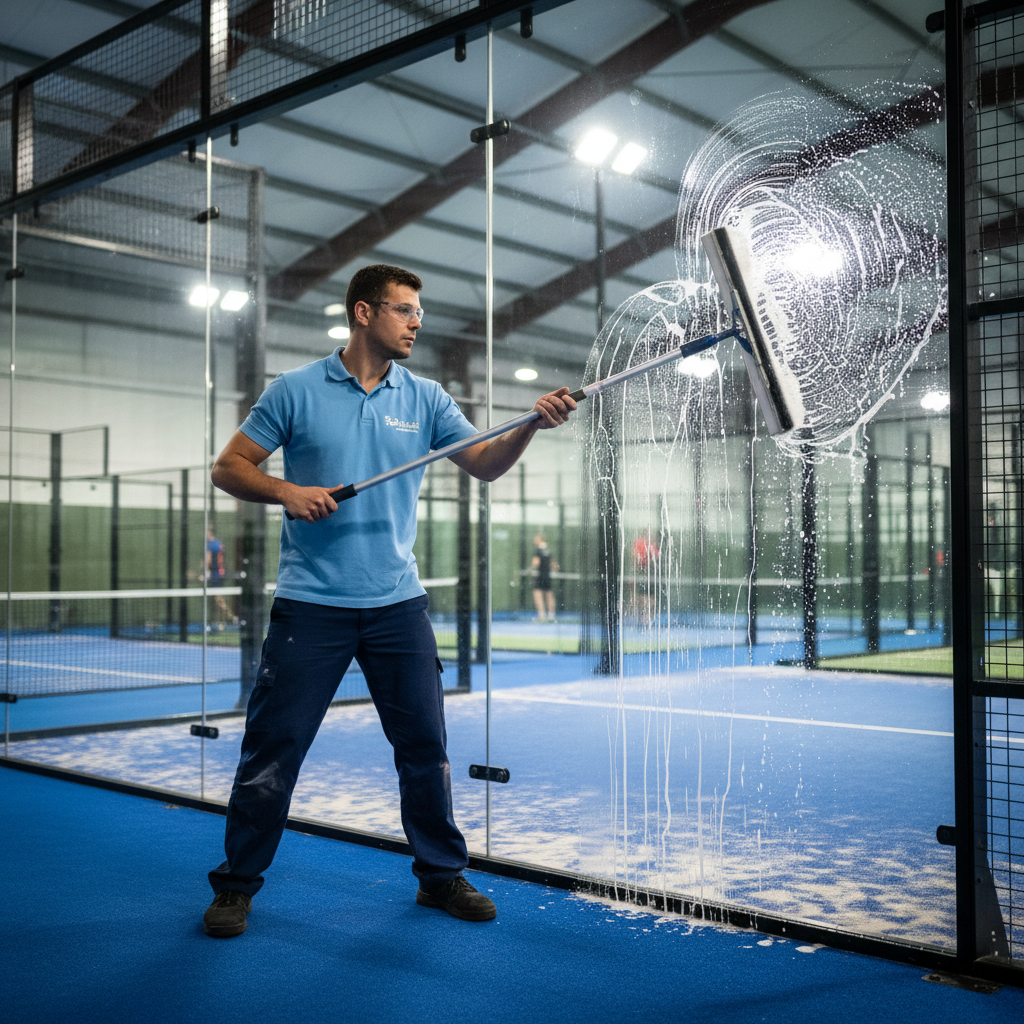
Q2: What’s the best way to maintain the glass walls in a padel court?
The best way involves weekly cleaning with a standard glass squeegee and mild detergent to remove sweat marks and fingerprints. This ensures the panoramic views remain crystal clear for your club spectators and players.
Q3: Can I install these courts in a residential backyard?
Yes, provided you have a level concrete foundation and meet local zoning requirements for sports structures. You will need at least 1,800 square feet for pickleball or 2,500 square feet for a standard padel installation.
Q4: How do I know if my ceiling is high enough for indoor padel?
A height of 20 feet is the bare minimum, but 26 to 30 feet is much better. Padel requires significant vertical space because lobs are a frequent and essential part of the game’s defensive strategy.
Q5: What is the lifespan of a professional padel structure?
A high-quality hot-dip galvanized steel frame will last over 20 years. However, you will likely need to replace the artificial turf every 5 to 7 years depending on how many hours of play the court sees each day.