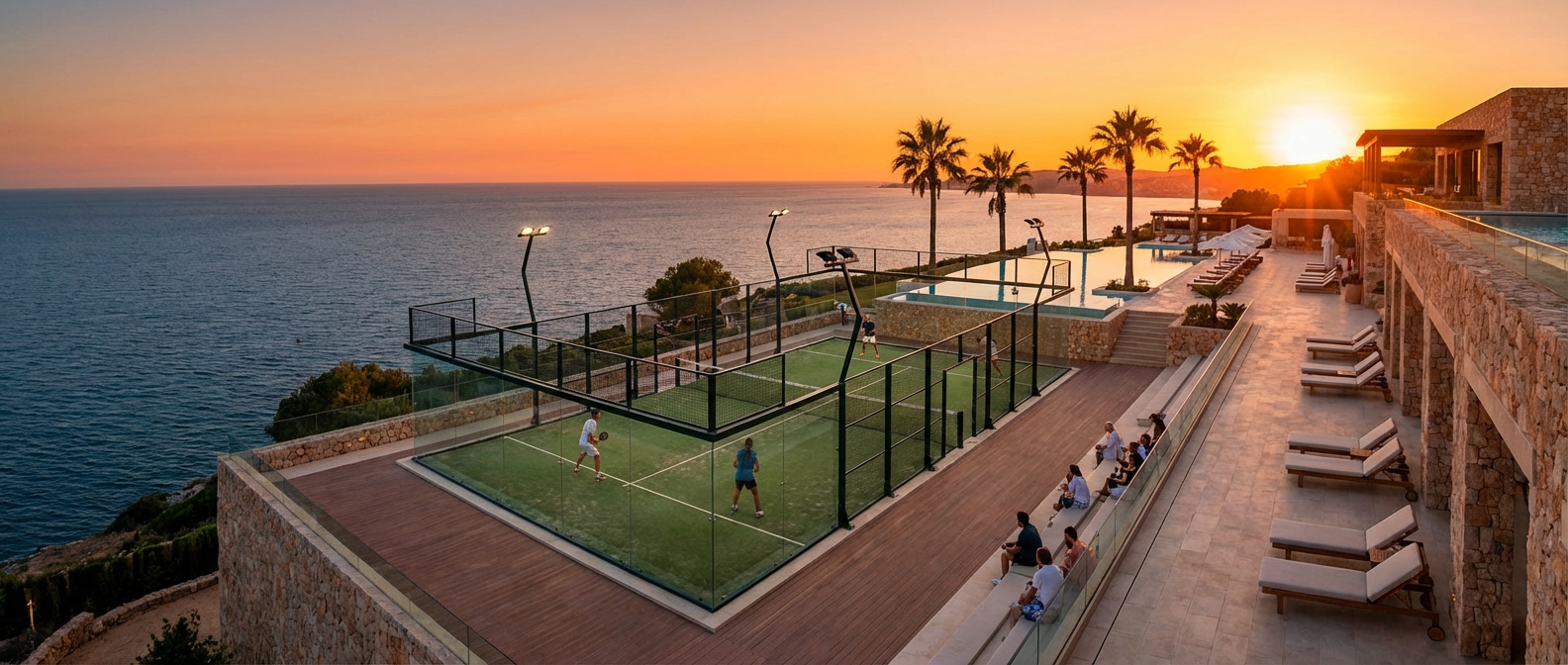
A padel tennis court is a 20m x 10m sports facility enclosed by glass and mesh walls designed for a strategic, high-speed racket game. Many investors face the challenge of navigating complex technical specifications and international compliance standards when planning a new club. A lack of precision in the construction phase often leads to rapid structural degradation and poor player safety. This guide provides the definitive blueprint for building a professional-grade facility that maximizes your return on investment and ensures long-term durability.
1. What are the standard dimensions for a padel tennis court?
The official playing area for a professional padel tennis court must measure exactly 20 meters in length and 10 meters in width. Adhering to these FIP-mandated dimensions is crucial for any facility aiming to host official tournaments.
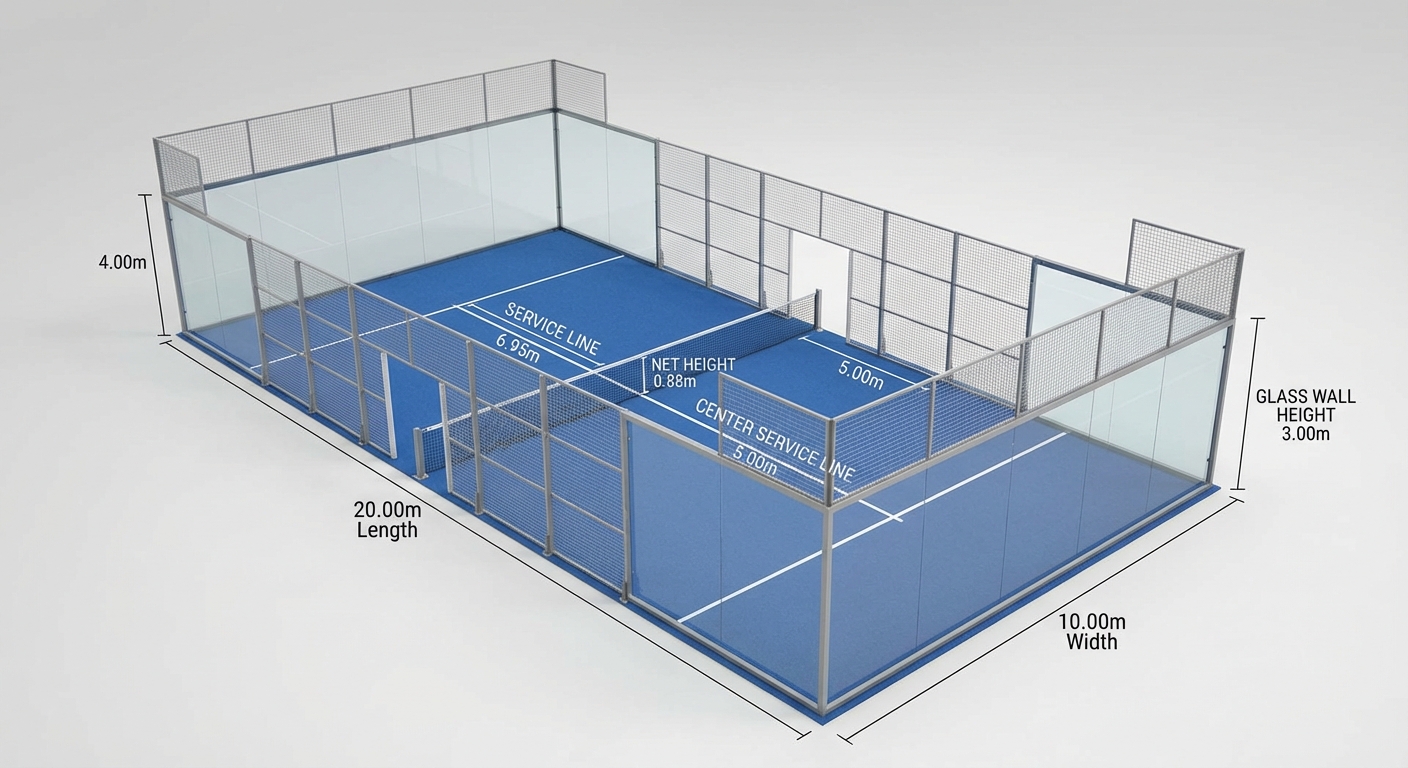
In professional builds, the padel tennis court is divided by a central net, creating two equal 10-meter squares for each team. The service lines are positioned 6.95 meters from the net to regulate play.
Should you consider imperial conversions for your site?
While metric is the global standard, understanding the imperial equivalents helps during local zoning and permit applications. A standard court translates to approximately 65.6 feet by 32.8 feet. You must also account for a safety perimeter around the external structure.
Key Takeaway: Professional certification requires a precise 20x10m footprint to ensure gameplay consistency and tournament eligibility.
| Metric Unit | Imperial Equivalent | Structural Component |
|---|---|---|
| 20.00 Meters | 65.61 Feet | Total Court Length |
| 10.00 Meters | 32.81 Feet | Total Court Width |
| 6.95 Meters | 22.80 Feet | Service Line Depth |
Precise layout planning is the foundation of a compliant and high-performance sports facility.
2. How high should the walls be on a padel tennis court?
A standard padel tennis court features back walls that stand 3 meters high, typically topped with an additional 1 meter of metallic mesh. This vertical enclosure is what defines the unique rebound mechanics of the sport.
The side walls of the padel tennis court transition from 3 meters to 2 meters as they move toward the center of the court. This stepped design balances visibility for spectators with the structural requirements of the game.
What is the optimal indoor ceiling height?
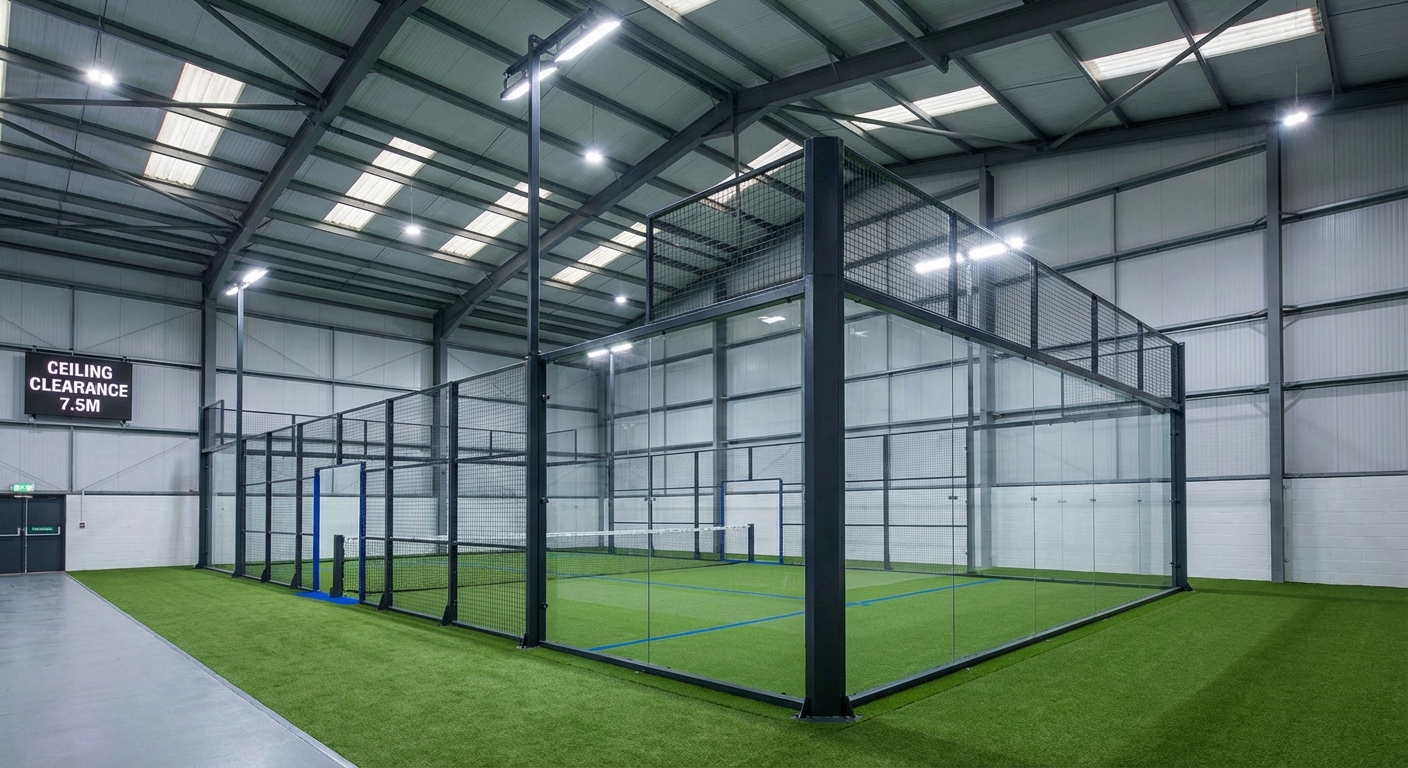
Indoor facilities require significant vertical clearance to accommodate high lobs without ball interference.
- Minimum: 6 meters of “free height” is the absolute baseline.
- Recommended: 8 meters or more is preferred for elite professional play.
- Clearance: Lighting and HVAC systems must remain outside this designated play zone.
Key Takeaway: Wall heights are strategically varied to facilitate rebounding while indoor builds must prioritize vertical clearance for lobs.
| Section | Standard Height (m) | Material Type |
|---|---|---|
| Back Walls | 3.0 m | Tempered Glass |
| Upper Enclosure | 4.0 m (Total) | Metallic Mesh |
| Side Stepped Wall | 2.0 m to 3.0 m | Mixed Material |
Strategic vertical spacing is vital for maintaining the intended flight and bounce physics of the game.
3. How does a padel tennis court differ from a tennis court?
A padel tennis court is roughly one-third the size of a traditional tennis court, allowing for much higher player density. This spatial efficiency makes padel a more lucrative option for clubs with limited real estate.
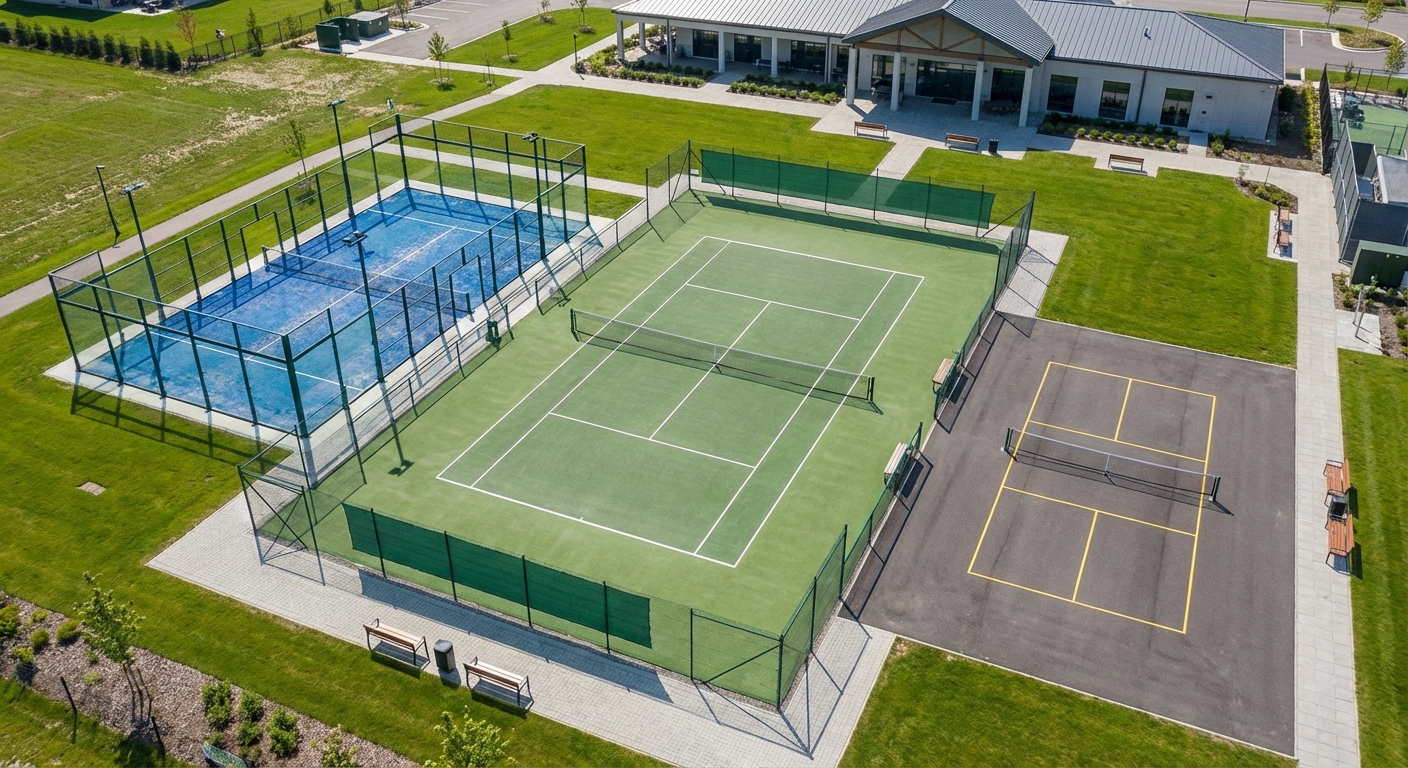
The core difference for a padel tennis court lies in its structural walls, which are considered “in-play” during rallies. Tennis relies on boundary lines alone, whereas padel utilizes the enclosure for strategic rebounds.
Can you fit more players per square meter?
Look: the economic advantage of padel is undeniable for club owners. You can comfortably fit three padel courts in the footprint of a single standard tennis court. This triples your potential booking revenue while sharing the same land and utility infrastructure.
Key Takeaway: Padel offers superior land use efficiency and higher revenue potential per square meter compared to traditional tennis.
| Feature | Padel Court | Tennis Court |
|---|---|---|
| Footprint | 200 m² | ~670 m² |
| Wall Usage | Walls are In-Play | Out-of-Bounds |
| Player Density | 4 Players / 200 m² | 4 Players / 670 m² |
Maximizing court density directly correlates with the scalability and profitability of your sports club.
4. What are the core components of a padel tennis court structure?
The structural integrity of a padel tennis court depends on high-quality galvanized steel frames and specialized fasteners. Using inferior materials often leads to corrosion, especially in humid or coastal environments.
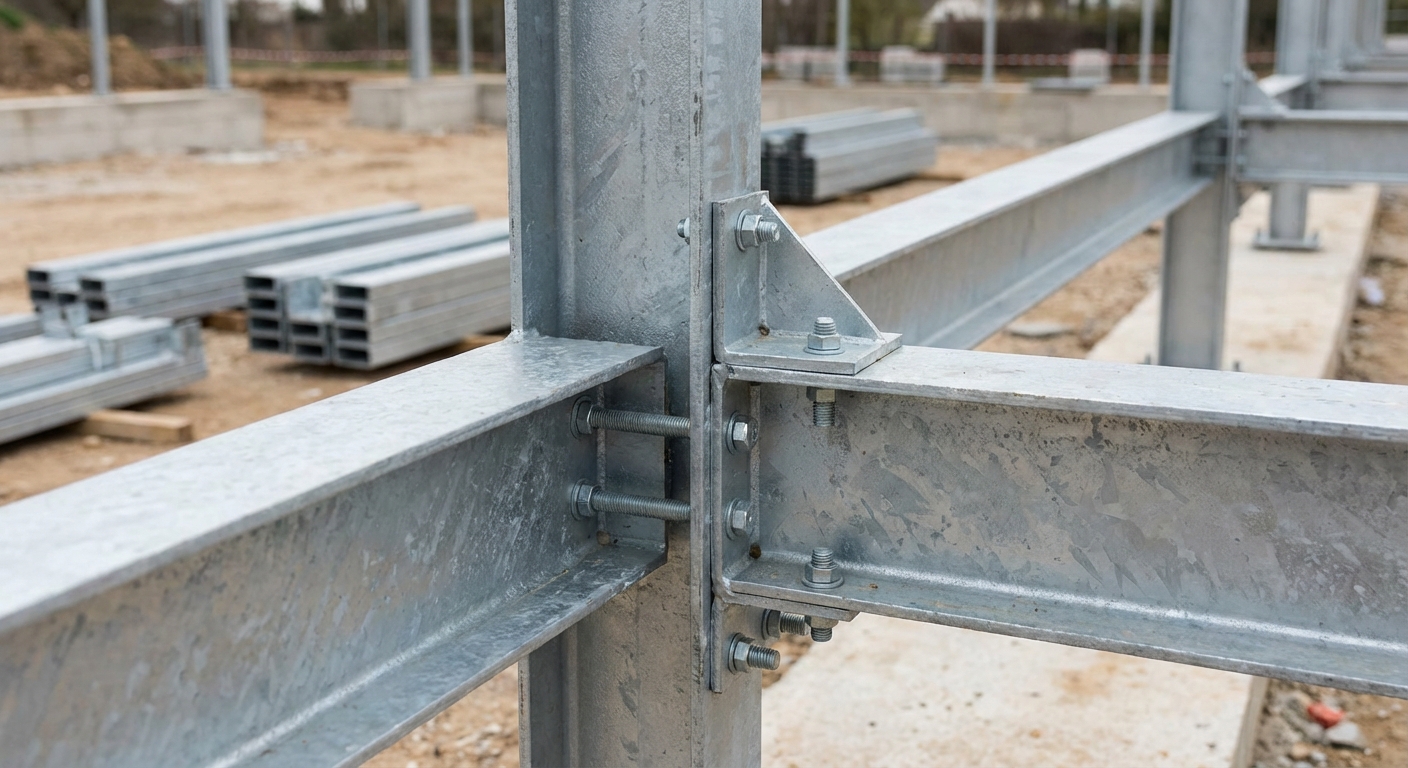
Professional-grade padel tennis court frameworks utilize Q235 or Q355 hot-dip galvanized steel to prevent rust. This treatment ensures that the metal skeleton remains structurally sound for 15 to 20 years.
Why is hot-dip galvanization vital for longevity?
But wait, there is more than just aesthetics when it comes to steel choice. Galvanization creates a metallurgical bond that protects the steel from oxygen and moisture.
- Corrosion Resistance: Essential for outdoor installations exposed to rain.
- Structural Strength: Maintains the tension of the metallic mesh over time.
- Low Maintenance: Reduces the need for frequent repainting or structural repairs.
Key Takeaway: Hot-dip galvanized steel is the industry standard for ensuring a 15+ year lifespan for the court’s main framework.
| Component | Professional Material | Standard Compliance |
|---|---|---|
| Framework | Hot-Dip Galvanized Steel | ISO 1461 |
| Fasteners | 304 Stainless Steel | Anti-corrosion |
| Coating | UV-Resistant Powder | Aesthetic Durability |
Investing in premium metallurgy prevents catastrophic structural failure and reduces long-term operational costs.
5. Which glass specifications are used for a padel tennis court?
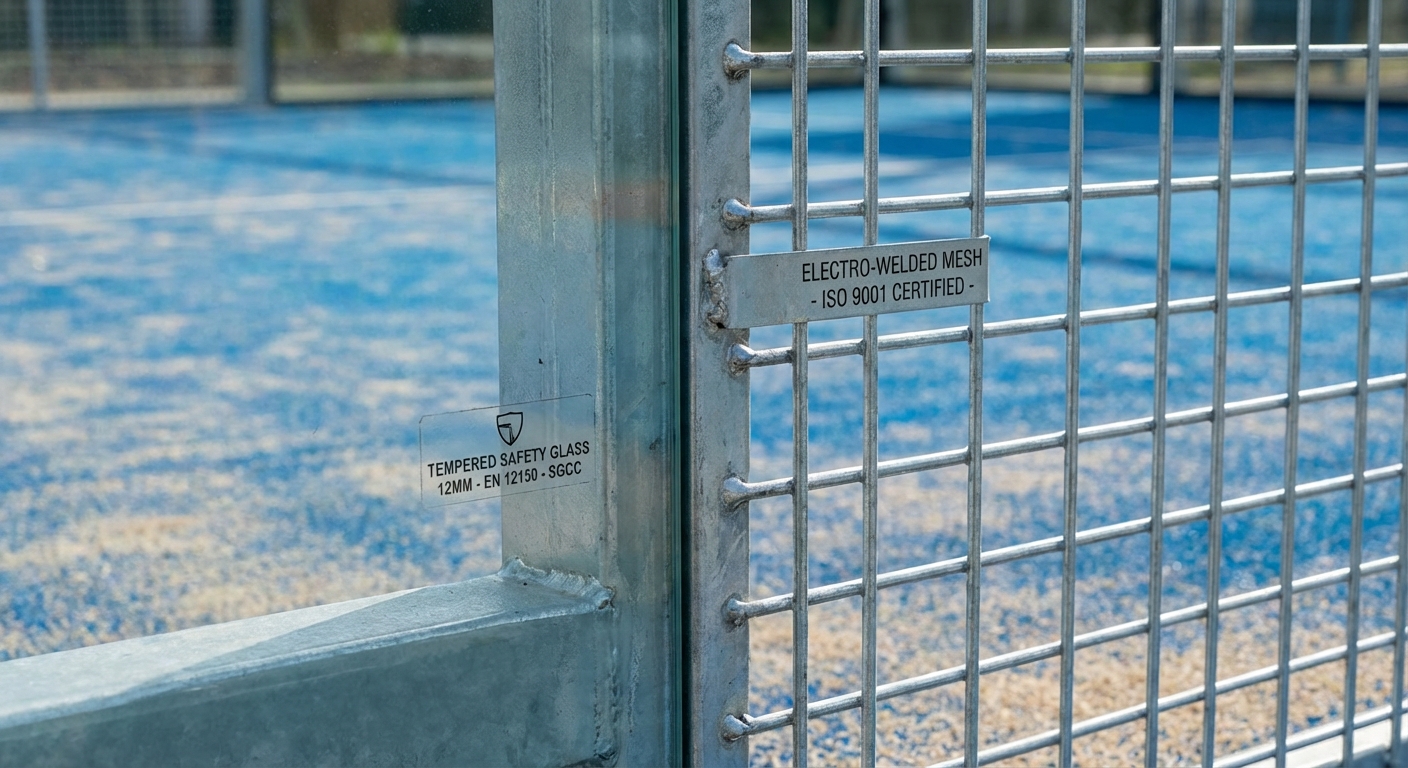
Safety glass is perhaps the most critical component of a padel tennis court, as it must withstand both ball impact and player contact. Using non-certified glass poses a significant liability risk for club operators.
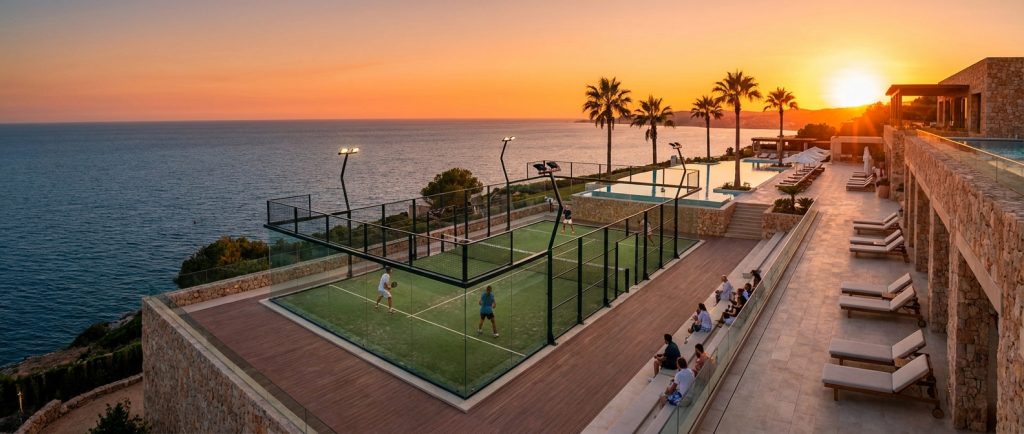
Standard builds for a padel tennis court typically utilize 10mm or 12mm tempered safety glass. The 12mm option is the gold standard, providing four times the strength of regular glass and superior bounce consistency.
Is 12mm glass better for professional clubs?
High-traffic commercial clubs should always opt for the 12mm specification to ensure maximum durability. It offers better resistance to the high-energy impacts seen in professional games. Furthermore, 12mm glass maintains a flatter surface, which is essential for a predictable ball bounce during high-speed play.
Key Takeaway: 12mm tempered glass is the preferred choice for professional facilities due to its superior strength and impact resistance.
| Feature | 10mm Glass | 12mm Glass |
|---|---|---|
| Impact Strength | Standard | High (4x Base) |
| Bounce Quality | Consistent | Professional Grade |
| Ideal Use | Private Courts | Commercial/Pro Clubs |
Selecting the correct glass thickness is a non-negotiable step for player safety and facility certification.
6. How do you prepare the base for a padel tennis court?
A padel tennis court requires a perfectly level and reinforced concrete foundation to support its heavy structural loads. Any settling of the ground below can lead to glass misalignment or turf wrinkling.
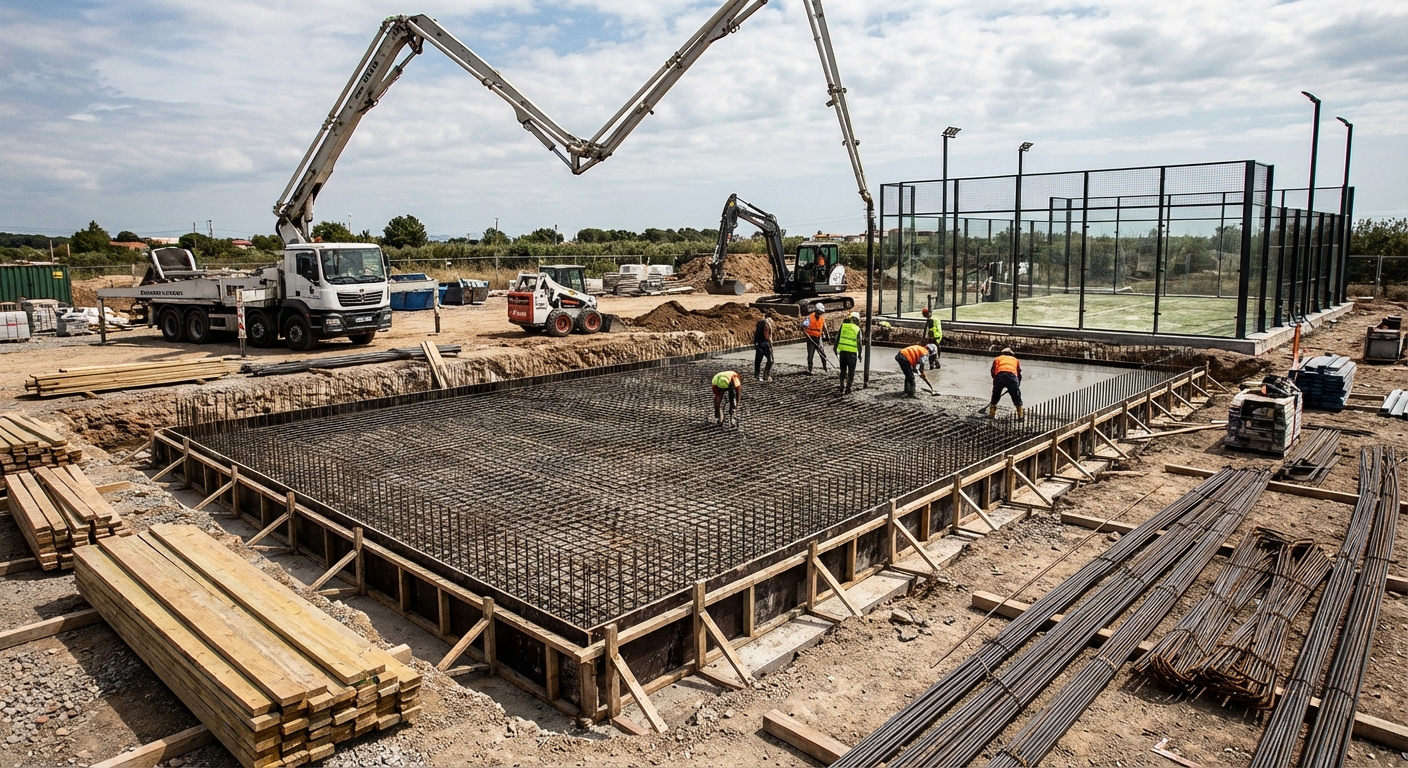
The foundation for the padel tennis court must be a reinforced concrete slab at least 15cm thick. This provides a stable anchor point for the steel pillars and prevents the court from shifting under wind pressure.
Does your foundation require a specific drainage slope?
Proper water management is essential for outdoor courts to prevent puddling on the turf.
- Slope: A 1% slope from the center to the sides is standard.
- Finish: The surface should be porous or troweled depending on the adhesive.
- Curing: Allow at least 21 days for the concrete to cure fully before installation.
Key Takeaway: A 15cm reinforced concrete slab with a 1% drainage slope ensures a stable and dry playing surface for years.
| Requirement | Value | Purpose |
|---|---|---|
| Slab Thickness | 150 mm | Structural Support |
| Drainage Slope | 1% (Lateral) | Water Runoff |
| Curing Time | 21 – 28 Days | Chemical Stability |
A flawless foundation is the only way to prevent expensive structural adjustments after the court is built.
7. What lighting systems are best for a padel tennis court?
Effective lighting is what allows a padel tennis court to generate revenue during evening hours and winter months. Poor visibility not only degrades the game but can also lead to player injuries.
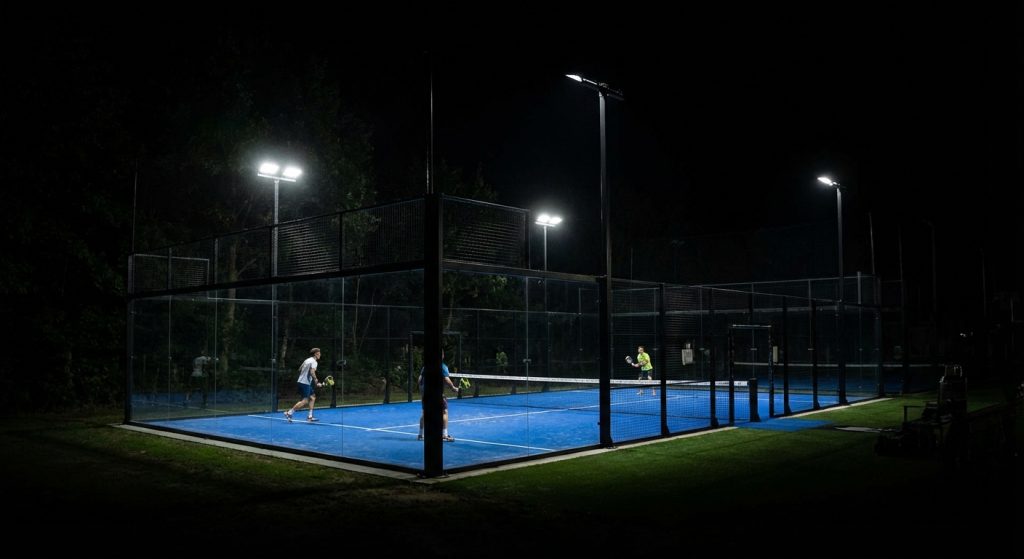
The modern standard for a padel tennis court involves a system of 8 high-performance 200W LED floodlights. These lights should provide a minimum of 400 to 500 lux across the entire playing surface.
How do you achieve uniform light distribution?
Here is the deal: uniformity is more important than raw power when it comes to lighting. You need to ensure that there are no shadows or “dark spots” that could distract players during fast rallies. Positioning the light poles at least 6 meters high helps distribute the light evenly and reduces the glare effect for players looking up at lobs.
Key Takeaway: An 8-lamp LED system providing 400+ lux is essential for safe evening play and commercial revenue generation.
| Lighting Spec | Requirement | Benefit |
|---|---|---|
| Luminosity | 400 – 500 Lux | High Visibility |
| Power Consumption | 8 x 200W LED | Energy Efficiency |
| Weather Rating | IP67 | Outdoor Durability |
Advanced LED systems provide the clarity needed for professional broadcasting and high-stakes tournament matches.
8. Should you invest in a roofed padel tennis court?
Building a roofed padel tennis court is a strategic move for clubs located in regions with frequent rain or extreme heat. This investment ensures that your booking schedule remains uninterrupted regardless of the weather.
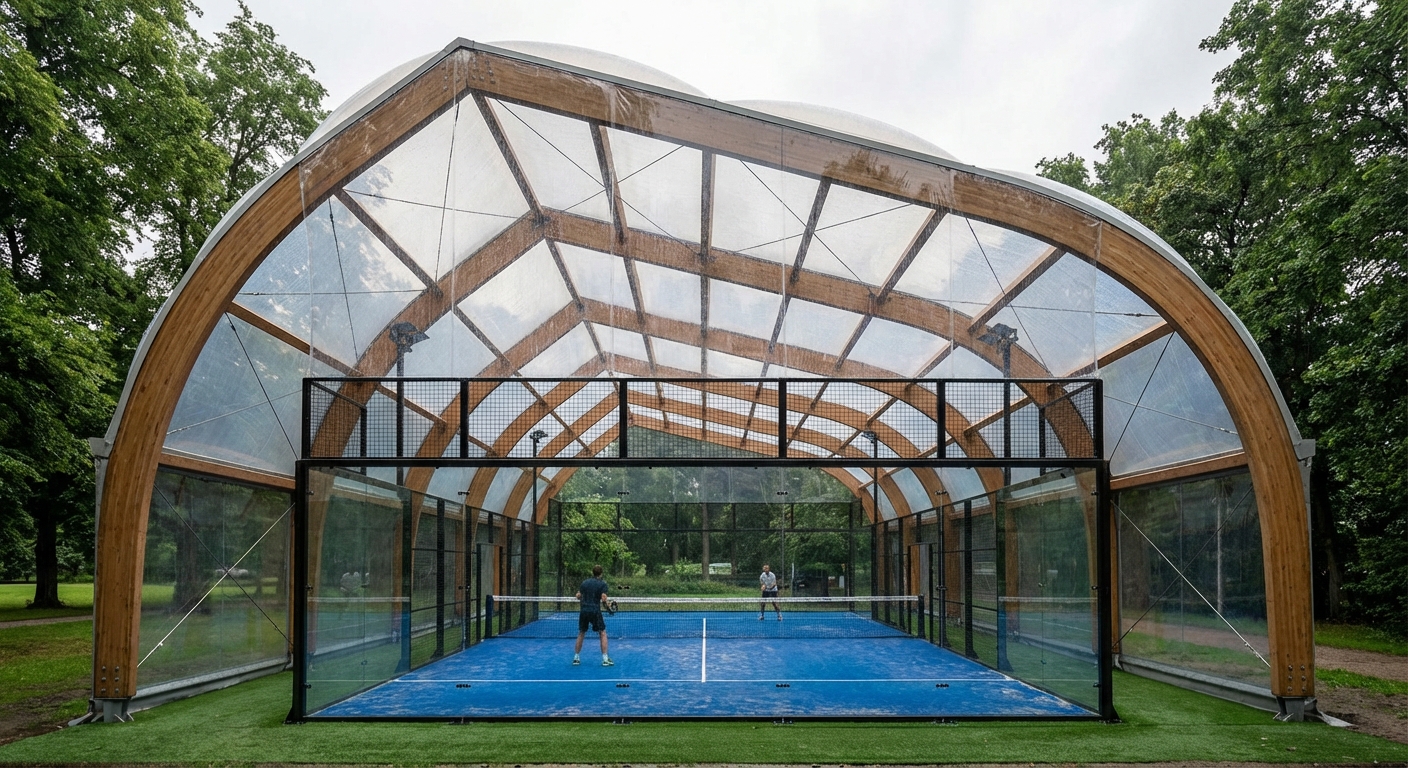
A roofed padel tennis court typically utilizes a specialized canopy structure that protects the glass from becoming slippery. This feature is critical because wet glass completely changes the rebound dynamics of the ball.
Does a roof increase your annual rental revenue?
Yes, the financial benefits are significant for any commercial operator. Clubs with roofed courts often see 30% higher utilization rates during the rainy season compared to open-air facilities. Additionally, the roof provides UV protection for the artificial turf, effectively doubling its lifespan by preventing fiber degradation from the sun.
Key Takeaway: Roofed structures provide 365-day playability and significantly extend the life of the court’s turf and glass.
| Benefit | Impact | ROI Factor |
|---|---|---|
| Weather Proofing | 100% Playability | Increased Bookings |
| UV Shielding | Turf Longevity | Lower Capex Over Time |
| Temperature Control | Player Comfort | Premium Pricing |
Eliminating weather-related cancellations is the fastest way to stabilize and grow your club’s monthly revenue.
9. What is the assembly timeline for a padel tennis court?
The physical installation of a padel tennis court is a rapid process once the concrete foundation has fully cured. Professional teams can often complete a full setup in less than one working week.
Building the padel tennis court starts with the steel framework, followed by the glass installation and turf laying. Coordination between these steps is vital to avoid damage to the sensitive glass panels.
What are the critical stages of the build?
The process follows a strict sequence to ensure structural alignment:
- Frame Assembly: 1-2 days to bolt the steel pillars to the concrete.
- Glass Mounting: 1 day using specialized suction equipment.
- Turf & Infill: 1-2 days for cutting, gluing, and sand distribution.
- Lighting: 0.5 days for wiring and testing the LED arrays.
Key Takeaway: Once the foundation is ready, a professional team can assemble the entire court in 3 to 5 days.
| Build Phase | Duration | Primary Focus |
|---|---|---|
| Base Preparation | 21 Days (Cure) | Leveling & Strength |
| Structure & Glass | 3 Days | Alignment & Safety |
| Turf & Finishing | 2 Days | Playability & Aesthetics |
Efficient project management ensures your facility transitions from construction to revenue-generating operation quickly.
10. How much does it cost to build a padel tennis court?
The total investment for a padel tennis court varies based on the chosen model and local site conditions. While standard models are more budget-friendly, panoramic designs offer a more premium experience for club members.
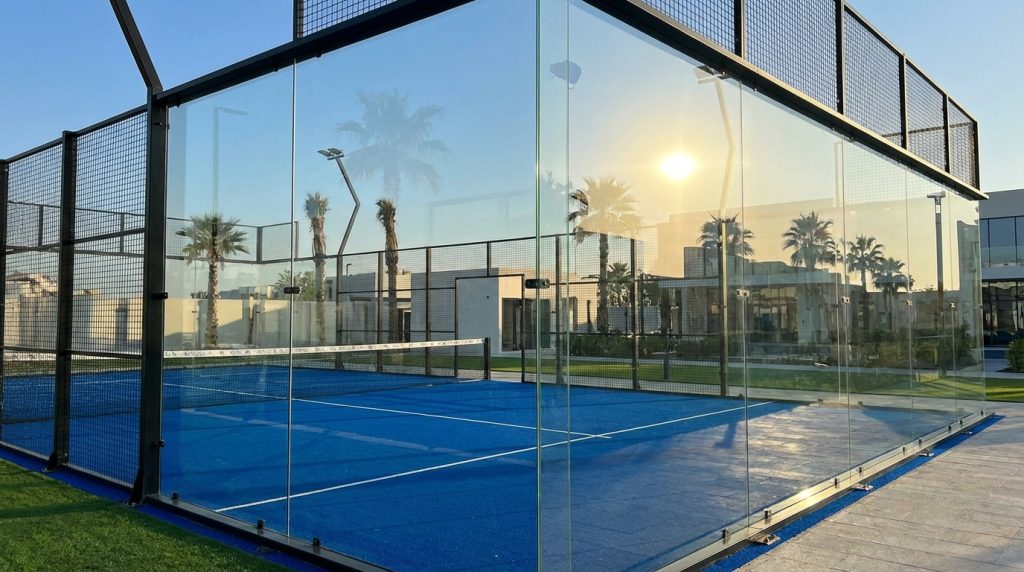
Commercial operators often find that a high-end padel tennis court with panoramic glass attracts a more affluent demographic. These courts remove the vertical pillars at the back, offering unobstructed views for spectators.
Is the ROI faster for premium panoramic designs?
Premium courts allow you to charge higher hourly rental fees due to the enhanced aesthetic and spectator experience. While the initial capital expenditure is higher, the increased demand and prestige often result in a shorter payback period. Many clubs use a mix of standard and panoramic courts to balance their initial investment with long-term revenue potential.
Key Takeaway: Panoramic models have a higher initial cost but drive better long-term ROI through premium pricing and higher demand.
| Court Type | Initial Cost | Revenue Potential |
|---|---|---|
| Standard | Moderate | Reliable |
| Panoramic | High | Premium |
| Roofed | Highest | Maximum Continuity |
Balancing your equipment choices with your target market’s expectations is the key to sustainable financial success.
Frequently Asked Questions (FAQ)
Can I build a padel tennis court on an existing tennis court?
Yes, it is highly feasible. Because the dimensions are smaller, you can typically fit two padel courts into the space of one old tennis court, provided the existing sub-base is structurally sound enough to support the concrete slab.
What’s the best type of turf for a professional facility?
Monofilament artificial grass is the superior choice. It offers the most consistent ball bounce and provides better joint protection for players compared to older fibrillated turf options.
Can I install the court structure myself to save on costs?
No, professional installation is strongly recommended. Handling 12mm tempered glass panels and aligning the steel framework requires specialized equipment and expertise to prevent injury or structural failure.
What is the minimum ceiling height needed for an indoor court?
At least 6 meters is required for basic play. However, aiming for 8 meters is much better as it allows players to use the “lob” strategy without the ball hitting the ceiling or lighting fixtures.
How often does the artificial turf need to be replaced?
Every 5 to 8 years is standard for high-traffic clubs. The lifespan depends heavily on the quality of the monofilament fibers and how well you maintain the silica sand infill levels.
Building a world-class sports facility requires a partner who understands the technical nuances of elite-level play. As a global leader in court manufacturing, SuperbPadel provides the engineering excellence and high-grade materials needed to ensure your club’s longevity. Whether you are launching a private court or a multi-court commercial center, our team is ready to assist you with every technical specification and logistical challenge. To start your journey toward a premium sports facility, contact us today for a comprehensive consultation.