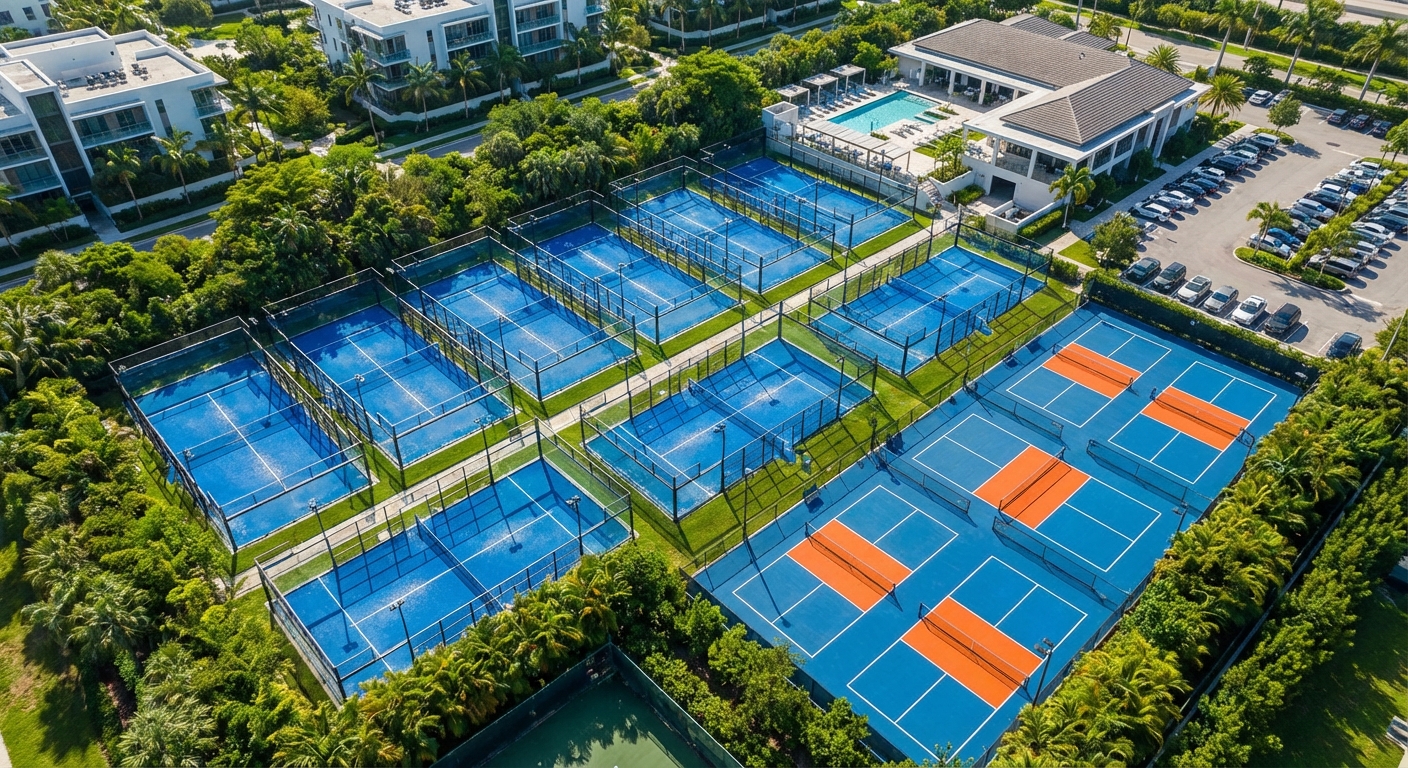
Professional court construction for padel pickleball involves integrating high-grade structural engineering with specialized turf and enclosure systems to create a premium athletic environment. You likely recognize the explosive growth of these racket sports but face the challenge of navigating complex technical specifications and site requirements. Failing to understand the nuances of glass thickness or court dimensions can lead to costly structural failures and poor player experiences. This comprehensive guide explains padel pickleball and provides a technical blueprint for professional construction.
What is the main difference in padel pickleball?
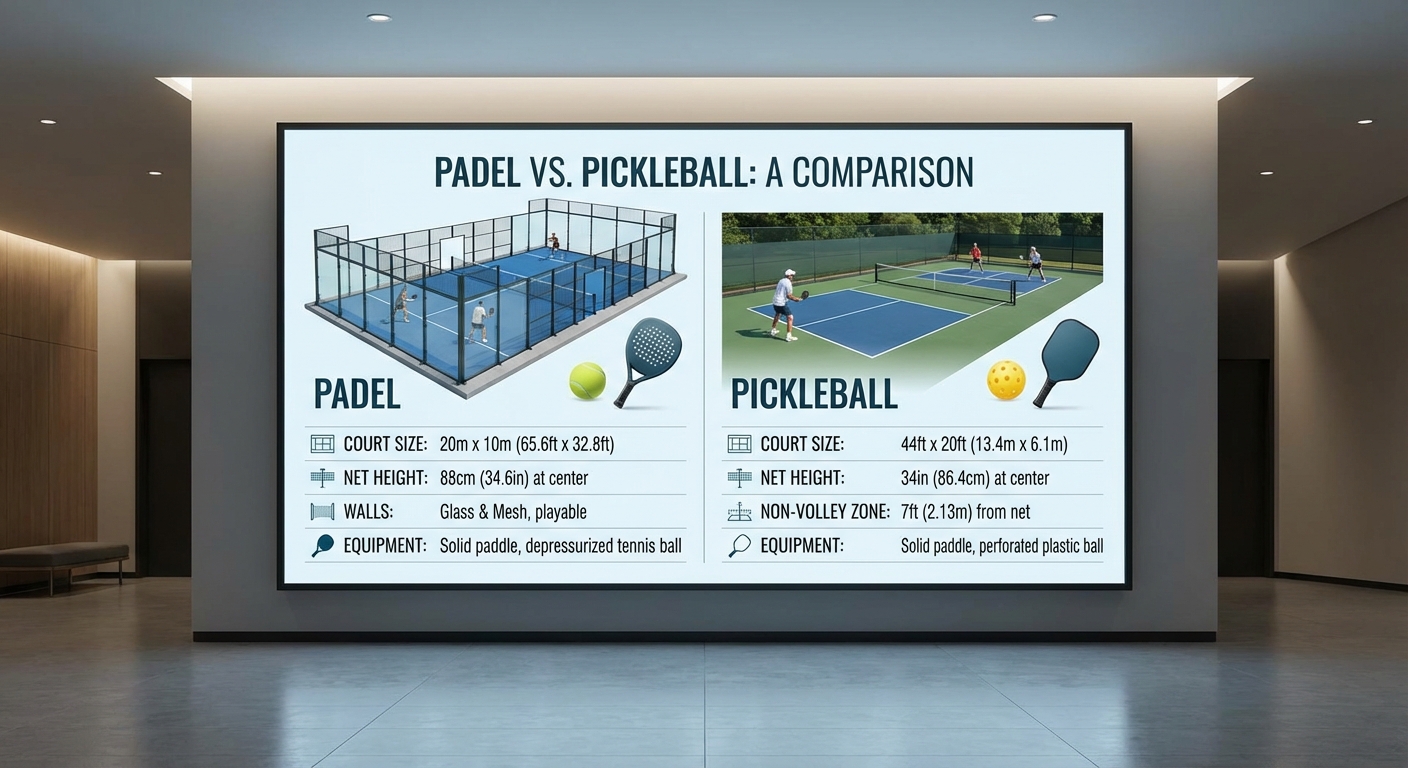
Padel is defined by its enclosed glass walls and strategic rebound play, whereas padel pickleball in the pickleball form is an open-court game focused on “dinking” and non-volley zones. You must distinguish between the two because their structural requirements differ significantly. While padel requires a heavy-duty steel and glass cage, pickleball relies on traditional fencing and specific court markings.
Structural Enclosure Variations
Think about it: the wall is part of the game in one, but merely a boundary in the other. Padel courts utilize 12mm tempered glass to facilitate ball rebounds, which adds a layer of complexity to the foundation.
- Padel: Enclosed with glass and mesh.
- Pickleball: Typically open or fenced.
- Construction: Heavy steel vs. light fencing.
Court Mechanics and Playability
The best part? Both sports offer high social engagement despite their mechanical differences. Padel uses a depressurized ball that thrives on the 20m x 10m court size, while pickleball uses a perforated plastic ball.
Key Takeaway: Understanding the specific equipment and enclosure needs of each sport is the first step toward a successful facility build.
| Feature | Padel Standards | Pickleball Standards |
|---|---|---|
| Wall Usage | Mandatory for play | Not used in play |
| Ball Type | Depressurized felt | Perforated plastic |
| Net Height | 88cm at center | 34 inches at center |
The technical divergence between these sports necessitates distinct architectural planning for any multi-sport facility.
Why should you invest in padel pickleball courts?
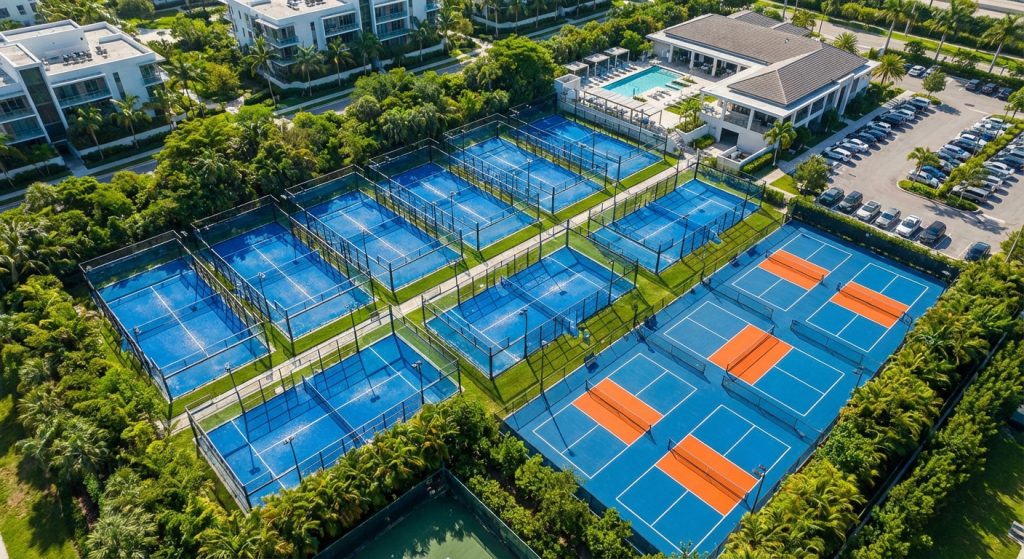
Investing in padel pickleball infrastructure allows you to maximize revenue per square foot by accommodating more players in a smaller footprint than traditional tennis. These sports are currently the fastest-growing racket disciplines globally, attracting a diverse demographic of high-spending club members. By offering both, you create a versatile sports hub that remains active throughout the day.
Market Growth and Demand
Here is the deal: the demand for specialized courts is outstripping supply in most metropolitan areas. Developing a professional facility positions your brand as a leader in the modern fitness movement.
- High player density per acre.
- Rapidly growing tournament circuits.
- Strong retention rates for club members.
Revenue Potential Per Court
You should know that a single padel or pickleball court can often generate three times the hourly revenue of a tennis court. Because the games are primarily played in doubles, you consistently engage four players in a compact space.
Key Takeaway: High player density and lower maintenance compared to clay or grass tennis courts make these sports a superior financial investment.
| Metric | Padel/Pickleball | Traditional Tennis |
|---|---|---|
| Players per Sqm | Very High | Low |
| Construction ROI | 18 – 24 Months | 36+ Months |
| Maintenance Level | Low (Synthetic) | High (Clay/Natural) |
Strategic land use through compact court sizing significantly enhances the long-term profitability of sports ventures.
How do you design a padel pickleball facility?
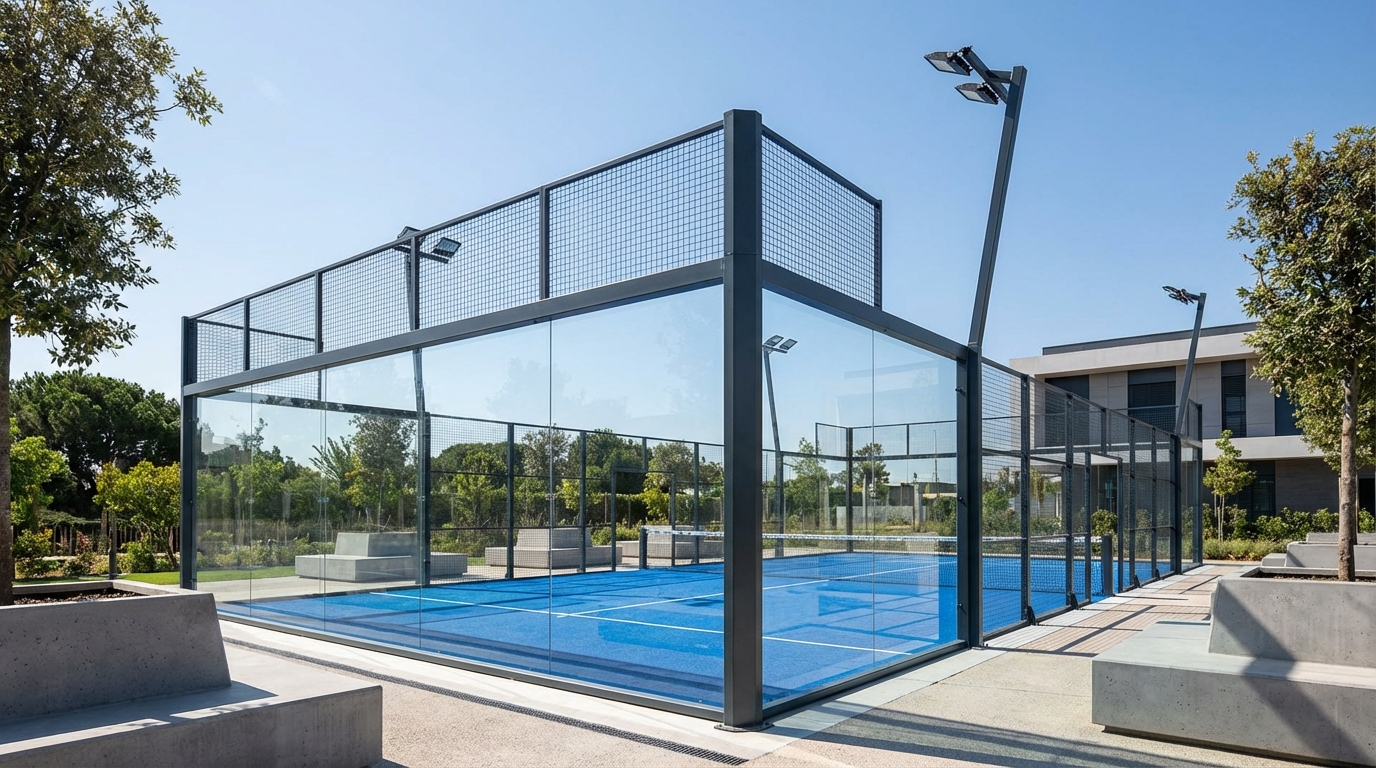
Designing a padel pickleball facility requires a focus on spatial efficiency, spectator visibility, and optimal player flow. You must ensure that the orientation of the courts minimizes sun glare, typically following a North-South axis for outdoor builds. Incorporating social zones and viewing galleries is essential, as these sports are inherently community-driven.
Optimal Site Orientation
Believe it or not, poor orientation can ruin the playing experience during peak afternoon hours. You need to map the sun’s path to prevent players from being blinded during high lobs or overhead smashes.
- North-South orientation is preferred.
- Wind protection for open pickleball courts.
- Drainage slopes for outdoor foundations.
Zoning and Social Spaces
The bottom line is that the game doesn’t end when the players leave the court. Professional designs include “social pockets” where spectators can watch the action behind the panoramic glass walls.
Key Takeaway: A well-designed facility balances technical court orientation with social areas to foster a thriving club atmosphere.
| Design Element | Priority | Objective |
|---|---|---|
| Court Axis | Critical | Glare reduction |
| Viewing Areas | High | Spectator engagement |
| Player Flow | Medium | Safety and access |
Architecture that prioritizes both the athlete and the observer creates a more valuable and sustainable sports destination.
Which materials are best for padel pickleball builds?
The best materials for padel pickleball construction include hot-dip galvanized steel for the structure and high-density monofilament turf for the surface. You should prioritize corrosion-resistant metals, especially for outdoor installations where humidity and rain can compromise structural integrity. Using premium Padel Glass ensures safety and consistent ball bounce for years of intensive use.
Structure and Framing Materials
Keep in mind: not all steel is created equal when it comes to long-term durability. Using 3mm thick galvanized tubes provides the necessary rigidity to support the weight of tempered glass panels.
- Hot-dip galvanization for rust proofing.
- Laser-cut plates for precision assembly.
- Electrostatic powder coating for finish.
Safety and Performance Glass
It gets better: 12mm tempered safety glass is the industry standard for professional-grade courts. This material provides the perfect elasticity for ball rebounds while meeting all EN 12150-1 safety regulations.
Key Takeaway: Selecting high-grade steel and safety glass reduces long-term maintenance costs and ensures player protection.
| Material | Application | Expected Lifespan |
|---|---|---|
| Galvanized Steel | Main Framework | 20+ Years |
| Tempered Glass | Enclosure Walls | 15+ Years |
| Powder Coating | Aesthetic Finish | 10+ Years |
The longevity of a sports facility is directly correlated to the metallurgical and glass specifications chosen during the initial build.
What are the sizing rules for padel pickleball courts?
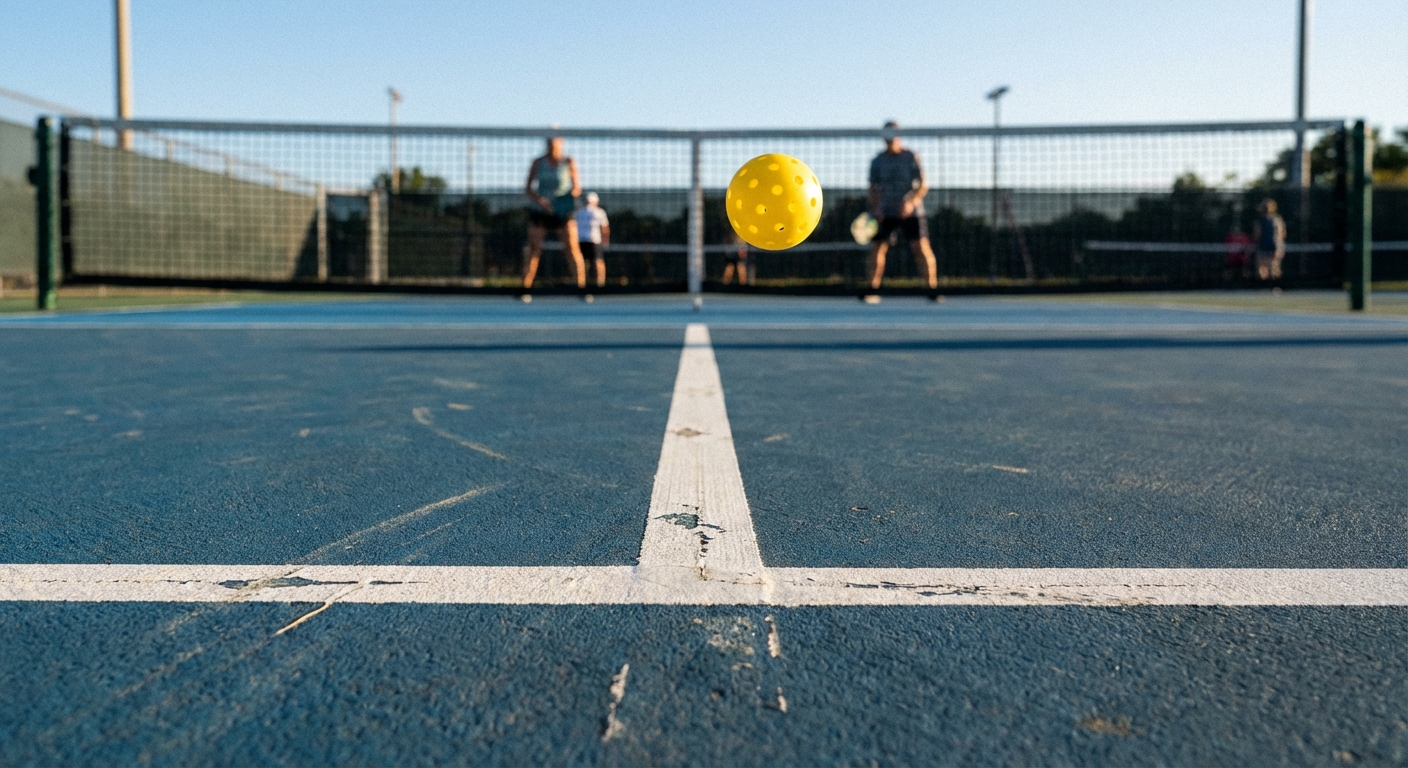
A standard padel pickleball court for padel measures 20 meters by 10 meters, while a pickleball court is significantly smaller at 44 feet by 20 feet. You must adhere strictly to these dimensions to ensure the facility is eligible for official tournaments and professional play. Clearance heights are also vital, with padel requiring at least 6 meters of unobstructed overhead space for lobs.
Padel Dimension Requirements
To put it simply: accuracy in measurements is non-negotiable for competitive environments. The 20×10 meter area must be perfectly level to avoid irregular ball bounces near the glass.
- Length: 20 meters.
- Width: 10 meters.
- Minimum Height: 6 meters (8m preferred).
Pickleball Footprint Basics
You will find that pickleball’s smaller size allows you to fit nearly four courts into the space of one traditional tennis court. This efficiency is why many developers are converting underutilized tennis spaces into multiple pickleball zones.
Key Takeaway: Strict adherence to international sizing standards is required for tournament certification and fair gameplay.
| Sport | Court Length | Court Width | Total Area |
|---|---|---|---|
| Padel | 20 Meters | 10 Meters | 200 Sqm |
| Pickleball | 13.4 Meters | 6.1 Meters | 81.7 Sqm |
| Net Height | 88 – 92 cm | 86.4 cm | N/A |
Precise spatial planning ensures that your facility can host sanctioned events and provide a professional experience for elite athletes.
How does the glass impact padel pickleball performance?
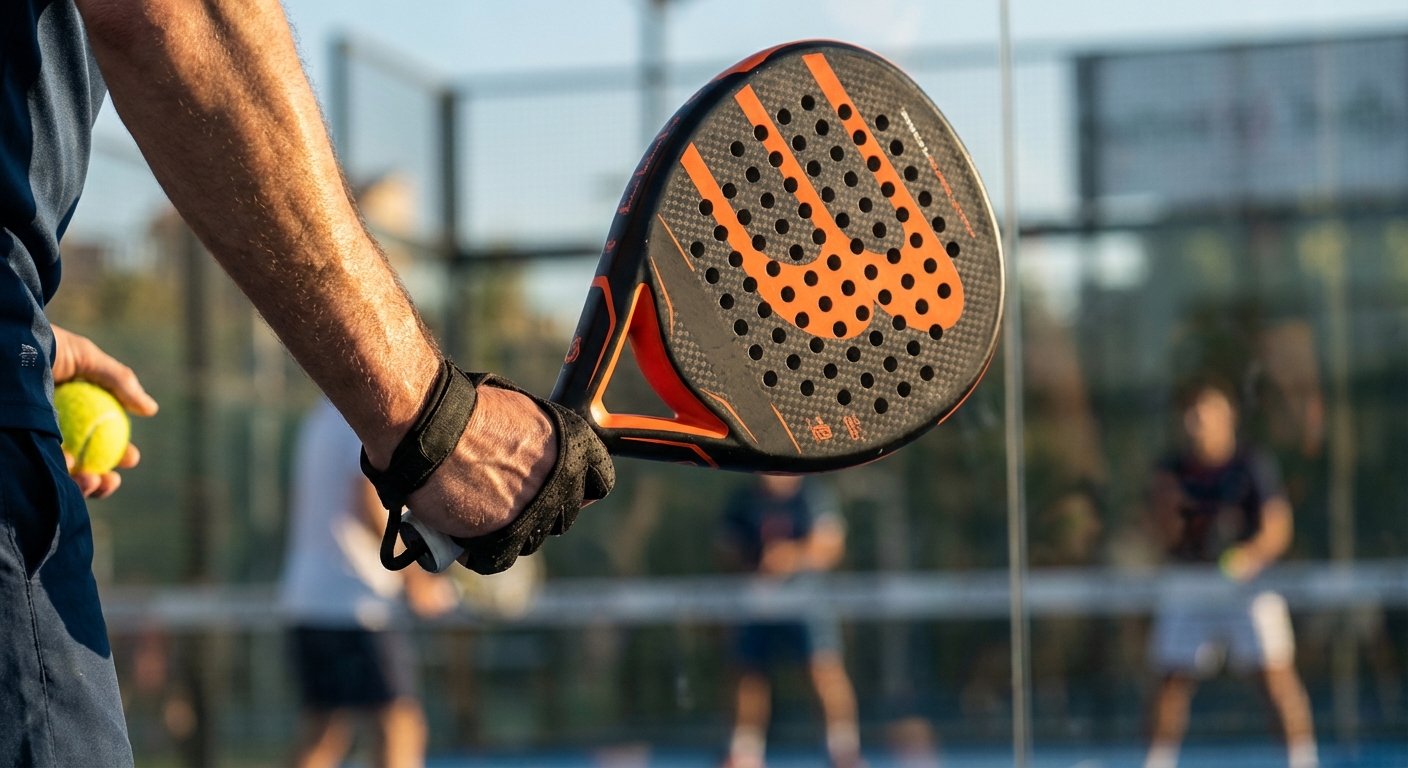
In padel pickleball contexts involving padel, the glass serves as a dynamic playing surface that determines the speed and angle of ball rebounds. You must install 12mm tempered glass to provide the structural strength needed to withstand player impacts and heavy winds. Low-quality glass can cause “dead spots,” where the ball loses energy upon contact, ruining the rhythm of the game.
Rebound Consistency and Elasticity
Wait, there’s more: the way the glass is mounted to the Padel Structure affects how much vibration is felt by the player. High-quality neoprene gaskets are used to cushion the glass against the steel frame.
- 12mm thickness for stability.
- Polished edges for safety.
- Countersunk holes for flush mounting.
Viewing Clarity and Aesthetics
You should consider panoramic designs if spectator engagement is a priority for your club. Eliminating the vertical steel pillars in the rear wall provides an unobstructed view of the court’s interior.
Key Takeaway: High-tension tempered glass is essential for consistent ball response and the structural integrity of the enclosure.
| Glass Property | Standard | Impact on Play |
|---|---|---|
| Thickness | 12mm | Maximum rebound energy |
| Type | Tempered Safety | High impact resistance |
| Compliance | EN 12150-1 | Safety and certification |
Choosing the correct glass specification transforms the court from a simple cage into a high-performance athletic instrument.
Can you install padel pickleball lighting for night play?
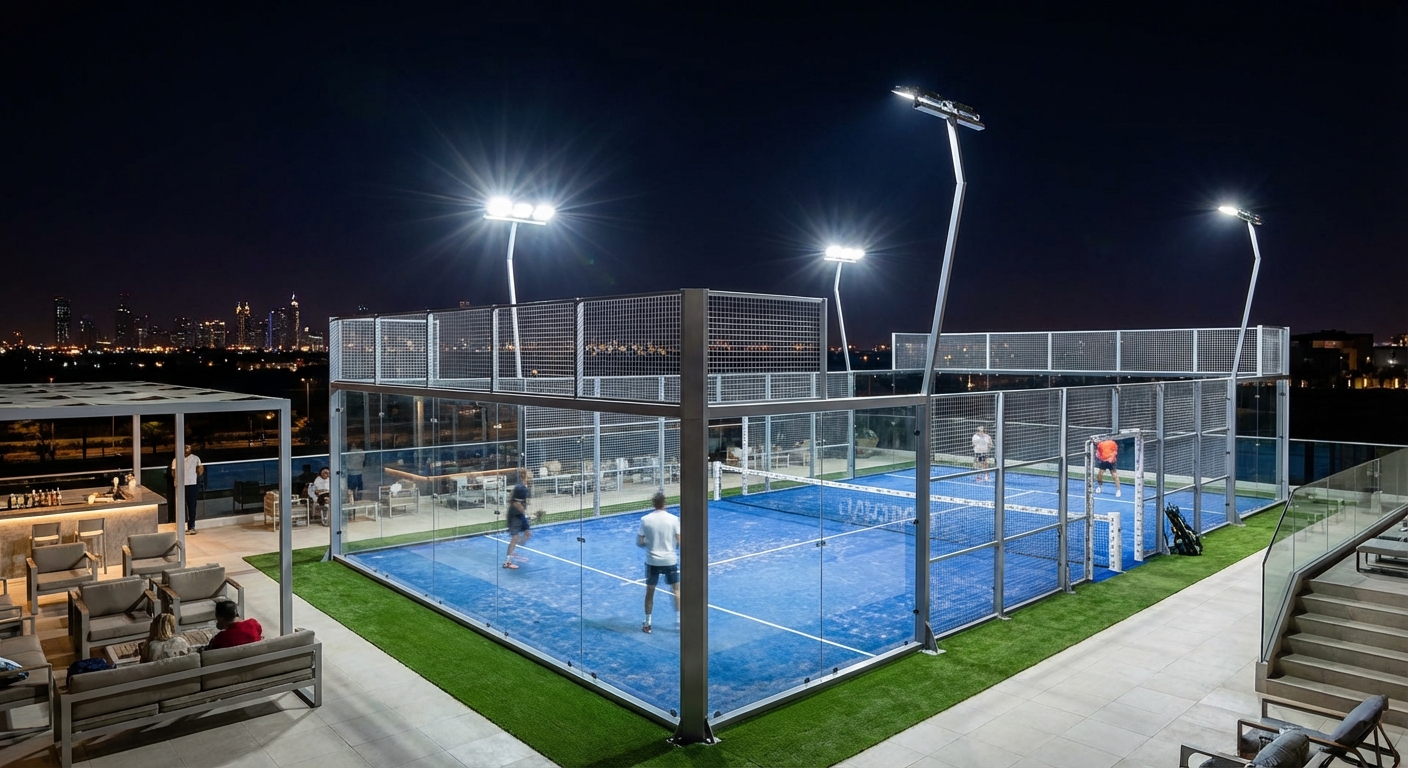
Yes, you can install specialized LED lighting for padel pickleball that provides uniform illumination without creating shadows or glare for the players. For professional play, you need a minimum of 500 to 750 lux across the entire court surface to ensure high-speed ball visibility. Using IP66-rated waterproof fixtures is mandatory for outdoor courts to protect the electronics from the elements.
LED Efficiency and Optics
Does that make sense? Standard floodlights often create “hot spots” that can blind a player during a serve or lob. Professional court lighting uses asymmetric lenses to push light downward and across the court evenly.
- Minimum 200W per lamp.
- Instant start/stop capabilities.
- 50,000+ hour lifespan.
Energy Savings and Longevity
The reality is that modern LED systems consume 50% less energy than traditional metal halide bulbs. This reduction in operational costs significantly improves the monthly overhead of running a multi-court facility.
Key Takeaway: Precision-engineered LED lighting extends playing hours and enhances safety through uniform, glare-free visibility.
| Lighting Feature | Requirement | Benefit |
|---|---|---|
| Lux Level | 500 – 750 Lux | Professional visibility |
| Protection | IP66 Rated | All-weather durability |
| Color Temp | 5000K – 5700K | Daylight simulation |
Optimal lighting design is a critical factor in maximizing court occupancy and providing a premium experience during evening sessions.
What turf options exist for padel pickleball surfaces?
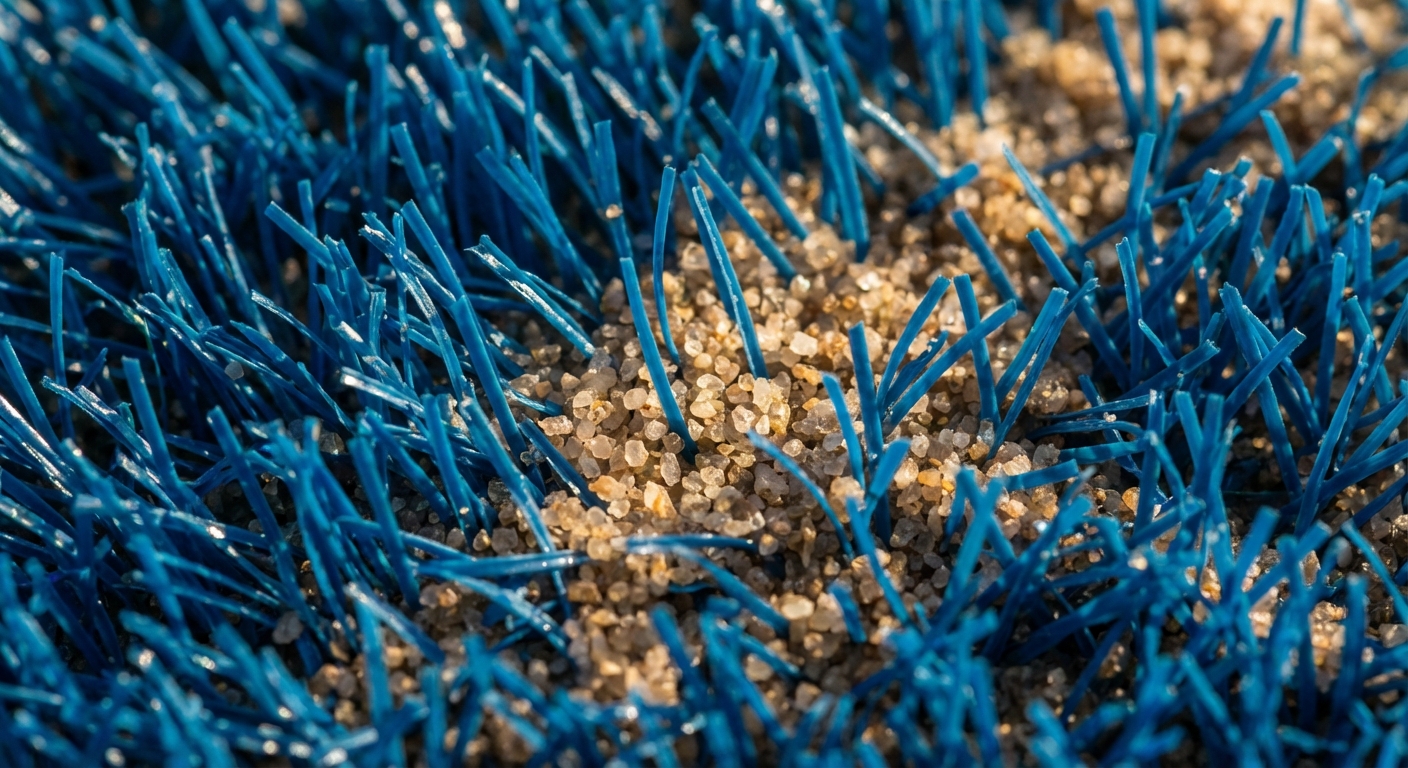
The most popular turf options for padel pickleball include fibrillated or monofilament artificial grass filled with fine silica sand. You should select a high-density turf that meets international federations’ standards for ball bounce and player traction. For pickleball-specific builds, a hard acrylic surface is often preferred, but padel always requires a synthetic turf system to allow for controlled sliding.
Synthetic Turf Specifications
Let’s face it: the turf is the most abused part of the court and requires the highest wear resistance. Using Padel Grass with a high Dtex count ensures the fibers stay upright under heavy foot traffic.
- Monofilament for durability.
- Fibrillated for sand retention.
- UV-resistant polymers.
Sand Infill Importance
You might be surprised to learn that the sand infill is what actually controls the ball’s speed and the player’s grip. Special rounded silica sand prevents the grass fibers from matting down over time.
Key Takeaway: High-density synthetic turf with specialized silica infill provides the perfect balance of traction and ball speed.
| Turf Type | Best Use Case | Texture |
|---|---|---|
| Monofilament | Pro Padel Courts | Soft, upright fibers |
| Fibrillated | Club/Amateur Use | Durable, split fibers |
| Acrylic | Pickleball | Hard, fast surface |
The choice of surface material dictates the “pace” of the game and the level of joint protection provided to the players.
How long does it take to build a padel pickleball court?
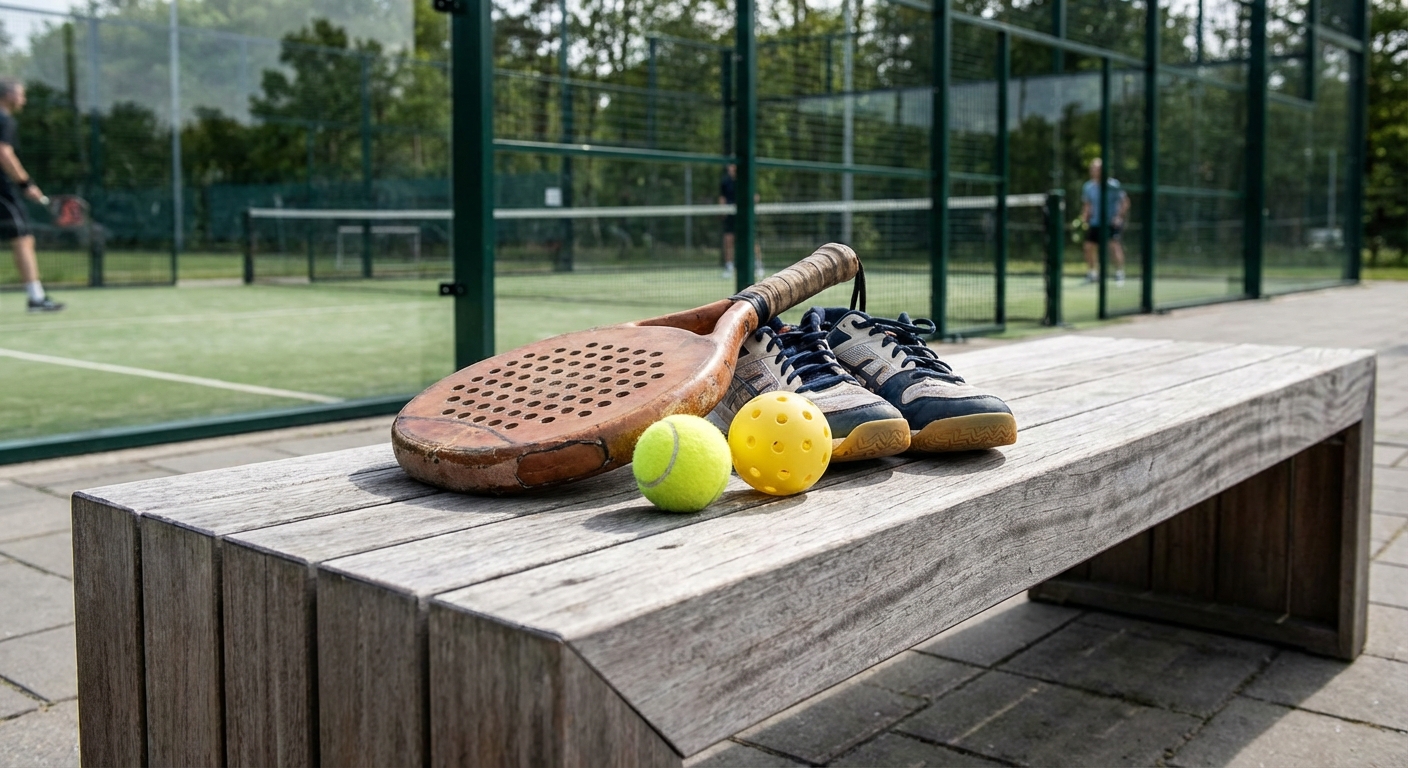
On average, a professional padel pickleball court installation takes between 7 to 14 days once the concrete foundation has properly cured. You must account for the 21 to 28 days required for the sub-base concrete to reach full strength before anchors can be drilled. The actual assembly of the steel structure, glass, and turf is a rapid process when handled by an experienced modular installation team.
Foundation and Curing Phases
It’s a no-brainer: cutting corners on the foundation will lead to cracks and uneven surfaces within a year. You need a 15-20cm reinforced concrete slab with a slight slope for effective water drainage.
- Site preparation: 3-5 days.
- Concrete pouring: 1-2 days.
- Curing time: 21-28 days.
Assembly and Final Finishing
Once the base is ready, the modular components can be bolted together quickly. The installation team will level the structure, hang the glass panels, lay the turf, and brush in the silica sand.
Key Takeaway: While the structural assembly is fast, the total project timeline is governed by the essential curing period of the concrete base.
| Phase | Duration | Critical Task |
|---|---|---|
| Sub-base | 1 Week | Leveling and drainage |
| Curing | 3 – 4 Weeks | Structural strength |
| Installation | 1 – 2 Weeks | Glass and turf fitting |
Project management that respects the chemical curing limits of materials ensures a court that remains stable for decades.
Common questions about padel pickleball construction
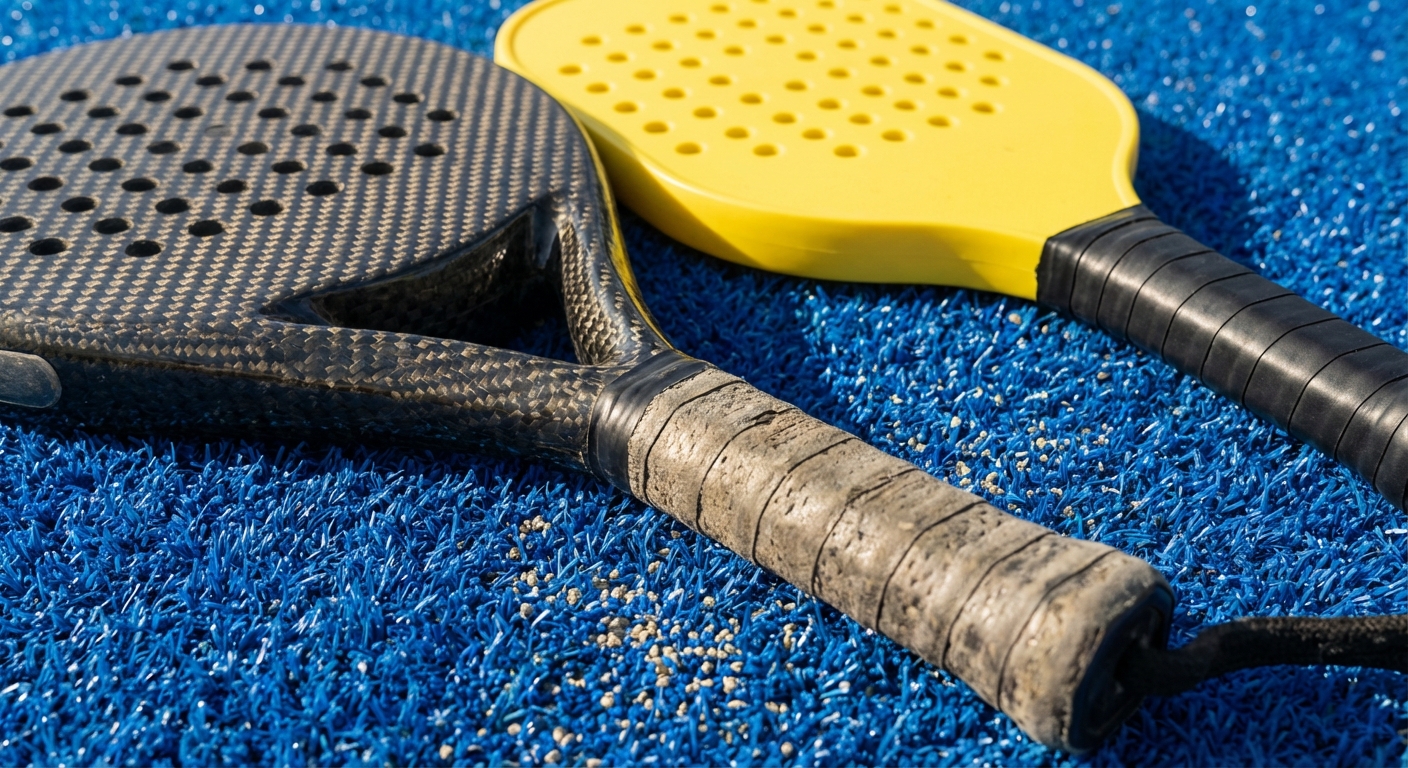
Can I build a court on an existing tennis court?
Yes, but you will need to verify the concrete thickness. Most padel courts require a 15cm reinforced base to handle the wind load of the glass walls.
What is the minimum ceiling height for indoor play?
At least 6 meters is mandatory. Professional standards recommend 8 meters to allow for high defensive lobs without hitting the ceiling.
Do padel courts require a permit?
Usually, yes, as they are considered permanent structures. You should check local zoning laws regarding “accessory structures” and wind load requirements.
Is maintenance expensive for these courts?
No, it is relatively low. You primarily need to brush the sand monthly and check the tension of the net and glass bolts annually.
Can I customize the color of the court?
Certainly. Most manufacturers offer a range of RAL colors for the steel framework and multiple turf colors like blue, green, or terracotta.
*
Building a professional sports facility requires more than just land; it demands a partnership with experts who understand the intersection of safety and performance. You can overcome the challenges of technical zoning and material selection by leveraging our factory-direct manufacturing and modular installation systems. We have solved problems ranging from extreme weather durability to spatial optimization for clubs worldwide. If you are ready to transform your venue into a high-revenue sports destination, contact us today to receive a custom quote and technical consultation. Our vision is to empower facility owners with the highest-grade racket sports infrastructure available on the market.