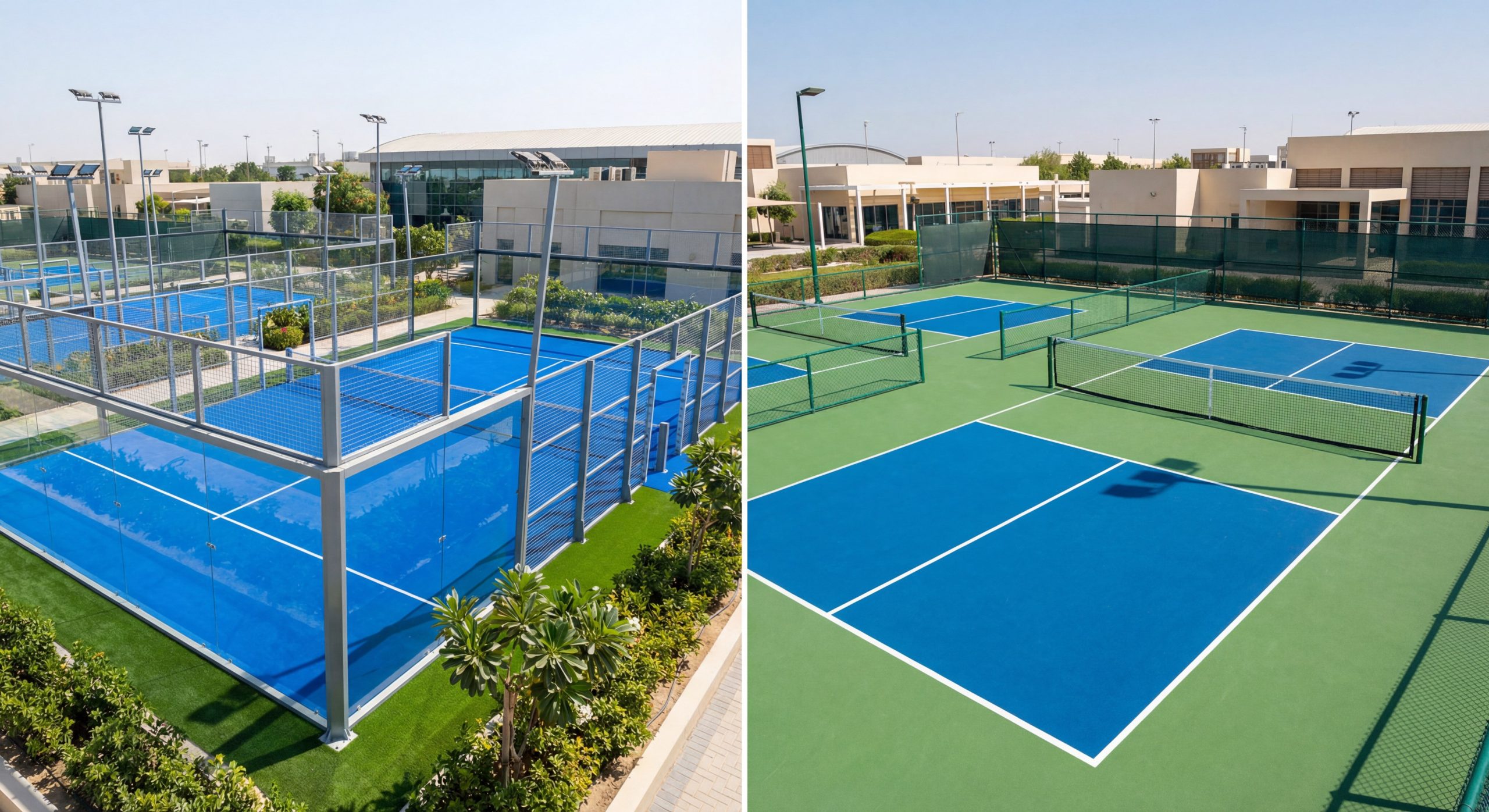
Pickleball padel represents two of the fastest-growing sectors in the global sports industry, requiring specific infrastructure and technical expertise for commercial success. You may be feeling overwhelmed by the technical jargon and structural differences between these two high-intensity racket sports. Investing in a facility without a clear roadmap leads to non-compliant courts, wasted capital, and poor player retention. This guide provides the expert synthesis you need to navigate construction and pickleball padel design effectively.
Is pickleball padel the same sport or two different games?
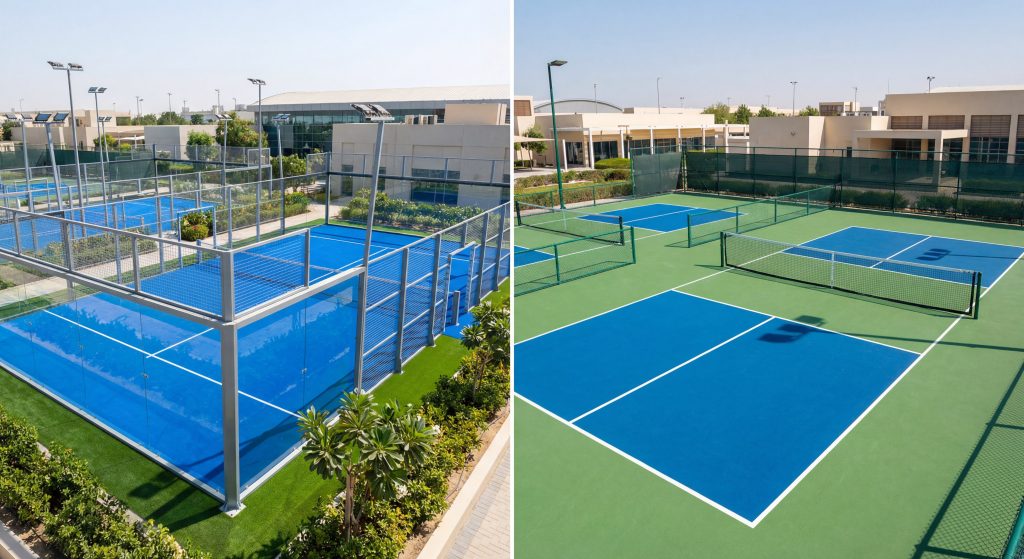
Pickleball padel are distinct disciplines that share a social “mini-tennis” DNA but utilize completely different equipment, rules, and court environments. While both are played on smaller dimensions than traditional tennis, their mechanical requirements for the player are unique.
Do they share the same origin?
Both sports emerged as accessible alternatives to tennis, focusing on ease of entry and high social engagement. Padel originated in Mexico using enclosed walls, while pickleball began in the United States on modified badminton courts.
Here is the kicker:
- Padel is an “enclosed” game utilizing glass and mesh walls.
- Pickleball is an “open” game played on a standard hardcourt.
- Padel requires a partner (doubles only), whereas pickleball supports singles.
Why is it important to distinguish them?
Distinguishing them is vital because the infrastructure for one cannot easily accommodate the other without significant modification. A padel court requires structural engineering for glass impact, while pickleball focuses on surface friction.
The reality is simple:
- Construction costs vary by over 200% between the two.
- Player demographics often overlap but require different amenities.
- Maintenance schedules for turf versus acrylic differ significantly.
Key Takeaway: Understanding that these are unique sports ensures you don’t build a hybrid facility that fails to satisfy the technical requirements of either community.
| Feature | Padel | Pickleball |
|---|---|---|
| Court Type | Enclosed (Glass/Mesh) | Open (Fenced) |
| Primary Skill | Reaction/Wall Strategy | Placement/Dinking |
| Players | 4 (Doubles) | 2 or 4 |
The strategic divergence between these two sports dictates every subsequent architectural and financial decision in your project development.
What are the size requirements for pickleball padel?
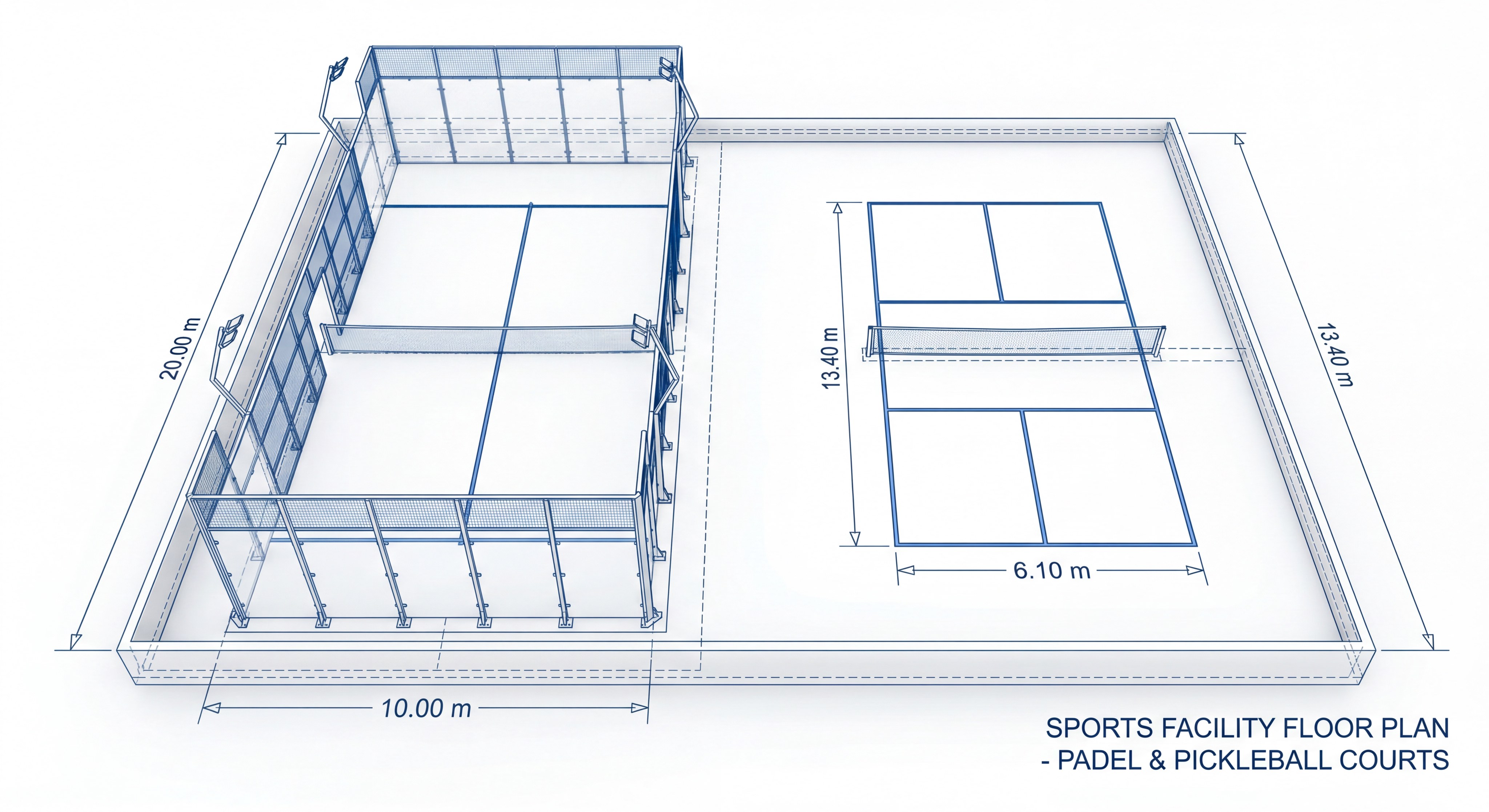
The footprint of your facility is the most critical constraint when planning a pickleball padel installation. Padel requires a larger dedicated area and significantly more vertical clearance due to the frequent use of high lobs.
How much space does a padel court need?
A standard padel court measures 20 meters in length and 10 meters in width, requiring a total of 200 square meters. You must also account for an additional 2 to 3 meters of perimeter clearance for safe player movement and structural support.
But there is more:
- Minimum ceiling height should be 6 meters.
- Optimal professional height is 8 to 10 meters.
- Foundations must support the heavy steel and glass framework.
What are the dimensions for pickleball?
Pickleball courts are more compact, measuring 13.4 meters by 6.1 meters, which is roughly the size of a badminton court. This smaller footprint allows for a higher density of courts within a limited commercial space.
You should consider:
- A total play area of 9.1m x 18.3m is recommended.
- Multiple courts can be grouped under one fence.
- Indoor height requirements are lower than padel.
Key Takeaway: You can fit approximately three pickleball courts in the space required for one padel court plus its safety zones.
| Dimension | Padel Court | Pickleball Court |
|---|---|---|
| Length | 20m | 13.4m |
| Width | 10m | 6.1m |
| Area | 200 sqm | 81.7 sqm |
Maximizing your land use requires a careful balance between the high-density revenue of pickleball and the premium rental rates of padel.
How do the surfaces differ in pickleball padel?
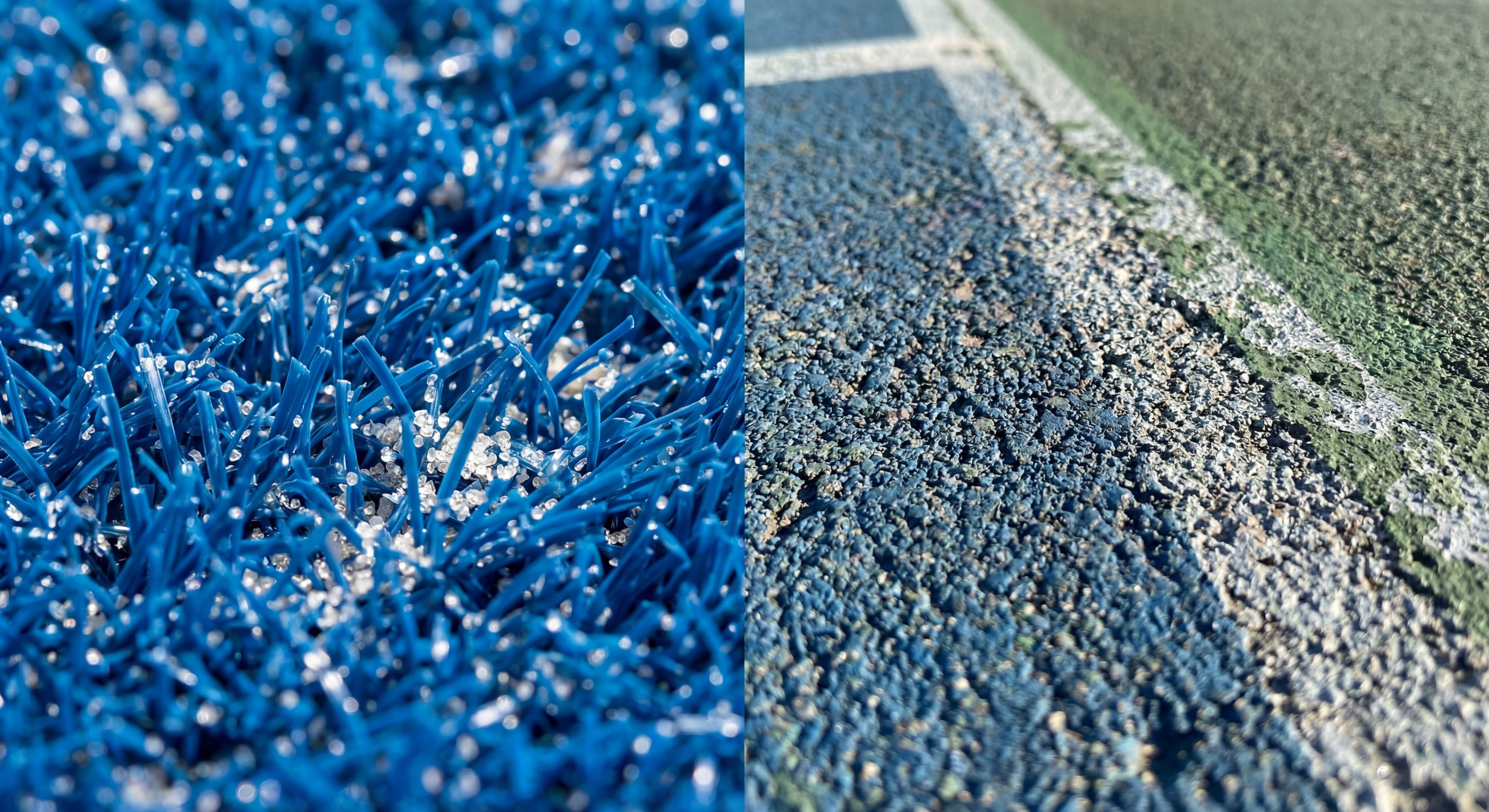
Surface selection is the defining factor for player safety and ball performance in any pickleball padel project. Each sport demands a specific coefficient of friction and shock absorption to prevent joint injuries.
What is the standard for padel turf?
Padel is played on specialized artificial turf, usually monofilament or fibrillated polyethylene, which is then dressed with fine silica sand. This combination allows for controlled sliding and consistent ball bounce off the floor and walls.
It gets better:
- High-density turf ensures long-term wear resistance.
- Silica sand must be distributed evenly to prevent bald spots.
- Blue turf is the international standard for television visibility.
Why does pickleball use acrylic coating?
Pickleball requires a hard, textured surface similar to a tennis court to ensure the plastic perforated ball bounces correctly. This is usually achieved using multiple layers of acrylic resin over a concrete or asphalt base.
Keep this in mind:
- Cushioned acrylic systems reduce impact on player knees.
- The surface must be non-slip even when slightly damp.
- UV-resistant pigments are necessary for outdoor installations.
Key Takeaway: Padel requires soft, sand-filled turf for sliding, while pickleball demands a hard, textured acrylic surface for a consistent vertical bounce.
| Surface Factor | Padel (Turf) | Pickleball (Acrylic) |
|---|---|---|
| Material | Polyethylene + Sand | Acrylic Resin |
| Impact Level | Low (Forgiving) | Medium (Firm) |
| Main Benefit | Joint Protection | Ball Predictability |
Investing in high-quality surfacing reduces long-term maintenance costs and significantly enhances the professional feel of your sports club.
Which rackets are used for pickleball padel play?
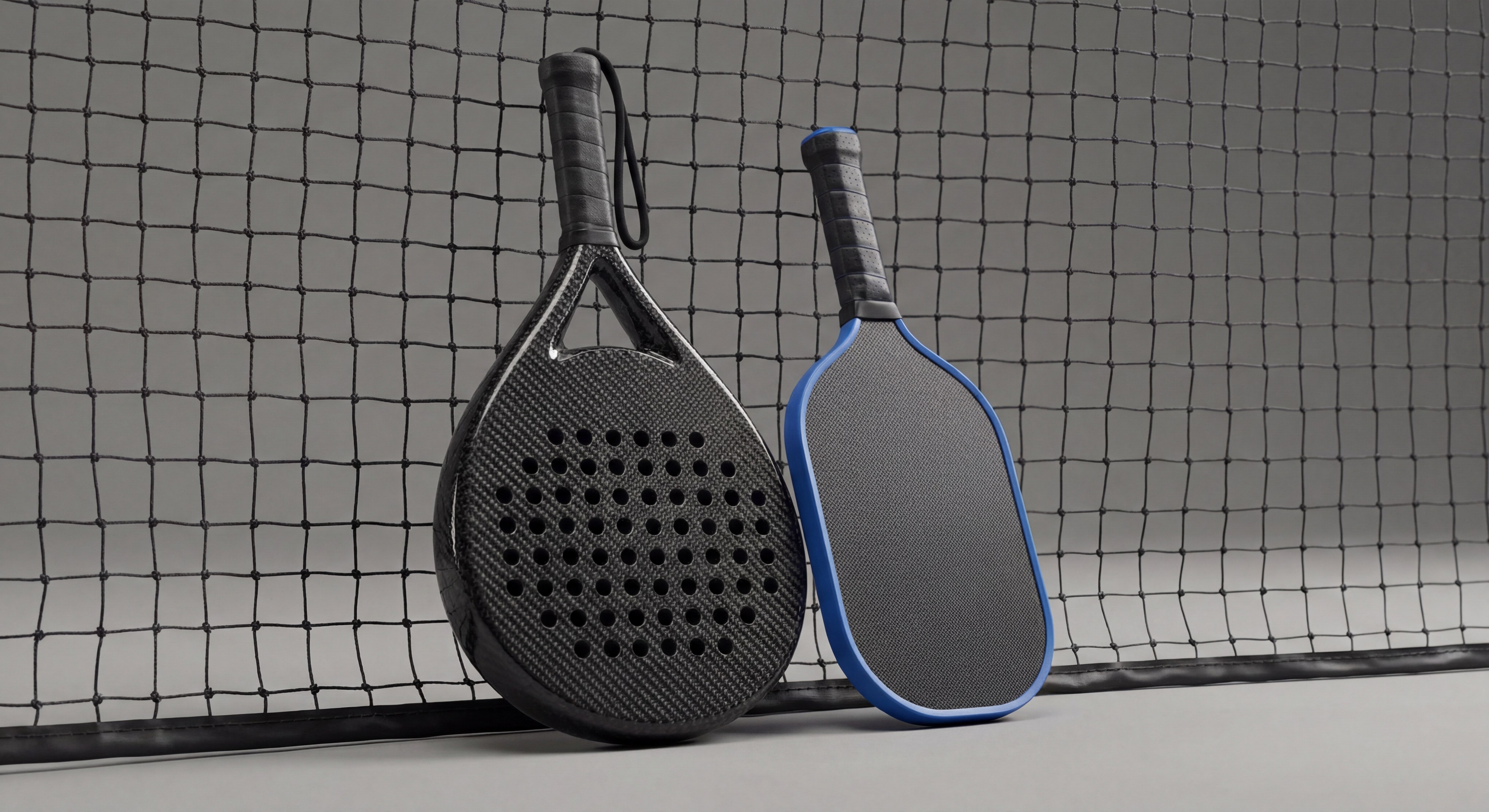
The tools used in pickleball padel are fundamentally different in their construction and physics. While both are stringless, the materials used dictate the speed and spin potential of the game.
What defines a padel racket?
Padel rackets are thick (usually 38mm) and made of a foam core encased in carbon fiber or fiberglass with holes drilled through the face. This design provides a “trampoline effect” that generates significant power and spin.
Make no mistake:
- Rackets use EVA or FOAM cores for different sensations.
- Safety wrist straps are mandatory for all players.
- The weight usually ranges between 350g and 385g.
How does a pickleball paddle work?
Pickleball paddles are much thinner and lighter, often featuring a honeycomb polymer or aluminum core with a graphite or composite face. They are designed for precision and “touch” rather than raw explosive power.
Here is the deal:
- Paddles must meet strict USA Pickleball length limits.
- Surfaces can be textured to increase ball friction.
- Lightweight designs help players at the “kitchen” line.
Key Takeaway: Padel rackets focus on power and absorption using foam cores, while pickleball paddles prioritize control and maneuverability with thin honeycomb structures.
| Equipment | Padel Racket | Pickleball Paddle |
|---|---|---|
| Core | EVA/Polyethylene Foam | Polymer Honeycomb |
| Thickness | ~38mm | ~13mm to 16mm |
| Weight | Heavier (~370g) | Lighter (~220g) |
Providing high-end rental equipment for both sports is a proven secondary revenue stream that encourages newcomers to try the facility.
How do you design the walls for pickleball padel?
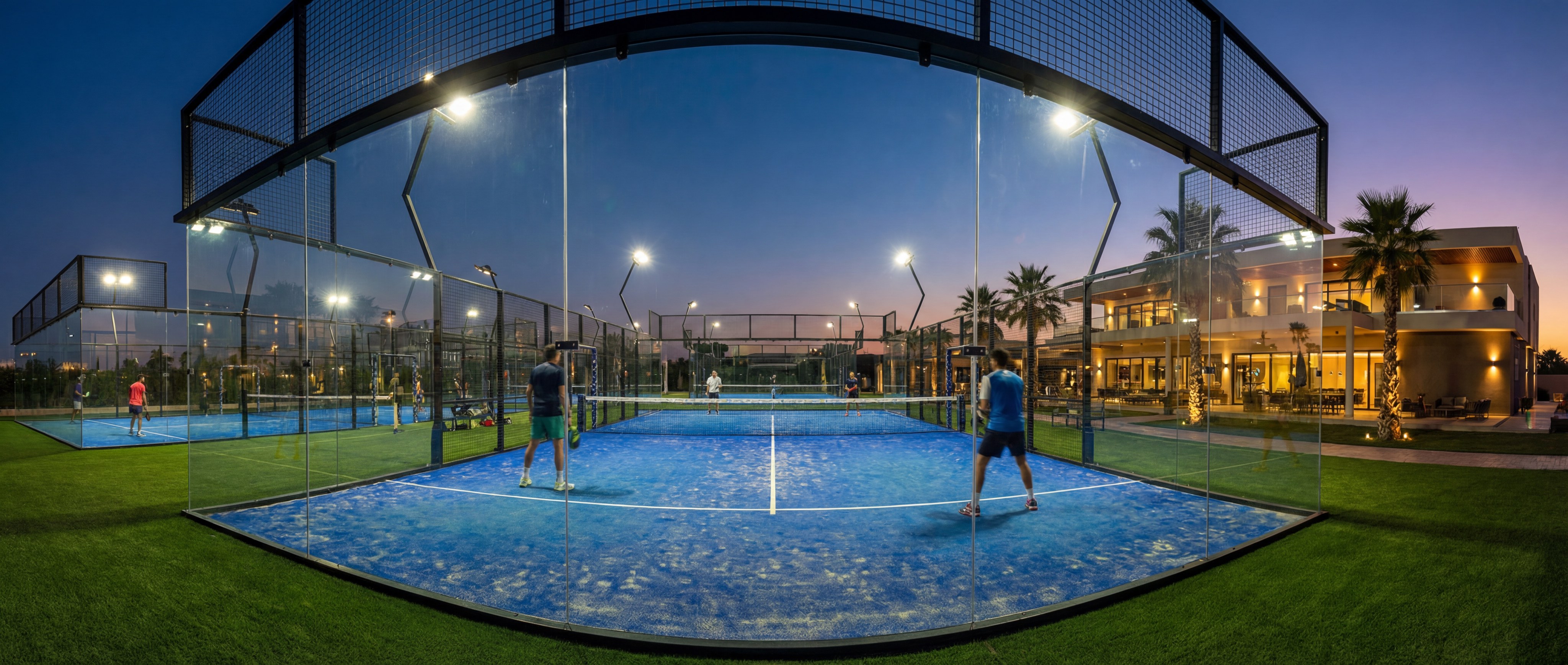
Structural walls are the most significant architectural investment in a pickleball padel facility. In padel, the walls are an active part of the game, whereas pickleball uses fencing only for ball containment.
Why is glass quality vital for padel?
Padel courts utilize 10mm or 12mm tempered safety glass to withstand the impact of players running into the walls. These panels must be perfectly aligned to ensure the ball bounces predictably during high-speed play.
But wait, there is more:
- Panoramic designs offer better spectator views without pillars.
- Anti-explosion film adds an extra layer of safety.
- Galvanized steel frames prevent rust in outdoor settings.
What are the fencing needs for pickleball?
Pickleball fencing is primarily functional, designed to keep the ball within the court area and separate adjacent games. Standard chain-link or rigid mesh fences are the most common solutions for commercial clubs.
Consider these points:
- A height of 3 meters is standard for perimeter fences.
- Windbreaks can be added to outdoor fences for better play.
- Gates should be placed for easy entry and exit.
Key Takeaway: Padel walls are integrated structural components made of heavy tempered glass, while pickleball uses standard fencing for simple containment.
| Component | Padel Wall | Pickleball Fence |
|---|---|---|
| Material | Tempered Glass / Mesh | Chain-link / Steel Mesh |
| Role | Active Gameplay | Ball Containment |
| Durability | High Impact Rated | Weather Resistant |
The structural integrity of your padel glass is the single most important safety factor in your facility’s long-term liability management.
What lighting is best for a pickleball padel court?
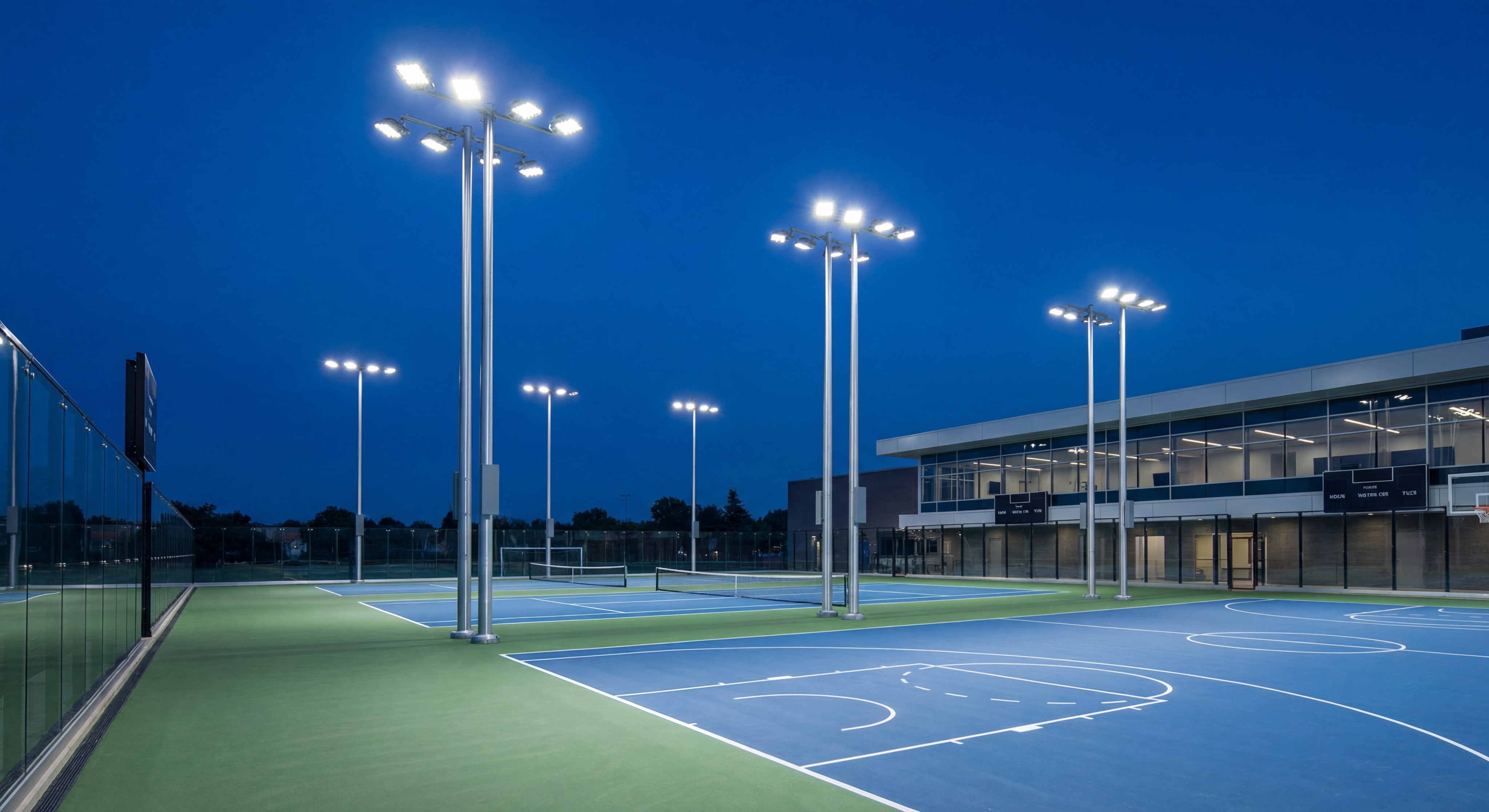
Professional lighting extends the operational hours of your pickleball padel facility, maximizing your return on investment. High-efficiency LED systems are now the industry standard for both indoor and outdoor projects.
How do you achieve uniform light?
Uniformity is more important than raw brightness; you want to avoid “hot spots” and deep shadows on the court. LED floodlights should be mounted on 6-meter or 8-meter poles with asymmetric lenses to direct light downward.
Check this out:
- A minimum of 300 lux is required for recreational play.
- Professional competition requires 500 to 750 lux.
- IP66 waterproofing is essential for outdoor units.
What are the benefits of LED?
LED technology has revolutionized sports lighting by providing instant-on capabilities and significant energy savings. Unlike old metal halide bulbs, LEDs do not flicker, which is crucial for tracking small, fast-moving balls.
The benefits are clear:
- Energy consumption is reduced by up to 60%.
- Maintenance is minimal with 50,000+ hour lifespans.
- Dimmable options allow for customized lighting levels.
Key Takeaway: Using asymmetric LED floodlights ensures uniform visibility and reduces glare, which is critical for tracking high lobs and fast volleys.
| Lighting Spec | Requirement |
|---|---|
| Standard Lux | 300 – 500 Lux |
| Mounting Height | 6m – 8m |
| Fixture Type | LED Asymmetric |
Smart lighting controls integrated with your booking system can automatically turn lights off when courts are not in use, further saving costs.
How to plan the foundation for a pickleball padel project?
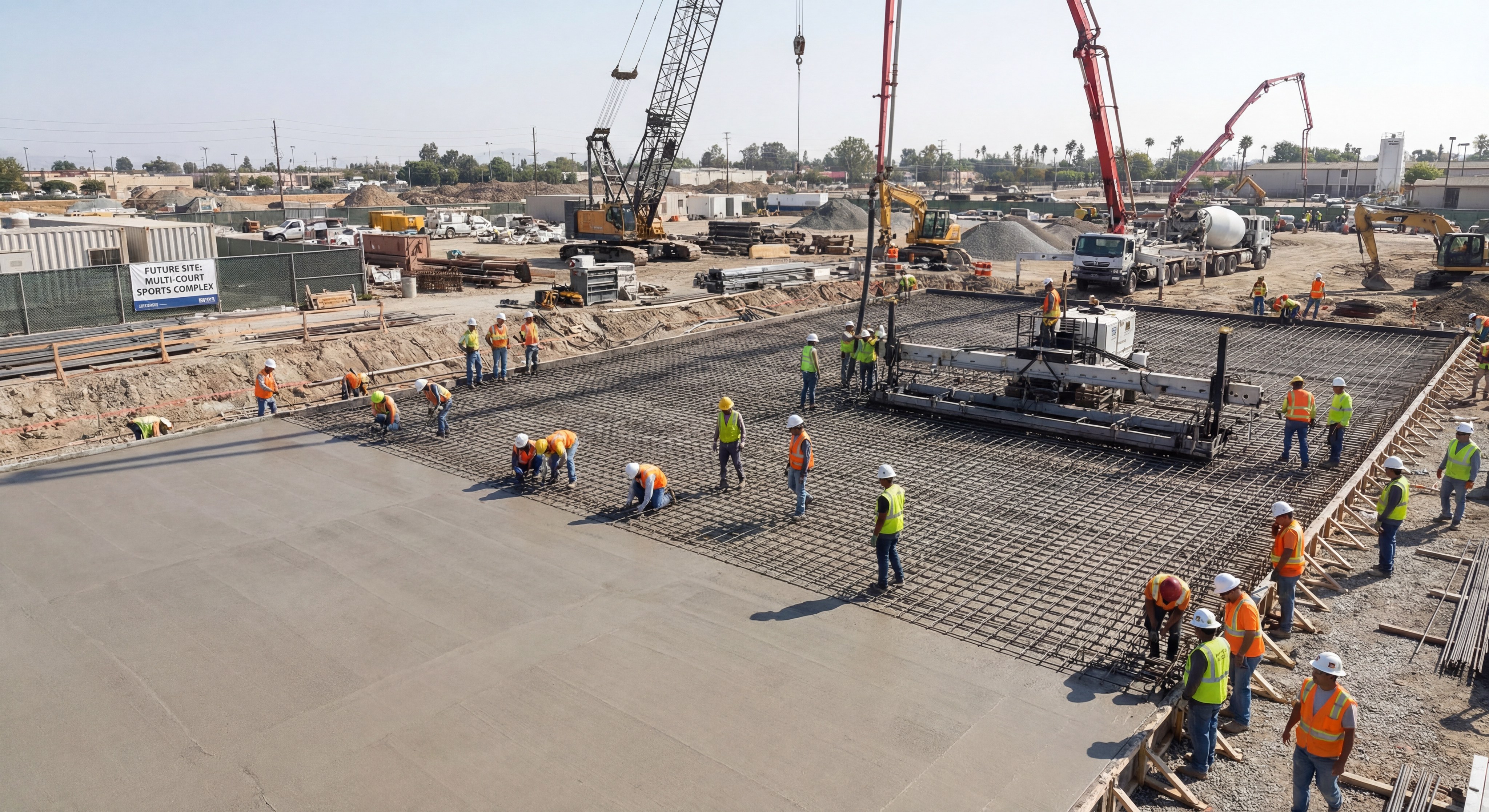
The longevity of your pickleball padel facility depends entirely on the quality of the sub-base and concrete slab. Any shifting or cracking in the foundation will immediately compromise the glass walls of a padel court.
What thickness is required for the slab?
For a professional installation, a reinforced concrete slab of at least 15cm thickness is required. This slab must be perfectly level, with a maximum tolerance of 3mm over a 3-meter distance to ensure true ball bounce.
Here is the secret:
- Reinforcing mesh prevents cracks from temperature changes.
- A perimeter beam is needed to anchor padel structures.
- Concrete should be HA-25 or higher grade for durability.
How do you handle court drainage?
Outdoor courts must have a slight slope (usually 1%) to allow rainwater to drain effectively without creating puddles. Proper drainage prevents moss growth and protects the acrylic or turf surfaces from water damage.
Follow these steps:
- Install a compacted gravel sub-base for stability.
- Use porous concrete if a zero-slope design is preferred.
- Ensure drainage channels are clear of debris.
Key Takeaway: A 15cm reinforced concrete slab with a 1% slope is the gold standard for supporting both sports infrastructure and ensuring water runoff.
| Foundation Step | Requirement |
|---|---|
| Sub-base | 20cm Compacted Gravel |
| Slab Thickness | 15cm Reinforced Concrete |
| Tolerance | <3mm per 3 meters |
Cutting corners on the foundation is the most common cause of facility failure; always hire a specialized sports civil engineer for this phase.
What are the costs to build a pickleball padel facility?
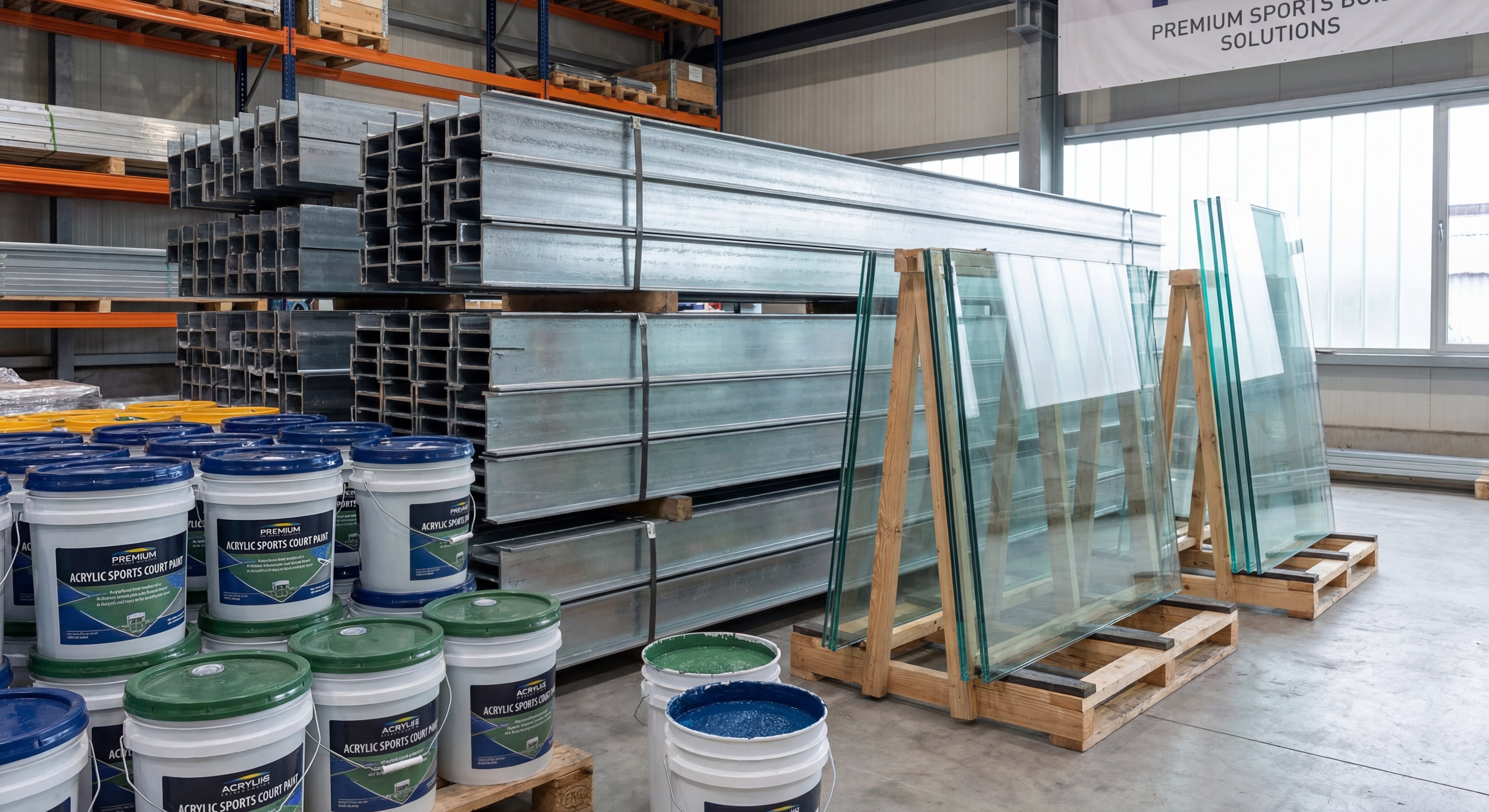
Budgeting for a pickleball padel project requires an understanding of the massive difference in material costs. Padel is a capital-intensive structural build, while pickleball is primarily a surfacing and fencing project.
Why does padel cost more?
The price of a padel court is driven by the heavy-duty galvanized steel frame and the sheer volume of 12mm tempered glass. Shipping these heavy materials globally also adds a significant logistical expense to the final quote.
But wait, there is more:
- Glass panels require specialized cranes for installation.
- Professional turf installation is a technical craft.
- Precision engineering is needed for wall alignment.
What are the savings in pickleball?
Pickleball courts are much more affordable because they lack the expensive glass and heavy steel requirements. The primary costs involve the concrete foundation, the acrylic surface coating, and standard perimeter fencing.
You will find that:
- Fencing is much cheaper than tempered glass.
- Surface application is faster and uses less material.
- Maintenance costs for acrylic are lower than for turf.
Key Takeaway: Padel courts are a premium investment due to glass and steel costs, while pickleball offers a more accessible entry point for facility owners.
| Expense Category | Padel (Estimated) | Pickleball (Estimated) |
|---|---|---|
| Materials | High (Steel/Glass) | Low (Fencing) |
| Labor | Skilled Specialists | Standard Contractors |
| Timeline | 7-10 Days | 3-5 Days |
While padel has a higher initial cost, its unique appeal often allows you to charge 50% to 100% more per hour than for pickleball.
How do you manage a combined pickleball padel club?
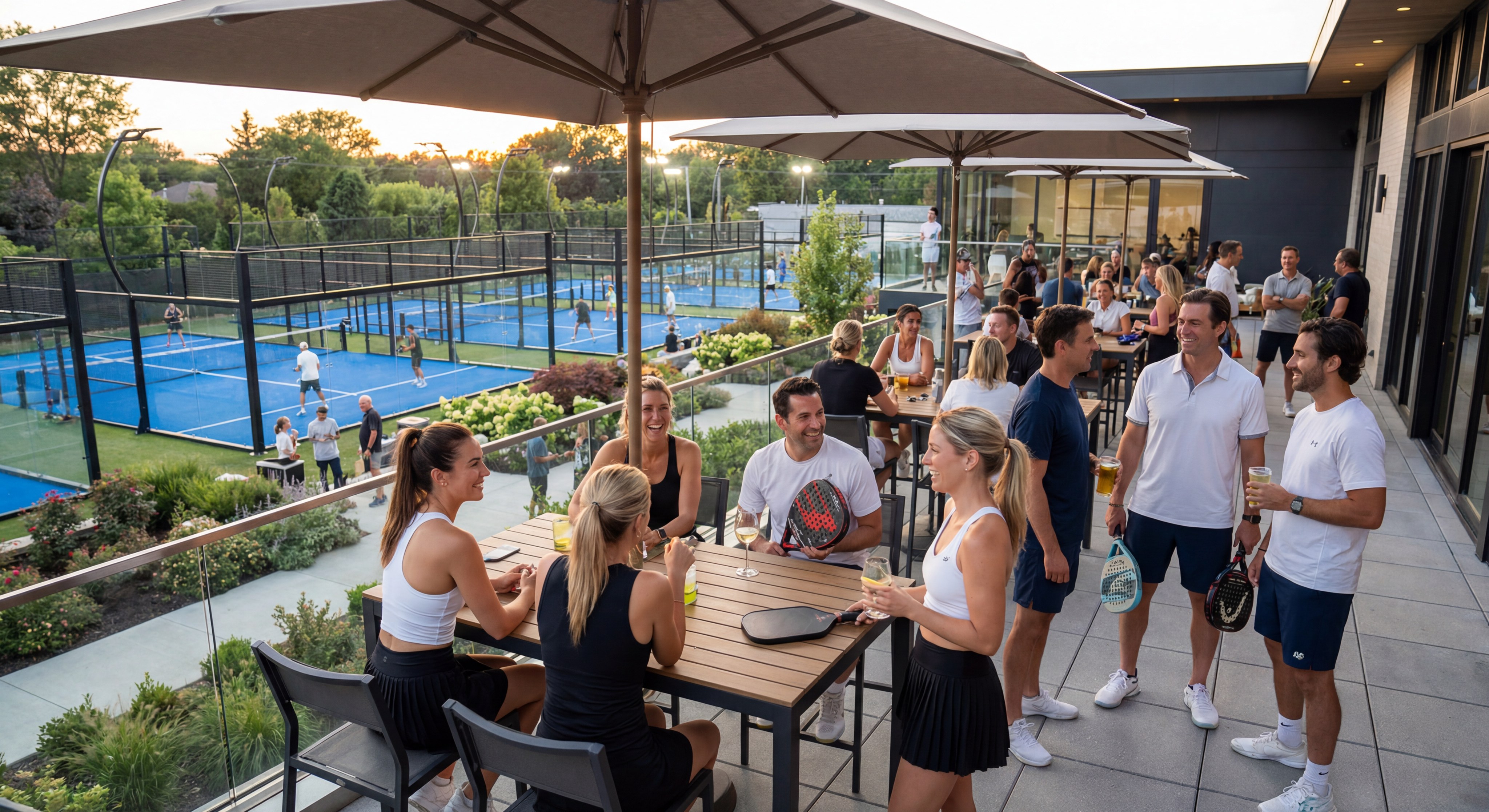
Operating a hybrid pickleball padel club allows you to capture a broader market share and diversify your revenue streams. Managing these two distinct player communities requires a cohesive brand and efficient facility scheduling.
Can you share the amenities?
Yes, a hybrid club benefits from shared infrastructure like locker rooms, cafes, pro shops, and parking lots. This centralization reduces your operational overhead while providing a superior experience for all athletes.
It gets better:
- A central café encourages social mixing between sports.
- One booking app can manage all court reservations.
- Staff can be trained to facilitate both types of play.
How to market to both groups?
Marketing should focus on the “social racket sport” lifestyle rather than technical differences. Highlight the ease of learning both games and promote community events, tournaments, and “mixer” nights.
The strategy is simple:
- Offer “intro to racket sports” clinics for beginners.
- Create memberships that allow access to all court types.
- Use local influencers to showcase the fun atmosphere.
Key Takeaway: Hybrid facilities maximize profitability by sharing high-cost amenities and marketing a unified, social sports lifestyle to the community.
| Management Factor | Benefit of Hybrid Model |
|---|---|
| Overhead | Shared utilities and staff costs |
| Revenue | Multiple hourly rate tiers |
| Community | Larger, more diverse member base |
The social aspect is the “sticky” factor of these sports; a well-designed clubhouse is just as important as the courts themselves.
How to get started with your pickleball padel build?
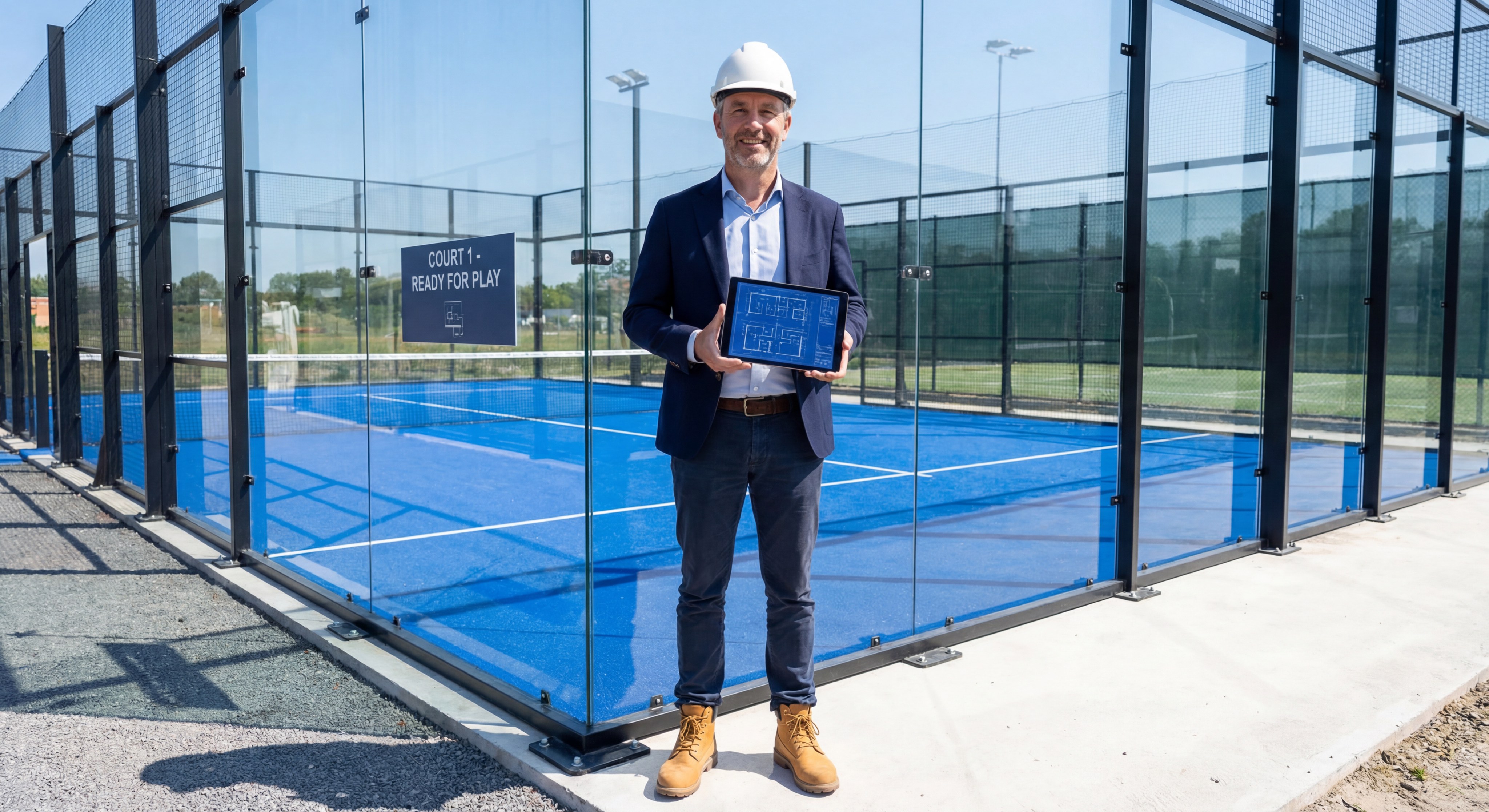
Launching a pickleball padel project begins with selecting a manufacturing partner who understands international quality standards. Your goal is to move from the planning phase to an operational revenue-generating facility as quickly as possible.
How do you choose a manufacturer?
Look for a partner that offers factory-direct pricing to eliminate middleman markups. Ensure they provide comprehensive technical documentation, including structural calculations and safety certifications for their glass and steel.
Important criteria include:
- Proven track record with 100+ installations.
- Compliance with EN 12150 safety standards.
- Ability to provide remote or on-site installation support.
What are the final steps?
Once you have your site and partner, finalize your custom branding and colors. A professional project manager will coordinate the logistics, from container loading to the final tightening of the net.
The path forward is:
- Finalize your site layout and court count.
- Secure your foundation and electrical permits.
- Order your courts with OEM customization.
Key Takeaway: Partnering with a factory-direct manufacturer saves up to 30% on costs and ensures your facility meets all professional safety regulations.
| Project Stage | Action |
|---|---|
| Phase 1 | Site selection and CAD planning |
| Phase 2 | Foundation and lighting install |
| Phase 3 | Court assembly and grand opening |
Success in the racket sports industry is built on a foundation of quality. If you are ready to transform your vision into a high-performance reality, contact us today to receive a specialized quotation and start your journey toward owning a premier sports destination.
Frequently Asked Questions (FAQ)
- Can I build a pickleball court inside a padel court?
No, this is not recommended because the padel glass walls are positioned specifically for padel’s 10-meter width, and the turf surface does not provide the correct bounce for a pickleball ball. - What is the best way to maintain the padel turf?
Regular brushing is essential to keep the silica sand distributed evenly and the fibers upright; this prevents the surface from becoming slippery and protects the turf from premature wear. - How do I know if my site is large enough for multiple courts?
You must measure the total flat area and subtract the required safety perimeters (usually 2 meters between courts); our engineering team can provide a CAD layout to visualize your specific site’s capacity. - Can I customize the colors of my courts?
Yes, professional manufacturers offer full OEM support where you can select specific RAL colors for the steel structure and different turf colors to match your brand identity. - What is the lifespan of a professional court?
A high-quality hot-dip galvanized steel structure is designed to last over 20 years, while the turf and acrylic surfaces typically require refreshing every 5 to 7 years depending on usage intensity.