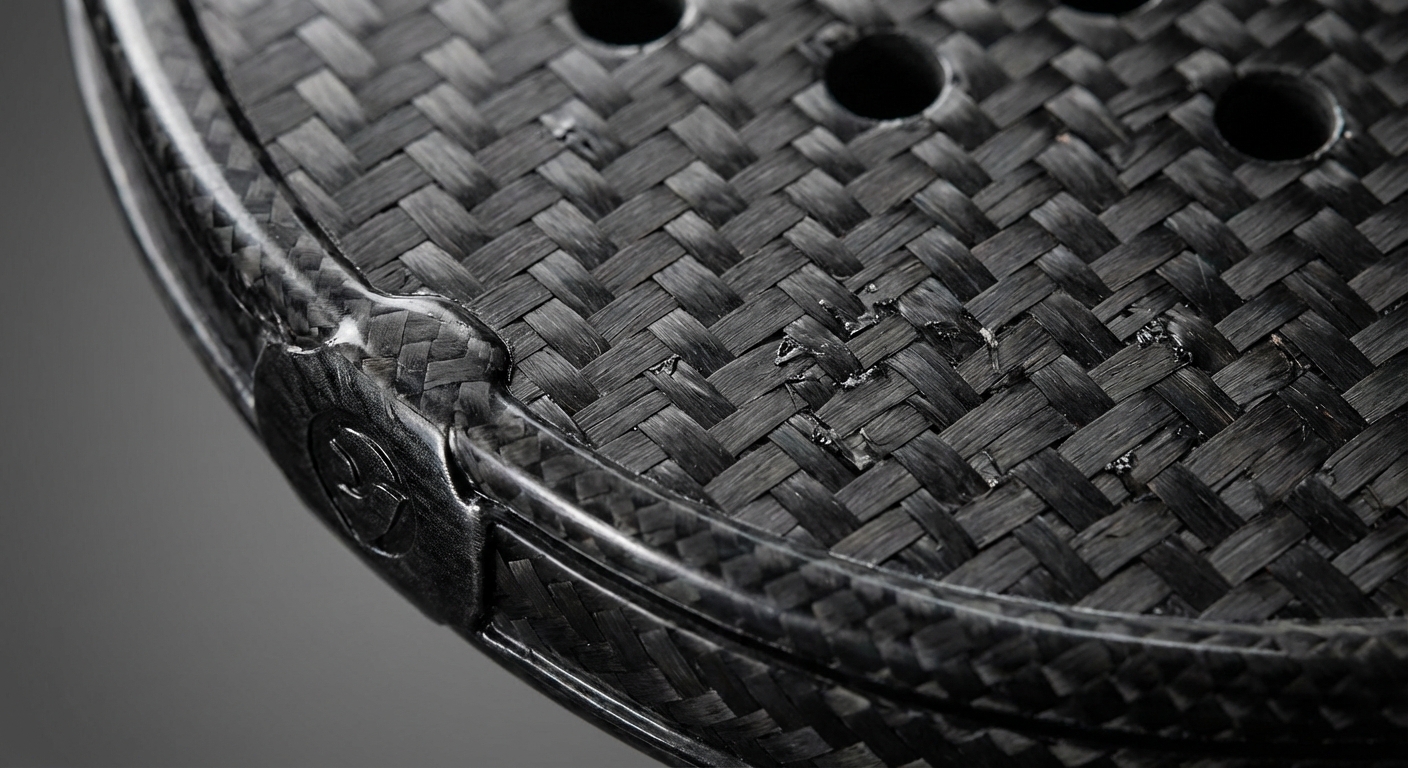
A raqueta de padel is a specialized, stringless sporting implement featuring a perforated surface and a composite rubber core designed for the specific demands of padel tennis. Finding the perfect gear is often a frustrating journey of trial and error that leaves your arm sore and your wallet empty. You deserve equipment that enhances your technique rather than hindering your progress on the court. By choosing high-quality options at superbpadel.com, you can secure professional-grade performance that fits your unique playing style perfectly.
What defines the official raqueta de padel?
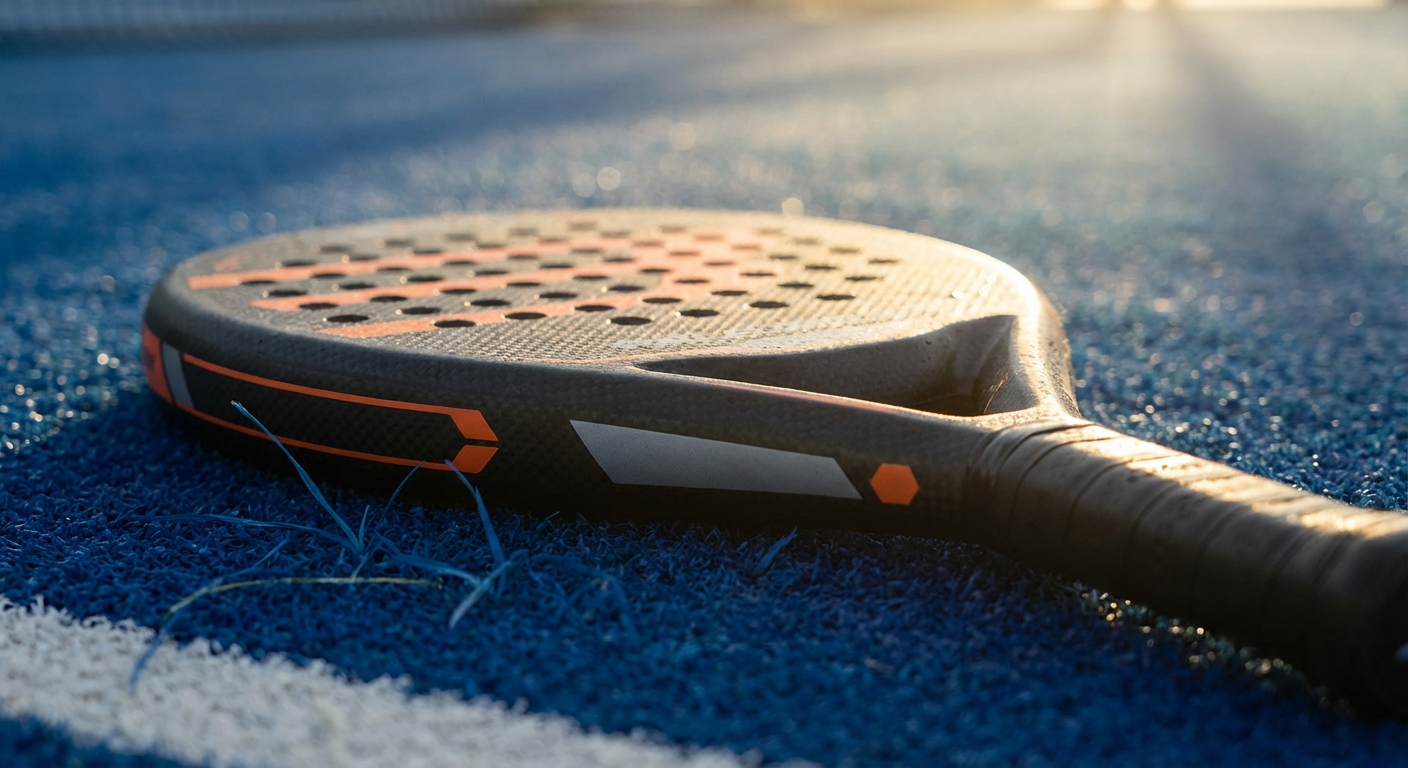
An official raqueta de padel must adhere to strict international regulations regarding its dimensions, materials, and safety features. You will find that these rackets are significantly shorter than tennis rackets, providing much higher maneuverability at the net. Exploring the right raqueta de padel technical specs ensures you remain compliant during competitive tournament play.
Are there size restrictions?
The International Padel Federation (FIP) mandates that the total length of the racket cannot exceed 45.5 centimeters. This compact size allows you to react quickly during fast-paced exchanges near the glass walls.
Think about it:
The smaller the racket, the easier it is to control your defensive shots.
- Total length: 45.5 cm max.
- Total width: 26 cm max.
- Profile thickness: 38 mm max.
The technical hole pattern
The holes in the face are not just for decoration; they are engineered to reduce air resistance during your swing. They must be between 9mm and 13mm in diameter to ensure the structural integrity of the hitting surface remains solid.
The best part?
A well-designed hole pattern improves your swing speed significantly.
| Feature | Regulation Requirement |
|---|---|
| Max Length | 45.5 cm |
| Max Width | 26 cm |
| Max Thickness | 38 mm |
This analysis confirms that official standards prioritize safety and maneuverability over raw power.
Key Takeaway: Always verify FIP compliance to ensure your racket is legal for competitive play.
Which core materials build a raqueta de padel?
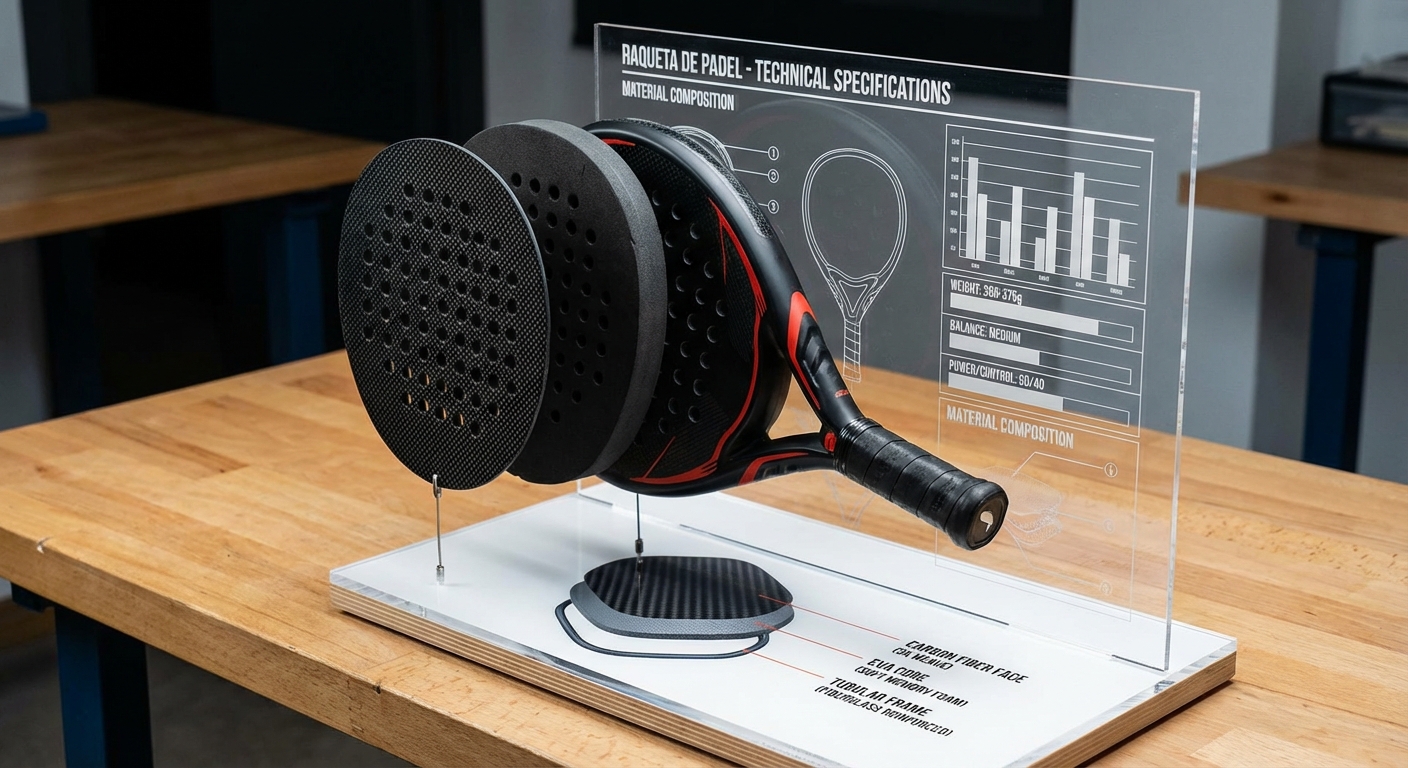
The internal core of a raqueta de padel is primarily constructed from either EVA rubber or polyethylene foam to manage shock absorption. This “engine” of the racket determines how the ball feels upon impact and how much energy is returned to your shot. Understanding these materials helps you choose a racket that protects your joints while maximizing your offensive output.
What is EVA rubber?
EVA is a high-memory material that provides a firmer feel and more power for aggressive players. It recovers its shape instantly after impact, giving you a crisp response on every volley.
Look at it this way:
EVA is like a high-tension spring that rewards fast swings with explosive ball speed.
- High durability.
- Consistent performance.
- Harder feel.
The benefits of FOAM cores
Polyethylene, or FOAM, is much softer and more porous than EVA, making it ideal for absorbing vibrations. If you suffer from “tennis elbow,” this material will be your best friend on the court.
Guess what?
You get incredible ball control and comfort without sacrificing your arm’s health.
| Core Type | Hardness | Main Benefit | Target Player |
|---|---|---|---|
| EVA Rubber | High | Maximum Power | Advanced / Aggressive |
| FOAM | Low | Vibration Absorption | Beginner / Injury-Prone |
Material density is the primary factor influencing the trade-off between power and injury prevention.
Key Takeaway: Choose EVA for performance and FOAM for comfort and vibration dampening.
How do shapes affect your raqueta de padel?
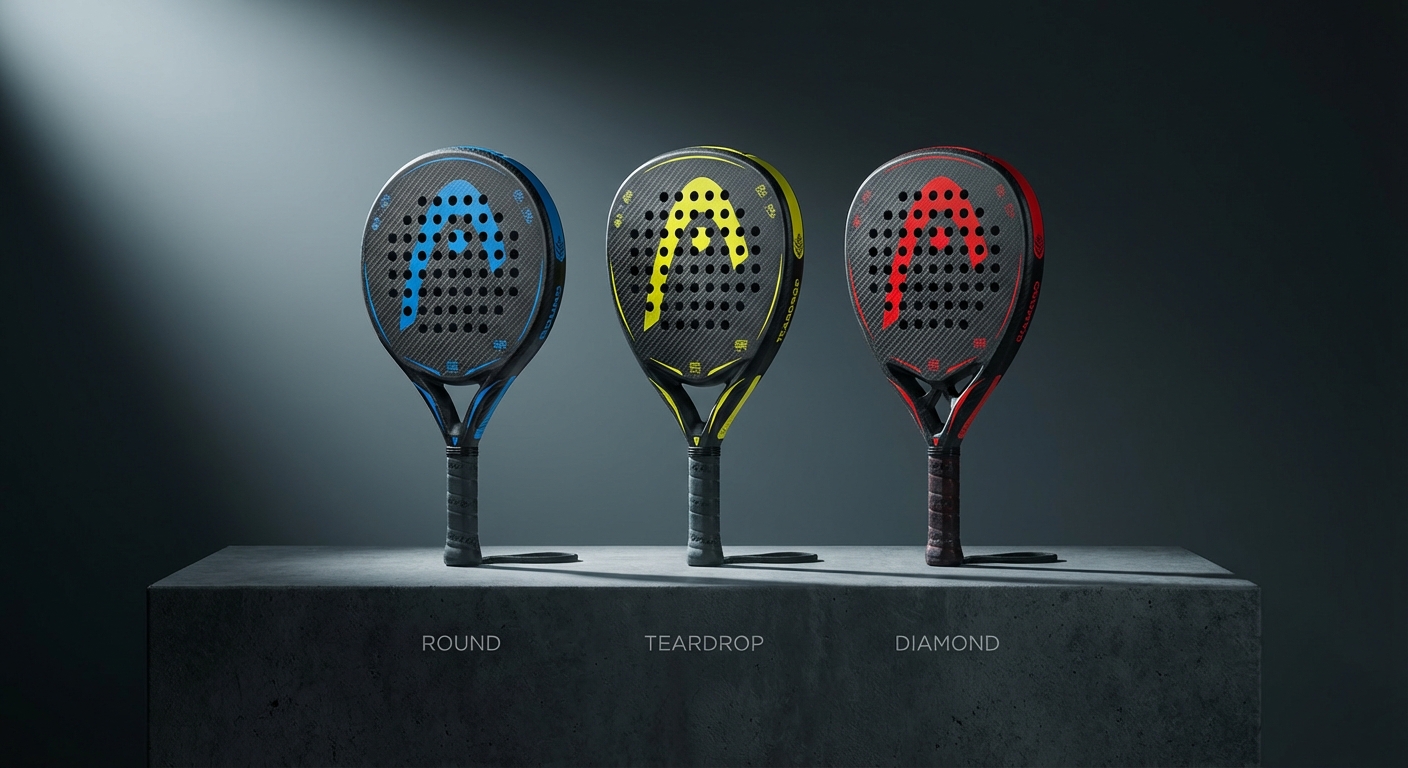
The geometry of a raqueta de padel dictates where the “sweet spot” is located and how the weight is distributed. Selecting the wrong shape can lead to frequent off-center hits and a lack of control during critical points. You can find specialized raqueta de padel designs that cater to defensive, offensive, or balanced playing styles.
The Round Shape for Beginners
Round rackets have a centered sweet spot and a low balance point near the handle. This makes them the most forgiving and easiest to move, which is perfect for those just starting their journey.
The best part?
You can control the direction of the ball with much higher precision.
- Largest sweet spot.
- High maneuverability.
- Excellent for defense.
Diamond and Teardrop Designs
Diamond shapes are top-heavy and built for power, while teardrop models offer a hybrid balance for versatile players. These shapes move the sweet spot higher up the face to increase the leverage during your smashes.
Think about it:
A diamond shape turns your arm into a powerful lever for overhead shots.
| Shape | Sweet Spot | Balance | Primary Use |
|---|---|---|---|
| Round | Center | Low | Defensive / Control |
| Teardrop | Mid-High | Medium | Versatile / All-around |
| Diamond | High | High | Offensive / Power |
The shape you choose should directly reflect your current skill level and your preferred court position.
Key Takeaway: Start with a round shape to master control before moving to more aggressive geometries.
How is a raqueta de padel built in a factory?
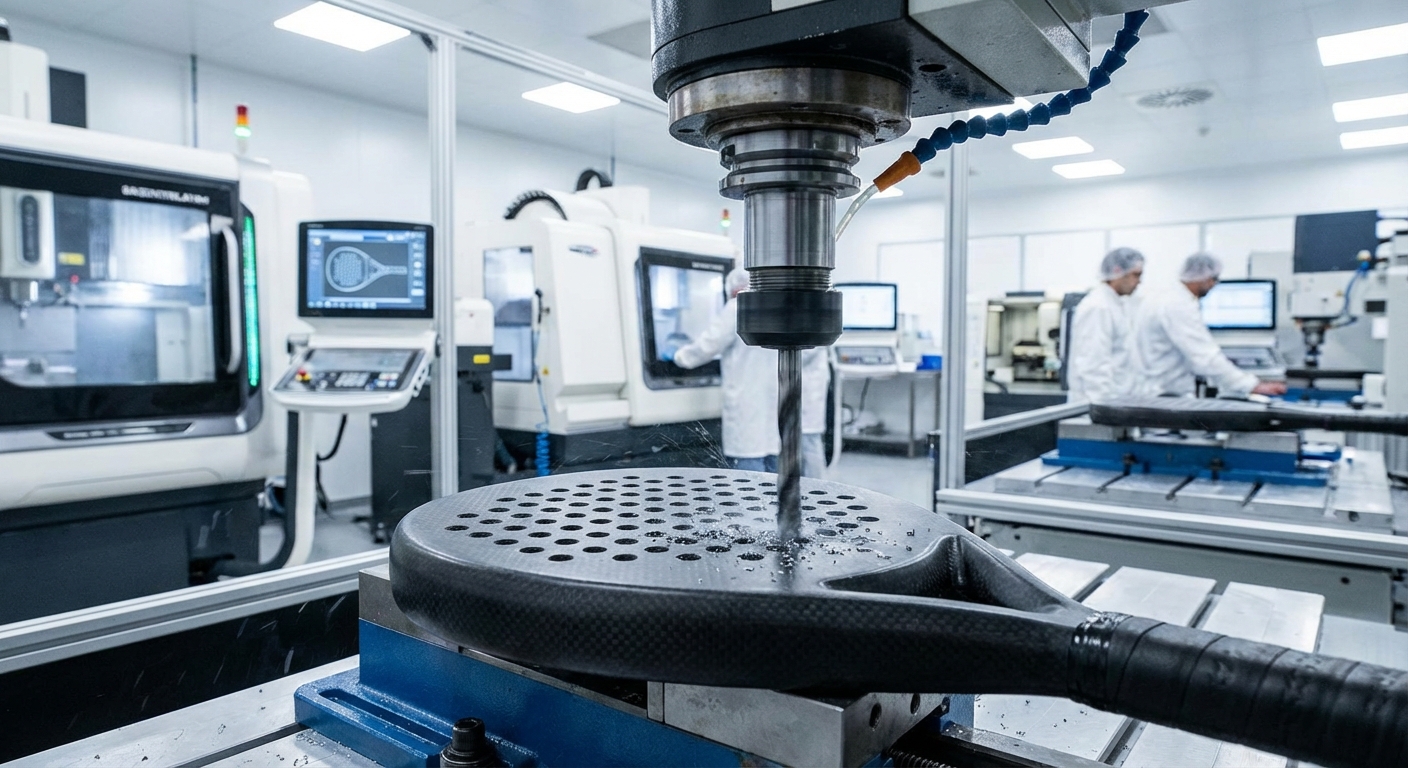
Building a raqueta de padel involves a multi-stage manufacturing process that combines high-tech resin layering with precision drilling. Most professional rackets are created using a mold where carbon fiber sheets are hand-laid over the rubber core. This meticulous approach ensures that every racket meets the weight and balance requirements necessary for high-level play.
The layup and molding stage
Workers place layers of carbon fiber or fiberglass into a temperature-controlled mold to form the outer shell. Epoxy resin is then injected to bond the layers together into a single, indestructible unit.
It gets better:
Vacuum-pressing during this stage removes air bubbles that could cause the racket to crack.
- Carbon fiber layering.
- Resin injection.
- Heat treatment.
Precision CNC drilling
After the frame is cured, a computer-controlled machine drills the aerodynamic hole pattern into the face. This step must be incredibly precise to avoid damaging the internal fibers of the composite shell.
The result?
A perfectly balanced face that cuts through the air with minimal drag.
| Manufacturing Step | Tool Used | Objective |
|---|---|---|
| Layup | Manual Molds | Structural Shaping |
| Pressing | Hydraulic Press | Bonding & Strength |
| Drilling | CNC Machine | Aerodynamics |
Factory precision is what separates a cheap toy from a professional piece of sporting equipment.
Key Takeaway: High-quality manufacturing processes involve multiple layers of carbon and vacuum-pressing for durability.
Why is balance vital for a raqueta de padel?
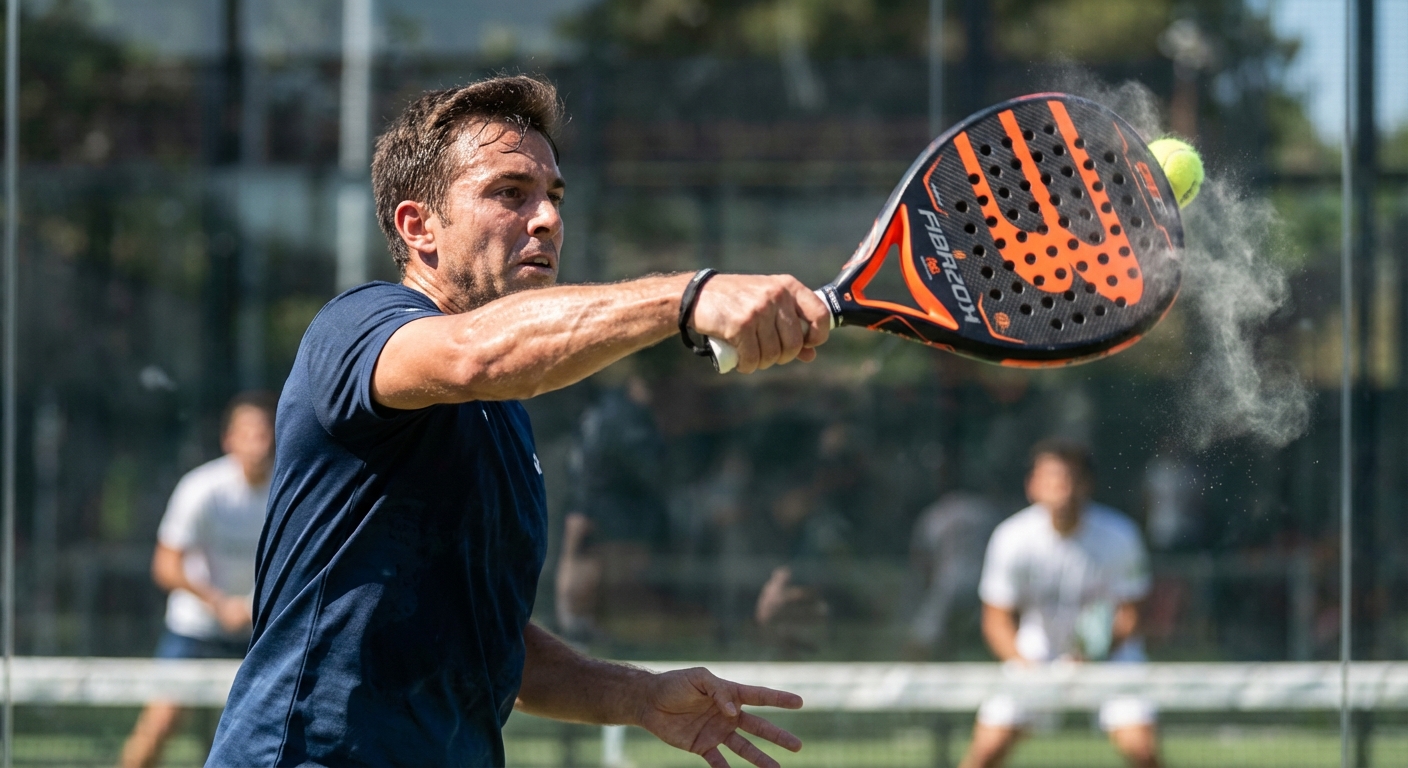
The balance of a raqueta de padel refers to its center of gravity and how heavy it feels in your hand during a swing. A top-heavy racket provides massive power but can lead to shoulder fatigue if your technique isn’t perfect. Choosing a raqueta de padel with the right balance point will help you stay on the court longer without discomfort.
Low Balance for Speed
Rackets with a low balance feel lighter and allow for lightning-fast reactions at the net. You will find it much easier to block high-speed shots when the weight is concentrated near your wrist.
Think about it:
Faster hands lead to better volleys and more points won at the net.
- Reduces wrist strain.
- Faster swing speed.
- Ideal for defensive play.
How do I adjust balance?
You can actually change the balance of your racket by adding overgrips or lead tape to specific areas. Adding weight to the handle makes the racket feel lighter, while weight on the head increases your smash power.
The best part?
You can customize your equipment without having to buy a brand-new racket.
| Balance Type | Weight Distribution | Feel | Impact on Game |
|---|---|---|---|
| Low | Near Handle | Light | Improved Maneuverability |
| High | Near Head | Heavy | Increased Smash Power |
Strategic weight distribution allows you to fine-tune your equipment to match the daily conditions of the court.
Key Takeaway: Prioritize a low or medium balance if you are looking to avoid injuries and improve agility.
Is the frame of a raqueta de padel essential?
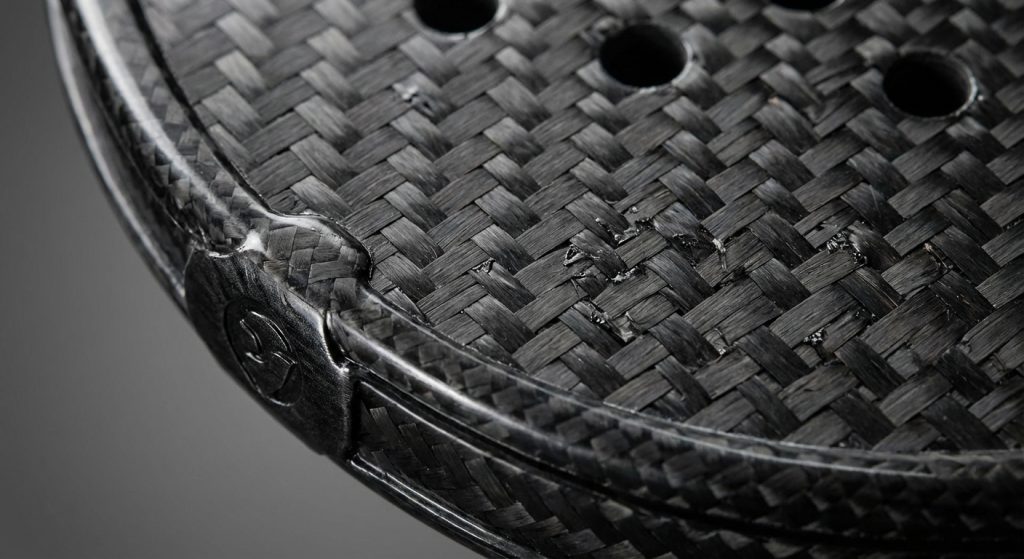
The frame serves as the skeleton of the raqueta de padel, providing the necessary stiffness to withstand high-impact collisions with the ball. Without a robust frame, the racket would lose its shape and energy transfer would be significantly reduced. Most premium models utilize 12K or 3K carbon fiber to ensure the frame remains rigid yet lightweight.
Carbon vs Fiberglass Frames
Carbon fiber is the gold standard because it offers the best strength-to-weight ratio for competitive athletes. Fiberglass frames are more flexible and affordable, but they tend to lose their structural integrity faster over time.
Look at it this way:
A carbon frame is a long-term investment in your performance and equipment longevity.
- 12K Carbon: Very stiff.
- 3K Carbon: Balanced feel.
- Fiberglass: Flexible & cheap.
Why use frame protectors?
Because padel is played close to walls, your racket frame is constantly at risk of being scratched or cracked. An adhesive frame protector acts as a shield, absorbing the impact of accidental hits against the glass.
Think about it:
A simple plastic strip can save you from having to replace a $300 racket.
| Frame Material | Durability | Stiffness | Price Point |
|---|---|---|---|
| 12K Carbon | Maximum | High | Premium |
| Fiberglass | Medium | Low | Budget |
A strong frame ensures that the energy from your swing is actually transferred to the ball.
Key Takeaway: Always opt for a carbon frame and use a protector to extend the life of your gear.
What tech is inside a raqueta de padel?
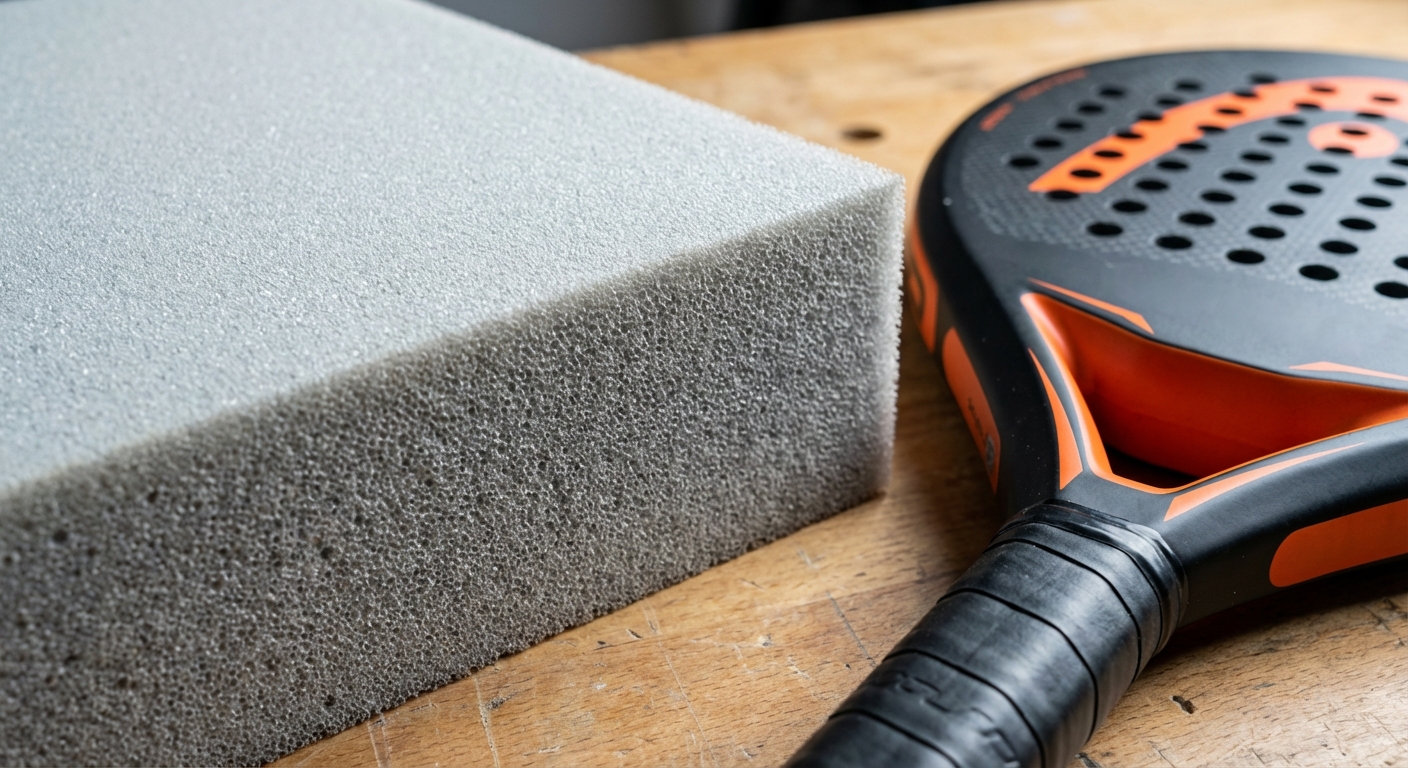
Modern raqueta de padel engineering includes hidden features like anti-vibration systems and reinforced bridges to improve player comfort. These internal technologies are designed to dampen the kinetic energy that travels from the face to your arm. Integrating a high-performance raqueta de padel into your setup can significantly reduce the risk of repetitive strain injuries.
Anti-vibration inserts
Many manufacturers place silicone or rubber plugs in the holes or the bridge of the racket. These inserts act like shock absorbers in a car, smoothing out the feel of every hit.
The best part?
You can play longer matches without feeling the “sting” of off-center shots.
- Silicone dampeners.
- Bridge reinforcements.
- Torsion control.
Reinforced Bridge Technology
The “bridge” is the area where the handle meets the racket head, and it experiences the most stress during a swing. Modern designs use geometric shapes to prevent the racket from twisting when you hit the ball.
Think about it:
A stable bridge means your shots go exactly where you aim them.
| Technology | Location | Primary Benefit |
|---|---|---|
| Dampeners | Holes / Bridge | Reduced Vibrations |
| Reinforced Bridge | Handle Joint | Increased Accuracy |
| Airflow Channels | Throat Area | Faster Swing Speed |
Internal engineering is often invisible but remains the most important factor for long-term player health.
Key Takeaway: Look for anti-vibration technology if you play more than twice a week to protect your arm.
Can the surface texture of a raqueta de padel improve ball spin?
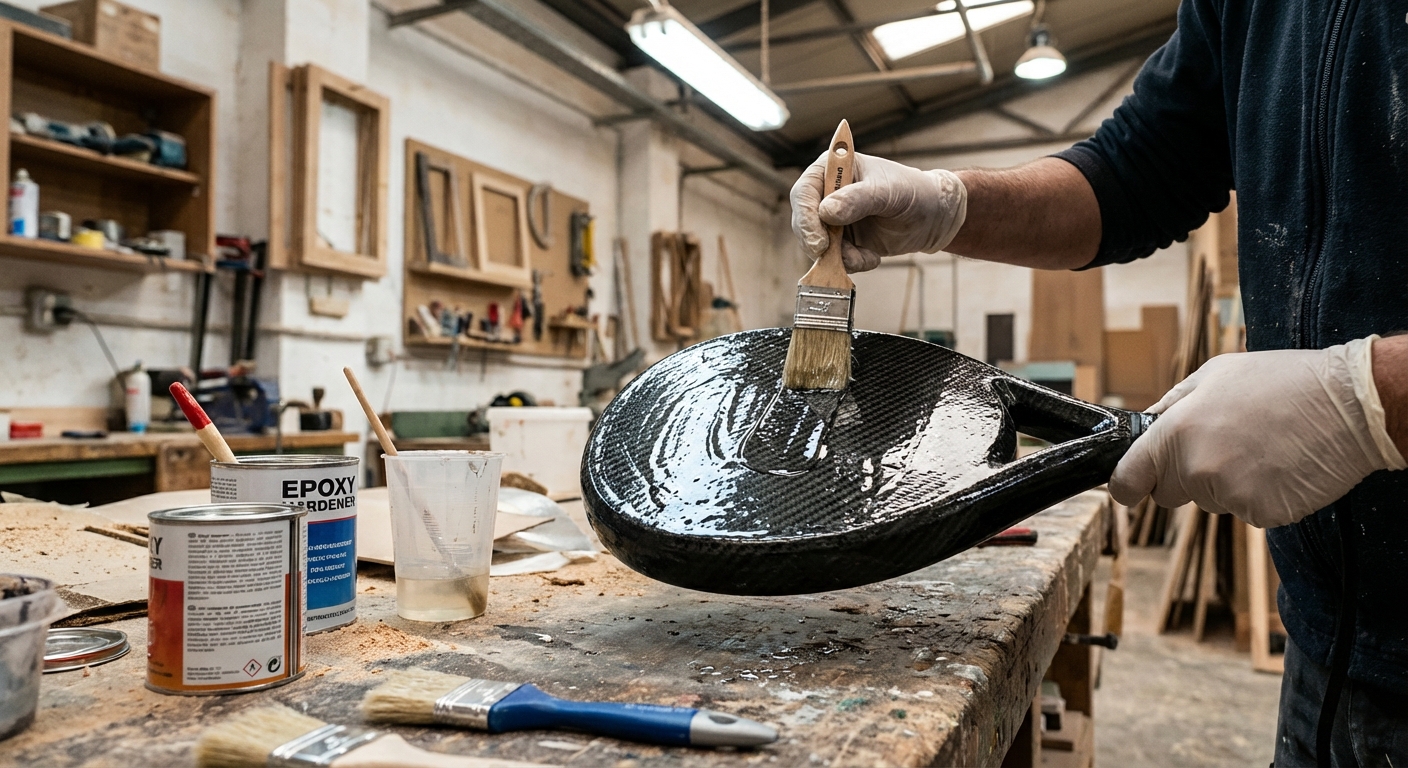
The external finish of a raqueta de padel can range from perfectly smooth to a rough, sandpaper-like texture to assist with spin. Applying spin is essential for advanced shots like the “vibora,” where you want the ball to stay low after hitting the glass. This texture creates friction between the racket and the ball’s felt, allowing you to manipulate its trajectory.
Sandpaper vs 3D Relief
A sandpaper finish provides the highest amount of grip but can wear off over several months of heavy use. 3D relief patterns are molded directly into the carbon face, offering a permanent solution for spin enthusiasts.
Guess what?
You can choose a texture that matches how much “bite” you want on the ball.
- Sandpaper: Max spin.
- 3D Pattern: Durable spin.
- Glossy: Max speed.
Does a smooth finish help?
Smooth or glossy finishes are preferred by players who want the ball to exit the racket as fast as possible. These surfaces offer less drag and are easier to clean, though they provide very little assistance for slice shots.
Think about it:
If you rely on raw power and speed, a smooth finish might be your best bet.
| Surface Type | Grip Level | Durability | Best For |
|---|---|---|---|
| Rough/Sand | Extreme | Medium | Slice / Topspin |
| 3D Molded | High | High | Technical Spin |
| Smooth | Low | Maximum | Flat Power Hits |
Surface finish is a personal preference that should align with your specific shot-making goals.
Key Takeaway: Choose a 3D molded texture for a permanent balance of spin and durability.
How are quality tests for a raqueta de padel?
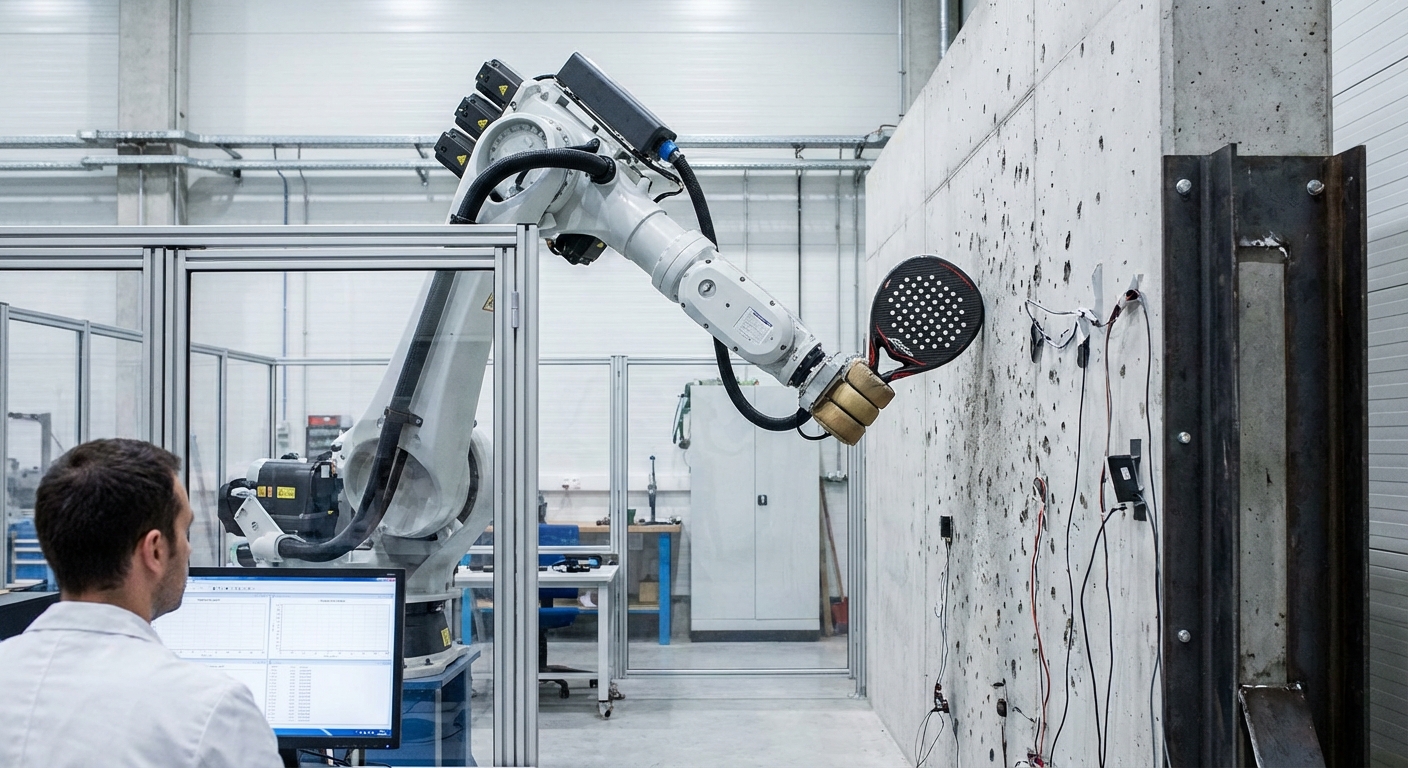
Before it enters your bag, a raqueta de padel must pass several rigorous industrial tests to ensure it won’t fail on the court. Quality control teams use specialized machinery to measure the hardness of the core and the resistance of the frame. Investing in a raqueta de padel that has been lab-tested ensures you aren’t playing with a ticking time bomb.
The compression test
Machines apply thousands of pounds of pressure to the face of the racket to check for structural weaknesses. This ensures that the “pop” you feel on day one will remain consistent for hundreds of matches.
The best part?
You get a guarantee that your equipment can handle your most powerful smashes.
- Stress testing.
- Core density check.
- Impact resistance.
Weight and balance precision
Every racket is weighed on a digital scale to ensure it falls within a very narrow tolerance range, usually plus or minus 5 grams. This consistency allows professional players to switch between identical rackets without feeling any difference.
Think about it:
Consistency in your gear leads to consistency in your performance.
| Test Type | Objective | Tolerance |
|---|---|---|
| Weight Check | Uniformity | +/- 5g |
| Balance Test | Feel Consistency | +/- 3mm |
| Impact Test | Durability | Zero Cracks |
Rigorous testing protocols are the only way to ensure a product is truly “professional-grade.”
Key Takeaway: Only buy from brands that transparently discuss their quality control and material standards.
What are the common FAQ for a raqueta de padel?
Understanding your equipment is the first step toward dominating the court. Here are the most common questions players ask when selecting their gear.
Can I use a tennis racket for padel?
No. Padel rackets are stringless and much shorter to accommodate the different physics of the game.
What’s the best weight for a beginner?
The best weight is usually between 350g and 365g. This range provides enough mass to hit the ball without causing early fatigue.
How do I know if my racket is broken?
Listen for a “hollow” or “dull” sound during impact. Also, look for small cracks (delamination) around the holes or frame.
Can I store my racket in the car?
No. Extreme heat can melt the resins and damage the rubber core, permanently ruining its performance.
What’s the best way to clean my racket?
Use a damp cloth with water only. Avoid harsh chemicals that could degrade the protective varnish or paint.
Conclusion
By analyzing the materials, shapes, and manufacturing steps involved, we have solved the problem of choosing gear without technical knowledge. You now understand how the core, frame, and balance interact to define your success on the court. Our vision is to empower every player with professional insights that bridge the gap between amateur play and elite performance. To ensure your facility matches the quality of your equipment, contact us today for premium court solutions and expert guidance.