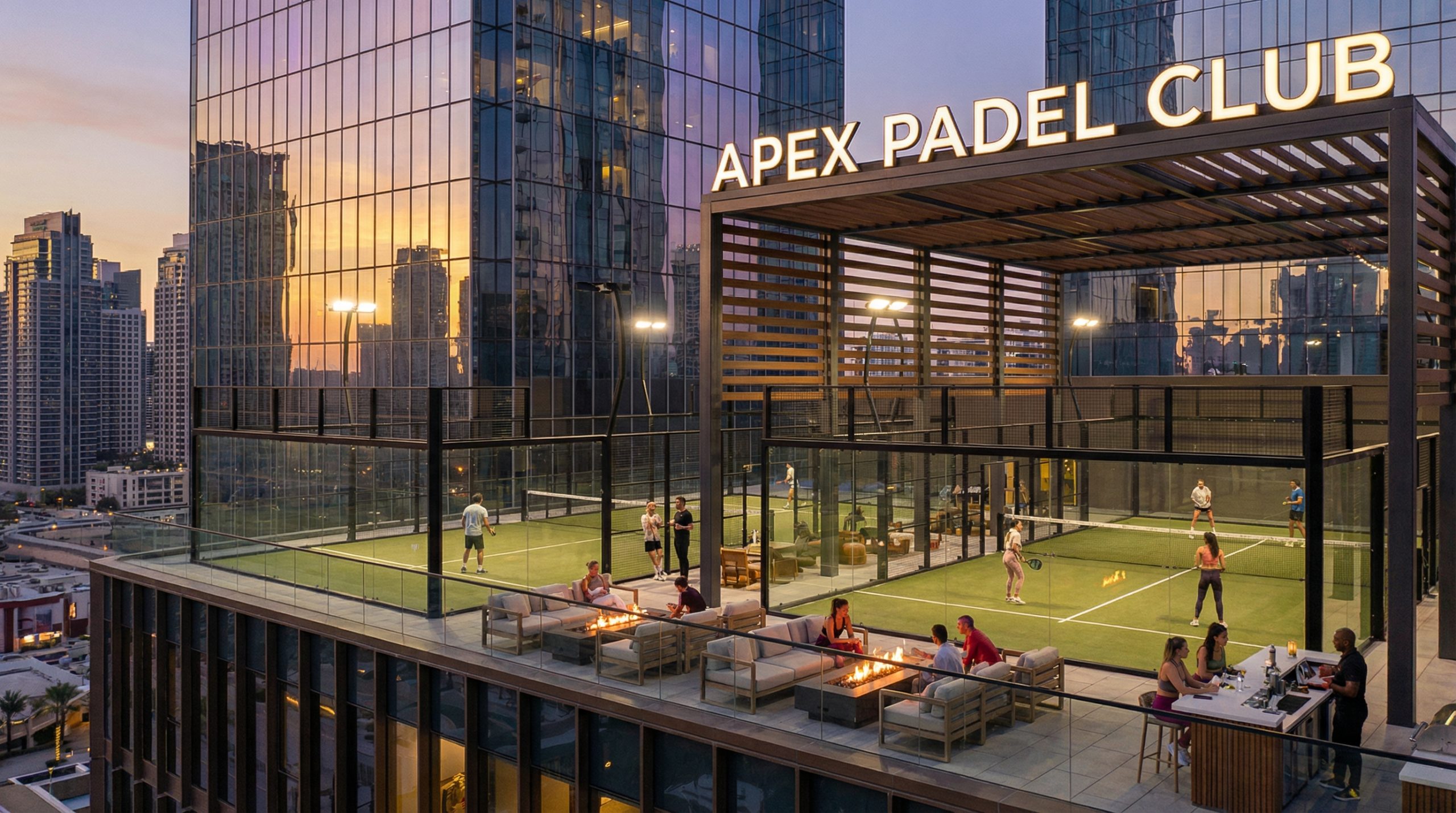
Investors and facility developers often find themselves at a crossroads in the rapidly evolving racquet sports market. You see the demand for new social sports rising, but the terminology can be a maze. Choosing the wrong infrastructure for your demographic leads to underutilized space and diminished returns on your capital investment.
Think about it.
To maximize your ROI, you must understand the technical and operational nuances between these two giants. This guide provides a comprehensive breakdown of the “is padel pickleball” debate and offers a professional blueprint for high-performance court construction.
Is Padel Pickleball just the same game with a different name?
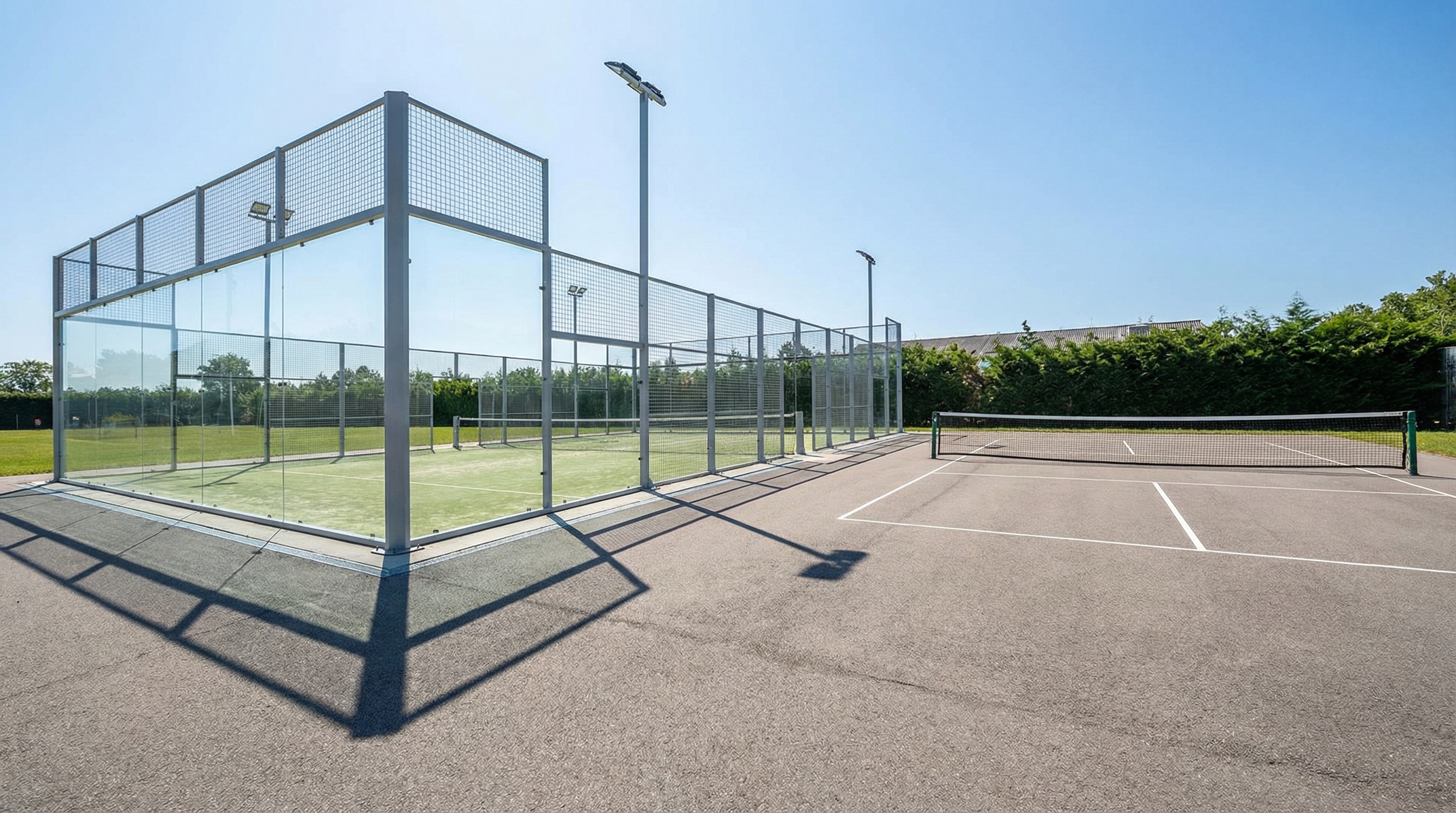
While they share a similar “P” in their names, padel and pickleball are fundamentally different disciplines. Padel is a high-speed, glass-enclosed sport that originated in Mexico, utilizing the walls as part of the field of play. Pickleball, by contrast, is a net-based game played on an open court, often described as a mix of tennis and ping-pong.
Is padel pickleball played on identical courts?
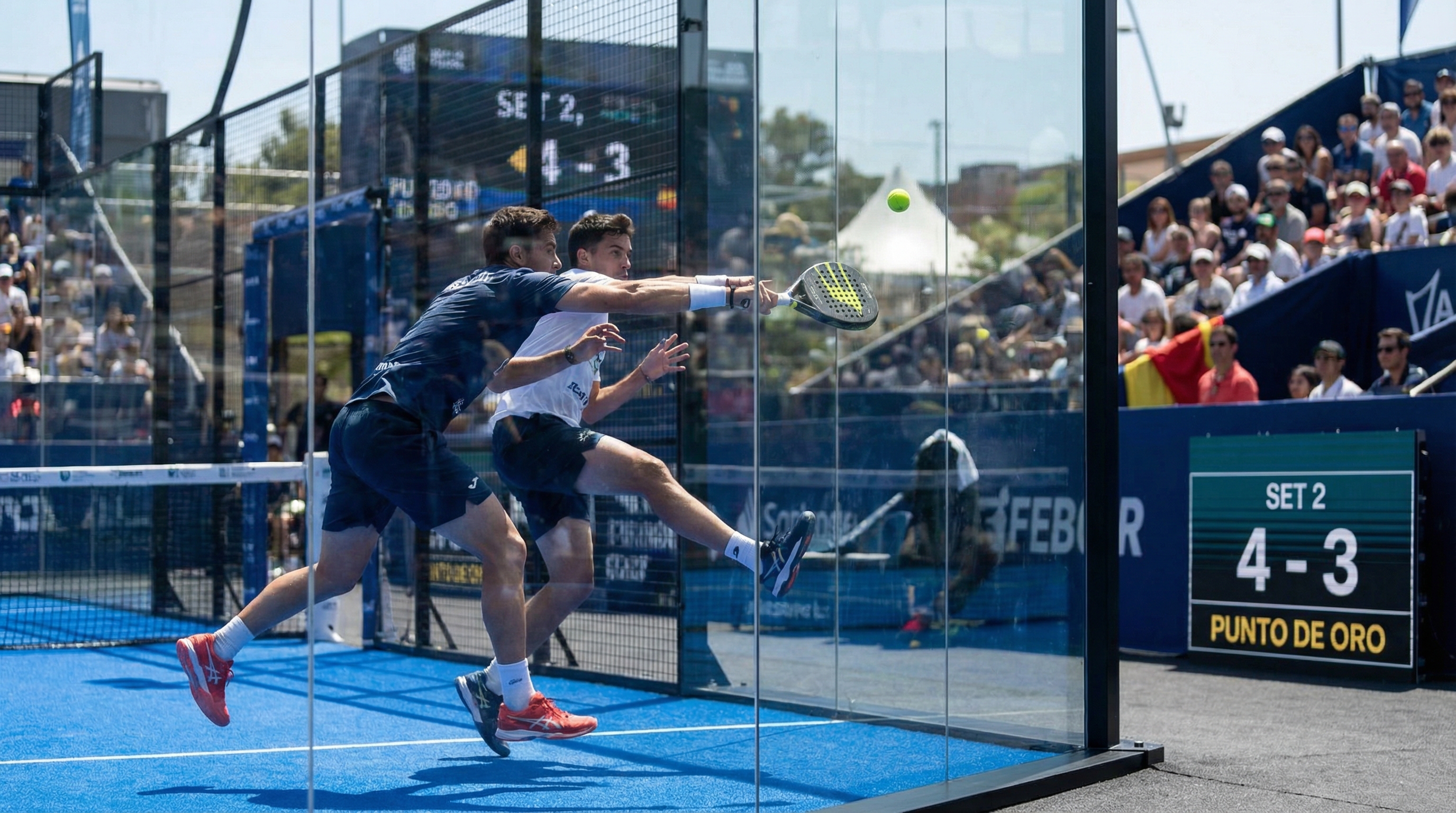
Absolutely not. Padel requires a 10m x 20m footprint enclosed by tempered glass and metallic mesh. Pickleball courts are smaller (6.1m x 13.4m) and lack any vertical play surfaces, focusing entirely on the ground-level bounce.
What are the main equipment differences?
Padel uses a solid, perforated carbon-fiber racket called a “pala” and pressurized balls. Pickleball utilizes a thinner, lightweight honeycomb paddle and a perforated plastic “wiffle” ball designed for lower aerodynamic speeds.
| Feature | Padel | Pickleball |
|---|---|---|
| Court Type | Enclosed (Glass/Mesh) | Open |
| Primary Skill | Rebound management | Volley/Kitchen play |
| Ball Type | Pressurized rubber | Perforated plastic |
Is Padel Pickleball court construction similar or totally unique?
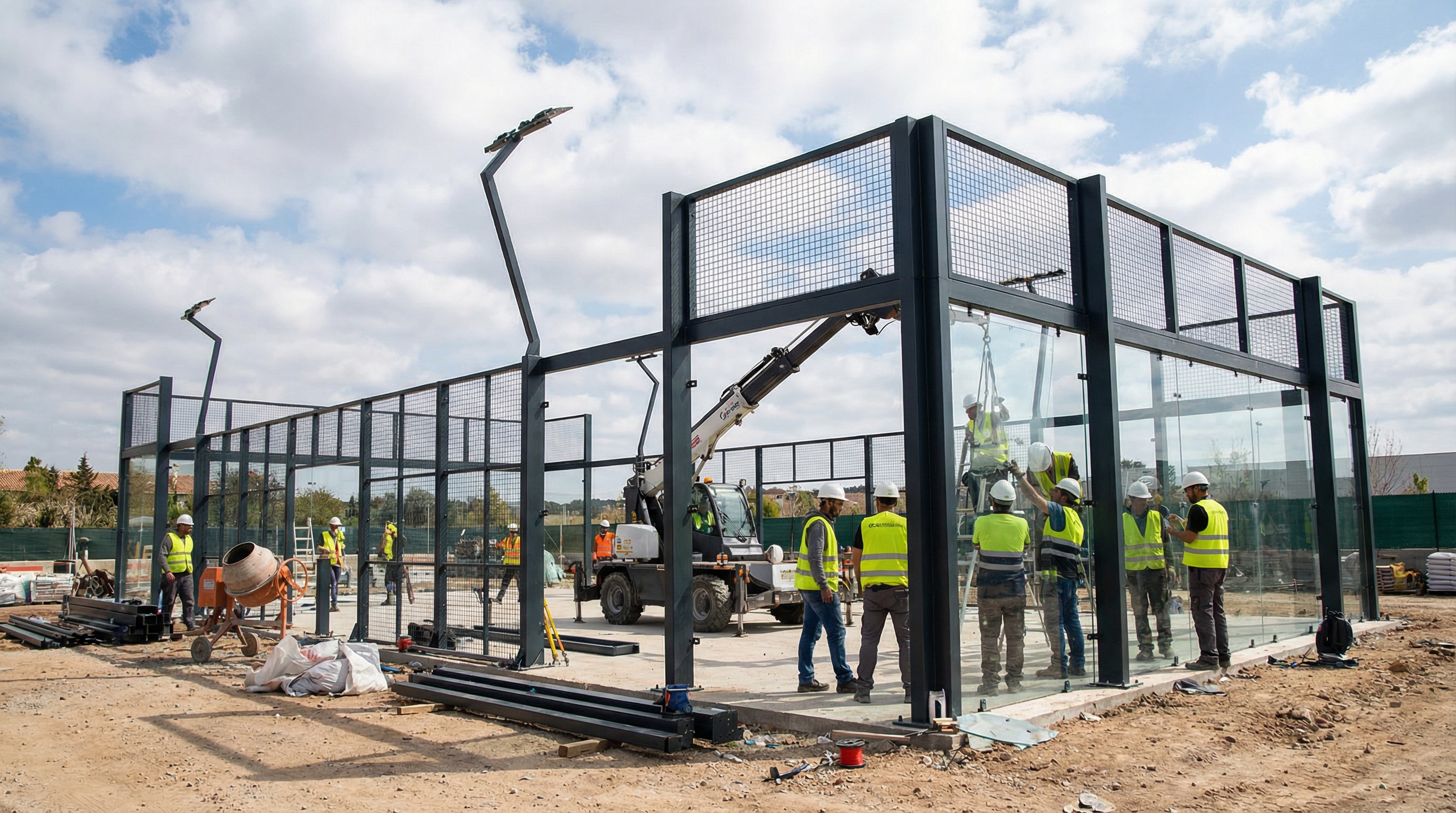
Construction requirements for a Standard Padel Court are significantly more rigorous than those for pickleball. Padel involves structural engineering to support 12mm tempered glass panels and a robust steel framework. Pickleball construction is more akin to traditional tennis surfacing, focusing primarily on concrete or asphalt sub-bases and acrylic coatings.
What materials are needed for a padel court build?
A professional padel build requires a galvanized steel structure, 10-12mm safety glass, high-density monofilament artificial turf, and specialized LED lighting systems. The foundation must be a reinforced concrete slab (minimum 15cm) to ensure the glass panels remain perfectly aligned over time.
How does a pickleball court build compare to padel?
Pickleball is far less hardware-intensive. It requires a level slab with an acrylic multi-layer sports surface, a permanent or portable net system, and standard fencing. Unlike padel, there is no need for heavy structural reinforcement or specialized glass handling equipment.
| Component | Padel Construction | Pickleball Construction |
|---|---|---|
| Sub-base | Reinforced Concrete | Asphalt or Concrete |
| Verticality | Structural Glass/Steel | Perimeter Fencing |
| Complexity | High (Engineering required) | Medium (Surfacing focus) |
Is Padel Pickleball easier to learn for beginners?
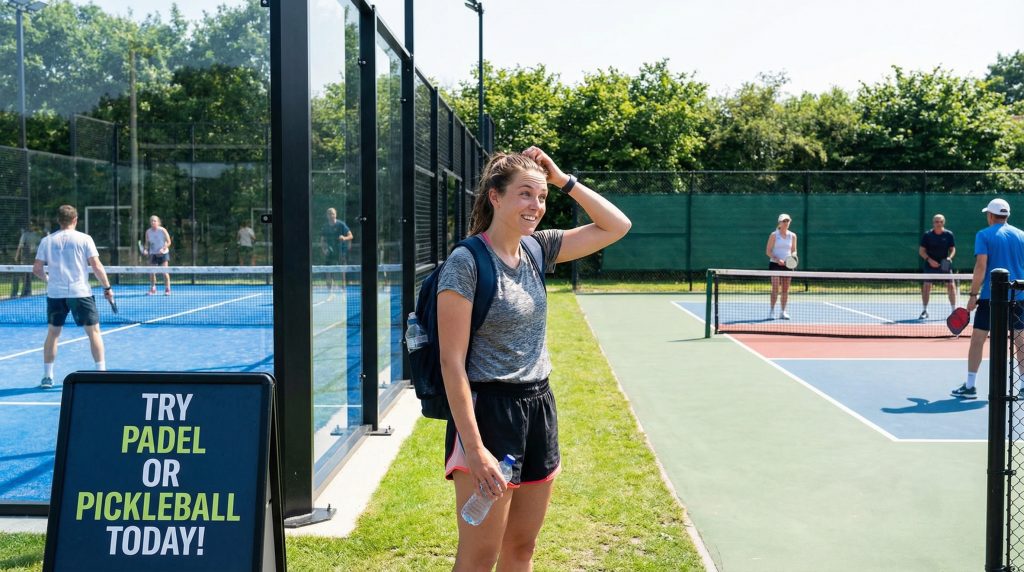
Both sports are celebrated for their low barrier to entry compared to tennis. However, the learning curves vary based on the player’s background. Here is the deal: pickleball is often seen as more intuitive for senior demographics, while padel appeals to those seeking a dynamic, three-dimensional challenge.
Which game has simpler rules for scoring?
Pickleball uses a unique “side-out” scoring system where only the serving team can score points, typically playing to 11. Padel mirrors traditional tennis scoring (15, 30, 40, Deuce), which is instantly recognizable to most racquet sport enthusiasts.
Does the wall in padel make it easier?
Initially, the wall can be intimidating. However, once a beginner understands that the wall is a “second chance,” it actually extends rallies and makes the game more forgiving than the “one-bounce-and-out” nature of pickleball.
| Aspect | Padel Learning | Pickleball Learning |
|---|---|---|
| Initial Rally | 15-20 minutes to start | 10 minutes to start |
| Scoring | Tennis-based | Side-out (unique) |
| Mobility | Moderate to High | Low to Moderate |
Is Padel Pickleball popularity growing faster globally?
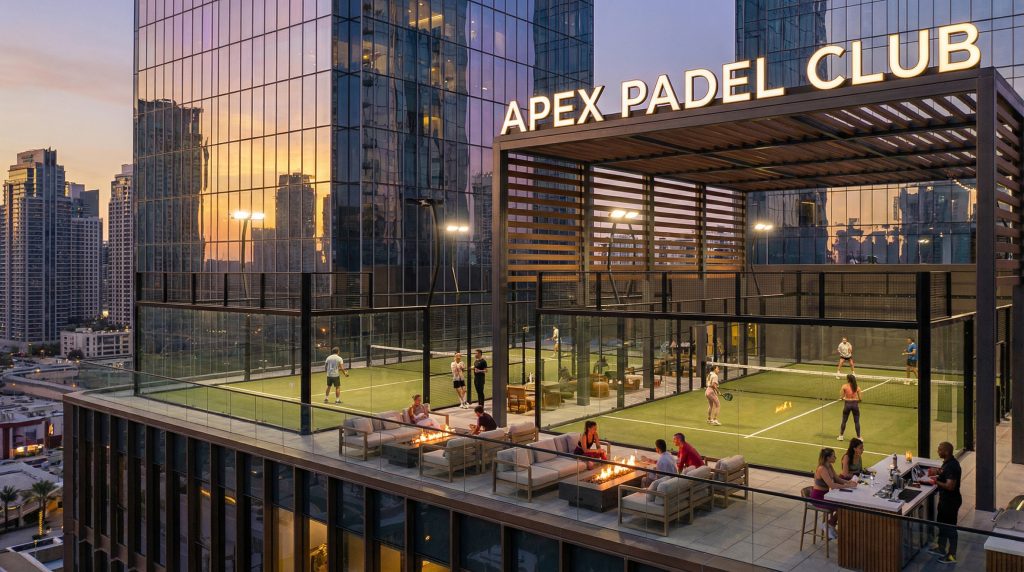
The growth metrics for both sports are staggering. According to our latest Blog insights, padel is the fastest-growing sport in Europe and the Middle East. Meanwhile, pickleball maintains a dominant growth trajectory in North America, though padel is now making significant inroads into the US private club market.
Where is padel currently most popular?
Spain remains the global epicenter with over 20,000 courts, but the “padel fever” has moved rapidly into Sweden, Italy, and the UAE. In these regions, padel has become the primary social sport for corporate professionals.
How is pickleball expanding across the US?
Pickleball has utilized existing infrastructure by repurposing underused tennis courts. This flexibility allowed for an explosion in player numbers across public parks and retirement communities throughout the United States.
Is padel pickleball a good investment for clubs?
Yes. Both offer high player density. You can fit three padel courts or four pickleball courts in the space of one tennis court, effectively tripling or quadrupling your hourly rental revenue.
| Region | Padel Growth | Pickleball Growth |
|---|---|---|
| North America | Emerging (High-end) | Dominant (Mass market) |
| Europe | Dominant | Emerging |
| Middle East | Rapid Expansion | Niche |
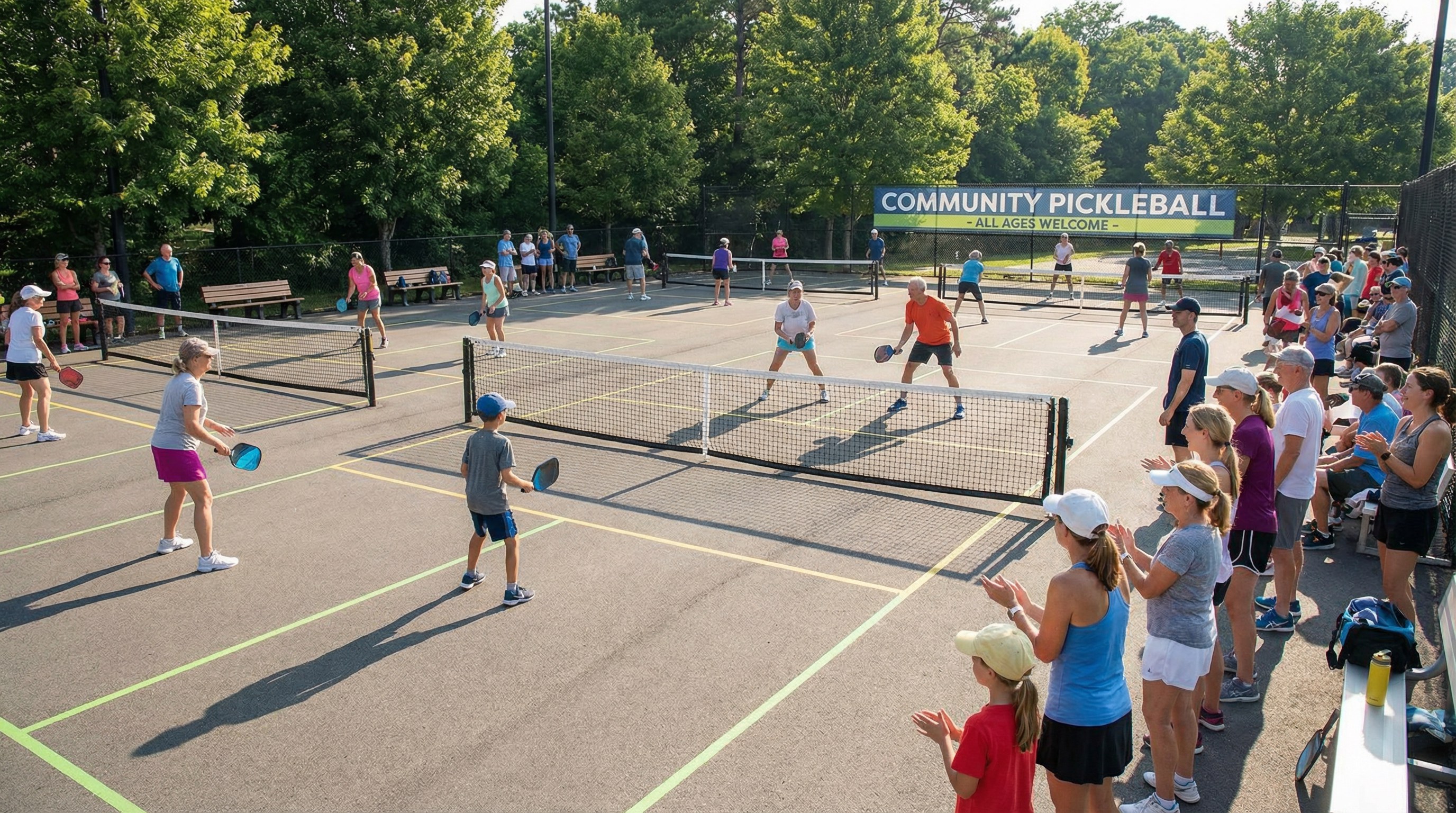
The best part? Both sports are inherently social because they are almost exclusively played in doubles. The proximity of players on the smaller courts allows for constant communication and banter, which is the primary driver of the “club culture” surrounding these sports.
Why is padel always played in doubles?
The 10x20m court size and the speed of the ball rebounds make singles play extremely taxing and less strategic. The doubles format allows for the “net and wall” tactical interplay that defines the sport.
How does the small court affect pickleball strategy?
The “Non-Volley Zone” (the Kitchen) dictates the social pace. Players stand just feet apart at the net, engaging in “dink” rallies. This close physical proximity makes it one of the most conversational sports in existence.
| Social Factor | Padel | Pickleball |
|---|---|---|
| Player Proximity | Close (10m width) | Very Close (6m width) |
| Communication | Tactical/High energy | Constant/Conversational |
| Format | Strictly Doubles | Mostly Doubles |
Is Padel Pickleball court size the only major difference?
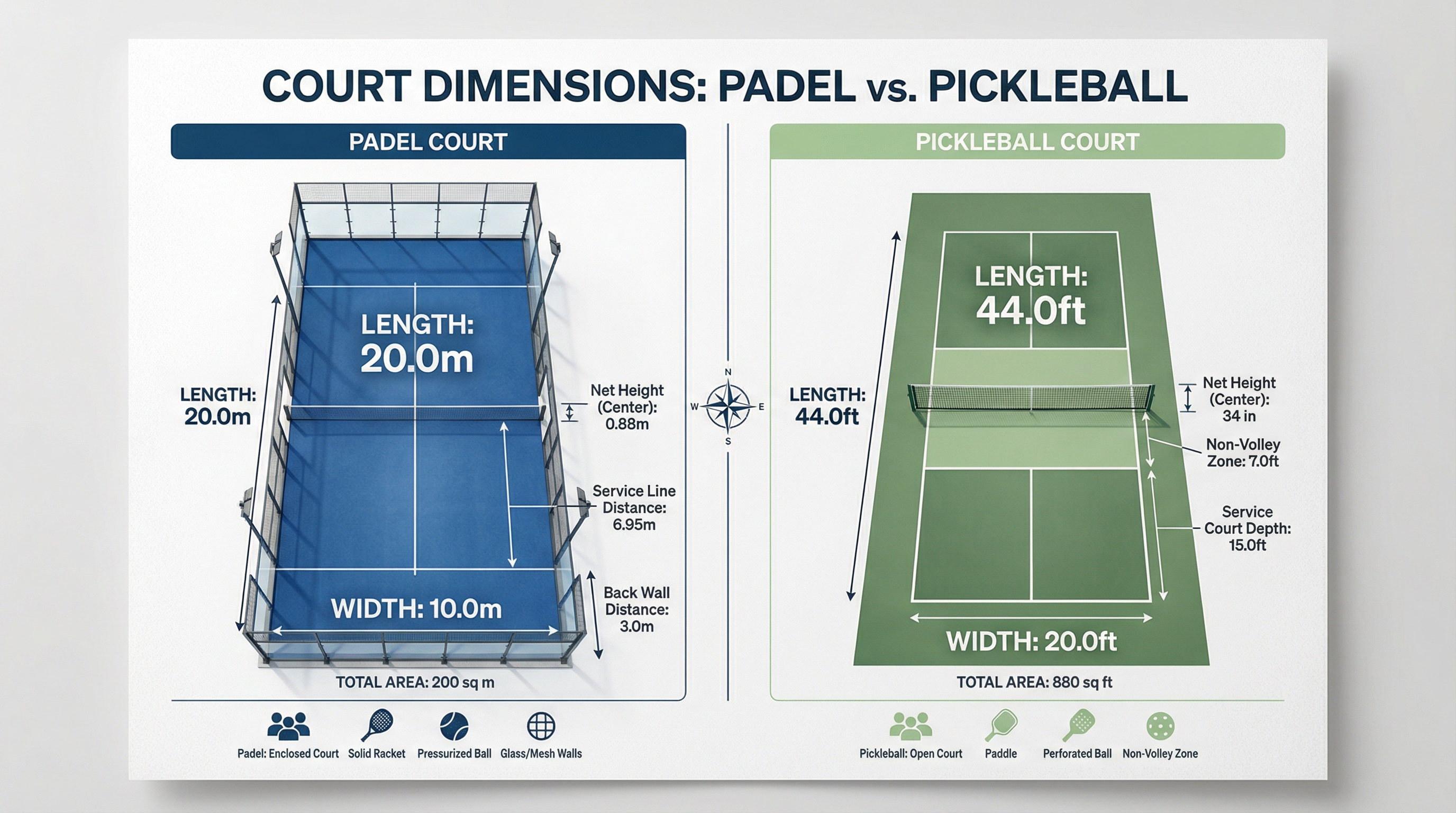
While dimensions are the most visible factor, the structural engineering of the Padel Structure creates a completely different vertical game. Padel requires a minimum of 6 meters of clear height (8 meters preferred), whereas pickleball can be played in standard indoor gymnasiums with lower ceilings.
What are the exact dimensions of a padel court?
A standard padel court is 20 meters long and 10 meters wide. It is divided by a net in the center, and the service boxes are located on either side of the net. The back walls must be 3 meters high, with an additional 1 meter of mesh on top.
How big is a standard pickleball court?
A pickleball court measures 44 feet (13.4m) long and 20 feet (6.1m) wide. It is significantly shorter than a padel court, allowing for a much higher density of courts in smaller urban spaces or community centers.
| Dimension | Padel Court | Pickleball Court |
|---|---|---|
| Length | 20 Meters | 13.4 Meters |
| Width | 10 Meters | 6.1 Meters |
| Height Req. | 6-8 Meters | Standard |
Is Padel Pickleball the same as paddle tennis?
Confusion often arises because “Paddle Tennis” is an older American sport (now often called Pop Tennis). Padel is the international version with glass walls. Pickleball is entirely separate from this lineage, having been invented in 1965 in Washington State as a family backyard game.
What is the difference in history between the two?
Padel was birthed in 1969 when Enrique Corcuera added walls to his fronton court in Acapulco to keep the ball from escaping into the neighbors’ yard. Pickleball was born out of necessity when a family couldn’t find a shuttlecock for badminton and improvised with a wiffle ball and ping-pong paddles.
The only real commonality is the underhand serve. In both padel and pickleball, the serve must be hit at or below waist level. Beyond that, the physics of the bounce and the use of the enclosure (in padel) make them distinct athletic experiences.
| History | Padel | Pickleball |
|---|---|---|
| Origin | Mexico (1969) | USA (1965) |
| Inventor | Enrique Corcuera | Joel Pritchard et al. |
| Evolution | Elite clubs to mass market | Backyard to professional |
Is Padel Pickleball cost of construction worth the ROI?
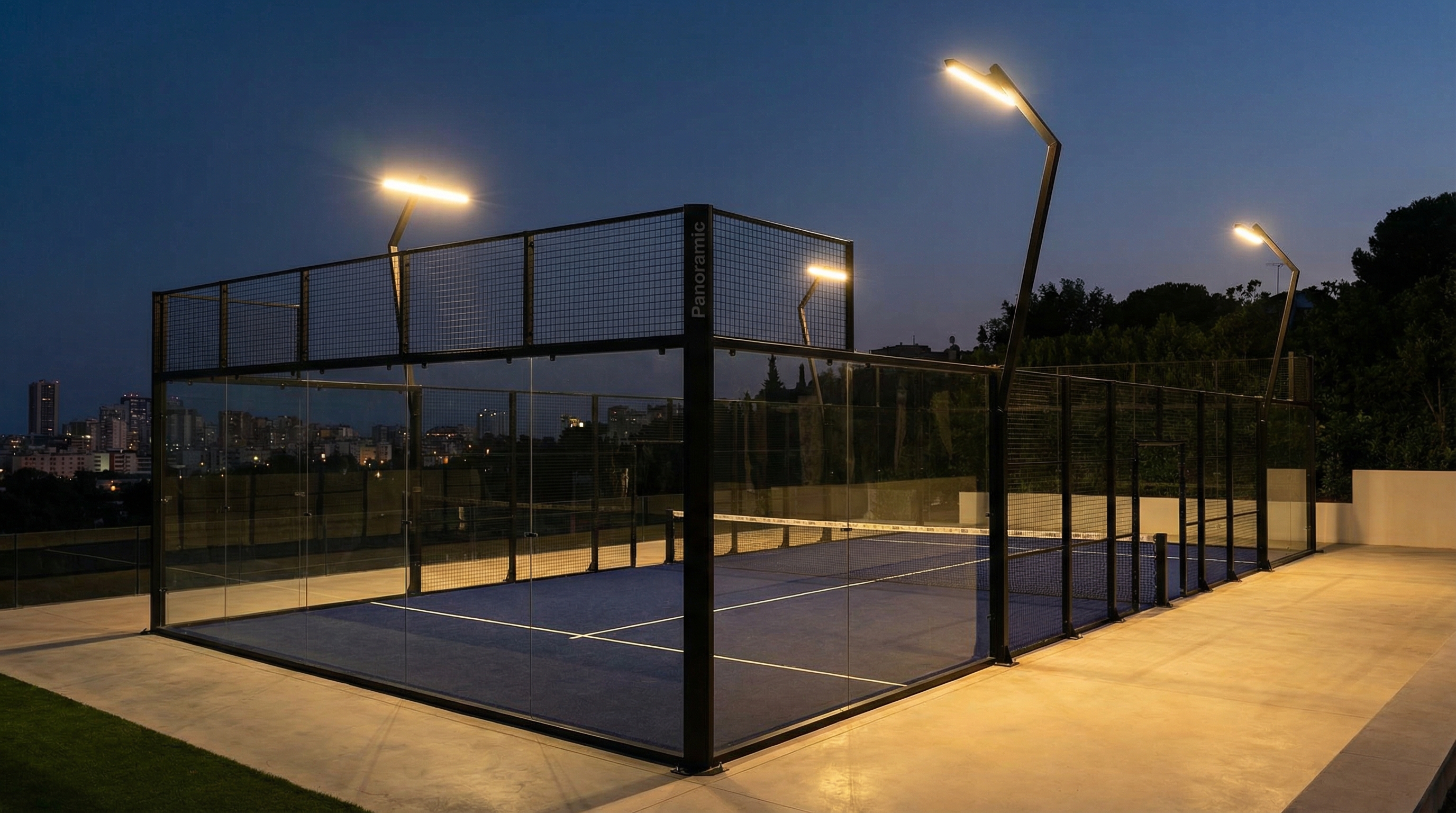
Why does this matter? Because the capital expenditure for padel is roughly 3x to 5x higher than pickleball. However, padel courts typically command a higher hourly rental rate and attract a demographic with higher discretionary spending on apparel, coaching, and food and beverage.
What is the average cost to build a padel court?
A professional-grade padel court installation typically ranges from $25,000 to $50,000 depending on the glass quality, turf type, and whether it is an indoor or outdoor setup. This doesn’t include the cost of the concrete foundation or lighting.
How much less does a pickleball court cost to install?
A new pickleball court can be built for $15,000 to $25,000. If you are simply resurfacing an existing tennis court, the cost can drop to as little as $5,000 per court. This makes pickleball the preferred choice for municipalities with limited budgets.
| Investment | Padel | Pickleball |
|---|---|---|
| CapEx | $30k – $60k+ | $15k – $25k |
| Hourly Rate | High ($40-$80) | Moderate ($20-$40) |
| Maintenance | Regular glass/sand care | Surface recoating (5 yrs) |
Is Padel Pickleball played with the same ball and paddle?
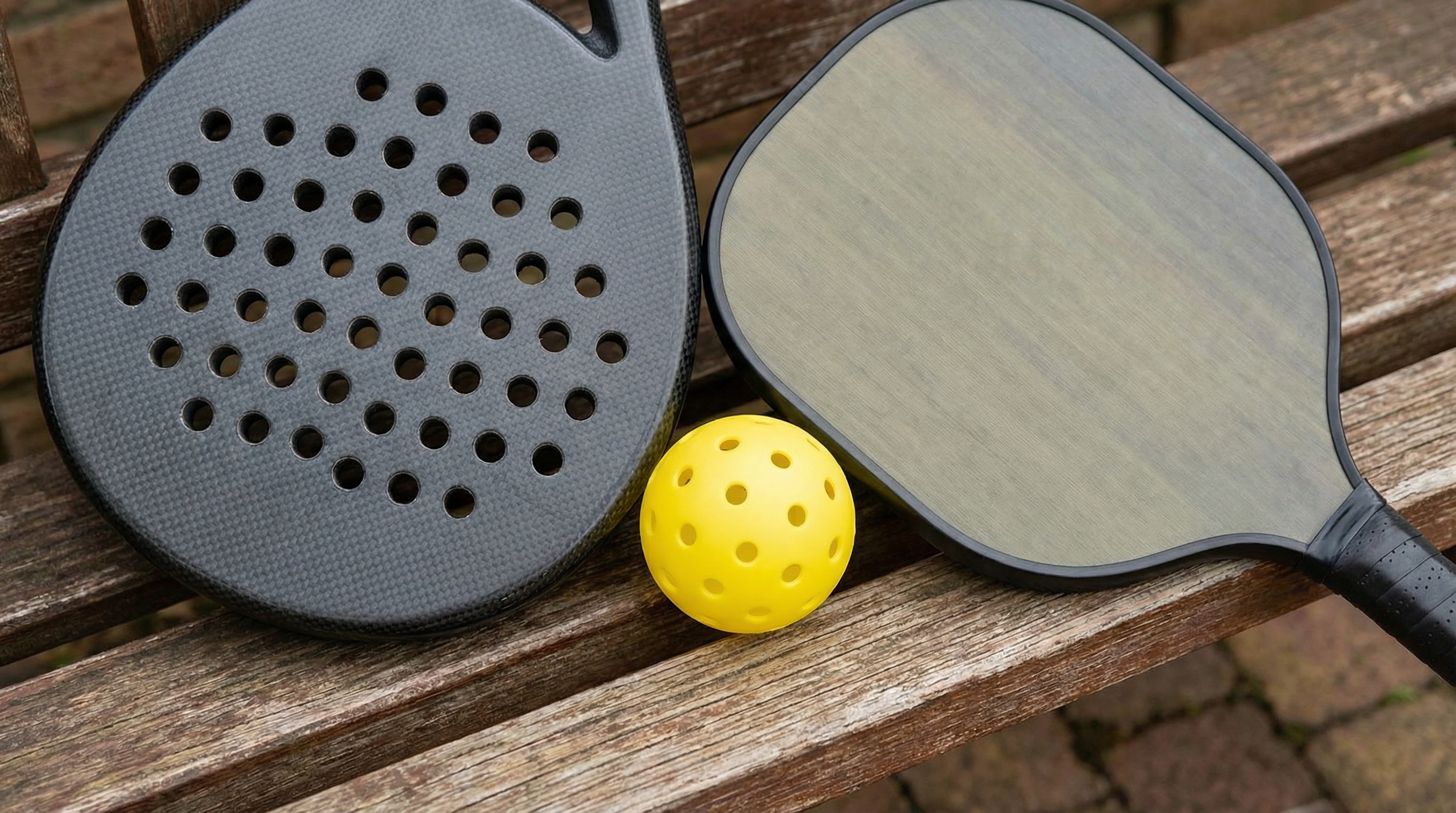
The technical specs of the gear are worlds apart. It gets better. Modern padel rackets are marvels of engineering, using EVA foam cores and carbon fiber faces to absorb vibration and generate massive power for smashes. Pickleball paddles focus on “touch” and “dink” control using polymer or Nomex cores.
What is a ‘pala’ and how is it different?
The padel “pala” is thick (usually 38mm) and heavy. It has no strings and is covered in small holes to reduce air resistance. It is designed to hit a heavy, pressurized ball that can fly off the glass.
Why does the pickleball have holes?
The pickleball is a hollow plastic sphere with 26 to 40 drilled holes. These holes create significant drag, preventing the ball from traveling too fast and keeping the game within the confines of the smaller, wall-less court.
| Gear | Padel | Pickleball |
|---|---|---|
| Paddle/Racket | Thick Carbon/Foam | Thin Honeycomb/Composite |
| Weight | 350g – 380g | 200g – 250g |
| Surface | Perforated Solid | Solid Flat |
Is Padel Pickleball a good amenity for real estate projects?
In the luxury residential and commercial sector, padel is increasingly seen as the “gold standard” amenity. It signals a modern, international lifestyle. Pickleball, however, offers unmatched flexibility for multi-use spaces and community engagement in high-density developments.
How can padel courts attract tenants?
For premium real estate, a padel court is a differentiator. It provides a lifestyle “hub” that encourages community stickiness. The aesthetic of glass and steel also fits perfectly with modern architectural designs, often increasing property values significantly.
Is pickleball court installation more flexible?
Yes. Because pickleball doesn’t require permanent glass structures, the courts can be placed on rooftops, converted parking lots, or integrated into multi-sport areas. This makes it a tactical choice for developers looking for high-impact amenities with lower structural constraints.
| Development | Padel Integration | Pickleball Integration |
|---|---|---|
| Real Estate Type | Luxury/Premium | Mixed-use/Residential |
| Space Req. | Specific/Fixed | Flexible/Multi-use |
| Aesthetic | High-tech/Modern | Versatile/Functional |
Navigating the choice between padel and pickleball depends entirely on your business goals, available space, and target demographic. Padel offers a high-premium, high-ROI model with a structural “wow factor,” while pickleball provides rapid, cost-effective scalability for community-focused projects.
If you are ready to transform your facility with professional-grade courts, contact us today to begin your consultation.