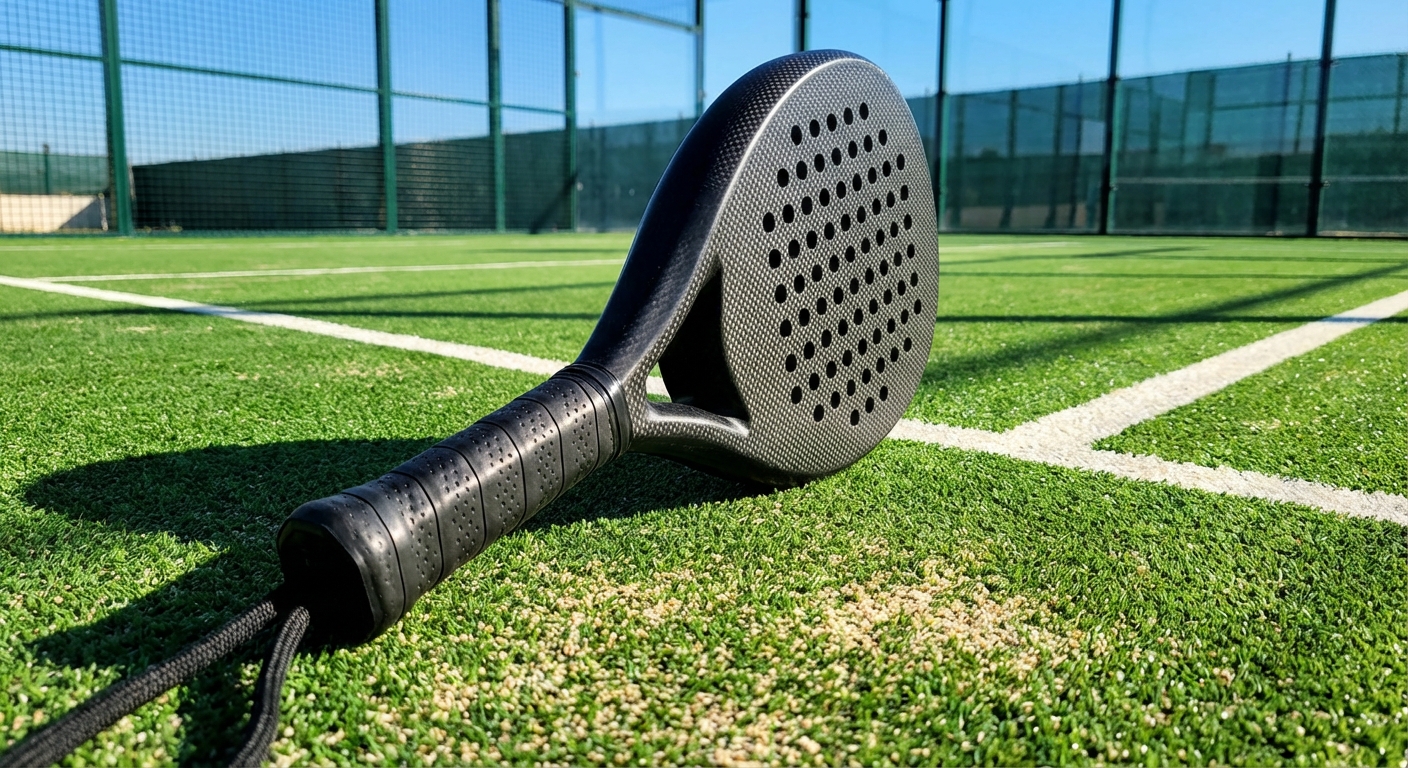
Why is it vital to choose the best padel rackets for beginners?
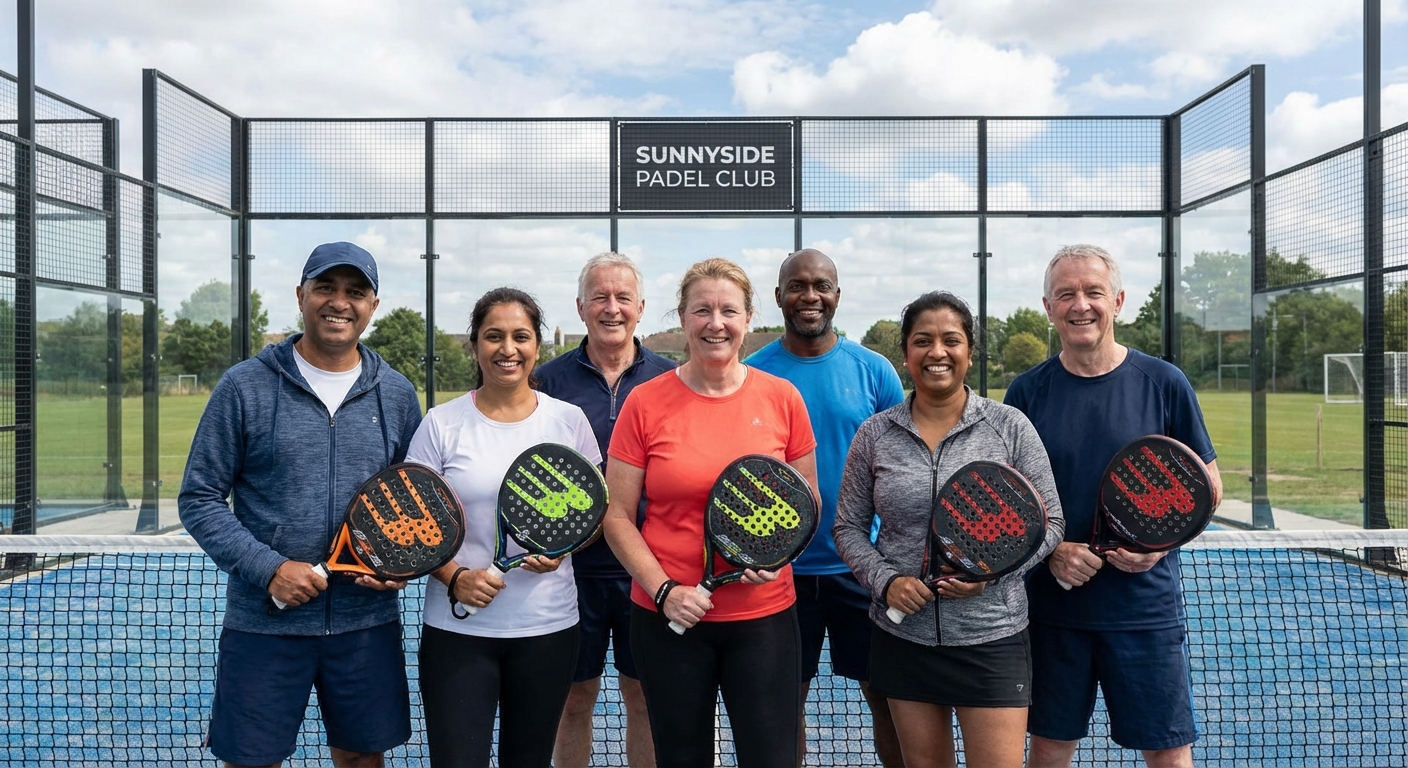
Choosing the best padel rackets for beginners is essential because it directly impacts your ability to return balls consistently while protecting your joints from repetitive impact. If you select a racket designed for pros, you will likely struggle with its weight and narrow sweet spot. This leads to poor technique and a lack of enjoyment during your first few matches on standard padel courts.
How the right gear supports early development?
Early skill acquisition depends heavily on the feedback you receive from your equipment during every stroke.
- Lighter frames allow you to focus on swing mechanics without fighting the racket’s inertia.
- Forgiving surfaces compensate for slightly off-center hits, keeping the rally alive longer.
- Manageable balance helps you transition between defensive lobs and net volleys.
In fact, the right tool acts as a silent coach.
“The best equipment is the one that disappears in your hand, allowing your focus to remain entirely on the ball.”
Key Takeaway: Proper beginner gear accelerates the learning curve by providing higher error tolerance and better maneuverability.
Avoiding injury and strain with appropriate equipment?
New players often grip the racket too tightly or use improper form, which can lead to “padel elbow” if the racket is too stiff.
- Flexible materials absorb the shock of the ball, preventing vibrations from traveling up your arm.
- Lower weight reduces the torque on your wrist during quick reactionary movements.
- Ergonomic designs ensure you don’t over-exert your muscles while following through.
Think of it this way: your body needs time to adapt to the sport’s specific demands.
| Feature | Beginner Racket Impact | Long-term Benefit |
|---|---|---|
| Soft Foam | High Vibration Absorption | Reduced Risk of Tendonitis |
| Low Weight | Easier Swing Control | Less Shoulder Fatigue |
| Round Shape | Predictable Bounce | Improved Muscle Memory |
The data confirms that flexible, lightweight rackets significantly lower the physical barriers to entry for new enthusiasts.
Key Takeaway: Prioritizing comfort and shock absorption helps you play longer sessions without the risk of common overuse injuries.
What shape defines the best padel rackets for beginners?
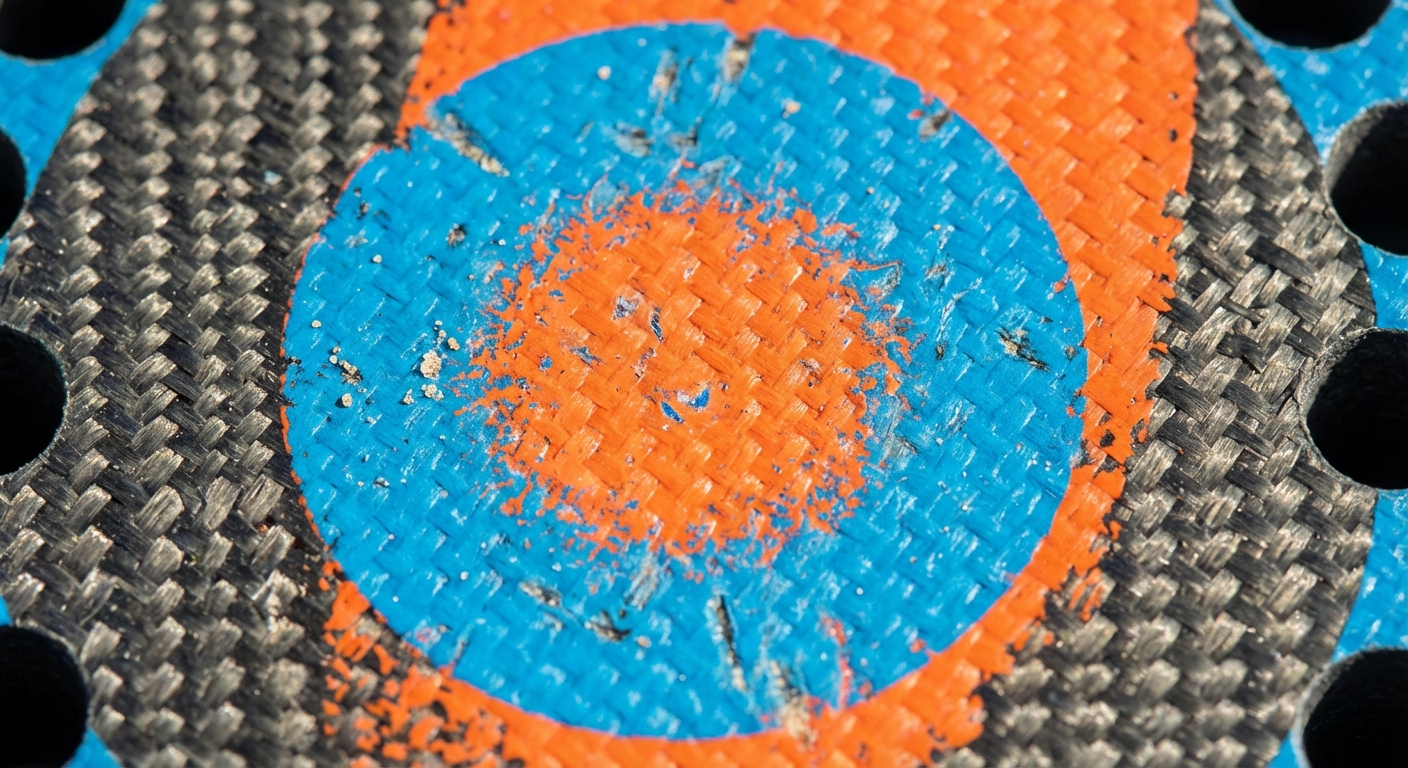
The round shape is the universal standard for the best padel rackets for beginners because it places the center of gravity closer to the handle. This geometry provides the most control, which is the primary requirement for anyone still learning the basic shots. Unlike diamond or teardrop shapes, the round frame is incredibly stable regardless of where you catch the ball.
Benefits of a round-shaped frame?
The circular design inherently prioritizes a balanced feel that makes the racket feel lighter than it actually is.
- The weight distribution is concentrated toward the hand, making it easier to “find” the ball.
- It offers the highest level of defensive reliability when you are pinned at the back of the court.
- The symmetrical aerodynamics allow for a smooth, consistent swing path every time.
As you might imagine, this shape is the safest bet for your first purchase.
“A round racket is the foundation upon which every great padel player builds their defensive wall.”
Key Takeaway: Round frames are the gold standard for beginners because they maximize control and maneuverability over raw power.
Why a larger sweet spot matters for new players?
The sweet spot is the area on the racket face that provides the most effective and comfortable hit.
- In round rackets, this area is located directly in the center and covers a wider radius.
- It minimizes the “stinging” sensation felt when a ball is hit near the edge of the frame.
- Large sweet spots ensure the ball goes where you intended, even if your timing is slightly off.
But wait, there is more to it than just comfort.
| Racket Shape | Sweet Spot Size | Main Attribute |
|---|---|---|
| Round | Large / Centered | Max Control |
| Teardrop | Medium / Slightly High | Balance |
| Diamond | Small / Very High | Power |
Using a racket with a generous sweet spot prevents the frustration of “dead” hits that fall short of the net.
Key Takeaway: A centered and large sweet spot provides the “forgiveness” needed to keep rallies going while you refine your contact point.
How heavy are the best padel rackets for beginners?
The best padel rackets for beginners typically fall within the 345 to 365-gram range for women and 360 to 375 grams for men. Staying within these ranges ensures that the racket provides enough mass to propel the ball without straining your arm. If a racket is too light, it may vibrate excessively; if too heavy, it will slow down your reactions at the net.
Finding the ideal weight range for stability?
Stability refers to how much the racket twists or moves in your hand when it makes contact with a fast-moving ball.
- Slightly more weight helps the racket “plow through” the ball for more depth on your lobs.
- It provides a solid feel that builds confidence during high-speed exchanges.
- Correct weight helps maintain a consistent rhythm throughout your entire swing.
Believe it or not, a few grams can make a world of difference.
“Precision in weight selection is the bridge between a clunky swing and a fluid movement.”
Key Takeaway: Selecting a racket within the recommended weight brackets provides the necessary stability to handle incoming pace with ease.
Why lightweight frames improve reaction speed?
In a fast-paced game like padel, being able to move your racket quickly is often more important than hitting hard.
- Lighter rackets allow for faster “ready positions” when you are standing close to the net.
- They make it much easier to dig out low balls that bounce off the back glass.
- They put significantly less stress on the small muscles of the forearm and wrist.
The bottom line is simple: speed beats power for starters.
| Weight Category | Gram Range | Target Player |
|---|---|---|
| Ultra-Light | < 350g | Juniors / Very casual |
| Light/Standard | 355g – 365g | New Starters |
| Heavy | > 375g | Advanced / Power hitters |
Opting for a lighter frame ensures you aren’t fighting your own equipment when the game speeds up.
Key Takeaway: Lightweight frames are superior for beginners because they facilitate rapid reactions and reduce physical fatigue during long matches.
Which balance suits the best padel rackets for beginners?
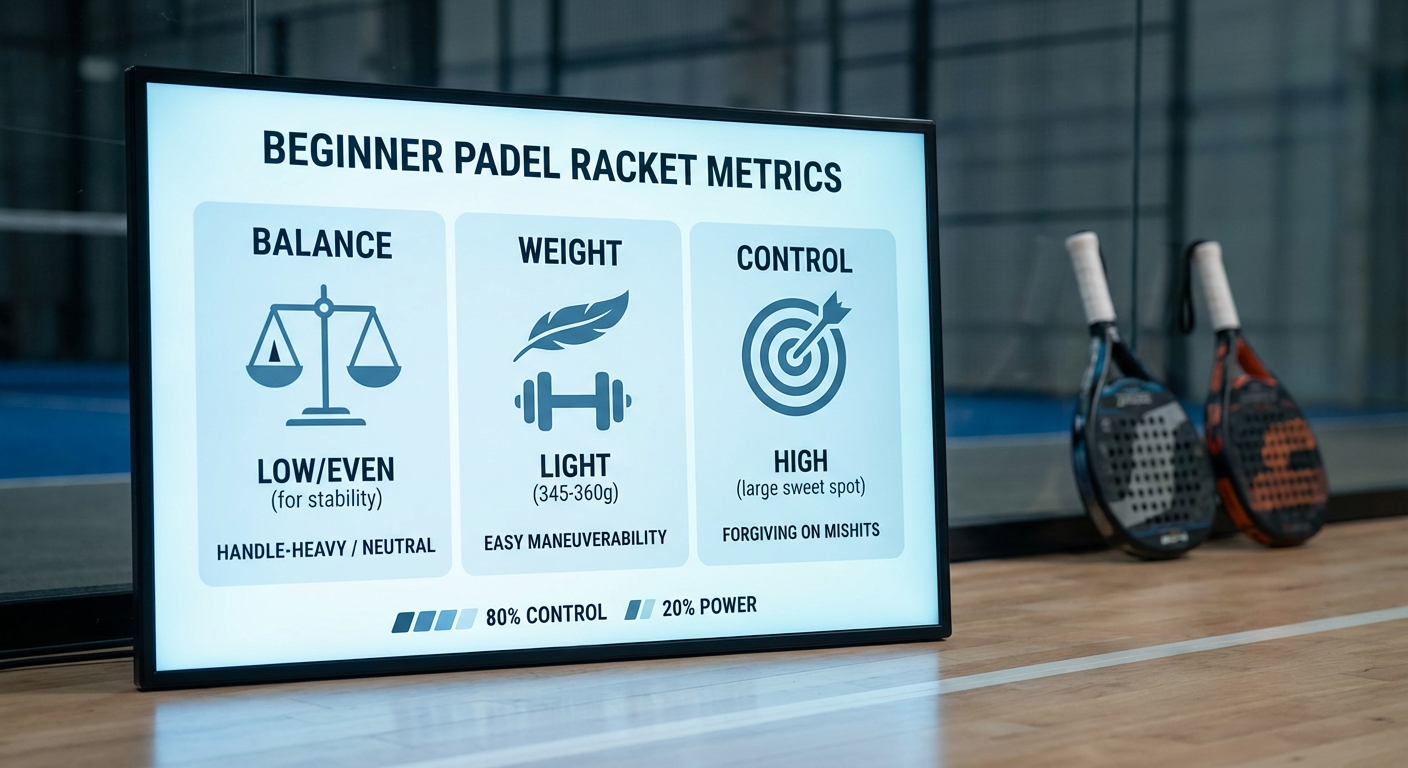
A low or “head-light” balance is the most suitable characteristic for the best padel rackets for beginners because it makes the racket feel nimble. Balance describes where the weight is concentrated along the length of the racket, from the handle to the tip. When the weight is closer to your hand, you have much greater control over the racket head’s movement.
Comparing head light and even balance?
Choosing between these two depends on your natural strength and how much “help” you want from the racket.
- Head-light balance concentrates weight in the handle, making the racket feel exceptionally fast.
- Even balance spreads the weight across the middle, offering a slight boost in power for players who struggle to hit deep.
- Both options are significantly safer for beginners than head-heavy designs used by pros.
The choice often comes down to personal preference.
“Balance is the secret ingredient that determines if a racket feels like an extension of your arm or a heavy torch.”
Key Takeaway: Most beginners should start with a head-light or even balance to prioritize defensive control and wrist health.
Why head heavy frames are harder to control?
Head-heavy rackets are designed for “smashing” the ball out of the court, but they require timing that most beginners haven’t developed.
- The extra weight at the tip creates a “lever” effect that can strain the wrist if not handled correctly.
- They are much slower to move when you need to change your grip or racket face angle.
- The sweet spot is often smaller and located higher up, leading to more frequent mishits.
It turns out that more power isn’t always a good thing.
| Balance Type | Pivot Point | Beginner Rating |
|---|---|---|
| Low (Head Light) | Near Handle | Excellent |
| Medium (Even) | Middle | Good |
| High (Head Heavy) | Near Tip | Poor |
For those playing on Panoramic Padel Courts, mastering control first is the key to enjoying the view.
Key Takeaway: Avoid head-heavy rackets early on, as they sacrifice the maneuverability and control required to learn the game properly.
Why use soft cores in the best padel rackets for beginners?
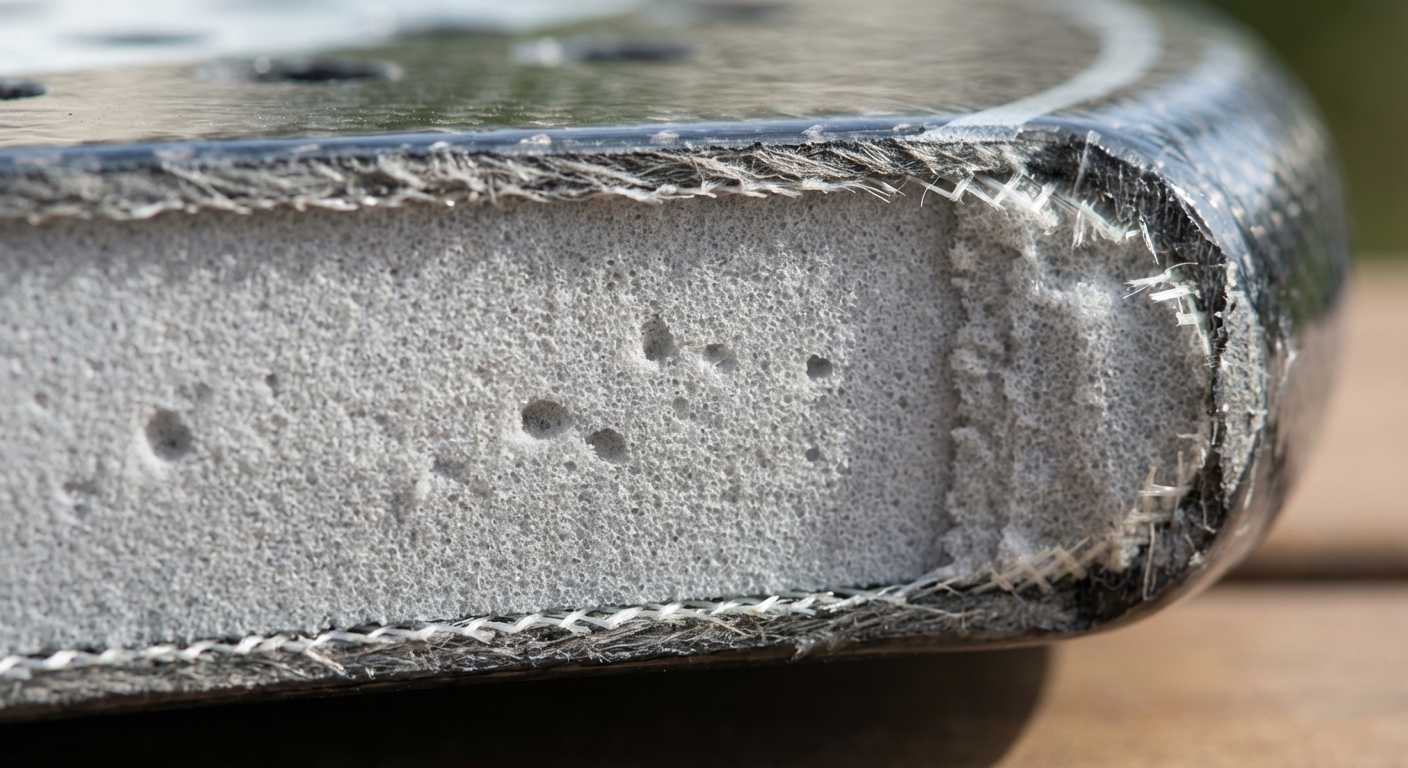
Soft cores, usually made of FOAM or Soft EVA rubber, are a staple in the best padel rackets for beginners because they provide a “trampoline effect.” This means the racket does more of the work to push the ball back, which is helpful when you are still learning to generate your own power. Additionally, these materials are much more comfortable on the arm because they dampen the impact of the ball.
The role of soft foam in vibration control?
Vibrations are the enemy of precision and the leading cause of joint pain in racket sports.
- Soft materials act like shock absorbers, catching the ball and releasing it more gently.
- They reduce the high-frequency “buzz” that can travel through the frame into your elbow.
- This cushioning effect creates a softer “feel” that helps you gauge the depth of your shots.
As you can see, the core is the heart of the racket’s performance.
“The core material is the filter through which every sensation of the game passes before it reaching your hand.”
Key Takeaway: Soft foam cores provide the best combination of comfort and effortless power for those starting out.
Managing arm fatigue with flexible cores?
When you play on Roofed Padel Courts during long sessions, the repetitive motion can tire out your muscles quickly.
- Flexible cores require less physical effort to move the ball across the net.
- They are more forgiving on “cold” days when materials tend to stiffen up.
- Using a flexible core allows you to focus on your footwork rather than just trying to hit the ball hard enough.
The truth is, efficiency beats effort every time.
| Core Type | Flex Level | Player Benefit |
|---|---|---|
| FOAM / Soft EVA | High | Arm Comfort & Easy Depth |
| Medium EVA | Moderate | Balanced Performance |
| Hard EVA | Low | Precision & Max Power |
A flexible core ensures that your last point of the day feels as comfortable as the first.
Key Takeaway: Flexible cores minimize arm fatigue and provide a forgiving response that helps beginners maintain consistent play.
Can surface material affect the best padel rackets for beginners?
Yes, the surface material is crucial, and the best padel rackets for beginners almost always feature fiberglass hitting faces. Unlike carbon fiber, which is stiff and requires a fast swing to be effective, fiberglass is elastic and helps the ball bounce off the racket with more speed. This elasticity makes the racket much easier to use when you are defending or blocking shots.
Why fibreglass is the top choice for starters?
Fiberglass is the preferred choice because it balances durability with a soft, reactive touch.
- It is significantly cheaper to manufacture, making entry-level rackets more affordable.
- The material is more flexible, which expands the effective sweet spot even further.
- It provides a “gentle” exit for the ball, giving you more time to aim your shot.
Make no mistake, this isn’t just a budget choice.
“Fiberglass is the unsung hero of the beginner’s game, offering a level of touch that carbon simply cannot match.”
Key Takeaway: Fiberglass surfaces provide the elasticity and “forgiveness” that new players need to keep the ball in play.
Understanding the flexibility of hitting surfaces?
Flexibility in the face of the racket determines how long the ball stays on the “strings” (the surface) during contact.
- Longer “dwell time” gives the player a better sense of control and direction.
- A flexible surface compensates for slow swing speeds, helping the ball clear the net.
- It reduces the harshness of the impact, making the game feel smoother and more “fluid.”
To put it plainly, it makes the game easier.
| Surface Material | Stiffness | Ideal For |
|---|---|---|
| Fiberglass | Low | Beginners / Ease of Use |
| Alutex | Medium | Intermediate / Extra Pop |
| Carbon Fiber | High | Advanced / Maximum Power |
Choosing the right surface ensures your equipment aligns with your current physical capabilities.
Key Takeaway: A flexible fiberglass surface maximizes dwell time, which translates directly into better ball control and placement.
How to handle grips on the best padel rackets for beginners?
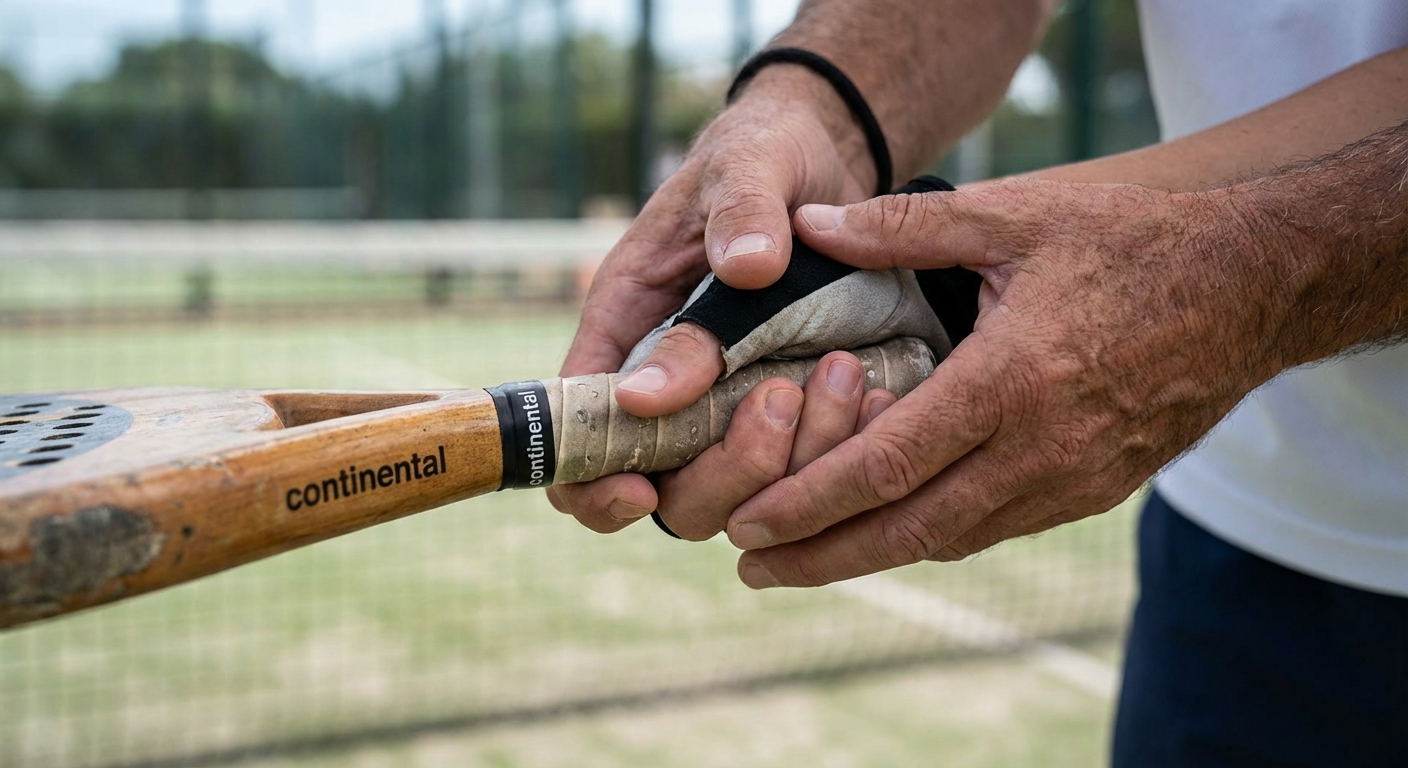
Handling the grip correctly on the best padel rackets for beginners is often overlooked, but it is the only point of contact between you and your equipment. A grip that is too small or too large can cause you to hold the racket too tightly, leading to muscle tension. The standard goal is to have enough space to fit one finger between your fingertips and your palm when holding the racket.
Finding the perfect grip size for your hand?
The “right” size is specific to your anatomy and can drastically improve your swing stability.
- Most rackets come with a standard grip that is designed to be “built up” with overgrips.
- A correct fit allows the racket to rotate slightly in your hand, which is necessary for different shots.
- It prevents “racket twist” when you hit the ball off-center.
You might be surprised at how much this matters.
“A perfect grip is like a firm handshake—it should be secure enough to trust, but soft enough to let go.”
Key Takeaway: Ensuring your grip size is correct prevents over-gripping and allows for a more relaxed and fluid swing.
Using overgrips to customize your handle?
Overgrips are thin layers of material you wrap over the factory grip to adjust the thickness and “tackiness.”
- They absorb sweat, preventing the racket from flying out of your hand during a smash.
- They allow you to achieve a custom thickness that perfectly matches your hand size.
- Changing them frequently keeps the handle feeling fresh and hygienic.
But hold on, there is a technical side to this too.
| Grip Addition | Primary Benefit | Who Needs It? |
|---|---|---|
| 0 Overgrips | Slim feel / Max wrist move | Very large hands |
| 1 Overgrip | Standard comfort | Most players |
| 2+ Overgrips | Large handle / Less vibration | Players with elbow pain |
Effective grip management is the easiest way to improve your connection to the Padel Structure of the game.
Key Takeaway: Use overgrips as a low-cost tool to personalize your racket’s handle for better comfort and stability.
What balls pair with the best padel rackets for beginners?
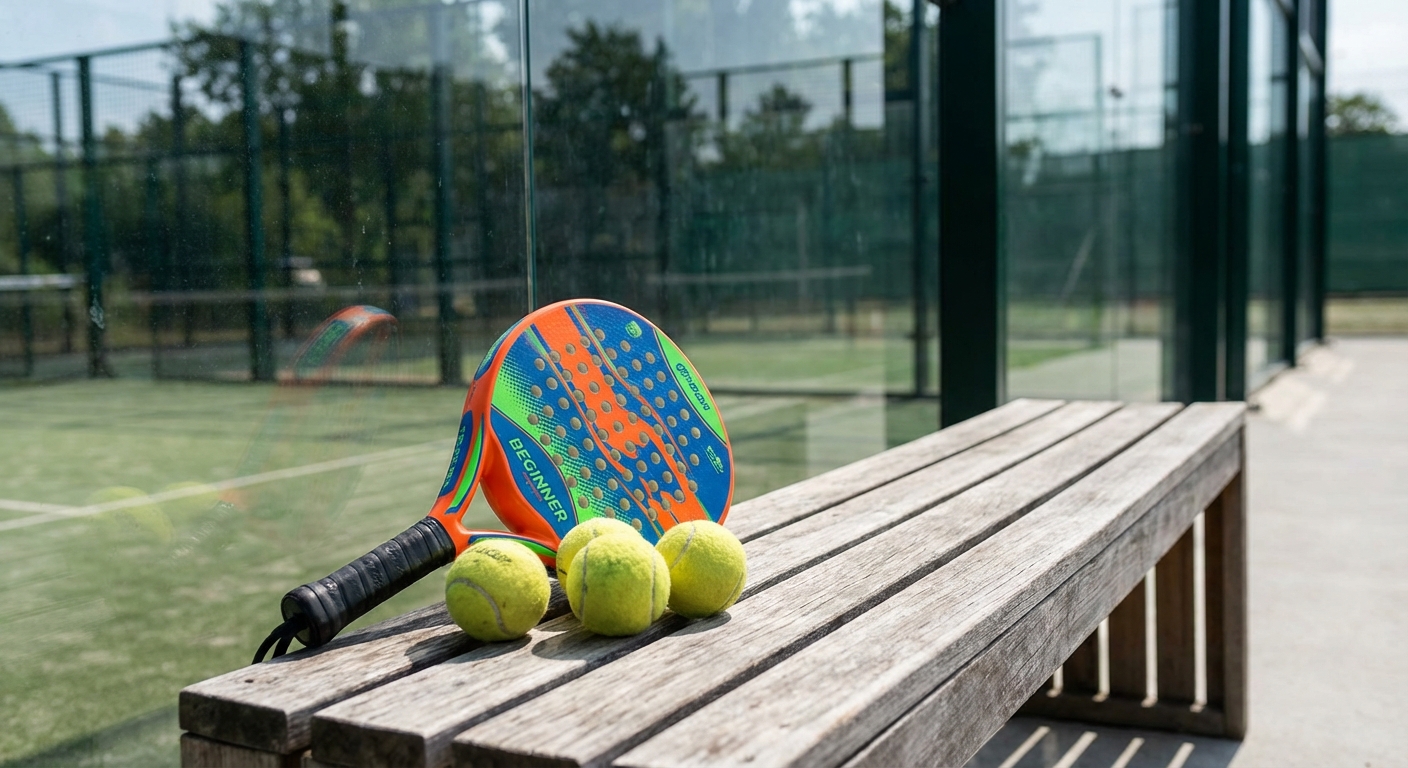
The best padel rackets for beginners should be paired with standard padel balls—not tennis balls—to ensure the intended flight path and bounce. While they look similar, padel balls have slightly less internal pressure, which makes the game slower and more manageable. Using the right ball ensures that your racket’s core and surface materials perform exactly as the designer intended.
Identifying the difference between ball types?
The distinction between tennis and padel balls is subtle but critical for the sport’s mechanics.
- Padel balls are slightly smaller and noticeably less bouncy than tennis balls.
- This lower bounce helps you learn how to use the glass walls without the ball flying over your head.
- High-viscosity felt is often used to grab the racket surface for better spin potential.
It’s all about the physics of the court.
“The ball is the messenger; if you give it too much pressure, the message of the game becomes impossible to read.”
Key Takeaway: Always use official padel balls to ensure the speed of play remains suitable for learning and wall play.
Why ball pressure affects the bounce quality?
Internal pressure determines how “fast” the ball feels and how much energy it carries after hitting the ground or walls.
- “Speedy” balls (high pressure) are for pros who can handle fast rallies.
- “Standard” or slightly used balls are better for beginners, as they give more time to react.
- Consistently playing with the same pressure levels helps you develop a mental map of where the ball will land.
As it turns out, even the ball has a “sweet spot” for performance.
| Ball State | Experience | Best For |
|---|---|---|
| High Pressure | Fast & Unpredictable | Experienced Players |
| Standard/New | Consistent & Accurate | Daily Training |
| Low/Flat | Unresponsive & “Heavy” | Discard |
Using new or well-maintained balls is as important as having a good racket.
Key Takeaway: High-quality, pressurized padel balls are necessary to maintain a consistent bounce that aids in developing correct positioning.
What is the cost of the best padel rackets for beginners?
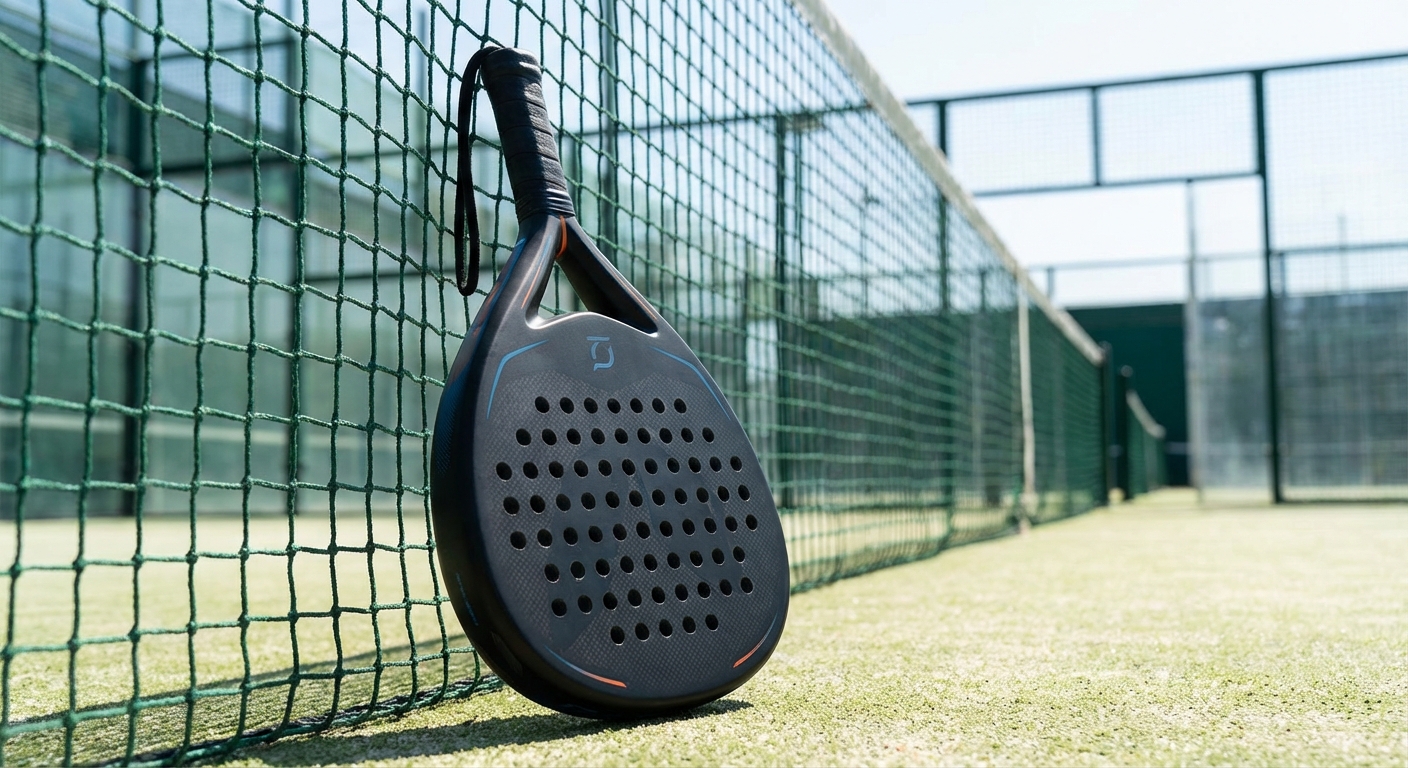
You can find the best padel rackets for beginners in a price range between $60 and $120. In this bracket, you are paying for high-quality EVA cores and durable fiberglass, without the premium “tax” of carbon fiber or pro-athlete endorsements. Investing too little often results in a racket that vibrates too much, while spending too much is unnecessary until your technique evolves.
Budgeting for your first equipment purchase?
A smart budget should include the racket, a basic bag to protect it from heat, and a few overgrips.
- Focus your funds on the racket core quality rather than flashy aesthetics.
- Many reputable brands offer “Starter Packs” that provide everything you need at a discount.
- Remember that a mid-range beginner racket can easily last you a year or more of regular play.
Think of it as an investment in your health and fun.
“Price is what you pay; value is how many hours of joy for which your equipment lasts.”
Key Takeaway: Aim for the “sweet spot” of pricing—roughly $80 to $100—to get a durable, arm-friendly racket that supports your growth.
Comparing entry-level and premium starter options?
Entry-level rackets focus on basic durability, while “premium starters” might offer better vibration dampening or slightly better balance.
- Basic rackets are great if you only play once or twice a month.
- Premium starter options are worth the extra $20 if you plan to join a league or play multiple times a week.
- Both are superior to buying a second-hand pro racket, which might have hidden frame cracks.
Let’s look at the numbers.
| Tier | Price Range | Core Technology |
|---|---|---|
| Entry Level | $60 – $80 | Standard FOAM |
| Premium Starter | $90 – $130 | Soft EVA / Anti-Vibration |
| High-Performance | $200+ | Full Carbon / Advanced Tech |
The best value lies in those premium starter models that bridge the gap to intermediate play.
Key Takeaway: Choose a premium starter racket if you intend to play regularly, as the better materials will protect your arm and last longer.
When to upgrade from the best padel rackets for beginners?
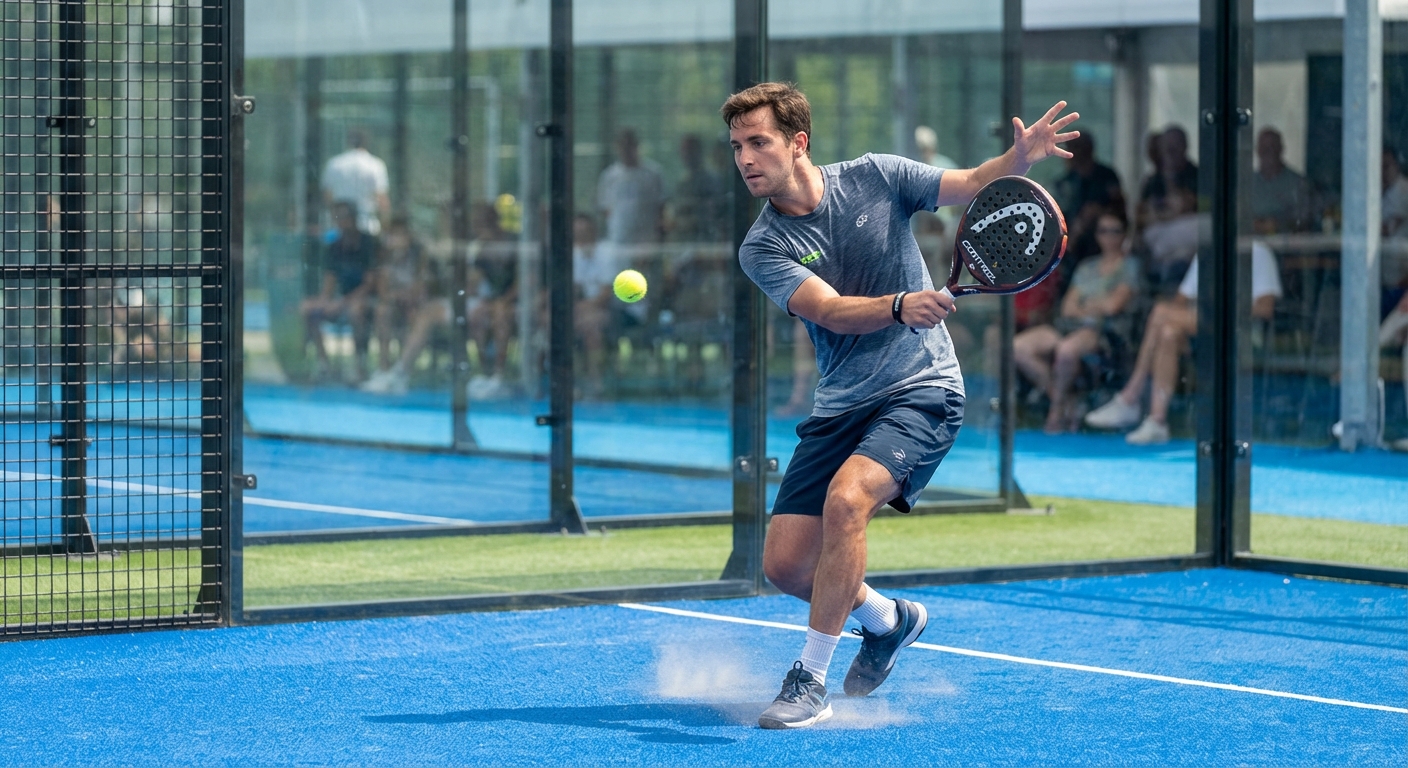
You should consider upgrading from the best padel rackets for beginners once you notice that your racket is limiting your ability to generate power or spin. This usually happens after 6 to 12 months of consistent play, as your hand-eye coordination improves. At this stage, you might find that you can consistently hit the sweet spot and are ready for a slightly harder surface or a teardrop shape.
Recognizing signs of skill improvement?
The first sign that you have outgrown your beginner gear is a feeling of “capping out” during aggressive plays.
- You feel like you are swinging hard, but the ball isn’t moving with the speed you desire.
- Your accuracy is high, and you are rarely missing the center of the racket.
- You start wanting to play more “viboras” and “bandejas” with aggressive spin.
The game eventually demands more from your tools.
“The transition to a new racket is a rite of passage that marks your growth from a student of the game to a competitor.”
Key Takeaway: Upgrade when your technique is consistent enough that you need the racket to add “bite” to your shots.
Transitioning to intermediate racket features?
Intermediate rackets usually introduce carbon fiber blends and a teardrop shape to give you a hybrid of power and control.
- A teardrop shape moves the balance slightly higher for more overhead leverage.
- Carbon fiber surfaces provide a more “compact” feel that allows for better precision at high speeds.
- These rackets are slightly less forgiving, forcing you to maintain good form.
But don’t rush the process.
| Level | Racket Shape | Surface Material |
|---|---|---|
| Beginner | Round | Fiberglass |
| Intermediate | Teardrop | Carbon/Fiber Mix |
| Advanced | Diamond | 12K/18K Carbon |
Each step up the ladder requires a more disciplined swing and better timing.
Key Takeaway: Move to intermediate gear only when you feel confident in your control and are looking to add an offensive edge to your game.
FAQ
Can I use a tennis racket for padel?
No. Padel rackets are solid, shorter, and have no strings, making a tennis racket completely incompatible with the sport’s mechanics and the court’s safety rules.
What’s the best weight for a female beginner?
345 to 360 grams. This range provides enough weight for ball exit while preventing shoulder and wrist strain during the learning phase.
Should I buy a second-hand professional racket?
No. Pro rackets are often too stiff and heavy for beginners, plus second-hand rackets may have structural micro-fractures that compromise performance.
How often should I change my overgrip?
Every 4 to 6 matches. Keeping the grip tacky ensures you don’t have to squeeze the handle too hard, which prevents arm fatigue and improves control.
Is carbon fiber better than fiberglass?
Not for beginners. Carbon is stiffer and more powerful, but fiberglass is much more flexible and forgiving, which is exactly what a new player needs.
Master the Court Today
Choosing the right equipment is the first step toward becoming a confident player. By focusing on a round shape, soft core, and fiberglass surface, you overcome the initial hurdles of control and arm safety. At SuperbPadel, we understand that every champion starts with a solid foundation. Whether you are playing on our Super Panoramic Padel Courts or a local club, we are here to support your journey. Don’t let the wrong gear hold you back—contact us today to find the perfect professional-grade infrastructure that complements your new equipment!