
A bandeja padel is a specialized overhead shot that combines the elements of a smash and a forehand volley to help players maintain their position at the net. Many players struggle with high lobs, often feeling forced to choose between a risky power smash or retreating to the back of the court. This indecision causes you to lose your hard-earned attacking position and gives your opponents the opportunity to take control. By mastering the bandeja padel, you can neutralize deep lobs and stay aggressive without overcommitting your movement.
What is a bandeja padel shot?
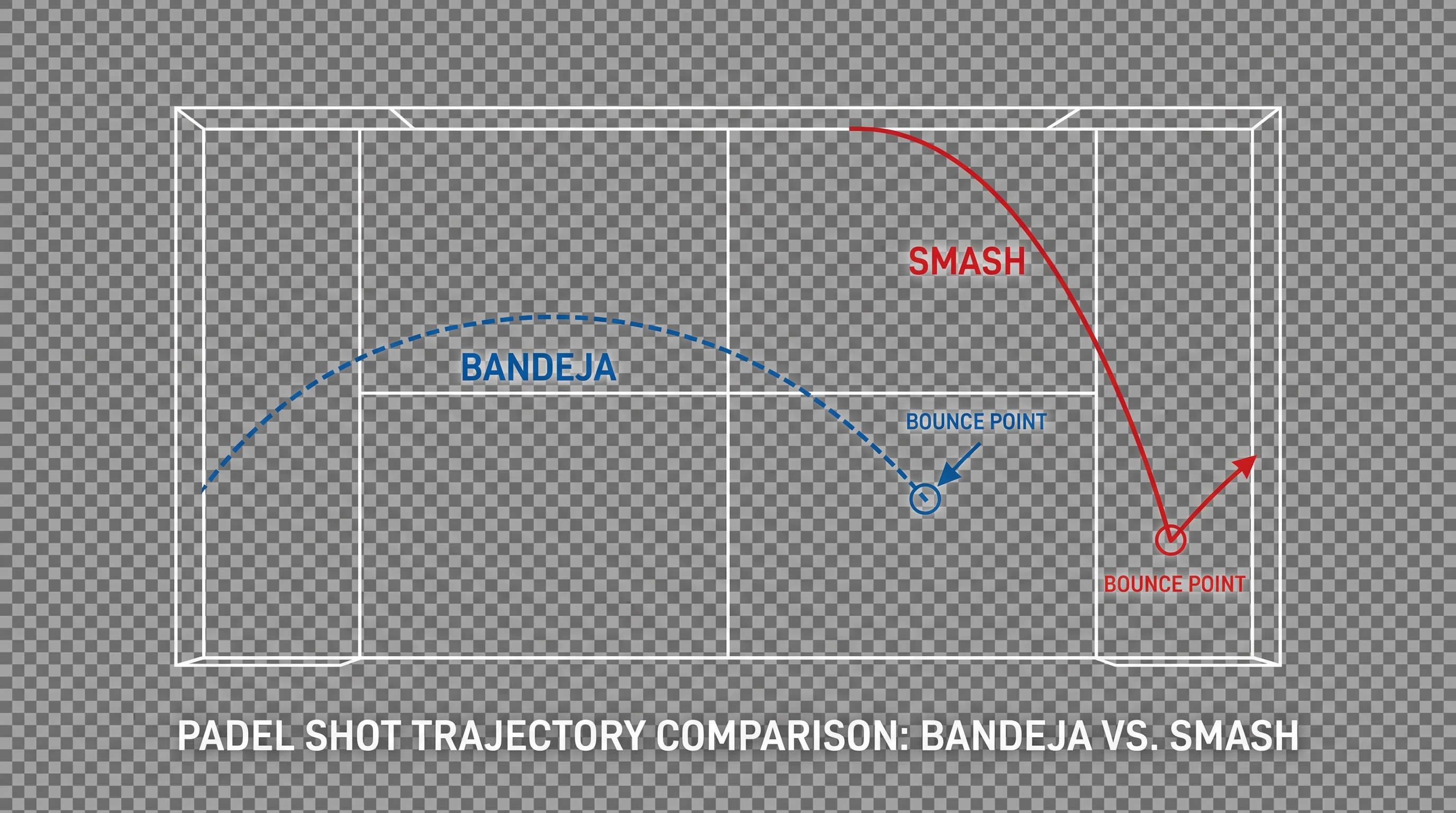
A bandeja padel is a mid-height overhead shot designed to keep the ball low and deep while allowing the player to retain their position at the net. It acts as a bridge between a defensive recovery and an attacking volley, prioritizing placement over raw power.
Mastering the Basics
- Hybrid Nature: It blends the swing of a forehand with the height of a smash.
- Low Bounce: The slice spin ensures the ball dies after hitting the glass.
- Net Retention: Its primary goal is to stop the opponents from taking the net.
But here is the kicker:
It is the most frequently used overhead in the game because it balances risk and reward perfectly. Unlike a full smash, it rarely results in an easy counter-attack for your rivals.
Key Takeaway: The shot is a tactical tool used to reset the point and stay in an offensive stance.
Shot Overview
| Feature | Description |
|---|---|
| Objective | Maintain net position |
| Spin Type | Slice (Backspin) |
| Contact Point | Head height, slightly to the side |
When should you use a bandeja padel?
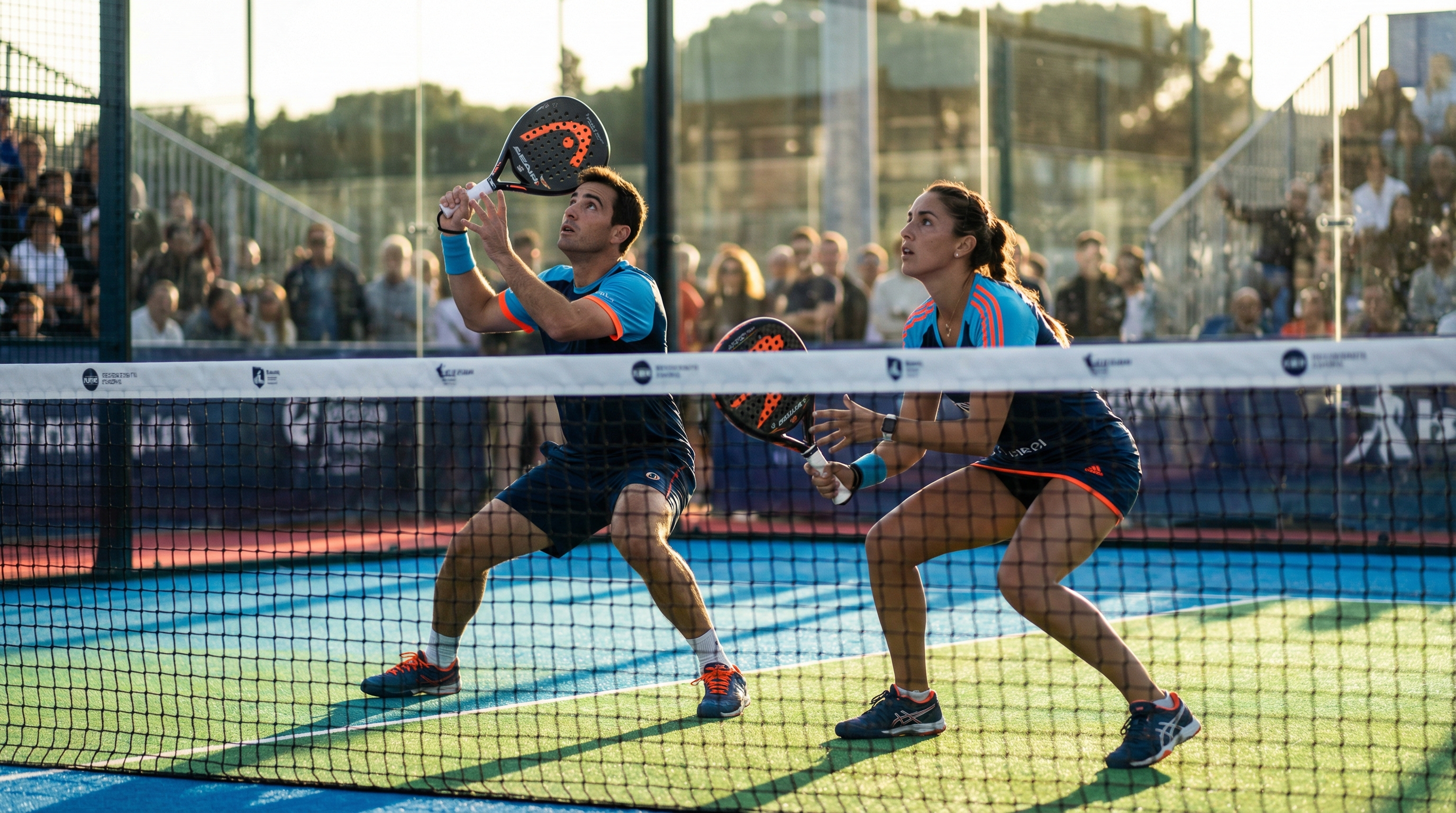
You should use a bandeja padel when a lob is too deep to smash comfortably but not short enough to finish the point. It is the ideal response to a semi-lob that forces you to move backward toward the middle of the court.
Strategic Timing
- Defensive Recovery: Use it when you are caught out of position by a high ball.
- Transition Phase: Hit it to buy time for your partner to reset their stance.
- Targeting Feet: Deploy it to force opponents into making a difficult low volley.
And it gets better:
Using this shot correctly prevents you from having to run all the way back to the baseline. It keeps the pressure on the other team while you stay close to the attacking zone.
Key Takeaway: Use the shot whenever you cannot safely hit a winning smash but want to stay at the net.
Tactical Usage Table
| Situation | Recommended Action | Result |
|---|---|---|
| Short Lob | Power Smash | Point winner |
| Deep Semi-Lob | Bandeja | Net retention |
| Very High Lob | Let it bounce | Defensive reset |
How do you hit a bandeja padel correctly?
To hit it correctly, you must turn your body sideways immediately, keep your racket high and open, and strike the ball at head height with a descending slice. The motion is more like a “tray” (which is what the name means in Spanish) being pushed forward rather than a downward snap.
Technique Essentials
- Side Preparation: Turn your shoulders as soon as you see the lob.
- Non-Dominant Arm: Point at the ball to help with balance and spacing.
- Open Face: Keep the racket face pointing toward the sky during preparation.
Check this out:
The secret is in the contact point, which should be slightly in front of your body and to the side. This allows you to generate enough slice to keep the bounce low.
Key Takeaway: Proper preparation and a slicing motion are the foundations of a successful shot.
Technical Checklist
| Step | Action | Focus |
|---|---|---|
| 1. Unit Turn | Pivot feet and shoulders | Body alignment |
| 2. Backswing | Racket head high | Open racket face |
| 3. Impact | Slice through the ball | Side contact point |
What is the best bandeja padel grip?
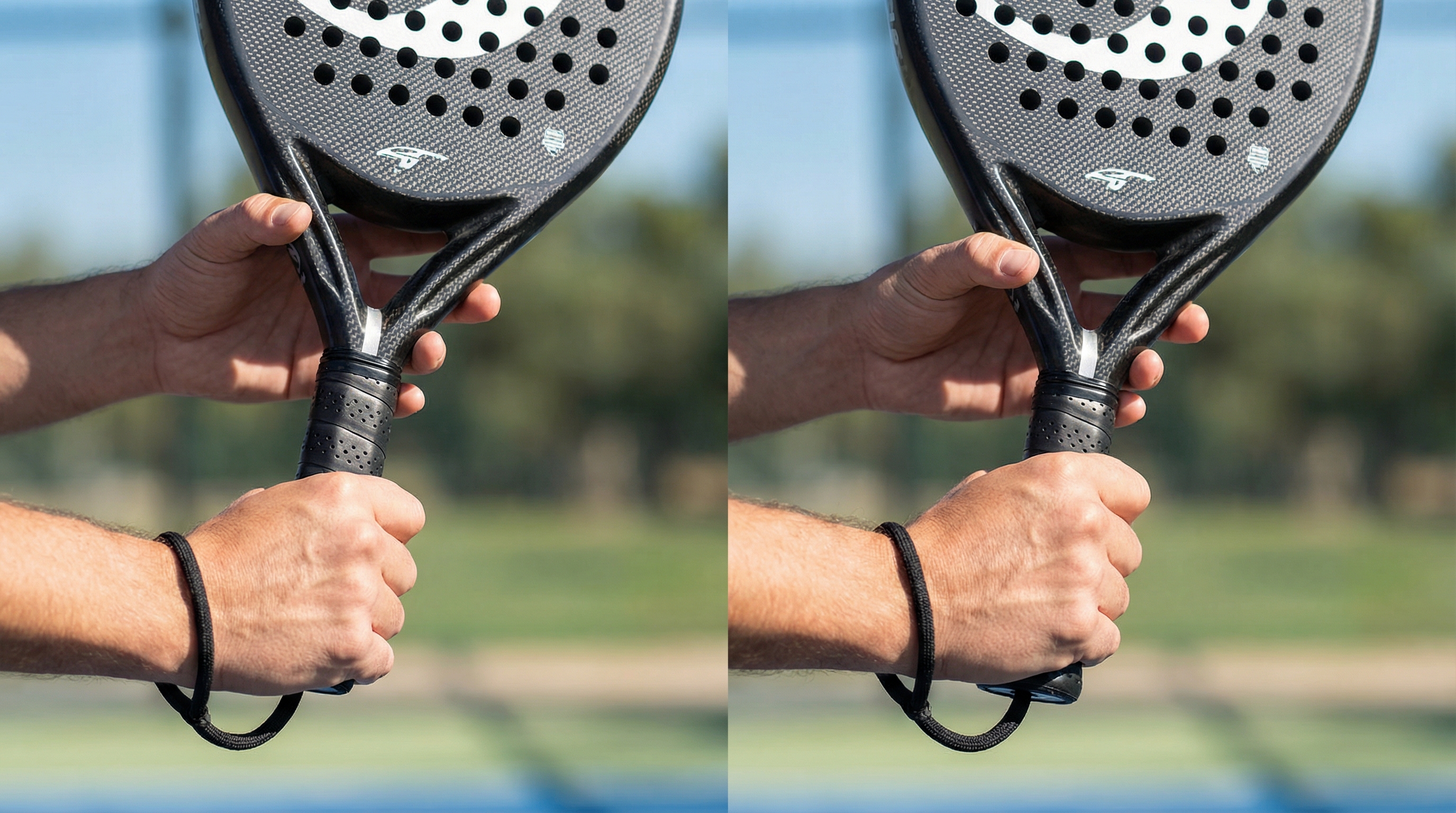
The best grip for a bandeja padel is the continental grip because it provides the versatility needed to add slice and control the angle of the racket face. This “hammer grip” allows you to transition between different shots without needing to adjust your hand mid-rally.
Grip Advantages
- Slice Generation: It naturally encourages an open racket face at impact.
- Speed of Adjustment: You can quickly move from a volley to an overhead.
- Wrist Stability: It provides a firm foundation for controlling the ball’s depth.
The best part?
Once you master this grip, your overheads become much more consistent. You won’t have to worry about the ball flying into the fence because of an incorrect hand position.
Key Takeaway: Stick to a continental grip to ensure you can generate the necessary spin for a low bounce.
Grip Characteristics
| Grip Type | Suitability | Main Benefit |
|---|---|---|
| Continental | Optimal | Maximum slice and control |
| Eastern Forehand | Poor | Too flat for this shot |
| Western | Not Recommended | Difficult to hit overheads |
Where should you aim a bandeja padel?
The ideal targets are the side corners or the back glass corners to force a difficult, low-rebound return for your opponents. Aiming crosscourt is generally safer as it provides more court length and uses the angles of the side walls to your advantage.
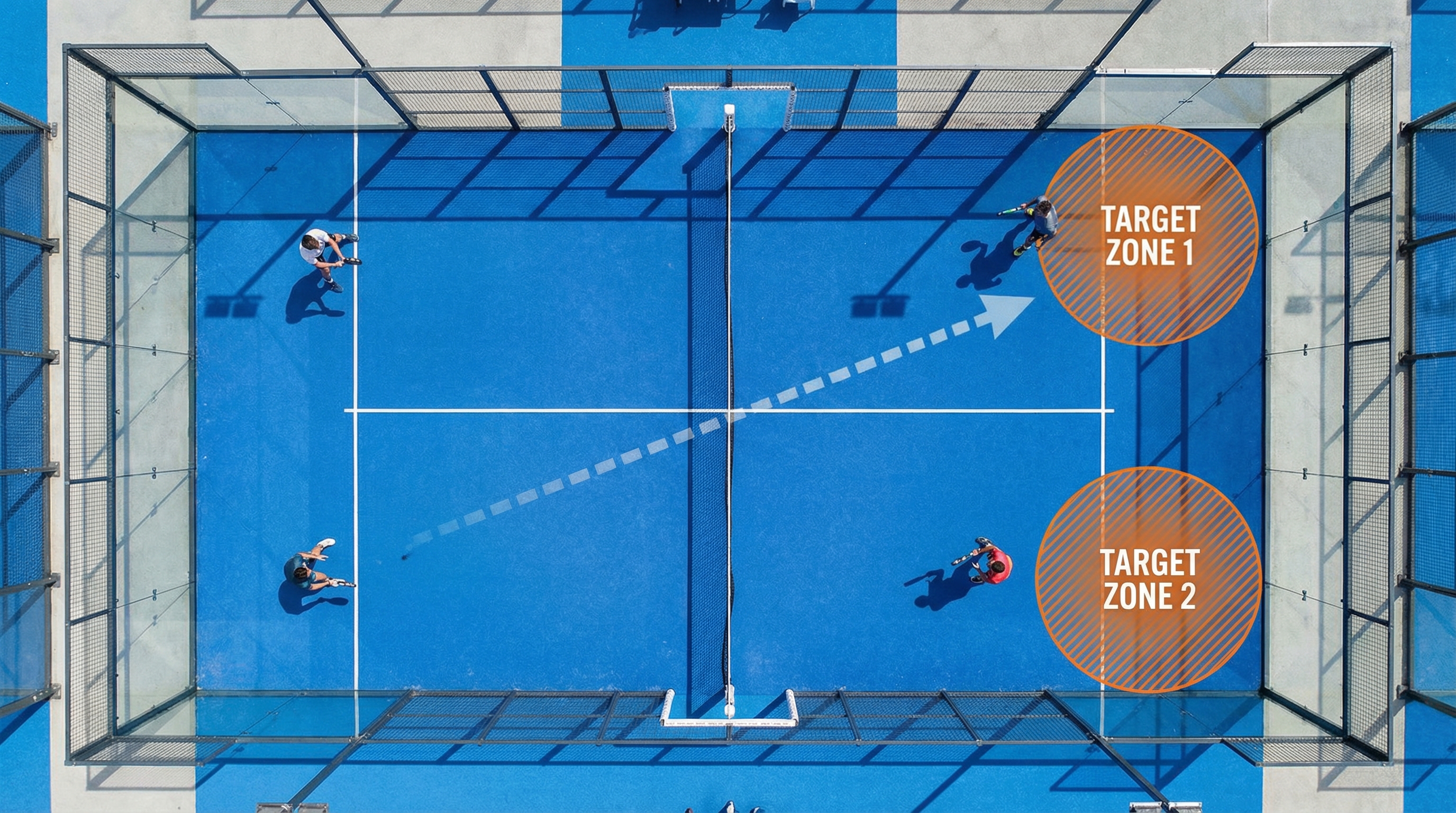
Strategic Targets
- Corner Glass: Hits the side wall first to create an unpredictable bounce.
- The “T” Zone: Aiming at the feet of the opponent at the service line.
- Center Gap: Pushing the ball deep between opponents to cause confusion.
You’ll love this:
Hitting the ball into the corner glass is the ultimate defensive-to-offensive transition. It forces the opponent to wait for the ball to come off the wall, giving you time to close the net.
Key Takeaway: Strategic placement in the corners is more effective than raw power when hitting overheads.
Targeting Goals
| Target Area | Difficulty for Opponent | Strategic Goal |
|---|---|---|
| Side Wall | High | Lowers bounce |
| Back Glass | Medium | Keeps them deep |
| Opponent’s Feet | High | Prevents aggressive return |
Is a bandeja padel different from a vibora?
Yes, while the bandeja padel is primarily a defensive and tactical shot, the vibora is an aggressive, attacking overhead hit with heavy side spin. The motion for this shot is flatter and more side-oriented, whereas the vibora involves a more aggressive “snake-like” brushing of the ball.
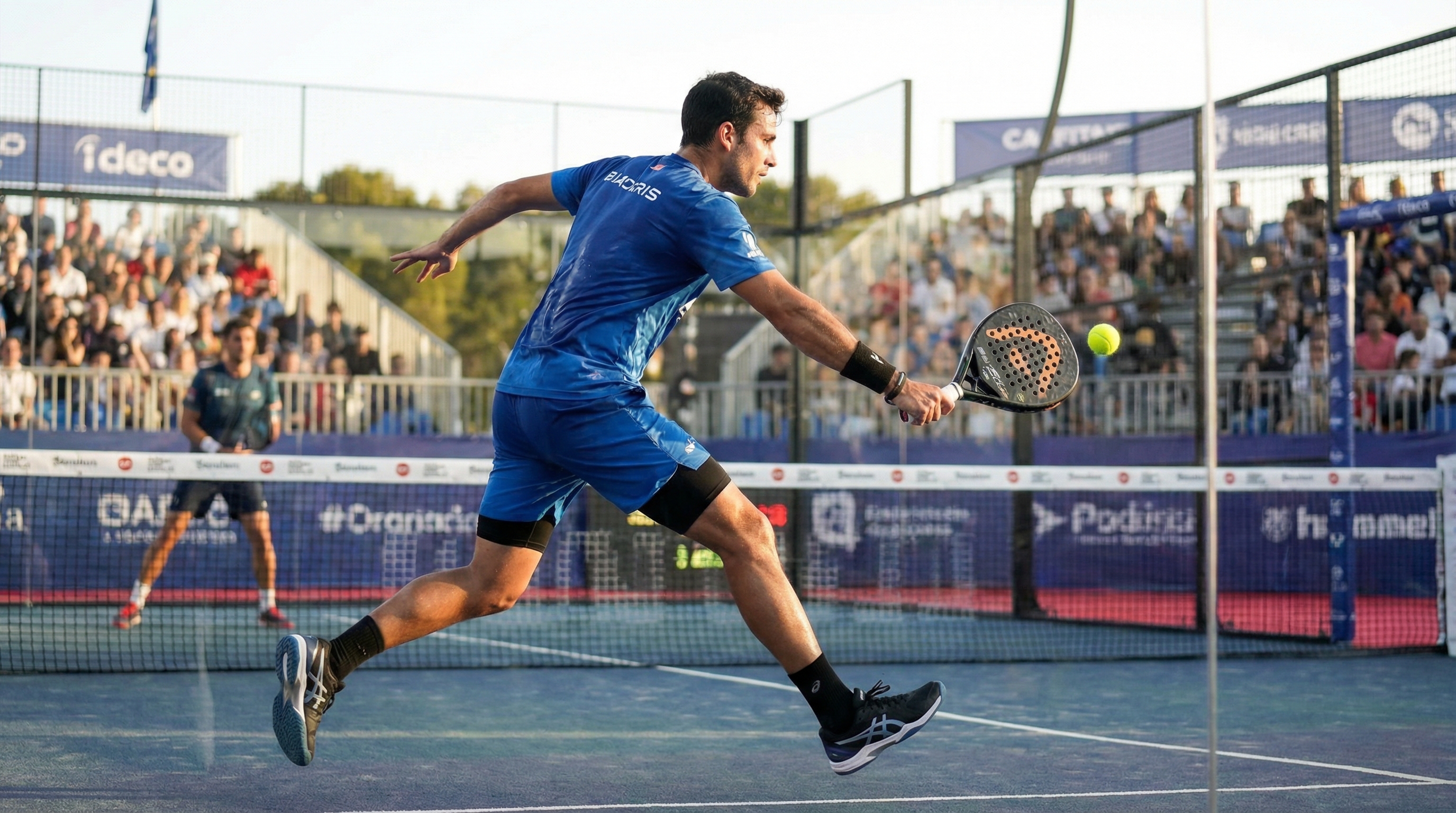
Shot Comparison
- Spin Direction: Slice for the tray shot vs. side-spin for the vibora.
- Aggression Level: Tactical holding vs. trying to finish the point.
- Contact Height: Head height vs. slightly lower and further out to the side.
But here is the kicker:
Most players learn the tray shot first because it is safer. As you advance, you will use the vibora when you have a better position to actually hurt your opponents.
Key Takeaway: One is for maintaining control, while the other is for ending the rally with aggression.
Shot Differences
| Feature | Bandeja | Vibora |
|---|---|---|
| Intent | Control/Position | Attack/Point Winner |
| Spin | Backspin/Slice | Side-spin |
| Risk | Low | High |
Why do tennis players struggle with the bandeja padel?
Tennis players often struggle because they are trained to hit downward on overheads, whereas this shot requires a more horizontal, slicing motion. The instinct to “spike” the ball often leads to a high bounce that allows opponents to counter-attack easily.
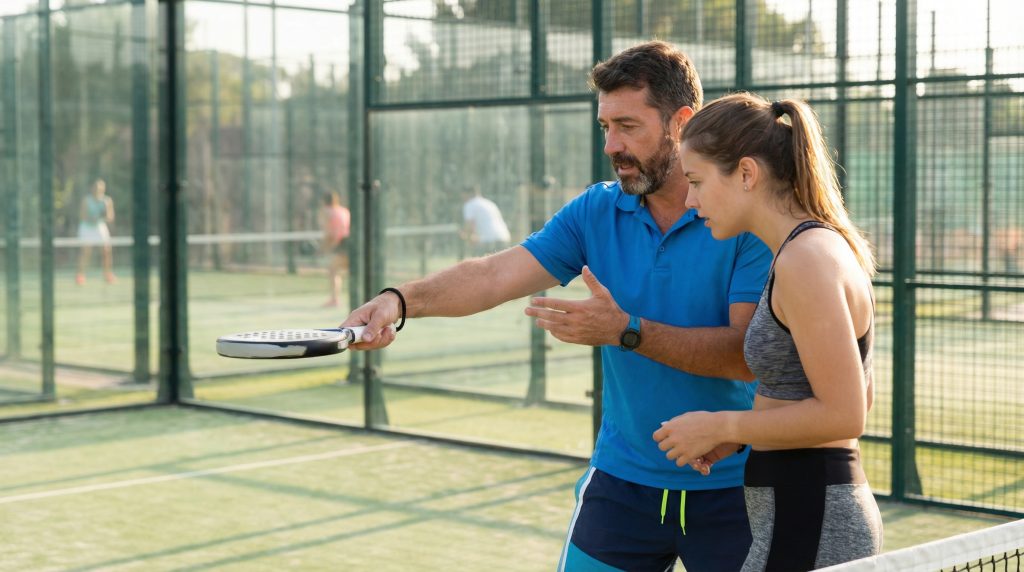
Common Transition Hurdles
- Point of Contact: Tennis players hit too high; this shot needs a lower contact.
- Swing Path: Moving from a vertical “snap” to a horizontal “push.”
- Patience: Learning that not every high ball is a chance to end the point.
And it gets better:
Once a tennis player unlearns the smash-only habit, their game improves exponentially. They become much more difficult to lob because they can stay at the net indefinitely.
Key Takeaway: Shifting from a “downward smash” mindset to a “horizontal slice” mindset is crucial for tennis converts.
Adaptation Guide
| Tennis Habit | Padel Adjustment | Result |
|---|---|---|
| Wrist Snap | Firm Wrist | More consistency |
| Vertical Swing | Horizontal Slice | Lower bounce |
| Maximum Power | 70% Power | Better placement |
Can footwork improve your bandeja padel?
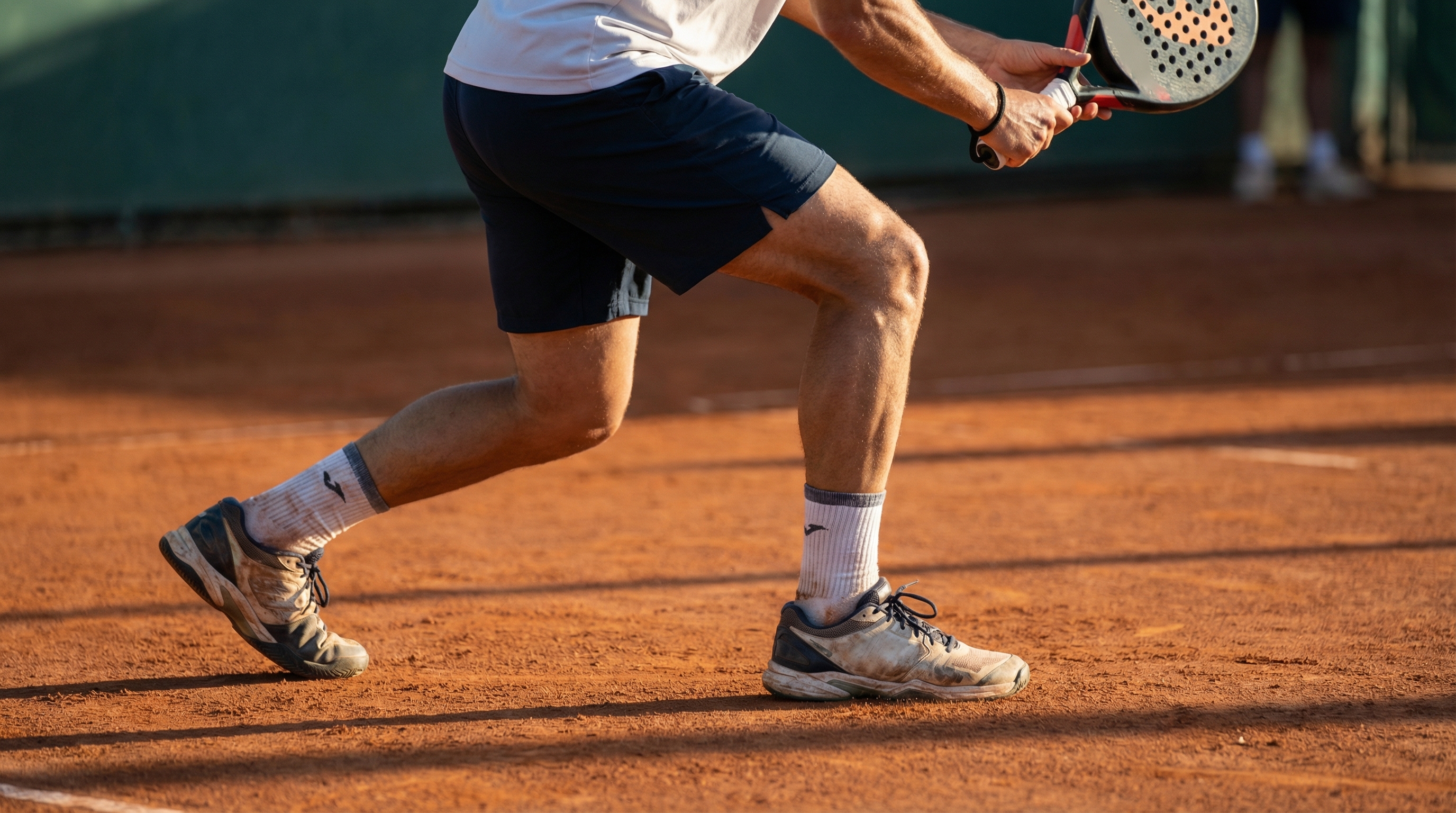
Efficient footwork is essential for a bandeja padel as it allows you to get behind the ball quickly and maintain balance during the swing. Without proper adjustment steps, you will end up hitting the ball while leaning backward, which ruins your accuracy and power.
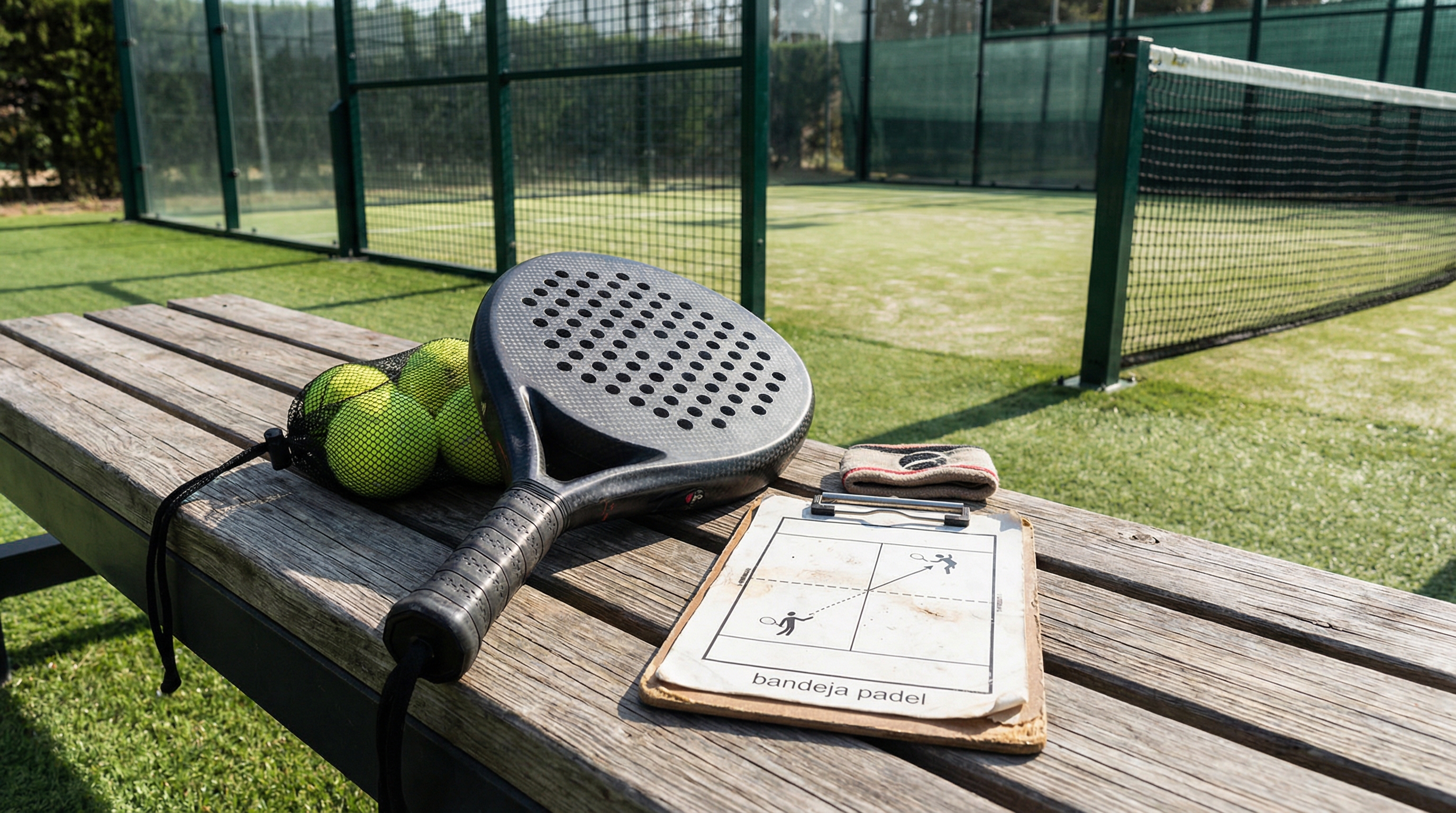
Footwork Keys
- Side Steps: Use small, rapid lateral steps to move backward.
- Balanced Stance: Keep your weight on your back foot before transferring it forward.
- Recovery Steps: Immediately move forward toward the net after making contact.
Check this out:
The pros spend more time practicing their footwork for this shot than the actual swing. If your feet are in the right place, the shot becomes almost effortless.
Key Takeaway: Master the “chassé” side-steps to ensure you are always in the perfect position to strike.
Footwork Drills
| Drill Name | Movement | Goal |
|---|---|---|
| Shadow Stepping | Lateral steps without ball | Muscle memory |
| Deep Recovery | Running back, then hitting | Stamina/Positioning |
| Forward Charge | Hit and sprint to net | Transition speed |
How does the glass impact a bandeja padel?
The glass walls are your best friend when hitting this shot, as aiming for the junction between the floor and the wall makes the ball bounce unpredictably. A well-placed slice that hits the side glass low will “die,” preventing the opponent from getting under the ball for a return.
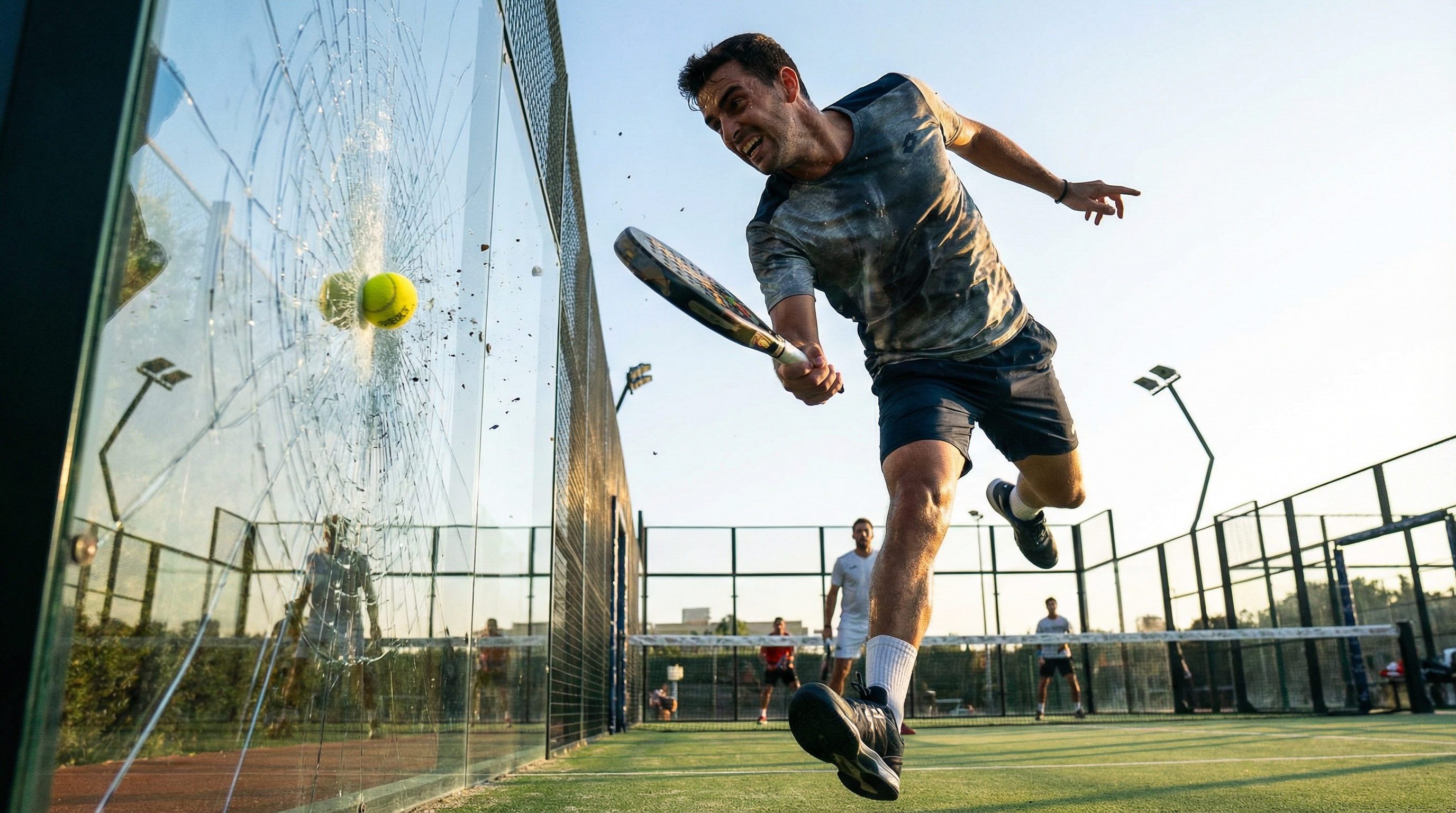
Wall Interactions
- Double Glass: Aiming so the ball hits the side wall and then the back wall.
- Low Rebound: The backspin from the slice keeps the ball close to the glass.
- Angle Creation: Using the walls to change the direction of the ball’s path.
The best part?
When the ball hits the glass at a low height with spin, it becomes a “dead ball.” Your opponents will find it nearly impossible to do anything other than lob it back to you.
Key Takeaway: Always use the glass to maximize the difficulty for your opponents’ defense.
Rebound Effects
| Hit Location | Bounce Result | Difficulty |
|---|---|---|
| Floor Only | Consistent/Predictable | Easy to return |
| Glass First | Change in speed | Hard to time |
| Floor then Glass | Low and heavy | Very hard to return |
What equipment helps a bandeja padel?
Using a balanced racket and high-quality balls is vital for executing a bandeja padel with the necessary precision and spin. A racket with a rough surface can help grip the ball better, making it easier to generate that characteristic slice.
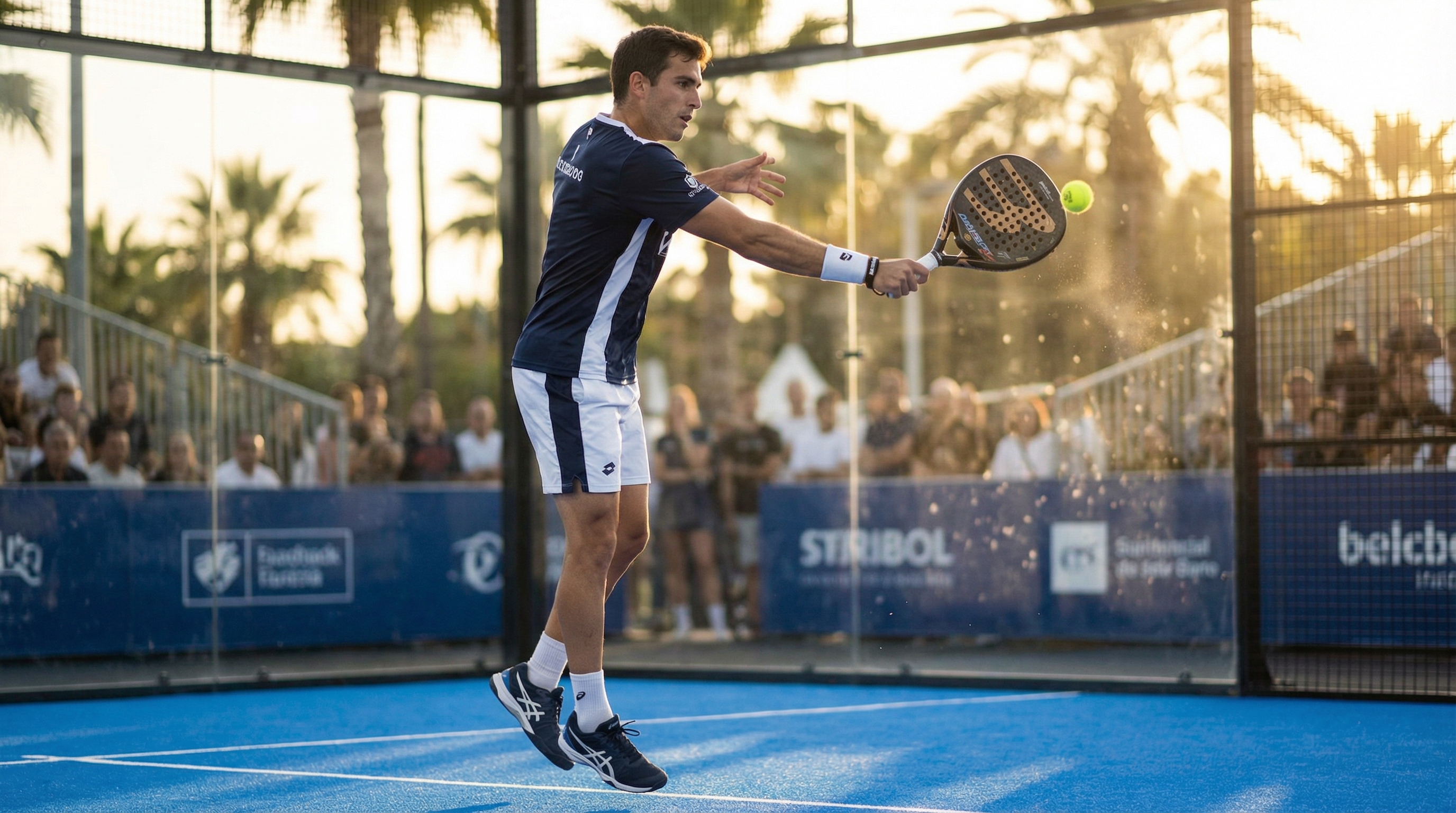
Gear Considerations
- Racket Balance: A neutral or handle-heavy balance offers better maneuverability.
- Surface Texture: Rough or “sandpaper” finishes help with generating spin.
- Ball Pressure: Fresh balls with good pressure respond better to slicing motions.
You’ll love this:
The right equipment makes the learning curve much shorter. When your racket does half the work of creating spin, you can focus entirely on your footwork and timing.
Key Takeaway: Invest in a control-oriented racket to master the tactical side of the game.
Equipment Essentials
| Item | Recommended Feature | Benefit |
|---|---|---|
| Racket | Rough Surface | Enhanced slice spin |
| Shoes | High Grip Sole | Stable footwork |
| Balls | Premium Pressure | Consistent bounce |
Don’t let deep lobs push you out of the game. If you are ready to take your skills to the next level, contact us today for expert guidance and the best gear to suit your style.
FAQ
Can I use a bandeja as a finishing shot?
While it is primarily a defensive and tactical shot used to keep the net, you can win points with it if you place it deep into the corners where the bounce dies.
What’s the best way to practice this alone?
You can practice the motion by standing near a wall, throwing the ball up as a lob, and focusing on your side-steps and slicing the ball back against the wall at head height.
Is the bandeja padel suitable for beginners?
Yes, it is one of the first overheads beginners should learn because it is much safer and more consistent than trying to hit a powerful smash.
How often should I hit crosscourt?
You should hit crosscourt about 80% of the time, as it provides a longer distance and better angles to hit the side glass, which makes the return harder.
Should I jump when hitting a bandeja?
Generally, you should keep your feet on the ground for better balance, but more advanced players may jump slightly to reach very high lobs while maintaining a high contact point.