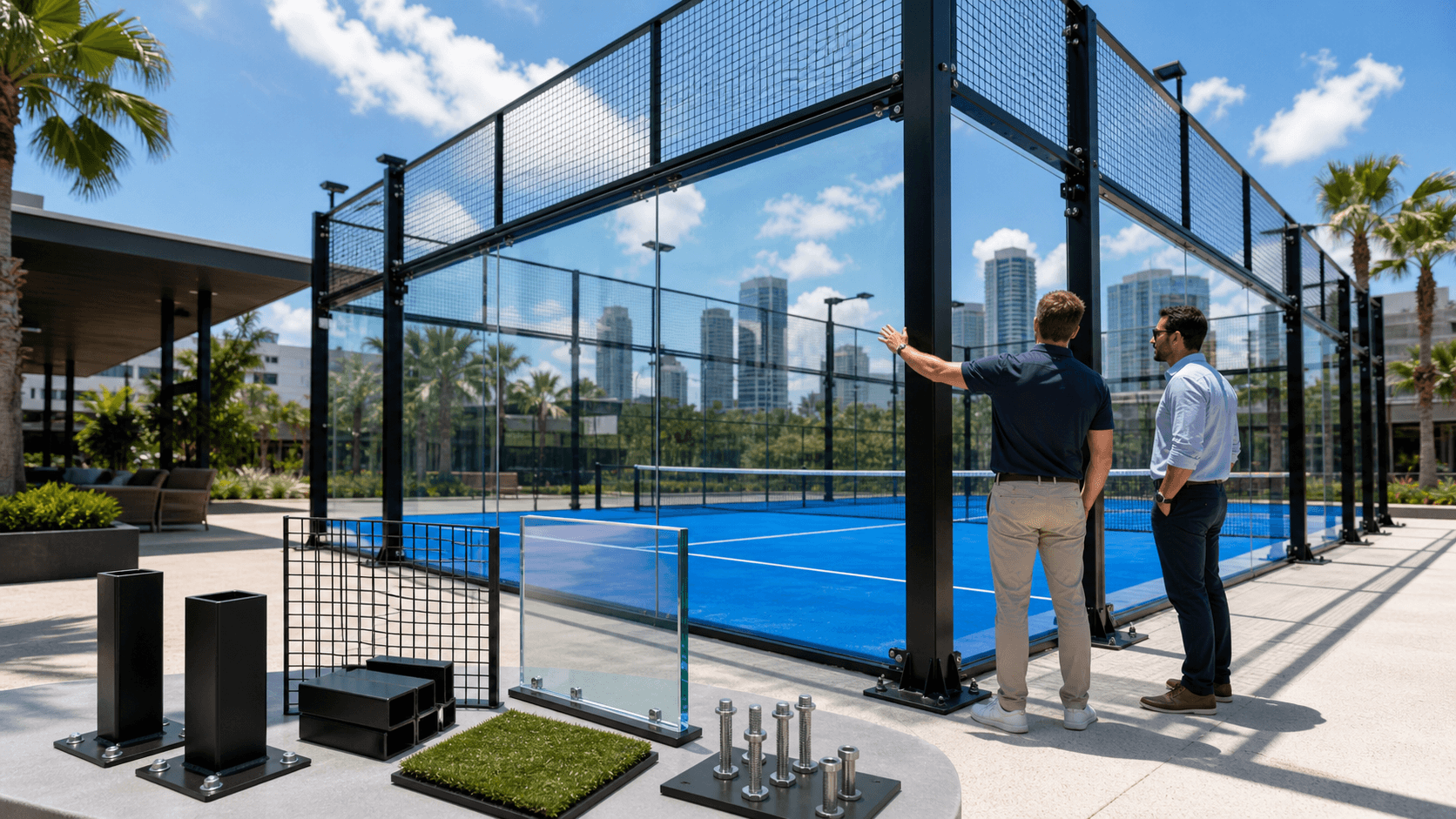
Choosing the right court structure padel Houston requires balancing high-grade galvanized steel durability with 12mm tempered safety glass and professional-density turf to withstand the local humidity. You need a system that offers long-term resistance to Gulf Coast weather while providing the premium player experience your club members expect.
Developing a profitable sports facility in Texas is a high-stakes investment where choosing subpar materials can lead to rapid oxidation and structural failure. You might feel the pressure of rising construction costs and the fear that a cheaper court structure padel Houston will require expensive repairs within just a few years. This uncertainty can stall your project, leaving you behind as the local padel market explodes and competitors capture the most loyal players.
The good news is that by focusing on factory-direct engineering and modular designs, you can secure a professional-grade facility that guarantees a 20-year design life. This guide will walk you through the technical specifications and strategic decisions needed to build a world-class padel destination.
What are the primary factors for court structure padel Houston?
Choosing a court structure padel Houston starts with evaluating your site’s specific wind load requirements and soil conditions to ensure long-term stability. You must prioritize materials that can handle the extreme heat and moisture of the Houston climate without compromising the integrity of the frame. Investors should look for systems that maximize player safety while offering the aesthetic appeal necessary for a high-end sports club.
How do you optimize your facility layout?
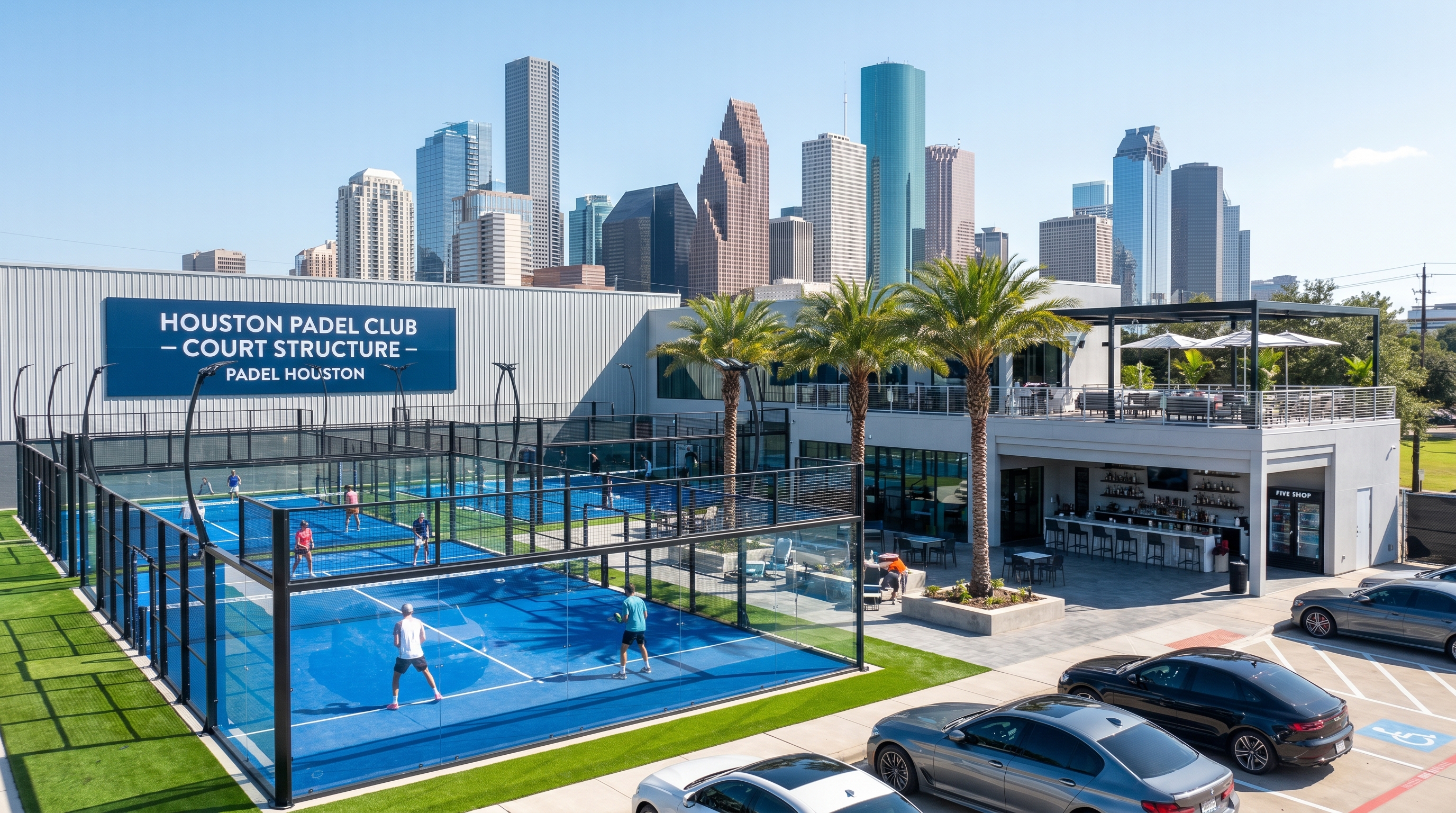
Planning your layout efficiently allows you to fit more courts into a smaller footprint, significantly increasing your revenue per square foot. You can replace a single underutilized tennis court with three padel courts, creating a more social and high-energy environment for your members.
Think about this:
Effective layout planning is the difference between a crowded, chaotic club and a streamlined professional venue.
- Analyze player traffic flow to prevent congestion near court entrances.
- Ensure a minimum of 0.5 meters of buffer space around each court perimeter.
- Orient courts North-to-South to prevent sun glare from affecting player vision.
- Integrate spectator zones to foster the social “pueblo” atmosphere of padel.
Is space efficiency important for ROI?
Maximizing your Return on Investment requires a court structure that fits into tight urban spaces or maximizes large suburban plots. A standard 10×20 meter court is compact, making it an ideal choice for gyms, resorts, and even residential luxury developments in the Greater Houston area.
Here’s the deal:
More courts on the same plot of land means more booking fees and a faster path to profitability.
- Padel courts use roughly 30% less space than traditional tennis courts.
- Modular structures allow for easier adjustments to non-standard site dimensions.
- Higher density of play creates a sense of community that drives membership.
- Facility owners can charge premium rates for modern, well-maintained courts.
Why focus on commercial-grade specifications?
Selecting commercial-grade materials for your court structure padel Houston ensures the facility survives the rigors of heavy daily use by hundreds of players. You want to avoid the “budget trap” of residential models that may lack the reinforcement needed for competitive tournament play or high-frequency bookings.
Key Takeaway:
Investing in a commercial-grade structure protects your capital by reducing downtime and ensuring a premium experience that justifies higher rental fees.
| Feature | Residential Grade | Commercial Grade |
|---|---|---|
| Frame Thickness | 2.0mm – 2.5mm | 3.0mm – 4.0mm |
| Glass Quality | 10mm Standard | 12mm Anti-Explosion |
| Turf Density | Basic Fibrillated | High-Density Monofilament |
| Warranty | 1-2 Years | 5-10 Years Structural |
The transition from planning to construction is where your material choices become permanent.
How does frame material impact court structure padel Houston?
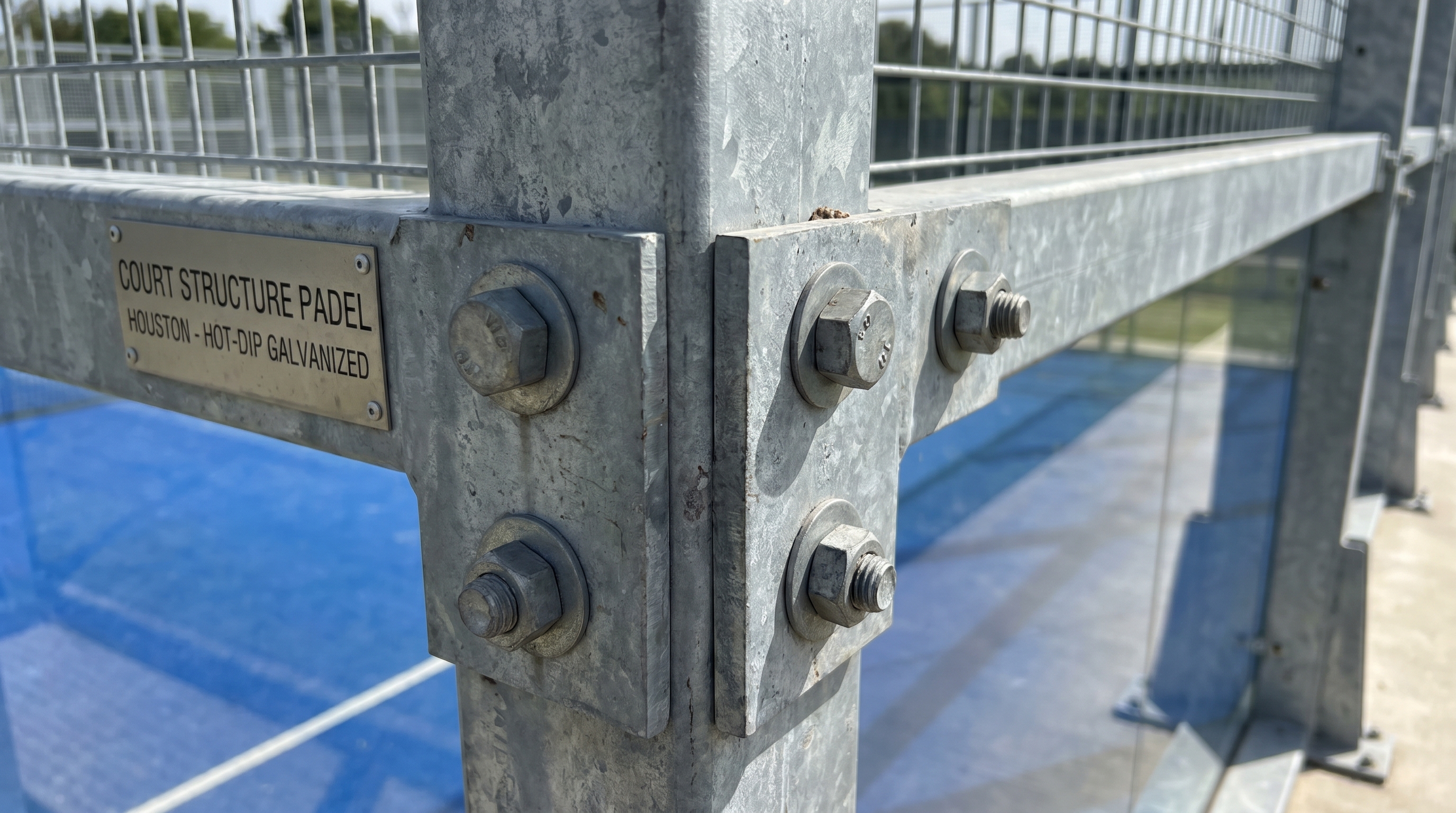
The frame material of a court structure padel Houston is the most critical factor for preventing rust and ensuring the safety of your players over time. Because Houston sits in a high-humidity zone near the coast, you must use hot-dip galvanized steel to protect the metal from the inside out. This specialized coating creates a metallurgical bond that resists corrosion much more effectively than standard paint or spray-on treatments.
What makes hot-dip galvanization superior?
Hot-dip galvanization involves submerging the entire steel frame into a bath of molten zinc, ensuring every nook and cranny is protected. This process prevents the “rust-from-within” syndrome that often plagues cheaper courts installed in humid environments like East Texas.
Truth be told:
Without this protection, your court’s structural integrity could be compromised within just a few seasons of Houston’s rain.
- Zinc coatings provide cathodic protection, meaning the coating sacrifices itself to save the steel.
- The bond is incredibly durable and resistant to chips or scratches during installation.
- It eliminates the need for frequent repainting or touch-ups on the structural pillars.
- Galvanized steel maintains its silver-grey aesthetic or can be powder-coated for color.
Can modular designs speed up assembly?
A modular court structure padel Houston is engineered for precision, allowing your local crew to bolt the components together quickly without on-site welding. This “LEGO-style” assembly reduces labor costs and ensures that every court in your facility is perfectly aligned for optimal glass and mesh tension.
You might be wondering:
How much time can you actually save with a pre-engineered modular system?
- Precision-drilled holes ensure all bolts align perfectly the first time.
- Modular parts are easier to transport and handle in tight construction sites.
- The assembly process typically takes only 3 to 5 days per court.
- Replacement parts are standard, making future repairs fast and simple.
Which steel grade is best for Houston?
Most professional courts utilize Q235 or Q345 carbon steel, which offers the perfect balance of flexibility and tensile strength for a court structure padel Houston. These grades are specifically chosen to handle the vibrations and impacts caused by players leaning on the mesh or hitting the glass walls.
Key Takeaway:
Prioritize hot-dip galvanized Q235 steel to ensure your court remains rust-free and structurally sound for over two decades.
| Material Spec | Cold-Rolled Steel | Hot-Dip Galvanized Steel |
|---|---|---|
| Corrosion Level | High | Near Zero |
| Design Life | 3 – 5 Years | 20+ Years |
| Houston Suitability | Poor | Excellent |
| Long-term Cost | High Maintenance | Low Maintenance |
Once the frame is secure, the next decision involves the visual and safety elements of the walls.
Why choose a panoramic court structure padel Houston?
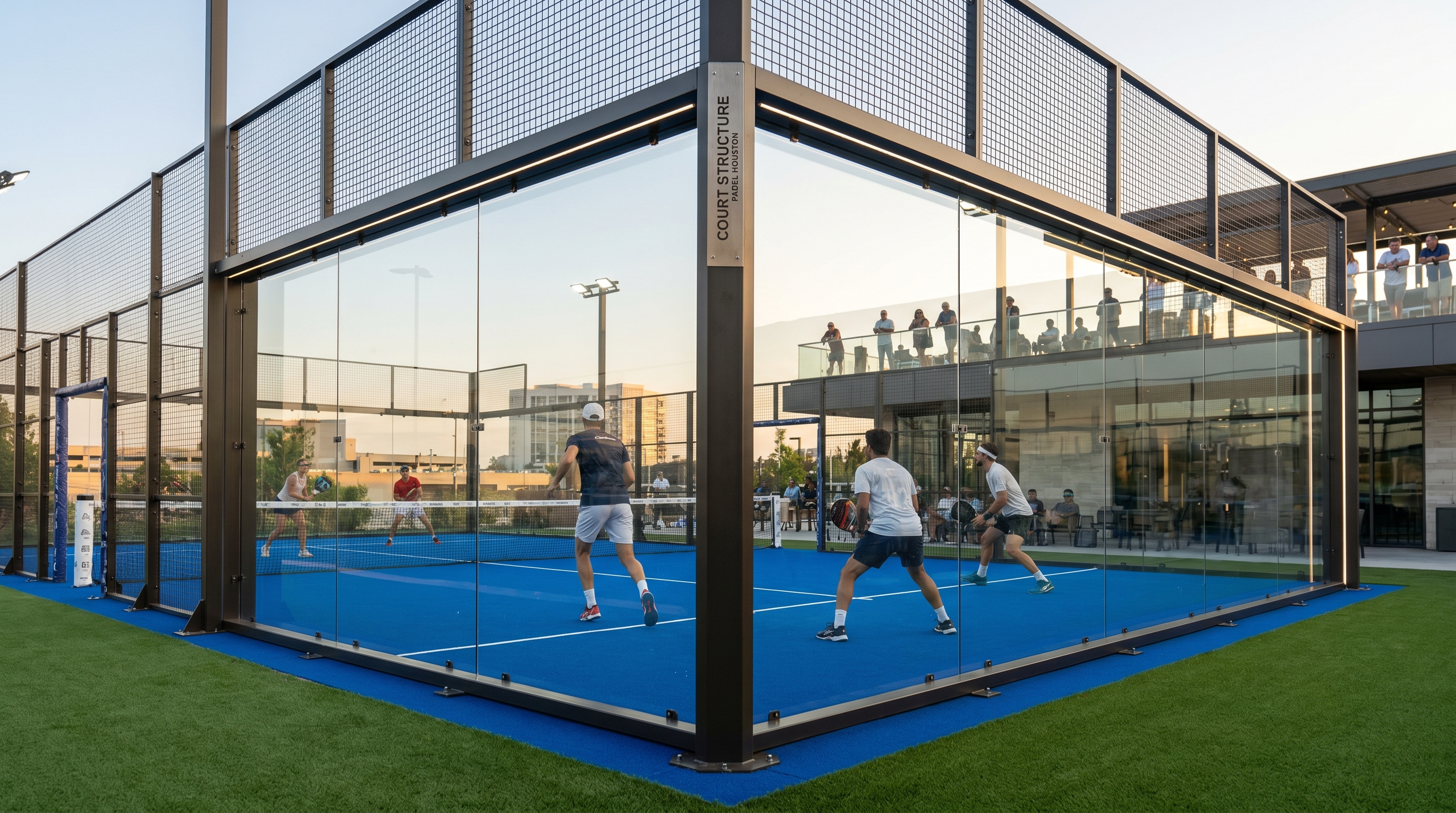
A panoramic court structure padel Houston offers an elite spectator experience by removing the rear vertical pillars that normally obstruct the view. This design is the gold standard for premier clubs and tournament venues because it allows for unobstructed filming and a high-end, modern aesthetic. By choosing this structure, you instantly elevate your facility’s status and appeal to top-tier athletes and corporate sponsors.
Is visibility a factor for member retention?
High visibility makes the game more engaging for those waiting their turn, turning every match into a performance for the clubhouse. Players love the feeling of an “open” court, and spectators can follow every rally without moving their heads to look around bulky steel posts.
Let’s get started:
Creating a “theatrical” environment on the court drives social media shares and increases your club’s local fame.
- Glass-to-glass joints use specialized connectors to maintain structural rigidity.
- Panoramic designs are ideal for center courts where finals and exhibitions are held.
- The lack of pillars reduces the “caged” feeling for new players.
- Better visibility directly translates to better coaching and video analysis opportunities.
What are the safety ratings for glass?
Every court structure padel Houston should utilize 12mm tempered safety glass that meets EN 12150-1 international standards. This thickness is non-negotiable for commercial facilities, as it provides the necessary impact resistance to withstand players crashing into the walls at full speed.
The best part?
Tempered glass is designed to crumble into small, blunt pieces if it ever breaks, preventing serious injury to players.
- 12mm glass is significantly stiffer than 10mm, providing a more consistent ball bounce.
- Heat-soak testing ensures the glass won’t spontaneously shatter due to temperature swings.
- Polished edges and countersunk holes prevent stress fractures at the mounting points.
- Anti-explosion films can be added for an extra layer of security in public spaces.
Does glass quality affect ball bounce?
The rigidity of premium glass ensures that the ball maintains its energy when hitting the back wall, allowing for predictable and professional play. In a high-quality court structure padel Houston, the glass is mounted with EPDM rubber gaskets to absorb vibration while keeping the surface perfectly flat.
Key Takeaway:
Panoramic glass is a strategic investment that maximizes spectator engagement and provides a superior, professional-grade playing experience.
| Viewing Type | Standard (Pillars) | Panoramic (Pillarless) |
|---|---|---|
| Spectator View | Obstructed | 360-Degree Clear |
| Structure | Higher Rigidity | Engineered Glass-Reinforced |
| Market Value | Traditional | Premium/Elite |
| Installation | Standard | Specialized Alignment |
Beyond the walls, the surface underfoot determines the speed and safety of the game.
Which materials define a court structure padel Houston?
The combination of a galvanized frame, tempered glass, and high-density turf defines the overall quality of a court structure padel Houston. You must look at how these components interact—for instance, how the mesh panels are welded to the frame to prevent “dead spots” when the ball hits the wire. Quality materials ensure that every part of the court responds predictably to player movement and ball impact.
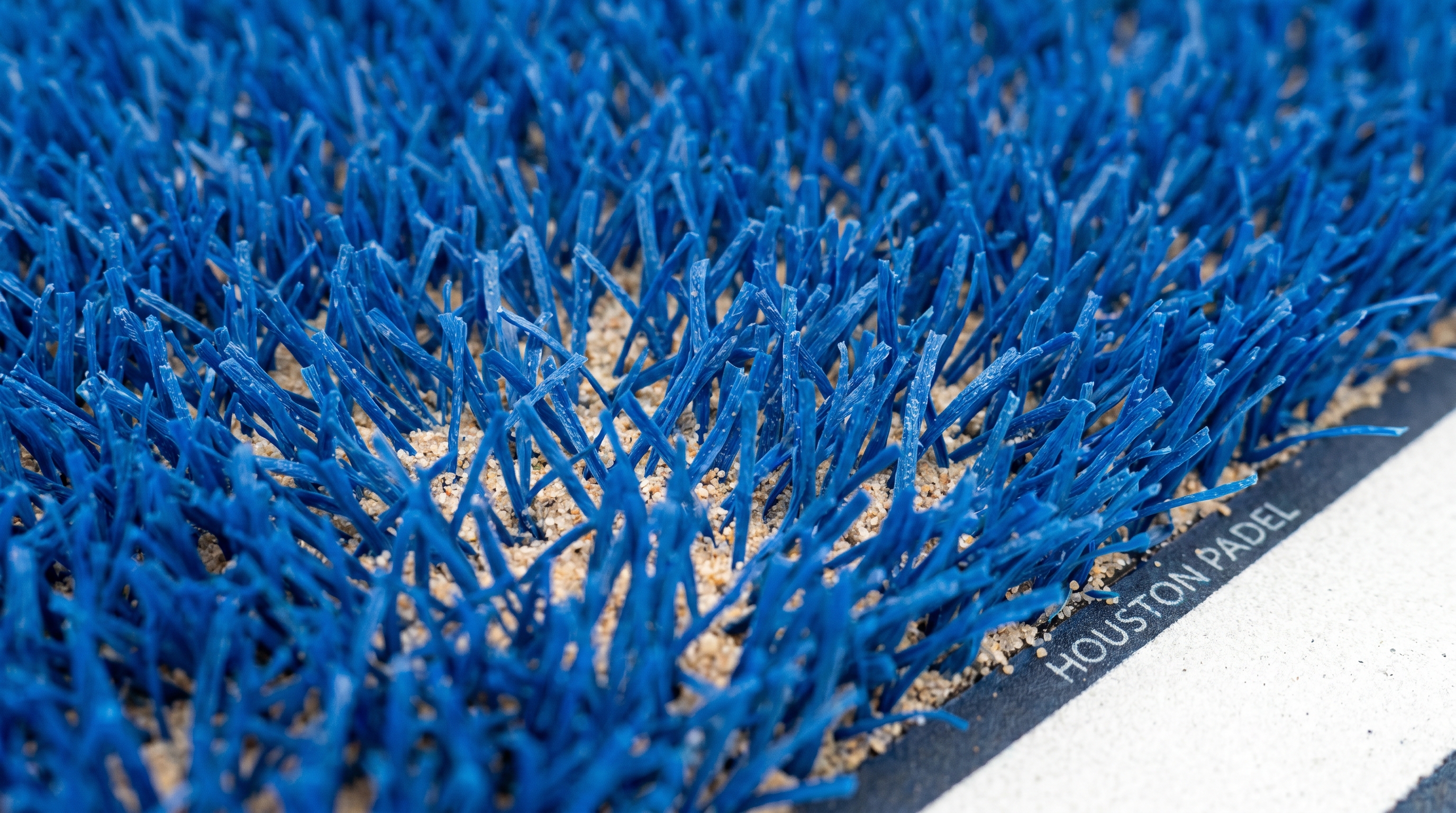
What is the best turf for Houston heat?
Selecting the right padel grass is vital because the Texas sun can quickly degrade low-quality synthetic fibers. You should opt for UV-stabilized, monofilament polyethylene fibers that remain resilient and keep their color even after thousands of hours of exposure.
What does this mean for you?
Choosing the right turf means your court stays looking new and playing fast for years longer than the competition.
- Monofilament fibers have “memory,” meaning they stand back up after being stepped on.
- Textured turf reduces the amount of sand infill needed, making for a cleaner look.
- A high stitch rate ensures the surface feels “lush” and provides excellent grip.
- Proper drainage holes in the turf backing prevent puddling after a Houston downpour.
How does mesh tension affect the game?
The electro-welded mesh panels must be taut and securely fastened to the court structure padel Houston frame to provide a true bounce. You should check for “anti-injury” mesh designs where the wire ends are folded inward to prevent players from getting scratched during aggressive play.
But wait, there’s more:
Consistency in the mesh weave ensures that the ball doesn’t behave erratically when it strikes the perimeter.
- 50x50mm mesh spacing is the international standard for professional padel.
- Welded joints should be smooth and treated with the same galvanization as the frame.
- Reinforcement bars help prevent the mesh from sagging or bulging over time.
- Nylon bushings at the bolt points prevent metal-on-metal wear and noise.
Is the hardware corrosion-resistant?
Even the smallest bolts and washers in your court structure padel Houston must be made of stainless steel or galvanized grade 8.8 steel. Using cheap hardware in a humid climate will lead to “bleeding” rust stains that ruin the aesthetic of your pristine white or blue frame.
Key Takeaway:
Focus on a holistic material strategy—from the 12mm glass to the UV-stabilized turf—to ensure your facility remains a premium destination.
| Component | Minimum Standard | Professional Standard |
|---|---|---|
| Mesh Wire | 3.0mm Galvanized | 4.0mm Electro-welded |
| Fasteners | Zinc Plated | Stainless Steel / Hot-Dip |
| Turf Fiber | Fibrillated PP | Monofilament PE |
| Glass Mounting | Basic Plastic | EPDM Rubber Washers |
If you plan to offer play during the heat of the day or rain, a roof is the next logical step.
How is a roofed court structure padel Houston beneficial?
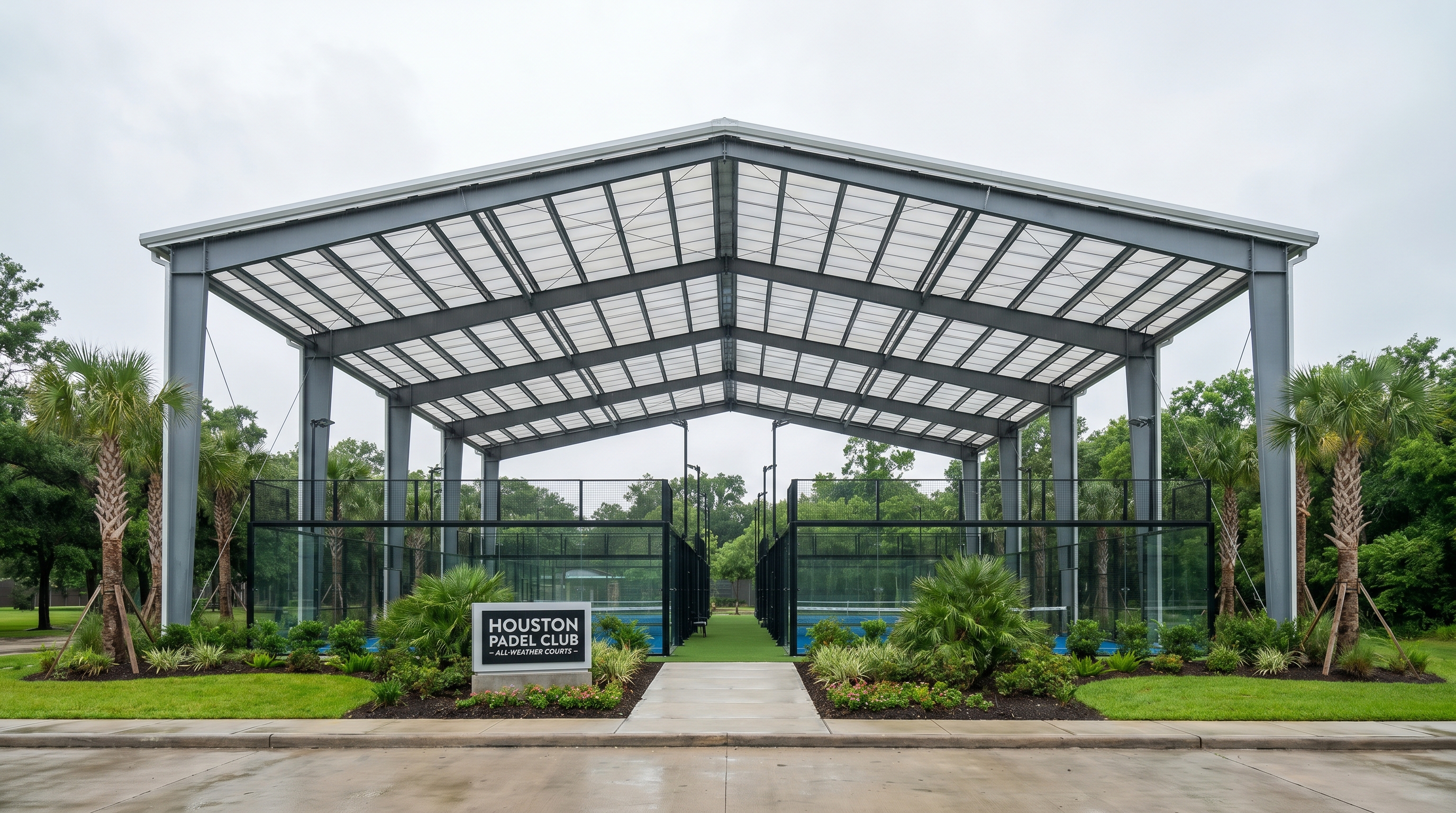
Installing a roofed court structure padel Houston transforms your facility into an all-weather destination that is immune to rain cancellations and the scorching Texas sun. A roof significantly extends the daily usage hours of your courts, as players can compete comfortably even during the 100-degree afternoons of August. This structural upgrade protects your investment by shielding the turf and glass from direct UV radiation and heavy precipitation.
Can a roof increase booking revenue?
A roofed court structure padel Houston allows you to guarantee bookings 365 days a year, providing a level of reliability that outdoor-only clubs cannot match. You will find that members are willing to pay a premium for “protected” time slots, knowing their game won’t be ruined by a sudden Gulf Coast thunderstorm.
Here’s the deal:
Predictable court availability leads to consistent revenue and higher member satisfaction.
- Rain-outs are eliminated, preserving your cash flow during the wet season.
- Shaded courts reduce the need for high-powered air conditioning in nearby lounges.
- UV protection extends the life of your expensive synthetic turf by up to 30%.
- Evening play becomes more comfortable as the roof traps less heat than open asphalt.
What are the structural requirements for a roof?
The roof for a court structure padel Houston must be engineered to handle specific wind loads, as Houston is prone to high-velocity winds during hurricane season. You should choose a design that features an independent steel sub-structure or an integrated frame that doesn’t interfere with the vertical clearance needed for lobs.
Think about this:
A roof that is too low will frustrate advanced players who rely on high defensive lobs as a core part of their strategy.
- Minimum internal height should be at least 6 to 8 meters for professional play.
- Steel supports must be deep-set into concrete footings for maximum wind resistance.
- Translucent roofing materials allow natural light in while blocking harmful UV rays.
- Gutter systems are essential to direct rainwater away from the court entry points.
Is ventilation important for roofed courts?
Maintaining airflow is crucial in a roofed court structure padel Houston to prevent the “greenhouse effect” and keep humidity levels manageable. You should look for “open-sided” roof designs that provide shade and rain protection while allowing the natural Texas breeze to circulate through the facility.
Key Takeaway:
A roofed system is the most effective way to maximize facility uptime and protect your court components from environmental degradation.
| Benefit | Open-Air Court | Roofed Padel Court |
|---|---|---|
| Weather Reliability | Low (Weather Dependent) | 100% Reliability |
| Turf Lifespan | Standard | Extended (No UV Fade) |
| Summer Play | Mornings/Evenings Only | All-Day Comfort |
| Revenue Stream | Seasonal/Variable | Consistent Year-Round |
To ensure the turf performs as intended under that roof, you must choose the right infill.
What lighting suits a court structure padel Houston?
Proper lighting for a court structure padel Houston involves high-efficiency LED floodlights that provide uniform illumination without creating glare for the players. In the Houston market, where evening play is the most popular time for busy professionals, your lighting system must be powerful enough to simulate daylight across the entire 200-square-meter surface. You should choose IP66-rated fixtures to ensure they remain waterproof and dust-tight against the humid Texas air.
How many lumens do you need?
A professional-grade court structure padel Houston typically requires eight 200W or 300W LED lamps to achieve an average of 500 to 750 lux. This level of brightness is necessary for high-speed rallies where players need to track the ball’s spin and trajectory with perfect clarity.
You might be wondering:
Why does uniform light distribution matter more than just raw brightness?
- Uniform light prevents “dark spots” that can cause players to misjudge the ball.
- LEDs reach full brightness instantly, unlike old metal-halide bulbs.
- Energy-efficient lights can reduce your monthly electricity bill by over 50%.
- Asymmetric lenses can direct light specifically onto the court, reducing light pollution.
Are LED systems better than traditional bulbs?
Modern LED systems are vastly superior for a court structure padel Houston because they have a lifespan of over 50,000 hours and produce very little heat. You will save significantly on maintenance costs because you won’t need to hire a lift to change bulbs every few months.
Truth be told:
High-quality LED lighting is one of the fastest ways to improve the “premium” feel of your club.
- Color rendering index (CRI) should be above 80 for natural-looking colors.
- Flicker-free technology is essential for high-quality video recording and streaming.
- Heavy-duty brackets prevent the lights from shifting during high winds.
- Smart controllers allow you to dim the lights during off-peak hours to save energy.
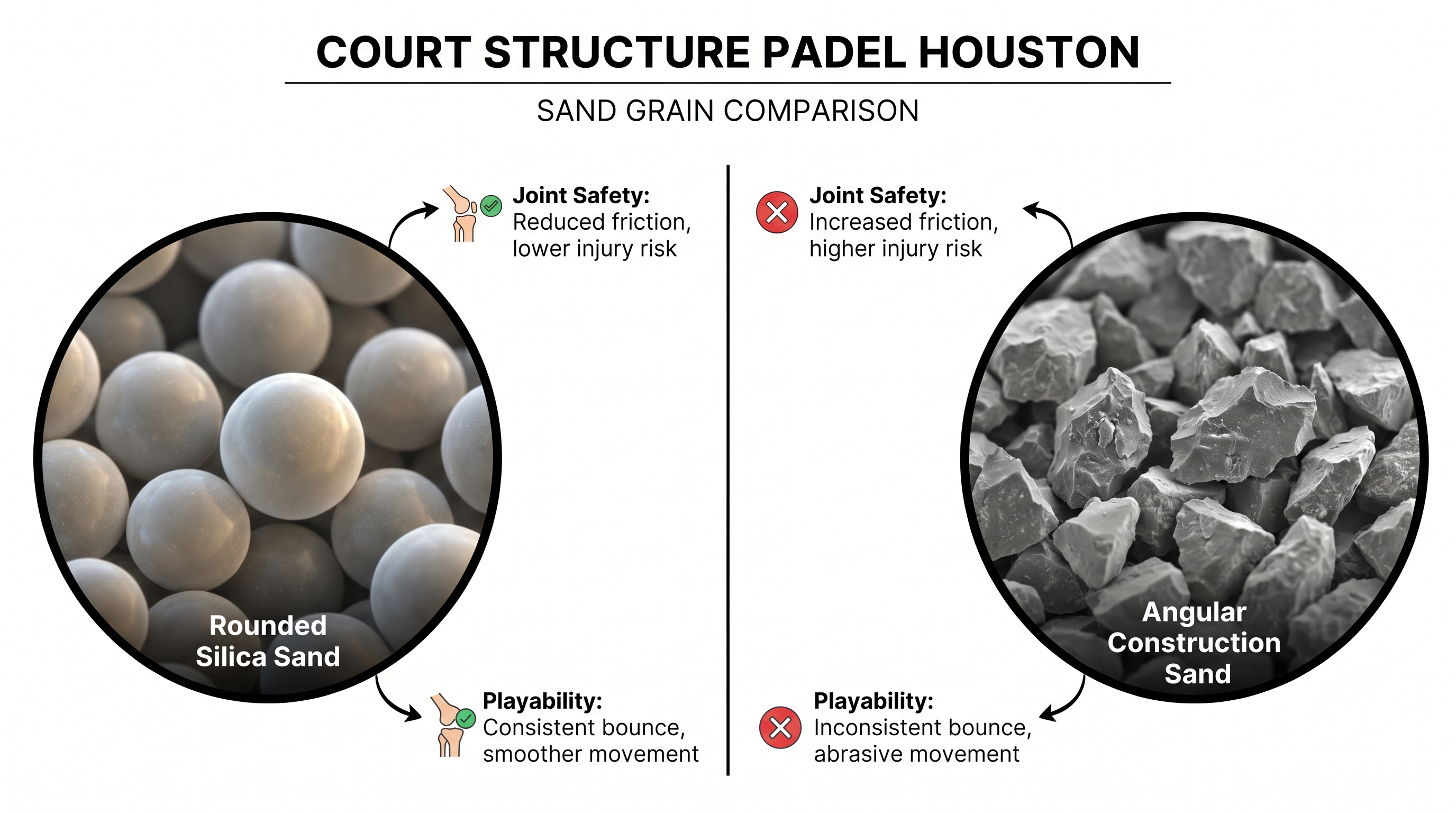
Is the infill sand important for play?
The infill sand used in your court structure padel Houston works alongside the lighting to provide a consistent playing surface. You must use rounded silica sand to prevent the turf fibers from compacting and to allow for the “slidability” that padel players need for defensive shots.
Key Takeaway:
High-performance LED lighting paired with the correct rounded sand infill ensures your courts are safe and professional during peak evening hours.
| Light Type | Metal Halide | Professional LED |
|---|---|---|
| Warm-up Time | 10 – 15 Minutes | Instant On |
| Energy Consumption | Very High | Low (Energy Star) |
| Light Quality | Yellowish / Fades | Crisp White / Consistent |
| Waterproof Rating | Usually IP65 | IP66 (Superior for Houston) |
The durability of these systems depends heavily on the precision of the initial manufacturing.
Is a modular court structure padel Houston easy to build?
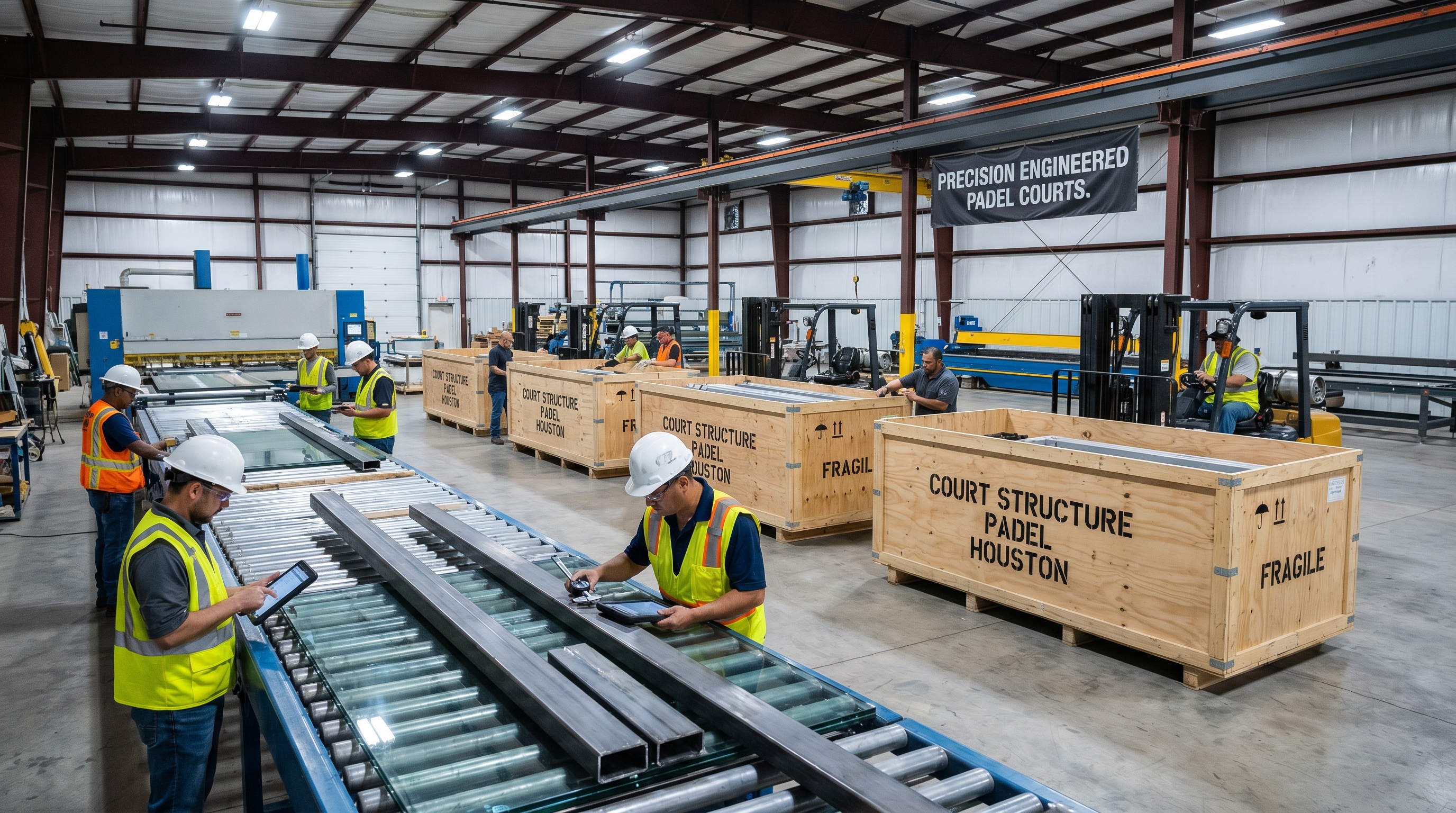
A modular court structure padel Houston is designed for rapid and error-free installation, making it accessible even for general contractors who are new to racket sports. Every component is factory-prepped with laser-cut precision, ensuring that the frame, mesh, and glass fit together like a high-end puzzle. By choosing a modular system, you minimize on-site modifications, which is crucial for staying on schedule in the fast-paced Houston construction market.
What tools are required for assembly?
The beauty of a modular court structure padel Houston is that it requires standard construction tools rather than heavy industrial machinery. Your team will mostly need high-quality impact wrenches, laser levels, and glass suction cups to handle the 12mm tempered panels safely.
Let’s get started:
With a clear manual and pre-drilled parts, a small crew can finish a court in less than a week.
- Laser levels ensure the base frame is perfectly flat for consistent ball bounce.
- Torque wrenches are used to meet the specific tension requirements for structural bolts.
- Forklifts are necessary only for unloading the heavy glass crates and steel bundles.
- Rubber mallets help seat the mesh panels into the frame without damaging the finish.
Do manufacturers provide technical support?
Leading providers of court structure padel Houston components offer detailed 3D installation manuals and remote video guidance to assist your local team. This support is vital for ensuring that the glass is mounted with the correct gaskets and that the turf is seamed with professional-grade adhesive for a seamless finish.
The best part?
Factory-direct support means you can solve technical challenges in real-time during the build.
- Structural drawings help you secure local building permits more quickly.
- Video calls with engineers can clarify complex assembly steps for your crew.
- Replacement parts can be air-freighted if any component is damaged during shipping.
- Certification documents prove the structure meets international safety standards.
How do you ensure the base is ready?
The most critical step before the court structure padel Houston arrives is ensuring the concrete slab is perfectly level and has the correct drainage slope. You should work with a local concrete specialist to pour a reinforced slab that can support the weight of the 12mm glass and the structural steel pillars.
Key Takeaway:
Modular designs significantly lower the barrier to entry for facility owners, allowing for fast, precise, and professional-grade construction.
| Build Stage | Traditional Construction | Modular System |
|---|---|---|
| On-site Welding | Extensive | Zero (Bolt-together) |
| Installation Time | 2 – 3 Weeks | 3 – 5 Days |
| Labor Cost | Higher (Specialized) | Lower (General Crew) |
| Precision | Variable | Factory-Guaranteed |
Once the court is built, you must protect your investment with a consistent maintenance plan.
How to maintain your court structure padel Houston?
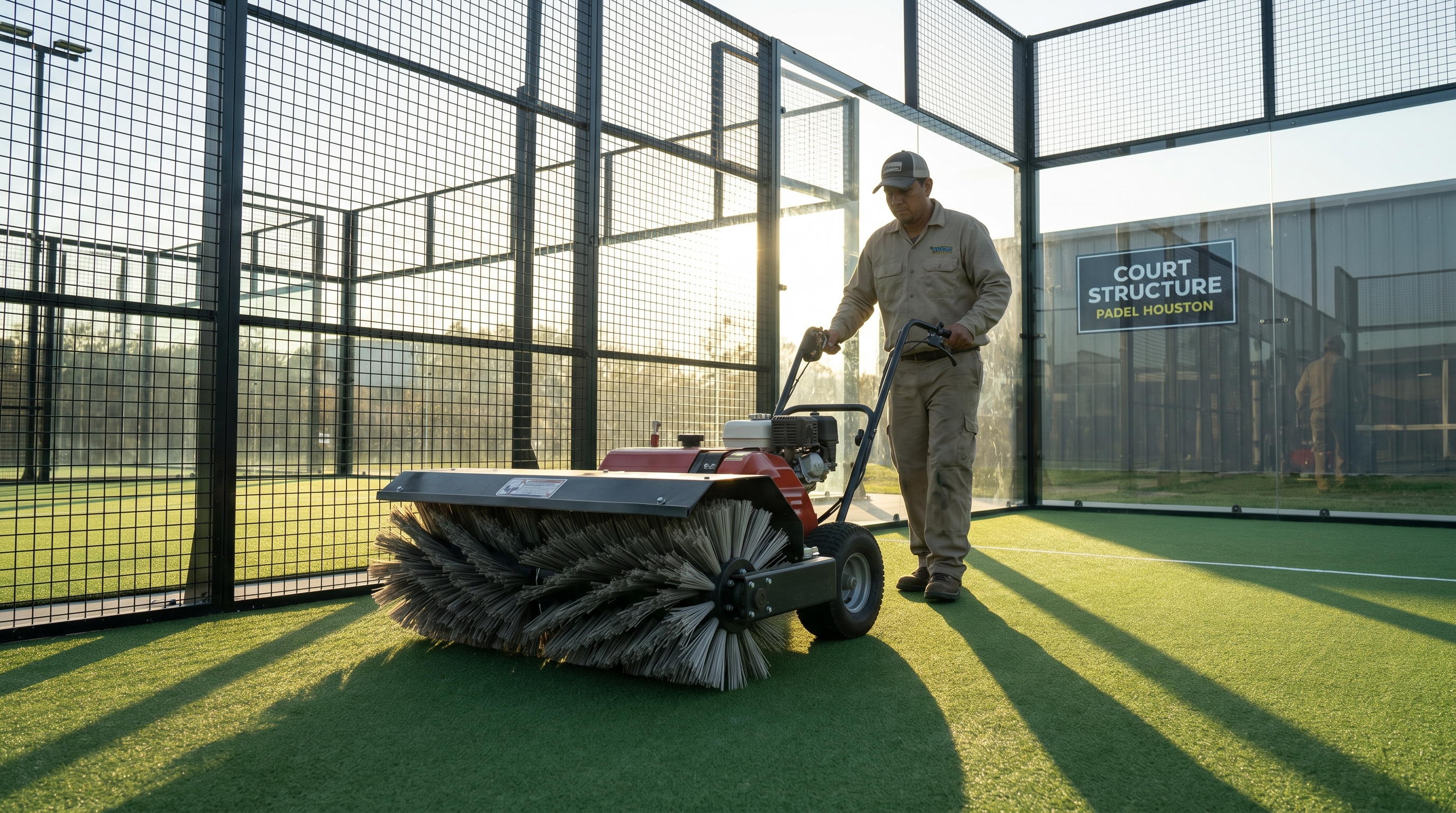
Regular maintenance of your court structure padel Houston is essential to preserve the playability of the turf and the clarity of the glass walls. Because of Houston’s humidity and occasional dust, you must implement a schedule for brushing the turf and cleaning the glass to prevent the buildup of mold or hard-water stains. A well-maintained court not only looks better but also prevents the premature wear of expensive components like the monofilament grass.
How often should you brush the turf?
For a high-traffic court structure padel Houston, you should brush the turf at least once a week to redistribute the sand infill and keep the fibers standing upright. This simple task prevents the surface from becoming “slick” or “hard,” which can lead to player injuries and inconsistent ball behavior.
What does this mean for you?
Five minutes of brushing per court each week can add years to the lifespan of your playing surface.
- Use a specialized triangular brush or a mechanical power broom for best results.
- Focus on high-wear areas like the service lines and the “net-rush” zones.
- Check for any loose seams in the turf and repair them immediately with turf glue.
- Remove leaves and debris daily to prevent organic matter from rotting in the infill.
Is glass cleaning necessary for safety?
Keeping the glass of your court structure padel Houston clean is not just about aesthetics; it ensures that players and spectators have a clear, safe view of the action. You should use a non-abrasive glass cleaner and a squeegee twice a month to remove sweat marks and environmental grime that can obscure the court.
You might be wondering:
Do dirty glass walls actually affect the game?
- Smudges can create glare and distractions for players during fast-paced points.
- Spectators expect a “crystal clear” view in panoramic facilities.
- Regular cleaning allows you to inspect the glass for small chips or mounting issues.
- Check the EPDM gaskets during cleaning to ensure they are still providing a soft seal.
When should you inspect the structural bolts?
Every three to six months, you should perform a “torque check” on the main structural bolts of your court structure padel Houston. Vibrations from heavy play and temperature fluctuations can occasionally loosen fasteners, so keeping them tight is key to maintaining the overall rigidity of the frame.
Key Takeaway:
A proactive maintenance schedule—focusing on turf grooming and bolt checks—protects your ROI and ensures player safety.
| Task | Weekly | Monthly | Quarterly |
|---|---|---|---|
| Turf Brushing | Yes | – | – |
| Glass Squeegee | – | Yes | – |
| Bolt Torque Check | – | – | Yes |
| Mesh Integrity Check | – | Yes | – |
Beyond maintenance, you can use the structure to build your own local brand.
Can I customize my court structure padel Houston branding?
Customizing your court structure padel Houston allows you to integrate your club’s logo and color palette directly into the facility’s design. Most manufacturers offer OEM (Original Equipment Manufacturer) services where you can choose specific RAL colors for the steel frame and even have your brand’s name etched into the glass or printed on the net. This level of customization is vital for high-end resorts and franchise-based gyms looking to create a unique and recognizable destination.
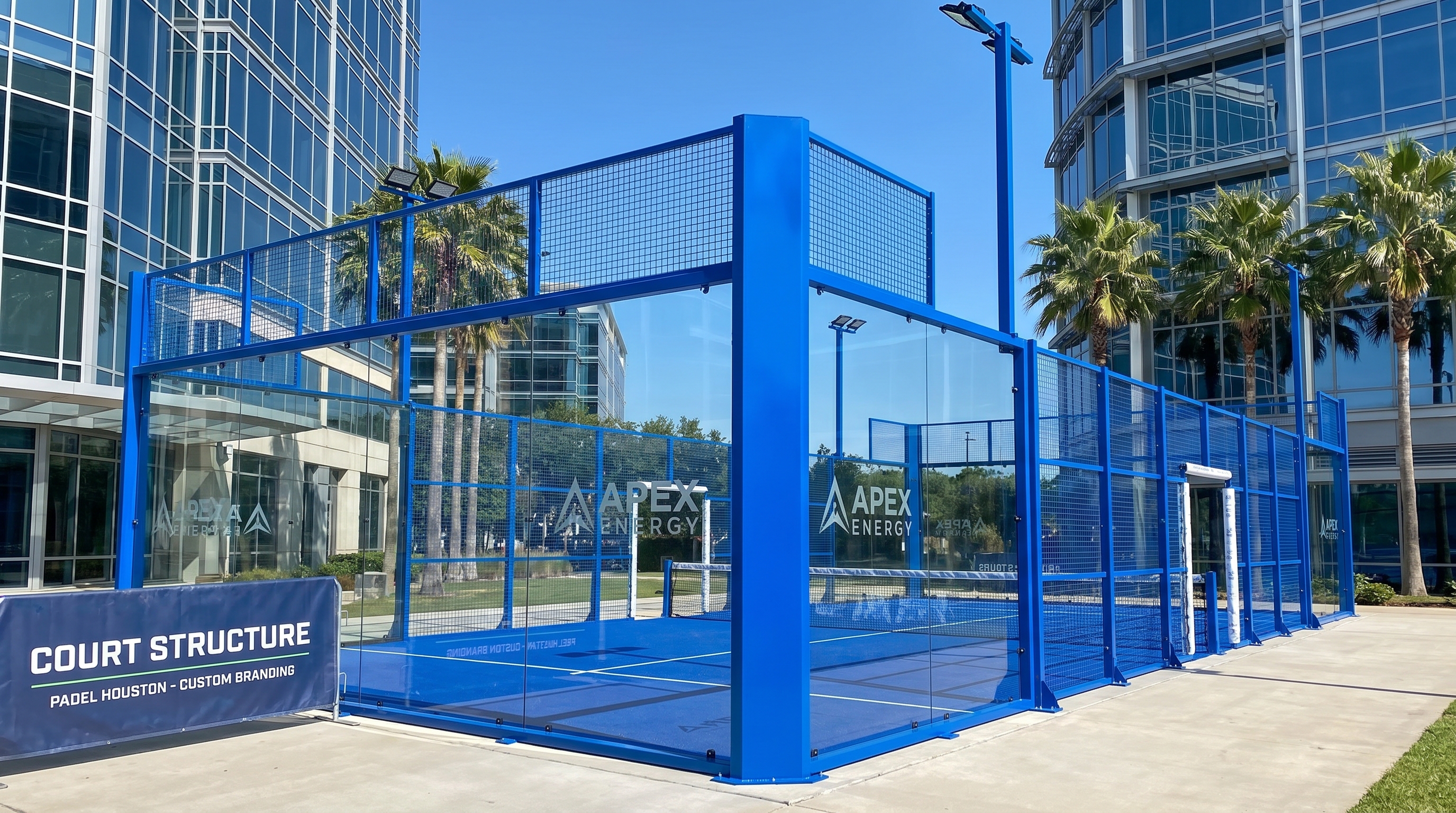
Why is brand identity important for clubs?
In a growing market like Houston, having a distinct brand identity helps your club stand out from the generic municipal courts. Players feel a stronger connection to a “branded” environment, which drives loyalty and encourages them to share photos of your uniquely colored courts on social media.
Here’s the deal:
A court that looks like a custom-designed masterpiece commands higher booking fees and attracts better sponsors.
- Custom frame colors can match your interior design or corporate branding.
- Logos on the net and glass provide excellent visibility for tournament sponsors.
- Matching turf and frame colors create a sleek, professional aesthetic.
- Branded “court-side” benches and accessories complete the professional look.
Can you choose specific turf colors?
While blue is the most popular choice for a court structure padel Houston, you can opt for green, red, or even black turf to match your facility’s theme. Textured turf options allow for multi-color designs, such as using a different color for the out-of-bounds perimeter to help players with court awareness.
Think about this:
A red clay-colored turf provides a classic look while maintaining the low maintenance of a synthetic surface.
- Blue turf offers the best contrast for the yellow ball, especially under LED lights.
- Green turf provides a traditional “lawn” feel that fits well in country clubs.
- Black or dark grey turf is trending for ultra-modern “underground” style gyms.
- Customized “no-play” zones can be colored to match safety requirements.
Is OEM support available for small orders?
Many factory-direct suppliers offer OEM customization for as little as one court structure padel Houston. This flexibility means you don’t need to be a multi-national franchise to have a court that is uniquely yours, allowing small business owners to build a professional brand from day one.
Key Takeaway:
Full OEM customization turns a standard sports facility into a powerful branding tool that attracts members and sponsors alike.
| Custom Option | Standard | OEM / Branded |
|---|---|---|
| Frame Color | Standard Blue/Black | Any RAL Color |
| Glass Logo | None | Sandblasted/Etched Logo |
| Turf Color | Blue | Green, Red, Black, Purple |
| Net Customization | Standard Logo | Custom PVC Net Top |
The final step is finding the right partner to ship these components to the Port of Houston.
Where can I buy a court structure padel Houston direct?
Buying a court structure padel Houston directly from a manufacturer like Superbpadel allows you to bypass middleman markups and save up to 30% on your procurement costs. By working with a factory, you gain direct access to engineering expertise, customized design options, and a much more transparent supply chain. This is especially beneficial for large-scale projects in Texas where shipping costs and technical specifications must be managed with precision.
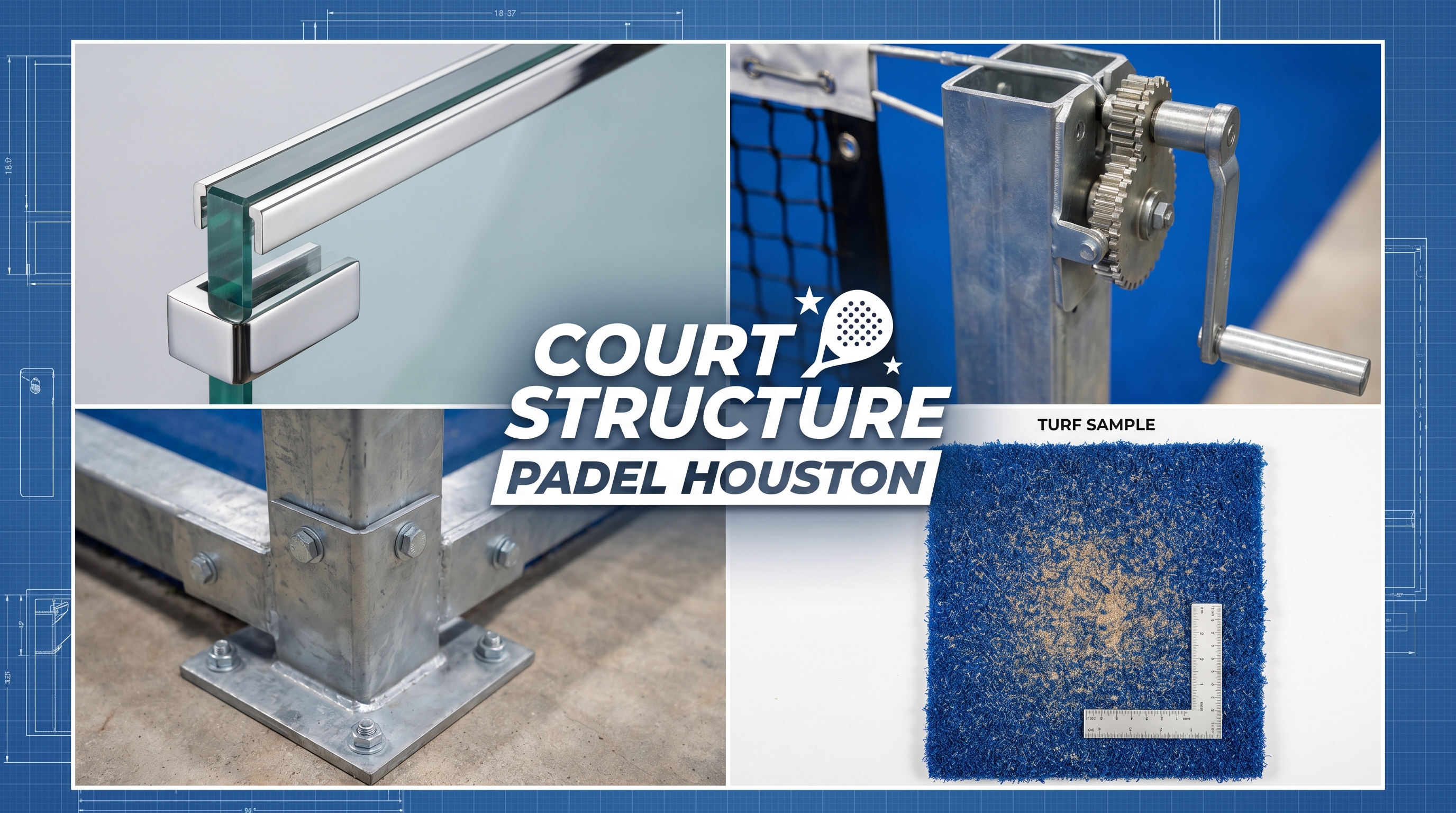
What are the benefits of factory-direct?
Eliminating the distributor means you are communicating directly with the people who build your court structure padel Houston. You receive more accurate technical documentation, faster responses to customization requests, and a guarantee that the materials used meet the specific certifications required for US construction.
You might be wondering:
Is it difficult to handle the international logistics of a direct factory order?
- Manufacturers often have dedicated logistics teams familiar with the Port of Houston.
- You receive a complete documentation package for customs and local permits.
- Direct communication ensures that your specific color and sizing requests are met.
- Factory prices allow you to upgrade to panoramic glass for the same cost as a standard court.
How does shipping to Houston work?
Most court structure padel Houston orders are shipped in 40-foot HQ containers, which can hold up to two or three complete court systems. The manufacturer handles the secure packing of the glass and steel to prevent any damage during the ocean transit, providing you with a “ready-to-install” package upon arrival.
Truth be told:
Shipping directly to your site is more efficient and reduces the risk of multiple-handling damage.
- Containers are typically sealed at the factory and opened only at your job site.
- Insurance is usually included to cover any unforeseen transit issues.
- Real-time tracking allows you to plan your labor and foundation work accurately.
- Local logistics partners can handle the “final mile” delivery from the port to your facility.
Is there a Minimum Order Quantity (MOQ)?
Leading manufacturers have a “No MOQ” policy, meaning you can start with a single court structure padel Houston to test your market. This flexibility is perfect for gym owners or residential developers who want to pilot a padel program before committing to a larger multi-court complex.
Key Takeaway:
Sourcing direct from the factory provides the best balance of cost-efficiency, technical support, and customization for your Houston project.
| Strategy | Local Distributor | Factory Direct |
|---|---|---|
| Total Cost | High (Multi-level markup) | Factory-Direct (30% Savings) |
| Customization | Limited to Stock | Unlimited OEM/ODM |
| Tech Support | Third-party / General | Direct Engineering Team |
| Logistics | Domestic Only | Global Door-to-Port |
To start your journey toward owning a world-class facility, reach out for a personalized consultation.
Selecting the right structure for your facility is the foundation of your future success. We are dedicated to providing the most durable, professional, and visually stunning padel courts on the market. Our vision is to empower club owners in Houston and beyond with factory-direct solutions that elevate the sport and drive business growth. To get a personalized quote and detailed structural drawings, contact us today and let’s build your dream facility together.
Frequently Asked Questions
Can I install a padel court on an existing tennis court?
Yes, you can typically fit three padel courts into the space of one standard doubles tennis court. However, you will need to evaluate the existing concrete slab to ensure it is thick enough (usually 4-6 inches) and level enough to support the new steel pillars and heavy glass panels.
What’s the best way to handle Houston’s humidity?
The most effective solution is to choose a “hot-dip galvanized” steel frame. Unlike standard painting, this process protects the metal from both the inside and outside, preventing rust from forming in the salty, humid air of the Gulf Coast.
How long does it take to ship a court to Houston?
From the time your order is finalized, production typically takes 2 to 3 weeks, followed by 4 to 6 weeks for ocean freight to the Port of Houston. Total lead time usually ranges from 8 to 10 weeks, allowing you plenty of time to prepare your foundation.
Can I customize the color of the turf?
Absolutely. While “WPT Blue” is the standard, you can choose from green, red, black, or even purple turf to match your club’s branding. We recommend choosing a color that provides high contrast with the yellow padel ball for the best player experience.
What is the minimum height needed for an indoor court?
For professional play, the International Padel Federation recommends a minimum clear height of 6 meters (about 20 feet) across the entire court surface. For competitive clubs, 8 meters is preferred to accommodate the high lobs that are a key part of advanced strategy.