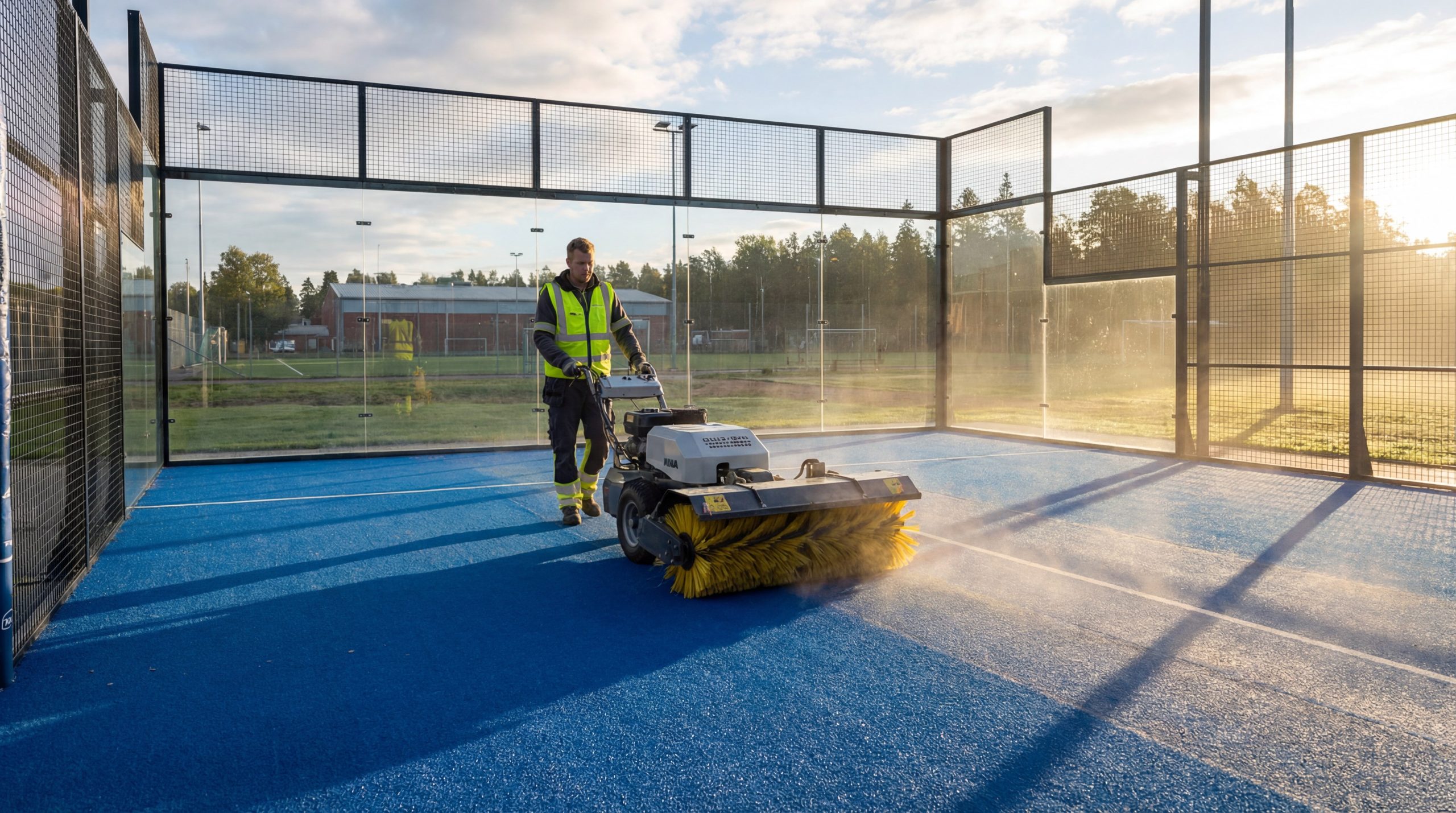
Deporte padel is a high-energy racket sport played in doubles on an enclosed glass court that combines elements of tennis and squash. If you are a sports facility owner, you likely face the challenge of declining engagement and stagnant revenue from traditional, large-footprint courts. This lack of social interaction and the steep learning curve of older sports can often leave your valuable real estate underutilized and unprofitable. By integrating deporte padel into your business model, you provide a high-density, social, and accessible solution that maximizes player turnover and generates rapid returns on investment.
1. What is the history of deporte padel?
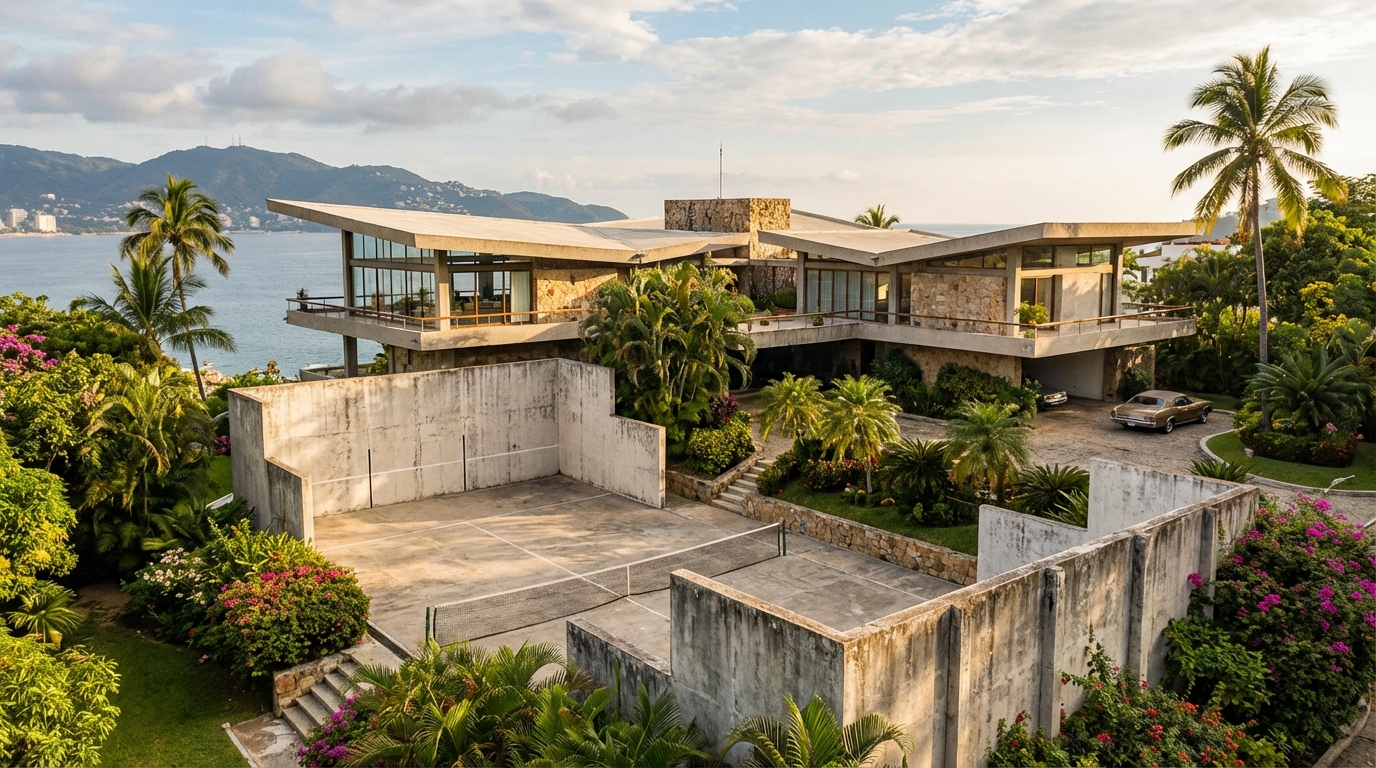
The sport was invented in 1969 by Enrique Corcuera in Acapulco, Mexico, after he lacked space for a full-sized tennis court. This origin story of deporte padel began with a 20×10 meter area enclosed by walls to keep the ball in play. The game was born out of a practical need for a more compact and engaging racket experience within a private residential setting.
How did the first court design look?
The original court featured solid concrete walls and a metallic mesh fence to prevent the ball from escaping into the surrounding vegetation. You might find it interesting that the initial design focused primarily on utility and containment rather than the modern aesthetic of glass.
- Dimensions: 20 meters by 10 meters.
- Enclosure: 3-meter high walls.
- Surface: Smooth concrete or cement.
What were the original rules?
Enrique’s wife, Viviana, wrote the first official rulebook as a birthday present to codify how the walls could be used during play. But that is not all.
| Feature | Original Specification |
|---|---|
| Players | Doubles only (2 vs 2) |
| Wall Usage | Ball must hit ground before wall |
| Scoring | Identical to tennis scoring |
The original rules established the social, doubles-centric nature of the sport that remains its hallmark today.
Key Takeaway: The sport began as a space-saving modification of tennis that emphasized continuous play using surrounding walls.
2. How did deporte padel enter Europe?
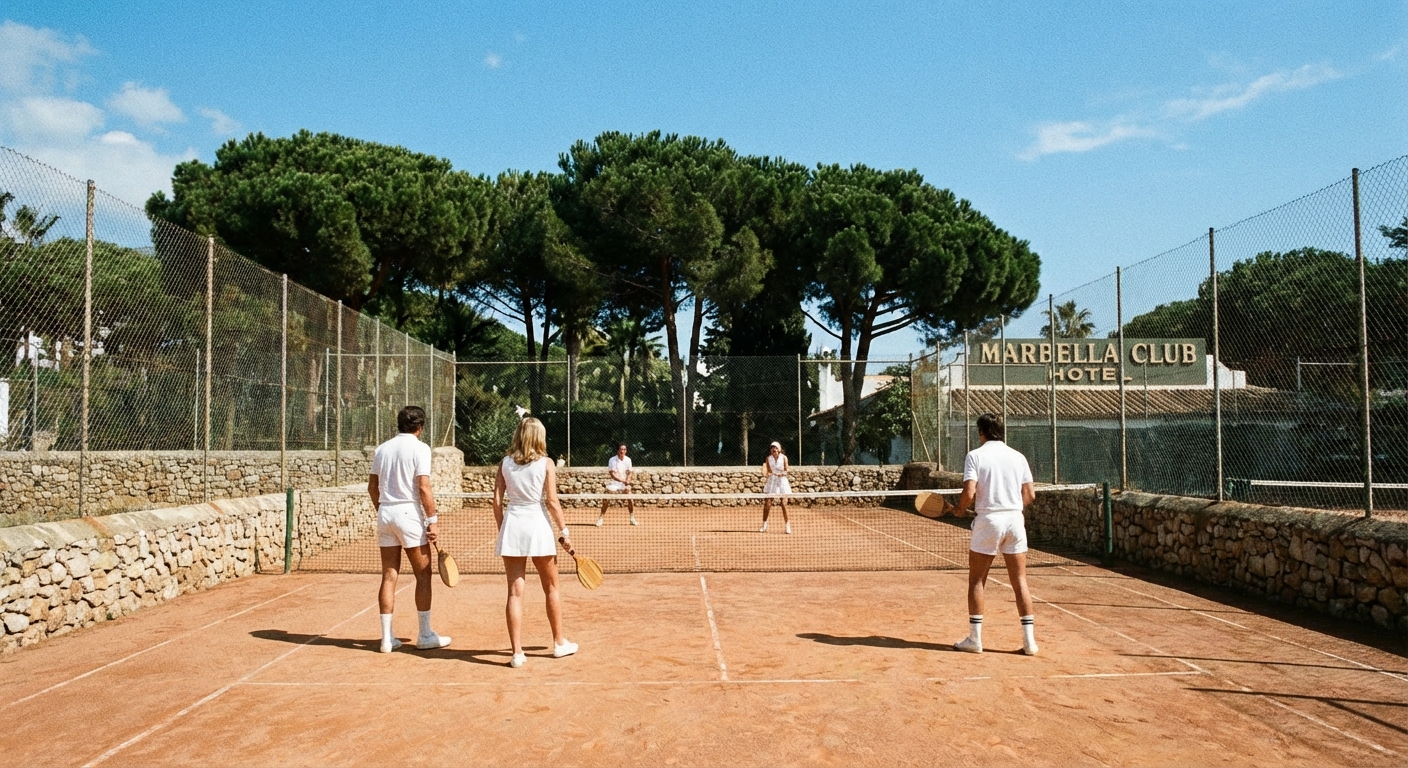
Prince Alfonso de Hohenlohe introduced deporte padel to Spain in 1974 after visiting Enrique Corcuera in Mexico. He was so captivated by the game’s social dynamics that he built the first European courts at the Marbella Club Hotel. This move successfully transitioned the sport from a private hobby to a premium club attraction for the international elite.
Why was the Marbella Club significant?
The Marbella Club provided the prestigious platform needed to attract high-profile players and investors from across the continent. Because of this exposure, the sport quickly gained a reputation as a sophisticated and fashionable activity for luxury tourists.
Here is the kicker:
- Celebrity Endorsement: Attracted movie stars and athletes.
- Social Networking: Created a hub for business elites.
- Standardization: Influenced early court builds in the region.
| Growth Metric | Marbella Influence |
|---|---|
| Target Demographic | High-net-worth individuals |
| Expansion Rate | Spread to surrounding villas quickly |
| Style | Defined the “club lifestyle” of the sport |
Marbella acted as the catalyst that transformed a Mexican invention into a European sports phenomenon.
Key Takeaway: Spain’s adoption of the sport through luxury hotels created the blueprint for modern commercial padel clubs.
3. Why is deporte padel popular in Argentina?
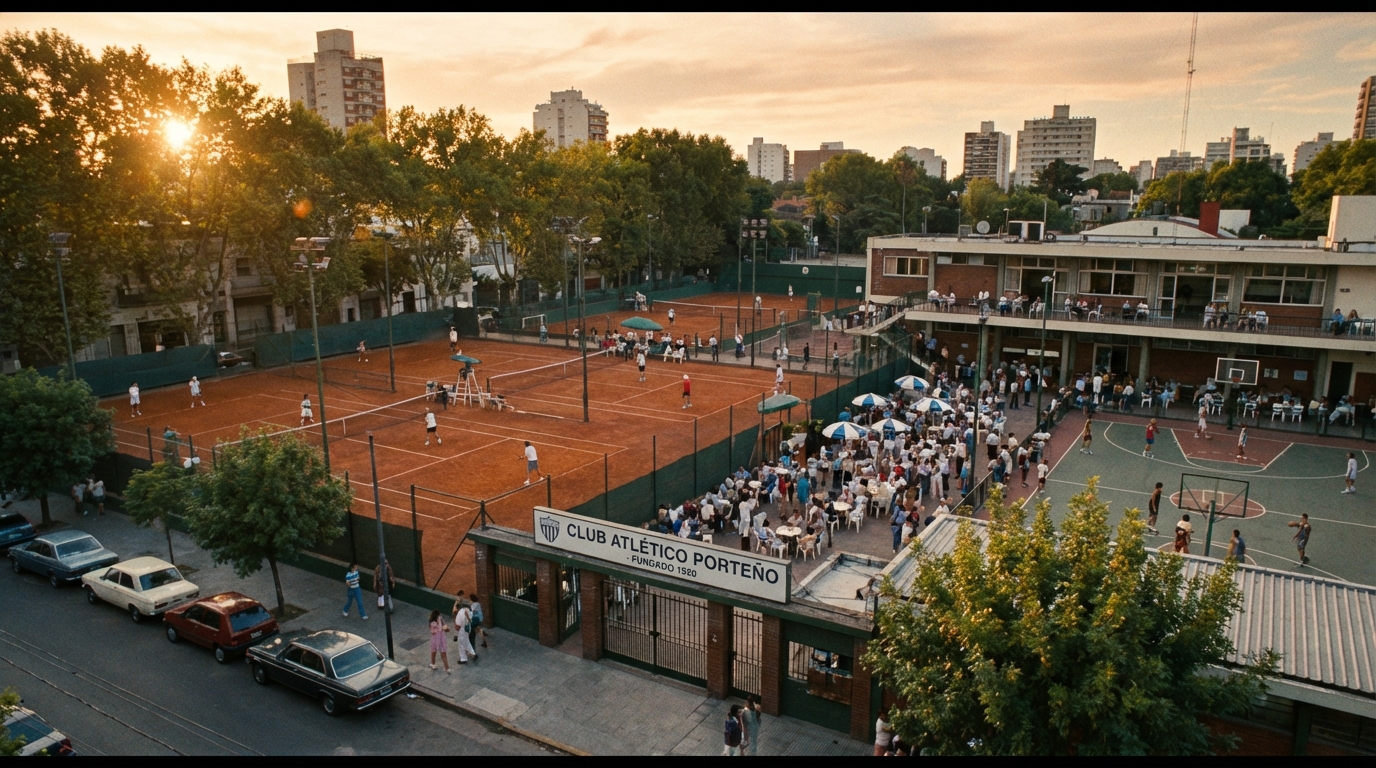
During the 1980s, the sport experienced a massive explosion in Argentina, becoming the second most practiced sport in the country. This rapid rise of deporte padel was driven by its accessibility and the low cost of building courts in urban centers. It evolved from an elite pastime into a national social ritual played by millions of citizens every week.
When was the first association formed?
The Association Pádel Argentino was founded in 1988 to manage the soaring number of players and professionalize domestic competitions. This organization helped standardize the game and facilitated the first international matches against Spanish teams.
You need to know this:
- National Reach: Courts appeared in every major city.
- Media Coverage: Matches began to be televised.
- Player Base: Millions of active amateur players.
| Development | Argentina 1980s |
|---|---|
| Popularity Rank | Second only to football |
| Innovation | Moved toward glass walls for spectators |
| Professionalism | Birth of the first pro circuits |
Argentina’s passion for the game provided the competitive foundation that eventually led to a unified global circuit.
Key Takeaway: The Argentine boom proved that the sport could achieve mass-market success outside of exclusive luxury circles.
4. What are the deporte padel court dimensions?
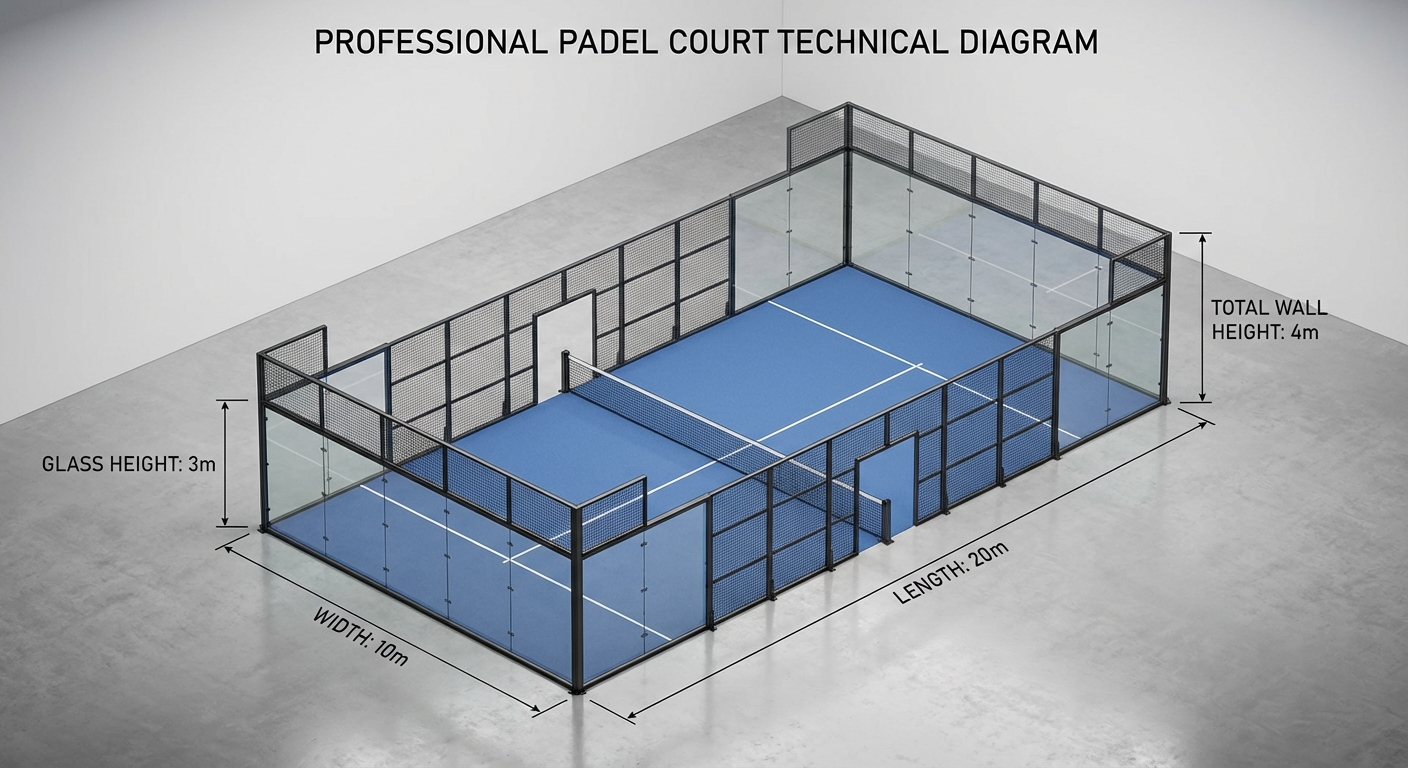
A standard court for deporte padel measures exactly 20 meters in length and 10 meters in width. For club owners, choosing a Standard Padel Court layout is essential to ensure your facility meets international regulatory requirements. These dimensions allow you to fit up to three courts in the space of one traditional tennis court, significantly increasing your revenue per square meter.
What are the wall height requirements?
The rear walls must stand 3 meters high, typically topped by an additional 1 meter of metallic mesh for a total height of 4 meters. This specific configuration allows for the strategic “off the wall” shots that define the sport’s unique tactical depth.
Make no mistake:
- Rear Glass: 3 meters high.
- Side Glass: Steps down from 3 to 2 meters.
- Mesh Fence: 1 meter above the glass at the back.
| Dimension | Specification |
|---|---|
| Total Length | 20 meters |
| Total Width | 10 meters |
| Net Height | 88 cm (center) to 92 cm (sides) |
Adhering to these precise measurements ensures that your players experience a fair and professional level of playability.
Key Takeaway: The compact 20×10 meter footprint is the primary driver behind the sport’s high profitability and land-use efficiency.
5. How to select glass for deporte padel?
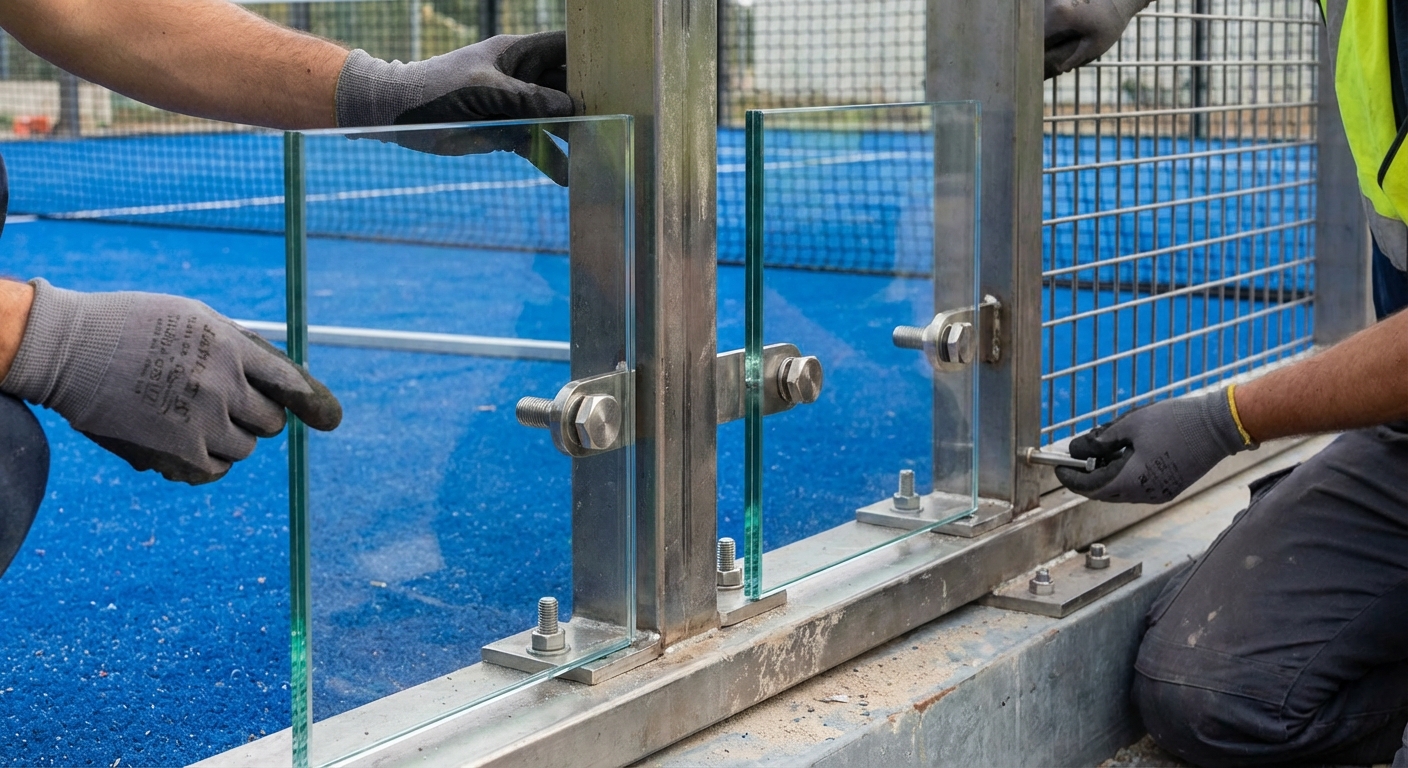
Selecting the right Padel Glass is critical for both player safety and the long-term durability of your deporte padel facility. You should prioritize 12mm tempered safety glass which complies with EN 12150 standards to withstand high-impact collisions. Using inferior materials can lead to structural failure and significant legal liabilities for your sports club or commercial venue.
What is the benefit of panoramic walls?
A Panoramic Padel Court utilizes specialized glass sections without vertical steel pillars to provide an unobstructed view for spectators. This design is highly recommended for tournament settings and clubs that prioritize a modern, high-end aesthetic for their members.
But that is not all.
- Visual Clarity: Perfect for photography and broadcasting.
- Structural Strength: Uses thicker glass to compensate for fewer pillars.
- Spectator Engagement: Enhances the viewing experience during matches.
| Glass Type | Recommended Thickness | Safety Standard |
|---|---|---|
| Standard Tempered | 10mm – 12mm | EN 12150 |
| Laminated Safety | 6+6mm | Impact resistant |
| Professional Panoramic | 12mm | Maximum visibility |
Investing in high-quality glass reduces maintenance costs and ensures the highest level of safety for every player.
Key Takeaway: Tempered glass is the industry standard, but panoramic designs offer superior aesthetic value for premium club environments.
6. Which turf suits deporte padel best?
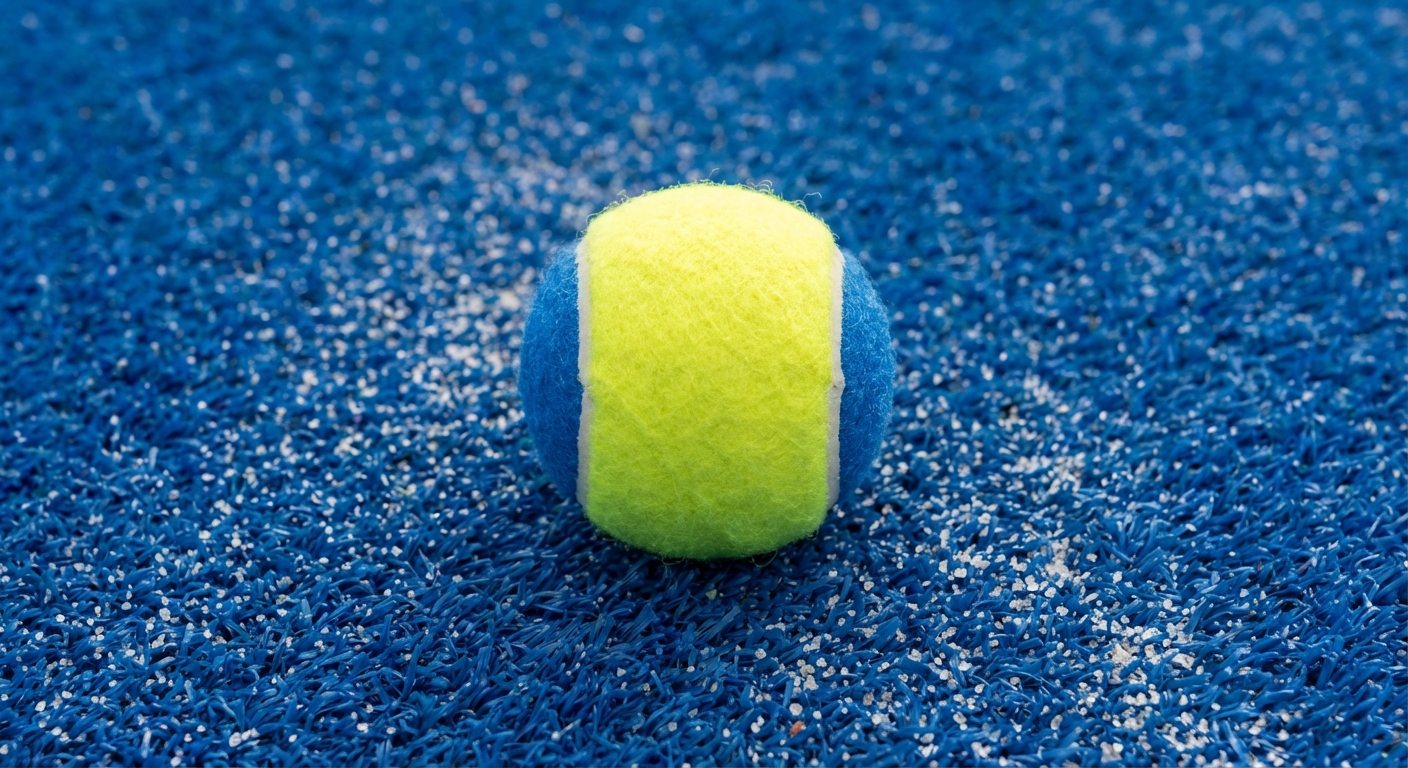
For optimal playability, deporte padel requires a high-density synthetic Padel Grass that allows for consistent ball bounce and player traction. You should choose monofilament fibers if you want a surface that resists matting and maintains its upright structure over years of heavy use. Proper turf selection directly impacts the speed of the game and the physical comfort of the athletes playing on your courts.
Why is sand distribution important?
Kiln-dried silica sand is spread across the turf to weigh down the carpet and facilitate the sliding movements required in high-level play. If the sand is not evenly distributed, you will notice “dead spots” where the ball fails to bounce correctly, frustrating your customers.
Here is the kicker:
- Sand Volume: Usually 2,000kg to 3,000kg per court.
- Grain Size: 0.2mm to 0.8mm for optimal drainage.
- Friction Control: Allows players to slide safely without joint strain.
| Turf Feature | Benefit |
|---|---|
| Fibrillated Fiber | Better sand retention |
| Monofilament Fiber | Superior durability and resilience |
| Blue Color | High contrast for ball visibility |
Selecting a premium turf reduces the frequency of brushing and ensures your court remains in peak condition for longer periods.
Key Takeaway: The combination of high-density synthetic fibers and precise sand infill determines the professional “feel” of the court.
7. What lighting is used in deporte padel?
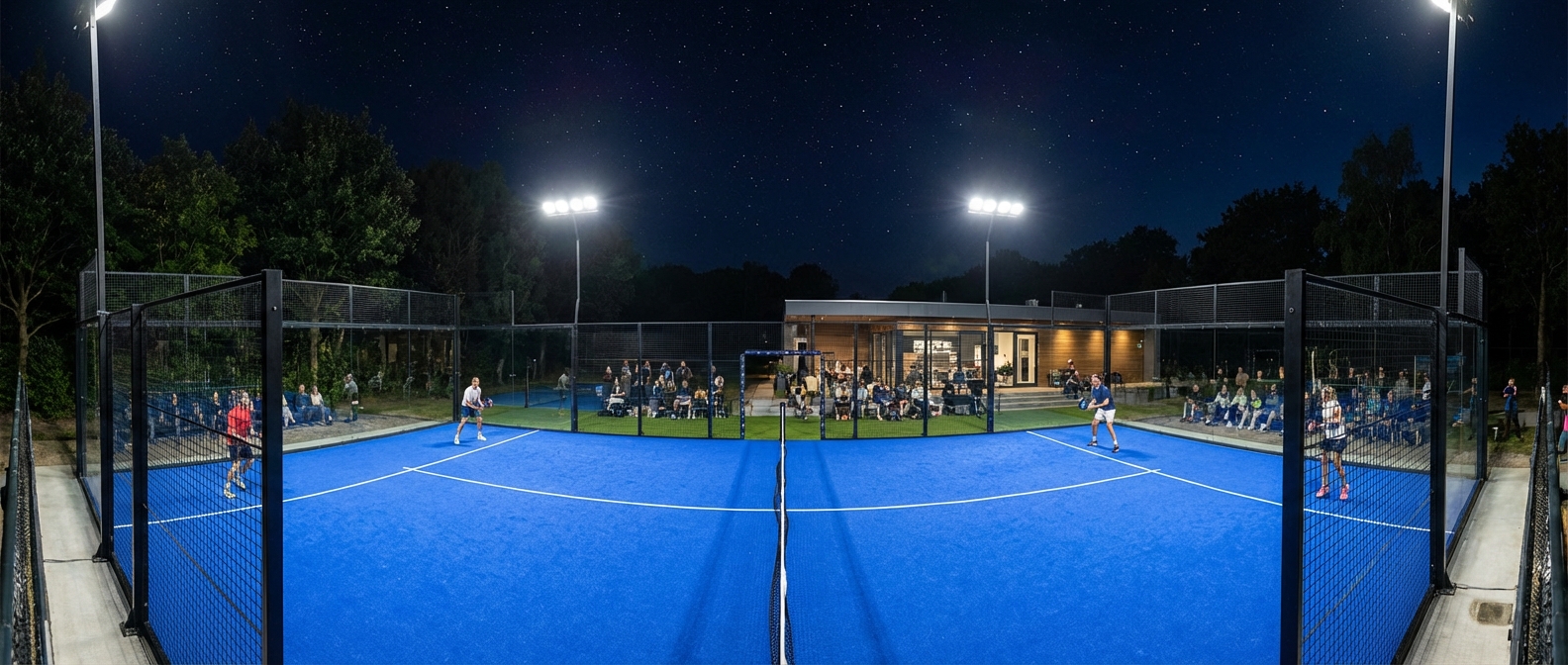
Professional deporte padel facilities must install LED floodlights that provide between 500 and 750 lux to ensure maximum visibility during night matches. High-quality lighting allows your club to operate for more hours per day, effectively increasing your potential booking revenue during the lucrative evening slots. You should look for IP66-rated fixtures to ensure the electronics are protected from dust and heavy rain in outdoor installations.
How to avoid player glare?
Proper mast placement and the use of asymmetric lenses are essential to ensure that players are not blinded when looking up to hit a high lob. You should position the light masts outside the court perimeter to provide uniform light distribution across the entire blue turf surface.
Consider these factors:
- Mast Height: Typically 6 meters above court level.
- Lumen Output: 26,000 to 30,000 lumens per lamp.
- Energy Efficiency: LEDs reduce electricity costs by up to 60%.
| Lighting Standard | Requirement |
|---|---|
| Recreational Play | 300 – 500 Lux |
| Professional Competition | 500 – 750 Lux |
| Uniformity (Uo) | > 0.7 for even distribution |
Superior lighting design not only improves the player experience but also makes your facility a more attractive destination for late-night social leagues.
Key Takeaway: Energy-efficient LED lighting is a mandatory investment for maximizing court uptime and ensuring professional-grade visibility.
8. How to build a deporte padel foundation?
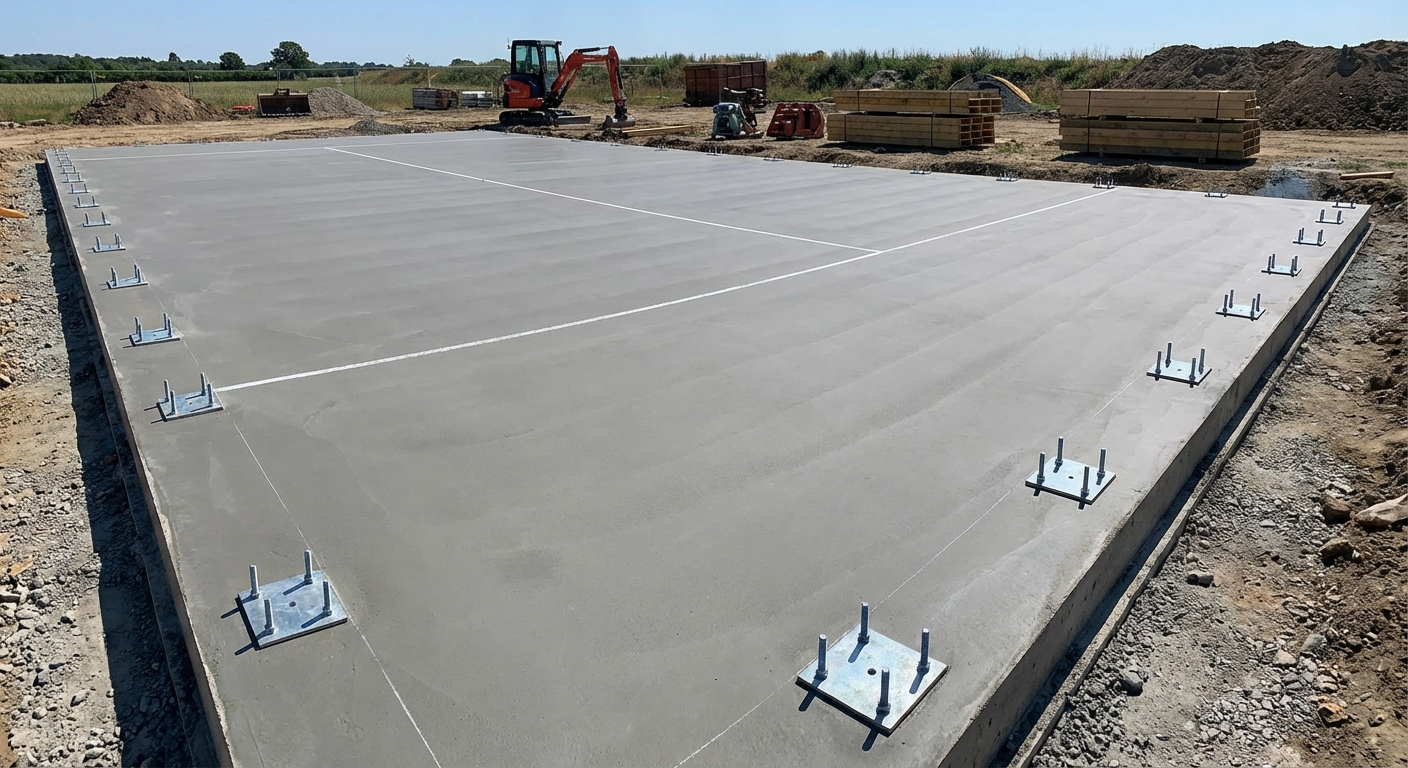
Building a successful deporte padel court starts with a laser-leveled reinforced concrete slab that serves as the structural anchor for the steel frame. You must ensure the foundation has a slight 1% slope from the center toward the sides to facilitate efficient water runoff during heavy rain. A poorly constructed base will lead to shifting glass panels and wrinkled turf, which are incredibly expensive and difficult to repair later.
Why is soil compaction necessary?
Before pouring concrete, you must compact the underlying soil to prevent future subsidence that could crack the foundation and misalign the glass walls. Using a layer of crushed stone and a moisture barrier will help stabilize the ground and protect your investment from underground water damage.
Make no mistake:
- Slab Thickness: Minimum 15cm to 25cm of reinforced concrete.
- Concrete Grade: HA-25 or higher for structural strength.
- Anchor Bolts: Chemical anchors are preferred for the steel pillars.
| Foundation Step | Objective |
|---|---|
| Excavation | Remove organic material |
| Leveling | Ensure perfectly flat playing surface |
| Drainage | Prevent water pooling under the turf |
A flawless foundation is the most critical technical step in the construction process, as it supports the entire weight of the glass and steel structure.
Key Takeaway: Precision engineering of the concrete slab is non-negotiable for the safety and longevity of any professional padel installation.
9. Who governs the rules of deporte padel?
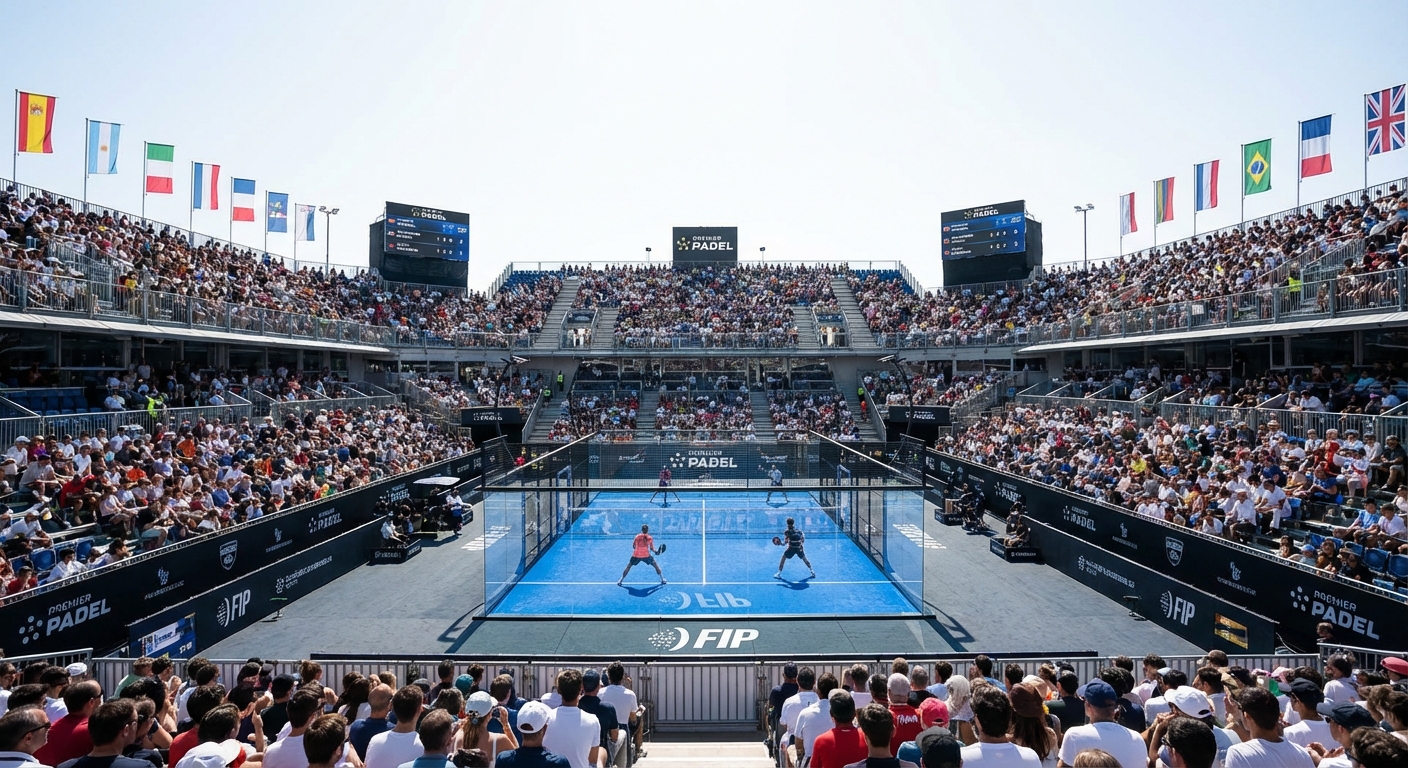
The International Padel Federation (FIP) is the global governing body responsible for standardizing the rules and regulations of deporte padel. Established in 1991, the FIP oversees international tournaments and works to promote the sport’s inclusion in major multi-sport events like the European Games. Following FIP guidelines is essential if you intend to host official sanctioned matches or professional tournaments at your facility.
What is the path to Olympic status?
The sport is rapidly expanding its global footprint, with over 70 national federations now affiliated with the FIP as of 2023. You can expect the sport to reach Olympic recognition soon, as it meets the required criteria for global participation across multiple continents and genders.
Think about this:
- Global Reach: Practiced in over 150 countries.
- Professional Circuit: Supported by major global investment groups.
- Youth Development: New “Promises” circuits for junior players.
| Milestone | Year Achieved |
|---|---|
| FIP Foundation | 1991 |
| Unification of Rules | 1997 |
| Launch of Premier Padel | 2022 |
The governance provided by the FIP ensures that the sport remains consistent and competitive as it scales toward ultimate global recognition.
Key Takeaway: FIP standardization provides the legal and competitive framework that allows the sport to grow into a professional global industry.
10. Is deporte padel a good investment?
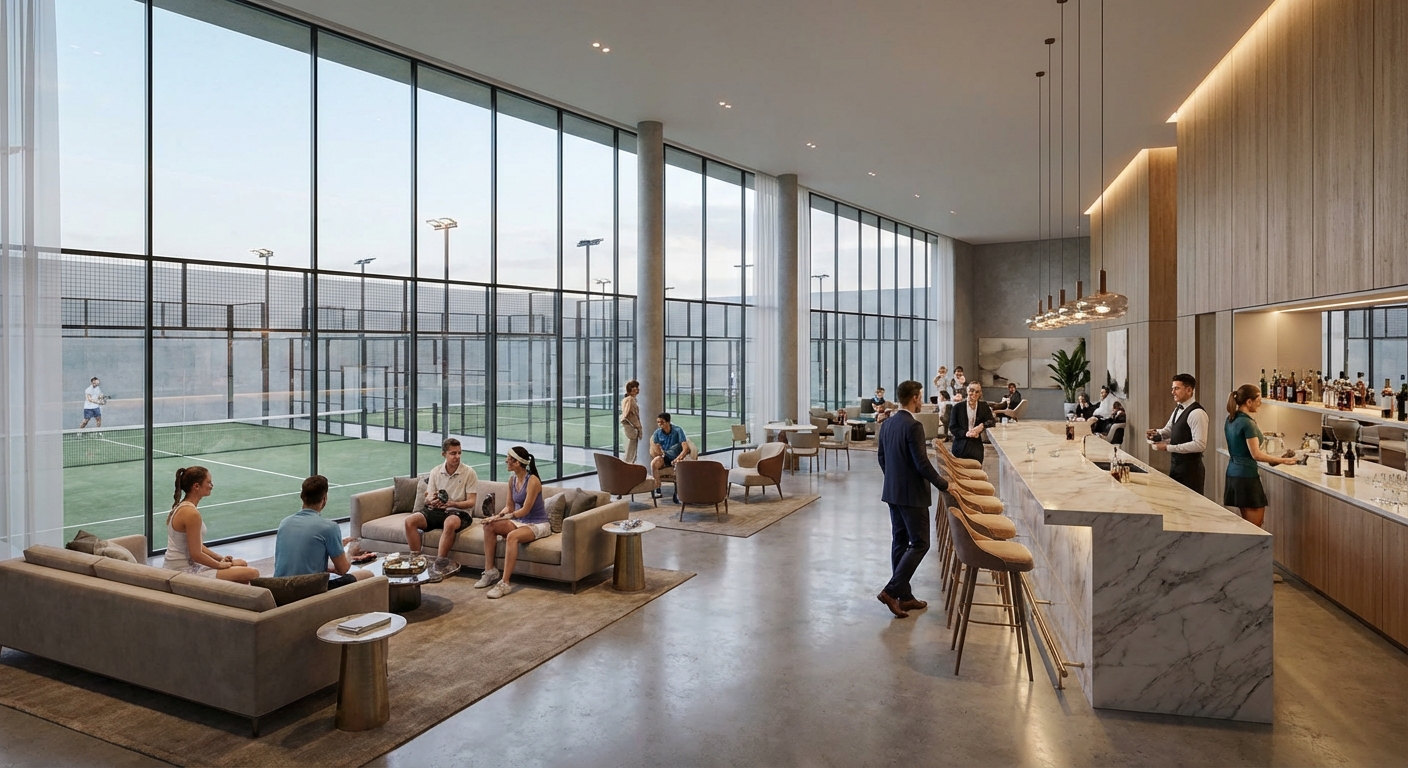
From a business perspective, deporte padel offers a significantly higher ROI than tennis because it allows for four paying players on a much smaller land footprint. By installing a Roofed Padel Court, you can guarantee year-round playability and protect your revenue from seasonal weather disruptions. The social nature of the game also drives secondary spending in your club’s pro-shop, bar, and lounge areas.
How to maximize club revenue?
You should integrate social zones and high-quality food and beverage services to encourage players to stay at your facility long after their match has ended. This “stay and spend” model transforms a simple sports court into a comprehensive lifestyle destination that attracts corporate events and private parties.
But that is not all.
- Tournament Fees: High demand for weekend leagues.
- Coaching Programs: High margins for professional instruction.
- Retail Sales: Recurring revenue from rackets, balls, and apparel.
| Business Metric | Padel Advantage |
|---|---|
| Players per Sqm | 4 players in 200 sqm |
| Social Engagement | Higher than tennis or squash |
| Maintenance Cost | Lower than natural grass surfaces |
The combination of high player density and strong community engagement makes the sport one of the most profitable modern sports investments available.
Key Takeaway: The social and spatial efficiency of the sport makes it the premier choice for modern sports club development and urban investment.
*
The evolution of the sport from a private backyard in Mexico to a global commercial powerhouse proves its incredible resilience and universal appeal. For developers and investors, the opportunity lies in matching this rich history with uncompromising construction standards. By focusing on technical details like foundation precision and high-quality glass, you can create a sports destination that serves both elite athletes and a thriving social community. At our core, we believe in providing the infrastructure that empowers people to connect through sport. To start your journey into this lucrative market, contact us today and let our expert team guide your court construction project from start to finish.
FAQ
Can I build a padel court on an existing tennis court?
Yes, you can typically fit two to three padel courts on the space of one standard tennis court, which triples your player density.
What is the best height for an indoor facility?
For professional play, you should ensure a minimum clear ceiling height of 7 meters, though 8 or 9 meters is preferred for international competitions.
Can I install these courts in extreme weather environments?
Yes, choosing hurricane-rated structures and roofed configurations allows you to operate safely in regions with high winds or heavy snowfall.
What’s the best way to maintain the turf?
You should brush the turf weekly to redistribute the silica sand and prevent the synthetic fibers from laying flat.
Can I customize the color of the court frame?
Yes, most manufacturers offer a wide range of RAL colors for the galvanized steel structure to match your club’s specific branding.