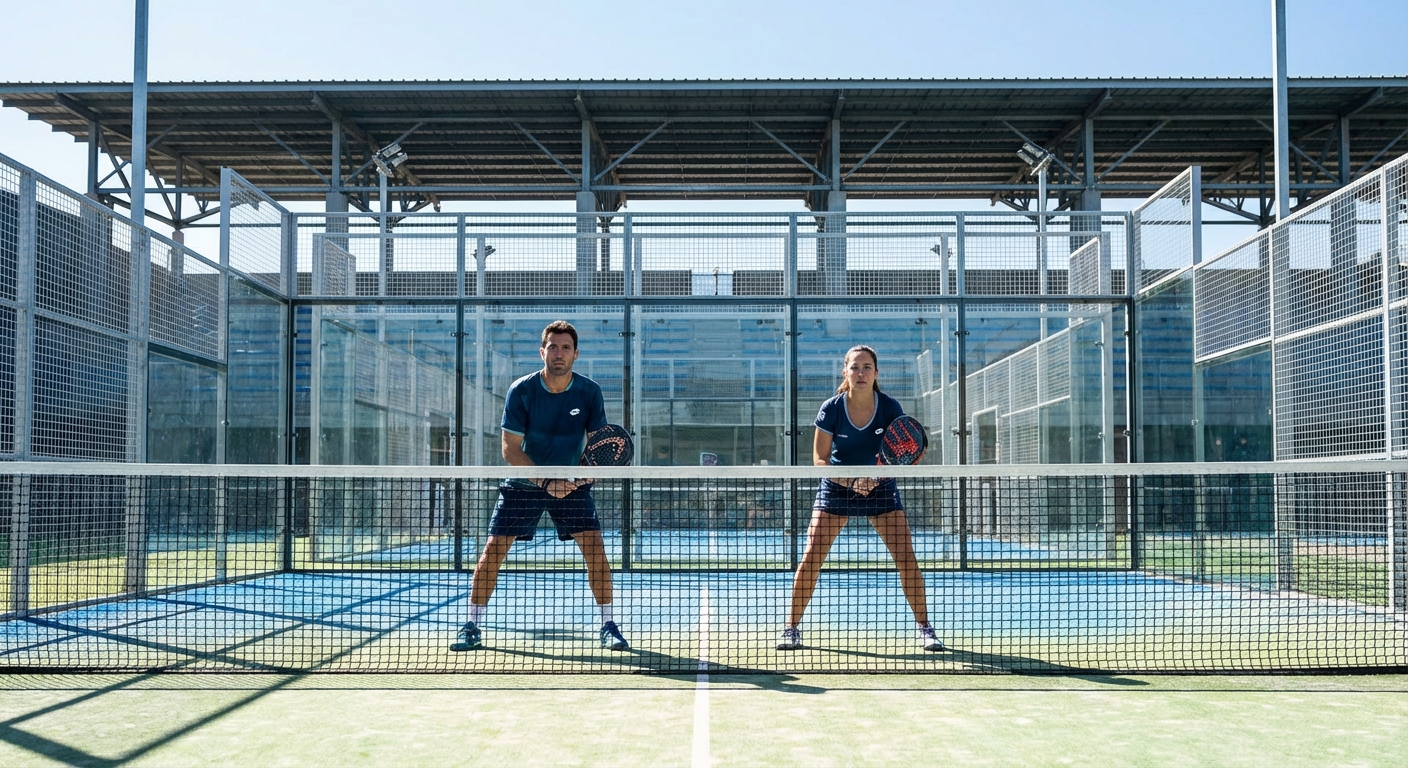
The bandeja padel is a specialized overhead shot designed to help players maintain their net position when forced back by a deep lob. Imagine you are dominating the net, but your opponent sends a high ball that lands just before the back glass. If you choose to smash, you risk hitting the fence or the glass; if you let it bounce, you lose your attacking ground.
This scenario often leads to frustration and a loss of momentum for unseasoned players. You need a way to neutralize the lob without giving up the offensive advantage. By mastering this technical “tray” shot, you can return the ball with control and move back to the net immediately.
We provide the definitive guide to this essential technique and the professional infrastructure required to practice it. From grip mechanics to factory-direct court construction, this analysis covers everything you need to dominate the game.
What is the bandeja padel shot in modern games?
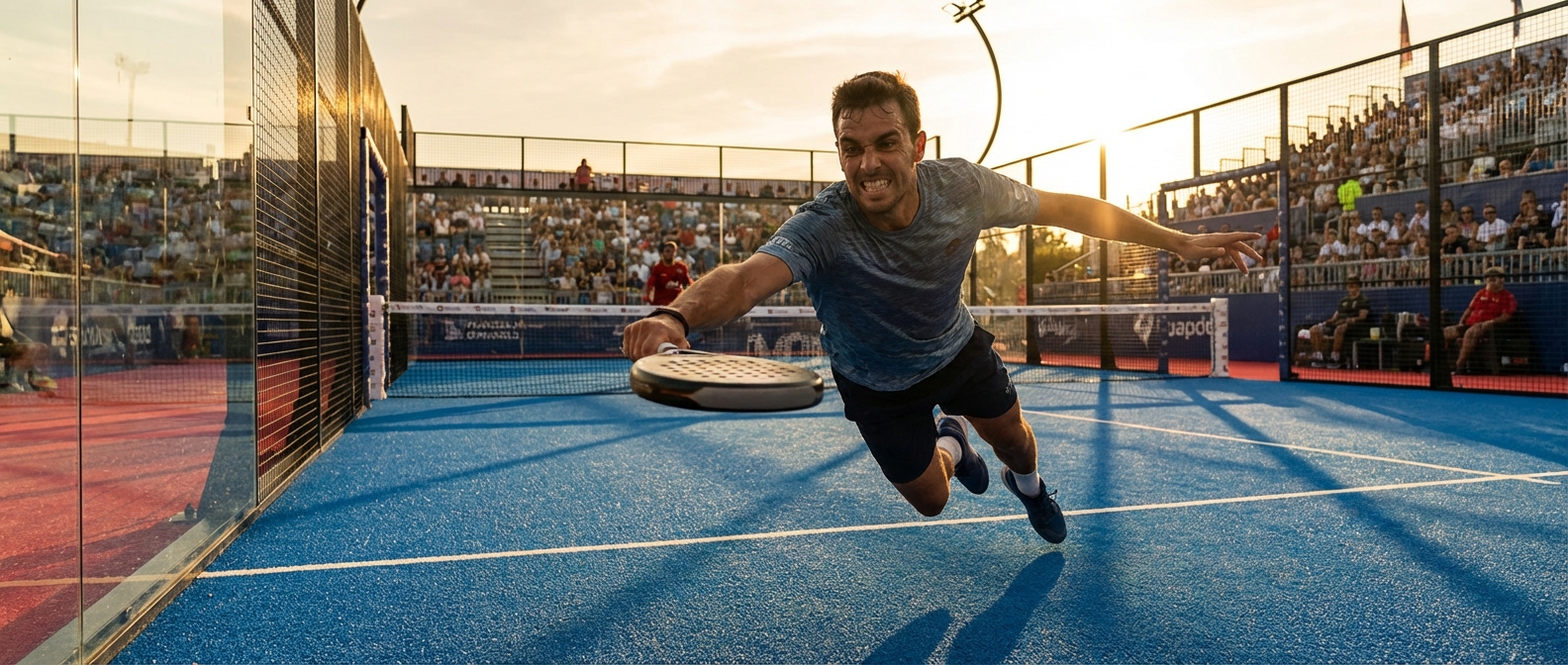
The bandeja padel is a tactical hybrid shot that sits between a standard forehand volley and a full-power smash. It is primarily used as a defensive-offensive tool to prevent opponents from taking the net.
Think about it: in a fast-paced rally, the goal is to keep the ball low. By using an open racket face, you ensure the ball has a sliced rotation that dies upon hitting the back glass.
Why is the “tray” position important?
The name literally translates to “tray,” which describes the racket’s orientation during preparation. You must keep the racket head high and tilted back like you are carrying a tray of drinks.
- Shoulder Alignment: Your non-dominant hand should point toward the ball.
- Racket Face: Keep the face open to generate necessary backspin.
- Height Control: Impact occurs at eye level rather than at full extension.
Is this shot harder for tennis players?
Tennis players often struggle with this motion because their instinct is to hit downward. Here is the kicker: in padel, hitting downward on a lob often results in a high bounce off the glass.
- Adjust your contact point to be slightly in front of your body.
- Focus on a “pushing” motion rather than a “hitting” motion.
- Keep your feet moving to stay behind the ball.
Key Takeaway: The primary benefit of this shot is the ability to neutralize deep lobs while retaining your aggressive position at the net.
| Feature | Description |
|---|---|
| Motion Type | Defensive-Offensive Hybrid |
| Racket Face | Open (Tray-like) |
| Primary Goal | Retain Net Position |
Understanding the technical definition of this shot is the first step toward reducing unforced errors during transition play.
Why is the bandeja padel vital for net control?
The bandeja padel is essential because it serves as the glue that holds your net strategy together. Without it, any decent lob would force you back to the baseline, surrendering the most valuable part of the court.
You must view the net as your home base for scoring. When you execute this shot correctly, you effectively “reset” the point in your favor.
How do you maintain court center?
By hitting a deep tray shot, you force your opponents to stay at the back of the court. This gives you and your partner time to move forward in unison.
- Synchronization: Move forward as soon as the ball leaves your racket.
- Depth: Aim for the last two meters of the opponent’s court.
- Consistency: Prioritize placement over raw power to avoid the glass.
Transitioning from defense to attack?
Sometimes you are caught in no-man’s land and need a way out. But wait, there’s more: a well-placed tray shot can actually turn into a winner if the slice is heavy enough.
- Use the shot to buy time for better positioning.
- Force the opponent into a difficult “double glass” return.
- Look for the short return to finish the point with a volley.
Key Takeaway: Using this technique consistently ensures you never lose the psychological and tactical advantage of the net.
| Objective | Practical Benefit |
|---|---|
| Net Retention | Prevents giving up the attacking zone |
| Pressure | Keeps opponents pinned to the baseline |
| Time Management | Allows for defensive reset |
Consistent net play is only possible when you have a reliable way to handle the high-volume lobbing seen in professional matches.
How does the bandeja padel differ from a smash?
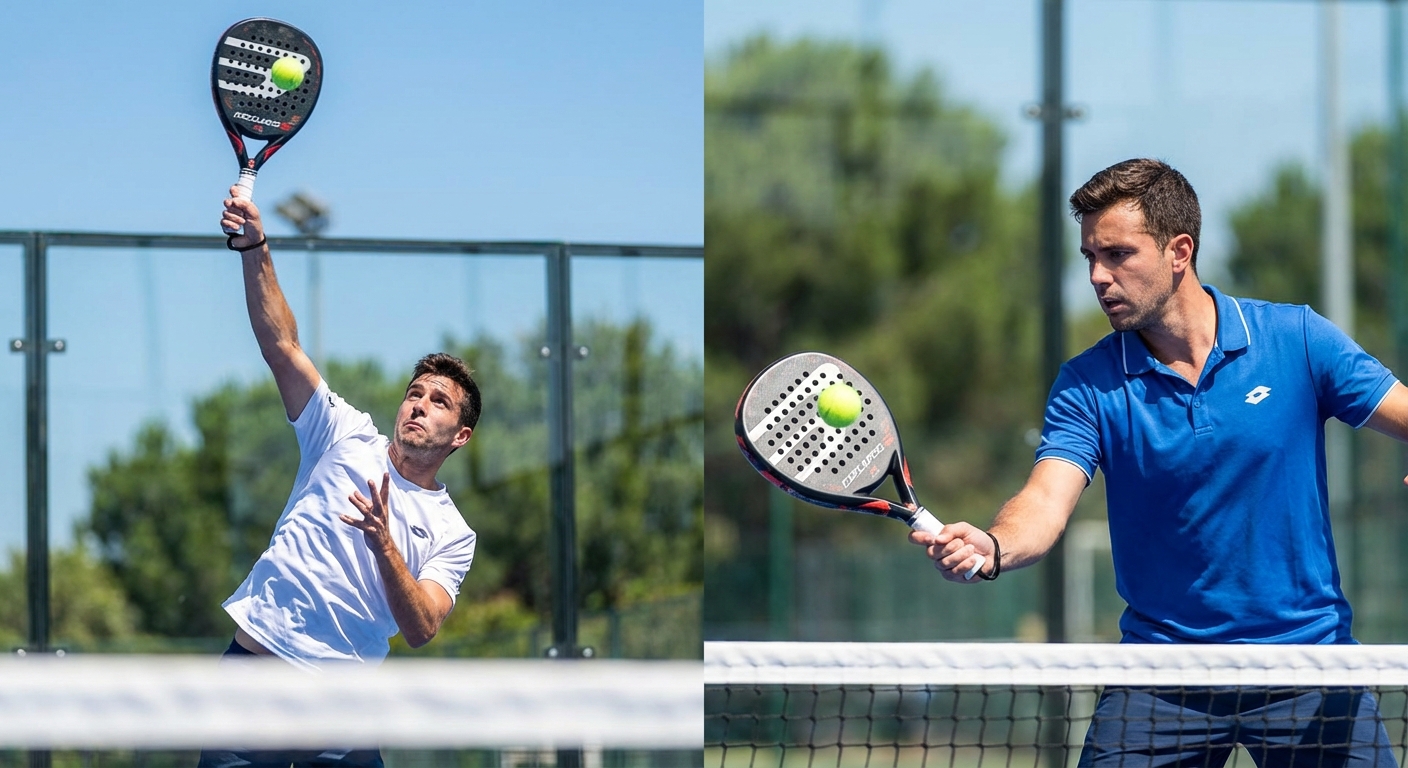
The bandeja padel differs from a smash primarily in its intent, contact point, and the resulting trajectory of the ball. While a smash aims to end the point with power, the tray shot aims to sustain the point through placement.
You should choose the tray shot when the ball is too deep to smash effectively. Trying to smash a deep lob usually results in the ball hitting the back wall and bouncing high for an easy counter-attack.
Understanding the defensive nature?
A smash is an “all-or-nothing” move, whereas the tray shot is a calculated risk reduction. It is designed to keep the ball low after it hits the glass.
- Contact Point: Eye level for the tray shot vs. full extension for the smash.
- Spin: Slice (backspin) for the tray vs. flat or topspin for the smash.
- Swing Path: Lateral/Horizontal vs. Vertical/Overhead.
When should you avoid the full smash?
If you find yourself moving backward rapidly, a smash is almost always a mistake. Think about it: your balance is compromised, making a power shot highly inaccurate.
- Avoid the smash when the ball is behind your vertical axis.
- Choose the tray shot when your feet are not set.
- Use the tray shot if the sun or wind makes a smash risky.
Key Takeaway: Choosing the tray shot over the smash in deep-ball scenarios drastically reduces unforced errors and keeps you in control.
| Shot Type | Contact Point | Spin Type |
|---|---|---|
| Bandeja | Eye Level | Heavy Slice |
| Smash | High Extension | Flat / Topspin |
Differentiating these two overheads is the hallmark of an advanced player who understands court geometry and risk management.
What are the key steps for a bandeja padel?
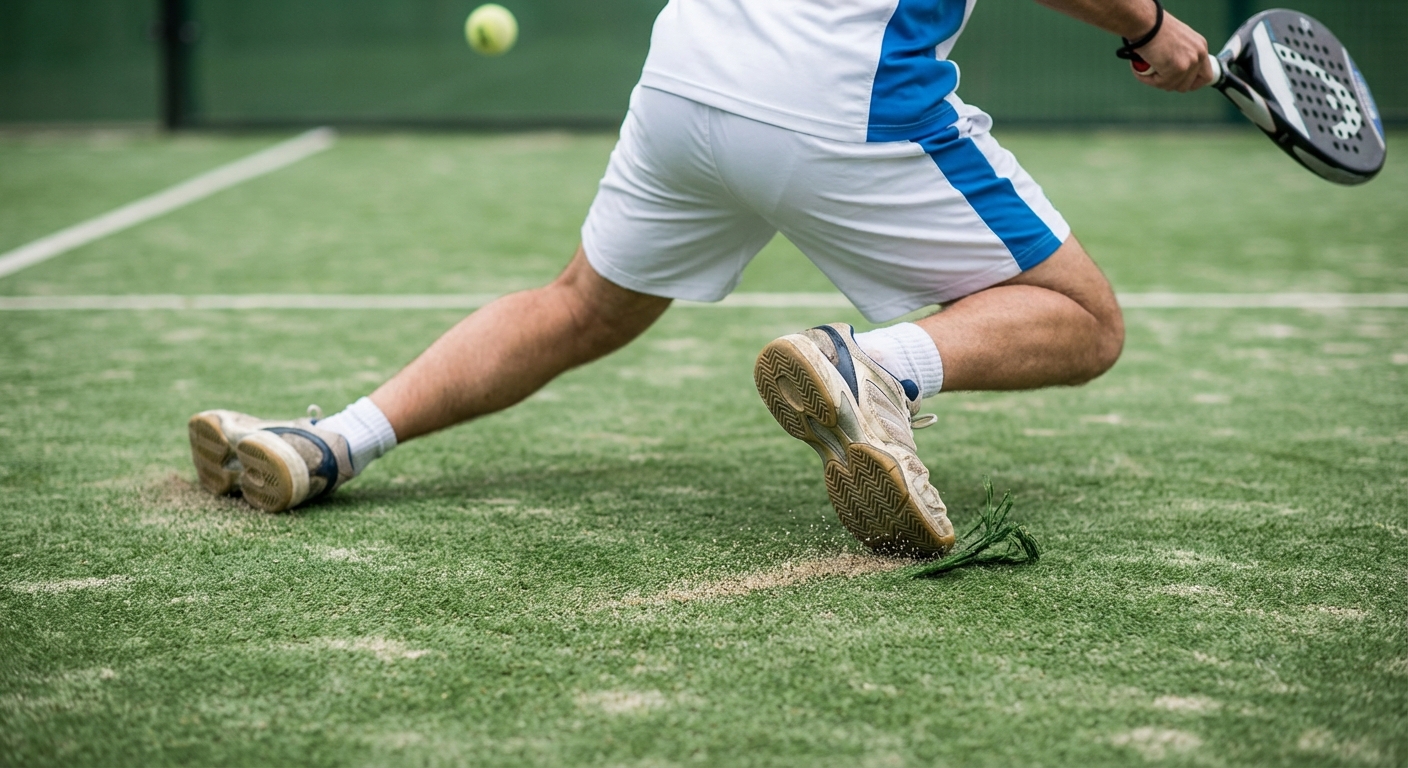
Mastering the bandeja padel requires a disciplined sequence of movements that begin the moment the opponent’s ball leaves their racket. Speed of preparation is the single most important factor in success.
You need to move your feet quickly to get behind the ball’s trajectory. If you are reaching backward at the moment of impact, the shot will fail.
How to prepare your racket early?
The racket should be up and back before you even finish your first step. This “early prep” allows you to focus entirely on your footwork and timing.
- Side-Step: Use small, quick lateral steps to move backward.
- The “U” Path: Move back and then slightly forward into the shot.
- Elbow Height: Keep your hitting elbow high to maintain the tray angle.
Perfecting the point of contact?
The ideal contact is slightly to the side of your body and ahead of your shoulder. Here is the kicker: hitting the ball too close to your head will limit your ability to generate slice.
- Maintain a firm wrist throughout the entire motion.
- Transfer your weight from the back foot to the front foot.
- Follow through toward the target, not toward the floor.
Key Takeaway: Developing a repeatable “preparation-footwork-contact” sequence is the only way to ensure consistency under pressure.
| Step | Focus Area |
|---|---|
| Preparation | Racket up immediately |
| Movement | Rapid lateral side-steps |
| Impact | Eye level, side of body |
Without proper footwork and early preparation, even the most talented athletes will struggle to execute this shot effectively.
Where should you aim your next bandeja padel?
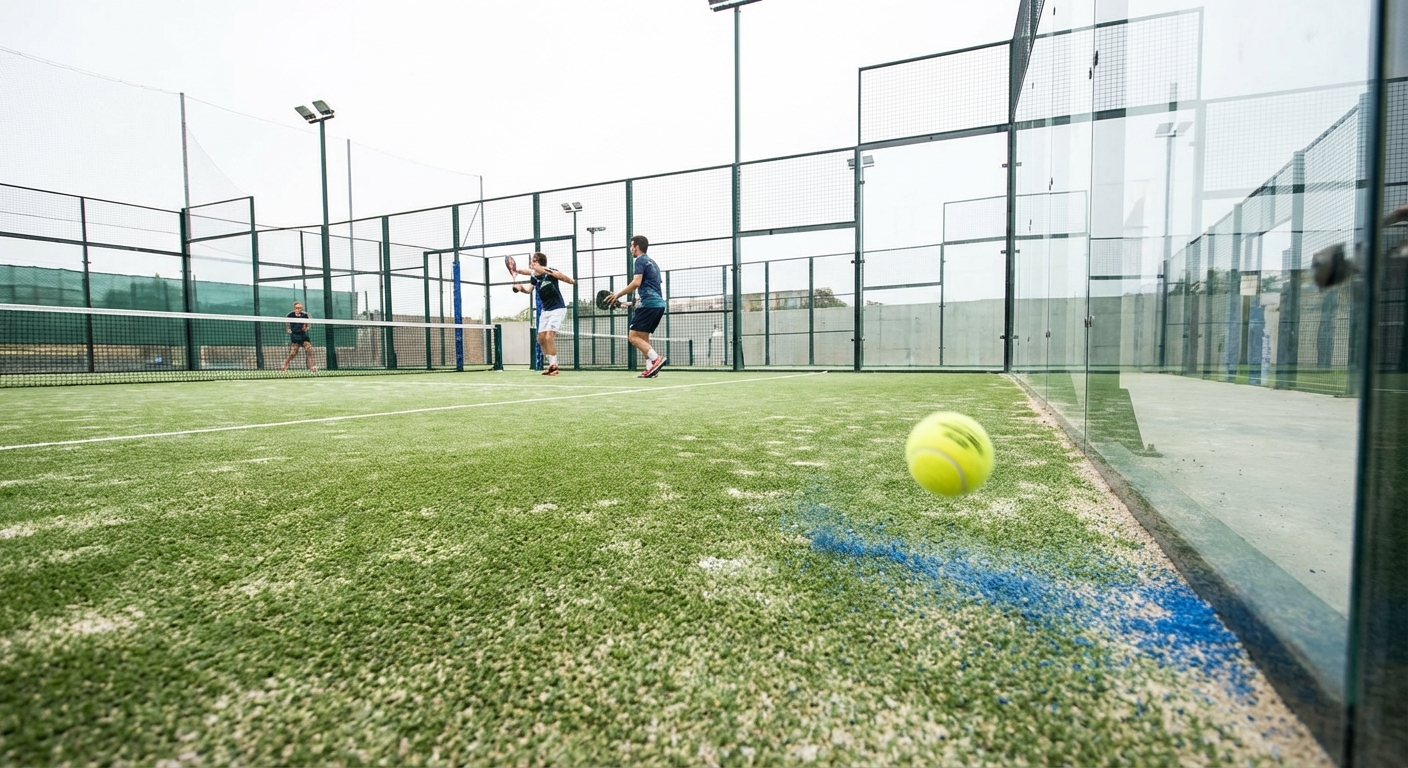
Effective placement of the bandeja padel is what makes it a dangerous tool rather than just a defensive return. Your goal is to create a situation where the ball bounces low and stays close to the walls.
You should generally target the areas that force the opponent to move or make a difficult decision. Aiming for the middle or the corners is standard practice for professional players.
Targeting the corners and the middle?
Hitting into the corners forces the ball to interact with two glass surfaces, which is incredibly difficult to read. Alternatively, the “middle” target creates confusion between partners.
- The Corner: Aim for the junction of the side and back glass.
- The Center: Hit between the opponents to disrupt their communication.
- The Fence: Occasionally aim for the wire mesh for an unpredictable bounce.
Why go for the opponent’s feet?
If an opponent is moving forward, hitting at their feet is a winning strategy. But wait, there’s more: they will be forced to half-volley, which usually results in a weak return.
- Aim for the feet to prevent them from attacking your return.
- Use a slower, more controlled slice for better accuracy.
- Observe the opponent’s movement before committing to the target.
Key Takeaway: Strategic aiming transforms a defensive recovery into a setup for a point-winning volley or smash.
| Target Area | Expected Result |
|---|---|
| Deep Corner | Difficult double-glass rebound |
| Court Middle | Partner confusion and weak return |
| Opponent Feet | Forced defensive half-volley |
Tactical placement ensures that your hard work in preparing the shot results in a tangible advantage on the scoreboard.
How is the bandeja padel unique from the vibora?
The bandeja padel is often confused with the vibora, but they are distinct shots used for different tactical purposes. While both are overheads, the vibora is significantly more aggressive and uses side-spin.
You use the tray shot when you are under pressure and need safety. The vibora, on the other hand, is used when the lob is shorter and you want to punish the opponent.
Assessing risk levels and spin types?
The tray shot uses backspin (slice) to keep the ball deep and low. The vibora uses a “brushing” motion around the side of the ball to create a nasty side-spin that kicks off the glass.
- Bandeja Spin: 6 o’clock to 12 o’clock (Backspin).
- Vibora Spin: 3 o’clock to 9 o’clock (Side-spin).
- Safety: The tray shot has a much higher margin for error.
Which shot offers more control?
For most intermediate players, the tray shot is the safer bet. Think about it: the mechanics are simpler and the goal is just to keep the rally going.
- Master the tray shot before attempting the complex vibora.
- Use the tray shot for 80% of your deep overheads.
- Switch to the vibora only when you have a clear opening.
Key Takeaway: Understanding the difference allows you to choose the right “weapon” based on the difficulty of the incoming ball.
| Shot Name | Primary Spin | Risk Level |
|---|---|---|
| Bandeja | Backspin/Slice | Low to Medium |
| Vibora | Side-spin | Medium to High |
Choosing the correct overhead based on your balance and the ball’s depth is a sign of a high-IQ padel player.
How does court quality affect your bandeja padel?
The quality of your court directly impacts your ability to execute a consistent bandeja padel. If the turf is uneven or the glass is too thin, the ball will not bounce predictably, ruining your timing.
You need professional-grade materials to ensure that the technical slice you apply actually translates into a low, skid-like bounce. High-end facilities rely on precision-engineered structures to maintain these standards.
The role of consistent ball bounce?
A consistent bounce is only possible with high-density turf and a properly leveled sub-base. If the ball “jumps” or “dies” unexpectedly, your preparation will be wasted.
- Turf Density: Higher stitch counts prevent the ball from burying in the fibers.
- Sand Distribution: Uniform silica sand levels are vital for slice effects.
- Base Leveling: A perfectly flat surface ensures the ball stays true to its spin.
Does glass quality affect your timing?
Yes, the thickness and rigidity of the glass determine how much energy is returned to the ball. But wait, there’s more: 12mm tempered safety glass provides the “pop” needed for advanced play.
- Thinner glass vibrates, which can absorb the ball’s spin.
- Professional glass ensures the ball slides rather than bounces upward.
- Clean glass surfaces allow for better visual tracking of the ball.
Key Takeaway: Technical excellence in your shots requires a professional court environment that rewards precision and spin.
| Component | Impact on Shot |
|---|---|
| 12mm Glass | Predictable rebound and spin retention |
| EU-Standard Turf | Consistent ball speed and skid |
| Galvanized Steel | Structural rigidity for safety |
Investing in high-quality court infrastructure is the most effective way to improve the overall level of play in any club.
Why build premium courts for your bandeja padel?
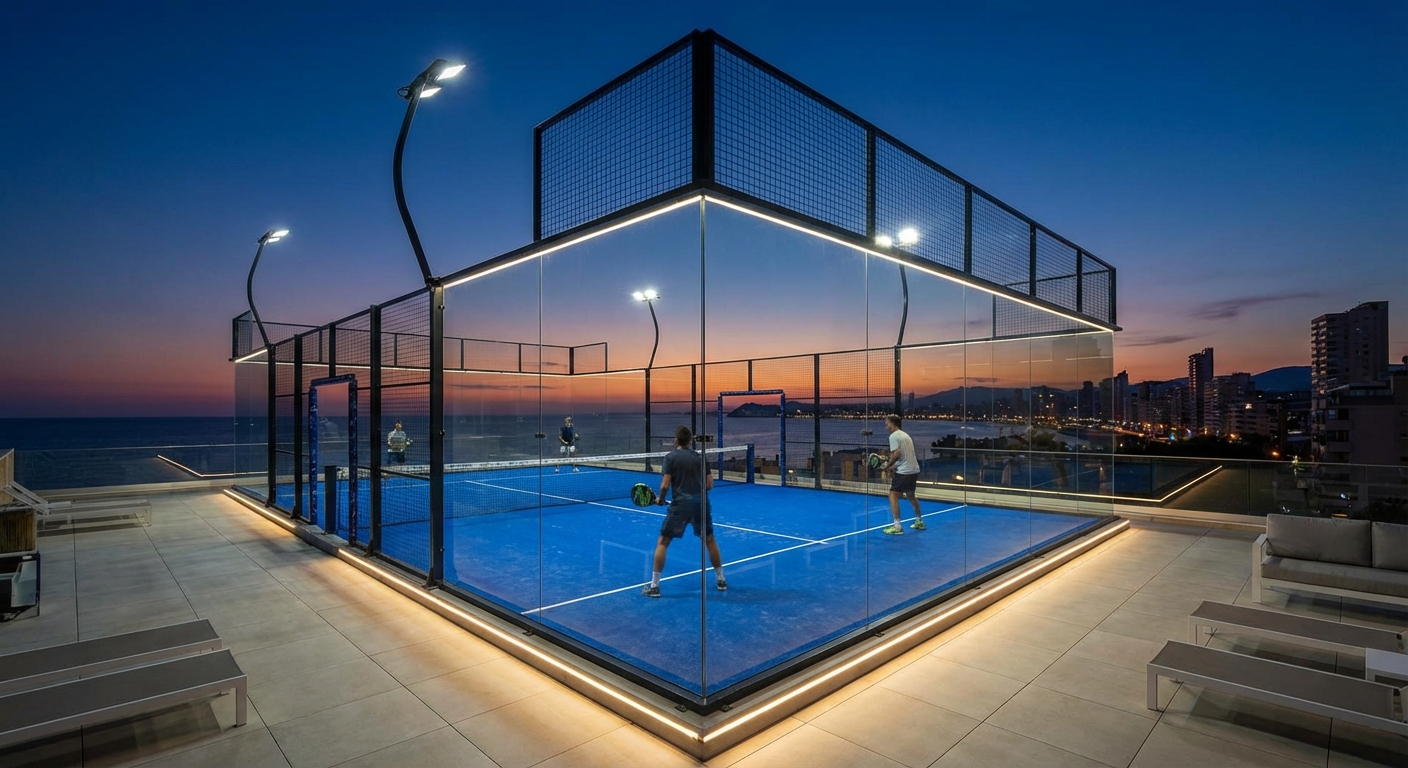
Building premium courts is a strategic business decision that enhances the player experience for every bandeja padel executed on the facility. Professional courts attract higher-level players and allow for sanctioned tournaments.
You should prioritize panoramic designs to offer better visibility for both players and spectators. This increases the commercial value of the court and the overall prestige of your sports club.
Maximizing ROI with durable materials?
Durable materials reduce long-term maintenance costs and prevent downtime. Think about it: a court that stays in perfect condition for 20 years is far more profitable than a cheap alternative.
- Hot-Dip Galvanization: Prevents rust even in humid or coastal climates.
- Modular Design: Simplifies installation and future repairs.
- LED Lighting: Reduces energy costs while providing uniform visibility.
Why choose panoramic court designs?
Panoramic courts remove the structural pillars from the back glass, providing an unobstructed view. This is essential for coaching and recording matches for technique analysis.
- Enhance the aesthetic appeal of your real estate project.
- Justify higher rental fees for premium playing experiences.
- Attract elite players who demand professional standards.
Key Takeaway: Premium construction standards directly correlate to higher member retention and better return on investment.
| Business Benefit | Technical Feature |
|---|---|
| Low Maintenance | Hot-dip galvanized steel |
| Elite Branding | Panoramic 12mm glass walls |
| Year-Round Revenue | Integrated roofed court options |
Quality infrastructure is the foundation of a successful padel business, ensuring that players can perform their best every single day.
What is the best grass for training bandeja padel?
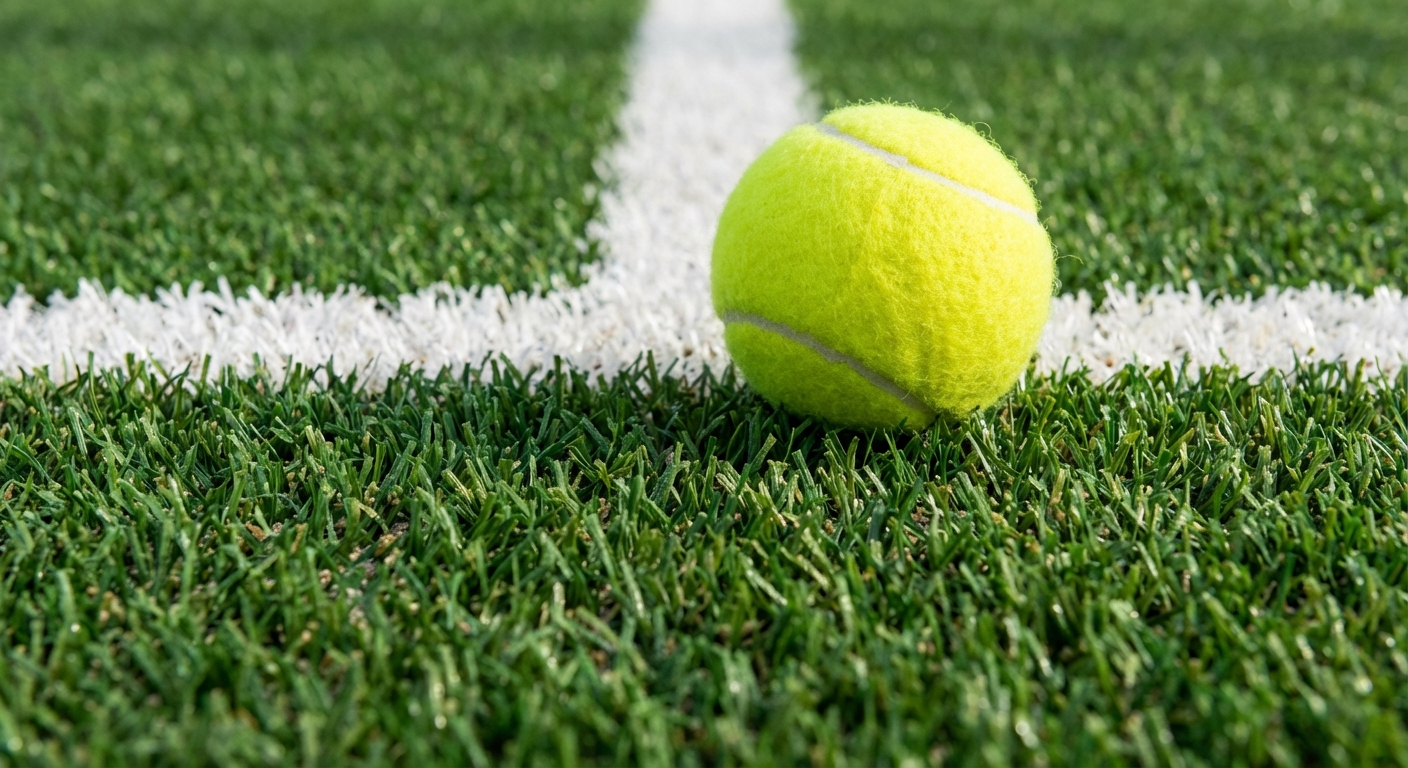
The best grass for training the bandeja padel is high-density, fibrillated turf that complies with international standards. This specific type of grass is designed to hold sand evenly and provide a fast, low-bouncing surface.
You will find that professional-grade turf allows your slice to “grip” the surface briefly before skidding. This is what creates the low rebound that makes the tray shot so effective.
High-density turf for professional play?
High-density turf has more fibers per square meter, which prevents the grass from flattening under heavy use. This ensures that the court feels the same in month twelve as it did on day one.
- Wear Resistance: Essential for clubs with high player traffic.
- UV Stability: Prevents the grass from becoming brittle in the sun.
- Player Comfort: Reduces the impact on joints during quick movements.
Managing wear in high-traffic clubs?
Maintaining turf quality requires regular brushing and sand redistribution. Here is the kicker: high-quality turf needs less maintenance than economy versions because the fibers are more resilient.
- Choose fibrillated fibers for the best sand retention.
- Opt for monofilament fibers if you prefer a more “grass-like” feel.
- Ensure the turf is EU-standard compliant for maximum safety.
Key Takeaway: The right turf selection is critical for players who want to master the technical nuances of spin and placement.
| Turf Metric | Professional Standard |
|---|---|
| Fiber Type | Fibrillated or Texturized |
| Stitch Rate | High-density for durability |
| Certification | EU Standard Compliant |
The interaction between the ball and the grass is the most frequent contact point in the game; it must be perfect.
How to build a facility for bandeja padel training?
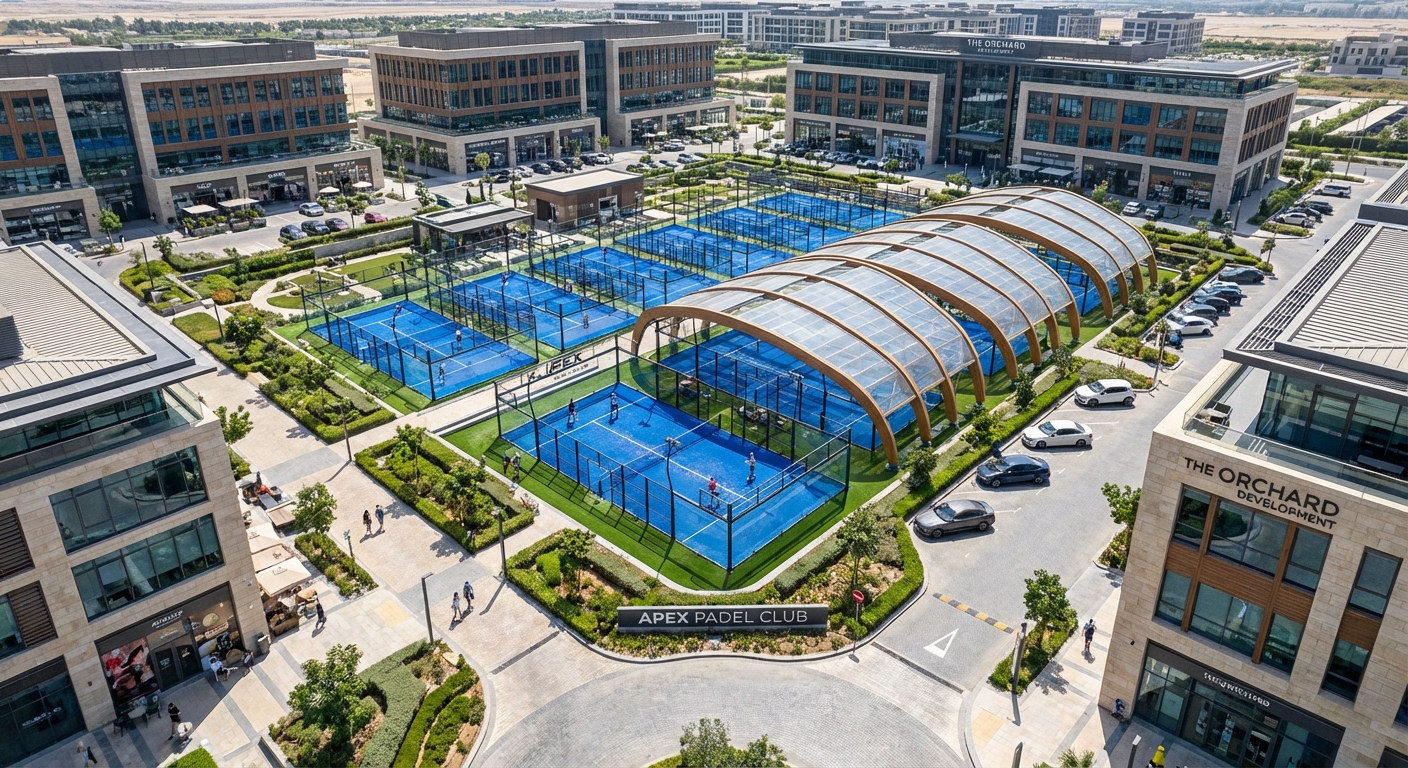
Building a facility optimized for bandeja padel training involves more than just installing courts; it requires a strategic procurement and design approach. Success starts with buying directly from the manufacturer to eliminate middlemen.
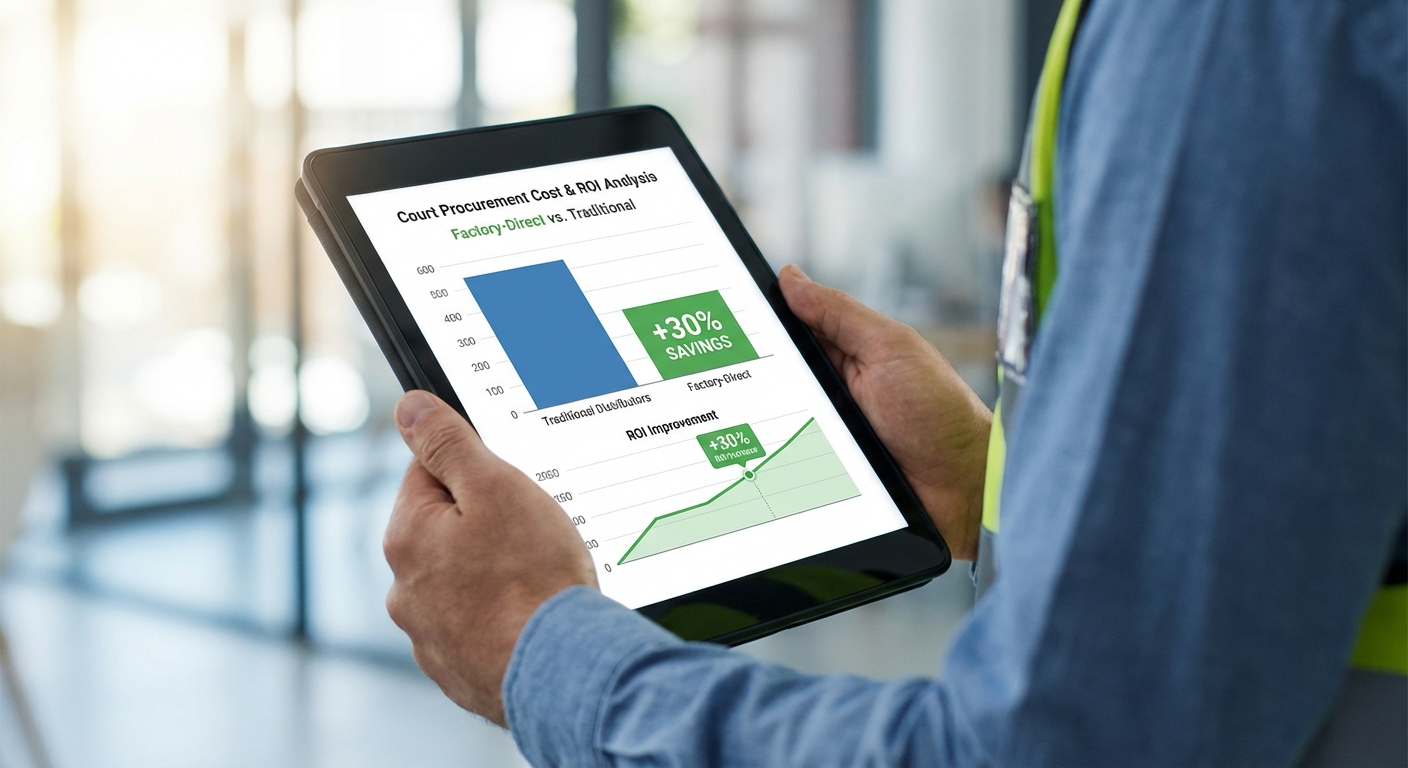
You can save up to 30% on procurement costs by choosing a factory-direct partner. This capital can then be reinvested into premium features like LED lighting or luxury spectator areas.
Factory-direct procurement strategies?
Buying from the source ensures that you get the exact specifications you need without distributor markups. It also allows for full customization of colors and branding.
- Direct Support: Work with engineers to customize court dimensions.
- Quality Control: Ensure all materials meet international certifications.
- Fast Shipping: Streamline the logistics of getting courts to your site.
How to customize your club’s branding?
Your facility should be a reflection of your brand’s commitment to quality. But wait, there’s more: you can customize the steel frame colors and even add your logo to the turf.
- Select RAL colors that match your corporate identity.
- Use roofed courts to allow for training in any weather condition.
- Integrate digital coaching tools into the panoramic glass design.
Key Takeaway: A professionally designed and branded facility attracts better players and provides a superior environment for skill development.
| Construction Step | Expert Tip |
|---|---|
| Sourcing | Buy factory-direct to save 30% |
| Design | Prioritize panoramic visibility |
| Branding | Customize frame colors and logos |
By following these professional guidelines, you can build a world-class padel destination that serves as a hub for player development.
At Superbpadel, we specialize in helping facility owners and real estate developers build the future of sports. Our factory-direct courts solve the problems of high procurement costs and inconsistent quality, allowing you to focus on growing your community. We believe that every player deserves a professional-grade environment to master their game, and we are committed to delivering that vision globally. If you are ready to elevate your facility, contact us today for a custom quote.
Frequently Asked Questions
Can I use a bandeja as an offensive winner?
Yes, but it is rare. While the shot is primarily for transition and defense, placing it perfectly into the deep corner or at an opponent’s feet can force a mistake or an unreturnable weak ball.
What’s the best way to practice the bandeja alone?
A ball machine is the most effective solo tool. You should set the machine to fire deep lobs, allowing you to focus exclusively on your lateral footwork and early racket preparation without needing a partner.
How do I know if my court’s glass is professional grade?
Look for the EN 12150 certification. Professional-grade glass must be 12mm anti-explosion tempered safety glass, which ensures the necessary rebound consistency and maximum player safety during high-impact play.
Can I build a padel court on a residential property?
Yes, padel courts are highly adaptable. Because they are smaller than tennis courts and use modular designs, they can be easily integrated into private estates, provided you have a level concrete sub-base.
What’s the best grip for a consistent tray shot?
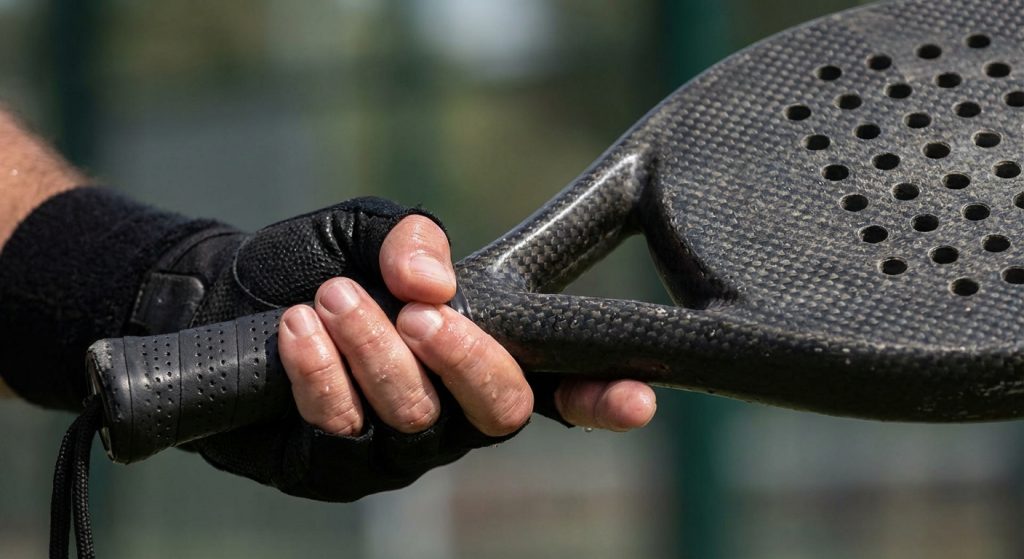
The Continental grip is the industry standard. This “hammer grip” provides the wrist flexibility needed to open the racket face for the tray position while allowing for the necessary slice at impact.