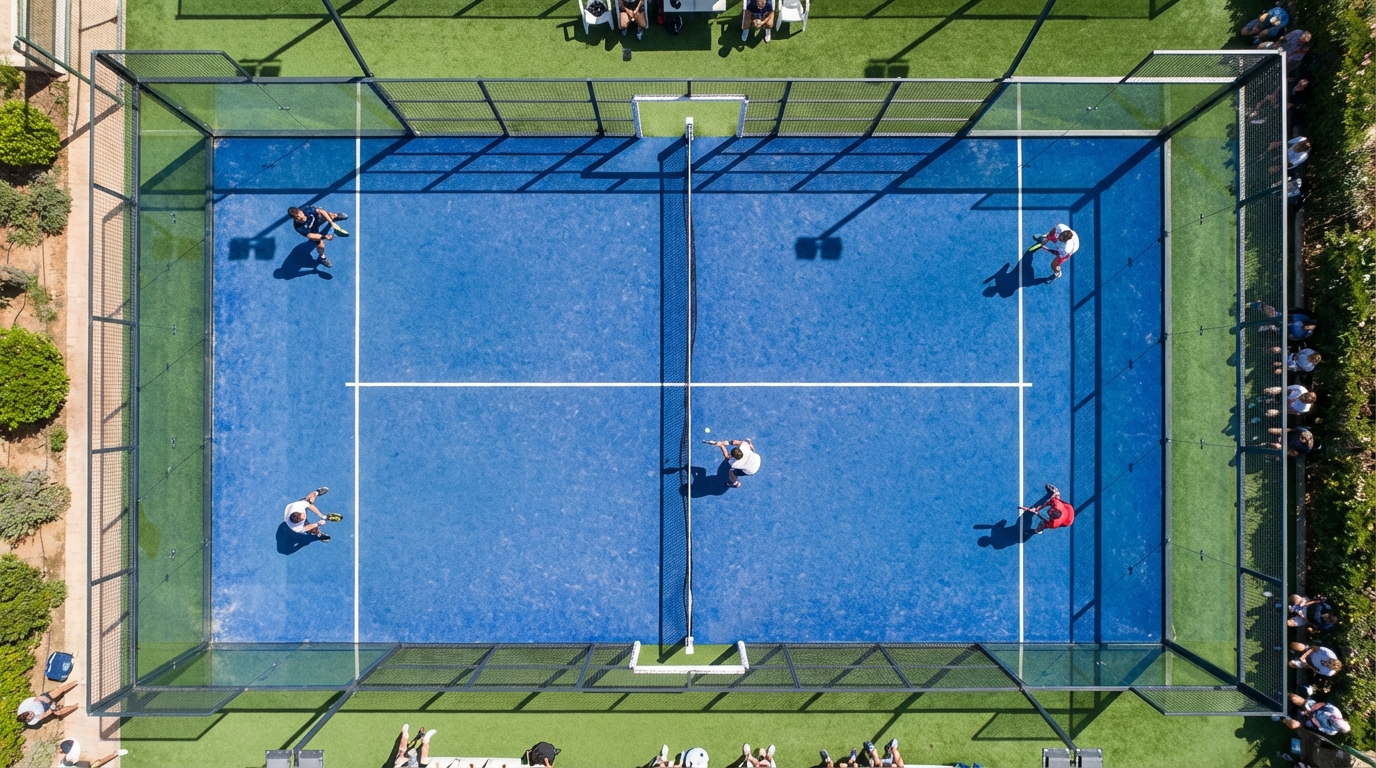
A padel point is the fundamental scoring unit of a match played on a specialized 20m x 10m enclosed court, requiring a strategic blend of ball placement and wall utilization. If you are a club owner, you likely face the problem of low court utilization due to poor construction quality that affects game flow. This frustration agitates both players and investors, as inconsistent bounces and structural wear lead to a declining reputation and lost revenue. By following professional standards for a padel point, you can build a premium facility that attracts elite players and ensures a high return on investment.
What are the primary rules for a padel point?
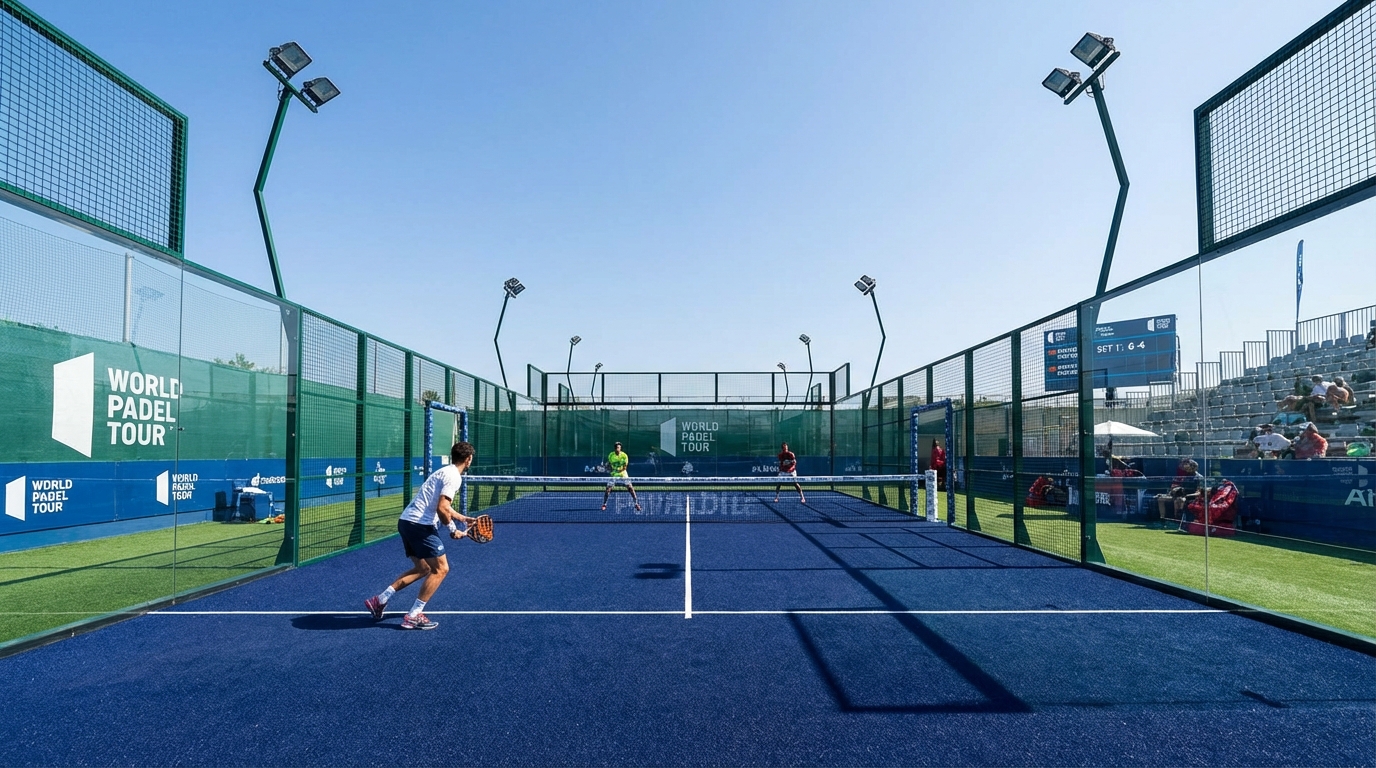
The primary rules for a padel point dictate that the ball must bounce once on the opponent’s floor before striking any part of the surrounding structure. You must work in pairs to keep the ball in motion, ensuring it clears the net and stays within the glass and mesh boundaries.
Mastering Court Boundaries
You need to understand how the enclosure walls interact with the ball to maintain a rally. The ball is considered out if it hits the fence or glass directly without an initial floor bounce.
Think about it:
- A point is won when the ball bounces twice on the opponent’s side.
- You can hit the ball against your own glass walls to return it.
- The metallic mesh is active only after the ball has bounced once.
Key Takeaway: Winning a padel point relies on your ability to manipulate the court’s boundaries to force an opponent’s error or a double bounce.
| Feature | Regulation Requirement | Purpose |
|---|---|---|
| Court Size | 10m x 20m | Standard footprint for doubles play |
| Enclosure | Glass and Metallic Mesh | Defines active play and rebound areas |
| Net Height | 88cm at center | Regulates shot difficulty and clearance |
This geometric precision ensures that every rally is fair and follows international competitive standards.
How do you legally serve a padel point?
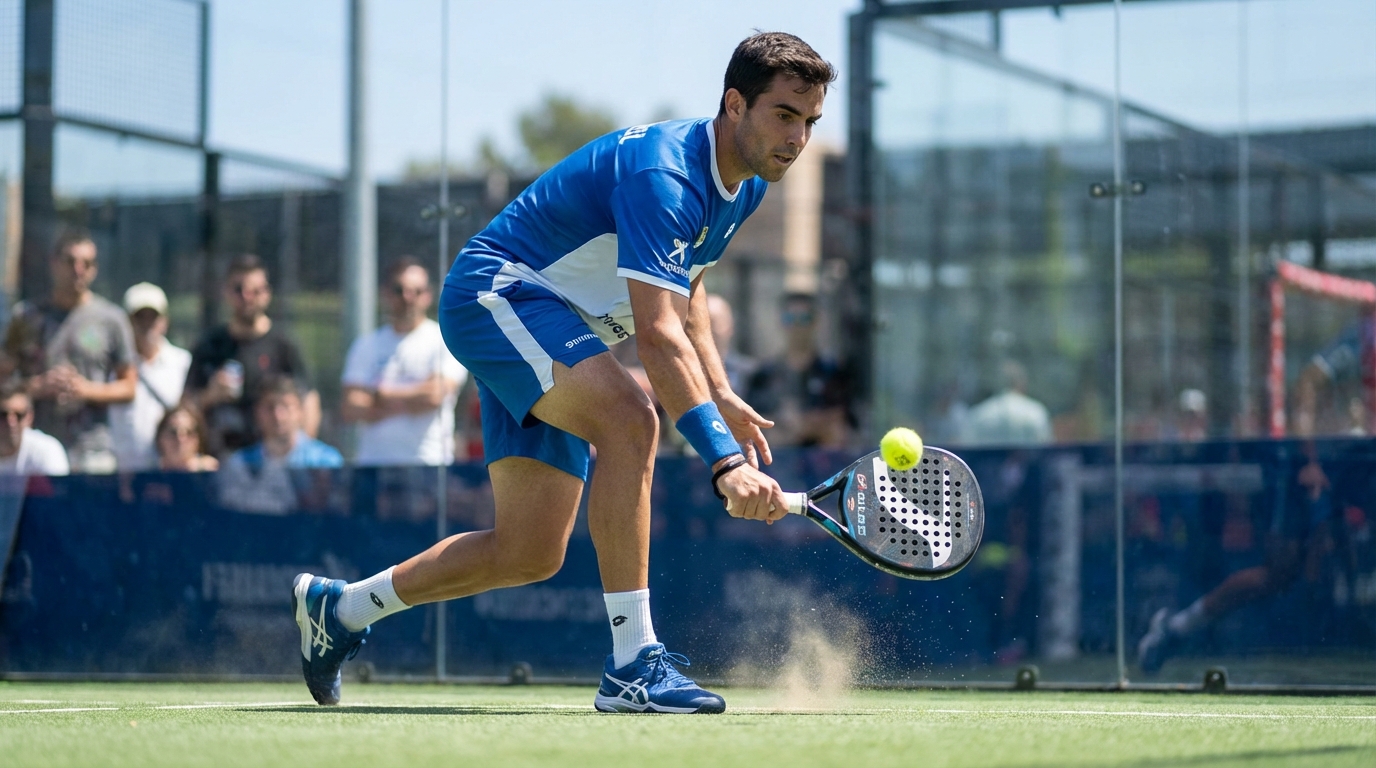
To legally serve a padel point, the server must strike the ball underhand at or below waist level after letting it bounce once behind the service line. You are required to deliver the ball diagonally into the opponent’s service box to initiate the rally.
Service Mechanics and Accuracy
You must keep at least one foot on the ground while making contact with the ball during the serve. The ball must clear the net and land within the white lines of the diagonal box.
Make no mistake:
- Serves hitting the metallic fence after the bounce are faults.
- You get two attempts to successfully start the point.
- The ball may hit the glass wall after the bounce on a serve.
Key Takeaway: A legal start to a padel point requires a controlled underhand motion and precise landing within the diagonal service boundaries.
| Serve Element | Requirement | Impact on Play |
|---|---|---|
| Strike Height | Below waist level | Prevents aggressive power-based starts |
| Target Box | Diagonal service area | Standardizes the start of the rally |
| Foot Position | Behind the service line | Ensures fair distance from the net |
Consistency in your serving technique prevents early unforced errors and sets the defensive or offensive tempo for the team.
When is a let called during a padel point?
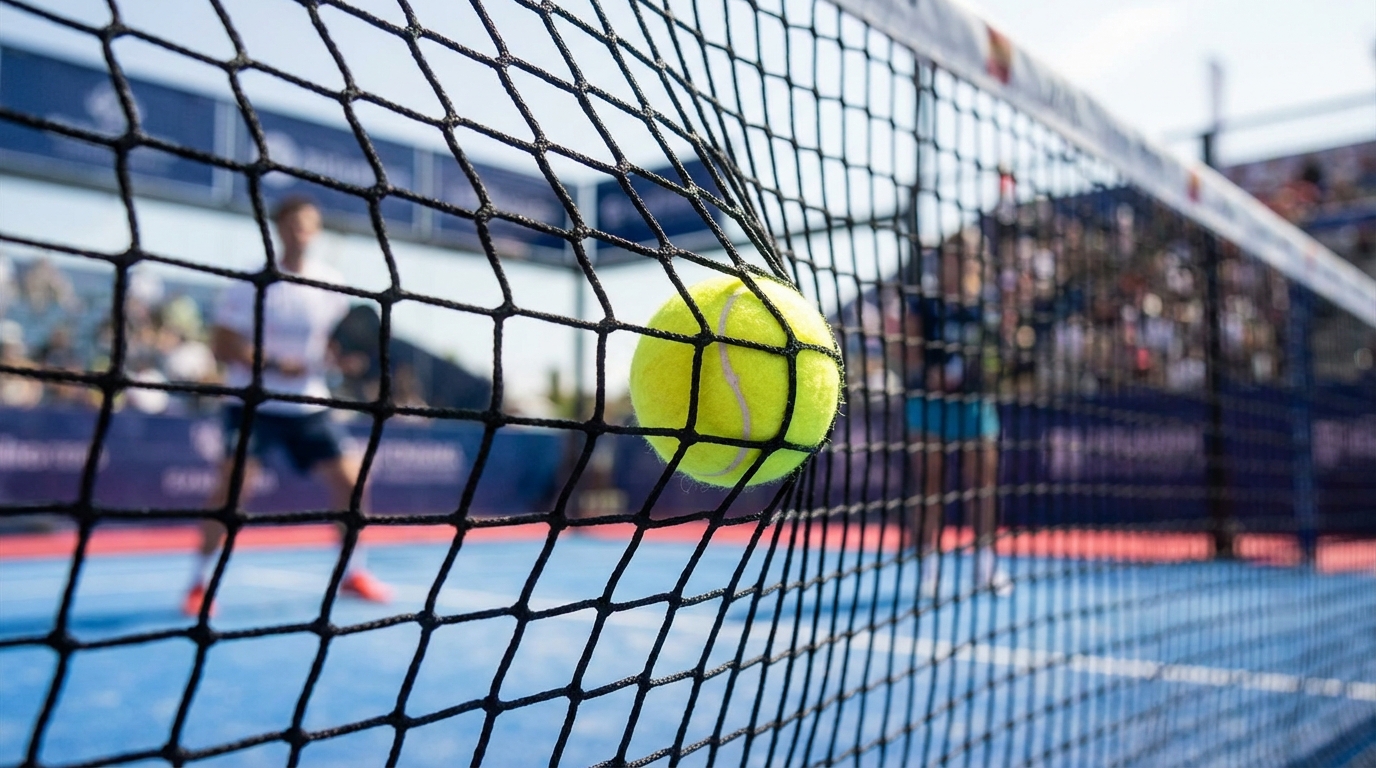
A let is called during a padel point when the ball touches the net during a serve but otherwise lands correctly in the service box without hitting the fence. You must replay the serve whenever this occurs, as it signifies a valid but interrupted attempt to start the game.
Managing Net Interference
You will encounter a let if external factors interfere with the play or if the ball touches the net cord on a serve. Understanding these interruptions ensures that you maintain the professional flow of the match.
The best part?
- A let does not count as a fault or a lost attempt.
- You must repeat the entire point if a let is called during a rally.
- Equipment failure or ball breakage can also trigger a let.
Key Takeaway: Recognizing a let during a padel point allows for a fair reset and prevents disputes over accidental net contact or external interference.
| Interruption | Outcome | Context |
|---|---|---|
| Net Touch (Serve) | Let | Ball must land in the correct box |
| External Obstacle | Point Replay | Interference from outside the court |
| Equipment Failure | Point Replay | Usually involves a ball or net issue |
Properly tensioned nets and certified court accessories significantly reduce the frequency of mechanical lets caused by sagging hardware.
How does scoring work for each padel point?
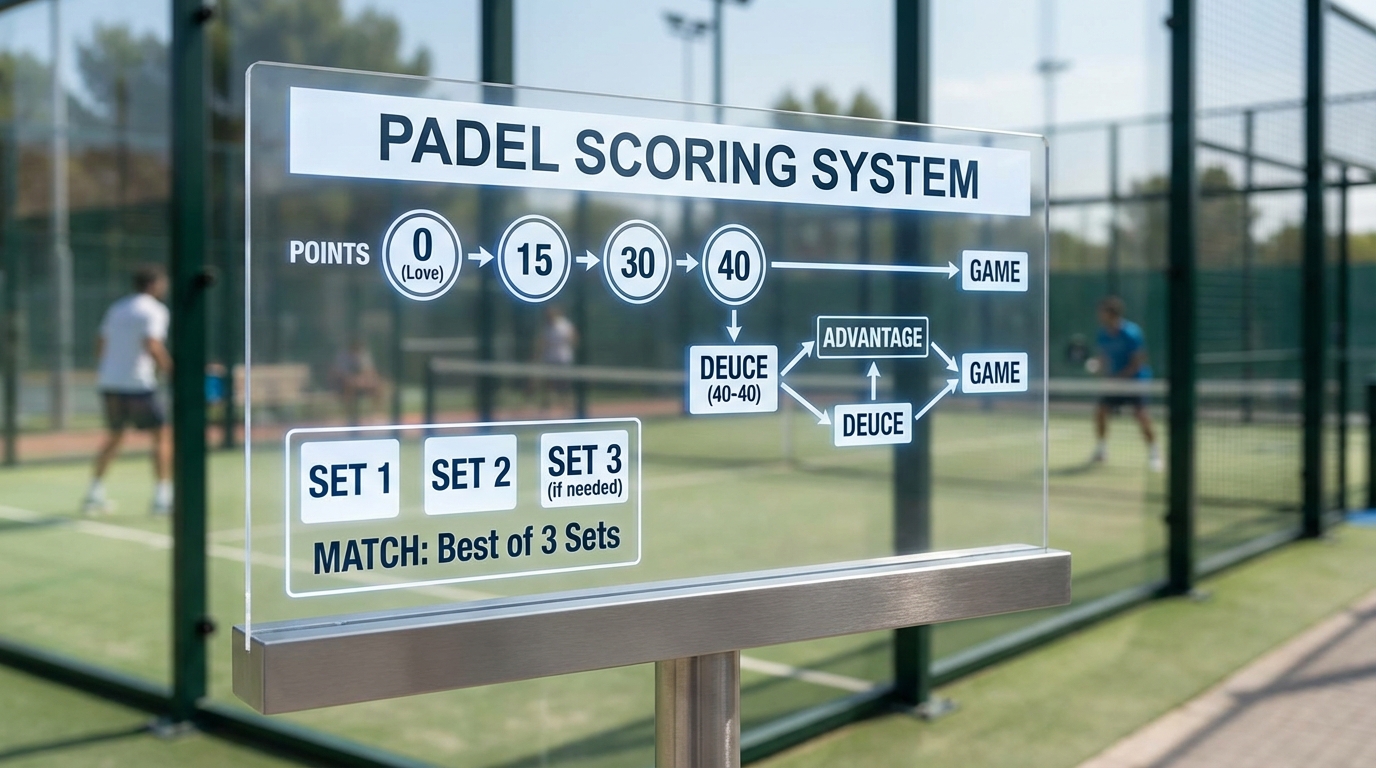
The scoring for each padel point follows the traditional tennis system of 15, 30, 40, and Game. You must win six games to take a set, and matches are typically played as the best of three sets.
Tracking the Set Progress
You must reach 40 and win the subsequent point to secure a game, provided you have a two-point lead at deuce. If the score reaches six-all in games, a tie-break is used to determine the set winner.
Believe it or not:
- Padel uses a “Golden Point” in some professional circuits.
- The first point won is scored as 15.
- Love-all is the standard starting score for every match.
Key Takeaway: Managing the scoring of a padel point requires familiarity with tennis-style progressions and the specific tie-break rules for set completion.
| Score Level | Terminology | Game Status |
|---|---|---|
| 15 | First Point | Early lead established |
| 40 | Game Point | Potential game-winning state |
| Deuce | 40-40 | Requires two-point clearance to win |
High-visibility scoring boards and panoramic court designs ensure that spectators and players can easily track every point won.
When is a ball in play for a padel point?
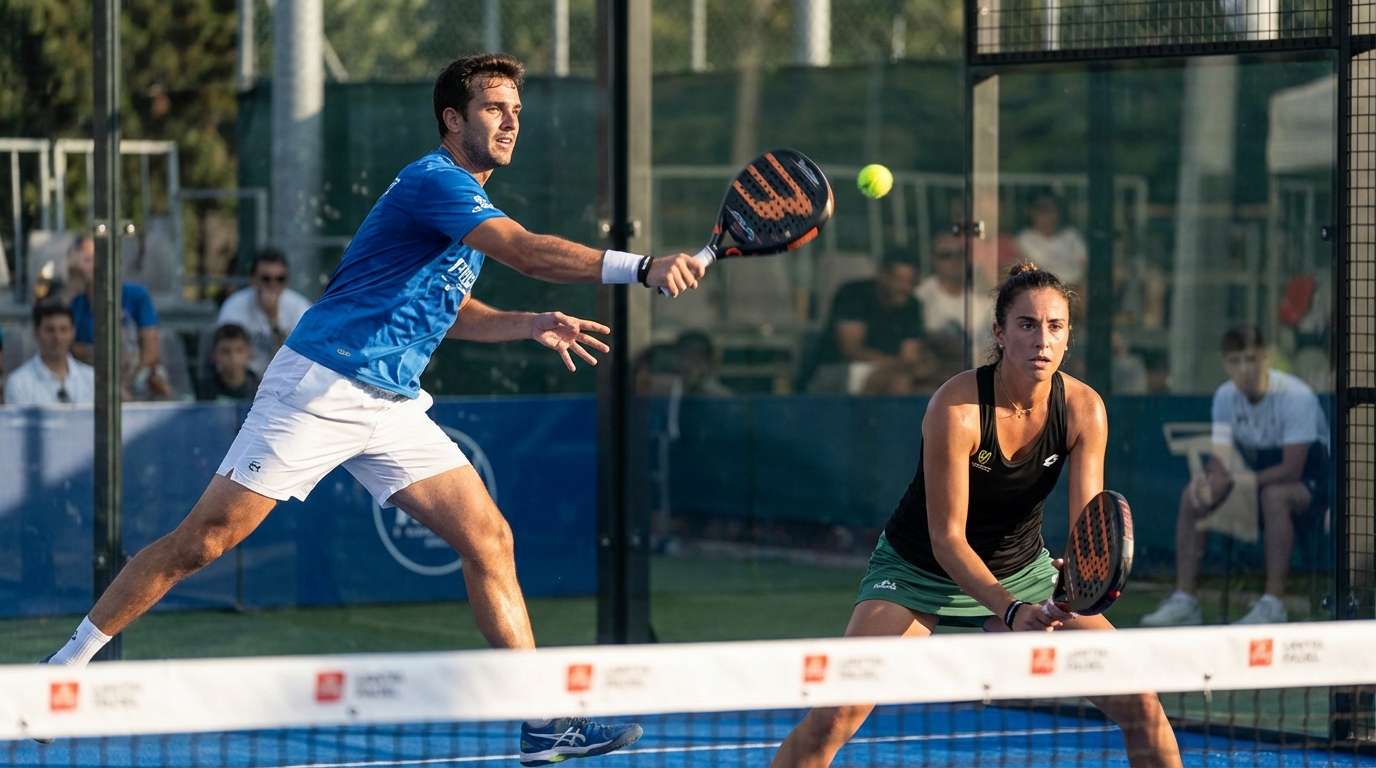
A ball is in play for a padel point once it successfully crosses the net and bounces on the opponent’s floor. You must then return the ball before it bounces a second time, utilizing the walls or direct volleys to keep the rally alive.
Maintaining the Rally Flow
You can volley the ball during any part of the rally except when receiving the initial serve. The ball remains live if it hits the glass or fence after the first ground bounce.
But wait, there is more:
- Hitting the ball after it rebounds off the glass is a core skill.
- The ball is dead if it hits the fence directly without a bounce.
- You can only strike the ball once per team per side.
Key Takeaway: Keeping a padel point active requires quick reflexes and a deep understanding of the ball’s trajectory after it contacts the floor and walls.
| Action | Validity | Impact |
|---|---|---|
| Volley | Legal (post-return) | Allows for aggressive net pressure |
| Wall Rebound | Legal (post-bounce) | Provides defensive recovery options |
| Direct Fence Hit | Out | Immediate loss of the point |
Uniform turf and consistent glass quality are essential for ensuring that the ball’s behavior remains predictable throughout every live rally.
Can you hit the wall during a padel point?
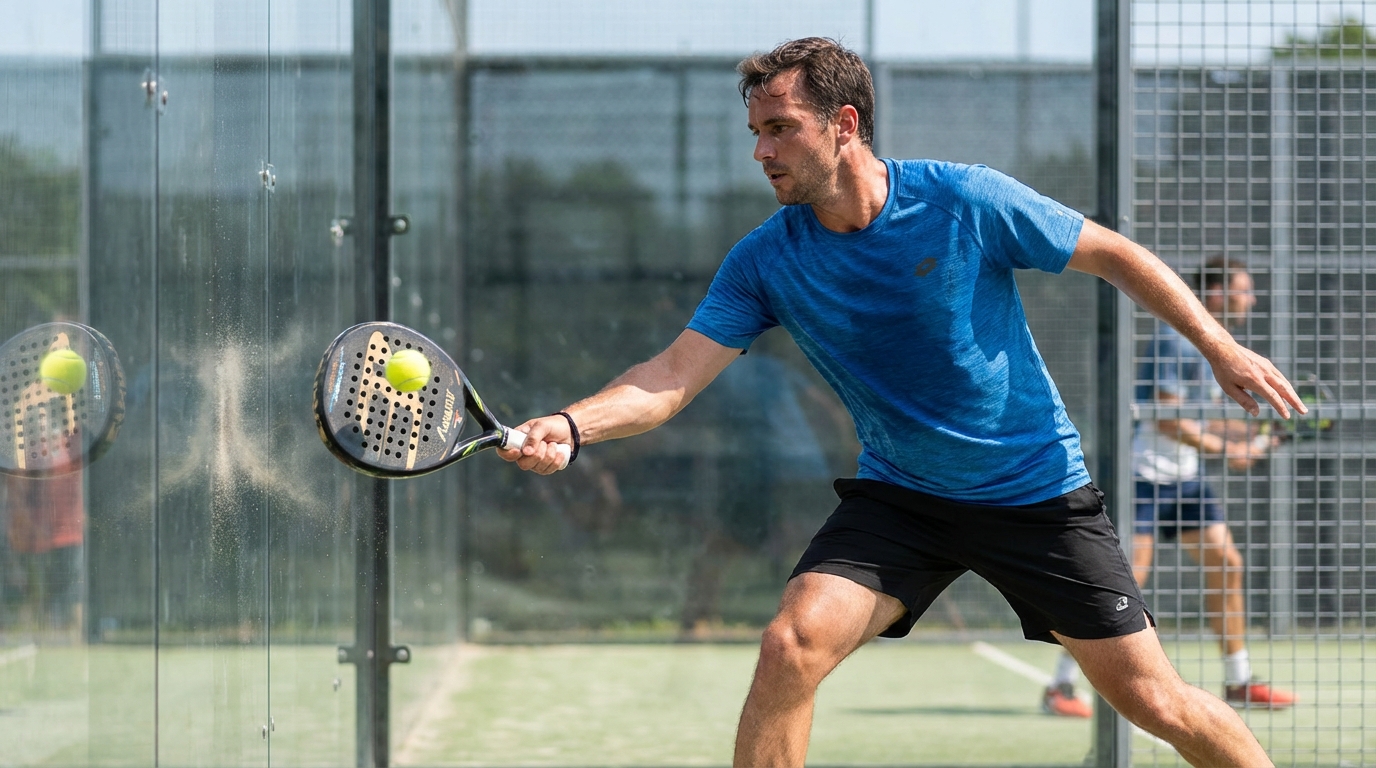
Yes, you can hit the ball against your own glass walls to return it during a padel point. This unique strategic element allows you to create difficult angles and defensive saves that are impossible in traditional tennis.
Strategic Use of Enclosures
You should utilize the glass to slow down fast shots or to lob the ball over opponents at the net. The rebound energy from the glass is a critical component of high-level defensive play.
Here is the kicker:
- You cannot hit the ball into the metallic fence on your own side.
- Using the corners creates unpredictable bounces for the opponent.
- Tempered glass provides a consistent and safe rebound surface.
Key Takeaway: Utilizing walls during a padel point transforms the court into a 3D playing space, rewarding creativity and defensive positioning.
| Wall Material | Characteristic | Strategic Benefit |
|---|---|---|
| Tempered Glass | Smooth and Predictable | Allows for precise defensive returns |
| Metallic Mesh | Irregular and Rigid | Used to force errors on the opponent’s side |
| Structural Steel | High Stability | Ensures the enclosure withstands heavy impacts |
Building walls with high-strength tempered glass ensures that the court can handle the rigors of aggressive wall-play without compromising safety.
How should you receive a padel point serve?

You should receive a padel point serve by standing a few steps behind the service line and waiting for the ball to bounce in the designated box. You must allow the ball to hit the floor before making contact, as volleys are strictly prohibited during the return of serve.
Defensive Stance and Anticipation
You need to watch the server’s racket angle to anticipate the spin and depth of the incoming ball. Positioning yourself to use the back glass for help is a fundamental receiving strategy.
Think about it:
- If the serve hits the fence after the bounce, it is a fault.
- You should move toward the net immediately after a successful return.
- Communication with your partner ensures full court coverage.
Key Takeaway: Receiving a padel point effectively requires patience, low center of gravity, and the strategic decision to play the ball off the glass.
| Receiver Task | Strategy | Goal |
|---|---|---|
| Initial Position | Behind the service line | Maximum time to react to the serve |
| Ball Contact | After the ground bounce | Compliance with service return rules |
| Team Transition | Move to the net | Pressure the serving team early |
A high-traction turf surface is vital for receivers to make the explosive lateral movements necessary to return wide or deep serves.
Can you volley to end a padel point?
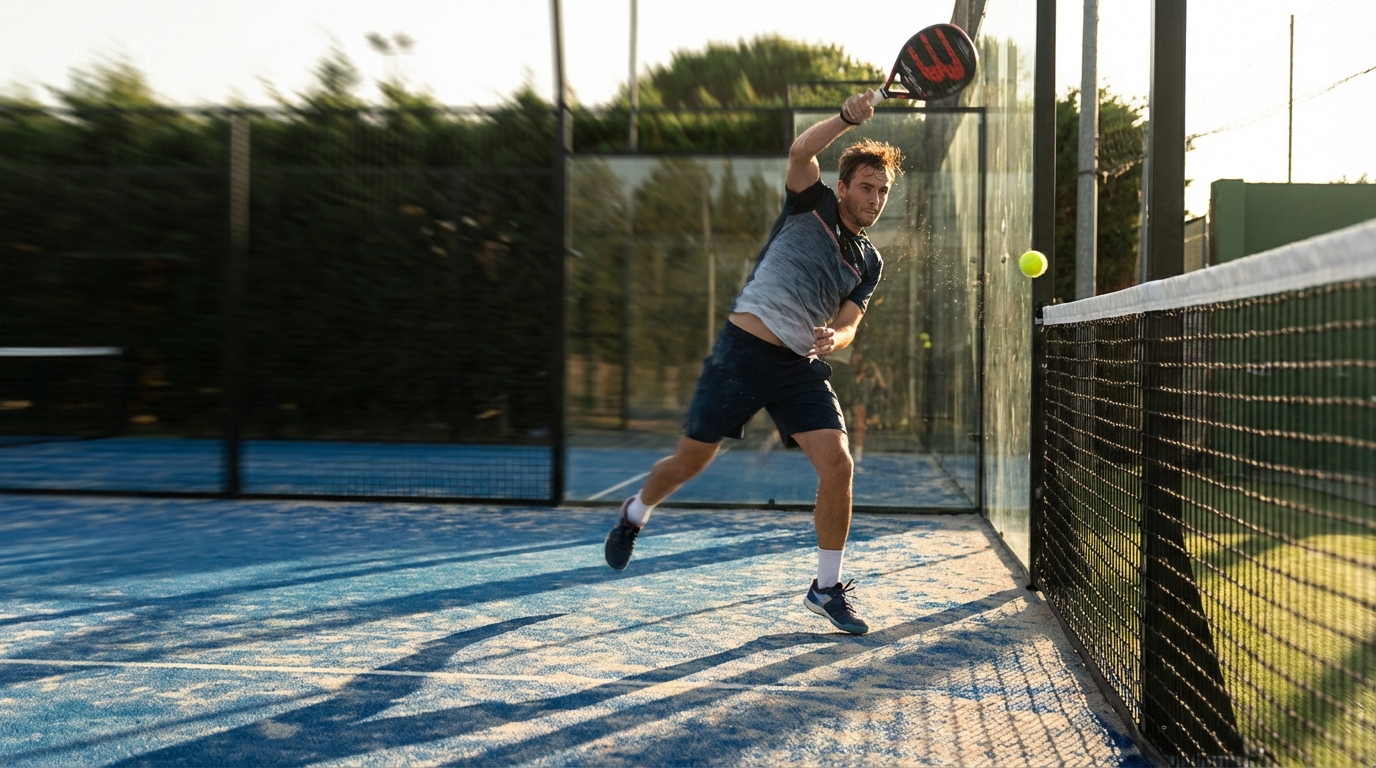
You can use a volley to end a padel point by striking the ball in the air before it bounces on your side. Controlling the net with aggressive volleys is the most efficient way to win points in competitive play.
Net Domination and Timing
You must avoid touching the net with your body or racket while performing a volley, as this results in an immediate loss of the point. Mastering the “bandeja” and the smash will help you maintain net dominance.
But wait, there is more:
- You cannot volley a ball that is on the opponent’s side of the net.
- Soft volleys can drop the ball short to pull opponents out of position.
- High volleys should be directed deep into the glass corners.
Key Takeaway: Volleys are the primary offensive tool in a padel point, requiring a robust net system that can withstand high-speed impact.
| Volley Type | Goal | Execution |
|---|---|---|
| Block Volley | Neutralize power | Keep the racket firm and short |
| Offensive Volley | Win the point | Aim for the fence or the feet |
| Smash | High-energy finish | Strike at the highest point possible |
Investing in a court with a professional-grade net and posts ensures that the equipment can handle the intensity of high-level net play.
What are the court limits for a padel point?
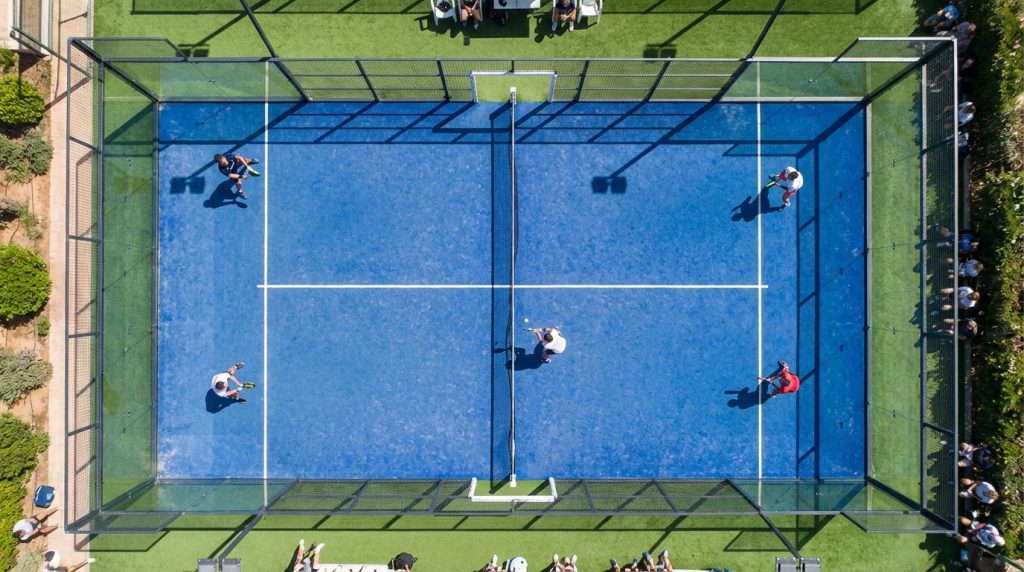
The court limits for a padel point are defined by the 10-meter width and 20-meter length of the playing surface, enclosed by 3-meter to 4-meter high walls. You must ensure that every shot lands within these floor dimensions to be considered valid.
Structural Dimensions for Safety
You must provide a minimum ceiling height of 6 meters for indoor courts to allow for high lobs during a rally. In professional settings, “out-of-court” play is permitted through side gates for balls that jump over the wall.
Wait, there is more:
- The service lines are only active during the serve.
- Safety zones around the court prevent player injury during exits.
- Clearances between courts should be at least 2 meters.
Key Takeaway: Adhering to the standard court limits for a padel point ensures your facility meets international federation standards for professional tournaments.
| Dimension | Specification | Standard |
|---|---|---|
| Playing Area | 200 Square Meters | International FIP Standard |
| Wall Height | 3m (sides) to 4m (back) | Standard enclosure height |
| Ceiling Clear | 6m (min) to 8m (rec) | Crucial for the lobbing game |
Precise architectural planning prevents dead spots and ensures the structural integrity of the glass and steel frame under load.
How are lines judged for a padel point?
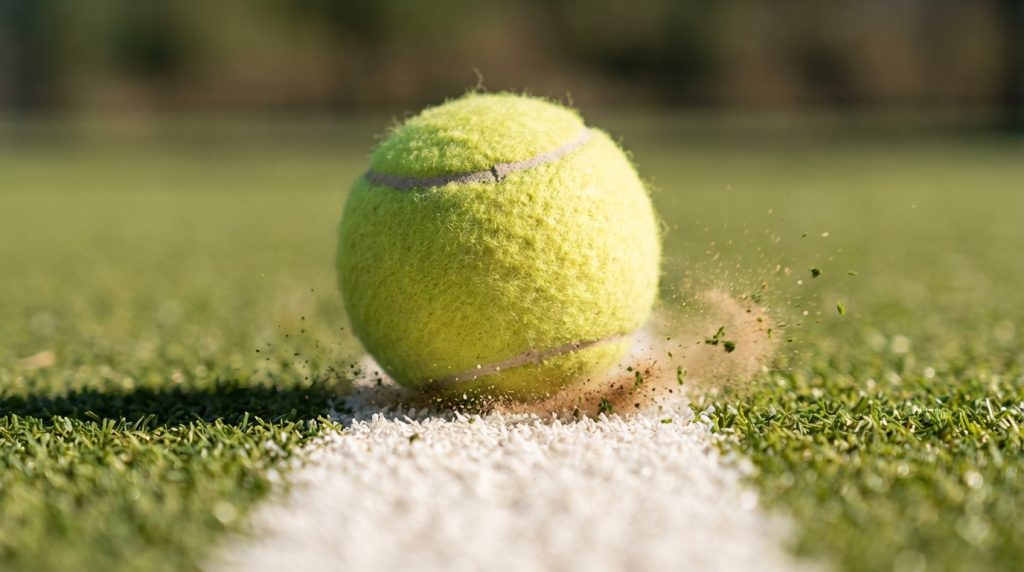
Lines are judged for a padel point based on where the ball first bounces; if any part of the ball touches the white line, it is considered in. During a rally, the lines become irrelevant as the boundaries shift to the entire floor area within the walls.
Accuracy in Line Visibility
You need a high-contrast white line integrated into the turf to ensure that calls are accurate and easy to see for both players and spectators. Automated production lines ensure that these markings are perfectly straight and permanent.
Here is the deal:
- Lines are only used to define the service boxes.
- A ball hitting the line on a serve is always “In.”
- Turf density must be uniform to prevent line distortion.
Key Takeaway: Accurate line calls for a padel point depend on precision-manufactured turf with high-visibility, integrated white markings.
| Call Scenario | Result | Rule Application |
|---|---|---|
| Ball touches line | In | Ball is valid for play |
| Ball outside line | Out | Point or service fault recorded |
| Net post hit | Out | Hitter loses the point immediately |
By using high-quality synthetic grass with pre-tufted lines, you eliminate the risk of fading or peeling that occurs with painted markings.
Building a elite sports facility starts with mastering the technical nuances of every padel point. We solve the challenge of complex procurement and installation by providing factory-direct, high-performance courts that meet every international standard. Our vision is to empower club owners with the most durable and aesthetically striking courts in the industry. To transform your space into a world-class venue and secure your future in the sport, contact us today for a professional consultation.
Frequently Asked Questions
Can I build a padel point court on a standard asphalt base?
Yes, because a level and stable base is required to ensure consistent ball bounce and player safety. Asphalt or reinforced concrete are the industry standards for professional court foundations.
What’s the best glass thickness for a commercial court?
12mm tempered glass is the best choice because it offers superior impact resistance and a more consistent rebound for high-traffic club environments. While 10mm is used for residential courts, commercial facilities require the added durability.
How do I know if the turf is right for professional play?
The turf must have a high stitch density and use specialized sand infill because these factors directly influence the ball’s bounce and the player’s traction. Look for ISO-certified manufacturers who provide monofilament or textured fibers.
Can I customize the color of the court frame for my brand?
Absolutely, because our manufacturing process includes high-quality powder coating available in various RAL colors. This allows you to match the court aesthetics to your club’s branding without sacrificing rust resistance.
What’s the best way to maintain the court for long rallies?
Regularly brushing the sand infill is essential because it prevents the turf fibers from matting down and ensures the ball continues to bounce at the correct height. Weekly maintenance is recommended for busy commercial clubs.