Introduction
Building a sports facility is complex, but the real headache begins when you realize standard specifications fail to withstand the harsh realities of nature. It is easy to underestimate the engineering precision required for an outdoor padel court.
Ignore local wind loads or soil conditions, and your investment risks structural failure within months. A collapsed fence or shattered glass is not just a financial loss; it is a liability nightmare.
We provide engineered, Eurocode-compliant solutions designed specifically to endure outdoor elements while maintaining elite playability. Here is how we design the perfect outdoor padel court for your facility.
1. What are the distinct models for an outdoor padel court?
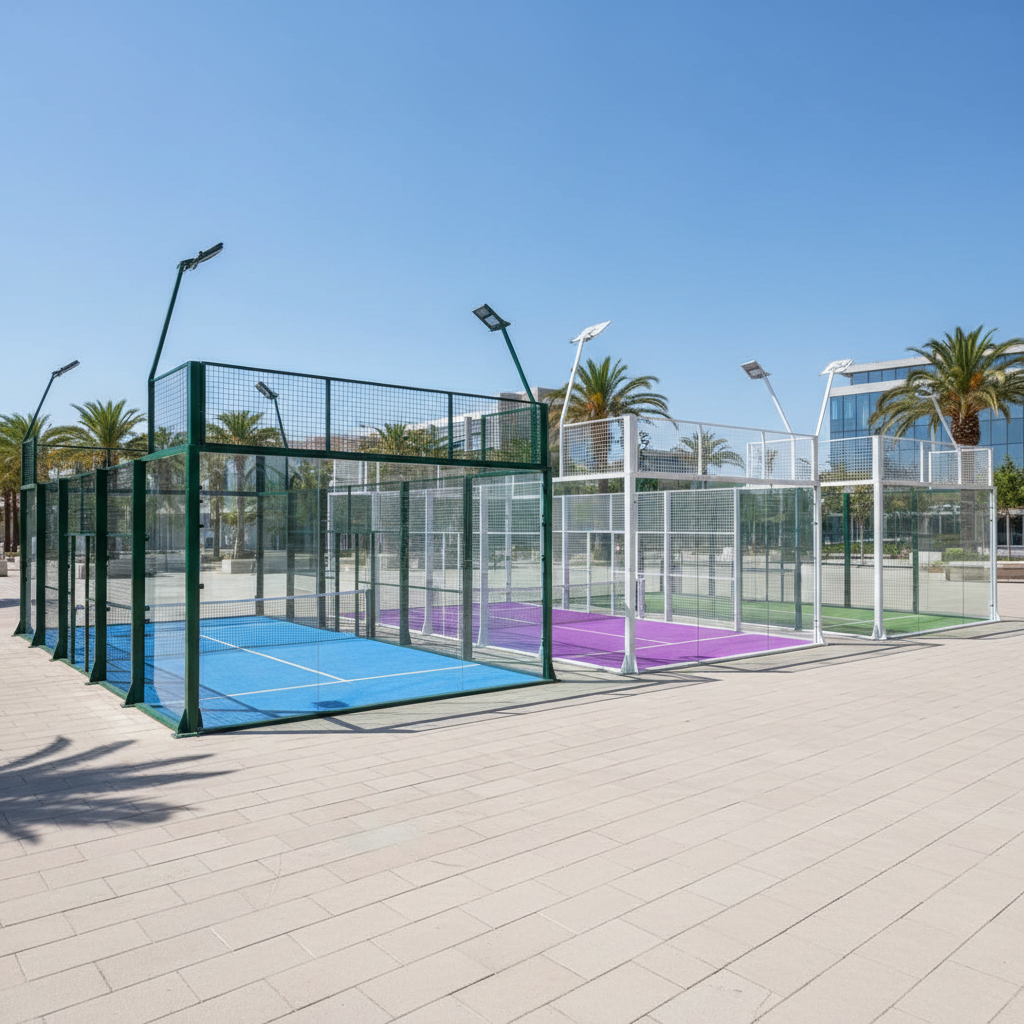
An outdoor padel court comes in various structural configurations designed to balance aesthetics with durability. Here’s the deal, choosing the right model depends entirely on your location’s wind exposure and your players’ visibility needs. We categorize our solutions into three primary tiers: Standard, Panoramic, and Competition, each offering specific structural advantages. Explore our outdoor padel court designs to see which frame architecture aligns with your club’s visual identity and safety requirements.
The structural differences between these models are not just cosmetic; they fundamentally alter the court’s resistance to lateral forces. A Standard court utilizes heavy steel frames at the glass interfaces, providing the highest level of stability. In contrast, Panoramic courts remove these vertical supports to offer spectators an unimpeded view, placing significantly more stress on the glass panels themselves. Competition models often blend these features, reinforcing the corners to allow for external play while maintaining high visibility. Selecting the wrong model for a high-wind area is a recipe for disaster.
| Court Model | Structural Feature | Ideal Environment | Visibility Rating |
|---|---|---|---|
| Standard | Double pillar frames | Coastal/High Wind Areas | Medium |
| Panoramic | No rear pillars | Indoor or Sheltered Outdoor | High |
| Competition | Reinforced corners | Professional Tournaments | Very High |
2. Why select a Standard model for your outdoor padel court?
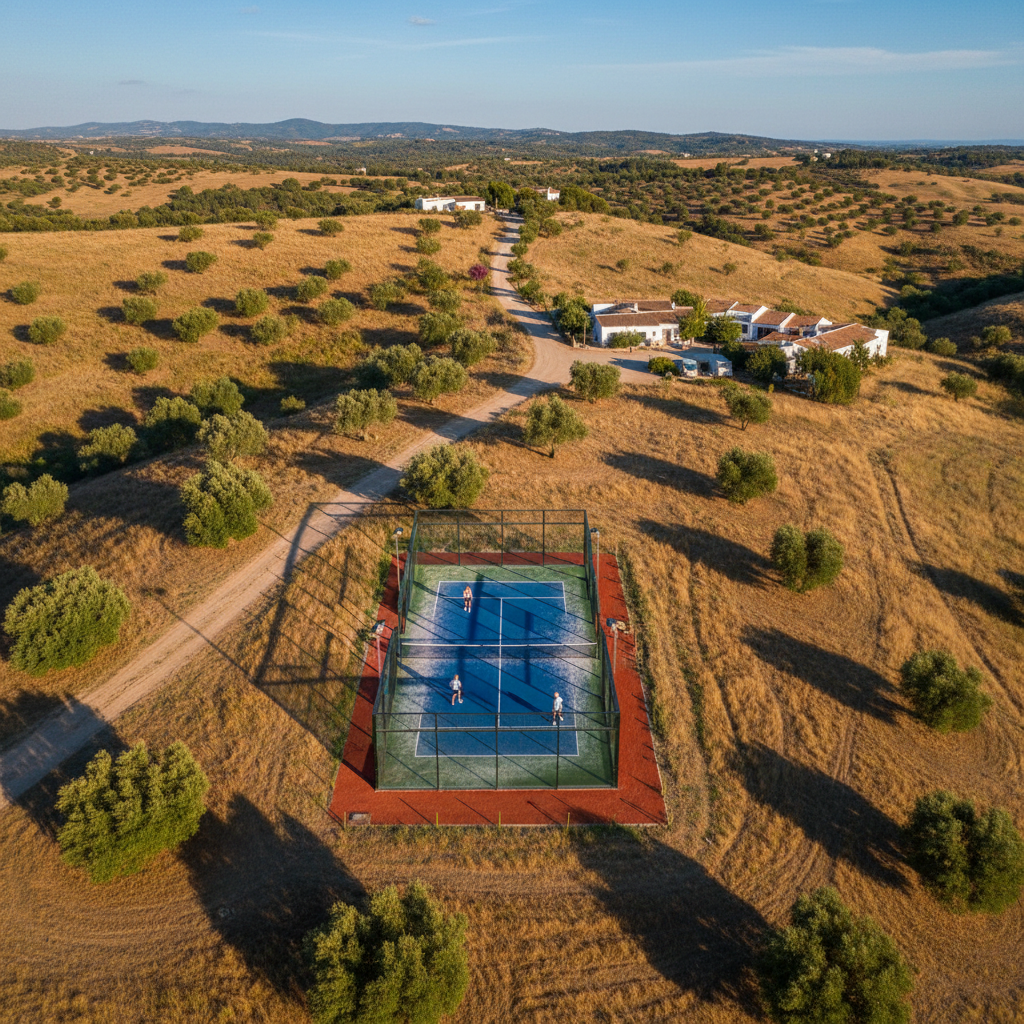
The Standard model is the workhorse of the outdoor padel court industry, prioritizing rigidity over unobstructed views. You might be wondering, is the extra metal framework distracting for players? It actually provides necessary rigidity that prevents glass vibration during heavy play or storms. For clubs in coastal or open areas, this structural redundancy is non-negotiable for long-term safety.
In terms of engineering, the Standard model features frames that enclose the glass panels on all sides. This means the glass acts as a panel filling rather than a primary structural element supporting the fence. This design drastically reduces the risk of glass breakage under high wind loads because the steel frame absorbs the majority of the kinetic energy. If you are building in an area where gusts frequently exceed 80 km/h, the Standard model is not just a choice; it is a safety requirement.
3. Is a Panoramic design right for your outdoor padel court?
A Panoramic outdoor padel court eliminates vertical corner columns at the glass rear, offering a spectator-friendly experience. But here’s the kicker, this aesthetic upgrade requires thicker glass and specialized engineering to compensate for the reduced steel support. We recommend this model for central show courts where visibility is paramount and wind conditions are moderate. The seamless glass connection creates a premium look that attracts players and sponsors alike.
Because the rear glass walls in a Panoramic court are self-supporting or connected only by small clamps, they must be thicker—typically 12mm tempered glass is the absolute minimum. The absence of a steel frame at the rear means the glass must withstand all wind pressure and player impact. Consequently, we typically advise against installing pure Panoramic courts in open fields without windbreaks, as the flexibility of the glass can become unnerving for players during windy days.
4. How do Eurocode wind loads affect outdoor padel court safety?
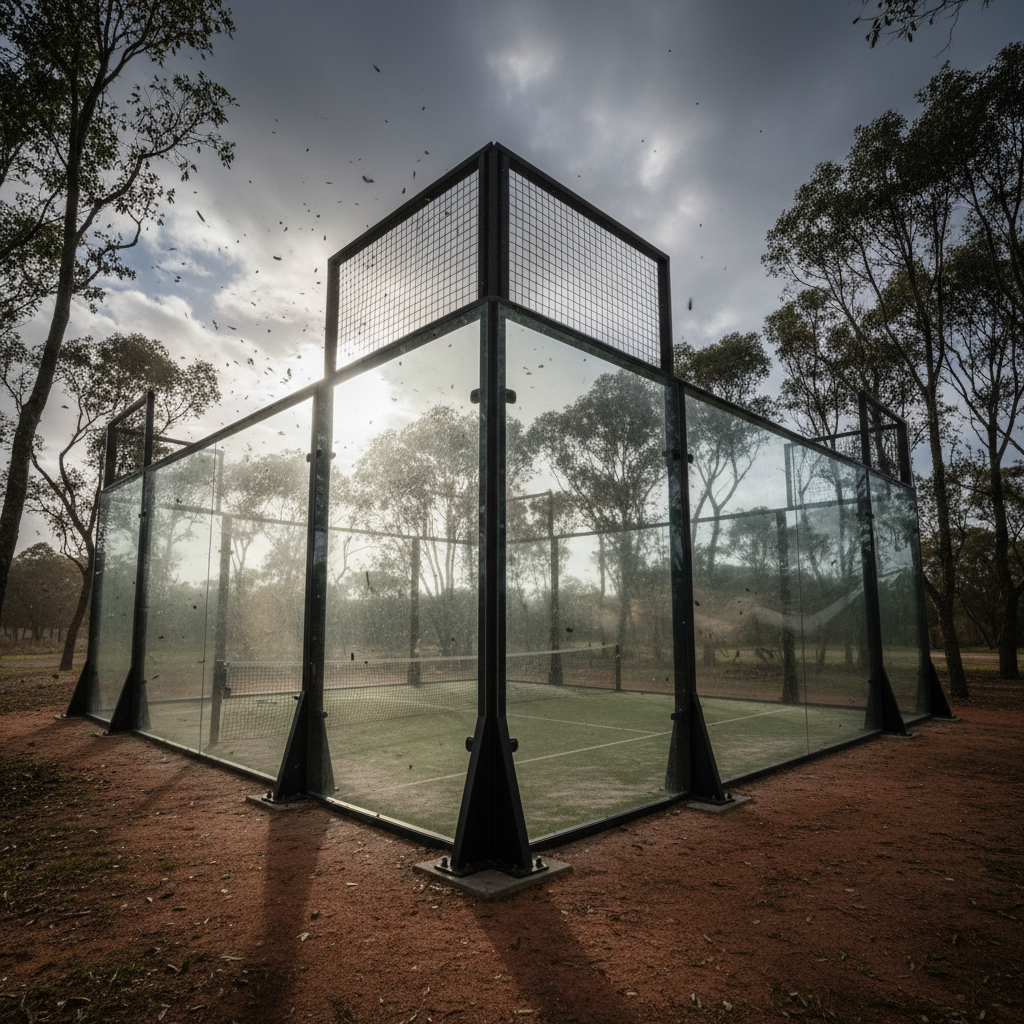
Calculating wind loads is the single most critical step in designing a safe outdoor padel court. What’s the real story? Ignoring Eurocode or DIN standards leads to catastrophic structural failures during storms. We analyze your specific “Place of Installation” to determine the required steel profile thickness and anchor depth. A court built for an indoor warehouse will simply not survive in an open outdoor field.
Eurocode standards divide locations into wind zones, ranging from Zone 1 (calm inland) to Zone 4 (coastal storm areas). For an outdoor court, this calculation dictates whether you use 80x40mm pillars or reinforced 100x60mm pillars. It also determines the size of the base plates and the number of anchor bolts required. Failing to account for these forces is the number one cause of court collapse, often occurring within the first two years of installation.
| Wind Zone | Wind Speed (approx.) | Recommended Profile | Glass Thickness |
|---|---|---|---|
| Zone 1 | < 22.5 m/s | 80x40x2mm | 10mm |
| Zone 2 | < 25.0 m/s | 100x60x2mm | 10mm/12mm |
| Zone 3/4 | > 27.5 m/s | 120x80x3mm | 12mm Laminated |
5. What foundation requirements exist for an outdoor padel court?
A stable outdoor padel court relies entirely on a perfectly leveled and cured concrete perimeter or slab. This is where it gets interesting, because even a 5mm deviation can cause glass panels to shatter under tension. The foundation must include a perimeter ring beam for the structural posts and a porous asphalt or concrete center for drainage. Without proper slope and drainage channels, your court will suffer from waterlogging and turf degradation.
The most common foundation type is a reinforced concrete ring beam (minimum 30x40cm) that supports the steel structure, combined with a porous asphalt slab for the playing surface. Asphalt is preferred over concrete for the playing area because it drains water naturally and provides a slightly softer feel. If you choose a full concrete slab, you must engineer a slight slope (0.5% to 1%) outwards or install a sophisticated drainage system to prevent puddles that ruin the artificial turf.
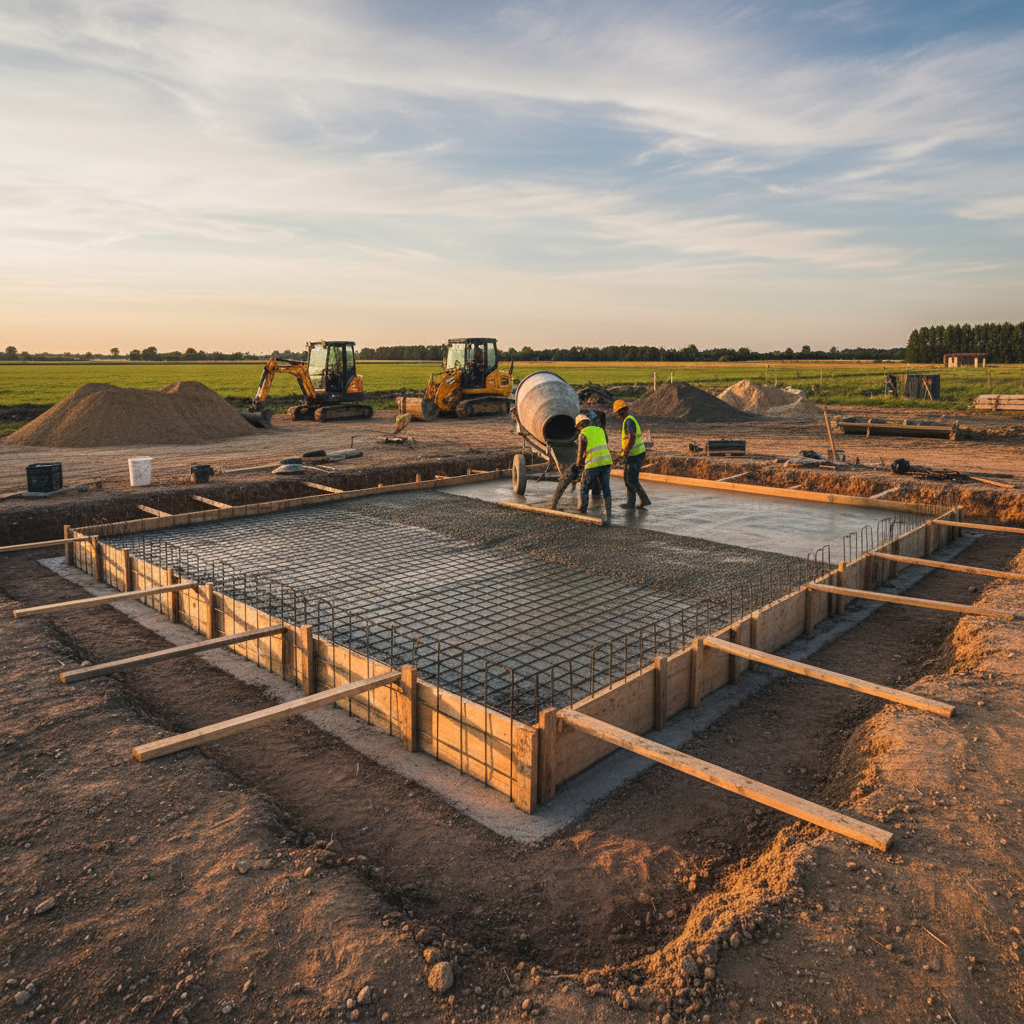
| Foundation Component | Specification | Purpose |
|---|---|---|
| Ring Beam | 30x40cm Reinforced Concrete | Anchors steel pillars |
| Playing Surface | Porous Asphalt or Concrete | Supports turf & drainage |
| Curing Time | 21-28 Days | Ensures structural strength |
6. How do we manage the outdoor padel court installation process?
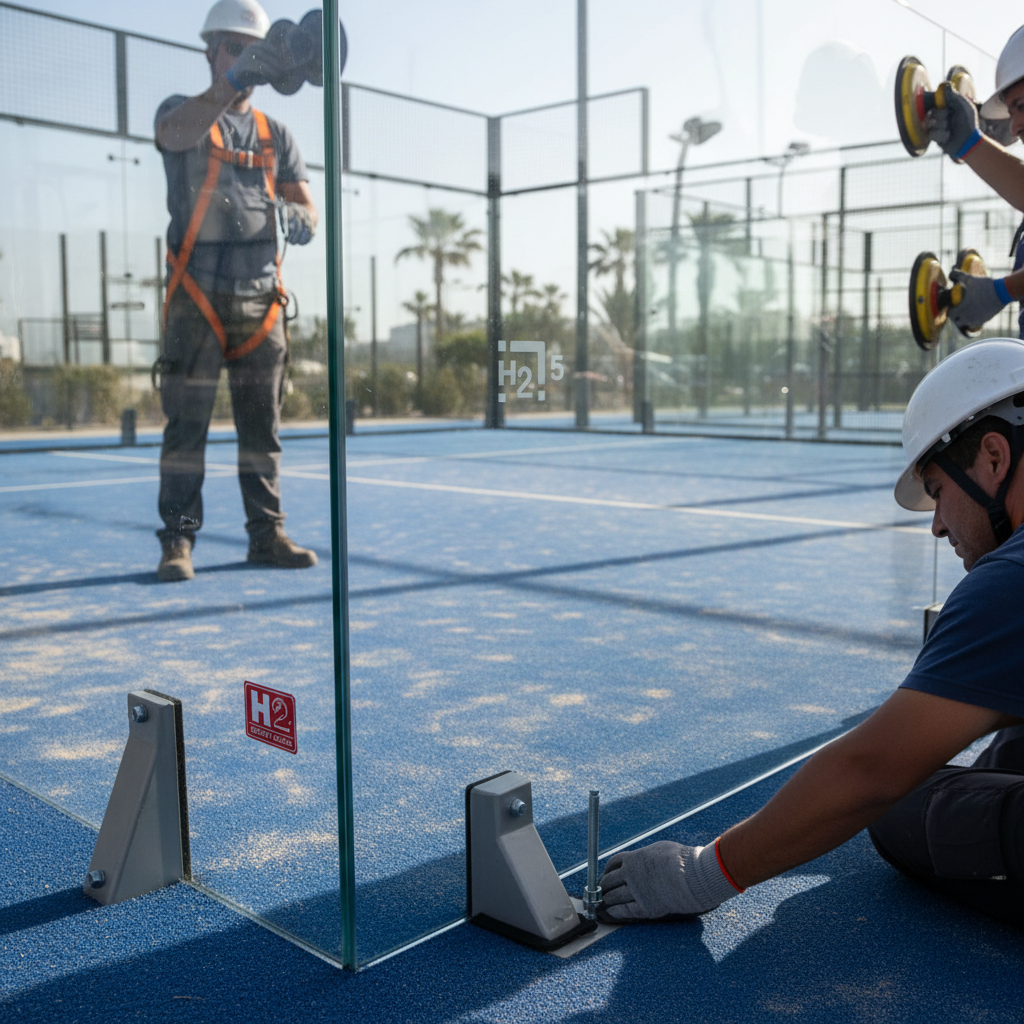
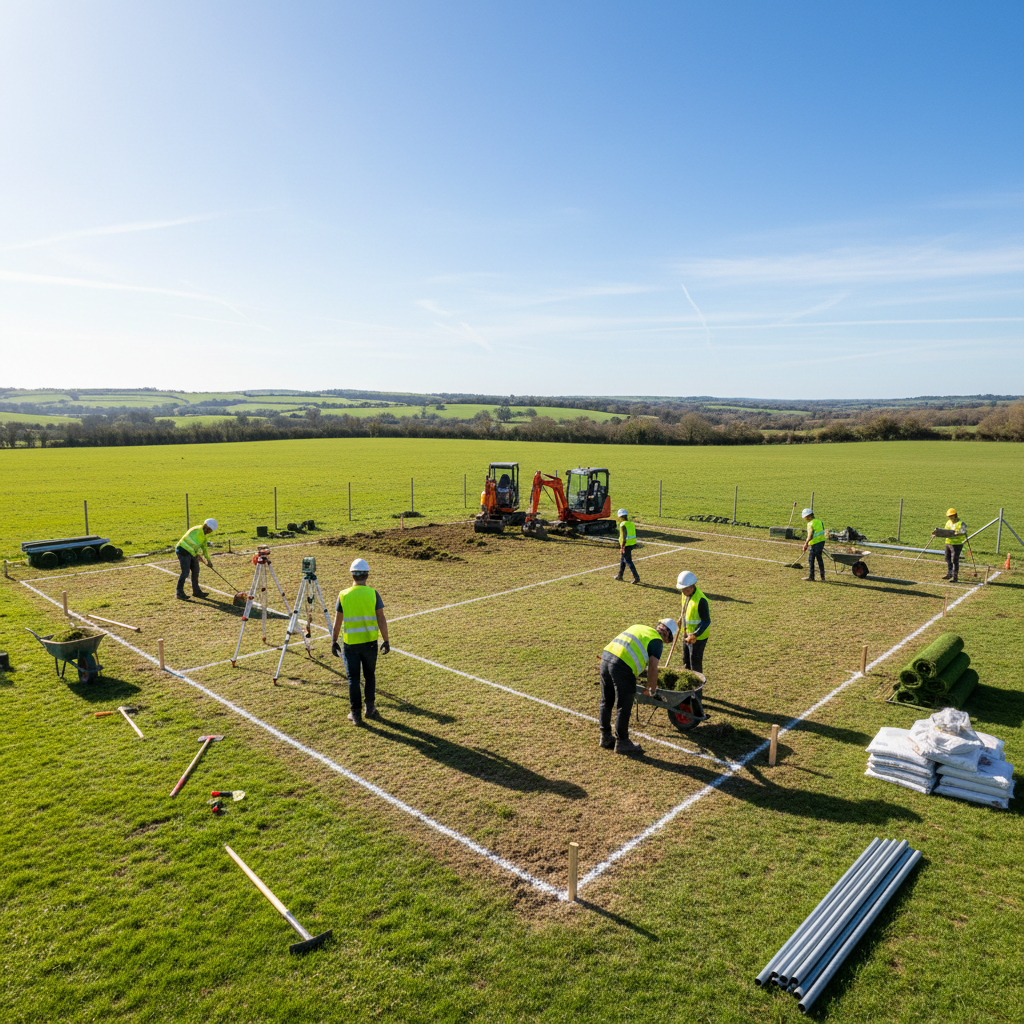
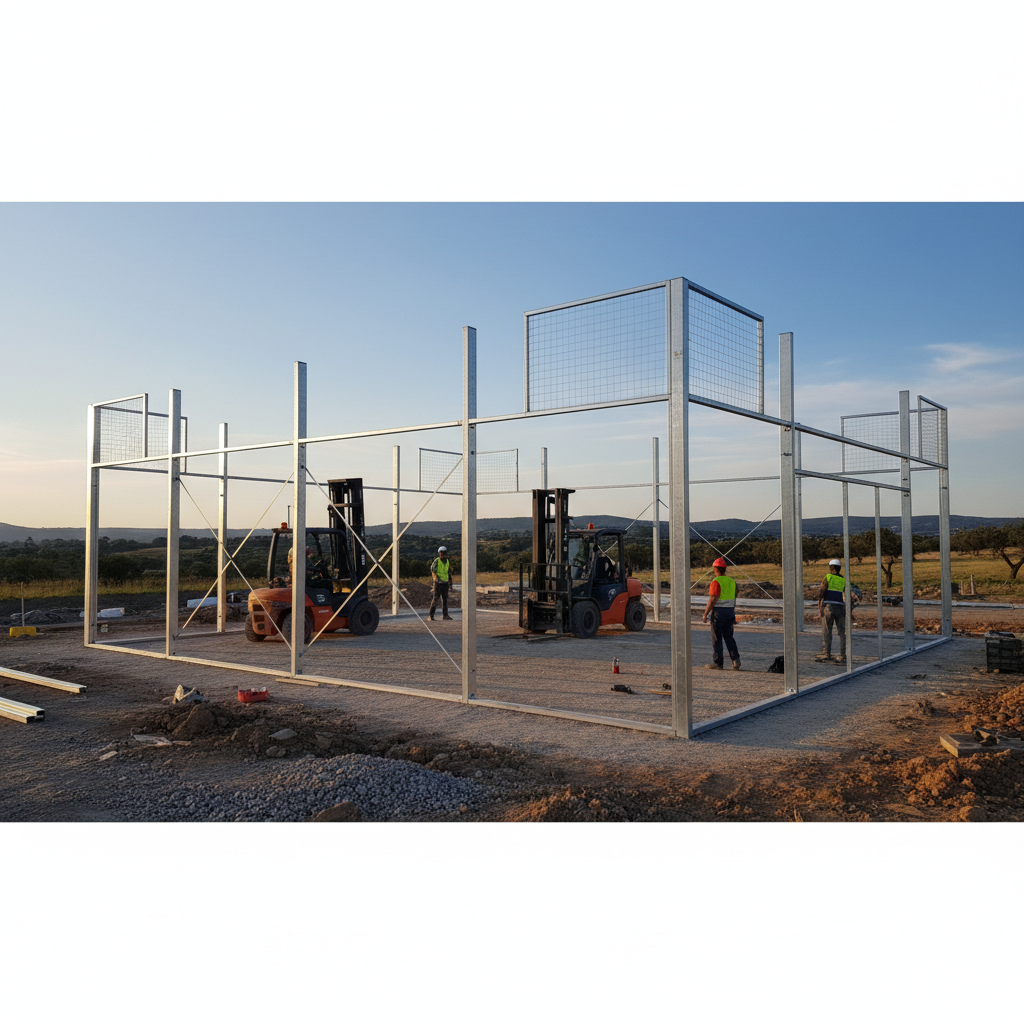
Installing an outdoor padel court is a precise assembly operation that takes 3 to 5 days per unit. Ready for the good part? Our modular system speeds up on-site assembly without cutting corners on safety. We coordinate everything from the unloading of steel beams to the final sand distribution on the turf. You can rely on our professional installation services to handle the complex logistics of glass manipulation and steel erection.
The process begins with the “set out,” where laser equipment marks the exact anchor points on the ring beam. Once the steel columns are bolted down, the mesh frames are attached. The most delicate phase is the glass installation; moving 200kg panels of glass outdoors requires vacuum lifters and experienced handlers, especially if there is any breeze. Finally, the turf is rolled out, glued at the seams, and filled with silica sand to stabilize the fibers and provide the correct ball bounce.
7. Which materials maximize the lifespan of an outdoor padel court?
The materials selected for your outdoor padel court must resist UV radiation, moisture, and temperature fluctuations. You need to know this, because standard indoor paint and steel will rust within a year outside. We utilize hot-dip galvanized steel and Qualicoat powder coating to ensure corrosion resistance. Our premium steel and glass components are specifically chosen to withstand the harsh outdoor environment.
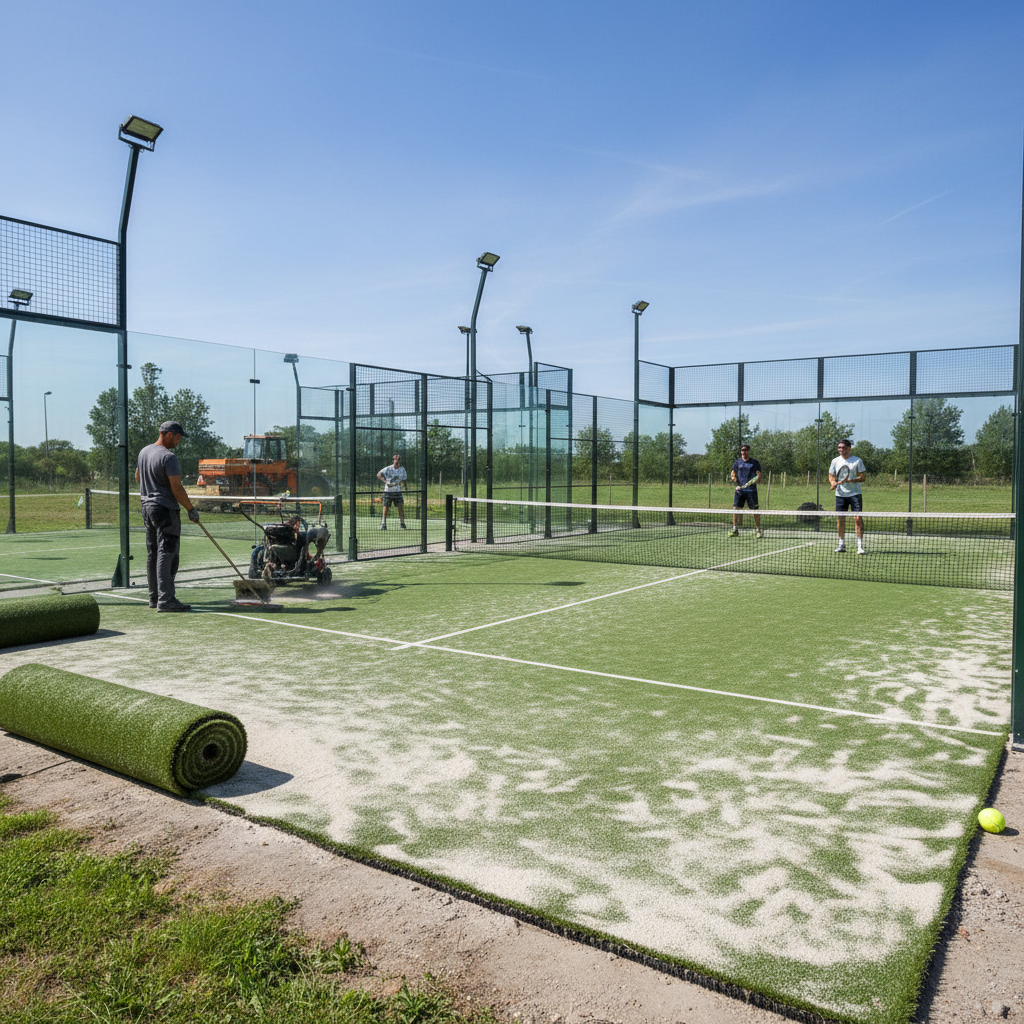
For the playing surface, we use specialized outdoor turf fibers (monofilament or texturized) that are UV-stabilized to prevent fading and brittleness. The steel mesh is not just painted; it undergoes a duplex process of galvanization followed by electrostatic powder coating. This creates a barrier against salt and humidity, which is vital if your project is near the ocean. Even the nuts and bolts are stainless steel (A2 or A4 grade) to prevent seizing and rust streaks.
| Component | Indoor Spec (Avoid Outdoors) | Outdoor Spec (Required) |
|---|---|---|
| Steel Coating | Standard Spray Paint | Hot-Dip Galvanized + Powder Coat |
| Turf | Fibrillated | UV-Stabilized Monofilament |
| Glass | 10mm Standard | 12mm Tempered or Laminated |
8. Why apply ISO-9001 standards to outdoor padel court manufacturing?
ISO-9001 certification guarantees that every outdoor padel court produced meets strict quality management consistency. Here is the bottom line, certification means every weld and bolt hole is identical to the engineering drawings. This consistency reduces installation errors and ensures that spare parts will fit perfectly years down the line. It validates our commitment to delivering a product that meets international safety benchmarks.
When you purchase a court manufactured under ISO-9001, you are buying traceability. We can track the batch of steel used for your pillars and the production date of your glass. This level of quality control eliminates the “Friday afternoon” defects often found in non-certified workshops. For commercial club owners, this reliability translates to lower maintenance costs and higher resale value of the facility infrastructure.
9. What maintenance routines does an outdoor padel court require?
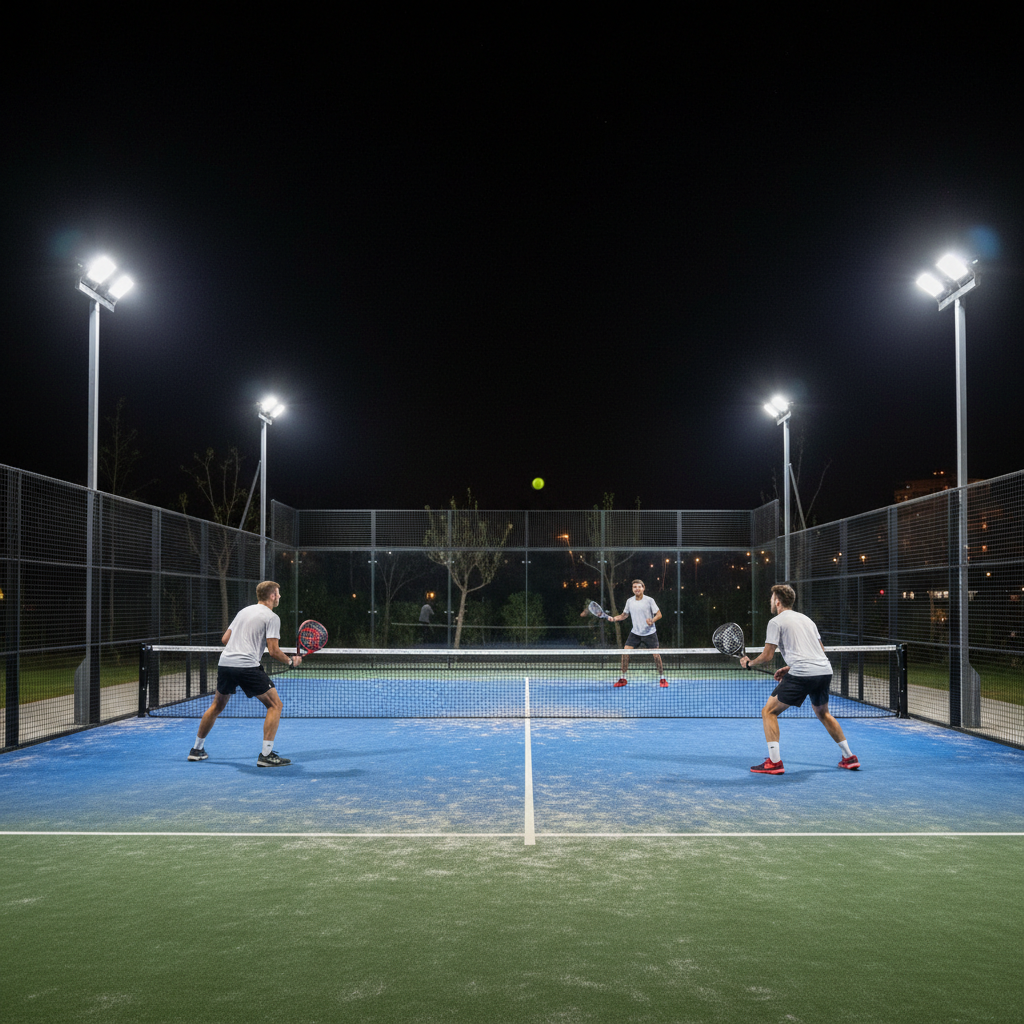
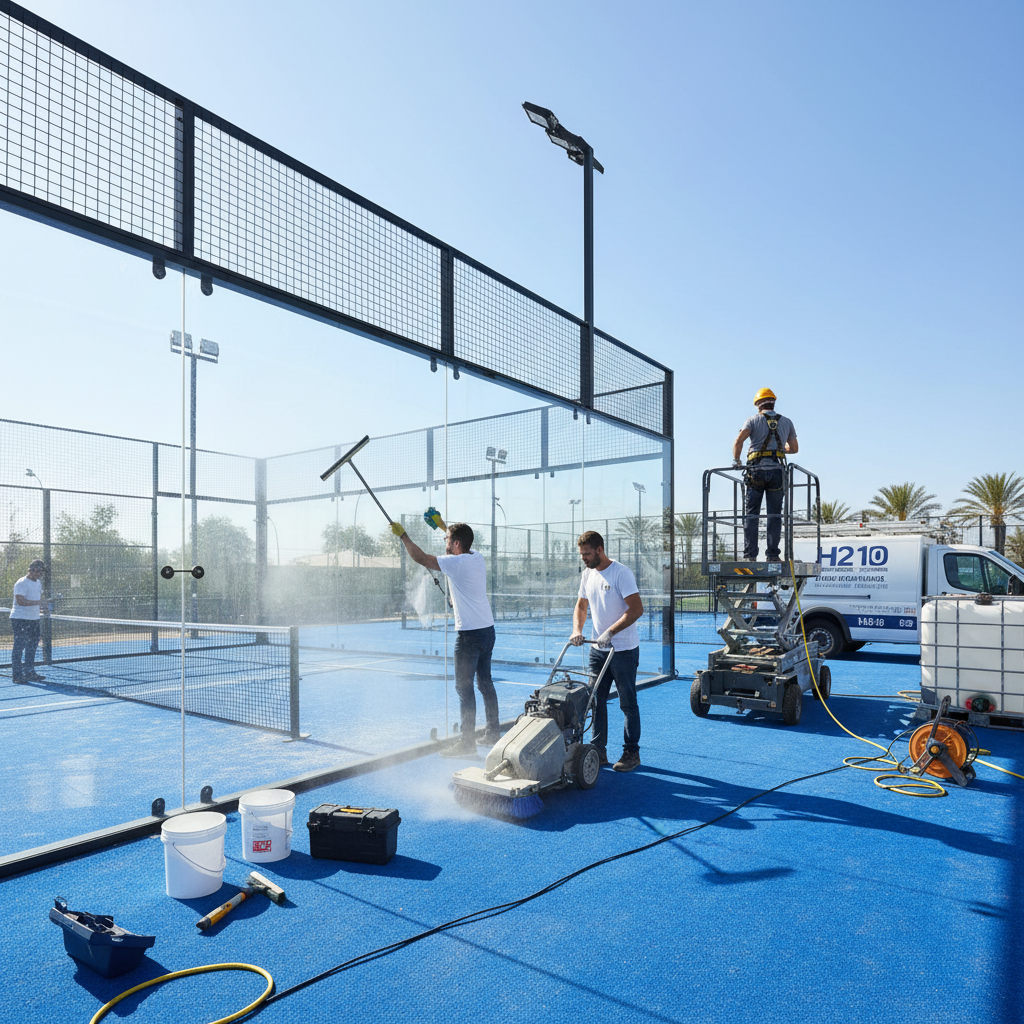
An outdoor padel court demands regular upkeep to preserve its playability and safety features. Make no mistake, neglect leads to hardened turf and dangerous slippery spots. Routine tasks include redistributing silica sand, checking glass tension screws, and cleaning drainage channels. A proactive schedule prevents minor wear from becoming a major repair bill.
The silica sand infill tends to migrate to the edges of the court due to player movement and rain. Weekly brushing is essential to sweep this sand back toward the center, keeping the fibers upright and the bounce consistent. Additionally, you must inspect the neoprene washers separating the glass from the steel; if these wear out, metal-on-glass contact can cause spontaneous shattering. Keeping the drainage holes clear of leaves and mud is also vital to prevent standing water.
10. What determines the final investment for an outdoor padel court?
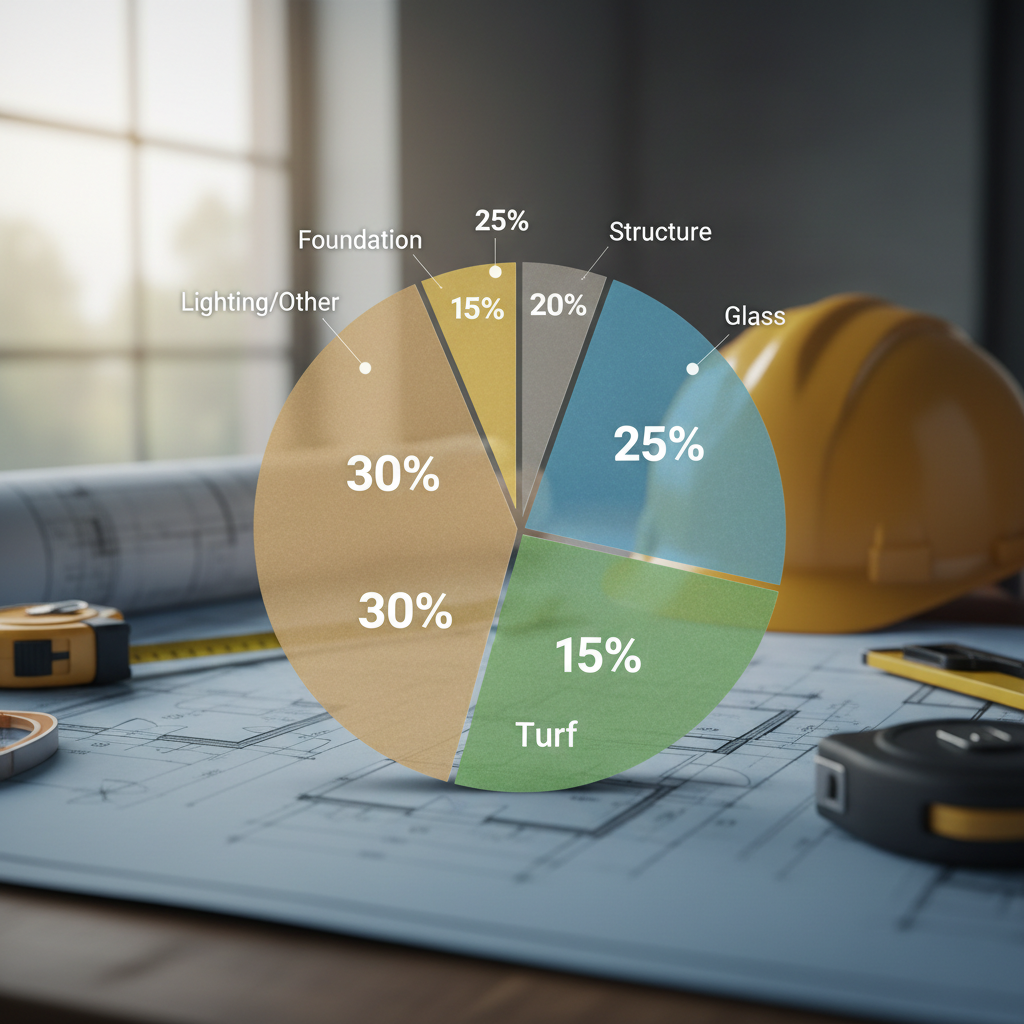
The price of an outdoor padel court varies significantly based on structural reinforcements and customization. Let’s break it down, the biggest cost drivers are the steel weight required for your wind zone and the glass thickness. While a lighter structure saves money upfront, it may fail certification for outdoor use in your region. Investing in the correct specification ensures the asset remains operational and safe for decades.
Beyond the steel and glass, logistics play a huge role in the final price. Delivering 5 tons of material to a remote or difficult-to-access site can double the installation costs. Optional upgrades like LED lighting suitable for TV broadcasting, corner protections, and customized turf colors also add to the budget. However, skimping on the foundation or steel quality is a false economy that will cost you more in repairs than you saved in construction.
| Cost Driver | Impact | Necessity |
|---|---|---|
| Structure | High | Mandatory (Wind Load) |
| Glass (12mm) | Medium | Recommended Outdoors |
| Foundation | High | Mandatory |
| LED Lighting | Low | Essential for Evening Play |
| Custom Turf | Low | Optional (Branding) |
Conclusion
Building a successful outdoor padel court requires navigating a maze of engineering standards, material choices, and installation logistics. We have explored how wind zones dictate design, why foundations matter, and which materials survive the elements.
Your facility deserves a court that attracts players and withstands the test of time. Contact us today to discuss your project requirements and receive a customized quote for a compliant, high-performance padel solution.
FAQ
Q1: Can I build an outdoor padel court on an existing tennis court?
Yes, but judgment is required regarding the slope. Reason: While the base is solid, tennis courts often have slopes for drainage that are too steep for padel glass walls; a leveling ring beam is usually necessary to ensure the glass stands perfectly vertical.
Q2: What is the best orientation for an outdoor padel court?
The best orientation is North-South. Reason: This alignment minimizes the impact of the sun blinding players during early morning or late afternoon matches, which is critical for outdoor playability.
Q3: How much wind can an outdoor padel court withstand?
It depends on the engineered calculation (Eurocode). Reason: A standard court may withstand 20m/s, but courts in coastal zones must be reinforced to withstand gusts up to 28m/s or more to prevent structural collapse.
Q4: Is 10mm glass safe enough for an outdoor padel court?
For standard courts, yes, but 12mm is better. Reason: In outdoor environments, 12mm glass provides superior stiffness against wind gusts, reducing the “wobble” effect that can scare players or lead to breakage.
Q5: Do I need planning permission for an outdoor padel court?
Almost certainly, yes. Reason: Padel courts are permanent structures with 3-4 meter high walls and fencing; local authorities typically require permits regarding height, noise, and land usage before construction begins.