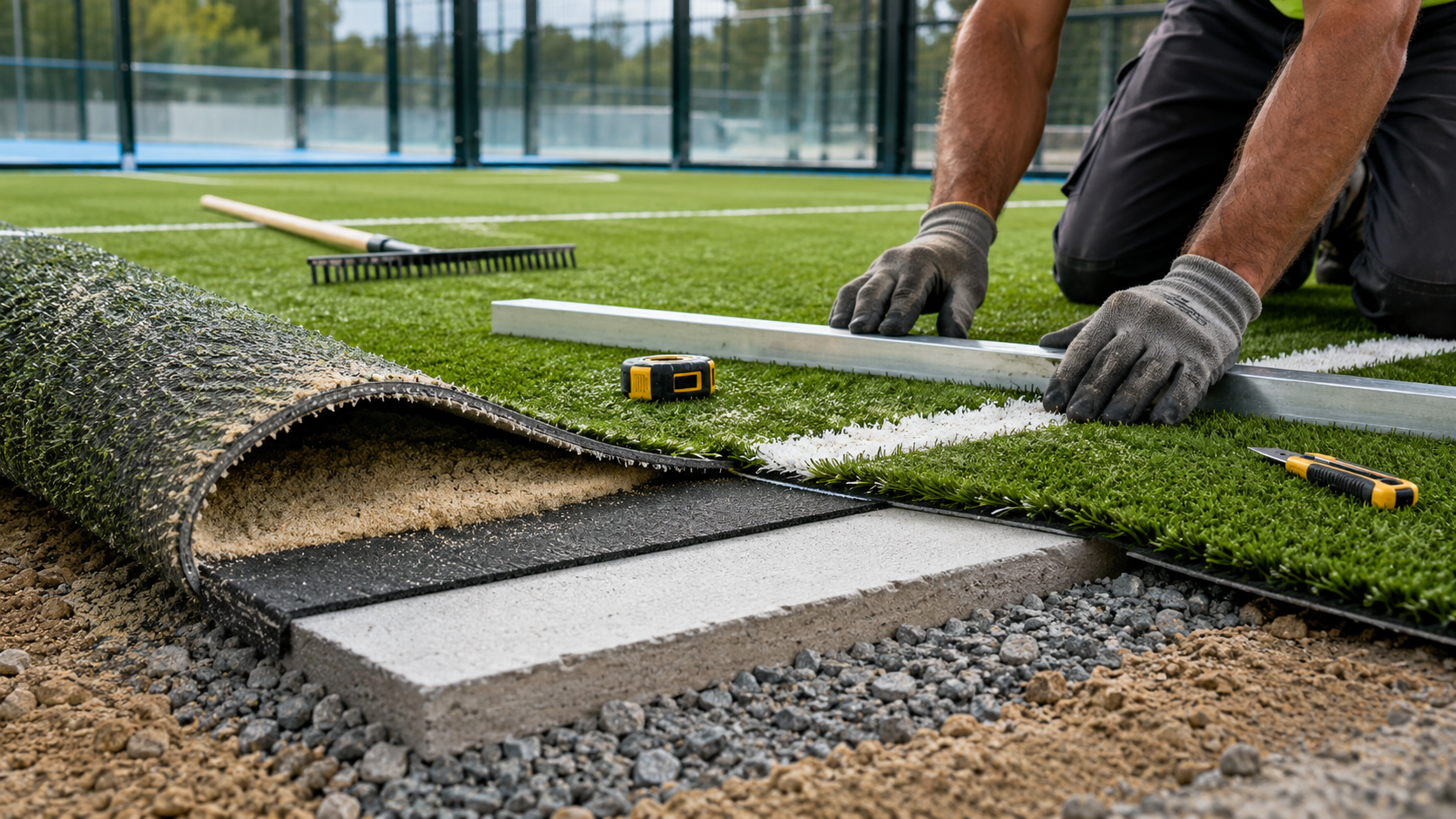
A padel court surface is a multi-layered engineering system comprising a rigid sub-base, synthetic turf, and specialized sand infill designed for specific ball bounce and player traction. Many club owners face the nightmare of “dead spots” and premature turf wear because they treat the floor as an afterthought. This neglect leads to frustrated players, high injury risks, and expensive resurfacing costs that could have been avoided with professional planning. By understanding the technical nuances of the padel court surface , you can build a facility that guarantees a 20-year design life and a premium playing experience.
What is a padel court surface specifically?
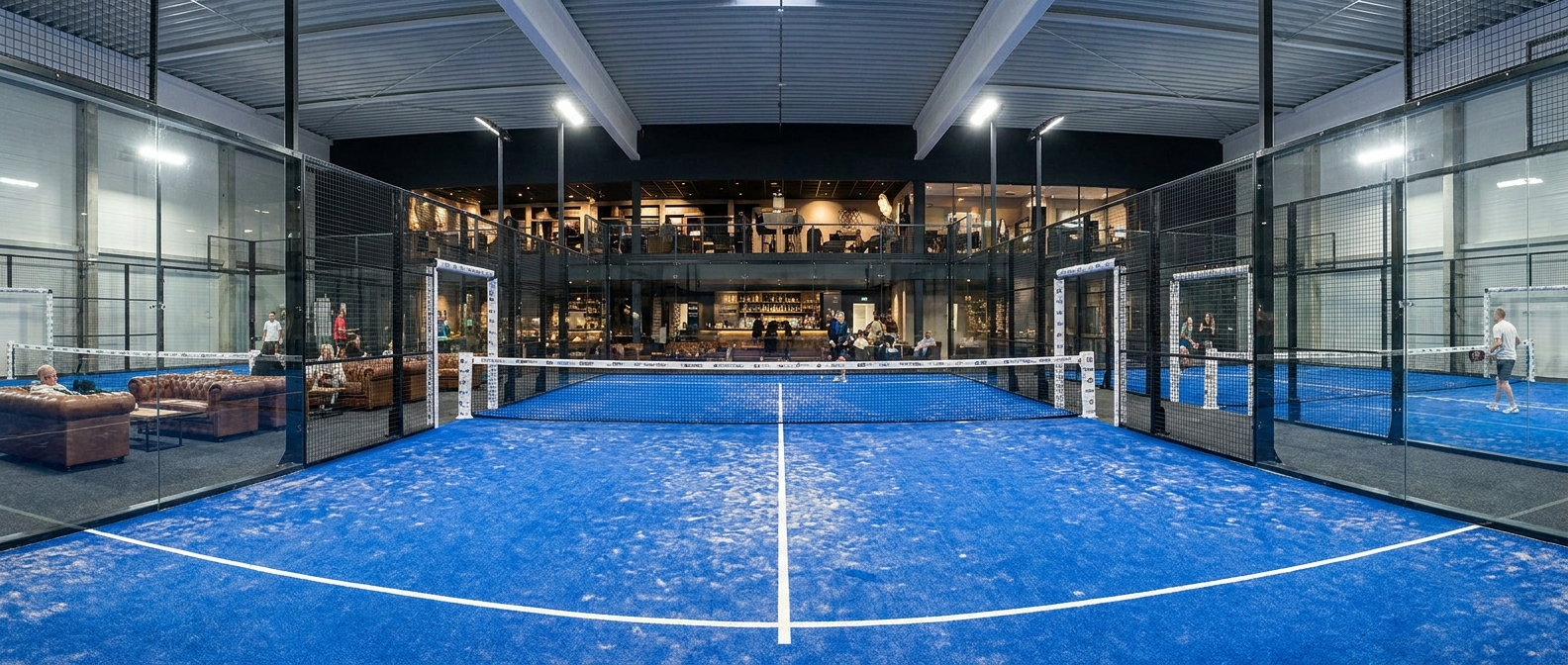
The padel court surface is a high-performance floor system that facilitates the rapid footwork and consistent ball response required for professional play. You must recognize that this padel court surface is far more than just “plastic grass” laid over concrete.
Core Components of the Floor
To build a top-tier facility, you need to master the three critical layers.
- The reinforced sub-base for structural stability.
- The synthetic turf for shock absorption and grip.
- The silica sand infill for ball response.
Here is the kicker: If you miss the mark on even one of these layers, the entire system fails. You see, the interaction between the sand and the fibers dictates the speed of the game.
Dimensions vs. Traditional Tennis
Padel areas are significantly more compact than tennis courts, measuring exactly 20 meters by 10 meters.
- Compact 200m² playing area.
- Reduced buffer zones for tighter spaces.
- Higher mechanical stress on fibers due to rapid pivots.
But wait, there’s more: The smaller footprint means you can fit three padel courts in the space of one tennis court. You can effectively triple your revenue potential by optimizing your land use.
Key Takeaway: The surface is a technical assembly where the sub-base, turf, and infill work in harmony to ensure safety and performance.
| Component | Standard | Purpose | |
|---|---|---|---|
| Playing Area | 20m x 10m | International regulation | |
| Turf Height | 10mm – 12mm | Optimal ball slide | |
| Infill Type | Silica Sand | Fiber support & friction |
Properly defining these metrics is the first step toward a successful padel court construction project.
Which materials define a padel court surface?
The primary materials used for a padel court surface include synthetic turf, porous concrete, asphalt, and specialized acrylic resins. Choosing the right material for your padel court surface depends heavily on whether your facility is located indoors or outdoors.
Turf vs. Hard Surfaces
Synthetic turf is the gold standard for player comfort and professional aesthetics.
- Turf offers superior joint protection.
- Hard surfaces provide a faster, more erratic game.
- Acrylics are preferred for high-speed indoor tournaments.
The truth is: Most commercial clubs choose turf because it appeals to the widest range of skill levels. You want your members to play longer without feeling joint pain the next day.
Natural Grass and Acrylic Role
Natural grass is a rarity in the industry due to its impossible maintenance schedule and weather sensitivity.
- Grass requires daily watering and mowing.
- Acrylics offer a sleek, modern look.
- Resins are perfect for climate-controlled indoor environments.
Look: If you are building an outdoor facility, natural grass will become a liability within months. You are better off investing in high-density synthetic fibers that withstand UV exposure.
Key Takeaway: Material selection should prioritize player safety and the local climate to ensure year-round court availability.
| Material | Durability | Comfort | Usage | |
|---|---|---|---|---|
| Synthetic Turf | High | Excellent | Universal | |
| Porous Concrete | Very High | Low | Outdoor | |
| Acrylic | High | Moderate | Indoor |
Strategic material choices reduce long-term operational costs and improve the player retention rate at your club.
How does sub-base affect padel court surface?
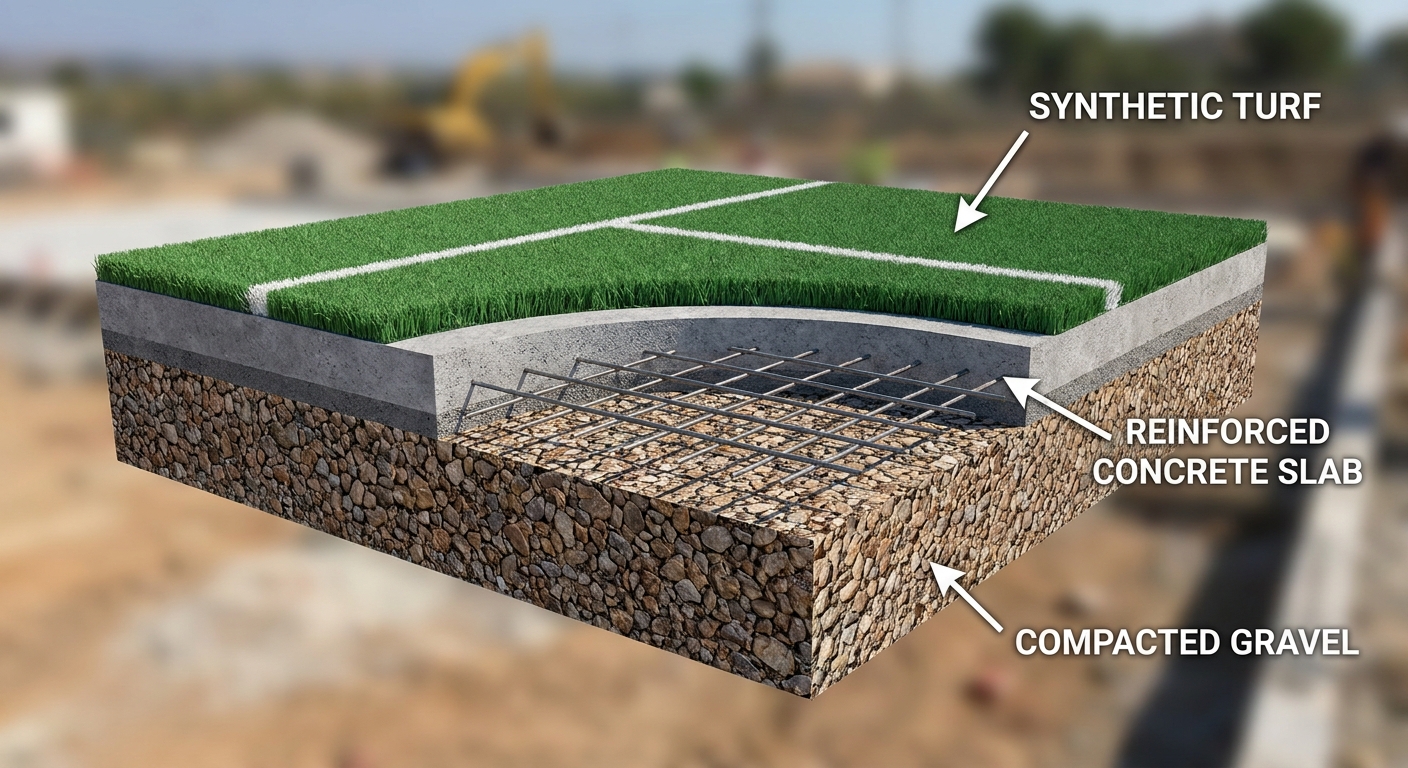
The sub-base acts as the literal foundation, determining the levelness and structural integrity of the entire padel court surface. A flawed sub-base will cause your padel court surface to sink or crack, leading to unplayable “dead spots” within the first year.
Importance of Concrete Slabs
For a professional installation, a reinforced concrete slab provides the necessary anchor for the heavy glass walls.
- Minimum 15cm thickness for stability.
- Reinforced steel mesh to prevent cracking.
- Perfectly leveled finish (tolerance <3mm).
But wait, there’s more: If the slab is uneven, you will see puddles forming under the turf. You cannot fix a bad foundation once the grass and glass are already installed.
Ground Preparation for Stability
The process begins with deep excavation and the installation of a compacted gravel layer to prevent soil shifting.
- Excavation of organic topsoil.
- Laying a geotextile membrane.
- Compacting crushed stone base.
Here is the kicker: Skipping the geotextile membrane allows weeds to grow through your court. You see, the structural stability of the court depends entirely on what lies beneath the visible grass.
Key Takeaway: The sub-base is the most expensive part of construction but guarantees the court’s 20-year lifespan.
| Feature | Requirement | Benefit | |
|---|---|---|---|
| Slab Depth | 15cm – 20cm | Structural integrity | |
| Leveling | <3mm deviation | Predictable ball bounce | |
| Material | Reinforced Concrete | Wall anchorage |
Investing in a high-quality foundation prevents the structural failure of the glass and steel cage.
Why is drainage vital for padel court surface?
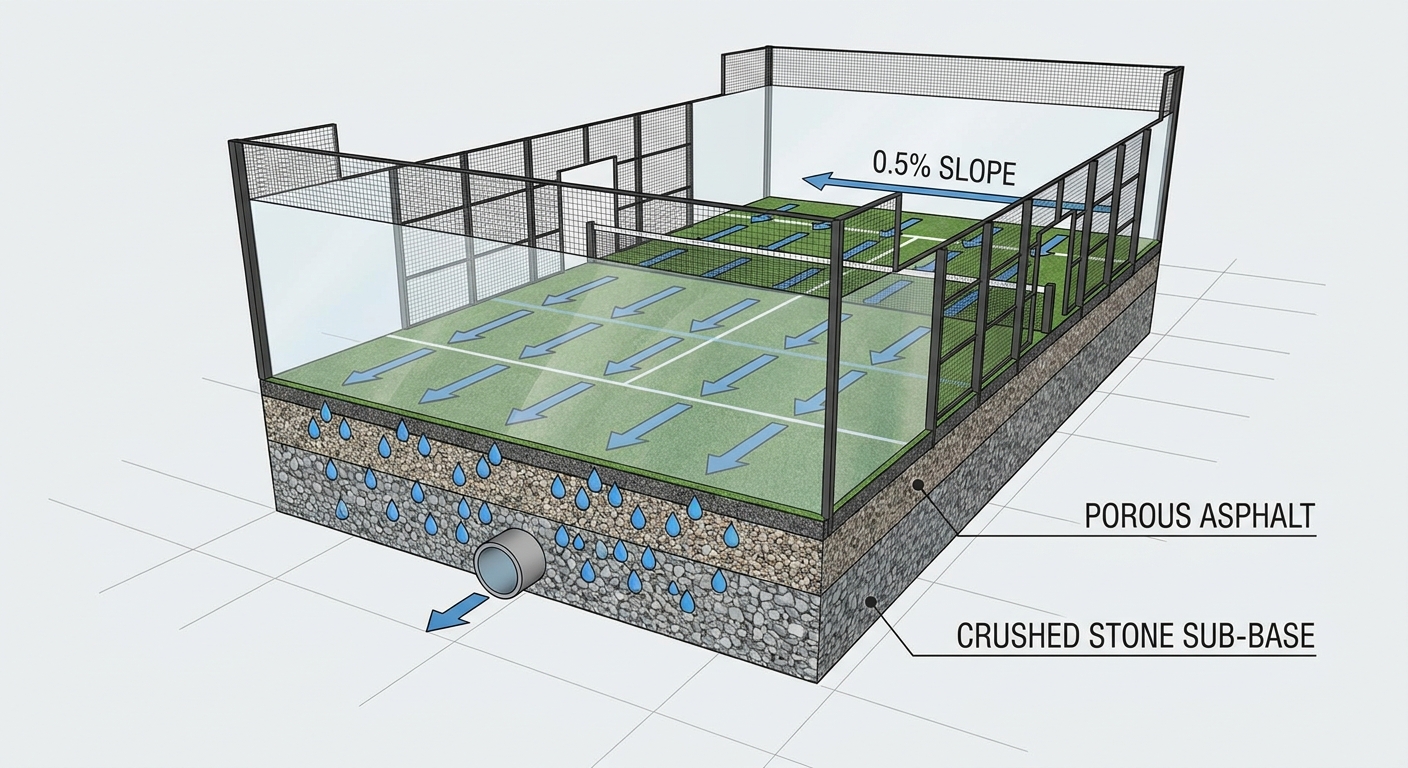
Effective drainage is the most critical factor for maintaining an outdoor padel court surface in regions with high rainfall. Without a proper runoff system, your padel court surface will trap water, causing the turf adhesive to fail and mold to develop.
Slope and Runoff Systems
Every outdoor court must be engineered with a subtle 0.5% to 1% slope to guide water away from the center.
- Directs water toward perimeter drains.
- Prevents puddling in high-traffic zones.
- Ensures the court is playable minutes after rain.
The truth is: Players hate waiting hours for a court to dry. By installing a precision slope, you maximize your booking hours and revenue during the rainy season.
Permeable Materials for Control
Using porous asphalt or specialized drain pipes beneath the gravel allows for vertical water evacuation.
- Porous layers act like a giant sponge.
- Perimeter pipes carry water to the main sewer.
- Prevents soil saturation under the slab.
Look: If you live in a tropical climate, vertical drainage is your best friend. You can avoid the surface “bubbling” that occurs when water gets trapped between the concrete and the turf.
Key Takeaway: Drainage systems protect your investment from water damage and ensure the facility remains operational year-round.
| Method | Type | Best For | |
|---|---|---|---|
| Surface Slope | 0.5% – 1% | All outdoor courts | |
| Porous Asphalt | Vertical | High-rainfall areas | |
| Perimeter Drains | Channels | Heavy storm management |
A dry court is a safe court, reducing the risk of slips and falls for your athletes.
What turf types suit a padel court surface?
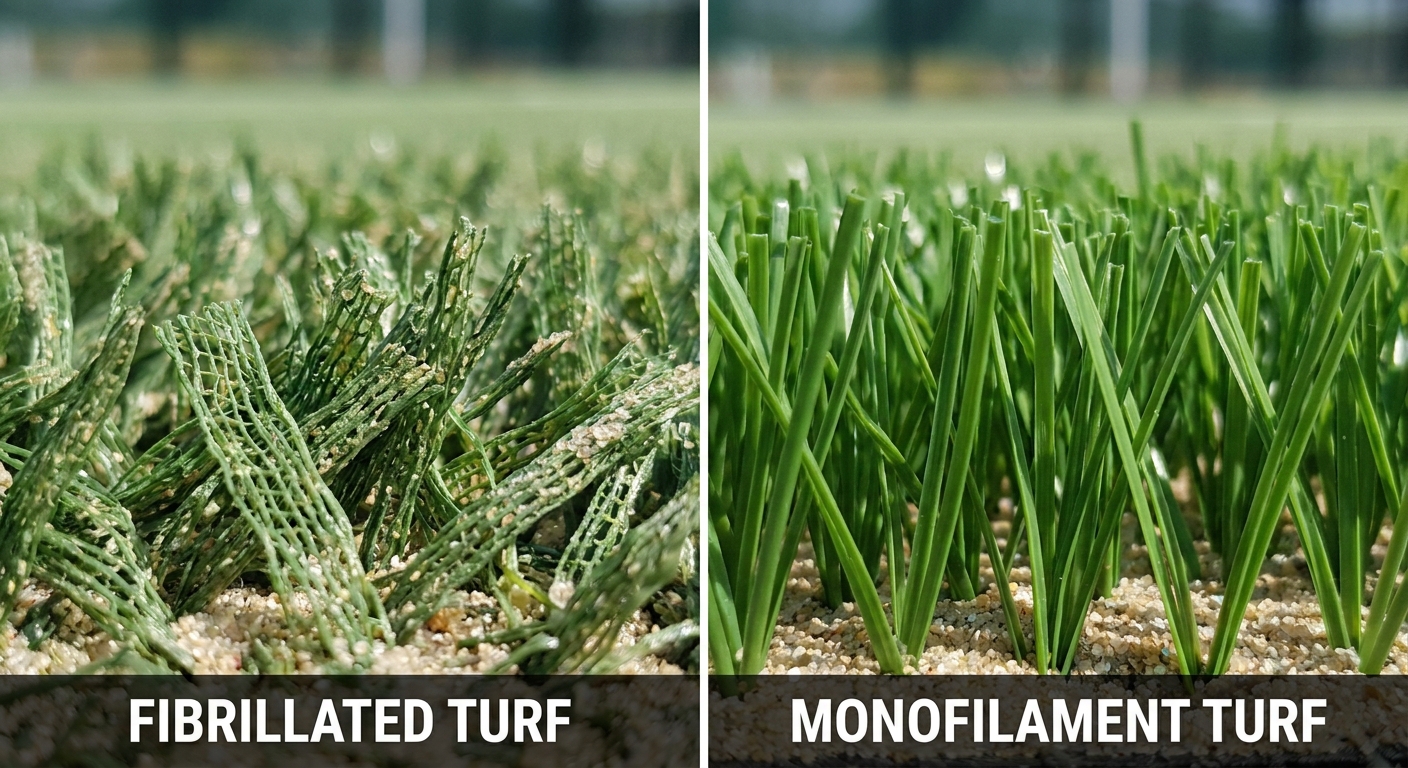
The two main categories of synthetic turf for a padel court surface are fibrillated and monofilament fibers. Selecting the right turf for your padel court surface dictates the aesthetic appeal and the mechanical durability of the facility.
Fibrillated vs. Monofilament
Fibrillated fibers are wider blades that split into a honeycomb structure to hold sand infill more effectively.
- Better sand retention in high winds.
- Slightly faster ball speed.
- Cost-effective for community projects.
But wait, there’s more: Monofilament turf consists of individual blades that look and feel more like natural grass. You will find that these fibers are much more resilient and recover faster after heavy use.
Pile Height and Density
Professional standards require a pile height between 10mm and 12mm to ensure the ball doesn’t “sink” into the grass.
- High stitch density (e.g., 50,000+ stitches/m²).
- 10mm – 12mm fiber length.
- UV-resistant polyethylene materials.
Here is the kicker: Lower density turf allows the sand to shift too much, creating uneven friction. You need high-density fibers to keep the infill locked in place for a uniform playing experience.
Key Takeaway: Monofilament turf is the industry favorite for luxury clubs, while fibrillated turf offers excellent sand stability for outdoor venues.
| Turf Type | Texture | Durability | Best For | |
|---|---|---|---|---|
| Monofilament | Blade-like | Very High | Premium Clubs | |
| Fibrillated | Honeycomb | High | High-wind areas | |
| Texturized | Curled | High | Professional Pro Tour |
Choosing the correct turf density ensures your court remains aesthetically pleasing even after years of intense match play.
How to pick infill for padel court surface?
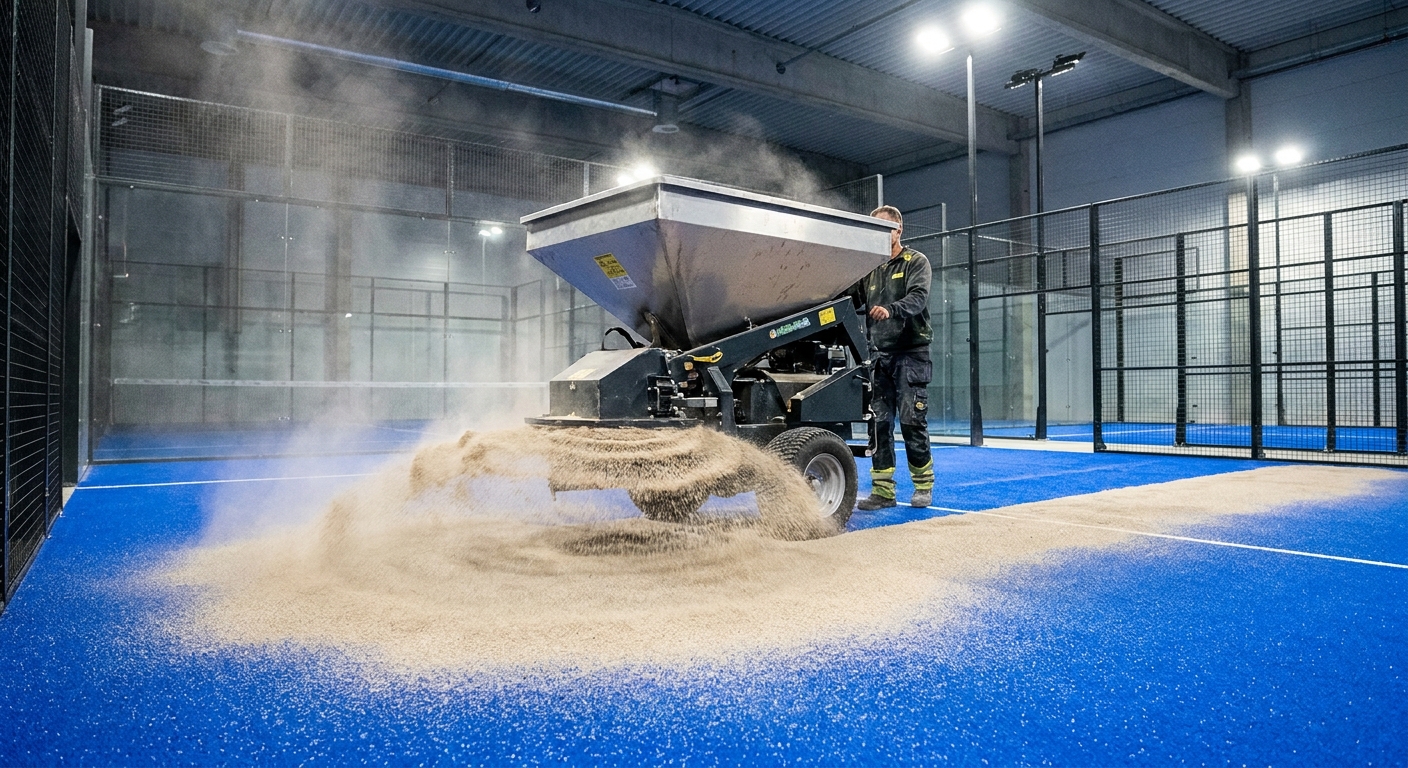
The infill is a vital component of the padel court surface, providing the necessary weight to keep the turf flat and the friction for player pivots. Without high-quality infill in your padel court surface, the grass fibers will flatten and the ball will bounce inconsistently.
Function of Silica Sand
Rounded silica sand is the only approved infill because it doesn’t compact into a hard crust over time.
- 0.4mm to 0.8mm grain size.
- Rounded edges to prevent fiber abrasion.
- Supports fibers in a vertical position.
The truth is: Angular sand will act like thousands of tiny knives, cutting your turf fibers every time a player steps on them. You must use washed, rounded silica to protect your long-term investment.
Color and Aesthetic Customization
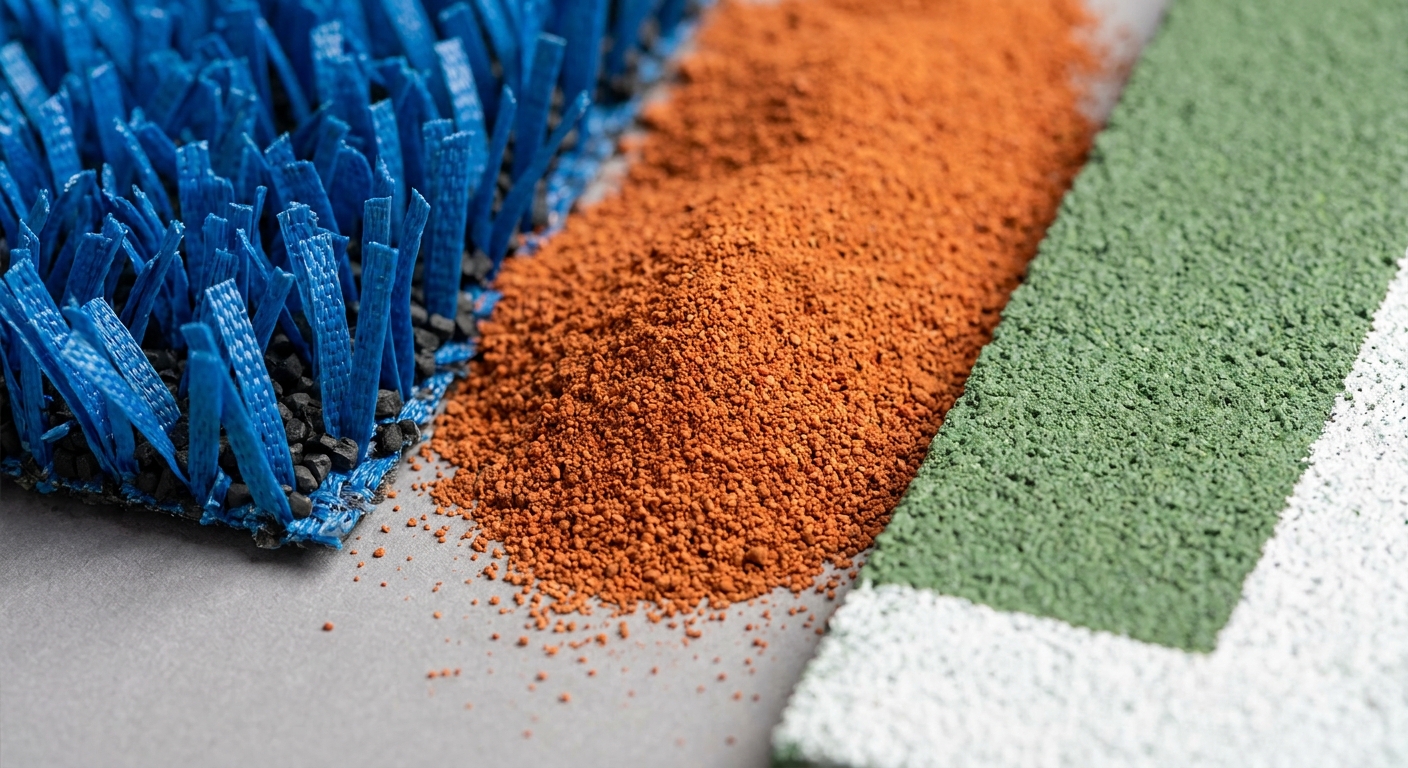
Modern clubs often use colored silica sand to match the turf, creating a seamless, professional look.
- Blue sand for blue turf courts.
- Tan sand for a classic appearance.
- Red sand to mimic clay courts.
Look: Using blue sand on a blue panoramic padel court eliminates the “dusty” look of traditional sand. You can create a high-definition visual experience that looks incredible on social media and TV.
Key Takeaway: Infill type and distribution are the “secret sauce” behind a court’s professional feel and longevity.
| Infill Property | Requirement | Benefit | |
|---|---|---|---|
| Grain Shape | Rounded | Fiber protection | |
| Purity | Washed/Dust-free | Better drainage | |
| Load | 8-10kg per m² | Uniform friction |
Consistent infill levels prevent player injuries caused by unexpected slips on “bald” turf patches.
What are the steps for padel court surface?
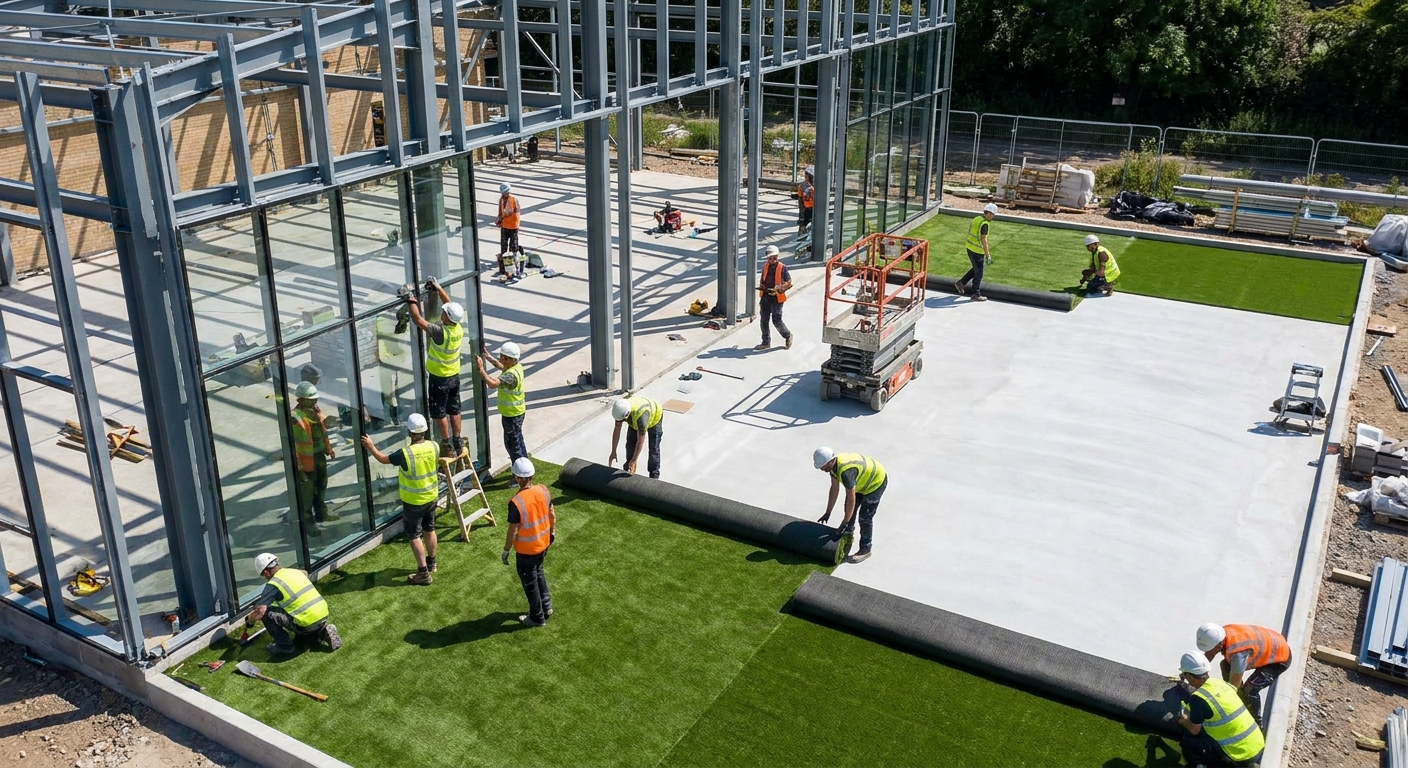
Constructing a padel court surface involves five distinct phases: site preparation, earthworks, sub-base installation, structural assembly, and turf laying. Building a padel court surface requires precise coordination between civil engineers and turf specialists.
Excavation and Leveling
The first step is clearing the site and excavating to a depth that allows for the gravel and concrete layers.
- Removal of all organic vegetation.
- Precision laser leveling of the soil.
- Installation of perimeter footings.
But wait, there’s more: If your soil is soft or clay-based, you might need extra stabilization. You see, the weight of the glass walls requires a rock-solid perimeter to prevent the structure from leaning.
Sub-base and Drainage Layers
Once the ground is prepped, you lay the crushed stone foundation and pour the rigid sub-base.
- Compaction of the stone base.
- Pouring the 15cm concrete slab.
- Installing the drainage channels.
Here is the kicker: The concrete needs at least 21 to 28 days to fully cure before you can install the turf. If you rush this step, the moisture trapped in the concrete will ruin the glue on your grass.
Key Takeaway: A disciplined construction timeline prevents structural failures and ensures a perfectly level playing area.
| Step | Duration | Critical Check | |
|---|---|---|---|
| Earthworks | 3-5 Days | Soil compaction | |
| Concrete | 1-2 Days | Leveling accuracy | |
| Curing | 21+ Days | Moisture levels |
Following these engineering steps ensures your facility meets international standards for professional tournament play.
How to install turf on padel court surface?
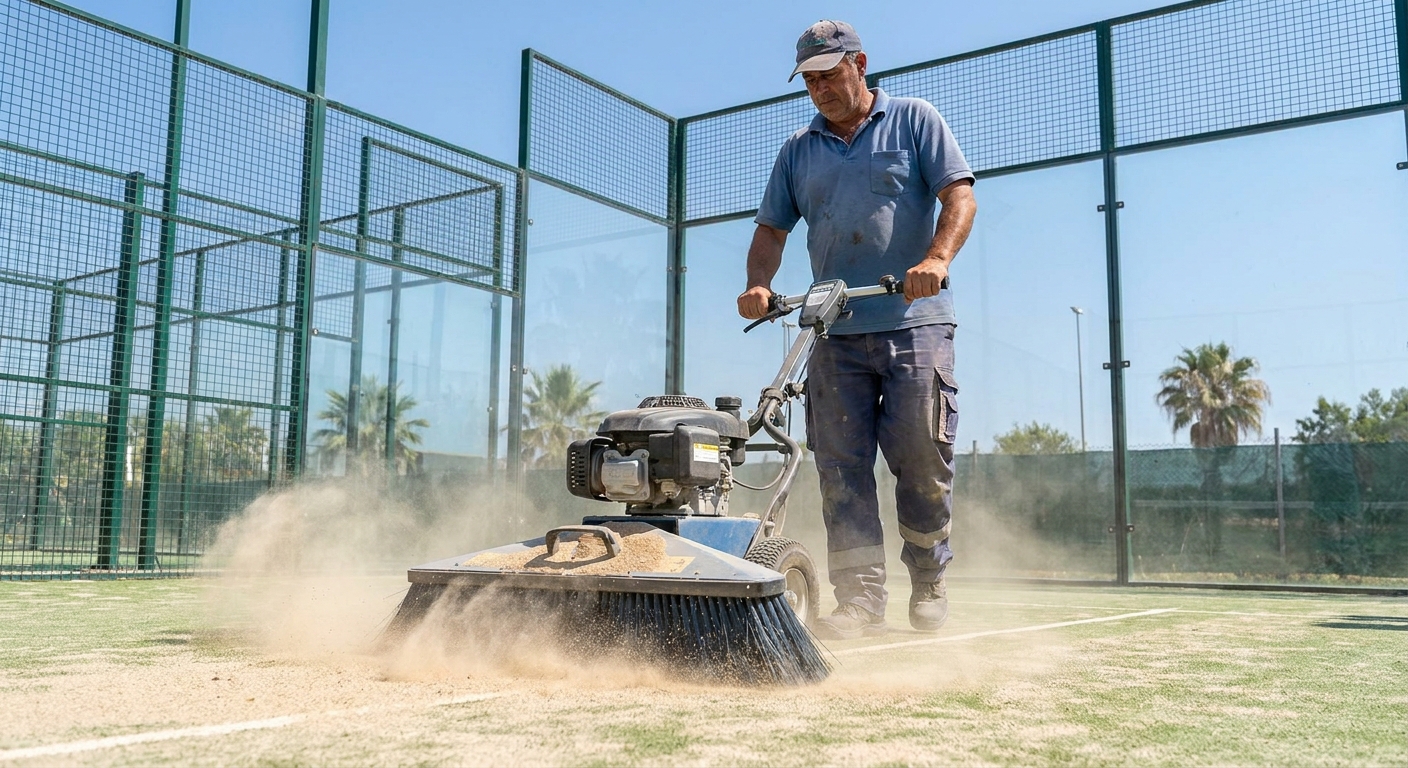
Installing the artificial turf on a padel court surface requires specialized adhesives and mechanical brushing to ensure even sand distribution. The way you bond the seams of your padel court surface determines whether it stays flat or develops dangerous tripping hazards.
Seaming and Bonding
The turf arrives in rolls that must be cut to fit the 200-square-meter area with millimetric precision.
- Use two-component polyurethane glue.
- Apply specialized seaming tape.
- Ensure the grain of the turf is uniform.
The truth is: Poorly glued seams are the #1 cause of injuries and insurance claims in padel clubs. You need to apply pressure to the seams during the curing process to ensure a permanent bond.
Mechanical Sand Distribution
After the turf is glued, you must use a mechanical spreader to apply the silica sand evenly across the fibers.
- Distribute 1.5 to 2 tons of sand.
- Use a power brush to stand fibers up.
- Avoid manual spreading to prevent clumps.
Look: If the sand is deeper in one corner than the other, the ball will bounce differently. You want your court to play exactly the same from the net to the back glass.
Key Takeaway: Professional installation tools are mandatory for achieving invisible seams and uniform ball response.
| Installation Tool | Purpose | Result | |
|---|---|---|---|
| Glue Mixer | Two-part bonding | Strong seams | |
| Power Brush | Fiber lifting | Better aesthetics | |
| Sand Spreader | Uniform loading | Consistent bounce |
Proper installation techniques extend the life of the turf and reduce the frequency of maintenance visits.
What maintenance saves a padel court surface?
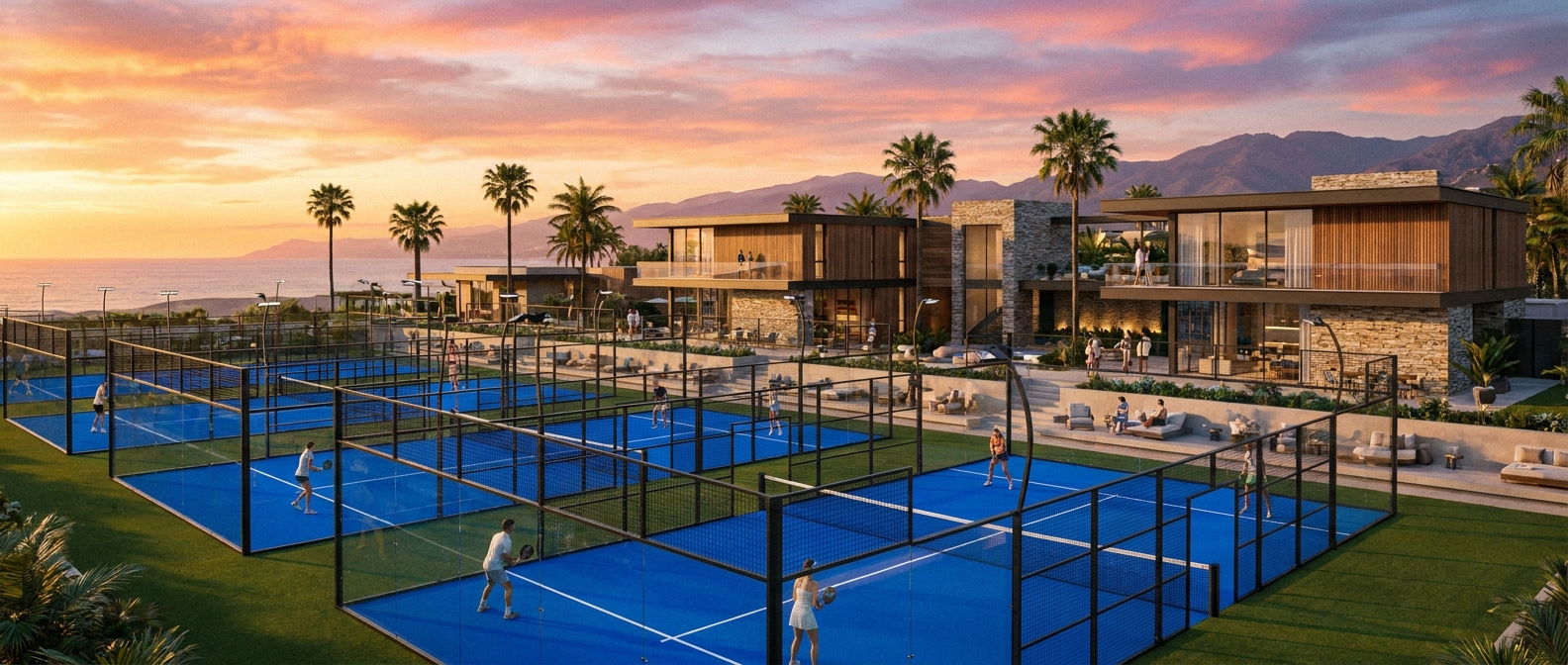
Routine maintenance for a padel court surface focuses on “sand management” and removing organic debris that can clog the drainage system. Neglecting your padel court surface will cause the fibers to flatten and rot, cutting the court’s lifespan in half.
Grooming and Brushing
You must brush the court weekly to redistribute the sand that players naturally kick toward the corners.
- Use a triangular brush or power groomer.
- Brush against the grain to lift fibers.
- Check for “bald” spots in high-traffic areas.
But wait, there’s more: If you let the sand build up at the glass walls, the center of the court will become slippery and dangerous. You should redistribute the sand from the edges back to the service line every few days.
Debris and Cleaning
Organic matter like leaves and dirt must be removed immediately to prevent them from breaking down into the turf.
- Leaf blowers are better than rakes.
- Remove chewing gum with ice spray.
- Clean perimeter drains every quarter.
Here is the kicker: Rotting leaves turn into a “mud” that clogs the pores of your sand and drainage system. You see, keeping the court clean is the easiest way to prevent expensive deep-cleaning services later.
Key Takeaway: A simple 30-minute weekly maintenance routine can extend your turf life by up to 5 additional years.
| Task | Frequency | Priority | |
|---|---|---|---|
| Brushing | Weekly | High | |
| Debris Removal | Daily | High | |
| Sand Top-up | Every 6 months | Medium |
A well-maintained court retains its vibrant color and professional “grip,” keeping your club members happy and loyal.
How much space for a padel court surface?
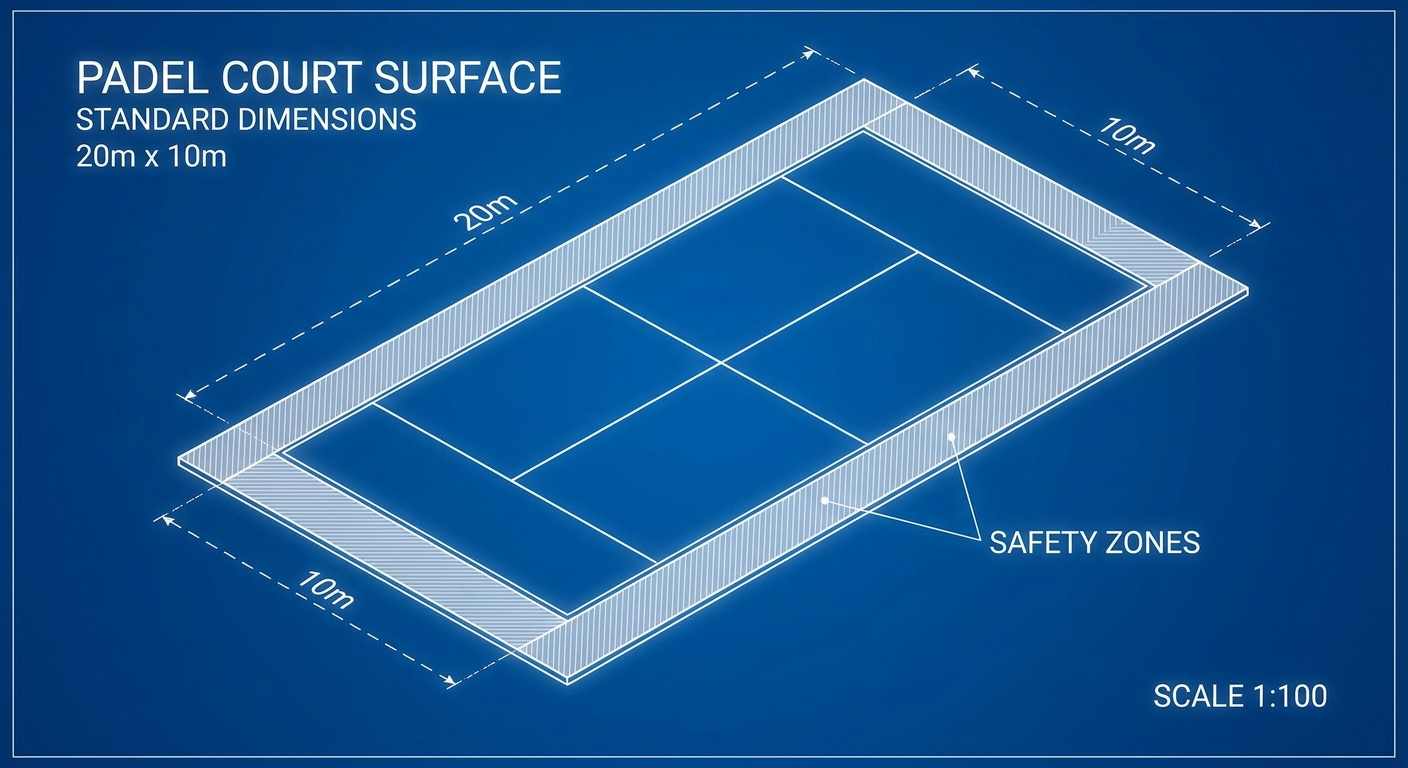
A standard padel court surface requires a total clear footprint of at least 21 meters by 11 meters to accommodate the structural footings. When planning your padel court surface, you must also account for vertical clearance and the safety zones required for out-of-court play.
Playing Area vs. Footprint
The internal dimensions are strictly 20m x 10m, but the steel structure and glass add width to the exterior.
- 20m x 10m internal playing lines.
- 21m x 11m total concrete slab size.
- Minimum 6 meters of vertical clearance.
The truth is: If your ceiling is too low, players cannot hit “lobs,” which is a fundamental part of the game. You should aim for a 7-meter or 8-meter height if you want to host competitive tournaments.
Safety Zones and Perimeters
For professional venues, you need a 2-meter safety zone outside the side doors to allow players to chase the ball out of the court.
- 2 meters of clear space per side door.
- 1.5 meters of walkway between courts.
- Spectator seating areas separate from play.
Look: Cramming too many courts into a small space makes the facility feel claustrophobic and dangerous. You need to provide enough room for players to move safely without bumping into the next court’s glass.
Key Takeaway: Generous spacing between courts improves the player experience and meets the requirements for international sanctioned play.
| Metric | Regulation | Recommendation | |
|---|---|---|---|
| Length | 20 Meters | 21m (with slab) | |
| Width | 10 Meters | 11m (with slab) | |
| Height | 6 Meters | 8 Meters |
Planning for extra space ensures your facility can evolve into a premium destination for professional padel enthusiasts.
Selecting and building the perfect padel court surface is the single most important decision you will make for your sports facility. By prioritizing a stable sub-base, precision drainage, and high-density monofilament turf, you create a world-class environment that players will love for decades. At Superbpadel, we specialize in delivering factory-direct, premium court solutions that maximize your ROI and elevate your brand. If you are ready to transform your vision into a reality with expert engineering and competitive pricing, contact us today for a personalized consultation.
Padel Court FAQ
Can I install a padel court on an old tennis court?Absolutely. You can fit up to three padel courts on one standard tennis court footprint, provided the existing sub-base is leveled and reinforced for the glass wall anchors.
What’s the best color for a padel court surface?Blue is the standard. Blue turf provides the highest contrast with the yellow ball, making it the preferred choice for televised tournaments and indoor clubs.
Can I build a padel court without a concrete slab?No. The structural steel posts and 12mm tempered glass require a rigid, reinforced concrete foundation to prevent the structure from collapsing under wind or player impact.
What’s the average lifespan of a padel court surface?8 to 12 years. With proper weekly brushing and sand management, your synthetic turf will remain in top condition for over a decade before needing a replacement.
Can I use regular beach sand as infill?Never. You must use washed, rounded silica sand; regular beach sand contains dust and organic matter that will clog your drainage and scratch the turf fibers.