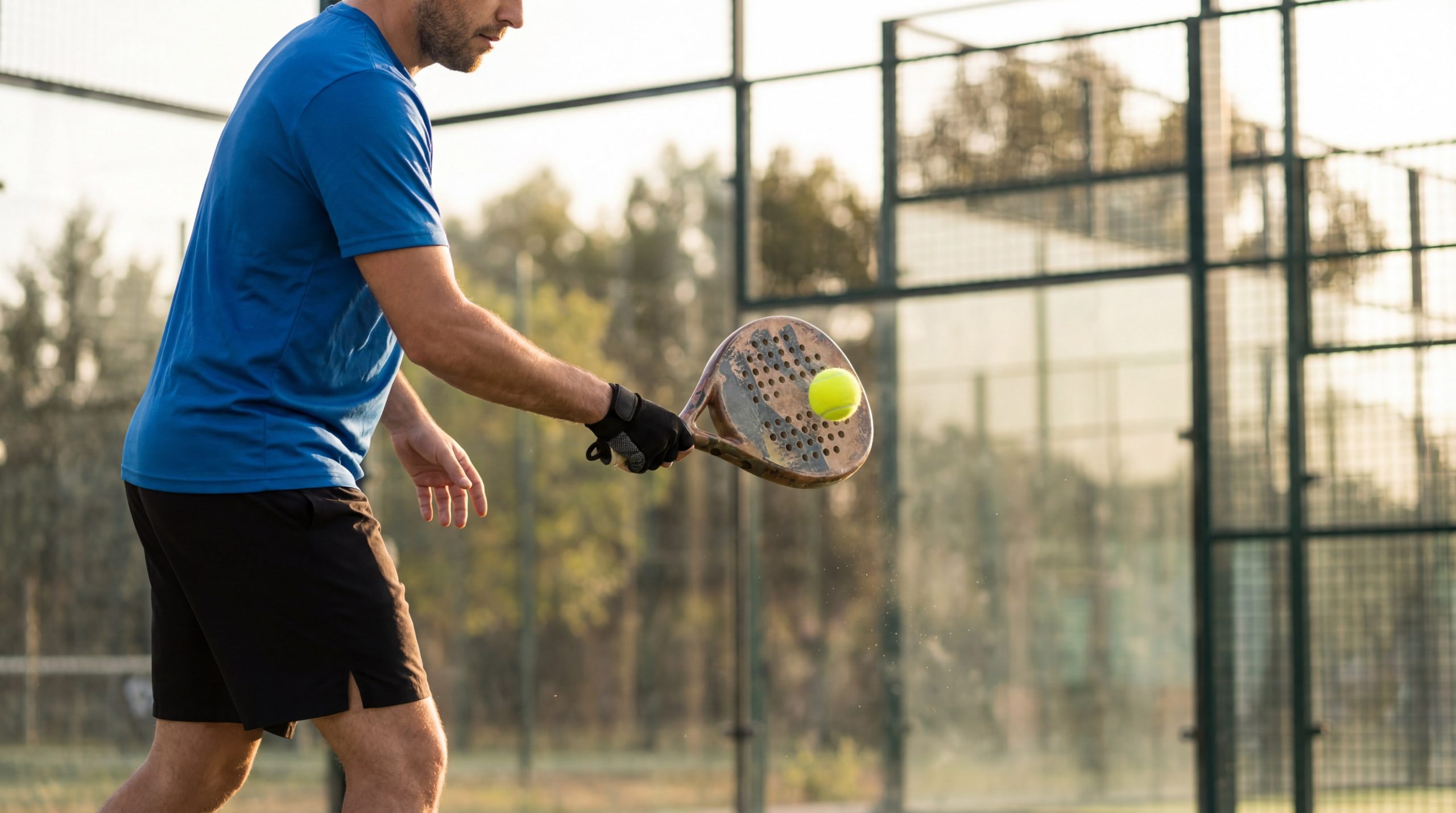
A padel game is an action-oriented racket sport played in doubles on an enclosed court that you can build by installing a specialized glass and steel structure over a high-performance synthetic turf base. Many facility owners face the challenge of declining engagement and low revenue per square meter with traditional sports like tennis. This stagnation often leads to underutilized space and rising maintenance costs that erode your bottom line. By investing in professional courts, you offer a high-density, social solution that maximizes player throughput and ensures a rapid return on investment.
What exactly is a padel game?
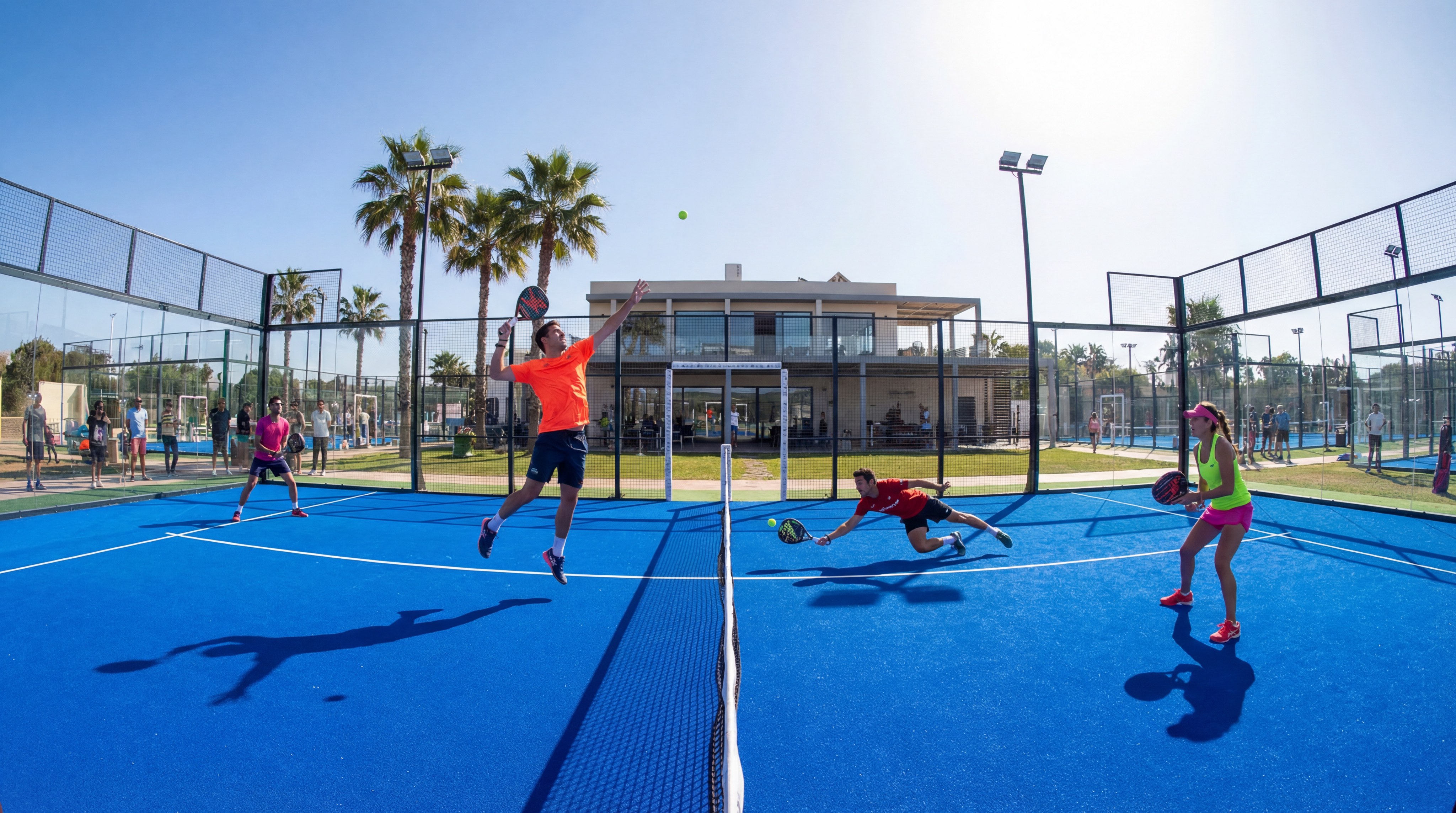
A padel game is a hybrid sport that blends the dynamics of tennis with the tactical wall-play of squash, played almost exclusively in a 2v2 format. It is designed to be highly accessible, allowing you to engage a broad demographic of players regardless of their prior athletic background.
Why is it so social?
The compact court size keeps players in close proximity, which naturally fosters conversation and a vibrant atmosphere. You will notice that this proximity reduces the physical strain found in full-court tennis, making it easier for seniors and beginners to stay in the point longer.
Is it easy to learn?
Believe it or not: most newcomers can master the basic mechanics and start enjoying competitive rallies within their very first hour on the court. This low barrier to entry is the primary reason for the sport’s explosive growth in commercial clubs.
Key Takeaway
Padel is a high-engagement, social sport that prioritizes strategy over raw power, making it a perfect addition to any recreational facility.
| Characteristic | Detail |
|---|---|
| Format | Strictly Doubles (4 players) |
| Pace | Moderate to High intensity |
| Learning Curve | Extremely Low (Beginner-friendly) |
This table highlights how the game’s structure supports high participation rates by lowering the technical requirements for entry.
Where did the padel game originate?
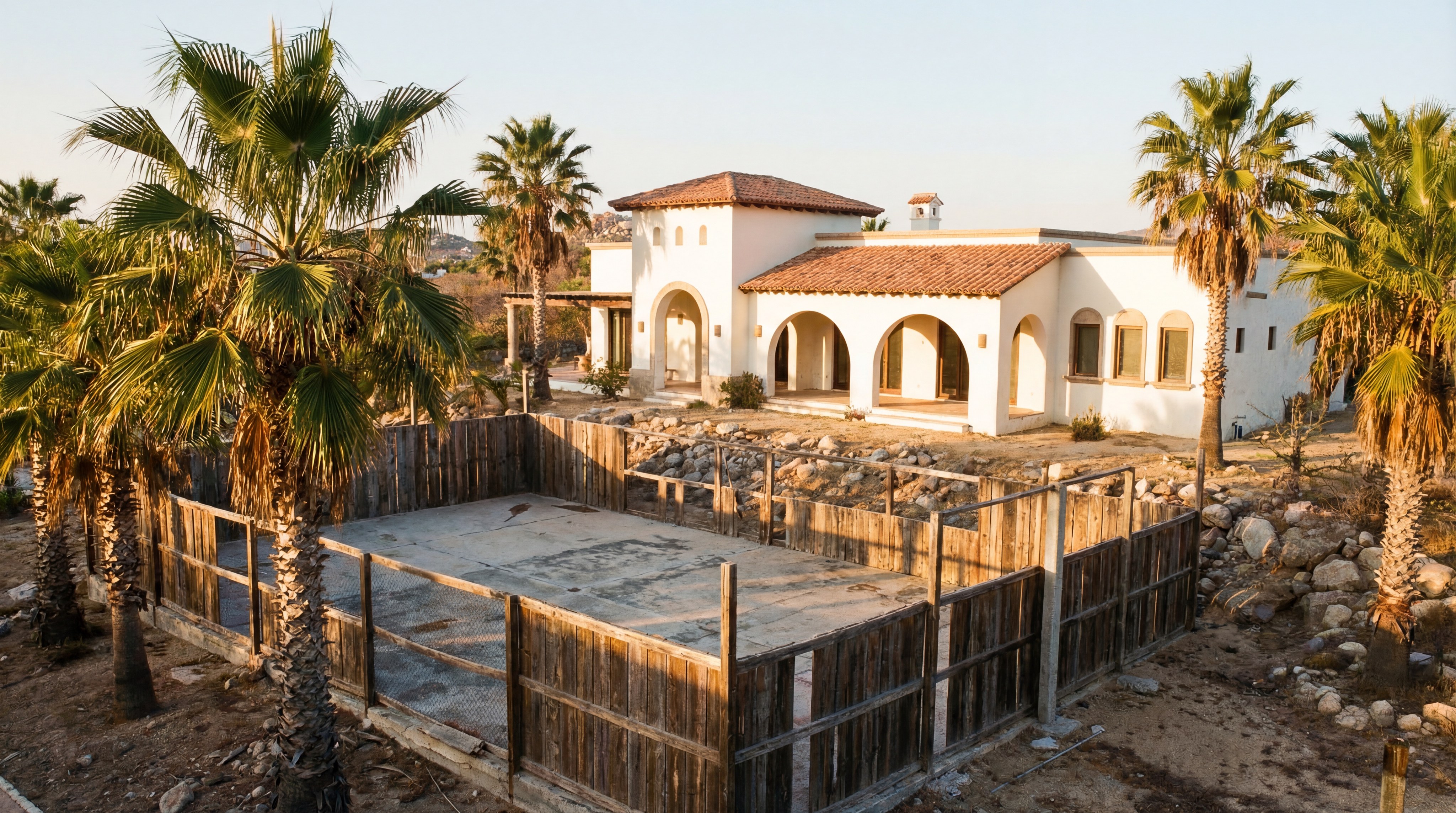
The padel game was originally conceived in 1969 in Acapulco, Mexico, by Enrique Corcuera, who wanted to adapt a home court for family play. He added walls to his fronton court to keep the ball in play and prevent it from landing in the surrounding vegetation.
How did it reach Europe?
Check this out: a Spanish friend of the founder brought the concept to Marbella in 1974, where it became an instant hit among the European elite. From there, the sport transitioned from a private luxury to a massive public phenomenon, particularly across Spain and Argentina.
When did it go professional?
The sport has evolved from its humble Mexican roots into a global professional circuit with thousands of standardized courts worldwide. You are now looking at a mature industry with international governing bodies and massive sponsorship interest.
Key Takeaway
The sport has a unique lineage of social prestige that has successfully transitioned into a mass-market commercial powerhouse.
| Milestone | Historical Context |
|---|---|
| 1969 | Invented by Enrique Corcuera in Mexico |
| 1974 | First European court built in Spain |
| 2000s | Global expansion and professionalization |
This timeline illustrates the sport’s steady evolution from a family hobby into a globally recognized professional discipline.
What are the dimensions of a padel game court?
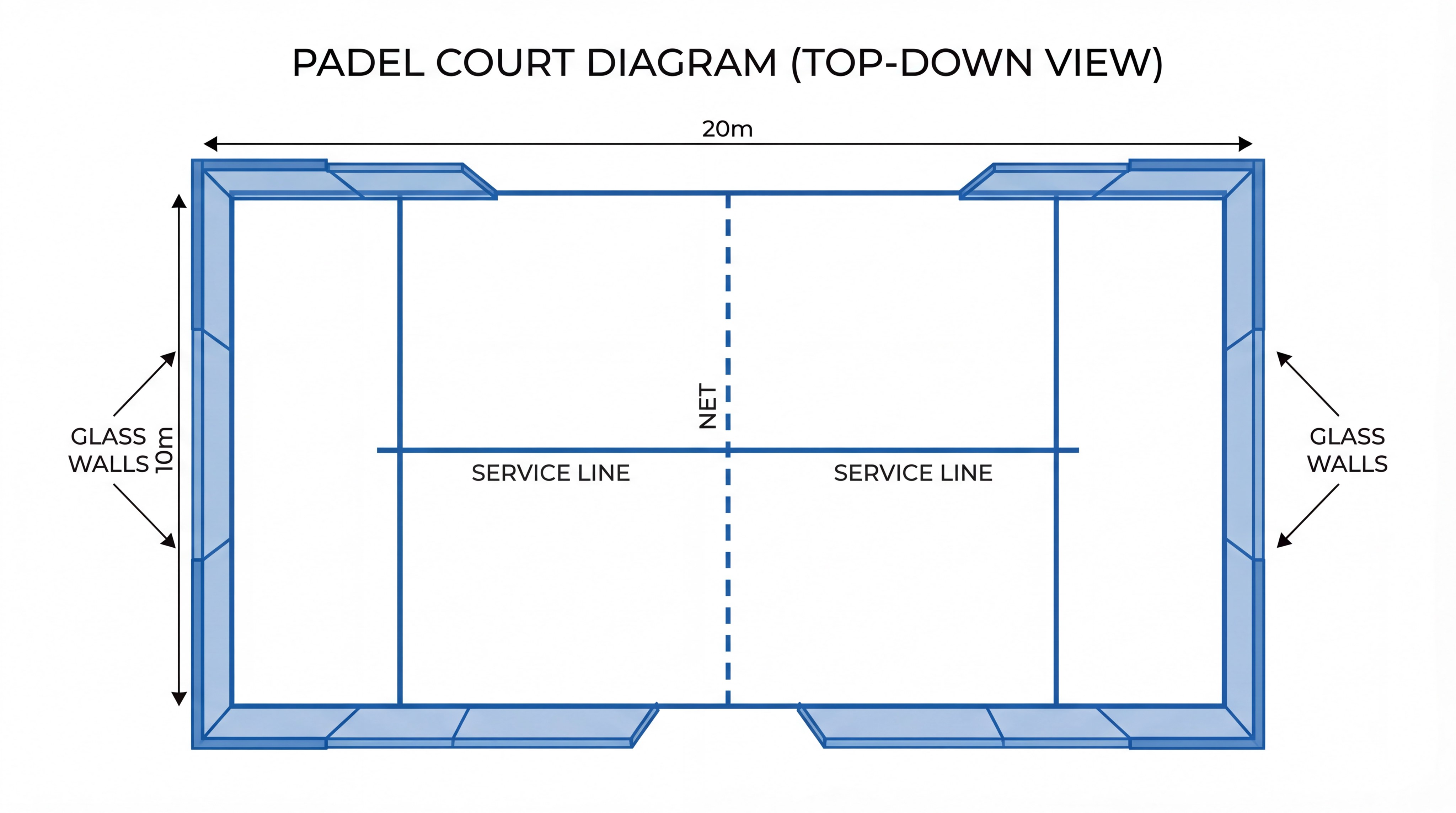
The standard dimensions for a padel game court are precisely 20 meters in length and 10 meters in width, enclosed by a combination of glass and mesh. This compact footprint allows you to maximize your land use, often fitting three courts in the space of one standard tennis court.
How are the walls structured?
The back walls must stand 3 meters high and are typically constructed from 12mm tempered glass to facilitate a predictable ball rebound. You will also find metallic mesh panels reaching up to 4 meters on the sides, which introduce unpredictable angles to the game.
What is the net height?
Wait, there’s more: the net is slightly lower than a tennis net, measuring 88 centimeters at the center and 92 centimeters at the posts. This height is optimized for the underhand serve and the fast-paced volleys that define the sport.
Key Takeaway
Precise court dimensions and wall heights are critical for maintaining the tactical integrity and safety of the match.
| Component | Standard Measurement |
|---|---|
| Court Area | 200 Square Meters (20m x 10m) |
| Glass Height | 3 Meters (Back and partial sides) |
| Mesh Height | 4 Meters (Total enclosure height) |
This guide ensures that your construction project adheres to the international standards required for official tournament play.
What equipment is required for a padel game?
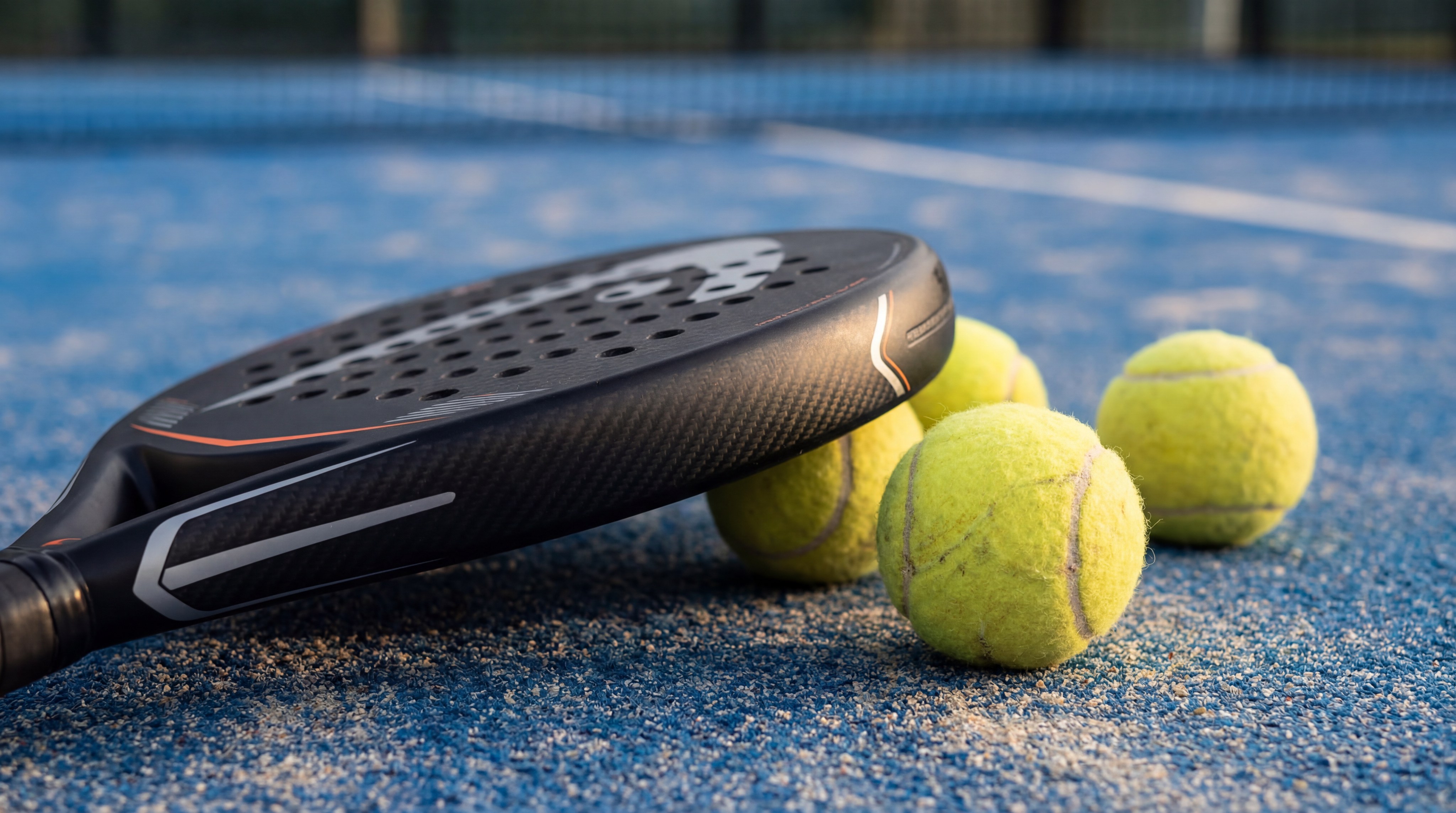
The padel game requires specialized gear including a solid perforated racquet, low-compression balls, and high-traction footwear designed for artificial turf. Selecting the right equipment is essential for protecting players from injury and ensuring a high-quality experience.
What makes the racquet unique?
Unlike traditional rackets, these are stringless and made from composite materials like carbon fiber or fiberglass with a foam core. You will notice that the surface is perforated with holes to reduce air resistance and weight, allowing for quick reaction shots at the net.
Which balls should you use?
Here is the deal: while they look like tennis balls, they have a lower internal pressure to produce a more controlled bounce. This design prevents the ball from flying out of the enclosure too easily and encourages the long, strategic rallies that players love.
Key Takeaway
Using sport-specific equipment is non-negotiable for maintaining the correct pace of play and ensuring player safety.
| Equipment | Primary Material/Spec |
|---|---|
| Racquet | Carbon Fiber/EVA Foam Core |
| Balls | Low-compression rubber and felt |
| Shoes | Omni-sole or Clay-sole for turf grip |
This breakdown helps you advise your members on the necessary gear to optimize their performance on the court.
How do you play and score a padel game?
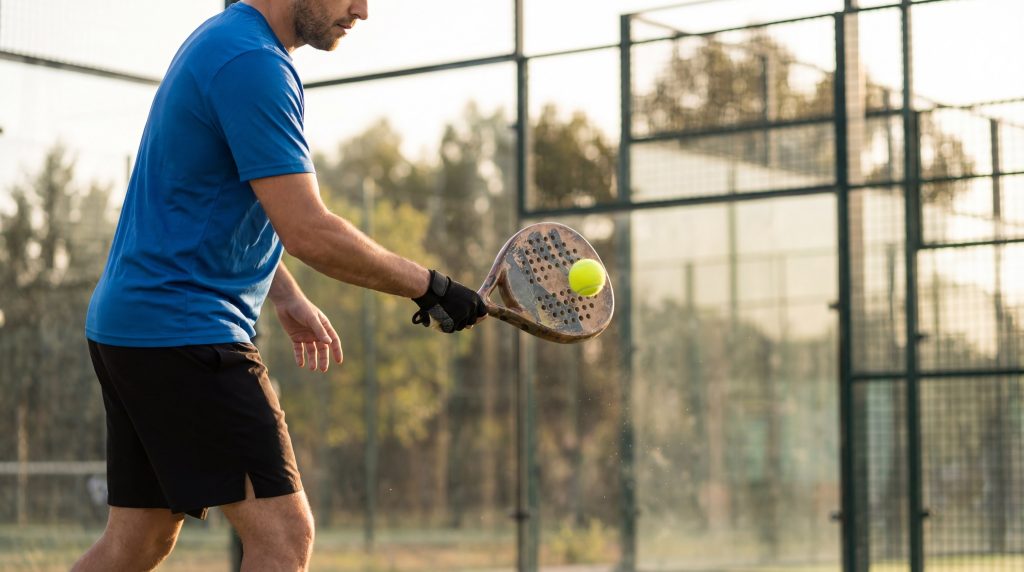
The rules of a padel game are easy to follow, utilizing the traditional tennis scoring system of 15, 30, 40, and game. Matches are typically played as the best of three sets, with a six-game set format that includes a tie-break if the score reach 6-6.
How do you serve?
Listen to this: all serves must be performed underhand and struck at or below waist level after a single bounce. The server must stand behind the service line and direct the ball diagonally into the opponent’s service box.
When can you use the walls?
The ball remains in play if it hits the ground first and then bounces off any part of the glass or mesh walls. However, if the ball hits the wall directly without touching the ground first, it is considered “out.” mastering these angles is the key to high-level play.
Key Takeaway
The rules minimize the advantage of raw physical power, shifting the focus toward positioning and environmental awareness.
| Action | Rule Requirement |
|---|---|
| Service | Underhand, cross-court, below waist |
| Wall Play | Must hit ground before wall contact |
| Scoring | Tennis style (15, 30, 40, Game) |
Understanding these fundamental mechanics allows you to manage tournaments and ensure fair play within your facility.
Why is the padel game popular for clubs?
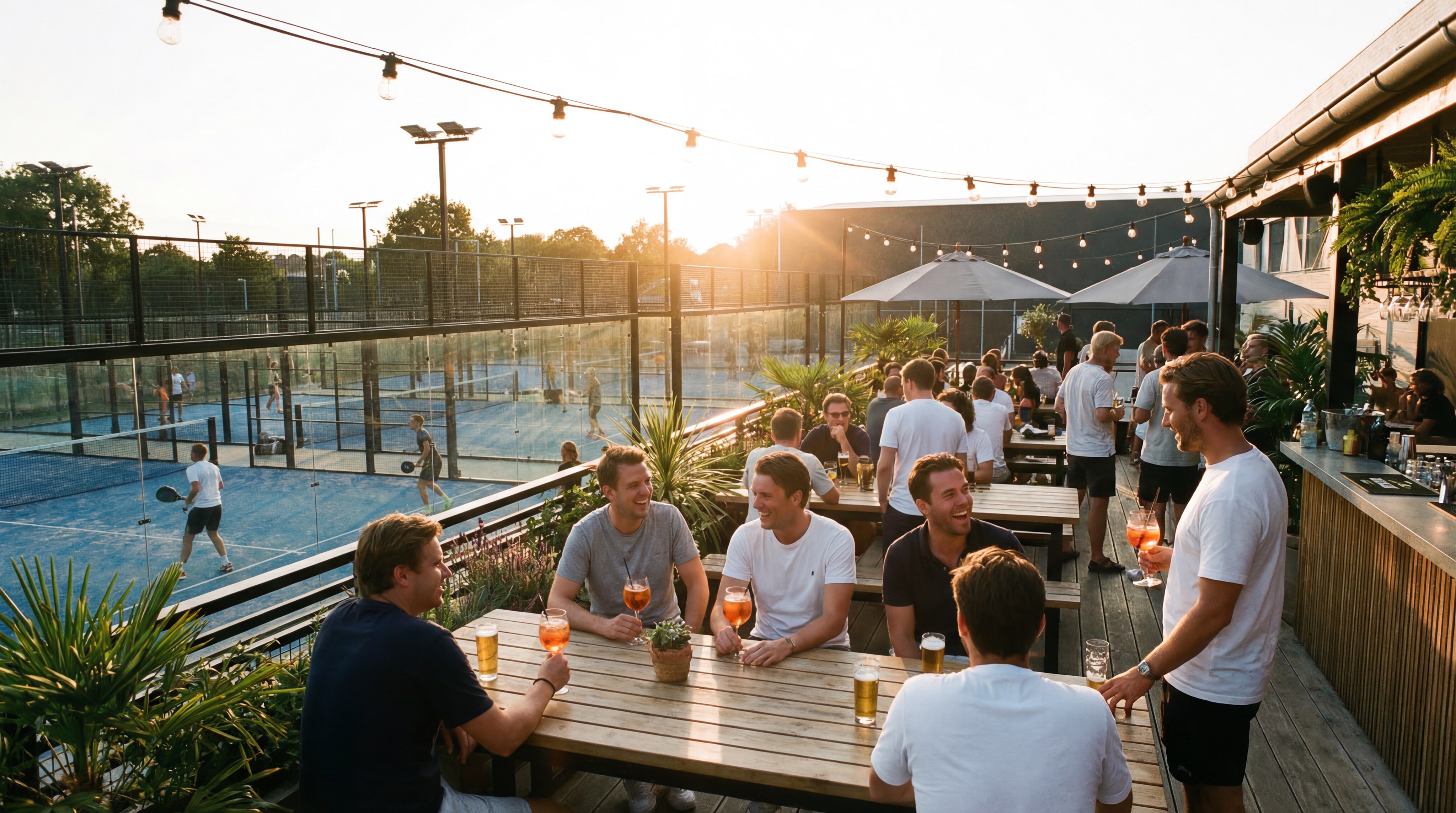
The padel game has become a top priority for club owners because it offers the highest social engagement and revenue per square meter in the racket sport industry. It serves as a powerful community builder that drives ancillary revenue in cafes and pro-shops.
How does it improve ROI?
You can generate income from four players simultaneously on a court that is significantly smaller than a tennis court. This density allows for more bookings per hour, effectively doubling or tripling your earning potential on the same land area.
Does it increase retention?
Think about it: the social nature of doubles play encourages players to form groups and return frequently for matches followed by social gatherings. This “stickiness” reduces member churn and creates a self-sustaining ecosystem of active participants.
Key Takeaway
High throughput and community-driven dynamics make this sport the most profitable asset in modern sports facility management.
| Driver | Benefit for Owners |
|---|---|
| Player Density | 4 players per 200 sqm |
| Ancillary Sales | High demand for cafe and gear services |
| Community | Stronger social bonds and higher retention |
This analysis confirms that adding courts is a strategic move for any facility looking to modernize and grow its revenue.
How do you construct a professional padel game court?
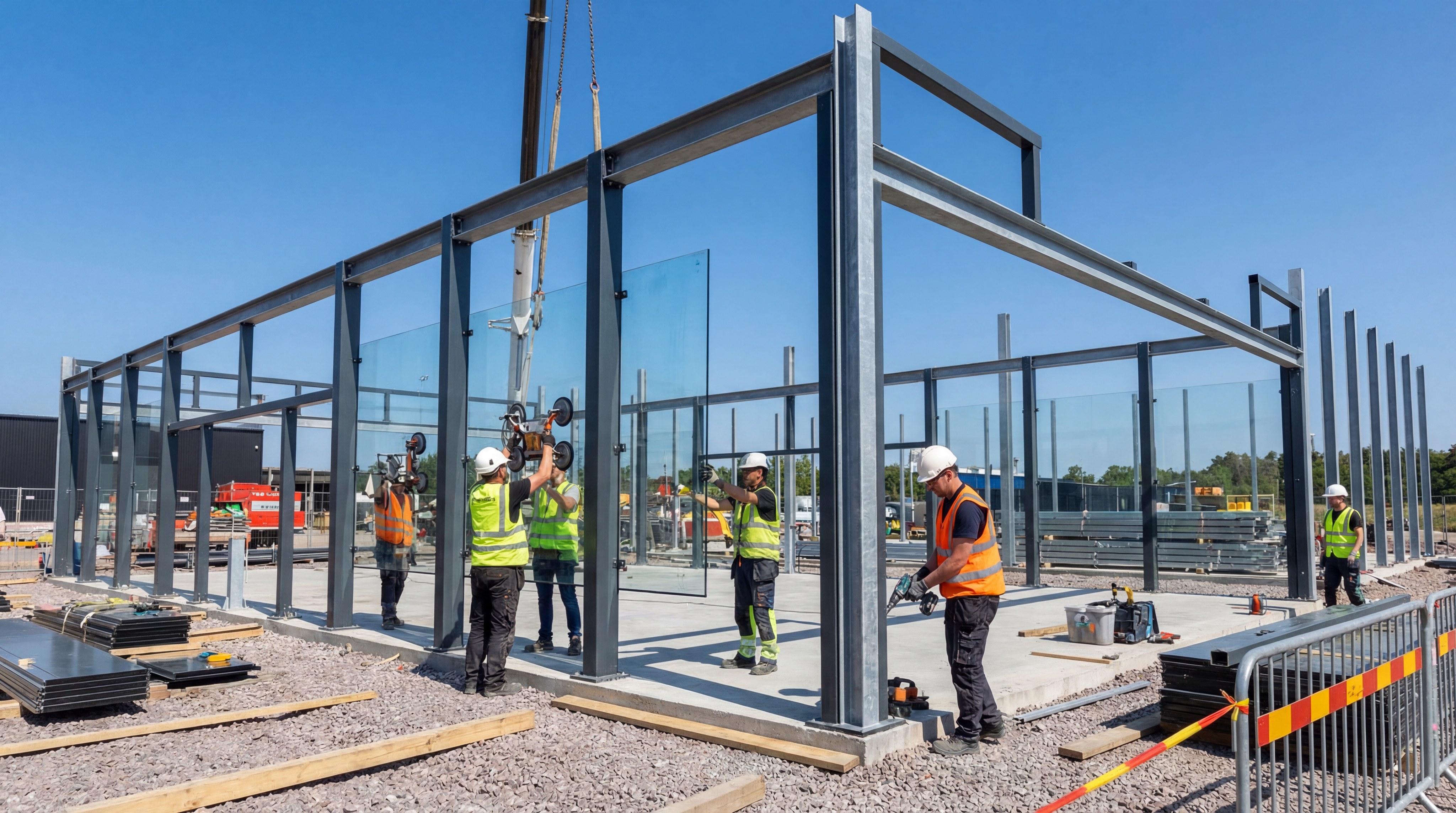
Constructing a professional court requires a multi-stage process that begins with a perfectly leveled concrete or asphalt foundation. Any imperfection in the base can lead to drainage issues or inconsistent ball bounces, which will negatively impact the player experience.
What are the foundation steps?
You must ensure the sub-base is reinforced with steel mesh and poured to a specific thickness to support the weight of the glass panels. Proper drainage slopes are essential for outdoor courts to ensure they are playable immediately after rain.
How is the structure assembled?
Here is the best part: modern courts are often modular, allowing for relatively fast installation once the foundation is set. The steel pillars must be anchored with industrial-grade bolts to withstand wind loads and player impact during high-intensity matches.
Key Takeaway
Professional-grade construction is a long-term investment that minimizes maintenance costs and ensures structural safety.
| Phase | Critical Requirement |
|---|---|
| Foundation | 15cm reinforced concrete (leveled) |
| Frame | Galvanized steel with anti-corrosion coating |
| Installation | Precise glass alignment and sealing |
This checklist serves as a roadmap for ensuring your court build meets professional standards for durability and playability.
What materials build a premium padel game court?
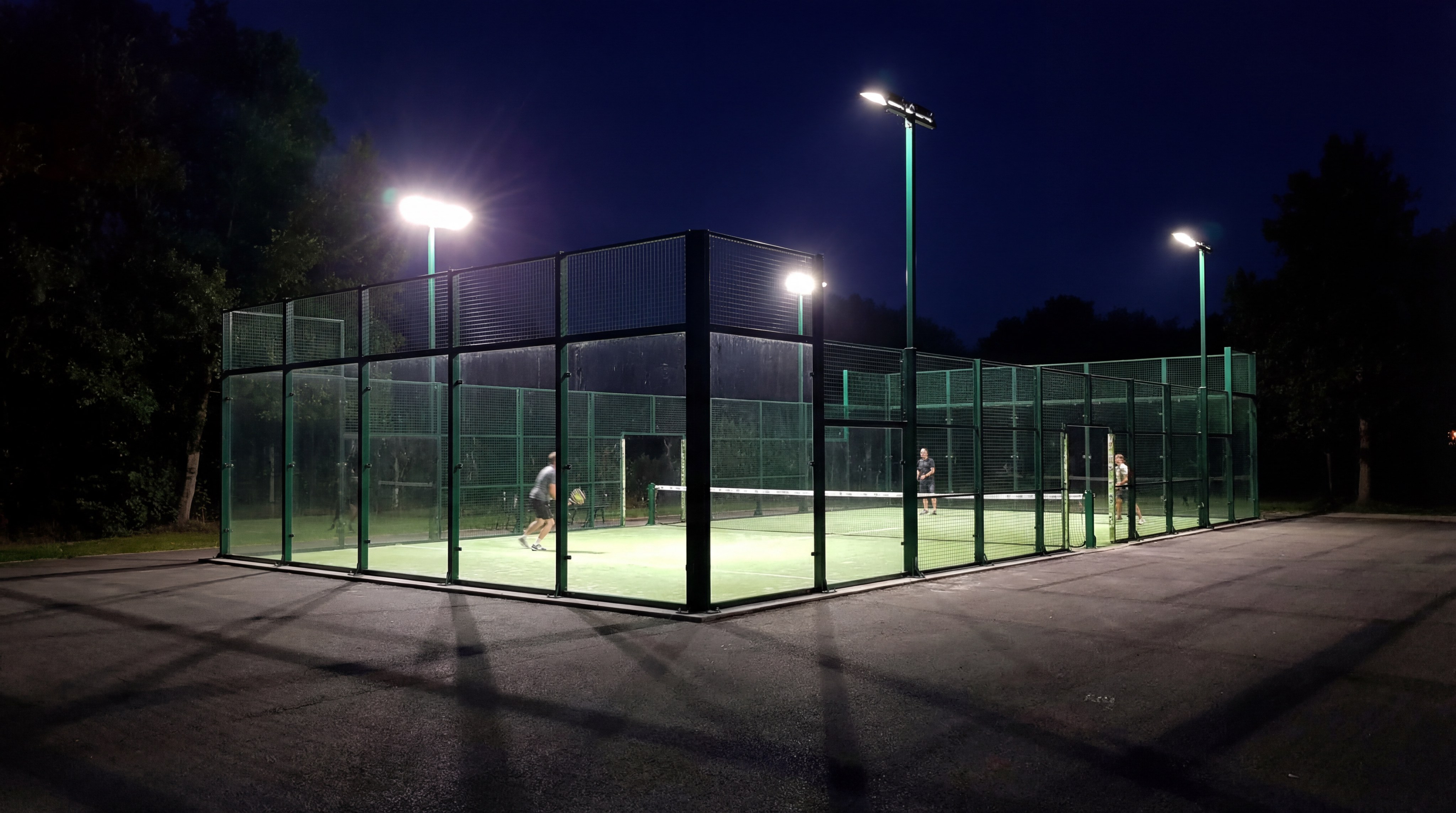
The quality of your padel game court is defined by the caliber of its components, specifically the tempered glass, the synthetic turf, and the lighting system. Choosing premium materials not only improves the game but also significantly reduces your long-term operational expenses.
Why choose 12mm tempered glass?
Most high-end facilities opt for 12mm glass over the standard 10mm because it provides a more consistent rebound and superior resistance to breakage. You will find that this extra thickness is vital for panoramic court designs where structural integrity is paramount.
What about the turf and lighting?
Check this out: professional-grade monofilament turf combined with specialized silica sand allows for safe sliding and prevents joint injuries. Additionally, high-output LED lighting ensures that your courts can remain booked well into the night, maximizing your revenue hours.
Key Takeaway
Investing in superior materials like 12mm glass and LED systems enhances the “premium” feel of your club and attracts high-value members.
| Material | Advantage |
|---|---|
| 12mm Glass | Superior rebound and safety |
| Monofilament Turf | Consistent play and joint protection |
| LED Lighting | Energy efficiency and night play |
Selecting these high-performance materials ensures that your facility remains the preferred destination for serious players in your region.
Can you install a roof for a padel game facility?
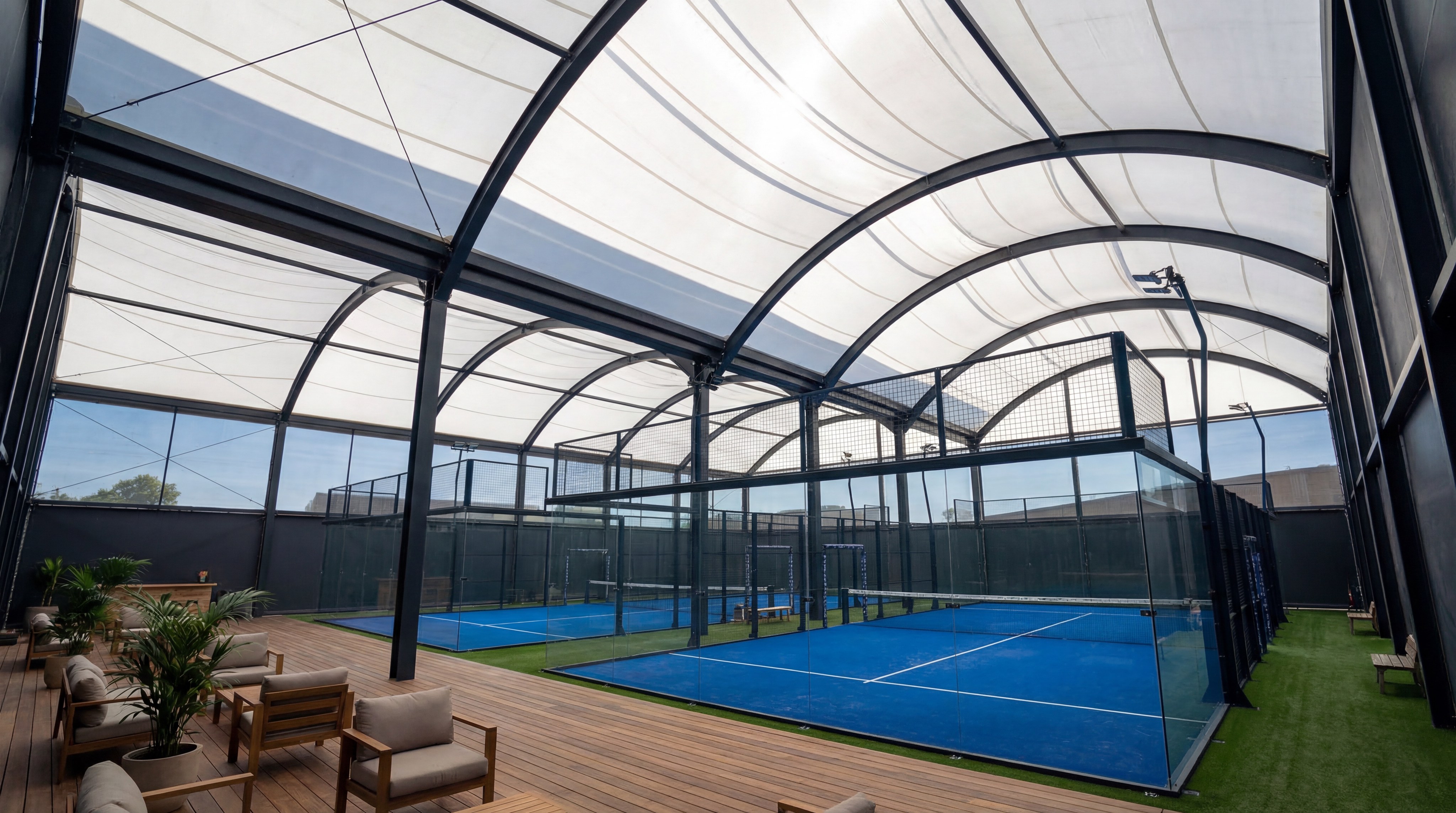
Yes, installing a roofed structure is a strategic decision that allows you to offer year-round play regardless of weather conditions. Rain and extreme heat are the primary causes of canceled bookings, so a covered solution provides the financial stability of consistent revenue.
What are the roof options?
You can choose between full indoor buildings or lightweight, high-strength tensile covers that provide shade and rain protection while maintaining natural ventilation. These structures must maintain a minimum internal height of 6 to 8 meters to accommodate the high lobs common in the game.
Does a roof affect the ROI?
Wait, there’s more: a roofed court often commands a higher booking fee and allows for 100% occupancy during peak winter or summer months. This increased utility typically offsets the additional construction cost within a few years of operation.
Key Takeaway
Roofed installations protect your asset from UV damage and ensure that your business is not dependent on favorable weather.
| Structure Type | Benefit |
|---|---|
| Indoor Facility | Total climate control (AC/Heating) |
| Tensile Roof | Cost-effective rain and sun protection |
| Retractable | Maximum flexibility for seasonal changes |
This comparison helps you decide which roofing strategy best fits your local climate and budget requirements.
What is the ROI of a padel game installation?
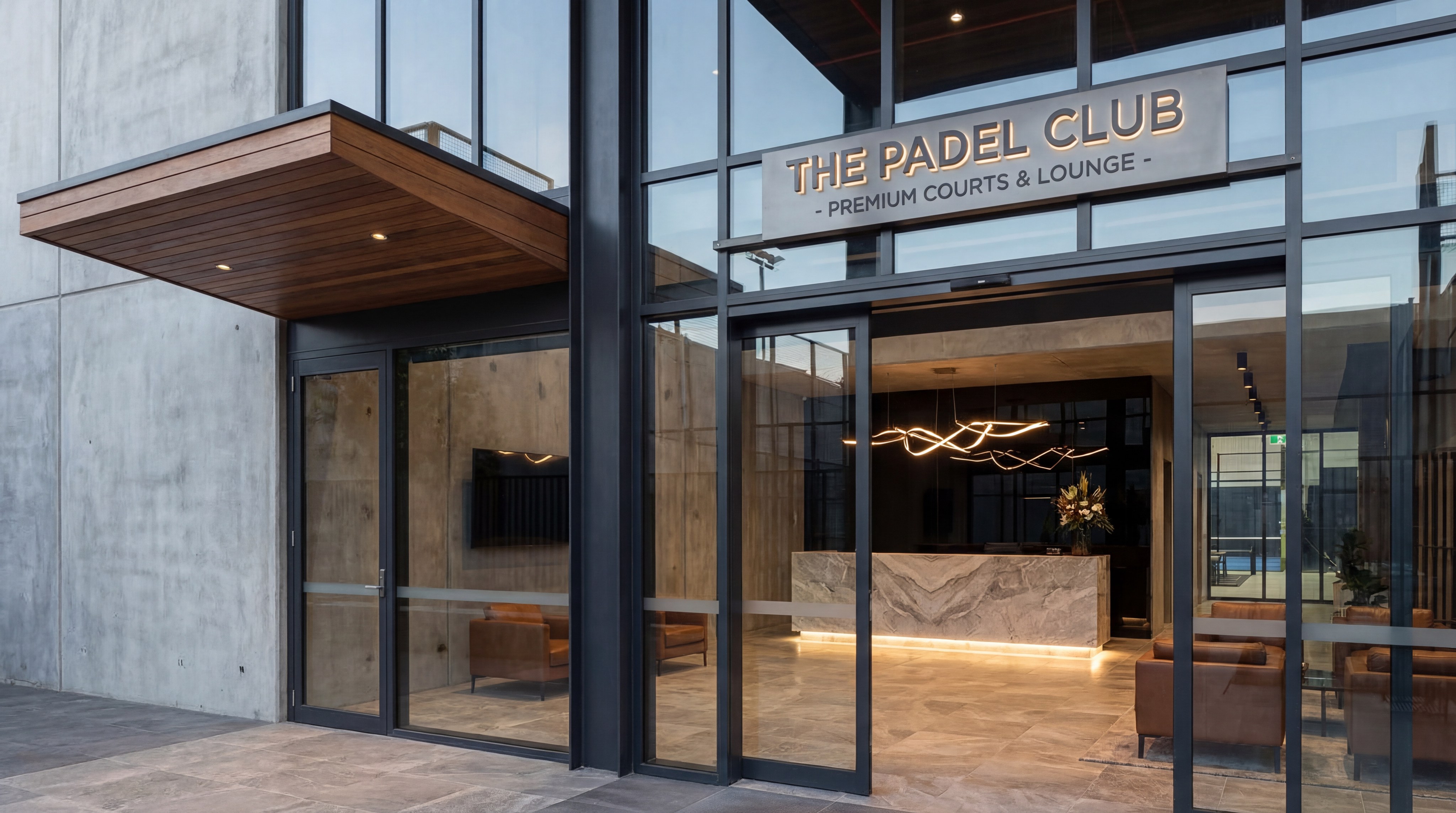
The return on investment for a padel game court is among the fastest in the commercial sports world, often reaching break-even within 18 to 24 months. This rapid payback is driven by high occupancy rates and the low maintenance requirements of the synthetic turf and glass walls.
What drives the revenue?
You will find that the doubles-only format means you are always collecting fees from four people per hour rather than two. Additionally, the social nature of the sport leads to high secondary spending on equipment rentals, balls, and refreshments.
Are maintenance costs high?
Believe it or not: maintenance is incredibly simple, requiring only occasional turf brushing and periodic cleaning of the glass panels. Unlike clay courts that need daily watering and leveling, these courts are ready for play with minimal intervention, keeping your labor costs low.
Key Takeaway
Low operating costs combined with high player density make this one of the most stable and profitable investments in the sports industry.
| Financial Metric | Estimated Performance |
|---|---|
| Payback Period | 1.5 – 2.5 Years |
| Hourly Revenue | 2x to 3x higher than tennis |
| Maintenance Cost | Minimal (weekly cleaning/brushing) |
This financial outlook provides the data necessary to secure funding and move forward with your facility expansion.
Frequently Asked Questions
Can I build a padel court on my own?
While site preparation can be handled locally, we highly recommend professional installation for the glass and steel structure to ensure safety and meet international standards.
Is it possible to convert a tennis court?
Yes, a standard tennis court footprint is large enough to accommodate two to three professional courts, which can significantly increase your venue’s capacity.
How long does the construction take?
The typical assembly time for the structure itself is 3 to 5 days, once the foundation has fully cured and the materials are on-site.
Do I need a special permit for the lighting?
In most regions, you will need a standard electrical permit, but our high-efficiency LED systems are designed to minimize light pollution and meet local regulations easily.
Can the glass break during a match?
Tempered glass is extremely durable and designed to withstand high-velocity ball impacts and player collisions without shattering, ensuring a safe environment.
Conclusion
The padel game is a transformative opportunity for facility owners to revitalize their sports venues with a high-ROI, community-focused asset. At SuperbPadel, we are committed to providing the technical expertise and premium materials required to build courts that stand the test of time. Our dedication to quality ensures that every project we undertake delivers an elite experience for players and a sustainable business model for owners. To explore our custom design options and take the first step toward your new sports facility, contact us today for a professional consultation.