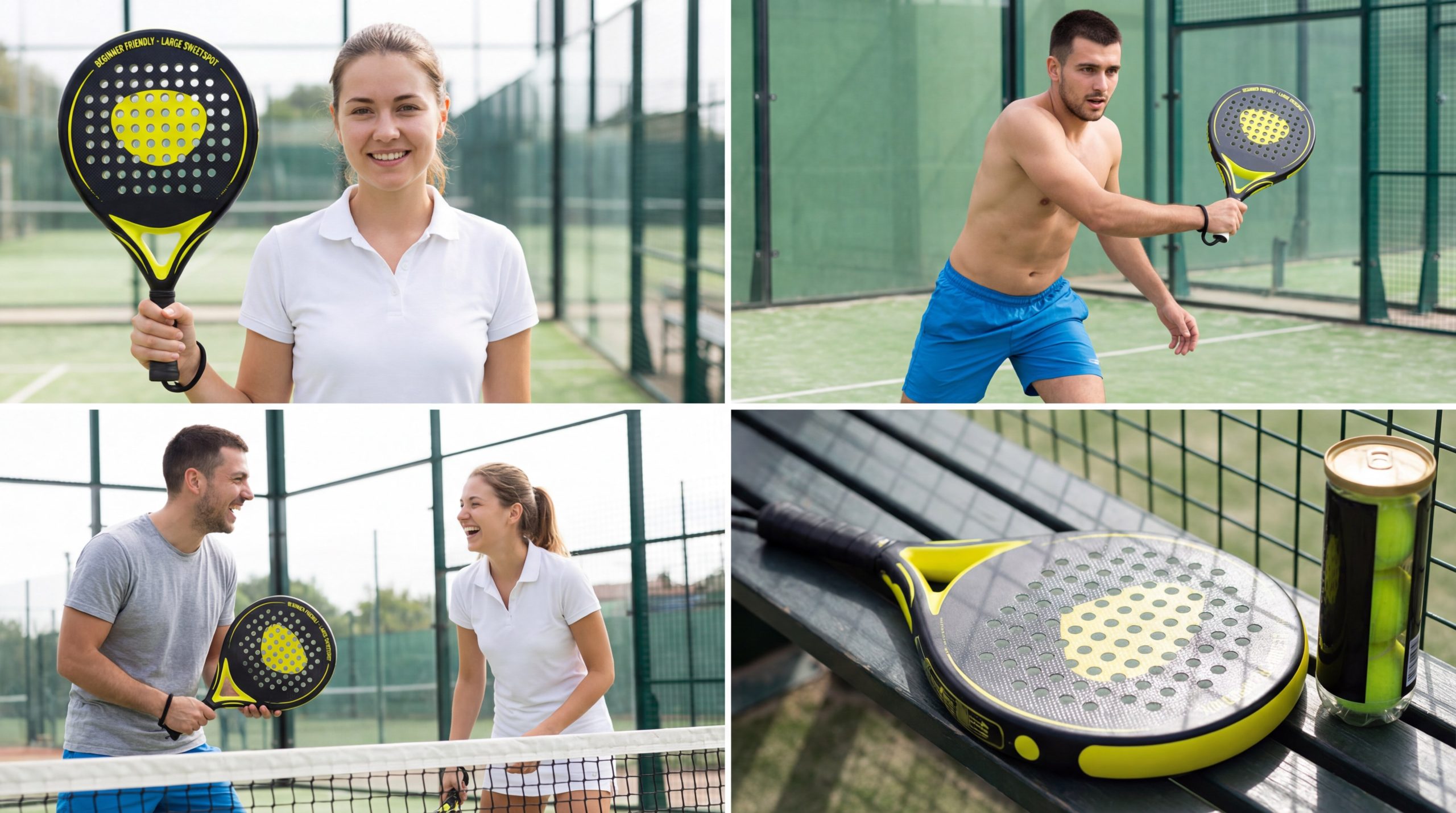
A racchetta padel, often called a “pala,” is a solid-surface sports tool featuring a perforated face and a core made of elastic foam. Selecting the wrong equipment often leads to poor performance and preventable joint fatigue on the court. By understanding the technical synergy between shape, weight, and materials, you can build a customized setup that maximizes your competitive edge.
What defines the frame of a racchetta padel?
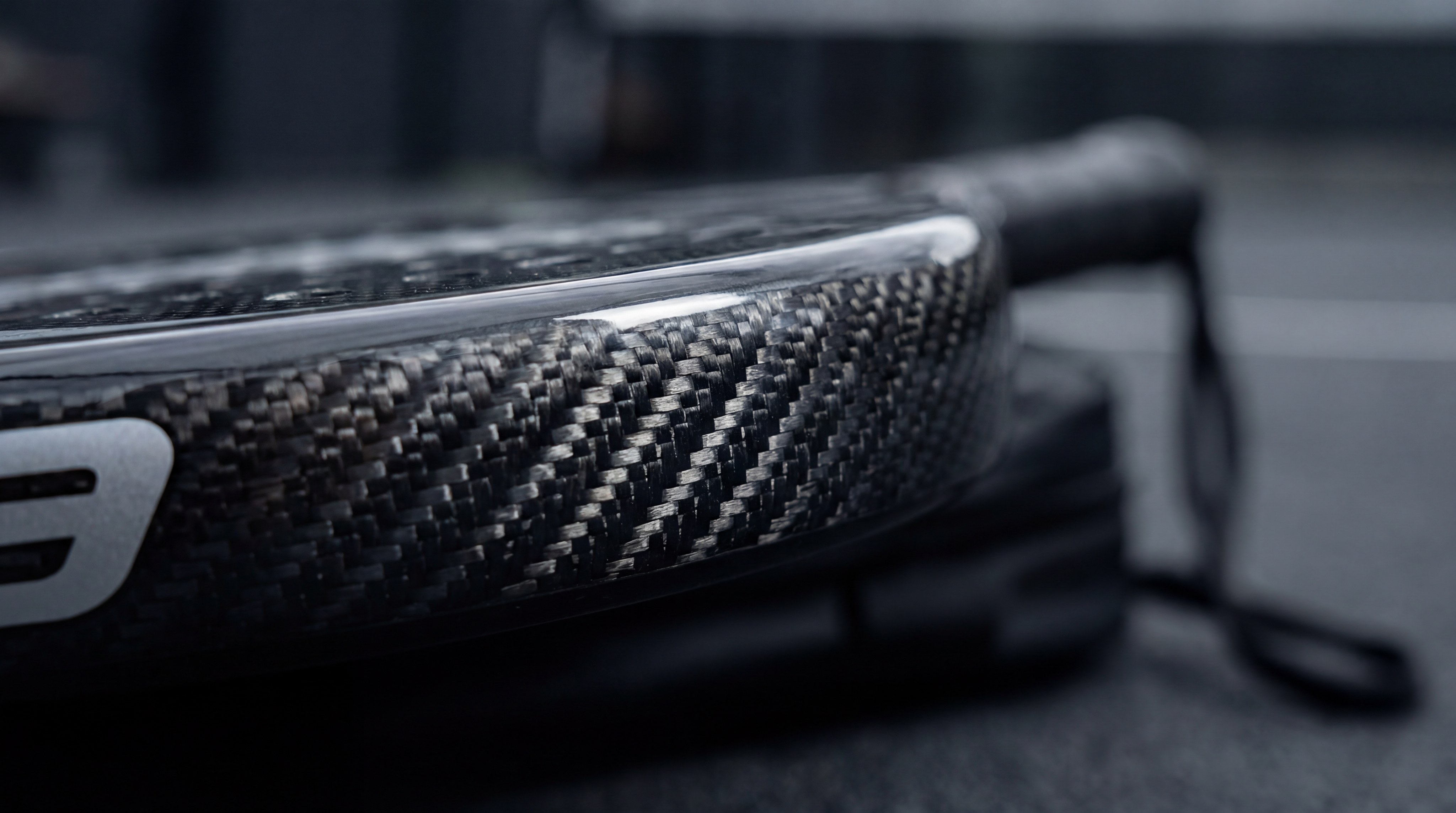
The frame of a racchetta padel is the structural skeleton, typically constructed from tubular carbon fiber or graphite to ensure high rigidity and impact resistance. This perimeter determines how much energy is returned to the ball and how well the racket manages mechanical stress.
Carbon vs. Graphite Frames
- Carbon Fiber: Offers superior durability and a stiffer response for professional play.
- Graphite: Provides a lighter feel with slightly more flexibility for recreational use.
- Composite Blends: Balance cost and performance by mixing both materials.
Structural Rigidity and Vibration
Listen, the frame’s stiffness directly impacts your arm health. A more rigid frame provides precise energy transfer but may transmit more shock to the elbow. Manufacturers often integrate elastomer inserts into the tubular frame to dampen these harmful frequencies.
Key Takeaways:
- Carbon frames are the industry standard for high-performance durability.
- Tubular construction defines the racket’s overall torsion resistance.
| Frame Material | Player Profile | Main Advantage | Vibration Dampening |
|---|---|---|---|
| Full Carbon | Professional | Power/Durability | Moderate |
| Graphite | Intermediate | Lightness | High |
| Fiberglass | Beginner | Comfort/Flex | Very High |
The frame’s composition is the first layer of defense against structural failure during high-intensity matches.
Which shape fits your racchetta padel style?
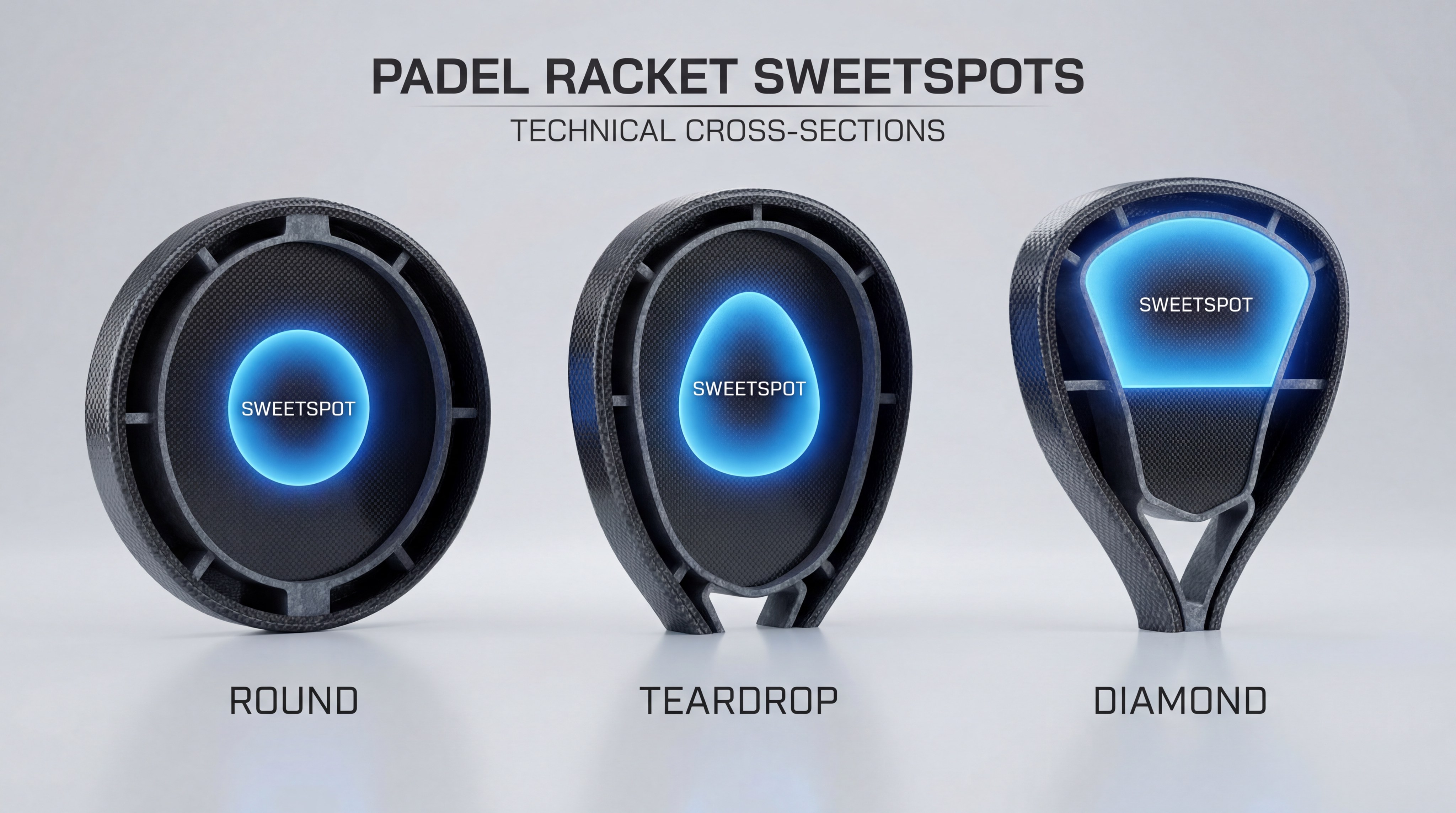
The shape of a racchetta padel determines the size and location of the sweetspot, directly influencing whether the tool favors defensive control or offensive power. Choosing the right silhouette is essential for aligning the equipment with your natural movements on the court.
Round for Defensive Control
- Low Balance: The weight sits closer to the handle for extreme maneuverability.
- Large Sweetspot: Centered on the face to allow for forgiving hits.
- Defensive Focus: Ideal for players who prioritize keeping the ball in play.
Teardrop for Versatile Play
- Medium Balance: Offers a hybrid feel between the grip and the head.
- Versatility: Provides a balanced mix of power and precision.
- All-Court Performance: Suited for intermediate players who adapt to various game situations.
Diamond for Offensive Power
- High Balance: Concentrates weight at the top for maximum lever force.
- High Sweetspot: Located at the tip to maximize velocity on smashes.
- Aggressive Play: Reserved for advanced players with high technical accuracy.
Key Takeaways:
- Round shapes provide the most forgiveness for off-center hits.
- Teardrop rackets are the most popular choice for modern, adaptable playstyles.
| Shape | Skill Level | Primary Benefit | Sweetspot Size |
|---|---|---|---|
| Round | Beginner/Defensive | Control | Large/Centered |
| Teardrop | Intermediate | Balanced | Medium |
| Diamond | Professional | Power | Small/High |
Selecting the correct geometry ensures you aren’t fighting against your own gear during critical points.
How does weight affect a racchetta padel?
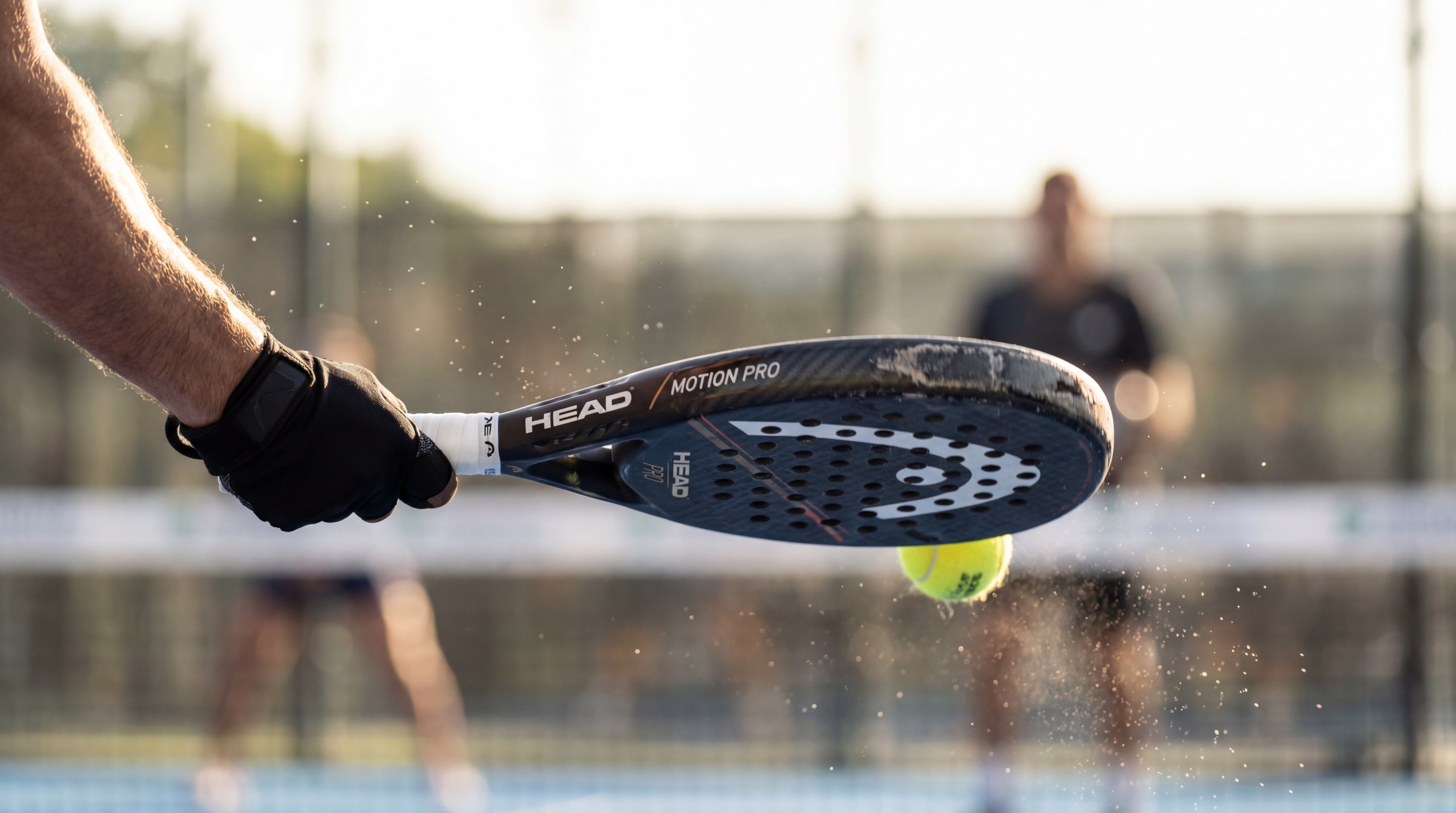
The weight of a racchetta padel typically ranges from 350g to 390g, significantly impacting swing speed and the kinetic energy transferred during a strike. Finding the right mass requires a balance between your physical strength and the need for reactive movement at the net.
Light Rackets (<360g) Maneuverability
- Quick Reactions: Perfect for rapid volleys and defensive recoveries.
- Injury Prevention: Reduces the strain on the wrist and rotator cuff.
- Ease of Use: Highly recommended for junior players or those with smaller builds.
Heavy Rackets (>375g) Momentum
- Ball Velocity: The added mass generates more force with less effort on the swing.
- Stability: Provides a more solid feel when blocking fast incoming shots.
- Strength Requirement: Requires a well-conditioned arm to avoid fatigue during long sets.
Key Takeaways:
- Lighter palas excel in fast-paced defensive exchanges.
- Heavier rackets are preferred by back-court players seeking finishing power.
| Weight Range | Classification | Mobility | Power Potential |
|---|---|---|---|
| 350g – 360g | Light | Excellent | Low |
| 360g – 375g | Standard | Balanced | Medium |
| 375g – 390g | Heavy | Low | High |
Heavier weights demand better technique to prevent the racket from “lagging” behind your intended swing path.
Where is the balance in a racchetta padel?
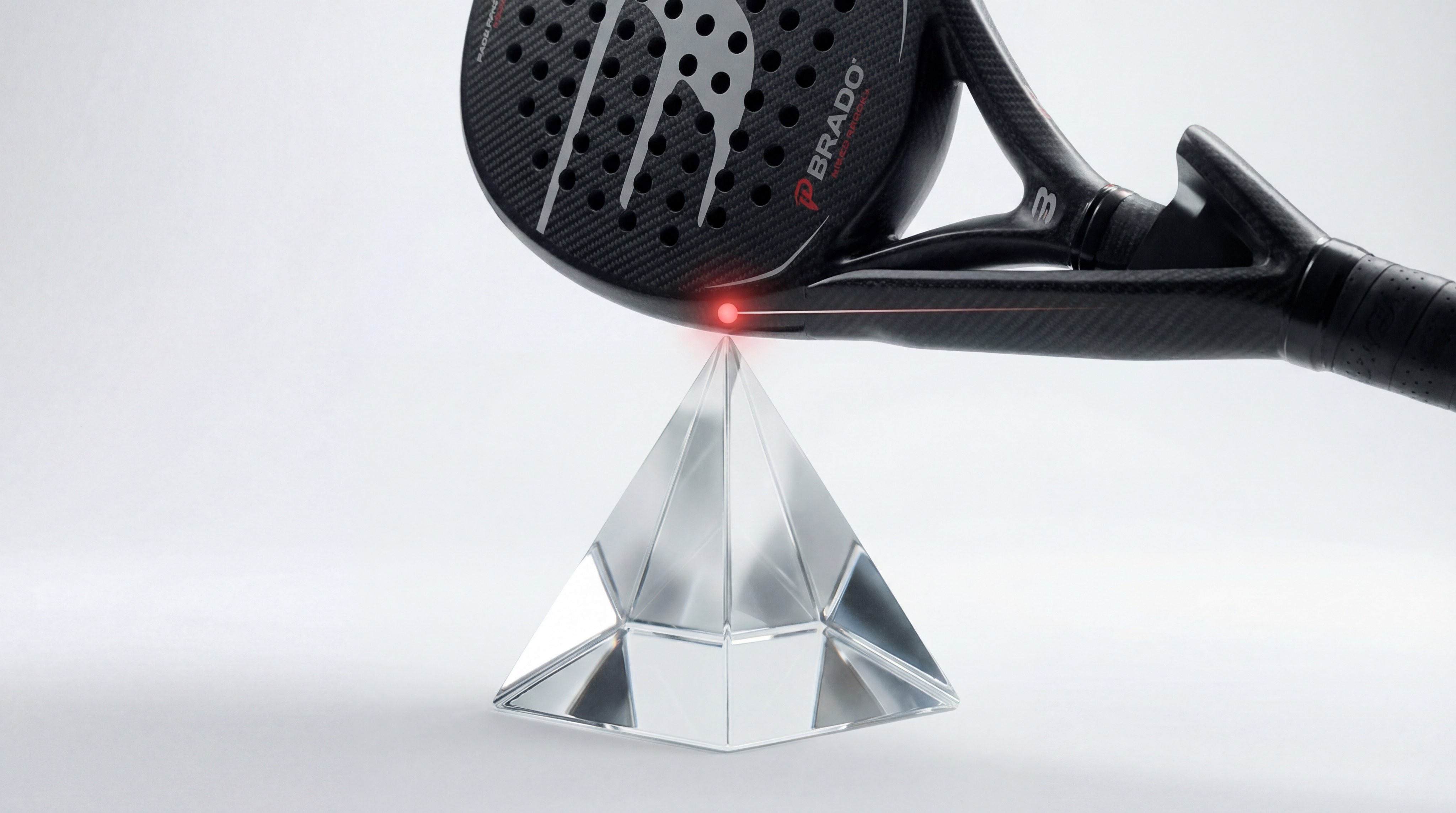
Balance refers to the center of gravity of a racchetta padel, and it fundamentally changes how heavy the racket “feels” regardless of its actual weight in grams. It is a critical metric for players who need to manage Gear Cases and equipment longevity.
Low Balance: Grip Stability
- Handle Focus: The weight is concentrated near the hand.
- Increased Control: Makes the racket feel lighter and easier to steer.
- Joint Comfort: Minimizes leverage-induced stress on the elbow.
High Balance: Lever Force
- Head Heavy: The center of gravity is located toward the tip.
- Smash Velocity: Acts like a hammer to provide massive downward force.
- Technical Demand: Can feel “clumsy” in the hands of unexperienced players.
Key Takeaways:
- Low balance is superior for net-play and quick defensive lobs.
- High balance is the preferred configuration for professional-level power hitters.
| Balance Point | Feeling | Best For | Typical Shape |
|---|---|---|---|
| Low (<26cm) | Very Light | Precision/Net Play | Round |
| Medium (26-27cm) | Neutral | Versatility | Teardrop |
| High (>27cm) | Heavy | Power/Smashes | Diamond |
Understanding the balance point helps you predict how quickly your arm will fatigue during a three-set match.
What core is inside a racchetta padel?
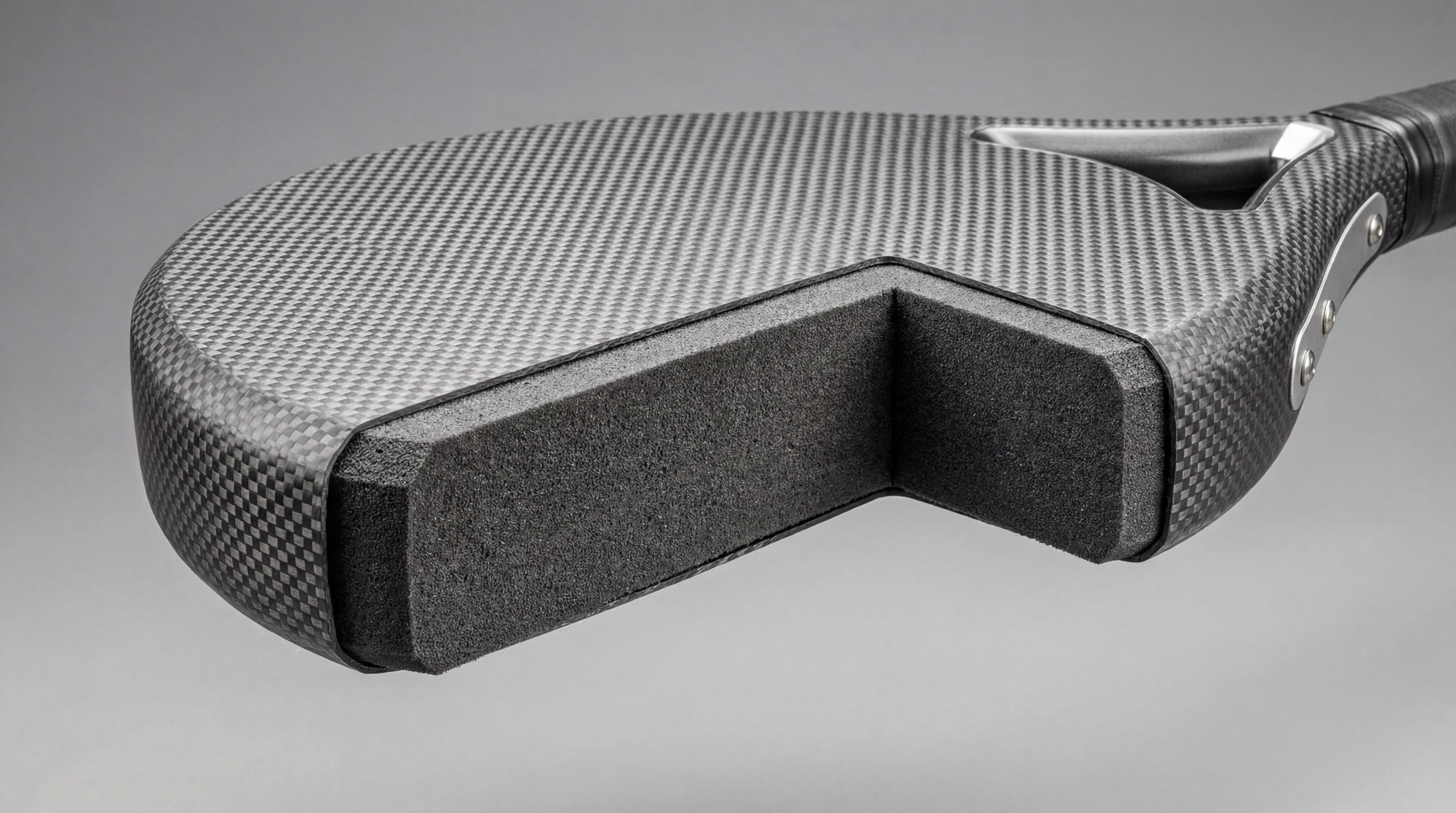
The core of a racchetta padel is usually made of EVA (Ethylene Vinyl Acetate) foam or Polyethylene, acting as the engine that determines ball output and comfort. This internal material compresses upon impact, absorbing energy before launching the ball off the face.
Soft EVA for Comfort
- Elasticity: Higher bounce effect even with slower swing speeds.
- Shock Absorption: Ideal for players prone to “tennis elbow” or joint pain.
- Ball Feel: Provides a dampened, “cushioned” sensation on every hit.
High-Density Foam for Response
- Harder Core: Offers a direct, surgical feel with minimal energy loss.
- Power Control: Best for players who generate their own power through speed.
- Temperature Stability: Resists softening during play in high-temperature environments.
Key Takeaways:
- Soft cores are the best choice for cold weather to maintain elasticity.
- Hard cores provide the most feedback for advanced, technical stroke play.
| Core Type | Density | Ball Output | Comfort Level |
|---|---|---|---|
| EVA Soft | Low | High | Very High |
| EVA Medium | Standard | Balanced | Moderate |
| Black EVA | High | Low (Player-driven) | Low |
The choice of core density defines whether the racket does the work for you or requires manual force.
Is carbon best for a racchetta padel?
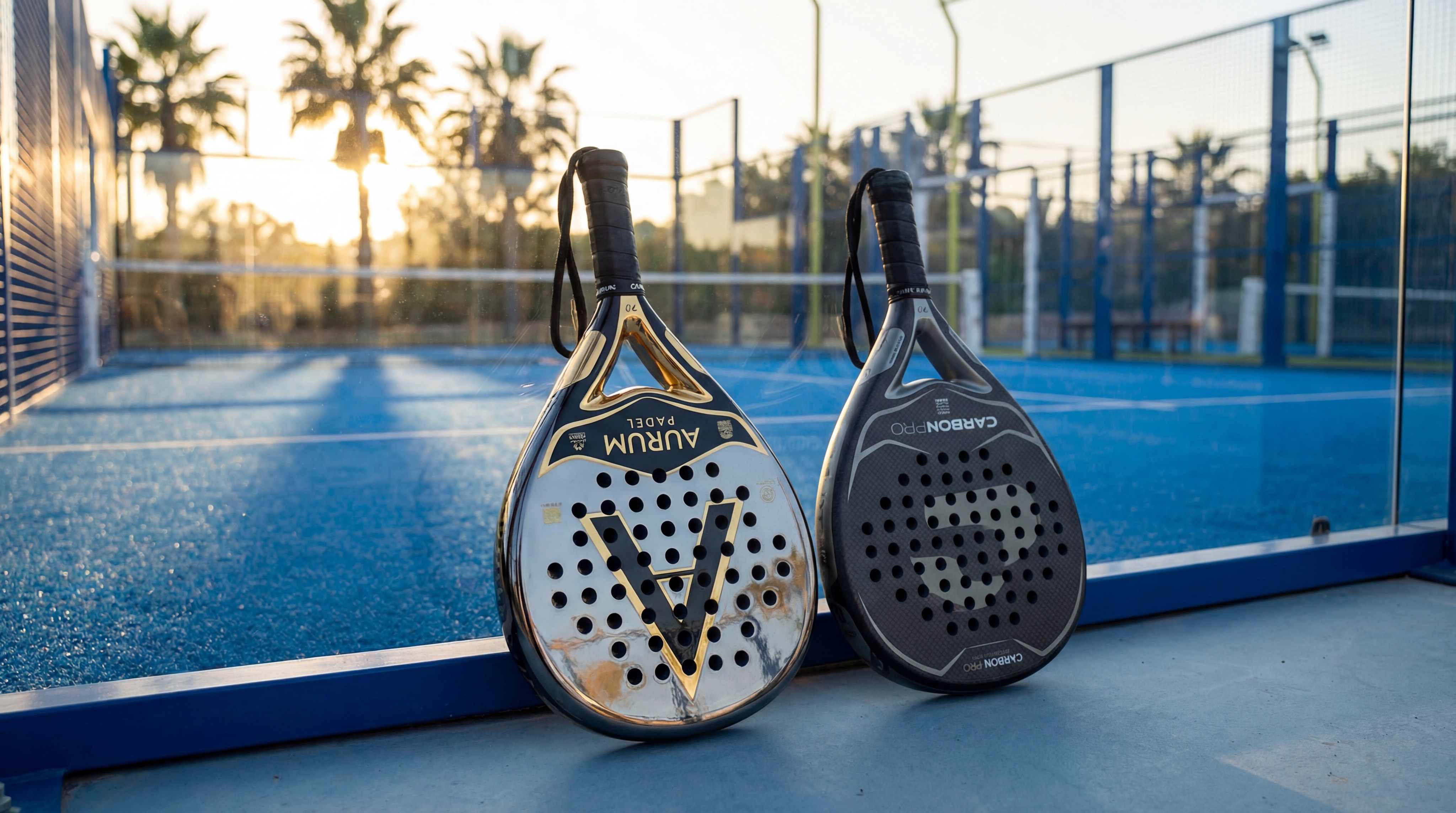
The surface materials of a racchetta padel dictate the “touch” and durability of the hitting area. While carbon is often marketed as the premium option, Latest Padel Trends suggest that hybrid surfaces are becoming more popular for intermediate players.
Glass Fiber Flexibility
- Elasticity: Stretches more upon impact to provide a softer feel.
- Beginner Friendly: Helps generate ball depth with less effort.
- Durability: More prone to surface cracks over long-term use compared to carbon.
3K/12K Carbon Fiber Precision
- Rigidity: 12K carbon (12,000 filaments per thread) is exceptionally stiff.
- Power Return: Minimizes face deformation to maximize energy transfer.
- Pro Performance: Used in top-tier rackets for maximum consistency and speed.
Key Takeaways:
- Fiberglass is the best choice for those transitioning from tennis to padel.
- 12K or 18K carbon is strictly for players who have mastered their timing.
| Material | Rigidity | Response | Durability |
|---|---|---|---|
| Fiberglass | Low | Soft/Bouncy | Average |
| 3K Carbon | Medium | Crisp | High |
| 12K/18K Carbon | Very High | Hard/Fast | Maximum |
Surface texture, such as sand-grit or 3D molded patterns, can further enhance these materials by adding spin.
How to pick the right racchetta padel grip?
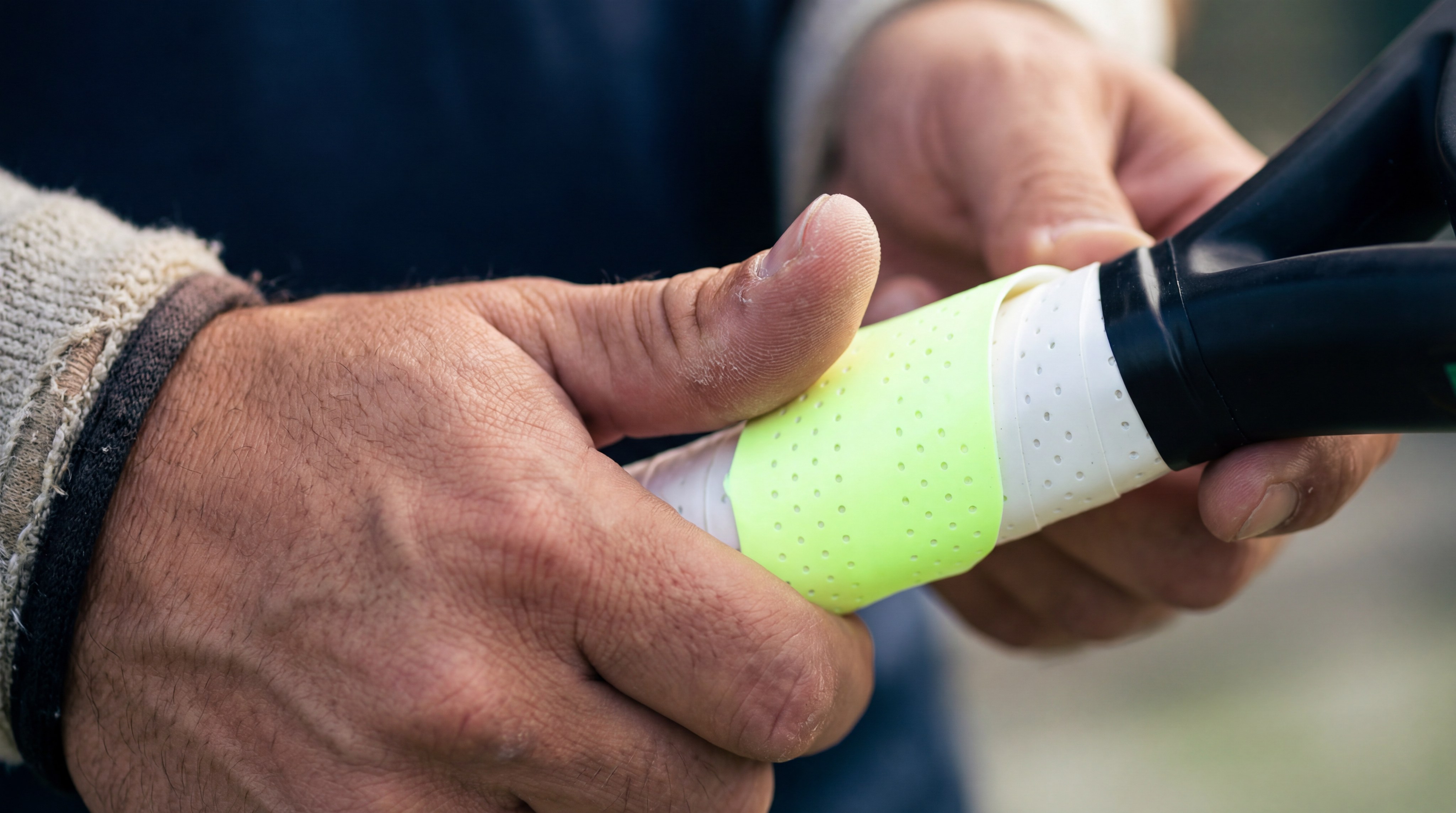
The grip is your only point of contact with the racchetta padel, making it the most critical factor for comfort and stroke execution. A poorly sized handle leads to over-gripping, which is the primary cause of forearm strain in padel.
Overgrip Thickness Impact
- Size Customization: Adding layers allows you to match the handle to your hand size.
- Shock Reduction: Thick grips act as an extra layer of vibration dampening.
- Proper Fit: You should be able to fit one finger between your fingertips and palm.
Sweat Absorption Materials
- Perforated Grips: Facilitate airflow to keep the hand dry in summer.
- Tacky Surfaces: Ensure the racket doesn’t slip during high-moisture conditions.
- Regular Maintenance: Grips should be replaced every 3-5 matches for optimal safety.
Key Takeaways:
- Correct grip size prevents the racket from twisting during off-center hits.
- Always use at least one overgrip to protect the original factory grip.
| Grip Style | Benefit | Thickness | Feel |
|---|---|---|---|
| Standard | Clean feel | Thin | Direct |
| Perforated | Sweat management | Medium | Airy |
| Comfort | Softness | Thick | Cushioned |
A fresh overgrip is the cheapest way to improve the performance and safety of your current racket.
Can a beginner use a pro racchetta padel?
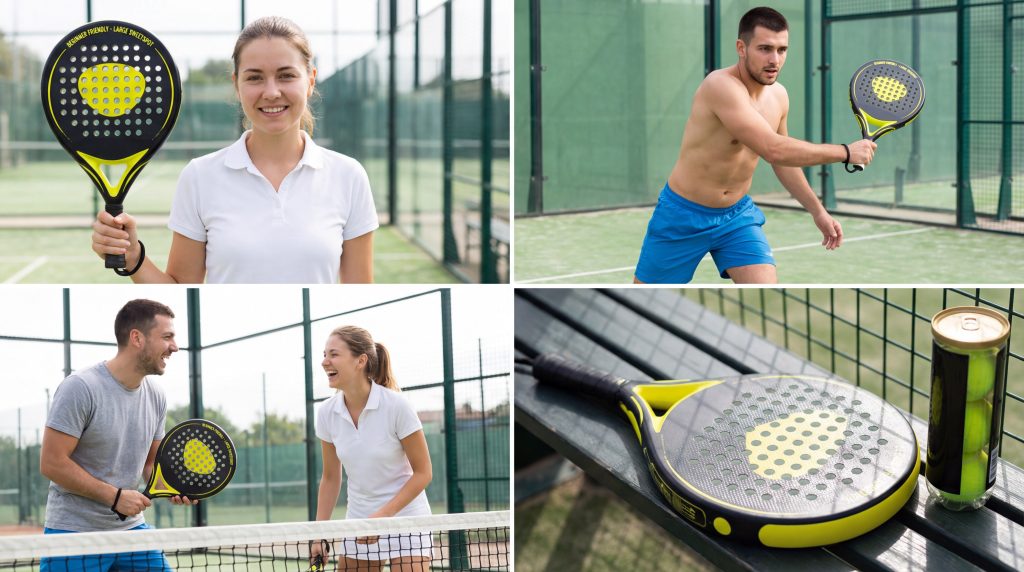
Using a professional racchetta padel as a beginner is a common mistake that often stunts skill development. Pro-level gear is designed for high-speed impacts and perfect timing, which can be unforgiving and physically demanding for new players.
Sweetspot Size Importance
- Forgiveness: Beginner rackets feature oversized sweetspots for easier play.
- Consistency: Helps new players maintain rallies without vibration shock.
- Confidence Building: Easier power access allows for faster learning of basic strokes.
Forgiveness in Technical Errors
- Core Softness: Absorbs mistakes in swing timing and ball positioning.
- Weight Distribution: Usually more balanced to prevent early arm fatigue.
- Market Research: Consult Expert Reviews to find high-forgiveness models.
Key Takeaways:
- Professional rackets require high swing speeds to activate the carbon face.
- Beginner-friendly gear focuses on safety and ball output at low speeds.
| Player Level | Racket Shape | Face Material | Core Density |
|---|---|---|---|
| Beginner | Round | Fiberglass | Soft |
| Intermediate | Teardrop | Hybrid Carbon | Medium |
| Advanced | Diamond | Full Carbon | Hard |
Prioritizing comfort over “pro branding” will lead to a more enjoyable and injury-free experience.
Why do holes matter in a racchetta padel?
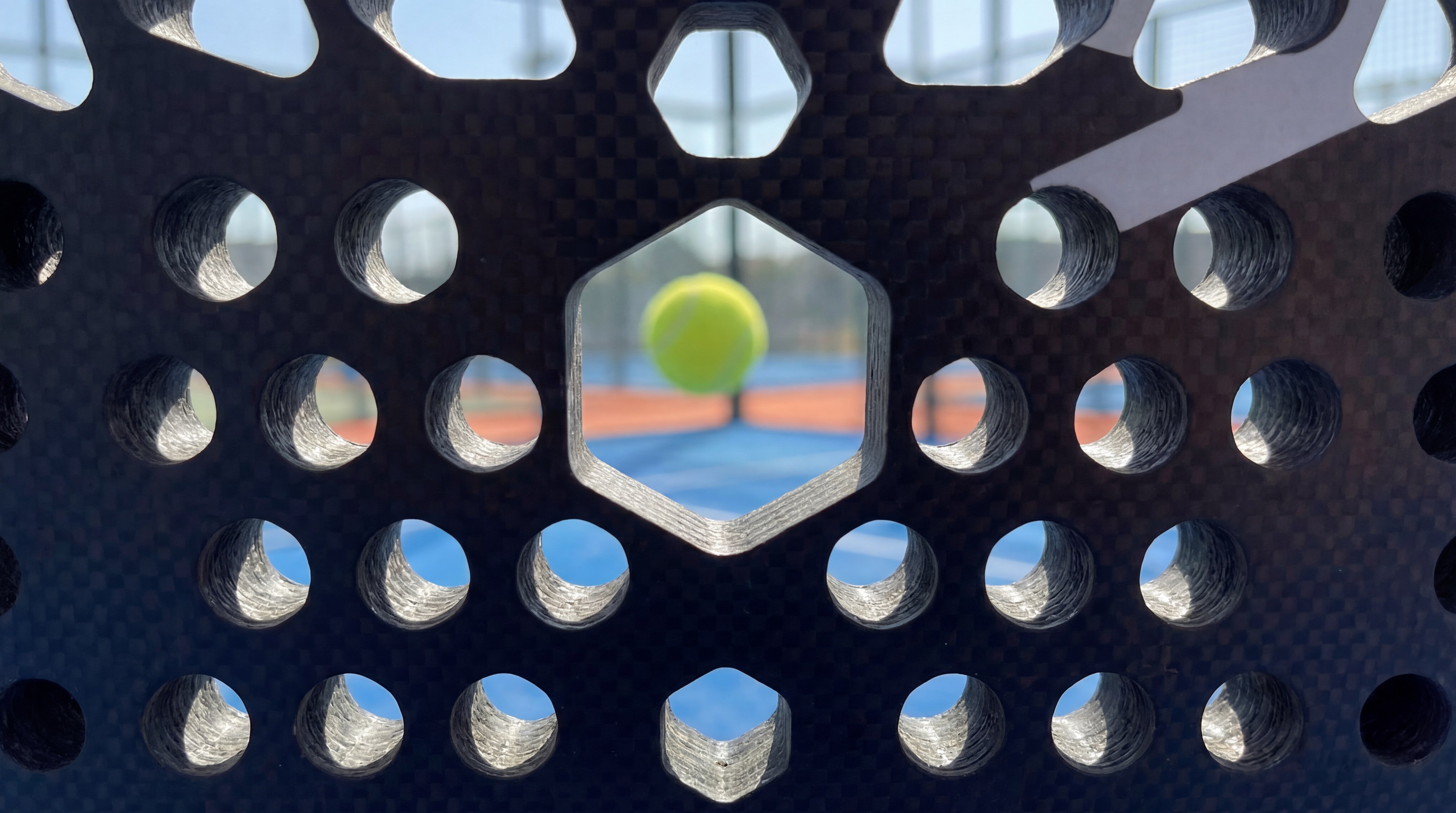
The hole pattern on a racchetta padel face is not random; it is a calculated engineering choice that affects aerodynamics and hitting consistency. These perforations reduce the solid surface area to change how air flows around the racket during a swing.
Aerodynamic Drag Reduction
- Swing Speed: Holes allow the racket to move through the air with less resistance.
- Maneuverability: Essential for quick exchanges at the net where every millisecond counts.
- Stability: Reduces the “parachute effect” that can cause the racket to wobble.
Impact Distribution Patterns
- Structural Integrity: Hole placement avoids creating weak points in the carbon weave.
- Sweetspot Expansion: Specific patterns can soften or stiffen certain areas of the face.
- Vibration Control: Holes help dissipate the energy of the ball across the entire frame.
Key Takeaways:
- The center of the racket often has fewer holes to maintain hitting power.
- Linear hole patterns are designed to maximize aerodynamic efficiency.
| Hole Design | Primary Focus | Swing Feel | Durability |
|---|---|---|---|
| Uniform Grid | Standard Balance | Neutral | High |
| Circular Pattern | Sweetspot Focus | Stable | Moderate |
| Variable Diameter | Aerodynamics | Fast | Variable |
Advanced players often choose hole patterns that complement their specific swing path and speed.
How to maintain your new racchetta padel?
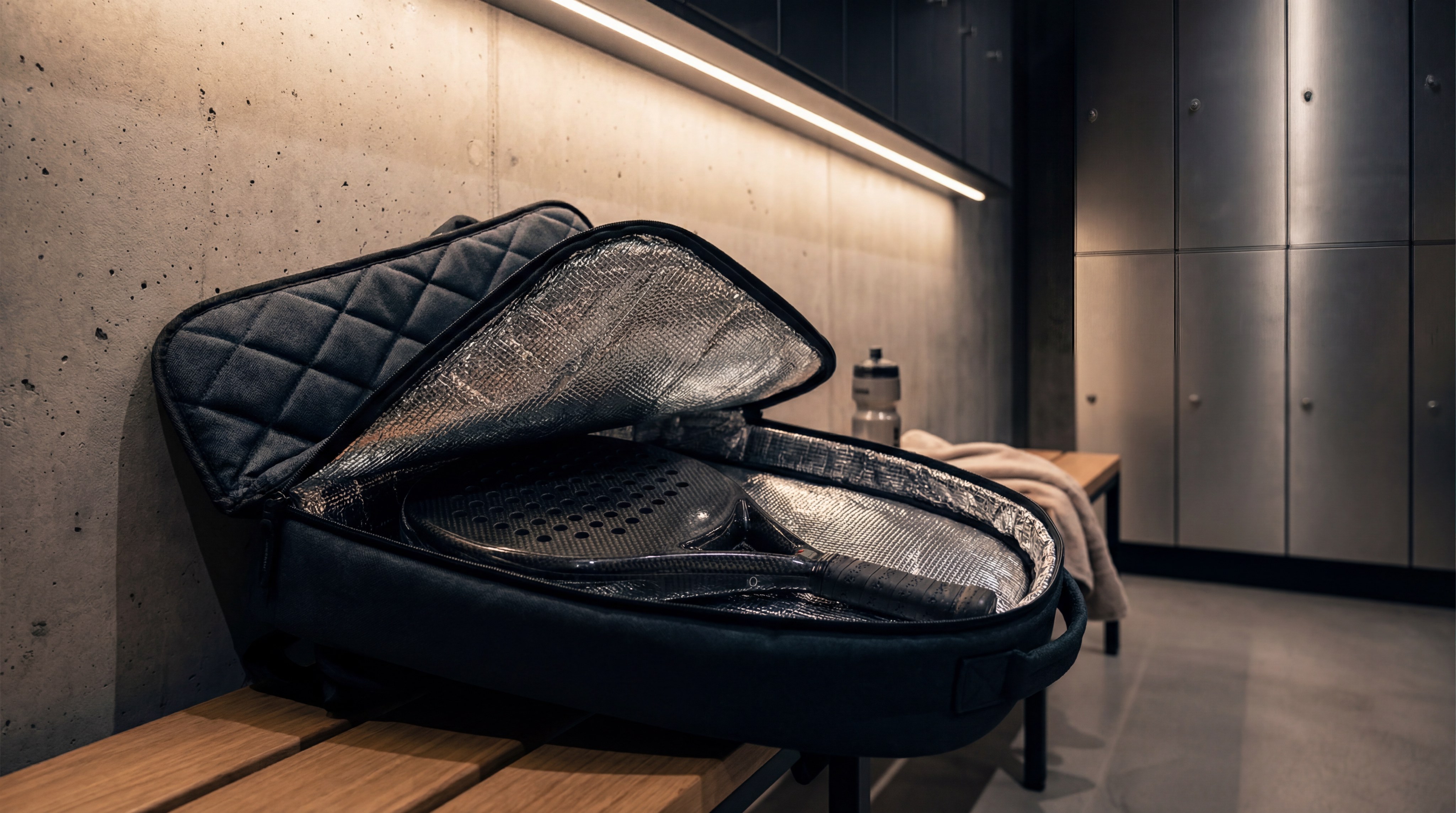
A racchetta padel is a precision instrument that degrades over time due to temperature changes and physical impact. Proper maintenance is required to ensure the internal core remains elastic and the frame stays structurally sound.
UV Exposure and Core Decay
- Temperature Sensitivity: High heat causes the EVA foam to soften permanently.
- Thermal Bags: Always store your racket in a lined bag to regulate temperature.
- Direct Sunlight: Prolonged exposure can make the surface resin brittle and prone to cracking.
Grip Replacement Cycles
- Hygiene: Prevents the buildup of bacteria and salt from sweat.
- Tackiness: Ensures you don’t have to squeeze harder than necessary to hold the racket.
- Resources: Check Padel Resources for tutorials on proper wrapping techniques.
Key Takeaways:
- Never leave your racket in a hot car, as the core will lose its “pop.”
- Use a frame protector tape to prevent cosmetic and structural damage from wall hits.
| Maintenance Task | Frequency | Benefit | Risk of Neglect |
|---|---|---|---|
| Overgrip Swap | 3-5 Matches | Grip Security | Wrist Strain |
| Frame Clean | Monthly | Visual Inspection | Hidden Cracks |
| Thermal Storage | Always | Core Longevity | Dead Racket |
Consistency in maintenance ensures your equipment performs as expected during every match.
Summary of Expert Recommendations
Building the perfect racket setup is a journey of technical discovery. By matching your physical capabilities with the right frame, shape, and weight, you create a seamless extension of your arm. Ready to upgrade your game? Explore the latest professional gear and contact us today for a personalized equipment consultation.
Frequently Asked Questions
- What is a racchetta padel?
A racchetta padel is a solid-frame sports instrument used in padel that features a perforated hitting surface and an elastic internal foam core. - How to build a racchetta padel correctly?
To build a racchetta padel correctly, you must select a frame material, core density, and head shape that align with your specific skill level. - Can I use a racchetta padel for tennis?
You cannot use a racchetta padel for tennis because its solid construction and shorter handle are specifically engineered for the unique mechanics of the padel court. - Why does my racchetta padel lose power?
Your racchetta padel loses power when the internal EVA foam core begins to harden or decay due to excessive heat or long-term mechanical stress. - Is every racchetta padel the same weight?
No, every racchetta padel is not the same weight, as they typically vary between 350 and 390 grams to accommodate different player strengths.