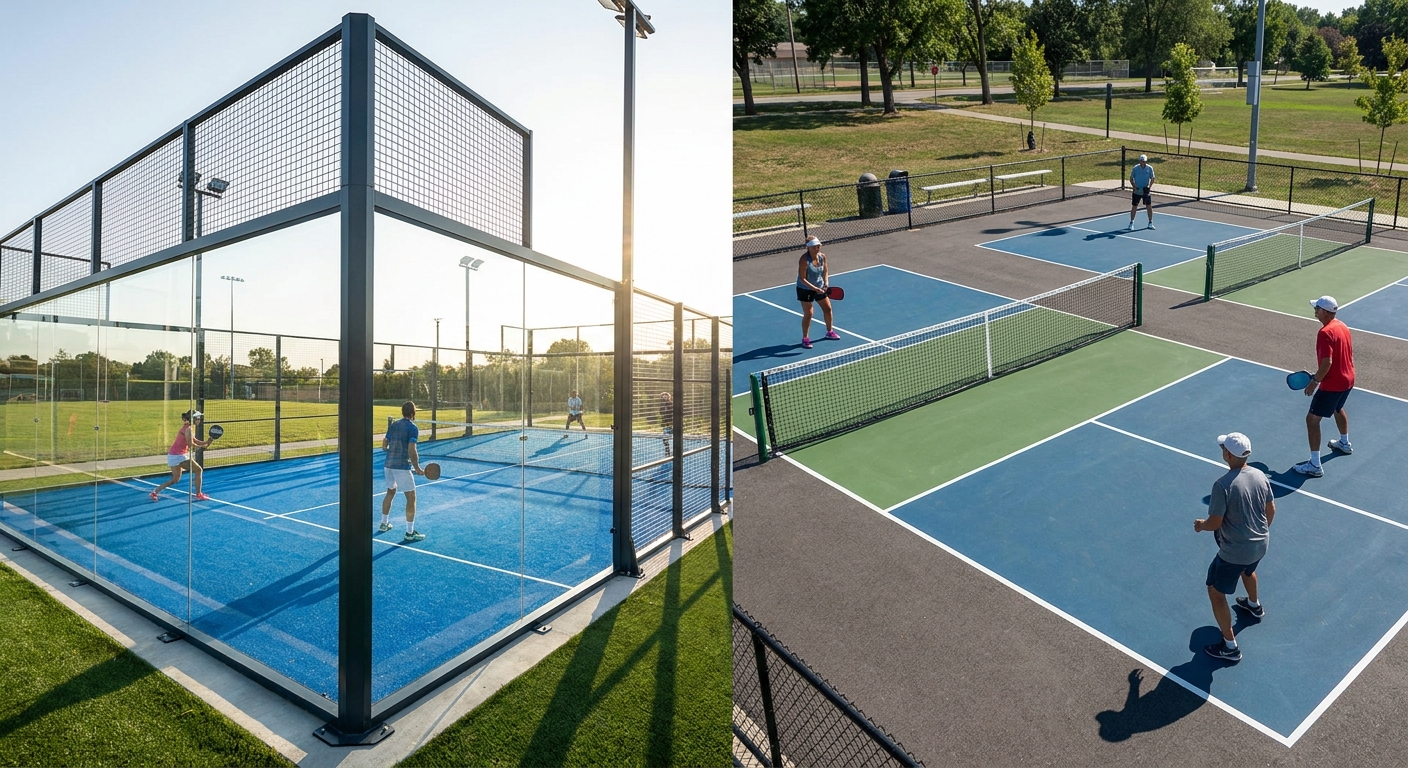
No, padel and pickleball are not the same, as they feature distinct court structures, equipment, and gameplay mechanics. Many facility investors and developers mistakenly group these sports together, which leads to significant errors in site planning and procurement. If you miscalculate the spatial requirements or install the wrong surface type, you risk alienating your target demographic and wasting substantial capital on a facility that fails to perform. This guide clarifies the technical differences and provides a professional roadmap for building high-performance courts that maximize your return on investment. You will find that are padel and pickleball the same is a question with a clear “no,” but both offer unique avenues for commercial success in the modern sports market.
Is padel the same as pickleball?
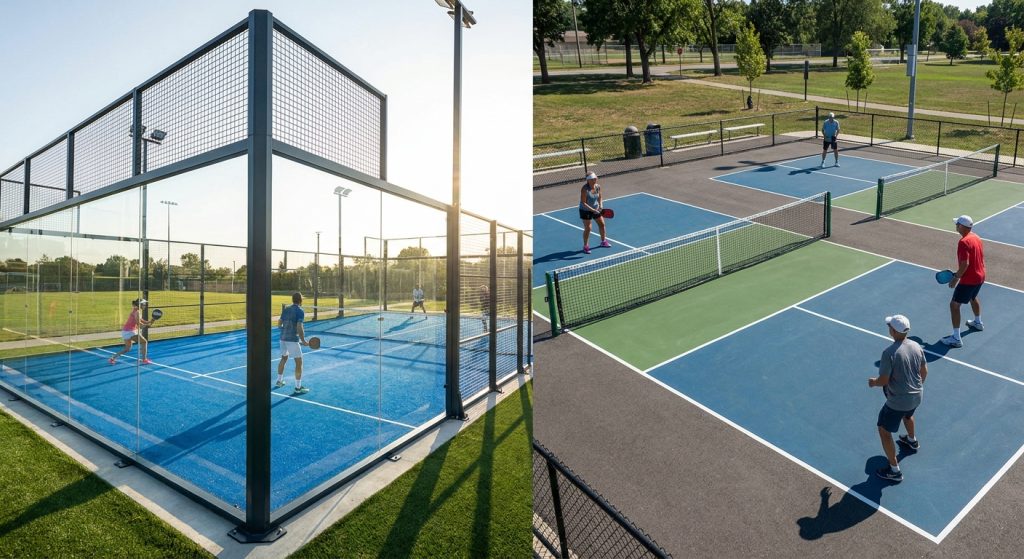
When asking are padel and pickleball the same, the answer is a definitive no because they rely on entirely different architectural and tactical foundations. Padel is an enclosed, high-energy sport played with glass rebounds, whereas pickleball is an open-court, tactical game focused on net play. These differences dictate everything from the materials you must source to the type of athlete you will attract to your venue.
Understanding the technical split
Think about it: the physical interaction with the environment changes the entire game logic for your players. You need to recognize that padel players use walls to keep the ball in play, creating a 3D experience that pickleball simply does not offer.
- Padel requires structural glass for rebounds.
- Pickleball relies on “dinking” and precise ground strokes.
- The court footprints demand different zoning permits.
Key Takeaway: Padel is defined by its enclosure and verticality, while pickleball focuses on horizontal precision.
| Comparison | Padel | Pickleball |
|---|---|---|
| Enclosure | 3m Glass Walls | Open Fence/None |
| Game Style | Fast-Paced / 3D | Tactical / Linear |
| Strategy | Wall Rebounds | No-Volley Zones |
Analyzing these core differences reveals why specialized facility design is mandatory for each sport’s success.
How do court dimensions compare?
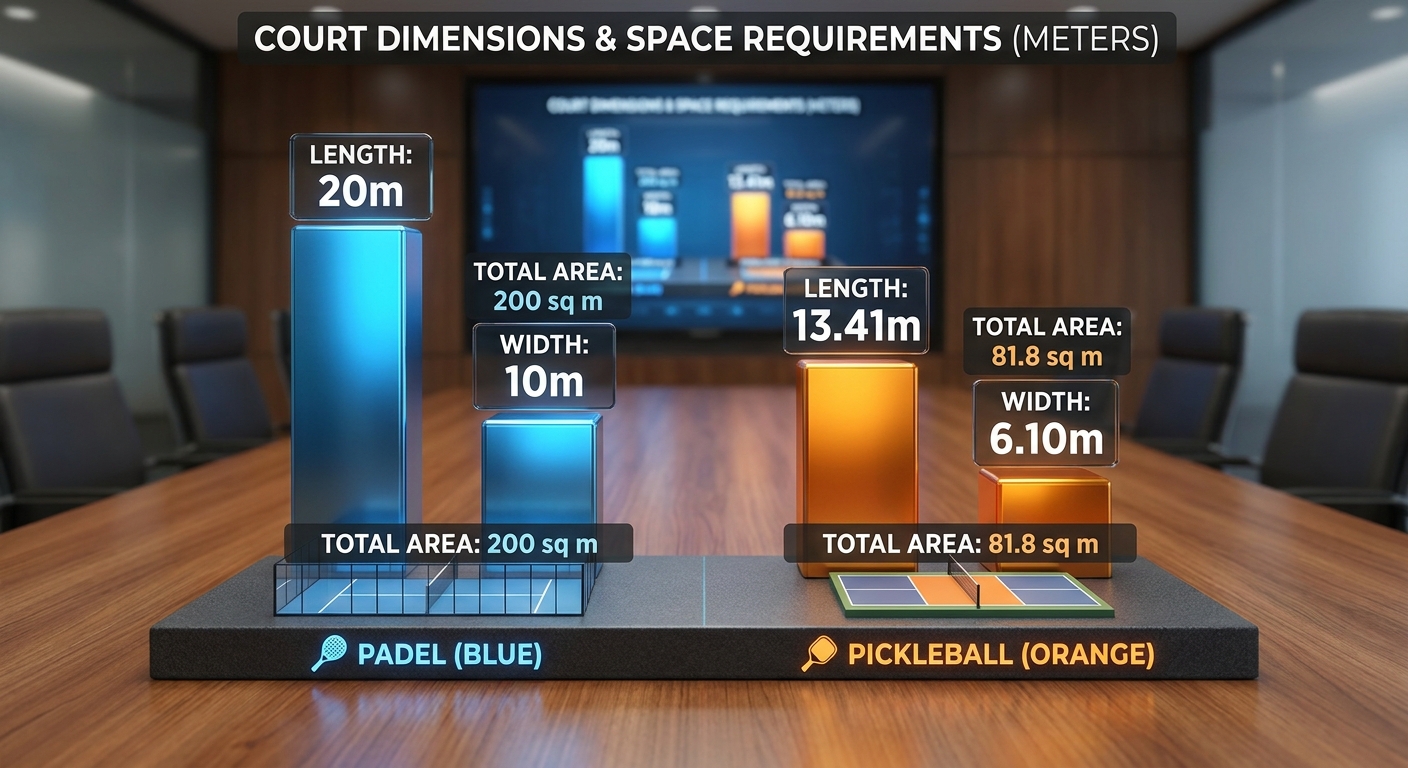
If you investigate are padel and pickleball the same in terms of size, you will find they vary significantly, with padel courts measuring 20m x 10m. This footprint is roughly double the size of a standard pickleball court, which measures 13.4m x 6.1m. For facility managers, this means the number of courts you can fit into a fixed plot will vary by nearly 50% between the two sports.
Spatial planning for efficiency
But here’s the kicker: the total area required for a Standard Padel Court includes safety zones for out-of-court play. You must account for the height of the structure, which usually reaches 4 meters, necessitating high ceilings for indoor facilities.
- Padel court: 200 square meters.
- Pickleball court: 81.7 square meters.
- Padel requires 6 meters of vertical clearance.
Key Takeaway: You can fit two pickleball courts in the space of one padel court, affecting your revenue-per-square-meter strategy.
| Dimension | Padel | Pickleball |
|---|---|---|
| Length | 20 Meters | 13.41 Meters |
| Width | 10 Meters | 6.1 Meters |
| Total Area | 200 sqm | ~82 sqm |
The disparity in court size fundamentally alters the construction budget and the potential player density of your facility.
What equipment is required for each?
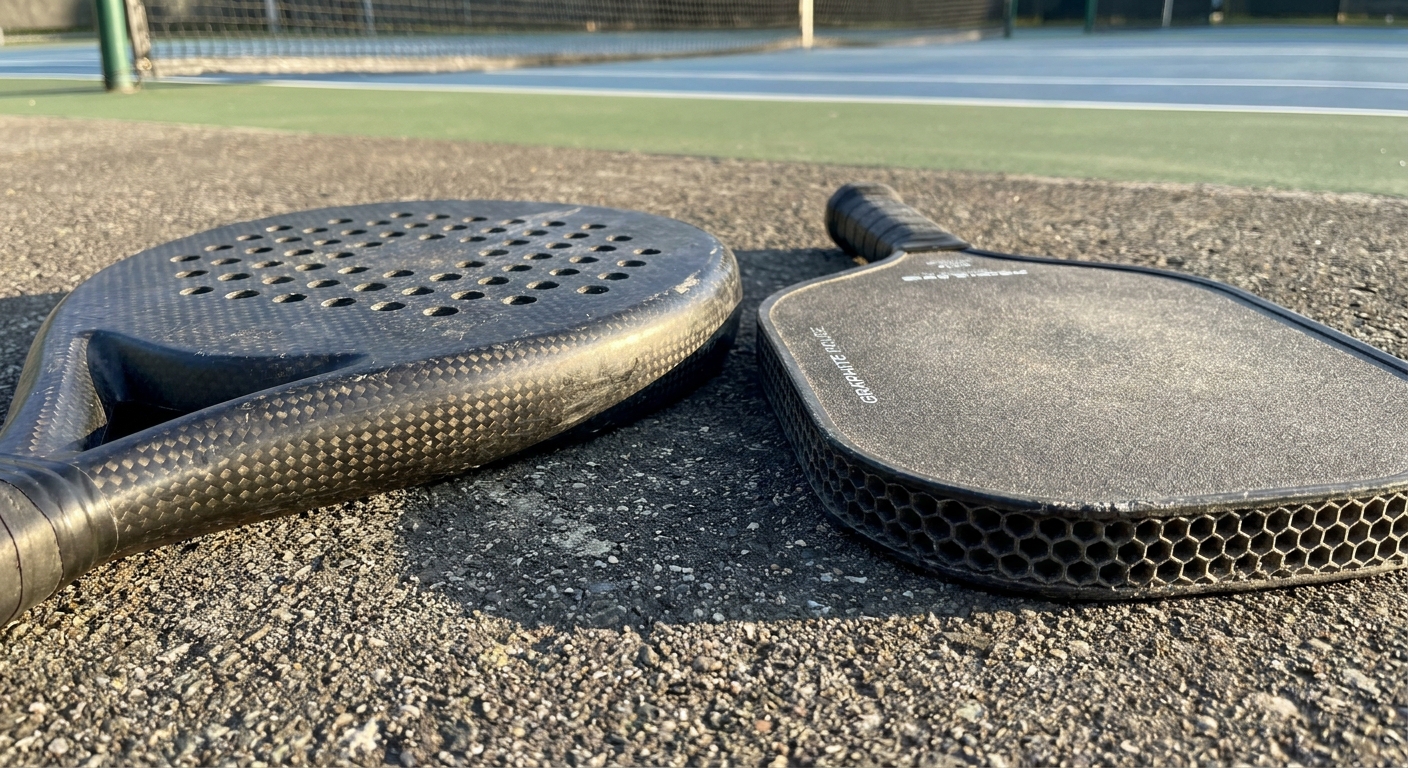
Determining are padel and pickleball the same regarding gear shows that they use non-interchangeable rackets and paddles designed for specific physics. Padel rackets are thick, perforated carbon fiber tools, while pickleball uses thinner, solid composite paddles. You cannot provide one for the other without compromising the safety and integrity of the game.
Material specs and durability
Believe it or not, the impact force of a padel ball requires a much sturdier racket core to prevent equipment failure. You should look for high-density EVA foam in padel gear, whereas pickleball paddles prioritize lightweight honeycomb cores for maneuverability.
- Padel rackets have a 38mm thickness.
- Pickleball paddles are usually 13mm to 16mm.
- Padel gear features a safety wrist strap.
Key Takeaway: Equipment is specialized; offering the wrong gear at your rental shop will lead to rapid breakage and poor reviews.
| Gear Item | Padel Racket | Pickleball Paddle |
|---|---|---|
| Surface | Perforated (Holes) | Solid / Smooth |
| Thickness | 38mm Standard | 13mm – 19mm |
| Core | EVA Foam | Polypropylene |
Providing the correct, high-quality equipment is a vital component of establishing a professional reputation for your sports club.
Are the balls used interchangeable?
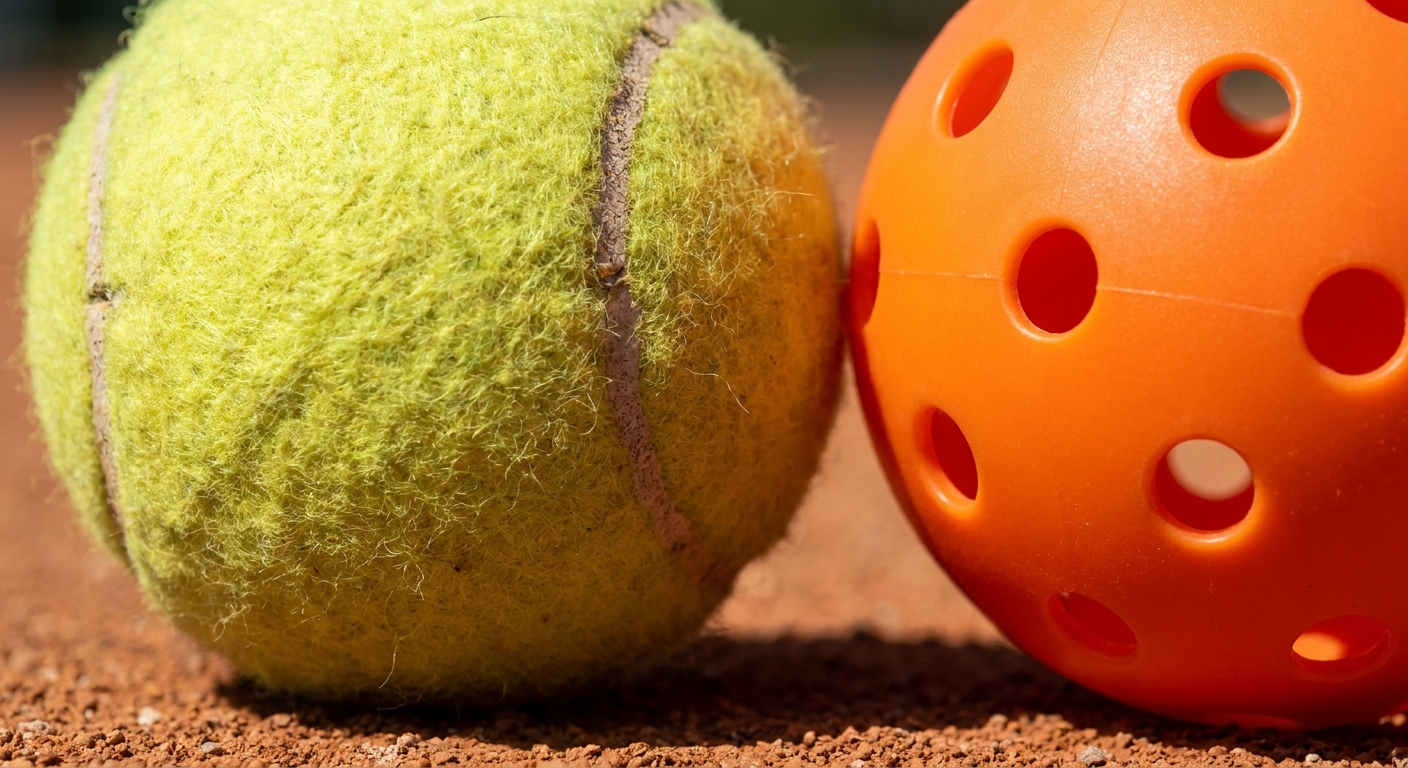
Testing if are padel and pickleball the same in the ball category proves they are fundamentally different in material and aerodynamics. Padel uses pressurized rubber balls covered in felt, which look like tennis balls but have lower internal pressure for controlled bounces. Conversely, pickleball uses a hard plastic wiffle-style ball with drilled holes that minimize speed and bounce.
Physics of the bounce
Look at it this way: a padel ball is designed to fly through the air and rebound off glass, while a pickleball is designed to stay low and slow. You will notice that the pickleball’s holes create drag, preventing it from traveling at the high velocities seen in padel.
- Padel balls: 56.0–59.4 grams.
- Pickleball balls: 22.1–26.5 grams.
- Pickleball has 26-40 precision-drilled holes.
Key Takeaway: Using a padel ball on a pickleball court is dangerous, and using a pickleball on a padel court is impossible.
| Ball Property | Padel Ball | Pickleball Ball |
|---|---|---|
| Material | Rubber/Felt | Hard Plastic |
| Pressure | Low Pressure | Non-Pressurized |
| Weight | ~58 Grams | ~24 Grams |
The aerodynamic profiles of these balls dictate the court size and the speed of the gameplay you offer your members.
How do rules and scoring vary?
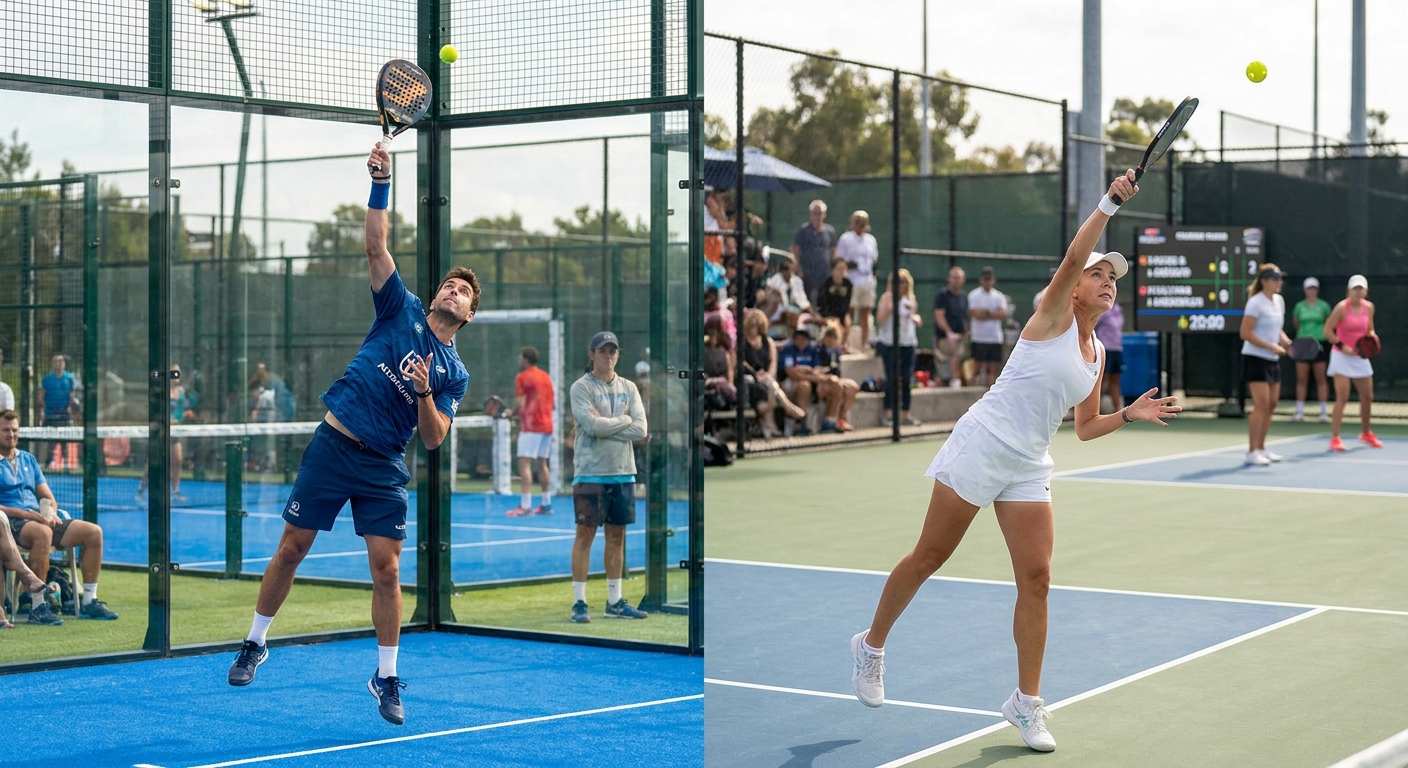
Clarifying are padel and pickleball the same in terms of rules shows that padel follows tennis scoring (15, 30, 40) while pickleball uses its own unique numerical system. Padel is also almost exclusively a doubles sport, whereas pickleball is frequently played in both singles and doubles formats. You must train your staff to understand these distinct rule sets to provide effective coaching and tournament management.
Scoring and zone restrictions
But here’s the kicker: pickleball has a “Kitchen” zone where you cannot volley, which creates a very specific tactical rhythm. You won’t find this in padel, where the entire court up to the net is fair game for volleys and smashes.
- Pickleball scoring goes to 11 or 15 points.
- Padel uses sets and match tie-breaks.
- Pickleball requires an underhand serve below the waist.
Key Takeaway: Padel is a “game of walls” similar to tennis, while pickleball is a “game of zones” with unique restrictions.
| Rule Detail | Padel | Pickleball |
|---|---|---|
| Scoring | Tennis (15-30-40) | Numerical (1, 2, 3…) |
| Kitchen Zone | None | Non-Volley Zone |
| Serve | Underhand / Bounce | Underhand / Air |
Understanding these tactical differences helps you market the right sport to the right player skill levels in your area.
Where are these sports popular?
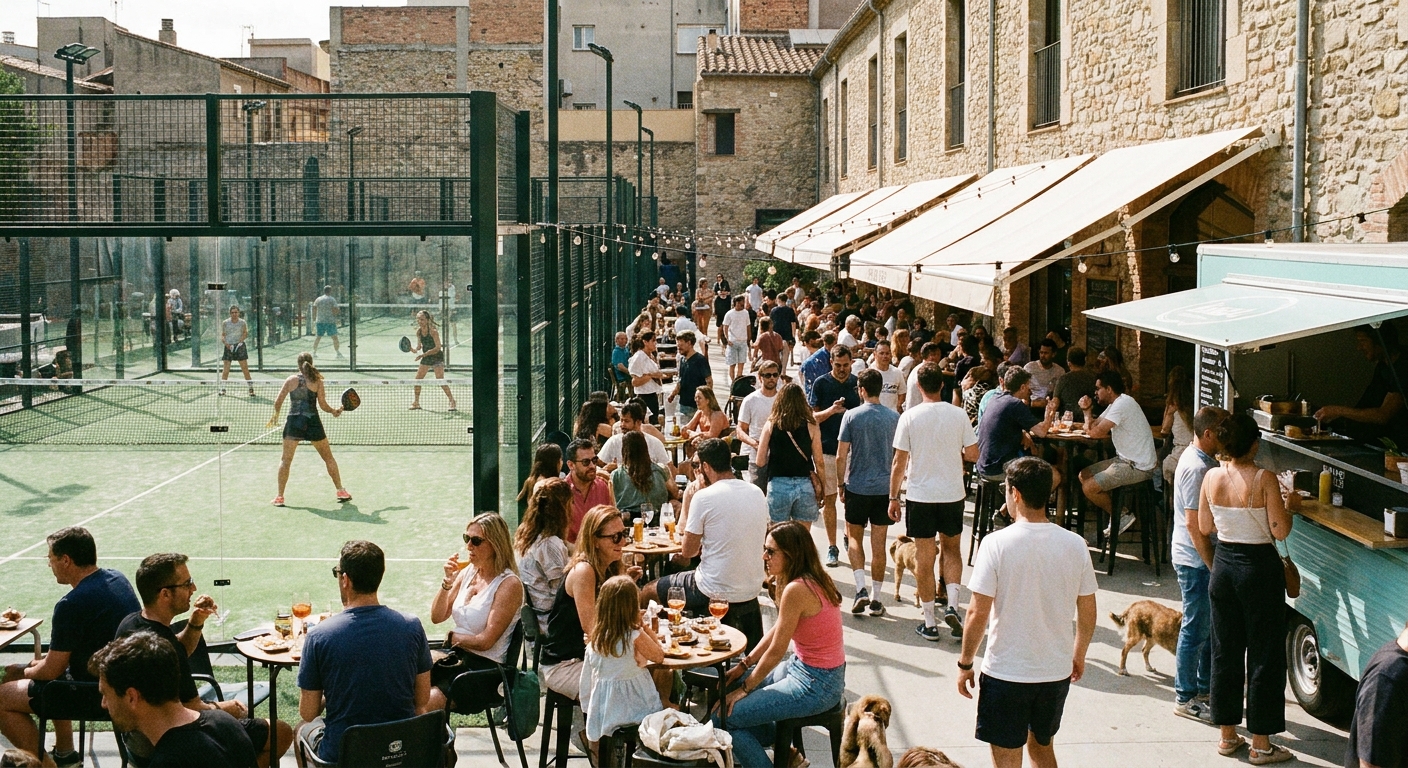
In checking are padel and pickleball the same regarding global reach, we see that padel dominates Europe and the Middle East while pickleball is the leader in North America. Investors should note that padel is currently the second most popular sport in Spain and Sweden, often associated with premium clubs. Identifying your local market’s cultural leanings will determine which sport provides the fastest membership growth for your facility.
Mapping the market growth
Think about it: the trend for padel is moving from luxury European resorts into urban centers globally. You will see higher demand for Panoramic Padel Courts in regions where spectator viewing and social status are major components of the sports club experience.
- Padel: High growth in UAE, UK, and Italy.
- Pickleball: Exponential growth in the USA and Canada.
- Padel attracts a higher corporate sponsorship profile.
Key Takeaway: Padel is a lifestyle-driven sport in Europe, while pickleball is a community-driven sport in North America.
| Region | Padel Status | Pickleball Status |
|---|---|---|
| Europe | Dominant | Emerging |
| North America | Growing | Dominant |
| Middle East | Rapidly Expanding | Niche |
Regional popularity should guide your investment choices to ensure you are entering a market with existing or surging demand.
Which offers better social value?
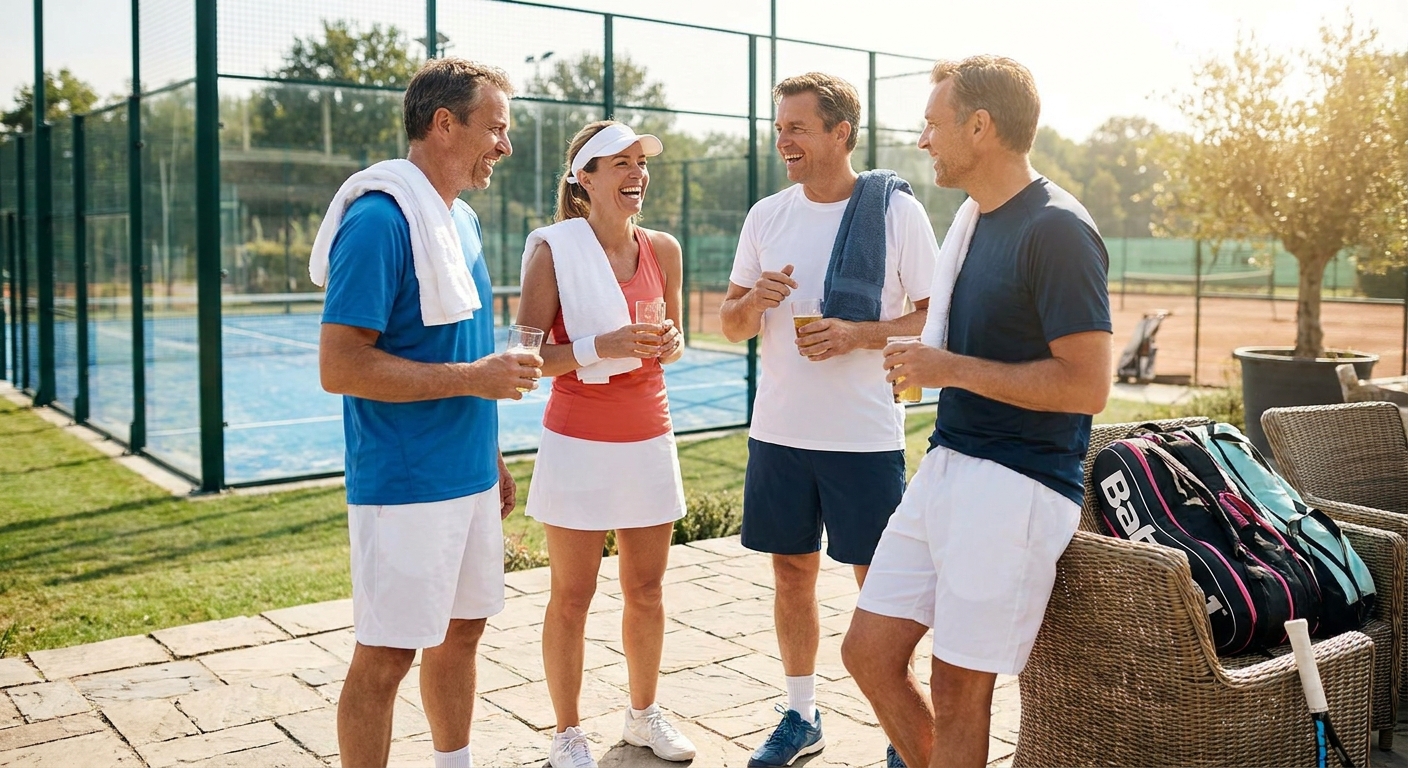
When evaluating are padel and pickleball the same for social engagement, both excel, but padel often drives more revenue through club-style amenities like cafes and bars. Padel’s doubles-only nature forces a 4-player social dynamic that naturally leads to post-match networking. You can leverage this “social glue” to build a loyal community that spends more time and money at your facility.
Building the club atmosphere
Make no mistake: the “clubhouse” vibe is much easier to cultivate when you have the premium aesthetic of padel. You should focus on creating comfortable seating areas near the courts, as the spectacle of padel play attracts observers and social interaction.
- Doubles play increases social throughput by 100%.
- Padel matches often last 90 minutes, favoring hospitality spend.
- The proximity of players in the cage fosters communication.
Key Takeaway: Padel is the superior choice if your business model relies on high-end memberships and ancillary food and beverage revenue.
| Social Factor | Padel | Pickleball |
|---|---|---|
| Typical Format | Doubles Only | Singles & Doubles |
| Demographic | Professional / Corporate | All Ages / Families |
| Venue Vibe | Country Club / Lounge | Public Park / Community |
The social structure of padel creates a “sticky” environment that improves member retention and increases secondary revenue streams.
How do you build a padel court?
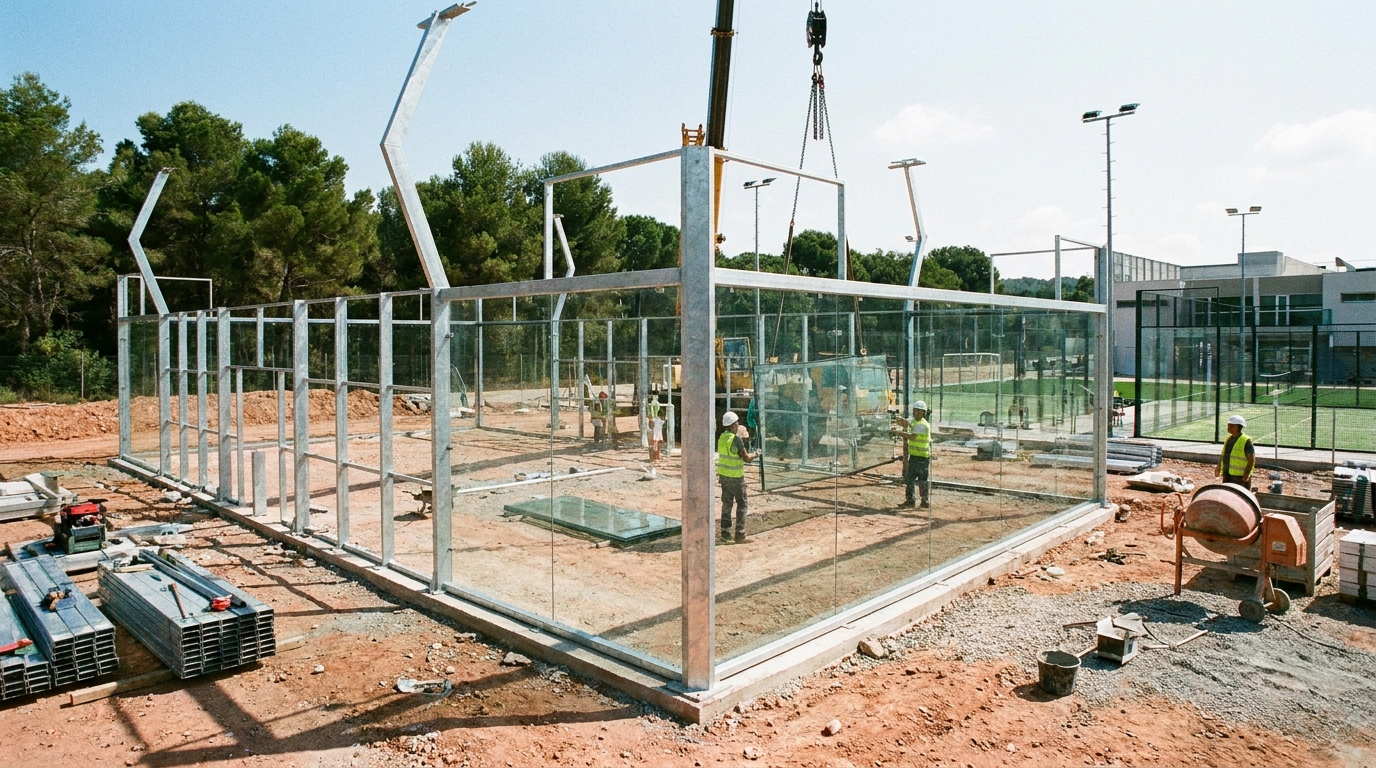
If you ask are padel and pickleball the same in construction complexity, you will find padel is much more demanding due to the heavy steel and glass required. Building a professional court requires a hot-dip galvanized Padel Structure to prevent rust and support the impact of players hitting the walls. You must also ensure the foundation is laser-leveled to support the precision installation of tempered glass panels.
Engineering for longevity
But here’s the kicker: the glass is the most critical safety component of your build. You should only use certified Padel Glass that meets EN 12150 standards to ensure player safety during high-impact collisions.
- Foundation must be 15cm-20cm reinforced concrete.
- Steel frames must be powder-coated for UV protection.
- Artificial turf requires specialized silica sand infill.
Key Takeaway: Construction is a specialized engineering task; cutting corners on steel or glass quality will lead to structural failure.
| Component | Professional Standard | Benefit |
|---|---|---|
| Frame | Galvanized Steel | 20+ Year Durability |
| Glass | 12mm Tempered | Impact Resistance |
| Lighting | 200W-300W LED | Uniform Night Play |
Investing in high-quality structural components reduces long-term maintenance costs and provides a safer environment for your customers.
What is the expected ROI?

Researching are padel and pickleball the same for profitability shows that padel typically commands higher hourly rental rates despite higher initial costs. While a pickleball court is cheaper to build, a padel court can generate $40–$100 per hour depending on the location and facility quality. You can often reach break-even faster with padel because it attracts a demographic with higher discretionary income.
Revenue streams and optimization
Think about it: by installing Padel LED Lighting, you can extend your operating hours well into the night, significantly boosting your daily revenue. You should also consider hosting corporate tournaments, which are highly lucrative in the padel market.
- Padel rental fees are 2x – 3x higher than pickleball.
- Maintenance costs for glass and turf are remarkably low.
- Advertising on the glass walls provides extra income.
Key Takeaway: Padel has a higher Capex but offers a more premium, high-margin revenue model for long-term investors.
| Financial Metric | Padel Court | Pickleball Court |
|---|---|---|
| Startup Cost | High (Infrastructure) | Low (Surfacing) |
| Hourly Rate | Premium ($40+) | Moderate ($15-$30) |
| Maintenance | Low / Semi-Annual | Very Low / Annual |
A data-driven approach to your facility’s financial modeling will likely show that padel’s premium positioning pays off in professional settings.
Which sport should you choose?
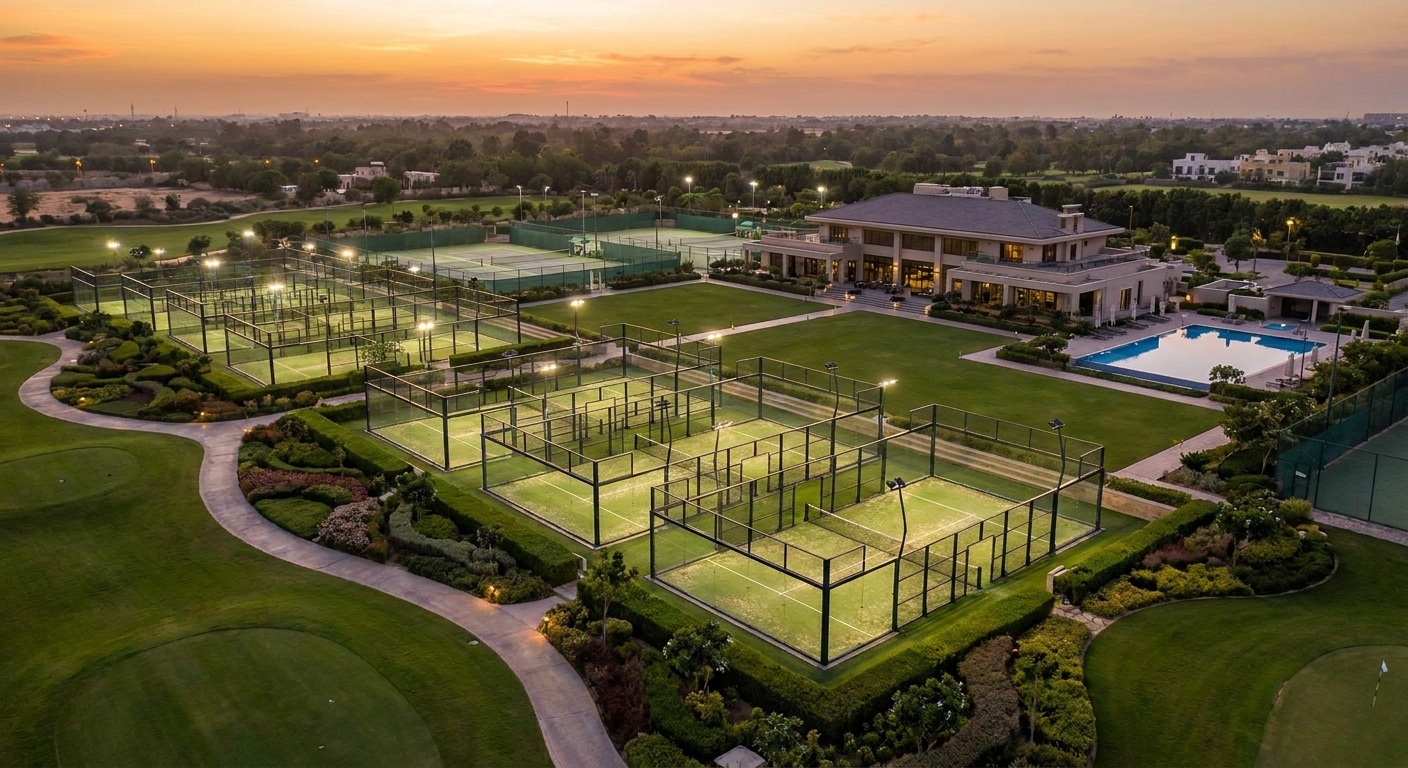
Deciding are padel and pickleball the same for your business goals depends on your available space, budget, and target audience. If you have the capital and want to build a high-end destination, padel is the undisputed winner. If you are converting existing tennis courts on a tight budget for a local community center, pickleball may be more accessible. You must align your choice with your overarching brand vision to ensure long-term sustainability.
Final strategic verdict
But here’s the kicker: many successful facilities are now moving to a hybrid model where they offer both sports. You can maximize your land use by placing pickleball courts in smaller, irregular spaces while making padel your primary “hero” attraction.
- Choose padel for high-end clubs and resorts.
- Choose pickleball for public parks and senior centers.
- Hybrid models capture 100% of the racket sport market.
Key Takeaway: Your decision should be based on your desired ROI and the level of luxury you wish to provide.
| Selection Guide | Choose Padel If… | Choose Pickleball If… |
|---|---|---|
| Goal | High Revenue / Club Feel | High Volume / Family Feel |
| Space | 200sqm + 6m Height | 82sqm / No Height Req |
| Budget | $25k – $40k per court | $5k – $15k per court |
Choosing the right sport is the first step toward building a thriving sports business that meets the demands of your local community.
To ensure your facility is built to international standards with the best materials, contact us today for a professional consultation. We specialize in factory-direct padel court manufacturing, delivering the durability and performance that elite club owners expect. Let us help you transform your vision into a high-revenue reality with our expert engineering and global support.
Frequently Asked Questions
Can I use a pickleball paddle to play padel?
No, you cannot use a pickleball paddle because it lacks the thickness and the hole pattern required to move through the air at padel speeds.
What’s the best surface for a professional padel court?
The best surface is high-density monofilament artificial grass, as it provides a consistent ball bounce and reduces joint strain for players.
Can I build a padel court on a standard tennis court base?
Yes, but you must first reinforce the perimeter with a concrete ring beam to support the heavy weight of the steel and glass structure.
How many people can play on a padel court at once?
Typically, four players use the court, as the sport is designed for 2v2 play, which maximizes social interaction and facility throughput.
Can I customize the color of my padel court structure?
Yes, professional manufacturers offer full RAL color customization so you can match the court frame to your club’s specific branding.