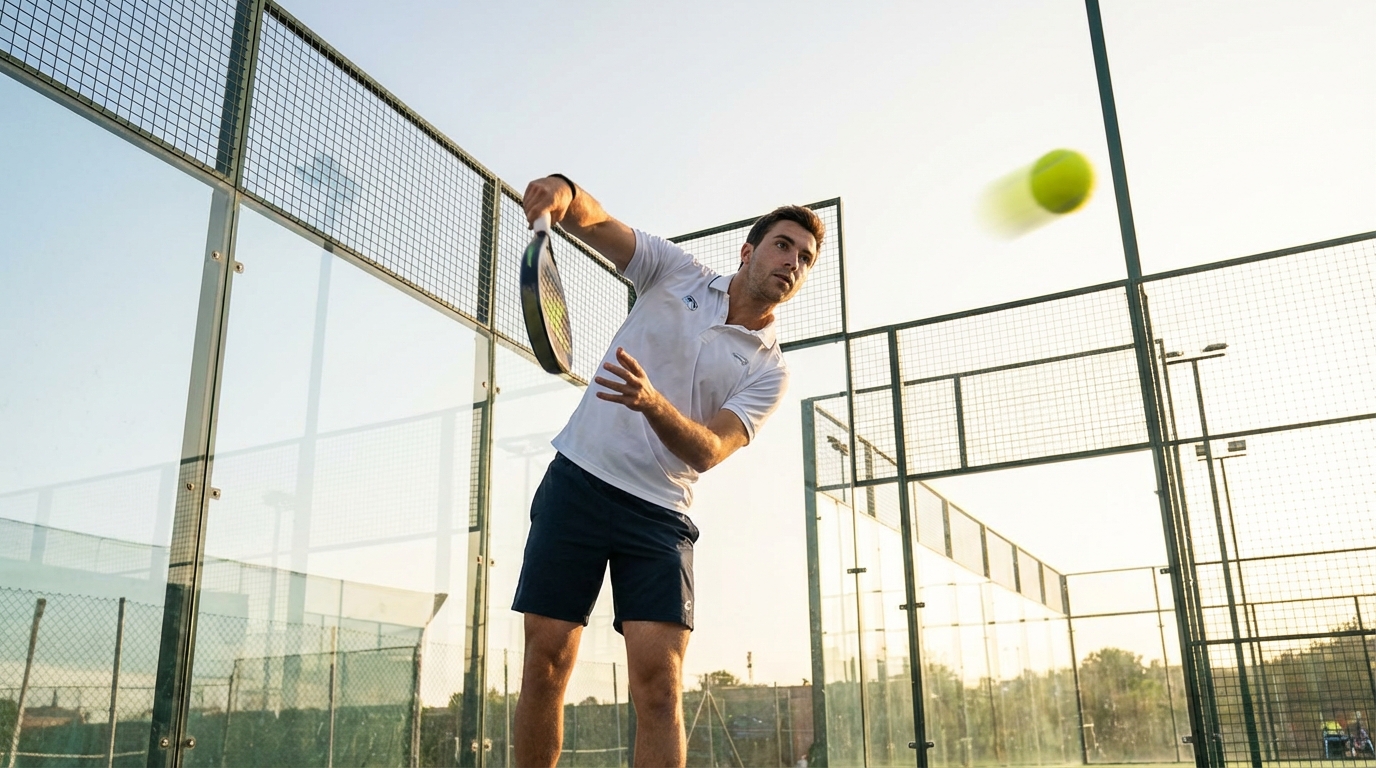
The main difference between padel and pickleball lies in the court enclosure and ball physics, as padel uses glass walls for active rebounds while pickleball is played on an open court with a perforated plastic ball. You might see these sports growing side-by-side at your local club, but the terminology and technical requirements often remain a blur. Investing thousands into a sports facility only to realize you built for the wrong demographic or used incorrect materials is a nightmare for any developer or club owner. This guide provides a definitive analysis of the difference between padel and pickleball to help you choose, play, and build with professional-grade accuracy.
What is the main difference between padel and pickleball?
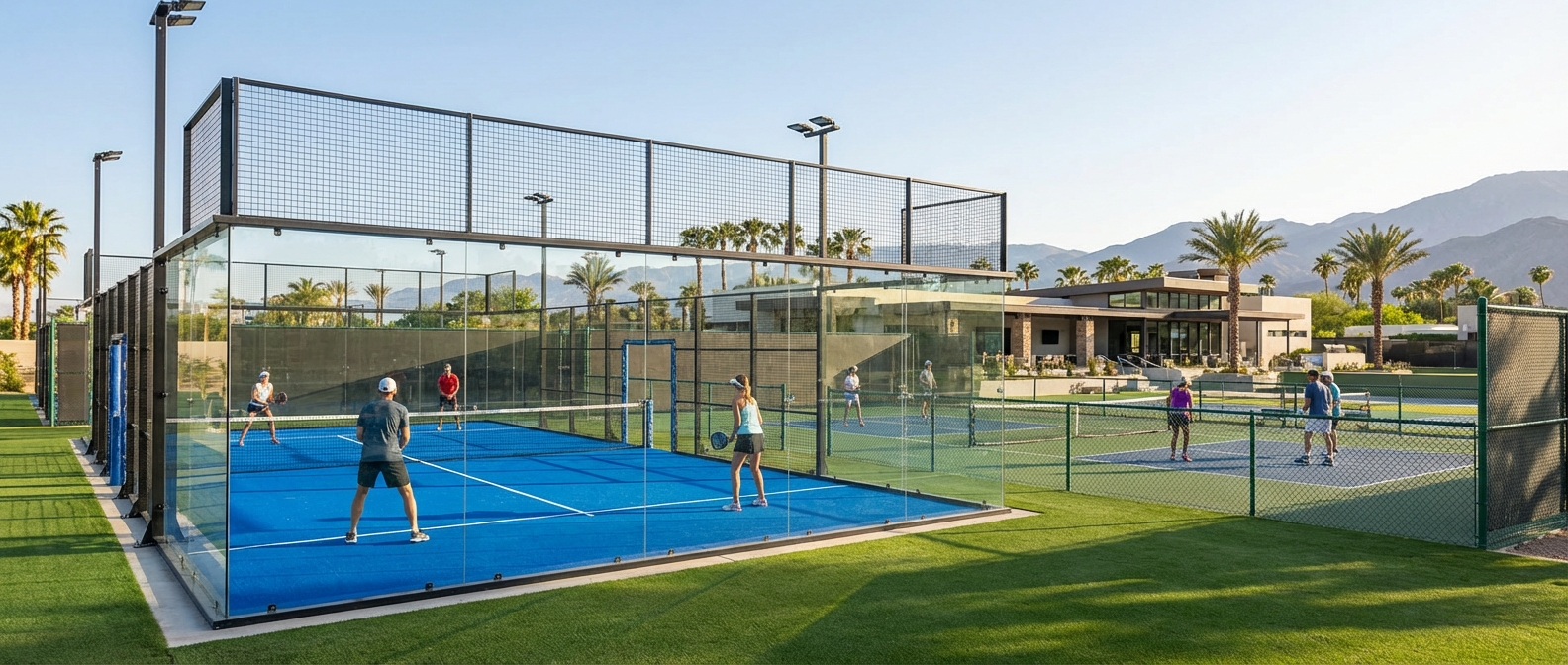
The core difference between padel and pickleball is the environmental boundary, where padel incorporates 10mm to 12mm tempered glass walls that are part of the field of play. Understanding the difference between padel and pickleball is the first step toward mastering the strategy required for these fast-paced racket sports.
What are the origins of each sport?
Padel was founded in Mexico in 1969 as a tennis variation for private homes, whereas pickleball began in 1965 in Washington as a backyard family activity.
Look:
- Padel: Mexican roots, massive European growth.
- Pickleball: American heritage, North American surge.
How does wall play change the game?
Padel players use the surrounding walls to keep points alive after a bounce, which creates a tactical depth that pickleball’s open-court lines cannot replicate.
The truth is:
- Padel: A 3D game where angles matter.
- Pickleball: A 2D game focused on court positioning.
Key Takeaway: Padel is essentially tennis with walls, while pickleball is a unique hybrid of badminton and table tennis.
| Feature | Padel | Pickleball |
|---|---|---|
| Boundaries | Glass and Mesh Walls | Painted Lines and Fencing |
| Primary Market | Europe and Latin America | United States and Canada |
Analyzing the environment reveals that padel requires significantly more spatial awareness regarding rebounds.
Why does the difference between padel and pickleball matter?

Knowing the difference between padel and pickleball is essential for club owners who want to maximize player retention across different age groups. While both sports are social, the physical demands of the difference between padel and pickleball vary based on lateral movement and reaction times.
Who is the target audience for these sports?
Pickleball attracts a wide range of ages due to its low-impact nature, while padel often appeals to former tennis players seeking high-intensity rallies.
Think about it:
- Pickleball: Popular among seniors and families.
- Padel: Dominant among active adults and competitors.
Is padel or pickleball more physically demanding?
Padel generally requires more cardiovascular endurance because the walls extend points, whereas pickleball focuses on quick reflexes at the “kitchen” line.
It gets even better:
- Padel: High lateral movement and sprinting.
- Pickleball: Hand-eye coordination and short bursts.
Key Takeaway: Choosing the right sport depends on whether your community prioritizes low-impact social play or high-intensity competition.
| Factor | Padel | Pickleball |
|---|---|---|
| Physical Intensity | Moderate to High | Low to Moderate |
| Social Format | Fixed 4-player games | Rotational “Open Play” |
This comparison suggests that a diverse facility should ideally offer both to capture all demographics.
How do court sizes show the difference between padel and pickleball?
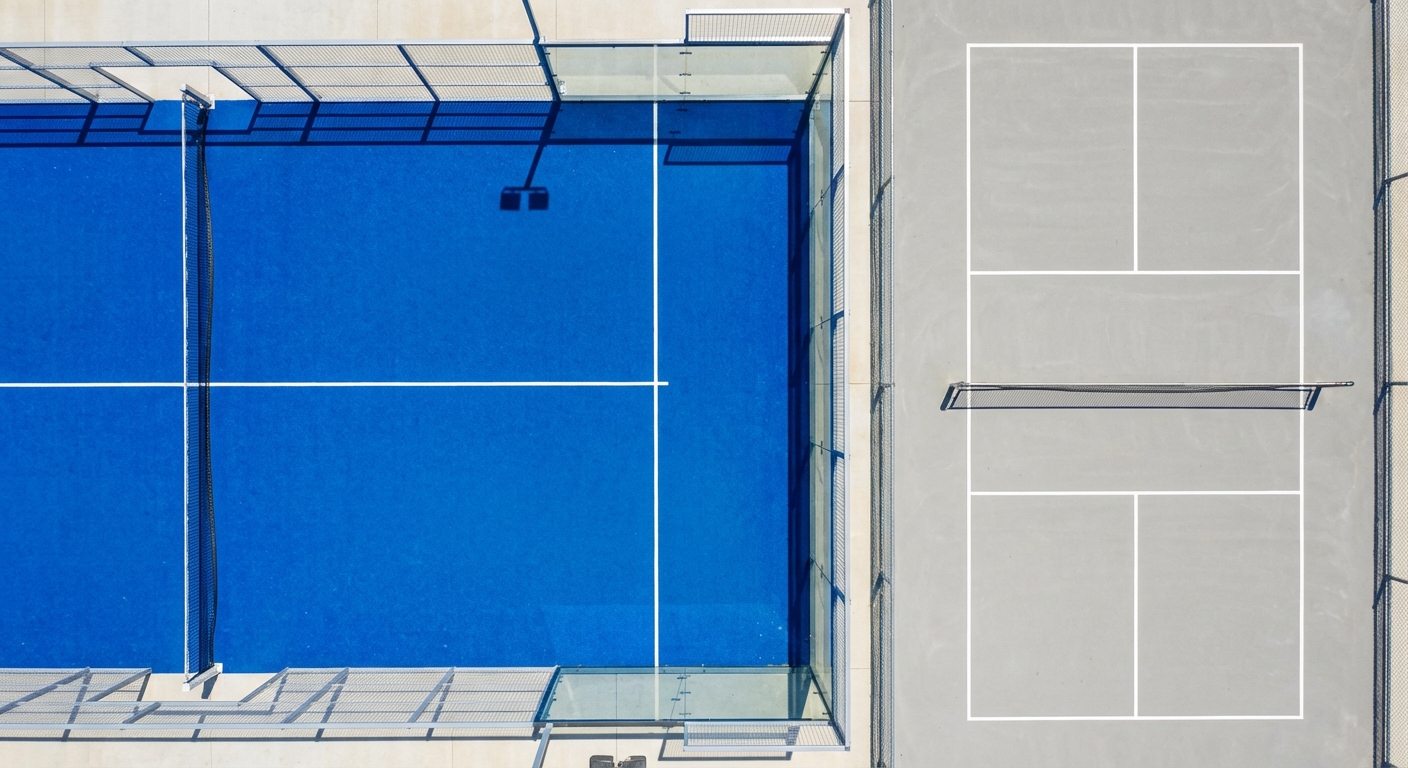
Court dimensions represent a visible difference between padel and pickleball, as a standard padel court is 20 meters long while a pickleball court is only 13.4 meters. Highlighting the difference between padel and pickleball in terms of footprint helps developers calculate exactly how many units can fit into a specific real estate project.
What is the footprint of a padel court?
A Standard Padel Court requires a 200 square meter area, including the space for the glass and steel structural enclosure.
Believe it or not:
- Length: 20m (65.6 ft).
- Width: 10m (32.8 ft).
How small is a pickleball court?
Pickleball courts are roughly 81.7 square meters, meaning you can fit nearly two and a half pickleball courts in the space of one padel court.
Here is the kicker:
- Length: 13.4m (44 ft).
- Width: 6.1m (20 ft).
Key Takeaway: Pickleball offers superior space efficiency, but padel provides a more expansive and premium playing experience.
| Metric | Padel Court | Pickleball Court |
|---|---|---|
| Total Area | 200 sqm | 81.7 sqm |
| Enclosure Height | 3m to 4m Glass/Mesh | No specific height needed |
The vast difference in area directly impacts the potential revenue per square meter for club managers.
What gear defines the difference between padel and pickleball?
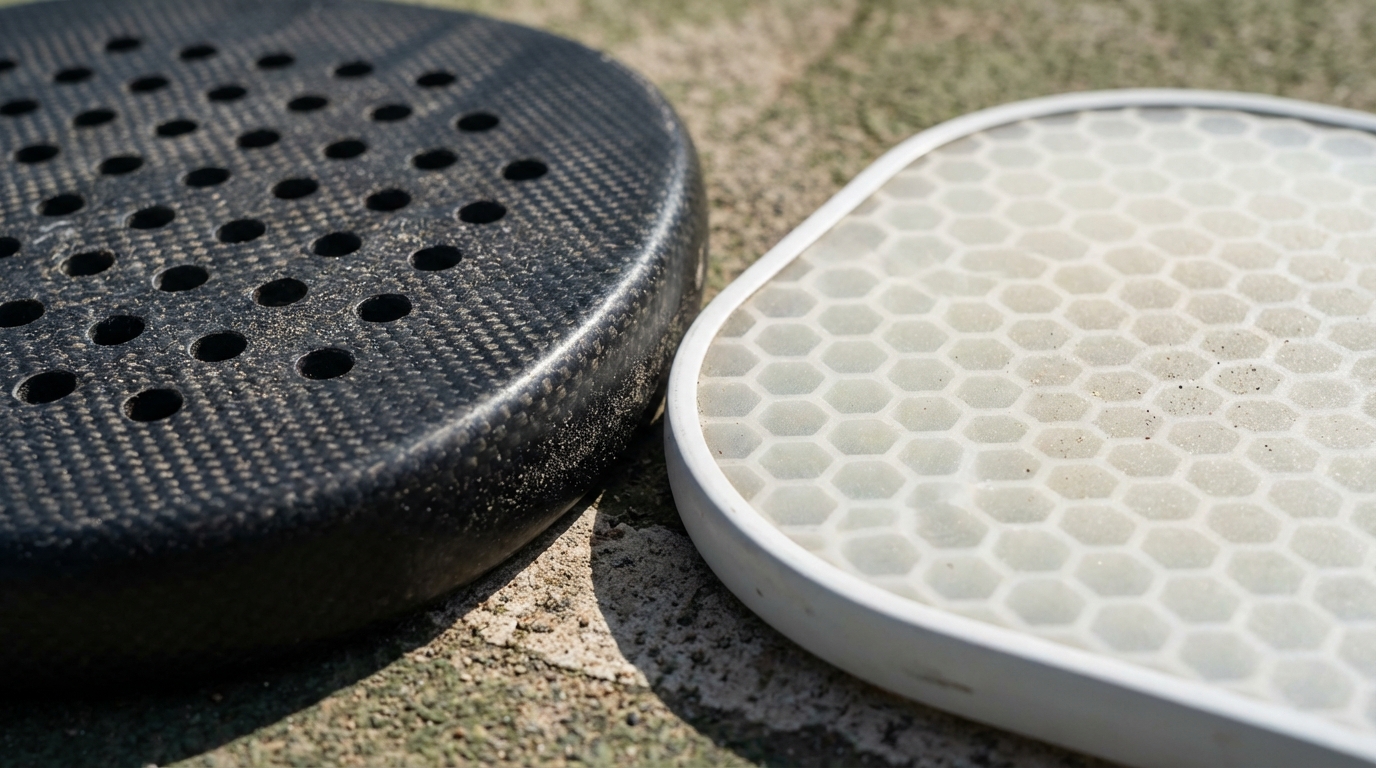
The technical difference between padel and pickleball is most apparent in the rackets, where padel uses a thick carbon-fiber frame with an EVA foam core. A common mistake is assuming the equipment for the difference between padel and pickleball is interchangeable, but the physics of each ball requires specific gear.
What makes a padel racket unique?
Padel rackets are perforated with holes to reduce air resistance and feature a foam core that absorbs the high-impact force of a pressurized ball.
It’s a common mistake:
- Core: Soft EVA or polyethylene foam.
- Surface: Rigid carbon or glass fiber.
Why does a pickleball paddle look like a honeycomb?
Pickleball paddles utilize a lightweight polymer honeycomb core covered by a thin composite face to provide “pop” and control for a plastic ball.
Look:
- Weight: Usually between 7 and 9 ounces.
- Grip: Shorter than a padel racket handle.
Key Takeaway: Padel gear is built for impact and rebound, while pickleball gear is optimized for lightness and aerodynamic control.
| Equipment | Padel | Pickleball |
|---|---|---|
| Implement Type | Racket (Foam Core) | Paddle (Honeycomb Core) |
| Ball Type | Pressurized Felt Rubber | Hollow Perforated Plastic |
Understanding equipment specs is vital for players to avoid injury and maximize performance on the court.
How do rules mark the difference between padel and pickleball?
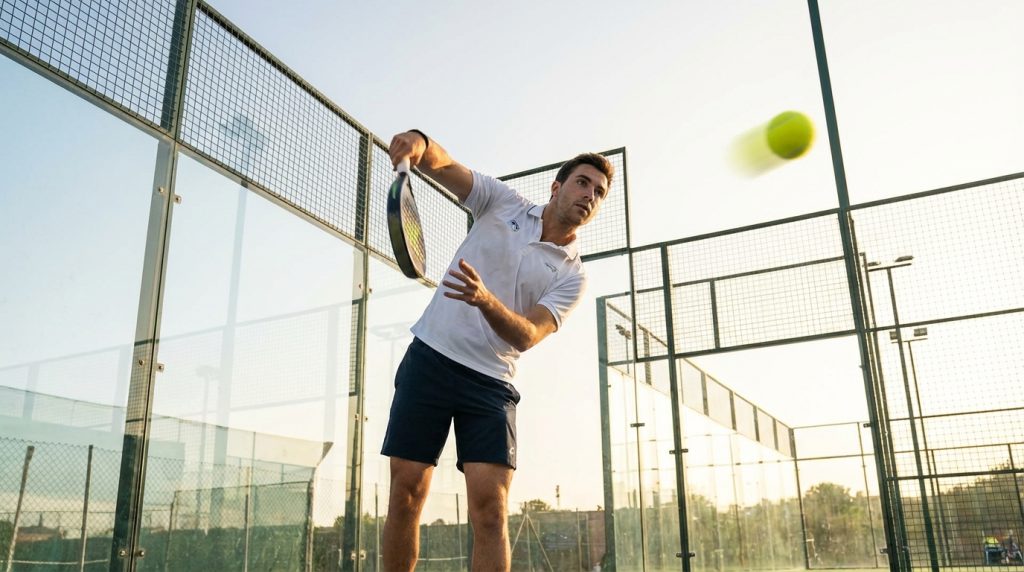
The scoring systems and zone restrictions create a functional difference between padel and pickleball that changes how players approach every point. Discussing the difference between padel and pickleball rules reveals that while both use underhand serves, the serving box and non-volley zones are entirely distinct.
How does the serving rule differ?
In padel, you must bounce the ball once before hitting an underhand serve cross-court, while in pickleball, the serve is hit directly from the air or a “drop.”
Rules are rules:
- Padel: Bounce first, hit below waist.
- Pickleball: No bounce required, hit below navel.
What is the “Kitchen” in pickleball?
Pickleball features a seven-foot non-volley zone near the net called the kitchen, which prevents players from smashing the ball from close range.
Think about it:
- No volleys allowed inside the zone.
- Forces a tactical “dinking” game.
Key Takeaway: Padel follows a tennis-style scoring flow, whereas pickleball uses a side-out system where only the server scores points.
| Rule | Padel | Pickleball |
|---|---|---|
| Scoring System | 15, 30, 40 (Sets) | 1, 2, 3… (Games to 11) |
| Non-Volley Zone | None | The Kitchen (7 ft) |
The presence of the kitchen in pickleball shifts the game toward patience, while padel remains more explosive.
Does speed show the difference between padel and pickleball?
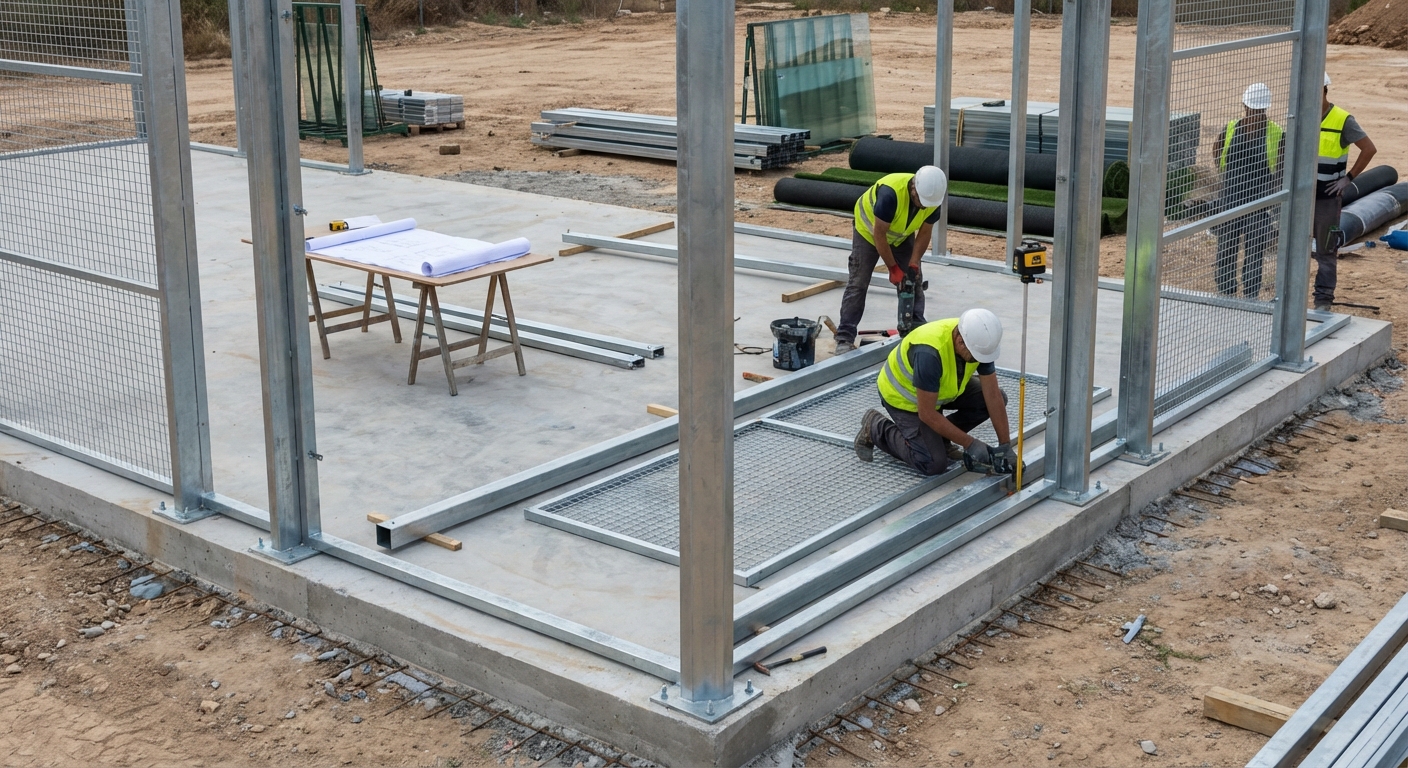
Ball exit velocity is a major difference between padel and pickleball, as a padel ball travels much faster and retains energy longer than a plastic pickleball. Identifying the difference between padel and pickleball speed helps players understand why court positioning and “fast hands” are prized skills in both sports.
How fast is a padel ball?
A padel ball is a pressurized rubber sphere that can reach high speeds, though its flight is slowed slightly by the felt covering and smaller court size.
Speed is the name of the game:
- High energy return off the Padel Structure walls.
- Requires split-second timing for rebounds.
Why is pickleball considered a “slower” game?
The holes in a pickleball create significant drag, causing the ball to lose velocity quickly and encouraging long, strategic rallies near the net.
The truth is:
- Plastic ball is lightweight and hollow.
- Air resistance limits the power of smashes.
Key Takeaway: Padel rewards tactical geometry using walls, while pickleball rewards patience and precision in the “short game.”
| Dynamic | Padel | Pickleball |
|---|---|---|
| Ball Speed | High (Pressurized) | Low to Moderate (Hollow) |
| Rally Type | Long (Wall resets) | Medium (Dink battles) |
Analyzing gameplay speed proves that padel is more physically reactive, whereas pickleball is mentally strategic.
How to build for the difference between padel and pickleball?
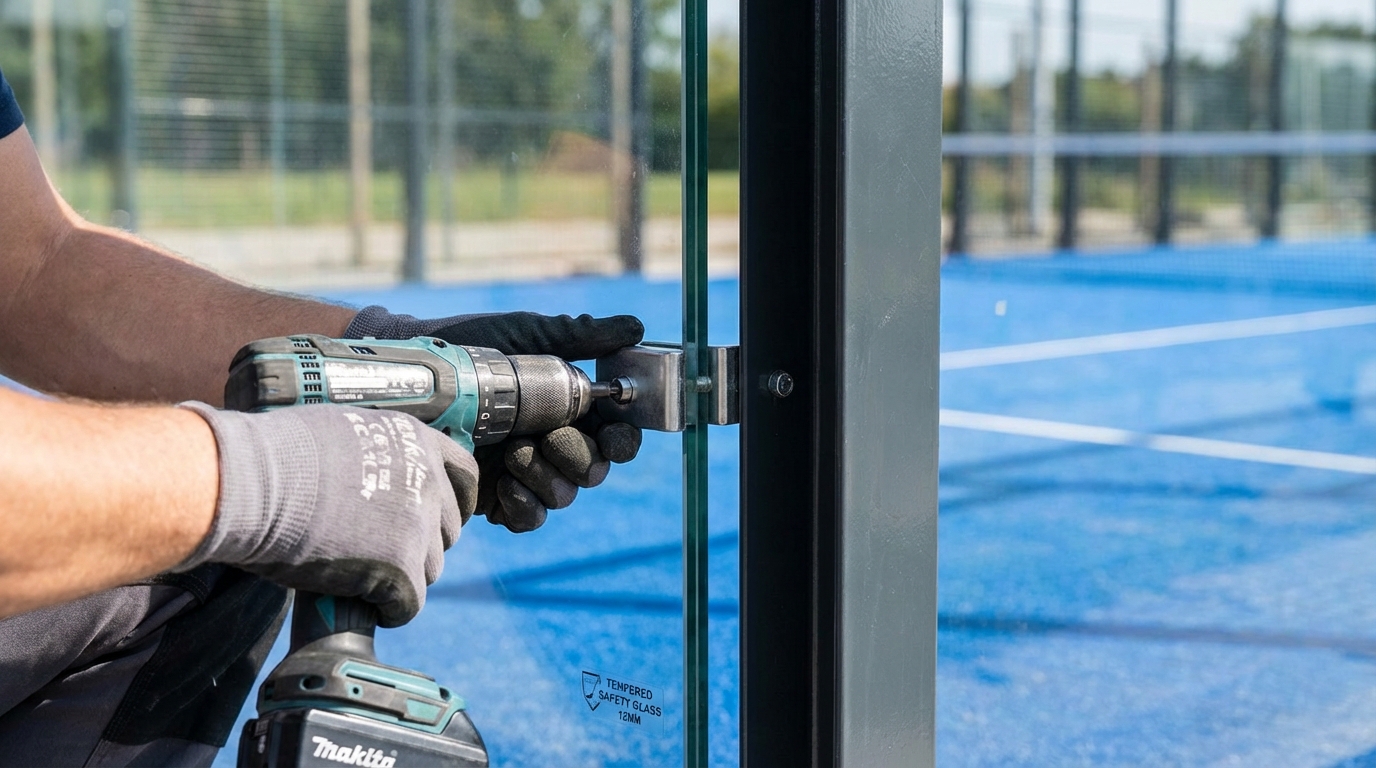
Construction requirements highlight a massive difference between padel and pickleball, specifically regarding the civil engineering of the base slab and structural load. The difference between padel and pickleball building starts with the foundation, as padel courts require a reinforced concrete slab to support heavy Padel Glass panels.
What slab is needed for padel?
A padel court requires a 15-20cm reinforced concrete slab (HA-25) that is perfectly level to ensure uniform ball bounce off the floor and walls.
Watch out for this:
- Zero slope is mandatory for padel.
- Must support 10mm or 12mm tempered glass.
How do you surface a pickleball court?
Pickleball construction focuses on acrylic hard-court surfacing applied over asphalt or concrete, often with a slight slope for outdoor drainage.
Believe it or not:
- Surface: Textured acrylic for grip.
- Base: Asphalt is common for cost efficiency.
Key Takeaway: Padel is a complex engineering project involving glass and steel, while pickleball is primarily a surfacing and fencing task.
| Component | Padel | Pickleball |
|---|---|---|
| Enclosure | Tempered Glass and Steel | Chain-link Fence (Optional) |
| Base Tolerance | Extremely Level (3mm/3m) | Slight Drainage Slope Allowed |
Building a padel court is a premium project that demands specialized contractors for glass and turf installation.
Is cost a major difference between padel and pickleball?
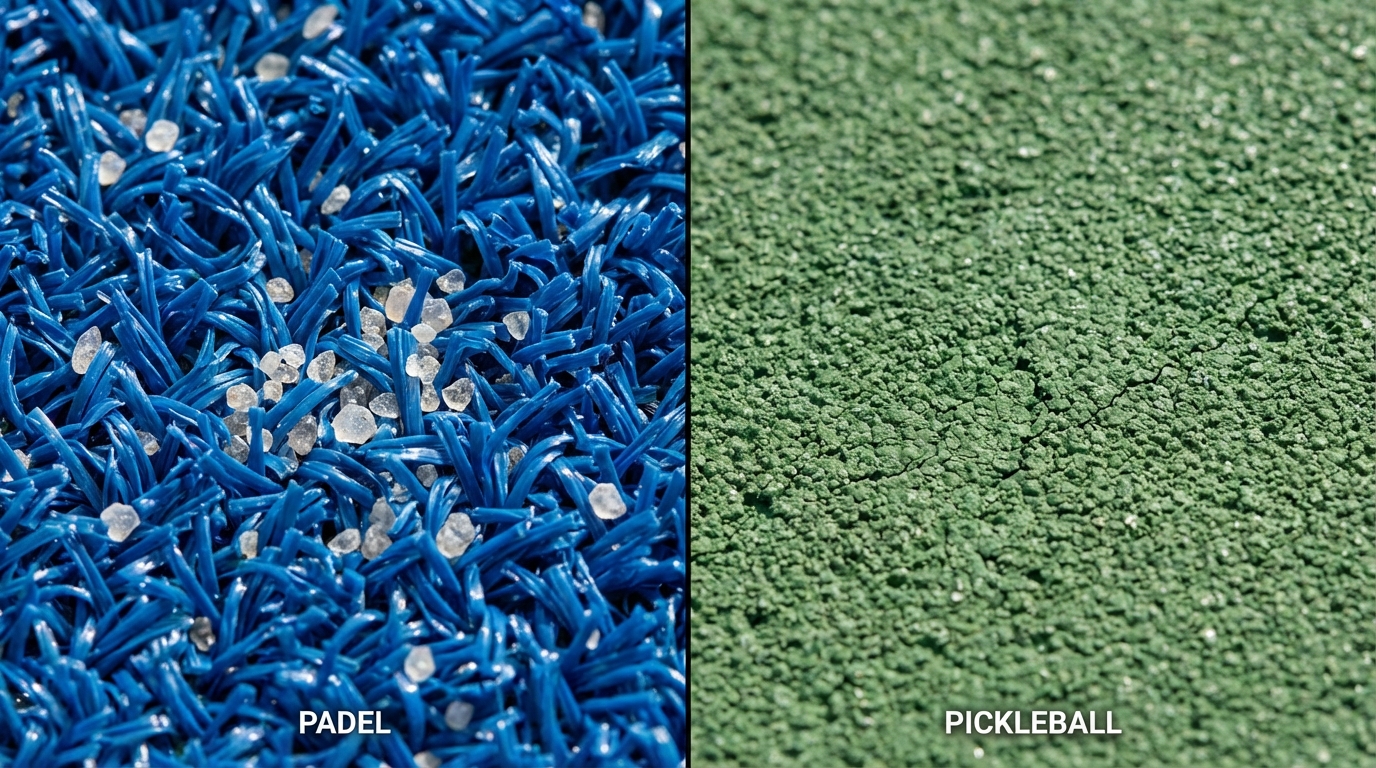
Initial capital expenditure is a defining difference between padel and pickleball, with padel installations costing significantly more due to specialized materials. When comparing the difference between padel and pickleball, investors must account for the high-density Padel Grass and the precision steel framework required for padel.
What drives the high cost of padel?
The cost of a padel court, ranging from $25,000 to $45,000, is driven by the transportation and installation of 10-12mm tempered safety glass.
Let’s talk money:
- Premium steel pillars and mesh.
- Specialized monofilament artificial turf.
Why is pickleball more affordable to build?
A professional pickleball court can be installed for $10,000 to $20,000 because it lacks the expensive glass walls and heavy structural reinforcement.
But wait, there’s more:
- Lower labor costs for fencing.
- Standard acrylic paint surfacing.
Key Takeaway: Padel requires a higher upfront investment but commands higher rental fees, while pickleball is accessible for low-budget community projects.
| Cost Element | Padel | Pickleball |
|---|---|---|
| Construction Cost | High ($30k+) | Low to Moderate ($15k+) |
| Maintenance | Low (Sand and Glass) | Moderate (Paint resurfacing) |
Financial analysis shows that padel targets a premium market segment, while pickleball targets volume and inclusivity.
Does demand shift the difference between padel and pickleball?

Urban space efficiency and social club culture create a final difference between padel and pickleball in terms of ROI and marketability. The difference between padel and pickleball demand is often regional, with a Panoramic Padel Court acting as a visual centerpiece for high-end sports clubs.
How does space efficiency affect clubs?
While pickleball is smaller, padel’s glass walls allow spectators to get closer to the action, making it a more “watchable” and marketable sport.
Space is a luxury:
- Pickleball: More courts per acre.
- Padel: More “spectator appeal” and lounge potential.
Which sport offers better monetization?
Padel clubs often generate high revenue through premium memberships and bar/restaurant sales, whereas pickleball thrives on high-volume open play.
Now, for the payoff:
- Padel: High-end club “vibe.”
- Pickleball: Community-driven public hubs.
Key Takeaway: Padel is often the better choice for luxury residential or private club developments due to its visual impact and status.
| Factor | Padel | Pickleball |
|---|---|---|
| Noise Profile | Deep “thud” (Lower frequency) | Sharp “pop” (Higher frequency) |
| ROI Strategy | Premium rental and coaching | Volume of players and events |
Choosing between the two depends on whether your business model favors premium exclusivity or community volume.
Which wins the difference between padel and pickleball?
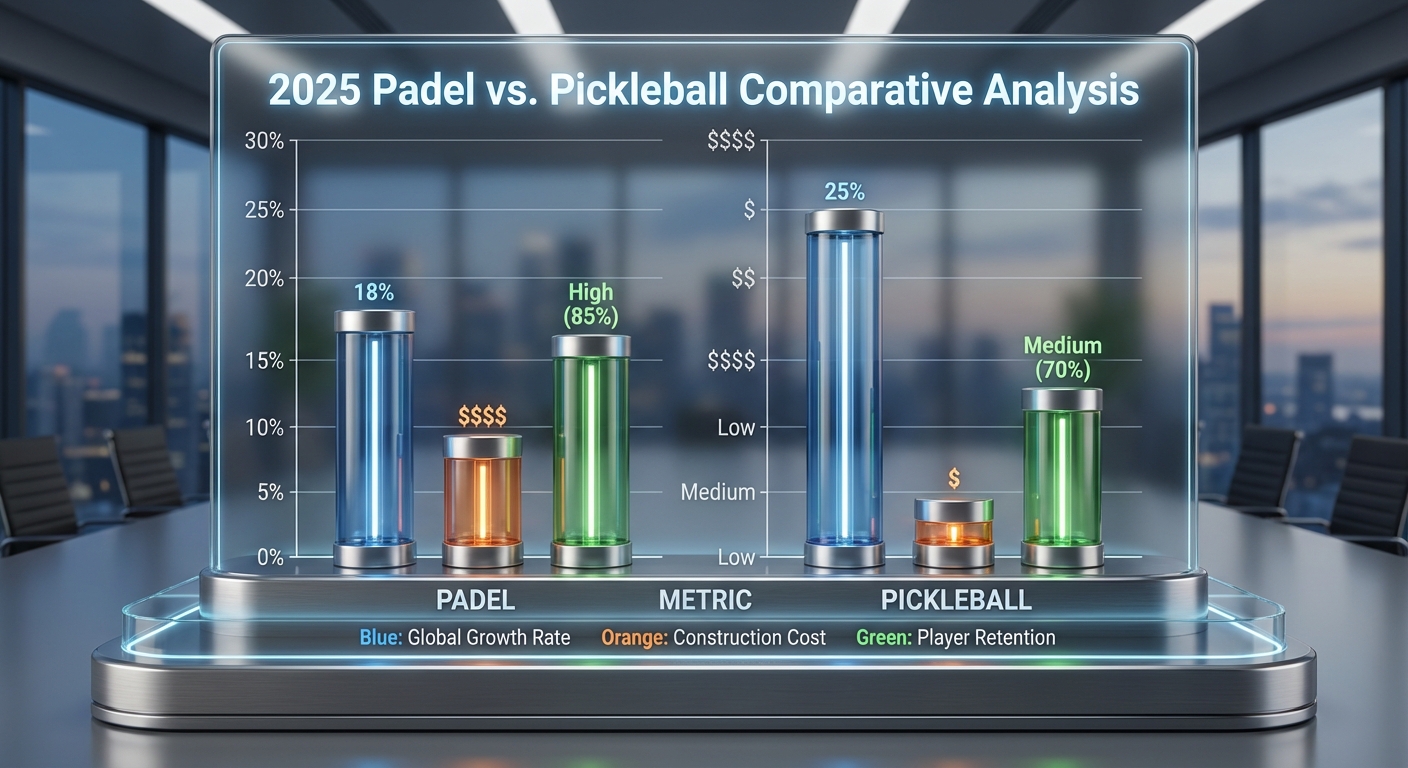
Your final decision on the difference between padel and pickleball should be guided by your specific budget, available space, and the athletic goals of your community. The difference between padel and pickleball in 2025 shows a trend toward “multi-racket” hubs where both sports coexist to provide a complete social experience.
Is one sport growing faster?
Pickleball is currently dominating North American growth, but padel is seeing a massive surge in global investment and is quickly becoming a status sport.
The choice is yours:
- Pickleball: Unbeatable for ease of entry.
- Padel: The future of premium social sports.
Should you build both together?
Many modern facilities choose to install both sports to capture the widest possible demographic, from retired seniors to high-energy young professionals.
Looking ahead:
- Diversity prevents facility underutilization.
- Shared amenities (showers, bar) lower overhead.
Key Takeaway: Padel and pickleball are complementary assets; one provides a premium competitive edge, while the other ensures community inclusivity.
| User Type | Best Choice | Primary Reason |
|---|---|---|
| Luxury Club | Padel | Premium appeal and visual impact |
| Community Center | Pickleball | Low cost and high accessibility |
A strategic blend of both sports is the most resilient business model for the modern racket sports industry.
*
Conclusion
Padel and pickleball are transforming the landscape of social fitness, each offering a unique pathway to health and community. While padel brings the tactical excitement of walls and high-performance engineering, pickleball provides an accessible, fun-first environment that anyone can enjoy from day one. Choosing the right path ensures your investment thrives and your players stay engaged. At Superb Padel, we are dedicated to bringing world-class court construction and expertise to every project, ensuring you build for the future of racket sports. If you are ready to elevate your facility or community with a professional installation, contact us today to start your journey.
FAQ
- Can I play pickleball on a padel court? No. The artificial turf and sand base of a padel court do not provide the hard, consistent bounce required for a plastic pickleball.
- What’s the best racket for a beginner? It depends on the sport. For padel, a round-shaped racket with a soft foam core is best, while a mid-weight honeycomb paddle is ideal for pickleball.
- Can I build a padel court on a pickleball slab? No. A padel court slab requires specific load-bearing reinforcement and a higher level of flatness to support the glass walls safely.
- Is padel louder than pickleball? No. Padel produces a lower-frequency “thud,” while pickleball is known for a higher-frequency “pop” that can sometimes cause noise complaints in residential areas.
- How many people play on each court? Both. Both sports are primarily played in a 2v2 (doubles) format, making them highly social and efficient for club use.