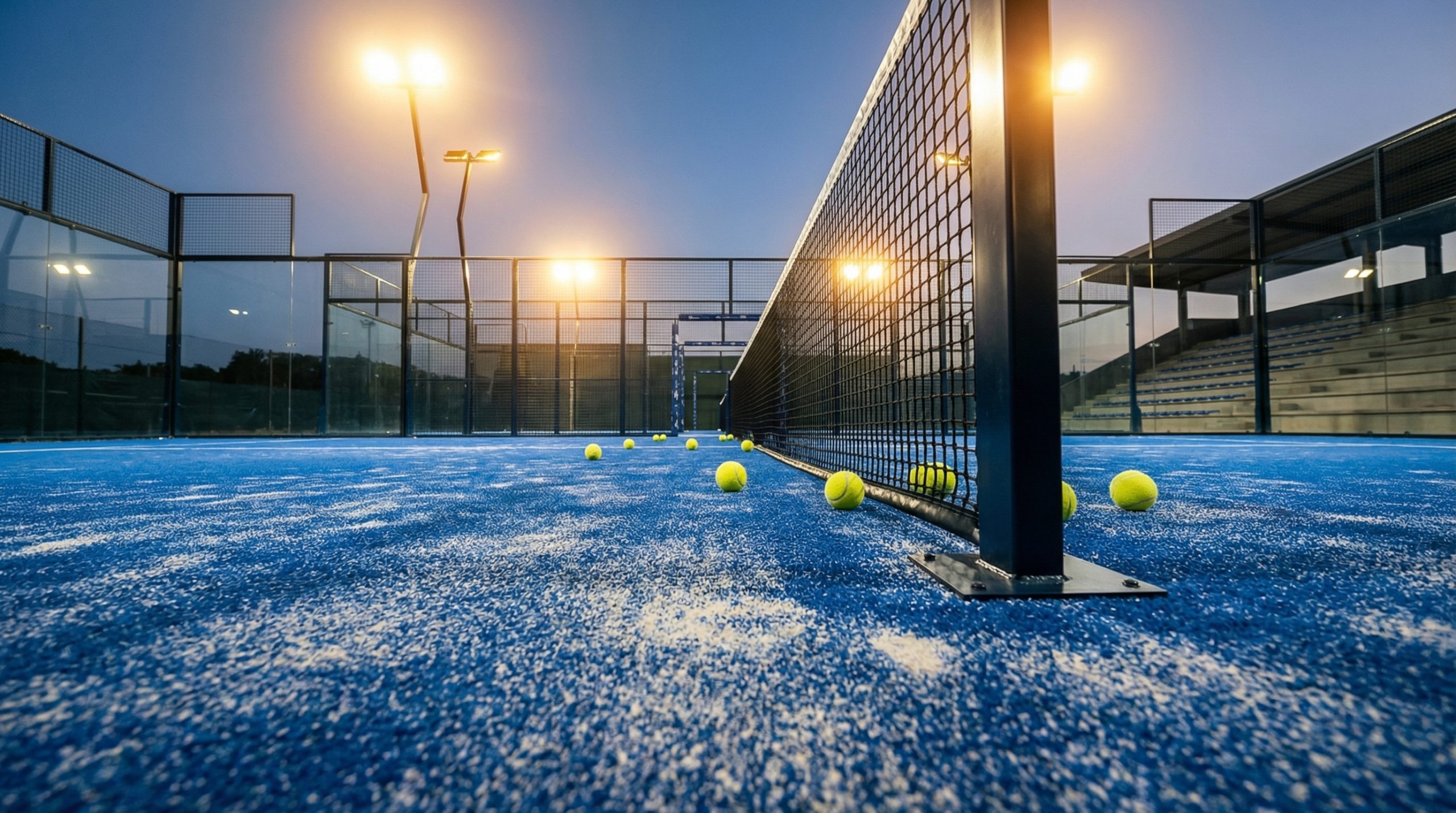
The distinction between a padel ball vs tennis ball lies in the internal pressure, diameter, and felt thickness, all of which dictate the specific bounce required for “cage” gameplay. Many athletic facility owners and club managers mistakenly assume these spheres are interchangeable, leading to a suboptimal experience for high-paying members.
Think about it. Using high-pressure tennis balls on a smaller padel court makes the game unmanageably fast and increases the risk of damage to expensive glass walls. This technical mismatch agitates players and can lead to long-term equipment fatigue. By understanding the core scientific differences, you can optimize your facility with a padel ball vs tennis ball strategy that ensures professional-grade performance and player safety.
Why is there a debate over padel ball vs tennis ball?
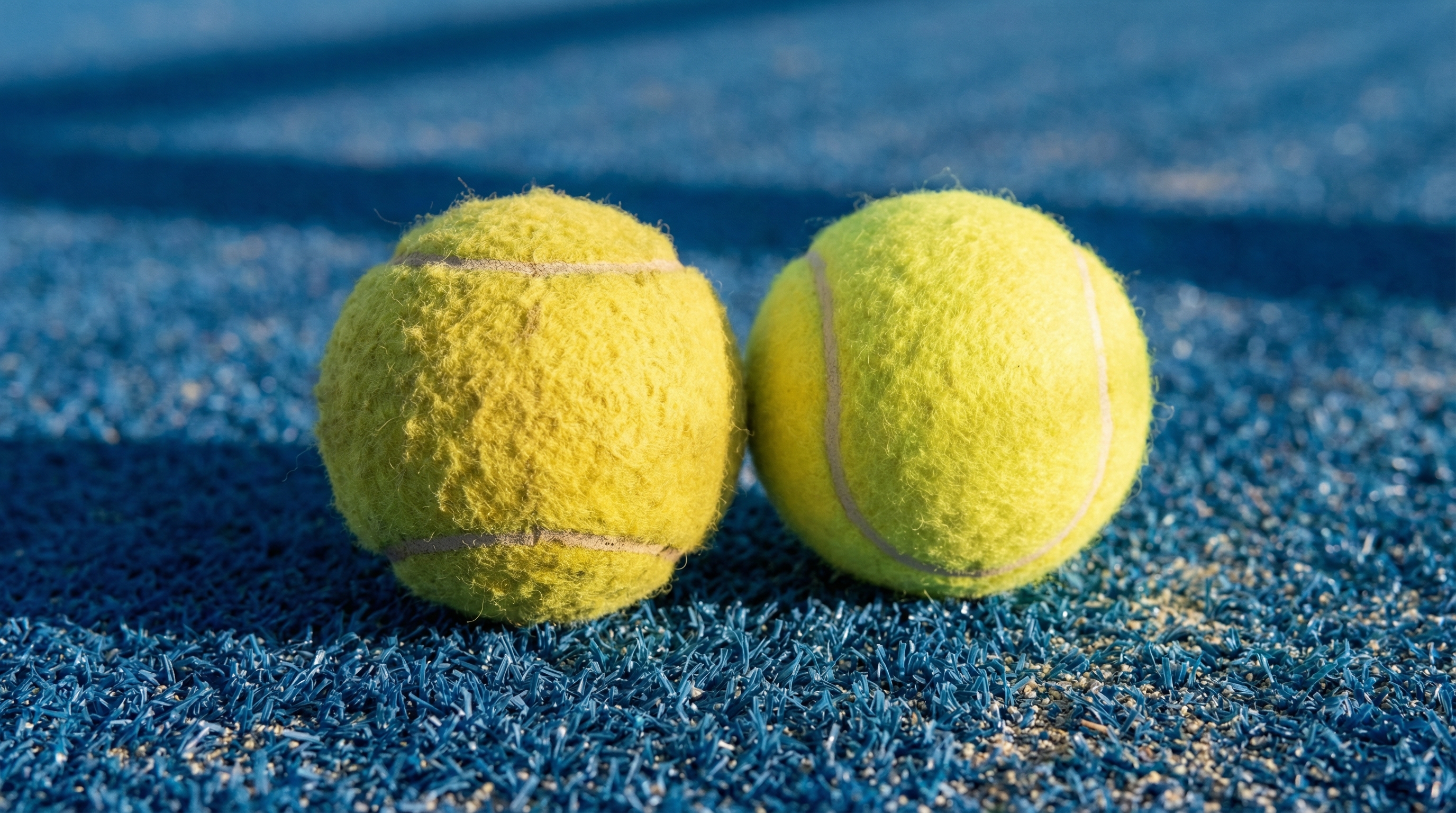
The debate regarding padel ball vs tennis ball exists because while they appear identical to the untrained eye, their pneumatic properties are engineered for entirely different court dimensions. You must recognize that a tennis ball is designed for an open-air baseline game, whereas padel equipment caters to a reactive, enclosed environment.
Are the two balls interchangeable?
The short answer is no, because the aerodynamic drag and rebound characteristics are fundamentally different. If you provide tennis balls for a padel match, the increased speed removes the tactical “chess-like” nature of the sport.
Look:
- Padel balls have lower internal pressure to keep the ball “in the cage.”
- Tennis balls are larger and heavier to overcome longer distances.
- Interchanging them ruins the intended rhythm of professional rallies.
The best part? Once you educate your members on the technical nuances, their appreciation for your facility’s professional standards will grow significantly.
Key Takeaway: Using the correct ball preserves the integrity of the sport and protects your court’s glass panels from high-velocity impacts.
| Feature | Padel Ball | Tennis Ball |
|---|---|---|
| Primary Use | Enclosed Court | Open Field |
| Rebound | Controlled | High Velocity |
| Strategy | Reflex/Tactics | Power/Distance |
This comparison shows how specific engineering choices support the unique tactical demands of each racket sport.
What are size and weight specs for padel ball vs tennis ball?
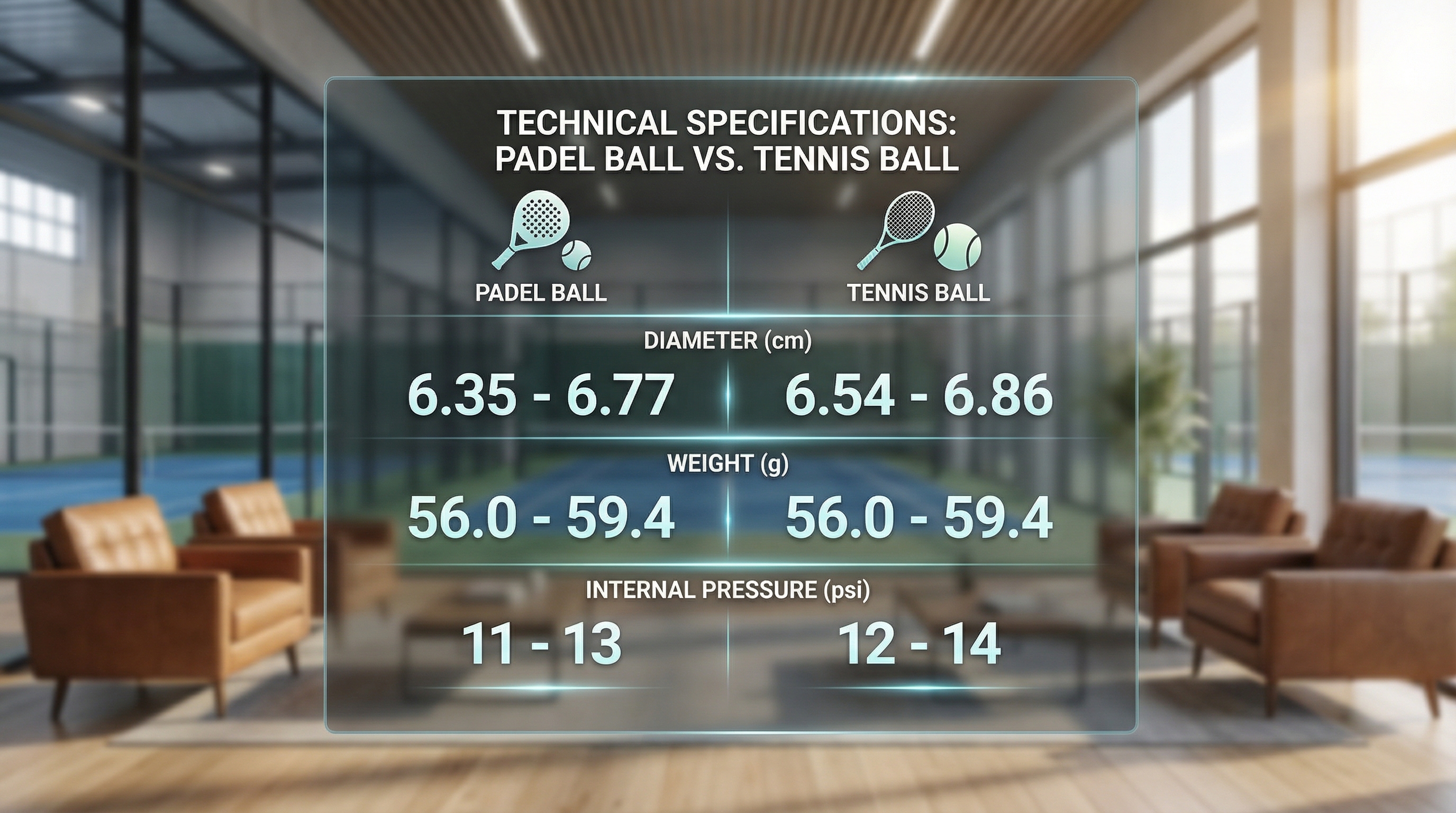
The specific dimensions of a padel ball vs tennis ball are regulated by the International Padel Federation and the ITF to ensure standardized play. A padel ball typically measures between 6.35 cm and 6.77 cm, while a tennis ball is slightly larger, ranging from 6.54 cm to 6.86 cm.
Is a padel ball actually smaller?
You will notice that the padel ball is indeed smaller on average, which allows it to move through the air with less resistance in a confined space. This smaller profile is essential for the quick-fire volleys near the net.
The best part?
- Smaller diameter facilitates faster reaction training.
- Weight remains similar (56.0g–59.4g) to maintain a solid feel on the racket.
- Regulatory tolerances allow for slight variations based on altitude.
Does weight affect the flight speed?
Weight plays a secondary role compared to pressure, but it determines the momentum of the ball when it hits the glass. You need consistent weight to ensure players can predict the rebound angle accurately.
Look:
- Standard weight ensures the racket’s carbon face isn’t overstressed.
- Heavier balls in humid conditions can lead to elbow injuries for players.
- Consistency is the hallmark of a premium sports club.
Key Takeaway: Precision in diameter and weight ensures that your court’s geometry remains a predictable factor for competitive players.
| Metric | Padel Standard | Tennis Standard |
|---|---|---|
| Min Diameter | 6.35 cm | 6.54 cm |
| Max Diameter | 6.77 cm | 6.86 cm |
| Weight Range | 56.0g – 59.4g | 56.0g – 59.4g |
These technical measurements confirm that while weight is consistent, the diameter of the padel ball is intentionally tighter.
How does pressure vary in padel ball vs tennis ball?
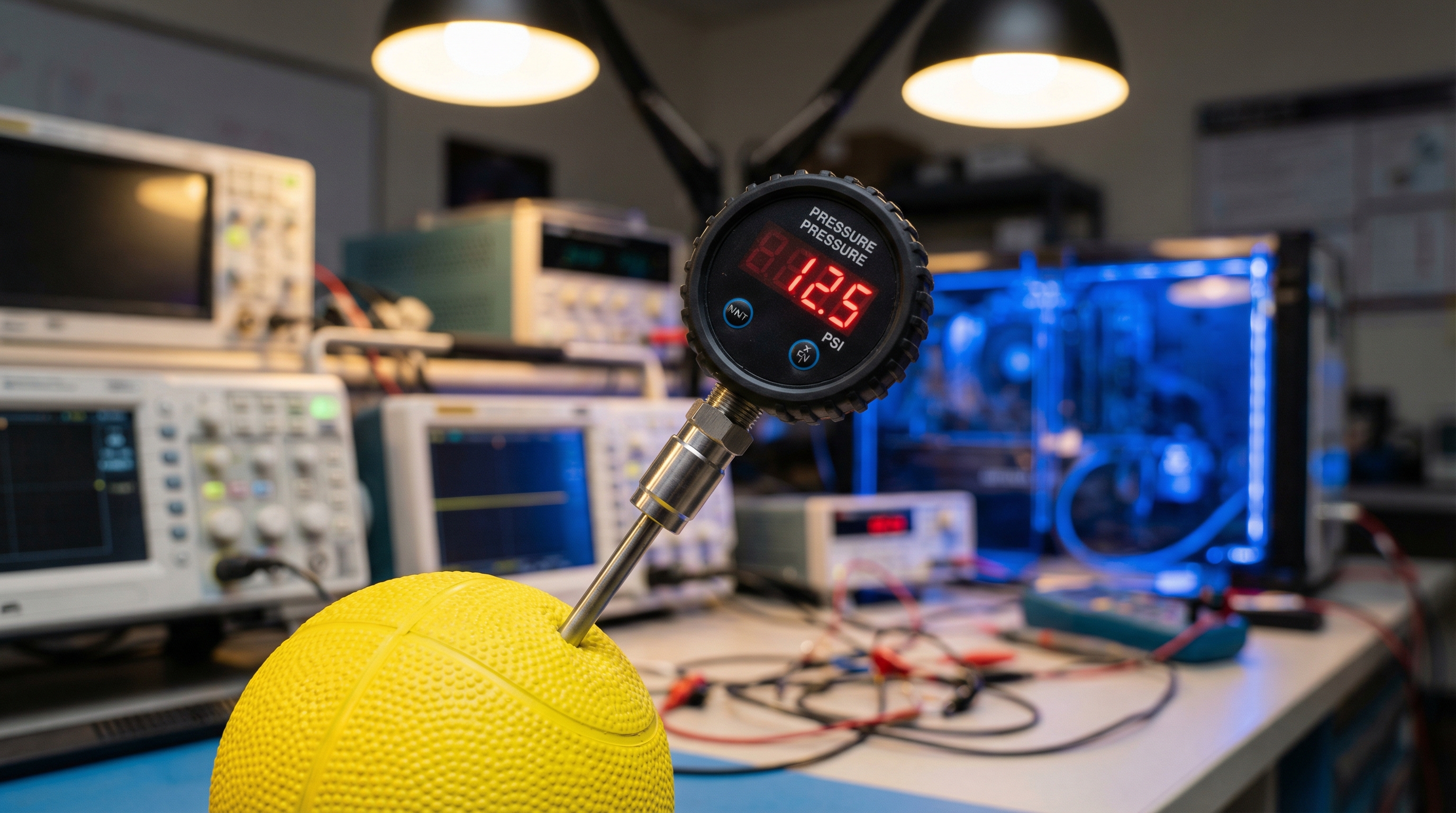
Internal pneumatic pressure is the most critical differentiator in the padel ball vs tennis ball comparison, directly impacting the height of the bounce. Padel balls are pressurized to approximately 10–11 psi, whereas tennis balls often exceed 14 psi to travel the full 23-meter length of a tennis court.
Is the pressure lower in padel?
Lower pressure is mandatory for padel because a ball with too much “pop” would fly out of the court after hitting the back wall. You must provide balls that allow for defensive play off the glass.
Think about it:
- Lower psi prevents the ball from becoming a dangerous projectile in the cage.
- Slower decompression ensures a longer usable lifespan during intense matches.
- Pressure loss is the number one reason players complain about “dead” balls.
How does pressure influence the hit?
The feeling of the ball on the racket changes significantly when the internal pressure drops even by one pound. For a club owner, maintaining fresh balls is a low-cost way to increase member satisfaction.
Look:
- Freshly pressurized balls provide a crisp “crack” upon impact.
- Lower pressure requires more technical “slice” rather than raw power.
- Altitude-specific balls adjust pressure to compensate for thin air.
Key Takeaway: Monitoring internal pressure is vital for maintaining the slow, tactical pace that defines high-level padel gameplay.
| Pressure Type | Padel PSI | Tennis PSI |
|---|---|---|
| Standard Internal | 10.0 – 11.0 | 14.0+ |
| Rebound Height | 135cm – 145cm | 140cm – 147cm |
| Pace Level | Moderate/Slow | High/Fast |
A difference of just 3-4 PSI completely transforms the ball’s behavior and the necessary player reaction time.
What materials define a padel ball vs tennis ball?
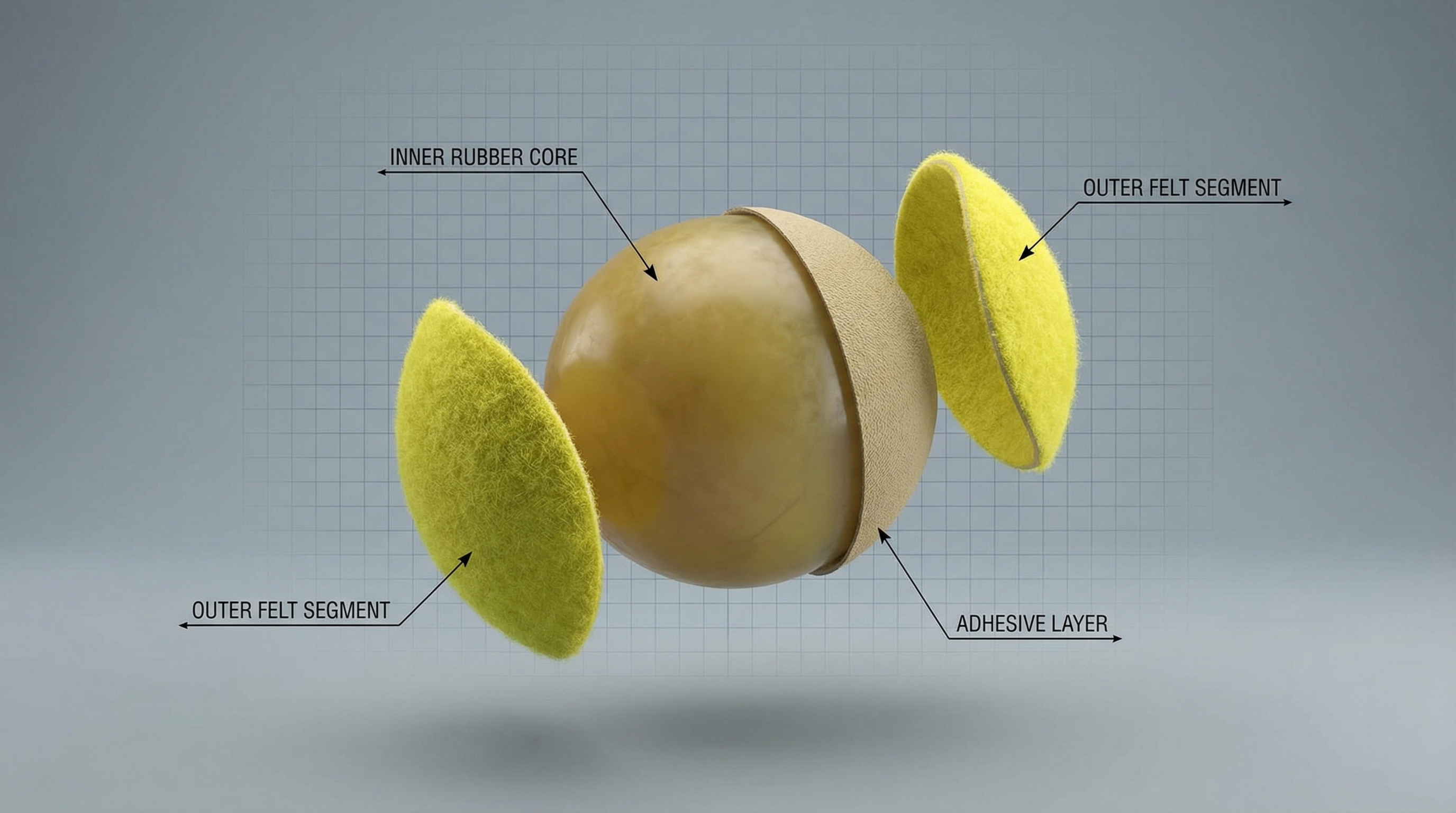
Material composition for a padel ball vs tennis ball focuses on the “nap” or felt thickness, which influences air resistance and spin. Padel balls utilize a thicker, long-nap felt to increase friction against the court surface and the racket face.
Is the felt thicker on padel balls?
Yes, the thicker felt is designed to grab the synthetic turf and create more pronounced spin during a slice shot. You will find that this helps the ball “die” after hitting the glass, a core tactic in the sport.
The best part?
- Long-nap felt increases aerodynamic drag, slowing the ball down.
- Thicker material resists the abrasive nature of sand-filled courts.
- High-quality wool blends ensure better visibility under stadium lights.
What is the core rubber composition?
The inner core is typically a high-grade natural or synthetic rubber that must withstand repeated impacts against hard glass walls. Engineering this core for durability without making it too “bouncy” is a delicate balance.
Look:
- High-rebound rubber is avoided to maintain the low-pressure feel.
- Adhesive layers are reinforced to prevent felt delamination.
- Vulcanized seams ensure the ball stays spherical under pressure.
Key Takeaway: The specific wool and rubber blend in padel balls is optimized for friction and durability against abrasive court surfaces.
| Component | Padel Ball Material | Tennis Ball Material |
|---|---|---|
| Felt Type | Thick/Long Nap | Thin/Short Nap |
| Core | Control-Oriented Rubber | High-Bounce Rubber |
| Durability focus | Friction Resistance | Impact Speed |
Selecting balls with a higher wool content ensures better grip and control on any professional-grade court.
How does bounce differ for padel ball vs tennis ball?
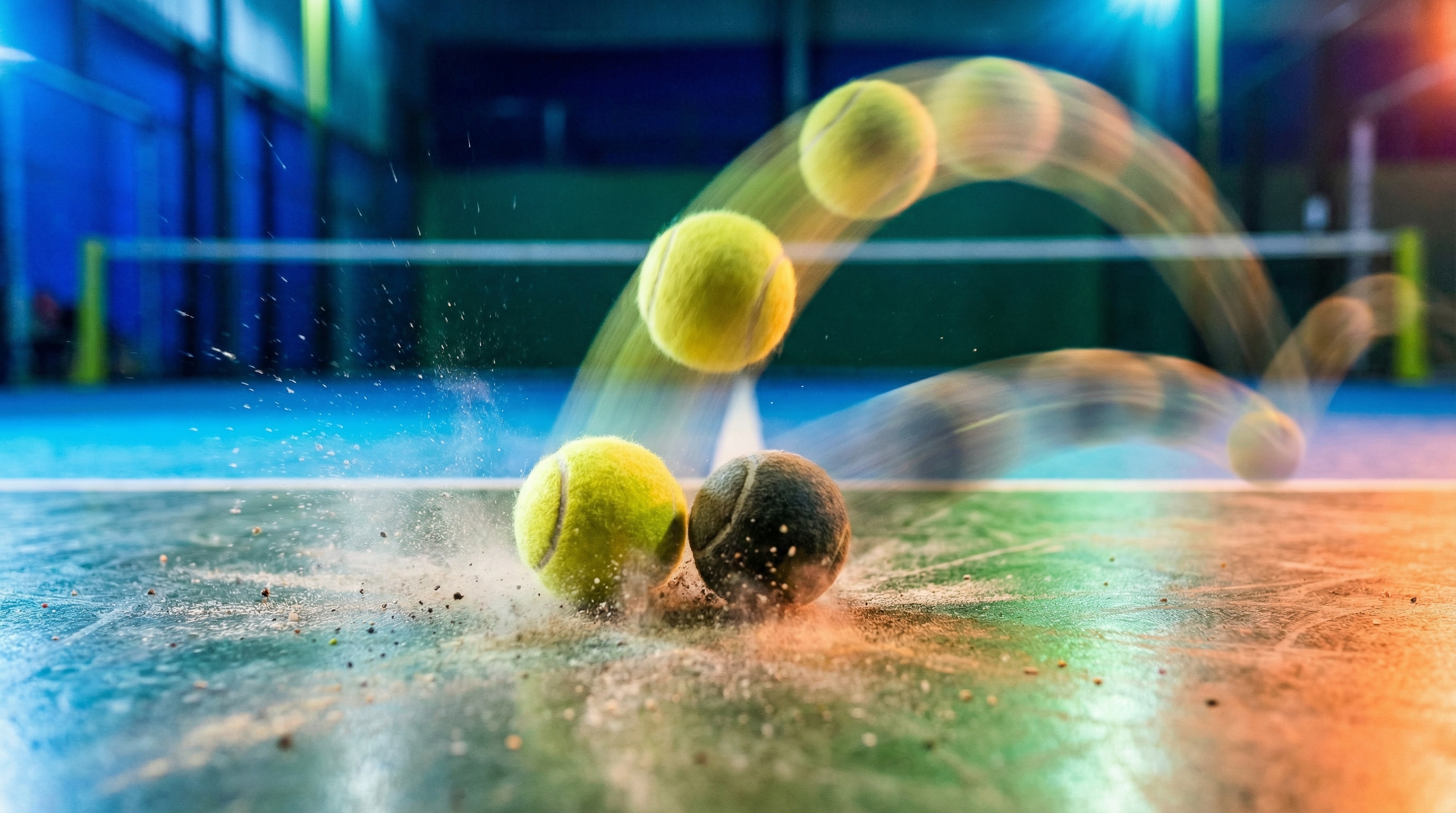
Rebound consistency is the primary functional difference in the padel ball vs tennis ball experience, with padel balls having a strictly mandated lower bounce. When dropped from a height of 254 cm onto a hard surface, a padel ball must bounce between 135 cm and 145 cm.
Why is the padel bounce lower?
The bounce is lower to ensure that the ball remains playable after it rebounds off the glass and mesh structures. If you used a tennis ball, the rebound would often fly over the side walls, ending the point prematurely.
Think about it:
- A “dead” bounce encourages players to use the walls strategically.
- Predictable height allows for better positioning during defensive lobs.
- Consistency in bounce prevents player frustration during competitive league play.
Does altitude affect the bounce?
Higher altitudes have thinner air, which causes balls to fly faster and bounce higher than at sea level. Manufacturers produce “High Altitude” versions of balls with even lower pressure to compensate for this physical phenomenon.
Look:
- Altitude-adjusted balls help maintain standard gameplay feel.
- Clubs in mountainous regions must stock specific ball SKUs.
- Standard balls at high altitude feel like “bullets” on the court.
Key Takeaway: A lower, standardized bounce height is essential for integrating the court walls into active, strategic gameplay.
| Condition | Sea Level Bounce | High Altitude Bounce |
|---|---|---|
| Standard Ball | 135 cm – 145 cm | 150 cm+ (Too high) |
| Altitude Ball | 125 cm (Too low) | 135 cm – 145 cm |
| Game Impact | Standard Tactical | Uncontrollable Speed |
This bounce analysis highlights why geography must dictate your choice of balls to maintain professional play standards.
How do surfaces affect a padel ball vs tennis ball?
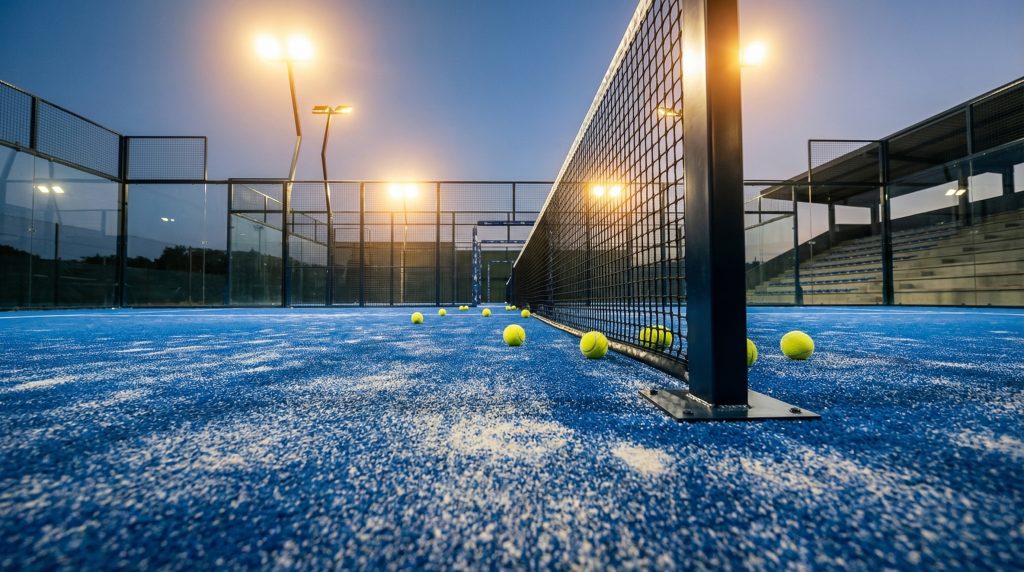
The interaction between a padel ball vs tennis ball and the court floor is governed by friction, particularly when using specialized Padel Grass. Unlike the hard acrylic of many tennis courts, the synthetic turf and silica sand of a padel court are designed to grab the ball’s felt.
How does synthetic turf affect friction?
Premium turf fibers are engineered to provide a consistent grip, allowing the ball to take “spin” more effectively than on a smooth surface. You will find that high-density turf minimizes the “skidding” that can happen on worn-out courts.
The best part?
- Fibrillated turf fibers trap the ball’s felt for better control.
- Sand distribution modifies the speed of the bounce across the court.
- Professional turf reduces ball wear compared to abrasive hard courts.
Does sand density change the bounce?
Silica sand acts as a stabilizer for the turf fibers and also influences how the ball reacts upon impact. If the sand is unevenly distributed, the ball may take “false bounces,” which can ruin a professional match.
Look:
- Proper sand levels ensure the ball doesn’t slide too much.
- Excessive sand can make the ball feel “heavy” as it picks up debris.
- Regular brushing maintains the uniform bounce needed for high-level play.
Key Takeaway: High-quality synthetic grass and precise sand maintenance are the foundation for consistent ball behavior and durability.
| Surface Type | Friction Level | Ball Wear Rate |
|---|---|---|
| Professional Padel Turf | High (Good Grip) | Low to Moderate |
| Hard Tennis Court | Low (Fast Slide) | High (Abrasive) |
| Clay Court | High (Slow) | Moderate (Debris) |
This guide sentence explains that the choice of surface is just as important as the ball itself for game quality.
What skills suit a padel ball vs tennis ball?
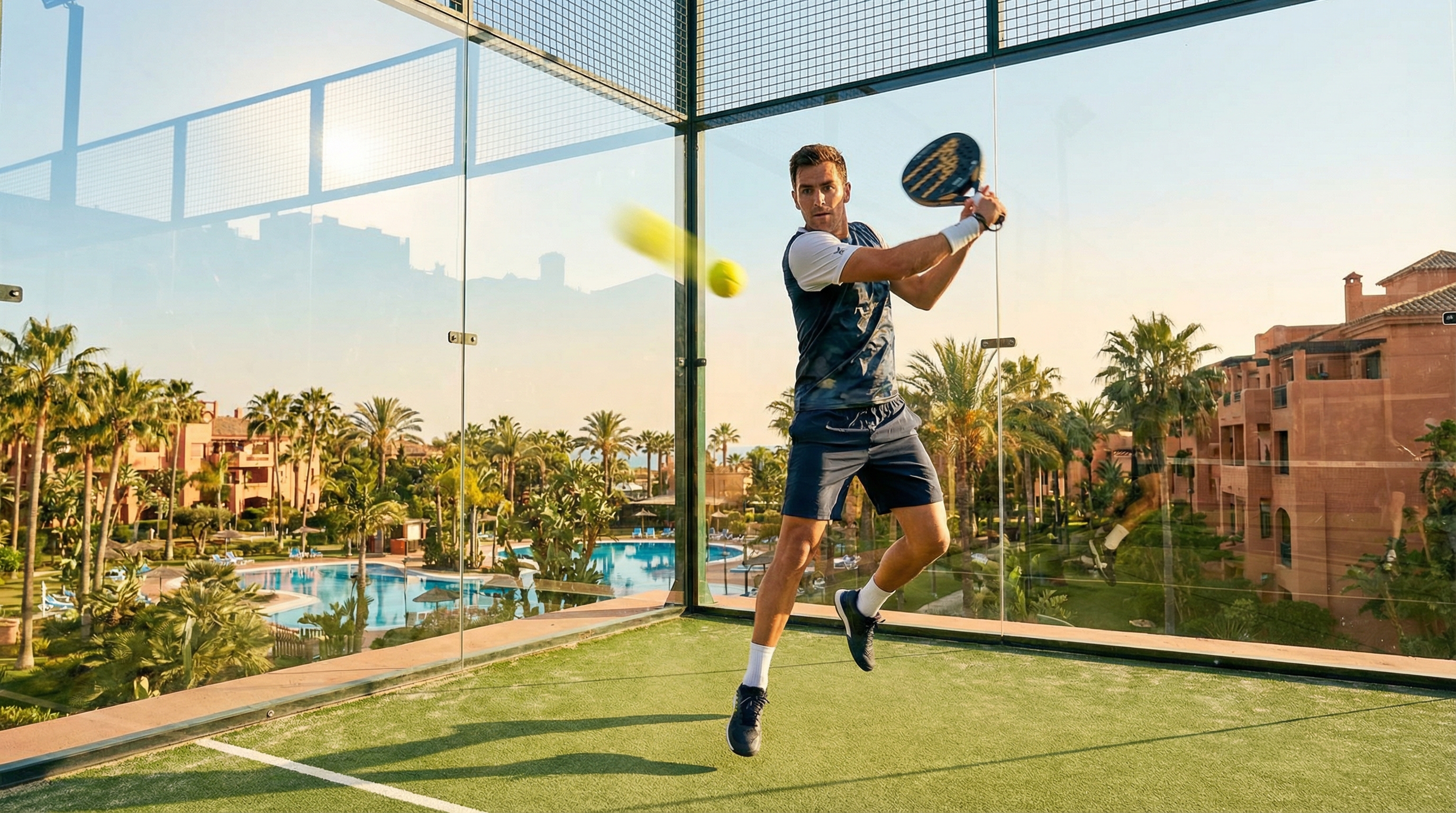
Mastering the physics of a padel ball vs tennis ball requires a shift from power-based baseline striking to touch-oriented reflex play. You need to develop a “slice” technique that utilizes the thicker felt of the padel ball to keep the rebound low off the glass.
Is reaction time faster in padel?
Because the court is smaller and the ball often returns from the walls, your reaction time must be significantly sharper than in tennis. You are essentially playing in a “3D” environment where the ball can come from any direction.
Think about it:
- Fast volleys at the net require short, punchy strokes.
- Anticipating the ball off the back wall is a learned spatial skill.
- The slower ball speed allows for longer, more intense rallies.
How do you master the spin?
Spin is your greatest weapon in padel, as it changes how the ball behaves after hitting the court and the glass. The thicker nap of the padel ball is your best friend when trying to hit a “drop shot” or a “kick smash.”
Look:
- Backspin keeps the ball low, forcing opponents to hit upward.
- Sidespin makes the ball jump unpredictably off the side mesh.
- Topspin is used sparingly to dip the ball at the opponent’s feet.
Key Takeaway: Padel rewards tactical placement and spin mastery over the raw velocity typically found in modern tennis.
| Skillset | Padel Focus | Tennis Focus |
|---|---|---|
| Primary Stroke | Slice / Volley | Topspin Drive |
| Movement | Multidirectional / Reflex | Lateral / Baseline |
| Point Winning | Tactical Error | Power Winner |
Players transitioning sports must unlearn “power hitting” to succeed with the unique physics of the padel ball.
Can you use a tennis ball for padel ball vs tennis ball play?
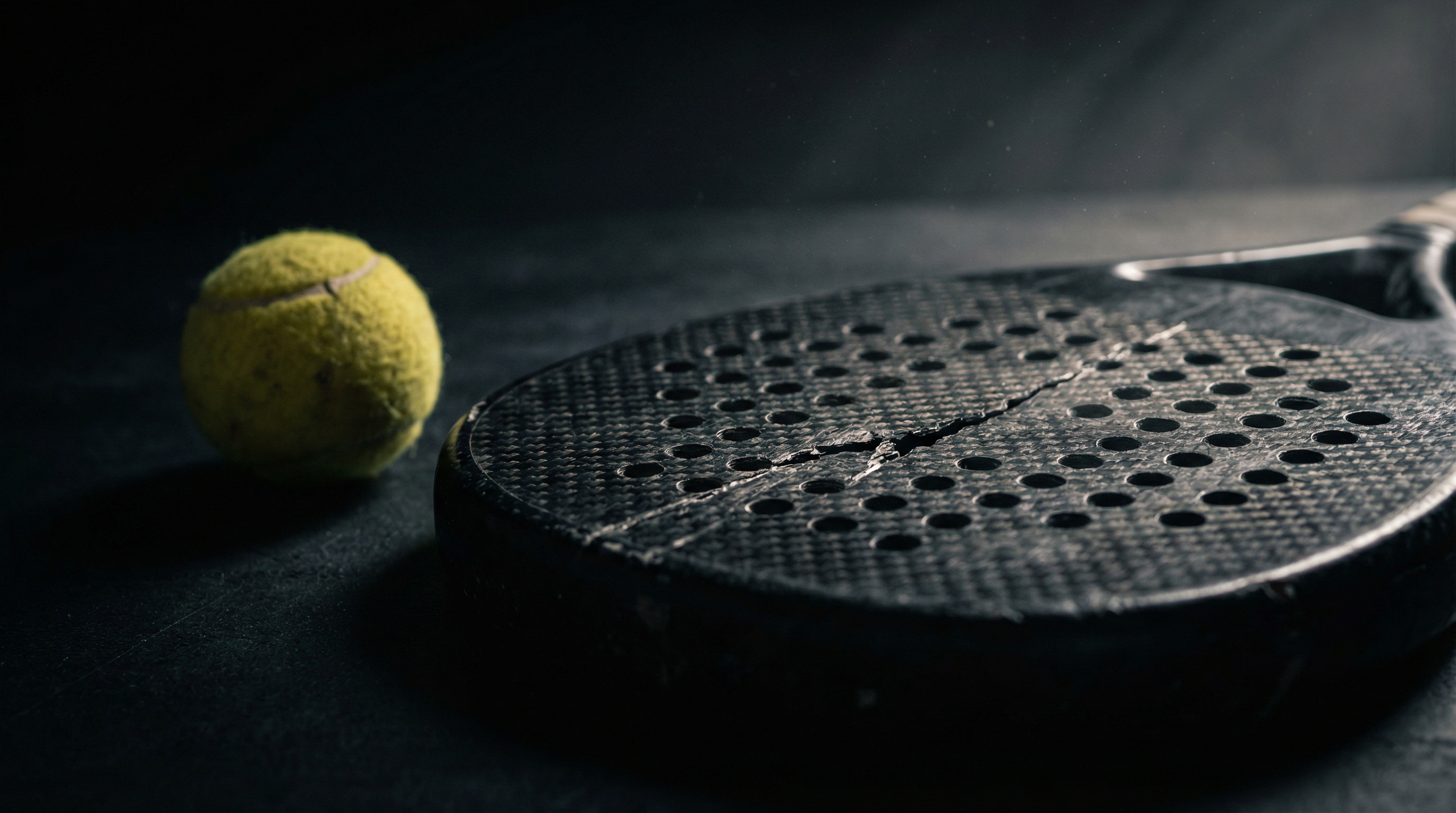
Using a tennis ball for padel ball vs tennis ball gameplay is highly discouraged because the excessive pressure can physically damage padel rackets and the court infrastructure. Padel rackets are made of carbon fiber and foam without strings, making them vulnerable to the high-impact force of a tennis ball.
Will it ruin the racket?
The higher internal pressure of a tennis ball makes it much “harder” upon impact, which can cause the internal EVA core of your racket to crack. You risk voiding warranties and destroying expensive equipment for a slight increase in speed.
The best part?
- Padel balls are engineered to compress safely against the racket face.
- Using the right ball extends the life of your racket’s surface grip.
- Slower speeds reduce the vibration transmitted to the player’s elbow.
Is it safe for the glass walls?
While the Padel Glass used by Superbpadel is tempered and anti-explosion rated, repeated high-velocity impacts from heavy tennis balls can stress the mounting points. You want to avoid unnecessary wear on your facility’s structural components.
Look:
- Padel balls absorb more energy on impact, protecting the frame.
- The game’s pace becomes too fast for the glass-rebound mechanic.
- Safety risks increase when the ball becomes an unpredictable projectile.
Key Takeaway: Stick to sport-specific balls to protect your equipment investment and ensure a safe environment for all players.
| Risk Factor | Padel Ball | Tennis Ball |
|---|---|---|
| Racket Damage | Minimal | High Risk (Cracking) |
| Glass Stress | Standard | Elevated |
| Player Safety | Controlled | Unpredictable |
Choosing the correct ball is a simple way to mitigate liability and equipment replacement costs.
How to build a court for padel ball vs tennis ball?
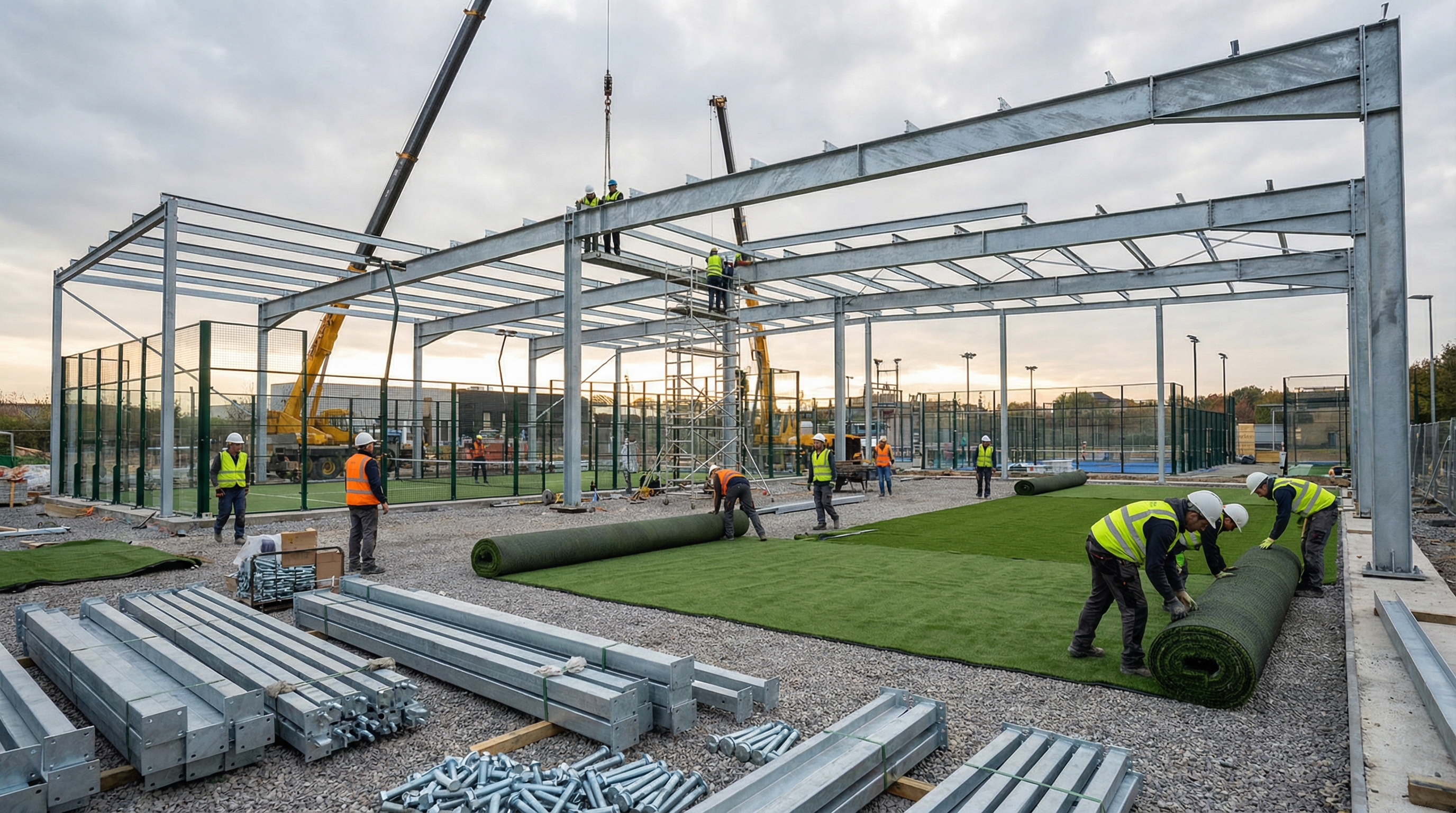
Building an environment optimized for a padel ball vs tennis ball requires a focus on structural rigidity and surface consistency. You should select a Standard Padel Court design that features hot-dip galvanized steel to ensure the frame doesn’t vibrate or shift during high-impact play.
What about a Panoramic Padel Court?
A Panoramic Padel Court offers unobstructed views but requires thicker glass to maintain the necessary rebound properties. You must ensure the glass is perfectly aligned so the ball doesn’t take “dead” bounces at the seams.
Think about it:
- Panoramic designs provide a premium aesthetic for high-end clubs.
- Eliminating corner posts requires precision engineering for safety.
- Spectators get a better view of the technical ball-to-wall action.
How to set up the Padel Structure?
The Padel Structure must be perfectly level to ensure the ball’s bounce remains uniform across the entire 200-square-meter area. Any deviation in the foundation will result in “hollow” spots that ruin the competitive experience.
Look:
- Galvanized steel prevents rust and maintains structural integrity.
- Modular designs allow for faster installation and easier maintenance.
- Rigid mesh panels provide the “dead” rebound needed for mesh shots.
Key Takeaway: Professional court construction is the only way to ensure the ball’s scientific properties translate into a fair game.
| Construction Element | Requirement | Benefit |
|---|---|---|
| Galvanized Steel | High Grade | 20+ Year Durability |
| 12mm Tempered Glass | EN 12150 Standard | Player Safety/Bounce |
| Laser-Level Floor | < 2mm Deviation | Perfect Ball Rebound |
Investing in high-quality structural components ensures your club remains the top choice for serious athletes.
Which is best for beginners: padel ball vs tennis ball?
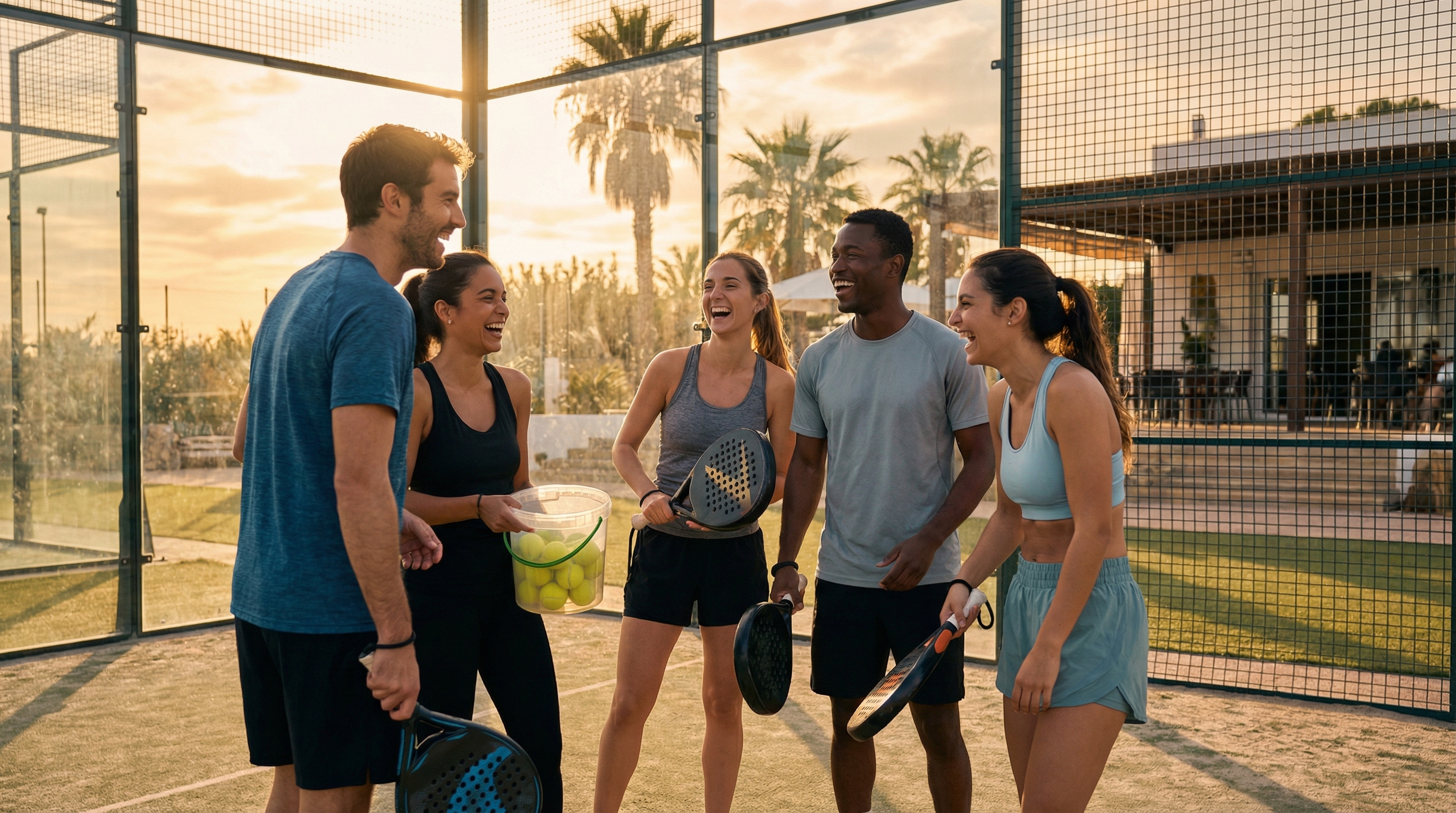
For new players, the padel ball vs tennis ball debate is easily settled because the slower, lower-pressure padel ball makes the sport much more accessible and “fun” from day one. You will find that beginners can sustain a rally in padel within 15 minutes, whereas tennis often requires months of technical training.
Is padel easier to learn?
The slower ball speed gives beginners more time to react and position their bodies, reducing the frustration common in tennis. Because the court is enclosed, you don’t have to spend half your time chasing balls across the park.
The best part?
- Underhand serves are easier to master than the overhead tennis serve.
- The “cage” keeps the ball in play, leading to longer points.
- Social interaction is higher due to the proximity of the players.
Look:
- Slower pace encourages tactical thinking over physical brawn.
- Smaller rackets are easier to control for those without sports backgrounds.
- Padel is a “gender-neutral” sport where skill often beats power.
Key Takeaway: Padel’s unique ball and court design lower the entry barrier, making it the fastest-growing racket sport globally.
| Beginner Factor | Padel | Tennis |
|---|---|---|
| Learning Curve | Very Fast | Slow / Steep |
| Physical Demand | Moderate | High |
| Social Aspect | Extremely High | Moderate |
Starting with padel allows you to enjoy the competitive thrill of racket sports without the steep technical overhead.
*
Conclusion
At Superbpadel, we believe that the foundation of a world-class sports facility is built on understanding the technical science behind every bounce. Whether you are choosing the right padel ball vs tennis ball for your members or planning a massive club expansion, our factory-direct expertise ensures you get premium quality at the best value. We provide the structural integrity and surface precision needed to make every match a professional experience. Ready to build the future of your sports club? Contact us today to receive a custom quote within 24 hours.
*
FAQ
Can I use tennis balls for padel practice?
No, because the higher pressure will prevent you from learning the correct timing for wall rebounds and could damage your racket.
What’s the best way to maintain ball pressure?
Directly after play, store your balls in a pressurized tube to counteract the natural air leakage that occurs once a can is opened.
Can I use a padel ball on a tennis court?
Absolutely not, as the ball will feel incredibly heavy and won’t have the speed or bounce required to clear the net from the baseline.
How do I know if my balls are dead?
Immediately check the bounce height against your waist; if it falls significantly short of the 135 cm mark, it’s time for a fresh set.
What’s the best court surface for ball durability?
High-density Padel Grass is the superior choice for minimizing felt abrasion and ensuring your balls last for multiple matches.