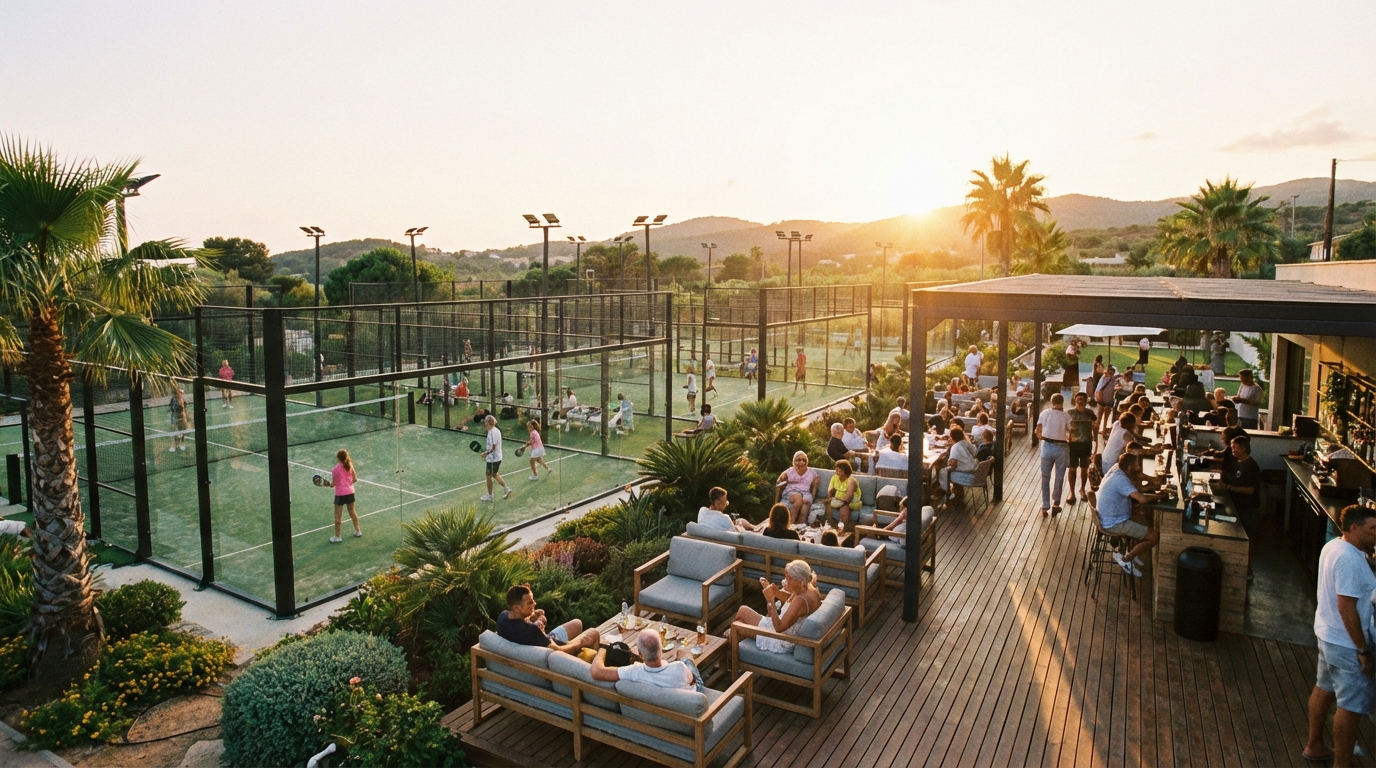
Padel meaning refers to a social racket sport played in an enclosed court that blends elements of tennis and squash. You likely find traditional racket sports have a steep learning curve that keeps beginners on the sidelines. This barrier to entry prevents many athletes from enjoying the physical benefits and competitive spirit of high-speed play. By understanding the true padel meaning, you can access a sport designed for rapid skill acquisition and intense social interaction.
padel meaning for modern athletes?
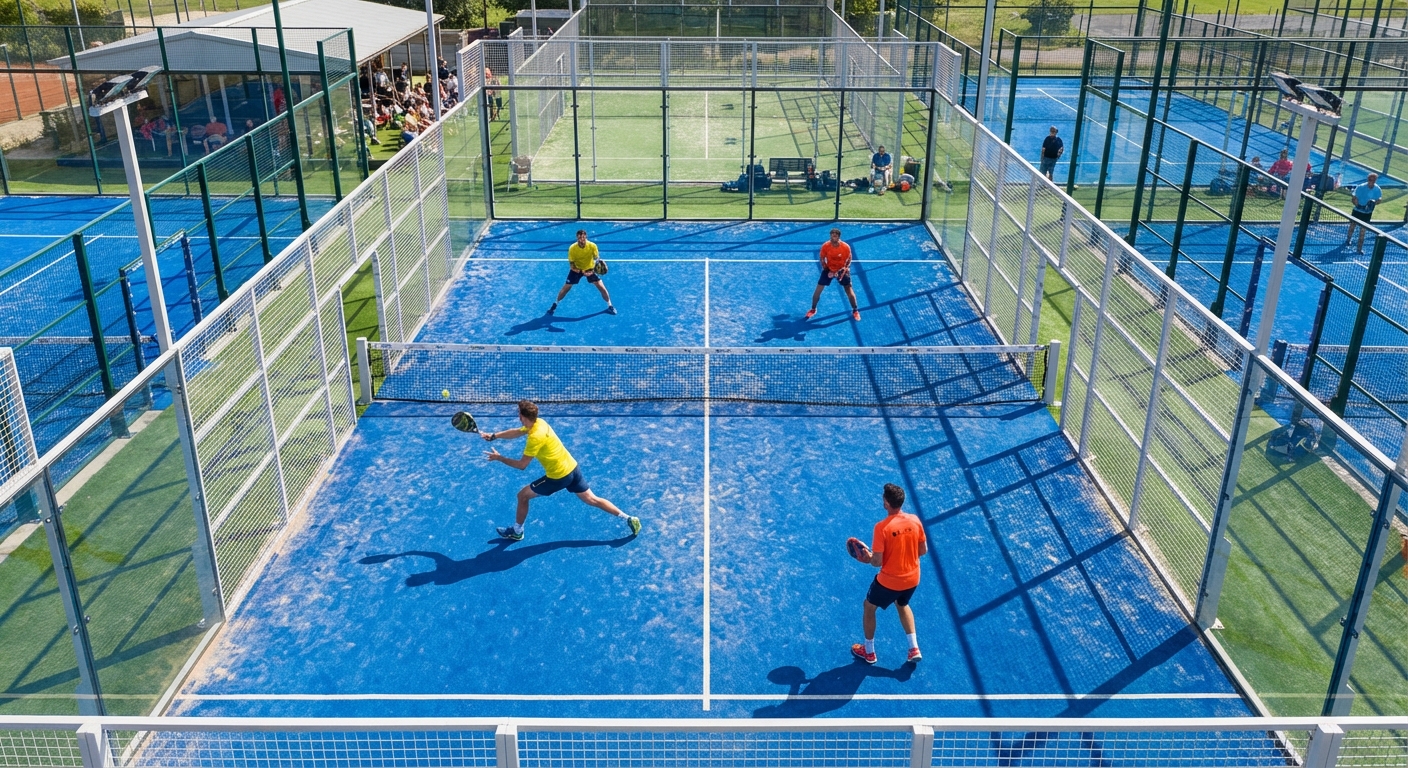
The fundamental padel meaning for current players is centered on a “low barrier, high ceiling” philosophy that prioritizes fun and fitness. It is almost always played as doubles on an artificial turf surface. This format ensures you stay moving while enjoying a highly communicative environment.
Why is it played as doubles?
Playing as doubles is the standard because it maximizes the strategic use of the smaller court area. It fosters a community atmosphere where you rely on a partner to cover angles.
Think about it:
- The court is 1/3 the size of a tennis court.
- Rallies are significantly longer.
- Communication is the key to winning points.
But here is the kicker: the smaller space means you don’t need the lung capacity of a marathon runner to compete effectively.
Key Takeaway: Padel is built for inclusivity, making it the ideal choice for corporate wellness and club growth.
| Attribute | Modern Padel Standard |
|---|---|
| Player Count | Exactly 4 players |
| Court Surface | Artificial Turf |
| Primary Goal | Strategic longevity |
This setup ensures that the sport remains accessible to a wide demographic of players regardless of age.
padel meaning in a historical context?
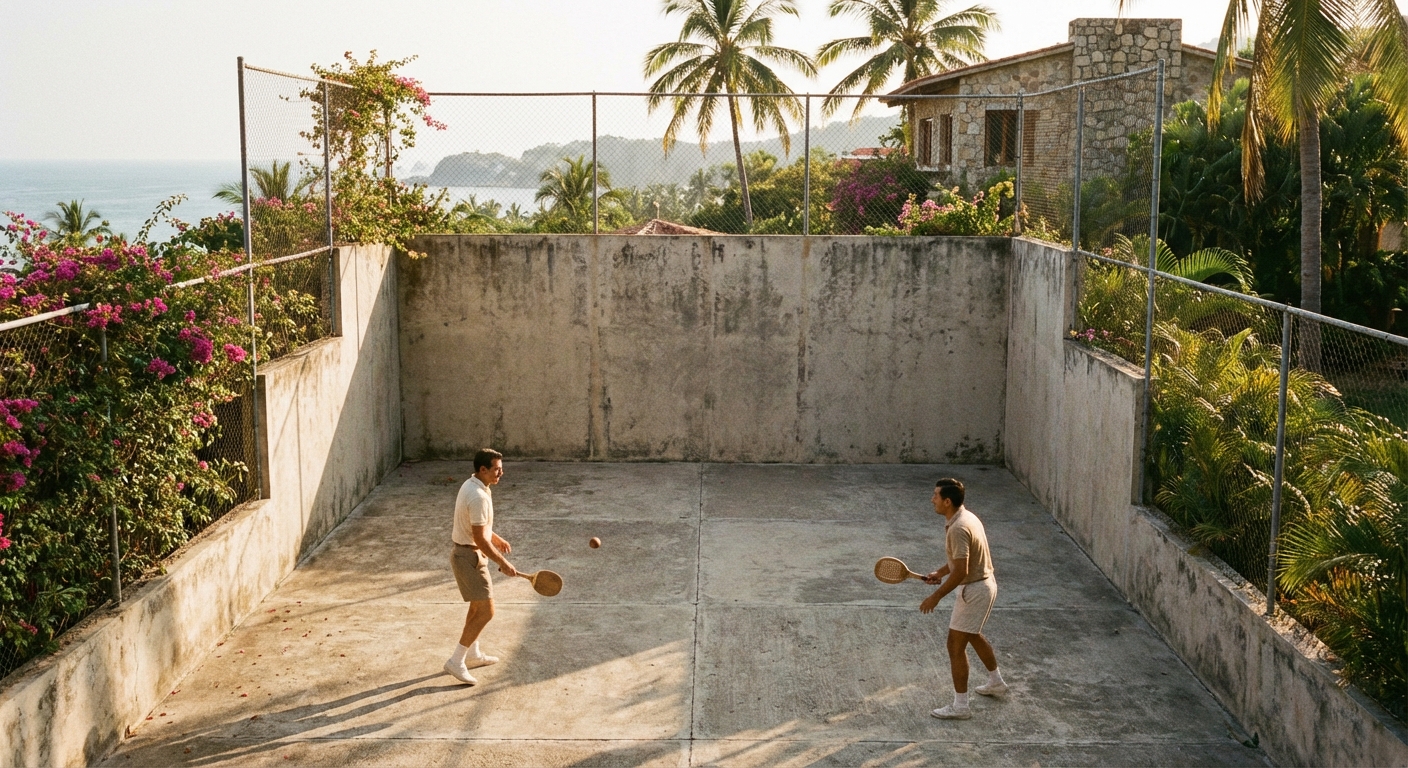
Historically, the padel meaning originated in 1969 when Enrique Corcuera built the first court at his home in Acapulco, Mexico. He wanted a game that his family could play without the ball escaping into the neighbors’ yards. By surrounding his court with walls, he accidentally invented a new way to keep the ball in play.
Who brought padel to Europe?
Alfonso de Hohenlohe, a friend of the inventor, is credited with bringing the sport to Spain in the mid-1970s. He established the first European courts in Marbella, where it became an elite social activity.
Believe it or not:
- Spain now has over 20,000 courts.
- It is the second most popular sport in Spain after football.
- The spelling was officially changed in 1993 for better pronunciation.
Look: the transition from a backyard hobby to a global phenomenon happened because the core mechanics never changed.
Key Takeaway: The history of the sport proves that its design was always intended to solve the problem of lost balls and short rallies.
| Milestone | Historical Significance |
|---|---|
| 1969 | First court built in Acapulco |
| 1974 | Introduction to Spain |
| 1991 | International Federation formed |
The sport’s growth in Argentina and Spain provided the blueprint for the current global expansion you see today.
padel meaning regarding court design?
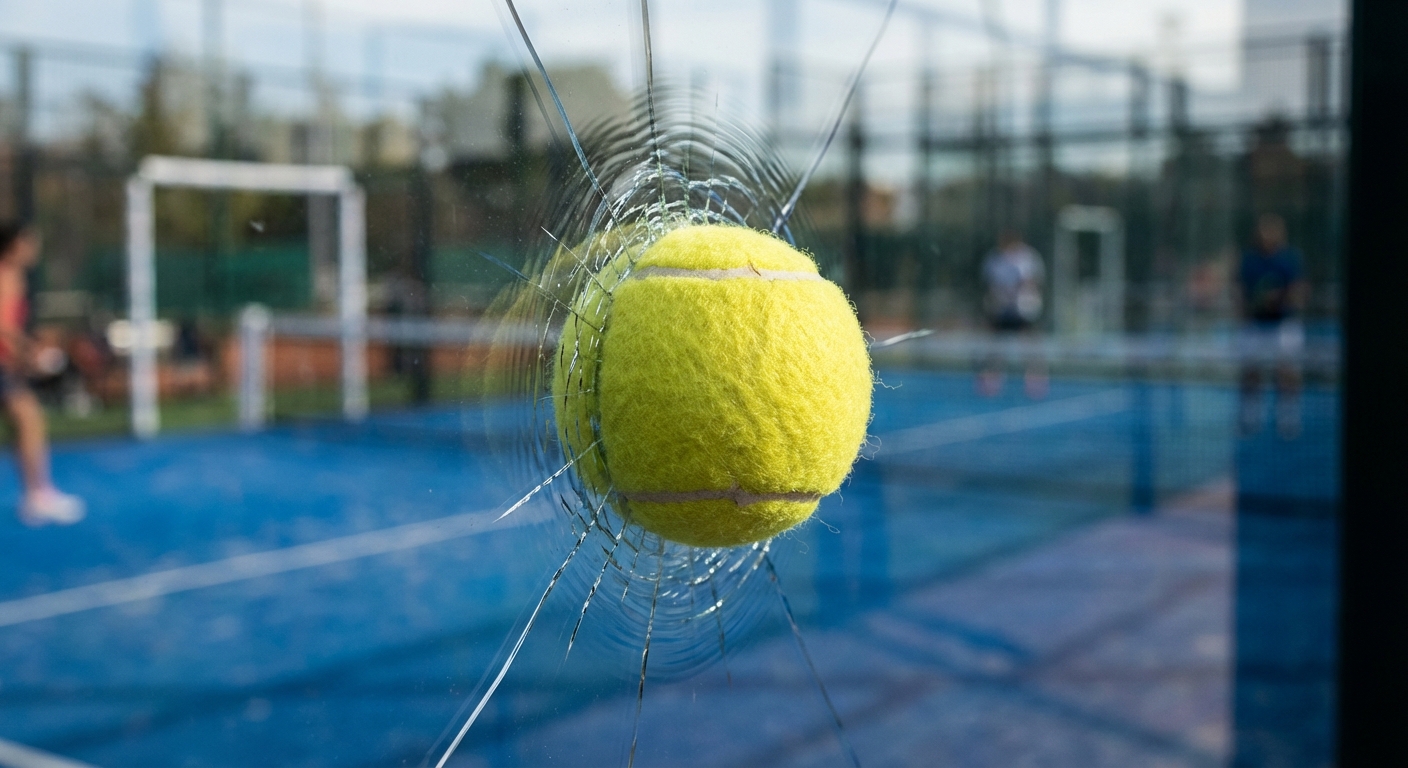
The technical padel meaning focuses on the interaction between the ball and the tempered glass walls that surround the playing area. These walls allow the ball to be played after it hits the ground and then bounces off the enclosure. You must learn to use these rebounds to your advantage during defensive plays.
How do the glass walls function?
Glass walls provide a consistent bounce that rewards players who can predict the ball’s trajectory after impact. They are engineered to withstand high-velocity hits while offering spectators a clear view of the action.
You might be wondering:
- The glass is typically 10mm to 12mm thick.
- Corner bounces require high technical precision.
- The walls keep the game fast-paced and continuous.
But here is the deal: without the glass, the game would lose the unique rebound dynamic that differentiates it from tennis.
Key Takeaway: High-quality glass installation is the most critical safety and performance factor for any padel court build.
| Component | Functionality |
|---|---|
| Tempered Glass | Predictable rebound and visibility |
| Metallic Fence | Unpredictable bounce (tactical) |
| Lighting | 6-8 meter high LED floods |
Strategic use of the metallic fence often leads to the most challenging points for your opponents.
padel meaning for equipment selection?
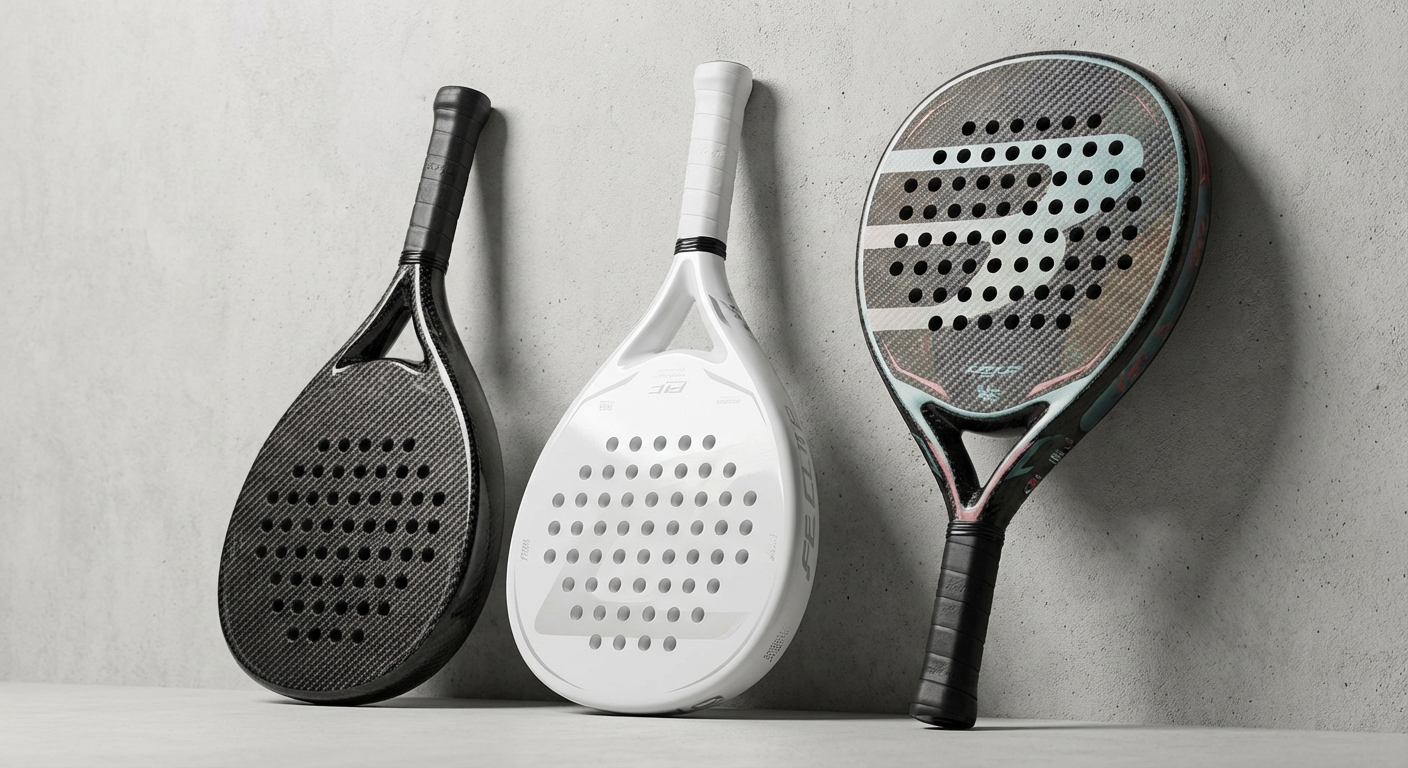
The equipment-related padel meaning involves using a solid, stringless racket made of composite materials like carbon fiber or fiberglass. These rackets feature a perforated surface to reduce air resistance and weight. You will notice they are shorter and easier to handle than a standard tennis racket.
What are the main racket materials?
Most rackets use a combination of a foam core and an outer shell made of carbon or glass fibers. Carbon fiber offers maximum power for advanced players, while fiberglass provides more comfort and control for casual use.
In other words:
- Fiberglass is flexible and forgiving.
- Carbon fiber is stiff and powerful.
- The foam core absorbs harmful vibrations.
Simply put: choosing the wrong material can lead to arm fatigue or injuries like “padel elbow.”
Key Takeaway: Matching your equipment material to your skill level is the fastest way to improve your performance on the court.
| Material | Player Level | Key Benefit |
|---|---|---|
| Fiberglass | Beginner | High comfort/vibration damping |
| Carbon Composite | Intermediate | Balanced power and control |
| 100% Carbon Fiber | Advanced | Maximum energy return |
A lighter racket generally suits beginners who need to develop their swing speed and reaction times.
padel meaning in competitive scoring?
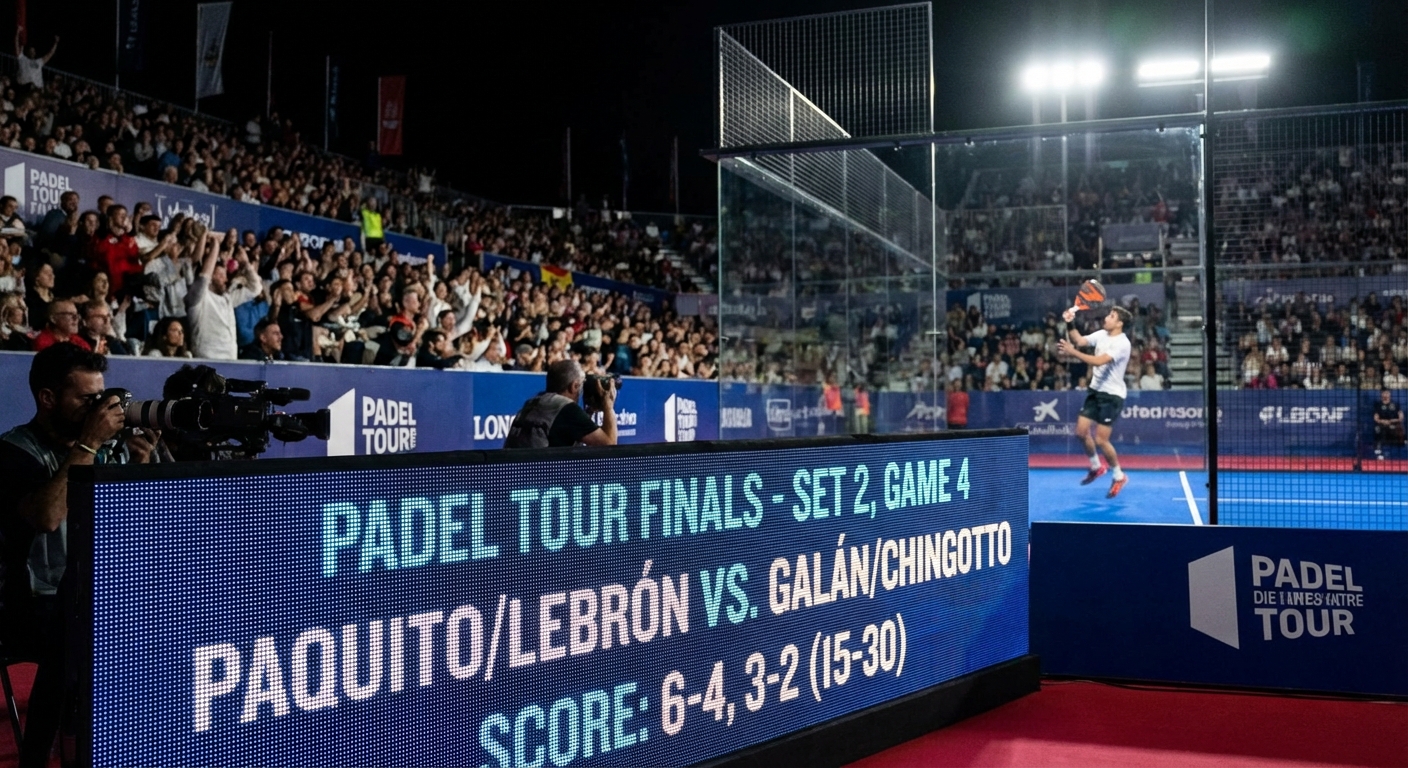
In a professional setting, the padel meaning of success is governed by a scoring system identical to tennis, using 15, 30, and 40. Matches are typically the best of three sets, with six games needed to win a set. You must maintain mental focus to handle the pressure of “golden points” used in many circuits.
How does the Golden Point work?
The “Golden Point” occurs when the score reaches deuce (40-40), and the receiving team chooses which side to receive the serve. The winner of that single point wins the entire game immediately.
It gets better:
- It eliminates long, repetitive deuce cycles.
- It increases the pressure on the server.
- Broadcasters love it for predictable match times.
Think about it: every deuce becomes a high-stakes moment that tests your tactical discipline.
Key Takeaway: Scoring rules are designed to keep matches moving and ensure high engagement for both players and spectators.
| Score Type | Padel Rule |
|---|---|
| Set Structure | Best of 3 sets |
| Game Count | 6 games per set |
| Tie-Break | First to 7 points (at 6-6) |
Standardization of scoring has been essential for the sport’s inclusion in professional international tours.
padel meaning of different racket shapes?
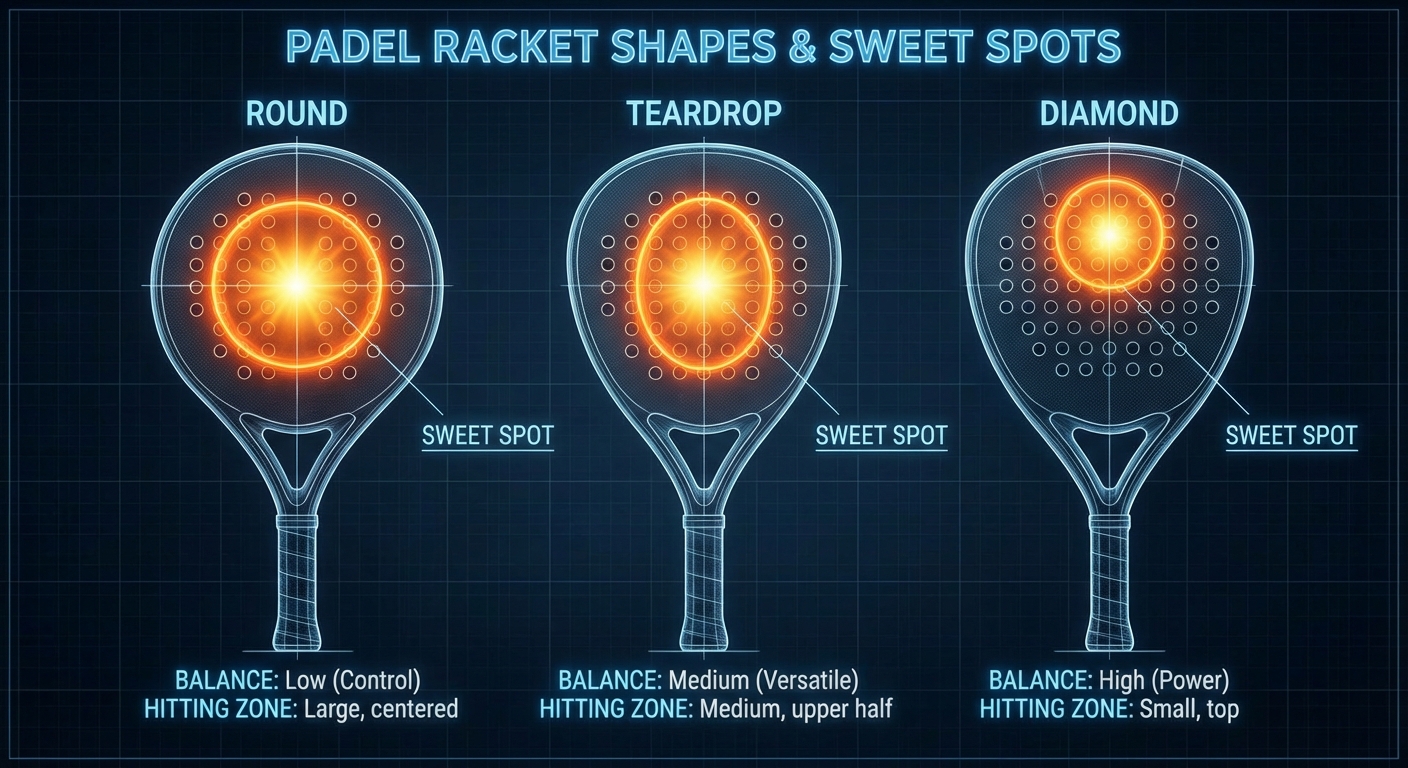
Understanding the padel meaning of racket geometry is essential for finding your specific “sweet spot” on the hitting surface. Rackets are produced in three primary shapes: round, teardrop, and diamond. Each shape moves the center of balance and the hitting zone to suit different styles of play.
Which shape is best for control?
The round shape is the gold standard for control and defensive players because the sweet spot is large and centered. It has a low balance, meaning the weight is closer to the handle, making it very maneuverable.
But here is the kicker:
- Round rackets are most forgiving for off-center hits.
- Teardrop rackets offer a “versatile” balance for all-rounders.
- Diamond rackets are top-heavy for massive smashes.
Here is the deal: if you are a beginner, starting with anything other than a round shape is a mistake.
Key Takeaway: Racket shape is the primary factor that determines whether you will play a defensive or offensive game.
| Racket Shape | Balance | Playstyle |
|---|---|---|
| Round | Low | Defensive/Control |
| Teardrop | Medium | Versatile/All-round |
| Diamond | High | Aggressive/Power |
Moving up to a teardrop shape is usually the first sign that a player is reaching an intermediate level.
padel meaning of internal racket foam?
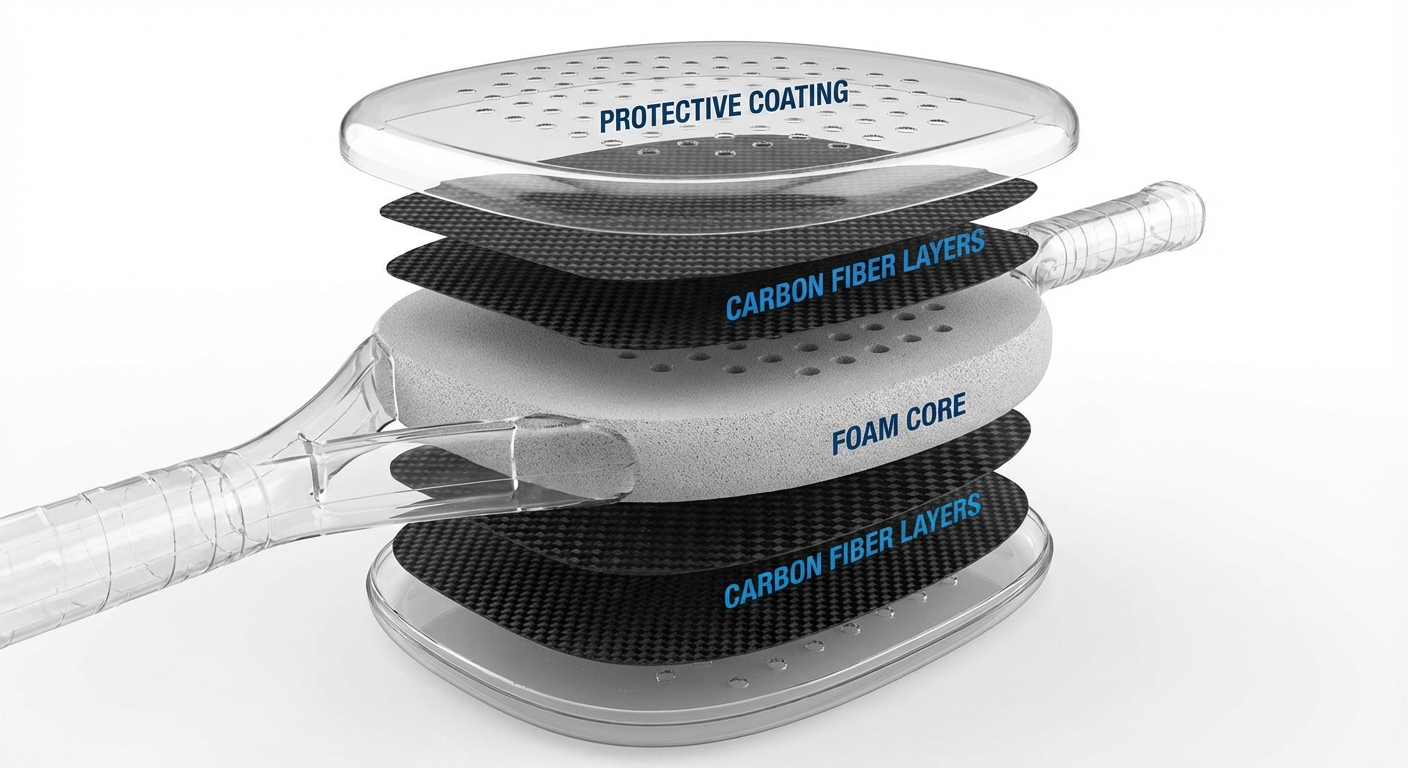
The internal padel meaning of performance is defined by the density and type of foam core used in the racket. High-density foam provides a “hard touch” that translates your physical power directly into ball speed. Conversely, low-density foam creates a “soft touch” that absorbs impact and provides a larger margin for error.
What is the difference between EVA and FOAM?
EVA (Ethylene Vinyl Acetate) is the most common core material due to its durability and recovery speed after impact. FOAM (polyethylene) is softer, offering more ball output at lower swing speeds but wearing out faster.
The best part?
- Soft cores are better for players with elbow issues.
- Hard cores require better technique to generate speed.
- Professional players often switch core density based on temperature.
Believe it or not: the foam in your racket will actually feel harder in cold weather and softer in the heat.
Key Takeaway: The core of the racket acts as the “engine,” determining how much energy is transferred during every strike.
| Core Material | Touch | Main Benefit |
|---|---|---|
| Soft Polyethylene | Soft | High ball output / Comfort |
| Mid-Density EVA | Medium | Versatility for all conditions |
| High-Density EVA | Hard | Maximum power for smashes |
Most modern manufacturers use layered EVA to provide a balance of initial comfort and deep power.
padel meaning of court construction steps?
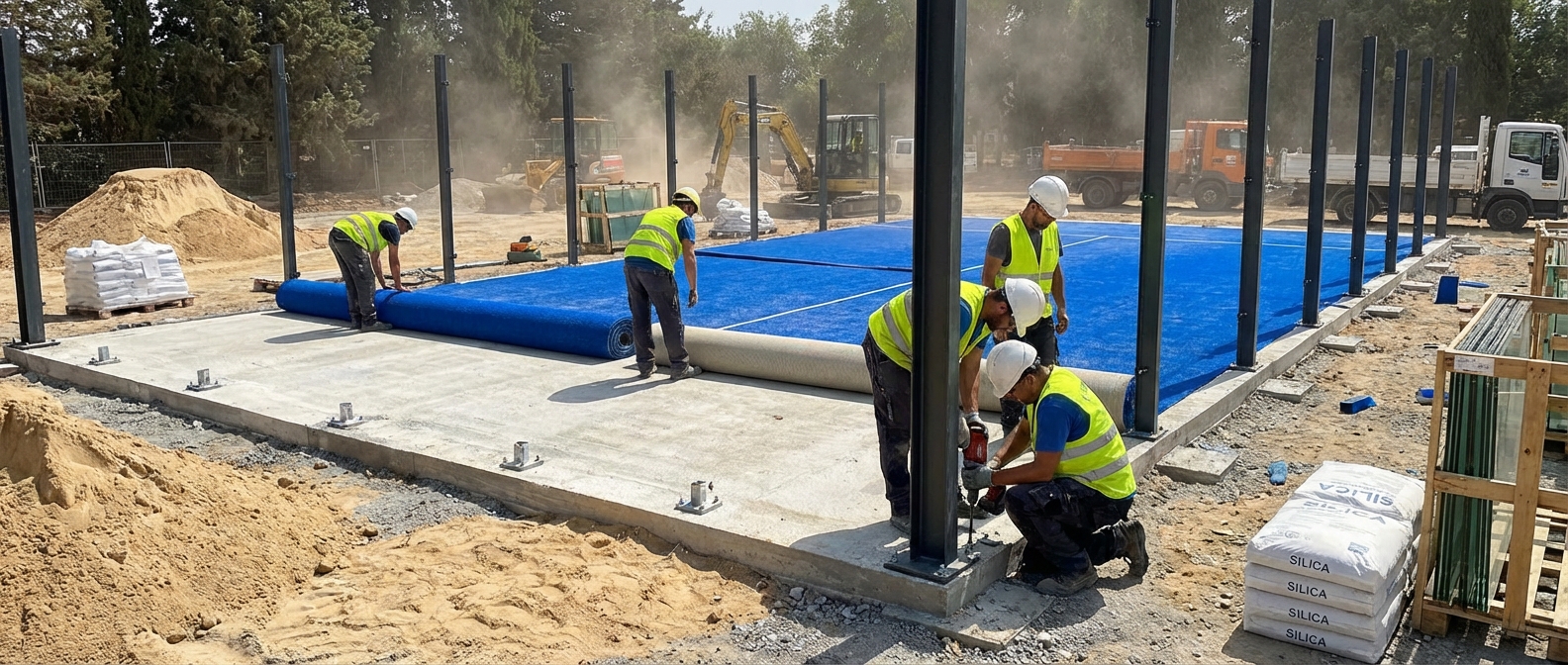
For developers, the padel meaning of a successful project lies in the precision of the foundation and the quality of the structural steel. A court requires a perfectly level concrete or asphalt base to ensure the ball bounces consistently everywhere. You must also consider the drainage systems to allow for play shortly after rainfall.
How is the artificial turf installed?
The turf is laid in rolls over the hard base and secured with special adhesive tapes at the seams. It is then filled with a specific grade of kiln-dried silica sand that allows players to slide while maintaining the upright position of the fibers.
Look:
- The sand should be invisible to the naked eye when properly spread.
- Sub-base leveling must have a tolerance of less than 3mm.
- Galvanized steel frames prevent rust in outdoor environments.
Think about it: if the foundation is uneven, the glass walls will eventually crack due to structural stress.
Key Takeaway: Investing in a professional sub-base is the only way to guarantee the long-term durability of a padel facility.
| Build Stage | Critical Requirement |
|---|---|
| Foundation | Level concrete (+/- 3mm tolerance) |
| Structure | Galvanized steel with 10mm glass |
| Finishing | Silica sand infill (approx. 3 tons) |
Proper maintenance, including regular brushing of the sand, will double the lifespan of your artificial turf.
padel meaning of technical dimensions?
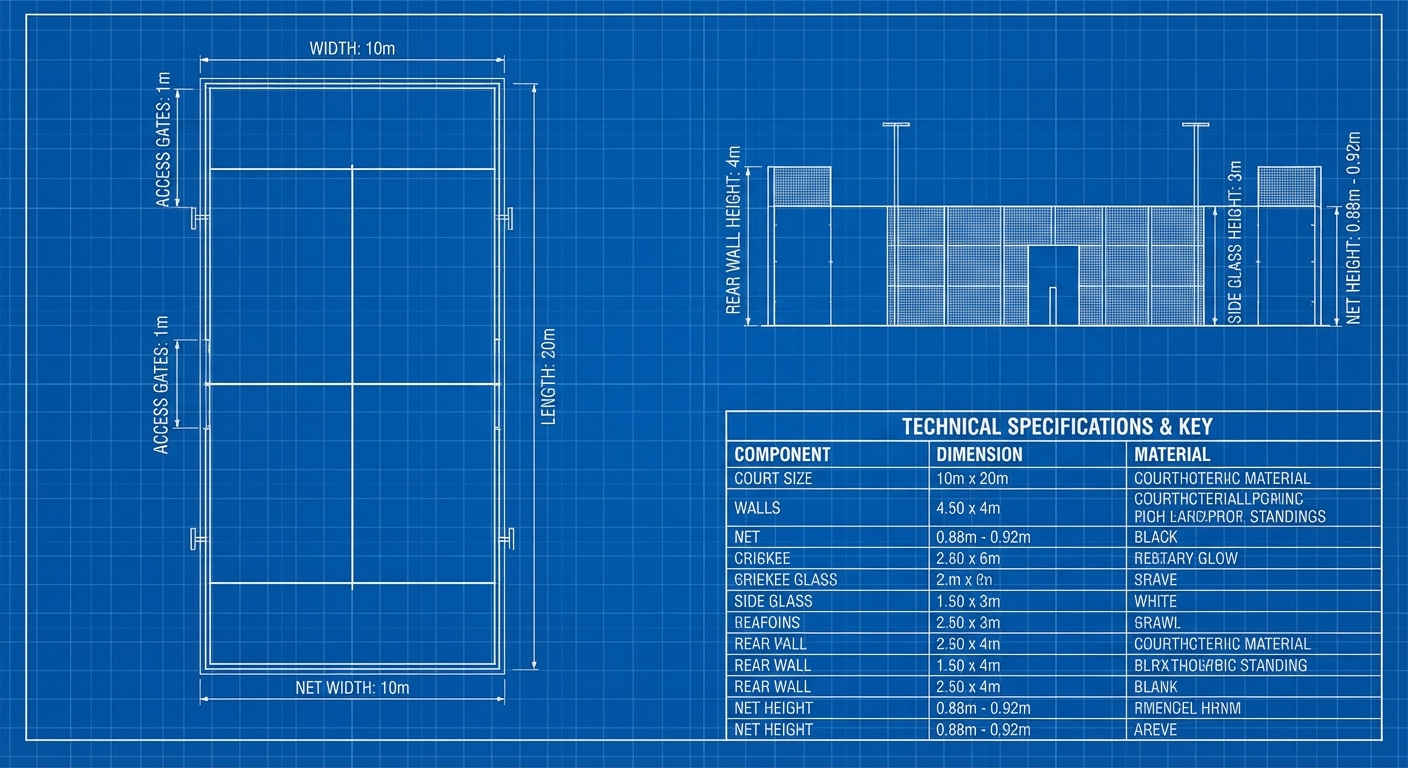
The official padel meaning of a “standard court” is a rectangle 10 meters wide and 20 meters long, divided by a net in the center. The back walls must be 3 meters high, often topped with an additional meter of metallic mesh. This specific spatial configuration is what creates the fast-paced, high-intensity rallies unique to the sport.
What are the ceiling height requirements?
For indoor facilities, the minimum clear height should be 6 meters, although 8 meters is highly recommended for professional play. This allows you to perform “lobs” without the ball hitting the roof or lighting fixtures.
It gets better:
- Service boxes are 5 meters long.
- The net is 88cm high at the center.
- Safety zones outside the doors allow for “out-of-court” play.
But here is the kicker: even a 10cm error in court width can make a professional court ineligible for sanctioned tournaments.
Key Takeaway: Adhering to the 10x20m blueprint ensures your court meets the international standards required for official competition.
| Dimension | Standard Measurement |
|---|---|
| Length | 20 Meters |
| Width | 10 Meters |
| Back Wall Height | 3 Meters (Glass) + 1 Meter (Mesh) |
These measurements are strictly enforced by the International Padel Federation to maintain global game consistency.
padel meaning for local community growth?
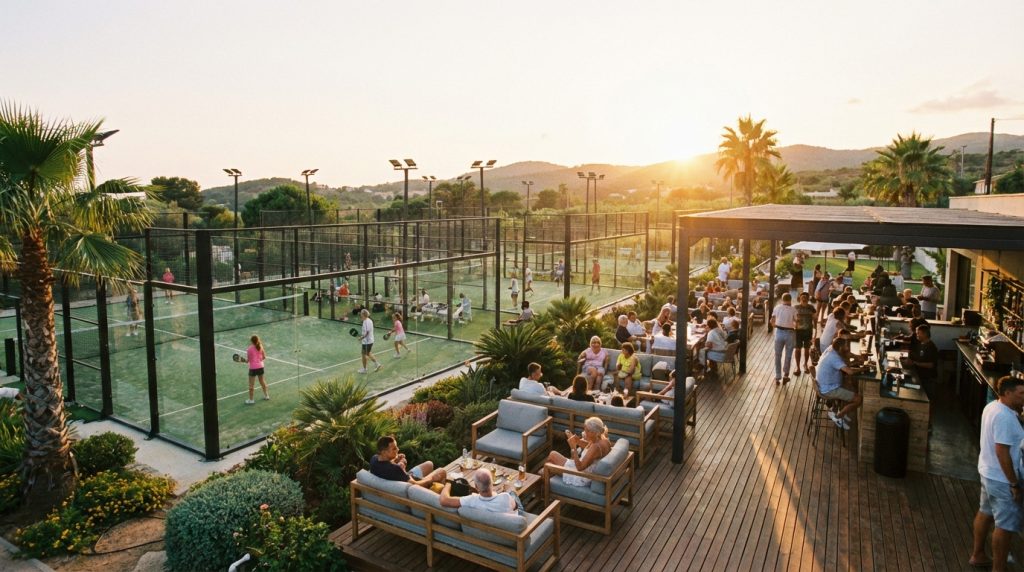
Ultimately, the cultural padel meaning is about building a vibrant community where sport acts as a social glue. Because the game is easy to learn, it brings together people of different generations and fitness levels. You will often find that the “third half”—socializing after the match—is just as important as the game itself.
Why is padel growing so quickly?
The rapid growth is driven by the fact that four people can share a relatively small space, making it highly efficient for club owners and developers. It offers a higher “return on movement” than almost any other amateur sport.
Simply put:
- Clubs become social hubs for families.
- Mixed-ability play is actually possible and fun.
- It provides a sustainable business model for traditional tennis clubs.
Believe it or not: the social aspect is why padel has the highest retention rate of any racket sport in the world.
Key Takeaway: Padel is not just a sport; it is a lifestyle platform that fosters long-term health and social connectivity.
| Growth Factor | Impact on Community |
|---|---|
| High Social Interaction | Increased club membership retention |
| Multi-Generational | Families play together on one court |
| High Turnover | More players per hour than tennis |
The future of the sport lies in its ability to adapt to diverse urban environments while keeping its core social values.
FAQ: Essential Padel Knowledge
Can I play padel if I have a tennis background?
Yes, but you will need to adjust your swing and learn to wait for the ball to bounce off the back glass. Your net-play skills will give you a significant initial advantage, but the tactical use of walls is a new skill you must master.
What’s the best way to maintain an outdoor court?
Regularly brushing the artificial turf is essential to keep the silica sand evenly distributed and prevent the fibers from flattening. You should also check the tension of the metallic fence and ensure the glass panels remain clean for maximum visibility.
How do I know if a racket is too heavy for me?
If you experience fatigue in your forearm or wrist after only 30 minutes of play, your racket is likely too heavy. Beginners should stay within the 350g to 360g range to ensure they can maneuver the racket quickly at the net.
Can I build a padel court in my backyard?
Yes, provided you have a clear area of at least 11×21 meters to allow for the structural footings and a small safety perimeter. You should also check local planning regulations regarding light pollution and noise if you intend to install LED floodlights.
What’s the best footwear for playing on artificial turf?
You should use specific padel or clay-court tennis shoes with an “omni” or “herringbone” sole pattern. This provides the necessary grip on the sand-filled turf while allowing for the controlled sliding movements required during defensive plays.
Final Considerations for Your Padel Journey
Padel is revolutionizing the global sports landscape by proving that competition and social connection are not mutually exclusive. By mastering the core mechanics, choosing the right equipment, and following professional construction standards, you can create an environment that thrives on movement and community. Whether you are a player looking to improve your game or a developer seeking to capitalize on this trend, the opportunities are vast.
Our vision is to provide every enthusiast with the technical clarity needed to foster this incredible sport. If you are ready to take the next step in facility development or player certification, contact us today to discuss your project. Together, we can build the future of racket sports, one court at a time.