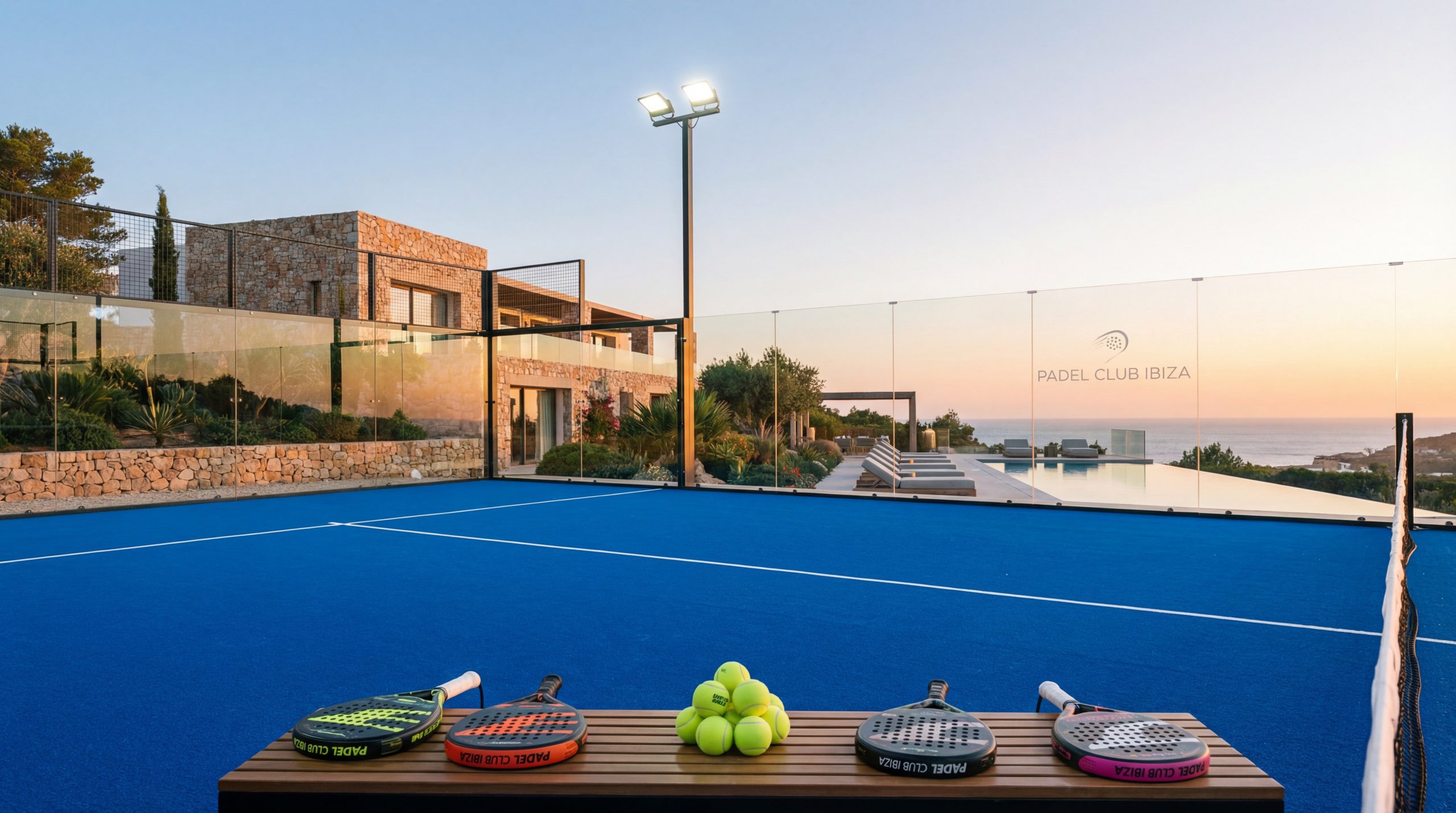
A padel ball court is a 20m x 10m sports enclosure featuring glass walls and artificial turf, and you build it by laying a reinforced concrete foundation followed by the installation of a structural steel frame and tempered safety glass. This comprehensive guide details the technical specifications and construction phases required for a world-class facility.
Problem: Many facility owners struggle with underutilized space and declining interest in traditional tennis courts which require high maintenance and large footprints.
Agitate: This wasted square footage represents a significant loss in potential revenue while modern athletes increasingly demand social, high-intensity sports that are easier to learn.
Solution: By constructing a premium padel facility, you can maximize player density per square meter and tap into the fastest-growing global racket sport market today.
What is a padel ball court and how is it used?
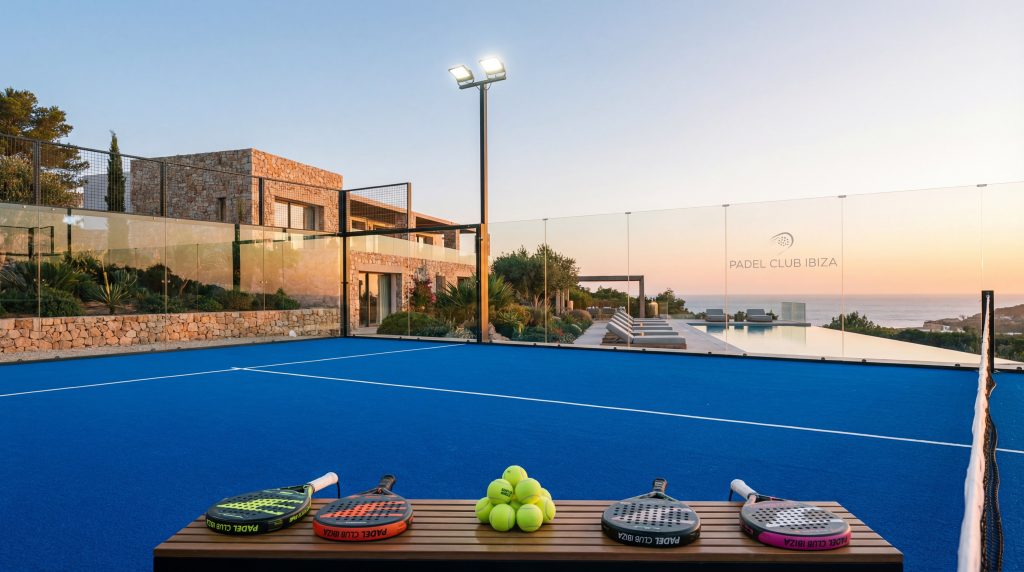
A padel ball court is a specialized sports environment designed for a fast-paced racket game, and it is used for social or competitive play within a glass-enclosed arena. The structure integrates the tactical elements of tennis with the rebounding dynamics of squash to create a unique athletic experience.
The basic definition of the game
Look:
Padel is predominantly played in doubles on a court that is significantly smaller than a standard tennis court. The surrounding walls are an active part of the game, allowing players to play the ball off the glass to sustain long, exciting rallies.
- Dimensions: 20 meters long by 10 meters wide.
- Scoring: Identical to traditional tennis.
- Equipment: Solid stringless rackets and low-compression balls.
Why players love the enclosure
The best part?
The enclosure eliminates the need to constantly chase stray balls, which keeps the game’s tempo high and energy levels peaking. This enclosed design also makes the sport more accessible for beginners who might struggle with the vast space of tennis.
- Social interaction: Players are physically closer together.
- Ease of play: The glass walls provide second chances on difficult shots.
- Strategy over power: Technical placement beats raw strength.
The rising popularity in urban clubs
Here is the deal:
Urban developers are prioritizing these courts because they offer a higher return on investment per square foot compared to almost any other court sport. The compact size allows for four padel courts to fit in the footprint of two tennis courts, doubling your potential booking revenue.
- High turnover: Games are typically fast and social.
- Broad demographic: Suitable for all ages from 6 to 80.
- Low entry barrier: Quick learning curve for new members.
Key Takeaway
| Feature | Benefit |
|---|---|
| Enclosed Walls | Continuous play and strategic depth |
| Compact Size | Higher revenue per square meter |
| Social Format | Increased member retention |
This combination of social engagement and space efficiency makes the court a primary asset for modern sports clubs.
How to build a padel ball court for professional use?
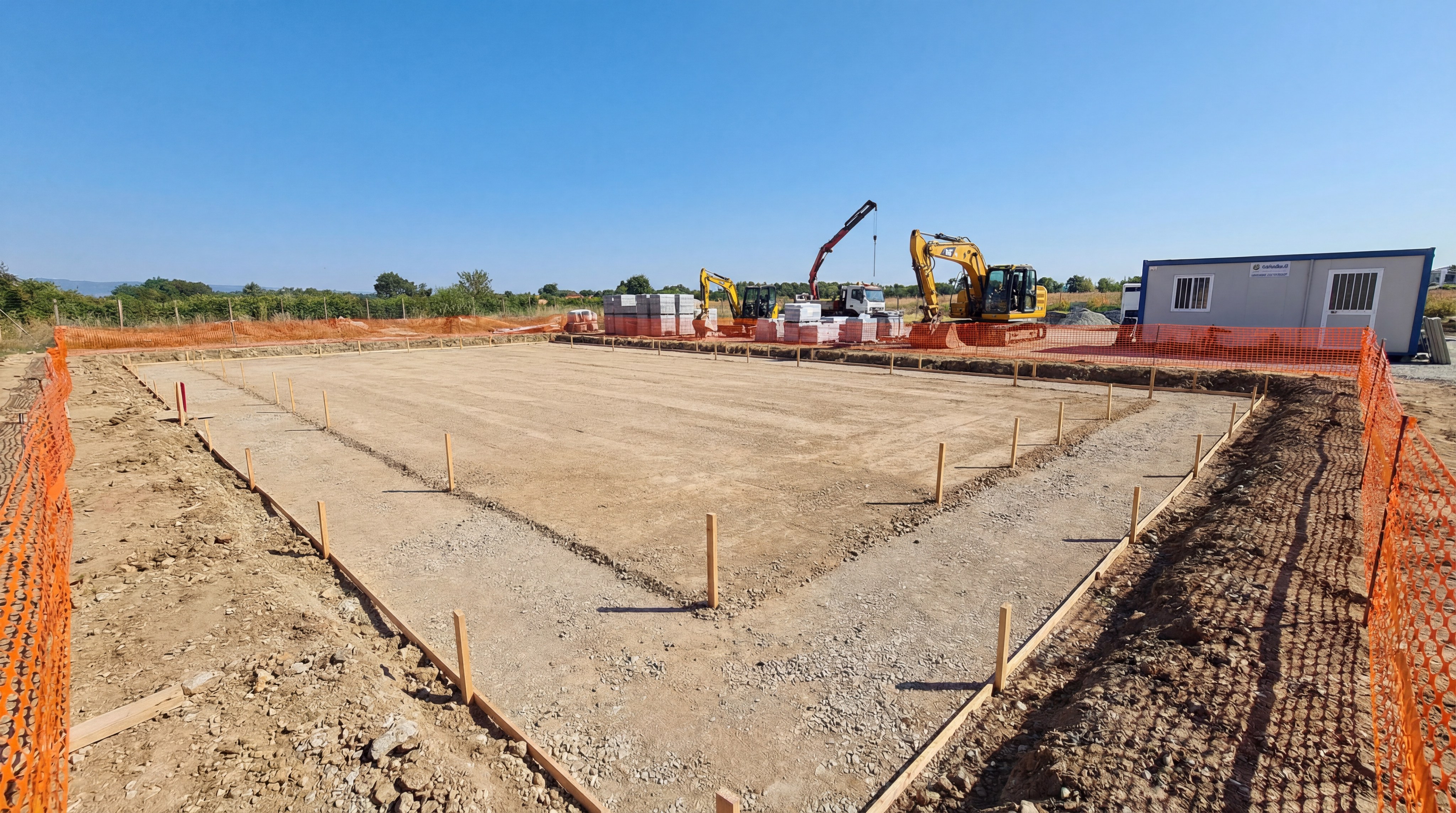
Building a padel ball court for professional use requires a focus on structural stability, high-grade materials, and precise foundation leveling to meet international standards. Following a strict padel court construction protocol ensures the facility remains safe and durable for years of heavy traffic.
Site preparation and ground leveling
Think about it:
The longevity of your court starts beneath the surface with a perfectly leveled concrete or asphalt base. Any minor deviation in the foundation will cause the glass panels to misalign and the turf to wear unevenly over time.
- Excavation: Removing organic material to reach stable soil.
- Drainage: Implementing slopes or porous layers to prevent water pooling.
- Concrete slab: Pouring a reinforced 15cm-25cm base.
Frame and glass assembly
But wait, there’s more:
The steel frame must be treated with anti-corrosive coatings, especially in coastal or humid environments, to prevent structural failure. Once the pillars are anchored, the 10mm or 12mm tempered glass panels are mounted using specialized gaskets to absorb ball impacts.
- Steel pillars: Galvanized and powder-coated for durability.
- Glass panels: Precisely aligned with a 2mm tolerance.
- Hardware: Stainless steel bolts and high-tension mesh.
Final turf and lighting installation
The bottom line:
The final step involves laying high-density polyethylene turf and filling it with kiln-dried silica sand to ensure a consistent bounce. Professional LED lighting must be positioned to provide uniform visibility without creating shadows that distract the athletes.
- Turf stitching: Securely bonded seams to prevent tripping.
- Sand distribution: Evenly brushed for optimal grip.
- LED floodlights: Minimum 500-750 lux for competitive play.
Key Takeaway
| Construction Phase | Critical Quality Factor |
|---|---|
| Foundation | Leveling and drainage efficiency |
| Framing | Corrosion resistance and alignment |
| Finishing | Turf density and lighting uniformity |
Professional construction focuses on long-term durability to minimize future maintenance costs and ensure player safety.
What are the official dimensions of a padel ball court?
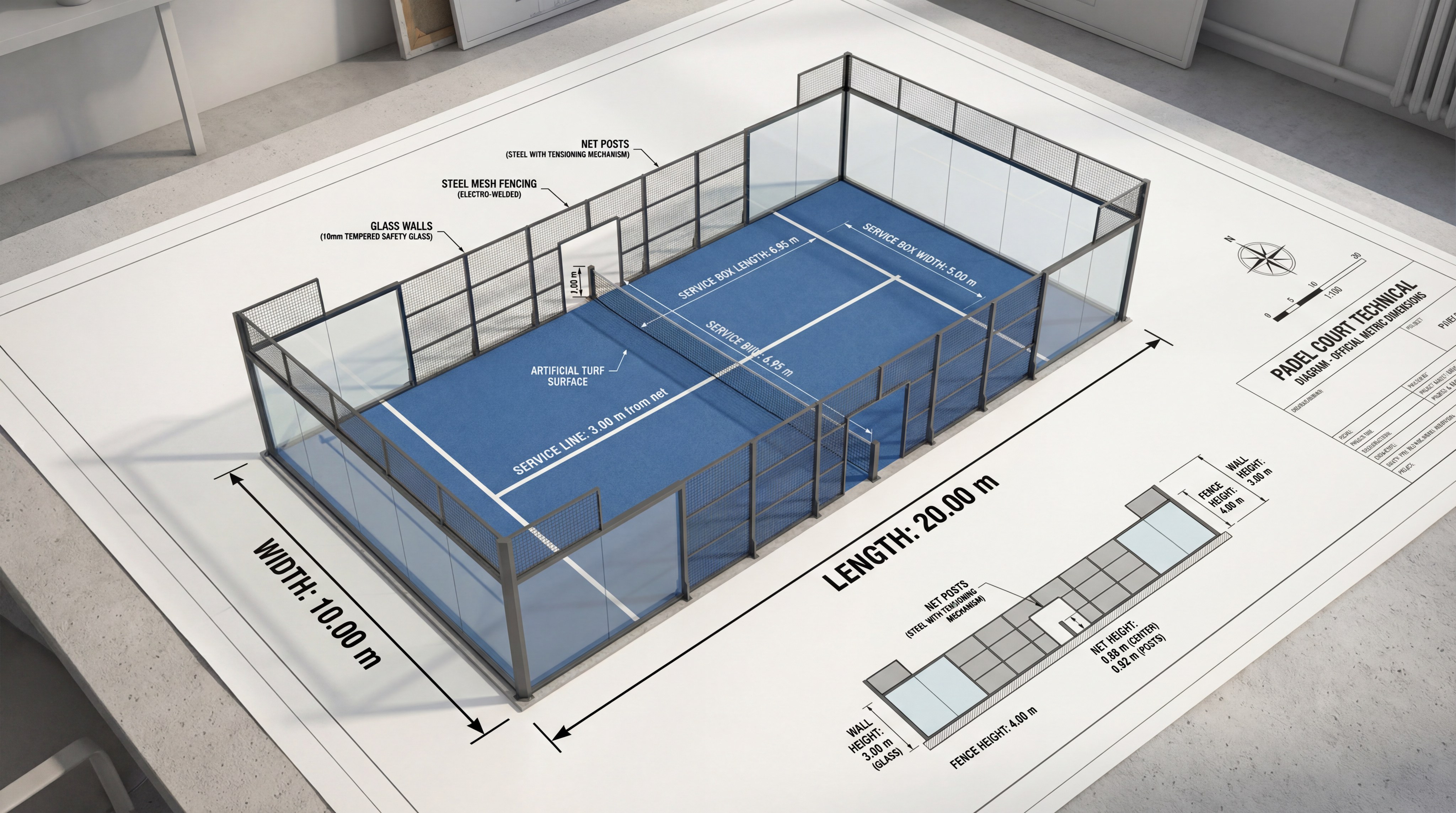
The official dimensions of a padel ball court are strictly defined as a rectangle measuring 20 meters in length and 10 meters in width, divided by a central net. Adhering to these padel court dimensions is essential for any facility aiming to host sanctioned tournaments or professional training sessions.
Internal playing area measurements
Why does this matter?
Precision in the internal area ensures that every court provides the same player experience, which is vital for competitive fairness. The service lines must be placed exactly 6.95 meters from the net on both sides to maintain the game’s balance.
- Total length: 20.00 meters.
- Total width: 10.00 meters.
- Tolerance: Maximum deviation of 0.5%.
Wall and mesh height requirements
It gets better:
The walls are not a uniform height around the entire perimeter, featuring a mix of glass and metallic mesh. The back walls must be 3 meters high, while the side walls often step down to 2 meters in specific sections to allow for better visibility.
- Rear wall height: 3.00 meters of glass.
- Side mesh height: 4.00 meters at the corners.
- Mesh gauge: Typically 50mm x 50mm diamond or square pattern.
Net and post specifications
Listen:
The net must be 10 meters long and suspended at a height of 0.88 meters at the center, rising to 0.92 meters at the side posts. These posts are usually integrated into the structural frame but must remain free of sharp edges to protect players during close-range exchanges.
- Net material: Synthetic fiber with a 45mm mesh size.
- Top band: White PVC band between 5cm and 6.3cm wide.
- Post location: Centered on the 10-meter side lines.
Key Takeaway
| Zone | Dimension Requirement |
|---|---|
| Full Court | 200 square meters total area |
| Service Line | 6.95 meters from the net |
| Net Center | 0.88 meters high |
Consistent dimensions are the foundation of a professional facility, ensuring players can transition between different clubs seamlessly.
How to choose the best surface for a padel ball court?
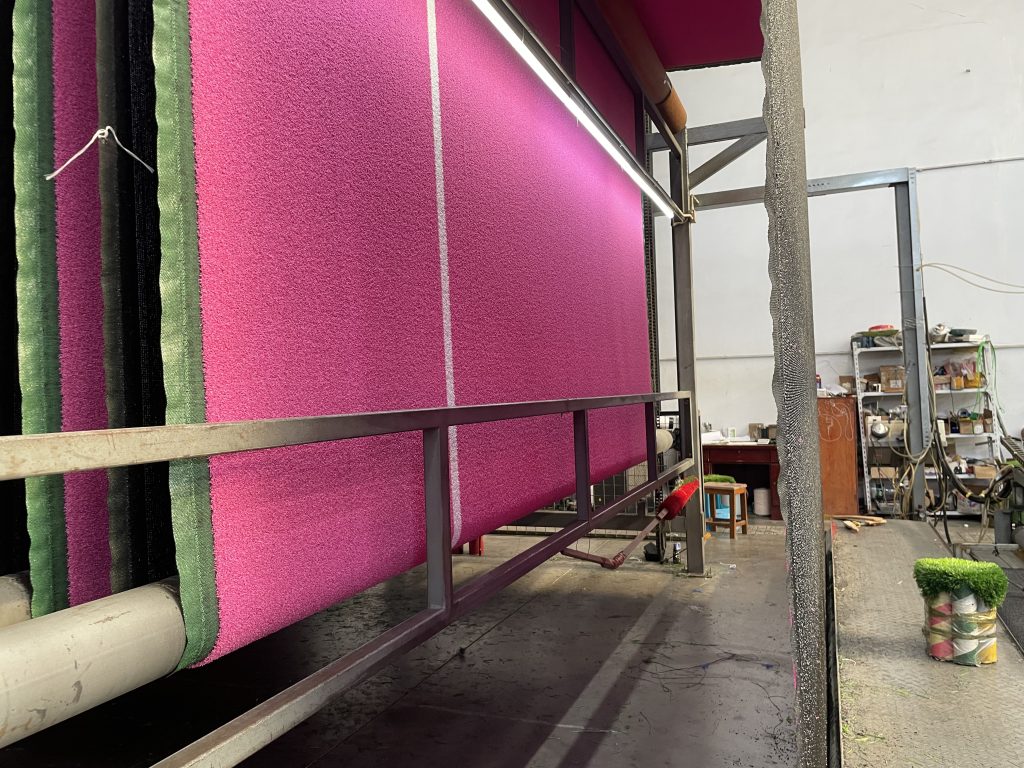
Choosing the best surface for a padel ball court involves evaluating fiber density, sand infill requirements, and the specific climate where the court will be located. Monofilament and textured fibers are the industry standard for professional play because they offer the most consistent ball bounce and player traction.
Monofilament vs fibrillated turf
Truth is:
Monofilament fibers are generally more durable and provide a more natural look, making them the preferred choice for high-end clubs. Textured or “curly” fibers are gaining traction because they trap the sand more effectively, reducing the need for frequent redistribution.
- Monofilament: High resilience and long lifespan.
- Fibrillated: Better initial sand retention but faster wear.
- Pile height: Standard ranges from 10mm to 12mm.
The role of silica sand infill
Look:
The sand is not just for weight; it protects the turf fibers from UV damage and provides the necessary “slide” for players. Without the correct volume of sand, the turf will flatten quickly, and the ball will skid rather than bounce predictably.
- Sand type: Kiln-dried, rounded silica sand.
- Grain size: Usually 0.2mm to 0.5mm for smoothness.
- Volume: Approximately 8kg to 15kg per square meter depending on turf type.
Impact of color on visibility
The best part?
While blue has become the iconic color for padel due to its high contrast with the yellow ball, you can choose from various colors to match your club’s branding. Green remains a popular classic, while terracotta or black are often used for exclusive designer installations.
- Blue: Best for TV broadcasts and high visibility.
- Green: Traditional aesthetic that blends with landscapes.
- Custom colors: Enhance brand identity and club prestige.
Key Takeaway
| Surface Element | Selection Criteria |
|---|---|
| Fiber Type | Monofilament for professional durability |
| Sand Infill | Silica sand for bounce and protection |
| Color | Blue for maximum contrast and modern feel |
The right surface selection balances aesthetic appeal with technical performance to create an elite playing environment.
What materials are needed for a padel ball court structure?
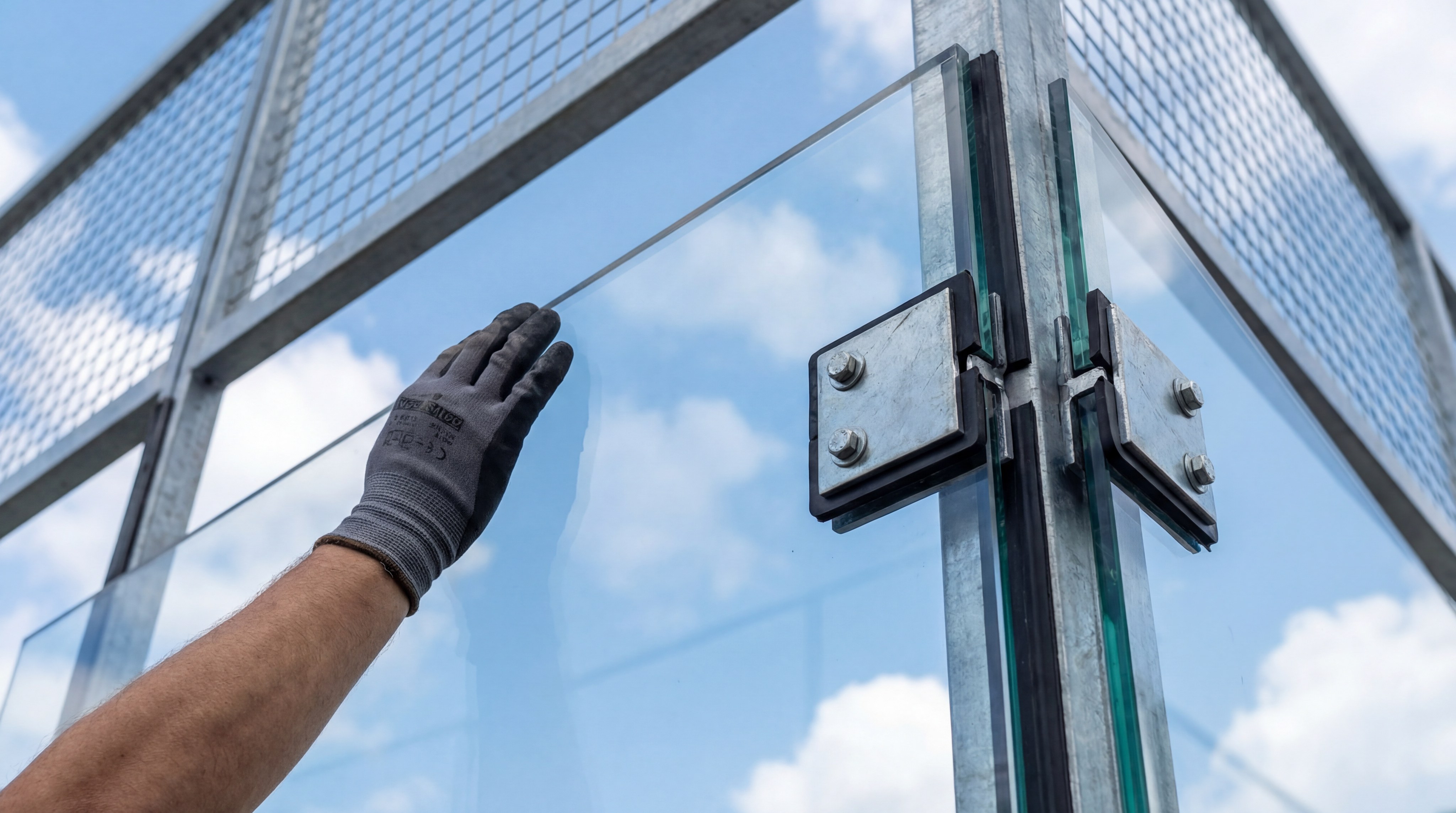
The materials needed for a padel ball court structure include high-strength galvanized steel for the framework, tempered safety glass for the walls, and electro-welded mesh for the side panels. Every component must be engineered to withstand constant vibration from ball impacts and external weather forces.
Structural steel and coatings
Here is the deal:
The framework acts as the skeleton of the court and must be rigid enough to support the weight of the glass panels without flexing. Using hot-dip galvanized steel is non-negotiable if you want to prevent rust from compromising the structure within a few years.
- Steel Grade: S235 or higher for structural integrity.
- Coating: Powder coating with a minimum thickness of 80-100 microns.
- Anchor Bolts: Chemical anchors for secure foundation mounting.
Glass panel specifications
Think about it:
Safety is the priority when selecting glass, which is why 10mm or 12mm tempered glass is the global standard for padel. This glass is designed to crumble into small, harmless pieces in the rare event of a breakage, protecting players from serious injury.
- Thickness: 10mm for standard courts; 12mm for high-impact panoramic.
- Edge work: Polished edges and countersunk holes for flush mounting.
- Standard: CE certified to meet EN 12150-1 safety requirements.
Metallic mesh and hardware
But wait, there’s more:
The mesh panels provide the necessary “give” and sound during the game, requiring a specific wire gauge to prevent warping. All hardware, including screws and washers, should be stainless steel (A2 or A4) to ensure the court remains maintenance-free for longer periods.
- Wire diameter: 3mm to 4mm for structural rigidity.
- Mesh design: Anti-injury flush joints where panels meet.
- Gaskets: EPDM rubber between glass and steel to absorb shock.
Key Takeaway
| Material | Primary Function |
|---|---|
| Galvanized Steel | Load-bearing stability and rust prevention |
| Tempered Glass | Predictable bounce and player safety |
| Stainless Hardware | Longevity and structural reliability |
High-quality materials are an investment that pays off through reduced repair costs and enhanced safety for your members.
How to install lighting for a padel ball court?
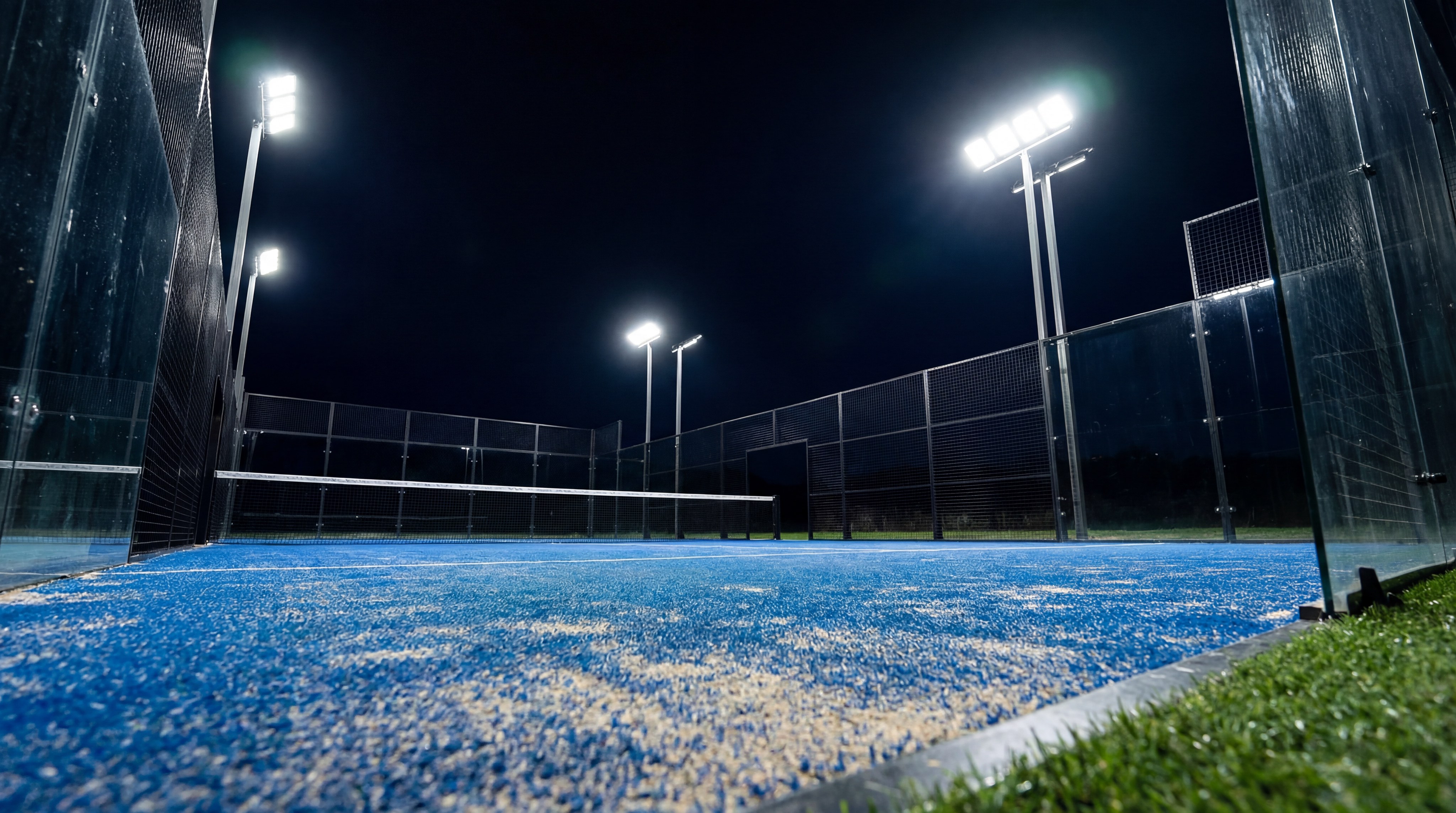
Installing lighting for a padel ball court requires placing four to eight LED floodlights on 6-meter poles to ensure even illumination across the playing surface. Proper lighting design focuses on reaching a minimum lux level while minimizing glare that can interfere with high-speed volleys and overhead shots.
Optimal lux levels for play
The bottom line:
For recreational play, 300-400 lux is sufficient, but professional and televised courts require 750 lux or higher to ensure clarity. Consistent lighting prevents “dead spots” where players might lose sight of the ball during fast transitions.
- Recreational: 300 Lux average.
- Competitive: 500-750 Lux average.
- Uniformity: A ratio of 0.7 or higher across the court.
Pole placement and height
Why does this matter?
Lighting poles are typically 6 meters high and must be positioned outside the playing area to avoid being a physical hazard. Most modern designs integrate the poles into the court’s structural corners or side frame to maintain a clean aesthetic and maximize space.
- Height: Standard 6 meters for optimal light spread.
- Position: Strategic placement to cover the center and corners.
- Material: Same galvanized steel as the court frame.
Minimizing glare and light spill
Listen:
Advanced LED optics are designed to direct light strictly onto the court, which is essential for indoor facilities or courts located near residential areas. Asymmetric lenses help tilt the light beam so that it doesn’t shine directly into the eyes of a player looking up for a smash.
- Asymmetric optics: Directs light downward and inward.
- Instant-on: LEDs eliminate the warm-up time of old halide lamps.
- Energy efficiency: Reduces operational costs by up to 60%.
Key Takeaway
| Lighting Factor | Professional Standard |
|---|---|
| Illuminance | 500+ Lux for club competition |
| Pole Height | 6 meters for wide distribution |
| Lens Type | Asymmetric to reduce player glare |
Strategic lighting extends your court’s usable hours into the night, significantly increasing your daily booking potential and revenue.
What is the cost of building a padel ball court?
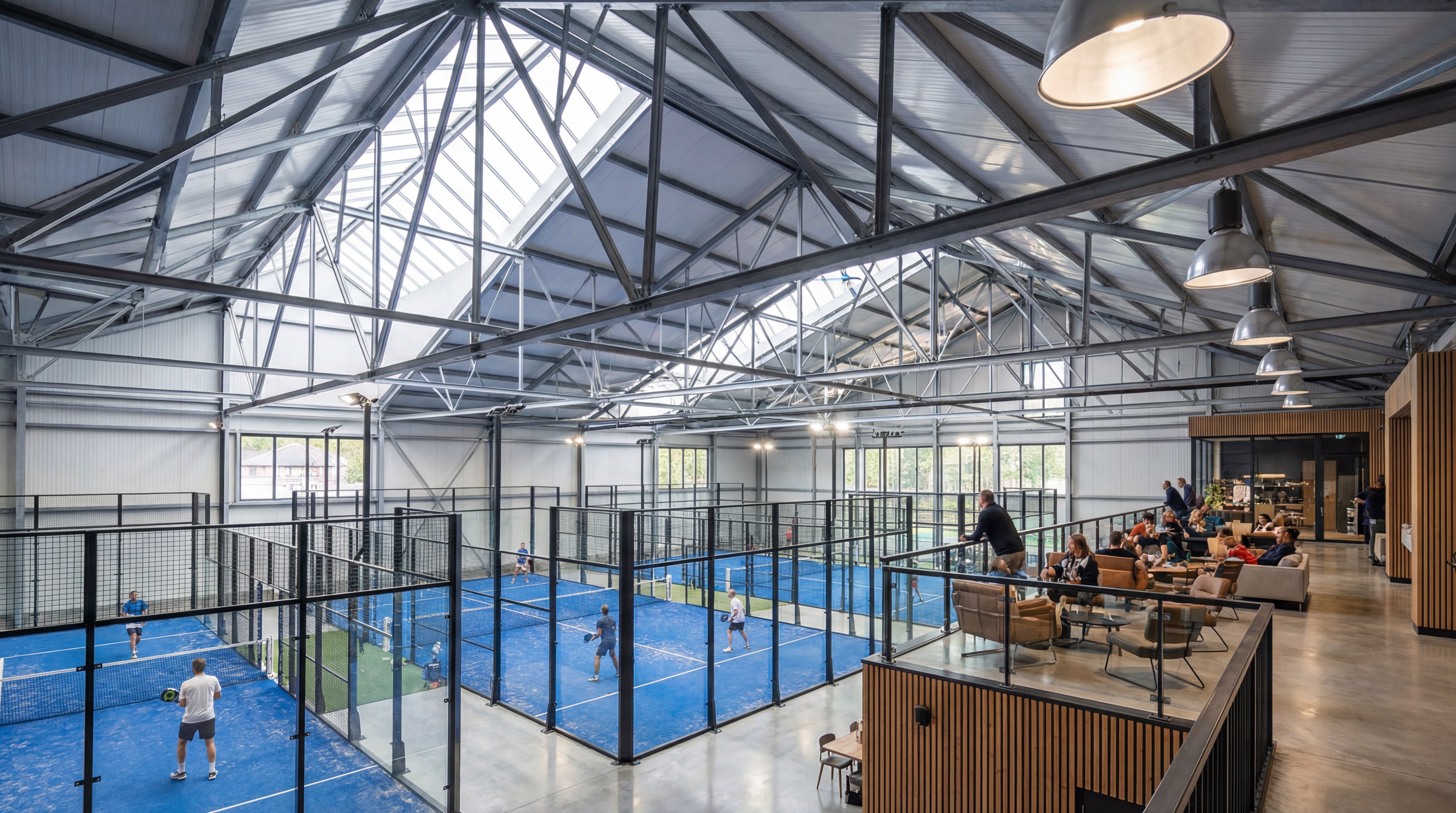
The cost of building a padel ball court typically ranges from $20,000 to $50,000 per court, depending on the model, location, and ground preparation requirements. While the initial investment might seem high, the low maintenance costs and high player density often result in a full ROI within 18 to 24 months.
Factors influencing the price
It gets better:
The complexity of your site’s topography is often the biggest variable, as heavy excavation or retaining walls can double your foundation costs. Choosing premium features like panoramic glass or customized frame colors will also add to the final invoice but can justify higher booking rates.
- Court model: Standard vs. Panoramic vs. Portable.
- Lighting: Number of LED fixtures and control systems.
- Freight: Distance from the manufacturer to your site.
Operating expenses and ROI
Truth is:
Operating a padel court is remarkably inexpensive because it requires no water, minimal electricity for LEDs, and very few staff members. When you consider that four players pay for one hour on a small footprint, the revenue potential per square meter is vastly superior to tennis or swimming pools.
- Staffing: Can be fully automated with booking apps.
- Maintenance: Monthly brushing and glass cleaning.
- Electricity: Modern LED systems are highly efficient.
Long-term financial benefits
Look:
Building multiple courts at once often reduces the per-unit cost due to shared mobilization of construction crews and shipping containers. A multi-court facility creates a “club atmosphere” that encourages players to stay longer and spend more on peripherals like food and beverage.
- Economy of scale: 10-15% savings on bulk installations.
- Sponsorships: Glass walls provide prime real estate for local ads.
- Membership growth: Padel attracts a new, affluent demographic.
Key Takeaway
| Expense Category | Estimated Range |
|---|---|
| Court Hardware | $18,000 – $35,000 |
| Groundwork/Base | $8,000 – $20,000 |
| Installation | $3,000 – $7,000 |
Investing in a high-quality court ensures that your facility remains a premium destination, allowing you to charge top-tier rental prices.
How to maintain a padel ball court for longevity?
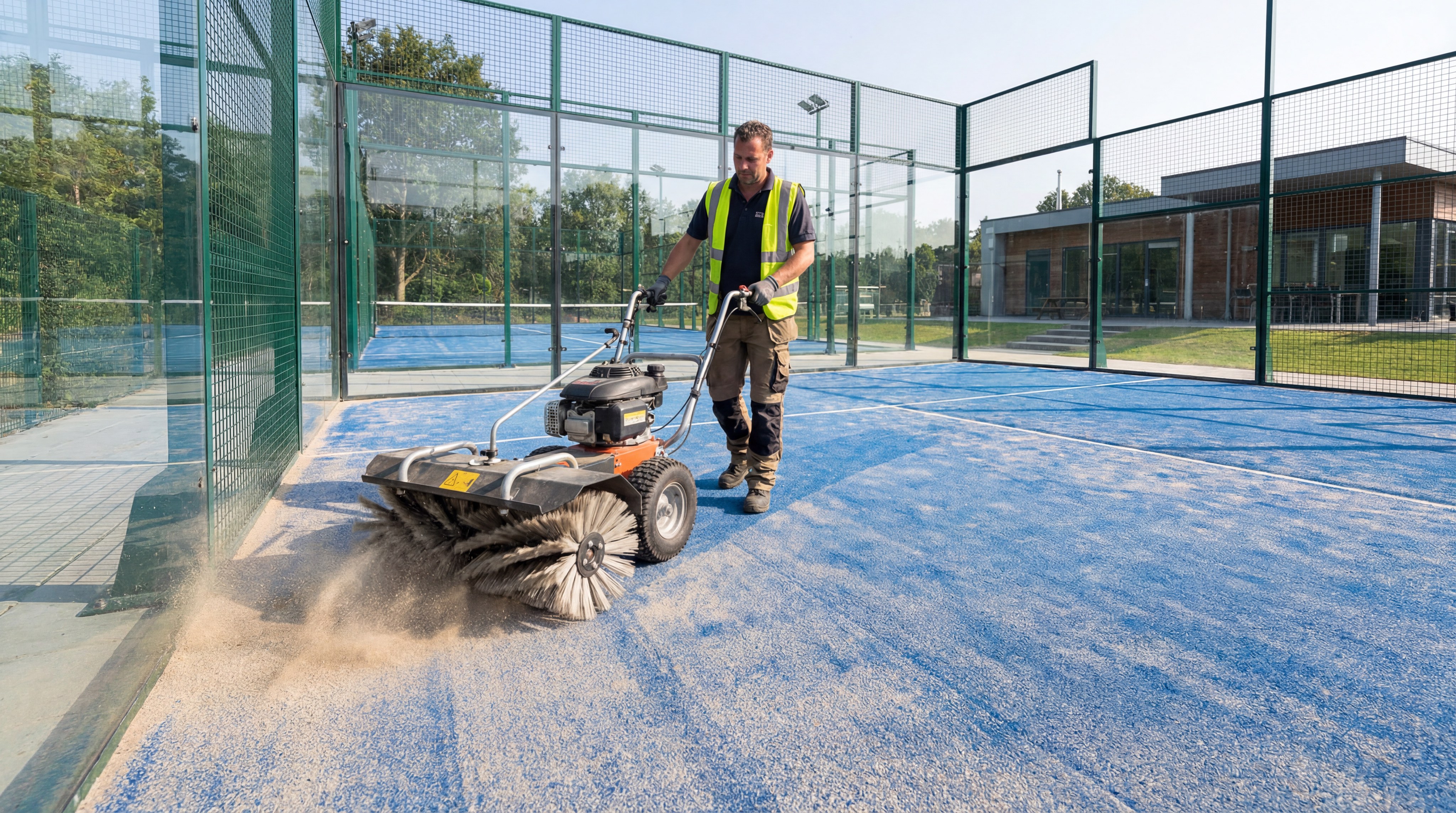
Maintaining a padel ball court for longevity involves a routine schedule of turf brushing, glass cleaning, and structural bolt inspections. Implementing a consistent padel court maintenance plan prevents the accumulation of debris and ensures the playing surface remains safe and high-performing.
Turf brushing and sand leveling
Here is the deal:
Sand tends to migrate toward the corners and edges over time, leaving the high-traffic center areas exposed and slippery. Regular brushing redistributes this sand, which prevents the turf fibers from flattening and breaking under the friction of player movement.
- Frequency: Once every 2-4 weeks depending on usage.
- Tool: Soft-bristle mechanical or manual brush.
- Benefit: Maintains consistent ball bounce and player grip.
Glass and frame cleaning
The best part?
Clean glass is not just about aesthetics; it ensures that players have a clear view of the surroundings and prevents the buildup of abrasive dust that can scratch the panels. You should also periodically wipe down the steel frame to remove sweat and salt, particularly in outdoor or coastal locations.
- Glass: Standard water and squeegee method works best.
- Frame: Mild soap and water to preserve the powder coating.
- Inspection: Check for chips or cracks in glass panels monthly.
Structural safety checks
Think about it:
The vibrations from thousands of ball impacts and player collisions can slowly loosen the bolts that hold the structure together. A quick quarterly walk-through to tighten anchor bolts and check mesh tension will prevent small issues from becoming major structural hazards.
- Anchor bolts: Ensure they are tight and the base is stable.
- Mesh tension: Check for sagging or loose wire segments.
- Lighting: Clean the LED lenses to maintain maximum brightness.
Key Takeaway
| Task | Frequency |
|---|---|
| Sand Brushing | Bi-weekly |
| Glass Cleaning | Weekly |
| Bolt Inspection | Quarterly |
Proactive maintenance not only extends the life of your court but also protects you from liability issues related to equipment failure.
What are the benefits of a panoramic padel ball court?
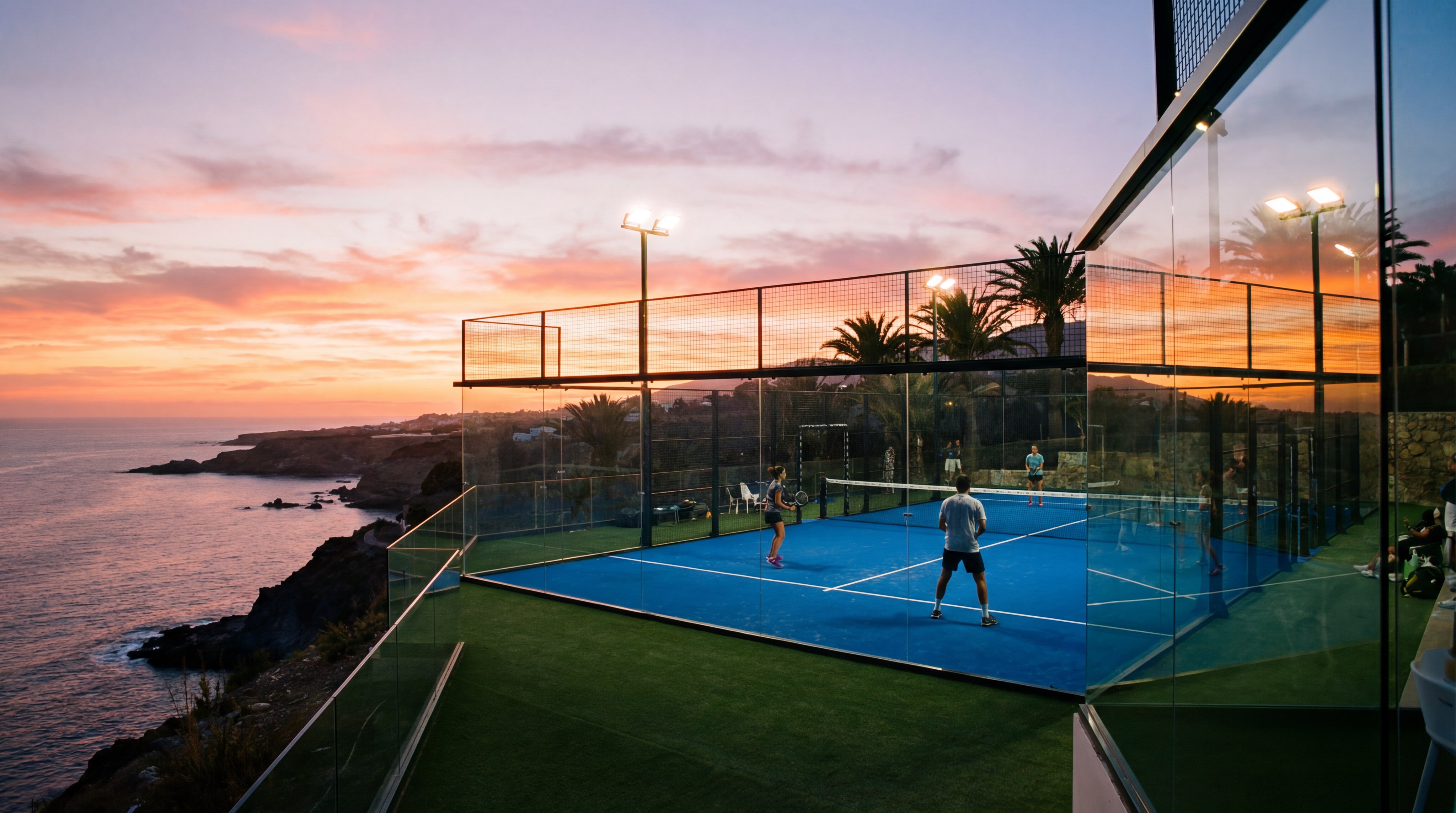
A panoramic padel ball court offers an unobstructed view of the game by removing the central steel pillars from the back walls, using thicker tempered glass for structural support. Installing a panoramic padel court is the ultimate way to create a premium, “center court” feel that attracts both spectators and high-level players.
Enhanced visibility for spectators
But wait, there’s more:
The removal of vertical steel beams means that fans and cameras have a perfect line of sight from any angle around the court. This makes panoramic models the standard for tournament play where broadcasting and spectator engagement are top priorities.
- No blind spots: Clean, continuous glass surfaces.
- TV Friendly: Better angles for recording and streaming.
- Prestige: Acts as a centerpiece for any sports club.
Structural engineering differences
Listen:
Because the steel pillars are removed, the glass panels must be 12mm thick and are often reinforced with glass “fins” or heavier top rails to maintain stability. This design requires more precise engineering and higher-quality materials to ensure the court can handle the same impact forces as a standard model.
- Glass thickness: Upgraded from 10mm to 12mm.
- Framing: Heavier perimeter beams to compensate for fewer pillars.
- Aesthetics: Sleek, modern look that increases property value.
Improved player experience
The bottom line:
Players feel less enclosed and more connected to the surrounding environment, which is especially powerful in scenic outdoor locations. The psychological impact of playing on a “pro-style” court often leads to higher booking demand and allows you to charge a premium for these specific courts.
- Open feel: Reduces the “caged” sensation of standard courts.
- Elite status: Players perceive panoramic courts as higher quality.
- High Demand: Typically the first courts to be booked in a facility.
Key Takeaway
| Feature | Impact |
|---|---|
| No Rear Pillars | 360-degree spectator visibility |
| 12mm Glass | Superior safety and structural feel |
| Modern Design | Higher rental rates and club prestige |
A panoramic court is a strategic investment for clubs that want to stand out in a competitive market and host professional events.
How to find a contractor for a padel ball court project?
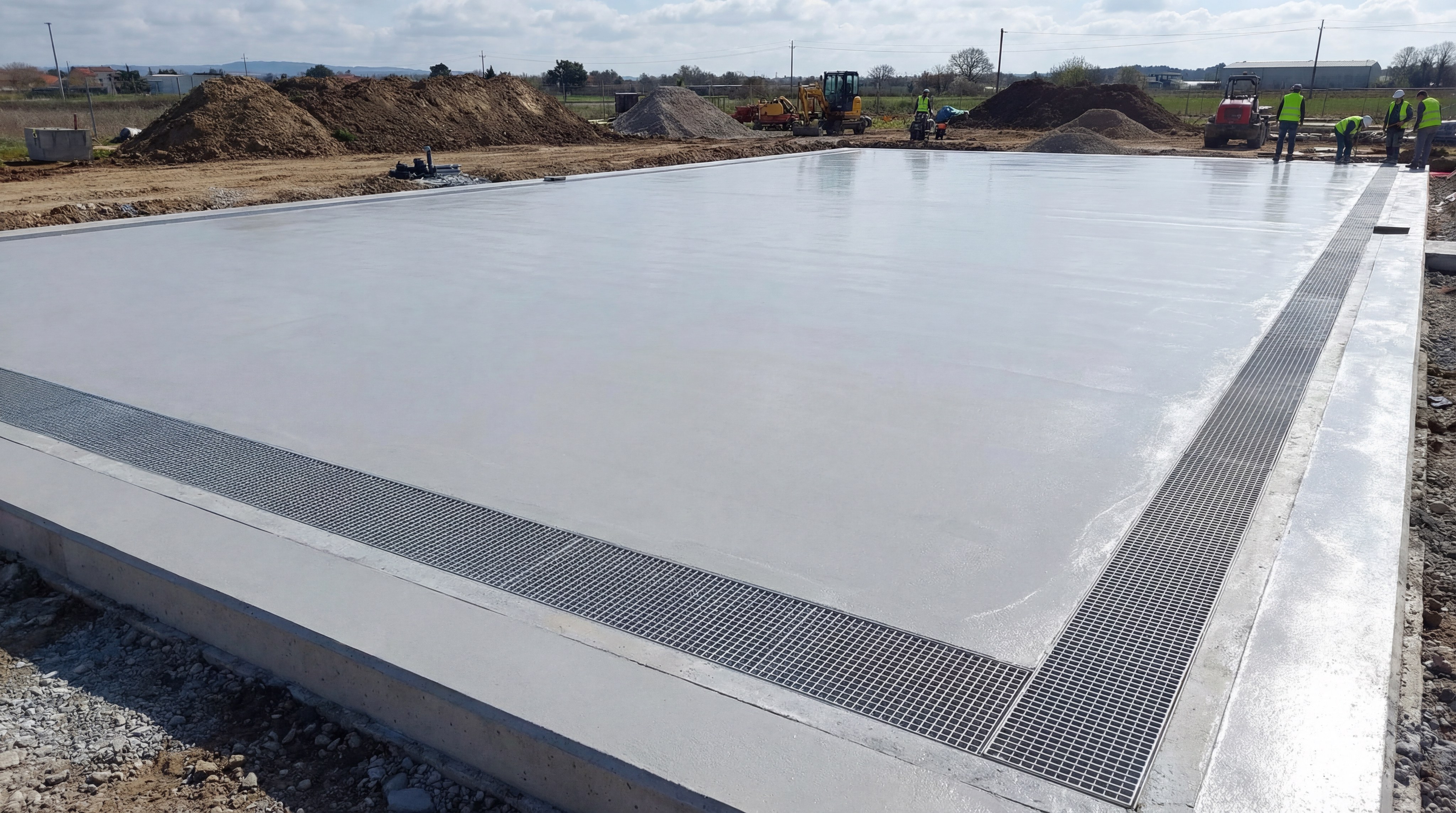
Finding a contractor for a padel ball court project requires vetting companies for their experience with specialized sports infrastructure and their ability to handle both groundworks and assembly. Choosing a specialist who offers a portable padel court option or permanent installations ensures you receive a product that meets international safety standards.
Verifying technical expertise
Look:
A standard general contractor may not understand the precision required for padel foundations or the tensioning needed for the metallic mesh. You need a team that has a documented history of successful installations and can provide technical drawings for your local building permits.
- Experience: Ask for a list of completed projects.
- Certifications: Ensure they follow FIP (International Padel Federation) specs.
- Documentation: Request foundation and structural engineering plans.
Portfolio and site visits
The best part?
A reputable contractor will be happy to show you their previous work so you can inspect the quality of the turf seams and the alignment of the glass panels. Visiting an existing court allows you to talk to other owners about the contractor’s reliability and after-sales service.
- Finish quality: Check for smooth edges and level turf.
- Durability: See how their older courts are holding up.
- Client feedback: Verify their communication and timeline adherence.
Warranty and support services
Here is the deal:
The best contractors offer comprehensive warranties covering the steel structure against rust and the turf against UV degradation. You should also ensure they provide a maintenance package or training for your staff so the court remains in top condition after they leave.
- Structure warranty: Typically 5 to 10 years.
- Turf warranty: Usually 3 to 5 years against fiber loss.
- Support: Fast response times for glass replacement or repairs.
Key Takeaway
| Criteria | What to Look For |
|---|---|
| Specialization | Focus on padel rather than general tennis |
| References | Direct contact with previous club owners |
| After-Sales | Clear maintenance and repair protocols |
Selecting the right partner is the most critical decision in your construction journey, as it determines the safety and success of your investment.
Frequently Asked Questions
Can I install a padel ball court in my backyard?
Yes, provided you have a flat area of at least 21m x 11m and meet local zoning and noise ordinances. You will need a proper concrete foundation and access for heavy machinery to deliver the glass and steel components.
What’s the best way to clean the glass panels?
The most effective method is using a standard window squeegee with water and a mild, non-abrasive detergent. Avoid using harsh chemicals or rough sponges that could scratch the tempered surface or damage the structural powder coating.
Can I convert an old tennis court into padel courts?
Absolutely, and this is a common practice because a single tennis court footprint can accommodate up to three padel courts. You will typically need to reinforce the existing slab to support the concentrated weight of the glass walls and steel pillars.
How long does the construction process take?
The actual assembly of the court takes about 1-2 weeks, but the entire project—including foundation curing and ground preparation—usually spans 4 to 8 weeks. Timelines can vary based on weather conditions and the speed of local permitting processes.
Does a padel court require a lot of electricity?
Modern LED systems are very efficient, typically consuming between 1.2kW and 2.0kW per hour for the entire court. If you use automated sensors or timers, you can further reduce costs by ensuring lights are only on during active play.
Build Your World-Class Facility
The global demand for padel is reaching unprecedented levels, and there has never been a better time to invest in your own facility. Whether you are a club owner looking to modernize or a developer seeking a high-yield amenity, a professionally built court is the answer. Contact us today to receive a customized quote and take the first step toward launching your successful padel project.