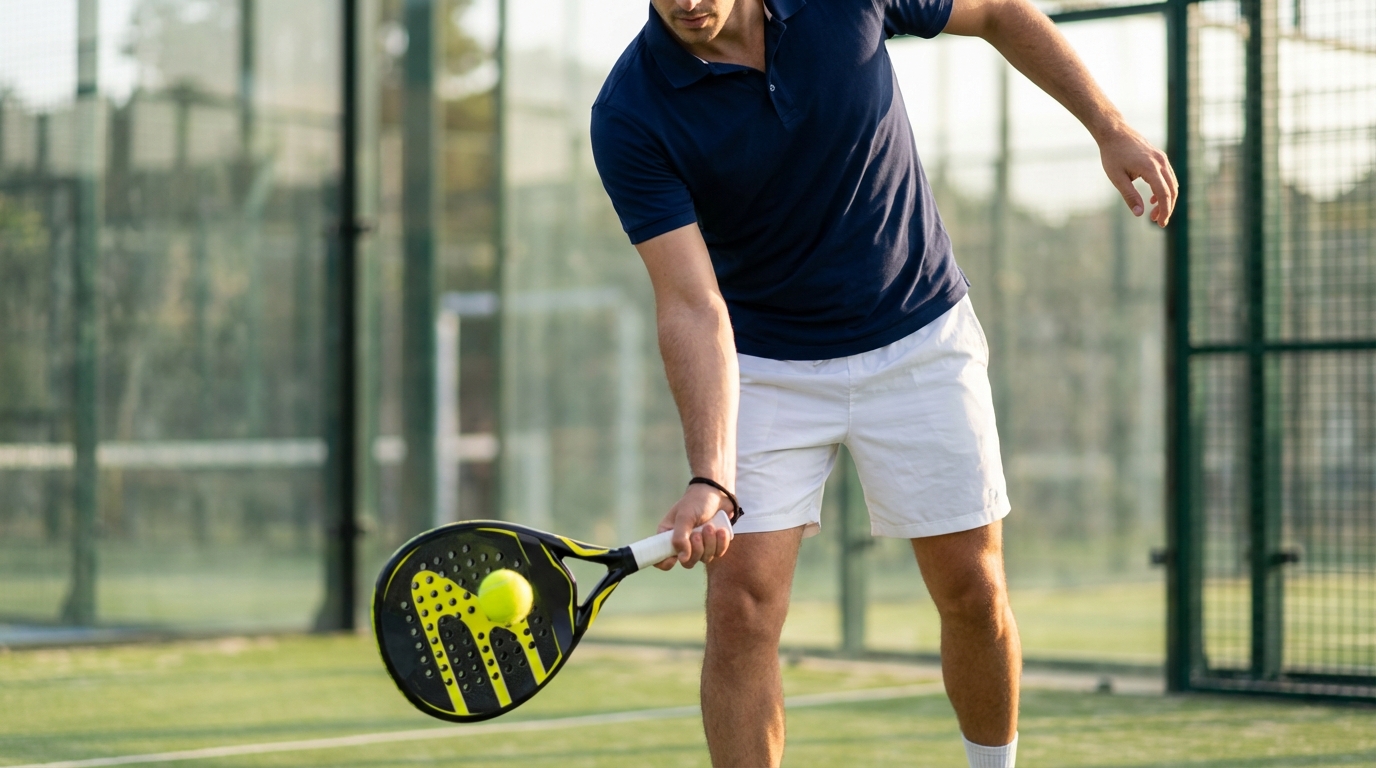
The padel ball game is a high-energy racket sport played in an enclosed court that blends the best elements of tennis and squash. You might find traditional racket sports too demanding on the joints or too difficult to master as a beginner. This frustration often leads people to give up on active social hobbies before they truly begin. This sport solves that problem by offering a smaller court, simpler gear, and a focus on social doubles play that anyone can enjoy.
What defines the padel ball game experience?
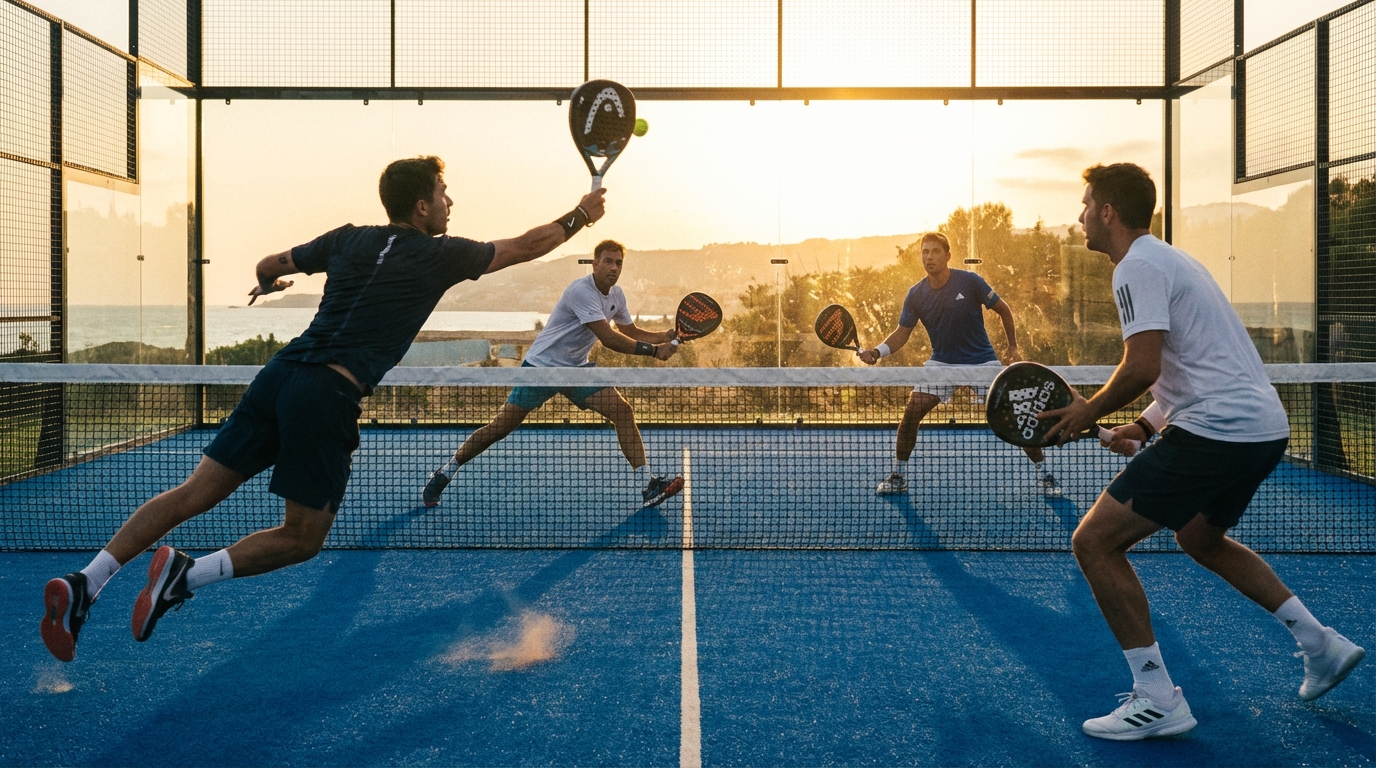
The experience is defined by rapid-fire volleys and the unique ability to play the ball off the surrounding glass walls. You will find that the game rewards tactical positioning and patience over raw serving power.
Core Gameplay Mechanics
You play the game primarily in doubles, which creates a collaborative and highly social environment on the court.
Consider this:
- The ball must bounce once before hitting the glass or mesh walls.
- You serve underhand, making the start of every point accessible.
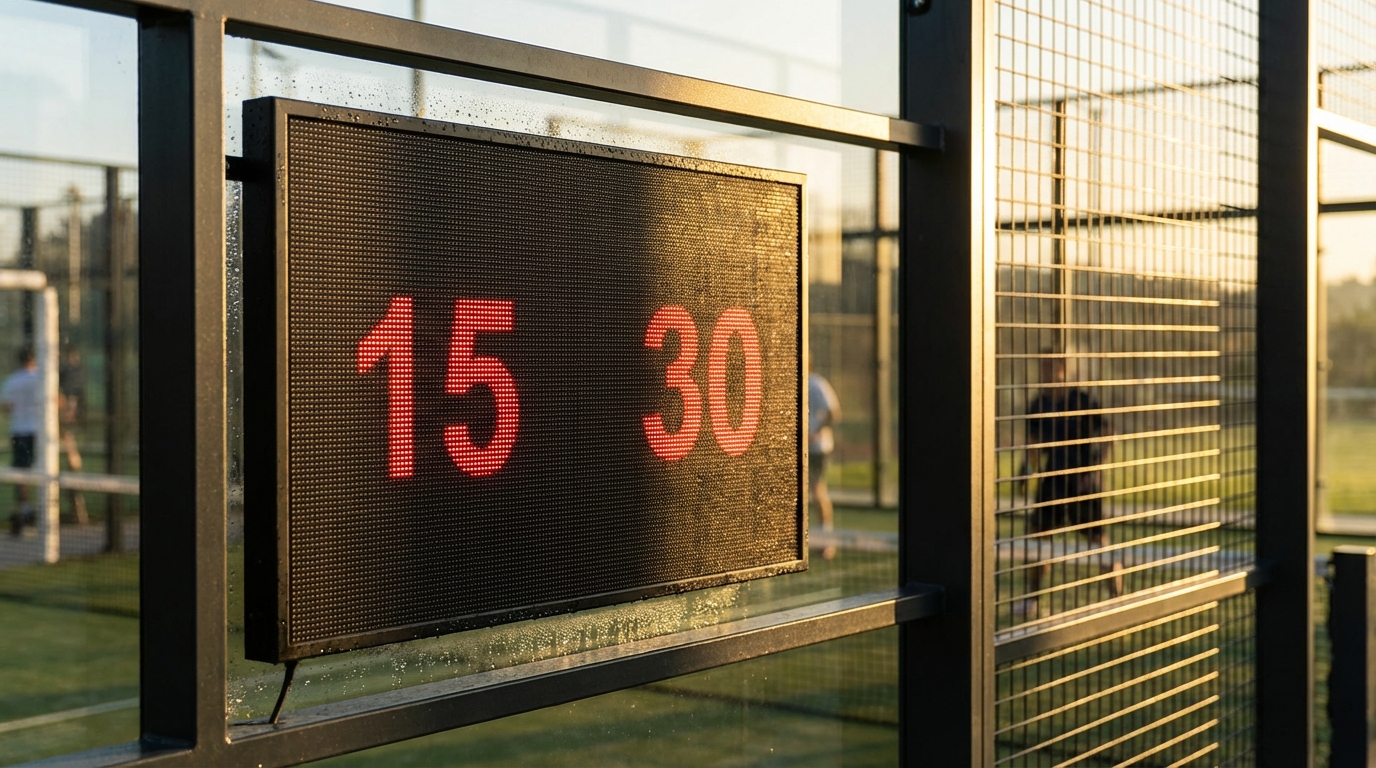
- Points follow the traditional tennis scoring system of 15, 30, and 40.
- Strategy involves using the walls to catch opponents out of position.
The compact court size keeps the action fast and engaging for all four players involved. You will quickly learn that “working the point” is more effective than trying to hit winners immediately.
Unique Tactical Depth
The glass walls transform the court into a 3D playing field where the ball is rarely ever truly out of reach.
Think about this:
- Back-wall rebounds allow you to return shots that would be winners in tennis.
- The side metallic mesh creates unpredictable bounces that challenge your reflexes.
- Players often move toward the net together to control the pace of the match.
- High lobs are a primary defensive tool to reset the rhythm of the game.
Key Takeaway: Mastering the geometry of the court walls is the most important skill for advancing from a beginner to an intermediate player.
| Element | Specification | Impact on Play |
|---|---|---|
| Court Size | 10m x 20m | Faster transitions and rallies |
| Wall Material | Tempered Glass | Predictable and tactical rebounds |
| Game Format | Doubles Only | Increased social and team strategy |
This structural design ensures that every match remains dynamic and focused on positioning rather than just physical strength.
How to learn rules for a padel ball game?
You learn the rules by understanding that the ball remains in play after hitting the walls, provided it has already bounced on the turf. This fundamental rule distinguishes the sport from tennis and creates its unique “second-chance” dynamic.
Service and Scoring Rules
You start every point with an underhand serve that must land in the diagonally opposite service box.
Here is the truth:
- You get two serve attempts, just like in a standard tennis match.
- The ball must be hit at or below waist level during the serve.
- After the bounce, the serve cannot hit the side metallic mesh.
- Scoring is identical to tennis, typically played in a best-of-three sets format.
You will find the underhand serve much easier to master, reducing the number of double faults. This allows you and your partners to spend more time actually playing the rallies.
Boundary and Wall Rules
The ball is out of bounds if it hits the walls or fence directly without bouncing on the ground first.
Look at this:
- You can hit the ball against your own glass wall to send it over the net.
- The ball is “dead” if it bounces twice on any side of the court.
- Players are not allowed to touch the net or the opponent’s side at any time.
- If the ball bounces once and then goes over the wall, it is a winning point.
Key Takeaway: Understanding the sequence of “ground then wall” is the foundation of all legal shots and defensive plays in the sport.
| Rule Type | Requirement | Result of Foul |
|---|---|---|
| Service | Below waist level | Fault (Two attempts allowed) |
| In-Play | Bounce before wall | Loss of point |
| Double Bounce | Return before second bounce | Loss of point |
Adhering to these simple boundaries ensures a fair and competitive match for players of all experience levels.
What are the padel ball game court standards?
The standards require a rectangular area 10 meters wide and 20 meters long, divided by a central net. You must ensure the court is enclosed by a combination of transparent glass panels and metallic mesh fencing.
Court Measurements
Each half of the court is a perfect 10×10 meter square, providing a compact and fast-paced playing surface.
It gets better:
- Service lines are positioned 6.95 meters from the central net.
- The net must have a height of 88 centimeters at the center.
- A central line divides the two service boxes on each side of the net.
- Total court length is exactly 20 meters from one back wall to the other.
You need these precise dimensions to maintain the balance of the game’s physics. Even small deviations can make the service boxes too easy or too difficult to target.
Structural Height Standards
The enclosure must reach a specific height to ensure the ball stays contained during high-energy lobs and smashes.
Let’s dive in:
- Rear glass walls must be 3 meters high across the entire back.
- Side walls usually feature 3 meters of glass followed by 1 meter of mesh.
- The total height of the side fencing often reaches 4 meters near the back.
- Indoor facilities require at least 6 meters of overhead clearance for lobs.
Key Takeaway: Standardized dimensions and wall heights are critical for ensuring that the ball’s flight and rebound patterns remain consistent worldwide.
| Feature | Standard Height | Material Requirement |
|---|---|---|
| Back Walls | 3 Meters | 10mm or 12mm Tempered Glass |
| Side Fencing | 4 Meters | Electro-welded Metallic Mesh |
| Indoor Ceiling | 6 Meters (Min) | Obstruction-free clearance |
Following these specifications ensures your facility qualifies for official play and provides the intended user experience.
How to apply rules in a padel ball game?
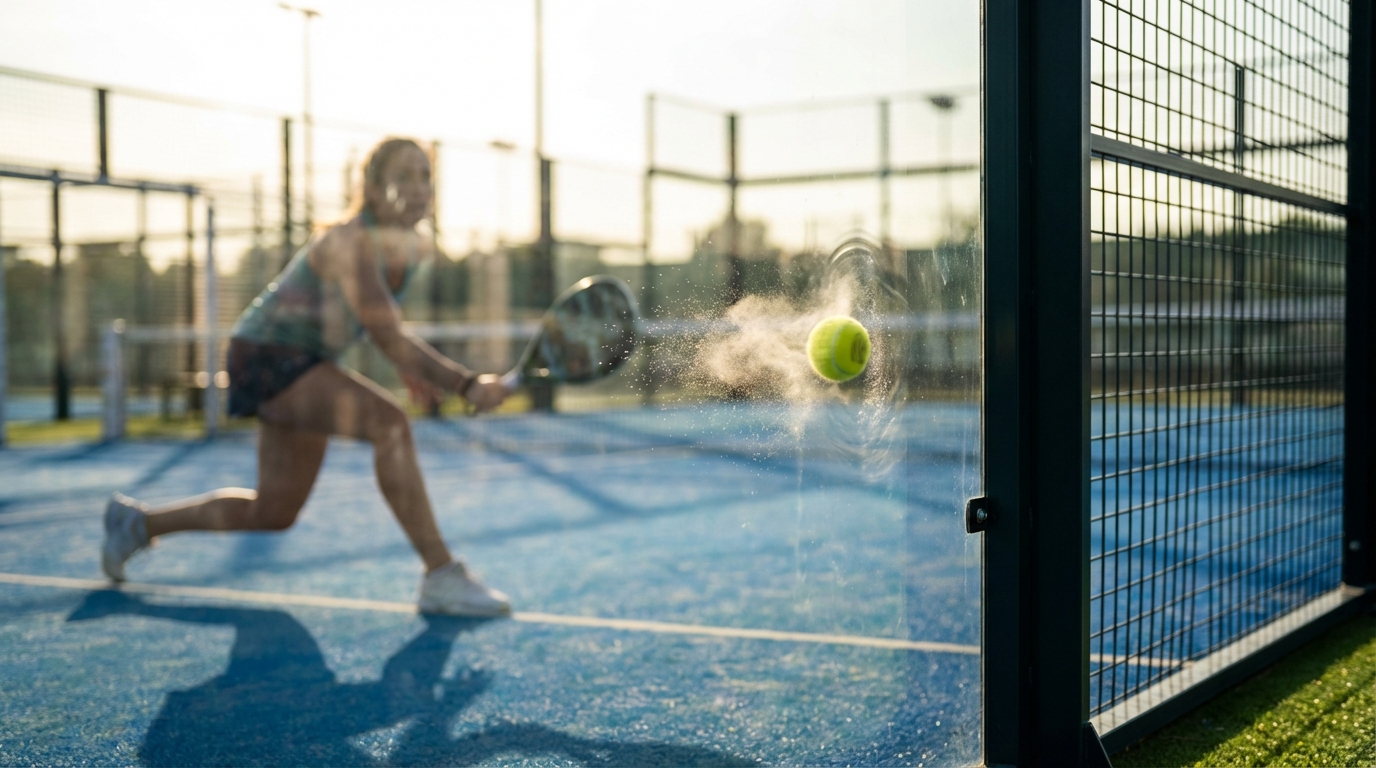
You apply the rules by monitoring the sequence of the ball’s contact with the floor and the surrounding walls. In a professional facility, this requires clear markings and high-quality wall materials that provide consistent feedback to the players.
On-Court Officiating
You must ensure that players understand the difference between a ball hitting the mesh and a ball hitting the glass.
The best part?
- The mesh creates a “dead” or irregular bounce compared to the glass.
- Players should call their own lines to maintain the social spirit of the sport.
- If the ball hits the top edge of the wall, it is still considered in play.
- Points should be replayed if there is any interference from outside the court.
You will find that the enclosed nature of the court makes it much easier to judge whether a ball was in or out. This reduces arguments and keeps the momentum of the match moving forward.
Fair Play Standards
Maintaining the social integrity of the game involves respecting the equipment and the opponent’s space.
Here is a tip:
- You must always wear the racket’s safety strap around your wrist.
- Intentional contact with the glass using the racket is strictly prohibited.
- Communication between doubles partners is encouraged but must be respectful.
- Proper footwear is required to protect the synthetic turf and prevent slipping.
Key Takeaway: Consistent application of boundary rules and safety standards preserves the competitive balance and the lifespan of the facility.
| Action | Legal Status | Consequence |
|---|---|---|
| Wall-to-Wall | Legal (if it bounces first) | Point continues |
| Net Touch | Illegal | Loss of point |
| Out-of-Court Play | Legal (in specific designs) | High-level recovery shot |
Clear rule application fosters a professional atmosphere that attracts serious competitors and recreational enthusiasts alike.
Why is the padel ball game so popular today?
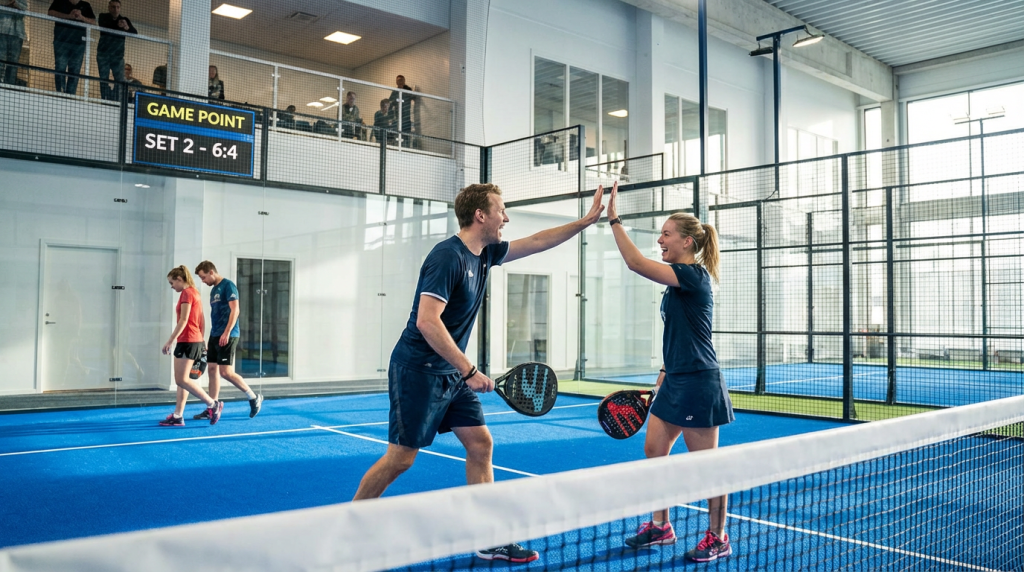
The sport is popular because it provides an immediate sense of accomplishment and a high level of social engagement. You can start playing a competitive match within your first hour of instruction, unlike many other technical racket sports.
Social and Community Benefits
You play in groups of four, which naturally facilitates conversation and community building within clubs.
You might wonder:
- The proximity of players on the court makes it easy to talk during play.
- Mixed-gender and multi-generational matches are extremely common and balanced.
- Clubs often center their layout around a social lounge or cafe area.
- The “team” aspect of doubles reduces the pressure on individual performance.
You will notice that the social bond formed on the court often extends into long-term friendships outside the facility. This community aspect is a primary driver for high player retention rates.
Fitness and Accessibility
The game offers a full-body workout that improves your cardiovascular health and reflexes without the extreme strain of full-court tennis.
The reality is:
- Shorter sprints and rapid changes in direction build core stability.
- The lighter rackets reduce the risk of “tennis elbow” and wrist strain.
- Matches usually last 60 to 90 minutes, providing a high caloric burn.
- Skill gaps are minimized by the strategic nature of the wall rebounds.
Key Takeaway: The combination of low entry barriers and high social rewards makes this the fastest-growing racket sport in the world.
| Benefit Factor | Impact | Target Demographic |
|---|---|---|
| Learning Curve | Very Short | Beginners and families |
| Social Level | High | Corporate and social groups |
| Physical Load | Moderate/High | All ages (7 to 70+) |
The sport’s ability to cater to diverse groups while providing a legitimate workout is why it dominates the modern fitness market.
What gear suits a padel ball game?
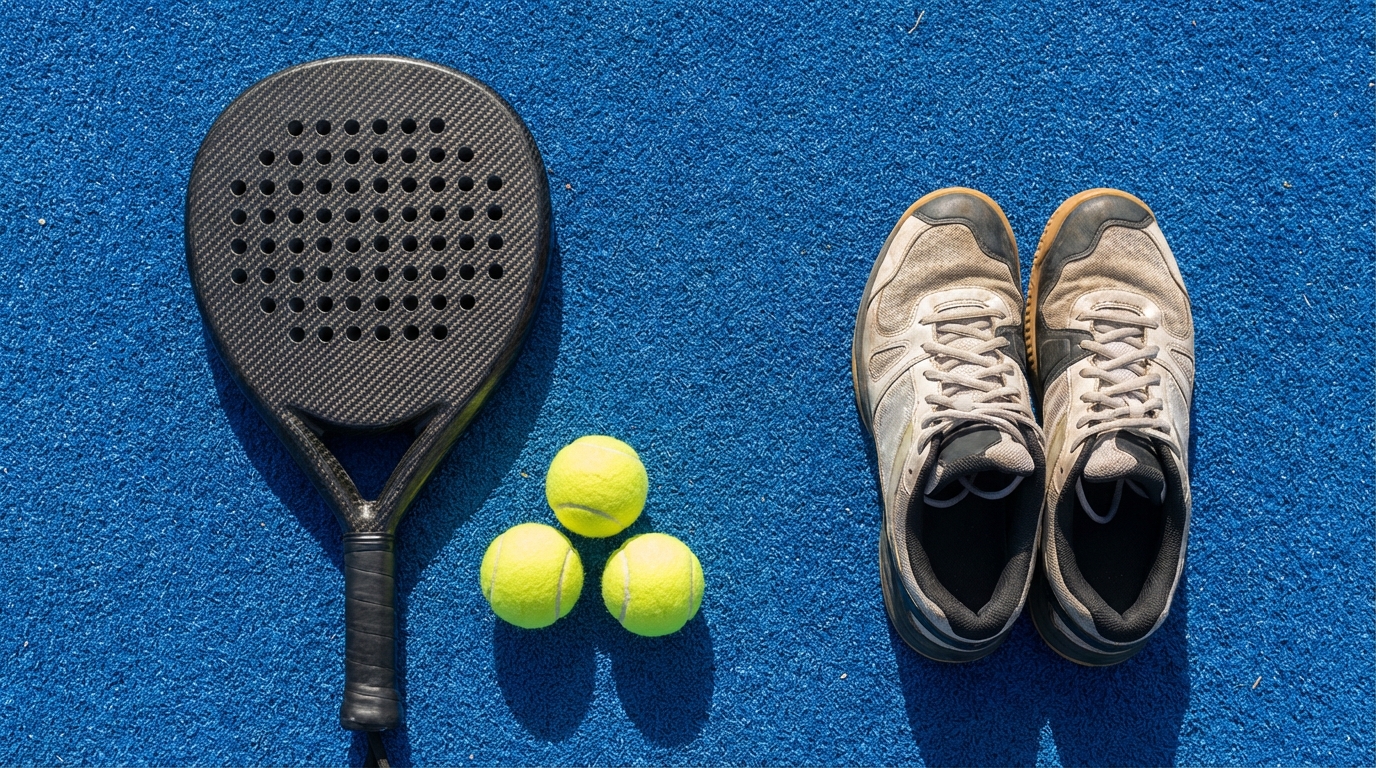
You need a specialized stringless racket, pressurized balls, and shoes designed for sand-filled synthetic turf. Choosing the right gear is essential for preventing injury and ensuring the ball reacts correctly to your strikes.
Racket Selection
You use a racket made of composite materials like carbon fiber or fiberglass with a foam core.
Keep in mind:
- Round-shaped rackets provide the most control and a larger sweet spot.
- Teardrop shapes offer a balance between power and control for intermediates.
- Diamond-shaped rackets are for advanced players looking for maximum power.
- The thickness must not exceed 38mm according to official standards.
Your choice should depend on your playing style and physical comfort. You will find that a lighter racket helps you react faster during the rapid volleys at the net.
Essential Footwear and Balls
The shoes must have a specific sole pattern, often referred to as “clay” or “herringbone,” to grip the turf.
Don’t miss this:
- Silica sand on the turf makes standard running shoes very slippery and dangerous.
- Padel balls have a lower internal pressure than tennis balls for better control.
- High-quality socks with padding prevent blisters during sudden lateral movements.
- Proper gear storage in a padded bag extends the life of your racket core.
Key Takeaway: High-quality, sport-specific equipment is the best investment you can make for both performance and long-term joint safety.
| Gear Item | Recommended Feature | Primary Function |
|---|---|---|
| Racket | Carbon Fiber Frame | Durability and power |
| Shoes | Herringbone Sole | Traction on silica sand |
| Balls | Low Pressure | Consistent wall rebounds |
Using the correct equipment ensures that the game plays as intended and reduces the risk of common sporting accidents.
How to design a padel ball game facility?
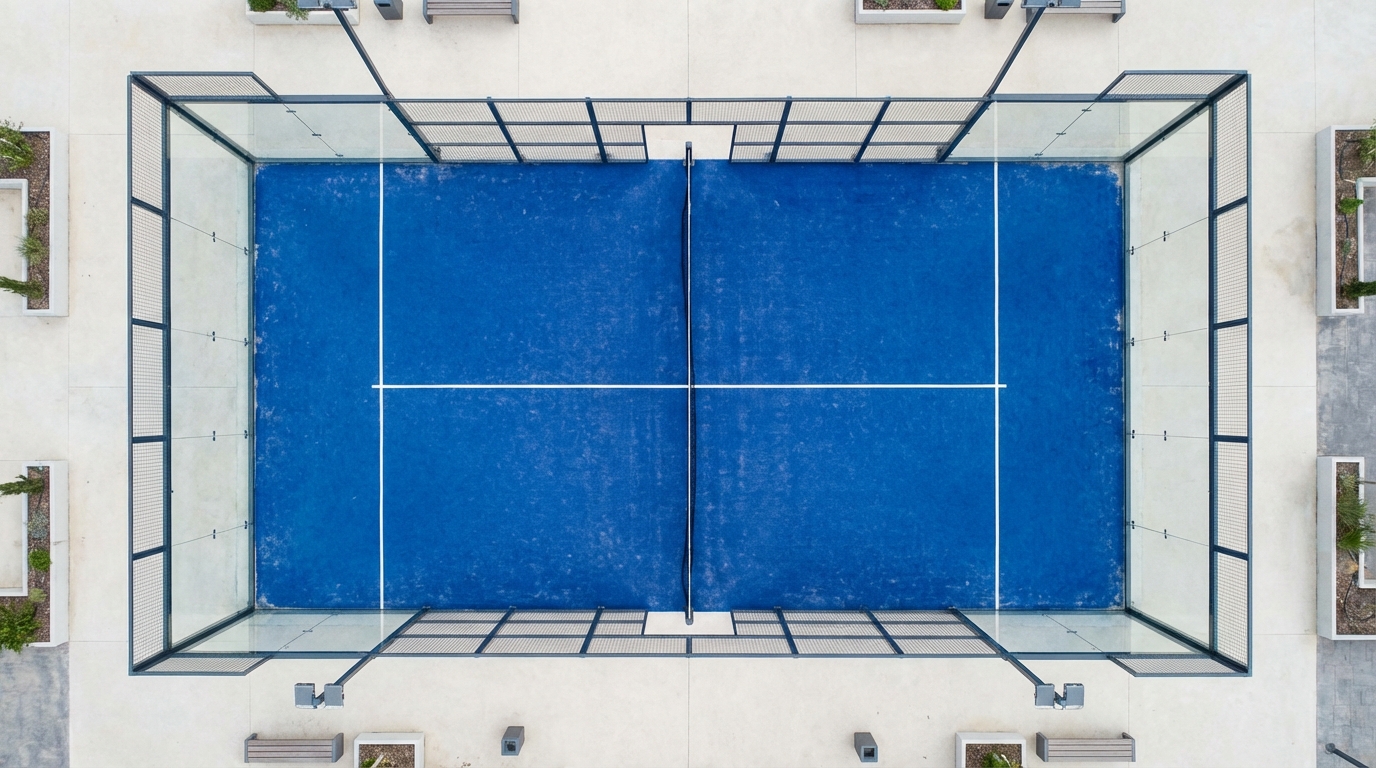
You design a facility by prioritizing player flow, court visibility, and structural durability. A successful layout maximizes the number of courts while providing enough space for spectators and safe player movement.
Aesthetic and Functional Layout
You should position courts to avoid direct sunlight glare during peak morning and evening playing hours.
The facts are:
- North-South orientation is the gold standard for outdoor court placement.
- Glass walls should be kept clear of obstructions to allow for spectators.
- Integrated LED lighting masts should be placed at the 10-meter midpoints.
- Color schemes usually feature blue or green turf with black or gray frames.
A well-designed facility feels open and inviting, encouraging players to stay and watch other matches. You will find that adding benches between courts significantly improves the social atmosphere.
Structural Integration
The court must be anchored to a reinforced concrete slab that can support the massive weight of the glass panels.
The secret is:
- Perimeter beams must be extra thick to handle the wind load on the glass.
- Drainage channels must be hidden but accessible for regular maintenance.
- Electrical conduits for lighting should be pre-installed within the slab.
- Wind-resistant mesh is necessary for facilities in high-wind geographical zones.
Key Takeaway: A facility that balances structural engineering with an aesthetic, player-centric layout will always see higher utilization rates.
| Design Element | Goal | Specification |
|---|---|---|
| Orientation | Glare reduction | North-South alignment |
| Lighting | Uniformity | 300+ Lux LED systems |
| Space | Player safety | 2m clearance between courts |
Investing in professional design services prevents common mistakes like poor drainage or insufficient lighting that can ruin the playing experience.
What determines padel ball game cost?
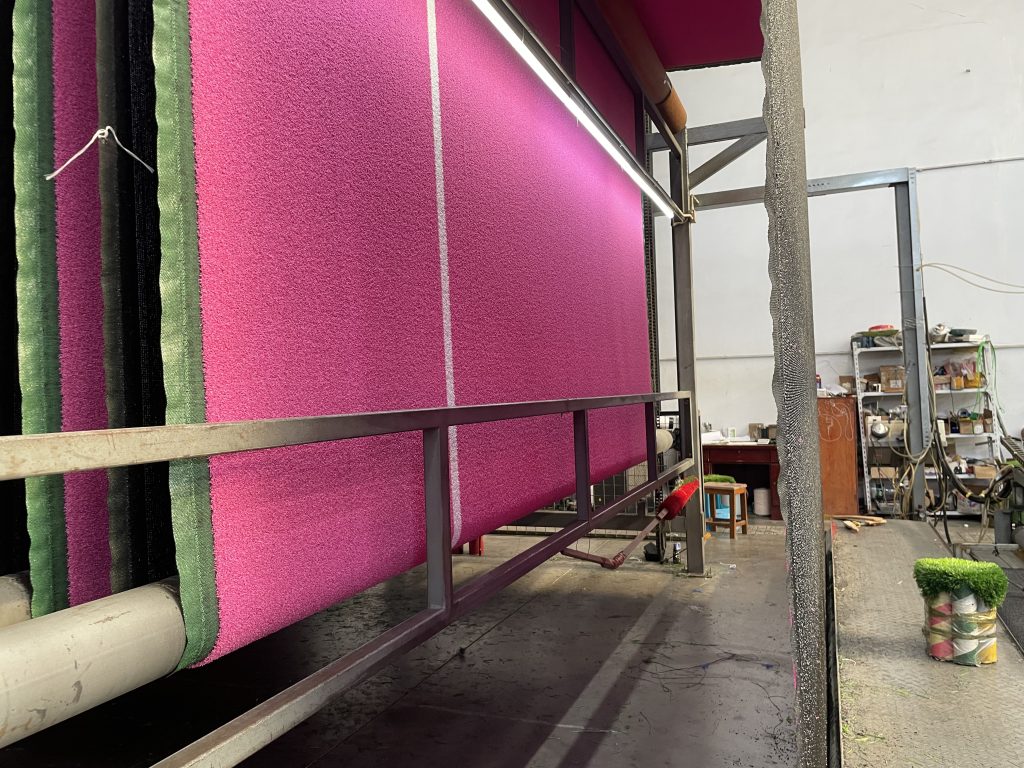
The cost is determined by the quality of the glass panels, the thickness of the steel frame, and the type of synthetic turf selected. You must also budget for the “hidden” costs of site preparation and concrete foundation work, which can be significant.
Material Quality Levels
You will find that premium 12mm tempered glass and galvanized steel frames carry a higher price tag but offer much better longevity.
The bottom line:
- 10mm glass is cheaper but may not be suitable for high-use commercial clubs.
- Textured turf holds sand better than standard monofilament but costs more.
- Competition-grade LED lights increase the initial cost but lower energy bills.
- Custom powder-coating for the frame allows for branding but adds a premium.
Choosing high-quality materials from the start reduces your maintenance and replacement costs over the next decade. You will notice that a sturdier frame also produces a better “sound” and feel during play.
Labor and Logistics
The location of your site and the availability of specialized installers will heavily influence the final price.
Don’t miss this:
- Shipping heavy glass and steel across long distances is a major expense.
- Specialized machinery is required for the precision leveling of the concrete.
- Professional turf layers charge a premium for seamless, sand-filled finishes.
- Electrical certification for the lighting system is a mandatory labor cost.
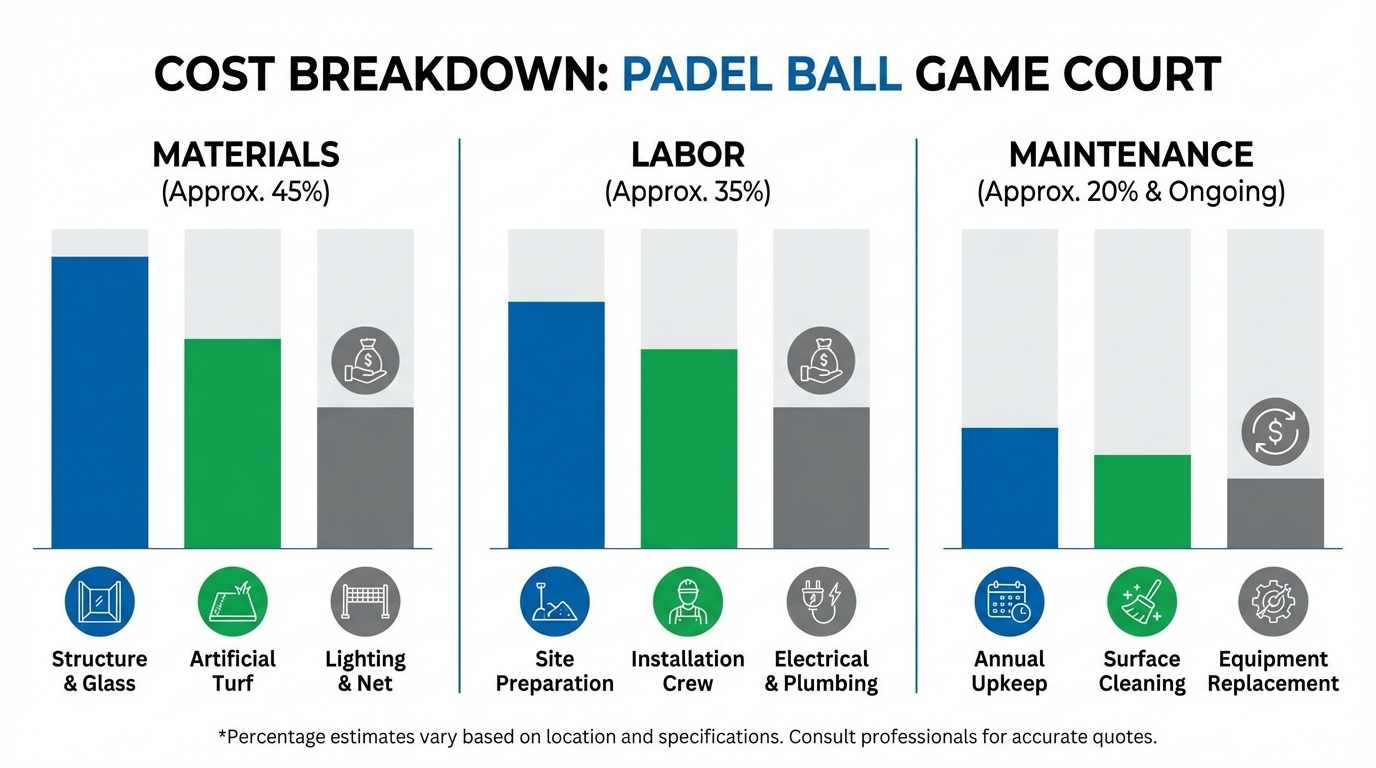
Key Takeaway: While the court kit itself is a fixed cost, site-specific civil engineering and local labor are the most variable parts of the budget.
| Budget Component | Percentage | Priority |
|---|---|---|
| Steel & Glass Kit | 45% | High (Durability) |
| Concrete Base | 35% | High (Foundation) |
| Turf & Lighting | 20% | Medium (Playability) |
Balancing these costs requires a clear understanding of whether the court is for private leisure or high-volume commercial use.
How to construct a padel ball game court?
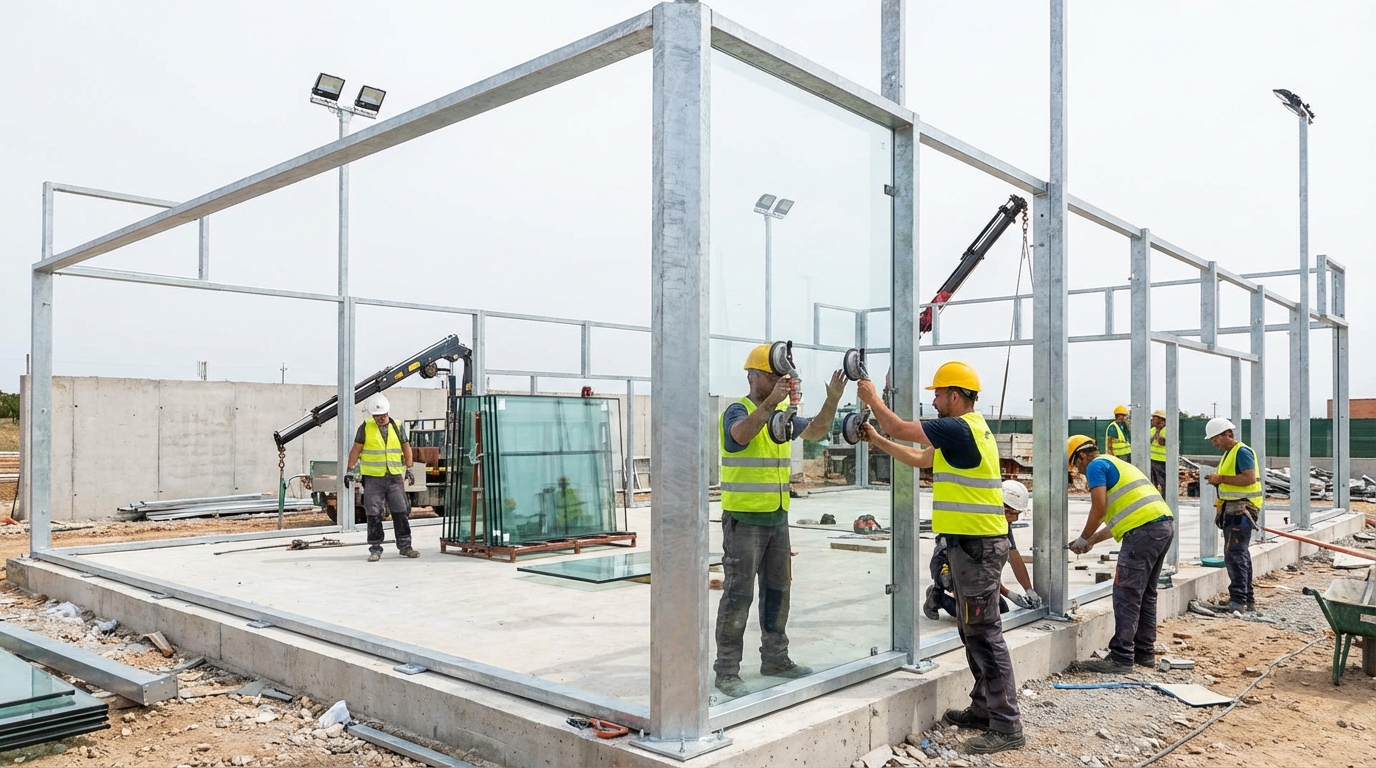
You construct a court by first pouring a precision-leveled concrete slab followed by the assembly of the steel frame and glass walls. The process requires specialized lifting equipment to safely handle the heavy tempered glass panels.
Foundation and Framing
You must ensure the concrete base is perfectly flat and has a slight slope for efficient water drainage.
It’s important:
- The concrete needs at least 21 days to cure before the frame is bolted down.
- Steel pillars are anchored using high-tensile expansion bolts for stability.
- The frame must be perfectly square to allow the glass to fit without stress.
- Rubber gaskets are placed between all metal and glass contact points.
A solid foundation is the only way to prevent the glass from cracking due to ground movement over time. You should involve a surveyor to verify the levels before the first steel beam is placed.
Glass and Turf Installation
Installing the glass panels is the most dangerous and technical part of the entire construction process.
Look at this:
- Suction cups and cranes are used to move the 100kg+ glass panels.
- The turf is rolled out, cut to size, and glued at the seams with specialized tape.
- Kiln-dried silica sand is spread evenly using a mechanical spreader.
- The net is the final component installed, tensioned to exactly 88cm at the center.
Key Takeaway: Precision during the framing and glazing phases is the only way to ensure the court remains safe and playable for years.
| Phase | Key Requirement | Tool Used |
|---|---|---|
| Foundation | Leveling (0.5% slope) | Laser Level |
| Framing | Vertical Alignment | Plumb Bob / Level |
| Glazing | Stress-free fitting | Suction Cranes |
A professional installation team can typically complete the assembly of the structure and turf in less than one week once the base is ready.
How to maintain a padel ball game court?
You maintain the court by regularly brushing the synthetic turf and inspecting the structural bolts and glass gaskets. Consistent upkeep prevents the silica sand from compacting and ensures the glass remains securely fastened to the frame.
Turf and Sand Care
You should brush the court every week to move sand from the corners back into the high-traffic areas.
Consider this:
- Brushing prevents the synthetic fibers from laying flat and wearing out.
- It ensures that the ball bounce remains consistent across the entire surface.
- Debris like leaves and twigs must be removed daily to prevent mold.
- Periodic “deep cleaning” removes fine dust that can clog the drainage.
You will find that proper sand levels are the secret to preventing slips and falls during intense matches. A well-maintained surface feels much softer and more responsive underfoot.
Structural and Glass Safety
You must clean the glass panels to maintain visibility for both the players and the spectators.
Think about this:
- Use standard glass cleaner and soft cloths to avoid scratching the surface.
- Check the tension of the perimeter bolts every six months.
- Inspect the metallic mesh for any sharp edges or loose wires.
- Verify that the LED lighting fixtures are clear of dust and bird nests.
Key Takeaway: A proactive maintenance schedule doubles the lifespan of your turf and prevents expensive structural repairs.
| Task | Frequency | Objective |
|---|---|---|
| Brushing | Weekly | Sand distribution |
| Glass Cleaning | Monthly | Transparency |
| Hardware Check | Bi-Annually | Structural safety |
Regular maintenance ensures that your court remains a premium asset and a safe environment for every player.
Conclusion
Building a professional court is a strategic investment that meets the growing demand for social, high-energy sports. By focusing on precision construction, quality materials, and consistent maintenance, you can create a facility that serves your community for decades. We are dedicated to helping you navigate every step of this process, from initial design to the final serve. If you are ready to bring this exciting sport to your property or club, contact us today to start your project.
FAQ
What is the main difference between tennis and padel?
The primary difference is the court size and the walls; padel is played on a smaller court where you can play the ball off the glass walls.
Can I build a court in my backyard?
Yes, you can build a court at home as long as you have a flat 21×11 meter space and follow local zoning and noise ordinances.
How long does it take to build a court?
The physical assembly takes about 5 to 7 days, but the entire project usually takes 4 to 6 weeks including concrete curing time.
Is the sport easy for beginners to learn?
The sport is very easy to learn because the underhand serve and the walls make rallies longer and more forgiving than in tennis.
How many players are needed for a match?
While you can play singles, the game is designed as a doubles sport requiring four players to experience the full tactical depth.