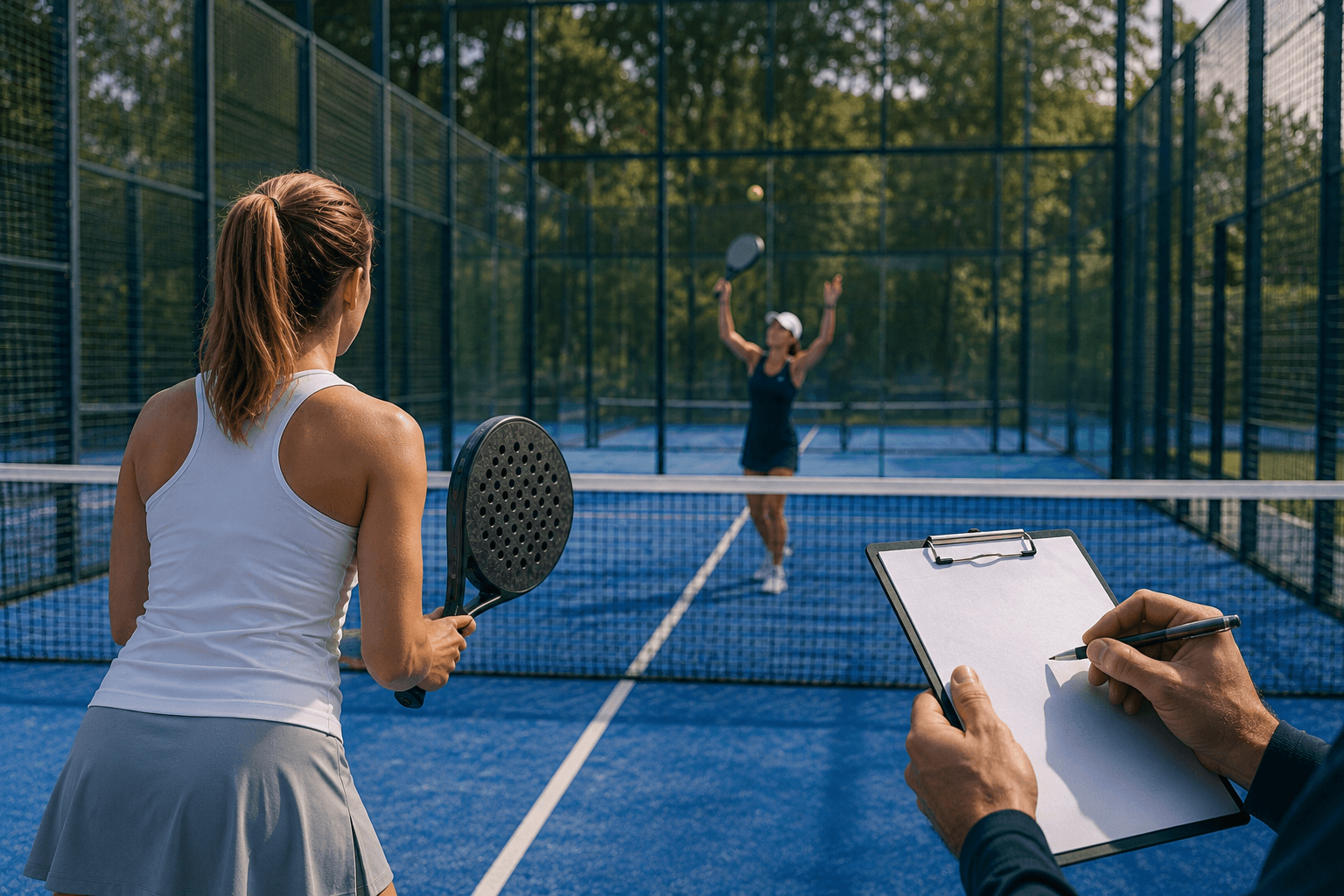
You understand and apply official padel rules by integrating standardized gameplay guidelines into your facility’s daily operations and member education programs. When your players bring tennis habits like overarm serves or court-boundary confusion to your venue, it creates friction that slows down match transitions. This ambiguity can diminish the professional atmosphere you have worked hard to build. By aligning your venue with official padel rules, you ensure fair play and enhance the premium experience for every member.
Why follow official padel rules in your facility?

Implementing official padel rules establishes a professional benchmark that justifies your club’s premium positioning and ensures a consistent experience for competitive players. You want your venue to be known for quality, and nothing says “amateur” like inconsistent officiating or non-standard court play.
The importance of standardized play
Standardization prevents disputes and helps you manage court bookings more efficiently. When everyone follows the same set of regulations, match times become more predictable.
Think about it:
- Players spend less time arguing over rebounds.
- Your staff can referee matches with total confidence.
- Your club gains a reputation as a serious sports venue.
How rules enhance the player experience?
Clear boundaries and expectations allow players to focus entirely on their performance and strategy. This lead to higher satisfaction rates and better member retention for you.
The best part?
A fair environment keeps players coming back for more competitive action week after week.
Key Takeaway: Adopting official standards eliminates operational friction and builds a professional brand identity for your padel business.
The following table summarizes the primary benefits of rule implementation:
| Benefit Category | Impact on Facility | Outcome |
|---|---|---|
| Operational | Predictable match durations | Higher turnover |
| Brand | Professional atmosphere | Premium reputation |
| Social | Reduced on-court friction | Happier members |
How is scoring managed under official padel rules?
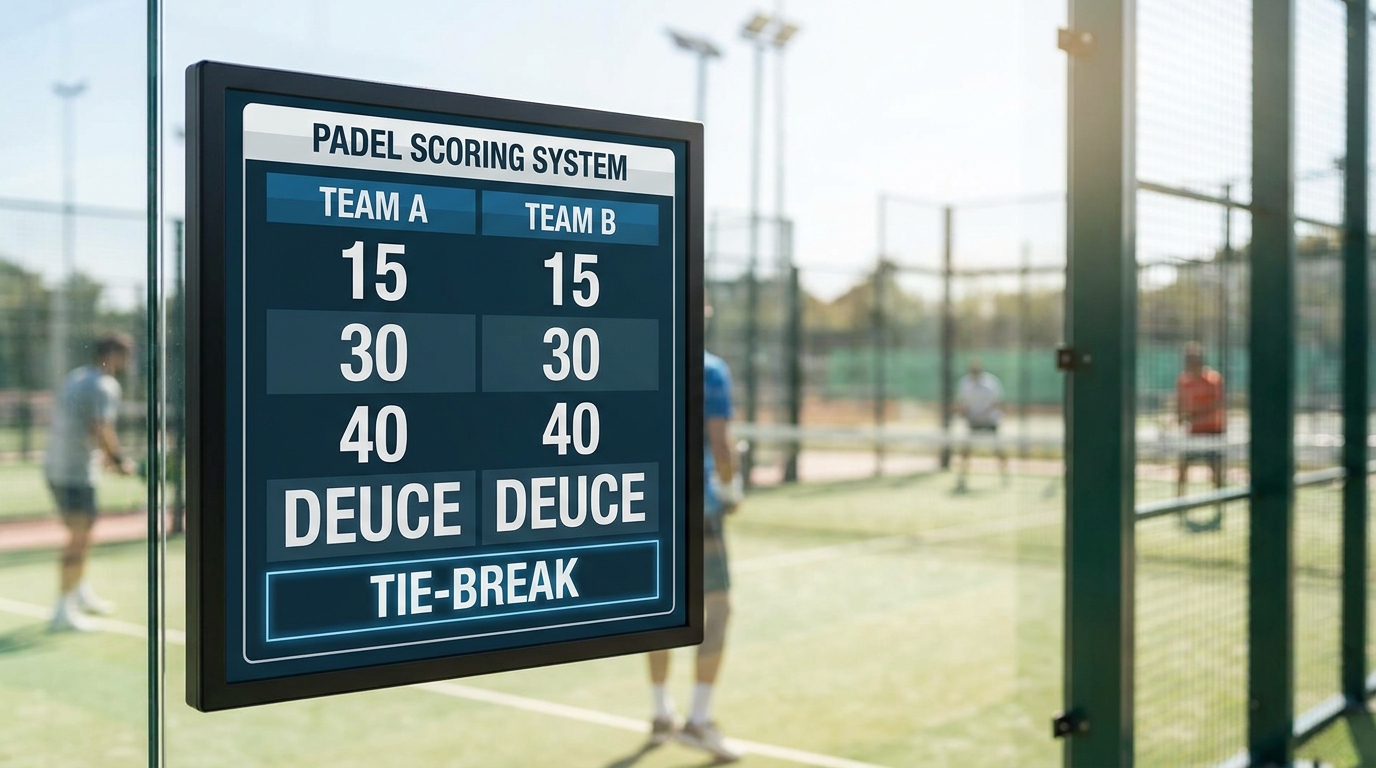
Scoring follows the traditional tennis hierarchy, utilizing the 15, 30, 40, and game system for every match played. Understanding the official padel rules for scoring is essential for you to host sanctioned tournaments and competitive leagues.
Understanding the tennis-style scoring system
Matches are typically played as the best of three sets, with each set consisting of six games. You must ensure your players understand that they need a two-game lead to secure a set.
Here is the breakdown:
- 15: One point won.
- 30: Two points won.
- 40: Three points won.
- Game: Four points won (with advantage).
How to handle deuce and tie-break scenarios?
When a game reaches 40-40, you enter a deuce scenario where a two-point advantage is required to win. If the set score reaches 6-6, a tie-break to seven points determines the winner.
It gets better.
Modern facilities often use digital scoreboards to automate this process and keep the focus on the game.
Key Takeaway: Mastering the scoring system is the first step in transitioning casual players into serious competitors at your club.
A quick reference for scoring benchmarks is provided below:
| Match Phase | Winning Condition | Note |
|---|---|---|
| Game | 4 points (with 2-point lead) | Standard format |
| Set | 6 games (with 2-game lead) | Leads to set win |
| Tie-break | 7 points (with 2-point lead) | Occurs at 6-6 |
What are the official padel rules for serving?
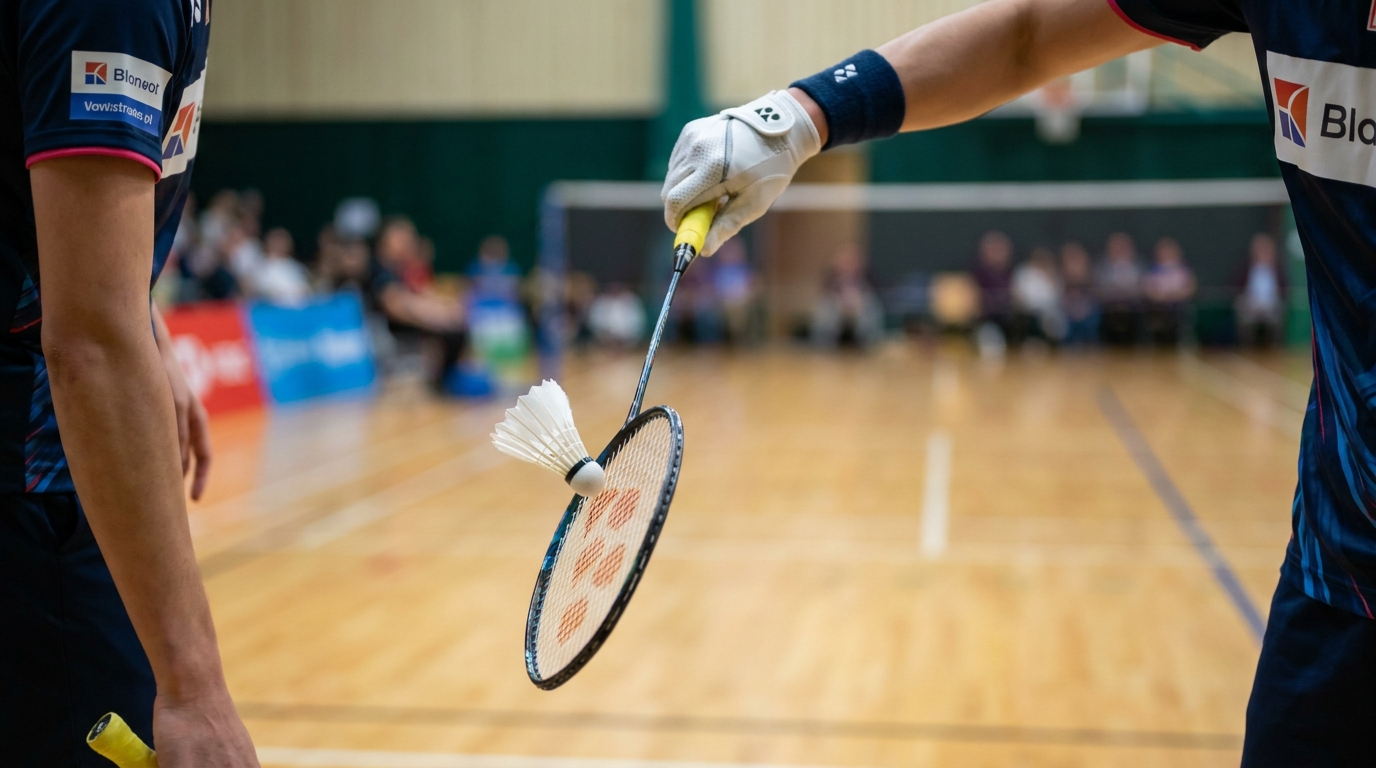
The serve must be struck underarm at or below waist height after a single bounce behind the service line. Mastering the official padel rules for serving prevents illegal advantage and keeps rallies fair for all participants in your facility.
Why must the serve be hit underarm?
Padel is designed to be a game of strategy and rebounds, not just power serving. By enforcing the underarm rule, you ensure the game remains accessible while maintaining high tactical depth.
Remember these serving basics:
- The ball must bounce before the strike.
- You must keep one foot on the ground.
- The ball must land in the diagonal service box.
Managing faults and second serves
Players are allowed two attempts to deliver a legal serve before the point is awarded to the opponent. You should educate your members that hitting the metal cage after a bounce on a serve is a fault.
But wait, there’s more.
If the ball clips the net and lands in the correct box, it is a “let” and the serve is replayed without penalty.
Key Takeaway: Serving regulations are the foundation of padel’s unique rhythm and should be the first rule taught at your facility clinics.
Review the common serving outcomes in this analysis table:
| Serve Action | Result | Rule Status |
|---|---|---|
| Hits glass after bounce | In | Play continues |
| Hits cage after bounce | Out | Fault recorded |
| Clips net & lands in box | Let | Re-serve allowed |
How do official padel rules apply to the walls?
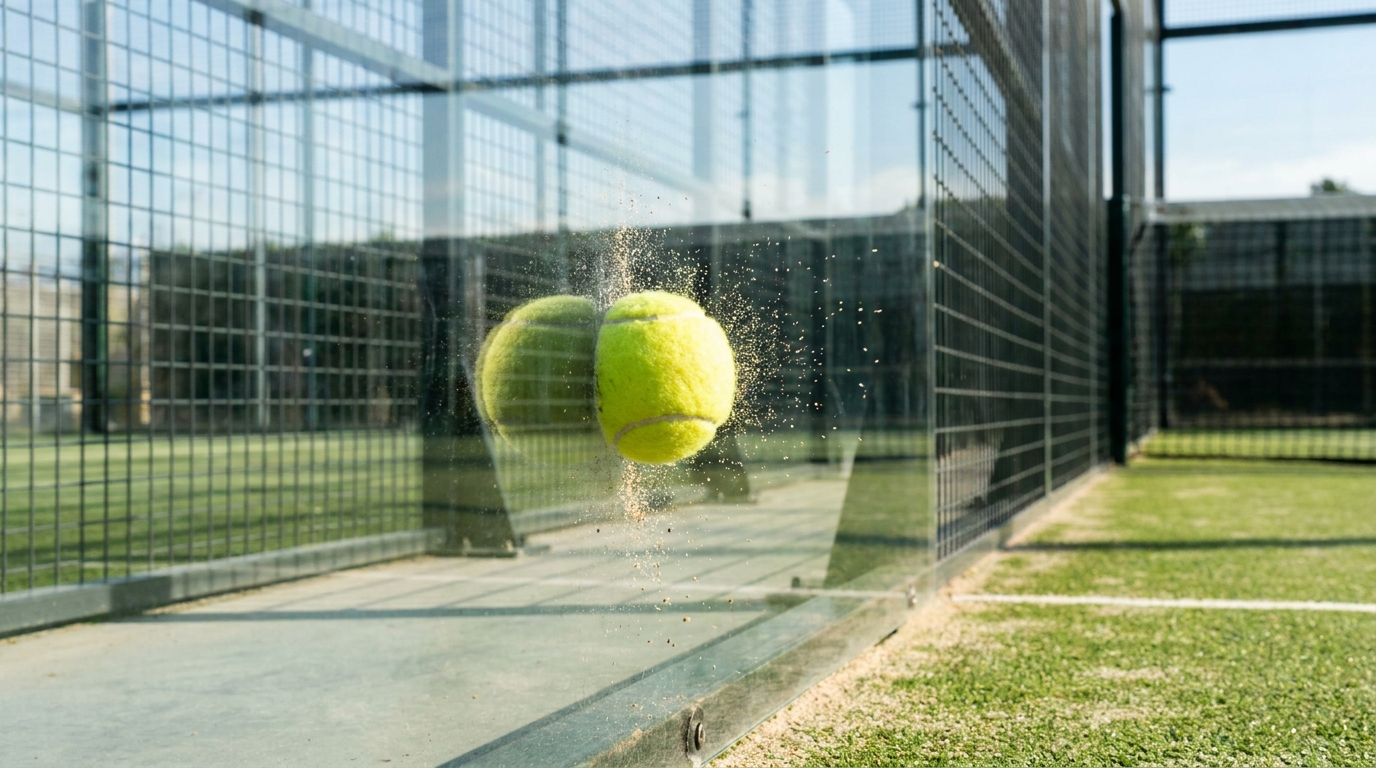
Walls are considered “in” only if the ball bounces on the playing surface first before making contact with the glass. Teaching the official padel rules regarding wall interactions is vital for you to help new players master the sport’s three-dimensional nature.
When is a wall hit considered “in”?
During a rally, a ball that bounces on the opponent’s side and then hits the glass is live and must be returned. You can also hit the ball against your own glass wall to send it over the net.
Think about the possibilities:
- Using your back wall as a backboard.
- Angling shots to create difficult rebounds.
- Defending deep lobs using the glass.
Dealing with rebounds from the metal cage
Rebounds from the metal cage are often unpredictable and are a key tactical element during active rallies. However, you must remind players that the cage is only “in” during rallies, not on serves.
Here’s the catch:
If the ball hits the cage directly without bouncing on the floor, it is immediately out.
Key Takeaway: Proficiency with wall and cage rebounds separates beginners from intermediate players and increases the value of your Panoramic Padel Court installations.
Understanding wall dynamics is easier with this structured comparison:
| Surface Type | Serve Status | Rally Status |
|---|---|---|
| Glass Wall | In (after bounce) | In (after bounce) |
| Metal Cage | Out (always) | In (after bounce) |
| Direct Hit | Out | Out |
Can players exit the court per official padel rules?
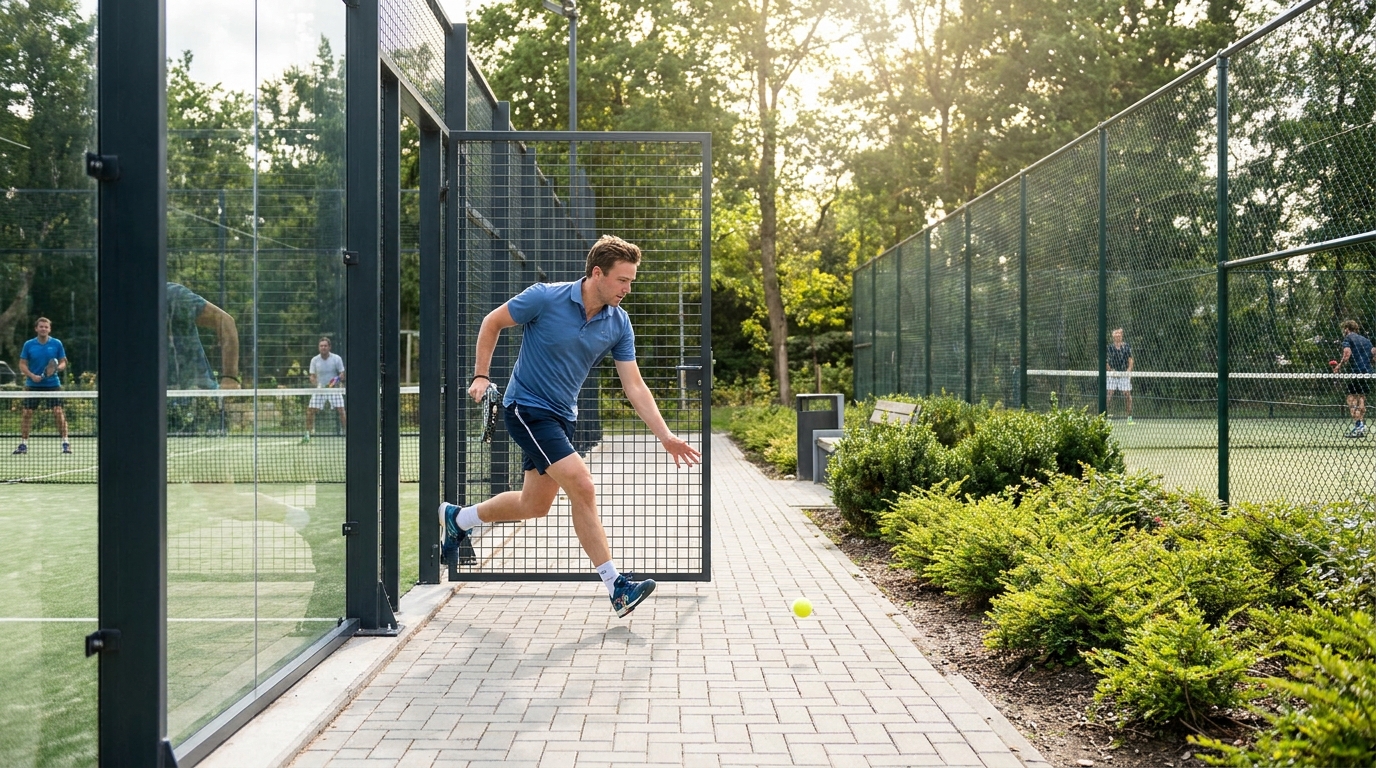
Players may legally exit the court through the side doors to return a ball that has bounced out-of-bounds. Following official padel rules regarding court exits provides an exciting “pro-style” experience that members love to watch and play.
The rule for running through court doors
For out-of-court play to be legal, your facility must meet specific safety clearance requirements around the doors. You should ensure that players only attempt these “pro” moves if your court setup allows for it.
Here’s why it matters:
- It creates high-highlight reel moments.
- It rewards athletic and attentive defensive play.
- It makes your club feel like a world-class venue.
Maintaining safety during out-of-bounds play
Safety is paramount when players are moving at high speeds through the court exits. You should maintain clear paths outside the Standard Padel Court to prevent injuries during intense points.
You see?
A well-designed facility anticipates these movements to protect players while allowing for spectacular gameplay.
Key Takeaway: Enabling out-of-bounds play adds a professional flair to your matches but requires careful attention to facility layout and player safety.
Check your facility readiness for out-of-court play with this table:
| Requirement | Specification | Benefit |
|---|---|---|
| Door Width | Minimum 0.82m | Easy passage |
| External Zone | 2m x 4m clear area | Safe retrieval |
| Surface | Non-slip material | Injury prevention |
How do official padel rules define court design?
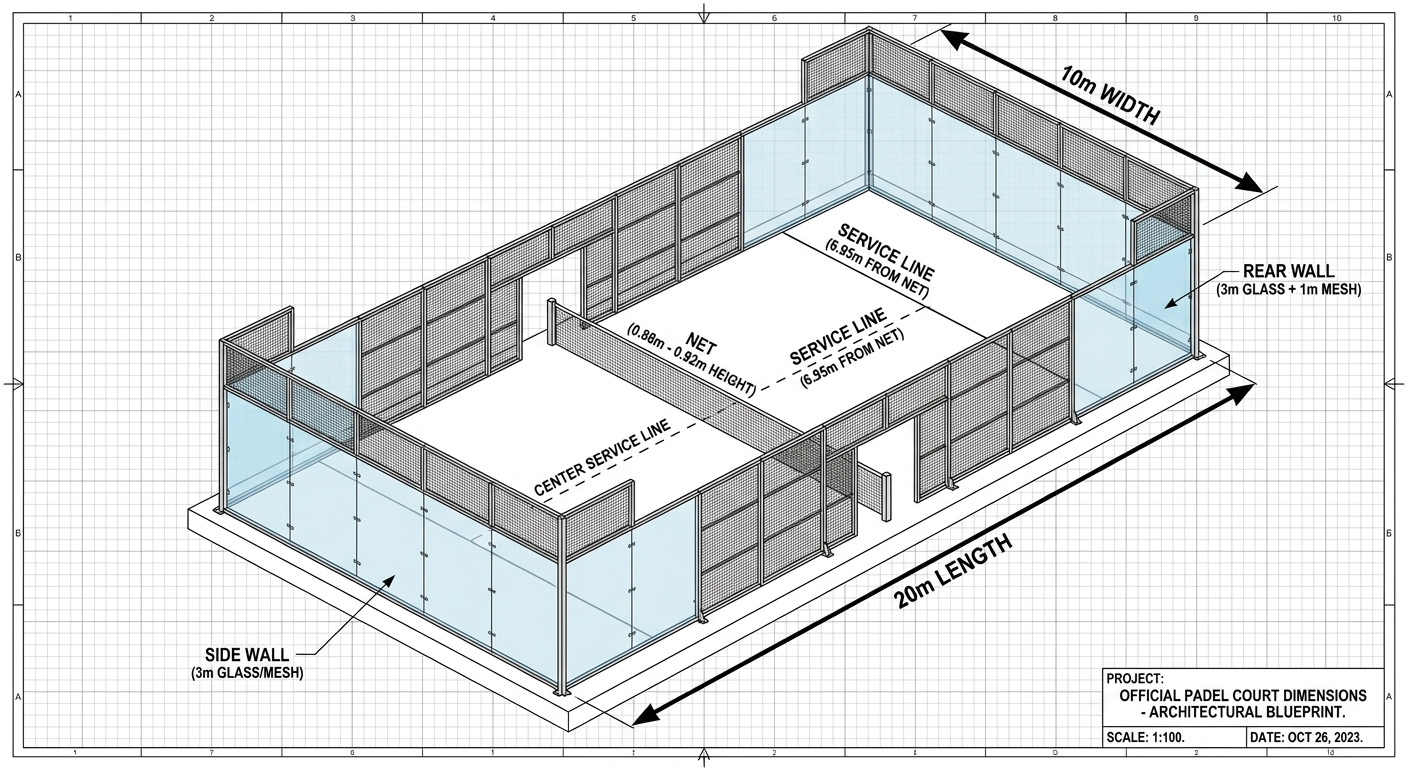
A standard doubles court must measure exactly 20 meters in length and 10 meters in width to comply with sanctioned regulations. Adhering to official padel rules for court dimensions ensures that your facility can host official competitions and rankings.
Dimensions of a standard doubles court
The playing area is divided by a net that stands 0.88 meters high at the center and 0.92 meters at the posts. You must ensure the service lines are positioned exactly 6.95 meters from the net on both sides.
Technical specifics include:
- Total area: 200 square meters.
- Net height: 0.88m (center).
- Service box: 5m x 6.95m.
Why court structure affects official play?
The height of the glass and mesh walls is strictly defined to ensure consistent ball behavior during high-level play. You should choose a Padel Structure that offers the durability and precision required for years of heavy use.
The bottom line?
Precision in construction leads to precision in gameplay, which is exactly what top-tier players expect from you.
Key Takeaway: Accurate court dimensions are non-negotiable for any facility aiming to be recognized as a professional padel destination.
This table details the essential measurements for a regulation court:
| Component | Official Dimension | Tolerance |
|---|---|---|
| Length | 20.00 Meters | +/- 0.1m |
| Width | 10.00 Meters | +/- 0.05m |
| Wall Height | 3.00 Meters (Glass) | Standard |
Do official padel rules specify turf requirements?

The playing surface must consist of high-density synthetic turf that provides a consistent ball bounce and allows for controlled player sliding. Selecting Padel Grass that meets official padel rules ensures that your court surface performs reliably under all weather conditions.
Ensuring consistent ball bounce with turf
A high-quality turf surface absorbs the right amount of impact while returning enough energy for a true bounce. You should avoid low-density grasses that lead to “dead” spots or irregular ball behavior on your courts.
Consider these factors:
- Pile height (usually 10-12mm).
- Sand infill distribution.
- Drainage capabilities for outdoor play.
Selecting high-density fibrillated grass
Fibrillated or monofilament fibers are the industry standard for durability and playability in modern padel. You will find that these materials resist wear much better, reducing your long-term maintenance costs and keeping players happy.
It’s a win-win.
Better grass means fewer injuries and a more professional feel for your club members.
Key Takeaway: Investing in premium, regulation-compliant turf is the most effective way to ensure a high-quality playing experience and low maintenance overhead.
Compare the different turf options available for your facility:
| Turf Type | Durability | Playability | Maintenance |
|---|---|---|---|
| Fibrillated | High | Excellent | Moderate |
| Monofilament | Medium | Good | Low |
| Standard Grass | Low | Poor | High |
What do official padel rules say about glass safety?
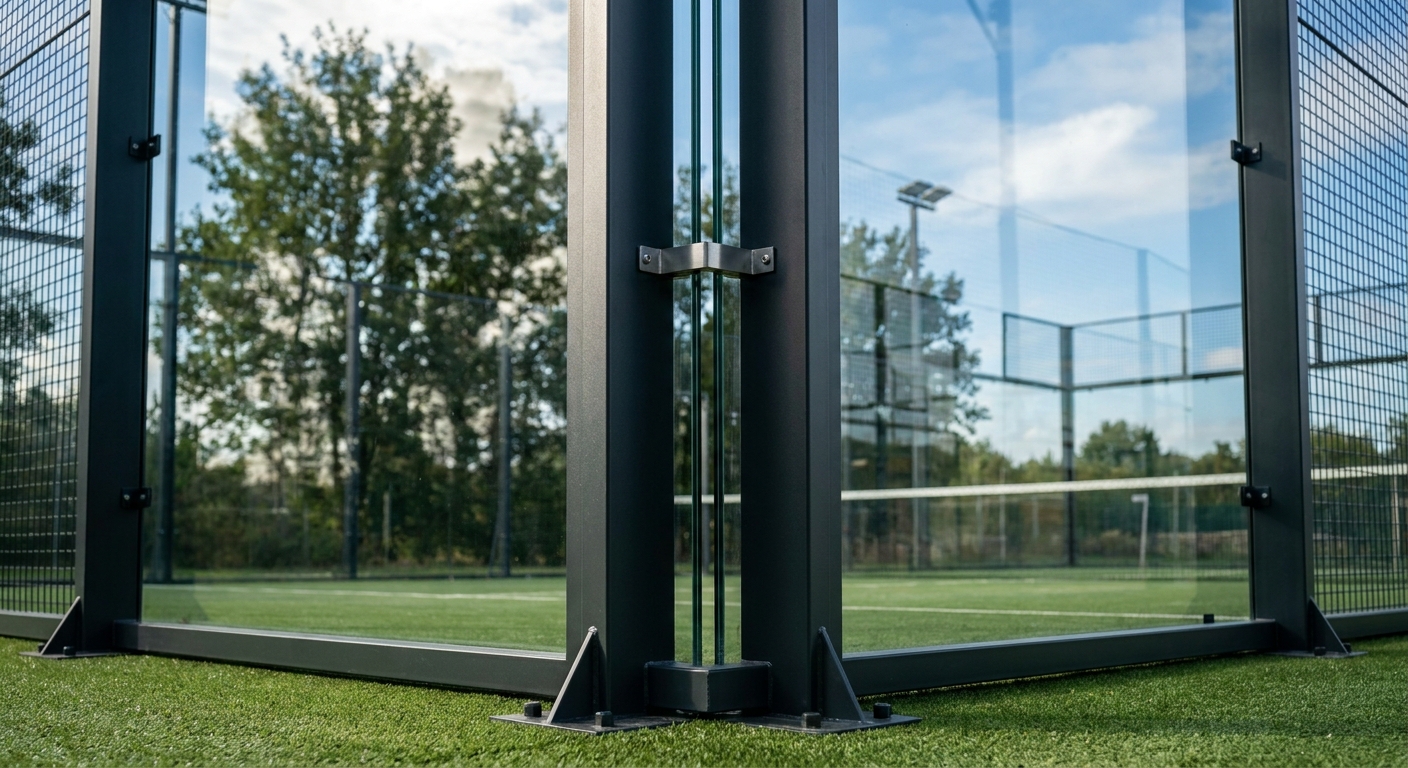
Regulation courts must utilize 10mm or 12mm tempered safety glass that can withstand high-impact ball and player contact. Following the official padel rules for glass quality is critical for you to protect your players and mitigate facility liability.
Requirements for tempered safety glass
Tempered glass is specifically treated to break into small, blunt pieces if shattered, which significantly reduces the risk of injury. You must ensure your Padel Glass meets international safety certifications before opening your courts to the public.
Safety first:
- Use only certified 12mm glass for high-traffic clubs.
- Regularly inspect the glass fixings and supports.
- Keep the glass clean to maintain professional visibility.
Why visibility matters for professional matches?
Clear, high-quality glass allows spectators and coaches to follow the action without distortion or obstruction. You can enhance the viewing experience by choosing a panoramic design that removes rear structural posts.
The result?
A spectacular viewing environment that attracts sponsors and increases the prestige of your tournaments.
Key Takeaway: High-grade tempered glass is the most important safety feature of your court and should never be compromised for lower costs.
Safety standards for padel glass are summarized in this table:
| Glass Type | Thickness | Safety Standard | Best Use |
|---|---|---|---|
| Tempered | 12mm | EN 12150 | Professional clubs |
| Tempered | 10mm | EN 12150 | Residential use |
| Standard | N/A | Prohibited | Never use |
Do official padel rules cover facility lighting?
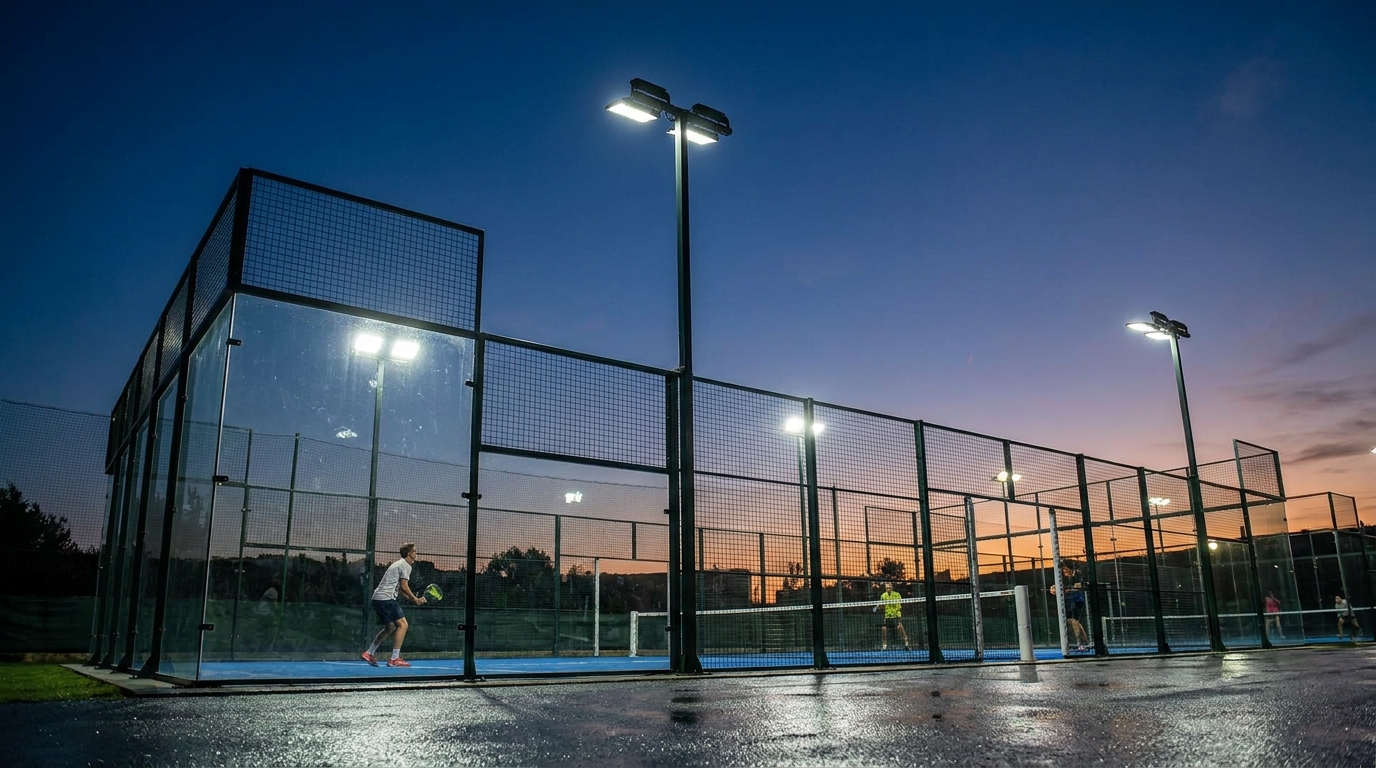
Lighting standards require a minimum horizontal illuminance of 300 to 750 lux, depending on whether the play is recreational or professional. Meeting official padel rules for lighting allows you to maximize court utilization hours and provide a safe playing environment at night.
Minimum standards for LED floodlights
Uniform lighting without glare or shadows is essential for players to track the fast-moving ball and rebounds. You should install high-efficiency Padel LED Lighting to ensure consistent coverage across the entire 200-square-meter playing area.
Benefits of LED:
- Lower energy costs for your facility.
- Instant-on capability for bookings.
- Longer lifespan than traditional bulbs.
Does a roofed court change game dynamics?
A roofed court allows for year-round play but introduces new rules regarding ball contact with the ceiling structure. You must inform players that hitting the roof or any overhead lighting is considered an “out” ball.
Think about it.
A Roofed Padel Court protects your investment and ensures your revenue isn’t dependent on the weather forecast.
Key Takeaway: Quality lighting and weather protection are key drivers of court occupancy rates and overall facility profitability.
Check the recommended lighting levels for your specific facility type:
| Play Level | Required Lux | Uniformity | Application |
|---|---|---|---|
| Recreational | 300 Lux | > 0.5 | Local clubs |
| Competitive | 500 Lux | > 0.7 | Tournaments |
| Professional | 750 Lux | > 0.7 | TV Broadcasts |
How can you teach official padel rules to members?
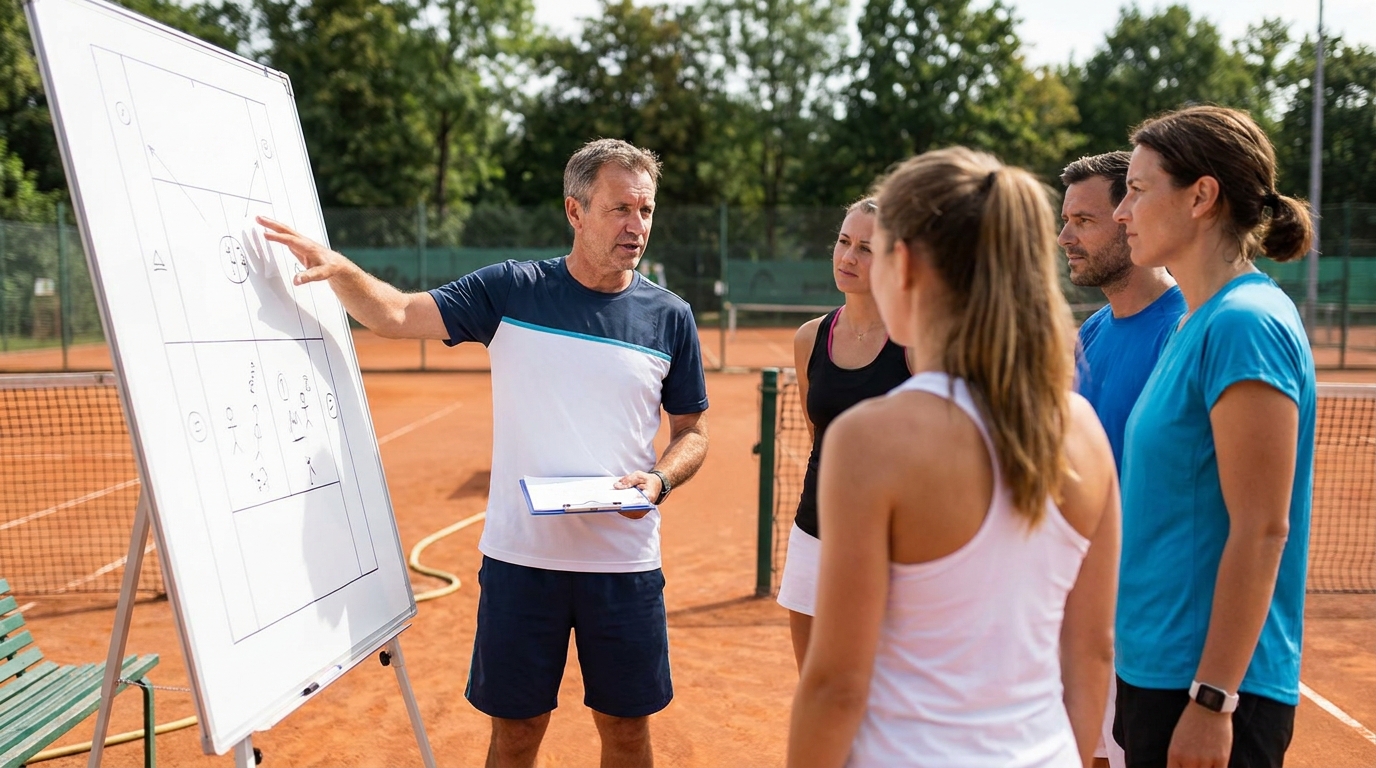
Educating your members on official padel rules is best achieved through a combination of visual guides, introductory clinics, and consistent court-side signage. When you take the lead on education, you reduce confusion and foster a more respectful and professional community.
Creating rule guides for your clubhouse
Simple, illustrated brochures or posters can explain the basics of scoring, serving, and wall rebounds at a glance. You should place these in high-traffic areas like the reception desk or the clubhouse lounge where new players wait for their matches.
Here is what to include:
- A clear diagram of the court and zones.
- The “Golden Rules” of the walls and cage.
- A quick-start guide to padel scoring.
Using clinics to demonstrate official play
Hands-on clinics allow your coaches to demonstrate the nuances of the rules in real-time scenarios. You will find that players learn much faster when they can see and practice the correct service technique or wall return under expert guidance.
The best part?
Clinics are a great way to introduce members to each other and build a thriving social scene at your facility.
Key Takeaway: Proactive education turns casual visitors into lifelong members who respect the game and the professional standards of your venue.
The most effective education methods for your facility are listed below:
| Method | Audience | Effectiveness | Cost |
|---|---|---|---|
| Signage | All visitors | High (passive) | Low |
| Clinics | New players | Very High (active) | Moderate |
| Digital Guides | Online members | High (reusable) | Low |
*
Conclusion
Understanding and applying these standards is not just about following the book—it is about building a foundation for success in the world’s fastest-growing sport. By investing in the right equipment and knowledge, you position your facility as a leader in the market. If you are ready to elevate your venue with professional-grade courts and expert advice, we encourage you to contact us today for a personalized consultation. Our vision is to empower facility owners with the tools they need to create world-class padel experiences that inspire players and drive commercial growth.
*
FAQ: Implementing Official Padel Rules
Can I hit the ball against my own glass wall to return it?
Yes. You are legally allowed to use your own glass walls (but not the metal cage) as a backboard to return the ball over the net.
What’s the best way to handle a ball that clips the net cord?
Immediately. If a serve clips the net and lands in the service box, it is a “let” and is replayed; during a rally, the point continues as long as the ball lands “in.”
How many bounces are allowed on each side of the court?
Strictly one. The ball may only bounce once on the floor before it must be returned, though it can hit the walls multiple times after that first bounce.
Is it legal to use a tennis serve in a padel match?
No. Padel requires an underarm serve struck at or below waist height; an overarm tennis-style serve is always a fault.
Does the ball have to bounce before hitting the glass wall?
Absolutely. For a ball to be considered “in,” it must always strike the ground on the opponent’s side before making contact with the glass or cage.