
Professional padel court installation represents a sophisticated engineering undertaking involving heavy-duty galvanized steel framing, tempered safety glass, and specialized synthetic turf on a reinforced foundation. Many commercial investors face significant hurdles when selecting premium materials while trying to manage rapidly escalating construction expenses. Faulty assembly frequently leads toward accelerated surface degradation, resulting in hazardous playing conditions and diminished revenue through constant maintenance requirements. This comprehensive guide provides a detailed roadmap for constructing durable sports facilities that satisfy professional athletes and leisure players alike. Every expert builder recognizes how meticulous pre-construction planning prevents project failure and ensures long-term operational success. Our deep analysis utilizes decades of manufacturing expertise for guiding your investment strategy effectively toward a high-performance venue at superbpadel.com.
What defines a professional padel court installation?
Professional padel court installation involves integrating high-performance structural components with meticulous site engineering standards that ensure player safety and long-term facility longevity. Establishing an elite sports venue requires rigorous adherence toward international manufacturing protocols for structural stability and surface consistency. A professional setup utilizes hot-dip galvanized steel frames alongside 12mm tempered safety glass panels for maximum impact resistance. These specialized materials must resist extreme weather conditions yet remain flexible enough for maintaining consistent ball rebound during intense competitive play. Contractors frequently overlook foundation precision which represents a massive mistake for long-term durability and structural alignment. Quality builds combine aesthetic appeal with structural integrity for maximizing member satisfaction and overall facility prestige within a growing market. Here’s the deal.
What components constitute professional grade quality?
Selecting premium parts ensures your facility remains operational for decades without requiring massive overhauls or expensive part replacements. High-density synthetic turf provides the necessary friction and comfort for players who engage in frequent, rapid lateral movements across the court. Integrated LED lighting systems must deliver uniform brightness without creating glare that might distract athletes during crucial points in a match. Specialized corner reinforcements and heavy-duty nuts and bolts prevent the structure from shifting under high wind loads or player impacts. Investing in superior glass and steel at the beginning of the project reduces liability risks and enhances the user experience significantly. Ready for the good part?
- Hot-dip galvanized steel framing
- 12mm tempered safety glass panels
- Fibrillated or monofilament synthetic turf
- 200W high-efficiency LED floodlights
- Specialized silica sand infill
Why does assembly precision matter for performance?
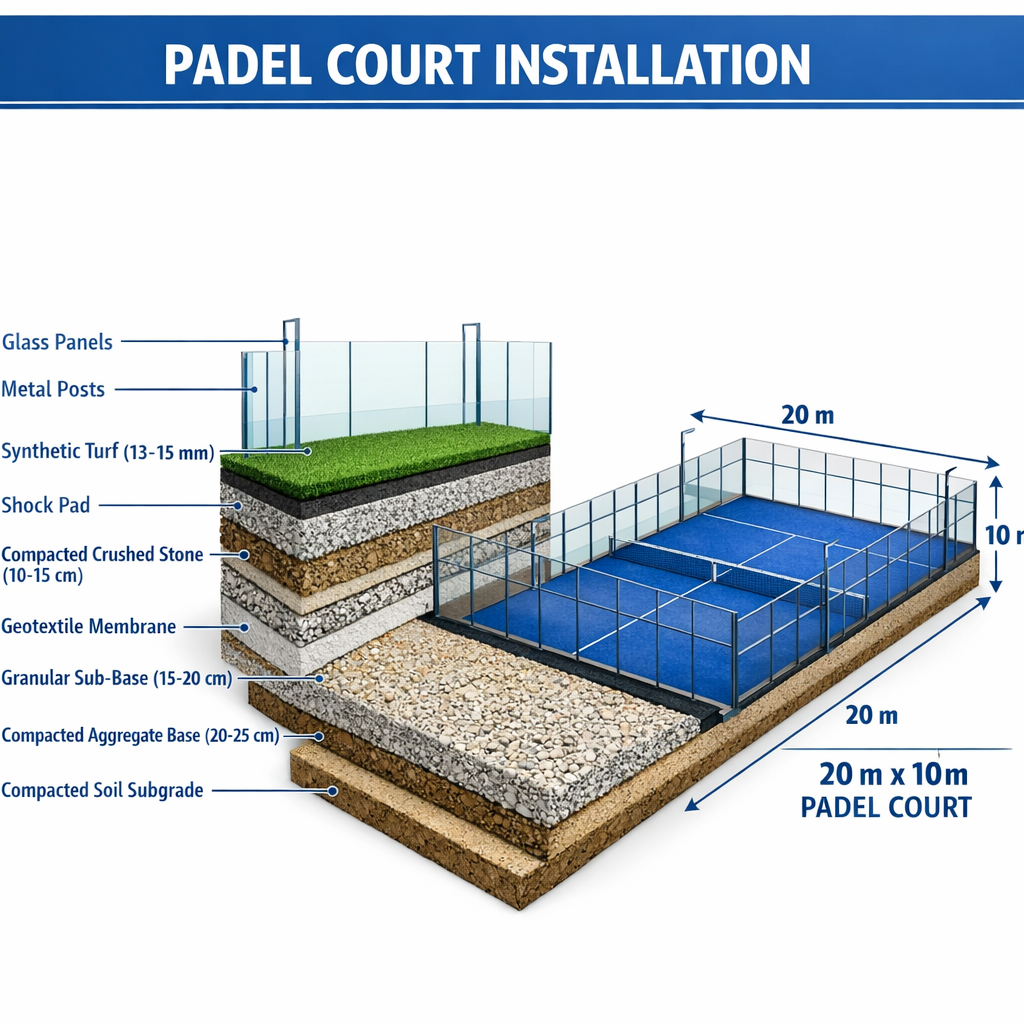
Proper alignment of every glass panel and steel post determines the predictability of ball bounces and overall player safety. If the mesh fencing sits even slightly unevenly against the glass walls, the ball will react unpredictably during play. Skilled technicians use laser leveling tools to ensure the entire perimeter remains perfectly horizontal and vertical throughout the installation process. This attention toward detail prevents premature wear on the synthetic grass and keeps the net tension at regulation heights consistently. Reliable construction teams focus on every bolt torque specification for maintaining the rigid yet flexible nature of the court enclosure. This is where it gets interesting…
- Laser-guided structural alignment
- Precise net height calibration
- Uniform sand distribution
- Seamless turf seam joining
- Tensioned perimeter fencing
Key Takeaway: Professional installation requires certified materials and meticulous site leveling for professional results that last twenty years.
## Professional Specification Summary
| Component | Minimum Standard | Purpose |
|---|---|---|
| Steel Frame | Hot-dip Galvanized | Corrosion resistance |
| Glass Walls | 12mm Tempered | Impact safety |
| Turf | EU-standard Synthetic | Consistent play |
| Lighting | IP66 LED | All-weather visibility |
Every structural element must harmonize to create a safe and competitive environment for athletes.
Why is padel court installation a smart investment?
Strategic padel court installation offers significant financial advantages compared toward traditional tennis courts due toward higher player density and lower maintenance requirements. Developing a padel facility allows operators to maximize revenue within limited real estate zones because the footprint remains remarkably small. This increased density allows for more players per square meter which directly boosts hourly booking income and club profitability. High demand for social sports ensures rapid capital recovery within typically twenty-four to thirty-six months for well-managed venues. Modern clubs report significantly higher retention rates among younger demographic segments who prefer fast-paced social activities over traditional sports. What’s the real story?
How does commercial viability drive ROI?
The economic efficiency of padel makes it a premier choice for diversifying sports club offerings in urban and suburban environments. Because four players occupy only 200 square meters, you can generate quadruple the revenue compared toward a single tennis player. Lower land acquisition costs mean developers can install these courts in premium city center locations where space remains at a premium. Investors also benefit from low overhead costs once the initial construction phase finishes successfully. Automated booking systems and low-energy lighting further reduce the daily operational expenses of the facility. But here’s the kicker.
- High revenue per square meter
- Socially engaging sport format
- Low daily maintenance needs
- Rapid demographic growth
- Multi-revenue stream potential
Can you scale a padel business quickly?
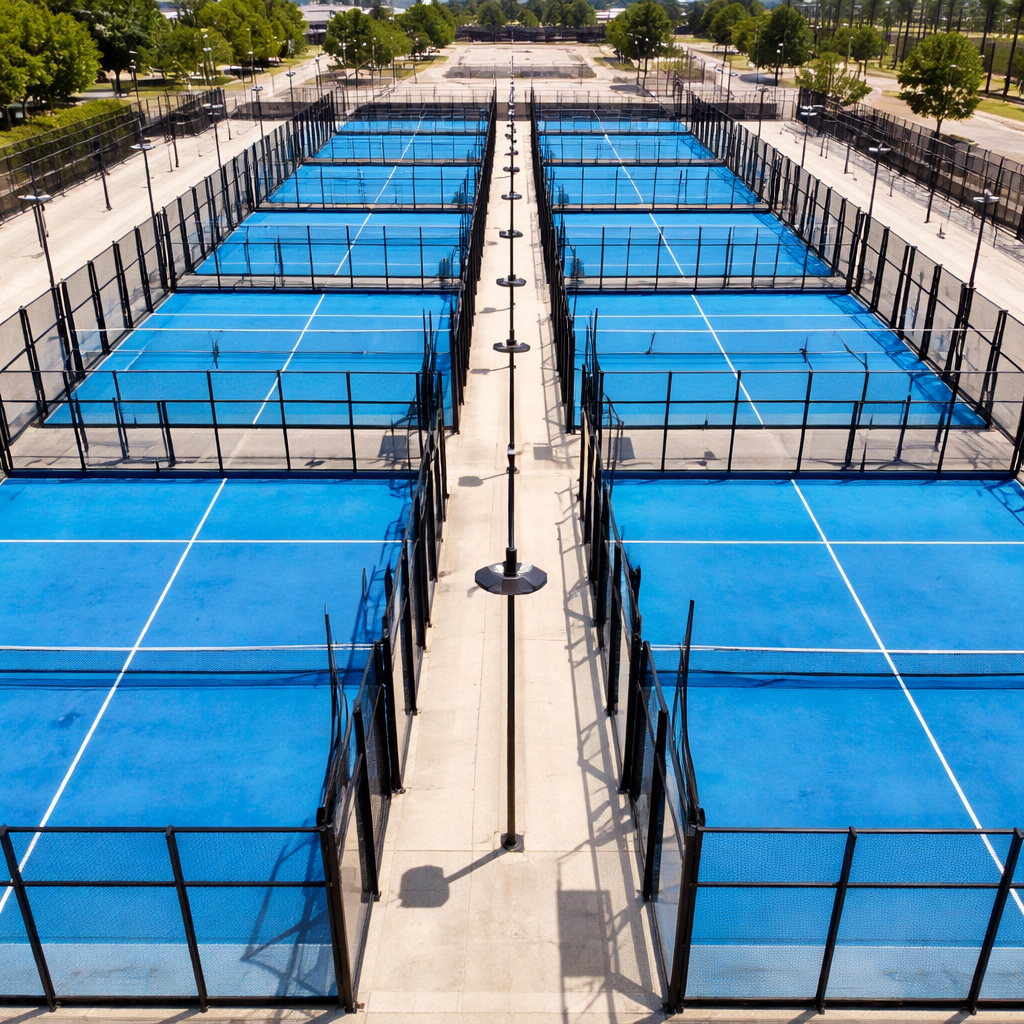
Modular construction techniques allow for rapid expansion of your facility as membership numbers grow beyond initial projections. Starting with two courts allows you to test the local market before committing toward a larger multi-court complex. Many successful operators utilize a phased approach for adding amenities like pro-shops or cafes around the central playing area. This flexibility helps manage cash flow while building a loyal community of players who return weekly for games. Scalable designs ensure that adding a third or fourth court remains straightforward without disrupting existing club operations. Ready for the good part?
- Phased construction options
- Modular structural components
- Integrated club management software
- Community-building social events
- Minimal staffing requirements
Key Takeaway: The economic efficiency of padel makes it a premier choice for diversifying sports club offerings and ensuring fast capital recovery.
## Investment Performance Metrics
| Metric | Expected Value | Business Impact |
|---|---|---|
| Area Needed | 200 sqm per court | High land efficiency |
| Players per Game | 4 People | Maximum court utilization |
| Revenue per Hour | High | Increased profitability |
| Payback Period | 2-3 Years | Fast ROI turnaround |
Investing in padel allows for higher player throughput and superior financial performance compared toward larger court sports.
How do you prepare for padel court installation?
Successful padel court installation begins with a comprehensive site assessment and engineering survey to ensure the ground can support heavy structural loads. You must measure the designated area for ensuring a professional structure fits without obstructing nearby amenities or safety exits. Engineers must analyze soil density before pouring the mandatory 400mm wide concrete ring beam that anchors the entire court. This critical foundation supports the heavy glass panels and prevents structural shifting during high wind events or soil movement. Inadequate drainage planning often ruins expensive synthetic turf within months by allowing water to pool beneath the surface. But here’s the kicker.
What site assessment steps are mandatory?
Conducting a thorough topographical survey prevents unexpected drainage issues that could compromise the integrity of the playing surface. You must check for underground utilities like water pipes or electrical cables before any excavation work starts on site. Soil compaction testing ensures the concrete base will not crack or sink under the weight of the steel and glass. Proper orientation of the court helps minimize sun glare for players during early morning or late afternoon matches. Planning for easy access during the delivery of heavy glass panels and steel beams remains vital for a smooth build. You might be wondering.
- Soil density and stability tests
- Topographical drainage surveys
- Utility clearance verification
- Sunlight orientation mapping
- Delivery access planning
Which logistical hurdles should you anticipate?
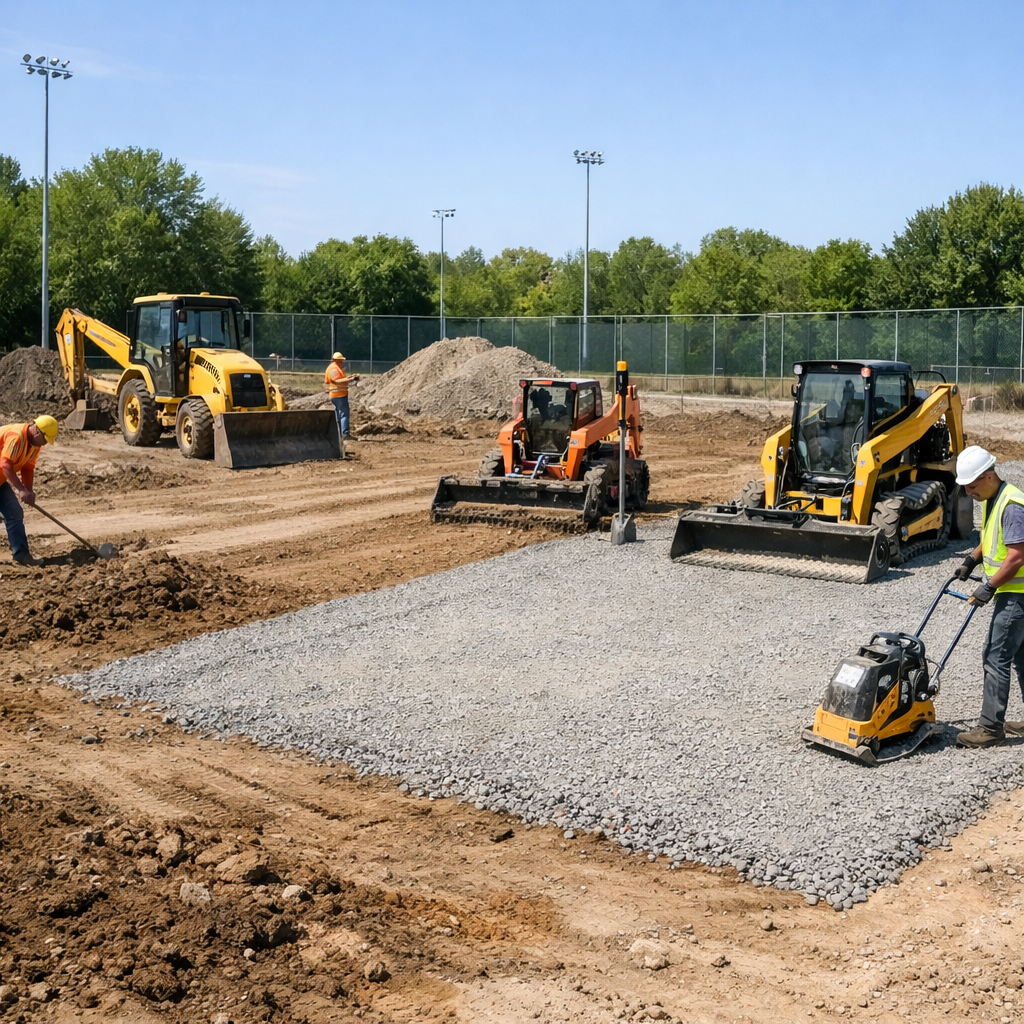
Managing the delivery and storage of large-format glass panels requires specialized equipment and careful handling protocols to prevent breakage. You should coordinate with local authorities regarding noise permits if your site sits near residential areas during the construction phase. Securing the perimeter during the build prevents unauthorized access and keeps the installation team safe from external distractions. Heavy machinery like excavators and concrete trucks need enough space to maneuver without damaging existing landscaping or structures. Clear communication between the project manager and the manufacturing team ensures all components arrive in the correct sequence. This is where it gets interesting…
- Heavy machinery access routes
- Secure material storage zones
- Local noise permit compliance
- Glass handling safety equipment
- Scheduled delivery coordination
Key Takeaway: Pre-construction diligence prevents costly retrofitting and ensures a stable platform for your court that lasts.
## Pre-Construction Checklist
| Task Category | Action Required | Priority Level |
|---|---|---|
| Engineering | Soil Compaction Test | Essential |
| Logistics | Glass Delivery Access | High |
| Utility | Cable/Pipe Mapping | Essential |
| Legal | Noise/Work Permits | Medium |
Thorough preparation mitigates construction risks and streamlines the assembly process for faster facility opening.
What dimensions govern padel court installation?
Constructing a regulation court requires exact adherence toward padel structure dimensions of 20 meters long and 10 meters wide for official play. The playing area must be marked with two service lines and a center line that crosses the service line by 10 centimeters. Professional venues allow 1.5-meter gaps between multiple courts for facilitating safe player movement and tournament spectator access. This spacing prevents bottlenecks during peak hours and improves the overall safety of the sporting environment significantly. Does the height of the ceiling matter for indoor projects during the design phase? A minimum clearance of 6 meters remains mandatory for competitive play to accommodate high lobs. You might be wondering.
How do enclosure heights affect gameplay?
The total height of the enclosure must reach 4 meters at the rebound ends to keep the ball within the playing zone. The first 3 meters consist of transparent glass or solid material while the top 1 meter features metallic mesh. This combination allows for spectator visibility while ensuring the ball stays inside the court during powerful overhead shots. Precise alignment between the glass and the mesh prevents irregular bounces that could frustrate players and ruin the match experience. Properly tensioned mesh ensures that the ball reacts consistently when it hits the upper section of the wall. Ready for the good part?
- 20m x 10m playing area
- 4m total enclosure height
- 3m glass wall height
- 1m mesh upper section
- 1.2m wheelchair access width
Why is the safety zone critical for clubs?
Establishing a clear perimeter around each court prevents accidents when players move rapidly near the glass or entry points. Professional clubs often include a 1.5-meter to 2-meter buffer zone for accommodating benches and water stations for the athletes. This extra space also allows for better drainage installation around the perimeter of the concrete ring beam. High-level competitions require these safety zones to allow players to run “out of court” for recovering difficult balls. Neglecting these dimensions can lead toward insurance complications and reduced player satisfaction over the long term. What’s the real story?
- 1.5m gap between courts
- Out-of-court play clearance
- Spectator walkway integration
- Drainage perimeter spacing
- Emergency exit accessibility
Key Takeaway: Exact measurements ensure your facility complies with competitive standards and player safety protocols for official tournaments.
## Regulation Dimension Standards
| Feature | Metric Measurement | Tolerance |
|---|---|---|
| Total Length | 20.00 Meters | +/- 0.01m |
| Total Width | 10.00 Meters | +/- 0.01m |
| Net Center Height | 0.88 Meters | Fixed |
| Ceiling Clearance | 6.00 Meters (Min) | Preferred 8m+ |
Adhering toward strict dimensional standards ensures that your facility remains eligible for professional tournament hosting and elite training.
Which materials are best for padel court installation?
Selecting high-quality materials for your padel court installation determines the lifespan of the facility and the quality of the playing experience. Fibrillated or monofilament synthetic turf provides exceptional wear resistance under heavy daily usage in both indoor and outdoor settings. Meanwhile, anti-explosion 12mm tempered glass ensures player safety during high-impact rallies when athletes collide with the perimeter walls. These premium materials reduce liability risks for club owners while providing a professional atmosphere for elite members and visitors. Galvanized steel structures offer a 20-year design life with minimal upkeep required when correctly powder-coated for weather protection. This is where it gets interesting…
Why does glass quality impact safety?
Tempered safety glass with a thickness of 12mm remains the industry standard for outdoor courts due toward its high impact resistance. This material is designed to crumble into small, dull pieces if a catastrophic failure occurs which prevents serious injury toward players. High-quality glass also provides perfect transparency for spectators and media cameras during high-profile matches and club tournaments. UV-resistant coatings help maintain the clarity of the glass and prevent it from becoming brittle over years of sun exposure. Proper mounting hardware with rubber gaskets prevents the glass from coming into direct contact with the steel frame. But here’s the kicker.
- 12mm tempered safety glass
- Anti-explosion film options
- UV-resistant glass coatings
- Specialized rubber gaskets
- Impact-rated mounting bolts
What role does turf density play?
High-density synthetic turf ensures a consistent ball bounce and provides the necessary grip for players performing explosive movements. Fibrillated turf holds the silica sand infill better which reduces the amount of maintenance required for surface leveling. You should choose turf that complies with European EN standards to guarantee it can withstand intensive commercial use without fraying. The color of the turf often defines the brand identity of the club and helps players track the ball more easily. Using the correct grade of kiln-dried silica sand prevents the fibers from matting down and maintains drainage performance. Ready for the good part?
- EU-standard fibrillated turf
- Monofilament high-performance grass
- Kiln-dried silica sand infill
- Multiple color options (Blue/Green)
- High-stitch density for durability
Key Takeaway: Premium materials lower long-term maintenance costs and enhance the player experience through consistent and safe performance.
## Material Comparison Guide
| Material Type | Premium Specification | Expected Lifespan |
|---|---|---|
| Structure | Hot-Dip Galvanized Steel | 20+ Years |
| Enclosure | 12mm Tempered Glass | 15+ Years |
| Surface | High-Density PE Turf | 5-8 Years |
| Lighting | 200W LED Fixtures | 50,000 Hours |
Investing in superior materials initially reduces the total cost of ownership by extending the time between major maintenance cycles.
How much does a padel court installation cost?
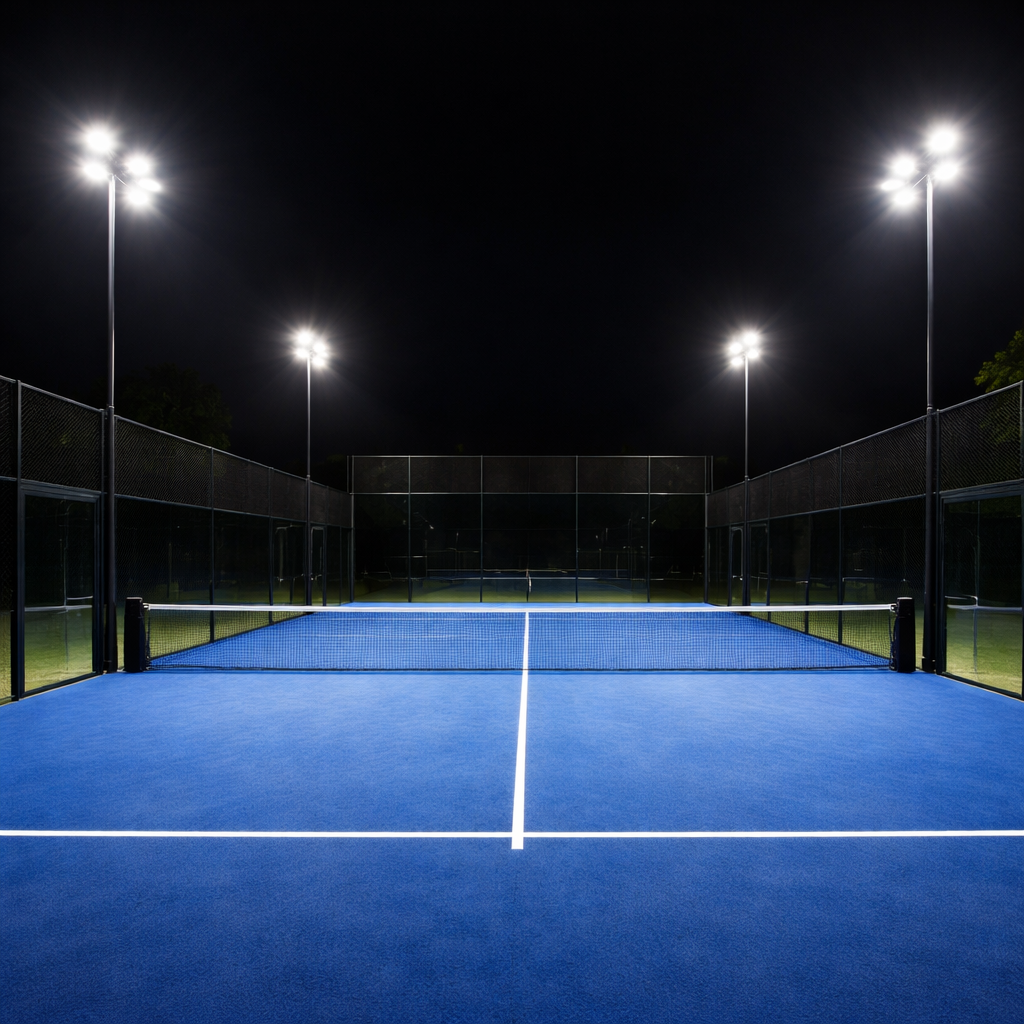
Financial planning for your facility depends heavily on site conditions and padel grass quality chosen during the procurement phase. A single professional court typically ranges between £60,000 and £90,000 depending on the complexity of the foundation and drainage requirements. Investors should allocate funds for high-efficiency floodlights which extend playing hours into the evening and increase total booking revenue. These lights consume significantly less power but provide uniform brightness across the entire playing surface for safe nighttime games. Bulk orders for multiple courts significantly reduce the per-unit procurement expense and logistics costs per court delivered. Here’s the deal.
What drives the variation in costs?
Groundwork represents the most unpredictable variable in the total budget due toward differing soil conditions and drainage needs at each site. If your land requires extensive leveling or reinforcement, the civil engineering costs can quickly exceed the price of the court components. Choosing a panoramic or super-panoramic design adds toward the cost but enhances the viewing experience for spectators and premium club members. Shipping costs also fluctuate based on the distance between the manufacturing facility and your project location in different countries. Professional installation labor ensures the warranty remains valid and the structure meets all local safety regulations and building codes. What’s the real story?
- Civil engineering and excavation
- Structural steel and glass costs
- Lighting and electrical systems
- Installation labor and equipment
- Logistics and shipping fees
How can you optimize your budget?
Ordering multiple courts at once allows you to leverage economies of scale and reduce the cost per court by up toward twenty percent. Choosing standard court designs rather than custom panoramic options helps keep material costs manageable for new club startups. You can also save on future expenses by investing in high-quality LED lights that lower monthly electricity bills significantly. Proper initial foundation work prevents the need for expensive repairs and resurfacing just a few years after the opening. Working directly with a manufacturer allows you toward bypass middleman markups and gain access toward factory-direct pricing for all components. But here’s the kicker.
- Factory-direct procurement
- Multi-court discount strategy
- Energy-efficient lighting choice
- Robust foundation investment
- Long-term maintenance planning
Key Takeaway: Transparent budgeting allows for high-quality components without unexpected financial strain during the construction and assembly phases.
## Estimated Cost Breakdown
| Expense Category | Percentage of Budget | Primary Items |
|---|---|---|
| Components | 50% | Frame, Glass, Turf |
| Groundworks | 30% | Foundation, Drainage |
| Assembly | 15% | Labor, Crane Hire |
| Electrical | 5% | LEDs, Wiring |
Careful financial management and direct sourcing ensure you get the best value for your investment without compromising on safety.
What foundation supports padel court installation?
A robust sub-base represents the most critical element of the entire build process to ensure the court remains level for years. Most contractors utilize a reinforced concrete ring beam for anchoring the heavy steel structure and preventing movement during high wind loads. The interior surface requires porous asphalt or specialized concrete for facilitating rapid water drainage through the synthetic turf and sub-base. This prevents water puddling which could damage the adhesive holding the turf in place and lead toward dangerous slipping hazards. A perfectly level foundation ensures every ball bounce remains predictable and fair for all players during competitive matches. Ready for the good part?
Why is a ring beam necessary?
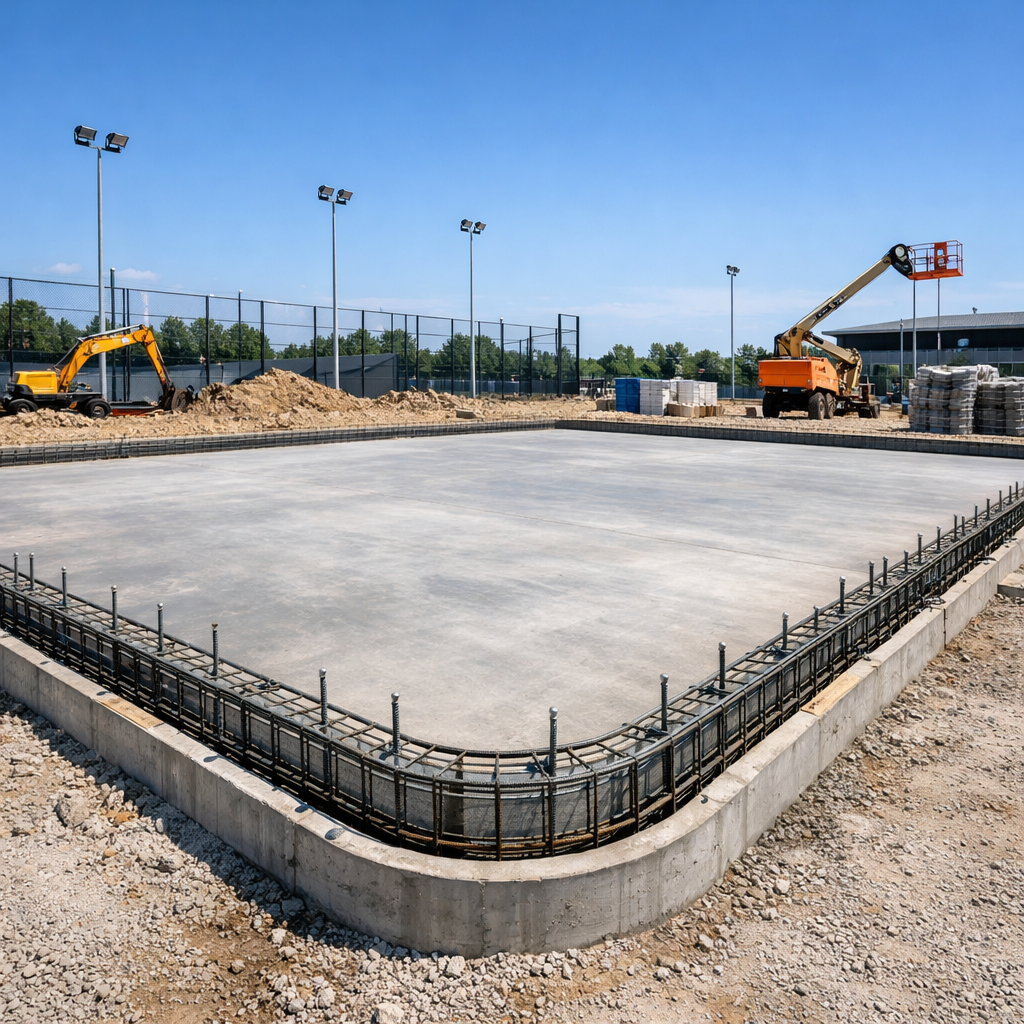
The ring beam provides a solid anchor point for the vertical steel pillars that support the heavy tempered glass panels. Without this reinforced perimeter, the weight of the glass could cause the ground to shift and lead toward panel misalignment or breakage. Engineers design the beam to be approximately 400mm wide to provide enough surface area for the base plates of the steel structure. This foundation also helps isolate the court from surrounding soil movement and root systems that might otherwise damage the playing surface. Using high-grade concrete with steel reinforcement ensures the ring beam survives through decades of freezing and thawing cycles. But here’s the kicker.
- Reinforced concrete perimeter
- 400mm surface beam width
- Steel anchor bolt integration
- Structural load distribution
- Long-term soil stabilization
How does drainage impact longevity?
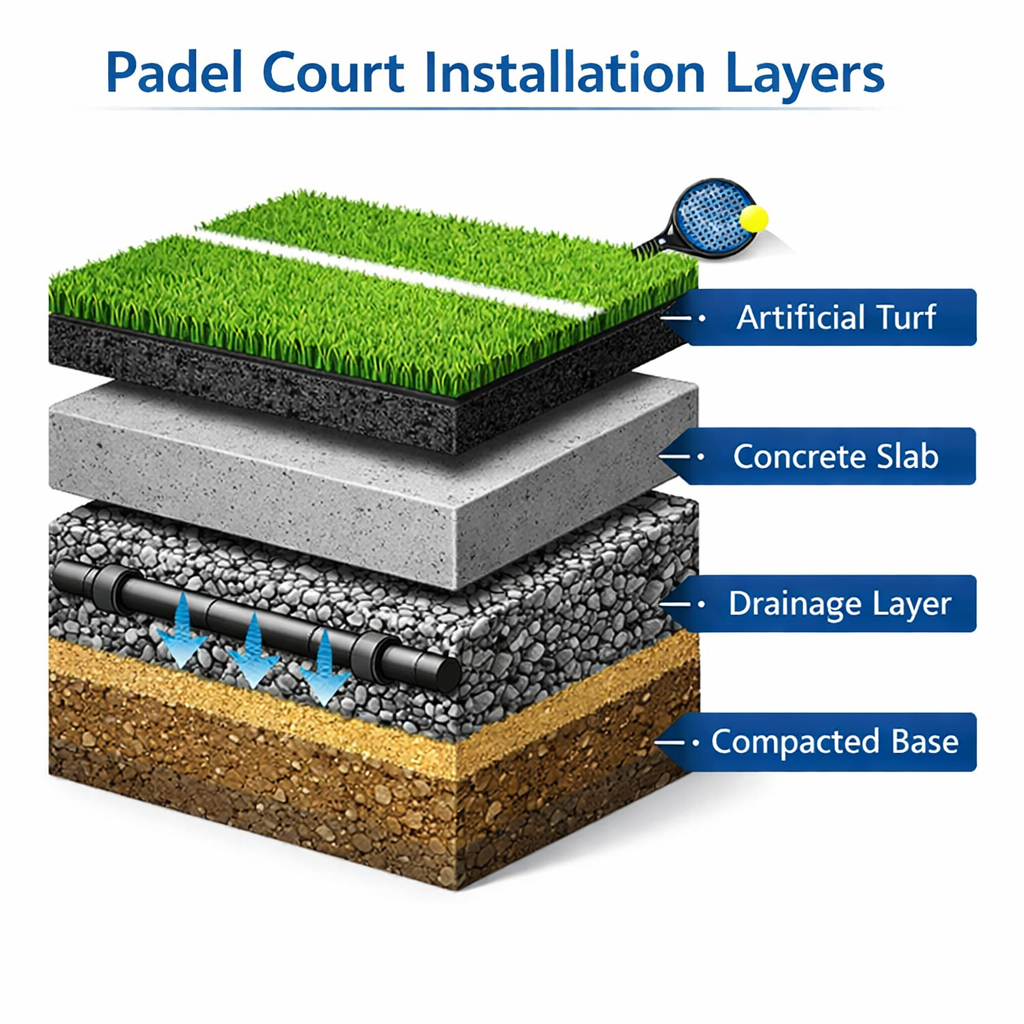
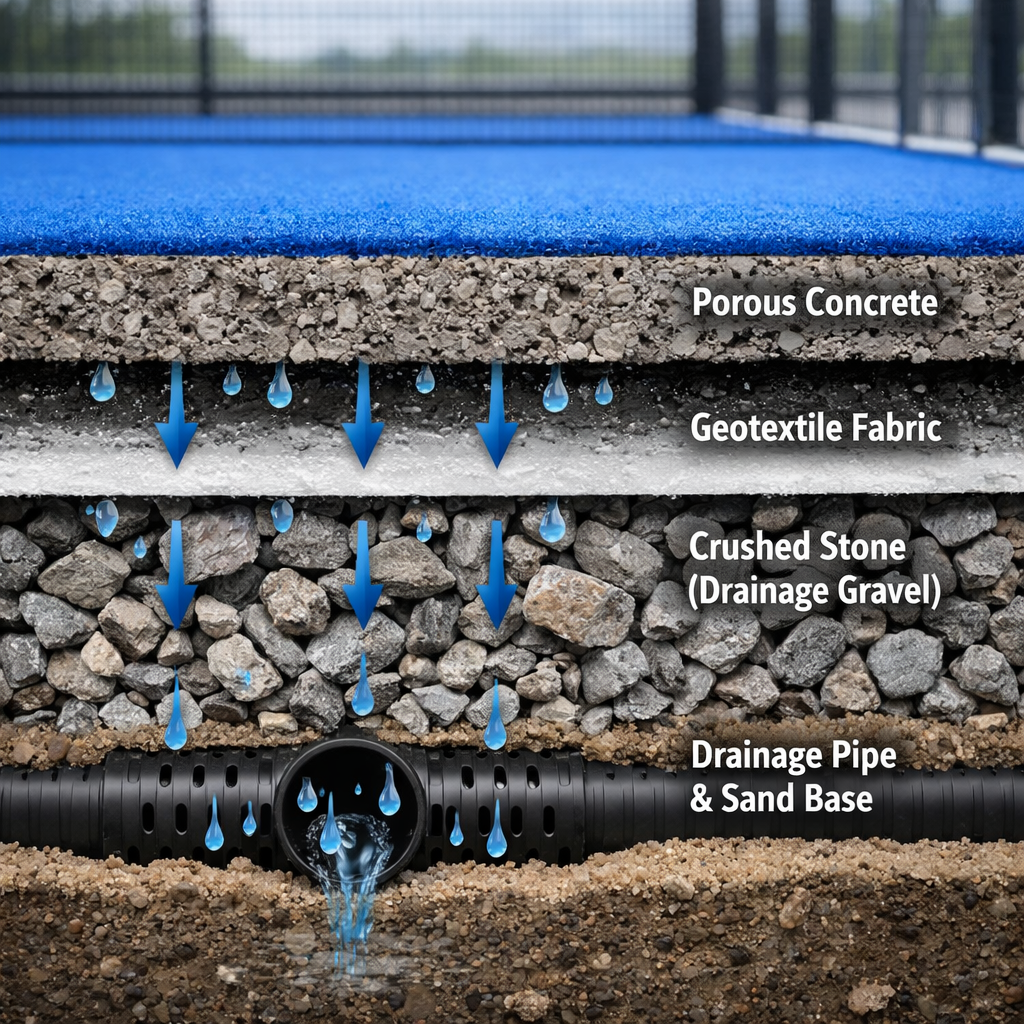
Properly engineered drainage prevents water from sitting beneath the synthetic turf where it could encourage mold growth or degrade the sub-base. A layer of crushed stone and porous materials allows rainwater to pass through the surface and exit into the local drainage system. If the water remains trapped, it can cause the concrete base to heave or crack during winter months in colder climates. High-performance courts feature a slight slope or specialized porous concrete to manage heavy rainfall efficiently and keep the court playable. Maintenance teams should regularly check that the drainage exits remain clear of debris and organic matter for optimal performance. This is where it gets interesting…
- Porous asphalt or concrete
- Crushed stone drainage layer
- Sub-surface pipe integration
- Surface slope management
- Regular drainage maintenance
Key Takeaway: A stable foundation prevents glass misalignment and extends the functional life of the court surface significantly.
## Foundation Specifications
| Layer | Material | Depth/Width |
|---|---|---|
| Ring Beam | Reinforced Concrete | 400mm Width |
| Base Layer | Crushed Stone | 150mm Depth |
| Playing Surface | Porous Asphalt | 50mm Depth |
| Drainage | Perforated Pipes | Site Dependent |
Correct foundation engineering is the bedrock of a successful project, preventing future structural failures and surface irregularities.
How long does a padel court installation take?
Most professional padel LED lighting and court projects require approximately four to six weeks from initial ground breaking until the first match. The initial phase involves earthworks and foundation pouring which takes about ten days depending on the weather and site complexity. After the concrete cures sufficiently, the modular steel frame assembly proceeds rapidly within five working days by an experienced team. Technicians then install the glass panels and lay the synthetic turf carefully to ensure a seamless and professional playing surface. Weather conditions often delay outdoor builds during the rainy months which should be factored into your project timeline planning. What’s the real story?
What phases define the timeline?
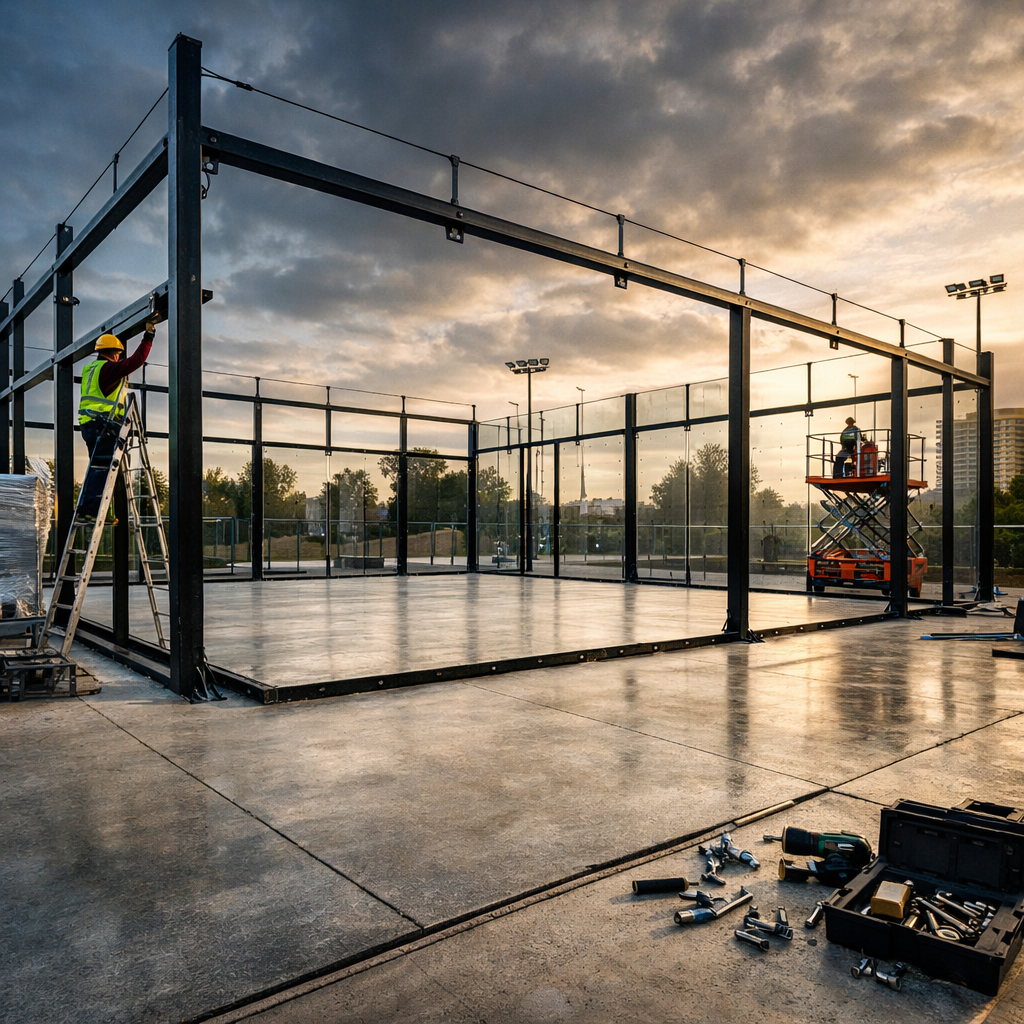
Phase one focuses on site clearing and leveling to prepare the ground for the heavy concrete work and drainage systems. Phase two involves the pouring of the reinforced ring beam which requires several days of curing time before it can support weight. Phase three sees the arrival of the steel structure and glass panels which are assembled using cranes and specialized suction tools. Phase four includes the laying of the turf, applying the silica sand, and installing the high-efficiency LED lighting systems. Each step must be completed in order to ensure the structural integrity and warranty compliance of the entire facility. Ready for the good part?
- Site clearing and leveling
- Foundation pouring and curing
- Structural steel assembly
- Glass panel installation
- Turf laying and finishing
How can you prevent project delays?
Securing all necessary building permits and planning permissions well in advance prevents legal interruptions that could halt work for weeks. Choosing a reliable manufacturer with consistent lead times ensures that materials arrive on site exactly when the foundation is ready. You should also ensure that electrical connections are planned and ready for the lighting installation team to prevent power-related delays. Having a dedicated project manager on site helps coordinate different contractors and solves logistical problems before they impact the schedule. Preparing for bad weather with protective coverings for the curing concrete can save several days of lost time during the build. But here’s the kicker.
- Early permit application
- Reliable material lead times
- Coordinated contractor schedules
- Weather protection planning
- On-site project management
Key Takeaway: Efficient project management ensures your facility opens on schedule for the upcoming sports season without costly delays.
## Construction Milestone Chart
| Project Week | Activity | Status Goal |
|---|---|---|
| Week 1 | Excavation | Site Leveling |
| Week 2 | Foundation | Ring Beam Poured |
| Week 3 | Steel Assembly | Structure Vertical |
| Week 4 | Glass & Turf | Surface Playable |
A well-structured timeline keeps the project on track and allows you to market the opening date toward your community with confidence.
Does padel court installation require planning?
Local building codes frequently mandate planning permission for permanent sports structures to ensure they comply with safety and environmental regulations. You must submit detailed architectural drawings and lighting impact assessments toward municipal authorities for review before starting any work. These documents prove that the facility won’t disturb neighbors with excessive noise or bright floodlights during late-evening matches. Gaining approval early prevents legal challenges that could halt construction or force expensive and frustrating modifications after the project begins. Environmental impact studies might be necessary for large-scale multi-court developments that affect local drainage or wildlife habitats significantly. But here’s the kicker.
What legal documents are required?
A comprehensive site plan showing the exact location and dimensions of the courts is the first requirement for most planning applications. You will also need a lighting plan (Lux plan) to demonstrate that the floodlights will not cause light pollution in residential areas. Structural certifications prove that the court design can withstand local wind loads and meets all necessary safety standards for public use. Noise assessment reports may be required if the courts sit near residential boundaries to ensure neighbor comfort remains protected. Consulting with a local planning expert can help navigate these complex requirements and speed up the approval process significantly. You might be wondering.
- Detailed architectural drawings
- Professional Lux (lighting) plans
- Structural safety certifications
- Noise level impact studies
- Environmental drainage reports
Why is neighbor consultation important?
Engaging with local residents before starting construction helps address concerns about noise and traffic before they turn into formal planning objections. Providing clear information about the club’s operating hours and lighting schedules can build community support for the new sports facility. Many clubs offer local residents special membership rates or trial periods to encourage a positive relationship with the neighborhood. Addressing potential issues like parking and late-night social activities early in the planning phase prevents future complaints and legal action. A club that is well-integrated into its community will enjoy higher long-term success and fewer regulatory interruptions over time. This is where it gets interesting…
- Community engagement meetings
- Transparent operating hours
- Parking management plans
- Landscaping for noise reduction
- Local resident membership offers
Key Takeaway: Proactive legal preparation ensures a smooth construction process without regulatory interruptions or unexpected fines.
## Regulatory Compliance Guide
| Requirement | Document Type | Agency |
|---|---|---|
| Zoning | Site Plan Approval | Local Council |
| Safety | Structural Certificate | Building Dept |
| Light | Lux Diagram | Environment |
| Noise | Acoustic Report | Health & Safety |
Completing all legal requirements before ground breaking protects your investment and ensures the facility operates without legal friction.
Should you choose covered padel court installation?
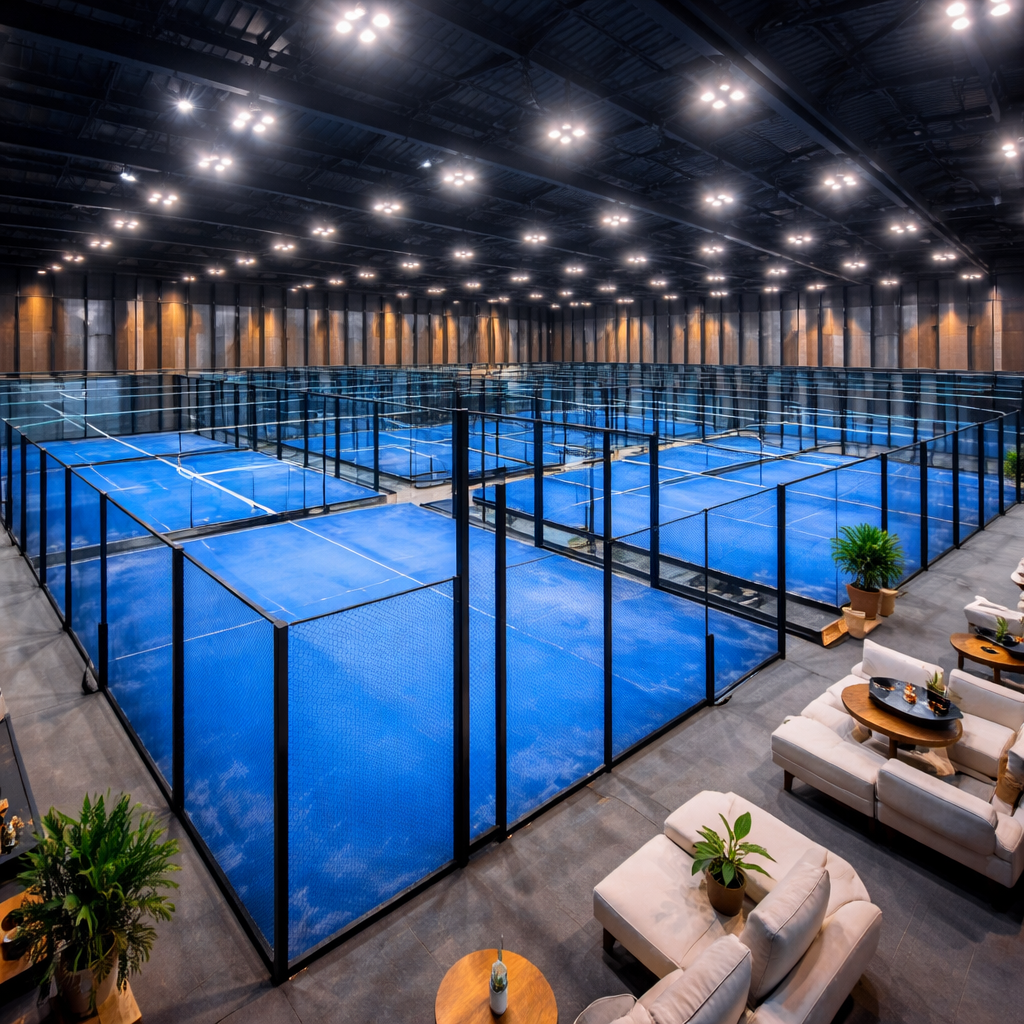
Investing in a roofed padel court installation guarantees year-round operation regardless of the local climate or unpredictable seasonal weather patterns. Open-sided canopies protect players from rain and direct sunlight while maintaining natural ventilation for comfort during hot summer months. This structure prevents match cancellations during winter or rainy seasons which keeps your revenue stream consistent and your members happy. While the initial capital expenditure remains higher, the increased booking hours throughout the year justify the added cost for most clubs. Covered courts also experience less UV damage which preserves the synthetic turf and glass components for a longer period. This is where it gets interesting…
How does a canopy affect revenue?
A covered facility can operate 365 days a year, meaning you never lose revenue due toward rain or extreme heat during peak hours. Members are more likely toward sign up for long-term packages if they know their matches will never be canceled by weather. This reliability allows you toward host tournaments and events with confidence, knowing the schedule will remain on track regardless of the forecast. The ability toward offer consistent playing conditions attracts serious athletes who need a reliable training environment for their professional development. Over a five-year period, the extra booking hours provided by a canopy often pay for the structure itself through increased income. But here’s the kicker.
- Year-round booking potential
- Protection from rain and sun
- Reduced maintenance frequency
- Enhanced member loyalty
- Reliable tournament scheduling
What design options exist for covers?
You can choose between fully enclosed indoor structures and open-sided canopies depending on your budget and local planning regulations. Open-sided designs provide a great balance by offering protection from rain while allowing for a “natural” outdoor feeling for the players. Fully enclosed structures allow for total climate control, including heating and cooling, for maximum comfort in extreme weather conditions. The roofing materials are typically UV-protected fabrics or metal sheets designed toward withstand high wind loads and snow accumulation. Selecting a design that complements the existing architecture of your club enhances the overall aesthetic appeal of the facility. Ready for the good part?
- Open-sided canopy designs
- Fully enclosed indoor halls
- UV-protected fabric roofing
- Steel or aluminum structures
- Integrated gutter systems
Key Takeaway: Covered facilities provide a superior return by eliminating seasonal downtime and protecting your assets from the elements.
## Facility Type Comparison
| Feature | Outdoor Court | Covered Canopy | Full Indoor |
|---|---|---|---|
| Initial Cost | Lowest | Medium | Highest |
| Playability | Weather Dependent | All-Weather | Climate Controlled |
| UV Protection | None | High | Total |
| Revenue | Seasonal | Consistent | Premium |
Choosing the right level of coverage depends on your local climate and the expectations of your target membership base.
Conclusion
Professional padel court installation combines advanced manufacturing with precise on-site engineering for creating highly profitable and safe sports venues. Success depends upon meticulous site preparation, selecting durable galvanized materials, and adhering toward strict international regulation dimensions for competitive play. By investing in premium steel and tempered glass, operators ensure long-term safety and minimal maintenance requirements for their growing business. A well-built court represents more than just a sports surface; it serves as a high-yield asset that builds community and drives revenue. Are you ready for starting your construction journey and transforming your facility into a premier sports destination? Contact us today for a customized quotation and expert consultation on your next project.
FAQ
Q1: Can I install a padel court on an existing tennis court?
Yes, you can. A single tennis court provides enough space for two padel courts comfortably, but you must ensure the existing base can support the new reinforced ring beam requirements.
Q2: What’s the best way to maintain the synthetic turf after installation?
Regularly brush the surface. Brushing the silica sand ensures even distribution and prevents the fibers from flattening, while removing organic debris maintains proper drainage performance.
Q3: How much space is required for a professional project?
Plan for 200 square meters. Each court needs a 20m by 10m area plus additional space for structural footings and a recommended 1.5m safety zone between adjacent courts.
Q4: Does the glass require special cleaning or chemicals?
No special chemicals are needed. Standard glass cleaners work effectively, but avoiding abrasive tools prevents scratches, while periodic inspections ensure the mounting bolts remain tight and secure.
Q5: Is it possible to customize the frame colors for my brand?
Absolutely. We provide OEM services using various RAL colors for matching your club identity, which helps strengthen your brand presence in the local market significantly.