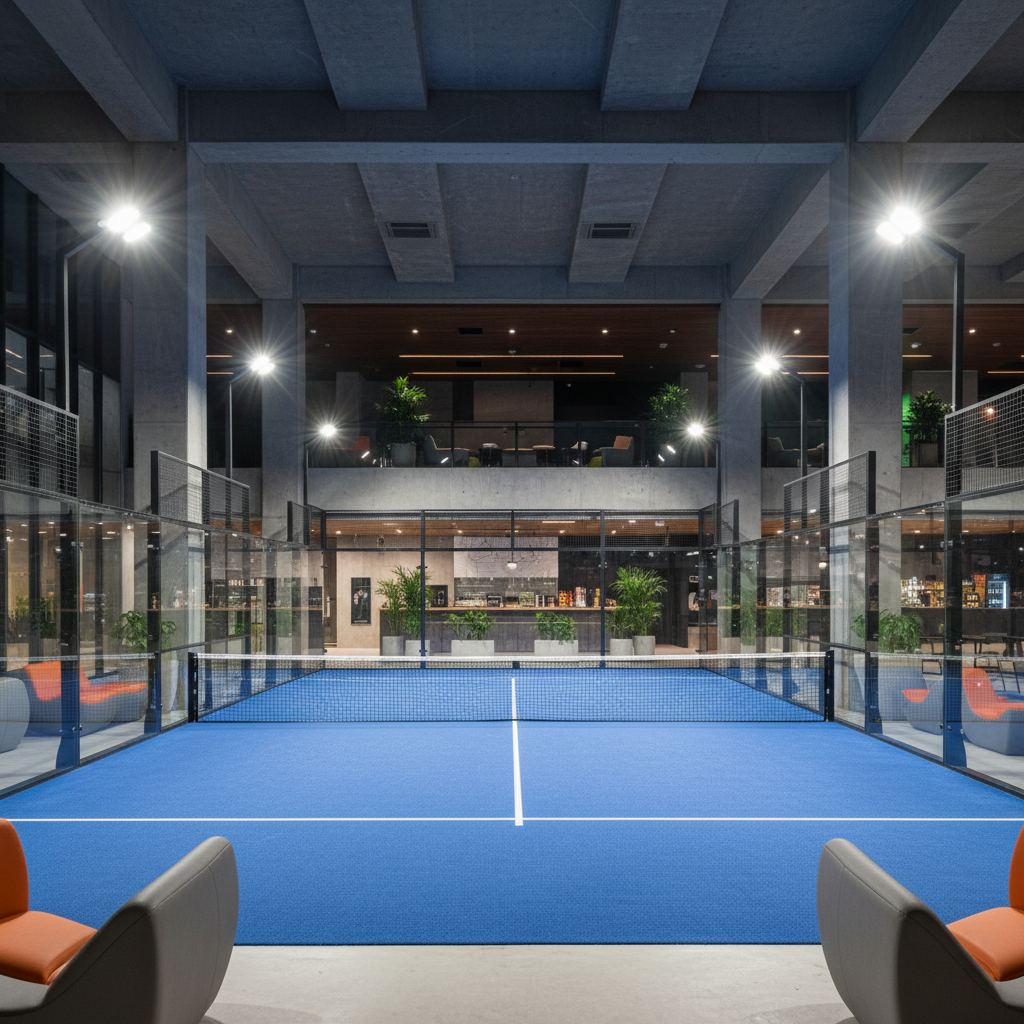
Dim illumination ruins high-stakes matches. Shadows confuse athletes during intense rallies. Poor visibility leads to frustrated club members and a significant decrease in booking revenue. Here is the deal. Professional sports facilities require precision optics to maintain safety and competitive fairness. This engineering guide provides the exact technical specifications needed to construct a superior lighting environment. With over 700 successful global installations, we provide the technical expertise required for high-performance sports venues.
Table of Contents
- What exactly is professional padel court lighting?
- What are the standards for padel court lighting?
- Why invest in high-quality padel court lighting?
- Which fixtures suit padel court lighting best?
- What is the best color for padel court lighting?
- How do you light an outdoor padel court lighting?
- What is the ideal height for padel court lighting?
- How can you reduce glare in padel court lighting?
- What determines the cost of padel court lighting?
- How do you build efficient padel court lighting?
1. What exactly is professional padel court lighting?
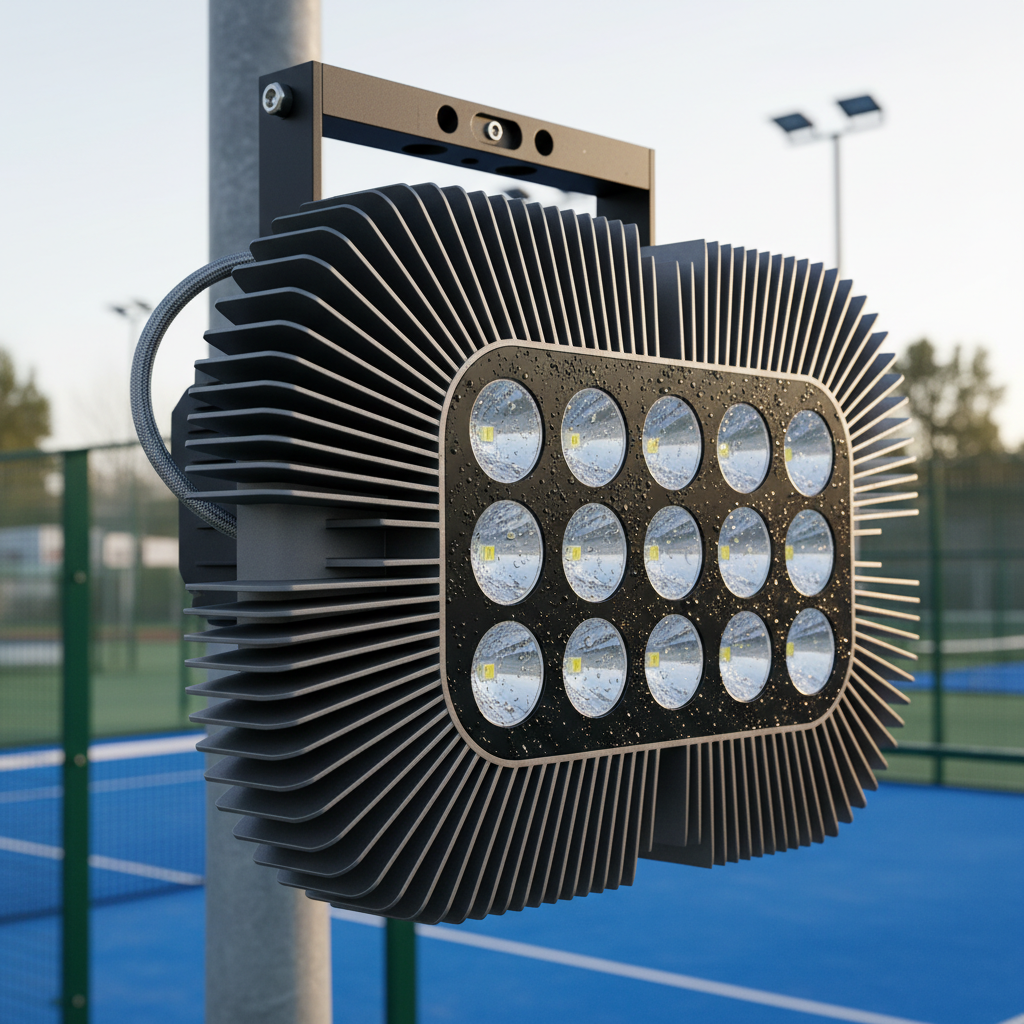
Professional sports illumination involves more than simply mounting floodlights on poles. You might be wondering how specialized systems differ from standard commercial lights. These systems must provide uniform brightness across a 20-meter by 10-meter surface. Precision-engineered lenses ensure that every corner of the playing area remains visible without creating dark spots. This specific setup supports high-speed ball tracking during intense rallies. Defining illumination for racket sports requires extreme horizontal and vertical clarity. Athletes need to track a small ball moving at high velocities against varying backgrounds. Utilizing a professional Padel LED Lighting system ensures your facility meets these rigorous demands. Structural layout involves four or six strategically positioned masts. Masts support heavy-duty fixtures projecting light inward toward the playing surface. Selecting high-performance LED modules with directional beam control remains a fundamental requirement for venue success.
System Components Comparison
| Component | Function | Material Requirement |
|---|---|---|
| LED Modules | Light Generation | High Lumen/Watt Efficacy |
| Optics/Lenses | Beam Shaping | UV-Resistant Polycarbonate |
| Masts/Poles | Structural Support | Hot-Dip Galvanized Steel |
| Drivers | Power Management | IP67 Waterproof Rating |
2. What are the standards for padel court lighting?
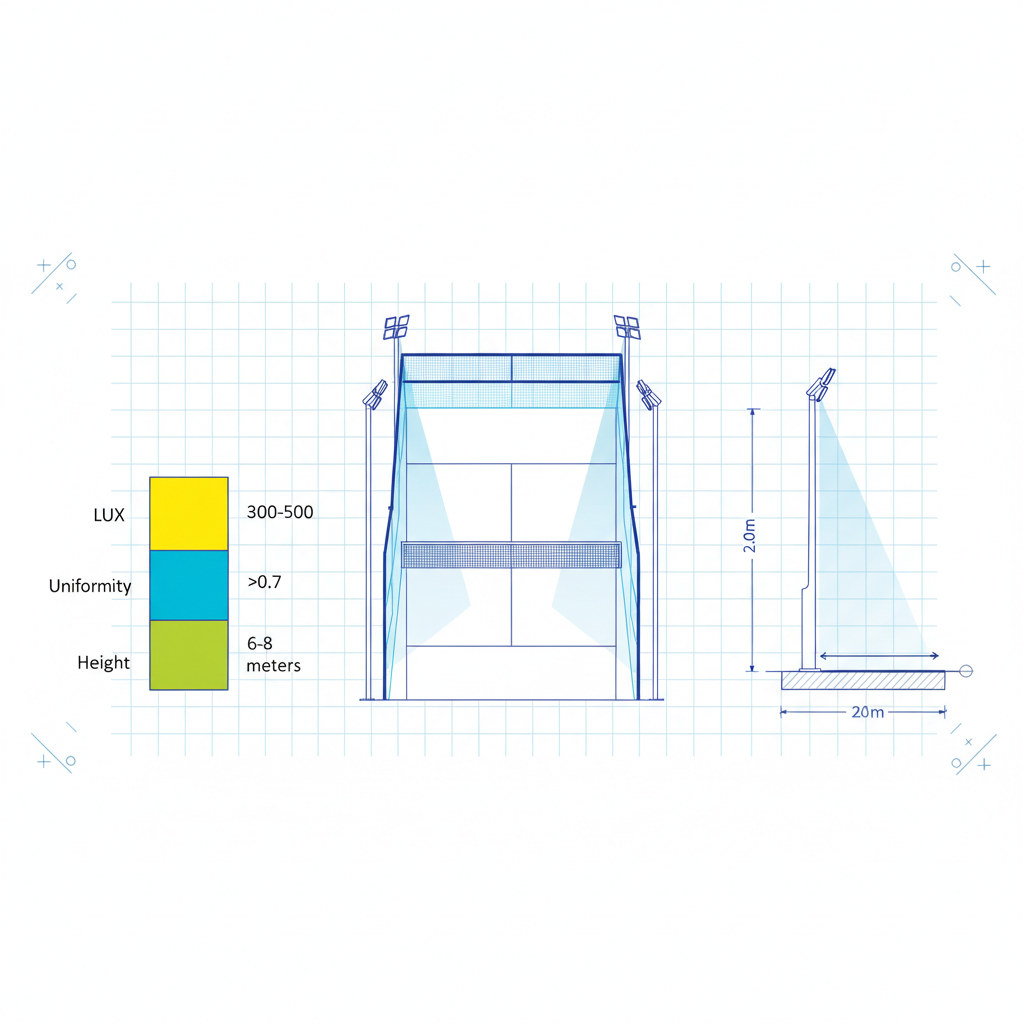
International sports federations dictate specific metrics for competitive play. This is where it gets interesting. You cannot simply guess the required brightness levels. European and global standards define lux levels based on the facility type. Recreational courts typically require 300 lux while professional tournament venues demand 500 to 750 lux. Adhering to these benchmarks prevents legal liabilities and ensures player satisfaction. Uniformity measures how evenly light spreads across the court surface. A uniformity ratio of 0.7 or higher prevents visual fatigue. Compliance with CE and ISO standards ensures electrical safety. These certifications guarantee that equipment survives harsh environmental conditions without failing. Using certified hardware protects the facility owner from electrical fires or structural collapses. Maintaining these levels is mandatory for hosting sanctioned events.
3. Why invest in high-quality padel court lighting?
Superior hardware translates directly into long-term profitability for club owners. Here is the kicker. Inefficient lamps consume massive amounts of electricity and require frequent replacements. Modern LED technology slashes energy consumption by up to seventy percent. This reduction significantly lowers monthly overhead costs for commercial gyms or private resorts. Investing in a Standard Padel Court equipped with high-efficiency LEDs ensures the venue remains economically viable. Energy-efficient LEDs provide immediate full-brightness without warming up. This allows for motion-sensor integration to save power during idle periods. Better visibility reduces the risk of collisions or missteps. You might be wondering why players prefer certain clubs over others. Clear lighting allows for better depth perception during lobs and smashes. High-quality environments encourage repeat bookings and positive word-of-mouth marketing.
Energy Efficiency Benefits
| Lighting Type | Power Consumption | Lifespan (Hours) | Maintenance Frequency |
|---|---|---|---|
| Metal Halide | 400W – 1000W | 10,000 | High |
| Halogen | 1000W+ | 2,000 | Very High |
| Professional LED | 200W – 300W | 50,000+ | Extremely Low |
4. Which fixtures suit padel court lighting best?
Selecting the right fixture determines the success of the installation. This is the key. Asymmetric floodlights represent the gold standard for racket sports. Unlike traditional symmetric lights that scatter photons everywhere asymmetric units direct light exactly where it belongs. This precision minimizes light pollution in surrounding residential areas while maximizing court brightness. Asymmetric optics project light forward and sideways in a controlled arc. Want to know why? This design eliminates the need for tilting fixtures at extreme angles. Large facilities often utilize taller masts with multiple modular units. Using 8-meter or 10-meter masts allows a single pole to service two adjacent courts. This layout reduces the total number of structural obstacles on the grounds. Professional engineers favor fixtures with die-cast aluminum housings for heat management.
5. What is the best color for padel court lighting?
Color temperature affects how players perceive the ball against the turf. Believe it or not. Most professionals recommend a cool white light between 5000K and 5700K. This Kelvin range mimics natural daylight and keeps athletes alert. Using warmer tones like 3000K can make the court feel dim or muddy. For a high-performance Panoramic Padel Court setup selecting the correct Kelvin rating is mandatory for visual clarity. The Kelvin scale measures the warmth or coolness of the emitted light. Higher Kelvin values provide a crisp appearance that improves focus. High CRI ensures that colors remain vivid and distinguishable. The best part? Players can easily see the yellow ball against blue or green synthetic turf. Contrast remains vital during evening sessions when natural light is absent.
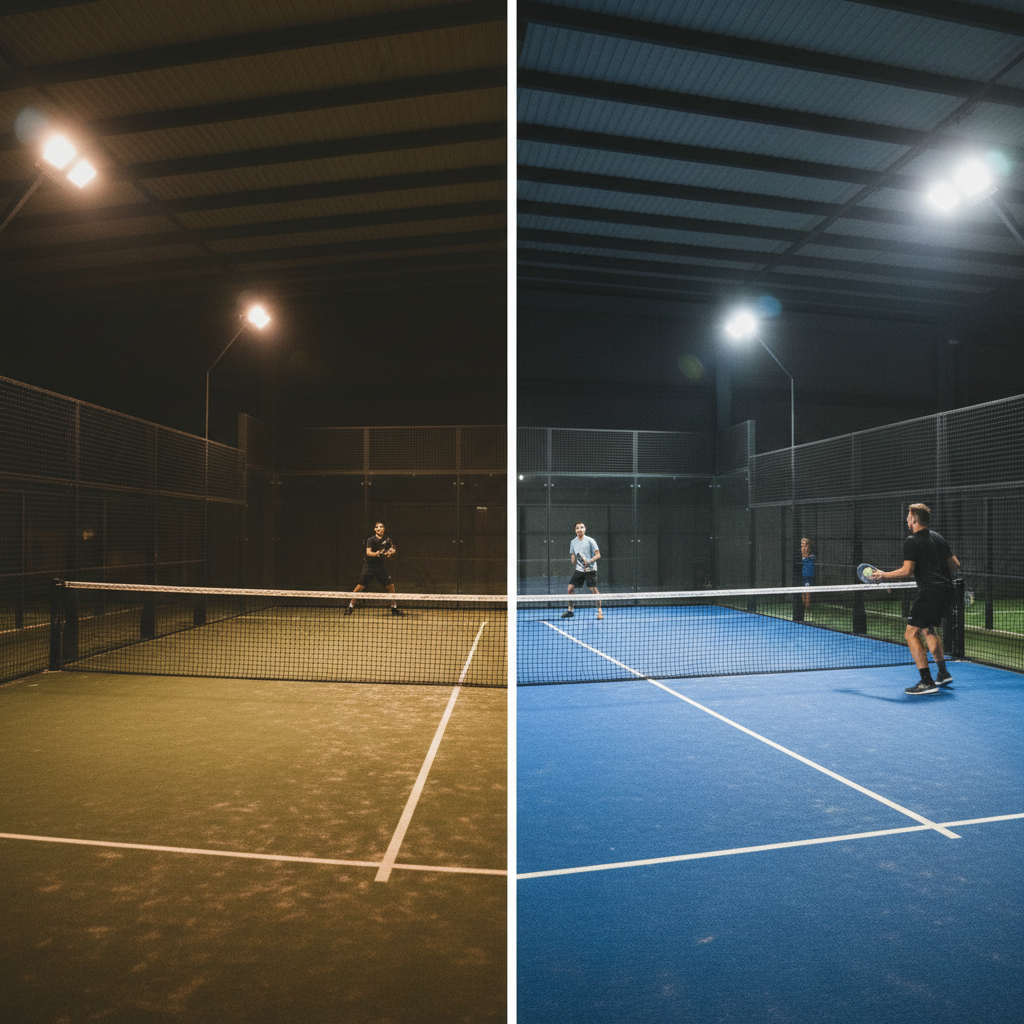
Color Temperature Guide
| Kelvin Rating | Visual Effect | Best Application |
|---|---|---|
| 3000K | Warm / Yellowish | Residential pathways |
| 4000K | Neutral White | Office / Indoor gyms |
| 5000K – 5700K | Daylight / Cool | Professional Sports |
| 6500K | Stark / Blue | Industrial inspection |
6. How do you light an outdoor padel court lighting?
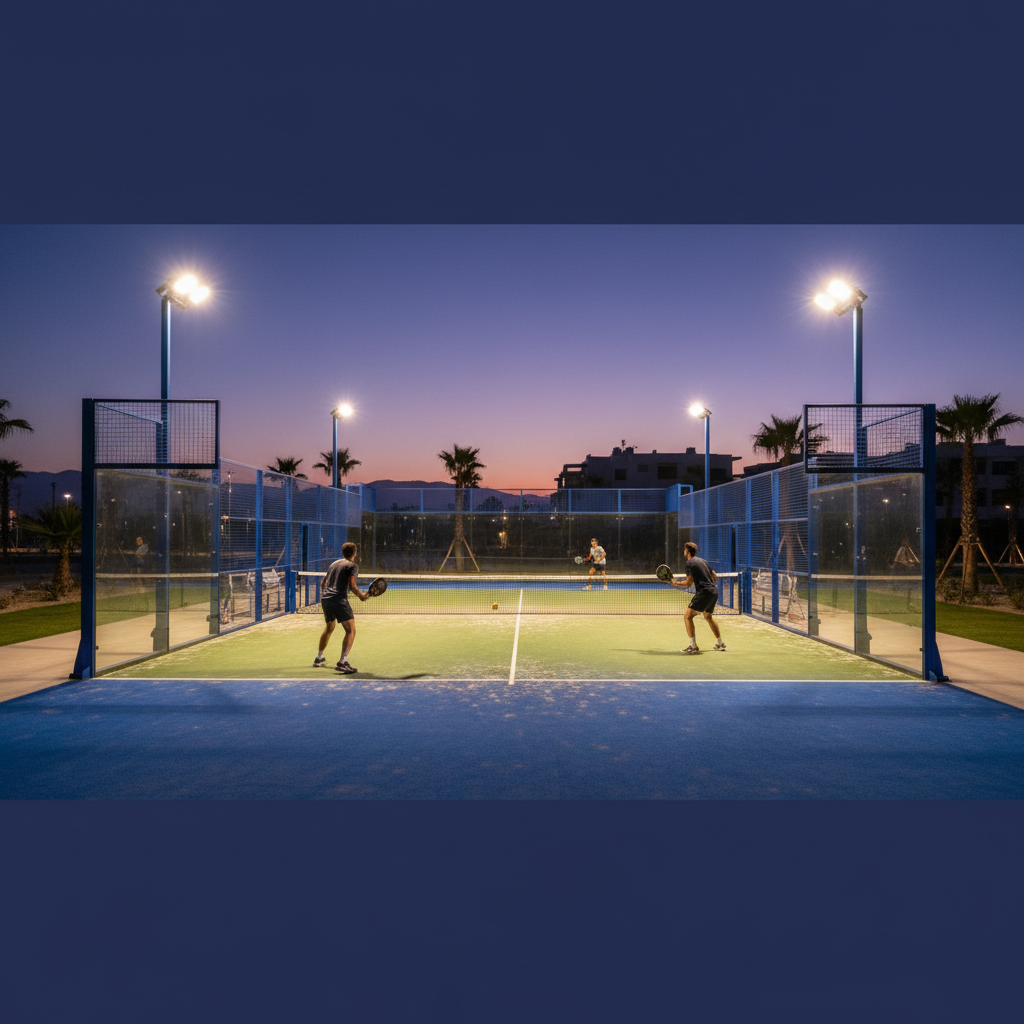
Outdoor environments present unique challenges like rain wind and dust. What is the catch? Standard indoor lights will fail within weeks if exposed to the elements. You must select hardware with an IP66 or higher waterproof rating. This ensures internal electronics remain dry during heavy storms. Proper outdoor lighting also requires surge protection to shield the system from lightning strikes or power surges. Weatherproofing and IP66 durability remain fundamental. Are you ready? IP66-rated units are completely dust-tight and can withstand high-pressure water jets. Poles should be positioned outside the fence perimeter at the corners. Placing masts near the center of the court can create visual obstructions for players during lateral movements. Corner masts provide the most balanced distribution for evening matches. Corrosion-resistant coatings protect the structure from oxidation.
7. What is the ideal height for padel court lighting?
Mounting height significantly influences glare and intensity. The real story is simple. Mounting lights too low creates a blinding effect when players look up for a lob. Conversely mounting them too high wastes energy as photons dissipate before reaching the ground. For a Roofed Padel Court the height is often dictated by the ceiling structure but 6 meters remains the industry standard for outdoor setups. Balancing pole height with light intensity ensures uniform coverage. But wait. If you choose 8-meter poles you must increase the wattage to 300W or 400W to maintain the required lux levels on the turf. Higher masts move the light source further from the player’s primary field of vision. This distance allows for a more comfortable playing experience during overhead shots. Strategic height selection ensures that lighting poles do not interfere with the natural flow of the game.
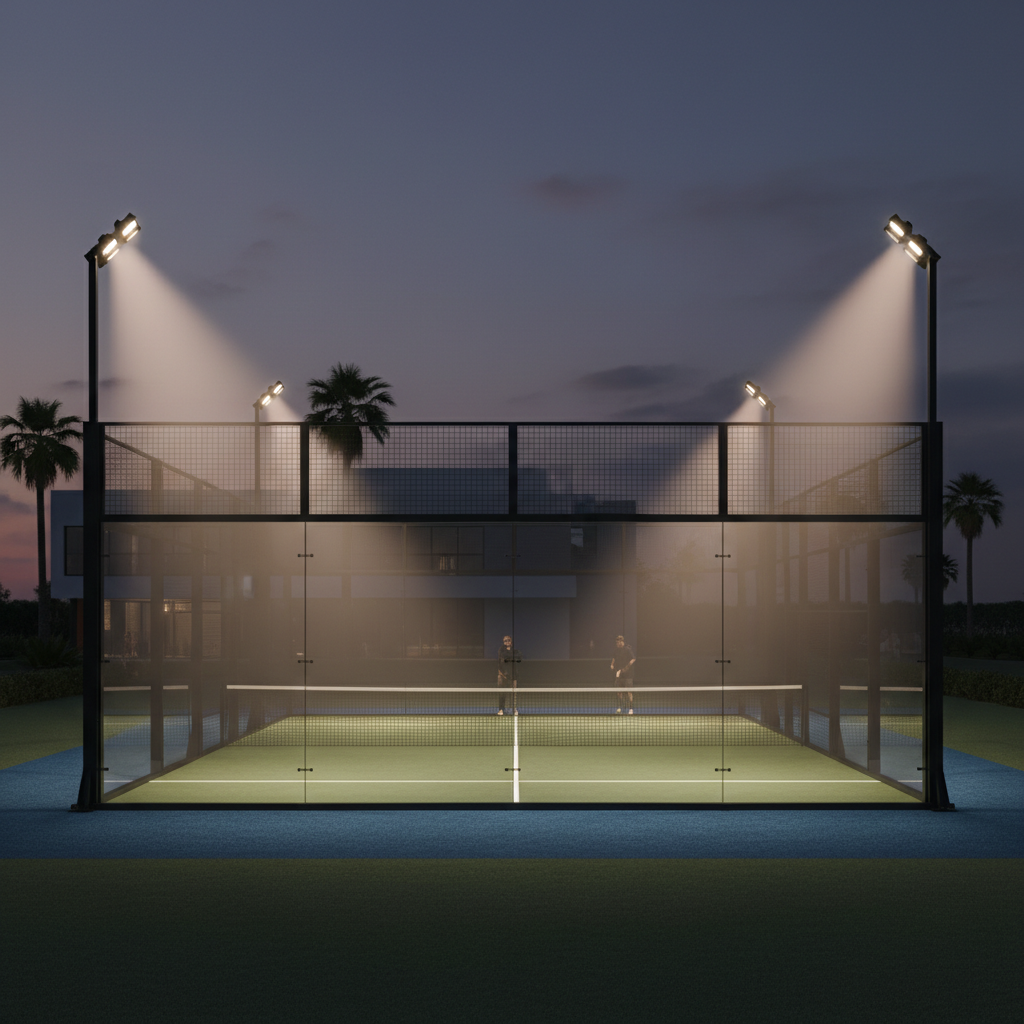
Mounting Height Reference
| Pole Height | Recommended Wattage | Average Lux (6 units) |
|---|---|---|
| 5 Meters | 150W – 200W | 350 Lux |
| 6 Meters | 200W – 240W | 450 Lux |
| 8 Meters | 300W – 400W | 550 Lux |
8. How can you reduce glare in padel court lighting?
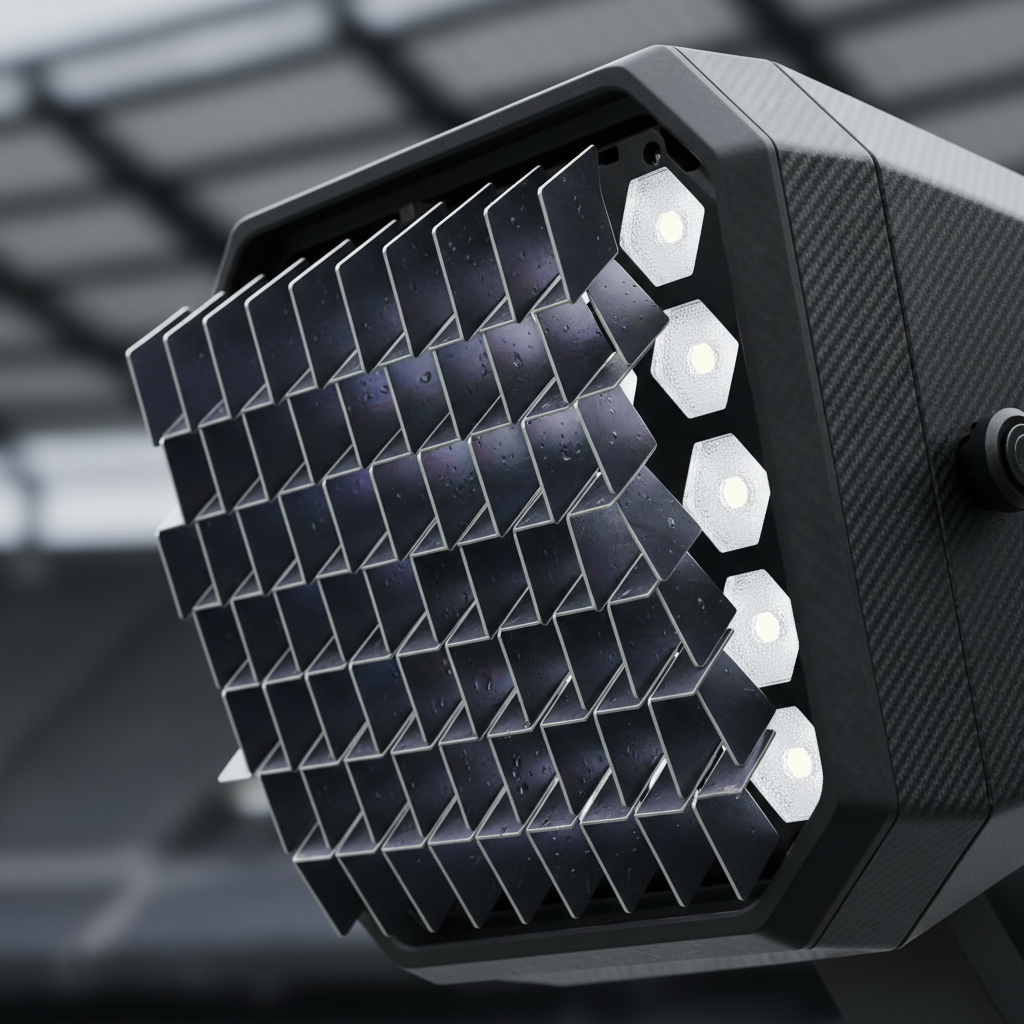
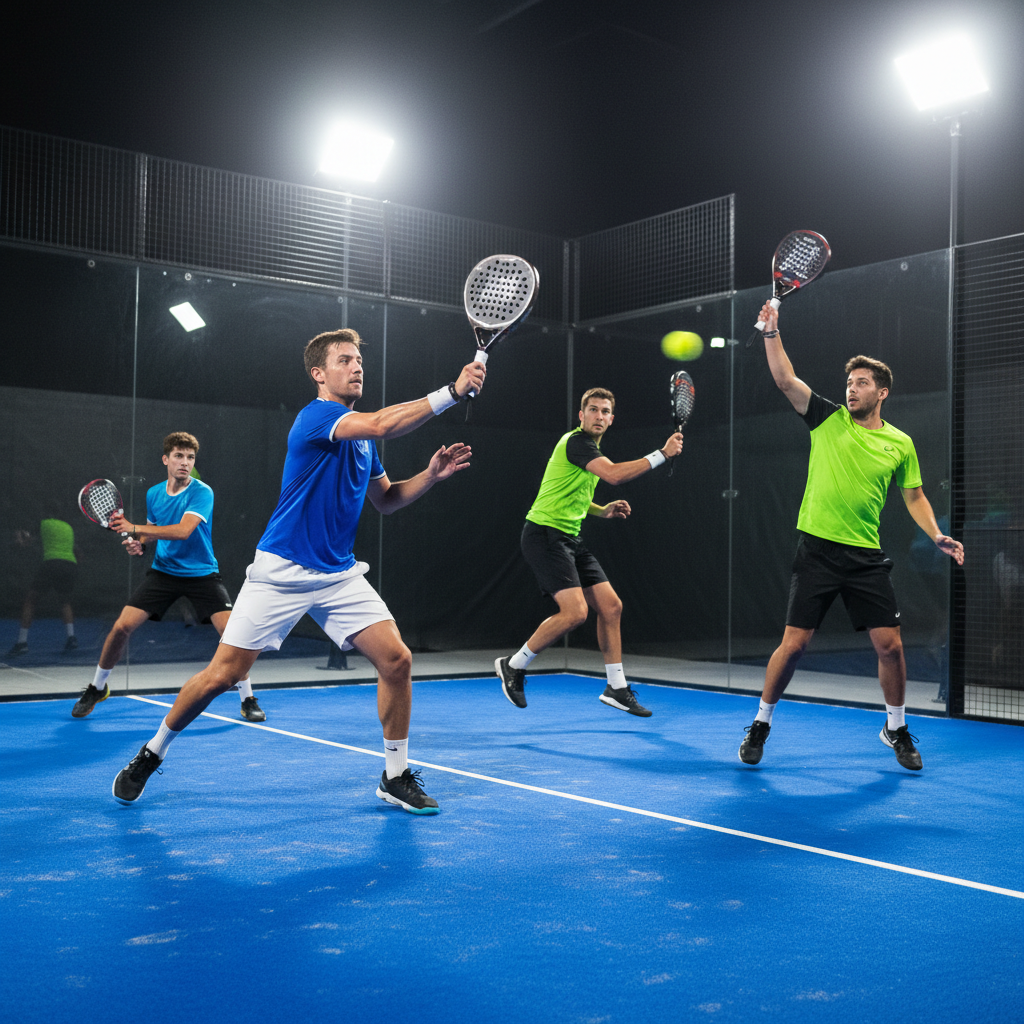
Glare is the enemy of professional sports. What is the real story? Excessive glare causes eye strain and leads to missed shots. Engineers use the Unified Glare Rating (UGR) to measure this discomfort. A UGR value below 19 is considered excellent for racket sports. Using specialized hardware and smart positioning can almost entirely eliminate the blinding effect of traditional floodlights. Utilizing anti-glare visors and shields remains a primary strategy. Ready for the good part? These visors focus the energy downward onto the court surface where it is needed. Recessed LED chips stay hidden from direct view. By hiding the actual diode the light appears more comfortable and less intense to the naked eye. Design choices remain vital for player comfort during long tournament matches.
9. What determines the cost of padel court lighting?
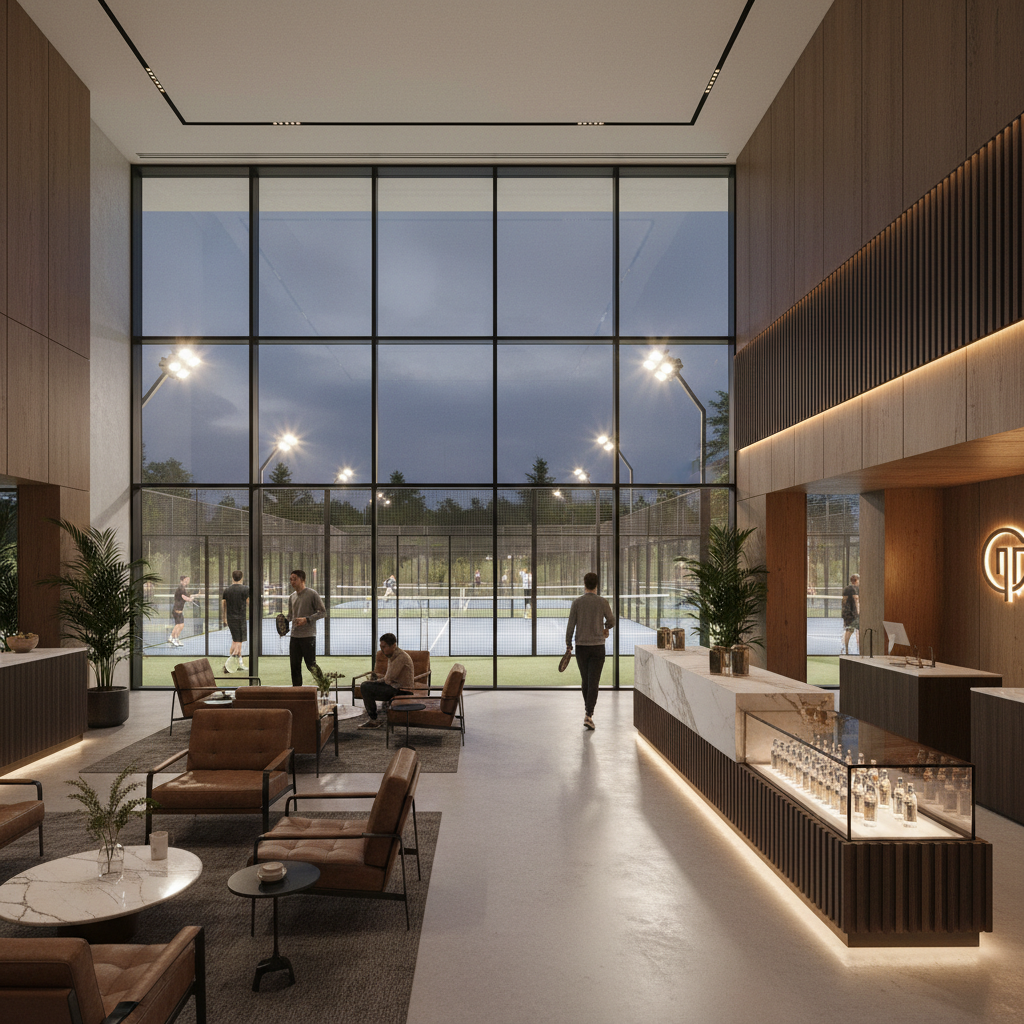
Budgeting for a new installation requires understanding several variables. You might be wondering why some systems cost twice as much as others. The quality of the Padel Structure and the complexity of the electrical wiring play major roles. While cheaper lights seem attractive initially they often fail prematurely and consume more power leading to higher long-term expenses. Professional LED fixtures range from $300 to $600 per unit. But here is the kicker. You also need to factor in the cost of galvanized steel poles and heavy-duty mounting brackets. Hiring a certified electrician is mandatory for safety. Underground wiring and concrete foundations for the poles represent a significant portion of the total project budget. Total installation costs usually range from $4,000 to $7,000 per court depending on site conditions.
Budget Breakdown Table
| Expense Category | Estimated Cost | Percentage of Total |
|---|---|---|
| LED Fixtures (6 units) | $1,800 – $3,000 | 45% |
| Steel Masts & Mounts | $1,000 – $1,500 | 25% |
| Electrical & Foundation | $1,200 – $2,500 | 30% |
10. How do you build efficient padel court lighting?
Constructing a lighting system requires a methodical approach. The final step is here. You must start with a detailed lighting simulation using software like DIALux. This simulation predicts exactly how the light will behave before you install a single pole. After the design phase the physical construction begins with trenching for electrical cables and pouring concrete footings for the masts. Secure the steel masts into the cured concrete foundations. Ready for the good part? Mount the fixtures at the top and connect them to a central control panel with surge protection. Precision aiming ensures every service box receives equal illumination. Once installed use a lux meter to verify the brightness at various points on the court. You must check the center the service boxes and the corners to ensure uniformity. Adjust tilt angles until the coverage is perfectly balanced across the entire venue.
Frequently Asked Questions
Q1: What is the best color temperature for visibility?
The most effective color temperature is between 5000K and 5700K. This range provides a crisp daylight appearance that enhances contrast and helps athletes track the ball easily during fast rallies.
Q2: Can I install these lights on an existing court?
Yes. You can retrofit older facilities by replacing existing metal halide lamps with modern LED fixtures. This usually involves swapping the mounting brackets and potentially upgrading the electrical wiring for better safety.
Q3: What’s the best way to prevent player glare?
The most efficient method is using asymmetric optics combined with anti-glare visors. These components focus the light downward and prevent photons from shining directly into the eyes of athletes looking up for lobs.
Q4: Can I save money with solar padel lighting?
Solar options exist but they require large battery banks to support high-wattage sports lighting. While it saves on electricity bills the initial procurement of batteries and solar panels is significantly higher than grid-connected systems.
Q5: What’s the best mounting height for 200W LEDs?
A height of 6 meters is considered ideal for 200W fixtures. This elevation provides a perfect balance of intense ground illumination and comfortable viewing angles for the players on the court.
Padel court lighting represents a fusion of electrical engineering and athletic safety. High-performance systems rely on asymmetric optics proper mounting heights and weather-resistant hardware. By following international standards and choosing high-efficiency LEDs facility owners can significantly reduce operational costs while providing a premier playing experience. Successful building requires careful simulation certified components and precise installation. If you are ready to upgrade your facility invest in professional-grade lighting to ensure your venue stands out in the competitive sports market. Reach out to a technical consultant today to begin your customized lighting design plan.