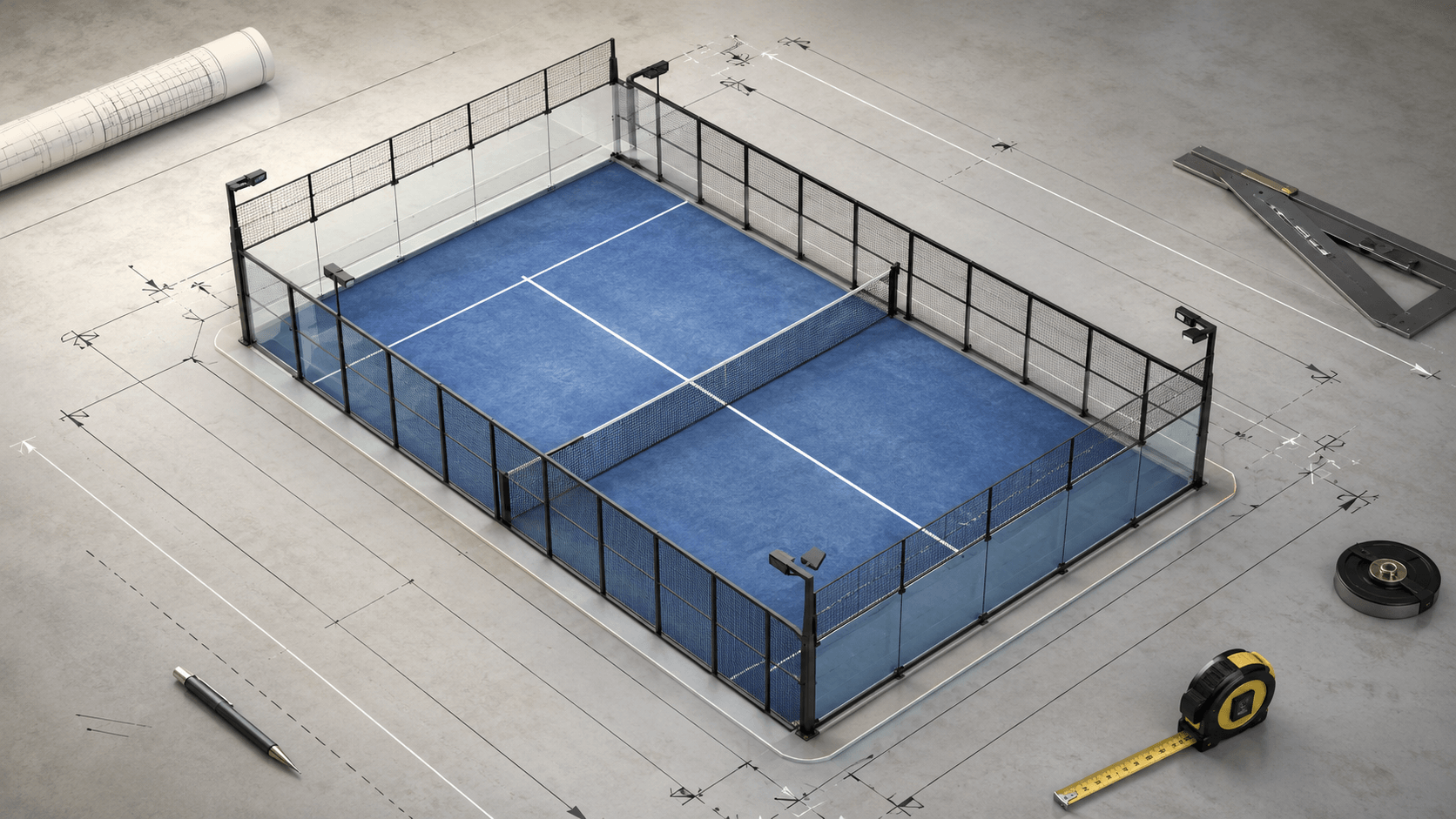
Official padel court dimensions in feet are 65.62 feet long by 32.81 feet wide for a standard doubles game. You might be planning to build a high-end facility, but converting metric blueprints into imperial units often leads to costly errors and misaligned glass panels. This confusion can delay your project and inflate labor costs as contractors struggle with imprecise measurements. By utilizing our guide on padel court dimensions in feet, you ensure architectural precision from the foundation to the final metallic mesh installation.
What are standard padel court dimensions in feet for doubles?
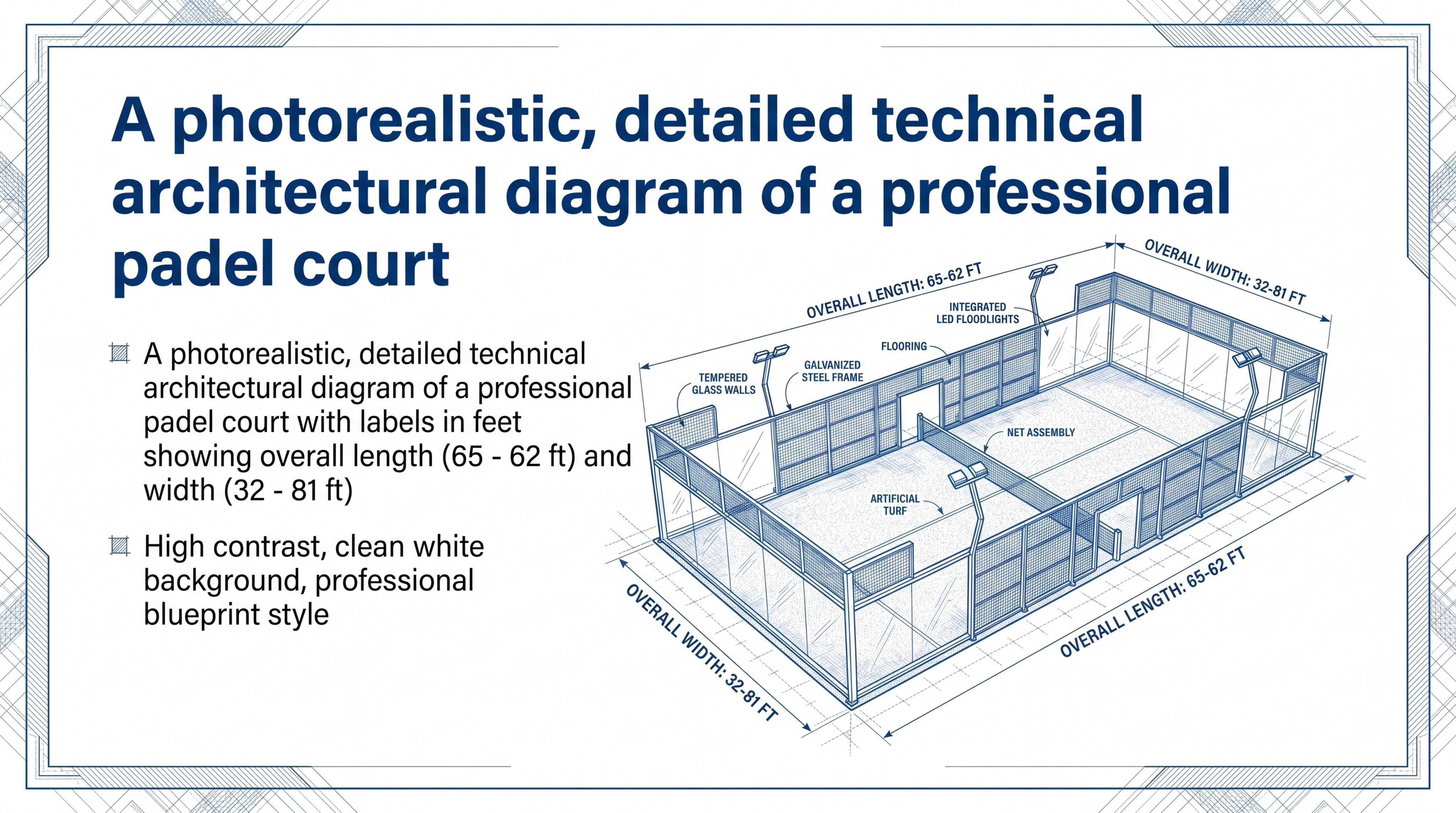
A standard doubles court measures 65.62 feet in length and 32.81 feet in width when measured from the internal playing surface. These padel court dimensions in feet represent the 20-meter by 10-meter international standard set by the International Padel Federation. You must adhere to these specific measurements to ensure the court is valid for competitive play.
How do you calculate the total area?
Think about it: the total footprint of the playing area is roughly 2,152.8 square feet. You need to consider this space when mapping out your facility’s floor plan or outdoor lot.
- The length is exactly 65.62 feet.
- The width spans 32.81 feet across.
- Total square footage equals 2,152.8 sq ft.
Are there specific line widths?
Here is the truth: the lines on the court have their own specific thicknesses that you must account for during painting. All lines should be 2 inches wide and contrast clearly with the turf color.
- Standard lines are 0.16 feet (2 inches) wide.
- White is the most common color for visibility.
- Lines are part of the total internal measurement.
Key Takeaway: A standard doubles court requires a 65.62′ x 32.81′ area, totaling approximately 2,153 square feet for the internal playing surface.
| Feature | Dimension (Metric) | Dimension (Feet) |
|---|---|---|
| Total Length | 20 Meters | 65.62 ft |
| Total Width | 10 Meters | 32.81 ft |
| Playing Area | 200 sq m | 2,152.8 sq ft |
The standard doubles layout provides the necessary space for tactical movement and high-speed rallies inherent to the sport.
How do singles and doubles padel court dimensions in feet compare?
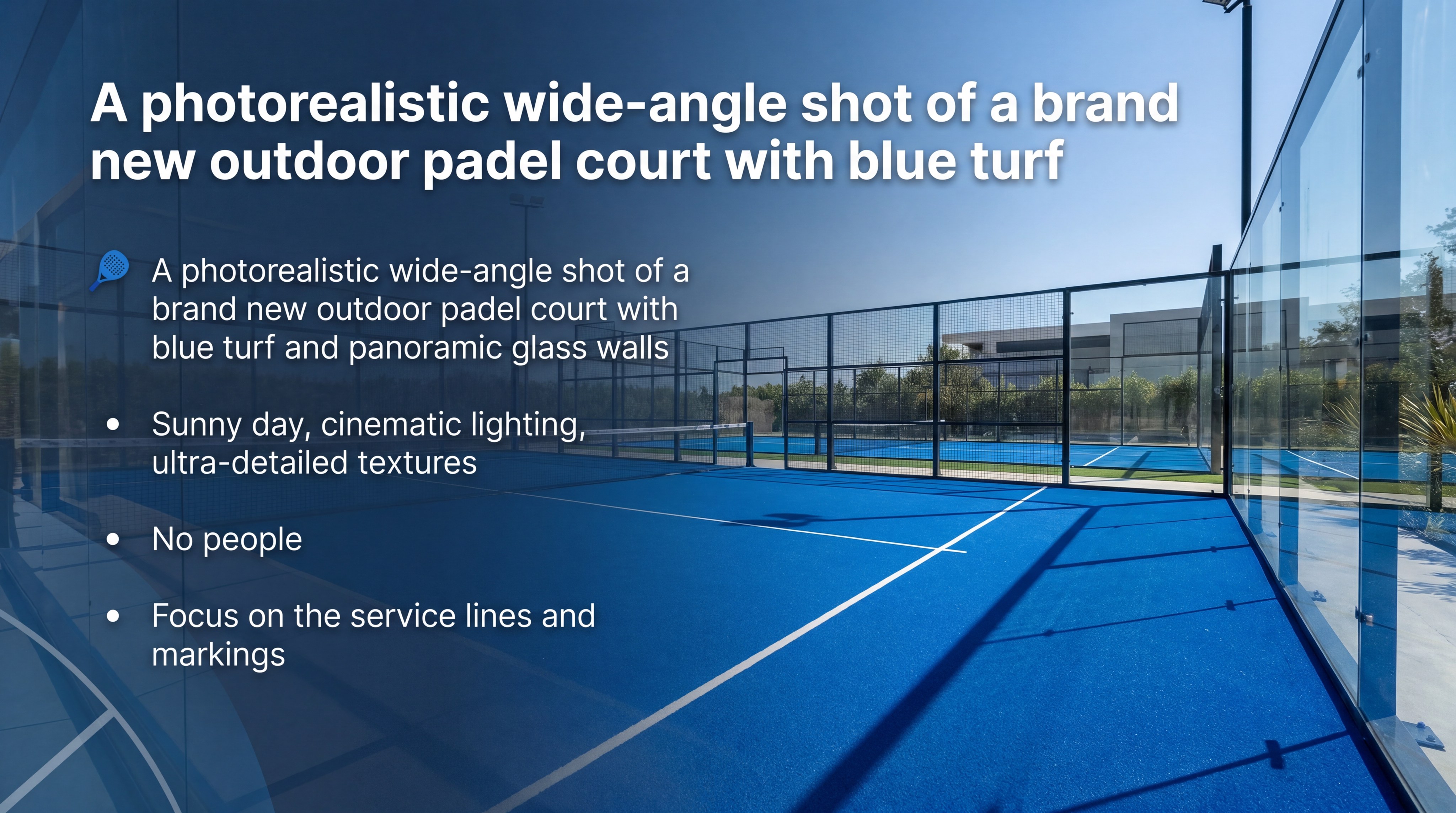
Singles courts share the same length of 65.62 feet as doubles courts but are significantly narrower at 19.69 feet. While doubles are the most common, understanding these padel court dimensions in feet allows you to maximize space in smaller facilities. You can often fit multiple singles courts in areas where a doubles court might feel cramped.
Is the length always the same?
In fact, the 65.62-foot length remains constant across both play styles to maintain consistent service box depth. This ensures that your muscle memory for serves and lobs remains accurate regardless of the court width.
- Both versions use a 65.62 ft length.
- Service boxes retain their 22.80 ft depth.
- Overall length remains standardized for professional builds.
Why choose a narrower width?
The best part? Narrowing the width to 19.69 feet makes the game manageable for individual players without a partner. You will find that these courts are excellent for training sessions and high-intensity cardio workouts.
- Width is reduced to 19.69 ft (6m).
- Perfect for one-on-one training.
- Fits in footprints approximately 20 feet wide.
Key Takeaway: While lengths are identical at 65.62 feet, singles courts reduce the width to 19.69 feet to suit solo play.
| Court Type | Length (Feet) | Width (Feet) | Primary Use |
|---|---|---|---|
| Doubles Court | 65.62 ft | 32.81 ft | Standard/Social |
| Singles Court | 65.62 ft | 19.69 ft | Training/Solo |
Choosing between singles and doubles layouts depends entirely on your available square footage and target demographic.
What is the net height for padel court dimensions in feet?
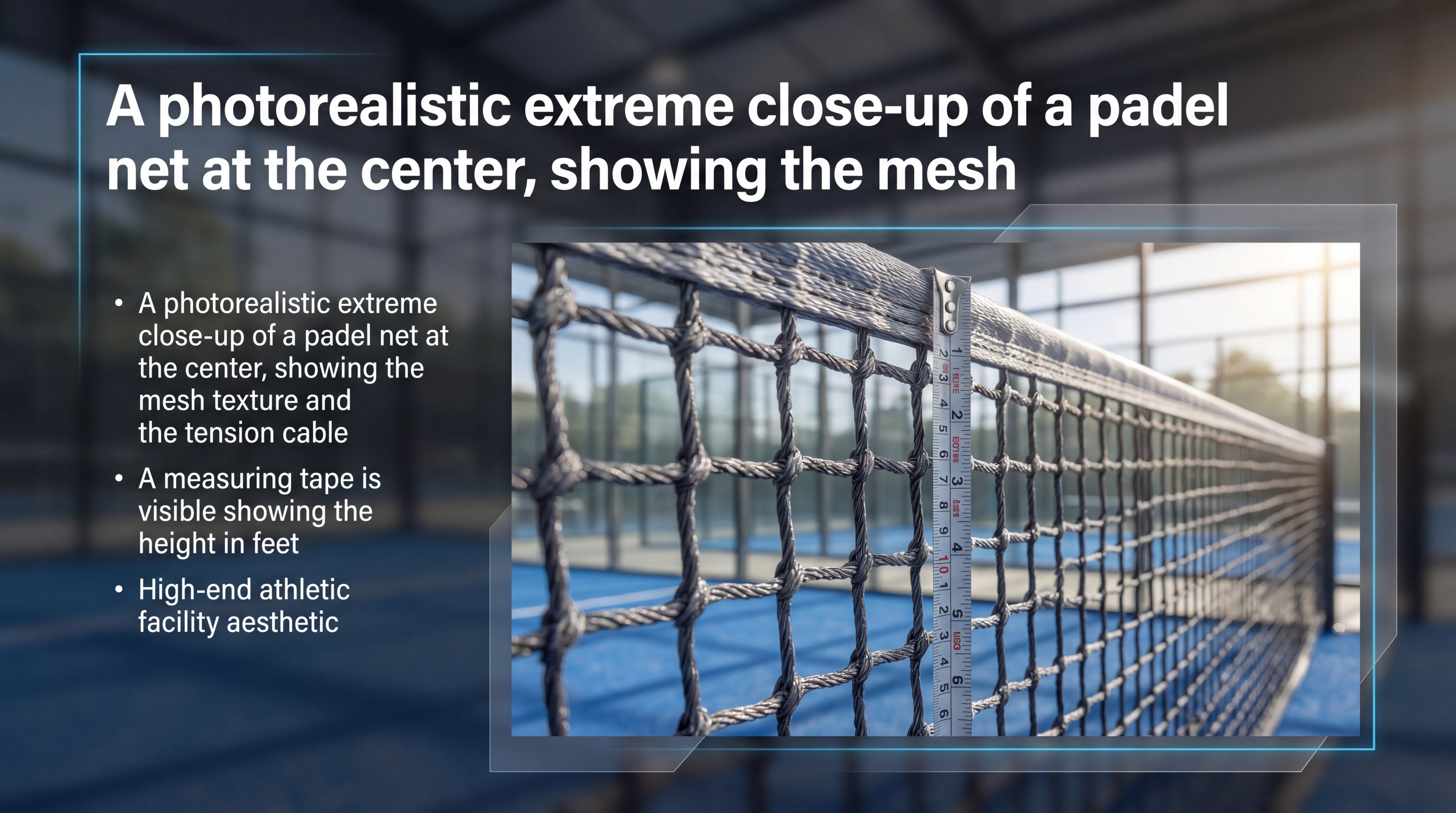
The net height must be 2.89 feet at the center and 3.02 feet at the posts to meet official regulations. Precise padel court dimensions in feet for the net are critical because even a half-inch deviation can drastically alter the difficulty of cross-court shots. You must ensure the tension cable is properly adjusted to maintain these heights during every match.
How do posts affect the width?
Look: the net posts must be situated outside the side walls but remain aligned with the center of the court. You should position them 32.81 feet apart to ensure the net spans the entire width of the playing area.
- Posts are 3.02 feet high.
- Post spacing should be 32.81 ft.
- They sit slightly outside the playable turf.
Why is the center lower?
It’s no secret that the center of the net is designed to be slightly lower to allow for the natural sag of the mesh. You will find that this 2.89-foot height is the “sweet spot” for most attacking volleys and defensive lobs.
- Center height is exactly 0.88m (2.89 ft).
- Ensures consistent playability across facilities.
- Measured from the top of the white band.
Key Takeaway: Net height is slightly variable, ranging from 2.89 feet in the center to 3.02 feet at the support posts.
| Net Position | Metric Height | Imperial Height | Tolerance |
|---|---|---|---|
| Net Center | 0.88 Meters | 2.89 ft | +/- 0.2 inches |
| Net Posts | 0.92 Meters | 3.02 ft | +/- 0.2 inches |
Maintaining a net height of exactly 2.89 feet in the center is vital for ensuring your facility meets professional certification standards.
How do walls affect internal padel court dimensions in feet?
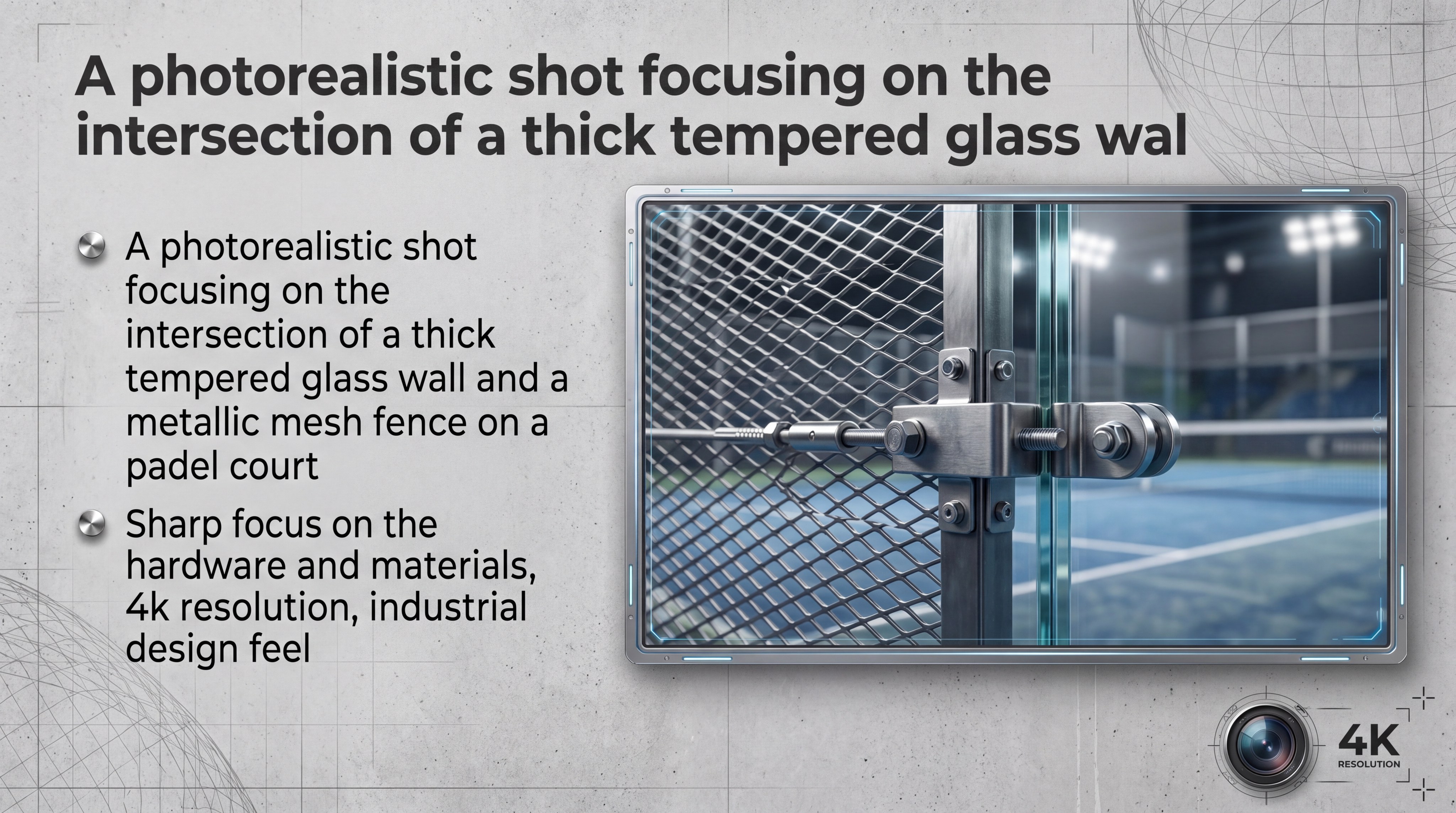
Internal measurements are taken from the inner face of the glass and mesh, meaning the structural frame sits outside the padel court dimensions in feet. You must account for the thickness of the tempered glass panels, usually between 10mm and 12mm, when pouring your concrete base. This ensures that the playing surface itself remains exactly 65.62 feet long.
What is the back wall height?
Believe it or not, the back wall must stand at a minimum height of 9.84 feet to handle high lobs and rebounds. You will notice that this height is consistent across the entire back glass section of the enclosure.
- Standard glass height is 9.84 ft.
- Provides a safe rebound surface.
- Must be constructed of tempered glass.
How does the mesh transition?
The truth is, the side walls often feature a stepped design where the height drops from 9.84 feet to 6.56 feet in specific sections. You need to plan this transition carefully to ensure the structural integrity of the metallic mesh frame.
- Mesh sections are 9.84 ft or 6.56 ft.
- Transitions occur after the first 2 meters.
- Ensures player safety and ball containment.
Key Takeaway: Internal measurements start from the glass surface, with walls typically standing 9.84 feet high for optimal rebound play.
| Wall Component | Minimum Height | Preferred Material | Standard Height |
|---|---|---|---|
| Back Wall | 9.84 ft | Tempered Glass | 3 Meters |
| Side Mesh | 6.56 ft | Metallic Mesh | 2 Meters |
| Panoramic Glass | 9.84 ft | 12mm Glass | 3 Meters |
Accurate wall placement ensures that the internal playing zone remains a perfect rectangle for fair and predictable ball bounces.
What are the safety zone padel court dimensions in feet?
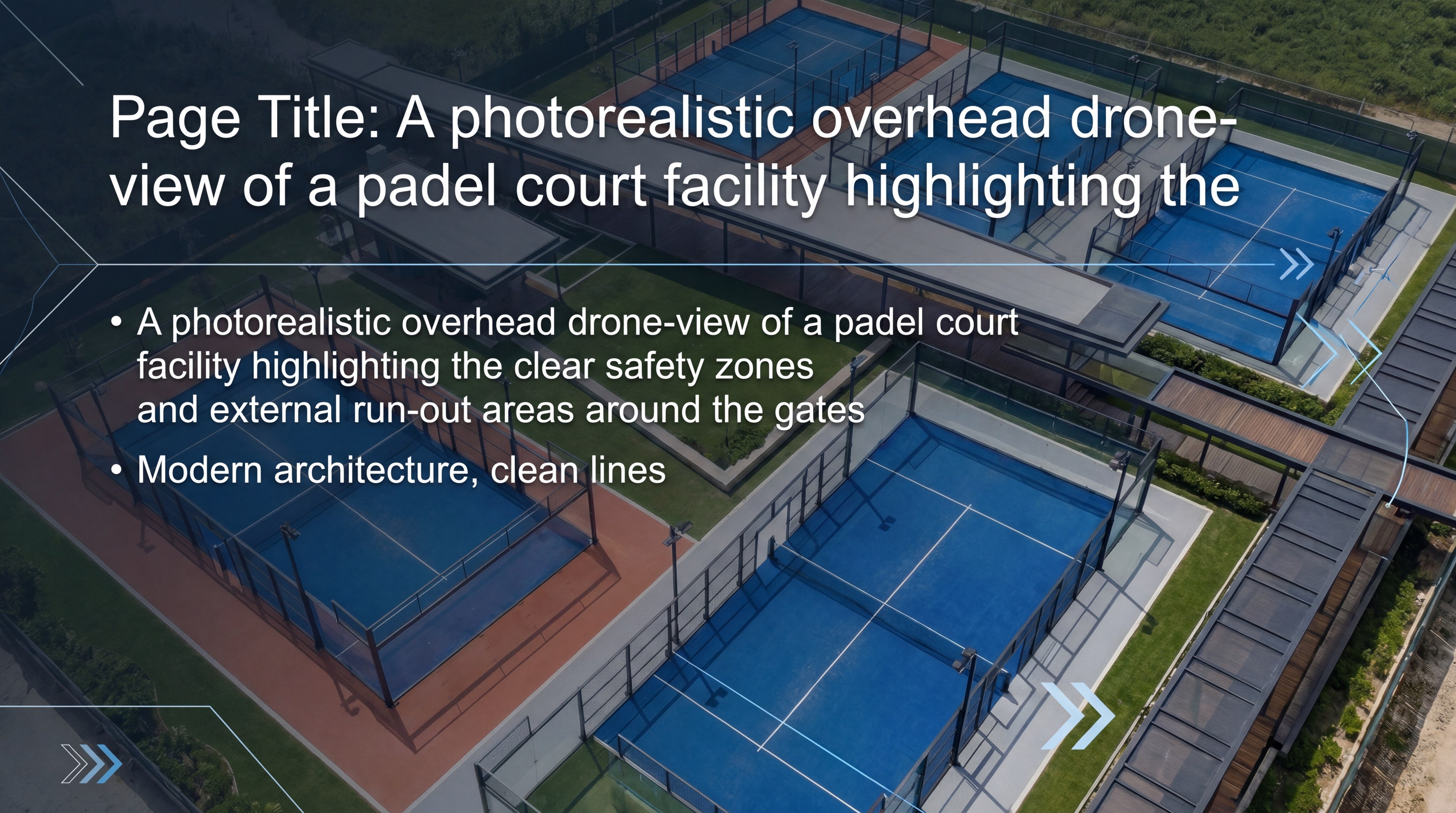
The safety zone, or “out-of-court” area, should measure at least 6.56 feet by 13.12 feet on each side of the gate. These padel court dimensions in feet are mandatory for professional tournaments to allow players to safely run outside the court to retrieve “par 3” smashes. You should ensure this area is completely free of obstacles like light pillars or benches.
Where should the gates be?
In fact, the entrances must be located in the center of each side wall, measuring between 2.62 feet and 3.28 feet wide. You will find that having dual gates is standard for high-traffic facilities to improve player flow between matches.
- Width is 2.62 ft to 3.28 ft.
- Height is 6.56 ft to 7.22 ft.
- Centered at the net line.
Is the run-out area essential?
You bet it is, especially if you plan on hosting sanctioned events where players frequently chase balls beyond the enclosure. Without a 6.56-foot safety buffer, you risk player injury and may be disqualified from hosting official league games.
- Buffer zone of 6.56 ft is required.
- Length should cover 13.12 ft.
- Must have a flat, non-slip surface.
Key Takeaway: Professional courts require a dedicated 6.56′ x 13.12′ safety zone outside the side gates for advanced competitive play.
| Safety Feature | Min. Width (Feet) | Min. Height (Feet) | Function |
|---|---|---|---|
| Entrance Gate | 2.62 ft | 6.56 ft | Player Entry |
| Safety Zone | 6.56 ft | N/A | Out-of-Court Play |
| Total Buffer | 13.12 ft | N/A | Tournament Standard |
Providing adequate safety zones significantly enhances the professionalism and playability of your padel facility for advanced participants.
How does surface thickness impact padel court dimensions in feet?
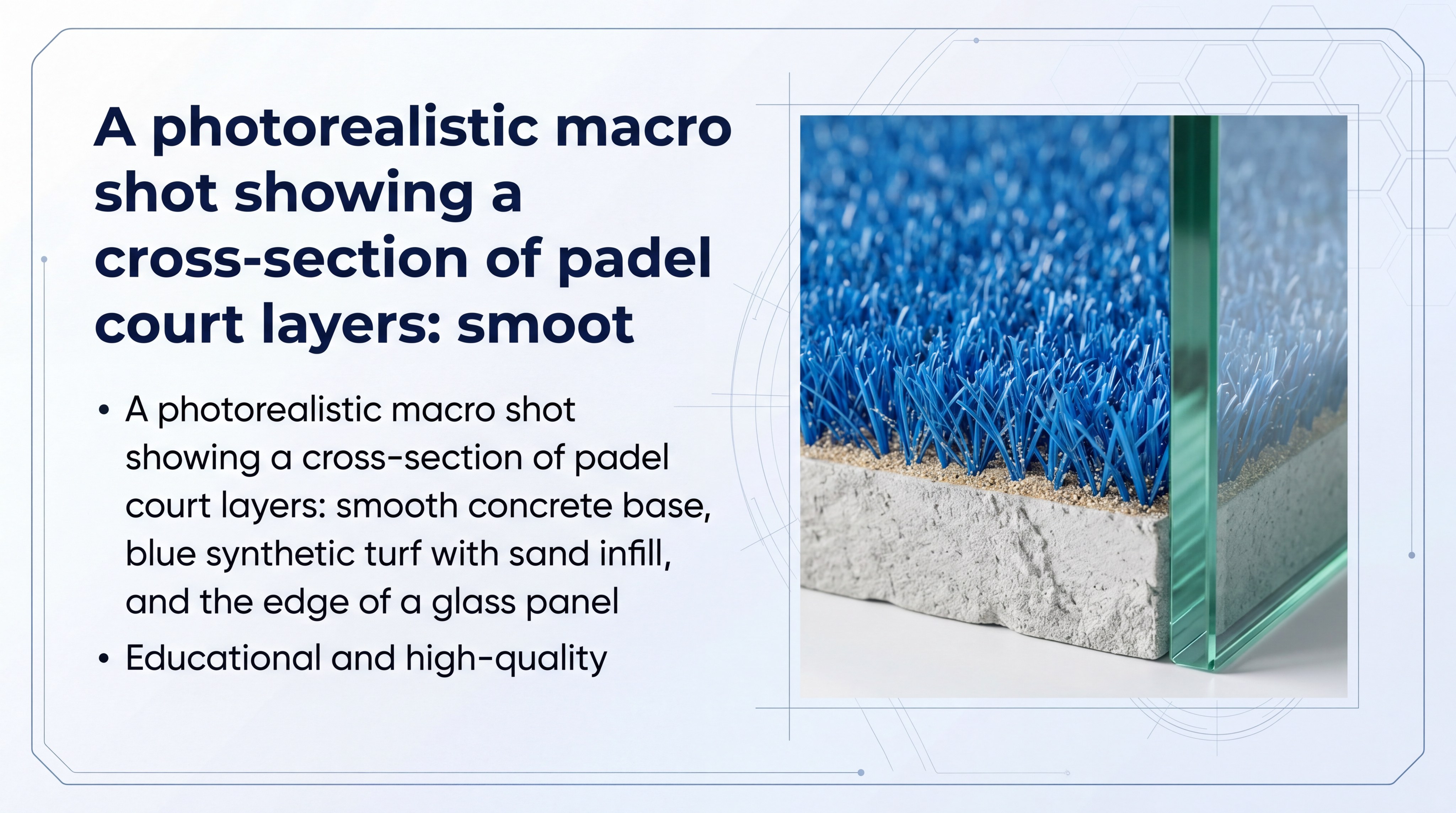
The synthetic turf layer adds roughly 0.39 to 0.59 inches of height, which you must factor into the final padel court dimensions in feet for the net and walls. While this seems minor, a thick turf pile can change how you measure the clearance for the glass panels. You must ensure the concrete base is perfectly level before the turf is laid.
Does turf type matter?
The best part? Different turf types like monofilament or fibrillated yarn will change the bounce height and speed of the ball. You should choose a turf with a 10mm to 15mm pile height for the most consistent playing experience.
- Standard pile is 10mm to 15mm.
- Sand infill adds stability.
- Reduces joint impact for players.
What about the concrete base?
Here is the truth: the concrete slab should be at least 4 to 6 inches thick to support the weight of the glass walls and steel frame. You will find that any settling in the ground can throw off your imperial measurements over time.
- Base thickness is 4 to 6 inches.
- Must be reinforced with steel mesh.
- Requires a 1% slope for drainage.
Key Takeaway: Synthetic turf adds nearly half an inch to the floor height, requiring precise base preparation for structural alignment.
| Material Layer | Thickness (Inches) | Metric Approx | Role |
|---|---|---|---|
| Concrete Base | 4 – 6 inches | 10 – 15 cm | Structural Load |
| Synthetic Turf | 0.4 – 0.6 inches | 10 – 15 mm | Playing Surface |
| Sand Infill | 0.2 – 0.4 inches | 5 – 10 mm | Turf Stability |
A level foundation is the single most important factor in ensuring your court’s dimensions remain accurate throughout its lifespan.
What are the vertical padel court dimensions in feet for indoors?
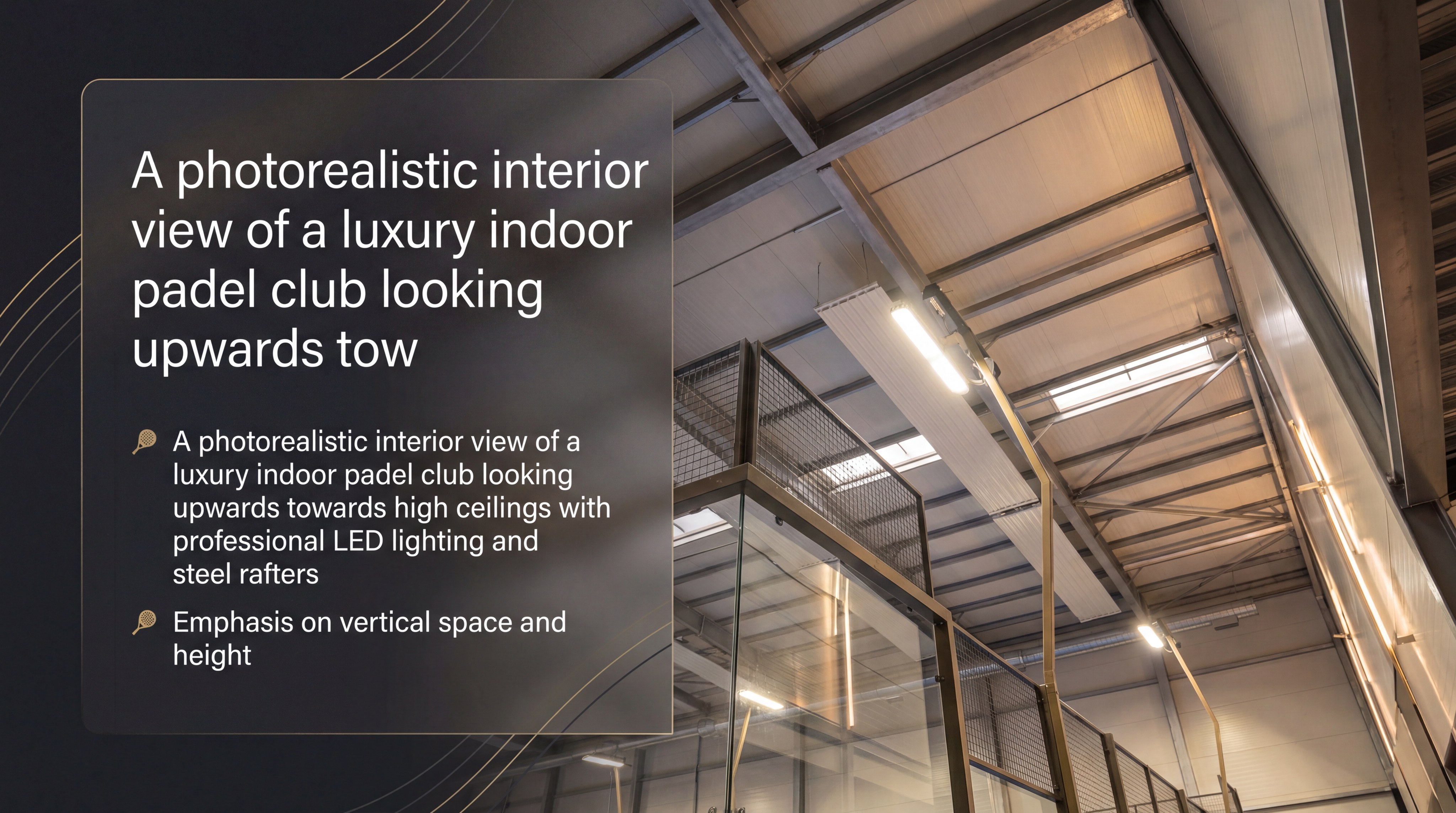
Indoor facilities require a minimum ceiling clearance of 19.69 feet, though professional padel court dimensions in feet suggest reaching 26.25 feet. If your ceiling is too low, you effectively remove the “lob” shot from the game, which is a core defensive strategy. You should measure from the floor to the lowest hanging obstacle, such as beams or light fixtures.
Is 20 feet enough?
To be honest, 19.69 feet is the absolute bare minimum, and most advanced players will find it restrictive. You will notice a significantly better game experience if you can provide at least 23 feet of vertical space.
- Minimum height is 19.69 ft.
- Competitive standard is 26.25 ft.
- Optimal clearance is 29.53 ft+.
How do beams affect play?
Think about it: if a player hits a high lob that strikes a structural beam, the point is usually lost. You must ensure that your lighting and ventilation systems are tucked away to maximize the usable vertical volume of the court.
- Beams must be above 20 ft.
- Lighting should be flush-mounted.
- Obstructions should be minimized.
Key Takeaway: Aim for a ceiling height of at least 26.25 feet to accommodate high-level lobs and tactical variety in indoor play.
| Facility Level | Min. Height (Feet) | Preferred Height (Feet) | Game Impact |
|---|---|---|---|
| Recreational | 19.69 ft | 22.97 ft | Limited Lobs |
| Professional | 26.25 ft | 29.53 ft | Full Strategy |
| World Tour | 29.53 ft | 32.81 ft | Unrestricted |
Ceiling height is often the deciding factor for elite players when choosing which indoor club to join for long-term practice.
How does lighting fit within padel court dimensions in feet?
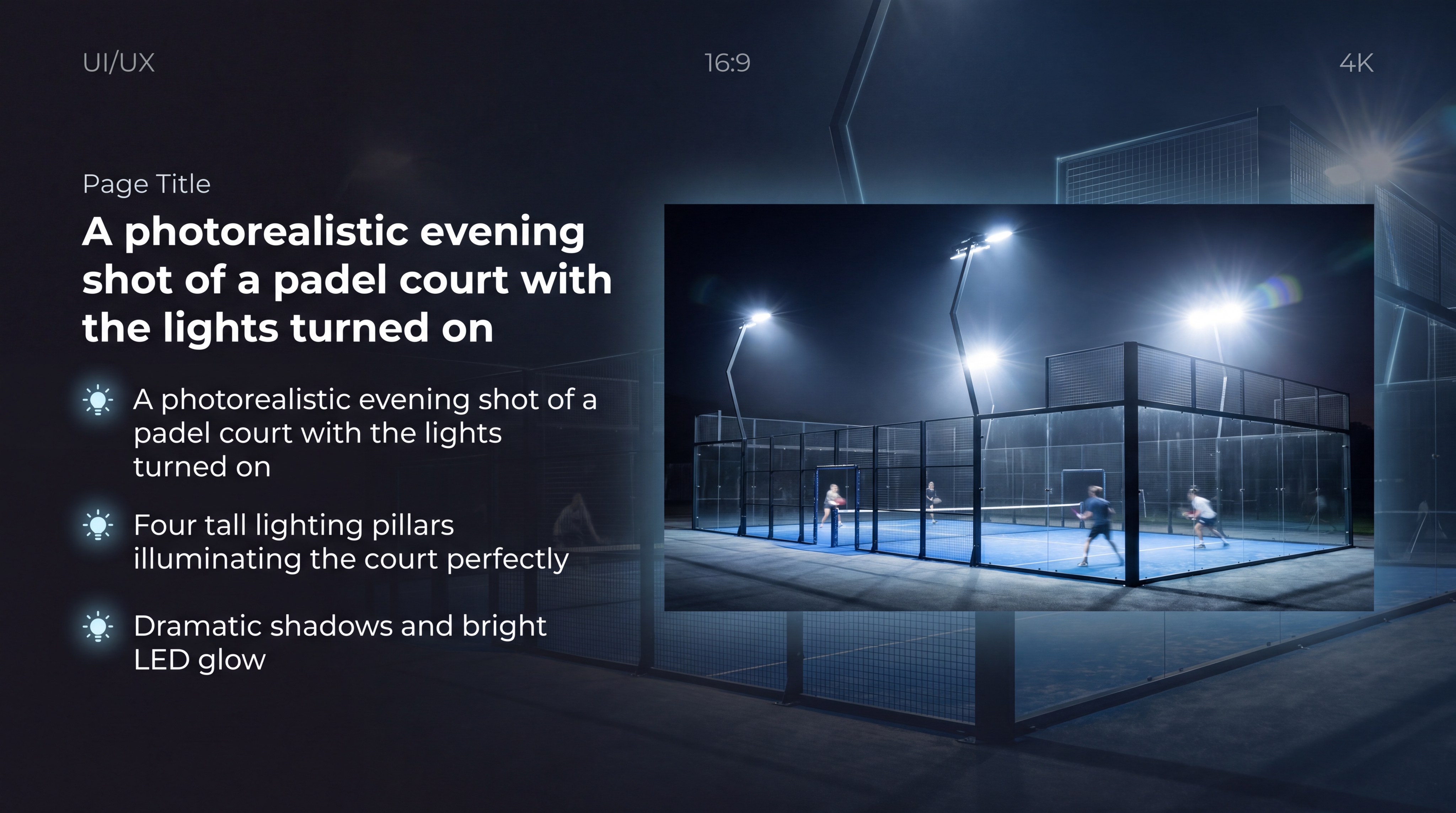
Light pillars are typically 19.69 feet tall and must be positioned outside the playing enclosure to avoid interfering with padel court dimensions in feet. You need to ensure that the illumination is even across the entire 2,153-square-foot surface to prevent shadows. Proper lighting allows for safe play during evening hours and enhances the aesthetic of your facility.
Where should pillars go?
Look: standard lighting setups use four pillars located at the corners or mid-points of the long side walls. You should place these at least 1.64 feet away from the mesh to prevent players from colliding with them during out-of-court play.
- Pillar height is 19.69 ft (6m).
- Placed 1.64 ft from the enclosure.
- Total of 4 to 8 LED fixtures.
What is the ideal lux level?
As a matter of fact, professional courts require between 500 and 750 lux for televised matches, while recreational play only needs 300 lux. You will find that LED technology is the best choice for achieving these levels while minimizing energy costs.
- Recreational: 300 Lux.
- Professional: 500 – 750 Lux.
- LED is the industry standard.
Key Takeaway: Light pillars stand 19.69 feet tall and must be set back at least 1.64 feet from the court to ensure safety.
| Lighting Spec | Metric Measure | Imperial Measure | Purpose |
|---|---|---|---|
| Pillar Height | 6 Meters | 19.69 ft | Elevation |
| Setback | 0.5 Meters | 1.64 ft | Safety Zone |
| Illumination | 300 – 500 Lux | 300 – 500 Lux | Visibility |
Strategic lighting placement ensures that every inch of the court is visible without creating a glare for players during high-velocity shots.
What site prep is needed for padel court dimensions in feet?
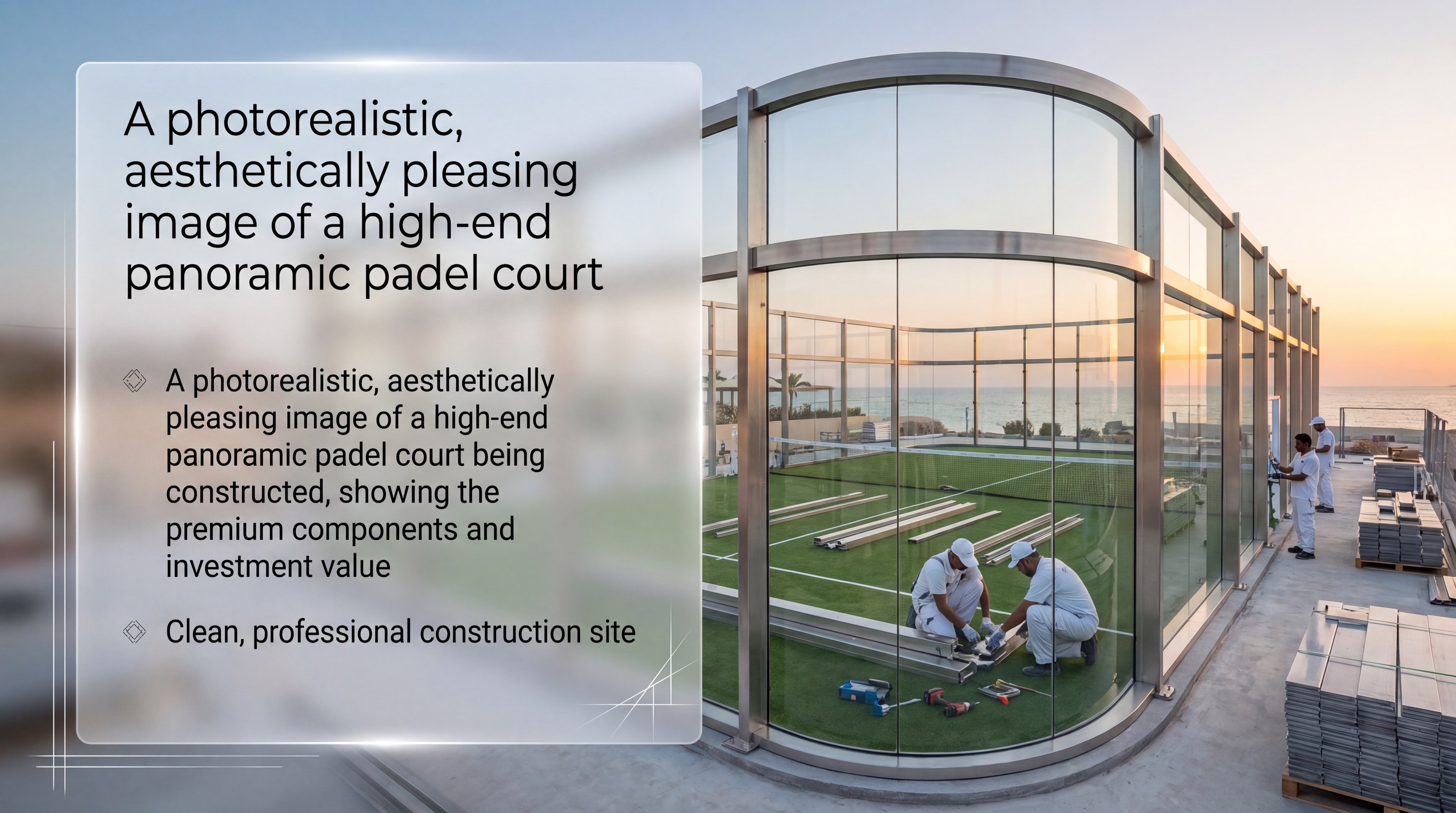
The total construction site should be roughly 75 feet by 40 feet to accommodate the 65.62′ x 32.81′ padel court dimensions in feet plus structural supports. You must clear and level this entire area to prevent the court from shifting or cracking over time. This extra buffer space also provides room for pathways and spectator seating around the perimeter.
How much extra space is needed?
The truth is, you need roughly 4 to 5 feet of extra space around each side of the court for the structural frame and maintenance access. You will find that planning for a larger footprint now saves you from logistical headaches during the actual installation phase.
- Total footprint: ~3,000 sq ft.
- Width buffer: 4-5 ft per side.
- Length buffer: 5 ft per end.
Does the ground need drainage?
The best part? Installing a subsurface drainage system ensures that your court remains playable even after heavy rain. You should ensure the concrete base has a slight slope of about 1% to guide water away from the playing surface.
- Install 1% slope for runoff.
- Use porous turf where possible.
- Prevents water pooling on turf.
Key Takeaway: Budget for a 75′ x 40′ total site area to allow for structural supports and player movement around the enclosure.
| Preparation Step | Req. Space (Feet) | Tooling | Outcome |
|---|---|---|---|
| Site Clearing | 75 x 40 ft | Excavator | Level Ground |
| Concrete Pour | 66 x 33 ft | Laser Level | Foundation |
| Safety Buffer | 5 ft Perimeter | Measuring Tape | Accessibility |
Proper site preparation is the only way to guarantee that your court remains structurally sound and dimensionally accurate for years to come.
Why verify the final padel court dimensions in feet?
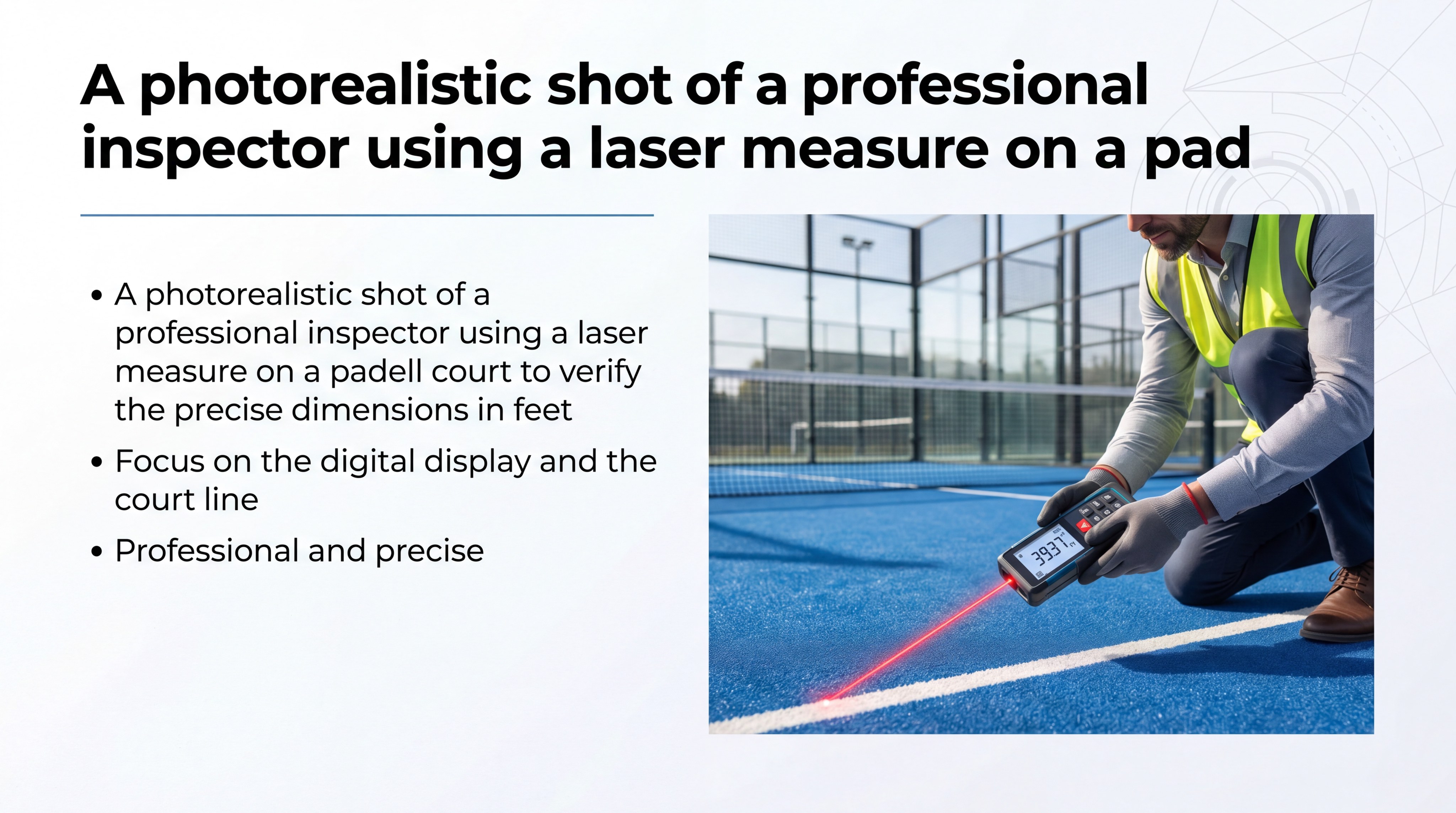
Final verification using laser tools ensures that your padel court dimensions in feet fall within the 0.5% tolerance allowed for professional certification. You must double-check the diagonal measurements to ensure the court is a perfect rectangle rather than a parallelogram. Even minor errors in the initial layout can compound during the glass installation process, leading to gaps or stress fractures.
How do you check for squareness?
Look: the easiest way to verify the court is square is to measure the diagonals, which should both be exactly 73.36 feet. If these two numbers don’t match, your court is skewed and will cause significant issues when you try to bolt the glass panels together.
- Diagonal measurement: 73.36 ft.
- Must be identical on both sides.
- Ensures glass panels fit perfectly.
Why is tolerance so tight?
The truth is, padel is a game of millimeters, and a court that is too long or short will change the way the ball interacts with the walls. You will find that certifying your court through an official inspector adds significant value to your facility and attracts serious competitive players.
- Length tolerance: +/- 3.9 inches.
- Width tolerance: +/- 1.9 inches.
- Ensures “Fair Play” certification.
Key Takeaway: Diagonal measurements of 73.36 feet are the gold standard for verifying that your court is perfectly square and ready for glass.
| Measurement Check | Target (Feet) | Tolerance | Tool |
|---|---|---|---|
| Court Diagonal | 73.36 ft | +/- 0.5% | Laser Measure |
| Service Line | 22.80 ft | +/- 0.1 ft | Tape Measure |
| Gate Width | 2.62 – 3.28 ft | +/- 0.05 ft | Caliper |
Conducting a final audit protects your investment and ensures that every match played on your court adheres to international standards.
*
Precision in construction is the difference between a premier sports destination and a costly maintenance liability. By mastering the conversion of metric standards into exact imperial measurements, you eliminate the risks of structural misalignment and player dissatisfaction. At Superbpadel, our vision is to empower facility owners with the technical clarity needed to build world-class courts that stand the test of time. Whether you are installing a single private court or a massive commercial club, contact us today to get professional guidance on your next project.
Frequently Asked Questions (FAQ)
- Can I fit two padel courts inside one tennis court?
Yes, you can fit two padel courts in the space of one standard tennis court because a tennis court is roughly 120′ x 60′ while two padel courts only require about 70′ x 75′ total. - What’s the best way to measure the service box?
The most accurate method is measuring from the center of the net to the service line, which should be exactly 22.80 feet (6.95 meters). - Can I build a court with a ceiling lower than 20 feet?
No, building a court with less than 20 feet of clearance is not recommended as it severely limits the use of lobs and will frustrate experienced players. - What’s the ideal thickness for court glass?
You should opt for 12mm tempered glass for high-traffic or panoramic courts, as it offers superior rebound consistency and safety compared to 10mm options. - How much space should I leave between two adjacent courts?
You should leave a minimum of 4 to 6 feet between courts to allow for structural frames and safe player movement through the facility.