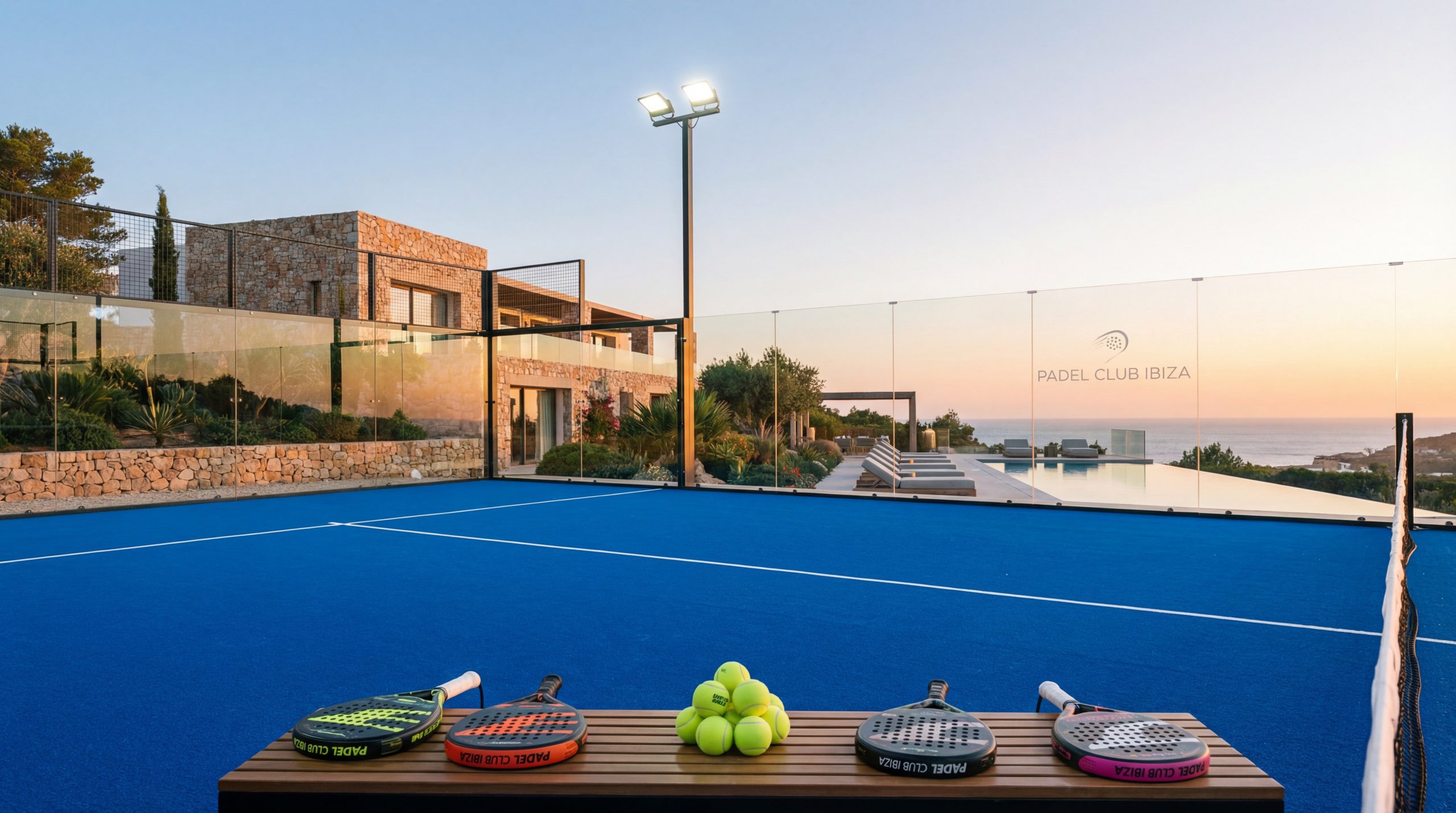
Understanding the core differences in a pickleball vs padel ball comparison is essential for players and facility owners looking to build the perfect court. Many investors struggle to choose between these two rapidly growing racket sports, fearing they might invest in a fading trend. We provide the clarity needed to make a data-driven decision for your facility’s future.
What are the main ball differences?

The primary difference in a pickleball vs padel ball comparison lies in the material and aerodynamics, with pickleballs being plastic and padel balls resembling tennis balls. Pickleballs are perforated with holes to limit speed, whereas padel balls are pressurized felt spheres. This difference dictates how the ball interacts with the paddle and the court surface.
Aerodynamics and Bounce
Pickleballs are designed for a low-bounce game that emphasizes control over power. Because of the holes, they travel slower through the air and are highly susceptible to wind conditions. Padel balls, being pressurized, offer a much higher and more consistent bounce across the turf.
Material Durability
Here is the deal:
The plastic used in pickleballs can crack over time, especially in cold weather or during high-impact play. Padel balls lose their internal pressure and “fuzz” over time, similar to tennis balls. Both require regular replacement to maintain the integrity of competitive play.
Key Takeaway: Material choice dictates the bounce height and speed, fundamentally changing the court’s physical requirements and the player’s tactical approach.
| Feature | Pickleball | Padel Ball |
|---|---|---|
| Material | Perforated Plastic | Pressurized Felt |
| Bounce Height | Low | Medium-High |
| Weather Impact | Wind Sensitive | Humidity Sensitive |
This analysis confirms that the physical properties of the ball are the primary drivers of the different court designs required for each sport.
How do court dimensions vary?

Comparing a pickleball vs padel ball court reveals that padel courts are larger and enclosed by glass walls, while pickleball courts are smaller and open. A standard padel court measures 20×10 meters, making it roughly double the width of a pickleball court. Pickleball utilizes a 20×44 foot area, which is the same size as a doubles badminton court.
Playing Area Comparison
The footprint required for a padel court is significantly larger due to the necessary safety zones and structural foundations. Pickleball courts can often be grouped together in tight spaces. This makes pickleball a favorite for facilities with limited real estate.
Perimeter Requirements
- Padel requires a 3-meter or 4-meter high glass and mesh enclosure.
- Pickleball requires standard fencing, typically 8 to 10 feet high.
- Padel foundations must support heavy steel and glass loads.
- Pickleball foundations are standard reinforced concrete slabs.
Key Takeaway: Padel requires significantly more vertical and horizontal space due to its glass enclosure system and larger overall footprint.
| Specification | Pickleball Court | Padel Court |
|---|---|---|
| Length | 44 Feet | 20 Meters |
| Width | 20 Feet | 10 Meters |
| Enclosure | Open Fencing | Glass & Steel Walls |
The difference in dimensions suggests that facility owners must carefully measure available land before committing to a specific sport’s infrastructure.
Which surface material is better?

The best surface in a pickleball vs padel ball evaluation depends on the sport, with pickleball favoring hard acrylic and padel requiring artificial turf. Padel turf is often sand-filled to allow for controlled sliding and consistent ball response off the floor. Pickleball surfaces are identical to hard tennis courts, providing a predictable, high-friction bounce.
Concrete and Acrylic Layers
Pickleball courts utilize a multi-layer acrylic coating over a concrete or asphalt base. This creates a durable, non-slip surface that can be customized with various colors. It requires very little maintenance beyond occasional cleaning and resurfacing every few years.
Synthetic Turf Options
Padel courts almost exclusively use monofilament or textured synthetic turf. The sand infill is critical as it protects the fibers and allows players to move safely. Poorly maintained turf in padel can lead to erratic bounces and increased injury risks for players.
Key Takeaway: Surface selection impacts player joint health and the ball’s consistent response during long rallies, necessitating sport-specific material choices.
| Surface Type | Pickleball | Padel |
|---|---|---|
| Primary Material | Acrylic/Concrete | Synthetic Turf |
| Infill | None | Silica Sand |
| Player Movement | High Friction | Controlled Slide |
Selecting the correct surface is the most important factor in ensuring the longevity of the court and the satisfaction of the players.
What equipment do you actually need?

Essential gear for a pickleball vs padel ball matchup includes solid paddles for the former and thicker, perforated rackets for the latter. While both sports use stringless equipment, the weight and thickness vary greatly to accommodate different ball weights. Padel rackets are usually 38mm thick and feature a wrist tether for safety.
Racket Technology
Pickleball paddles are made of composite materials like carbon fiber or fiberglass with a honeycomb core. They are lightweight and thin, designed for quick kitchen-line exchanges. Padel rackets are heavier and use EVA foam cores to absorb the impact of the faster, heavier pressurized ball.
Essential Safety Gear
Safety is paramount in both sports, though the risks differ slightly. Padel players must use the racket tether to prevent the heavy racket from flying into another player. Pickleball players often focus on protective eyewear due to the proximity of players at the net and the speed of the plastic ball.
Key Takeaway: Investing in sport-specific equipment ensures player safety and optimal performance on the specialized court surfaces designed for these distinct balls.
| Equipment | Pickleball | Padel |
|---|---|---|
| Racket Type | Thin Paddle | Thick Perforated Racket |
| Core Material | Polymer Honeycomb | EVA Foam |
| Safety Feature | Grip Tape | Wrist Tether |
Understanding equipment nuances helps players transition between sports without compromising their technique or safety on the court.
How does the pace of play differ?

Analyzing the pickleball vs padel ball dynamic shows that padel generally has a faster, more three-dimensional pace due to wall rebounds. Pickleball focuses more on “dinking” and strategic positioning near the non-volley zone. Because the pickleball is lighter and has holes, it loses velocity much faster than a padel ball.
Reaction Time Factors
The speed of padel requires exceptionally fast reflexes to handle balls coming off the back and side glass. In pickleball, the “soft game” is the hallmark of high-level play, where players neutralize power with soft resets. This makes pickleball accessible to a wider age range while remaining competitive.
Tactical Complexity
Padel tactics involve using the entire enclosure to outmaneuver opponents, often leading to longer, more athletic rallies. Pickleball tactics are more about court geometry and patience at the net. Both sports require high levels of communication between doubles partners to cover the court effectively.
Key Takeaway: Padel offers a high-intensity aerobic workout, while pickleball emphasizes strategy and quick hand-eye coordination in a more compact space.
| Pace Factor | Pickleball | Padel |
|---|---|---|
| Primary Strategy | Dinking/Patience | Wall Usage/Power |
| Rally Length | Short to Medium | Long |
| Movement | Lateral/Quick Bursts | Multi-directional |
The pace of play dictates the physical demand on the players, influencing which sport might be more popular in specific demographic markets.
What are the specific build costs?

Construction costs for a pickleball vs padel ball facility differ because padel courts require expensive tempered glass and steel framing. A pickleball court is generally much cheaper to install since it lacks these structural enclosures. You can often build three to four pickleball courts for the cost of a single high-end padel court.
Infrastructure Investment
A padel court requires a specialized concrete ring beam to anchor the heavy glass panels safely. This structural engineering adds significant cost to the site preparation phase. Pickleball only requires a flat, reinforced concrete slab, which is a standard construction practice for most contractors.
Long-term Maintenance
Maintenance for pickleball involves simple cleaning and the occasional crack repair or repaint. Padel maintenance is more intensive, requiring the glass to be cleaned regularly and the sand infill to be redistributed. Over time, the cost of replacing padel turf must be factored into the operational budget.
Key Takeaway: Budgeting must account for the high initial capital required for padel’s structural components compared to pickleball’s simpler setup.
| Cost Item | Pickleball | Padel |
|---|---|---|
| Base Construction | Low-Medium | High (Structural) |
| Enclosure Cost | Minimal | Very High (Glass/Steel) |
| Surface Cost | Moderate | High (Turf/Sand) |
Financial planning should weigh the higher entry cost of padel against its potential for premium membership fees and higher hourly rates.
Can you convert a tennis court?

You can convert a tennis court into multiple spaces for a pickleball vs padel ball setup, though pickleball is much easier to fit. One tennis court can typically host four pickleball courts but only one or two padel courts. This makes the conversion to pickleball a very attractive option for clubs looking to maximize their player capacity.
Space Optimization
Converting to pickleball is as simple as repainting lines and adding portable or permanent nets. For padel, the conversion is much more permanent and invasive, requiring the demolition of parts of the existing slab. The ROI on space is usually higher with pickleball due to the sheer number of players accommodated.
Structural Challenges
Tennis courts often lack the reinforced foundations needed for padel’s heavy glass walls. If you choose to build padel on an old tennis court, you must verify the slab’s thickness and strength. Pickleball, being lightweight, has no such structural requirements, making it a “plug-and-play” solution.
Key Takeaway: Maximizing court density through conversion can significantly increase the revenue per square foot of your facility with minimal structural changes.
| Conversion Metric | Pickleball | Padel |
|---|---|---|
| Courts per Tennis Court | 4 | 1 to 2 |
| Ease of Installation | Very Easy | Complex |
| Structural Reinforcement | Not Required | Usually Required |
The ease of conversion makes pickleball the faster route to market for existing sports clubs, while padel offers a more transformative facility upgrade.
What lighting is required for courts?

Proper lighting for a pickleball vs padel ball environment requires LED systems that minimize glare on glass walls and plastic surfaces. Padel requires specialized pole placement to avoid interfering with the overhead glass structure and to illuminate the ball at high altitudes. Pickleball lighting is more straightforward, focusing on uniform horizontal lux levels.
Lux Level Standards
For professional play, padel requires higher lux levels (500-750) because the ball travels faster and moves in three dimensions. Pickleball can operate effectively at 300-500 lux for recreational play. Ensuring uniform lighting without shadows is critical for both sports to prevent player fatigue.
Energy Efficiency
Modern LED floodlights are the gold standard for both sports, offering 50-70% energy savings over traditional metal halide bulbs. They also provide instant-on capability, which is vital for commercial facilities. Reducing glare is especially important in padel to keep the glass walls from becoming mirrors at night.
Key Takeaway: High-quality LED lighting extends playable hours and is a critical factor for the commercial viability of any modern racket club.
| Lighting Feature | Pickleball | Padel |
|---|---|---|
| Recommended Lux | 300 – 500 | 500 – 750 |
| Glare Concern | Low | High (Glass Walls) |
| Mounting Height | Standard | Elevated |
Effective lighting design is an investment that pays for itself through increased evening bookings and enhanced player safety.
How do climate factors affect builds?

Climate impacts a pickleball vs padel ball build through wind resistance and moisture levels on the playing surfaces. Wind significantly affects the lightweight pickleball, often requiring windbreak fencing for outdoor courts. Humidity can make padel glass walls slippery, which affects how the ball bounces and potentially blocks the view for spectators.
Wind Resistance Issues
Since pickleballs are light and hollow, even a moderate breeze can ruin a game. Facilities in windy areas must invest in high-quality windscreens or consider indoor construction. Padel balls are less affected by wind, but the large glass panels must be engineered to withstand local wind load requirements.
Drainage and Humidity
- Pickleball courts need a 1% slope for effective water runoff.
- Padel turf requires a highly porous sub-base for rapid drainage.
- High humidity can cause condensation on padel glass, requiring frequent cleaning.
- Pickleball acrylic can become very slick when wet, requiring immediate drying.
Key Takeaway: Environmental considerations during the planning phase prevent costly repairs and ensure year-round playability for your club members.
| Climate Factor | Pickleball Impact | Padel Impact |
|---|---|---|
| High Wind | High (Ball Flight) | Medium (Structural Load) |
| High Humidity | Low | High (Glass Visibility) |
| Heavy Rain | Slick Surface | Turf Drainage Needs |
Choosing between an indoor or outdoor build often depends on these local climate factors to ensure a consistent playing experience.
Which sport offers better ROI?

Determining the ROI for a pickleball vs padel ball project depends on local demographics and the initial cost of land and construction. Padel often commands higher hourly rental rates due to its premium positioning and “wow” factor. Pickleball benefits from higher player density, allowing four times as many customers to play in the same footprint.
Revenue Stream Analysis
Padel facilities often generate additional income through high-end pro shops and coaching clinics. Pickleball thrives on community-driven open play and tournament fees. The lower maintenance costs of pickleball contribute to a faster break-even point despite the lower individual court rental fees.
Growth Projections
Both sports are seeing exponential growth worldwide, but they often attract different user bases. Pickleball has a massive, loyal following in North America, while padel is dominating the European and Middle Eastern markets. Analyzing your local competition is the final step in choosing which sport will yield the best long-term profit.
Key Takeaway: Both sports offer excellent returns, but padel targets a premium market while pickleball thrives on volume and total accessibility.
| ROI Component | Pickleball | Padel |
|---|---|---|
| Initial Investment | Low to Medium | High |
| Revenue Per Square Foot | Very High | High |
| Maintenance Overhead | Low | Moderate |
A balanced facility may even consider offering both sports to capture the widest possible range of local racket sport enthusiasts.
*
Choosing between these two sports is a strategic decision that will define your facility’s identity. Whether you prefer the social accessibility of pickleball or the high-octane, premium experience of padel, the key is quality construction. We are committed to helping you navigate these technical requirements to build a world-class venue. To begin your journey toward a premier racket sports facility, contact us today. Our brand vision is to provide the infrastructure that fosters global community and athletic excellence through innovative court design.
*
FAQ
Can I play padel with a pickleball?
No, the physics of the two balls are entirely different. A pickleball is made of hard plastic and will not bounce correctly on padel turf or off glass walls, while a padel racket could easily damage the plastic pickleball.
What’s the best court for a small backyard?
Pickleball is the best choice for small residential spaces. A pickleball court requires roughly 1,200 square feet, whereas a padel court needs over 2,100 square feet plus additional clearance for the glass walls and foundations.
Can I build a padel court on an existing concrete pad?
Only if the concrete pad is engineered to support the specific point loads of the steel frame and the weight of the tempered glass. Most standard residential pads are not thick enough and would require reinforcement or a new ring beam.
What is the price difference between the two balls?
Pickleballs are generally cheaper, often sold in bulk for roughly $2 to $3 per ball. Padel balls are pressurized and sold in cans of three, usually costing between $5 and $9 per can, making them a more expensive ongoing expense.
Can I use a tennis net for both sports?
No, a tennis net is too high for both sports. Pickleball nets are 34 inches high at the center, and padel nets are approximately 35 inches high. Additionally, the width of a tennis net is far greater than what is required for either court.