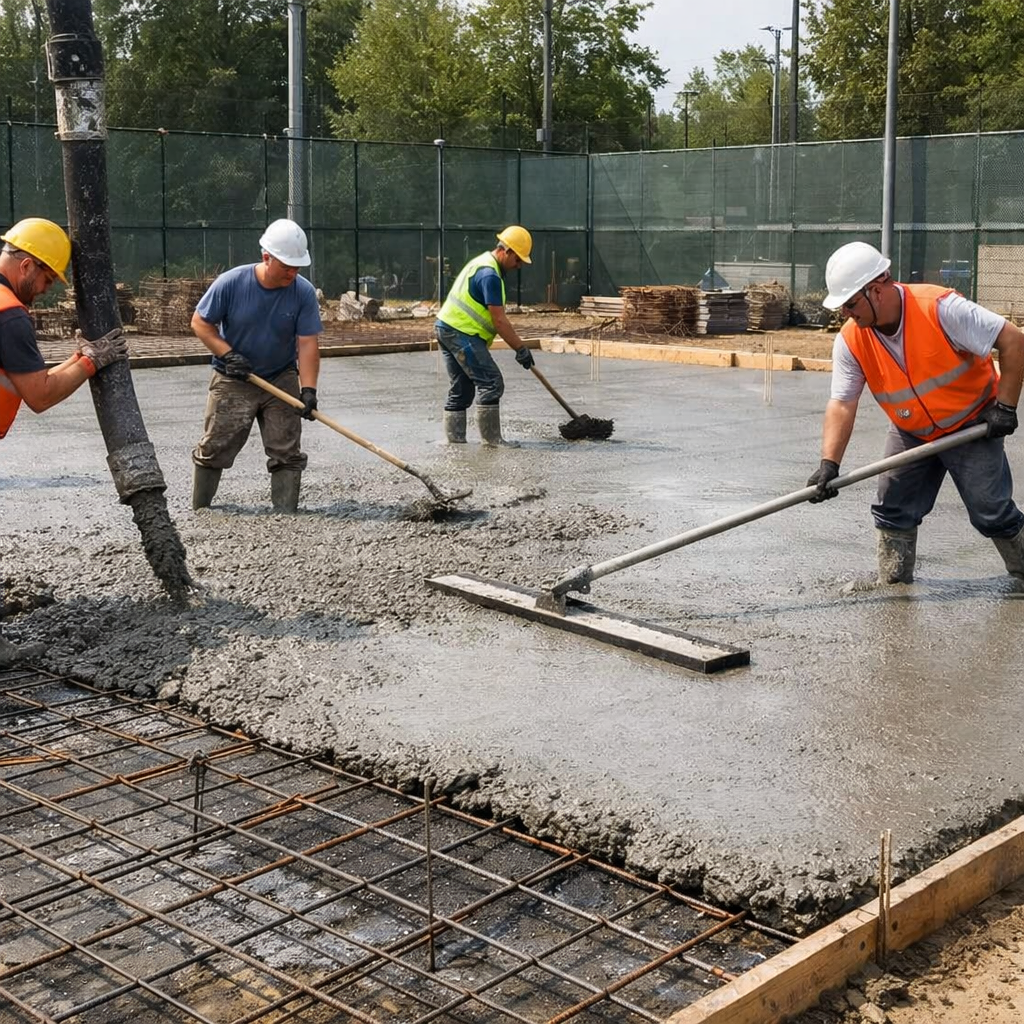
Mastering how to build a padel court requires securing approximately 200 square meters of level ground and high-quality materials such as 12mm tempered glass and galvanized steel. Professional planning prevents structural failures while ensuring the facility meets international standards for competitive play. Partnering with experienced manufacturers streamlines the procurement process and ensures long-term revenue growth for sports club investors.
1. What are the essential requirements for how to build a padel court?
To successfully execute how to build a padel court, you must secure a level 20×10 meter foundation and use hot-dip galvanized steel for the framework. High-performance projects necessitate specific drainage systems so rain never disrupts profitable booking schedules during busy seasons. Professional oversight guarantees structural integrity since these enclosures must withstand intense winds or player impacts.
But here’s the kicker…
Small errors during site measurement cause massive installation delays because glass panels won’t fit steel frames correctly. Professional builders use laser levels for ensuring concrete slabs remain perfectly flat across all twenty meters. Uneven surfaces ruin ball bounce consistency so players might complain about poor quality during competitive matches.
Site Foundations and Leveling
● Site dimensions must allow for a 20m x 10m internal playing area.
● Concrete slabs require a precise finish with minimal deviations across the surface.
● Drainage slopes should be calculated to prevent water pooling on the synthetic turf.
● Structural anchors must be embedded deep enough to support heavy glass panels.
Key Takeaway: Precise measurements plus level foundations remain non-negotiable for professional court integrity and player satisfaction.
| Component | Specification | Primary Benefit |
|---|---|---|
| Playing Area | 20×10 Meters | International standard |
| Glass Type | 12mm Tempered | Impact safety |
| Steel Finish | Hot-dip Galvanized | Corrosion resistance |
| Turf Density | Monofilament | Wear longevity |
2. How do you estimate the total cost to build a padel court?
Determining the total cost involves allocating between twenty thousand and forty thousand Euros for materials, foundations, and professional labor. Smart budgeting accounts for specialized equipment rental like cranes or heavy lifts to move glass sections safely. Shipping expenses vary based on global destination ports yet factory-direct sourcing saves significant capital by removing middleman markups.
Ready for the good part?
Buying directly from manufacturers reduces procurement costs by nearly thirty percent compared to local distributors. These savings allow owners to invest in premium amenities like panoramic glass walls or high-end turf surfaces. Reliable suppliers provide detailed quotations within twenty-four hours to help you manage cash flow effectively throughout the project lifecycle.
Budget Allocation and Procurement
● Material costs typically account for 60-70% of the total project investment.
● Foundation and civil works vary based on local soil conditions and labor rates.
● Installation equipment like suction lifters and cranes must be factored into local costs.
● Logistics fees should include customs duties and local transport to the site.
Key Takeaway: Direct factory sourcing represents the most effective strategy for maximizing ROI and ensuring high material standards.
| Category | Percentage | Financial Impact |
|---|---|---|
| Steel Frame | 40% | Structural core |
| Glass & Turf | 30% | Surface quality |
| Civil Works | 20% | Foundation stability |
| LED Lighting | 10% | Playability hours |
3. Which specific building permits are required for construction?
Securing legal authorization for how to build a padel court involves obtaining zoning permits, noise assessments, and structural safety certifications from local municipalities. Most regions classify these structures as permanent buildings requiring specific safety standards for glass and steel engineering. Environmental impact assessments might be necessary if your project sits near residential areas prone to noise complaints.
What’s the real story?
Noise complaints from neighbors often represent the biggest hurdle for new padel clubs located in suburban environments. Many cities mandate specific decibel tests during peak playing hours to ensure the sport doesn’t disturb local residents. Expert architects help navigate these regulations by designing acoustic fences or sound-absorbing glass configurations that meet strict codes.
Regulatory Compliance and Safety
● Zoning variances ensure the land is approved for recreational or commercial sports use.
● Wind load certifications are critical for outdoor courts in coastal or high-wind areas.
● Electrical permits are required for the installation of high-output LED floodlights.
● Accessibility compliance ensures the facility is usable for all players and spectators.
Key Takeaway: Noise mitigation plus zoning compliance remain essential for maintaining long-term operational stability in populated areas.
| Permit Type | Focus Area | Risk Management |
|---|---|---|
| Building | Structural Integrity | Prevents collapses |
| Acoustic | Sound Pollution | Avoids legal suits |
| Zoning | Land Compliance | Stops forced closure |
| Electrical | Power Safety | Protects equipment |
4. What are the standard dimensions for padel courts?
The standard dimensions for a professional court are exactly twenty meters in length and ten meters in width. Maintaining these exact measurements ensures that your facility can host sanctioned tournaments or professional training camps. Additional perimeter space remains necessary to allow players to safely retrieve balls that bounce outside the glass enclosures.
This is where it gets interesting…
Tactical play relies on high lobs which force opponents away from the net during fast-paced exchanges. Low ceilings frustrate skilled players who will eventually move to facilities that offer better vertical clearance for their matches. Investing in a taller structure or selecting a high-roof warehouse pays off through increased member retention.
Vertical Clearance and Floor Planning
● Minimum indoor height should be six meters, though nine to twelve is preferred.
● Back walls must be four meters high to allow for standard ball rebounds.
● Side walls transition from four meters to three meters according to federation rules.
● Net heights must be 0.88 meters at the center and 0.92 meters at the posts.
Key Takeaway: Target a minimum of nine meters for indoor facilities to ensure a professional and competitive environment.
| Height (Meters) | Level | Game Impact |
|---|---|---|
| 6 Meters | Minimum | Limited lobbing |
| 9 Meters | Professional | Tactical freedom |
| 12+ Meters | Elite | World-class speed |
| 4 Meters | Rear Wall | Standard rebound |
5. How do you select the best location for your court?
Selecting the best location regarding how to build a padel court requires a North-South orientation to minimize sun glare for players. Land must possess excellent natural drainage properties to prevent water accumulation on the synthetic grass during heavy rain cycles. Proximity to urban centers or existing fitness hubs increases booking frequency because people prefer short commutes.
Here’s the deal.
Building next to large trees often leads to slippery surfaces from fallen leaves and root damage under the court. Professional surveyors test soil stability before pouring concrete to ensure the foundation remains stable for twenty years. Strategic placement near existing utilities reduces electrical installation costs for high-powered LED floodlights.
Site Selection Factors
● North-South orientation prevents the sun from blinding players during serves.
● Soil load-bearing capacity must be verified before installing heavy steel structures.
● Accessibility for parking and public transport significantly boosts daily booking rates.
● Proximity to noise-sensitive residential areas may require additional acoustic barriers.
Key Takeaway: Orientation plus soil stability are the two most critical factors when selecting a site for new courts.
| Factor | Ideal Condition | Operational Result |
|---|---|---|
| Alignment | North-South | Zero sun glare |
| Ground | Compacted Concrete | Surface stability |
| Drainage | 0.5% – 1% Slope | Fast rain recovery |
| Location | High Traffic Area | Maximum bookings |
6. How to build a padel court with glass and fencing?
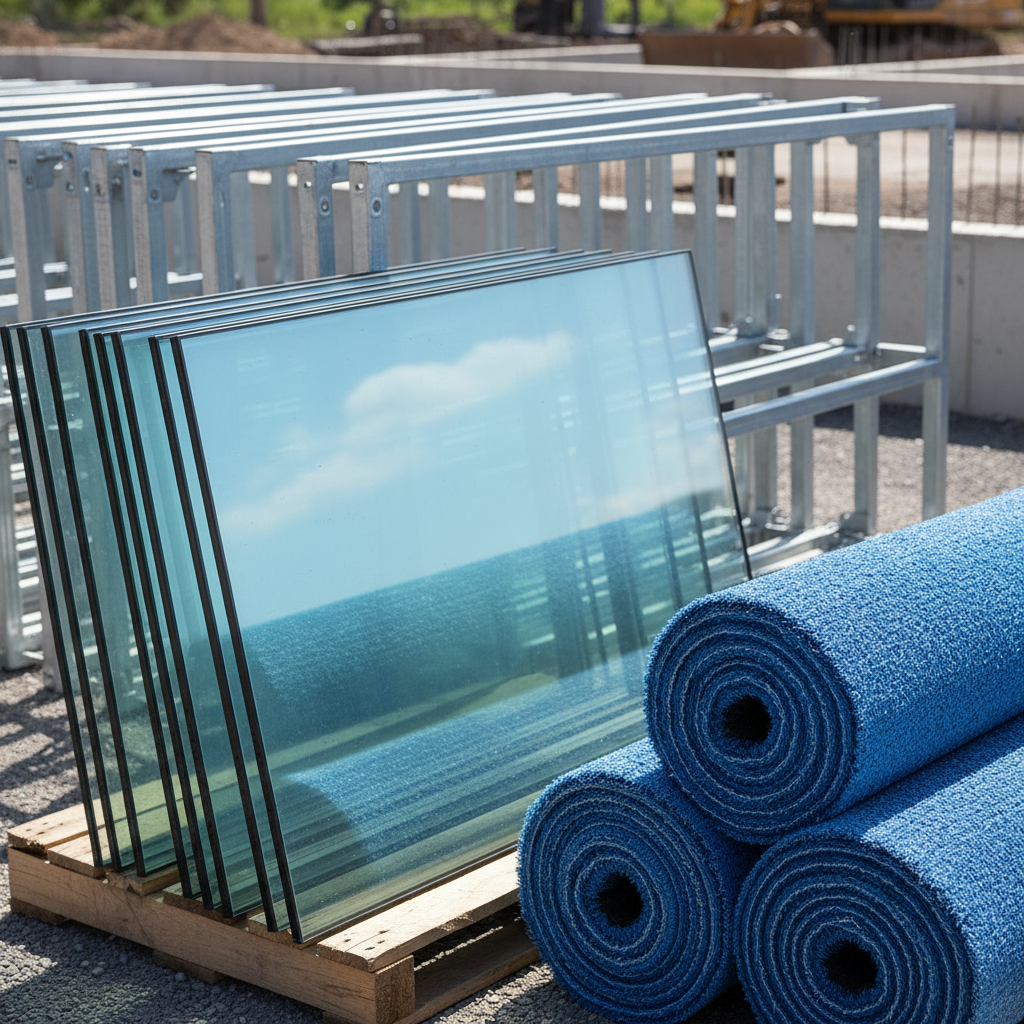
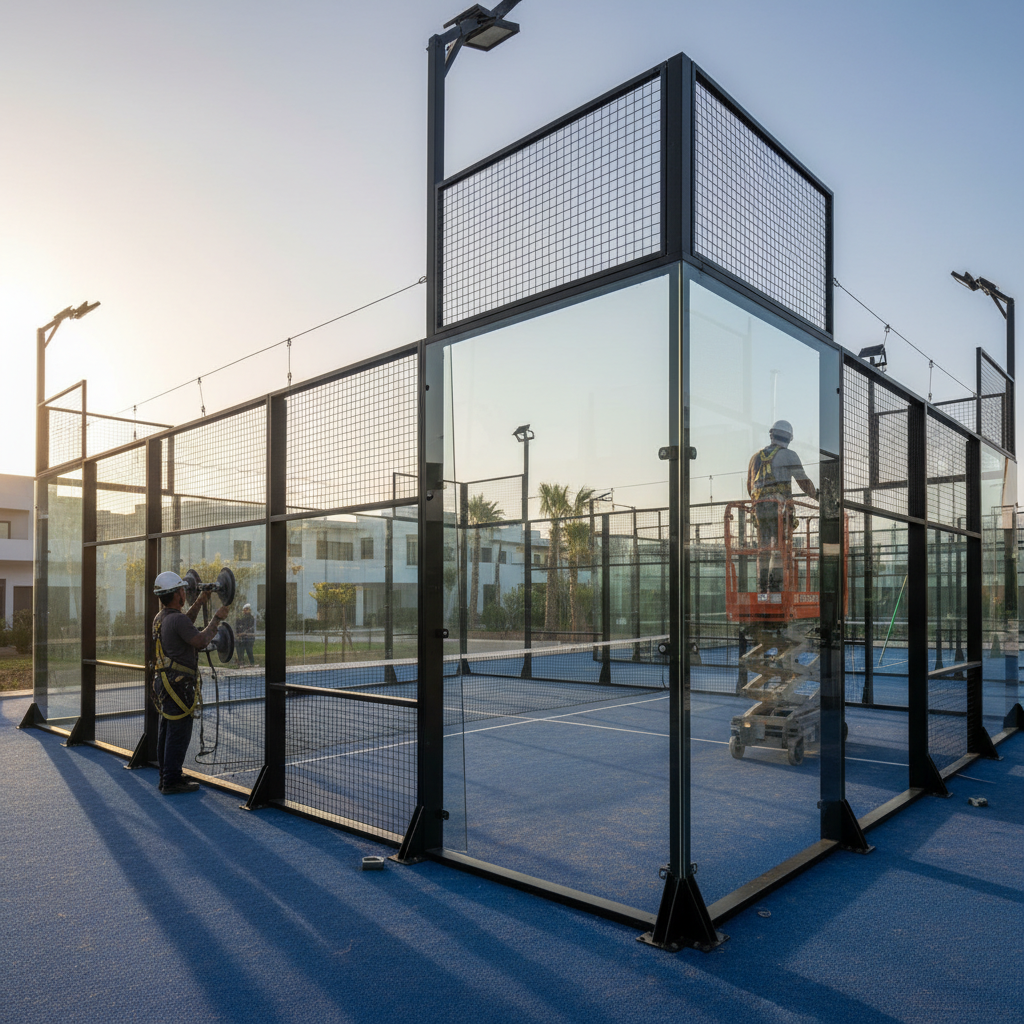
Installation involves mounting 12mm tempered safety glass and hot-dip galvanized steel fencing onto a perfectly level foundation. The structure requires modular steel pillars anchored into concrete to support the weight of transparent panels while maintaining structural rigidity. High-tensile mesh fencing must be integrated seamlessly between glass sections to allow for predictable ball rebounds.
But here’s the kicker…
Using substandard gaskets or incorrect torque on the mounting bolts leads to glass vibration and potential shattering. Professional installers use laser-aligned levels to ensure every pillar is perfectly vertical before the glass is hoisted into position. This precision prevents structural stress and ensures the enclosure meets international safety standards for public use.
Enclosure and Safety Standards
● 12mm tempered glass provides the necessary impact resistance for commercial clubs.
● EPDM rubber gaskets are essential for absorbing vibrations between glass and steel.
● Electro-welded mesh fencing ensures a flat surface for consistent ball physics.
● Stainless steel fasteners prevent rust and reduce long-term maintenance needs.
Key Takeaway: Precision alignment of galvanized steel pillars and certified glass are essential for safety and court longevity.
| Component | Requirement | Benefit |
|---|---|---|
| Glass Thickness | 12mm Tempered | Prevents shattering |
| Steel Coating | Galvanized | Corrosion resistance |
| Mesh Type | Electro-welded | Flat bounce surface |
| Fasteners | Stainless Steel | Rust-free durability |
7. How to build a padel court with professional lighting?
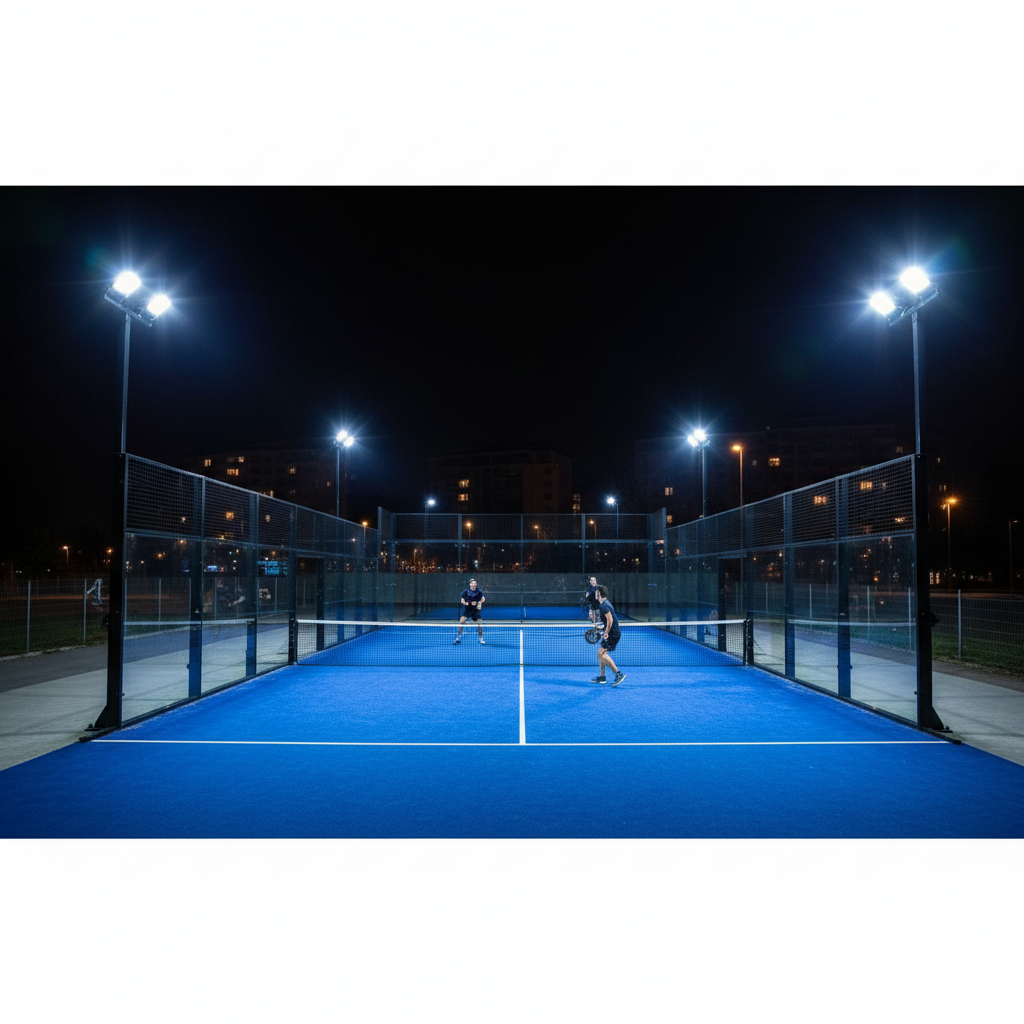
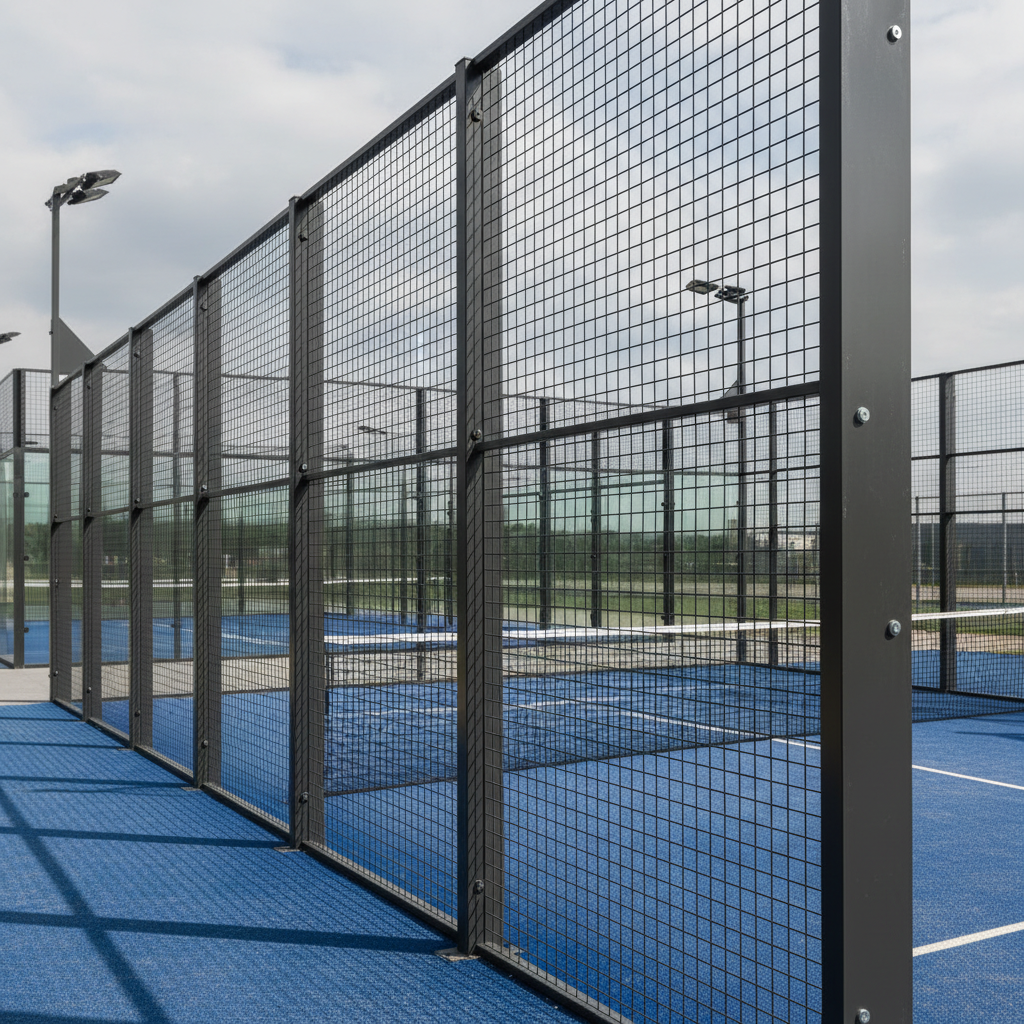
Achieving professional lighting requires installing LED floodlights on eight-meter poles to provide uniform illumination across the playing surface. Elite facilities target a minimum of 300 to 500 lux to ensure players can track the ball at high speeds. Modern LED fixtures with asymmetric lenses are necessary to direct light onto the court while minimizing glare.
Ready for the good part?
Energy-efficient LED technology reduces monthly electricity overhead by up to sixty percent compared to traditional halide lamps. These systems provide instant-on capabilities, allowing facility owners to automate lighting based on digital booking schedules. Weatherproof IP66-rated housings protect internal drivers from moisture, ensuring reliable performance in any outdoor environment.
Lighting Specs and Automation
● 200W-400W LED fixtures should be mounted on 8m structural poles for best coverage.
● Asymmetric lenses are critical to prevent blinding players during high overhead shots.
● Smart switches allow for remote power control linked directly to booking software.
● IP66 ratings ensure the lighting system withstands heavy rain and dust exposure.
Key Takeaway: High-lux LED systems with asymmetric lenses maximize playable hours while minimizing energy costs.
| Feature | Club Standard | Elite Standard |
|---|---|---|
| Illumination | 300 Lux | 500+ Lux |
| Pole Height | 6 – 8 Meters | 8 Meters |
| Power Type | LED Floodlight | High-Output LED |
| Weather Rating | IP65 | IP66 |
8. How to build a padel court using technical diagrams?
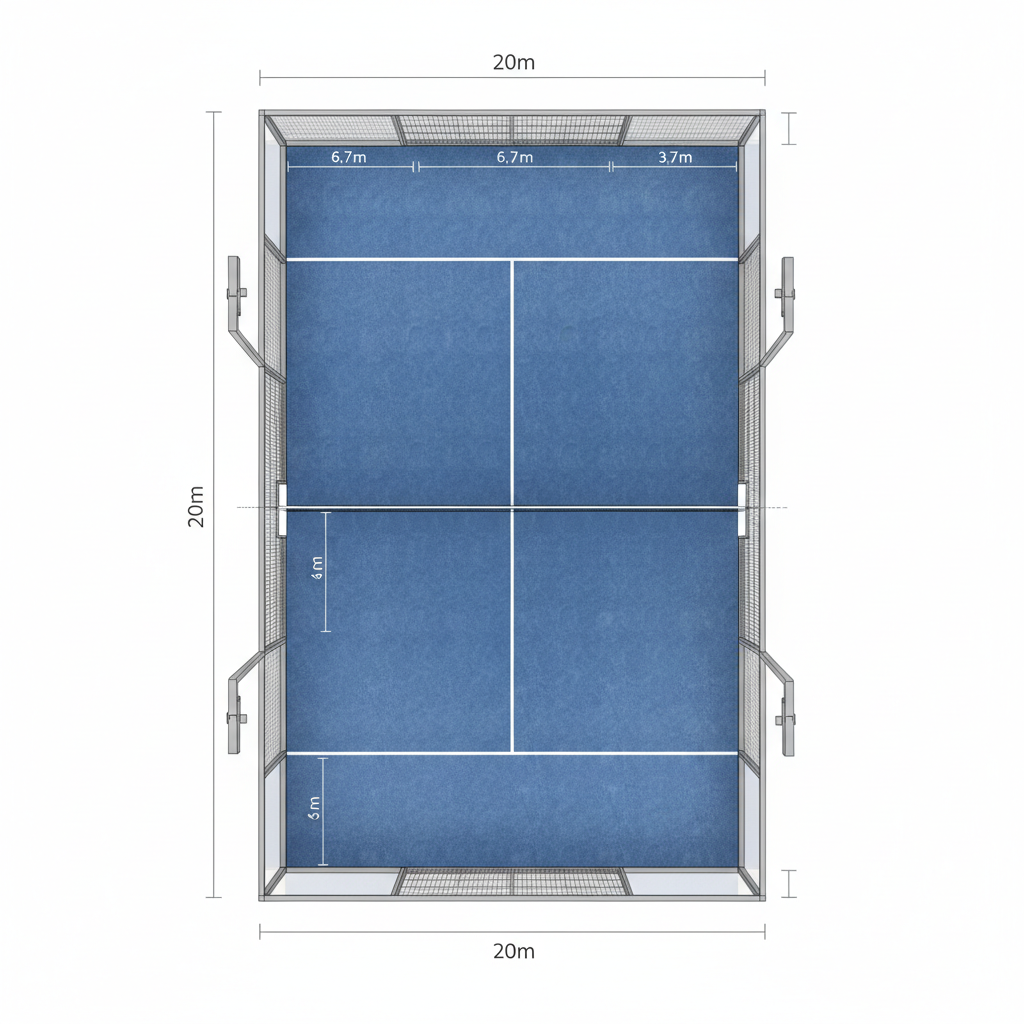
Following precise architectural blueprints for how to build a padel court ensures the 200-square-meter area meets international tournament dimensions. Technical diagrams provide exact positioning for structural anchors, drainage channels, and central net posts to avoid measurement errors. Using professional CAD drawings allows for seamless integration of utility lines for lighting and drainage systems.
What’s the real story?
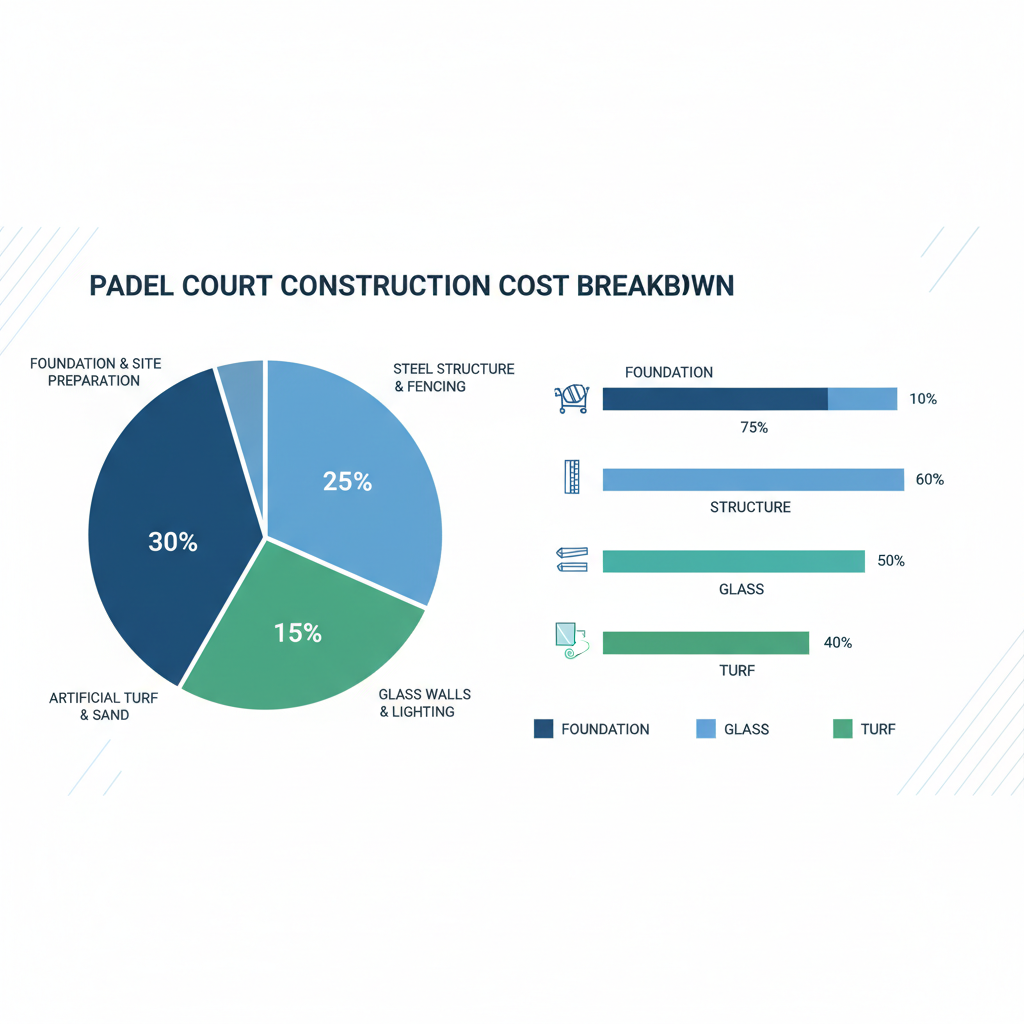
Small deviations in the foundation footprint can make it impossible to fit pre-fabricated steel frames correctly. Most successful projects allocate approximately forty percent of the budget to the structural core and thirty percent to surfaces. Detailed blueprints prevent these financial overruns by ensuring every component arrives on-site with the correct specifications.
Blueprint and Layout Precision
● Internal playing footprints must be marked exactly at 20 meters by 10 meters.
● Net post positions should be centered precisely at the 10-meter mark of the court.
● Foundation slopes of 0.5% must be integrated into the slab for natural runoff.
● Utility trenches for LED wiring must be placed before the final concrete pour.
Key Takeaway: Adherence to technical blueprints and strategic budget allocation prevents installation delays and financial overruns.
| Metric | Specification | Importance |
|---|---|---|
| Length | 20 Meters | Tournament compliance |
| Width | 10 Meters | Standard game physics |
| Glass Height | 3 – 4 Meters | Rebound consistency |
| Net Height | 0.88m (Center) | Rule compliance |
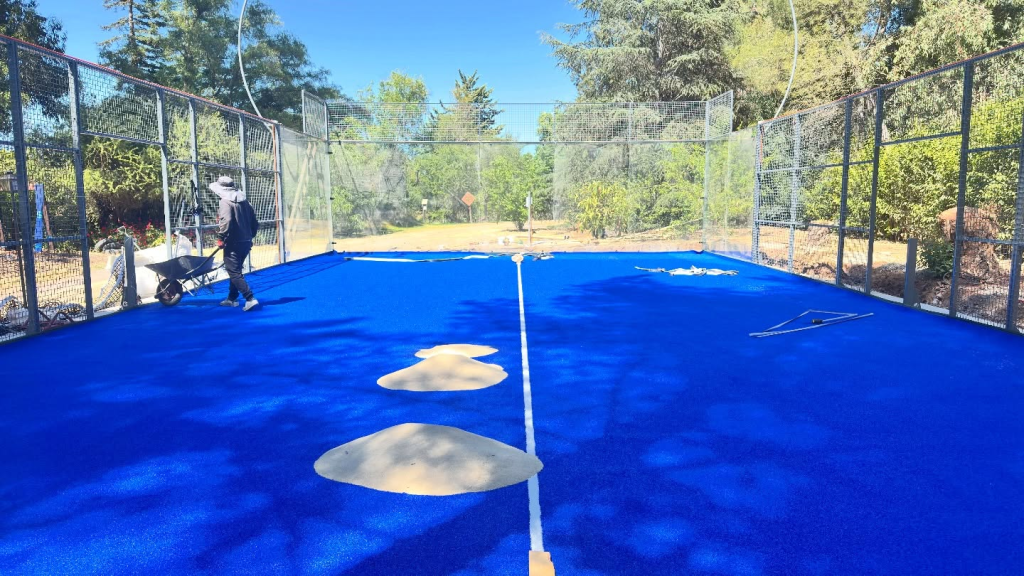
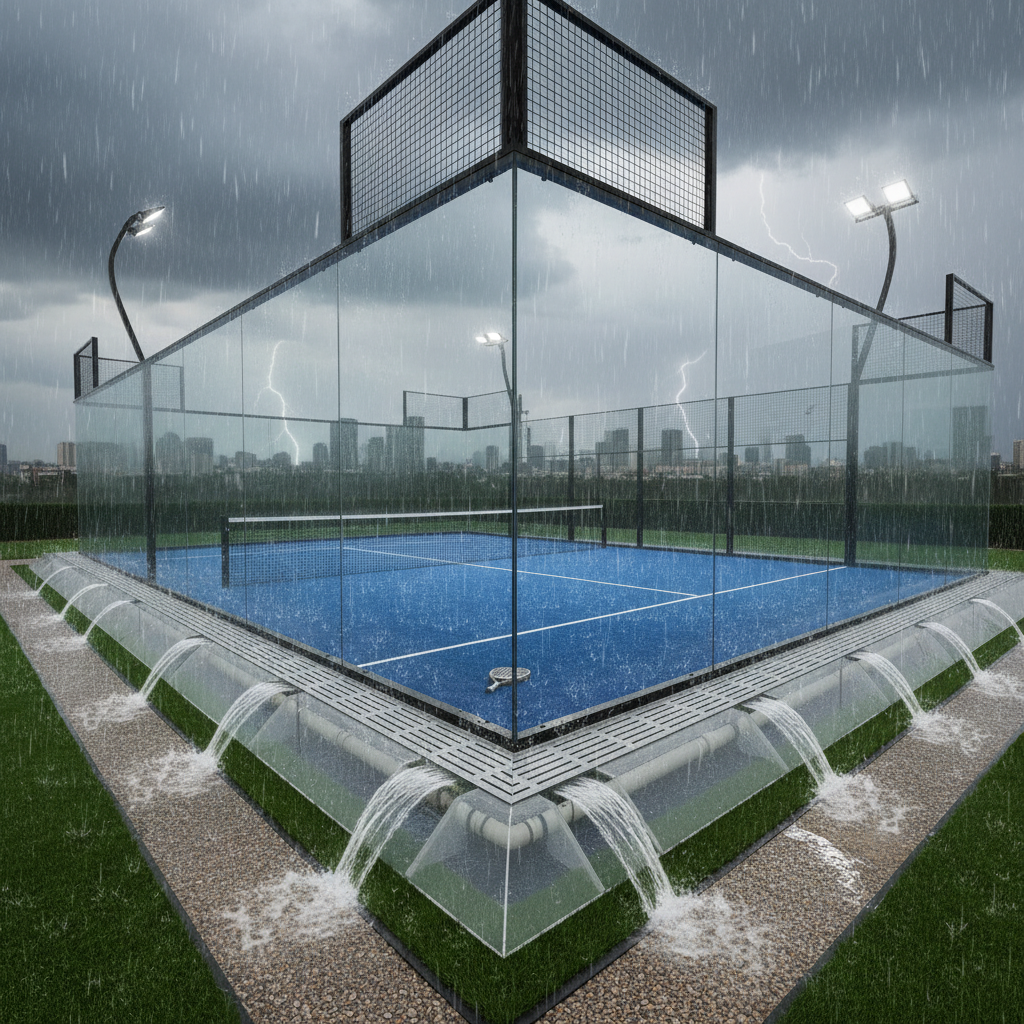
Constructing a premium surface involves selecting high-density monofilament turf and filling it with dried silica sand for optimal grip. The installation requires precision-cut turf rolls bonded with specialized adhesive to prevent seam separation during intense play. A high-quality turf system must include permeable backing to allow heavy rain to drain through the surface efficiently.
This is where it gets interesting…
Uneven sand distribution is the leading cause of “dead spots” where the ball fails to bounce correctly. Professional installers use power brushes to ensure sand reaches the base of the fibers, keeping them upright and protected. Choosing turf with high Dtex ratings ensures the fibers remain resilient and maintain color in high-heat environments.
Turf Quality and Maintenance
● PE monofilament fibers offer the best balance of softness and professional durability.
● Silica sand must be rounded to protect player joints and prevent turf abrasion.
● Seams should be bonded with high-tensile tape to withstand thousands of playing hours.
● UV-resistant coatings are essential for maintaining the court’s appearance in sunny climates.
Key Takeaway: High-density monofilament turf combined with even sand distribution defines the court’s playability.
| Surface Factor | Specification | Result |
|---|---|---|
| Fiber Material | Polyethylene (PE) | Softness & durability |
| Sand Type | Rounded Silica | Player joint safety |
| Pile Height | 10mm – 12mm | Fast ball speed |
| Drainage Rate | 50L / min / sqm | All-weather play |
10. How to build a padel court for long-term safety?
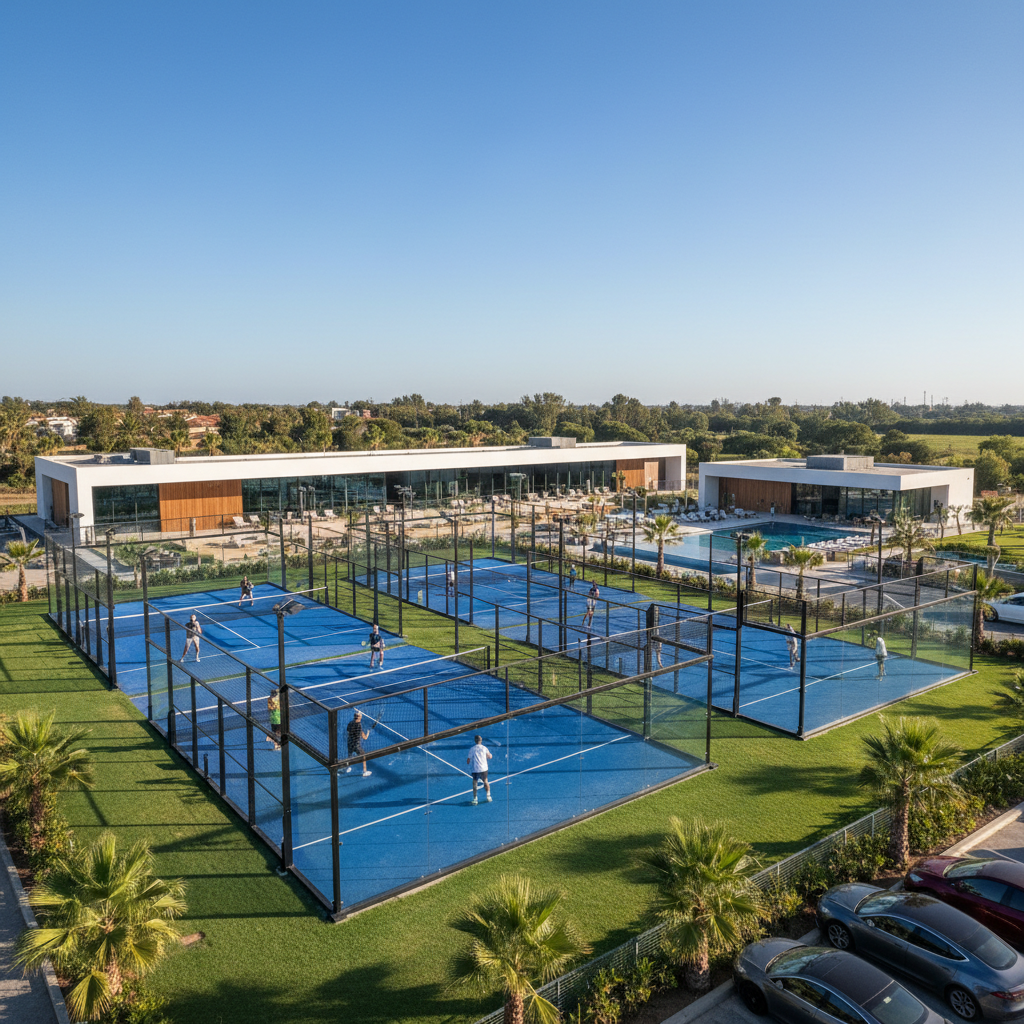
Maintaining long-term safety regarding how to build a padel court requires a rigorous inspection schedule for all structural and glass components. Weekly brushing of the synthetic turf redistributes sand infill, preventing fibers from flattening and creating a non-slip surface. Monthly inspections focus on tightening structural bolts and checking glass gaskets for wear caused by thermal expansion.
Here’s the deal.
Ignoring loose fittings or sand depletion leads to accelerated turf wear and increased liability risks from glass failure. Clubs that maintain clear glass walls and leveled sand bases attract premium memberships and higher booking rates. Proactive care ensures the facility remains a safe environment that meets international federation standards for many years.
Safety Inspections and Cleaning
● Structural bolts should be checked every thirty days to ensure frame stability.
● Glass panels must be cleaned with non-abrasive tools to maintain transparency and safety.
● Silica sand levels require replenishment every six months to sustain proper ball bounce.
● Weekly grooming keeps turf fibers vertical and prevents premature surface degradation.
Key Takeaway: Consistent weekly maintenance and monthly safety checks are essential for maximizing ROI.
| Task | Frequency | Priority |
|---|---|---|
| Turf Grooming | Weekly | High |
| Glass Cleaning | Weekly | Medium |
| Bolt Inspection | Monthly | Critical |
| Sand Top-up | Bi-Annually | High |
Conclusion
Our mission is to empower sports entrepreneurs by providing industrial-grade padel infrastructure that balances elite performance with factory-direct affordability. We believe that professional-standard athletic facilities should be accessible to every community through superior engineering and durable design. By prioritizing safety compliance and energy-efficient lighting, we ensure your investment remains profitable for decades. Transform your vision into a world-class sports destination and contact us today to receive a technical consultation and personalized quotation.