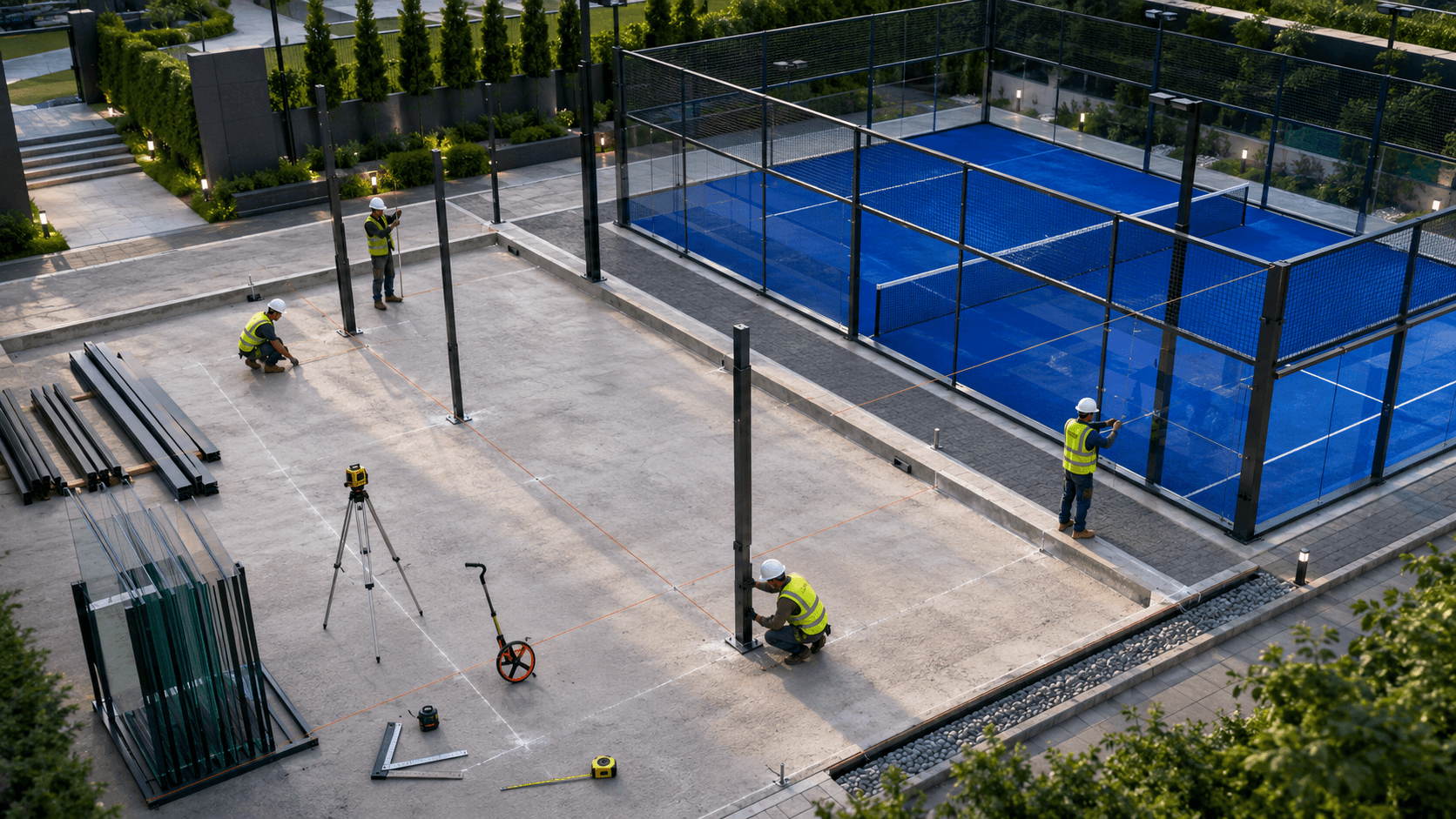
Building correctly starts with knowing the official size of padel court is 20m x 10m to ensure a professional and safe environment. Many facility owners waste thousands on construction only to find their courts don’t meet international standards. Non-standard dimensions ruin ball bounce, compromise player safety, and disqualify your venue from hosting official tournaments. By following this comprehensive guide, you will master every measurement needed to create a world-class padel facility from the ground up.
What is the standard size of padel court for doubles?
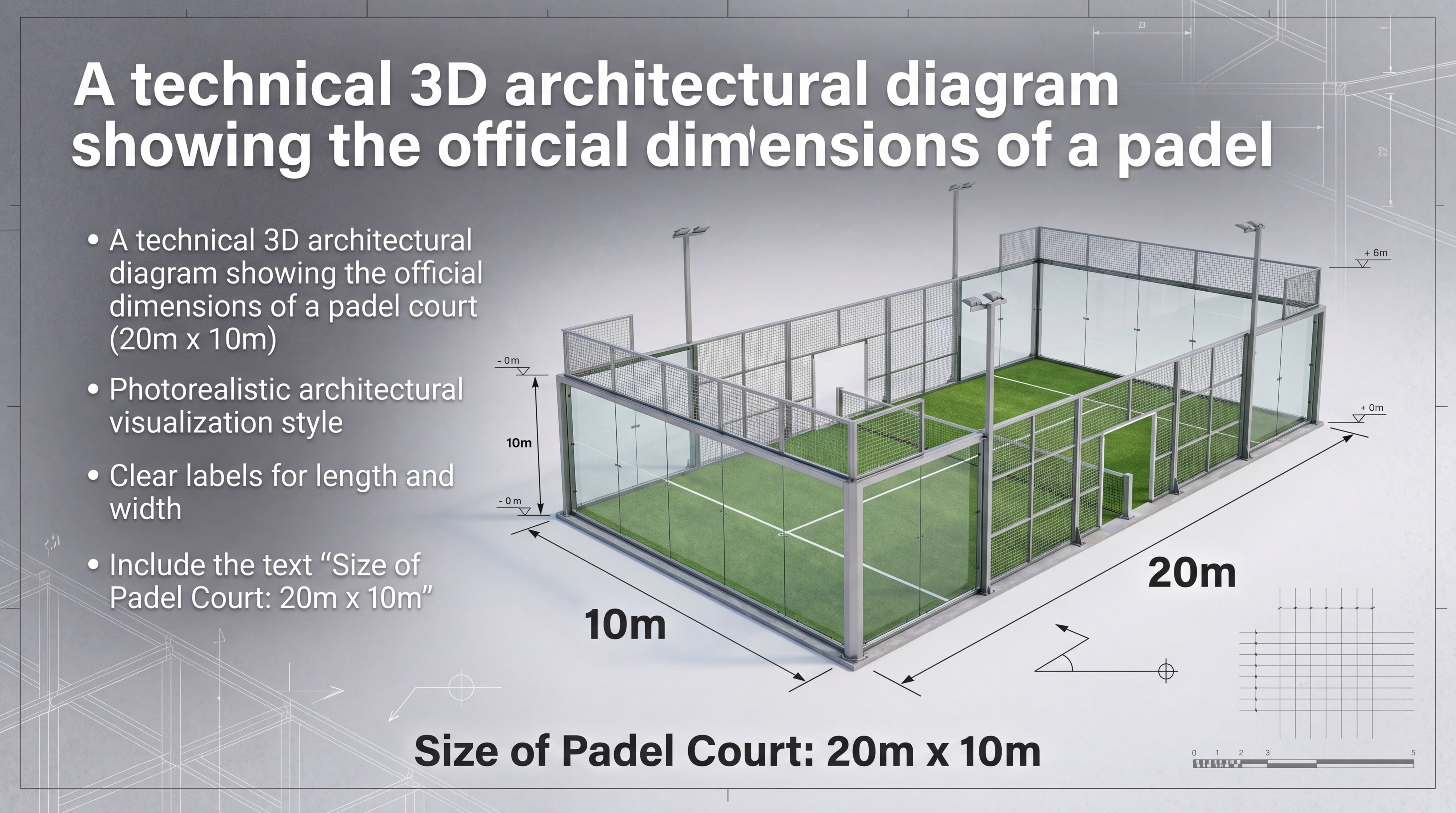
The standard size of padel court for doubles play is a rectangle measuring exactly 20 meters in length and 10 meters in width. This creates a total playing surface area of 200 square meters, excluding the space required for the surrounding structure and safety zones.
Precision in court markings
The playing area is divided in the middle by a net, with service lines positioned at 6.95 meters on either side. These lines are essential for the serving phase of the game and must be applied with high-contrast paint.
Here is the kicker:
- All lines must have a width of 5 centimeters.
- The center service line divides the service area into two equal halves.
- Measurements are taken from the internal face of the glass walls.
Dimensions for singles play
While less common in commercial clubs, singles courts utilize a smaller footprint of 20 meters by 6 meters. This configuration is ideal for individual training or private residences with limited space.
You might be wondering:
- Does the net height change for singles?
- Can I convert a singles court to a doubles court later?
- Is the service line distance the same?
Key Takeaway: Always prioritize the 20x10m format for commercial ventures to maximize rental potential.
| Court Type | Length | Width | Total Area |
|---|---|---|---|
| Standard Doubles | 20 Meters | 10 Meters | 200 Sqm |
| Standard Singles | 20 Meters | 6 Meters | 120 Sqm |
The doubles court remains the global benchmark for professional and recreational facilities alike.
How much total space is needed for the size of padel court?
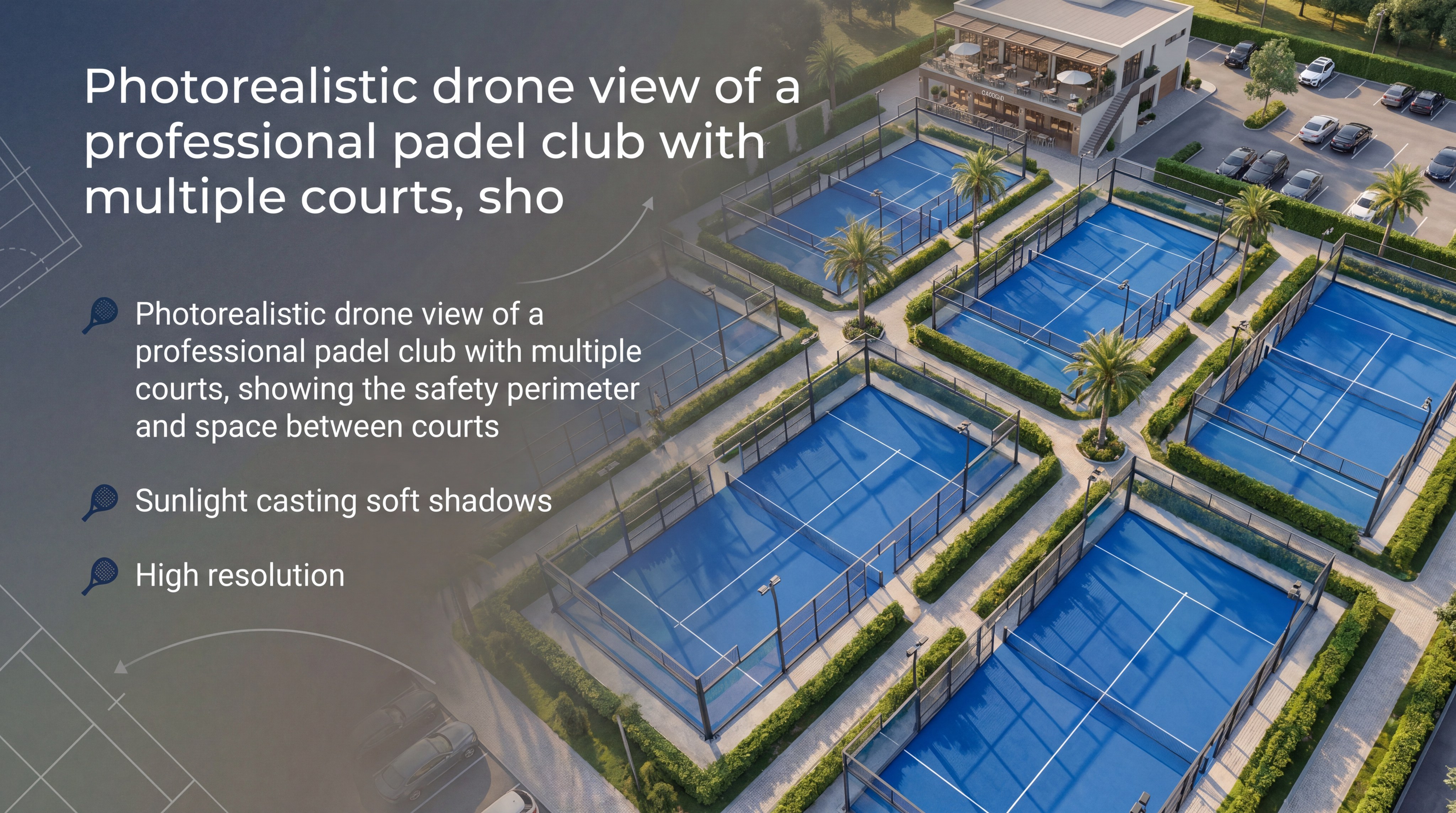
For a successful installation, the total footprint required for the size of padel court is approximately 21 meters by 11 meters per court. This extra meter in each direction accounts for the steel structure, glass panels, and the necessary safety perimeter for players.
Safety perimeter and out-of-court play
Official regulations recommend a safety zone of at least 0.5 meters around the exterior of the court. In professional venues, this area is often expanded to allow for “out-of-court” play, where players exit through the side doors to save a ball.
The truth is:
- A clear safety zone prevents injuries from accidental collisions.
- It allows maintenance teams easy access to the glass panels.
- For multi-court clubs, a 2-meter gap between courts is preferred.
Planning for spectator zones
If you intend to host tournaments, you must calculate space beyond the court structure for bleachers or standing areas. High-end clubs typically allocate an additional 2 to 3 meters on at least one side of the court for viewers.
But wait, there’s more:
- Consider pedestrian flow between courts.
- Ensure that spectator seating does not block emergency exits.
- Factor in space for player benches and water stations.
Key Takeaway: Never build the structure flush against a wall; always leave a safety buffer for both players and maintenance.
| Space Category | Minimum Buffer | Recommended Buffer |
|---|---|---|
| Safety Perimeter | 0.5 Meters | 1.0+ Meters |
| Between Courts | 1.0 Meters | 2.0 Meters |
| Spectator Area | N/A | 3.0 Meters |
Sufficient perimeter spacing distinguishes a professional facility from a cramped, recreational one.
What is the ideal indoor height for the size of padel court?
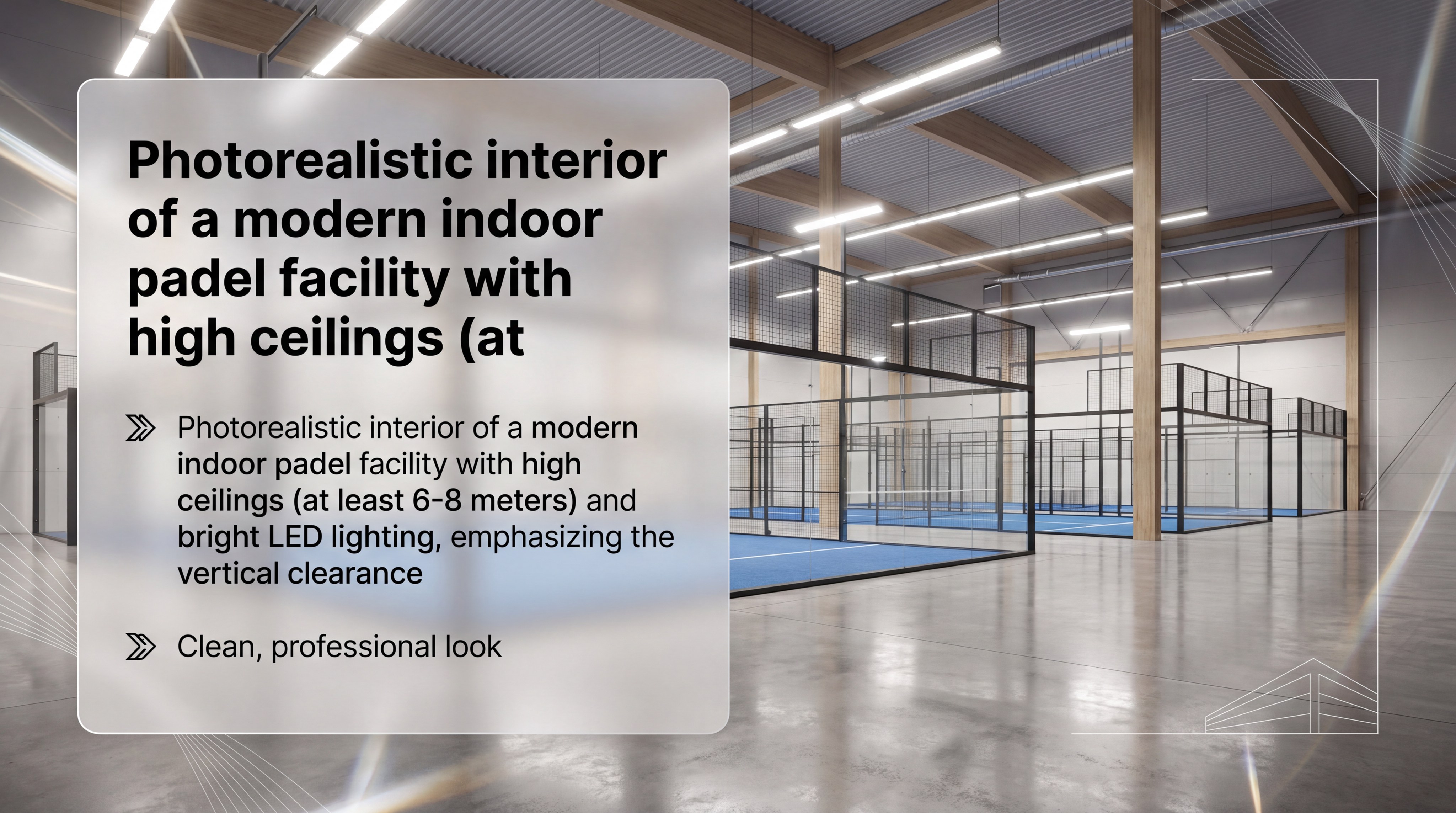
The minimum vertical clearance required for the size of padel court in an indoor setting is 6 meters across the entire playing surface. However, a height of 8 meters is strongly recommended by professionals to accommodate high-arching “lob” shots, which are a fundamental tactic in padel.
Measuring vertical clearance correctly
When assessing a building, you must measure from the floor to the lowest hanging obstruction, such as light fixtures or support beams. A roof height of 7 meters at the peak is useless if a sprinkler pipe sits at 5.5 meters.
It gets better:
- High ceilings improve air circulation and temperature control.
- Lighting systems can be mounted higher to reduce glare.
- Players feel less restricted, leading to a better overall experience.
Impact on game dynamics
Low ceilings fundamentally change how the game is played, as they render the defensive lob shot ineffective. Facilities with less than 6 meters of clearance are generally considered sub-standard and may struggle to retain competitive players.
You might be wondering:
- Can I use a sloped roof?
- What happens if a ball hits the ceiling?
- How do I mount lights in a low-height facility?
Key Takeaway: Aim for a minimum of 7 to 8 meters to ensure your facility remains attractive to experienced players.
| Height Level | Clearance | Playability Impact |
|---|---|---|
| Absolute Minimum | 6.0 Meters | Lobs are restricted |
| Standard Recommended | 7.0 Meters | Suitable for club play |
| Professional Level | 8.0+ Meters | Full tactical range |
Vertical space is just as critical as floor dimensions for a high-quality padel experience.
How do wall heights define the size of padel court?
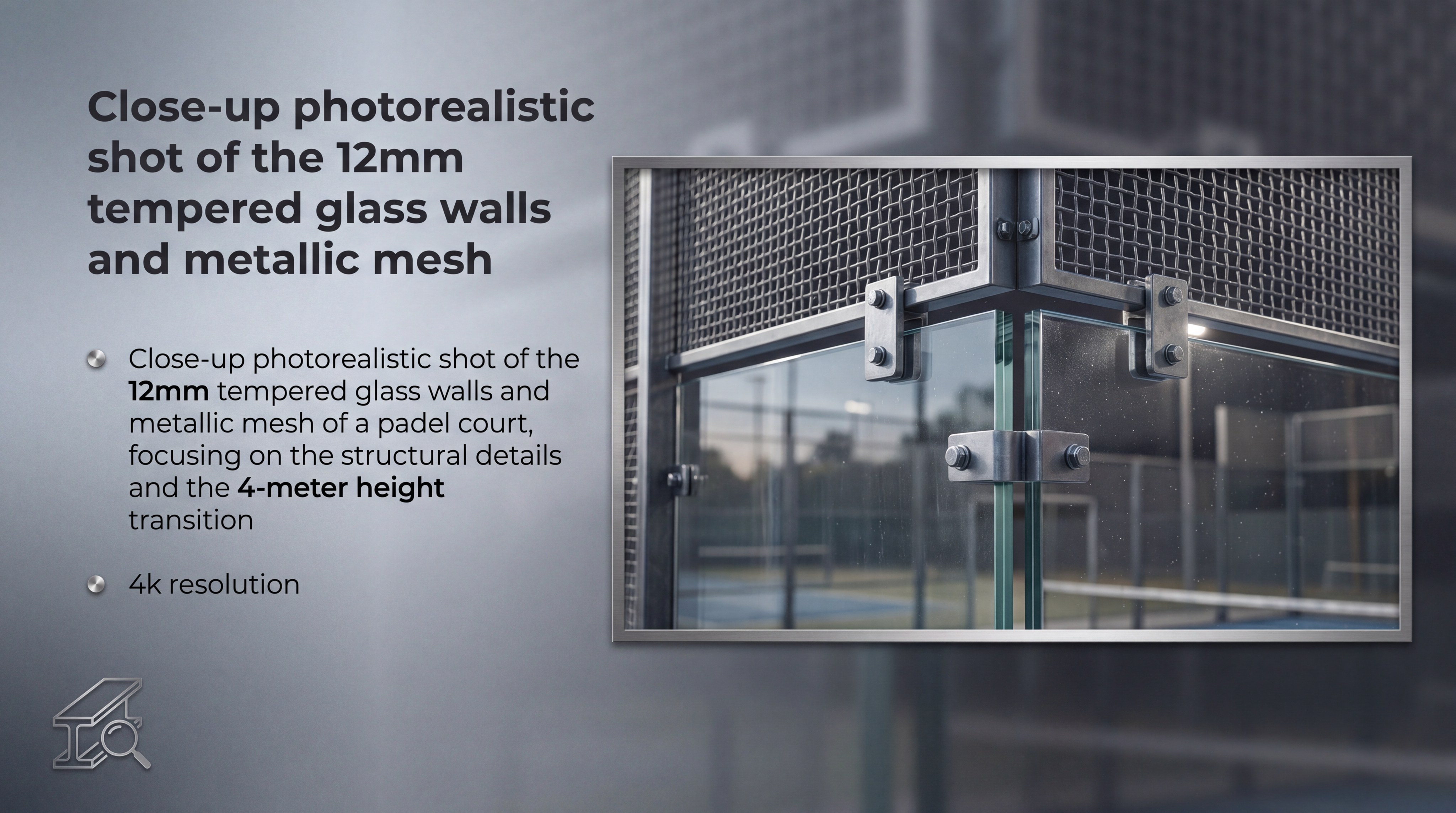
The perimeter walls are a defining feature of the size of padel court, standing 4 meters high at the back and transitioning along the sides. These walls allow the ball to be played off the glass, adding a unique strategic layer that separates padel from tennis.
Back wall and side wall transition
The back wall must consist of a 3-meter high glass section topped with a 1-meter metallic mesh panel, totaling 4 meters. The side walls can either remain a uniform 4 meters or “step down” to 3 meters after the first 2 meters from the back corner.
Here is the kicker:
- Glass must be tempered safety glass (10mm or 12mm thickness).
- The transition between glass and mesh must be perfectly flush.
- Mesh sections allow for better airflow in outdoor installations.
Variations in structure design
Modern “Panoramic” courts remove the middle structural posts to offer spectators a better view. While the height remains the same, the engineering required for these glass walls is more advanced to handle the ball impacts without vibration.
But wait, there’s more:
- Galvanized steel frames prevent rust in outdoor environments.
- High-quality fasteners are needed to secure glass panels.
- Customized frame colors can be used for branding.
Key Takeaway: Ensure all wall materials meet safety certifications to prevent breakage during high-intensity matches.
| Wall Section | Height | Primary Material |
|---|---|---|
| Back Wall | 4.0 Meters | Glass + Mesh |
| Side Wall (First 2m) | 4.0 Meters | Glass |
| Side Wall (Remaining) | 3.0 Meters | Mesh |
The combination of glass and mesh heights ensures ball containment while maintaining a sense of openness.
How are nets placed within the size of padel court?
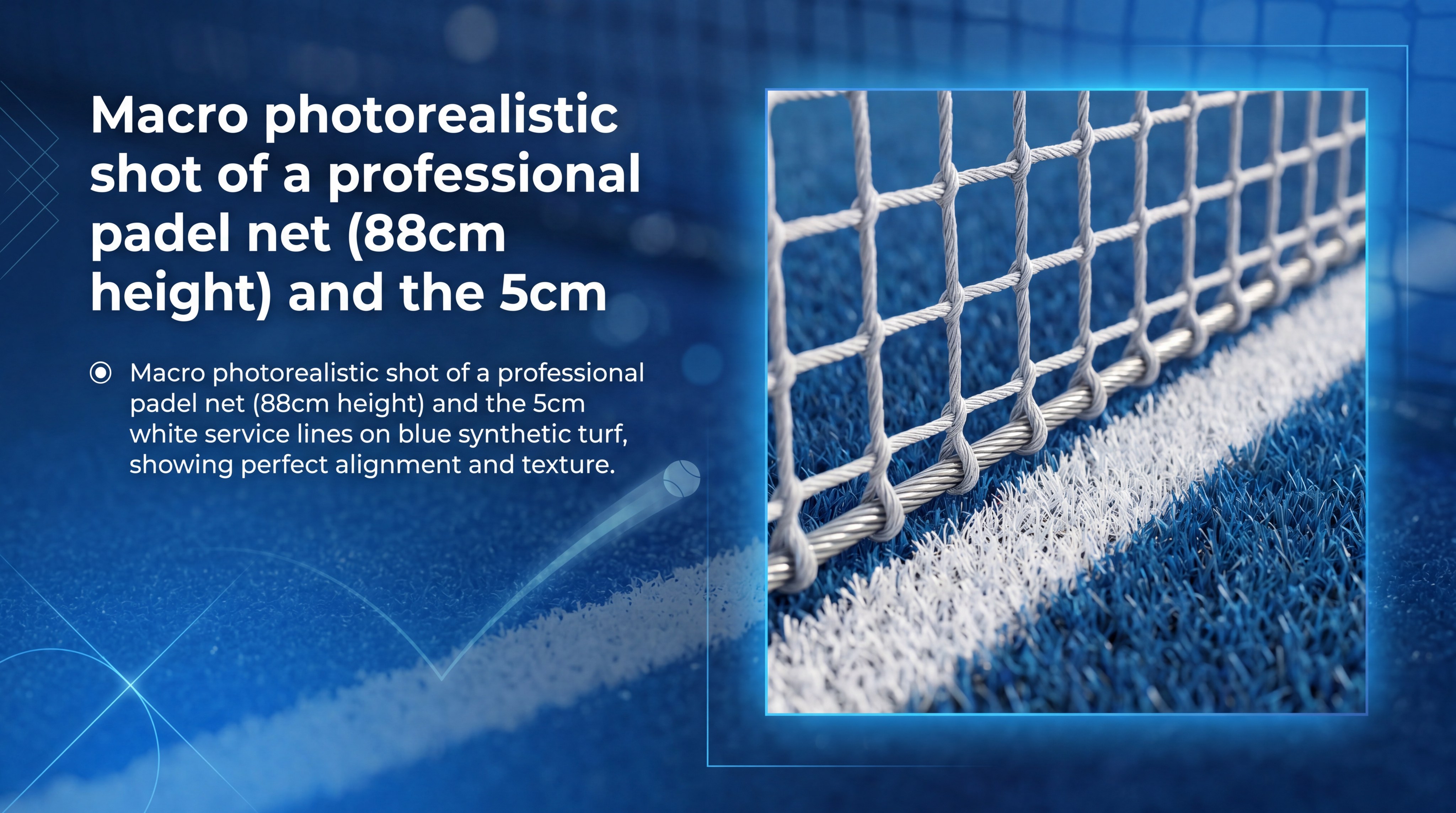
The net spans the 10-meter width of the size of padel court, standing 88 centimeters high at the center and 92 centimeters at the supporting posts. It must be perfectly centered between the two back walls to ensure a fair playing field for both teams.
Net tension and center strap
A center strap is used to maintain the 88cm height, as the net naturally sags in the middle. Regular maintenance is required to check this measurement, as temperature changes can affect the tension of the net cable.
The truth is:
- A saggy net allows illegal low shots to pass over.
- The net posts must be positioned outside the 10-meter playing width.
- Use a high-quality, weather-resistant mesh for the net itself.
Integration with side doors
Padel courts usually feature one or two side doors for player entry and exit. These doors are located precisely at the net line and must be wide enough to accommodate players running out to retrieve balls in professional settings.
You might be wondering:
- Is there a standard door width?
- Can doors be omitted in private courts?
- How do I protect the net from wind damage?
Key Takeaway: Check the net center height daily; even a 2cm deviation significantly affects the competitive balance.
| Net Position | Standard Height | Material Focus |
|---|---|---|
| Center | 88 Centimeters | Center Strap Tension |
| Posts | 92 Centimeters | Steel/Aluminum Stability |
| Width | 10.0 Meters | UV-Resistant Mesh |
Precise net placement is the finishing touch on a correctly dimensioned padel court.
How does lighting fit the size of padel court perimeter?
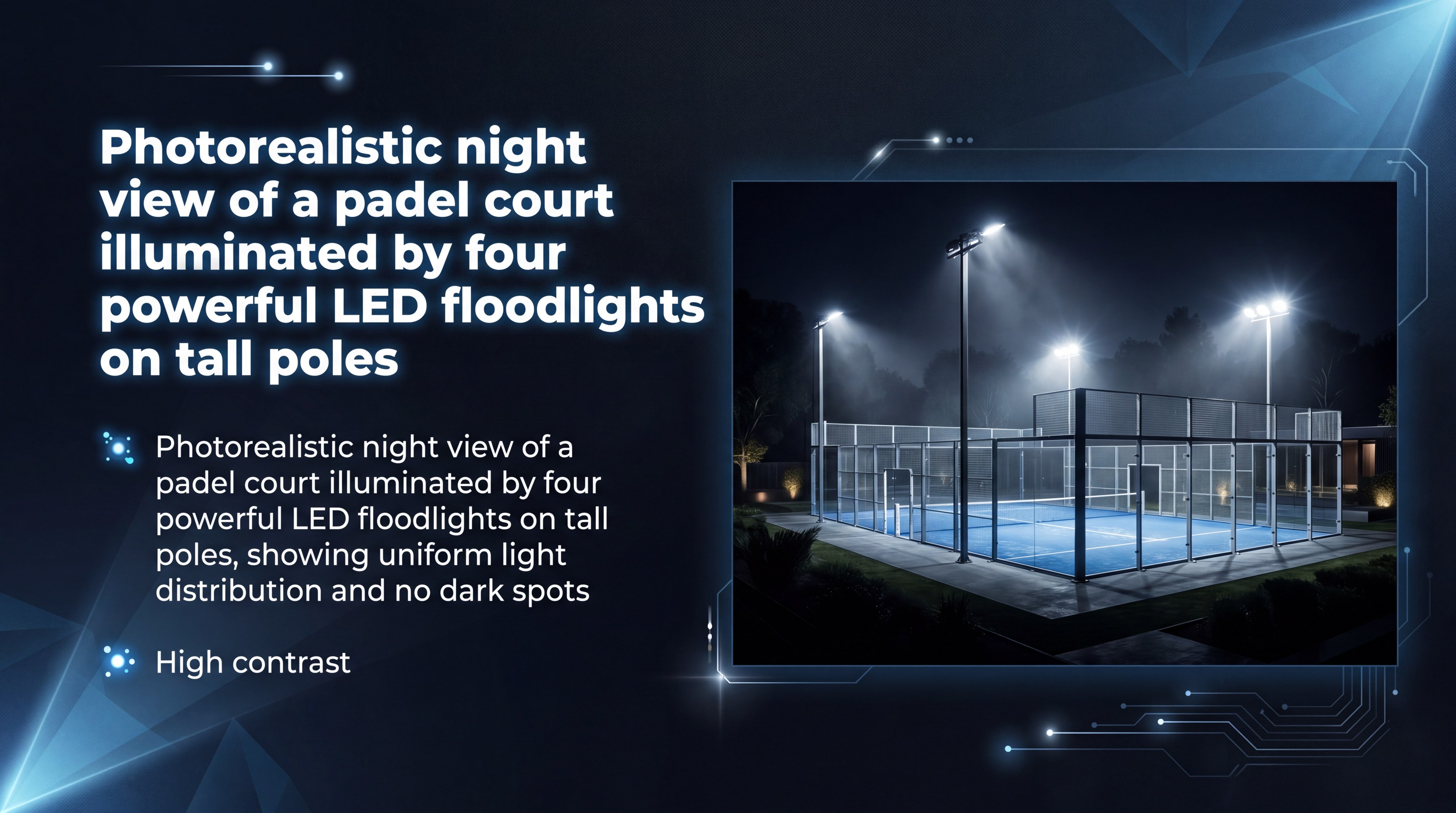
To properly illuminate the size of padel court, four LED floodlight poles are typically installed at a height of 6 meters outside the play area. This configuration ensures a uniform light distribution across the 200-square-meter surface without creating dangerous shadows for the players.
Lux levels for different play types
Recreational play usually requires 300 lux, while professional tournaments or televised matches demand 500 to 750 lux. Using LED technology is highly recommended as it provides instant-on capabilities and reduces energy consumption by up to 50%.
It gets better:
- Modern LEDs have a longer lifespan, reducing maintenance costs.
- High-quality optics minimize light pollution for neighboring properties.
- Dimming options allow you to save power during off-peak hours.
Pole positioning and safety
Poles must be mounted at least 0.5 meters away from the glass structure to avoid vibration transfer and potential breakage. They are often integrated into the court’s structural corners or placed on independent foundations to maximize stability.
Here is the kicker:
- Asymmetric lenses direct light only where it is needed.
- IP66-rated waterproof fixtures are essential for outdoor courts.
- Wiring should be hidden within the poles for a clean look.
Key Takeaway: Invest in flicker-free LEDs if you plan on filming matches or hosting high-level competitive events.
| Play Level | Lux Requirement | Recommended Fixtures |
|---|---|---|
| Recreational | 200 – 300 Lux | 4 x 200W LED |
| Commercial Club | 300 – 500 Lux | 8 x 200W LED |
| Professional | 500 – 750 Lux | 8+ x 300W LED |
Effective lighting extends your court’s operating hours and significantly boosts your potential return on investment.
Which materials suit the standard size of padel court?
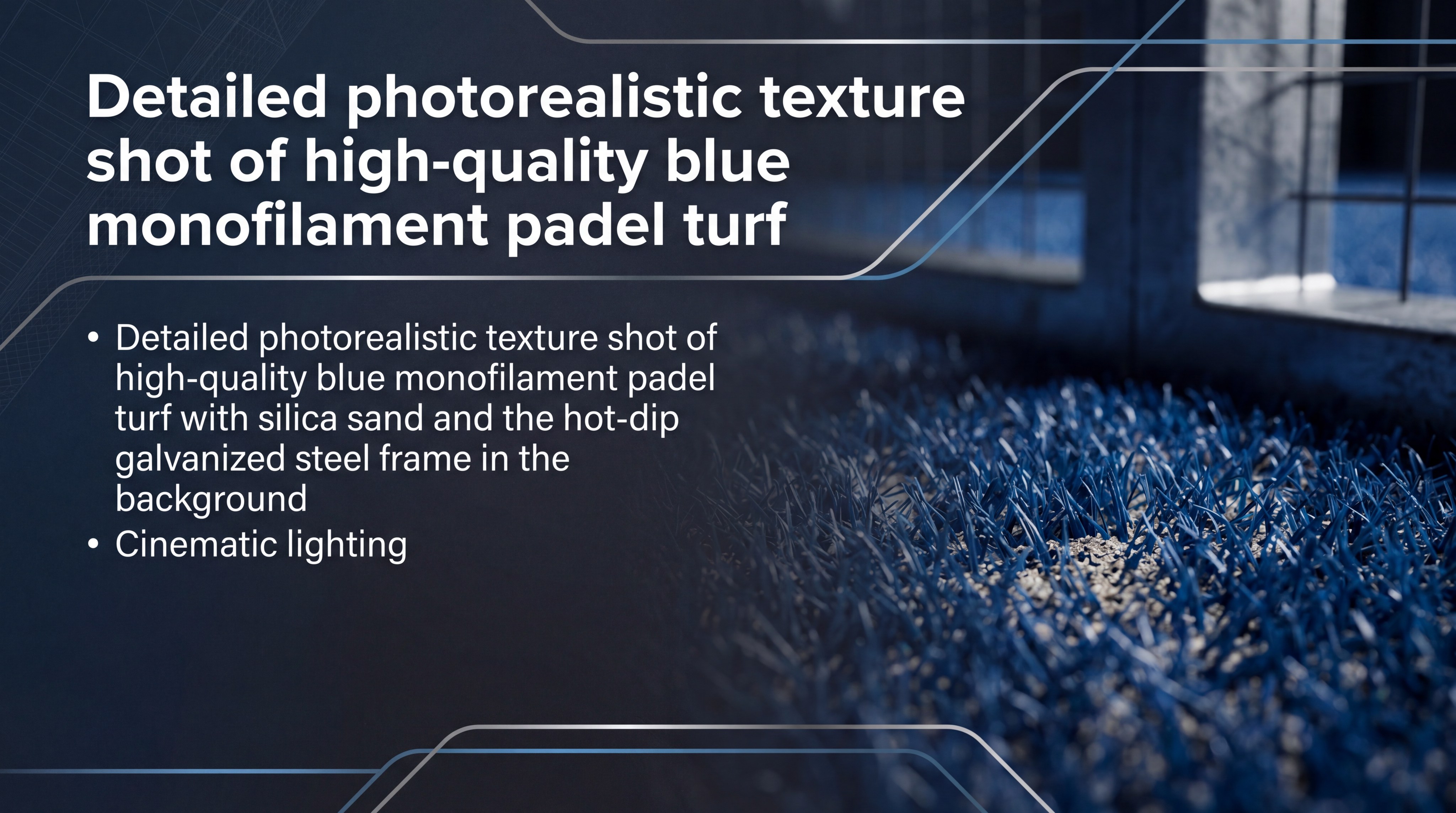
The performance of the size of padel court depends heavily on high-quality synthetic turf, tempered safety glass, and hot-dip galvanized steel. Choosing the right materials ensures a consistent ball bounce and long-term durability against heavy daily use and environmental elements.
Synthetic turf and sand infill
The preferred surface is high-density monofilament or fibrillated turf, usually in blue or green. Approximately 2,000 to 3,000 kg of kiln-dried silica sand is spread over the 200sqm area to keep the grass fibers upright and facilitate player movement.
The truth is:
- Monofilament turf offers a more natural ball bounce.
- Proper sand distribution prevents the turf from bunching or shifting.
- High-quality turf can last 5 to 7 years before needing replacement.
Frame and glass specifications
The steel frame must be hot-dip galvanized to prevent corrosion, especially in coastal regions. For the walls, 12mm tempered glass is the professional standard as it provides superior safety and a more predictable rebound compared to 10mm glass.
You might be wondering:
- Should I use blue or green turf?
- Is monofilament better than fibrillated?
- How often should I add new sand?
Key Takeaway: Don’t cut costs on turf or glass; these are the two components players interact with most frequently.
| Material | Standard Spec | Benefit |
|---|---|---|
| Structure | Galvanized Steel | Rust Prevention |
| Wall Glass | 12mm Tempered | Safety & Bounce |
| Surface Turf | Monofilament | Wear Resistance |
Quality materials ensure that the official court dimensions translate into a world-class playing experience.
How do you level the ground for the size of padel court?
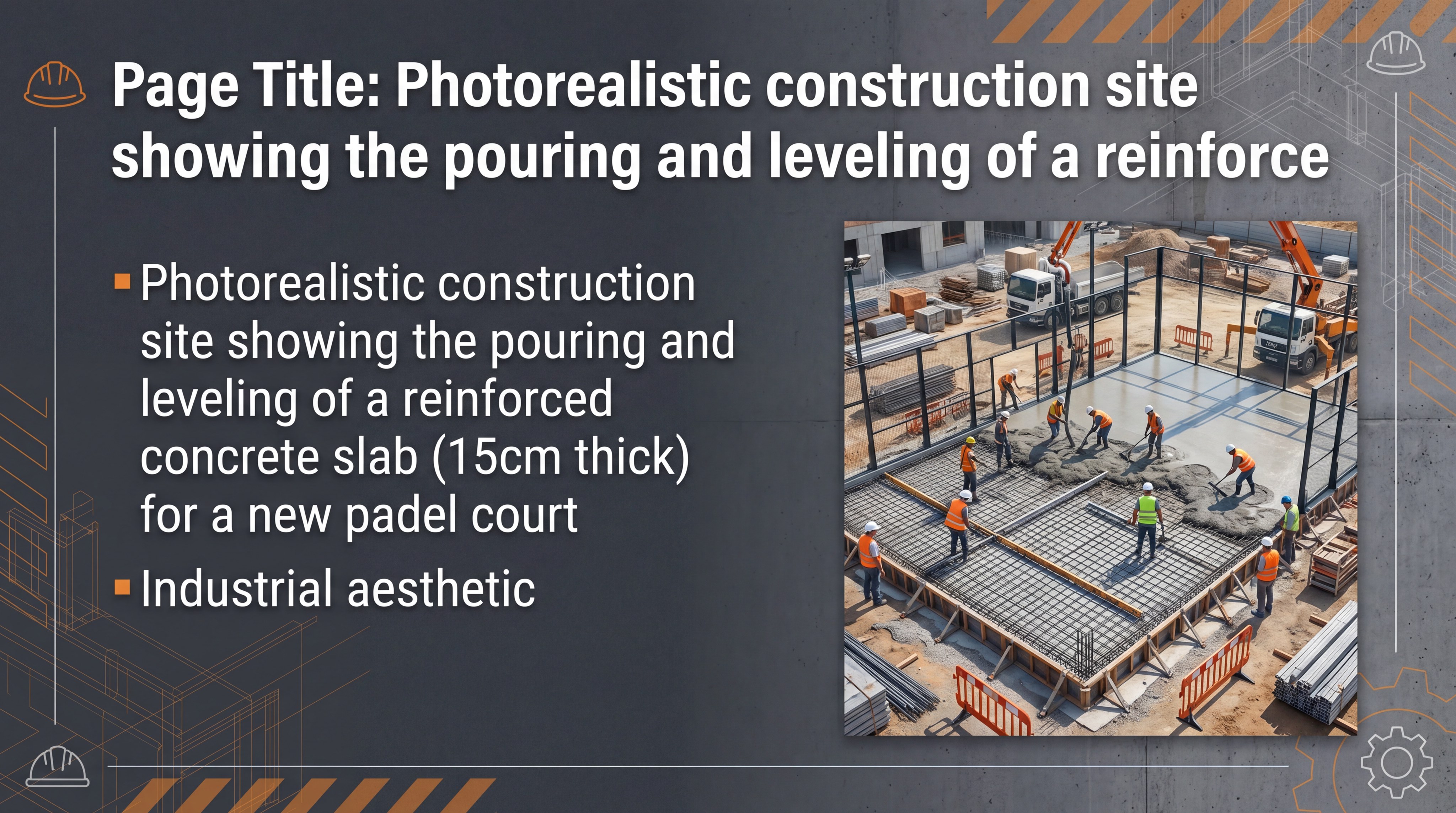
Preparing the foundation for the size of padel court requires a reinforced concrete slab with a minimum thickness of 15 centimeters. The base must be perfectly level and flat to prevent the 12mm glass panels from cracking due to structural stress.
Concrete slab and leveling
A slight slope of 0.5% to 1% is permitted for outdoor courts to assist with water drainage, but indoor courts should be 100% level. Any bumps or depressions in the concrete will be visible through the thin synthetic turf and will ruin the ball bounce.
It gets better:
- Using laser-leveling technology ensures a professional finish.
- Reinforced mesh within the concrete prevents future cracking.
- A smooth “power-float” finish allows for better turf adhesion.
Site excavation and sub-base
Before pouring concrete, the site must be excavated to remove organic matter and replaced with a compacted gravel sub-base. This layer provides the necessary stability to support the heavy glass and steel structure over many years of use.
But wait, there’s more:
- Compaction testing ensures the ground won’t sink later.
- Perimeter footing is needed to anchor the steel posts.
- Allow the concrete to cure for at least 21 days before installation.
Key Takeaway: The foundation is the most expensive part to fix; ensure it is perfectly flat from day one.
| Foundation Layer | Thickness | Material |
|---|---|---|
| Sub-base | 20 – 30 cm | Compacted Gravel |
| Structural Slab | 15 cm | Reinforced Concrete |
| Surface Finish | N/A | Power-Floated Smooth |
A solid foundation is the silent hero behind every professional-grade padel installation.
Is drainage vital for the outdoor size of padel court?
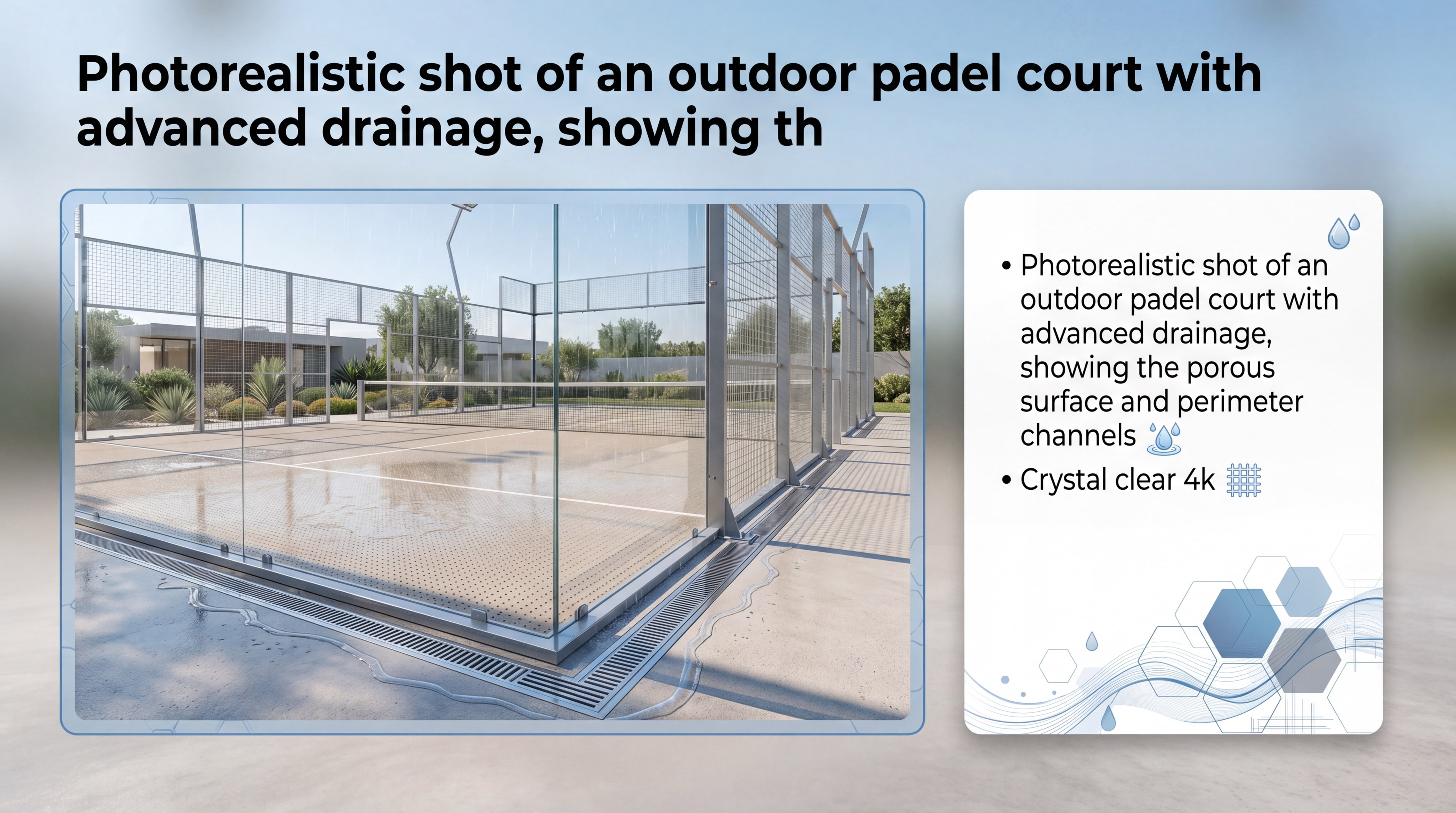
Proper drainage is essential for maintaining the size of padel court outdoors, preventing water from pooling on the synthetic turf after a rainstorm. Without an efficient system, water can trap sand, lead to algae growth, and make the court dangerously slippery for players.
Porous vs. non-porous bases
Porous concrete allows water to drain directly through the slab into the sub-base, which is the most efficient but expensive option. Non-porous slabs rely on a perimeter drainage channel and a 1% slope to direct water away from the court surface.
Here is the kicker:
- Clogged drains lead to long-term turf damage.
- Standing water can weaken the adhesive used for the turf seams.
- Good drainage allows the court to be playable minutes after a rain shower.
Maintenance of drainage channels
Drainage grates should be checked monthly to remove leaves, debris, and excess silica sand that might have washed off the court. Ensuring a clear path for water prevents localized flooding during heavy tropical storms or seasonal rains.
You might be wondering:
- Can I use a French drain system?
- How does drainage affect the turf warranty?
- Is porous asphalt a viable alternative?
Key Takeaway: Incorporate drainage planning during the initial excavation phase to avoid costly retrofitting later.
| Drainage Type | Efficiency | Cost Profile |
|---|---|---|
| Porous Concrete | Excellent | High |
| Sloped Perimeter | Good | Moderate |
| French Drain | Moderate | Low |
A dry court is a safe court, ensuring your facility remains operational regardless of the weather.
How can you budget for the total size of padel court cost?
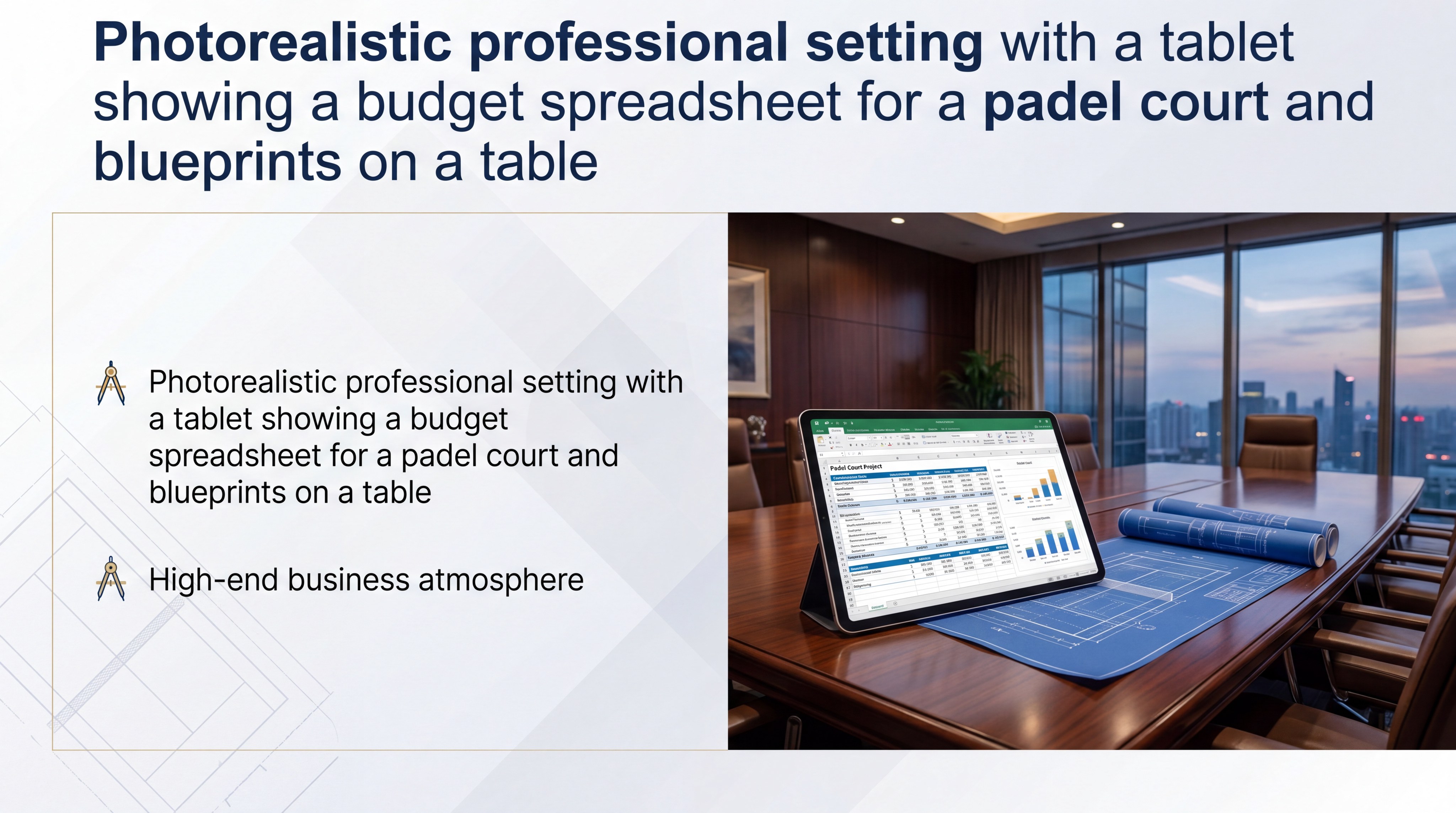
Budgeting for the size of padel court requires balancing the cost of the court kit, ground preparation, and electrical installation. A single professional court typically ranges from $25,000 to $45,000, depending on the site conditions and the quality of the selected materials.
Major cost components
The court structure, glass, and turf usually account for 50% of the total budget. The remaining 50% is split between ground excavation, concrete pouring, lighting, and professional labor for the final assembly of the panels and structure.
The truth is:
- Buying factory-direct can save up to 30% on procurement costs.
- Shipping and logistics can vary greatly depending on your location.
- Always include a 10% contingency fund for unexpected site issues.
ROI and financial planning
With court rental fees ranging from $40 to $100 per hour, a well-managed padel court can pay for itself within 12 to 24 months. Diversifying revenue with a pro-shop, coaching services, and tournaments can accelerate your return on investment significantly.
But wait, there’s more:
- Maintenance costs are relatively low compared to tennis courts.
- Padel attracts a higher player density per square meter.
- Multiple courts share foundational and electrical overhead.
Key Takeaway: Prioritize a high-quality kit from the start to minimize future repair costs and maximize player retention.
| Budget Item | Percentage | Estimated Range (USD) |
|---|---|---|
| Court Kit | 50% | $15,000 – $22,000 |
| Foundation | 30% | $8,000 – $12,000 |
| Lighting/Elec | 10% | $3,000 – $5,000 |
| Installation | 10% | $3,000 – $6,000 |
Detailed financial planning ensures your padel project moves smoothly from blueprint to first serve.
Conclusion
Understanding the precise size of padel court is only the first step toward building a thriving sports facility. By adhering to international standards for dimensions, height, and materials, you create a destination that players will love and respect. Whether you are building a single private court or a multi-court commercial club, precision in construction is your greatest asset. At Superbpadel, we specialize in delivering premium, factory-direct court solutions that meet every requirement discussed in this guide. Don’t leave your project’s success to chance—contact us today for a customized quote and expert guidance on your next development. We stand by our commitment to quality, durability, and the global growth of this incredible sport.
Frequently Asked Questions
Can I build a padel court on an existing tennis court?
Yes, you can fit approximately three padel courts within the footprint of one standard tennis court. This is a common strategy for clubs looking to modernize their facilities and increase player density and revenue.
What is the best glass thickness for a commercial club?
We recommend 12mm tempered safety glass for all commercial environments. While 10mm glass is lighter and cheaper, 12mm offers a more consistent ball bounce and a higher safety factor for frequent, high-intensity play.
How long does it take to install a single padel court?
Once the concrete slab is fully cured, the actual assembly of the steel structure, glass, and turf takes between 3 to 5 days for a professional team. Ground preparation usually takes an additional 2 weeks.
Does a padel court require planning permission?
In most jurisdictions, yes, a padel court is considered a permanent structure and requires local planning approval. You will need to submit structural drawings and site plans to your local council before beginning excavation.
What is the most popular color for padel turf?
Blue is currently the most popular color worldwide due to its excellent contrast with the yellow ball, which is vital for both players and television broadcasts. Green remains a classic choice for more traditional or residential settings.