A regulation padel court is a 20-meter by 10-meter enclosed playing area that combines elements of tennis and squash. Many facility owners struggle with precise technical specifications, often leading to costly structural errors that prevent official tournament certification. Investing in a court without professional guidance can result in uneven bounces or safety hazards that ruin the player experience. This guide provides the definitive dimensions of a padel court and construction steps to ensure your project meets international standards.
What are the standard dimensions of a padel court?
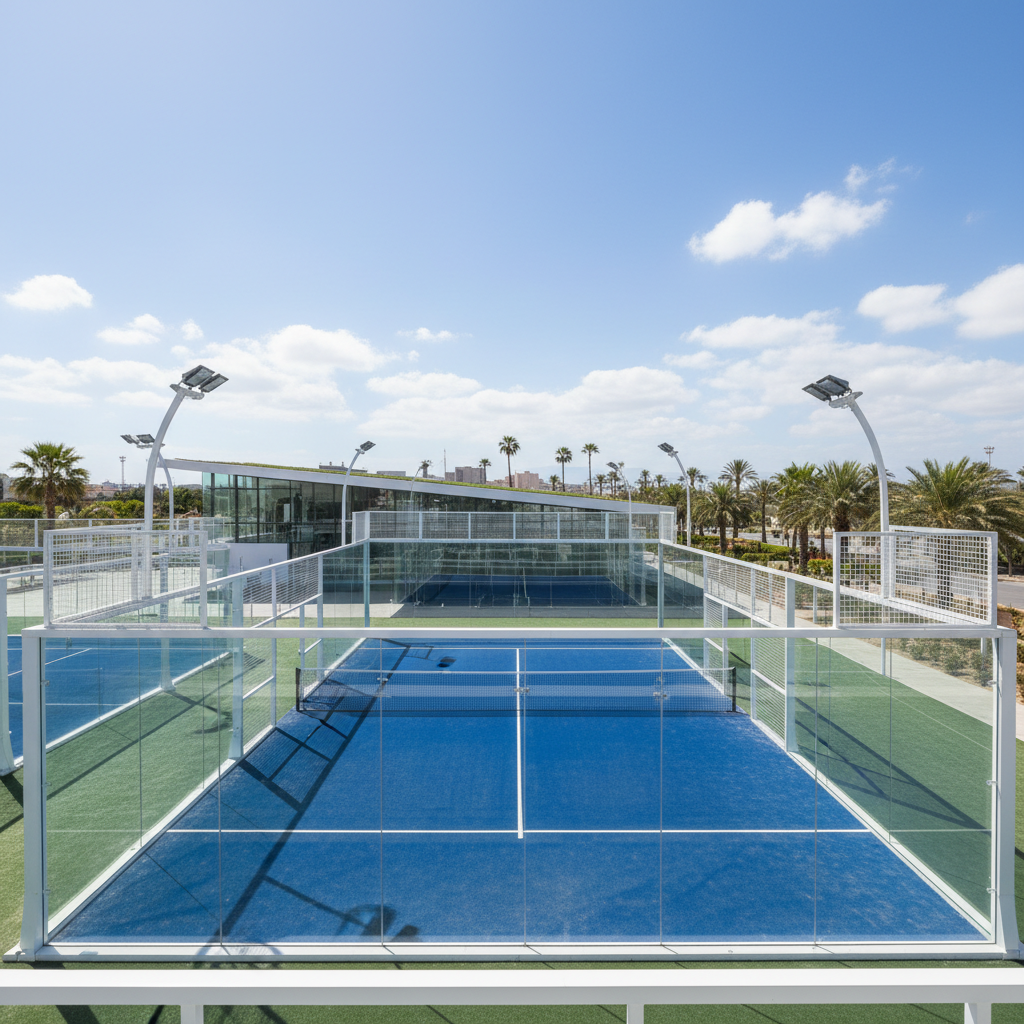
Standard dimensions of a padel court require a strictly rectangular playing area measuring 20 meters in length and 10 meters in width. You must ensure the internal measurements are precise to maintain the integrity of the game. For commercial facilities, using a Standard Padel Court blueprint ensures you stay within FIP regulations.
Planning your space
You need to consider the total clearance beyond the glass walls when mapping your site.
Think about this:
If you don’t account for structural supports, your court might not fit the intended plot.
- Length: 20m (Internal)
- Width: 10m (Internal)
- Tolerance: 0.5% max variation
- Symmetry: Both halves must be identical
Key Takeaway
The internal playing area must be a perfect 20m x 10m rectangle to facilitate professional play and standardized scoring.
| Feature | Specification |
|---|---|
| Length | 20.00 Meters |
| Width | 10.00 Meters |
| Area | 200 Square Meters |
The following table summarizes the foundational geometry required for any new padel installation.
How do technical markings define the court area?

Markings within the dimensions of a padel court include service lines set 6.95 meters from the net on both sides. These lines are critical because you must serve the ball into the diagonal box for a legal play. A central service line then bisects the area between the net and service lines into two equal zones.
Precision in painting
You should use high-contrast white or black paint to ensure players can see boundaries during fast-paced rallies.
The truth is:
Faded or inaccurate lines lead to player frustration and disputes over point validity.
- Line Width: 5cm consistently
- Color: White or Black (High contrast)
- Position: 6.95m from the net
- Center Line: Extends 20cm beyond service lines
Key Takeaway
Service lines must be exactly 6.95 meters from the net and 5cm wide to comply with international tournament visibility standards.
| Marking Type | Distance/Width |
|---|---|
| Service Line | 6.95m from net |
| Line Thickness | 5.00 Centimeters |
| Center Line | Bisects width |
This data defines the specific layout for the internal court painting phase of construction.
Where are the service lines located on a court?
Service lines within the dimensions of a padel court are positioned exactly 6.95 meters away from the central net. This distance allows you enough space to execute the mandatory underhand serve. Accuracy here is paramount because even a few centimeters of error can change the entire physics of the serve.
Marking the boxes
You must ensure the central service line divides the court width into two equal 5-meter sections.
Here is the deal:
Without a perfectly centered service line, one side of the court will have an unfair competitive advantage.
- Primary Line: Parallel to the net
- Distance: 6.95m from the net
- Boundary: Ends at the side walls
- Central Line: Perpendicular to the net
Key Takeaway
The service line acts as the primary boundary for the serve and must be placed 6.95 meters from the net.
| Zone | Measurement |
|---|---|
| Service Line Distance | 6.95 Meters |
| Box Width | 5.00 Meters |
| Box Length | 6.95 Meters |
Reviewing these measurements ensures that the serving zones are proportional and fair for all players.
What are the regulation measurements for a padel net?
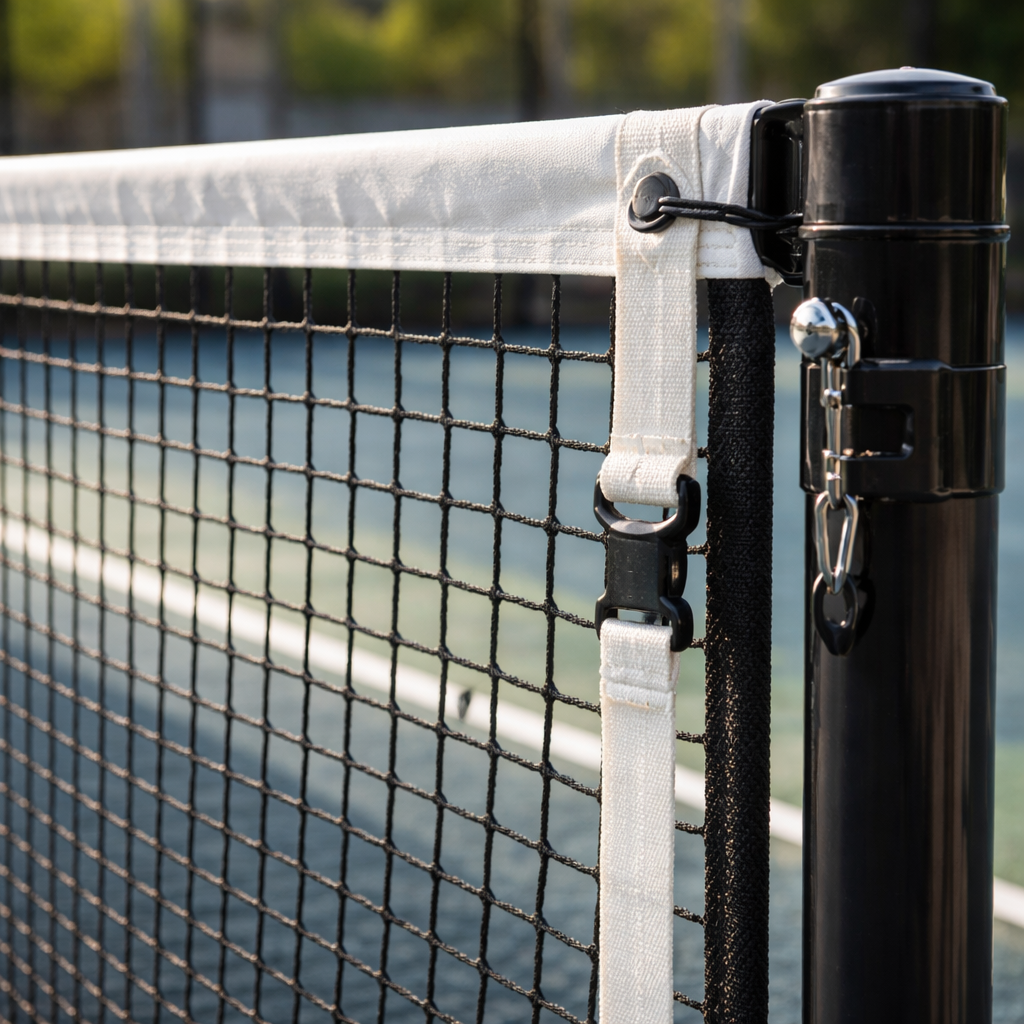
The net spans the 10-meter width inside the dimensions of a padel court at a height of 88cm in the center. You will find that the height increases slightly to 92cm at the lateral posts to accommodate the tensioning mechanism. It is held by a metal cable that you must keep taut to prevent sagging during intense matches.
Net tension and materials
You should choose a synthetic fiber mesh that is fine enough to catch a ball without allowing it to pass through.
It gets better:
A properly tensioned net with a white top band helps you track the ball’s trajectory during high-speed volleys.
- Length: 10 Meters
- Center Height: 88 Centimeters
- Post Height: 92 Centimeters
- Top Band: 5cm to 6.3cm wide
Key Takeaway
Regulation nets must stand at 88cm in the center and 92cm at the posts to ensure standard ball clearance levels.
| Component | Metric |
|---|---|
| Net Length | 10.00 Meters |
| Center Height | 0.88 Meters |
| Post Height | 0.92 Meters |
The following specifications are required for the installation of the central hardware and net system.
What height should court enclosure walls reach?
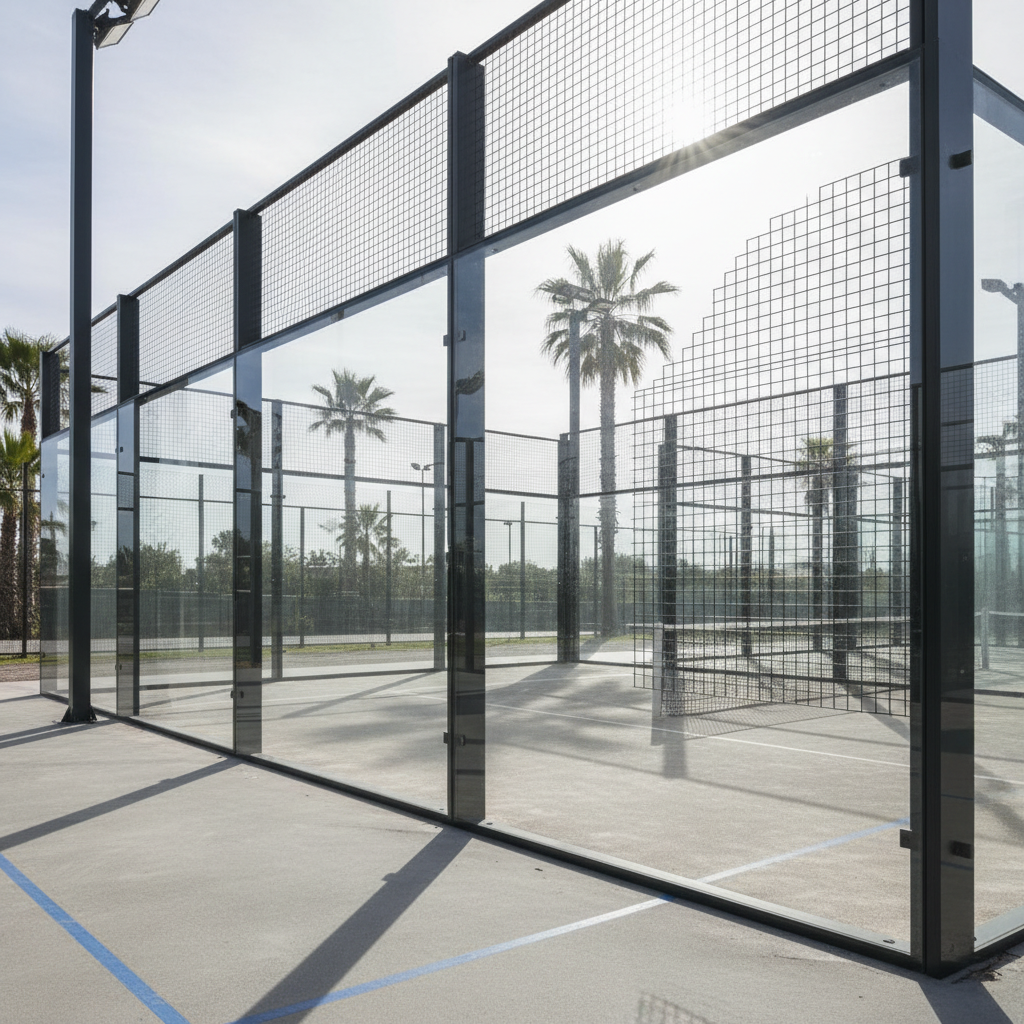
Enclosure walls for the dimensions of a padel court typically reach 4 meters at the back and 3 meters along the sides. You rely on these walls for the ball rebound, making the material choice vital for consistent gameplay. Using certified Padel Glass provides the transparency and safety needed for modern facility aesthetics.
Rebound wall specifications
You must combine solid panels with metallic mesh fencing to allow for different bounce characteristics.
Believe it or not:
The transition between glass and mesh must be perfectly flush to avoid irregular ball bounces that ruin rallies.
- Back Wall: 3m glass + 1m mesh
- Side Wall: 3m high (stepped or uniform)
- Glass Thickness: 10mm or 12mm tempered
- Mesh Aperture: Small enough to contain balls
Key Takeaway
Regulation walls must be 4 meters high at the back, combining glass and mesh to facilitate the sport’s unique rebound rules.
| Wall Type | Height |
|---|---|
| Back Glass | 3.00 Meters |
| Back Mesh | 1.00 Meter |
| Side Structure | 3.00 Meters |
This structural data provides the vertical requirements for designing the court’s enclosure system.
How much total facility land area is required?
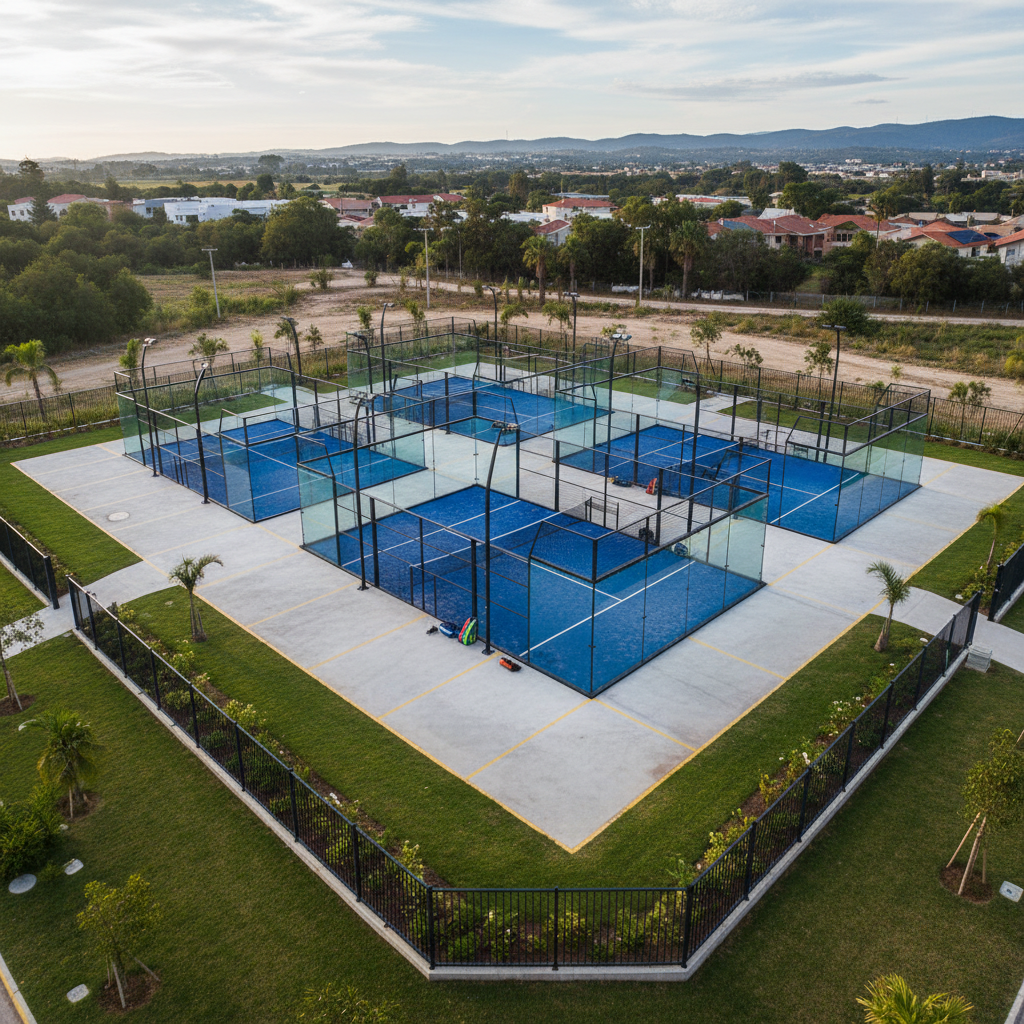
Building the dimensions of a padel court requires a total footprint of at least 21 by 11 meters for a single unit. You must account for the thickness of the steel pillars and the external clearance for maintenance access. If you are building multiple courts, you should add walking paths and safety zones between each structure.
Site footprint optimization
You need to evaluate your soil condition before committing to a specific plot size to ensure the foundation remains stable.
The bottom line is:
Cutting corners on land clearance often results in cramped facilities that cannot accommodate spectators or safety equipment.
- Minimum Plot: 21m x 11m
- Recommended Plot: 23m x 13m
- Pillar Width: Approx. 10cm-15cm
- Safety Zone: 0.5m around perimeter
Key Takeaway
A minimum area of 231 square meters is required per court to accommodate both the playing surface and structural foundations.
| Space Category | Dimension |
|---|---|
| Playing Area | 200 sqm |
| Structural Footprint | 231 sqm |
| Total Clearance | 300+ sqm |
These land metrics are essential for early-stage site planning and zoning permit applications.
Which materials are best for the playing surface?
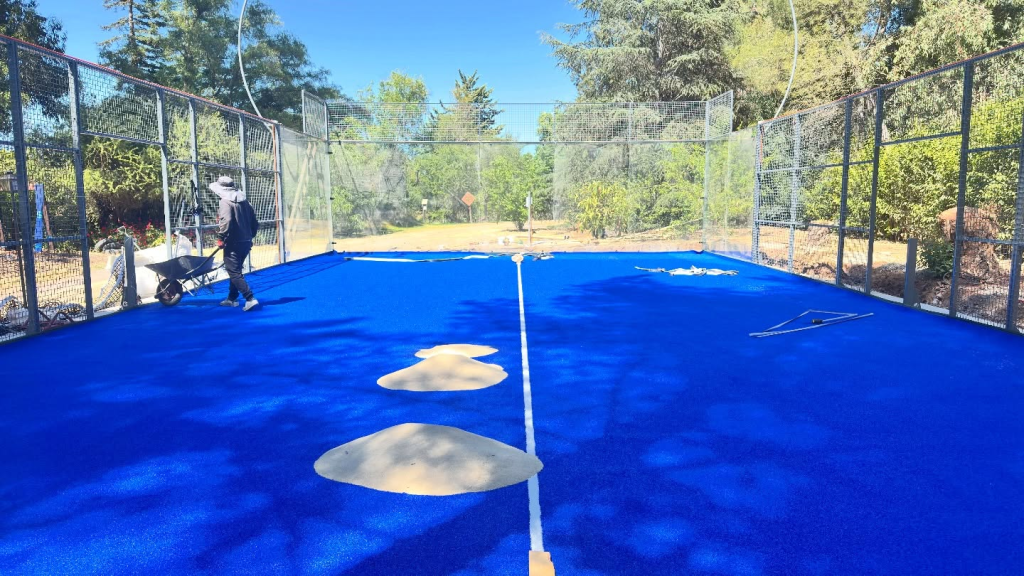
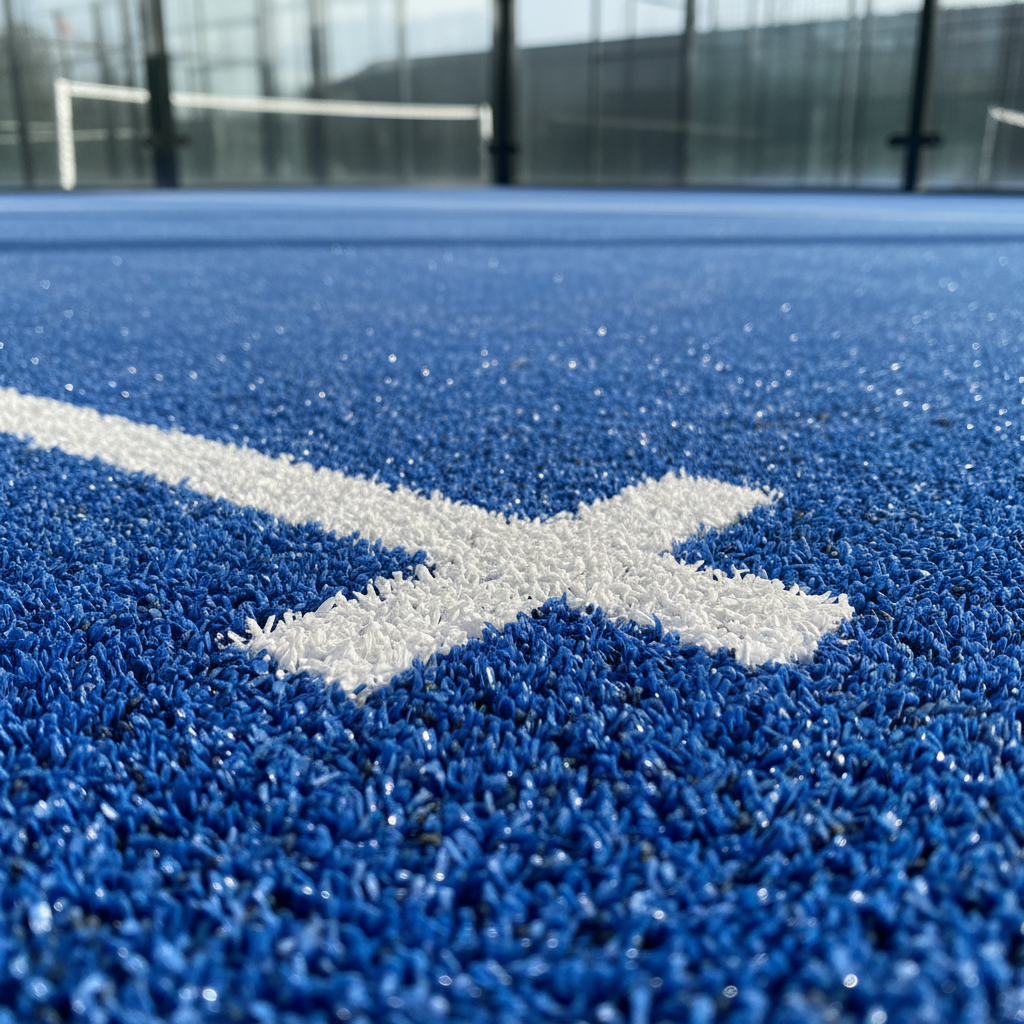
High-quality synthetic turf is the standard surface used within the dimensions of a padel court to ensure ball bounce. You should prioritize high-density Padel Grass because it withstands the aggressive pivoting and sliding characteristic of the sport. The turf is typically filled with silica sand to keep the fibers upright and provide consistent friction.
Selecting your turf
You will find that blue is the most popular color for professional visibility, though green is also common.
Think about this:
Inferior turf wears out in months, leading to “dead spots” where the ball refuses to bounce properly.
- Material: Polyethylene fiber
- Infill: Rounded silica sand
- Fiber Height: 10mm to 12mm
- Drainage: Mandatory for outdoor use
Key Takeaway
Fibrillated or monofilament synthetic turf with silica sand infill is the only professional choice for padel surfaces.
| Feature | Requirement |
|---|---|
| Material | Synthetic Turf |
| Sand Infill | 3-5 kg per sqm |
| Pile Height | 12.00 Millimeters |
These material specs are vital for ensuring the longevity and performance of the court’s floor.
What overhead clearance is needed for indoor play?
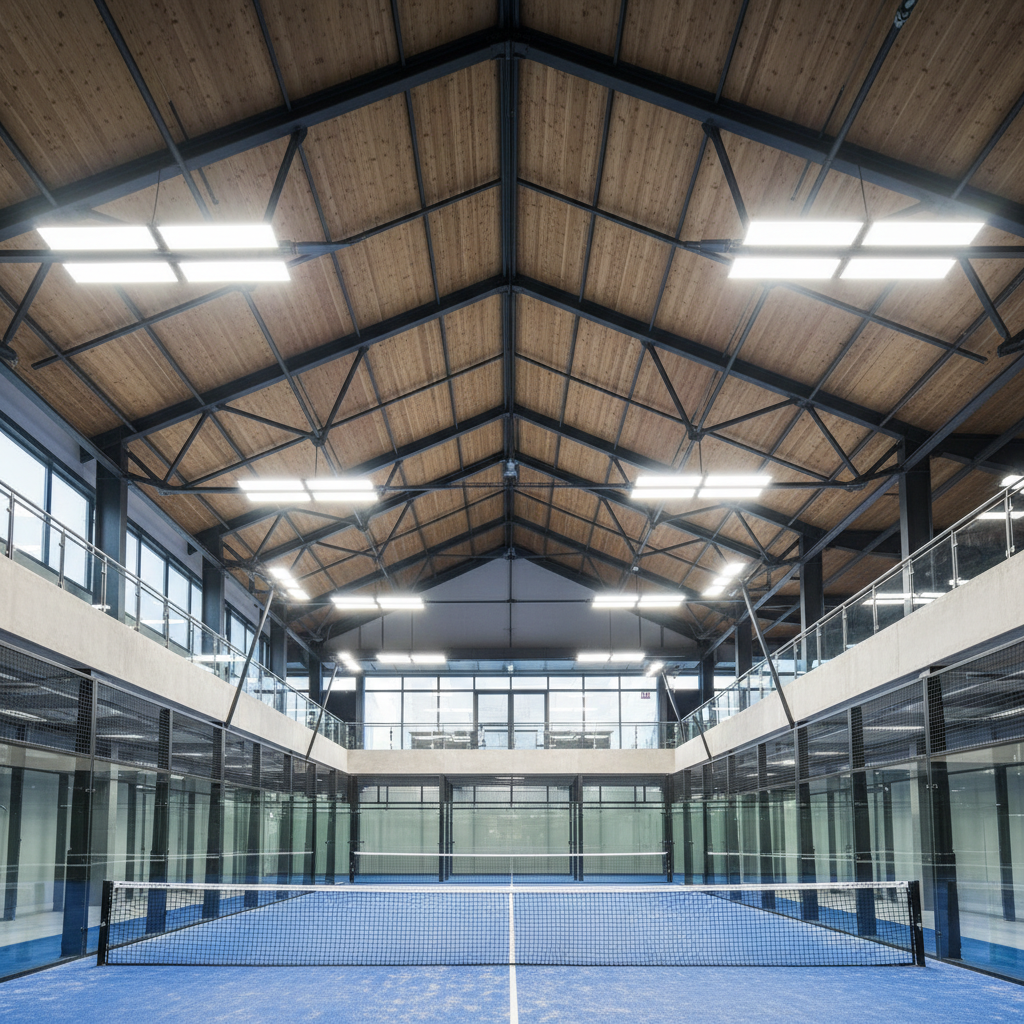
Indoor dimensions of a padel court mandate a minimum ceiling height of 6 meters for competitive matches. You will realize that the “lob” is a fundamental tactical shot, and a low ceiling will unfairly punish defensive players. For new constructions, the FIP actually recommends an 8-meter clearance to allow for higher trajectories.
Lighting and verticality
You should ensure that LED floodlights are positioned away from the direct overhead path of the ball to prevent glare.
The fact is:
A ceiling that is too low restricts the strategic depth of the game and makes the court feel claustrophobic.
- Minimum Height: 6 Meters
- Recommended Height: 8 Meters
- Light Positioning: Lateral sides
- Obstruction Check: No beams/fans
Key Takeaway
Competitive indoor facilities require a minimum vertical clearance of 6 to 8 meters to accommodate the lob shot.
| Category | Height Requirement |
|---|---|
| Minimum Standard | 6.00 Meters |
| Recommended | 8.00 Meters |
| Light Clearance | 6.50 Meters |
Maintaining these vertical dimensions is critical for player safety and the tactical integrity of the sport.
How does the size compare to a tennis court?
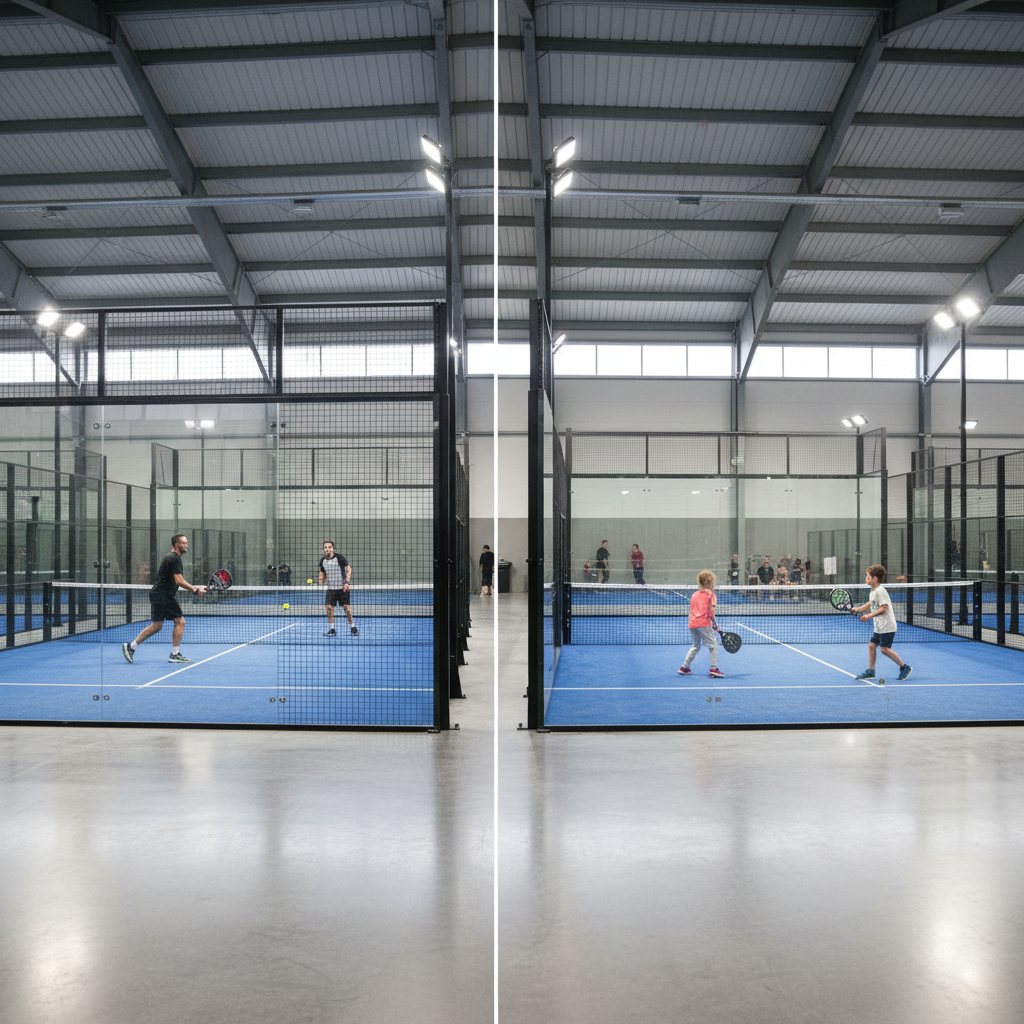
Comparing the dimensions of a padel court to tennis shows that padel is roughly 25% smaller in total area. You can often fit three padel courts into the footprint of a single standard tennis court facility. This efficiency allows you to maximize revenue per square meter in clubs where land is expensive.
Spatial efficiency
You will find that the smaller enclosed area creates a faster, more social game that appeals to a wider demographic.
Here is the deal:
More courts on the same plot of land means more players and higher booking revenue for your club.
- Tennis Court: 23.77m x 10.97m
- Padel Court: 20m x 10m
- Total Area: 196sqm vs 260sqm
- Enclosure: Active vs Passive
Key Takeaway
Padel courts are more space-efficient than tennis courts, allowing you to install multiple units in restricted land areas.
| Metric | Padel Court | Tennis Court |
|---|---|---|
| Length | 20.00m | 23.77m |
| Width | 10.00m | 10.97m |
| Total Area | 200 sqm | 260 sqm |
This comparison highlights why padel is becoming the preferred choice for modern urban sports facility developers.
How do you find the right foundation for building?
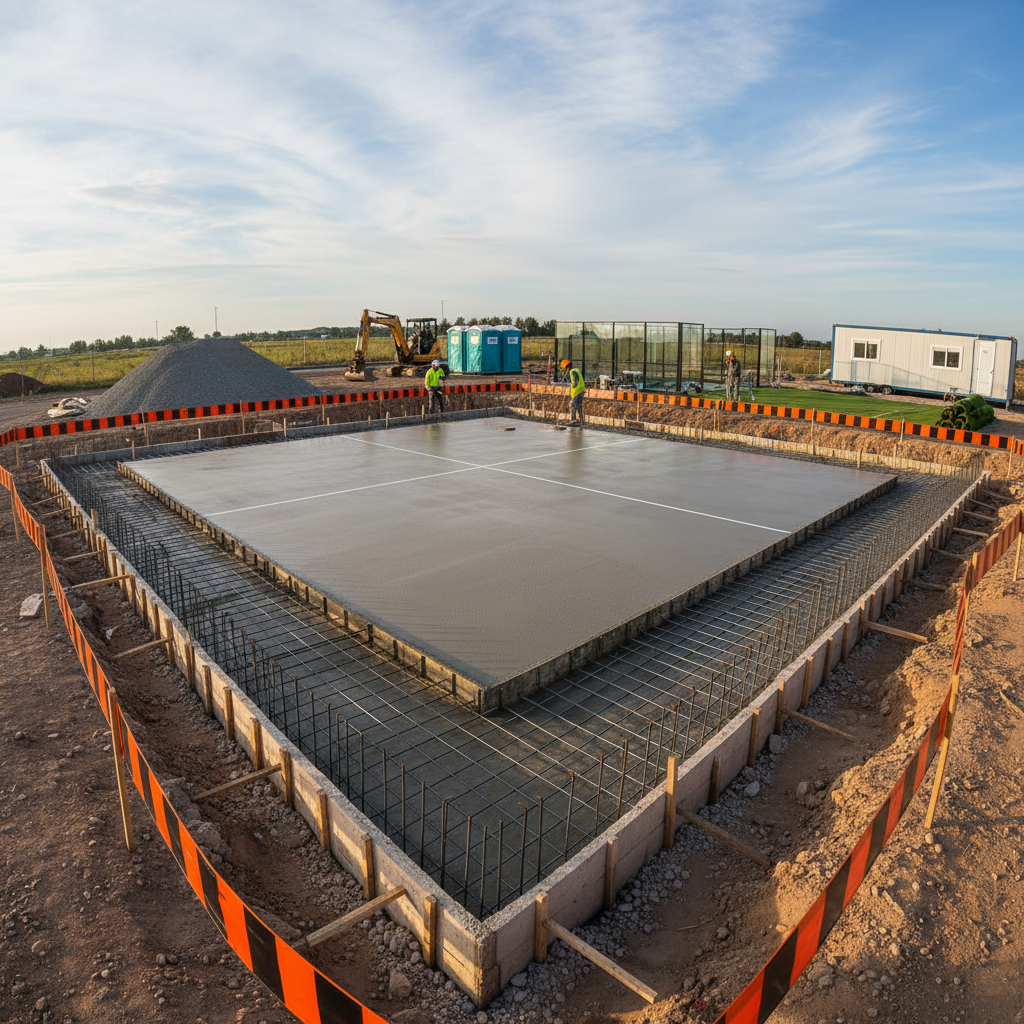
Preparing the base for the dimensions of a padel court requires a reinforced concrete slab of 15cm thickness. You must ensure the surface is perfectly level to prevent water pooling and to guarantee a uniform ball bounce. If you are building outdoors, you should incorporate a slight gradient or porous sub-base for drainage.
Base construction steps
You need to compact the soil thoroughly before pouring concrete to prevent the heavy glass walls from sinking over time.
It gets better:
A professionally prepared foundation reduces maintenance costs and prevents the turf from wrinkling or shifting.
- Slab Depth: 15cm minimum
- Reinforcement: Steel mesh
- Curing Time: 21-28 days
- Flatness: 3mm over 3m
Key Takeaway
A 15cm reinforced concrete slab is the essential foundation required to support the court’s heavy glass and steel structure.
| Phase | Requirement |
|---|---|
| Concrete Type | HA-25 or similar |
| Thickness | 15.00 Centimeters |
| Gradient | Max 1% for drainage |
Successful construction starts with a stable base, which you can learn more about in our About Us section regarding engineering standards.
*
Conclusion
Building a professional sports facility requires a deep understanding of the dimensions of a padel court and the technical materials involved. We have explored everything from the 20×10 meter geometry and 4-meter wall heights to the essential 15cm concrete foundations. By following these regulation standards, you eliminate the risk of structural failure and ensure your court is ready for high-level play.
Our team specializes in delivering turnkey solutions that meet international standards while maximizing your land’s revenue potential. We provide the certified glass, durable turf, and steel structures needed to transform any space into a premier sports destination. To start your project with a custom technical proposal, contact us today.
Engineering excellence for the future of racket sports.
*
Frequently Asked Questions
Can I build a padel court on a standard asphalt surface?
No, because asphalt can soften in heat and lacks the structural stability to anchor the heavy 12mm glass walls securely.
How do I handle drainage for an outdoor court?
You should install the concrete slab with a 1% slope or use porous concrete that allows water to pass through into a gravel sub-base.
Can I customize the color of the steel structure?
Yes, you can choose any RAL color for the galvanized steel frame to match your club’s branding or local aesthetic requirements.
How much space do I need between two adjacent courts?
You should leave at least 1 meter of space between court structures to allow for safe player movement and maintenance access.
Do I need a building permit for a private backyard court?
In most cases, yes, because the 4-meter high walls and concrete foundation are considered significant permanent structures by local authorities.